

Which Mattress You Should Buy, Mrshomint: A Clear, Step‑by‑Step Guide From A Sleepologist
You are not the only one typing “which mattress you should buy mrshomint” at 11 p.m. with three tabs open, a sore back, and a growing sense that every brand is shouting at you. It is frustrating to see the same buzzwords over and over without anyone actually telling you what is right for your body, your sleep, and your budget. If you are feeling stuck between too many choices and not enough clarity, you are in exactly the right place.
Your mattress is not a throwaway purchase. According to the Sleep Foundation, most adults need 7 to 9 hours of sleep per night, and mattress quality has a direct impact on sleep efficiency and pain levels. Over the life of a typical bed, you will spend thousands of hours on it. If the mattress is wrong, your body will tell you in the form of morning stiffness, hot restless nights, or feeling like you never sink into deep sleep. If it is right, you should almost forget about the mattress entirely and just feel rested.
My goal here is to walk you through the same decision process I use with Sleepology clients every day. You will learn how to match firmness, materials, and support to your body and sleep style, how to avoid the most common and expensive shopping mistakes, and how to connect those decisions to specific mattress types we carry at Sleepology. By the end, the question “which mattress should I buy?” will feel a lot less overwhelming and much more like a clear choice.
Before we get into specifics, I want you to know this: there is no single “best mattress of ” for everyone. There is only the best mattress for you, right now, in your real life, with your real body. Let’s find it.
Step 1: Get Clear On What Your Body Actually Needs
Most people start mattress shopping with labels like “firm,” “soft,” “hybrid,” or “orthopedic” in mind. Those words only make sense after you answer three more important questions: How do you sleep? How much do you weigh? And where, if anywhere, does your body hurt?
Your primary sleep position
Your sleep position determines where pressure builds and where support matters most. The Cleveland Clinic notes that spinal alignment is the key to waking up without pain, and that alignment looks different in each position.
Think about how you fall asleep most nights, not the one position you occasionally flip into at 4 a.m.
- If you are mostly on your side, your shoulders and hips sink deeper than your waist. You need more pressure relief around those joints and enough support to keep your spine in a straight line from neck to tailbone. Most side sleepers do best on a medium to medium soft mattress.
- If you are mostly on your back, your weight is more evenly spread, but your lower back can either overarch or collapse if your mattress is wrong. You typically want a medium to medium firm feel with strong lumbar support.
- If you are mostly on your stomach, your hips tend to drop, which can pinch your lower back. You generally need a firmer surface that keeps your pelvis lifted and your spine more neutral.
If you truly move through all three positions, we treat you as a “combination sleeper” and aim for a balanced feel with good ease of movement.
Your body weight and build
Here is where a lot of online advice oversimplifies things. A mattress feels very different to a 120 pound person than it does to someone who is 220 pounds, even if the label says “medium.”
Consumer Reports tests show that heavier bodies compress deeper into foams, which makes mattresses feel softer and can shorten their lifespan. Lighter bodies may not sink enough to engage support layers at all.
As a general guideline:
- Under 140 pounds: Most people in this range perceive mattresses as firmer than advertised. They usually need slightly softer comfort layers to get real pressure relief, especially on the side.
- 140 to 210 pounds: You are in the range most brands design around. A true medium or medium firm often works well, chosen by position and pain points.
- Over 210 pounds: You usually need more robust support: thicker coils, higher density foams, and often a firmer feel so you do not sink too far and strain your back.
Your pain points and health factors
Finally, be honest about what hurts.
- Morning lower back pain often points to either too soft of a core (your hips sagging) or too hard of a surface (your back muscles bracing all night). A mattress with targeted lumbar support is helpful here.
- Shoulder and hip pain, especially on your side, usually means your surface is too firm or not contouring well, so pressure concentrates on those joints.
- Hot flashes, night sweats, or just “I sleep hot” will steer us toward more breathable materials, coils, and certain types of foams.
- Conditions like arthritis, sciatica, or fibromyalgia usually benefit from outstanding pressure relief without that stuck-in-the-mud feeling that makes it hard to move.
When we work with Sleepology clients in store or over the phone, we start with this three-part picture: position, build, and pain. Take a moment to map yourself, because everything else will build on this.
“I walked into Sleepology telling Mia I just needed ‘a firm mattress.’ She asked about my hip pain, how I slept, and my weight. We changed directions completely and chose a medium hybrid with extra cushioning through the hip zone. My hip stopped waking me up within a week, and I didn’t have to spend luxury money to get there.” – Karen D., November
Step 2: Match Your Sleep Profile To The Right Mattress Type
Once you know what your body is asking for, you can stop debating 40 mattresses and instead choose among 3 main types: innerspring, hybrid, and foam. Latex and airbeds exist, but for most shoppers they are specialty options rather than the core choices.
According to Consumer Reports, these three types cover the vast majority of mattresses sold and perform very differently in terms of support, durability, and temperature regulation. Let us break them down in shopper language, not lab jargon.
Innerspring: Classic feel, strong support
Innerspring mattresses use a network of steel coils for support, topped with foams and fibers for comfort. They are what many of us grew up on.
Best for you if:
- You like a buoyant, lifted feel rather than a slow-responding “hug”
- You run hot and want maximum airflow through the night
- You are a back or stomach sleeper who prefers a slightly firmer surface
When we talk about modern innersprings, we are usually talking about individually wrapped coils, which help reduce motion transfer and contour a bit better than old-school linked coils.
At Sleepology, a supportive innerspring with a plush top can be an excellent choice for stomach and back sleepers who still want some cushioning. For example, many back sleepers who want that hotel-bed feel do well on a medium pillow top like the Sealy Posturepedic Medium Medina II Euro Pillow Top, because it combines a coil core with a conforming, but not squishy, surface.
Hybrid: A modern “best of both worlds”
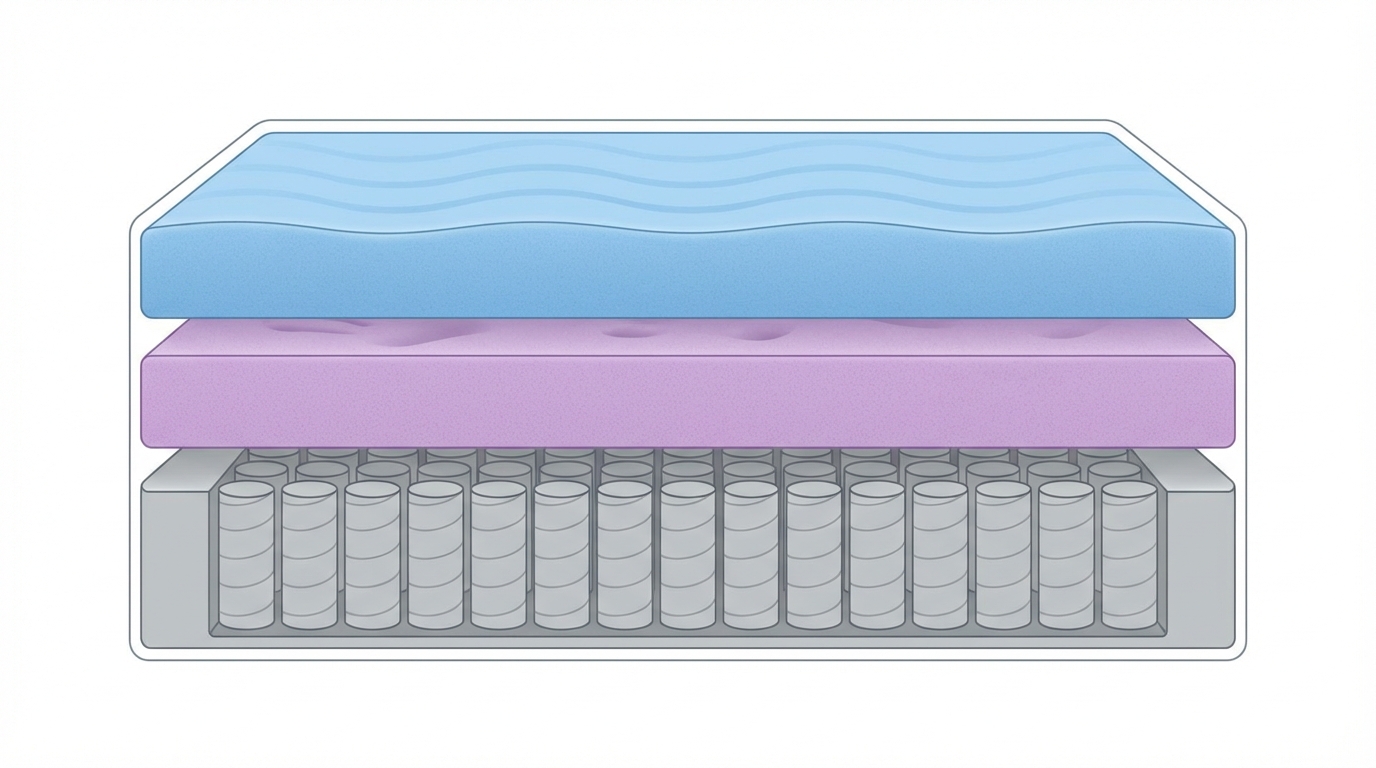
Hybrids add thicker foam or latex comfort layers on top of individually wrapped coils. You get the support and airflow of springs plus the pressure relief and contouring of foam.
Best for you if:
- You share the bed and need a good compromise between you and your partner
- You are a combination sleeper who changes positions
- You have back or joint pain but dislike sinking too deeply into foam
In recent years, hybrid mattresses have become the “sweet spot” choice in many independent lab tests, including Sleep Foundation’s best mattress list for . They balance support, comfort, temperature, and motion isolation better than a single material often can.
For hot side sleepers or anyone who wants serious contouring without overheating, I often recommend a hybrid with a cushioned top and breathable coil unit, such as the Sealy Posturepedic Elite Medium Hybrid Albany II. The coils give your spine structure while the comfort layers ease pressure on shoulders and hips.
Foam: Deep contouring and motion isolation
All-foam mattresses stack foams of different densities and firmness levels. Memory foam, polyfoam, and proprietary foams all fall into this category.
Best for you if:
- You want maximum pressure relief and a “cradled” feel
- You are easily woken by a partner’s movement and want near-total motion isolation
- You are under about 210 pounds and primarily sleep on your side or back
Memory foam has some clear upsides. Research cited by the Mayo Clinic suggests pressure redistribution can help some people with chronic pain sleep more comfortably. The tradeoff is that traditional memory foam can retain heat and make movement feel a bit heavier, which is why so many modern designs add cooling gels, phase-change covers, or more breathable foam structures.
At Sleepology we focus more heavily on hybrids and advanced coil systems because they serve a broader range of bodies and sleep styles. But if you love that slow melt-in feel, we can steer you toward options that minimize heat buildup and sagging risk.
“I thought I hated memory foam until Mia put me on a hybrid instead of a full foam bed. The combination of springs with just enough contouring foam was the first time my shoulders didn’t go numb on my side. That balance has been a game changer, and my husband, who runs hot, finally sleeps through the night.” – Jason L., October
Step 3: Dial In Firmness So Your Spine Stays Happy

Firmness is where a lot of people (and marketing) get confused. It is not a measure of quality. It is simply how hard or soft a mattress feels at the surface. The “right” firmness is the one that keeps your spine neutral while cushioning your pressure points.
Most brands use a 1 to 10 scale. In practice:
- 3 to 4 is soft
- 5 to 6 is medium / medium soft
- 6.5 to 7 is medium firm
- 8 and up is firm to extra firm
Research shared by Wirecutter and several clinical studies suggests that, for most people with back pain, a medium firm feel (roughly 6 to 7) strikes the best balance of comfort and support. That does not mean everyone needs a “firm” mattress. Here is how I approach it.
Side sleepers: Softer comfort, solid support
If you are a side sleeper under about 210 pounds, you will almost always feel best in the medium to medium soft range. This allows your shoulders and hips to ease into the mattress so pressure dissipates, while the underlying support layers hold your spine straight.
If you are a:
- Lighter side sleeper (under 140): Consider a soft to medium soft surface
- Average side sleeper (140 to 210): Medium is often the sweet spot
- Heavier side sleeper (over 210): Medium firm with a plush top often works best so you do not bottom out
At Sleepology, a plush or soft Euro pillow top on a supportive coil system checks these boxes. Something like the Sealy Posturepedic Elite Soft Albany II Euro Pillow Top gives that pillowy shoulder relief without sacrificing core support.
Back sleepers: Balanced medium to medium firm
Back sleepers usually need a slightly firmer feel because the weight is spread out more evenly and you want your lower back supported, not floating. For most:
- Under 210 pounds: Medium to medium firm
- Over 210 pounds: Closer to firm, often in a hybrid or sturdier innerspring
If you tend to wake with lower back tightness, prioritize a mattress with reinforced midsection support. In the Sleepology lineup, the Sealy Posturepedic Elite Medium Hybrid Albany II is a common win for back sleepers who want that middle-ground feel: plush enough at the surface but firm and zoned through the lumbar region.
If you strictly sleep on your back, it is also worth browsing our curated Best Mattresses For Back Sleepers collection, which we built around real body-type testing, not just manufacturer labels.
Stomach sleepers: Firmer is usually safer
Stomach sleeping is the hardest position on your spine, because gravity pulls your hips down and your neck is twisted to the side. If you sleep this way, a too soft mattress will almost guarantee lower back issues.
Most stomach sleepers do best with:
- Medium firm to firm if you are under 210 pounds
- Firm if you are over 210 pounds or have existing lower back concerns
I often guide stomach sleepers toward slightly firmer beds, sometimes with just a thin plush top for comfort. A medium or firm coil system with a Euro top, like the Sealy Posturepedic Elite Medium Brenham II Euro Pillow Top, can hold the hips up while still feeling inviting at the surface.
For a curated view, our Best Mattresses For Stomach Sleepers collection is a solid starting point.
“I always thought I needed ‘the firmest thing you have’ because I sleep on my stomach and have a physical job. Mia had me try a true medium firm hybrid instead of a rock-hard innerspring. My hips stayed up, but my chest and knees did not feel bruised in the morning. It was the first time I woke up without that deep back ache, and I spent less than I expected.” – Doug S., November
Step 4: Think Like A Long‑Term Investor, Not A Flash‑Sale Shopper
A mattress is one of those purchases where cheap can get very expensive. A low-density foam bed that flattens out in three years and has you back in the market is rarely a better value than a moderately priced, higher quality mattress that lasts eight to ten years.
Here is how to evaluate real value, not just price tags and coupon codes.
Durability and materials
Durability comes down to what is inside the mattress and how it is put together.
- Coils: Higher gauge numbers are thinner; lower numbers are thicker and more durable. Zoned or reinforced center coils help prevent the sag right where you lie.
- Foams: Denser foams in the support layers hold up better. Very cheap low-density foams tend to form body impressions quickly.
- Hybrid build: A well-designed hybrid with quality coils and resilient foams will usually outlast an all-foam bed at the same price point.
Wirecutter and Consumer Reports both emphasize that you do not have to spend luxury prices to get long life, but very low-price mattresses often cut corners on these exact elements.
In our Sleepology assortment, for example, the Sealy Posturepedic Plus Soft Hybrid Paterson II is not the cheapest mattress you can buy, but its high coil count and upgraded foams are the difference between a bed that feels good for a year and one that feels good for many.
Trial periods, warranties, and what they really mean
A generous trial period matters more than you might think. Clinical sleep research has shown it can take several weeks for your body to adapt to a new sleep surface and for you to judge comfort accurately. A 100‑night or longer trial gives you time to test through your full life, not just a showroom visit.
Look for:
- Trial length of at least 90 nights
- A clear, simple return process
- Warranty that covers deep impressions and coil failure, not just obvious defects
Just keep in mind: warranties do not cover normal “settling” or comfort preference changes. That is why getting the basics right from the beginning is so important.
When to pay more and when to save
You do not need to buy the most expensive mattress in to sleep well. But you also do not want to underbuy in the wrong areas. In my experience, it often makes sense to:
- Spend a bit more if you:
- Save a bit if you:
The art is matching the mattress lifespan to your actual plans. At Sleepology, we are very transparent about which models are “workhorses” and which are more budget friendly for shorter-term needs.
Step 5: If You Share The Bed, Shop As A Team
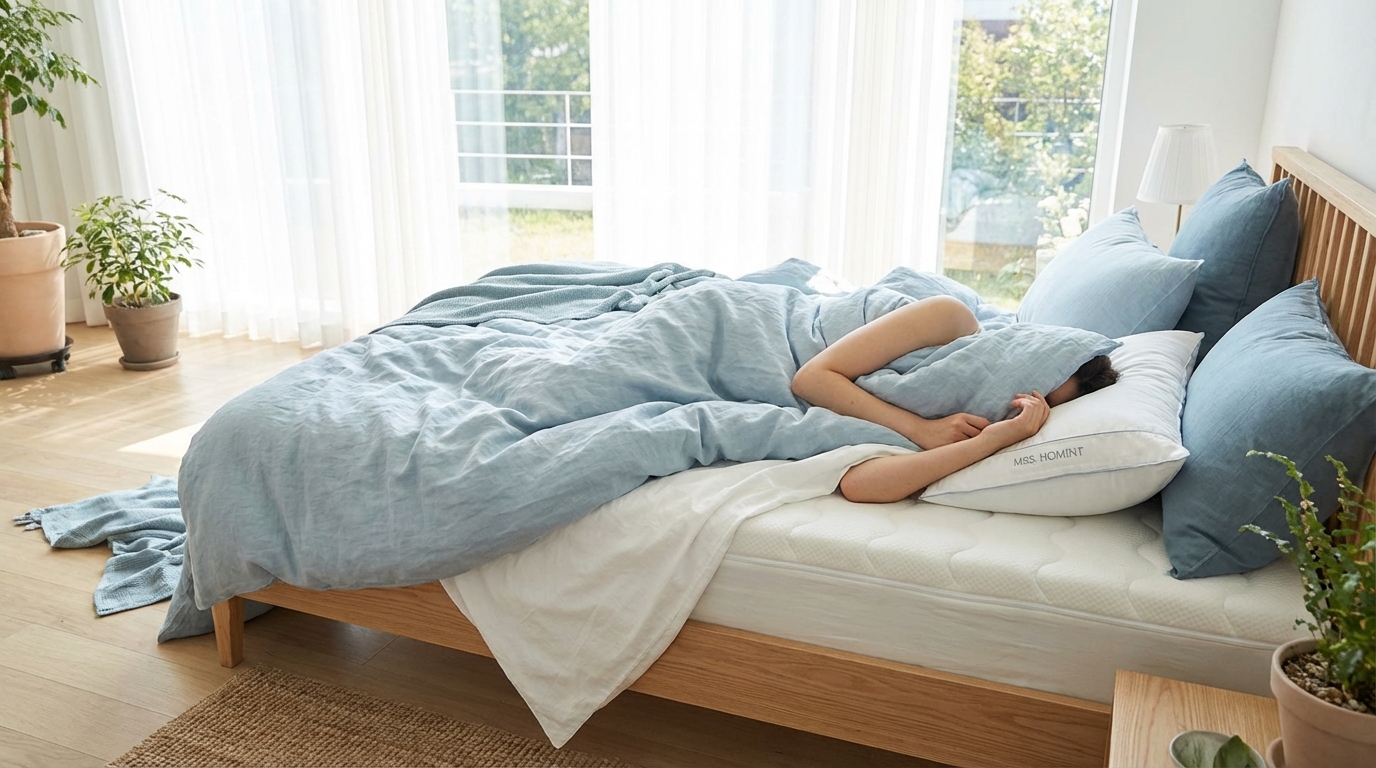
Shopping for “which mattress you should buy, mrshomint” becomes trickier when “you” is actually “you and your partner.” The good news is that there are clear ways to balance two different sets of needs.
Motion, space, and edge support
If one of you is a light sleeper and the other is a tosser, motion isolation is key. Foams and pocketed coils help absorb movement so you are less likely to feel every turn.
You will also want to think about space. A queen is usually the minimum for two adults; if one or both of you are larger or you share with a pet or child, a king can make a significant difference. Good edge support means you can use the full footprint of the mattress without feeling like you might roll off.
Our hybrid recommendations, such as the Sealy Posturepedic Elite Medium Hybrid Albany II, tend to score well in both motion isolation and edge support, making them strong picks for couples.
Different firmness preferences
If one of you loves firm and the other wants soft, a medium hybrid with a cushy top is often the truce. The underlying support satisfies the firmer preference, while the surface comfort layers take care of the softer preference, especially for the lighter or more pressure-sensitive partner.
In more dramatic mismatches, we sometimes layer a softer topper on just one side of a firmer mattress to customize without buying two beds. Our Best Side Sleeper Mattress Collection is a helpful browsing spot if one partner is a dedicated side sleeper who needs more cushioning.
Snoring, temperature, and other real‑life factors
If snoring or sleep apnea is in the mix, it may be worth pairing your mattress choice with an adjustable base so you can slightly elevate the head without stacking a mountain of pillows. The American Academy of Sleep Medicine notes that gentle elevation can help some people with snoring and mild apnea symptoms rest easier, especially when combined with appropriate medical care.
If one of you runs hot, prioritize hybrids or advanced innersprings and breathable covers. All‑foam designs tend to trap more heat around the body, even with gel infusions.
Step 6: Do Not Forget Supportive Accessories
The right mattress does most of the heavy lifting, but the wrong pillow, protector, or base can undo a lot of that good work. I see this every week: someone replaces a mattress when the real issue was the pillow or the old sagging foundation.
Pillows: Aligning the top of your spine
If your pillow is too high or too low for your position, your neck will stay bent all night. That is often why someone with a new, supportive mattress still wakes with neck pain.
As a starting point:
- Side sleepers: A taller, firmer pillow that fills the space between ear and shoulder
- Back sleepers: A medium loft pillow that keeps the head neutral, not tipped forward
- Stomach sleepers: A very thin pillow or sometimes none at all under the head, with a small pillow under the pelvis to protect the lower back
Rotating or upgrading your pillow about every 18 to 36 months is a simple, powerful improvement. Our Pillows, Sheets, Toppers, Protectors collection is where we group options that play well with the mattress types we recommend.
Protectors and bases: Protecting your investment
A waterproof but breathable mattress protector will not change the feel of your mattress much, but it will dramatically extend its life by guarding against sweat, spills, and allergens. Many warranties also require some form of protection.
Your base matters too:
- A quality foundation or platform that supports the entire mattress surface prevents early sagging.
- Slats should be close enough together per manufacturer guidelines.
- Old box springs from 15 years ago were not designed for modern mattresses and can cause issues.
“We almost returned our new mattress because my husband’s back started hurting more. Mia had us send pictures of our setup and immediately spotted the problem: our twenty-year-old box spring. We swapped to a supportive platform and the difference was immediate. I am so glad we called before going through the hassle of an exchange.” – Alicia M., December
Step 7: Turn “Which Mattress You Should Buy, Mrshomint” Into A Simple Shortlist
Let us bring this all together into a quick decision framework you can actually use.
- Name your primary position
- Note your approximate weight range
- Circle your main issues
- Pick your type
- Choose a firmness within your type
At Sleepology, here is how that might map to real products:
- Side sleeper, average build, shoulder/hip pain:
- Back sleeper, average build, wants “not too soft, not too firm”:
- Stomach sleeper, mildly hot at night:
- Combination sleeper couple, one side sleeper, one back sleeper:
From there, it becomes a matter of fine-tuning feel and budget, not reinventing the wheel every time you read a new review.
Quick Comparison: Mattress Types And Who They Suit
To make it easier to visualize differences, here is a simple comparison table based on the types we have discussed. This is not brand-specific; it is about feel and function.
| Mattress Type | Best For | Typical Feel | Temperature |
|---|---|---|---|
| Innerspring | Back & stomach sleepers, hot sleepers, firm lovers | Buoyant, lifted | Cool to neutral |
| Hybrid | Most couples, combo sleepers, pain relief with support | Balanced, contour + lift | Neutral to cool |
| All‑foam | Light to average side & back sleepers, motion sensitive | Deep contour, slow response | Neutral to warm |
Use this as a directional guide. The specific build quality and design of a mattress will still matter, but this table helps you narrow down the neighborhood before you pick an exact “house.”
Conclusion: You Do Not Need A Perfect Mattress, You Need The Right One For You
By now you can probably see why “which mattress you should buy, mrshomint” is not something a single top‑10 list can answer for everyone. The right mattress for you depends on how you sleep, what your body looks and feels like, and what is happening in your real life at 2 a.m., not just what is trending across the internet.
You have learned how to read your own sleep profile, how to match that profile to mattress types and firmness levels, and how to think about value beyond sale stickers. You also have a clearer picture of how coils, foams, and hybrids behave, and how accessories like pillows and bases can amplify or undermine a good choice.
If you remember nothing else, keep these essentials in your pocket: aim for a neutral spine, choose enough cushioning for your pressure points, and invest in build quality that matches how long you want the mattress to last. When those three are aligned, the nitty‑gritty of “firm vs plush” or “this model vs that” becomes much easier.
If you would like a second set of eyes on your situation, you can always reach out to Sleepology. This is what I do every day: listen to your story, translate it into specs, and help you turn an overwhelming choice into a confident decision. You deserve sleep that supports your life, not a mattress that quietly works against it.
Frequently Asked Questions
How do I know if my current mattress is actually the problem?
There are a few reliable signs. If you can see deep body impressions or sagging when no one is on the bed, that is a red flag. If you sleep better in hotels or on a different bed than you do at home, that is another hint. Morning pain that eases as you move around, especially in your back, hips, or shoulders, is also commonly linked to mattress support or pressure issues. Most quality mattresses last about 7 to 10 years; if yours is older than that, it is reasonable to suspect it may be contributing.
I am between medium and firm. Which should I pick?
If you genuinely fall between two firmness levels, use your sleep position and weight as the tiebreakers. Side sleepers and lighter bodies generally do better erring on the softer side, while back or stomach sleepers and heavier bodies are safer leaning slightly firmer. If you are a back sleeper of average build and torn between a medium and a firm, I usually recommend medium firm or a supportive hybrid labeled medium. You can always fine‑tune with a thin topper later, but it is much harder to fix a core that is too soft.
What is the best mattress type if I sleep hot?
In general, hybrids and modern innersprings sleep cooler than all‑foam beds because air can move more freely through the coil system. Look for breathable covers and avoid overly thick, dense foam caps if you tend to overheat. Gel or phase‑change materials can help at the surface, but airflow through the core is still the biggest driver. Many Sleepology customers who run hot find relief on coil‑based mattresses like the Sealy Posturepedic hybrids, which pair airflow with pressure relief.
Can a new mattress really help with my back pain?
A mattress will not cure an underlying medical condition, but it can dramatically reduce the nightly strain on your spine. Studies and clinical experience both suggest that medium firm, supportive mattresses often improve back pain compared to very soft or very old, sagging beds. The key is keeping your spine neutral while you sleep. If your hips are dropping too far or your back muscles are bracing on a too‑firm surface, the right mattress can absolutely make a noticeable difference in your day‑to‑day comfort. Always talk with your healthcare provider if pain is severe or persistent.
Is a more expensive mattress always better?
Not always. Price often reflects materials, brand overhead, and extras like delivery services, but it does not guarantee a better match for your body. There are mattresses in the middle price range that outperform some luxury beds in independent tests for support, durability, and owner satisfaction. Focus on build quality, support design, and whether the firmness and type fit your profile. Spending a bit more for durable coils and high‑density foams can be worth it, but you do not need to chase the most expensive option to sleep well.
How long should I test a new mattress before deciding it is right or wrong?
Give your body at least 3 to 4 weeks on a new mattress whenever possible. Your muscles and joints adapt over time, and what feels slightly unusual on night two may feel perfectly natural by week three. Most good brands and retailers offer trials of 90 nights or more for this reason. During that time, pay attention to patterns: Are you waking less in pain? Are you sleeping through the night more often? Those trends matter more than any single night.
Do I really need a new pillow if I buy a new mattress?
Often, yes. Your pillow and mattress work together to align your spine. When you change one, the other may no longer be the right height or firmness. For example, if you move from a very soft bed to a more supportive one, your head may sit higher relative to your shoulders and you might need a thinner pillow. Adjusting your pillow to your new mattress is one of the fastest ways to fine‑tune comfort and protect your neck. It is worth revisiting your pillow choice when you upgrade your bed.