

Which Mattress Is Best? A Clear, No‑Stress Guide From A Sleepologist
You are not the only one who has typed “which mattress is best” after another rough night and a groggy morning. Between foam, hybrid, firm, plush, cooling, and “luxury” everything, it can feel like you are supposed to be a sleep scientist just to buy a bed. Most people walk into a store or click onto a website already tired and sore, and the last thing you need is more confusion or hype.
Choosing the wrong mattress is not just an expensive mistake. Over time, a poor fit can aggravate back or joint pain, fragment your sleep, and leave you more irritable and less focused during the day. The Sleep Foundation notes that quality sleep is tightly linked to mood, immune function, and long term health, and that mattress comfort and support are major factors in how efficiently we sleep. According to clinical sleep centers such as Mayo Clinic, chronic poor sleep is also associated with higher risks of hypertension and depression, so this decision is worth getting right.
The good news is that there is no single “best” mattress for everyone, and that is actually freeing. Your body, sleep position, and health history point toward a very specific set of features that will feel best for you. Once you know how to translate those personal details into firmness, materials, and support needs, the whole process becomes much calmer and more logical.
In this guide, I will walk you through a simple framework we use at Sleepology to match people to mattresses every day. You will learn how to read past marketing language, understand what the major mattress types really feel like, and quickly narrow down firmness and support based on your body and sleeping position. Along the way I will point to specific Sealy Posturepedic models that fit certain needs, so you can move from confusion to a clear short list that actually makes sense for you.
Step 1: Redefining “Best” So It Actually Fits Your Life
When people ask me which mattress is best, what they really mean is “which mattress will help me sleep deeply and wake up without pain.” That is a very different question from “which brand is most popular” or “which model has the most features.” To get to the right answer, we need to define “best” in personal, not generic, terms.
The first piece of that definition is alignment. No matter what you sleep on, your spine should rest in a neutral, relatively straight line when you lie in your usual position. Sleep medicine specialists consistently emphasize neutral alignment as one of the strongest mattress predictors of reduced back and neck pain over time. If a bed is very luxurious but lets your hips sink too far or leaves a gap under your lower back, it is not the best mattress for you.
The second piece is pressure relief. Areas like shoulders, hips, and knees carry more load when you lie down, especially if you are a side sleeper. Research reviewed by organizations such as the Sleep Foundation shows that increased pressure in these zones is linked to tossing, turning, and micro‑awakenings that break up deep sleep. The right comfort layer will let these joints sink slightly so pressure is spread out instead of concentrated.
The third piece is comfort over the whole night, not the first thirty seconds. Many of my clients have been fooled by a showroom mattress that feels “cloud like” for a minute, only to discover that after an hour it traps heat, lacks support, or makes it hard to move. According to Consumer Reports testing, long term factors such as temperature regulation and ease of movement are just as important as initial softness for overall satisfaction.
When you blend these together, “best” stops being a single product and becomes a formula: the best mattress for you is the one that keeps your spine neutral, relieves your pressure points, stays at a comfortable temperature, and does all of that within your budget. Once you accept that, you can stop chasing a mythical universal winner and focus on building your own best fit.
“I had been chasing ‘the best mattress’ for five years and wound up with three returns from online brands. Mia reframed it as finding the best alignment and pressure relief for my back and hips, and suddenly it clicked. We landed on a medium Sealy hybrid, and for the first time in years I am not waking up at 3 a.m. aching.” – Lauren T., December
Step 2: Know Your Sleep Profile Before You Shop

Before you even look at a brand or a model name, you need a clear picture of your own sleep profile. This is the information I always gather in the first few minutes with someone in the showroom, and it is the same information that drives our recommendations behind the scenes.
Your primary sleep position is the biggest factor. Side sleepers need more pressure relief at the shoulders and hips. Back sleepers need steady support under the lumbar curve with a bit of cushion. Stomach sleepers need a surface that stops the hips and pelvis from sinking and straining the lower back. Combination sleepers, who change positions, need responsive surfaces that do not “grab” you when you move.
Body weight and body shape come next. Sleep experts and mattress test labs like Sleep Foundation and Wirecutter both emphasize that heavier bodies compress foams more deeply, which can make a bed feel softer than its label suggests, while very light bodies do not sink enough to engage deeper support layers. Broad shoulders, curvier hips, or a very straight build also change where pressure concentrates and where support is needed most.
You should also factor in any pain points or health considerations. If you live with lower back pain, you will want a mattress that has proven back support and perhaps zoned coils that are firmer under the center of the body. If you have arthritis or fibromyalgia, gentle contouring can reduce joint stress. Many pain clinics now counsel patients to choose mattresses that evenly distribute body weight and avoid sagging, which lines up with what we see day to day on the showroom floor.
Finally, think honestly about temperature and movement. If you tend to sleep warm or go through night sweats, prioritizing cooling materials will matter more than another inch of plush foam. If you share a bed with a partner or pet, motion isolation and edge support become important because they determine how much of the mattress you can actually use without feeling every toss and turn.
Once you understand your sleep profile in this level of detail, it becomes far easier to answer “which mattress is best” in a meaningful way. The next steps build directly on this information, so keep your position, weight, pain points, and comfort preferences in mind as you read.
Step 3: Mattress Types Explained In Human Language
If alignment and pressure relief are the “what,” mattress type is the “how.” Different constructions achieve those goals in different ways, and they each come with predictable pros and cons. Large comparison tests from groups like Sleep Foundation and independent labs consistently confirm these broad patterns across brands.
Innerspring Mattresses: Classic Support With A Familiar Feel
Traditional innerspring mattresses use a support core of metal coils with thinner comfort layers on top. The biggest strengths here are support, breathability, and responsiveness. Air moves easily through the coil unit, which helps sleepers who run hot. The surface tends to feel buoyant and easy to move on, which back and stomach sleepers often appreciate.
On the downside, if an innerspring has very thin or low quality comfort layers, pressure relief for side sleepers and people with sharp joints can be limited. There can also be more motion transfer unless the coils are individually wrapped, known as pocketed coils, which perform better for couples.
A good example of a supportive innerspring that still feels cushioned is the Sealy Posturepedic Elite Extra Firm Mattress – Brenham II. It uses robust coils and a disciplined comfort package to keep the spine lifted, which suits stomach and many back sleepers who want a very stable, hotel like feel.
Memory Foam Mattresses: Deep Pressure Relief And Motion Isolation
All foam mattresses, especially those using memory foam, excel at contouring closely to the body and isolating motion. According to Sleep Foundation’s mattress testing, well constructed memory foam models earn some of the highest scores for pressure relief, which is why they are popular with side sleepers and people who wake up with sore shoulders or hips. The foam “hugs” your curves and spreads pressure over a larger area.
Drawbacks include potential heat buildup and a “stuck” feeling if the foams are very slow to respond. Many manufacturers now add cooling gels, open cell structures, or phase change materials to address the temperature issue, and some use slightly bouncier transitional foams to make movement easier. Clinical sources like Cleveland Clinic point out that if you have mobility challenges, you may want to avoid very deep, slow responding foams that make it hard to change positions or get out of bed.
Hybrid Mattresses: A Best‑Of‑Both‑Worlds Option For Many Sleepers
Hybrids pair a coil support core with substantial foam or latex comfort layers on top. In independent testing by Sleep Foundation and several consumer organizations, well designed hybrids frequently perform strongly across support, pressure relief, temperature, and ease of movement, which is why they have become dominant in .
The coils provide structure, airflow, and edge support, while the comfort layers tune the feel from plush to firm. For many real world sleepers, especially couples and combination sleepers, a medium to medium firm hybrid hits the “sweet spot” of support and cushioning. Hybrids also adapt well across body sizes because the coils have more range to respond than foam alone.
At Sleepology, a large portion of our happy customers land on Sealy hybrids. Models like the Sealy Posturepedic Plus Soft Hybrid Mattress – Paterson II combine pocketed coils for targeted back support with softer foams on top, creating a plush but well supported feel that works beautifully for many side sleepers who want that cushioned “hug” without sacrificing alignment.
Latex Mattresses: Buoyant, Cool, And Naturally Resilient
Latex is a foam made from rubber tree sap (natural latex) or from synthetic sources, and it behaves differently from memory foam. It pushes back more quickly, creating a buoyant, lifted feel rather than a slow “melt in” sensation. As Sleep Foundation and academic sleep researchers have noted, latex is naturally breathable and resistant to dust mites and mold, and high quality latex beds tend to be very durable.
Latex can be an excellent choice if you want pressure relief without that slow sink, or if you run hot and would like a cooler sleep surface. People who dislike the hugged feeling of memory foam but still want less pressure on their joints often do well on latex or latex hybrids. The main tradeoffs are cost and weight; true latex mattresses are usually more expensive and heavier to move.
“I always thought I was a ‘firm mattress person’ until Mia had me actually lie on different types with my regular pillow. Feeling the difference between a basic innerspring, a pure foam, and a hybrid was eye opening. We ended up choosing a medium Sealy hybrid with more pressure relief, and I realized my old ‘firm’ preference was really just me trying to get more back support from a worn out bed.” – David R., October
Step 4: Match Firmness To Your Position And Body
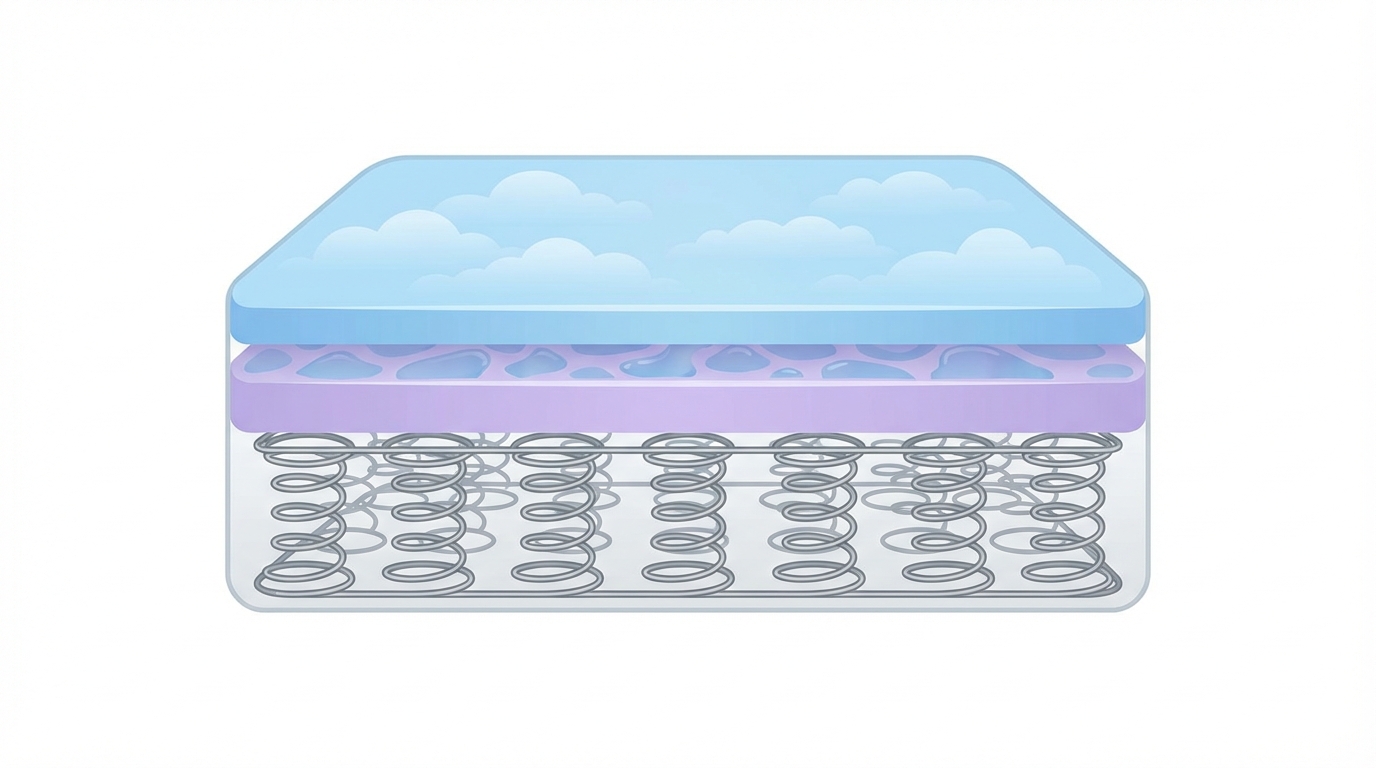
Now that you understand the main mattress types, the next question is firmness. Here is where your sleep position and body weight really matter. Most mattress makers and testing organizations describe firmness on a 1 to 10 scale, with 1 being extremely soft and 10 being very firm. In practice, most sleepers are happiest between 4 and 8, but where you fall in that range depends on you.
Side Sleepers: Softer At The Surface, Solid Underneath
Side sleeping is the most common position in large population surveys, and it places concentrated pressure on the shoulders and hips. Several studies and large test panels referenced by Sleep Foundation note that most side sleepers prefer a medium soft to medium mattress, roughly 4 to 6 on the firmness scale, as long as the underlying support is strong enough to keep the spine fairly straight.
If you are a lighter side sleeper, under about 150 pounds, you can usually go a bit softer without losing support. If you are above 200 pounds or have very curvy hips and shoulders, you may do better in the medium to medium firm range so you do not sink excessively into the comfort layers. Hybrid designs with slightly softer top layers over sturdy coils work especially well here.
Within the Sealy lineup, the Sealy Posturepedic Elite Soft Mattress – Albany II Euro Pillow Top and the Sealy Posturepedic Elite Soft Mattress – Brenham II Euro Pillow Top are good examples of plush options that still sit on a highly supportive coil system. They add that extra bit of cushion at the surface to let shoulders and hips relax, while the Posturepedic support core keeps your midsection from sagging.
Back Sleepers: Balanced Support With Gentle Cushioning
Back sleepers generally have the most flexibility, but that does not mean any mattress will do. When you lie on your back, the goal is to keep the natural curve of your spine supported so your pelvis does not tip forward or backward. Sleep Foundation and clinical sources often recommend a medium to medium firm mattress in the 5 to 7 range for most back sleepers, with slightly firmer options for heavier bodies.
If a bed is too soft, your hips may sink and your lower back can feel compressed by morning. If it is too firm, you may feel a gap under your lumbar area, which can also lead to discomfort. Many of our back sleeping customers gravitate toward medium hybrid or medium firm innerspring designs that give a bit under the shoulders and glutes but feel unwavering in the center.
Sealy’s Posturepedic Elite Medium Mattress – Brenham II Euro Pillow Top and Posturepedic Medium Mattress – Medina II Euro Pillow Top are built around that concept. They have enough cushioning at the top for comfort but use targeted reinforcement through the center third of the mattress to help maintain a neutral spine, which is exactly what back sleepers need.
Stomach Sleepers: Firmer To Protect The Lower Back
Stomach sleeping is the most challenging position from a spinal health perspective. Your body weight is concentrated around the pelvis, and gravity naturally wants to pull that area downward, increasing the arch in your lower back. For that reason, orthopedic and sleep medicine sources frequently encourage stomach sleepers to consider firmer, more supportive mattresses, often in the 7 to 9 range, and to reassess whether stomach sleeping is still the best option as they age or develop back issues.
On a very soft bed, stomach sleepers’ hips tend to sink deeply, tugging the lumbar spine into extension and potentially contributing to pain over time. A firmer surface keeps the hips lifted closer to level with the ribcage. Choosing a mattress with zoned coils or reinforced center support can make a big difference here.
A model like the Sealy Posturepedic Elite Extra Firm Mattress – Brenham II provides that kind of stable platform. Stomach and some back sleepers who want to feel “on” the mattress rather than “in” it often find that extra firm feel reassuring, especially if they have a history of lower back strain.
Combination Sleepers: Versatility And Responsiveness
If you change positions through the night, you are a combination sleeper. In this case, the ideal firmness is rarely at the extremes. You need a surface that is forgiving enough for your side, supportive enough for your back or stomach periods, and responsive enough that you can roll without fighting the foam.
Medium hybrids in the 5 to 7 range are frequently the sweet spot for combination sleepers in independent tests. The coils give you a little bounce to assist movement, and the comfort layers can be tuned to your primary position. For example, if you are mostly a side sleeper who occasionally rolls onto your back, you might lean slightly softer than if you are mainly a back sleeper who sometimes ends up on your stomach.
“My husband is a 220‑pound stomach and back sleeper, and I am a 140‑pound side sleeper. We spent a year compromising on a mattress that worked for neither of us. Mia walked us through firmness and support differences, and we ultimately picked a medium Sealy hybrid that held his hips up but still cushioned my shoulders. It was the first time we both woke up happy on the same bed.” – Jenna M., November
Step 5: Special Considerations For Pain, Temperature, And Partners
Firmness and type get you most of the way to the right answer, but a truly “best” mattress for you also acknowledges the smaller details that can make or break your comfort.
If You Live With Back Or Joint Pain
Back pain is one of the most common reasons people come into Sleepology asking for help. Clinical reviews published through organizations like the Sleep Foundation and major health systems indicate that medium firm mattresses tend to perform best in reducing chronic low back pain for many people, although the right choice still depends on body weight and position.
If your pain is largely in the lower back, prioritize strong central support and resistance to sagging. Hybrids or high quality innersprings with reinforced lumbar zones, like many Sealy Posturepedic designs, are specifically engineered around this principle. If you have more widespread joint pain, such as arthritis in the shoulders, hips, or knees, gentle contouring becomes more important so you are not pressing hard bone against an unyielding surface all night.
Also pay attention to your pillow and overall sleep posture. A great mattress cannot fully overcome a pillow that is far too high or too flat for your position; both Mayo Clinic and Cleveland Clinic caution that neck alignment interacts closely with spinal comfort across the whole back.
If You Sleep Hot Or Share A Bed
Temperature regulation matters more than many people realize. A body that is overheated at night is more prone to light, fragmented sleep and less likely to enter deeper stages. Laboratory testing and consumer reports consistently show that pure foam mattresses, particularly those using dense memory foam, tend to retain more heat than hybrids or innersprings, though modern foams with cooling technologies can bridge some of that gap.
If you know you sleep hot, consider prioritizing a hybrid or an innerspring with airflow through the coil unit and breathable covers. You can also fine tune your setup with bedding; something as simple as switching to a lighter, more breathable sheet set from a quality collection, such as the options in Sleepology’s Pillows, Sheets, Toppers, Protectors, can complement a cooler mattress and create a noticeably more comfortable microclimate.
For couples, motion isolation and edge support are key. Hybrids with pocketed coils and foam layers usually do an excellent job reducing disturbance from a partner moving, while still providing stable edges so both people can use the full width of the bed. If you tend to roll toward the center on your current mattress or feel like you are falling off the side, upgrading in these areas will feel like gaining extra square footage overnight.
Step 6: Turning All This Into A Short List
By now you have a clear understanding of your sleep profile, the main mattress types, and how firmness interacts with your body and position. The final step is turning that into a small, focused set of options instead of an overwhelming scroll of choices.
Start by choosing your ideal type based on your priorities. If you prize a very traditional feel with maximum bounce and coolness, a high quality innerspring might rise to the top. If pressure relief and motion isolation top your list, all foam or foam forward hybrids are worth a close look. If you want a bit of everything and share a bed, hybrids are often a safe starting point.
Next, set your firmness range based on your primary sleep position and body weight. For example, a 130 pound side sleeper might target a soft to medium feel, roughly 4 to 5, while a 210 pound back sleeper might aim for medium firm around 6 to 7. This alone can cut your viable list by half.
Then layer in any must haves. Do you need extra lumbar support because of a history of back pain? Focus on lines that build in targeted center reinforcement, like Sealy’s Posturepedic series. Do you need more shoulder relief as a strict side sleeper? Lean into plusher Euro top or pillow top surfaces, such as the Sealy Posturepedic Plus Medium Mattress – Paterson II Euro Pillow Top, which balances that soft initial feel with durable underlying support.
If you want a curated, position based starting point rather than building from scratch, Sleepology’s collections can be a helpful shortcut. The Best Side Sleeper Mattress Collection, Best Mattresses For Back Sleepers, and Best Mattresses For Stomach Sleepers pull together models that already align with the principles we have covered, so you can browse within a narrower, more appropriate band.
Finally, if possible, test your short list in person with your usual pillow and a few minutes in your real sleeping position, not just lying flat staring at the ceiling. Pay attention to how your back feels, how your shoulders or hips settle, and whether you feel like you are fighting the mattress or being quietly held in line.
If you are shopping remotely, make use of robust trials and clear return policies, but still lean on the framework you now have. The right mattress should not require weeks of hope that it “breaks in.” Within a reasonable adjustment period, your body should feel more supported and less sore, not more.
Conclusion: Your Best Mattress Is A Thoughtful Match, Not A Lucky Guess
The question “which mattress is best” stops being overwhelming once you understand that a mattress is a tool in service of alignment, pressure relief, and restorative sleep. There is no award winning model that will magically suit every body and every position, any more than there is a single best pair of shoes for every foot. What you do have is a clear logic you can apply to your own situation.
You have seen how sleep position, body weight, and health history directly inform your ideal firmness and support. You know the real world strengths and tradeoffs of innerspring, foam, hybrid, and latex designs. You can recognize when a mattress is keeping your spine neutral instead of letting you sag or arch, and you have a sense of which models in the Sealy Posturepedic family echo those needs in practical ways.
Most importantly, you can walk into a showroom or scroll through options with confidence instead of confusion. You are not looking for the mattress with the loudest marketing or the thickest pillow top. You are looking for the one that quietly, reliably helps you fall asleep more easily, stay asleep more deeply, and wake up with less pain.
If you would like help turning this framework into one or two specific recommendations, that is exactly what we do at Sleepology all day. Whether you call, chat, or stop by, you can bring your sleep profile and your questions and leave with a plan that feels grounded in both science and real world experience.
Better sleep is not about luck. It is about choosing a mattress that finally works with your body instead of against it.
Frequently Asked Questions
How long should a good mattress last before I need to replace it?
For most people, a well constructed mattress lasts around 7 to 10 years, though the exact lifespan depends on materials, body weight, and how well it is cared for. All foam mattresses built with lower density foams may start to show sagging or body impressions sooner, sometimes around the six year mark, while hybrids and quality innersprings with sturdy coil systems often hold support longer. Sleep Foundation notes that visible sagging, new aches in the morning, or better sleep on other beds, such as at a hotel, are strong signs that your current mattress is past its useful life and that your alignment is being compromised.
Is a firm mattress really better for back pain?
Not always. For years, “firm for back pain” was common wisdom, but more recent research and large tester panels have found that many people with chronic low back pain actually do best on medium firm beds that blend support with some cushioning. Extremely hard surfaces can leave a gap under the lumbar region and increase pressure on the sacrum and shoulders, while overly soft surfaces can let the hips sink and strain the spine. The key is choosing a mattress that keeps your spine aligned in your sleep position while still relieving pressure at your joints, whether that happens to be labeled medium or firm.
I share a bed with a partner who likes a different firmness. How do we choose one mattress?
Start by seeing whether your preferences can overlap in the middle with a well balanced hybrid in the medium range. Often, what one person calls “soft” and the other calls “firm” are actually quite close when you lie on calibrated examples side by side. If one of you has significant back issues, prioritize the support needs of the more sensitive spine and fine tune the other side with a topper if necessary. For couples who truly cannot compromise, some manufacturers and specialty retailers offer split firmness setups in king sizes, but even then, focusing on shared needs like motion isolation, edge support, and temperature regulation will help you find a model that feels comfortable and peaceful for both.
Are expensive mattresses always better than mid‑priced ones?
Price and quality are related but not perfectly. You absolutely pay more for truly premium materials such as thick natural latex or heavy gauge, densely zoned coils, and those can improve performance and durability. However, you also pay for marketing, trend features, and sometimes brand prestige. Independent testing from groups like Consumer Reports and Wirecutter often finds that many mid‑priced hybrids and innersprings perform on par with or better than some luxury models in support, pressure relief, and owner satisfaction. A thoughtful match to your sleep profile in a solid, reputable construction will almost always beat a random splurge on the most expensive mattress in the showroom.
How do I know if a mattress is supportive enough when I test it in a store?
When you lie down in your usual sleeping position, mentally trace a line from the base of your skull to your tailbone. That line should look relatively straight, with your hips neither dropping far below your ribcage nor being pushed unnaturally upward. Pay attention to whether your lower back feels gently filled in rather than hanging or forced upward. If you ask a friend or a Sleepology associate to look at you from the side, they should see a neutral curve rather than a hammock shape. Also notice whether you feel pressure building quickly at your shoulders or hips; a supportive mattress should feel quietly even, not like a board under some areas and a hole under others.
Are hybrids really better than all foam mattresses?
“Better” depends on the sleeper. Hybrids often strike an appealing balance for many people because they combine the structure and airflow of coils with the cushioning of foam or latex on top, and large scale testing in and beyond suggests they perform consistently well for a wide range of body types and positions. They tend to run cooler and offer stronger edge support than many all foam beds. That said, if you are a light to average weight side sleeper who values deep contouring and maximum motion isolation above all else, a well built all foam mattress may feel more comfortable. The right choice is the one that lines up with your body, not the one that is most popular in advertisements.
Does mattress type matter if I use a high quality topper?
A topper can certainly fine tune surface comfort, adding plushness to a mattress that feels a bit too firm or smoothing out minor unevenness, and it can be a smart short term solution if your budget is tight. However, it cannot fully correct a support core that is sagging or poorly matched to your body. If the coil unit or foam base is letting your hips drop or your spine twist, even a fantastic topper will simply drape over that shape. Long term, your mattress type and internal construction still determine alignment and durability. Think of toppers as a way to adjust feel on a basically sound mattress, not as a permanent fix for a tired or fundamentally wrong one.