

Where To Buy A Cheap Mattress Without Wasting Money Or Sleep
You might be searching “where to buy cheap mattress” because your back is tired, your budget is tight, and you do not have the energy to decode every sale sign in town. Maybe you are moving into a new place, upgrading from a lumpy hand me down, or preparing for guests. Whatever brought you here, you probably feel caught between two frustrating options: spend more than you want to, or roll the dice on something that might feel awful a month from now. That tension is real, and you are not alone in it.
A mattress is one of those purchases where mistakes show up every single morning. According to the Sleep Foundation, most adults need 7 to 9 hours of sleep each night for healthy functioning, and poor mattress support can contribute to pain, fragmented sleep, and daytime fatigue. When your mattress is not right, you feel it in your shoulders, your mood, and even your ability to focus. So while the keyword you typed was “cheap,” what you really want is a mattress that is affordable, reliable, and not secretly a bad deal.
There actually are smart ways to save real money on a mattress without settling for something that sags in a year or traps so much heat that you need an extra fan. The trick is knowing which places tend to cut corners, which retailers quietly offer the best value, how to time your purchase, and what to look for in the fine print. With a bit of strategy, you can keep your budget intact and still wake up feeling supported and rested.
As a sleep specialist who has tested hundreds of beds over 20 years, I will walk you through how to shop confidently on a budget, where to buy a cheap mattress that is actually good, and how to choose the right type for your body. By the end, you will know exactly what “cheap but not flimsy” looks like, and how stores like Sleepology can stretch your dollars further with curated options, solid policies, and long term comfort in mind.
Cheap Mattress vs. Smart Value: What “Cheap” Should Really Mean
When people say they want a cheap mattress, they rarely mean the rock bottom option in a warehouse stack. Most shoppers mean they want a mattress that costs less but still offers decent comfort, support, and lifespan. That distinction matters, because some of the lowest prices out there are only possible when manufacturers use thin foams, weak coils, or minimal quality control. The mattress might feel fine for a week in a showroom, then slowly cave under your hips.
Sleep experts at organizations like the Cleveland Clinic and the Mayo Clinic consistently emphasize that proper spinal alignment and pressure relief are key to reducing back and neck pain. A “too cheap” mattress often lacks the structure to keep your spine neutral, especially for side and stomach sleepers who place more pressure on specific points. You might save a few hundred dollars upfront but pay for it with chiropractor visits, restless nights, or a replacement mattress much sooner than you planned.
A smarter way to think about cheap is to focus on cost per year of comfortable use, not sticker price only. For example, if a slightly higher quality mattress lasts 8 to 10 years and supports your body better, your annual cost might be comparable or even lower than a bargain model that breaks down in 3 or 4 years. Consumer product testers often find that mid range models outperform ultra budget ones on durability, even when they cost more at first.
At Sleepology, we often talk about “value tiering” with guests. You might come in asking for the cheapest queen we have, but after discussing your sleep position, body type, and aches, we may guide you to a modest upgrade that still respects your budget but dramatically improves comfort. A medium soft pillow top like the Sealy Posturepedic Pro Soft Mattress – Dupont II Euro Pillow Top is a good example of a value oriented choice for side sleepers, because you get targeted support and cushioning without having to jump into the most premium price tier.
“I walked in determined to spend as little as possible, because I had just moved and money was tight. Mia walked me through the cost per year idea and showed me two options. I ended up spending about $150 more than planned, but I wake up without hip pain for the first time in years. Best ‘cheap’ mattress decision I have made.” – Laura P., November
Common Places To Buy A Cheap Mattress (And How They Compare)
You have plenty of options when it comes to where to buy a cheap mattress, from big box retailers to boutique shops. Each channel has its pros and cons, especially when you are trying to maximize value instead of just choosing the lowest price tag. Understanding how these options differ helps you avoid costly mistakes and ignore the noise.
Big Box Retailers And Warehouse Clubs
Large retail chains and warehouse clubs are often the first stop for budget shoppers, because you can toss a mattress in your cart while buying groceries or home goods. They do sometimes offer competitive prices, especially on house brand or closeout models. The challenge is that their selection tends to be wide but shallow, with limited information on what is inside each mattress and very little chance to compare feel or support across multiple models side by side.
Another concern is policy structure. Some big box stores have decent return or exchange policies, but others restrict mattress returns or charge steep restocking fees. Because mattresses are bulky and heavy, you might be tempted to “just live with it” if it is not quite right, which erodes any savings quickly. And while these stores often run frequent sales, the actual quality of the cheapest options can be inconsistent, since they may source beds from different manufacturers over time.
From an expert perspective, big box and warehouse stores can be an option if you do thorough research on a specific model ahead of time, but they are rarely the best place to get personalized guidance. If you have back pain, sleep hot, or have a partner with different preferences, it is worth looking at more specialized retailers who can match you to the right feel and construction rather than simply the right price tag.
Online Only Mattress Brands And Marketplaces
Online mattress brands and major marketplaces have made buying a cheap mattress as simple as clicking “Add to Cart.” Many bed in a box companies advertise aggressive discounts and “cutting out the middleman,” which can sound especially appealing if you are budget conscious. The advantages are clear on paper: home delivery, generous trial windows, and lots of customer reviews to scan.
The catch is that you cannot physically test the mattress before buying, so you are relying heavily on marketing descriptions and averaged review scores. Research in sleep ergonomics from universities and sleep labs shows that individual comfort response can vary dramatically even between people with similar body types, which means what feels “supportive but plush” to one person might feel too firm or too soft to you. Online only options can still be a great value, but returns can be logistically messy, and you lose the benefit of in person fitting and local accountability.
Marketplaces that host multiple brands can also be confusing when it comes to warranty and support. If you develop an issue with sagging or defects, you may have to navigate several layers of customer service to get help. For shoppers who want the lowest possible friction and someone they can call directly, a hybrid approach using local retailers that also sell online, like Sleepology, often offers a better balance.
Discount Mattress Outlets And Clearance Stores
Discount outlets, clearance centers, and “mattress liquidators” are popular answers when someone searches where to buy a cheap mattress near them. Prices can be significantly lower than traditional showrooms, especially on floor models, discontinued lines, or overstocks. If your priority is simply to get something serviceable on a very tight budget for a guest room or short term rental, these shops can sometimes deliver reasonable value.
But you do need to be careful. Some outlet style stores offer limited or no comfort trial periods and may restrict returns on clearance items. Warranty coverage might be shorter, and the selection may skew toward firmer, simpler builds. Inspecting the mattress in person, checking for visible wear if it is a floor model, and confirming all policies in writing is essential. If the sales pitch feels rushed or vague about materials and construction, that is typically a sign you should pause.
A healthier approach is to use outlets and clearance centers as one data point in your search, not your only option. Compare their prices and policies to those of reputable retailers with strong guarantees. At Sleepology, for example, we often run promotions or bundle deals that bring high quality models into the same price range as some outlet offerings, but with clearer warranties and expert support if you have questions down the line.
“I almost bought a clearance mattress at a warehouse store but something felt off. Sleepology helped me compare the specs to a sale model they had in stock. For about $100 more, I got a much better coil system and a real comfort guarantee. I am so glad I did not chase the absolute lowest price.” – Daniel K., October
Why Local Mattress Specialists Often Deliver The Best “Cheap” Value

Local or regional mattress specialists sit in a sweet spot between big box convenience and online pricing. These are stores focused on sleep products, often staffed by people who understand the nuances of foam density, coil gauge, and ergonomic zoning. When you are trying to stretch your budget wisely, that expertise can be the difference between a bargain that works and a bargain that becomes a regret.
One of the big advantages of a specialist like Sleepology is that our selection is curated instead of overwhelming. We intentionally choose models that meet quality benchmarks in support, materials, and durability, so even our more affordable mattresses clear a certain bar. You are not wading through dozens of flimsy options. Instead, you are comparing a smaller number of “good or better” choices at different price points. That curation alone cuts hours of guesswork from your search.
Another key benefit is being able to match you not just by price, but by sleep style. Sleep medicine resources, including the American Academy of Sleep Medicine, highlight how side, back, and stomach sleepers have different support needs. At Sleepology, if you tell us you are a side sleeper with shoulder pressure, we might guide you toward a medium to soft euro top like the Sealy Posturepedic Elite Soft Mattress – Albany II Euro Pillow Top, because its plush top layer eases pressure while the underlying coil system keeps your spine aligned. That way, your “cheap mattress” is still tailored to how you actually sleep.
Finally, local specialists often build value through extras that are easy to overlook in a price search. Things like old mattress removal, careful delivery, realistic comfort trial periods, and honest advice about when it is worth paying a little more can save money and stress in the long run. When you add those factors in, the total value from a good local shop often beats what looks like a cheaper option on paper.
How To Spot A Cheap Mattress That Is Actually Worth Buying
When you are standing in front of a wall of mattresses or scrolling through product pages, everything can start to blur together. The trick is to focus on a few key features that heavily influence both comfort and longevity. You do not need to become a materials engineer, but knowing what to ask about turns you from an overwhelmed shopper into an informed decision maker.
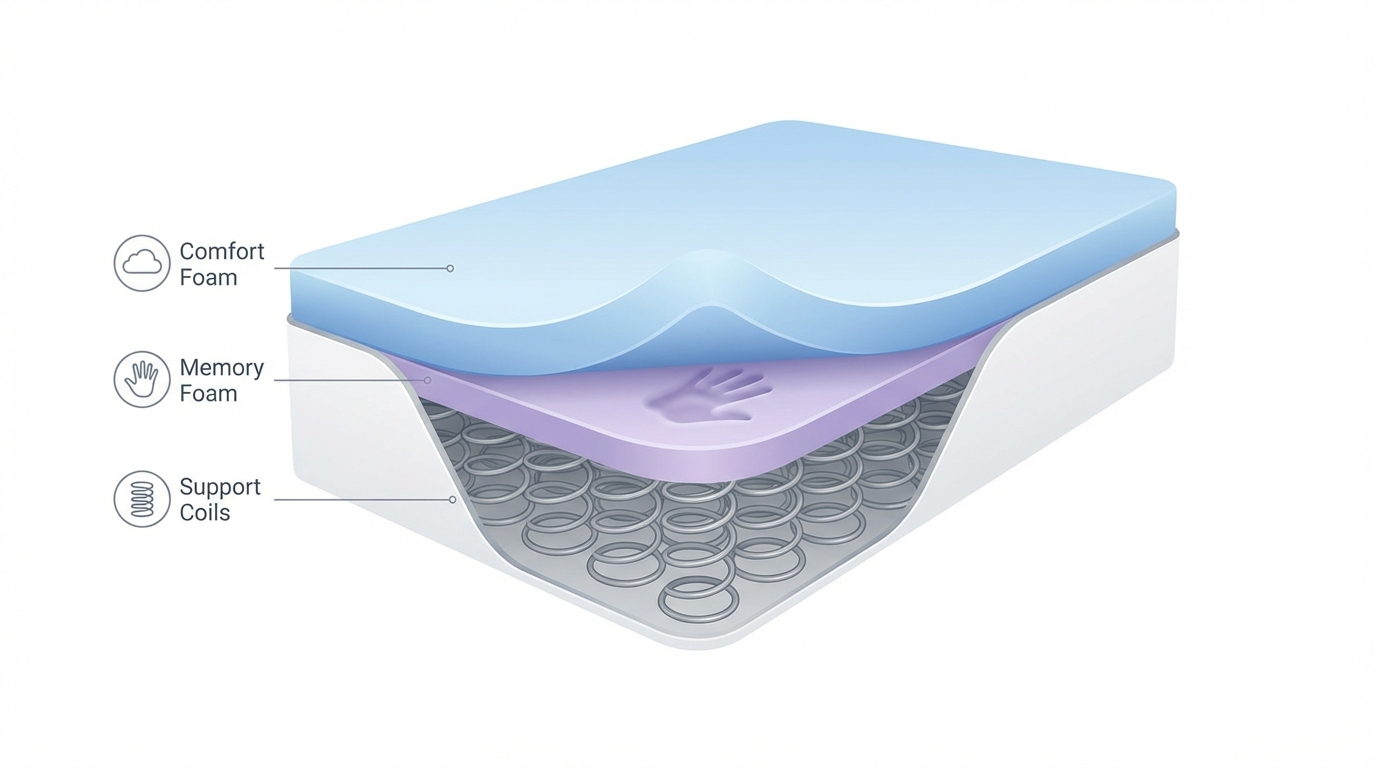
First, look at the support system. In innerspring and hybrid mattresses, this means examining the coil unit: individually wrapped coils often provide better motion isolation and contouring than older style interconnected Bonnell systems. For foam and hybrid models, pay attention to the density of the support and transition layers. Higher density foams, especially in the core, typically resist sagging longer. Even on a budget, you want a mattress that can keep your spine neutral for years, not months.
Next, consider the comfort and pressure relief layers. Thin, low quality foams might feel cushy at first but can compress quickly, leading to body impressions and sore spots. According to the Sleep Foundation, pressure relief is crucial for side sleepers and people with joint sensitivity. Mattresses like the Sealy Posturepedic Elite Medium Mattress – Brenham II Euro Pillow Top layer supportive coils with quality foams to balance contouring and resilience, which is the kind of construction that tends to outperform ultra thin budget builds.
Temperature management is another factor. Very cheap all foam mattresses sometimes use dense, closed cell foams that trap heat. If you live in a warm climate or sleep hot naturally, this can be miserable. Look for mentions of breathable covers, ventilated foam, or coil systems that allow airflow. It does not have to be a high end cooling system, but basic breathability helps you stay comfortable without needing to crank the air conditioning all night.
Finally, always connect the dots between specs and policies. A slightly simpler construction with a solid warranty and realistic trial period is often a safer bet than a more complex build with vague support or short coverage. When you shop with us at Sleepology, we walk you through this connection, so you know exactly what you are getting, why it costs what it does, and how long it is expected to last at your weight and usage level.
Comparing Mattress Types When You Are On A Budget
Choosing where to buy a cheap mattress is only half the equation. The other half is deciding which type of mattress makes the most sense for your body and budget. In , hybrid and foam mattresses continue to dominate the market, but traditional innersprings still have a place, especially in value focused shopping. A quick comparison can clarify which direction to lean.
Here is a simple overview of three common mattress types and how they line up for budget conscious shoppers:
| Mattress Type | Typical Feel & Support | Budget Friendliness | Best For |
|---|---|---|---|
| Innerspring | Bouncy, more surface level cushioning, stronger edge support in many models | Often the most affordable upfront | Shoppers who prefer a traditional feel, back and stomach sleepers who like a firmer surface |
| Foam | Contouring, body hugging, good motion isolation, can feel warmer | Wide range, from very cheap to premium | Side sleepers, couples needing low motion transfer, people who like a “hugged” feel |
| Hybrid | Combination of coils and foam, balanced support and pressure relief | Mid range, but many good value options | Most sleepers, especially those wanting support plus comfort and better airflow |
Innerspring mattresses are often the entry point for true budget purchases. The right one can feel supportive and familiar, especially for back and stomach sleepers who do not want a deeply cushioning surface. However, very cheap innersprings may use thinner coils and minimal padding, which can lead to pressure points. If you go this route, it can be smart to pair your mattress with a quality topper like the Tempur-Pedic Mattress Topper – Pillow Travel and Guest Bundle for occasional guests or to add a touch of plushness without replacing the whole bed.
Foam mattresses have surged in popularity, partly because bed in a box brands made them widely accessible at lower price points. Foam can be an excellent value, especially if you prioritize motion isolation or pressure relief for side sleeping. The challenge at the low end is durability. Thin, low density foam layers tend to compress faster under heavier bodies. Curated collections like The Best Foam Mattresses at Sleepology focus on models that meet minimum density and support criteria, so you are not guessing.
Hybrids sit in the middle, giving you the support of coils with the comfort of foam or latex above. They are often a sweet spot for couples or people with mixed sleep positions. In the past, hybrids were always pricier, but in many cases, you can now find mid range hybrids that deliver excellent performance at a price that still feels manageable. Mattresses such as the Sealy Posturepedic Medium Mattress – Medina II Euro Pillow Top give you that blend of coil support and foam comfort, which can stretch your dollars further if you care about both longevity and feel.
“I was convinced I could only afford a basic spring mattress. The Sleepology team showed me an entry level hybrid on promotion that was only about $200 more. The difference in comfort is massive. My husband tosses and turns less, and I hardly feel it now.” – Renee S., December
When To Spend A Little More (And When You Can Safely Spend Less)
Not every sleeper needs all the bells and whistles, and not every budget can absorb a big upgrade. The key is knowing which features are “non negotiable” for your situation and which are truly optional. This is where a conversation with a knowledgeable advisor can be invaluable, but there are some common guidelines that apply to most people.
If you have chronic back pain, a history of spinal issues, or significant joint pain, it is usually worth allocating a bit more of your budget to the support system and comfort layers. Clinical guidance from organizations like the Mayo Clinic notes that a medium firm mattress often supports back pain better than very firm or very soft surfaces, particularly when the mattress contours enough to support the natural curve of your spine. In practical terms, this often means stepping up from an ultra basic innerspring to a better built innerspring, hybrid, or foam model with zoning or higher quality foams.
On the other hand, if the mattress is for a guest room that will be used a few weekends a year, you can safely prioritize budget a bit more. In that case, a solid, basic innerspring or mid range foam mattress is often sufficient, especially if you supplement with a topper. The same is true for shorter term housing situations, like a one year lease for a college student. Comfort still matters, but the expected use window is shorter, so you do not need the same level of long term durability.
Body weight and sleeping position also influence where to invest. Heavier bodies compress foams and coils more, so moving slightly up the ladder in quality can dramatically extend how long the mattress feels supportive. Stomach sleepers often need a bit more firmness to prevent the lower back from bowing. At Sleepology, we might steer a heavier back or stomach sleeper toward a supportive model like the Sealy Posturepedic Pro Medium Mattress – Dupont II Euro Pillow Top, which balances firm underlying support with enough cushioning to stay comfortable.
Where can you trim costs without much risk? Exterior aesthetics, ultra high end cooling systems, and some luxury materials are often “nice to have” but not essential for most sleepers. You can also save by choosing a simpler base instead of an elaborate bed frame. A solid foundation such as the Sealy Mattress Base Boxspring Foundation | Standard 9 inch height or the low profile 5 inch foundation will support your mattress properly without overspending, compared to some designer frames that add style but not necessarily function.
Timing Your Purchase: When Cheap Really Means Cheaper
Where you buy matters, but when you buy can also have a big impact on how much you pay. The mattress industry, like many big ticket categories, tends to follow a predictable sales rhythm through the year. If your current bed is struggling but not completely unusable, planning your purchase around these patterns can translate into significant savings.
In the United States, major holiday weekends are typically the best time to find lower prices on quality mattresses. Retailers often run deeper discounts around Presidents Day, Memorial Day, Fourth of July, Labor Day, and Black Friday. New model rollouts often occur in the first half of the year, which can lead to clearance pricing on previous year models that are still excellent in terms of support and comfort. Used strategically, these events can make a mid range mattress cost what an entry level model usually does.
Flash sales and local promotions are another opportunity. At Sleepology, we occasionally run limited time offers on specific collections or sizes, especially when we receive special buys from manufacturers. Signing up for local store newsletters or asking an associate about upcoming promotions allows you to time your purchase more effectively. It is completely reasonable to say, “I am shopping on a budget; is there a good time in the next month to get the best value on this model” and let us guide you.
That said, timing should not override your immediate health and comfort needs. If your current mattress is causing significant pain or affecting your sleep quality, waiting months for a sale may cost more in missed rest and productivity than you save in dollars. Sleep medicine research consistently finds that chronic sleep deprivation is linked to higher risk of hypertension, mood disorders, and impaired cognitive performance. In those cases, we would rather help you find a workable budget option now than see you suffer through many more nights on a bad bed.
Where Buying Cheap Backfires: Red Flags To Avoid
Shopping for a cheap mattress becomes risky when certain warning signs pop up. Spotting these early can save you from spending money on something that will not support you properly or hold up over time. A few red flags tend to come up again and again when I talk with guests about past mattress regrets.
One major warning sign is a lack of clear information. If a retailer or product page glosses over what is inside the mattress, lists nothing about foam densities or coil construction, and cannot explain how the bed is built, that is a concern. Quality oriented brands are usually proud to share at least the basics, such as whether the mattress uses pocketed coils, how thick the comfort layers are, and what kind of support core is inside. Vague language like “premium comfort foam” without further detail is not automatically bad, but it should prompt questions.
Another red flag is an overly aggressive sales pitch that focuses only on price or a “today only” discount with heavy pressure to decide on the spot. A fair sale can absolutely be time limited, but you should still feel comfortable asking for a few minutes to think, compare, or discuss options. At Sleepology, we view your long term satisfaction as more important than rushing a sale. If you ever feel like someone is minimizing your concerns about feel, pain, or durability in order to push a specific model, that is a good time to step back.
Unclear or restrictive return and warranty policies can also turn a cheap mattress into an expensive mistake. Some discount outlets classify most of their inventory as final sale or provide very little support if you experience sagging within a few years. A reputable retailer will walk you through what the warranty actually covers, such as specific depth of body impressions, and what the comfort trial process looks like if you do not love the feel after sleeping on the mattress at home.
You deserve a buying experience where your questions are welcomed and your budget is respected. If a store makes you feel rushed, confused, or guilty for asking for details, keep looking. Your mattress should be a supportive part of your life, not a source of lingering doubt.
Cheap Mattress, Smart Setup: Accessories That Boost Comfort On A Budget
Even the best value mattress needs the right support system and accessories to perform well. Some of the smartest places to invest a little extra are actually not the mattress itself, but what surrounds it. The goal is to protect your purchase, fine tune comfort, and improve hygiene so your bed stays restful and supportive as long as possible.
A proper foundation or base is essential. Placing your new mattress on old, sagging box springs or a frame with wide slats can undermine its support and even void warranties. A solid, well constructed base distributes weight evenly and helps prevent dips. Affordable, reliable options like the Sealy Mattress Base Boxspring Foundation | Low Profile 5 inch height are designed to work with modern mattresses without adding unnecessary cost. If you prefer your bed higher off the floor, the standard 9 inch height foundation can be a better fit.
Mattress protectors and basic bedding can also pay off quickly. A waterproof but breathable protector guards against spills, sweat, and allergens, all of which can degrade foams and fabrics over time. According to the Asthma and Allergy Foundation of America, encasements and protectors can reduce allergen exposure in bed, which may improve sleep for sensitive individuals. Quality sheets and pillows from collections like Pillows, Sheets, Toppers, Protectors at Sleepology let you round out your setup without overspending on designer labels.
In some cases, a topper can also be a smart budget tool. If you choose a slightly firmer mattress for support and then decide you would like a bit more plushness, adding a topper can adjust the feel without replacing the whole bed. This is especially helpful for guest rooms, where you might want to keep the underlying mattress relatively neutral and then fine tune comfort layered on top. The key is to view your mattress and accessories as a system rather than isolated purchases.
One Stop Or Many Stops: How To Structure Your Shopping Trip
When you are wondering where to buy a cheap mattress, it can be tempting to visit as many stores and websites as possible in search of the absolute lowest price. Ironically, that approach often creates more confusion and decision fatigue, which can lead to rushed or emotional decisions. A more strategic plan usually leads to better outcomes with less stress.
Start by clarifying your priorities before you ever set foot in a store. Write down your budget range, your sleep position, any pain issues, and what you like or dislike about your current mattress. For couples, have a quick conversation about preferences in firmness and temperature. This list becomes your filter, helping you quickly eliminate options that do not fit, instead of trying to mentally juggle every sale sign you see.
Next, choose one or two reputable retailers to visit, ideally including a specialist like Sleepology that focuses on mattresses and sleep accessories. Spend meaningful time testing a handful of beds that align with your notes, paying attention to how your body feels as you move from side to back to stomach. Ask the associate to explain the differences in construction between mattresses that feel similar, so you understand what you are paying for.
If you also want to explore online options, do it after your in person testing. Use what you learned about firmness and feel as a benchmark. Look for models that match those characteristics as closely as possible, and be sure to factor in shipping, setup, and return logistics. In many cases, you will find that a fairly priced mattress from a local specialist compares closely to or even beats the total value of an online only option, especially once service and support are included.
Conclusion: You Do Not Need The “Cheapest” Mattress To Save Money
Shopping for a cheap mattress does not have to mean compromising your comfort or rolling the dice on quality. When you understand the difference between low price and real value, you can confidently navigate big box stores, online brands, and local specialists. The most important elements are clear construction, solid support, appropriate comfort for your sleep style, and policies that protect you if things do not feel right once you are sleeping on the mattress at home.
You also do not need to solve every part of this alone. Stores like Sleepology exist specifically to help you balance budget with comfort and longevity, so you can stop guessing and start resting. Whether you ultimately choose a value hybrid, a simple innerspring with a topper, or one of our curated foam mattresses, the goal is the same: better sleep at a price that feels realistic for your life.
If your current bed is holding you back, you deserve a smarter solution. Take what you have learned here, write down your priorities, and reach out or visit when you are ready. We are happy to walk you through options, compare models honestly, and help you find a mattress that feels like a win for both your body and your budget.
Frequently Asked Questions
Where is the best place to buy a cheap mattress without getting scammed?
The best place to buy a cheap mattress is usually a reputable local or regional mattress specialist that offers budget friendly lines, rather than the absolute cheapest outlet you can find. Specialists like Sleepology carefully curate even their entry level models for basic quality standards and back them with clear warranties and comfort policies. Big box stores and online marketplaces can work as well, but you should focus on brands with transparent construction details, published policies, and real customer support. If a store or site is vague about what is inside the mattress or rushes you with “today only” deals, that is a sign to be cautious.
Are online mattresses cheaper than buying from a local store?
Online mattresses can appear cheaper at first because many brands advertise big discounts and free shipping. However, when you factor in the ability to test the mattress in person, local delivery and setup, and easier returns, the total value from a local store often matches or beats online options. Many brick and mortar retailers, including Sleepology, also sell online and offer competitive pricing that reflects both service and product quality. If you want to compare, try a few mattresses in person to find your preferred firmness and feel, then use that as a benchmark when looking at any online models.
How much should I expect to spend on a “cheap but good” queen mattress?
Prices vary by region and brand, but in 2026, a realistic range for a “cheap but good” queen mattress is usually the low to mid hundreds for simple innersprings and into the mid to upper hundreds for better built foam or hybrid models. You can occasionally find lower prices during clearance or holiday promotions, especially on previous generation models, but it is wise to be cautious of anything that seems dramatically under market value. A Sleepology advisor can walk you through specific models that balance cost and quality, so you understand exactly what you are gaining or giving up at each price point.
Can a cheap mattress still help with my back pain?
Yes, a reasonably priced mattress can absolutely help with back pain, as long as it provides proper support and a suitable firmness level for your body. Research and clinical experience often point toward medium firm mattresses as supportive for many people with back issues, because they allow your spine to maintain a neutral position. The key is avoiding ultra flimsy options that sag quickly. Instead, look for solid coil systems or supportive foam cores, and consider models like the Sealy Posturepedic Pro Medium Mattress – Dupont II Euro Pillow Top that are designed to balance cushioning with robust support.
How can I tell if a cheap mattress will last more than a couple of years?
Durability depends heavily on the quality of the support core and the density of the comfort foams. A good sign is when a manufacturer or retailer provides details about coil type, gauge, and foam densities, or at least about the thickness and layering of materials. Heavier individuals and couples should lean toward more robust constructions and may benefit from hybrids or better built innersprings. Be sure to ask about warranty coverage for body impressions and sagging, because realistic, clearly defined coverage suggests the maker expects the mattress to hold up under normal use.
Is it a bad idea to buy a used mattress to save money?
Buying a used mattress to save money is usually not recommended. Beyond hygiene concerns, you cannot easily assess how the mattress was cared for, whether it was supported properly, or how much the internal materials have degraded. Used mattresses can also harbor allergens, bed bugs, or mold that are not immediately visible. For similar or slightly higher cost, you can often find a new entry level mattress from a reputable retailer with a clean history, proper warranty, and the option to return or exchange if it does not work for you.
What is the smartest way to stretch my mattress budget?
The smartest way to stretch your budget is to focus on core support and a basic but solid construction, then use accessories to fine tune comfort. Allocate most of your budget to a mattress that keeps your spine aligned, then add a breathable protector, supportive pillows, and, if needed, a topper from collections like Pillows, Sheets, Toppers, Protectors. Avoid overspending on aesthetics or trendy extras that do not significantly change your sleep experience. Working with a knowledgeable advisor at Sleepology can help you make those trade offs in a way that fits both your sleep needs and your wallet.