

Where Can I Buy A Mattress Near Me? A Practical Guide To Finding The Right Store And The Right Bed
You might be typing “where can I buy a mattress near me” after another night of tossing, turning, and staring at the ceiling. Maybe your back hurts when you wake up, your current mattress is more than a decade old, or you just moved and need something that is actually yours. Whatever brought you here, you are not just looking for any mattress. You are trying to avoid an expensive mistake that you will feel every night for years.
Mattress shopping can feel surprisingly stressful. You have national chains shouting about doorbusters, local shops promising “family service,” and a sea of online brands claiming their one mattress fits everyone. Prices are all over the place, every store claims to have the best deal, and it is hard to tell who really knows what they are talking about. On top of that, sleep quality directly affects mood, immune function, weight, and long term health. The Sleep Foundation notes that most adults need 7 to 9 hours of sleep each night for optimal health, and comfort and support are central to whether you actually get that sleep. When so much is at stake, the idea of picking the wrong bed is understandably nerve wracking.
The good news is that finding the right place to buy a mattress near you does not have to be guesswork. When you understand what different store types do well, how to test mattresses the right way, and which questions to ask, the process gets much simpler. You can use stores near you strategically, combine in person testing with the convenience of online purchasing, and end up with a mattress and foundation that actually match your body and your budget.
This guide is written to feel like walking into a calm, honest mattress shop with a knowledgeable friend at your side. You will learn how to choose the kind of retailer that fits you, how to vet sales claims, what to look for when you lie on a bed, and how to use options from Sleepology to confidently move from “where can I buy a mattress near me” to “I know exactly what I am getting and why.”
Step One: Clarify What You Really Need Before You Search “Mattress Near Me”
Before you even decide where to shop, it is worth slowing down and getting clear on what a new mattress actually needs to solve. Most people default to “my bed feels old” or “I want something softer,” but those vague goals are how people end up in the wrong mattress, even when they pick a reputable store. Start by examining your current sleep issues in detail. Are you waking up with lower back pain, shoulder pressure, numb arms, or neck tension, or are you simply feeling unrested despite enough hours in bed?
Medical organizations like the Mayo Clinic and Cleveland Clinic consistently emphasize that chronic pain and sleep disruption can be linked to poor spinal alignment and inadequate pressure relief from your mattress. If you are a side sleeper and wake up with sore shoulders, that is often a pressure issue, usually from a surface that is too firm or that has worn out. If you sleep on your back and have a tight, achy low back in the morning, your hips may be sinking too deeply into the mattress, throwing your spine out of neutral alignment. Taking a week to pay attention to where your body hurts and how you feel throughout the day gives you a clear checklist to bring into any store you visit.
Next, consider who is sleeping on this bed. Sharing with a partner, having pets that join you at night, or needing extra edge support for getting in and out of bed all influence the type of mattress and foundation that will work best. Partners of different body weights or sleep positions often need more advanced support systems, like zoned coils or high quality foams, to reduce motion transfer and help both of you stay comfortable. If you or your partner run hot, you will likely want hybrid or advanced foam options that emphasize airflow and cooling rather than traditional dense foam that can trap heat.
Finally, define your realistic budget range and your “must have” and “nice to have” features. According to Consumer Reports and similar testing outlets, you do not need to buy the most expensive mattress to sleep well, but extremely cheap mattresses often lack long term support and durability. Rather than fixating on the lowest sticker price, think in terms of cost per night over 8 to 10 years. A mattress that costs a few hundred dollars more but allows you to actually sleep, reduce back pain, and avoid replacing it early is usually the better value. When you walk into any mattress store near you with a clear sense of needs, sleepers, and budget, you are far less likely to be swayed by the loudest promotion or the softest initial feel.
“Mia asked detailed questions about my shoulder pain before we even talked about specific beds. No other store did that. We ended up picking a hybrid that actually addressed my pressure points instead of just being ‘on sale,’ and I have been waking up without that burning ache for the first time in years.” – Danielle R., November
Understanding Your Local Options: The Main Types Of Mattress Stores Near You
When you search “where can I buy a mattress near me,” you are likely to see three broad types of options. There are big national chains, independent or regional specialty shops, and general furniture stores that happen to sell mattresses. Each of these has strengths and trade offs. The right fit for you depends on how much guidance you want, how much time you have, and how sensitive you are to things like aggressive sales tactics or limited product variety.
National chains tend to have a strong advertising presence, which is why they appear first in many search results. They often offer extended financing, recognizable brand names, and frequent promotions. The flip side is that their sales floors can lean heavily on scripts and quotas, and the selection may be focused on what moves fastest rather than what truly fits every sleeper type. You might find a good mattress in a chain store, but you will often need to ask more precise questions to get past the marketing language and understand actual construction, support systems, and long term value.
Local and regional specialty shops, like Sleepology, usually have a tighter selection that is intentionally curated rather than sprawling. Because the focus is solely on sleep products, staff are often more knowledgeable about the nuances between models and materials. There is more room for genuine conversation about your sleep habits and pain points instead of being steered to the promotion of the week. Specialty retailers also tend to emphasize complete sleep systems, helping you match a mattress with the right base, pillows, and protectors to create an integrated setup that supports alignment and hygiene.
General furniture stores can be convenient if you are furnishing an entire home and want to bundle purchases. However, their mattress departments are usually smaller, and staff may be more focused on aesthetics and package deals than on the science of sleep. If you go this route, your own knowledge needs to be higher, because you cannot always rely on deep mattress specific expertise on the floor. For many shoppers, the best strategy is to do their serious mattress testing with a specialty retailer, then, if necessary, compare price and promotions with chains or furniture stores once they know exactly which type of mattress they need.
How To Use “Mattress Stores Near Me” Search Results Strategically

Typing “mattress store near me” or “where can I buy a mattress near me” into your phone is just the start. What you do with that list of locations is what actually influences whether you end up happy with your purchase. Start by scanning store websites, but do not be discouraged if they feel cluttered or overly promotional. You are looking less for perfect web design and more for signs of real expertise and support, like sleep education content, detailed product descriptions, information about warranties, and clear return or comfort exchange policies.
Reviews can be useful, but only when you know how to read them. An abundance of short, generic five star reviews that mainly praise pricing or mention a salesperson by name may not tell you much about long term satisfaction with the actual mattress. What you want to see are reviews that reference how the staff helped match a specific sleep problem to a specific mattress construction, or that mention how the mattress feels months later. Also, pay attention to how the store responds to any negative reviews. A thoughtful, solution focused response is a strong sign that they take customer satisfaction seriously, even when things are not perfect.
Consider calling ahead to a few top contenders to get a sense of how they talk about mattresses over the phone. Ask open ended questions such as, “I am a side sleeper with shoulder pain, what kinds of mattresses do you usually recommend for that?” or “How do you help people compare firmness between brands?” If the answer is mostly about pricing, promotions, or generic claims that any of their beds will work, that is a red flag. If they ask you follow up questions about your body type, sleep position, and existing setup, that is a good sign you will get personalized attention in store.
Finally, do not feel locked into the idea that you must buy from the first place you test. In many cases, shoppers come into Sleepology to test feel, talk through sleep issues with a specialist, and narrow their shortlist. They then compare options, including our online collections like The Best Foam Mattresses, before making a final decision. Treat your initial store visits as fact finding missions instead of high pressure purchase events.
“I visited two big chain stores before walking into Sleepology and just felt talked at. Here, the conversation actually centered on my sleep. I took notes on a few models, went home to think, came back the next day, and never felt pushed. That alone was worth shopping locally.” – Marcus L., October
Key Factors To Consider When Choosing Where To Buy
Once you have a shortlist of nearby mattress retailers that seem promising, it is time to compare them on more than just price. This is where it helps to think like a sleep professional. You are not just buying a product. You are choosing a partner for something you do every single night, for years.
One of the most important factors is the depth and quality of their sleep consultation process. Do they begin by trying to understand your needs and history, or do they immediately steer you to a sale rack or a flashing promotion? A strong retailer will walk you through a structured conversation about your sleep position, pain points, body type, temperature preferences, and budget, then suggest a small number of beds to test rather than sending you to wander. As someone who has spent 20 years helping people choose mattresses, I can tell you that a targeted approach like this almost always leads to better outcomes.
Another major factor is transparency around construction and materials. Reputable stores can explain what is inside the mattress in plain language, not just marketing terms. They can tell you whether it is innerspring, memory foam, latex, or hybrid, how many layers it has, what type of coil system is used, and whether the foams are certified for low emissions and content safety. Resources like CertiPUR US and independent testing organizations have raised consumer awareness about foam quality, and a retailer that welcomes those questions is one that stands behind what they sell.
You will also want to compare policies across your shortlisted stores. Look closely at how long you have to try the mattress at home, what kind of comfort exchange or return is allowed, whether there are pickup or restocking fees, and how delivery is handled. Many people underestimate the value of a good foundation and delivery service. For instance, pairing your new mattress with a supportive, stable base like a Sealy Mattress Base Boxspring Foundation | Standard 9 inch height can significantly affect overall feel and longevity, especially for innerspring or hybrid models. A store that can explain those interactions, and deliver and set them up correctly, often saves you money and frustration long term.
Comparing Where To Buy: Big Chains, Specialty Retailers, Furniture Stores, And Online
Because most shoppers now blend online research with in person testing, it is helpful to see how the main purchase options stack up side by side. Below is a simple comparison across a few practical attributes that matter when you are figuring out where to buy.
| Where to buy | Best for | Typical selection depth | Common drawbacks |
|---|---|---|---|
| National mattress chains | Shoppers prioritizing promos, financing, and brand name variety | Wide within a few major brands | Can be promotion driven and overwhelming |
| Local/specialty retailers (Sleepology) | Shoppers wanting expert guidance and curated options | Focused, curated mix of quality brands and types | Less “doorbuster” style advertising, more substance focused |
| General furniture stores | One stop shoppers furnishing an entire room or home | Limited mattresses compared to total showroom | Staff may be less mattress specialized |
| Online only mattress brands | Shoppers wanting direct shipping and long trials | Broad, but you cannot physically test first | Harder to predict feel, returns can be logistical |
This table is not about declaring one option universally best. It is about recognizing which environment lines up with your priorities. If you are very sensitive to feel and alignment, or you have specific pain issues, working with a specialty retailer that encourages you to try multiple constructions will likely serve you better than ordering a sight unseen mattress online just because it has a long trial. If your schedule is tight and you live far from stores, combining a brief in person test with an online purchase may be the compromise that makes sense.
For many people, the most effective path in is a hybrid approach. Use a nearby specialty retailer like Sleepology to understand your body’s needs and test representative models, then decide whether to purchase exactly what you tried in store or a closely related option from curated online collections. For example, if you fall in love with the balanced feel of a medium hybrid in store, you might explore similar constructions within Sleepology’s King Sized Mattresses collection if you are upgrading in size for a primary bedroom. This approach blends the confidence of in person testing with the flexibility of online selection.
How To Test Mattresses In Store Like A Sleep Pro
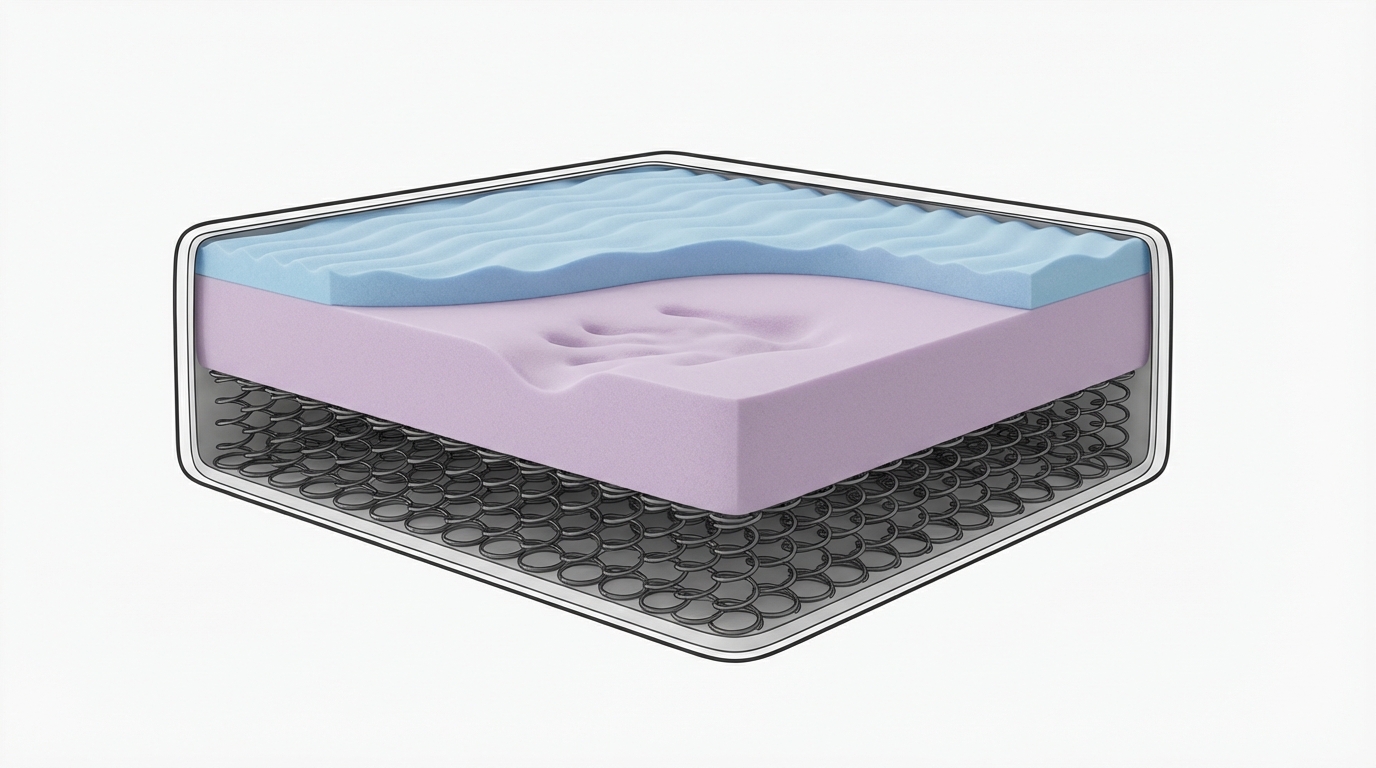
Once you have chosen where to go, the next step is learning how to test mattresses so that the time you spend lying on beds actually predicts how they will feel at 2 a.m. A common mistake is to sit on the edge for a few seconds, then lie down for less than a minute and declare that it is “comfortable enough.” Short tests like that mostly capture surface plushness, not alignment or long term support.
Start by wearing comfortable clothing that lets you move naturally. When you lie down on a mattress, always test in your real sleep position, not just flat on your back unless that is how you truly sleep. Spend at least 10 to 15 minutes on each serious contender, turning from side to back or stomach as you would at night. Pay attention to three main things: whether your spine feels neutral and supported, whether you notice pressure in your shoulders, hips, or lower back, and whether you feel like you are on top of the mattress or sinking into it in a way that might make turning harder.
Research cited by the Sleep Foundation and similar organizations suggests that medium firm to medium mattresses often work best for many adults, particularly for back pain, but the key is how that medium feel interacts with your body weight and shape. A petite side sleeper might need a softer top layer for pressure relief along with adequate underlying support, while a heavier back sleeper might feel best on a sturdier coil or foam core with just enough cushioning on top. Someone with arthritis might value easy repositioning and good edge support more than a deeply hugged feeling. This is where working closely with an experienced Sleepologist makes a significant difference, because subtle changes in construction can dramatically change those sensations.
Finally, make sure to test mattresses with accessories similar to what you will actually use at home. If you plan to pair your mattress with an adjustable base, for example, ask to test it on an in store model like those found in Sleepology’s Adjustable Bed Frame and Base collection. Elevating the head and legs can change how pressure distributes through your spine, so it is smart to evaluate comfort in that position if that is how you expect to sleep. Similarly, test using a pillow type similar to what you use or plan to upgrade to, because an overly high or flat pillow can make a properly supportive mattress feel wrong.
“I thought I wanted the plushest bed in the store because everything hurts when I wake up. Mia had me stay on each mattress for a full 15 minutes, switch positions, and we even tried different pillows. I ended up with a medium hybrid that keeps my spine in line but still cushions my joints. If I had just gone with my first ‘ahhh’ impression, I would have made a big mistake.” – Carol T., December
Matching Mattress Type To Your Body And Sleep Style
Knowing where to buy is only half the battle. You also need to understand the basic mattress types you will see once you walk into a store, so you can quickly eliminate what will not work and focus on what will. The main categories are innerspring, all foam, latex, and hybrid, with some variations in each.
Traditional innerspring mattresses use a coil support system with various comfort layers on top. They often provide a buoyant, slightly bouncy feel and can offer excellent edge support, which can be helpful for people who sit on the edge of the bed frequently or who need extra stability getting in and out. However, cheaper innerspring designs with thin comfort layers can create pressure points, especially for side sleepers, and may wear out more quickly. Specialty retailers typically stock higher quality innerspring options that use better coil units and more substantial comfort materials to avoid these issues.
All foam mattresses, which include memory foam models, contour closely to the body and can be excellent for pressure relief and motion isolation. For couples, this can mean fewer disturbances when one partner moves. According to sleep research published in various academic journals, improved pressure distribution often leads to fewer position changes and more continuous deep sleep, particularly for side sleepers with joint sensitivity. The trade off is that certain foams can retain heat if not designed with ventilation or cooling technologies, and some people dislike the feeling of being “hugged” by the mattress.
Hybrid mattresses combine a coil support core with substantial foam or latex comfort layers, offering a blend of support, pressure relief, and airflow. In , hybrids continue to dominate many showroom floors because they serve such a wide range of body types and sleep styles. Models like the Sealy Posturepedic Elite Medium Hybrid Mattress – Albany II provide robust coil support with responsive foam layers that cushion without swallowing you, making them a strong choice for couples, combination sleepers, and anyone who wants a balanced feel.
Latex mattresses, whether all latex or latex hybrid, are valued for their resilience and natural origin. They tend to feel buoyant rather than slow sinking, with good breathability and durability. Some sleepers with allergies appreciate natural latex options, though it is important to distinguish between latex content and other materials in the cover or quilting. Because latex has a very particular feel, it is especially helpful to test it in person rather than buying based solely on description.
Using Accessories And Foundations To Get The Most Out Of Your Purchase
When you are focused on where to buy a mattress near you, it is easy to overlook the rest of the sleep system. Yet pillows, protectors, toppers, and foundations can make a good mattress feel even better or, if mismatched, can undermine what you just invested in. A trusted retailer will guide you through this bigger picture rather than leaving you on your own.
Pillows matter just as much as the mattress for spinal alignment, especially for side and back sleepers. The right loft and firmness will keep your neck in line with your spine, reducing tension and headaches. If you are not ready to replace your whole mattress but need a comfort boost for travel or occasional guests, a high quality topper and pillow combination can be a smart interim solution. For instance, a supportive travel and guest set like the Tempur Pedic® Mattress Topper Pillow Travel and Guest Bundle can make temporary setups far more comfortable and allow you to maintain better sleep when you are away from your primary bed.
Mattress protectors are another underrated piece of the puzzle. They keep sweat, spills, and allergens from penetrating the mattress, which extends its lifespan and keeps warranties valid. Modern protectors, especially premium waterproof and breathable designs like the TEMPUR Adapt Mattress Protector – Waterproof Mattress Cover, Hypoallergenic, protect without making the bed feel plasticky or hot. This matters because trapped moisture and dust mites are known contributors to allergies and nighttime congestion, and major health organizations stress the importance of minimizing allergen exposure in the bedroom.
Foundations and bases literally support everything, and they are often mismatched when people buy mattresses online without guidance. An overly flexible or aging box spring can cause a new mattress to sag, while an incompatible adjustable base can change how a mattress is supposed to contour. In some cases, using the wrong support system can even void your mattress warranty. Coordinating your new mattress with a sturdy foundation like the Sealy Mattress Base Boxspring Foundation | Low Profile 5 inch height or a well built adjustable base from Sleepology’s curated collection is one of the simplest ways to protect your investment.
When To Shop Locally And When To Consider Buying Online
Now that you have a clearer sense of what you need and what different stores offer, the natural question is whether you should actually buy from a local retailer or consider an online purchase after testing. In practice, many people do a blend of both. The key is understanding where each option shines and where it falls short so you can make a calm, informed decision.
Local purchases shine when you value personalized guidance, easy access to in store support, and professional delivery and setup. If you are dealing with pain, have complex needs, or simply feel overwhelmed by choices, working with an experienced Sleepologist who can watch how your body lies on different beds and adjust recommendations in real time is extremely valuable. You also have a physical place to return to if something feels off during your trial period. For many shoppers, that peace of mind is worth more than shaving off a small amount on the purchase price elsewhere.
Online purchases shine when you are confident about the type and feel you want, your schedule makes multiple store visits difficult, or you enjoy comparing detailed specs from home. Many reputable online mattress options now provide clear breakdowns of materials, firmness scales, and trial policies. After in store testing to find your sweet spot on firmness and construction, you can sometimes find closely related models within Sleepology’s online offerings, like exploring various comfort levels in The Best Foam Mattresses if you discovered you prefer the deep contouring of quality foam.
The main risk with purely online buying is the gap between how firmness is described and how it feels for your particular body. Two people of different weights can experience the same mattress as “too soft” and “too firm” respectively. This is why combining in person testing with online convenience is so effective. You reduce guesswork by calibrating your expectations in a showroom, then you leverage online filters and education to home in on the exact model and size that fits your home and budget.
A Simple Checklist For Evaluating Any Mattress Store You Visit
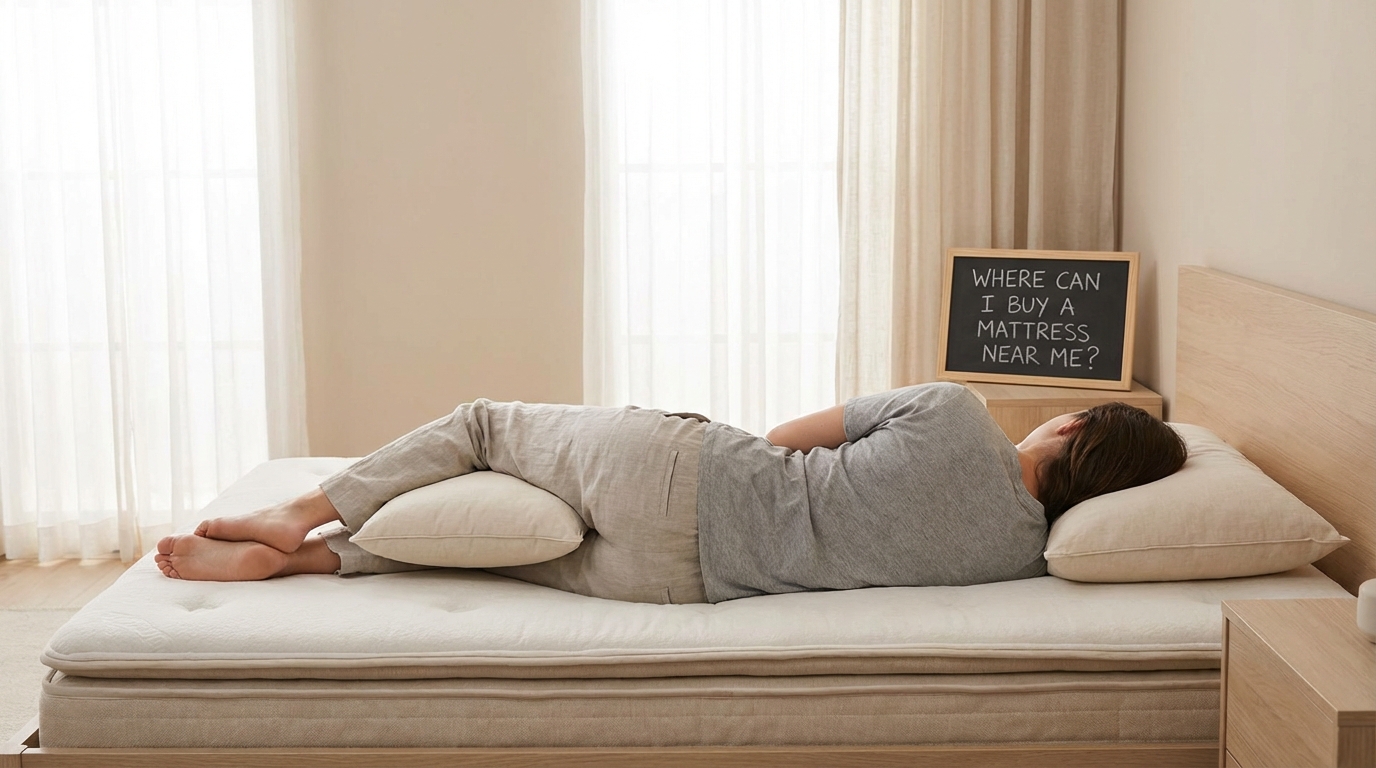
At this point, you might have a couple of stores in mind and a rough idea of the type of mattress you want. To keep your decision grounded, it helps to have a simple, concrete checklist you can mentally run through while you are there. Think of this as your quick reference guide to whether a store is truly set up to help you sleep better, not just sell you something.
Start by noticing the first few minutes of conversation. Are you being asked thoughtful questions about your sleep habits and pain, or are you immediately being steered toward a promotion? Then, pay attention to how the salesperson reacts when you ask detailed questions about materials, warranties, and support systems. Do they welcome those questions and answer directly, or brush them off with vague assurances that everything is high quality? Also, observe whether they rush you while you test mattresses or encourage you to take your time and change positions.
If you like concrete checklists, here is a quick snapshot you can keep in mind:
- The salesperson asks detailed questions about your sleep, not just your budget.
- You get clear explanations of what is inside the mattress, in plain language.
- You are encouraged to spend at least 10 to 15 minutes testing serious contenders.
- Policies for trials, exchanges, and delivery are explained without pressure.
- Accessories and foundations are recommended to support your goals, not just to upsell.
- The store is upfront about pricing and does not rely on confusing “today only” tactics.
If a store checks these boxes, whether it is a national chain location or a local specialty retailer, you are likely in good hands. If it fails on most of them, you may want to keep looking, even if a deal looks tempting. A mattress that is wrong for your body, and a store that disappears when issues arise, will cost far more over time than you save on a sale tag.
“The checklist Mia gave me changed how I looked at stores. At the first place, I realized they barely asked me anything about my sleep and could not really explain the differences between two models that were hundreds of dollars apart. At Sleepology, every question on that list was answered within the first 20 minutes. That made the decision really easy.” – Jonathan K., November
Protecting Your Investment: Warranties, Lifespan, And When To Replace
Even after you pick the right store and the right mattress, there is one more layer of decision making that too many people overlook. That is how you will protect the investment you just made and how you will know, years from now, when it is time to replace it. Understanding this on day one helps you set realistic expectations for comfort and durability.
Most quality mattresses come with warranties that range from 10 years and up, but it is important to remember that a warranty covers defects, not comfort. Sleep medicine experts note that many mattresses begin to lose optimal support between 7 and 10 years, depending on materials, usage, and body weight. Visible sagging, deep body impressions, or a return of morning pain that goes away when you sleep elsewhere are all signs your bed may be past its prime, even if the warranty is technically still active. A good retailer will explain what is considered normal softening and what falls under warranty coverage so you are not surprised later.
Daily care habits also matter. Using a high quality protector from day one, rotating the mattress as recommended by the manufacturer if it is not zoned, and making sure it is properly supported by a foundation or adjustable base all extend its effective life. Mattress hygiene plays a role in health as well. Organizations like the American Academy of Sleep Medicine highlight the impact of allergens, dust mites, and moisture on sleep quality. A clean, well protected mattress is less likely to contribute to nighttime congestion or skin irritation, especially for people with asthma or allergies.
The deeper benefit of choosing the right place to buy your mattress is that you have a knowledgeable partner you can turn to years down the line. If your sleep needs change because of an injury, pregnancy, weight change, or simply age, you can return to a Sleepologist who already understands your history and can suggest adjustments. That might mean changing your pillow, adding a topper, or eventually selecting a new mattress that better suits your current body. A mattress purchase is not a one time, forever decision. It is part of a long term relationship with your own sleep, and investing wisely now sets that relationship up for success.
Conclusion: From “Where Can I Buy A Mattress Near Me” To “I Know Exactly What I Need”
Standing in front of a wall of mattresses or scrolling through endless product pages can feel like a lot, especially when you know how much your sleep affects your health, mood, and daily life. The goal is not to memorize every technical detail or become a mattress engineer. It is to know yourself, understand the main mattress types, and choose a retailer who listens more than they talk. When you arrive with a clear picture of your sleep challenges and a few smart questions, you shift from overwhelmed shopper to informed decision maker.
You have learned how to use “mattress near me” search results strategically instead of randomly, how to distinguish between chains, specialty retailers, and furniture stores, and how to test mattresses in a way that actually predicts how you will feel at home. You also know why accessories and foundations matter, what to watch for in warranties and policies, and how to sense whether a store truly has your long term comfort in mind. That kind of clarity is what prevents you from getting swept up in the promotion of the week and helps you invest in a setup that supports your body for years.
If you are ready to take the next step, consider visiting a Sleepology showroom or exploring curated collections like King Sized Mattresses, The Best Foam Mattresses, Adjustable Bed Frame and Base, and Pillows, Sheets, Toppers, Protectors. With the right guidance, “Where can I buy a mattress near me” becomes “I know exactly where to go, what to try, and how to tell when I have found the right one.” And once your sleep improves, you will feel that decision paying off every morning when you wake up rested, aligned, and ready for the day.
Frequently Asked Questions
How far should I travel to buy a mattress if I have local options?
If you have at least one reputable specialty retailer within 30 to 45 minutes of your home, that is usually as far as you need to go. The value of working with a knowledgeable Sleepologist who can see how you lie on different mattresses is greater than any marginal savings from driving multiple hours for a distant sale. The exception would be if your local options are extremely limited or clearly lack transparency and support. In that case, combining a one time trip to a larger market with careful online research and, potentially, an online purchase can make sense. Always weigh the time and travel cost against the long term value of sleeping well for the next 8 to 10 years.
Should I trust online reviews when choosing where to buy a mattress?
Online reviews can be helpful, but they should not be your only source of truth. Look for reviews that talk specifically about sleep problems, how staff matched those to a particular mattress, and how the bed felt months later, not just the day of purchase. Pay attention to patterns, such as repeated praise for patient guidance or repeated complaints about pushy tactics or poor follow up. Also note how the store responds to criticism. Thoughtful, solution oriented responses signal that the retailer takes long term satisfaction seriously. Combine your review impressions with an in person visit or phone call to confirm that the culture you see online matches your real experience.
Is it better to buy a mattress from a big chain or a local store?
Neither option is universally better, but they serve different priorities. Big chains often have broad brand selection and frequent promotions, which can be attractive if your main focus is advertised price and financing options. Local and regional specialty stores, like Sleepology, usually focus more on deep sleep expertise, curated selections, and long term relationships. If you value personalized guidance, honest education about materials, and a consistent point of contact when you have questions, a specialty retailer is often the better fit. Many shoppers visit both, then choose the environment where they feel heard, not just sold to.
Can I test mattresses in store and still buy online?
Yes, and many savvy shoppers do exactly that. The most effective approach is to use in store testing to learn what firmness range, support system, and general construction feel best for your body. Once you know that, you can compare those sensations to detailed specifications on trusted online platforms, including Sleepology’s own collections. This reduces the guesswork inherent in online only shopping. Just remember that not every mattress labeled “medium” or “firm” will feel the same, so it is best to work with a retailer that can help you identify models with truly similar constructions rather than making assumptions based only on labels.
How long should I expect a new mattress to last?
Most quality mattresses last between 7 and 10 years, depending on materials, body weight, and how well they are cared for. High quality hybrids and latex models often maintain support longer than very inexpensive innerspring or low density foam beds. Using a proper foundation, rotating when recommended, and protecting the mattress from moisture and allergens with a good protector all extend its life. If you start waking up with new aches, notice visible sagging, or sleep better on other beds, those are signs it might be time to reassess, even if the calendar says the mattress is still relatively young.
Do I really need a mattress protector if I am careful?
Yes. Even careful sleepers lose moisture through sweat and skin cells every night, and small spills or accidents can happen over several years. A breathable, waterproof protector keeps that moisture and debris out of your mattress, helping to prevent odors, stains, and allergen buildup. It also keeps most warranties valid, since many manufacturers will not cover mattresses with significant staining or liquid damage. The key is choosing a protector that does not noticeably change the feel of your bed, which is why premium options like the TEMPUR Adapt style protectors that focus on both protection and comfort are worth considering.