

What’s The Best Mattress To Buy In ? A Sleepologist’s Honest Guide
If you are lying awake at night wondering what the best mattress to buy is, you are not alone. I talk to people every week who feel stuck between endless online “top 10” lists, pushy store promotions, and wildly different opinions from friends and family. Meanwhile you are still waking up stiff, sore, or exhausted. That is a frustrating place to be.
Choosing a mattress is a bigger decision than it looks on the surface. You are not just buying a rectangle of fabric and foam. You are choosing the surface that will hold your spine, your joints, and your nervous system for thousands of hours over the next decade. According to organizations like the Sleep Foundation and Mayo Clinic, consistently poor sleep is linked with higher risks of pain, weight gain, mood changes, heart disease, and type 2 diabetes. A mattress will not cure medical problems, but it can quietly support or undermine everything else you do for your health.
The tricky part is that there truly is no single “best mattress in the world.” Your ideal bed depends on your body, how you sleep, your health history, and what feels good to you. That said, there is a clear and practical way to figure out your best mattress to buy, without getting lost in terminology like “phase change yarns” or 14 different coil gauges.
My goal here is to walk you through how a sleep professional actually thinks about mattress selection. You will learn which features matter for your body, how to weigh firmness and materials, how to avoid expensive mistakes, and how to narrow real product choices from Sleepology’s lineup so you can move confidently from confused browser to well rested sleeper.
How To Decide What The “Best Mattress” Means For You
Before you compare brands, it helps to define what “best” needs to do for your body. I encourage shoppers to think in terms of alignment, comfort, and durability, not just buzzwords or sale tags.
Alignment: How Your Spine Sits On The Mattress
Spinal alignment is the foundation. A good mattress keeps your spine in a neutral, gently curved position in your usual sleep posture. When a bed is too soft or too firm for your body, your spine bows or twists, and that is when you wake up with a tight low back or a pinched shoulder.
Medical groups like the Cleveland Clinic often emphasize that neutral spinal alignment during sleep can reduce strain on the back and help pain symptoms over time. The mattress is the tool that either allows that or makes it nearly impossible.
Key idea: If you looked at yourself from the side while lying down, your neck, mid back, and hips should form a smooth line, not a hammock or a ski slope.
Comfort: Pressure Relief Without Feeling Stuck
Comfort is more than softness. It is about how your shoulders, hips, and joints feel after several hours. Too firm and you develop hot spots on your shoulders or hips. Too soft and you may feel comfortable at first but wake up stiff because your muscles have spent all night holding you in a sag.
Research summarized by organizations like the Sleep Foundation suggests that medium to medium firm surfaces tend to work best for most adults, but outliers absolutely exist. Your “best” comfort level will be a blend of your weight, sleep position, and pain patterns.
Durability: How Long The Bed Stays Supportive
Most mattresses last around 7 to 10 years, depending on materials and how they are used. Cheaper foams often feel fine out of the plastic, then develop body impressions within a couple of years. That usually shows up as a trough where you sleep and new aches that were not there before.
Think of durability this way: a mattress that costs a little more but stays supportive for ten years is often cheaper per night than a bargain bed that feels worn out after three.
According to Consumer Reports and other testing groups, higher density foams and robust coil systems tend to hold up better than very light, inexpensive materials.
When you know you are aiming for proper alignment, real comfort, and a decade of life, it becomes much easier to cut through confusing marketing.
Step 1: Start With Your Sleep Position And Body Type
The fastest way to eliminate half the mattresses on the market is to match firmness to your sleep position and weight. Here is how I coach clients through that.
Side Sleepers
Side sleeping is the most common position. Your key pressure points are the shoulder and hip on the side you lie on. You need a surface that is soft enough to let those areas sink in, but firm enough underneath that your waist and low back do not collapse.
Most average weight side sleepers do best on a medium or medium soft mattress. If you are lighter than about 130 pounds, you often need a bit more softness because you do not sink as deeply into foams. If you are above about 230 pounds, a medium or medium firm bed with a bit more underlying support is usually safer to keep your spine from bowing.
At Sleepology, many side sleepers find a sweet spot on plush or soft pillow top hybrids that combine a cushioned top with a supportive coil core. For example, the Sealy Posturepedic Elite Soft Mattress – Brenham II Euro Pillow Top gives generous shoulder and hip cushioning while the coil system keeps your midsection from sagging.
“I have been a side sleeper with hip pain for years. Swapping to a soft Euro pillow top at Sleepology cost less than my last ‘fancy’ mattress, but I woke up after a week realizing my hips were not screaming at me anymore.” – Karen L., November
Back Sleepers
Back sleepers need enough contour under the natural curve of the lower back, but not so much that the hips sink deeper than the ribs. Medium firm is often ideal here.
Heavier back sleepers usually need something a little firmer to keep the pelvis from dipping. Those under about 130 pounds may prefer slightly softer, especially if there is existing arthritis in the back.
A good example style is a medium pillow top hybrid or a sturdy traditional innerspring with a cushioned top. A model like the Sealy Posturepedic Plus Medium Mattress – Paterson II Euro Pillow Top is a strong fit for many back sleepers because it combines targeted center support with a medium comfort feel.
Stomach Sleepers
Stomach sleepers are the highest risk group for back pain because the position naturally encourages the low back to over arch. To minimize that, the mattress must keep your hips lifted. Too soft and your pelvis sinks, compressing the spine.
Most stomach sleepers, especially above 150 pounds, belong on medium firm to firm mattresses with thinner pillow tops or tight tops. Softer beds that feel dreamy under your hands in the showroom often become your worst enemy by 3 a.m. if you sleep on your stomach.
Combination Sleepers
If you change positions through the night, prioritize your “worst” position. For example, if you flip between back and side, choose something that keeps your spine neutral on your stomach or back first, then fine tune with pillows to make side sleeping more comfortable.
Combination sleepers also usually benefit from beds with good ease of movement. Hybrids with coils tend to be better here than deep, slow memory foam that can make you feel stuck.
Sleepology makes this easier by grouping options into curated collections. If you know you are mostly a side sleeper, starting in the Best Side Sleeper Mattress Collection lets you browse only models that make sense for your posture.
Step 2: Choose A Mattress Type You Can Live With

Once you have a target firmness in mind, the next choice is construction. Each type has a distinct feel and trade offs.
Innerspring Mattresses
These are the classic coil beds many of us grew up on. Modern innersprings often use pocketed coils rather than a single connected unit, which helps with motion isolation and contour.
Pros:
- Excellent support and edge stability
- Great airflow for cooler sleep
- Easy to move and change positions on
Cons:
- Less pressure relief compared to thick foams
- More motion transfer than all foam in many cases
Back and stomach sleepers who like a bouncy, “on the bed” feel often do very well on a supportive innerspring with a bit of cushioning on top.
All Foam Mattresses (Memory Foam And Polyfoam)
All foam mattresses use layers of memory foam, polyfoam, or both without coils. Organizations like the Sleep Foundation point out that memory foam can excel at contouring and pressure relief, particularly for side sleepers and those with joint pain.
Pros:
- Exceptional pressure relief
- Very good motion isolation for couples
- Often good value
Cons:
- Can trap more heat, depending on design
- Can feel harder to move or get out of bed
- Edge support can be weaker
These are useful if you are very sensitive to motion, are mostly a side sleeper, and prefer a “hugged” feeling. Just be sure to check for breathable foams or cooling features if you run warm.
Hybrid Mattresses
Hybrids blend coils on the bottom with comfort foams on top. In I see hybrids as the best default recommendation for many shoppers because they strike a balance between support, contour, and temperature.
Pros:
- Strong support and spinal alignment from coils
- Pressure relief and motion control from foams
- Better airflow than most all foam designs
Cons:
- Often cost a bit more than basic foam beds
- Quality varies widely between brands
Many of Sleepology’s best performing models are hybrids. For example, the Sealy Posturepedic Elite Soft Hybrid Mattress – Brenham II is a good example of a pressure relieving hybrid for side sleepers who still want a supportive core.
Latex And Specialty Materials
Latex, whether natural or synthetic, has a buoyant, responsive feel. Latex mattresses tend to be very durable and sleep cool. They are popular among eco minded shoppers and those who dislike the sink of memory foam.
Pros:
- Very durable and resilient
- Naturally more breathable
- “On top” buoyant feel
Cons:
- Often more expensive
- Some people find them too bouncy or firm
If you know you want latex or a specialized construction, it is wise to test in person. It is a very specific feel, and you will know quickly whether your body likes it.
“I thought I wanted a pure memory foam mattress because everyone online was raving about it. In the store I tried a medium hybrid the consultant recommended, and I realized I loved the bit of bounce. It felt like my back could relax without that stuck feeling.” – James P., October
Step 3: Match Firmness To Your Body Weight And Pain Patterns
Mattress makers often talk about firmness on a 1 to 10 scale, where 1 is ultra plush and 10 is like a carpeted floor. In practice, there is no industry wide standard, so “medium firm” in one brand may feel slightly different in another. Still, we can use general guidelines.
How Your Body Weight Affects Firmness
- Under 130 pounds: You do not compress the comfort layers much, so mattresses feel firmer to you. Many lighter sleepers are happier on soft to medium models, especially for side sleeping.
- 130 to 230 pounds: You are in the range most designs are calibrated for. Medium to medium firm often works best, with your pain profile and position guiding the final choice.
- Over 230 pounds: You compress deeper into the bed and need more support so you do not bottom out. Medium firm to firm is usually safer, and higher quality coils and foams become even more important.
If you are in a larger body and a mattress marketed as “plush” feels amazing in the showroom, pause. Many very soft beds that feel luxurious for a few minutes will not keep your hips level overnight, and over months they tend to sag faster. I look for robust coil systems and denser comfort layers for my heavier clients.
Listening To Your Pain
Your existing pain patterns tell us a lot about what you need.
- Morning low back pain that eases after you get up often points to too soft a mattress or one that is sagging. A bit more firmness and better center support can help.
- Shoulder numbness or tingling, especially as a side sleeper, usually means the surface is too firm on top. You may need more cushioning, especially in a pillow top.
- Hip pain can be either too firm (creating a pressure point) or too soft (letting the pelvis twist). In that case we look very carefully at how you lie during a test.
According to Mayo Clinic and other medical sources, unmanaged nighttime pain can lead to fragmented sleep and increased daytime pain perception, so using your mattress to help manage pressure points is not just a comfort preference, it is part of pain control.
At Sleepology, when I am fitting someone with recurring shoulder discomfort who sleeps on their side, I often steer them toward a soft pillow top hybrid like the Sealy Posturepedic Pro Soft Mattress – Dupont II Euro Pillow Top. It offers enough give at the shoulder to reduce pressure without letting the midsection collapse.
Step 4: Compare Features That Actually Matter
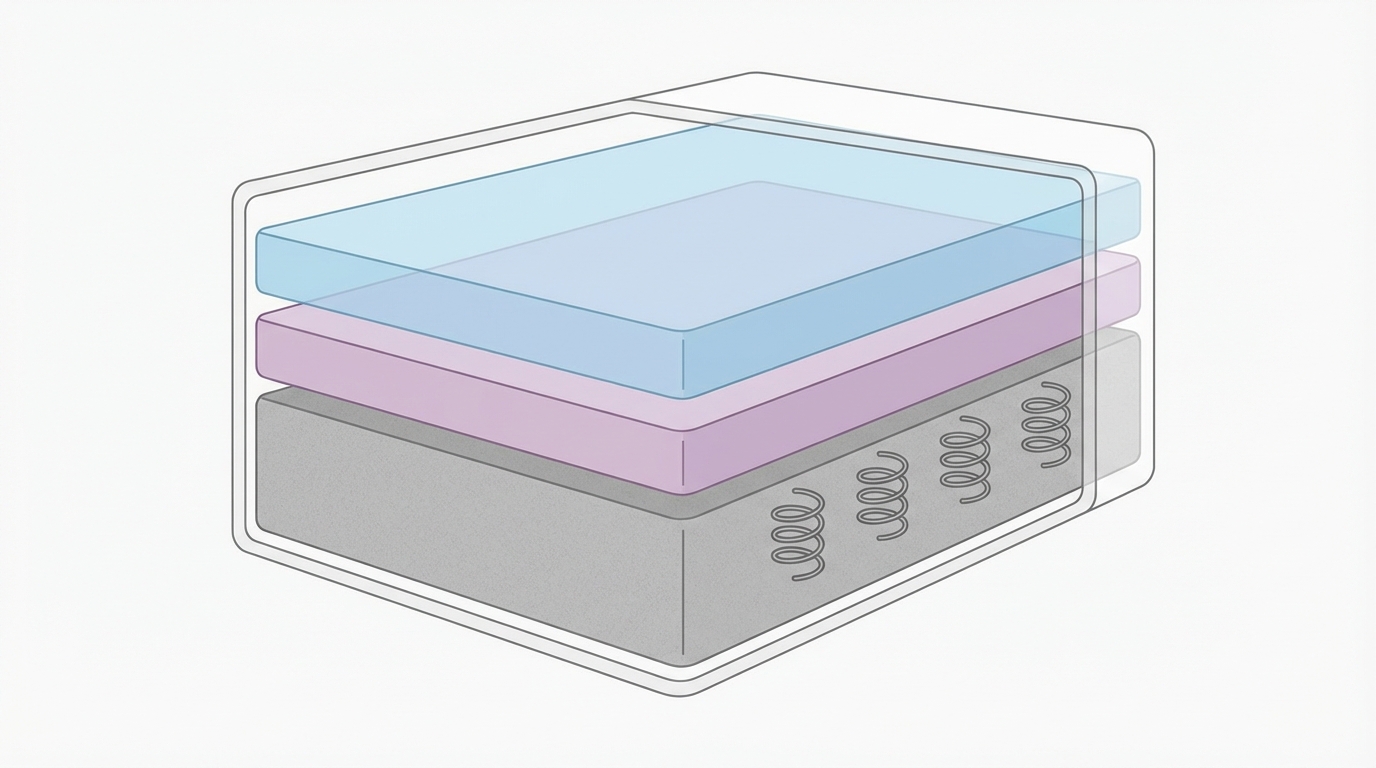
Mattress brands love to list long ingredient labels: gel beads, phase change this, nano coils that. Only some of these features make a noticeable difference in daily sleep. Here are the ones I pay attention to as a sleepologist.
Cooling And Temperature Control
If you frequently wake up hot, or you are going through hormonal changes that affect your temperature, prioritizing cooling is smart. Sleep researchers note that cooler bedroom and body temperatures support better sleep quality and faster sleep onset.
Helpful cooling features:
- Coil support cores or breathable latex for airflow
- Open cell or ventilated foams
- Cooling covers made of fibers like Tencel or specialized cooling fabrics
Things to treat cautiously:
- Thin “cooling gel” sprayed on basic foam. It may feel cool to the hand, but without airflow it will still trap heat once your body warms it.
If you only “run hot” occasionally, a well chosen mattress combined with breathable bedding from a collection like Sleepology’s pillows, sheets, toppers, and protectors is usually enough to keep you comfortable.
Motion Isolation For Couples
If you share a bed, consider how much you feel your partner moving. All foam mattresses tend to isolate motion best, followed by well made hybrids with pocketed coils and enough foam above them. Traditional connected coil innersprings will usually transmit the most movement.
In my experience, if one partner is a very light sleeper and the other tosses and turns, moving a little firmer or more motion isolating helps both. That can mean a slightly firmer hybrid or a medium all foam model.
Edge Support
Edge support matters if you sit on the side of the bed to get dressed, you like to sleep near the edge, or you have any balance or mobility concerns. Strong edges make the mattress feel bigger and more secure. Coil based mattresses usually win here, though some hybrids and high density foam designs do well.
During an in store test, always sit near the edge and shift your weight as you would at home. You should feel stable, not like you are sliding off.
Policies: Trial Period, Warranty, And Delivery
A generous, clearly written trial and warranty tell you the brand expects the bed to perform. Many reputable companies now offer at least 90 to 120 nights to try the mattress at home, because one short showroom test is not enough. Look for:
- At least 90 nights of trial, with transparent return terms
- A warranty that covers sagging beyond a certain depth
- Delivery and setup options appropriate for your home and body
This is also where working with a retailer like Sleepology can help. You have a local point of contact plus online support, instead of being left alone with a giant box on your doorstep and a chat bot.
A Simple, Practical Mattress Buying Checklist
At this point you might be thinking, “That is a lot to remember.” Here is a quick checklist you can use while you shop. This is the only bulleted list I will ask you to keep handy.
- Confirm your primary sleep position and note any pain: back, side, stomach, or a mix, plus where you hurt in the morning.
- Choose a starting firmness range:
- Pick a construction type you prefer: innerspring, hybrid, all foam, or latex.
- Check real support: lie in your usual position for at least 5 to 10 minutes, then pay attention to your low back, shoulders, and hips.
- Evaluate movement and edges: roll over, sit on the edge, and see how stable and easy it feels.
- Review the trial, return, and warranty terms before you commit.
If a mattress passes that checklist and fits your budget, you are very likely in the right zone. Fine tuning within that zone is much easier than starting from scratch.
How Sleepology’s Collections Help Narrow “Best” For You
A common question I hear is, “Why not just buy the mattress everyone online says is best?” The reality is that those lists are written for a statistically average person who may have nothing in common with you. At Sleepology we try to bridge that gap with curated collections built around how real people sleep.
Side Sleeper Focus
The Best Side Sleeper Mattress Collection gathers mattresses with gentler top layers and strong support cores. These are designed to reduce pressure at the shoulder and hip while still holding the spine level. Within that set, your weight and pain pattern will decide whether a soft Euro pillow top like the Dupont II or a slightly more buoyant medium surface suits you.
Back And Stomach Sleeper Support
Back and stomach sleepers often do better with slightly firmer, more supportive surfaces. The Best Mattresses For Back Sleepers collection highlights models with robust lumbar support and medium to medium firm feels. The Best Mattresses For Stomach Sleepers focuses on firm options that resist hip sink.
Within these collections, we use real construction details, not just marketing names. So when I recommend a Sealy Posturepedic Medium Mattress – Medina II Euro Pillow Top to a back sleeper, I know the coil zoning and foam densities are capable of the job, not just labeled “supportive.”
“The Sleepology team asked about my shoulder surgery instead of just pushing the most expensive model. We ended up choosing a medium hybrid from their back sleeper collection, and the first morning I woke up without that burning between my shoulder blades, I almost cried.” – Elaine M., December
Common Mattress Shopping Mistakes To Avoid
Even smart shoppers fall into predictable traps. Being aware of them helps you stay focused on what your body actually needs.
Chasing The Deepest Discount
Holiday sales are real, but discount percentages can be misleading. A mattress permanently listed at 50 percent off its inflated “compare at” price might still be worse value than a fairly priced model with better materials. Look at the out of pocket price, not just the percentage.
Also, do not let a limited time promotion rush you into a comfort you are not sure about. Your body will live with the decision far longer than the sale banner will.
Buying Too Soft “Because It Feels Nice”
Soft, pillowy tops feel wonderful for the first few minutes in a store, especially if you come in sore. The challenge is what happens after hours of sleep. If your hips or midsection sink too far, you will wake up with more pain, not less.
When you test a soft bed, spend time in your worst position and pay attention to whether your low back feels relaxed or slightly strained. If your muscles are working to hold you in place, it is too soft.
Ignoring Your Partner’s Needs
If you share a bed, both bodies matter. A mattress that is perfect for a 120 pound side sleeping partner may not work at all for a 230 pound back sleeper. Sometimes the best compromise is a medium hybrid that each person fine tunes with their own pillow and possibly a small topper on their side.
Talk honestly with each other before you shop. Agree on what problems you are trying to solve: motion, heat, back pain, space, etc. That makes in store testing more focused and less emotional.
Overthinking Every Micro Detail
I say this gently. With endless online information, it is easy to fall into analysis paralysis, hunting the perfect coil gauge or foam chemistry. Those technical details matter, but they are supporting characters, not the star.
If a mattress keeps your spine neutral, feels genuinely comfortable in your usual positions, and is built by a reputable brand with a good trial, you can stop looking. There is no prize for finding the most complicated spec sheet.
When To Replace Your Mattress Instead Of “Patching” It

Sometimes people come to me trying to fix a clearly worn out mattress with toppers, boards, or elaborate pillow arrangements. Those can be helpful tools, but there is a point where replacing the mattress is the healthier choice.
Here are signs your current bed is done:
- Noticeable sagging or body impressions deeper than about an inch, especially in the center
- You sleep better on almost any other surface: hotel beds, the guest room, even the sofa
- New or worsening morning pain that was not present when the mattress was newer
- Noisy coils or obvious broken components
Sleep medicine specialists often recommend evaluating your mattress at least every 7 to 10 years, and sooner if you notice these signs. A supportive foundation is not a luxury, it is maintenance for your spine, joints, and sleep system.
That said, if your mattress is still structurally sound but just a bit firmer than you like, a high quality topper from a trusted retailer can be a smart interim step. I often use toppers strategically for people whose weight or health is changing but who are not ready for a full replacement yet.
Bringing It All Together: Your Path To The “Best” Mattress
Finding the best mattress to buy in is less about chasing a single model and more about matching a good quality bed to your unique body and habits. When you focus on spinal alignment, real comfort, and durability, a few clear patterns emerge.
Your sleep position and weight point you to a sensible firmness range. Your pain history tells us whether you need more pressure relief, more support, or both. The way you and any partner move at night guides whether you are better off with the motion control of foam, the bounce of coils, or the blend of a hybrid.
From there, features like cooling, edge support, and brand policies help you separate solid, honest products from marketing sizzle. Sleepology’s curated collections exist to filter that further, so you can start with a short list that fits your posture instead of a warehouse full of random beds.
You deserve to wake up feeling more rested instead of more sore, and you do not have to become a mattress engineer to get there. A focused hour in a showroom with the right questions, or a careful online selection backed by a good trial, can be enough to change how your body feels every morning.
Frequently Asked Questions
How do I know if a mattress is actually supporting my back correctly?
Lie in your usual sleep position for at least 5 to 10 minutes and tune into your low back. If your muscles feel like they have to hold you in place or you notice a strong arch or dip, support is off. In a neutral, well supported position your back should feel relaxed, with no single spot bearing most of your weight. If someone can look from the side, your shoulders, ribs, and hips should form a gentle line rather than a hammock shape.
Is a firm mattress always better for back pain?
Not necessarily. Many people with back pain assume firmer is always better, but research and clinical experience suggest that medium firm surfaces often perform best for overall comfort and function. Too firm can create pressure points and force your spine to adapt to the mattress instead of the other way around. The “best” for back pain is a mattress that keeps your spine neutral and allows your muscles to fully relax, which is often medium or medium firm, adjusted for your weight.
I sleep hot. Should I avoid memory foam completely?
You do not have to avoid it completely, but you should be choosy. Traditional, dense memory foam can trap heat, especially in all foam mattresses. If you sleep hot and love the feel of foam, look for hybrid designs that pair foam with coils for airflow, plus breathable covers and ventilated or open cell foams. Pairing a reasonably cool mattress with breathable sheets and a lighter comforter can often resolve overheating without giving up the pressure relief you like.
How long should a good mattress last before I replace it?
Most quality mattresses last around 7 to 10 years, but that range can shift with your body weight, how often the bed is used, and the materials inside. Higher density foams and sturdy coil systems tend to hold up longer than very inexpensive, light materials. The real answer is: replace your mattress when it no longer keeps your spine neutral and you consistently wake up more sore or tired than you did when it was new, especially if you notice visible sagging or impressions.
Are pillow top mattresses a good idea or just a gimmick?
Pillow tops are not a gimmick by themselves. They are simply an extra cushioning layer sewn on top of the support core. For side sleepers and people with bony joints or arthritis, a well made pillow top can significantly improve pressure relief. The key is that the underlying support system must be strong, and the pillow top should not be so thick and soft that your hips disappear into it. In the Sleepology assortment, pillow top models are paired with robust coil systems to keep comfort and support in balance.
Should couples with very different sleep needs buy separate mattresses?
Sometimes, but not always. If your needs are close, for example a side sleeper and a back sleeper of similar build, a well chosen medium hybrid often works for both, especially if each person uses a pillow tailored to their position. If one person is very light and loves plush while the other is significantly heavier and needs firm support, you may consider a firmer shared mattress plus a softer topper on one side, or in rare cases, two separate mattresses in a shared frame. A Sleepology consultant can often help you test configurations that preserve closeness without sacrificing either person’s comfort.
How important is it to test a mattress in person before buying?
It is highly helpful but not absolutely mandatory. In person testing lets you feel subtleties like ease of movement, edge stability, and temperature more directly. If you can visit a Sleepology showroom, you will shorten your learning curve dramatically. However, if you cannot shop in person, choose a retailer with detailed descriptions, honest firmness guidance, and a generous home trial. Then give yourself several weeks to adjust and evaluate rather than deciding based only on the first night.