

What’s The Best Mattress? A Sleepologist’s Guide To Finding Your Best Bed In
If you are staring at mattress options until your eyes blur and your back already hurts just thinking about choosing wrong, you are not alone. I talk to people every week who whisper some version of “What’s the best mattress?” while secretly hoping there is one magic model that fixes sleep, pain, snoring, and maybe their taxes too. When you are tired, the last thing you want is more research that leaves you even more overwhelmed.
Here is the truth that most ads will not say out loud: there is no single “best mattress” for everyone. There is only the best mattress for your body, your sleep habits, and your budget. The good news is that once you understand a few core principles, the chaos starts to make sense and the right choice becomes much clearer.
Your mattress affects more than comfort. According to the Sleep Foundation, most adults need 7 to 9 hours of sleep per night, and bed quality directly influences how much of that time is spent in deep, restorative stages. Poor support is associated with more nighttime awakenings, worse next day focus, and more musculoskeletal pain. Mayo Clinic and Cleveland Clinic both note that chronic back and neck issues often improve when people move to a mattress that keeps the spine in neutral alignment instead of sagging or forcing it to curve.
You are in the right place if you want a calm, expert, agenda free walkthrough. I will help you understand what “best” really means for different sleepers, how to decode firmness and materials, and how to match real products to your needs so you can shop with confidence, not anxiety.
Redefining “Best”: What A Good Mattress Actually Has To Do For You
When people ask me “What’s the best mattress?” what they usually mean is “How do I avoid another expensive mistake?” The last bed might have felt great for three weeks, then turned into a hammock. Or it helped your back but aggravated your shoulders. So let’s start by defining what a genuinely good mattress must accomplish.
At its core, a mattress has two jobs that constantly pull against each other. It must support you enough to keep your spine in a straight, neutral line, and it must cushion you enough so your shoulders, hips, and joints are not being squashed. Support without cushion feels like a board. Cushion without support feels wonderful for 20 minutes and then slowly twists your spine out of position. The “best” mattress for you is the one that finds that balance for your body weight and preferred sleep position.
There is also the question of temperature and motion. Many people do not realize that overheating can push you out of deep sleep stages. Research in sleep medicine has shown that even small increases in core body temperature can fragment sleep and worsen conditions like insomnia and chronic pain. Foam that traps heat can be a dealbreaker if you already sleep warm. And if you share a bed, motion isolation really matters. A mattress that bounces every time your partner rolls over can cost both of you hours of sleep every week.
Finally, durability and health are part of “best” too. Consumer testing groups like Consumer Reports routinely find that many mattresses start to lose support around the 7 to 10 year mark, especially cheaper foams with lower density. While you do not need the most expensive mattress on the floor, you want one with materials and construction that will still hold your spine up in five years, not just feel nice during the showroom test.
“I’d bought two “top rated” beds online in three years and both felt great at first, then I was back to waking up stiff. Talking with Sleepology reset my expectations. Once Mia explained my weight, back sleeping, and old shoulder injury, it made sense why I kept choosing the wrong feel. The mattress I ended up with was actually mid priced, not the fanciest, and I finally wake up without that brick in my lower back.” – Erin L., October
How Your Body And Sleep Style Decide What “Best” Means
Before you even think about brand names, it helps to get very honest about how you actually sleep. This is where we usually uncover why the last mattress failed you. Three variables matter most: sleep position, body weight, and pain patterns.
Side sleepers: pressure relief without the hammock
Side sleeping is the most common position and one of the best for snoring and acid reflux, but it is demanding on a mattress. Your shoulders and hips are narrow contact points that carry a lot of your body weight. Too firm, and those areas get compressed, which can lead to numb arms, hip pain, and irritation of the bursa or rotator cuff. Too soft, and your midsection sinks so far that your spine forms a banana shape.
For most side sleepers under about 230 pounds, a medium or medium soft feel with good pressure relief around the shoulders and hips works best. Memory foam or plush pillow tops on top of supportive coils often do this nicely. Our side sleepers at Sleepology often love the cushioned Euro tops on options like the Sealy Posturepedic Elite Soft Mattress – Brenham II Euro Pillow Top, because the surface gently cradles the shoulder while the core stays firm enough that your spine does not sag.
If you are a lighter side sleeper, under about 130 pounds, mattresses tend to feel firmer to you because you do not compress the top layers much. In that case, a softer model or a Euro pillow top can be your friend. Heavier side sleepers may actually sleep better on a medium or even medium firm mattress, because their weight naturally creates more sink and they still need the underlying support.
Back sleepers: neutral spine is everything
If you most often wake up on your back, support is king. The natural curve of your lumbar spine must be held, but your hips should not drop deeper than your upper back. When the midsection sinks, the vertebrae compress and facet joints and discs get irritated. Clinical research on mattresses for chronic low back pain has consistently found that too soft is worse than too firm, and that medium firm designs tend to reduce pain and improve function more effectively than extremes.
Back sleepers generally do very well on true medium firm mattresses. You want the feel of being “on” the bed with just enough give under the hips and upper back to avoid pressure points. A balanced hybrid like the Sealy Posturepedic Plus Medium Mattress – Paterson II Euro Pillow Top is a good example of how this looks in practice: buoyant coils through the center, slightly plusher quilting at the top.
If you are petite, you may prefer slightly softer than standard medium firm. If you are over 230 pounds, you may need something firmer in the core so that you do not gradually bow into the mattress, even if the comfort layers still feel inviting.
Stomach sleepers: protect your spine at all costs
I am always gentle but honest with my stomach sleepers: this position is hardest on your spine. When you lie face down, your midsection naturally presses the mattress, and if the surface gives too much, your lower back is forced into a hyperextended curve that can aggravate disc issues and facet joints. Many spine specialists recommend that committed stomach sleepers use a firmer mattress or try to transition toward side or back sleeping over time.
If you sleep on your stomach most of the night, you generally need a firm or at least medium firm mattress with very strong support through the hips. Foam that lets your midsection sink deeply while your upper body stays high is exactly what you want to avoid. Collections like The Best Mattresses For Stomach Sleepers are carefully curated around this principle: flatter surfaces, sturdier coil systems, and less dramatic contouring.
Combination sleepers and restless bodies
Many people move through two or three positions each night. If that is you, you need a mattress that is forgiving in more than one posture and that does not make position changes feel like climbing out of a ditch. A balanced, slightly springy hybrid with moderate contouring is often ideal. Latex, responsive polyfoam, or coils under foam can all work well because they recover quickly when you roll.
When you combine this with your weight and pain patterns, you get a much sharper picture of “best.” A 120 pound side and back sleeper with hip bursitis needs different cushioning than a 260 pound back and stomach sleeper with lumbar stenosis. Recognizing that difference is the starting point for a mattress you are actually happy with after the honeymoon period.
“I always thought I was a side sleeper until Mia asked me what position I wake up in, not fall asleep in. Turns out I spent half the night on my back. No wonder my old super soft memory foam felt great to fall asleep on but my lower back was wrecked by morning. We aimed for more of a medium hybrid and I could tell in a week my pain flare ups were less intense.” – Jason P., November
Mattress Types Explained: Foam, Hybrid, Innerspring, And Latex

Once you understand what your body needs, the next question is which type of mattress is most likely to deliver that feel. Most beds on the market fall into four main categories. Each can be excellent or terrible depending on how it is constructed, but each has a personality.
All foam mattresses
All foam mattresses use layers of memory foam, polyfoam, latex foam, or a blend. They tend to excel at pressure relief and motion isolation. If you press your hand in and it slowly rebounds, that is usually memory foam. It conforms closely and can feel incredibly comfortable for side sleepers or people with joint pain.
The downside, especially with cheaper foams, is heat retention and sagging over time. Memory foam naturally stores more heat than materials like coils or natural latex. Many modern foams are now infused with gels, copper, or open cell structures meant to improve breathability, and they do help, but if you truly sleep hot, you still may feel warmer on thick memory foam. There is also the “stuck” feeling that some people dislike, where changing positions feels like climbing out of a mold of your body.
From a health perspective, reputable foam mattresses in the United States are usually CertiPUR US certified, which means they are made without certain harmful chemicals and have low emissions of volatile organic compounds. This is worth checking for if you are especially sensitive to chemical smells.
Innerspring mattresses
Traditional innerspring mattresses are mainly steel coils topped with thin layers of foam or fiber. They feel bouncy and buoyant and are usually quite breathable. If you like the feeling of lying on the mattress instead of in it, a firmer innerspring can feel wonderful, especially for back and stomach sleepers who do not want lots of sink.
Modern innersprings often use pocketed coils rather than a single wire grid. Pocketing helps reduce motion transfer, so your partner’s tossing is less likely to send ripples across the whole bed. According to Consumer Reports, better innersprings tend to hold their support characteristics for many years, particularly in the firmer feels, because steel simply breaks down more slowly than low density foam.
On the downside, basic innersprings can feel a bit unforgiving for side sleepers if they lack enough cushioning on top. Edge comfort and back support can also vary a lot between bargain models and high quality designs.
Hybrid mattresses
Hybrids combine a coil support core with thicker foam or latex comfort layers. In recent years this has become the dominant category, and for good reason. A good hybrid gives you the responsiveness and airflow of coils with the contouring and pressure relief of foam or latex. Foam heavy hybrids can feel similar to soft foam beds but with better edge strength and easier movement. Latex hybrids skew more buoyant and temperature neutral.
For many people, a medium or medium firm hybrid is the most forgiving “middle of the road” option. This is why you see so many “best overall” recommendations that happen to be hybrids. At Sleepology, I frequently recommend options like the Sealy Posturepedic Plus Soft Hybrid Mattress – Paterson II to side sleepers who want generous cushioning but also need lumbar support and a cooler surface.
Because hybrids use more components, they tend to cost a little more than a basic foam bed in a box, but you often gain longevity and all around performance that make the investment worthwhile when you spread it across 8 to 10 years.
Latex mattresses
Latex mattresses use foam made from rubber tree sap (natural latex) or synthetic blends. Natural latex is particularly interesting because it combines contouring with resilience. Imagine something in between memory foam and springs. It flexes under your body but springs back quickly. It is also naturally breathable and resistant to dust mites and mold, which makes it attractive for people with allergies.
Many latex beds in are positioned as eco friendly options, often with organic cotton and wool in the cover. Certifications like GOLS for latex and GOTS for textiles indicate that the materials meet organic standards. Sleep researchers have noted that people concerned about chemical sensitivities sometimes feel more comfortable on these constructions.
The drawbacks are mainly price and feel preference. Latex beds often cost more up front. Some people also find the feel too buoyant or less “hugging” than memory foam. As always, this comes back to your personal preference and sleep style.
Side by Side: How The Major Mattress Types Compare
At this point you might be thinking “This is helpful, but I still need something to compare.” Here is a simple comparison table to help you weigh the main mattress types against each other across a few key attributes.
| Mattress Type | Typical Feel | Best For | Watch Outs |
|---|---|---|---|
| All Foam (including memory foam) | Close contouring, body hugging, excellent motion isolation | Side sleepers, people with joint or shoulder pain, couples needing minimal motion transfer | Can trap heat, may feel “stuck,” cheaper foams can sag faster |
| Innerspring | Bouncy, on top of the bed, very breathable | Back and stomach sleepers who like a firmer, traditional feel, hot sleepers | Less pressure relief for side sleepers if top layers are thin, motion can travel if coils are not pocketed |
| Hybrid (coils + foam or latex) | Balanced cushioning and support, mix of contour and bounce | Most body types and sleep positions, couples, people wanting “just right” feel | Often pricier than basic foam, quality varies by brand and coil/foam specs |
| Latex (all latex or latex hybrid) | Buoyant, responsive, gentle contour without deep sink | Hot sleepers, eco minded shoppers, combination sleepers who move a lot | Higher price, feel is different from memory foam and not everyone loves it |
Once you understand which column fits your needs, it gets much easier to narrow down to specific models without falling for marketing noise.
Firmness: Why “Soft” Or “Firm” Often Misleads People
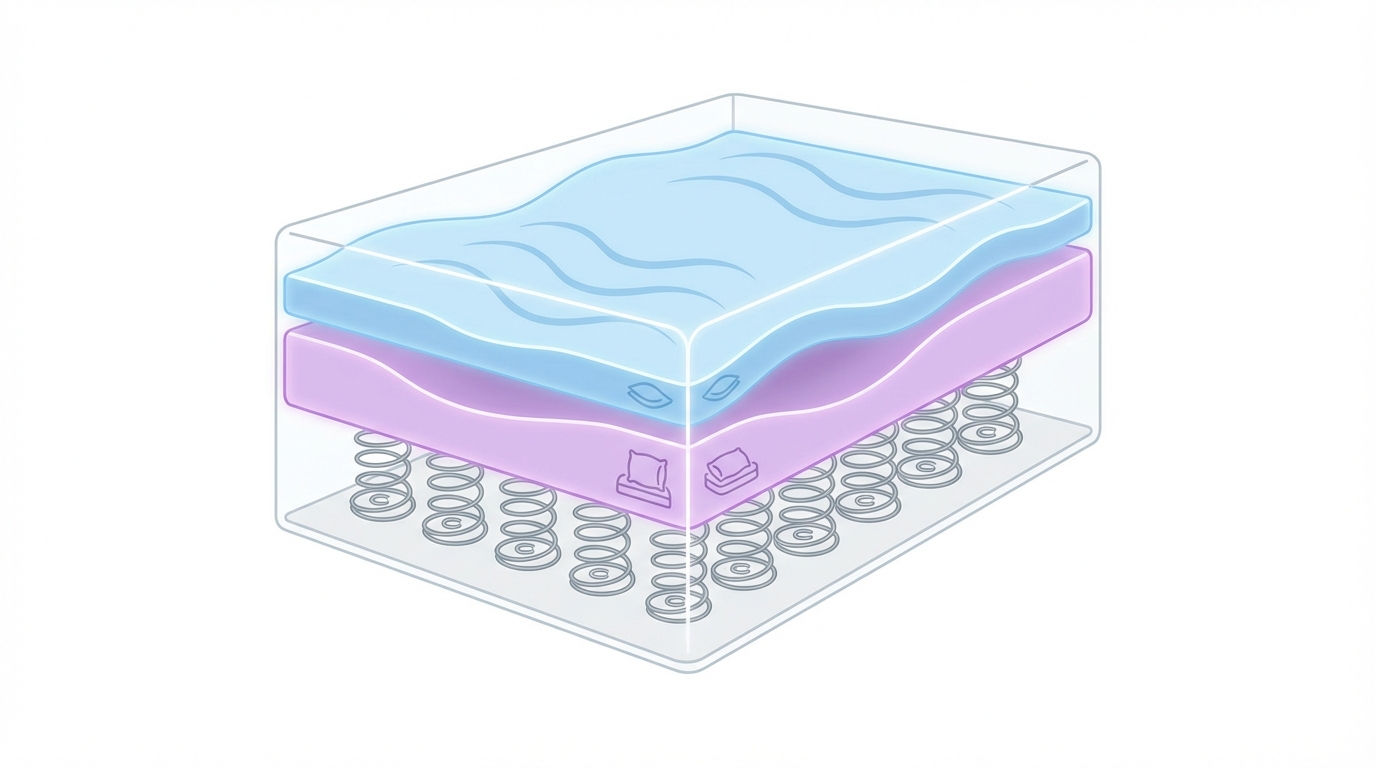
One of the biggest sources of confusion I see is firmness. People say “I like a soft bed” or “I need something really firm for my back,” but those phrases mean very different things depending on your weight, height, and what you have been sleeping on until now.
Most of the industry uses a 1 to 10 scale to describe firmness, where 1 is extremely plush and 10 is rock hard. In practice, almost all mattresses sold live between 3 and 9. Independent testing groups like Sleep Foundation and Mattress Nerd often rate firmness this way in their reviews to compare across brands.
Here is where weight matters. A 250 pound sleeper will compress the same mattress much more than a 120 pound sleeper. The bed that feels medium to the heavier person can feel quite firm to the lighter one. That is why you will sometimes see a model rated as soft for lightweight sleepers, medium for average, and firm for heavier bodies in lab testing summaries.
Your habitual posture also shapes perception. A stomach sleeper on a medium mattress may feel well supported, while a side sleeper of the same weight may report that their shoulder is digging in and call it too firm. Neither is wrong. They are experiencing different contact points.
So when you think about firmness, try to translate “soft” and “firm” into “how far do I want to sink” and “how much do I want the mattress to push back.” For many people, especially those with some back discomfort, a true medium firm, around 6 to 7 on that 10 point scale, is a safe and supportive starting point. Clinical reviews on mattresses and low back pain have found that medium firm designs often outperform very soft or very hard surfaces for pain reduction and sleep quality.
At Sleepology, we often match side sleepers to softer options in curated collections like The Best Side Sleeper Mattress Collection, while back sleepers do well browsing The Best Mattresses For Back Sleepers. Those ranges give you softer or firmer feels within a category already tuned to your posture.
Matching Real Products To Real Needs
Now let’s connect the dots between all this theory and actual mattresses you might look at.
If you are a side sleeper under 200 pounds with achy shoulders and you run warm, a strong candidate might be a medium or soft hybrid with a plush Euro pillow top and coils underneath. Something like the Sealy Posturepedic Pro Soft Mattress – Dupont II Euro Pillow Top fits that profile. The Euro top relieves shoulder and hip pressure, while the coil unit underneath maintains spine alignment and allows air to move through the bed so you are less likely to overheat.
If you are a back sleeper around 180 pounds with mild but consistent low back tightness, I often recommend looking for a medium mattress with zoned or reinforced support through the lumbar region. Designs such as the Sealy Posturepedic Elite Medium Mattress – Brenham II Euro Pillow Top combine comforting foam on top with a more assertive core that keeps your hips from sagging.
For couples where one person is a side sleeper and the other is a back or stomach sleeper, hybrids in the medium range are often the smartest compromise. The Sealy Posturepedic Medium Mattress – Medina II Euro Pillow Top is a good example of a “middle ground” build where the comfort layers are forgiving enough for side sleeping but not so plush that a stomach or back sleeper feels swallowed.
And for the person who genuinely prefers a very firm surface, maybe because of lifelong stomach sleeping or a history of appreciating firm hotel beds, a sturdy extra firm like the Sealy Posturepedic Elite Extra Firm Mattress – Brenham II can finally feel like home, keeping the hips lifted and the spine flat.
“I walked into Sleepology sure I needed ‘the softest bed you have’ for my hip arthritis, because my old firm one felt brutal. Once Mia showed me how my weight and side sleeping were bottoming that mattress out under my hip, I understood why I woke up worse. We chose a soft Euro top over a supportive core instead. The difference was obvious the first week. I still have arthritis, but I am not fighting my mattress anymore.” – Linda S., September
Cooling, Motion, And Edge Support: The “Secondary” Factors That Secretly Matter A Lot
People usually start by thinking only about softness. After a few nights in real life, other qualities become just as important. Let’s talk about three that I ask every shopper about: cooling, motion isolation, and edge support.
Staying cool enough to sleep deeply
Humans sleep best when core body temperature drops slightly. If your mattress stores heat, you may fall asleep but then surface sleep lightens or becomes fragmented as your body fights to cool down. Hot flashes, high bedroom temperatures, heavy bedding, and foam that hugs very closely all add up.
Hybrids and innersprings generally run cooler than solid foam because coils act like tiny air channels. Latex also tends to sleep cooler than memory foam. Breathable covers, phase change fabrics, and gel or copper infusions can help disperse heat from the surface, although they are not magic if the underlying design still traps warmth.
If you know you sleep hot, lean toward a coil based or latex based design. Academic studies on mattress materials and body pressure have also noted that reduced contact area, such as what you get on slightly firmer, more buoyant surfaces, can improve heat dissipation compared with deep enveloping foams.
Motion isolation when you share a bed
Motion isolation is the mattress’s ability to stop movement on one side from jiggling the other. This is usually where memory foam shines. It dampens vibration extremely well. Pocketed coil hybrids with decent foam or latex on top can also be very good. Continuous coil innersprings and very bouncy latex beds tend to transfer more motion, although construction details matter.
If you share with a partner, child, or pet, pay attention to this, especially if one of you is a light sleeper. The right mattress can mean waking up twice per night instead of ten times. Third party testing organizations often rate motion isolation as one of their primary categories for this reason, and their data is a helpful comparison point because it is measured with sensors rather than just subjective feel.
Edge support for getting in, out, and using the full surface
Edge support matters more than people realize until they buy a mattress with weak sides. Strong edges let you sit to get dressed, tie shoes, or swing in and out of bed without feeling like you are sliding off. They also allow you to safely sleep near the edge, which is important if you share a smaller bed or co sleep with a child.
Foam encasements and thicker coils around the perimeter strengthen edges. All foam beds rarely excel here unless they use higher density foams at the side rails. Hybrids and innersprings often do better.
Older adults, people recovering from surgery, and anyone with balance concerns should prioritize edge support higher in their personal definition of “best.” This is especially true if you use mobility aids or like to push off from the edge when standing.
Budget, Sales, And Value: Getting The Best Mattress For The Money
A good mattress is an investment in your health, but that does not mean you must buy the most expensive thing on the floor. The key is balancing price with the features that actually move the needle for your sleep.
In general, queen size prices break into rough tiers. Budget models often run under 700 to 800 dollars, midrange hybrids and better foams in the 900 to 1800 range, and luxury or specialized designs above that. According to several mattress industry surveys, the “sweet spot” for value in queen size for most shoppers is often around 1000 to 1600 dollars, where you typically get better coil systems or higher density foams without stepping into ultra luxury pricing.
Holiday sale calendars can matter. Many retailers offer their deepest and broadest promotions around Presidents Day, Memorial Day, Labor Day, and the Thanksgiving Black Friday and Cyber Monday weekend. If your current mattress is tolerable for a few more weeks, timing your purchase around these events can easily save several hundred dollars or allow you to upgrade to better materials within your original budget.
Value is not just price. Consider warranty length, trial period, and exchange policies. A 100 night or longer in home trial gives your body time to adapt and reveals whether small pressure points turn into larger issues. Studies on mattress replacement and sleep quality have shown that people often underestimate how much better they could sleep on a new bed until they have lived with it for several weeks, not just a 10 minute try in a store.
I often tell people to spend what they comfortably can on the core mattress, then use cheaper upgrades like a quality pillow, protector, or topper to fine tune feel over time if needed. Internal collections like Pillows, Sheets, Toppers, Protectors let you adjust temperature, cleanliness, and surface softness without changing the underlying support.
Testing And Trusting Your Body: How To Know When You’ve Found “Best For You”
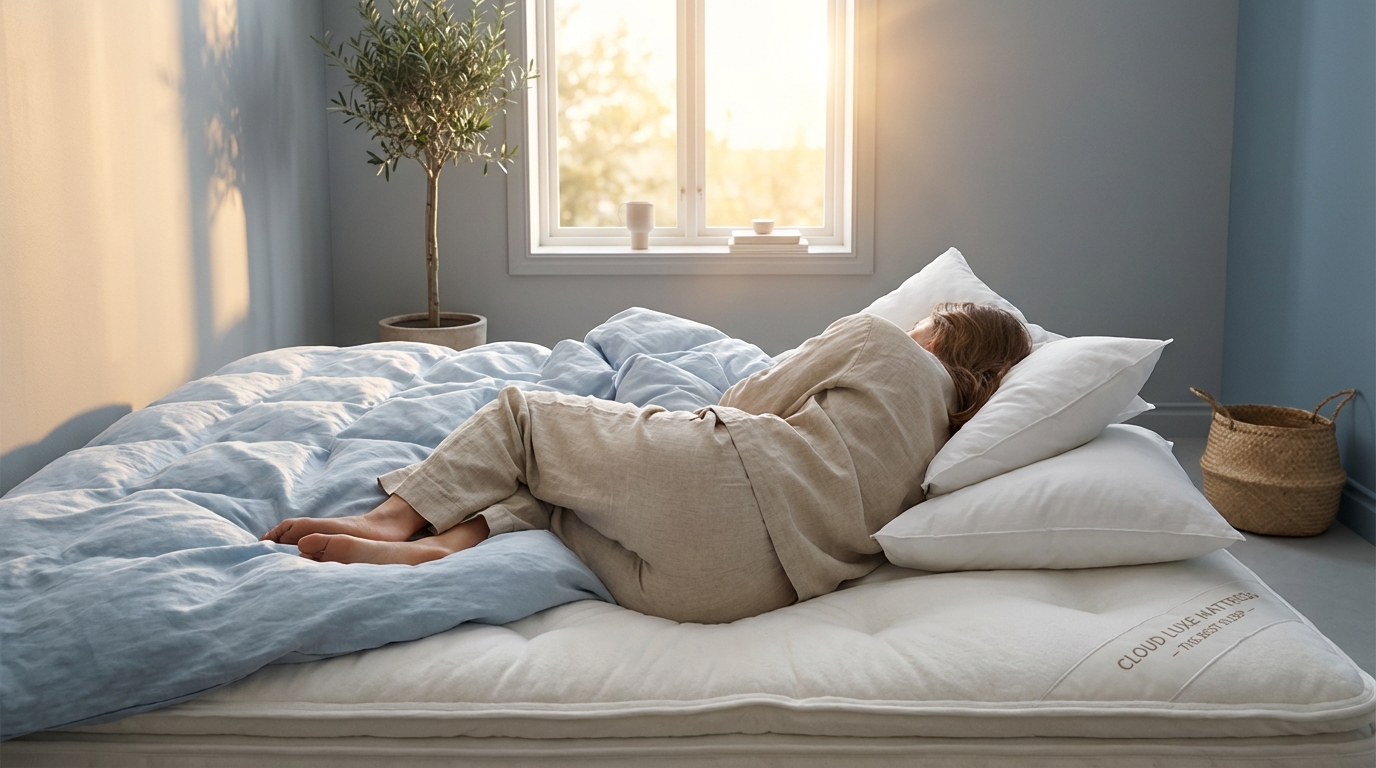
Even with all this guidance, you may still feel nervous hitting “buy” or saying yes in the showroom. Here is a practical way to judge a candidate mattress in real life.
On a potential mattress, lie in your primary sleep position for at least 10 to 15 minutes, ideally without distractions. Pay attention to three things. First, does your lower back feel gently supported or does it feel like it is arching or collapsing? Second, do your shoulders and hips feel pleasantly cushioned, or are there any sharp or throbbing pressure spots? Third, when you roll to another position, does the bed help you move or does it fight you?
At home, give a new mattress a genuine 2 to 4 week trial before making final judgments, unless something is clearly intolerable. Your muscles and joints adapt to a new support pattern in stages. Mild soreness in the first few days can actually be a sign that a chronically flexed or sagged spine is finally being held straighter. But true red flags include consistent numbness, sharp joint pain, or waking more tired than before after the first week. In that case, a comfort exchange or topper adjustment may be appropriate.
When in doubt, listen to your body over labels. If a mattress marketed as “ultra plush” gives you your first pain free mornings in years, it is right for you, regardless of what firmness most people buy. If the “back pain” model feels like a brick and your body begs for more cushioning, your experience is valid.
Conclusion: The Best Mattress Is The One That Lets You Wake Up Better
You started with a very human question: what is the best mattress? By now you have seen why there is no single answer and why that is actually good news. Once you stop chasing a mythical universal winner and instead look at your own sleep position, body type, pain patterns, and temperature needs, the choice becomes far more manageable.
A truly good mattress for you will keep your spine aligned, cushion the right pressure points, help you maintain a comfortable temperature, and fit your budget in a way that feels responsible. It will not fix every health problem in your life, but it can remove one major barrier to better sleep so your body has a fair chance to heal and restore itself each night.
Your next steps are simple. Be honest about how you sleep and what has not worked in the past. Decide which mattress type and firmness range makes the most sense using the frameworks above. Then let yourself compare a few specific options instead of hundreds. And remember that you do not have to do this alone. At Sleepology, my team and I live in this world so you do not have to. If you want a second pair of eyes on your situation, we are always happy to help you narrow in on two or three smart candidates rather than wading through every mattress on the internet.
Sleep is personal and so is the mattress that supports it. When you find the right one for your body, you will not think about it much at all. You will simply notice more mornings where you wake up thinking about your day, not your back.
Frequently Asked Questions
How do I know it is really time to replace my current mattress?
Most quality mattresses last around 7 to 10 years, but your body is a better indicator than the calendar. If you see visible sagging, deep body impressions, or lumps, those are clear signs. Less obvious signs include waking up stiffer than you go to bed, sleeping better on hotel or guest beds than at home, or needing to constantly shift at night to get comfortable. Research summarized by the Sleep Foundation suggests that replacing a worn out mattress can significantly improve sleep quality and reduce pain, particularly in people with existing back discomfort.
Is a firmer mattress always better for back pain?
Not necessarily. It is true that sagging, overly soft mattresses often worsen back pain because they allow the hips to sink too far. But that does not mean the hardest mattress is best. Clinical reviews of mattresses and low back pain have found that medium firm designs often strike the best balance between support and comfort for most people, allowing the spine to stay neutral while still cushioning muscles and joints. The ideal firmness also shifts with your body weight and sleep position. A 280 pound back and stomach sleeper may genuinely need firmer support than a 140 pound side sleeper with lumbar pain.
What mattress type is best if I sleep really hot?
If you tend to overheat at night, coil based designs and latex usually give you an advantage. Hybrids and innersprings allow more airflow through the support core, which helps carry heat away, and latex is naturally more breathable than dense memory foam. Look for breathable covers, less extreme “hug,” and in some cases cooling fabrics. All foam beds can work if they use more open cell structures and you are not deeply sinking into them, but if temperature is a major issue for you, choosing a hybrid or latex model stacked toward medium or medium firm is usually safer.
I share a bed with a partner. Should we prioritize motion isolation or support first?
In an ideal world you do not have to choose, because many modern mattresses do both well. From a health standpoint, support and proper alignment should come first, because that is what protects your spines and joints. Once you are in the right firmness range and mattress type for both of you, then weigh motion isolation. Memory foam and some hybrids excel at minimizing partner disturbance. If one of you is much heavier or has a very different sleep position, a medium hybrid can often bridge the gap better than a very soft foam or very firm innerspring.
Are expensive mattresses always better quality?
Higher prices often correlate with better materials, thicker comfort layers, or more complex coil systems, but there is a point of diminishing returns. You do not necessarily need a three thousand dollar mattress to sleep well. Many very solid hybrids, latex beds, and advanced foams live in the midrange. The important things to look at are foam density, coil gauge and count, cover and quilting quality, and brand reputation for durability. Independent testing from groups like Consumer Reports has shown that some mid priced mattresses perform as well or better over time than ultra luxury models.
Can a topper fix a mattress that is too firm or too soft?
A topper can help fine tune comfort, especially if your underlying mattress is supportive but just a bit too firm on the surface. A 2 to 3 inch soft topper can add pressure relief for shoulders and hips without compromising the core support. What a topper cannot reliably fix is a fundamentally sagging or structurally unsound mattress. If the base is caving in, adding more foam on top usually just means you sink further. Use toppers as a tool to refine feel, not as a long term substitute for a worn out bed.
How long should I try a new mattress before deciding if it is right?
Most people need at least 2 weeks and often up to 4 weeks for their body to fully adapt to a new support surface. Some initial muscle soreness, particularly in the lower back, is common when you move from a sagging or very different mattress to one that holds your spine in a healthier alignment. What should improve, not worsen, over that period is your overall sleep continuity and morning comfort. If after about a month you are still waking more uncomfortable than before, despite giving your body a fair chance to adjust, that is a good time to consider a comfort exchange or a different model.