

What Type of Mattress Is Best For Back Pain? A Sleepologist’s Complete Guide
Waking up with a sore, tight back can make the whole day feel harder than it needs to be. You might roll out of bed wondering if you slept wrong, sat too long yesterday, or if your mattress is quietly working against you every single night. When every morning starts with stiffness or a stabbing twinge, it is not just uncomfortable, it can chip away at your mood, energy, and even your confidence in your body.
Back pain is one of the most common reasons people shop for a new mattress, and for good reason. According to organizations like the Cleveland Clinic and Mayo Clinic, your sleep surface plays a meaningful role in how well your spine is supported, how your muscles recover overnight, and how refreshed you feel the next day. At the same time, choosing the right mattress can feel overwhelming, especially when marketing messages are shouting that everything is the “best” for back pain.
You are in the right place if you are tired of guessing. You will learn how to tell if your mattress is part of the problem, what kind of firmness usually helps sore backs, how different mattress types behave under a real human body, and how to match your choice to your weight, shape, and sleep position. You will also see practical examples, learn how to test a mattress in a store or at home, and get a few specific product suggestions from Sleepology that tend to work well for back pain.
Most importantly, you will come away with a clear framework for answering the question, “What type of mattress is best for my back pain?” based on your body, not on a one size fits all promise. As a sleepologist who has spent 20 years helping people get out of mattress limbo, my goal is to help you move from waking up in pain to waking up with a spine that finally feels supported and calm.
How Your Mattress Affects Back Pain
When you lie down, your spine does not suddenly stop caring about alignment. It still has natural curves in your neck, mid back, and lower back that need to be supported. A good mattress keeps those curves in a neutral, relaxed position, while a poor one lets your hips or shoulders sink too deeply or pushes certain areas up too much. Over several hours, that slight misalignment can strain muscles, ligaments, and the small joints of the spine, which is why many people feel their worst first thing in the morning.
Research cited by resources like Harvard Health and WebMD notes that while there is no single perfect mattress for everyone with back pain, there is a clear pattern. Mattresses that are very soft tend to let the heaviest parts of your body sag, while very hard surfaces can create pressure points and force you into an unnatural posture. The result in both cases is often the same, a restless night and a stiff, achy back. The sweet spot for most adults with non specific low back pain is typically somewhere in the medium firm range, which we will talk more about shortly.
Age and condition of your mattress matter too. Studies from sleep laboratories have shown that people who switched from older bedding systems, often around 9 to 10 years old, to newer ones reported less back pain and better sleep quality, even when the new beds were not top of the line. A worn out mattress can have hidden valleys and soft spots that throw off alignment, especially if you always sleep in the same place.
It is also important to remember that back pain is multifactorial. According to the Sleep Foundation and Mayo Clinic, things like daytime posture, core strength, underlying disc or joint issues, and even stress levels all play roles. A mattress will not cure serious spinal conditions on its own, and if your pain is severe, radiating, or accompanied by symptoms like numbness or loss of bladder or bowel control, you should see a healthcare professional right away. What the right mattress can do is reduce one major source of mechanical stress so your back is not fighting your bed every night.
Signs Your Mattress Is Making Your Back Worse
Before you start shopping, it helps to confirm whether your mattress is likely a culprit. One of the biggest red flags is timing. If your back feels worst when you first wake up, improves within 30 to 60 minutes of moving around, and then slowly returns later in the day, your sleep surface is a strong suspect. That pattern suggests your body is getting locked into an unsupportive position for hours at a time.
Another sign is visible or felt sagging. If you can see a body shaped dip where you sleep, or you feel yourself rolling toward the middle, the support core is likely breaking down. This loss of support is especially tough on the lower back, where the lumbar curve needs gentle filling in. On the flip side, if your bed feels like a rigid board and you notice sore hips, shoulders, or ribs along with low back tension, it may be too firm for your body type.
You can also run a simple mini experiment. Spend a few nights on another sleep surface, such as a guest bed, a higher quality hotel mattress, or even a supportive reclining surface that keeps your back more neutral. If your morning pain noticeably changes, that is another clue that your current mattress is part of the problem. According to Consumer Reports and other testing organizations, many people are surprised how much their pain improves just by moving away from a severely worn or mismatched mattress.
“I honestly thought my back pain was just aging until Mia helped me compare my old bed to what my spine actually needed. After switching to a medium hybrid from Sleepology, my morning stiffness dropped from a 7 to a 2 within two weeks, and I cancelled a PT visit I had scheduled. I wish I had made the change years earlier.” – Sarah M., November
Firmness and Support: Why “Medium Firm” Keeps Coming Up
If you have researched mattresses for back pain before, you have probably seen the phrase “medium firm” so often that it starts to sound like vague marketing. There is actually a science based reason this firmness range is recommended so consistently. In several studies, including work published in medical journals and summarized by Harvard Health, people with chronic non specific low back pain who slept on medium firm mattresses reported better comfort and less pain than those on very firm surfaces.
From a biomechanics standpoint, medium firm usually means the mattress has a supportive core that resists deep sagging, paired with enough cushioning on top to let your shoulders and hips sink just enough, not too much. That balance helps maintain the gentle S curve of your spine. A very soft surface allows the heavier torso and hips to drop too far, which can exaggerate the lumbar curve for back sleepers or create a banana shape for side sleepers. A very firm surface, on the other hand, can leave a gap under your lower back and force your spine to flatten unnaturally, while also putting pressure on joints.
It is important to understand that “medium firm” is a spectrum, not a single universal feel. Your body weight, shape, and which position you sleep in all change how a mattress feels in real life. A bed that is labeled medium firm may feel almost plush to a heavier person and too rigid for a petite person. That is why, as the Sleep Foundation and other educational groups often point out, the best firmness is the one that keeps your spine aligned and feels comfortable for at least 15 to 20 minutes of lying still, not just a quick sit test.
Matching Firmness to Your Body and Sleep Position
To get closer to your ideal firmness for back pain relief, start by considering your primary sleep position. Back sleepers generally do best with a true medium firm feel. The surface needs enough support under the pelvis so it does not sink, but a bit of contour at the lower back can reduce muscle guarding. Side sleepers often need a touch more cushioning at the shoulders and hips, so a medium or medium soft on top with solid underlying support usually works well. Stomach sleeping is the hardest on the back, especially the lower spine, and tends to require a firmer feel to keep the hips from dropping.
Your body weight also makes a difference. Lightweight sleepers under about 130 pounds may find that very firm mattresses never quite “give” enough to let their curves settle in, which can lead to more pressure and tension. People in a mid range weight bracket often do best with standard medium firm hybrids or foams, while those over about 230 pounds may need a firmer core and thicker comfort layers for true support. For higher weight sleepers, the wrong softness can amplify sagging and worsen back pain even on a relatively new mattress.
Shape matters too. If you have wider hips compared to your waist, a surface that is too firm can leave your lumbar area unsupported while your hips never quite settle into the mattress. On the other hand, if you have a more straight or athletic build, a slightly firmer feel can keep you from feeling like you are sinking unevenly. When I work with clients at Sleepology, we look at weight, shape, and preferred position together to dial in whether a Sealy Posturepedic Plus Medium Mattress – Paterson II Euro Pillow Top or a slightly softer option will better balance comfort and alignment.
“I always thought firm meant better for my back, so I kept buying rock hard beds and wondering why my shoulders hurt. Mia explained how my side sleeping and curvier hips needed a bit more ‘give’ on top. The medium mattress she recommended still feels supportive, but my lower back pain has eased up and I can finally sleep on my side all night.” – Danielle R., October
Mattress Types for Back Pain: Pros, Cons, and Who They Suit Best

Not all mattresses create support in the same way. The internal structure of a bed, often called its “construction,” changes how it responds to your weight, how long it lasts, and how well it keeps your spine in line. Broadly, most modern beds fall into four main categories: innerspring, foam, latex, and hybrid. There are also adjustable bases, which are not mattresses themselves but can significantly change how a given mattress feels for a sore back.
According to guides from the Sleep Foundation and Consumer Reports, all of these categories can work for back pain if they are built well and matched correctly to the sleeper. None of them has a magic ability to cure back issues on its own. However, each type has traits that make it more or less likely to help certain bodies and sleep styles. Understanding these traits will make you far more confident when you are comparing options, both in stores and online.
In my experience at Sleepology, some of the most successful outcomes for back pain come from medium firm hybrids and quality foam beds with robust support cores. That does not mean a traditional innerspring cannot work, but it does mean we need to be thoughtful about coil design, comfort layers, and edge support. Latex can also be a great choice for people who want responsive support and durability, especially if they prefer a slightly buoyant feel rather than a deep hug.
Innerspring Mattresses and Back Pain
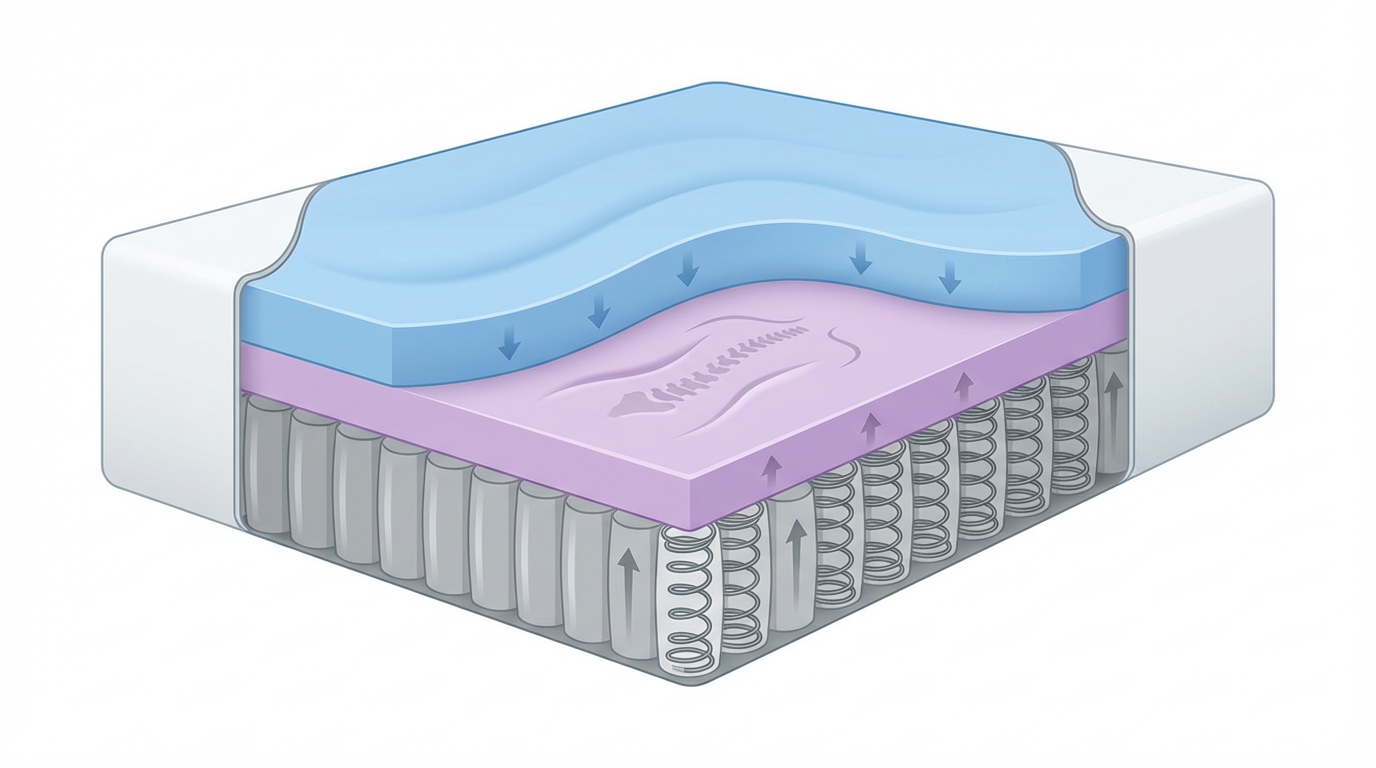
Innerspring mattresses use a network of coils as their support core, topped with layers of padding or foam. The coil system gives innersprings their characteristic bouncy, responsive feel, which many people enjoy, especially if they grew up on traditional beds. For back pain, the key question is whether the coils and comfort layers combined can keep your spine aligned without introducing pressure points.
Modern innersprings have come a long way from simple bonnell coils with thin padding. Many now feature individually wrapped pocketed coils that move more independently, which helps reduce motion transfer and allows better contouring under your hips and shoulders. When those coils are paired with a thoughtfully designed comfort system on top, an innerspring can absolutely be supportive enough for back sleepers and combination sleepers with low back pain.
Where innersprings can fall short is in pressure relief and long term consistency if the comfort layers are too thin or made from low quality foam. Once the top layers compress and form impressions, your body is more likely to sag into the mattress unevenly, which is tough on the spine. If you are drawn to a more traditional feel yet struggle with back pain, look for an innerspring that feels firmly supportive through the middle, with at least a couple of inches of quality foams or pillow top above. Beds like the Sealy Posturepedic Plus Firm Mattress – Paterson II Euro Pillow Top give you that familiar springy core while adding a cushioned, pressure relieving top to soften harsh contact points.
Foam Mattresses and Back Pain
Foam mattresses, especially those made with memory foam, are known for their ability to mold closely to the body. This contouring can be very helpful for back pain because it fills in the gaps under your waist and lower back, while allowing the heavier hips and shoulders to sink in just enough. The result, when firmness is chosen well, is often excellent pressure relief and neutral spinal alignment.
Not all foams are the same, however. Polyfoam provides support and cushioning at a wide range of densities, while memory foam is slower responding and more contouring. Too much slow responding foam in the top layers can sometimes make it feel like you are stuck in the mattress, which some people with back pain find uncomfortable when they try to change positions. According to the Sleep Foundation, a balanced foam design that combines responsive transitional layers with contouring comfort layers often works best for people seeking both support and easy movement.
Foam beds can also sleep warmer, especially if the mattress uses dense, close conforming memory foam without cooling infusions or breathable covers. For back pain sufferers who already struggle with sleep disruptions, overheating can make nights even harder. If you are leaning toward foam because of its pressure relief, consider a quality option from a collection like The Best Foam Mattresses, and pay attention to both firmness and cooling features. A well built medium foam mattress can cradle your spine without letting your lower back collapse into a hammock shape.
Latex and Hybrid Mattresses for Back Pain
Latex mattresses are made from natural or synthetic latex foam, which feels more buoyant and springy than traditional memory foam. Many people describe latex as lifting them up rather than letting them sink in deeply. For back pain, this can be a great combination of contour and support, especially for people who dislike the “stuck in the mud” feeling of some all foam beds. Latex is also highly durable, so it tends to maintain its support over more years, which is critical if you want to avoid sag related pain.
Hybrids combine a coil support core, usually pocketed coils, with several inches of foam or latex on top. According to testing from groups like Consumer Reports, well designed hybrids often score high for both support and pressure relief, making them a popular choice for people with back issues. The coils offer strong, zoned support through the middle of the body, while the comfort layers accommodate curves. For many of my clients at Sleepology, a medium or medium firm hybrid is where we land when we want the best of both worlds.
The range of hybrid feels is wide, which is actually a good thing for customizing to your back. For instance, the Sealy Posturepedic Pro Medium Mattress – Dupont II Euro Pillow Top strikes a balanced feel for combination sleepers with back pain, while someone who needs a bit more cushioning at the shoulders might explore a soft or plush version like the Sealy Posturepedic Plus Soft Mattress – Paterson II Euro Pillow Top without losing the underlying coil support.
Quick Comparison: Mattress Types and Back Pain Support
When you are trying to decide what type of mattress is best for back pain, it often helps to see the main categories side by side. The table below summarizes how three of the most common mattress types tend to perform for spinal support, pressure relief, and typical firmness options for back pain.
| Mattress Type | Typical Spinal Support for Back Pain | Typical Pressure Relief | Common Firmness Options For Back Pain |
|---|---|---|---|
| Innerspring | Good support if coils are high quality and not sagging, but can lose support as comfort layers compress | Fair to good, depends heavily on thickness and quality of pillow top or foam layers | Often offered in firm to medium firm, plush tops can add comfort for side sleepers |
| Foam | Very good when core foam is dense enough, excels at filling lumbar curve | Excellent, especially with memory foam comfort layers | Widely available in medium soft to medium firm, ideal for many back and side sleepers |
| Hybrid | Very good to excellent, combines strong coil core with targeted zoning | Very good, multiple foam or latex layers cushion joints | Broad range from plush to firm, medium and medium firm hybrids are common picks for back pain |
This comparison is a starting point. The individual mattress model, build quality, and your unique body will always make the final difference. At Sleepology, we treat each type as a tool, then refine the choice within that type to fit your weight, shape, and sleep style.
“I tried to shop online by reading reviews and got totally lost, especially with all the hybrid options. Talking with Mia helped me understand why a hybrid made sense for my mix of back and side sleeping. We ended up on a medium hybrid, and my lower back has felt more stable within the first week than it did with two other beds I tried before.” – Jason T., December
How Your Sleep Position Changes What “Best Mattress” Means
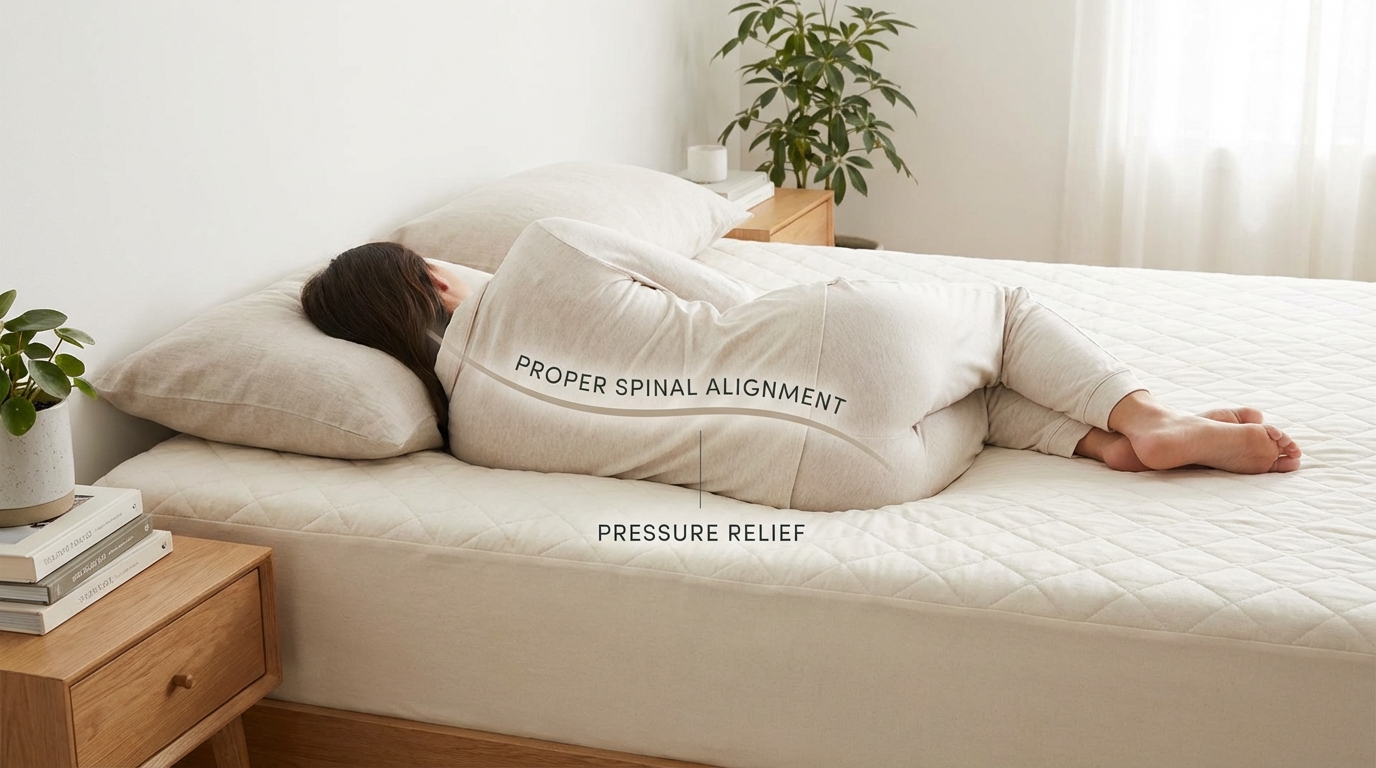
Many back pain guides talk about mattresses as if everyone sleeps in the same position. In reality, your primary sleep posture is one of the strongest factors in deciding what kind of mattress will truly help your back. According to Cleveland Clinic and Mayo Clinic guidance on sleep posture, the ideal is to keep the ears, shoulders, and hips in a relatively straight line when viewed from the side, while preserving the natural inward curve of the lower back when viewed from the front or back.
The tricky part is that each position challenges your spine in a different way. Back sleeping, when done on a well matched mattress, is generally friendliest to the spine because it distributes weight more evenly. Side sleeping is second best, but it demands more contouring at the shoulders and hips to avoid twisting or pinching. Stomach sleeping is usually considered the hardest on the spine, especially the lumbar area, because it tends to pull the lower back into excessive extension.
A smart mattress choice can compensate for some of the challenges of each position. For example, a medium firm hybrid with zoned support can keep a back sleeper’s pelvis from sinking while still cradling the lower back. A plush pillow top over a supportive coil system can let a side sleeper’s shoulders sink enough to avoid jamming while keeping the midsection lifted. For stubborn stomach sleepers, a firmer, more supportive surface is usually needed to minimize hip sink and keep the spine closer to neutral.
Best Mattress Types for Back Sleepers With Back Pain
Back sleepers with back pain usually benefit from a mattress that is solidly in the medium firm category, with a strong support core and just enough cushioning to ease pressure at the shoulders and hips. If the mattress is too soft through the center, the pelvis will sink, exaggerating the curve in the lower back. If it is too hard, the back muscles may have to work all night to hold a more flattened posture.
In practice, quality all foam and hybrid mattresses often perform very well for this group. A medium foam bed with a dense support core can hug the lumbar curve and prevent gaps under the lower back, while still resisting a deep hammock effect. Medium firm hybrids with pocketed coils beneath a Euro pillow top are another excellent choice, because the coils offer strong pushback under the midsection and the top layers make the bed comfortable enough for longer, uninterrupted sleep.
If you primarily sleep on your back and wake up with low back tightness, explore collections like The Best Mattresses For Back Sleepers. Options such as the Sealy Posturepedic Elite Medium Mattress – Brenham II Euro Pillow Top are built with precisely this balance in mind, combining reinforced support zones under your core with a medium feel that keeps you comfortable without losing alignment.
Best Mattress Types for Side and Stomach Sleepers With Back Pain
Side sleepers with back pain have a slightly different challenge. They need enough contouring at the shoulder and hip so those joints can sink into the mattress without forcing the spine to curve sideways. At the same time, the mattress must be supportive enough through the waist and lower back so the midsection does not collapse or twist. Medium to medium soft mattresses with supportive cores, such as certain hybrids and well designed foam beds, tend to excel here.
For many side sleepers, a soft feel is tempting but can be risky if the support core is weak. Splitting the difference with a medium option that has a plush top often works best. A mattress like the Sealy Posturepedic Soft Mattress – Medina II Euro Pillow Top provides that extra surface softness while still hiding a robust support system underneath, which can be particularly helpful for side sleepers who have both shoulder sensitivity and lower back concerns.
Stomach sleepers with back pain are in a tougher position because most health organizations, including Mayo Clinic, caution that this posture stresses the spine. If you cannot change positions, look for a firmer surface that keeps your hips from sinking too far and consider using a thinner pillow. A firmer hybrid or innerspring with minimal plushness is usually better than a soft foam bed, which will almost always allow too much hip sink. Even then, working gradually toward a side or back sleeping habit can do more for your back than any mattress alone.
Adjustable Bases, Pillows, and Toppers: Supporting Your Mattress Decision
Sometimes the question is not only “What type of mattress is best for back pain?” but also “What setup will support my back best overall?” This is where adjustable bases, pillows, and toppers come into play. While your mattress is the main actor, these accessories can fine tune alignment and comfort, especially if you have specific areas of pain or unique body mechanics.
Adjustable bed bases let you raise the head and sometimes the feet of your bed. According to resources like Cleveland Clinic, slight elevation of the knees can reduce pressure on the lower back by flattening the lumbar curve a bit. People with conditions like spinal stenosis or certain disc issues sometimes find relief sleeping with their upper body elevated, which an adjustable base can provide more comfortably than stacking pillows. You can pair an existing compatible mattress with an Adjustable Bed Frame and Base to experiment with these positions and see if your back responds.
Pillows are another underestimated factor. A mattress that is perfect for your back can be undermined by a pillow that is too high or too flat for your sleeping position. For back sleepers, a medium loft pillow that supports the natural curve of the neck, not just the head, is essential. Side sleepers usually need a thicker pillow to fill the space between shoulder and ear, while stomach sleepers often do best with a very thin pillow or even none at all. Toppers, finally, can adjust the feel of an existing mattress that is structurally sound but slightly too firm, adding pressure relief without replacing the whole bed.
If you are close to happy with your mattress but notice shoulder pressure or neck pain alongside your back issues, exploring quality accessories from the Pillows, Sheets, Toppers, Protectors collection or a travel friendly comfort option like the Tempur-Pedic® Mattress Topper - Pillow Travel and Guest Bundle can be a smart, lower cost way to experiment with improved alignment before you commit to a new mattress.
A Simple Checklist For Choosing a Mattress When You Have Back Pain
Choosing a mattress with back pain in mind can feel like juggling dozens of variables at once. A focused checklist can help you stay grounded and make a confident choice. Rather than chasing every feature, you can concentrate on the factors that matter most for spinal support, comfort, and long term durability.
Start by clarifying your priorities. Is your main issue low back pain, upper back tension, or a mix? Do you wake with stiffness that fades, or sharp pain that lingers? Next, think honestly about your primary sleep position and your weight range. These two pieces of information alone can rule out a lot of mismatched options. Then you can narrow your search to a category, such as medium hybrid, medium foam, or supportive innerspring with a plush top, that fits your profile.
Once you are in a store or evaluating options online, use a consistent method instead of relying on quick impressions. Lie on each candidate mattress for at least 10 to 15 minutes in your usual sleep position. Pay attention to whether your lower back feels supported, whether your shoulders and hips feel jammed or over sinking, and whether any part of your body starts to go tingly or numb. It can help to have someone take a side view photo of you lying on the bed, so you can literally see whether your spine looks straight and neutral.
After you have done some initial research and in store testing, you can run through a final checklist like this before you purchase:
- Does the mattress keep your spine feeling neutral and supported in your primary sleep position for at least 10 to 15 minutes of stillness?
- Is the firmness in the medium to medium firm range for most back pain, or appropriately adjusted for your weight and position if you are an outlier?
- Does the mattress type, such as hybrid or foam, offer both support and pressure relief appropriate for your back and joints?
- Are you choosing a reputable brand with good durability and customer feedback, rather than the cheapest option you can find?
- Does the retailer offer a meaningful trial period or comfort exchange so you can test the mattress at home over several weeks?
- Have you considered how your pillow, base, and overall sleep posture will work together with the new mattress?
If you can honestly answer yes to most of these questions, you are likely on the right track. According to sleep and ergonomics research from universities and medical organizations, the most important factor for long term back comfort tends to be a supportive, well matched mattress that you actually use for several consistent years, not chasing constant tweaks or chasing trends.
When a New Mattress Is Not Enough
It is important to be clear and compassionate about the limits of what a mattress can do. While the right mattress can significantly reduce mechanical strain and morning stiffness, it cannot reverse structural spinal problems or replace medical care when it is needed. Organizations like Mayo Clinic and WebMD emphasize that persistent or worsening back pain, especially if it is accompanied by red flag symptoms like weakness, numbness, or changes in bladder or bowel control, should always be evaluated by a healthcare professional.
If you have already upgraded from a very old or sagging mattress to a quality, well matched one and given yourself a few weeks to adjust, yet still wake up with significant pain, the issue may be more complex. Conditions such as degenerative disc disease, spinal stenosis, inflammatory arthritis, or nerve compression can all contribute to back pain that does not fully respond to sleep surface changes. In these cases, a supportive mattress is still valuable, because it reduces added stress on an already vulnerable area, but it will not be a cure.
Lifestyle factors also matter. Prolonged sitting with poor posture, weak core and glute muscles, smoking, stress, and lack of movement during the day can all set the stage for night time discomfort. A mattress can compensate only so much if your back is being challenged for the other 16 hours of your day. Combining a smart mattress upgrade with gentle strengthening, stretching, and posture awareness, ideally under the guidance of a physical therapist or similar professional, gives you the best chance at long term relief.
At Sleepology, we often work collaboratively with customers who are also under the care of chiropractors, physical therapists, or spine specialists. Our role is to help you control what you can in your sleep environment while you and your medical team address underlying issues. If you are unsure how much of your pain is mattress related, it can be worth discussing your sleep setup at your next medical visit. Many clinicians are happy to give basic guidance on sleep posture and support that we can then help you translate into a specific mattress choice.
Conclusion: Turning “What Type of Mattress Is Best for Back Pain?” Into a Clear Next Step
Back pain is personal, and so is the mattress that will feel best to your body. There is strong evidence that most people with non specific low back pain do well on medium to medium firm mattresses, especially well built hybrids and foam beds, because they balance spinal support with pressure relief. At the same time, your weight, shape, and preferred sleep position shift the target slightly, which is why listening to your own body during testing matters just as much as any guideline.
The good news is that you do not have to solve this alone or guess based on marketing claims. By focusing on alignment first, then comfort, and paying attention to your morning symptoms and sleep position, you can narrow down the overwhelming mattress market to a shortlist that makes real sense for your back. From there, accessories like adjustable bases and thoughtfully chosen pillows can fine tune your setup, so your whole sleep environment works for you instead of against you.
If you are ready to move from waking up sore to waking up supported, this is a great time to talk with a Sleepology sleepologist, explore focused collections like The Best Mattresses For Back Sleepers or The Best Foam Mattresses, and start testing with a clear plan. Your back carries you through every day. Giving it a mattress that finally has its back can be one of the most meaningful comfort investments you ever make.
Frequently Asked Questions
Is a firm or soft mattress better for back pain?
For most people with back pain, neither very firm nor very soft mattresses are ideal. Research summarized by organizations like Harvard Health and WebMD suggests that medium firm mattresses tend to provide the best combination of spinal support and comfort for non specific low back pain. A surface that is too soft allows your hips and torso to sink too deeply, while a very hard surface can create pressure points and flatten your natural spinal curves. The goal is a mattress that keeps your spine neutral and feels comfortable enough that you can stay in one position without tossing and turning.
Are hybrid mattresses good for back pain?
Yes, hybrid mattresses are often an excellent choice for back pain because they combine a supportive coil core with pressure relieving foam or latex comfort layers. The coils offer strong, often zoned support under your midsection, while the top layers cushion your shoulders and hips so your spine can settle into a neutral curve. Medium and medium firm hybrids are especially popular for people with low back pain. Models like the Sealy Posturepedic Pro Medium Mattress – Dupont II Euro Pillow Top are designed with this balance in mind.
How can I tell if my current mattress is causing my back pain?
Timing is the biggest clue. If your back feels worst when you wake up, improves as you move around, and then may get sore again later in the day, your mattress is likely playing a role. Visible sagging, deep body impressions, or feeling like you roll toward the center of the bed are also strong red flags. You can test this by sleeping on a different surface for a few nights, such as a newer guest bed or a good hotel mattress. If your morning pain changes noticeably, that suggests your regular mattress is contributing.
What is the best mattress type for side sleepers with lower back pain?
Side sleepers with lower back pain usually do best on a mattress that combines strong support with generous pressure relief at the shoulders and hips. Medium or medium soft hybrids and foams with solid support cores often work very well. The key is enough softness on top so your joints can sink without jamming, paired with a firm enough core so your waist and lower back do not collapse or twist. A plush top over a supportive innerspring, such as the Sealy Posturepedic Plus Soft Mattress – Paterson II Euro Pillow Top, can also be a good fit if you like a more traditional feel.
Can a mattress topper fix back pain if my mattress is too firm?
A quality mattress topper can help if your existing mattress is structurally sound and simply too firm on the surface. Adding a topper made from memory foam or other cushioning materials can increase pressure relief and allow your shoulders and hips to sink a bit more while the underlying mattress continues to provide support. However, a topper cannot fix a mattress that is already sagging or has broken down support. If your bed has deep impressions or you feel like you roll into a dip, it is usually time for a new mattress rather than a topper.
How long does it take for my back to adjust to a new mattress?
It is normal for your body to go through an adjustment period when you switch mattresses, especially if your old bed was very worn or very different in feel. For many people, this period lasts anywhere from a few nights to about 2 to 4 weeks. During this time, you may notice new muscles working or some temporary soreness as your spine adapts to a more neutral position. If pain is severe, getting worse over time, or not improving at all after several weeks, it may be a sign that the mattress is not the right match and you should take advantage of any trial or comfort exchange policy.
When should I see a doctor instead of just changing my mattress?
You should seek medical evaluation promptly if your back pain is severe, suddenly worsens, or is accompanied by red flag symptoms such as leg weakness, numbness, tingling, loss of bladder or bowel control, unexplained weight loss, or fever. These can indicate serious underlying conditions that require prompt attention. Even without red flags, if you have tried a supportive, well matched mattress and allowed time to adjust but your pain remains significant or interferes with daily life, a doctor or physical therapist can help identify underlying issues and create a comprehensive treatment plan. A good mattress is an important tool, but it is not a substitute for professional care when your body is clearly asking for more help.