

What Size Is A Twin Mattress? A Complete, No‑Stress Guide To Choosing The Right Bed
If you are squinting at a tape measure or scrolling product pages wondering what size a twin mattress actually is, you are not alone. Many people vaguely remember that a twin is the “small one,” then get stuck trying to figure out whether it will really work for a growing child, a guest room, or even a compact studio apartment. When you are spending hundreds of dollars on something you will use every night, you understandably want to get this right the first time.
Mattress size is about more than fitting a rectangle into a room. The wrong size can mean cramped sleep, constant elbow wars, or a layout that makes your bedroom feel cluttered and stressful instead of calm and restful. According to the Sleep Foundation, both space and comfort play a big role in overall sleep quality, which then affects mood, weight, and long term health. When you zoom out that way, the question “what size is a twin mattress” suddenly feels a lot more important than a simple measurement.
Here, you will learn the exact twin mattress dimensions, how twin compares to twin XL and full, and when a twin is genuinely a smart choice versus when it will feel like a compromise. You will also see how your height, sleep style, room size, and long term plans change the math. I will walk through real world scenarios from families and shoppers I see all the time at Sleepology, along with practical tips on frames, bedding, and upgrading paths so you can buy with confidence instead of second guessing yourself.
By the end, you will not just know the size of a twin mattress in inches. You will know whether a twin is the right size for your body, your room, and your life, and what to do next if it is not.
Twin Mattress Dimensions: The Basics You Really Need To Know
When someone asks “what size is a twin mattress,” they almost always want two things: the precise numbers and a sense of how that actually feels in real life. The standard twin size in the United States is 38 inches wide by 75 inches long. Some brands list 39 inches instead of 38 because of manufacturing tolerances, but 38 by 75 is the accepted standard for shopping and fitting sheets. Thickness can vary a lot, usually from about 8 inches for a basic kids mattress to 14 inches or more for a plush, pillow top model.
On paper, 38 inches of width sounds okay for one person. In practice, that is just a bit wider than many office chairs. You can sleep very comfortably on a twin if you tend to stay in one position, but if you are a starfish sleeper who loves to sprawl, that narrow width will show up quickly. The length is where many adults run into trouble. At 75 inches, a twin technically covers someone who is up to about 6 feet 2 inches tall if you sleep right up at the head and do not point your toes, but for most people taller than about 5 feet 10 inches it starts to feel tight.
A helpful way to visualize a twin is to think of dorm beds, kids rooms, trundle beds and bunk beds. Those are almost always twin or twin XL. The twin is essentially the smallest standard adult mattress that is not specifically for a crib or toddler bed. For children, teens who are not especially tall, and many adults in very small rooms, that compact profile is a feature, not a drawback, because you can still fit a nightstand, dresser, or desk around it.
From a measurement standpoint, most bedding and accessories are built around this 38 by 75 inch standard. Twin fitted sheets, encasements, and protectors will be cut to accommodate some variation in thickness, but if you are using a deep pillow top or a thick mattress topper, you will want to look for deep pocket sheets or a slightly larger pocket depth. A good waterproof protector, such as those in Sleepology’s pillows, sheets, toppers, and protectors collection, is especially important on twin beds for kids, since accidents are more common.
According to the American Academy of Pediatrics, sleep environment is a key safety factor for children, and that includes a flat, supportive surface with properly fitting bedding. A true twin size that matches your frame and sheets helps avoid dangerous loose fabric and awkward gaps at the head or sides. That is one more reason to pay attention to dimensions instead of just eyeballing it.
“We started with a very basic twin that was too thin for my son, and he kept rolling toward the edge. After talking with Sleepology, we upgraded to a proper twin with better edge support and a snug protector. The difference in his sleep and how secure the bed feels is night and day.” – Melissa R., November
Twin vs Twin XL vs Full: How Twin Fits Into The Size Family
Once you know a twin is 38 by 75 inches, the next logical question is how that compares to other nearby sizes. The two that cause the most confusion are twin XL and full, because on the surface they sound similar but they solve very different problems. Understanding this comparison is where many shoppers either save themselves from an expensive mistake or realize they can comfortably downsize and save both money and space.
Twin vs Twin XL: Same Width, Different Story For Height
A twin XL mattress is 38 inches wide by 80 inches long. That extra 5 inches of length is a small change on paper, but if you are tall, it is the difference between curling your legs all night and finally being able to stretch. College dorms use twin XL almost universally because so many students are over 5 feet 8 inches. If you are buying for a teenager who just shot up several inches this year, twin XL is usually the safer bet.
Width is where these sizes are identical. Both twin and twin XL give you the same 38 inches to move side to side, so they are best for single sleepers who are reasonably still. If you are sharing the bed with a child or a pet on a regular basis, that narrow width can start to feel crowded. For a child’s room or a narrow spare room, though, that compact profile can make the layout work beautifully.
From a budget perspective, twin XL frames and sheets are slightly less common but still very available. If you already have a standard twin frame that is fully enclosed, such as a platform with a footboard, you cannot stretch it to fit a twin XL. You would need a new frame or a style that is open at the foot. However, if you think you may eventually move to a king size bed for yourself, it is worth noting that two twin XL mattresses side by side equal the surface area of a standard king. That makes twin XL a versatile building block for future split adjustable bases.
According to Sleep Foundation data, sleepers taller than 6 feet are more likely to report foot or leg discomfort when sleeping on shorter mattresses, which can affect how restful the night feels overall. Choosing twin XL over twin in those height ranges is a small change that can prevent years of “foot off the edge” frustration.
Twin vs Full: More Elbow Room, Same Length
A full mattress, also called a double, measures 53 inches wide by 75 inches long. So compared to a twin, a full is 15 inches wider but exactly the same length. That extra width is what allows many solo sleepers to spread out more, rotate over without feeling cramped, and even occasionally share the bed with a partner or pet, at least for short stretches.
However, full beds can be deceiving. Because the name “double” suggests couples, many people assume a full is a natural choice for two people. If you divide 53 inches by two, each person only gets about 26.5 inches. That is actually less space per person than a twin provides a single sleeper. For occasional guests, a full can work very well. For long term use by two adults, most couples are much happier on a queen or larger.
Room layout is often what pushes people to choose between twin and full. A full size bed visually anchors a guest room or small master bedroom better than a twin, but it also demands more floor space. You want at least 30 inches of clear walking room on the open sides of the bed so you are not shoving your hips against corners in the dark. In a truly compact room, that extra 15 inches of mattress can make everything feel squeezed.
If you are buying for a child with a small bedroom now and you know you want them on a queen eventually, it can actually make sense to start with a twin and save the space, then move directly to a queen when they are older. That way you are not buying an in between full that you will outgrow again a few years later.
“We were debating full vs twin XL for our 10 year old. Mia helped us map out the room on paper and we realized a full would block the closet doors. We went with a twin now and planned for a queen later, and it fits our house and our budget much better.” – Jordan S., October
When A Twin Mattress Is The Right Choice (And When It Is Not)

Knowing the measurements is one thing. Deciding if a twin makes real world sense for you or your family is a different question. After working with thousands of shoppers over the past 20 years, I find there are clear situations where twin is a perfect fit and others where it ends up feeling like a compromise after just a few months.
Best Uses For A Twin Mattress
For younger children, a twin is usually exactly right. It provides plenty of growing room for many years and leaves floor space open for play, furniture, and storage. You can also pair twins for siblings sharing a room or use them in bunk beds without dominating the space. Because twin bedding is generally the most affordable, parents appreciate not having to pay queen or king prices for every sheet change during the messy years.
Twin mattresses are also ideal for many bunk beds, daybeds, and trundle beds in guest rooms. If you attract visitors like grandkids, nieces and nephews, or kids’ sleepovers, having twin options makes your home much more flexible. The compact footprint makes it easier to tuck a bed along a wall, under a window, or into a nook without crowding the room.
Single adults in very small spaces, such as studio apartments or shared housing, can also do very well with twin beds, especially if they prefer to use the extra floor area for a desk or seating. If you are under about 5 feet 8 inches, not a restless sleeper, and not sharing with pets every night, a twin can be perfectly comfortable. In those cases, I often recommend better quality support and comfort layers rather than upsizing the mattress. For instance, a supportive model like the Sealy Posturepedic Medium Mattress – Medina II in a twin size can give your body the alignment it needs without requiring a bigger bed.
Finally, twin mattresses are a very practical base size for guest rooms where the goal is flexibility. Two twin beds can be pushed together with a bridge to mimic a king when couples visit, or separated for solo guests. That is especially useful in vacation rentals or multi use rooms.
When A Twin Starts To Feel Too Small
If you are taller than about 5 feet 10 inches and still growing, or if you simply love to sleep stretched out, a standard twin often feels short or cramped after a year or two. You may tolerate it, but you will always be aware of the mattress ending earlier than you would like. For teenagers in growth spurts, twin XL quickly becomes the more comfortable and economical option because you avoid having to replace the mattress again just for more leg room.
Twin also struggles for adults who toss and turn a lot. With only 38 inches of width, you are never far from the edge, and repeated near misses can make you subconsciously tense up. The Cleveland Clinic notes that fragmented sleep from constant micro awakenings, such as catching yourself from rolling off the side, can leave you feeling unrefreshed even if you clocked plenty of hours. At that point, it is the width, not the mattress quality, that undermines your rest.
If you are a parent who expects to regularly read, cuddle, or fall asleep alongside your child, a twin may feel tight very quickly. Lying down on a twin with two people rarely feels relaxing for more than a few minutes. In those scenarios, many families appreciate a full or even a queen in a larger kids room so bedtime snuggles do not turn into contortion.
The last group who often regret choosing a twin are adults planning to stay in the same home or room layout for many years. A twin can work as a starter bed, but if you already know you prefer extra space, you have frequent overnight guests, or you will eventually move in with a partner, skipping ahead to a full or queen can save you from buying twice.
“I tried to save space in my studio with a twin, but after a year I was tired of feeling like I might roll off if I moved too fast. Upgrading to a full gave me breathing room without swallowing the whole apartment. I wish I had just planned for that from the start.” – Alexis M., January
Room Size, Layout, And Clearance: Will A Twin Actually Fit Well?
Even if a twin is technically the right size for your body, you still want to be sure it works for your room. A bed that is physically smaller does not automatically make a room feel better. The way you position it, the space around it, and your other furniture all change how livable the layout feels.
A standard twin mattress is 38 by 75 inches, but once you put it on a frame, the footprint can grow to 40 by 78 inches or more, depending on the style. Headboards and footboards add length, and some platform frames extend a bit beyond the mattress on each side. When you are measuring your room, consider the maximum width and length of the total bed setup, not just the mattress.
For comfortable movement, aim for at least 24 to 30 inches of free space on each walking side of the bed and at the foot. In a narrow room, this might mean placing the long side of the twin against a wall and leaving one side fully open. That setup can work beautifully in kids rooms, but in guest rooms adults often prefer access on both sides so they are not climbing over each other. Twin beds give you more flexibility to accomplish that even in small spaces.
Ceiling height and window placement also matter. Bunk beds using twin mattresses can save a tremendous amount of floor space, but you need adequate clearance between the top bunk and ceiling so the top sleeper can sit up safely. You also want to avoid blocking low windows or vents. Planning where lamps, outlets, and doors fall in relation to the bed will help you decide whether one twin, two twins, or a larger mattress feels best in the room.
If you are planning to use a traditional box spring and frame, remember to factor in the foundation size as well. A standard twin foundation such as the Sealy Mattress Base Boxspring Foundation, 9 inch height adds consistent support and height, but it follows the same basic 38 by 75 footprint. For ultra tight rooms, a low profile foundation or a platform frame with built in storage underneath can reduce the visual bulk and make the space feel more open.
The National Sleep Foundation suggests treating your bedroom as a dedicated sleep environment as much as possible to support healthy sleep habits. That includes limiting clutter and creating calm sightlines. Taking the time to map out how a twin bed will sit in your room, where you will walk, and how it will feel to enter the space each night is well worth it before you commit.
Mattress Thickness, Bases, And Bedding For Twin Size
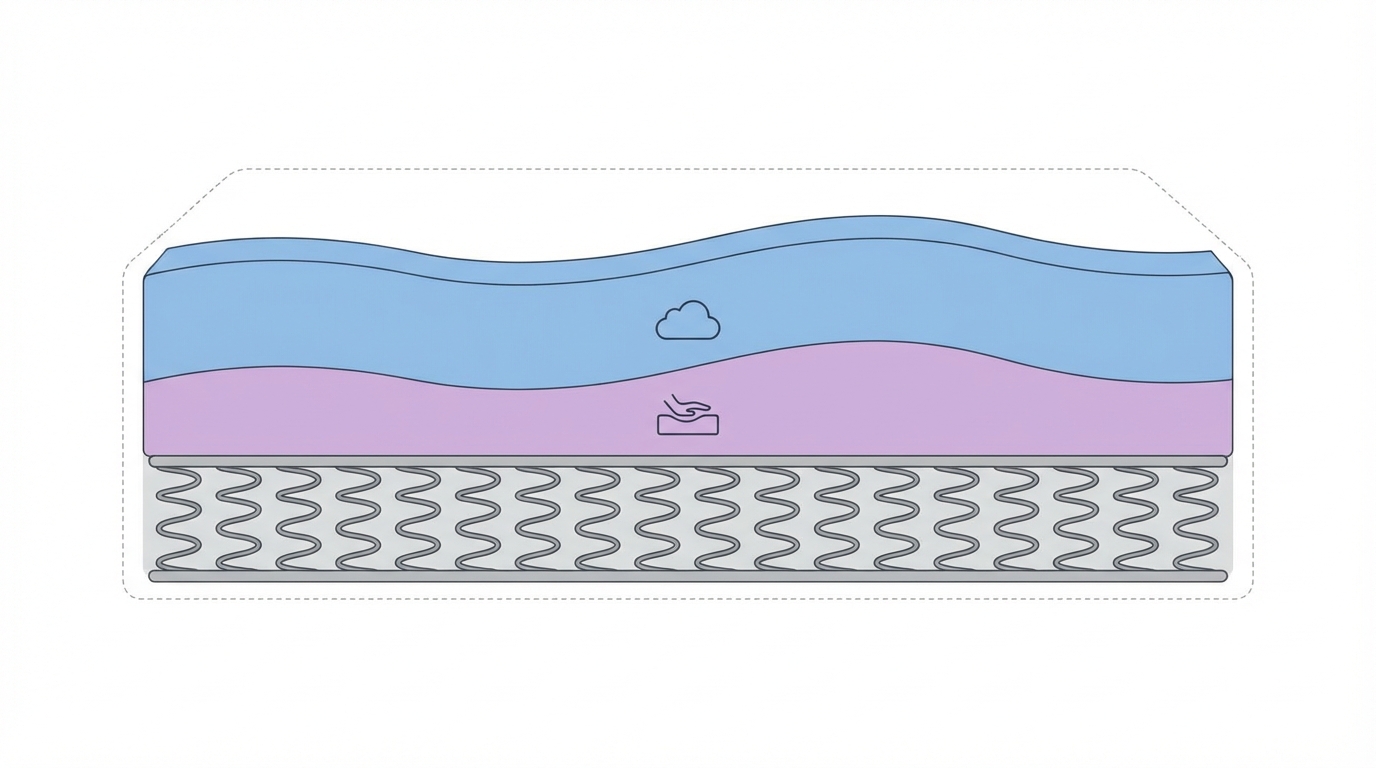
Once you are comfortable that a twin is the right footprint, the next step is making sure the total sleep system works together. Thickness, support base, and bedding all influence how a twin feels in daily life. Two twin mattresses with the same length and width can feel very different if one is 8 inches thick on a low frame and the other is 13 inches thick on a tall box spring.
The average twin mattress for kids and teens tends to be between 8 and 12 inches thick. For adults, particularly if you have back, hip, or shoulder sensitivity, you may prefer something in the 11 to 14 inch range so there is enough room for comfort foams and support layers. A model like the Sealy Posturepedic Elite Medium Mattress – Brenham II Euro Pillow Top offers extra cushioning at the surface while still keeping your spine aligned, which can be a real benefit on a narrower twin if you sleep on your side.
Paired with the mattress, your base choice matters more than many people realize. A solid platform or slatted base with appropriate spacing supports the entire underside of the twin, which helps prevent sagging and motion transfer. Traditional box springs still work well too, especially when combined with a simple metal frame. The key is avoiding bases that create pressure points or leave large unsupported gaps. Over time, uneven support shows up as dips in the mattress, which you will feel much more on a small surface.
For bedding, twin sized sheets are widely available and often the most economical. The only catch is pocket depth. Deep pillow top mattresses, plus toppers and protectors, can stack up quickly. If you are adding something like the Tempur-Pedic Mattress Topper – Pillow Travel and Guest Bundle for extra comfort in a guest room, confirm that your fitted sheets have a deep enough pocket so they do not pop off in the night. Choosing breathable fabrics, such as cotton or bamboo blends, helps regulate temperature, which the Mayo Clinic notes is an important factor in falling asleep and staying asleep comfortably.
Pillows and accessories also play a surprising role in how roomy a twin feels. Oversized decorative pillows can cut into your usable length if they stay on the bed overnight. Instead, use one or two appropriately sized sleep pillows, and if you like full body support, consider a slimmer option such as The BodyPillow by Tempur-Pedic. It gives you the hugging comfort many people love, without demanding extra mattress width.
When everything is scaled correctly for a twin size, you end up with a bed that feels deliberate and inviting rather than cramped or cluttered.
Twin Size For Different Sleep Positions And Body Types
Your sleep position and body type change how any mattress size feels. On a twin, where you have less margin on each side, the interaction between your body and the bed becomes even more noticeable. Matching support and space to the way you naturally sleep is one of the best ways to protect your comfort and spinal health over time.
Back sleepers generally do well on twin mattresses as long as the bed provides enough support to keep the lower back from sinking. Because back sleepers distribute weight more evenly, they do not need as much width for arm positions and can be quite comfortable on a twin into adulthood. For back sleepers who also occasionally roll to the side, a slightly firmer mattress, like the Sealy Posturepedic Firm Mattress – Medina II, can help maintain alignment even on a compact surface.
Side sleepers need more pressure relief at the shoulders and hips. On a twin, that means choosing a mattress with enough cushioning or a hybrid design that balances contouring with support. Side sleepers also sometimes extend an arm forward or lift a knee, which uses more width. If you are a dedicated side sleeper and you feel like you are constantly right at the edge of the bed, a full or queen might serve you better. If you are determined to stay with a twin due to space, investing in a high quality side sleeper friendly bed from Sleepology’s best mattresses for side and back sleepers collection can make the most of the smaller footprint.
Stomach sleepers often prefer firmer mattresses to keep their midsection from sagging, which can strain the lower back. On a twin, stomach sleepers usually feel fine regarding width, since their arms and legs extend lengthwise more than sideways. The bigger concern is length. If your feet hang off the end every night, your ankles and knees may rest in awkward positions. If you are a taller stomach sleeper considering a twin, I almost always recommend stepping up to a twin XL, and pairing it with a supportive option from our best mattresses for stomach sleepers collection to protect your spine.
Body weight also plays a role. Heavier sleepers compress foams more deeply, so edge support, coil design, and material quality matter more. On a twin, soft edges can make the usable surface feel even narrower. Choosing a mattress with reinforced edge support is important to prevent that “rolling off” sensation. For lighter children, edge support is less of a problem, but you still want a mattress firm enough to support healthy posture during many years of growth.
Research from organizations like the American Academy of Sleep Medicine emphasizes that alignment and comfort matter as much as total sleep time for feeling rested. Matching your sleep position and body type to the right twin mattress helps ensure that your spine is in a neutral position, your joints are cushioned appropriately, and you are not waking up from discomfort generated by the bed size or feel.
How Twin Compares To Other Mattress Sizes: A Quick Visual Guide
Sometimes it is easiest to understand twin size by seeing it in relation to the other standard mattress sizes. The numbers below assume typical U.S. dimensions and can help you visualize how much extra width or length you gain by moving up.
| Mattress Size | Dimensions (W x L) in inches | Typical Sleepers | Key Difference From Twin |
|---|---|---|---|
| Twin | 38 x 75 | Kids, single adults, bunks | Baseline smallest standard size |
| Twin XL | 38 x 80 | Tall teens, college, adults | Same width, 5 inches longer |
| Full / Double | 53 x 75 | Solo adults, guest rooms | 15 inches wider, same length |
| Queen | 60 x 80 | Couples, primary bedrooms | 22 inches wider, 5 inches longer |
| King | 76 x 80 | Couples, families, large rooms | Two twin XLs wide, same length |
This comparison can be especially helpful when you are deciding whether to buy a twin now and upgrade later or invest once in a larger size. For example, moving from a twin to a queen gains you nearly two feet of extra width and a bit more length, which can completely transform how roomy the bed feels. On the other hand, if you only need a little more foot room, the small shift from twin to twin XL might meet your needs without forcing you to rearrange your entire bedroom.
Planning For The Future: Growing Kids, College, And Upgrades
One of the most common questions I get is whether parents should start their kids on a twin, move to a twin XL, or jump straight to a full or queen. The answer depends on your child’s growth pattern, the size of the room, and your long term plans for that space. Thinking a few years ahead can save you from redoing an entire bedroom just when you have it how you like it.
For younger children, especially under age 10, a standard twin is usually the most practical. It fits nicely in smaller rooms and leaves room for play and storage. As they approach middle school, you can reassess. If your child is already tall for their age or playing sports that tend to come with growth spurts, planning for a twin XL or a larger size during the next upgrade can be wise. You can often keep the same headboard or decor and simply change the frame and mattress.
College is another big transition point. Most dorms provide twin XL beds, so if your teenager has been sleeping on a standard twin at home, they may fall in love with the extra leg room at school. When they return home for summers or after graduation, their old bed might suddenly feel cramped. If you are purchasing a new mattress during high school, this is a strong argument for choosing twin XL rather than twin, since it keeps things consistent and comfortable.
For guest rooms, think about the types of visitors you host. If it is mostly solo guests or children, one or two twin beds give you flexibility. If you often host couples, a queen might be more appreciated. Some families combine both ideas by using two twin XL mattresses that can be separated for kids and teens, then strapped together and dressed like a king when couples visit.
On the adult side, it is helpful to ask yourself whether your current bedroom setup is likely to change in the next five years. If you are in a small apartment now but planning a move to a larger home, you may choose a twin to get through this chapter, then plan for a queen or king in your next space. Or, if you know you tend to stay put once you are settled, investing in the size you ultimately want can make more sense.
For all of these future focused decisions, an adjustable base is another piece to consider. Twin XL sizes pair especially well with modern adjustable bed frames that allow you to raise your head and feet. If you foresee wanting features like zero gravity or anti snore positions, building your sleep system around sizes that work with an adjustable bed frame and base can give you more options later on.
Sleep Quality, Health, And Why Size Really Matters
It can be tempting to think of mattress size as a purely practical choice about what fits and what you can afford. While those are important considerations, the size you sleep on night after night also feeds into your long term health. Sleep researchers consistently find that inadequate or poor quality sleep increases risks for conditions like heart disease, diabetes, anxiety, and depression. According to the Sleep Foundation, most adults need 7 to 9 hours of sleep per night, and comfort and space are key factors in reaching that target regularly.
On a very small surface where you are constantly adjusting to avoid edges, you build in more potential micro awakenings. Each moment you half wake to catch yourself or shift back toward the center disrupts the deeper stages of sleep that are responsible for memory consolidation, muscle repair, and hormonal balance. Over time, even a difference of 5 or 6 micro awakenings per hour can change how rested you feel and how your body recovers.
Size also affects how your body aligns naturally. If you find yourself curling into a tighter ball to stay on the mattress, or tucking your knees up because your feet hang off the end, you may be putting unusual strain on your lower back, hips, or knees. The Mayo Clinic notes that ergonomic alignment during sleep can reduce pain and improve overall rest, especially for people with existing back or joint issues. If your twin mattress is encouraging postures that shorten hip flexors and hamstrings, those tight muscles may show up as discomfort when you stand or sit the next day.
None of this means a twin is automatically bad for adults. For many people, a properly supportive twin with the right firmness and good bedding delivers excellent sleep. The key is honesty about your height, your movement patterns, and whether you actually feel free to relax on the surface you have. If you do, then the compact size is efficient and perfectly healthy. If you do not, moving up to a larger mattress is not an indulgence, it is a practical investment in your long term wellbeing.
When I help customers in our showrooms, one question I love to ask is, “When you imagine your ideal night’s sleep several years from now, do you see yourself on this size of mattress?” If the answer is hesitant or you catch yourself mentally enlarging the bed, that is usually a sign that a different size may be a better long term fit.
Conclusion: Turning “What Size Is A Twin Mattress?” Into A Confident Decision
By now, “what size is a twin mattress” should feel like more than a trivia question. You know that a standard twin is 38 inches wide by 75 inches long, you have a sense of how that compares to twin XL, full, queen, and king, and you understand how height, sleep position, room layout, and family plans all influence whether twin is the right call. You have also seen how the base, bedding, and mattress construction can make a compact twin feel either cramped and flimsy or thoughtfully supportive.
If a twin fits your room, your body, and how you actually use your bed, it can be a smart, space saving choice that still delivers years of healthy sleep, especially when you choose a quality model with good edge support and pair it with the right foundation. If you recognize yourself in the “too tall, too restless, or planning to share” scenarios, you now have a clear roadmap for when to consider twin XL, full, or larger sizes instead of forcing a twin to work.
Most importantly, you do not have to figure this out alone. At Sleepology, our goal is to listen first, then help you match the size, type, and feel of your mattress to your real life. Whether that ends up being a carefully chosen twin for a child’s first “big kid” bed, a twin XL for a tall teen, or a larger mattress for your own primary bedroom, you deserve to feel sure about your decision instead of hoping you got it right.
If you are still on the fence, bring your room measurements, your height, and your favorite sleep position to a Sleepology showroom or give us a call. We will walk through the options together, test different feels in person, and help you choose a twin or another size that supports the way you live and sleep now and in the years ahead.
Frequently Asked Questions
Is a twin mattress big enough for an adult?
A twin mattress can be big enough for an adult, as long as your height, sleep style, and room setup align with its 38 by 75 inch dimensions. If you are under about 5 feet 10 inches, tend to sleep on your back or stomach, and do not share the bed with pets or a partner, a twin can feel comfortable and efficient, especially in a smaller room. Taller adults, very restless sleepers, or anyone who likes extra personal space usually do better on a twin XL, full, or larger size. When in doubt, try lying on a twin in a showroom and pay attention to whether you feel relaxed or constrained near the edges and foot of the bed.
What is the difference between a single and a twin mattress?
In the United States, “single” and “twin” usually refer to the same size mattress, typically 38 by 75 inches. The term “single” is more traditional and less commonly used now, while “twin” became popular when matching beds were placed side by side in shared rooms or hotels. In many modern catalogs and on most tags, you will only see “twin,” but if you encounter “single,” you can expect it to follow the same basic measurements. Always double check the listed dimensions if you are buying from a non U.S. or older vendor, since terminology can vary slightly in other countries.
How tall can you be and still sleep comfortably on a twin mattress?
Comfort on a twin mattress depends on both your exact height and how you sleep. The 75 inch length technically fits someone up to about 6 feet 2 inches if you sleep flat and do not point your toes, but many people start to feel cramped around 5 feet 10 inches, especially if they like some space between their head and the headboard. Taller sleepers often find their feet hanging off the edge or their legs needing to stay bent, which can strain joints. If you are near or above 6 feet tall, a twin XL at 80 inches long is usually a safer and more comfortable choice.
Can two people sleep on a twin mattress?
A twin mattress is really designed for a single sleeper. With only 38 inches of width, two adults would each have less than 19 inches of personal space, which is significantly narrower than airline economy seating. For very occasional situations, such as comforting a child after a nightmare or a brief nap, two people can fit on a twin, but it is not realistic or healthy as a permanent solution. Couples or parents who often share sleep space generally need at least a queen, or at minimum a full for short term stays, to avoid constant bumping and disrupted sleep.
What size room do I need for a twin bed?
A twin bed can work in surprisingly small rooms, but you still need enough clearance to move comfortably. As a general guideline, a room that is at least about 7 by 9 feet can fit a twin along one wall, with space left for a small nightstand and some walking room. If you want access on both long sides of the bed, or if you are adding a desk, dresser, or large closet doors, an 8 by 10 or larger room will feel more functional. Measure both your room and the total footprint of your bed frame, and make sure to leave at least 24 to 30 inches of open floor along the main walking paths.
Do twin mattresses come in different thicknesses?
Yes, twin mattresses are available in a wide range of thicknesses, typically from around 8 inches to 14 inches or more. Thinner options are common in kids beds, bunks, and entry level models, while thicker designs usually include more comfort layers, coils, or specialty foams. The right thickness for you depends on your weight, sleep position, and base height. Very tall mattresses on tall frames can make it hard for children or shorter adults to get in and out comfortably. It is often helpful to test combination heights in store and consider how a protector and any toppers will add to the total profile.
How do I choose the right mattress type in a twin size?
Choosing the right mattress type in a twin size follows the same principles as larger beds: you want proper support for your spine, enough pressure relief for your joints, and temperature control that suits your body. Innerspring and hybrid twins, such as Sealy Posturepedic models available at Sleepology, tend to offer strong edge support and bounce, which help on a smaller surface. All foam twins can provide extra pressure relief, but you will want to look for high density foams to avoid sagging, especially for teens and adults. If you are unsure where to start, browsing curated options like Sleepology’s collections for back and stomach sleepers and talking with a sleep specialist can quickly narrow down which twin constructions will feel best for you.