

What Size Is A Queen Size Mattress? A Complete Guide To Dimensions, Fit, And Real-Life Comfort
If you are puzzling over what size a queen size mattress actually is, you are not alone. Many people vaguely know that a queen is the “standard” choice for adults, then get stuck on the details when it is time to measure a bedroom, order sheets, or compare it to a full or a king. You might be wondering whether a queen will feel roomy enough for two, how it will fit with your existing furniture, or whether there are different types of queen sizes to watch out for. It is a simple question that can have expensive consequences if you get it wrong.
Mattress size is more than a set of numbers on a product page. The dimensions of your bed influence how well you sleep, how your body is supported, and even how relaxing your bedroom feels as a whole. According to the Sleep Foundation, most adults need 7 to 9 hours of sleep per night, and comfort and space are key factors that affect both sleep quality and sleep continuity. Choosing the wrong size can mean years of bumping elbows, cramped legs, or a bedroom that always feels a bit too tight.
Here, you will get a clear, practical answer to “what size is a queen size mattress,” plus the context you actually need to use that information. You will see how a queen compares to full, king, and specialty sizes, how it fits in different rooms, when a queen is truly enough for couples, and when you might want to size up or down. You will also see how Sleepology’s curated products fit into these choices, so you can move from research to a setup that works in real life.
By the time you finish reading, you will not just know the dimensions of a queen mattress. You will know whether a queen is the right choice for your body, your room, and your long term sleep comfort, and what to pair it with if it is.
The Short Answer: What Size Is A Queen Size Mattress?
A standard queen size mattress in the United States measures 60 inches wide by 80 inches long. That is 5 feet wide and 6 feet 8 inches long. These dimensions are consistent across most major manufacturers, although there can be small variations of about an inch in either direction because of manufacturing tolerances and quilting on the surface.
Those numbers place the queen right in the middle of adult mattress sizes. It is wider and longer than a full mattress, but narrower than a king. A queen provides enough room for many couples to sleep comfortably without taking over an average size bedroom. This is part of why queen mattresses remain the most popular mattress size for adults in the U.S., especially in primary and guest bedrooms.
If you like to picture things in terms of personal space, a queen gives two sleepers about 30 inches of width each. For comparison, that is slightly more than each person would get sitting side by side in a compact car, and a bit less than on a standard king. For a single adult, 60 inches of width feels very generous, enough to sprawl diagonally without falling off the edge.
It is also helpful to separate mattress dimensions from bed frame and bedding dimensions. While the mattress is typically 60 by 80, the outer footprint of a queen bed can be several inches larger or more, depending on the frame style and headboard. Comforters and blankets for a queen will usually be wider and longer than the mattress itself to allow for a proper drape. We will walk through those details so you can plan accurately and avoid frustrating surprises on delivery day.
“I always thought a queen was ‘standard adult size’ but never realized it was only 60 inches wide until Mia at Sleepology walked me through it. Once I could visualize 30 inches of space per person, it finally clicked that a queen would be perfect for us and our small dog. We saved at least $600 by not jumping straight to a king.” – Jordan K., November
Why Queen Size Is So Popular: Real-World Pros And Cons
Queen mattresses became popular because they hit a sweet spot between space, cost, and room fit. For many couples, a queen offers enough personal space to sleep comfortably without the financial and spatial commitment of a king. For single adults, it delivers a feeling of luxury and freedom to move without being overwhelming in a smaller bedroom.
From a sleep health perspective, adequate space reduces nighttime awakenings and accidental contact with a partner. Research summarized by the National Sleep Foundation notes that crowded sleeping conditions and frequent disturbances are linked to poorer subjective sleep quality. In simple terms, if you constantly run into your partner or hang half off the bed, your brain never fully relaxes. A queen often solves this for average size couples or single adults who sleep with a pet.
There are tradeoffs, though, and I want you to see them clearly. If one or both partners are larger framed, or if you tend to sleep in a starfish or spread out position, the 60 inch width of a queen can feel tight over time. If you co sleep with young children or multiple pets, a queen can quickly feel more like a full. On the other hand, if you are a single sleeper in a studio apartment or a very small bedroom, a queen might dominate the room and make it feel cramped.
This is why knowing the raw dimensions is only the starting point. The real question is how those numbers interact with your body, your partner, your pets, and your space. The following sections will help you pressure test whether a queen is a match or whether you should be looking at full, king, or even one of the specialty queen sizes.
Comparing Queen To Other Mattress Sizes

When you are deciding between sizes, being told that a queen is “bigger than a full and smaller than a king” is not very helpful. What matters is knowing how those differences feel in everyday life. Here we will compare queen to the most common neighboring sizes: full, king, and some lesser known queen variations.
Queen Vs Full: Six Inches That Matter More Than You Think
A full size mattress, sometimes called a double, typically measures 54 inches wide by 75 inches long. That makes it 6 inches narrower and 5 inches shorter than a standard queen. Those measurements sound small on paper, but they make a big difference for adult sleepers.
For a single adult, especially someone under about 6 feet tall, a full mattress can feel perfectly fine, particularly in a compact bedroom or a studio. However, when two adults share a full, each person gets only about 27 inches of width. That is less personal space than each person has in a typical airplane seat. For many couples, especially side sleepers who need room for shoulder rotation, that is a recipe for bumping into each other and disturbed sleep.
A queen increases both width and length enough to change that experience meaningfully. Those extra 6 inches of width bump each partner’s personal space to about 30 inches. The extra 5 inches of length help accommodate taller sleepers and give more room at the foot of the bed if you have a pet that likes to curl up there. Consumer Reports has noted that full mattresses can feel cramped for couples, while queens tend to strike a better balance between personal space and room fit for most adult pairs.
Where does this leave you? If you are sleeping alone in a small room, a full can be a smart, space saving choice. If you are a couple planning to share the bed most nights, and your room can handle it, a queen generally offers a more sustainable level of comfort over the 7 to 10 year lifespan of a typical mattress. In that scenario, I almost always recommend sizing up to a queen.
Queen Vs King: When Bigger Really Is Better
A standard king mattress measures 76 inches wide by 80 inches long. Compared to a queen at 60 by 80, the king keeps the same length but adds a full 16 inches of extra width. That means each partner goes from 30 inches to 38 inches of personal space, more than the width of a typical crib mattress.
In families where parents co sleep with one child, or where both partners prefer freedom to spread out, that extra width can be transformative. It also benefits larger bodied sleepers by distributing weight over a larger surface, which can help reduce pressure points and mattress wear. The Cleveland Clinic notes that heavier individuals benefit from more supportive surfaces and adequate space to shift positions without instability, something a king provides more readily than a queen for two people.
The tradeoffs are primarily practical and financial. A king needs a larger bedroom to look and feel balanced, ideally around 12 by 12 feet or more, especially once you add nightstands and a dresser. Bedding and accessories also cost more for king size, and moving a king mattress up narrow staircases can be more challenging. For some people, the extra ongoing costs and space constraints simply are not worth it.
For couples, my rule of thumb from years of working with sleepers is this: if you have a large enough bedroom and you frequently feel crowded on your current bed, a king is usually worth the upgrade. If you live in a typical 10 by 10 or 10 by 12 bedroom and sleep relatively close together by preference, a queen is often the sweet spot.
If you suspect you will want king level space in the future, it can be helpful to browse options like Sleepology’s king size mattress collection alongside queen models. That way, you can weigh not just the dimensions, but also differences in support, comfort layers, and budget across sizes.
Specialty Queen Sizes: Olympic, California Queen, And Split Queen
Beyond the standard queen, there are a few less common variations that you might bump into while shopping. Understanding these can help you avoid ordering the wrong sheets or frame, and might even help you discover a better fit for an unusual space.
An Olympic queen is typically 66 inches wide by 80 inches long, so it is 6 inches wider than a standard queen but the same length. This size can be appealing if your room cannot quite handle a king, but you still want more width than a standard queen. It is most often seen in RVs and specialty setups, and bedding can be harder to find.
A California queen is usually 60 inches wide by 84 inches long, the same width as a standard queen but 4 inches longer. This size is designed for tall sleepers who want their feet fully on the mattress without moving up dangerously close to the headboard. Like the Olympic queen, California queen accessories are more limited, and it is easy to mistakenly buy standard queen bedding that comes up short.
A split queen keeps the overall queen footprint of 60 by 80, but divides the sleep surface into two separate mattresses, usually two 30 by 80 inch pieces, on a compatible frame. This configuration pairs especially well with adjustable bases where each side can elevate independently. It also lets partners choose slightly different firmness levels without committing to a king.
Because these specialty sizes are not standardized across all brands, it is important to verify dimensions on any product page and double check that your frame, mattress, and bedding all correspond to the same queen variant. When in doubt, a standard 60 by 80 inch queen is usually the simplest and most compatible choice.
“We almost bought a California queen because my husband is 6’4”. Mia explained the pros and cons, and instead we went with a supportive standard queen and an adjustable base so he could fine tune his position. It was easier to find sheets, and we saved on custom bedding.” – Alicia P., October
How A Queen Fits In Your Bedroom: Layout, Flow, And Measurements
Once you know a queen is 60 by 80 inches, the next step is seeing whether it fits your room in a way that still feels comfortable and functional. It is not enough for the bed to “technically fit” between the walls. You need room to move around, open drawers, and let your nervous system relax in a space that does not feel overcrowded.
Ideal Room Sizes For A Queen Mattress
A queen mattress itself occupies about 33 square feet of floor space. However, a well balanced room with a queen bed usually needs more breathing room than that. Many design and sleep experts suggest that a queen works best in bedrooms that are roughly 10 by 10 feet or larger, with 10 by 12 or 10 by 14 feeling especially comfortable once you account for additional furniture.
A practical guideline I often give shoppers is to aim for at least 24 inches of clear walking space on each side of the bed and about 36 inches at the foot. This allows you to get in and out of bed without squeezing, and it keeps the room from feeling visually or physically cramped. If your room is narrower, you can still fit a queen, but you may need to skip a second nightstand or choose slimmer furniture.
Also remember that bed frames, especially ones with upholstered side rails or tall, decorative headboards, add a few inches on each side. A minimalist metal frame might add only an inch or two, while a substantial wood or upholstered frame can add 6 inches or more to the width and length. When you are taping out the footprint on your floor, use the expected outer dimensions, not only the mattress size.
Planning Your Layout Around A Queen Bed
Before you commit to a queen, it is worth doing a quick layout exercise. Measure your room length and width, then subtract the footprint of the bed including the frame. Sketch where nightstands, dressers, and doors sit, or use painter’s tape on the floor to outline the bed and key pieces. Walk through the space as if it is already furnished, paying attention to tight spots or blocked doors.
If you find that a queen will significantly block a closet door, pinch the walkway down to less than about 18 to 24 inches, or make it impossible to open dresser drawers fully, that is a signal to rethink either the furniture scale or the mattress size. Sometimes, choosing a more compact dresser or eliminating one nightstand can preserve your preferred queen size. Other times, a full size mattress will integrate more gracefully and create a calmer, more open environment, which ultimately supports better sleep.
Finally, factor in ceiling fans and lighting. You want to be able to sit up in bed without worrying about hitting a fan blade, and you want lamps or wall sconces positioned so you can read comfortably from either side. A well planned queen layout can make even a modest room feel like a restful retreat.
Queen Mattress Dimensions In Context: A Quick Comparison Table
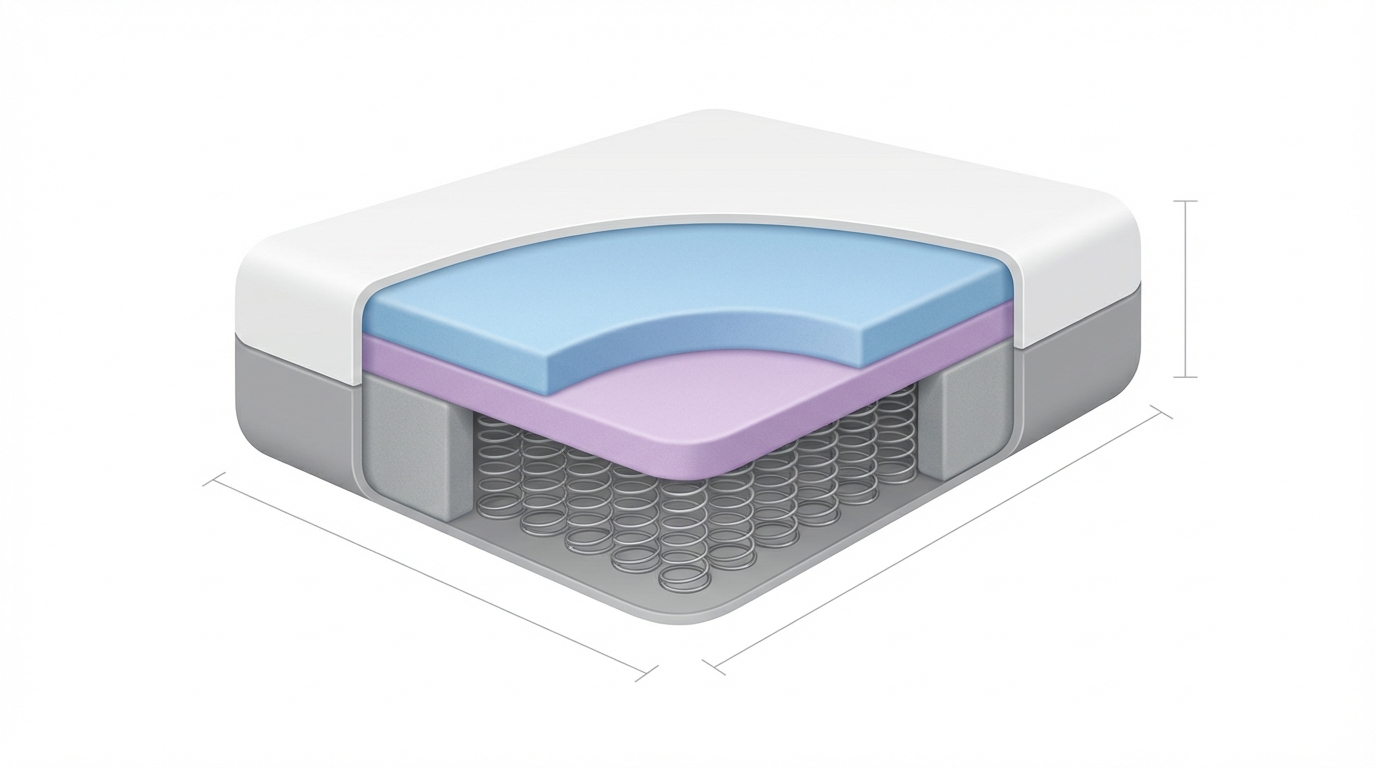
All of these numbers can start to blur together, so here is a simple comparison of the most common adult mattress sizes side by side. This table uses typical U.S. dimensions to help you visualize where queen fits in the lineup.
| Mattress Size | Width (inches) | Length (inches) | Typical Best Use |
|---|---|---|---|
| Full / Double | 54 | 75 | Solo adults or teens in smaller bedrooms |
| Queen | 60 | 80 | Most couples, solo adults with a pet |
| King | 76 | 80 | Couples wanting maximum width, co sleeping with kids |
| California King | 72 | 84 | Tall couples who want extra length more than width |
Seeing it this way highlights how a queen maintains the same 80 inch length as king, twin XL, and many specialty sizes, while offering a moderate width that is wider than full but noticeably narrower than king. If you are deciding between sizes, it can help to imagine those extra 6 or 16 inches of width as physical objects you know, like the width of a large cutting board or a nightstand, to make the differences feel more tangible.
Is A Queen Mattress Big Enough For Two?
Knowing the numbers is one thing. Knowing whether you and your partner will feel genuinely comfortable on a queen is another. Since this is one of the most common questions I hear at Sleepology, let’s go beyond simple yes or no answers and look at the factors that really matter.
Personal Space, Sleep Styles, And Body Size
On a queen mattress, two sleepers share 60 inches of width, or 30 inches each if you split it evenly. For many average size couples who prefer to sleep relatively close, that amount of space is perfectly adequate, especially if you tend to sleep on your backs or sides in a more compact posture. In those cases, a queen can feel cozy rather than cramped.
However, there are a few situations where a queen may be borderline or inadequate over the long term:
- One or both partners are tall and broad shouldered, which naturally takes up more lateral space.
- One or both partners are “starfish” sleepers, with arms and legs spread out.
- You regularly share the bed with one or more children or with large pets.
- One partner is a very restless sleeper and frequently rolls or flails in the night.
In these scenarios, the practical personal space each person has on a queen can shrink quickly. That does not mean you must choose a king, but it is wise to be honest about your habits. If either of you already feels confined on your current mattress, and it is similar in width to a queen, it may be worth considering a larger size or strategies to minimize disturbance, such as a mattress with excellent motion isolation.
Motion isolation is one reason many couples are drawn to hybrid or foam mattresses, such as the Sealy Posturepedic Elite Medium Hybrid Mattress – Albany II. On a queen, thoughtful support and motion control become especially important, because any movement has a shorter distance to travel before your partner feels it.
How Pets And Kids Change The Equation
If you co sleep with a toddler, occasionally soothe a child after nightmares, or share the bed with a Labrador or a Great Dane, those extra bodies need to be part of your size calculation. Many families start with a queen, assuming the children will eventually move to their own beds, only to realize that the co sleeping years last longer than expected.
A small or medium size dog at the foot of a queen is usually manageable, particularly if you are shorter and do not need all 80 inches of length for yourselves. Multiple pets, large breeds, or children plus pets, however, can make a queen feel significantly smaller. As an example, a large dog lying at the foot of the bed can effectively remove 12 to 18 inches of usable length, leaving taller sleepers cramped.
From my experience, families who plan to co sleep regularly, rather than occasionally, tend to be happier with king size or larger. Families who only have a pet or who co sleep sporadically can often make a queen work comfortably, especially if they pair it with a supportive, spacious feel such as the Sealy Posturepedic Plus Medium Mattress – Paterson II Euro Pillow Top, which gives the full 60 by 80 surface a very usable feel.
“We always thought a queen was the automatic choice for a couple, but we kept waking each other up. Mia had us think about our sleep positions and our 70 pound dog, and suddenly the queen felt small on paper. We moved the queen to the guest room and invested in a king for us. Best decision, and now guests enjoy the queen too.” – Marcus L., December
Mattress Depth, Frames, And Bedding: How “Queen” Changes In 3D
When you think “what size is a queen size mattress,” your mind probably goes straight to width and length. There is a third dimension that matters just as much: height. Mattress thickness, base height, and bedding all affect how a queen feels and functions in your room.
Typical Queen Mattress Thickness And Bed Height
Queen mattresses commonly range from about 8 inches to 16 inches thick, with most modern premium mattresses landing in the 10 to 14 inch range. Thicker does not always mean better, but it usually means more layers, more contouring materials, and sometimes more robust support, particularly in hybrid designs.
The total bed height is a combination of the frame or platform, any foundation or box spring, and the mattress itself. Many people find a total height of about 24 to 26 inches from floor to top of mattress to be the sweet spot. At that height, your knees are at a comfortable angle when you sit on the edge, which the Mayo Clinic notes can make it easier to get in and out of bed without straining joints or back muscles.
If you choose a very thick queen mattress and pair it with a tall base, you can easily end up with a sleep surface that is 30 inches or higher. For shorter individuals or anyone with mobility limitations, that can feel precarious. Adjustable bases, like those in Sleepology’s adjustable bed frame and base collection, often sit lower to the ground, which can balance out a taller mattress nicely and provide more ergonomic entry and exit from a queen bed.
Bedding And Accessories Sizing For Queen
Once you know you are working with a standard queen mattress, matching bedding becomes much simpler. Fitted sheets for a queen are typically labeled 60 by 80 inches and are cut to accommodate specific depth ranges. Deep pocket or extra deep pocket sheets are designed for thicker mattresses, so be sure to check the stated depth and compare it to your mattress thickness. A snug fit reduces bunching and helps you maintain a smooth surface, especially important on materials like memory foam.
Flat sheets and comforters for queen size mattresses are generally wider and longer than the mattress to allow for drape. Exact dimensions vary by brand, but queen comforters often fall in the range of 86 to 88 inches wide by 96 to 100 inches long. If you prefer a more generous side drop, you may even choose a king comforter for a queen mattress.
For sleepers who want high performance bedding to match the feel of a premium queen mattress, options like the Tempur-Pedic TEMPUR Adapt Luxe Egyptian Cotton Sheet Set or the Tempur-Pedic ProPerformance Sheet Set can make a noticeable difference. Breathable, well fitting sheets help regulate temperature and reduce nighttime awakenings, which research from organizations like the American Academy of Sleep Medicine links to better sleep continuity and daytime alertness.
Do not forget pillows as part of your queen setup. While pillow size is not dictated by mattress size, a pair of queen pillows or a supportive body pillow, such as The BodyPillow by Tempur-Pedic, can complement a queen mattress nicely by supporting spinal alignment and pressure relief, particularly for side sleepers.
How To Know If A Queen Is Right For You: A Practical Decision Framework
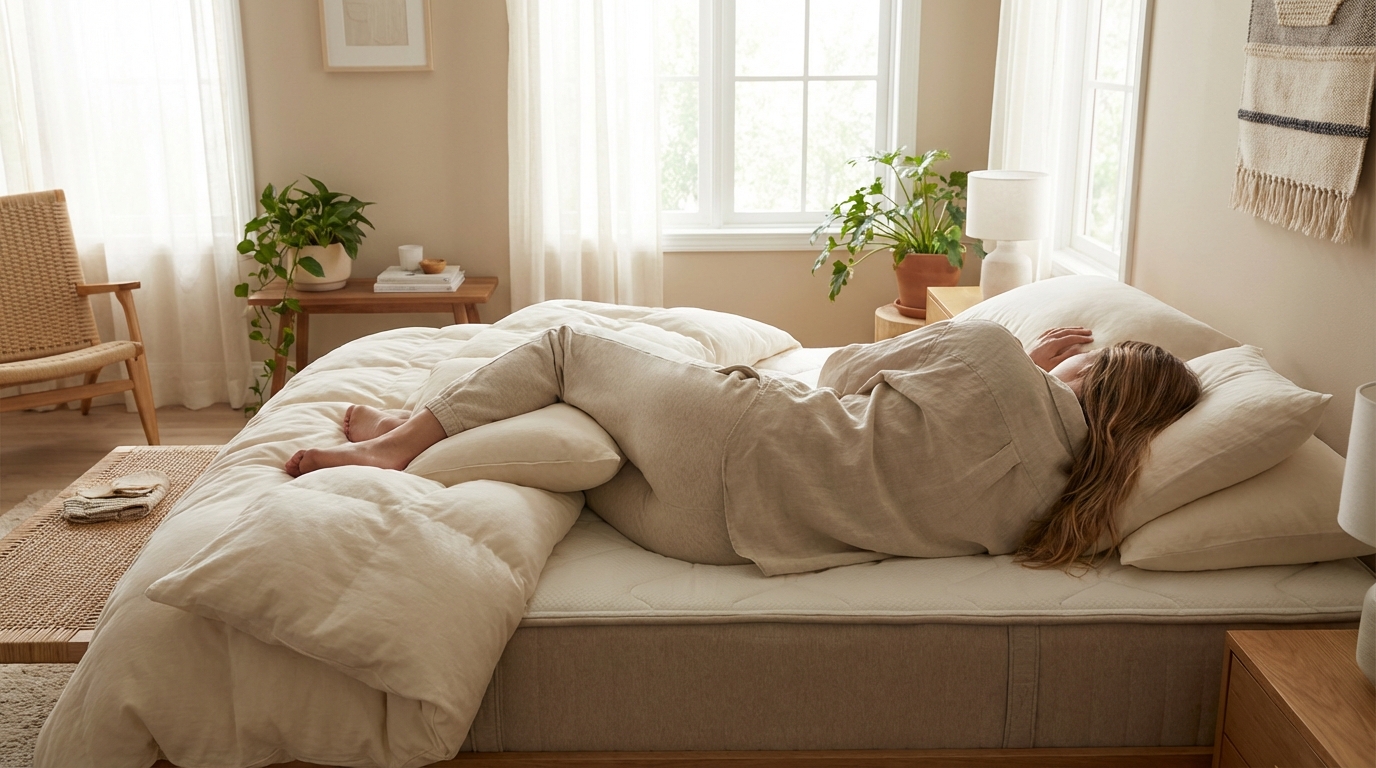
You now know the technical answer to “what size is a queen size mattress,” and you have seen how it compares to other common sizes. The next step is turning that knowledge into a decision that feels confident and future proof. I like to use a simple, four factor framework with Sleepology customers: people, posture, place, and plan.
People: Who Is Using The Bed, Now And Later
Start by listing who will realistically be on the mattress most nights over the next 7 to 10 years, which is the typical lifespan of a good quality mattress according to many sleep research summaries. Include yourself, a partner, pets, and any young children you expect to co sleep with regularly.
If the answer is one adult, possibly with an occasional pet, a queen is almost always more than enough space. If the answer is two adults, a queen is often sufficient unless you know one of the edge cases discussed earlier applies strongly. If the answer involves kids sleeping with you more nights than not, or multiple large pets, a queen may simply be too small.
It is also worth thinking about potential changes. Are you planning to have children during the life of this mattress? Are you likely to move to a larger or smaller home? Often, if you are torn between a full and a queen, or a queen and a king, imagining your life five years from now can tip the scales one way or the other.
Posture: How You Sleep Night After Night
Next, consider how you and your partner actually sleep, not just how you think you should. Are you mostly side sleepers who curl into a compact shape, or do you tend to sprawl across the bed? Does one partner prefer to sleep closer to the center, or is space shared evenly? Do you often wake up near the edge, suggesting your current bed width is pushing your natural position outward?
Side sleepers, particularly those with broader shoulders and hips, benefit from enough horizontal space to allow their joints to align without being pressed against an unyielding edge. On a queen, this makes choosing a mattress with targeted support and cushioning, such as the Sealy Posturepedic Pro Soft Mattress – Dupont II Euro Pillow Top, especially important. Back sleepers often manage well on a queen, as their posture is more compact, while combination sleepers may need to think more carefully about both space and motion isolation.
Place: Room Dimensions, Furniture, And Flow
Then, return to your room. Measure accurately, tape out the bed footprint, and be honest about the furniture you actually want in that space. A queen that technically fits but crowds the room can subtly increase stress, which makes winding down harder at night. A 2021 study published in a sleep medicine journal noted that bedroom environment, including clutter and perceived crowding, is associated with sleep quality.
If your measurements show that a queen will force you to shuffle sideways to reach your closet or will make it impossible to open dresser drawers fully, you might be happier long term with a full, especially if you sleep alone. If a queen fits comfortably and leaves you with pleasant, walkable space around the bed, that is a strong point in its favor.
Plan: Budget, Longevity, And Value
Finally, weigh your budget and how long you plan to keep this setup. Mattress size does influence price, both for the mattress itself and for bedding. The jump from full to queen is often relatively modest, while the jump from queen to king can be more significant once you factor in sheets, protectors, and comforters over several years.
At Sleepology, I encourage people to see mattresses as health investments rather than simple furniture. If a queen gives you significantly better sleep quality than a full, it may be worth stretching your budget slightly. On the other hand, if choosing a queen instead of a king allows you to put more of your budget into higher quality materials or a better support system, such as pairing a queen mattress with an adjustable base, that can deliver more overall value than simply maximizing surface area.
Conclusion: Turning Measurements Into Better Sleep
A queen size mattress measures 60 by 80 inches, but those numbers only tell part of the story. In real life, a queen is a versatile, middle of the road size that serves many couples and solo sleepers beautifully, especially in average sized bedrooms. It offers more stretching room than a full, uses space more efficiently than a king, and is supported by a wide range of frames and bedding options that make setup straightforward.
Deciding whether a queen is right for you means looking at more than the label. It asks you to consider who is sleeping on it, how you sleep, how your room is laid out, and what you want your nights to feel like over the next decade. When you match those pieces thoughtfully, a queen can become a reliable foundation for healthier sleep, better mornings, and a bedroom that feels like a sanctuary instead of a storage unit.
If you are still uncertain whether a queen is the right call, you do not have to figure it out alone. Sleepology’s role is to be your guide, not just your retailer. You can compare supportive queen options like the Sealy Posturepedic Medium Mattress – Medina II Euro Pillow Top or explore our curated pillows, sheets, toppers, and protectors collection to complete your setup. With the right size and the right components, the numbers on a spec sheet turn into deeper, more restorative sleep night after night.
Frequently Asked Questions
How big is a queen size mattress in feet?
A standard queen size mattress measures 60 inches by 80 inches, which converts to 5 feet wide by 6 feet 8 inches long. When planning your room, remember that the bed frame will usually add a few inches to both dimensions, so the full footprint might be closer to about 5.5 by 7 feet, depending on the style of frame and headboard you choose.
Is a queen big enough for a couple who toss and turn?
It depends on your body sizes, sleep positions, and how much you move. For many average size couples, a queen with good motion isolation is sufficient. Each person gets about 30 inches of width, which works well if you do not spread out dramatically. If one or both of you are restless, a queen can still work if you choose a mattress with strong motion isolation, such as a quality hybrid or foam design, but if you already feel crowded on your current bed, that is a sign to consider a king.
What is the difference between a queen and an Olympic queen?
A standard queen is 60 inches wide by 80 inches long. An Olympic queen is typically 66 inches wide by 80 inches long, so it is 6 inches wider but the same length. This gives each partner about 3 inches more personal space. Olympic queens are less common, which can make it harder to find sheets and frame options, so unless you are sure you need that in between size, a standard queen is usually simpler and more flexible.
Will a queen bed fit in a 10 by 10 foot room?
Yes, a queen can fit in a 10 by 10 foot room, but the overall feel will depend on your furniture. The mattress itself takes up 5 by 6.7 feet, and the frame may add several inches. If you keep other pieces modest in scale and allow at least about 24 inches of walkway on each side and 30 to 36 inches at the foot, a queen can work well. If you have bulky furniture or need more open floor space, you might find that a full size mattress makes the room feel more comfortable.
How thick should a queen mattress be?
There is no single “correct” thickness, but most adults are well served by queen mattresses in the 10 to 14 inch range. Thicker mattresses often allow for more layering of comfort and support materials, which can improve pressure relief and longevity. That said, a very tall mattress on a high base can make the overall bed height too tall for some sleepers. Aim for a total bed height around 24 to 26 inches from floor to top of mattress for comfortable entry and exit, adjusting frame and mattress thickness as needed.
Can I put a queen mattress on a full frame?
A standard queen mattress at 60 by 80 inches is too large for a full frame, which is designed for a 54 by 75 inch mattress. Attempting to pair them will either bend or damage the mattress, leave it unsupported at the edges, or make the setup unsafe. If you are upgrading from full to queen, you will need a frame or base that is specifically sized for queen, including any adjustable foundation you plan to use.
Are queen mattresses all exactly 60 by 80 inches?
In practice, there can be small variations. Many manufacturers allow for about plus or minus 1 inch of difference in width and length due to fabric, quilting, and production tolerances. So a queen might measure, for example, 59 by 79 or 61 by 80. These small differences are usually not noticeable in use and are generally compatible with queen size frames and bedding. If you are fitting a mattress into a particularly tight built in frame, measuring the actual product specifications is wise.