

What Size Is A Queen Mattress? Your Complete, No‑Stress Guide To Queen Bed Dimensions
If you are searching “what size is a queen mattress,” there is a good chance you are standing in a bedroom with a tape measure in your hand, or scrolling listings and wondering whether 60 by 80 really feels as big as it sounds. You might be upgrading from a full that feels cramped, sharing with a partner for the first time, or trying to decide between a queen and a king in a not‑so‑huge room. Whatever brought you here, you are asking exactly the right question before you buy, because mattress size is one of those decisions that quietly shapes your sleep every single night.
Queen mattresses are the most popular bed size in the United States, and that popularity is not an accident. A queen has to pull off a tricky balancing act, offering real space for one or two people without overwhelming the room, the budget, or the rest of your setup. Get it right and you barely think about it again. Get it wrong and you feel it every time a shoulder hangs off the edge, a drawer will not open, or your partner’s elbow ends up in your ribcage at 3 a.m.
You are also not just buying a rectangle of fabric and springs. According to organizations such as the Sleep Foundation and the American Academy of Sleep Medicine, quality sleep in the 7 to 9 hour range supports heart health, mood, weight regulation, and cognitive performance. When I work with clients one on one, mattress size shows up over and over as a surprisingly common source of disrupted sleep. Too little room means more awakenings, more jostling, and more edge sagging over time, especially for couples.
Here, you will get clear answers to what size a queen mattress actually is, how that compares to other bed sizes, how much room it requires, and whether a queen is right for the way you and possibly your partner actually sleep. You will also find practical, tape‑measure‑in‑hand guidance, specific recommendations for different body types and sleep styles, and some options from Sleepology that tend to work well for real people, not just size charts. By the end, you should feel genuinely confident saying, “Yes, a queen makes sense for us,” or, “No, we need to size up or down,” and know exactly what to look for next.
Queen Mattress Dimensions: The Exact Numbers That Matter
A standard queen mattress in the United States measures 60 inches wide by 80 inches long. In feet, that is 5 feet wide and 6 feet 8 inches long. Those numbers are consistent across major brands, whether you choose an innerspring, memory foam, or hybrid. There are specialty variations like Olympic queen or split queen, but when you see "queen" without qualifiers, 60 by 80 is what it means.
The 60 inch width is what makes a queen so versatile. For a solo sleeper, it feels generously wide without taking over the bedroom. For a couple, it yields about 30 inches of space per person. To put that in perspective, a standard crib mattress is 28 inches wide, so each of you effectively gets slightly more than crib width. For many couples that is perfectly comfortable, especially if you tend to sleep relatively close together or you are moving up from a full.
The 80 inch length is identical to a twin XL and a king. That extra 5 inches beyond a standard twin or full gives better legroom for taller sleepers. Most adults up to around 6 feet 4 inches can sleep on an 80 inch mattress without their feet hanging off, particularly if they do not sleep rigidly straight. Cleveland Clinic sleep specialists often note that people who feel cramped at the end of the bed may unconsciously curl or change position, which can aggravate back or hip issues over time. That added length is one reason a queen is such a common upgrade from a full.
Height is the one queen dimension that is not standardized. Mattress thickness can range from around 8 inches for basic models up to 15 or more for plush pillow tops and hybrids. When I help clients, I always have them consider the full sleep surface height, which includes the mattress and the foundation or base. For example, pairing a mid profile 12 inch mattress with a standard 9 inch Sealy Mattress Base Boxspring Foundation puts the sleep surface at about 21 inches before you add a frame. That can be perfect for most adults, but you might prefer a lower profile with the 5 inch version if mobility or room aesthetics matter.
The safest way to confirm whether a queen will fit your existing frame or space is to physically measure the area where the mattress will sit. Measure the internal dimensions of the frame in inches, then compare them to 60 by 80, leaving at least a half inch of wiggle room. If you are currently using a full frame and you are hoping to drop in a queen mattress, the answer is almost always no; you will generally need a new frame or adjustable base sized for a queen.
“We knew a queen was ‘60 by 80,’ but Mia had us tape it out on our bedroom floor. Seeing the footprint in real space made it obvious we could keep two nightstands and still move easily. We ended up choosing a queen hybrid and it feels roomy without dwarfing the room.” – Lauren P., November
Is A Queen Mattress Right For You?
Even once you know the measurements, the real question is whether 60 by 80 is the right amount of space for your body, your room, and your daily life. According to Consumer Reports and similar testing organizations, people tend to underestimate how much room they need and overestimate how big a larger size will feel in the room. So I like to break the decision into a few concrete filters, starting with who will be sleeping on the bed.
If you are a solo sleeper, a queen almost always feels generous. You get enough width to change positions freely without ending up on the edge, and enough length for most heights. If you occasionally share the bed with a child or pet, a queen can be a nice middle ground that keeps you comfortable but does not require the furniture shuffle that often comes with a king. Many of my single clients also appreciate the way a queen visually anchors a room without making a small primary bedroom look like pure mattress.
For couples, a queen can go either way, depending on your sleep habits. If both of you are average sized, do not move excessively, and tend to gravitate toward each other in the middle of the bed, a queen can be perfectly sufficient. If one or both of you is broader shouldered, heavier, or a very active sleeper, the 30 inches per person may begin to feel crowded, especially over years of use. The National Sleep Foundation notes that sleep partners often wake each other through movement, and a narrower surface magnifies that effect.
Room size matters just as much as body size. A commonly used rule of thumb in interior design is that a queen works best in rooms that are at least 10 feet by 10 feet. That gives you space for nightstands and walking room on both sides. In practice, I encourage people to consider not just the raw measurements, but actual pathways. Will you be able to open closet doors, access drawers, and easily walk around the bed at night, perhaps in the dark, without bumping into corners.
“My husband really wanted a king, but when Mia had us measure, our 10 by 11 room would have been all bed and no walking space. She talked us through how we sleep, and we realized a queen would be totally fine. It saved us a few hundred dollars and we still sleep comfortably.” – Jason R., October
When A Queen Is A Great Fit
There are certain patterns I see over and over where a queen hits the sweet spot. If you are moving from a full to something larger, a queen often feels like a big upgrade without the sticker shock of a king. You gain 7 additional inches of width, plus those crucial 5 inches of extra length, which can make a dramatic difference in perceived space. For many couples currently sharing a full, a queen feels almost luxurious by comparison.
A queen is also an excellent choice if you are outfitting a guest room that might occasionally host a couple or an adult child home from college. It reads as more adult than a full while still fitting into modestly sized secondary bedrooms. Because queen is the most commonly sold size, you will also have the easiest time finding fitted sheets, mattress protectors, and bedding that fit well. If you appreciate higher performance bedding, something like the Tempur‑Pedic ProPerformance Sheet Set is widely available in queen and is designed to handle the deeper profiles of many modern mattresses.
For combination sleepers who change positions often, the queen width helps spread out the natural arc of movement so you do not feel like you are constantly near the edge. That is especially true if you pair the size with a mattress that has good edge support. A medium hybrid such as the Sealy Posturepedic Medium Mattress – Medina II tends to perform well here, since the coil system reinforces the perimeter while the comfort layers allow for pressure relief when you roll from back to side.
Finally, a queen hits a practical sweet spot for people who plan to move homes in the next few years. It is a safe choice that fits well in apartments, townhomes, and larger houses. I have had many clients regret buying a king that barely squeezed into one particular home and then became a headache to move, both in terms of physical logistics and future room layouts. The queen travels more gracefully.
When You Might Want To Size Up To A King
There are also clear circumstances where 60 by 80 simply is not enough. If both you and your partner value your own “bubble” in bed, a king is often the more realistic choice. A standard king measures 76 inches wide by 80 inches long, which essentially gives each partner the width of their own twin XL. According to sleep researchers who study partner disturbance, more width typically equals less transfer of movement, which in turn supports deeper, less fragmented sleep.
Your body dimensions play a role here too. If either partner is broad shouldered or plus size, the extra 16 inches of width on a king can help prevent the feeling of hanging off the side. That is especially relevant if you sleep on your side, which already narrows the contact area between your body and the mattress. Side sleepers, particularly those with shoulder or hip sensitivity, often appreciate the breathing room of a king, though many still do very well on a queen if the mattress itself is well chosen.
You should also think about how many beings will realistically end up on the bed. If you regularly have two adults plus a dog or a child joining during the night, a queen may feel crowded, especially long term. Families who practice some form of co sleeping, or who know that Saturday morning often means three or four people piled in, usually report more satisfaction with a king. California king, which is 72 by 84, is particularly appealing for very tall people, though it offers slightly less overall surface area than a standard king.
The tradeoff, of course, is space and cost. A king needs a larger room and comes with higher prices not only for the mattress but for every accessory: larger protectors, frames, sheet sets, and comforters. This is where it can be helpful to talk through your actual routines with a sleep guide, not just rely on size charts. Sometimes I will help a couple realize that while the fantasy is three kids and two dogs in the bed, the reality is they mostly sleep as a couple and occasionally host a toddler for an hour or two. In that scenario, a queen can still work, especially with good motion isolation.
“We were convinced we needed a king because our friends all had kings. After measuring, our 11 by 11 room would have been so cramped. Mia asked how often our kids actually sleep through the night with us, and the answer was ‘almost never.’ We laughed, picked a queen, and spent the budget we saved on a higher quality hybrid.” – Danielle S., December
Queen Size Compared To Other Mattress Sizes

Understanding what size a queen mattress is gets much easier when you see it in context with other bed sizes. The raw dimensions are helpful, but what really matters is how each size feels in real life for different sleepers and room setups.
From a pure numbers perspective, a queen adds 15 inches of width and 5 inches of length over a standard full. Compared to a twin XL, you get 22 extra inches of width at the same length. Versus a king, you lose 16 inches of width while keeping the same length. The area difference between a queen and a king is 1,280 square inches, which sounds dramatic, but many couples find that a queen gives them enough room once they actually test it in a showroom.
Body size and sleep position interact with these differences. A petite solo sleeper who curls up may be perfectly content on a full, while a tall, broad shouldered combination sleeper may find even a queen starting to feel narrow. Sleep medicine research, including publications cited by Mayo Clinic, repeatedly highlights that spinal alignment and pressure relief are critical for reducing pain and improving sleep continuity. If your size and position push you toward the very edge of the mattress, it becomes much harder for the bed to keep you properly supported, no matter the quality of the materials.
There are also psychological and lifestyle elements. Some people simply sleep better when they feel “tucked in” and do not mind a more compact surface. Others need the visual and physical sense of having plenty of personal space. Knowing yourself and your partner here is crucial. When in doubt, I often suggest visiting a Sleepology showroom, lying down in your usual positions on both a queen and a king, and consciously noticing how your body responds.
At A Glance: How Queen Compares
The table below summarizes how a standard queen mattress stacks up against a few other common sizes. This is not about which size is “best,” but about understanding the tradeoffs so you can choose with your eyes open.
| Mattress Size | Dimensions (W x L) | Typical Best Use | Space Per Sleeper (for 2) |
|---|---|---|---|
| Full | 53" x 75" | Solo adults, guest rooms, tight spaces | 26.5" each |
| Queen | 60" x 80" | Most couples, primary bedrooms, spacious solo sleepers | 30" each |
| King | 76" x 80" | Couples who want maximum width, families with kids or pets | 38" each |
| California King | 72" x 84" | Very tall sleepers, long narrow rooms | 36" each |
You can see why many mattress guides and retailers describe the queen as the “balanced” choice. It offers more personal space per person than a full without requiring the 12 by 12 or larger room that a king really deserves. For many households, that tradeoff of width and overall footprint makes a queen the most practical option.
One note that often surprises people is how similar the experience of queen versus California king can feel if you are not very tall. A California king is longer but slightly narrower, so if your priority is shoulder room rather than legroom, a standard king or even a queen may actually feel more comfortable. I have had several clients who assumed they needed a California king just because it sounded more luxurious, but after we discussed their actual height and room shape, they realized a queen or king optimized their space better and still met their comfort needs.
Room Size, Layout, And Ceiling Height: Will A Queen Actually Fit?
Knowing the numbers is one thing. Standing in your room and imagining furniture in real space is another. A queen bed has a mattress footprint of 60 by 80 inches, but the full footprint of the bed typically adds 2 to 8 inches in each dimension once you include the frame, headboard, and any footboard. That might mean a functional size of, say, 66 inches by 86 inches, or 5 and a half feet by just over 7 feet.
For a traditional layout with space to move on both sides, you generally want a room that is at least 10 by 10 feet, and preferably 10 by 11 or 10 by 12. This allows for 24 to 30 inches of clear walking space along each side and at the foot, which is a common recommendation from interior designers for comfort and accessibility. If you are in a narrower room, you may still fit a queen by placing one side of the bed closer to the wall, but that can make nighttime exits and sheet changes more challenging.
The layout of doors, windows, radiators, and closets can shrink the usable footprint even if the raw square footage looks good on paper. That is why I like to have clients grab a painter’s tape roll and actually mark out the space on the floor. Tape a 60 by 80 rectangle for the mattress, and then, if you know the frame dimensions, expand the outline a few inches all around. Walk around it. Open doors. Imagine bending over to pick something up in the middle of the night. That quick exercise often answers the “queen or full” question more clearly than any online calculator.
Ceiling height and bed height also play subtle roles. In rooms with lower ceilings, a very tall bed can make the space feel more cramped. If you already know you want a thicker mattress, you might choose a lower profile base, like the Sealy Mattress Base Boxspring Foundation – Low Profile 5 inch height, to keep the overall stack at a comfortable height while still enjoying a queen surface. Conversely, taller ceilings can handle more substantial headboards and higher bed heights without feeling overwhelming.
Finally, consider how you will get the mattress into the room in the first place. Standard queen mattresses are flexible enough to navigate most staircases and doorways, but tight turns and low ceilings on stairwells can complicate delivery. Bed in a box models reduce that concern on delivery day, though you still want to be sure the fully expanded mattress will have room to breathe in your chosen spot.
“We never thought about the window placement until we taped out the queen footprint. The bed would have blocked half of it. With Mia’s help, we rotated the layout, kept the queen, and the room actually feels larger now because the bed and window line up better.” – Sandra L., January
Sleep Style, Body Type, And Queen Size Comfort
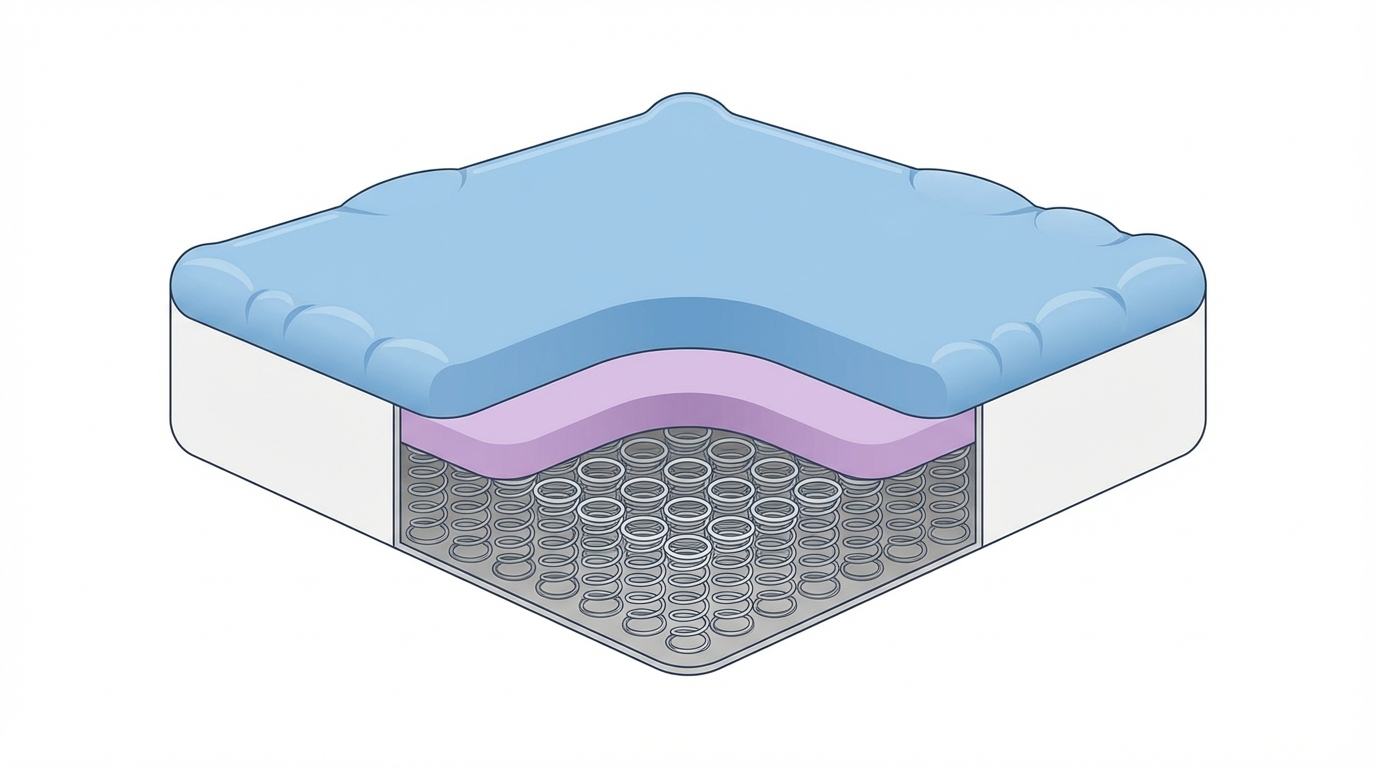
Once you know a queen will physically fit your room, the next filter is whether it will physically fit you. This is where your sleep position, body weight, and any health concerns combine with mattress size and construction to determine your comfort and support.
Side sleepers usually need more surface area under the shoulders and hips, because those joints bear more pressure. A queen’s 60 inch width gives you room to bend your top leg forward in a natural posture without colliding immediately with the edge or your partner. The key is matching that space with the right mattress feel. A side sleeper friendly hybrid such as the Sealy Posturepedic Elite Soft Hybrid Mattress – Brenham II can enhance the queen’s comfort by cradling pressure points while the coil system keeps your spine aligned across the full width.
Back and stomach sleepers are usually more compact in their footprint on the mattress, so a queen often feels more than adequate in terms of width. Research cited by the Sleep Foundation suggests that maintaining a neutral spinal curve reduces the risk of lower back pain. For these positions, the length of a queen tends to matter more than the width, especially for taller individuals. Anyone over about 6 feet 2 inches should test where their feet land on an 80 inch mattress and pay close attention to whether they feel cramped.
Body weight influences how far into the mattress you sink, which in turn interacts with the usable area of the surface. Heavier sleepers might experience more edge compression, so on a queen, solid perimeter support becomes particularly important. That is one reason I often steer couples who are both heavier and very sensitive to motion toward supportive queen hybrids with reinforced edges, or toward a king if the room and budget allow. Light to average weight sleepers usually have more flexibility to prioritize feel and temperature without worrying as much about using every millimeter of the width.
Couples with different sleep positions or body types face the added challenge of making one surface work for two people. Sleep medicine specialists frequently recommend that partners prioritize overall sleep quality rather than symmetry. In practical terms, that might mean one partner uses a specialized pillow, such as The BodyPillow by Tempur‑Pedic, to better support side sleeping on a queen, while the other relies more heavily on the mattress itself for back or stomach support. As long as the bed is wide enough that you are not constantly colliding, these kinds of targeted accessories can make a queen feel more customized.
The Queen Size Advantage For Couples
For many couples, queen is where the math of “enough space” meets the realities of budget and room size. The best part, from my vantage point as a sleepologist, is that a queen mattress gives couples permission to prioritize quality of construction and materials rather than simply paying for more square inches of average foam.
On a queen, you can often move up a tier in quality for roughly the same investment as an entry level king. That might mean upgrading from a basic innerspring to a more supportive hybrid, or from a standard foam mattress to one with zoned support or enhanced cooling. The American Academy of Sleep Medicine highlights that factors like pressure relief, temperature regulation, and motion isolation have more direct impact on sleep quality than sheer mattress size, as long as the bed is not uncomfortably small.
A queen is also more forgiving when it comes to bedding costs. Sheets, protectors, and comforters are widely available at reasonable prices, and high performance options like moisture wicking or cooling fabrics are more common in queen than in less common sizes. A well fitted mattress protector, perhaps ordered from the Pillows, Sheets, Toppers, Protectors collection, also helps extend the life of your mattress, which protects your investment and keeps the queen feeling fresh for more years.
Emotionally, many couples describe a queen as cozy but not cramped. There is enough room to retreat to your own side after a goodnight kiss, but not so much that you feel far apart in bed. For partners who value closeness but also want a clear sense of personal space, that balance can support both intimacy and rest. I often encourage couples to pay attention, during showroom testing, to whether they feel “right sized” together on a queen. It is a subtle but powerful indicator.
If either or both of you are back sleepers, you may find a queen particularly comfortable with a medium feel mattress from collections like The Best Mattresses For Back Sleepers. The combination of supportive comfort layers and proper space tends to keep the spine aligned while still allowing your muscles to relax. Stomach sleepers, who often need a slightly firmer surface, can explore options in The Best Mattresses For Stomach Sleepers, many of which are specifically available in queen.
“We upgraded from a very tired full to a queen Medina II on Mia’s recommendation. The first week I kept waking up in the middle of the night thinking my husband had left the bed because I could not feel him tossing anymore. Turned out he was still there, just on his own side for the first time in years.” – Nicole G., August
Foundations, Bed Bases, And Overall Bed Height
Size is not just about the mattress length and width. The base you put under a queen, and the total height you end up with, will affect comfort, accessibility, and aesthetics. Some of the best sleep setups I see result from paying careful attention to this “stack.”
Traditional setups pair a queen mattress with a matching boxspring or foundation, then place that on a bed frame. The foundation’s job is to provide uniform support and elevate the mattress. For adults of average height, a total bed height around 22 to 25 inches from floor to top of mattress often feels natural to sit on and get in and out of. Taller individuals may prefer a slightly higher bed so their knees are closer to a right angle when they sit on the edge.
This is where foundation height options matter. For example, if you fall in love with a plush, taller mattress like the Brenham II hybrid in queen and your bed frame already sits relatively high, you may choose a low profile base such as the Sealy Mattress Base Boxspring Foundation – Low Profile 5 inch height to keep the overall bed height comfortable. On the other hand, a thinner mattress might pair beautifully with the standard height Sealy foundation to give you a little more elevation and presence in the room.
Adjustable bases are another popular choice with queen mattresses. A queen adjustable base allows the entire sleep surface to elevate at the head, feet, or both, which can be helpful for snoring, reflux, circulation, and pressure relief. Research from sleep clinics shows that modest head elevation can reduce symptoms of mild sleep apnea and snoring in some people. Pairing a queen mattress with an adjustable bed frame and base gives you those benefits while still keeping the footprint manageable in an average bedroom.
Whatever base you choose, make sure it is compatible with your mattress type. Foam and hybrid mattresses typically require a solid platform or slats that are close together to prevent sagging. Traditional boxsprings are designed for certain innerspring constructions. Matching a queen mattress with the right base helps ensure you get the full support the manufacturer intended, which affects both comfort and durability.
Queen Bedding, Accessories, And Sleep Environment

Once the queen mattress is chosen, the rest of your sleep environment completes the picture. Properly sized bedding helps you reap the benefits of your new mattress without fighting with fitted sheets at midnight or waking in sweat because of the wrong fabrics. Because queen is such a standard size, you have the broadest range of choices.
A well fitting queen mattress protector is, in my experience, non negotiable. It guards against spills, sweat, and allergens, preserving the mattress surface and potentially extending its life. Many protectors today use breathable, waterproof membranes that do not crinkle the way older versions did. Choosing a protector from a curated collection such as Pillows, Sheets, Toppers, Protectors ensures it is sized for queen and deep enough for modern mattress heights.
Sheets and comforters should also be queen specific. Fitted sheets that are too small will pop off the corners, and those that are too large will bunch and wrinkle, both of which can interfere with comfort. Look for pocket depth that matches your mattress plus any topper. If you tend to sleep hot, materials like Tencel, bamboo viscose, or performance blends such as the Tempur‑Pedic ProPerformance Sheet Set can help wick moisture and improve temperature regulation. Clinical sleep research consistently shows that a cooler sleep environment supports deeper, more restorative sleep stages.
Pillows are equally important. For a queen bed, two standard or queen pillows usually fill the width nicely for sleeping, while three can provide a more styled look when the bed is made. Choose pillow loft and firmness based on your primary sleep position. Side sleepers often benefit from higher loft for neck alignment, while back and stomach sleepers usually need something lower to avoid neck strain. Specialty pillows such as The BodyPillow by Tempur‑Pedic can be particularly helpful on a queen for pregnant sleepers, people with hip or shoulder pain, or anyone who likes a hugged, supported feeling along the body.
Lastly, consider the rest of the environment around your queen bed. According to the Sleep Foundation, consistent sleep schedules, low noise, low light levels, and a cool room temperature are key pillars of sleep hygiene. Within a queen sized setup, that might translate to blackout curtains that clear the headboard, a bedside lamp that does not glare directly into your eyes while lying down, and thoughtful placement of technology so blue light is minimized before bed. The queen mattress becomes the centerpiece of a holistic sleep space rather than the only variable you address.
Quick Queen Size Setup Checklist
Once you have decided that a queen is the right size, it can be helpful to walk through a simple checklist so nothing slips through the cracks.
- Confirm room dimensions allow for at least 24 inches of walking space around the queen footprint
- Measure doorways, hallways, and stairwells for delivery clearance
- Choose a queen mattress that matches your dominant sleep positions and body types
- Select a compatible queen foundation, platform, or adjustable base
- Verify total bed height will be comfortable for getting in and out
- Purchase a deep pocket queen mattress protector suited to your mattress thickness
- Choose queen sheets and bedding appropriate for your temperature preferences
Each of these steps takes only a few minutes but can prevent very common frustrations later. When I walk clients through this process, they usually comment on how much calmer they feel about the entire purchase because they know the details are covered.
Conclusion: Making A Queen Size Decision You Will Feel Good About In Five Years
By now, you know that the size of a queen mattress is 60 inches wide by 80 inches long, and that those simple numbers hide a lot of nuance. You have seen how a queen compares to full, king, and California king, and how factors like room dimensions, sleep style, and body type shape whether that 60 by 80 rectangle is a comfortable fit or a tight squeeze. You have also seen how the right foundation, bedding, and accessories complete the experience and help you genuinely sleep better, not just fill a space.
The most important takeaway is that there is no one “right” answer that works for everyone. However, there is a right answer for you. If your household looks like many I work with, a queen offers the best combination of comfort, flexibility, and value, especially when you direct some of your budget toward a quality mattress rather than simply buying more surface area. Taped on a floor plan, lived in over years of nights, and paired with thoughtful bedding, a queen can be the dependable, comfortable center of your sleep life.
If you are still unsure, remember that you do not have to solve this alone. Bringing a few room measurements and a sense of how you actually sleep to a Sleepology showroom, or speaking with a Sleepology sleepologist by phone, can turn a vague question about size into a clear, confident decision. Whether you choose a carefully selected queen or realize a different size fits your life better, making that choice with intention is one of the simplest but most powerful ways to invest in your rest.
Frequently Asked Questions
How big is a queen mattress compared to a full?
A standard full mattress measures 53 inches wide by 75 inches long, while a queen measures 60 inches wide by 80 inches long. That means a queen is 7 inches wider and 5 inches longer. For solo sleepers, those extra inches translate into noticeably more room to stretch out, especially if you are taller or sleep diagonally. For couples upgrading from a full, a queen gives each partner about 3.5 additional inches of width, which often feels like a surprising amount of newfound space.
Is a queen mattress big enough for two adults?
For many couples, a queen is comfortably big enough, provided both partners are willing to share their 30 inches of space and are not extremely restless or broad shouldered. If you are both average sized, do not move dramatically in your sleep, and do not regularly share the bed with large pets or children, a queen tends to work very well. If one or both of you are plus sized, very tall, or light sleepers who wake easily from motion, you may want to test a queen and king side by side at Sleepology to see which actually feels more restful.
What is the minimum room size for a queen bed?
A commonly recommended minimum bedroom size for a queen bed is about 10 feet by 10 feet, which allows for a queen mattress and basic furniture while keeping enough walking space. In a 9 by 10 or similarly tight room, you can sometimes fit a queen by placing one side near a wall, but making the bed and getting in and out may be less convenient. The best approach is to tape a 60 by 80 inch rectangle on your floor, plus a couple of extra inches for the frame, and see how it affects door swings, drawers, and walking paths.
Do queen mattresses come in different lengths?
Standard queen mattresses in the United States are almost always 60 by 80 inches. There are specialty variations such as Olympic queen, which is wider at about 66 by 80, and California queen, which is typically narrower but longer, though those sizes are far less common. Bedding and frames are standardized for the 60 by 80 queen, so if you need extra length for very tall sleepers, it often makes more sense to consider a California king or talk to a Sleepology advisor about less common sizes and custom options.
Will my existing full size bed frame fit a queen mattress?
Almost never. A full mattress is 53 by 75 inches, so upgrading to a queen adds width and length that a full frame simply was not designed to accommodate. Trying to set a queen mattress into a full frame usually causes buckling, edge damage, and instability. When moving from a full to a queen, you will generally need a new frame or base sized specifically for a queen. If your current setup uses a universal metal frame with adjustable rails, check the manufacturer’s markings to see whether it has a queen setting.
Is there a difference between a queen and a queen mattress for an adjustable base?
The mattress dimensions for a queen on a standard bed and a queen on an adjustable base are the same, 60 by 80 inches. The key difference is in mattress compatibility and flexibility. Mattresses used on adjustable bases must be designed to bend repeatedly at the head and foot without damaging the comfort layers or support core. When choosing a queen for an adjustable bed frame and base, look for models specifically rated as adjustable base compatible, and avoid very rigid border wire designs that are not meant to flex.
How thick should a queen mattress be?
There is no single ideal thickness, but most high quality queen mattresses fall in the 10 to 14 inch range. Thicker does not automatically mean better, yet more height can allow for more complex comfort layers and deeper support systems, especially in hybrids. What matters most is that the mattress keeps your spine aligned and relieves pressure at your shoulders and hips for your body type and sleep position. You can always fine tune overall bed height with your choice of base, whether that is a standard 9 inch foundation, a 5 inch low profile foundation, or a platform frame.