

What Size Is A King Mattress, Really? A Complete Guide To Space, Comfort, And Fit
If you are asking yourself what size a king mattress is, you are probably already tired of feeling cramped at night. Maybe your current bed feels fine until your partner, a toddler, and a 70 pound dog all decide to be in the same place at 2 a.m. Or you finally have a larger bedroom and do not want to guess on a purchase you will live with for the next decade. Wondering exactly how a king compares to a queen, whether it will actually fit in your room, and if it is really worth the price is completely normal.
Mattress size is not a small detail. Sleep researchers consistently link sleep quality and adequate space to better mood, cognitive performance, and long term health, and an uncomfortable or crowded mattress can cut into both sleep time and sleep continuity. The Sleep Foundation notes that most adults need 7 to 9 hours of sleep per night, and comfort, room to move, and reduced disturbances are key parts of reaching that number consistently. When you choose the wrong size, you are often choosing more midnight wakeups, more “edge clinging,” and more fatigue than you need to live with.
You are in the right place if you want more than a quick dimensions chart. You will learn the exact size of a king mattress in inches, feet, and centimeters, how it compares to other popular sizes, how to know if your room is truly king ready, and what type of sleeper a king mattress is ideal for. You will also see how California king, split king, and oversized specialty sizes fit into the picture, and how to match the size you choose with the right mattress construction and accessories.
As a sleepologist who has spent 20 years fitting real people into real bedrooms, I have seen couples transform their sleep simply by moving from a queen to a king, and I have also seen people regret squeezing a king into a room that was just a little too tight. My goal is to help you land on a confident yes or no, so when you invest in a new bed, you feel relief, not buyer’s remorse.
King Mattress Dimensions: The Numbers You Actually Need
When people ask what size a king mattress is, they are usually expecting a simple measurement, but understanding what those numbers feel like in real life is just as important. A standard king mattress in the United States measures 76 inches wide by 80 inches long. In feet, that is approximately 6.33 feet wide by 6.67 feet long. In centimeters, you are looking at about 193 cm by 203 cm. Those are the nominal dimensions used by most major manufacturers, although some allow for slight variations of around 1 inch in either direction.
On paper, 76 inches wide may not mean much until you compare it to a queen mattress, which is 60 inches wide by 80 inches long. That 16 inch difference in width is the reason many couples feel such a dramatic change when they move from queen to king. Suddenly, each person has about 38 inches of personal width instead of 30. To visualize it, it is like going from having less space than a crib mattress per person to almost a twin bed each, side by side. For couples who toss and turn or prefer different sleeping positions, that extra width becomes very noticeable, very fast.
Length matters in a different way. Both king and queen mattresses are 80 inches long. For most adults, that is enough, as long as the person’s height is at least a few inches shorter than the mattress. Mayo Clinic and other medical sources often suggest that tall sleepers should aim for a mattress longer than their height so their feet are not pressing against the footboard or hanging off the edge, which can strain ankles and knees over time. At 80 inches, a standard king works for people up to about 6 feet 6 inches, especially if they do not sleep fully stretched out.
Manufacturers design bedding, platforms, and adjustable bases around these standard king dimensions. For example, when you shop for an adjustable king base, you will typically see specifications that mirror that 76 by 80 inch footprint or two twin XL units that combine to the same size. That consistency is what makes it relatively straightforward to upgrade from queen to king as long as your room and budget can comfortably support the change.
“We had no idea how big a king really was until Mia showed us how it compares to our queen on the floor with tape. Once we saw the extra 16 inches, it was a no brainer. We ended up with a king hybrid from Sleepology and after a month my husband actually stopped migrating to the couch at 3 a.m.” – Jenna R., November
King vs Other Mattress Sizes: How Much Space Are You Really Gaining?
Once you know the raw numbers for a king mattress, the next logical question is how those numbers compare to other sizes you might be considering. It can be tempting to think, “I am fine now, so how big of a difference can it be,” but the surface area and personal width changes can be significant, especially if you are sharing the bed.
Compared to a queen, a king mattress gives you that 16 extra inches of width while keeping the same length. Where a queen offers a total of 4,800 square inches of surface area, a king offers about 6,080 square inches. That is roughly a 27 percent increase in surface area. For couples, this often translates to fewer accidental elbows and less pulling on the shared blanket, which, according to insomnia research published in journals like Sleep, can make it easier to maintain deeper stages of sleep without waking from minor disturbances.
Compared to a full, the difference is even more dramatic. A full mattress is typically 54 inches wide by 75 inches long. That means a king is 22 inches wider and 5 inches longer. A full offers about 4,050 square inches of surface area, so going to a king adds over 2,000 square inches. If you have ever shared a full mattress as two adults, you know firsthand how much closer that forces you to sleep. The American Academy of Sleep Medicine notes that personal space and comfort are common reasons couples report better sleep after upgrading to a larger bed, even when the mattress material stays the same.
It is also helpful to look at twin and twin XL in this context, especially if you are considering a split king. A twin XL is 38 inches wide by 80 inches long, and two of them placed side by side equal the measurements of a standard king. This is the foundation of a split king setup, where you and your partner can customize firmness on each side or pair the mattresses with an adjustable base that moves independently. For some couples, especially those with back pain or reflux who may benefit from elevation, this is an ideal way to get both the size and flexibility they need.
Understanding these comparisons makes it easier to decide whether a king is worth it for your situation. If you are already on a queen and constantly find yourself clinging to the edge or waking when your partner rolls over, that 27 percent gain in surface area is not a luxury, it is a practical upgrade. On the other hand, if your room barely accommodates a queen now, it may be smarter to stay with a queen and focus your investment on quality, such as moving into a supportive model like a Sealy Posturepedic Plus medium Euro pillow top, which can do a lot to improve comfort even without changing size.
King vs California King: Longer, Wider, Or Truly Bigger?

A very common follow up to “what size is a king mattress” is “what about California king.” It is easy to assume a California king is simply a bigger king, but that is not exactly the case. A California king mattress measures 72 inches wide by 84 inches long. So it is 4 inches narrower and 4 inches longer than a standard king. In surface area, that works out to 6,048 square inches for a California king versus 6,080 for a standard king. In other words, a standard king is technically slightly larger in total area, just shaped differently.
The tradeoff is width versus length. For couples who value shoulder and hip room, the king’s extra width tends to feel more generous. Each partner still has those 38 inches of personal width. For taller sleepers, especially anyone over 6 feet 4 inches, the California king’s additional 4 inches of length can keep feet fully on the mattress, even if they sleep stretched out on their back. Several major mattress brands and retailers, including those cited by the Sleep Foundation, frame the choice exactly this way: standard king for maximum width and family cuddling, California king for exceptional height or long, narrow rooms.
Room proportions can also tip the scales. If your bedroom is slightly narrower but deeper, a California king may visually sit better in the space, leaving just enough clearance on each side for nightstands while using the extra length toward a wall or window. In a more square room, a standard king often balances better, leaving more walking space around the foot of the bed and more flexibility for dressers and seating.
Bedding availability is another subtle but real factor. Because standard kings are more common, sheets, duvets, and mattress protectors are typically easier to find and sometimes a bit more affordable. If you love premium textiles, you will still find California king options, but you may have a smaller range. Many people investing in a king upgrade take the opportunity to refresh bedding as well, often choosing higher quality sets such as a Tempur Adapt Luxe Egyptian cotton sheet set for a soft, breathable feel against the skin that matches the luxury of the larger bed.
The reality is that for most couples, a standard king will offer the best everyday experience, especially if you sleep with pets or children. A California king deserves a serious look if at least one sleeper is very tall or your room layout calls for a slightly narrower bed without sacrificing length.
“My husband is 6'7", so we were convinced we needed a California king. Mia had us lie down on both and talk through how we actually sleep. His feet were still on the standard king, and we realized we cared more about shoulder room. We chose a regular king with an adjustable base and have not second guessed it once.” – Daniel S., October
Standard King vs Split King vs Oversized “Family” Sizes
When you hear “king,” it usually means a one piece standard king mattress, but there are a few related formats that can change both how the bed feels and how it functions in your space. Understanding these helps you avoid confusion while shopping and ensures you pick the configuration that truly fits your lifestyle.
A standard king is the single, 76 by 80 inch mattress most people imagine. It works with traditional box springs, platforms, and most adjustable bases designed specifically for king. This is usually the simplest option for couples without dramatically different firmness preferences. It also makes bedding a bit more straightforward since you are working with one fitted sheet and one mattress protector.
A split king, on the other hand, uses two twin XL mattresses, each 38 by 80 inches, placed side by side on a compatible base. The footprint of the bed is the same as a standard king, but each side can be a different firmness, and on an adjustable base, each can move independently. According to the Cleveland Clinic, elevation and customized positions can help some people reduce snoring, acid reflux, and back pain, so for couples where one partner has specific medical needs, a split king can be an excellent way to support both people without compromise.
Then there are oversized kings such as Alaskan king, Wyoming king, or Texas king. These mattresses can range from 84 by 84 inches to 108 by 108 inches or more. They are specialty products and often require custom frames, bedding, and sometimes even a specially designed room. Families that co sleep with multiple children or have very large master suites sometimes explore these options, but they are far from standard. Most people looking up what size a king mattress is will not need or want to move into this category once they see what is involved.
If you do go the split king route, pay special attention to how your pillows and top bedding work with the setup. Many couples use two fitted sheets for the separate mattresses and a single king sized top sheet and duvet over both. High quality, breathable sheets such as a TEMPUR ProPerformance sheet set can help minimize the feel of the center seam and keep both sleepers comfortable, especially if you are using adjustable positions that bring the mattresses closer or farther apart.
In practice, the choice between standard king and split king comes down to how similar your sleep preferences are. If you and your partner like similar firmness and do not need independent adjustability, a standard king is simpler. If you routinely compromise on mattress feel or one of you prefers sleeping slightly elevated, a split configuration is worth serious consideration.
Will A King Mattress Fit In Your Bedroom?
Knowing the size of a king mattress is only half the equation. The other half is whether that size genuinely fits your room and daily life. A king sized bed takes up a substantial amount of floor space, and if it crowds walkways or blocks doors and drawers, it can quickly go from exciting upgrade to daily frustration.
Most sleep and design experts recommend a minimum bedroom size of around 12 feet by 12 feet for a king mattress to feel comfortable with typical furniture. That does not mean you cannot physically place a king in a smaller room. It means that in a 12 by 12 foot space, you are more likely to maintain at least 24 inches of walking clearance on each side of the bed and at the foot, which is a common guideline for comfortable movement. The Sleep Foundation and several major mattress brands echo this recommendation in their room size charts for mattress selection.
To determine if your bedroom can reasonably handle a king, start by measuring from wall to wall in both directions. Then subtract the depth of any permanent fixtures such as radiators, built in closets that encroach on the room, or deep window sills you plan to use for seating or storage. Next, map out your existing or planned furniture. Dressers, nightstands, seating, and desks all need their own breathing room. If you place a 76 by 80 inch rectangle in the remaining space and consistently end up with less than 24 inches of walking area on multiple sides, a king may feel tight.
Preparing for delivery is another piece many people forget. Stairwells with sharp turns, narrow hallways, and low ceilings can make moving a full size king mattress challenging. Bed in a box models have helped here because they arrive compressed and rolled, which can more easily fit through tight spaces. If you are pairing your mattress with something like an adjustable base, check whether the base ships in sections or as a single large piece, and compare those measurements to your stair and door widths.
Finally, consider vertical space and overall bed height. Adding a thick king mattress to a tall foundation or storage bed can raise the overall sleeping surface higher than you are used to. For most adults, having the top of the mattress around 24 to 26 inches from the floor is comfortable for getting in and out of bed. If you are choosing a plush Euro pillow top king like the Sealy Posturepedic Pro Soft Dupont II, which already has a generous profile, you may want a lower profile base to keep the overall height reasonable.
“We were convinced our room was too small for a king until Mia had us tape out both queen and king footprints. Seeing it on the floor changed everything. We ended up rearranging a dresser and still kept 2.5 feet of walk space. The room feels cozy but not cramped, and the extra space in bed is worth every inch.” – Laura M., December
King Mattress Size Comparison Table
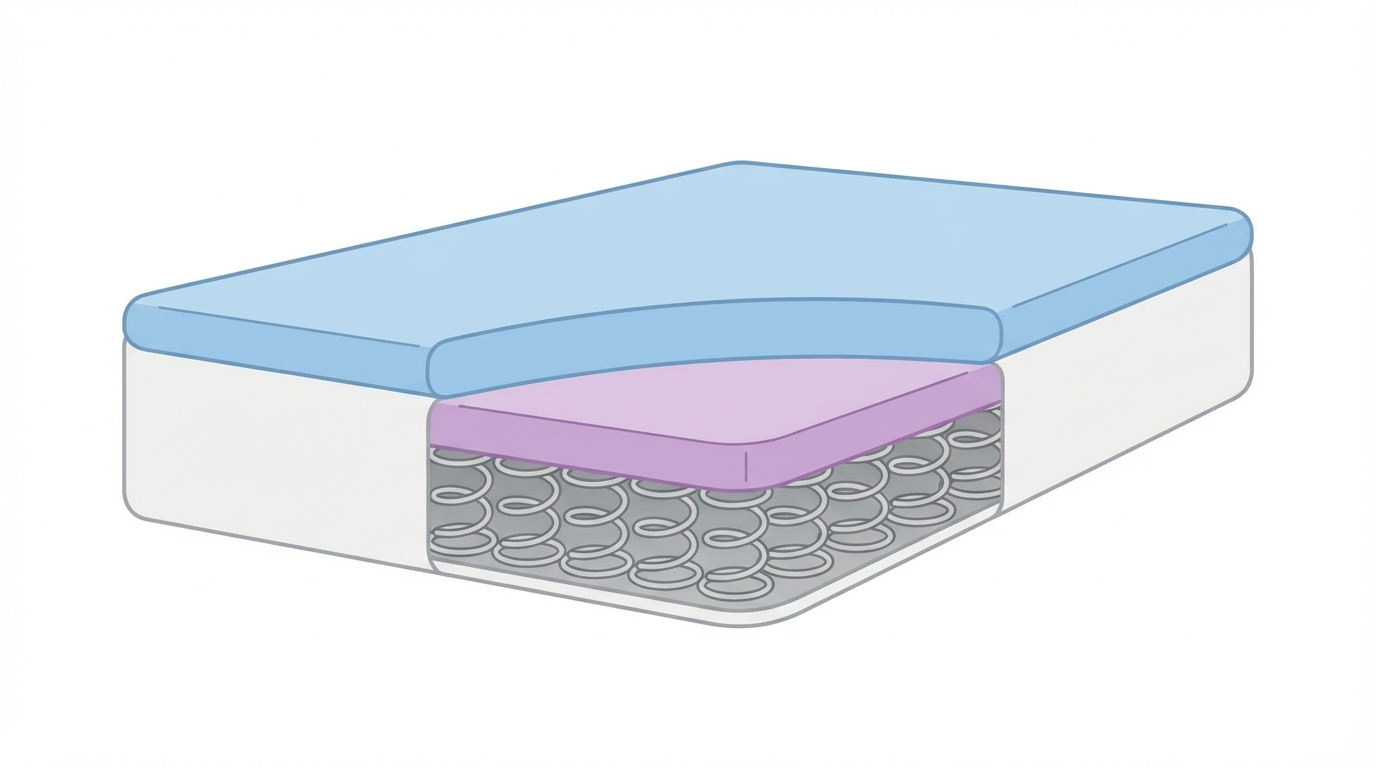
Sometimes it helps to see the major sizes laid out side by side. Here is a straightforward comparison of common mattress sizes and how they relate to a king.
| Mattress Size | Dimensions (W x L, inches) | Typical Use Case | Personal Width For Two Adults |
|---|---|---|---|
| Full | 54 x 75 | Solo adult, guest room | 27 inches per person (very tight) |
| Queen | 60 x 80 | Most couples, primary bedrooms | 30 inches per person (standard) |
| King | 76 x 80 | Couples wanting maximum width, families | 38 inches per person (spacious) |
| California King | 72 x 84 | Very tall sleepers, long narrow rooms | 36 inches per person, more foot length |
Remember that actual dimensions can vary slightly, usually by around one inch, depending on the brand and materials. Thicker comfort layers or pillow tops can also influence how large the mattress feels when you are making the bed or fitting accessories.
Seeing the table, you can probably spot why queen ended up the most popular size for many years. It balances space and room fit quite well. However, as more people prioritize sleep quality and as home sizes have evolved, kings have become more common in primary bedrooms, especially where children and pets join the sleep surface regularly.
Who Is A King Mattress Best For?
Once you are comfortable with the technical answer to “what size is a king mattress,” the more personal question is whether a king is right for you. Not every household will benefit equally from the upgrade, and that is okay. The goal is to match the mattress size to how you actually live and sleep.
Couples who prefer personal space are some of the best candidates for a king mattress. If one or both of you are active sleepers, enjoy spreading out, or have different sleep positions, the additional width can significantly reduce how much you disturb each other at night. Scientific studies on sleep fragmentation show that even small arousals and awakenings you may not remember in the morning can add up to next day fatigue. When you are less likely to bump into each other, you are less likely to have those micro awakenings.
Families who co sleep with children or share the bed with one or more pets are also strong candidates. A king gives you more options for safe, comfortable positioning. A child can sleep between parents without forcing both adults to the extreme edges. Larger dogs or multiple pets can sleep at the foot or side without becoming an obstacle course every time someone needs to get up.
Body size and shape are worth considering as well. Broader shoulders, larger frames, or a big height difference between partners can make smaller beds feel especially tight. According to industry guidance often cited by consumer organizations, partners ideally should each have at least 30 inches of personal width, with more being better. On a king, that 38 inches per person offers enough room to side sleep without feeling pressed against a partner’s back or the edge of the mattress.
Finally, a king mattress can be helpful for certain health conditions and sleep preferences. For example, if one partner requires an elevated head position for sleep apnea management or reflux, pairing a split king with an adjustable base can allow one partner to sleep more upright while the other stays flat. Adjustable bases like those in our adjustable frame collection can also help with swollen legs and back discomfort by allowing gentle elevation of the lower body without needing extra pillows.
If you recognize your household in these descriptions and your room can comfortably accommodate the size, a king may be less of a luxury and more of a practical investment in calmer nights and better rest.
How King Size Affects Your Budget, Bedding, And Accessories
A king mattress is larger, and that scale affects more than just the mattress price. Planning for the full ecosystem of bedding and accessories helps you avoid surprises and choose where to prioritize your budget. For many people, knowing what is coming actually reduces the stress of the purchase and lets them enjoy the upgrade more fully.
First, expect a higher mattress cost compared with queen or full in the same model line. You are paying for more materials and, in some cases, additional internal support structures for the wider span. That said, Consumer Reports and other testing organizations often point out that within a given product line, the upcharge for larger sizes is usually consistent and predictable. Where you see dramatic price differences is typically when jumping between different quality levels, not just size.
Second, factor in bedding. Fitted sheets, flat sheets, pillowcases, mattress protectors, and duvets all tend to be a bit more expensive in king sizes. The increase is not usually extreme, but it is real. Using durable, well made textiles can help you avoid frequent replacement. For example, a breathable, high quality set like the TEMPUR Breeze cooling sheet set may cost more upfront but can deliver better temperature regulation and last longer than several cycles of cheaper sets.
Third, account for foundations and frames. If you are moving up from queen, you will almost certainly need a new frame and possibly a different foundation. Not all existing platforms or headboards can expand to fit. Adjustable bases designed for kings can be more expensive than smaller sizes, but for many people they add nightly value by allowing customized positions for reading, working, or relieving pressure points. A sturdy foundation is non negotiable for a king, since the wider span needs proper center support to prevent sagging. Many manufacturers explicitly require a center support leg on king frames to maintain warranty coverage.
It is also worth considering accessories that help you truly enjoy the extra space. A supportive full body pillow such as The BodyPillow by Tempur Pedic can give side sleepers something to hug and align with without stealing room from a partner. With the width of a king, you can incorporate body pillows, extra standard pillows, and still have personal space.
The key is to look at the full picture: mattress, frame, bedding, and any special accessories. When you plan for all of these up front, you can set a realistic budget and then decide where you want to invest in premium options and where you are comfortable choosing something more basic from our pillows, sheets, toppers, and protectors collection.
A Simple Checklist Before You Commit To A King
Before you click “add to cart” on a king mattress, it helps to run through a quick, practical checklist. People who pause to do this tend to report feeling more confident and satisfied with their choice because they have considered both the emotional and logistical sides of the upgrade.
First, confirm the room dimensions and layout. Measure the space and sketch where the bed, nightstands, and main furniture will sit. If you can, use painter’s tape to outline the exact 76 by 80 inch footprint of a king on your floor. Walk around. Open closet doors and dresser drawers. If you are squeezing sideways or blocking door swings, you may be better served by a queen or a different furniture arrangement.
Next, review who actually sleeps in the bed and how. Write down how many regular sleepers you have, including children and pets, and how they usually position themselves. If your child only occasionally joins you for a few minutes in the morning, your needs are different than a family that co sleeps every night. Being honest here helps you pick the size that matches your true lifestyle, not just an idealized one.
Finally, check delivery paths and base compatibility. Measure stair widths, tight hallway corners, and door frames that the mattress and base will need to pass through. If you are considering an adjustable base, verify that your chosen mattress model is compatible. Many hybrid and memory foam mattresses, such as the Sealy Posturepedic Medium Medina II Euro pillow top, are specifically engineered to flex with adjustable frames while maintaining support.
Here is a concise checklist you can reference as you decide:
- Measure bedroom length and width, and sketch furniture layout
- Tape out a 76 by 80 inch rectangle on the floor to simulate a king footprint
- Verify at least 24 inches of walking space on both sides and foot of bed
- Count regular sleepers, including children and pets, and note sleep positions
- Measure stairways, hallways, and door frames for delivery clearance
- Confirm your frame or base is king compatible, or plan to purchase a new one
- Set a total budget that includes mattress, frame, and bedding
Once you have worked through these points, you will likely find your answer is much clearer. The mental “should we” becomes a practical “we can and here is how” or a confident “a queen makes more sense for us right now.”
After using this kind of checklist, many people feel more at ease moving ahead, because they know they have looked at the decision from all angles, not just the dreamy image of stretching out on a huge bed.
Matching King Size With The Right Mattress Type

Size alone will not guarantee great sleep. A beautifully large king mattress that does not support your body correctly or runs too hot can still leave you tossing and turning. Once you know that king is the right size, the next step is to choose a construction that fits your body, sleep position, and comfort preferences.
For couples, hybrid king mattresses are very popular because they blend responsive coil support with comfort layers of memory foam or specialty foams. The coils help maintain support across the wider span of a king, particularly in the center where many couples experience sagging over time. The foam layers provide pressure relief at common hotspots such as shoulders and hips. According to the Sleep Foundation, hybrid mattresses often balance motion isolation, edge support, and temperature control better than some all foam designs, which can be useful in a large shared bed.
Within the hybrid category, pay attention to firmness choices. Side sleepers or those with sensitive joints often do well on a slightly softer surface that allows deeper contouring, such as the Sealy Posturepedic Pro Soft Dupont II Euro pillow top. Back or combination sleepers often prefer a medium feel like the Sealy Posturepedic Plus Paterson II, which maintains spinal alignment in multiple positions.
All foam king mattresses can be a good fit for sleepers who prioritize motion isolation or have lighter body weights. These designs minimize the sensation of a partner’s movements, which can be especially helpful in a wide bed where someone may need to get up during the night. However, in a king size, look for models with strong edge support foams or reinforced perimeter zones so you do not feel like you are sliding off when sleeping near the edge.
If you run hot, focus on models and bedding with cooling features. Breathable covers, gel infused foams, and coil systems that allow airflow all contribute to temperature regulation. Clinical sleep research often points out that a slightly cooler sleep environment supports more rapid onset of deep sleep, and a king mattress can trap more body heat simply due to its size and the number of sleepers. Pairing a cooling capable mattress with breathable sheets from our pillows, sheets, toppers, and protectors collection is a simple but effective way to keep a large bed from feeling stuffy.
Ultimately, the right king mattress type is the one that supports the way you actually sleep, not just how you imagine you sleep. If you have chronic pain, significant medical conditions, or complex sleep issues, consider talking with a healthcare professional for guidance alongside your mattress research. Organizations like the American Academy of Sleep Medicine and Mayo Clinic provide useful general information, but a personal medical evaluation can help make sure you are aligning your mattress choice with your health needs.
Conclusion: Turning “What Size Is A King Mattress” Into “This Is Our Best Fit”
By now, the answer to what size a king mattress is should feel much more concrete than a simple "76 by 80." You have seen how that number plays out in real space, how it compares to queen, full, and California king, and what it means for your budget, your room, and your night to night comfort. You have also walked through how family size, sleep positions, and health considerations influence whether a king is a smart upgrade or an unnecessary squeeze.
The most important takeaway is that mattress size is not just about inches, it is about how you want to live and sleep for the next 8 to 10 years. When your bed gives you enough room to move, minimizes partner disturbances, and fits harmoniously in your bedroom, it supports both your rest and your daily life. When it constantly forces compromises, you feel that every single morning.
If you are leaning toward a king and your room and budget support it, it is very likely to be a decision you are happy with for years. If a queen or even a full fits your space and lifestyle better, you can still dramatically improve your sleep by choosing a supportive, well matched mattress in that size and pairing it with quality bedding and, if appropriate, an adjustable base.
Whichever direction you go, you do not have to figure it out alone. At Sleepology, my role is to take the stress and guesswork out of decisions like this so you can focus on what really matters: waking up rested, comfortable, and ready for your day.
Frequently Asked Questions
How wide is a king mattress compared to a queen in real life?
A standard king mattress is 76 inches wide, while a queen is 60 inches wide. That 16 inch difference translates to each partner getting about 8 extra inches of personal space. In practical terms, it feels like going from sharing one large surface together to having almost a twin bed’s worth of space each, side by side. For couples who frequently bump into each other at night on a queen, this extra width is usually the most noticeable and appreciated change.
Can a king mattress fit in a 10 by 10 foot room?
You can physically place a king mattress in a 10 by 10 foot room, but it will likely feel crowded once you add nightstands and a dresser. Many sleep and design experts suggest at least a 12 by 12 foot room for a king to feel comfortably proportioned, with around 24 inches of walking space on each side and at the foot. In a 10 by 10 room, a queen is usually a better balance between sleep space and floor space, especially if you want room for furniture and clear pathways.
Is a king or California king better for tall people?
For very tall sleepers, especially those over about 6 feet 4 inches, a California king is often the better fit because it is 84 inches long compared to the standard king’s 80 inches. That extra 4 inches helps keep feet fully on the mattress even when stretched out. Standard kings, however, are wider at 76 inches compared to 72, so couples who value shoulder room and have average or moderately tall heights often prefer the regular king’s proportions. The right choice depends on whether width or length is your bigger concern.
Do king mattresses wear out faster because they are larger?
Size alone does not make a king mattress wear out faster. What matters more is overall quality, internal support, materials, and whether the mattress has proper center support underneath. Many manufacturers and consumer organizations emphasize using a frame with a center support leg for king and queen mattresses to prevent sagging. A well built king on a supportive base can last just as long as the same model in a smaller size, typically 7 to 10 years, depending on use and care.
Will moving from queen to king help if my partner tosses and turns?
For many couples, moving from queen to king significantly reduces how disruptive a partner’s movements feel. You are adding 16 inches of width and about 27 percent more surface area, which means movements have more space to dissipate before they reach you. If you pair that extra space with a mattress that has good motion isolation, such as a quality hybrid or memory foam design, the combination can noticeably improve how undisturbed you feel at night. It will not eliminate all movement, but it often turns a nightly annoyance into something barely noticeable.
Do I need special pillows or bedding for a king mattress?
You will need bedding sized for a king mattress, including fitted sheets, flat sheets, mattress protectors, and duvets. Many people also choose king sized pillows to better match the width of the bed, though standard pillows can still work. Because a king mattress covers more area and may host more sleepers, breathable, durable bedding becomes even more important. Investing in quality sheet sets, such as those in Sleepology’s pillows, sheets, toppers, and protectors collection, can help regulate temperature and make nightly use and weekly laundering easier.
Is a king mattress worth the higher cost over a queen?
Whether a king is worth the extra cost depends on your priorities. If you and your partner regularly feel cramped, are frequently woken by each other’s movement, or share the bed with kids or pets, the additional space often pays you back in better sleep and less tension about nighttime habits. If your room is small or you are usually sleeping alone, a queen may give you all the space you need and free up budget to invest in higher quality construction or an adjustable base. The key is to weigh the real benefits in your specific situation against the difference in total cost, including frame and bedding.