

What Size Is A Futon Mattress? The Complete Futon Size Guide You Actually Need
If you are staring at a futon frame and wondering what size mattress will actually fit it, you are not alone. Futon sizing is one of those topics that seems like it should be simple, until you realize every brand describes things a little differently and your tape measure is telling you something else entirely. It can be stressful if you are trying to set up a guest room, studio apartment, or teen space and do not want to deal with returns or a mattress that never quite sits right on the frame.
Getting futon size wrong is not just a cosmetic problem. A mattress that is too small will slide, bunch, and leave gaps. One that is too large will buckle, resist folding, and wear out along stress points much faster. If someone is sleeping on that futon most nights, that can show up as hip and shoulder pain or just plain lousy sleep. Since research from organizations such as the Sleep Foundation and Mayo Clinic consistently finds that sleep surface comfort has a real impact on sleep quality and next day functioning, it is worth slowing down and getting these details right.
You are in the right place if you want a clear, no nonsense explanation of what size a futon mattress actually is, how it compares to standard bed sizes, and how to choose the best size for your space, frame, and sleeper. We will walk through measurements, frame types, thickness, everyday vs occasional use, and even how to future proof your choice if you think that futon might eventually become a primary bed. Along the way, I will call out the kinds of mistakes I see people make in the showroom and how to avoid them at home.
By the time you are done here, you should feel confident measuring your frame, matching it to the right futon size, and deciding whether to stick with a futon mattress or upgrade to a more traditional mattress for better support. My goal is to make the decision feel simple and calm, not overwhelming, so you can move on to enjoying your space instead of wrestling with inches and guesswork.
Futon Mattress Sizes Explained
When people ask "what size is a futon mattress," they are usually hoping there is one universal futon size. In reality, most modern futon mattresses follow the same width and length as standard American bed sizes, only with a construction that allows them to bend and fold. That is good news because once you understand standard mattress dimensions, you already understand most futon sizing as well.
For most brands, a twin futon mattress is about 38 to 39 inches wide and 75 inches long. A full futon is about 54 inches wide and 75 inches long. A queen futon is about 60 inches wide and 80 inches long. King futon options exist, usually around 76 inches by 80 inches, but they are far less common and tend to be bulky on a sofa style frame. Some manufacturers will use 39 instead of 38 or round numbers slightly, which is why you sometimes see 39 by 75 for twin or 60 by 80 for queen. This is not a problem as long as you stay within about an inch of the standard.
The catch is that futon frames are not always labeled clearly. Some frames are sold as "double," "loveseat," or "chair and ottoman" instead of twin or full. Others are designed as tri fold loungers where part of the mattress sits on an ottoman piece when fully extended. In those situations, the frame footprint you see in couch mode may look smaller, but the sleeping surface is still meant to match a standard twin, full, or queen once it is opened out.
The most important measurement, and the one that confuses people most often, is the back width of the futon frame. That is the distance from one inside edge of the arm to the other along the back, where the mattress will sit when the futon is used as a sofa. For most full futon frames, that back width is around 72 to 75 inches. For most queen futon frames, it is usually 77 to 80 inches. Measuring that back width and comparing it to standard mattress lengths is one of the simplest ways to confirm which size mattress your frame is meant to take.
“Mia had me measure the back of my futon frame while we were on the phone, and it turned out I needed a full, not a queen like I assumed. That saved me from ordering the wrong size and paying return freight on a big mattress. The full futon we chose fits like it was made for the frame.” – Karen S., November
Standard Futon Sizes And Who They Work Best For
Each futon size solves a slightly different problem, so it helps to match the dimensions to the real world way the futon will be used. A twin futon mattress, around 38 to 39 by 75 inches, works well for a single sleeper, a child transitioning out of a crib, or a compact office or craft room that occasionally needs to double as a guest space. In sofa mode, twin futons feel more like a generous chair or loveseat than a full couch.
Full futon mattresses, about 54 by 75 inches, are the workhorse of the futon world. They are popular because they strike a useful balance between sitting width and sleeping space without overwhelming a smaller room. Full futons can technically sleep two people, but for regular two person sleeping, most couples feel cramped. For a teen, college student, or solo adult who enjoys spreading out and who needs both a couch and a bed in a small footprint, a full futon is often the sweet spot.
Queen futon mattresses at roughly 60 by 80 inches are the top choice for couples who want a futon as a real guest bed or as their primary bed in a small apartment. When folded, they create a sofa that looks and feels closer to a standard couch. The extra five inches of length over a full can also make a big difference for taller sleepers. If you know you will host overnight guests regularly or you are sleeping on the futon every night as a couple, this is usually the minimum size that feels comfortable long term.
King size futon mattresses are less common and mostly show up in rooms where the futon will live in bed mode most of the time. In couch mode they can be heavy, awkward, and hard to fold, especially on bargain frames. In practice, when someone tells me they are considering a king futon, we usually talk about whether a dedicated king bed with a supportive mattress from our collection of king sized mattresses might serve them better for comfort and durability.
How To Measure Your Futon Frame So You Order The Right Size
You do not have to be handy to measure a futon frame accurately. What you do need is a tape measure, a few minutes, and a clear idea of which measurements matter. Misreading a product page or guessing based on how "big" the futon looks in a photo is one of the most common reasons for size mistakes, and it is completely avoidable.
Start with the frame in sofa position. Measure the inside width of the back from one inside arm to the other. Do not include the arms themselves. Write that number down. If it is roughly 72 to 75 inches, the frame is designed for a full futon mattress. If it is around 77 to 80 inches, it is built for a queen. If you get about 39 to 41 inches, you are looking at a twin or chair size. This single measurement will match you up with the correct length of mattress for bed mode.
Next, measure the seat depth in sofa mode from the front of the seat to the inside of the back when the frame is upright. On a typical bi fold frame, this number will be about half of the final mattress length because the mattress folds once in the middle. When you compare your seat depth to standard mattress lengths, things should line up logically. For instance, a frame designed for a 75 inch long full mattress will usually have a seat depth around 37 to 38 inches, which doubles to create the full bed length once the futon is opened.
If you have a tri fold or loveseat style frame that uses an ottoman, things look a little different. These designs usually fold in thirds instead of halves, so part of the mattress will rest on the ottoman when the futon is fully flat. In that case, you still want to measure the back width, but you will also measure the depth required to fully extend into the room. Most tri folds open to about 75 to 80 inches of length, even if the wall space needed for the frame is much shorter. Knowing both the wall space and the open length will help you visualize how the futon will function day to day.
“I followed Mia’s measuring steps with our old tri fold frame and we realized the mattress had been the wrong length all along. No wonder it never sat right. We swapped to the correct full size futon and suddenly the frame is easy to open and close. My college age son actually volunteers to sleep on it when he is home.” – Daniel H., October
Accounting For Wall Space And Floor Space
Correct mattress size is only half of the equation. The other half is where the futon lives in your room, how it opens, and how much space you really have when it is used as a bed. Many people buy the right size futon mattress, only to discover the frame cannot open fully because it hits a dresser, TV console, or opposing wall.
Bi fold futon frames, which fold once along the length of the mattress, need more wall space and less floor space to operate comfortably. You will usually want a clear horizontal area of about 75 to 86 inches along the wall for a full or queen bi fold, factoring in the frame arms. In bed mode, the futon extends straight out into the room. These are ideal if you have a long wall and a medium depth room.
Tri fold futon frames work the opposite way. They use less wall space and more floor space. The mattress folds in thirds along its width, and you pull part of it out into the room, often onto an ottoman base. That means you may only need 39 to 66 inches of wall width, depending on whether you have a twin, full, or queen, but you will need about 75 to 80 inches of depth cleared in front when you want to use it as a bed. In compact studios or home offices with limited wall space but an open center, tri folds can be a smart choice.
Pay attention not just to the absolute measurements, but to how you move through the room. If you need to open and close the futon often, you want enough clearance so you are not sliding furniture every time. In some cases, I have recommended that customers keep a futon in bed mode and add a compact accent chair for daily seating instead, especially when we are pairing a more substantial hybrid mattress like our Sealy Posturepedic Elite Soft Hybrid Mattress – Brenham II with an adjustable compatible base for a small bedroom that doubles as a lounge.
Matching Frame Type To Mattress Flexibility
Once you know the size of futon mattress you need, the final piece is how flexible that mattress must be to work with your particular frame. Traditional cotton futon mattresses were very bendy. Modern foam, latex, and hybrid options offer a lot more pressure relief and support, but they have different flex characteristics.
Bi fold frames are usually the most forgiving. They only require the mattress to fold once, so medium thickness foam or hybrid options are often fine. Tri fold frames, loveseat frames, and frames that rely heavily on an ottoman to support part of the mattress work better with mattresses that can fold cleanly into thirds. That usually means slightly thinner profiles and more flexible materials, such as all foam designs.
According to organizations like the Sleep Foundation and Cleveland Clinic, pressure relief and spinal alignment play a major role in nighttime comfort and long term back health. That is why I often steer customers who plan to sleep on their futon full time toward a more supportive mattress with strong core support, even if that means using the frame primarily in bed mode and treating it less as a daily couch. In some cases, we pair a traditional mattress, such as the Sealy Posturepedic Plus Firm Mattress – Paterson II Euro Pillow Top, with a sofa or daybed instead of a futon frame to get the best of both worlds.
Futon Mattress Sizes Compared To Regular Mattress Sizes

One of the simplest ways to orient yourself is to think of futon mattress sizes as cousins to regular bed mattress sizes. A full futon is usually the same footprint as a full bed. A queen futon is usually the same footprint as a queen bed. The main differences have to do with thickness, edge shaping, and how the mattress behaves when folded.
In mattress showrooms, customers often ask if they can use a regular mattress on a futon frame or a futon mattress on a regular bed frame. The answer is "sometimes, but be careful." A full size innerspring or hybrid mattress will often physically fit on a full size futon frame in bed mode. The problem is when you try to fold that frame into a couch. Traditional box spring style innerspring mattresses are not designed to bend deeply, so forcing them into a bi fold or tri fold position can damage the support unit, create permanent sagging, and void warranties.
You can go the other direction a bit more easily. Many full and queen futon mattresses can sit on a platform bed frame or solid foundation and be used like a regular mattress. The flatter the surface, the better. If you are using a futon mattress this way, it becomes even more important to choose a model with enough thickness, density, and durable materials to support nightly sleep. Organizations like Consumer Reports often note that foam and hybrid designs tend to outperform thin, all cotton futons in durability testing, particularly for everyday use.
In practical terms, here is how the most common futon mattress sizes line up with standard bed sizes and their typical uses.
| Size type | Approx futon mattress dimensions | Common use cases | Best for |
|---|---|---|---|
| Twin futon | 38–39 in x 75 in | Chair, small loveseat, kid or teen bed, guest cot | One sleeper, kids, very small rooms |
| Full futon | 54 in x 75 in | Standard futon sofa bed in studios, offices, guest rooms | One adult who likes to spread out, short term two person guest use |
| Queen futon | 60 in x 80 in | Larger futon sofa in living rooms or primary sleeping space | Couples, taller sleepers, frequent guests |
| King futon | 76 in x 80 in | Rare, bed first, occasional sofa | Couples who prioritize bed space over couch function |
The larger the futon mattress, the more attention you will need to pay to frame quality and hinge strength. It is one thing to fold a light twin mattress. It is another to fold a dense queen hybrid night after night. This is why, when someone wants the comfort of a thicker premium mattress with the flexibility of occasional sitting, I sometimes suggest pairing a supportive mattress from our best foam mattresses collection with an adjustable bed frame instead of relying on a futon frame. Adjustable bases can put you in lounge and TV positions without requiring the mattress to fold in half onto itself.
“We were convinced we needed a king futon for our basement, but Mia walked us through how huge that would be and how stiff the frame would have to feel. We ended up doing a queen futon for guests and a separate recliner, and it is so much more comfortable in real life.” – Joshua L., December
Everyday Sofa, Guest Bed, Or Primary Bed: How Intended Use Changes The Right Size
Knowing what size futon mattress will technically fit your frame is only part of the story. The other part is what role that futon will play in your home. A futon that is mostly there for the occasional overnight guest has different requirements than one that is your primary bed every single night.
If your futon is primarily a sofa that doubles occasionally as a guest bed, you can let the room dictate the size. Choose the futon size that gives you comfortable seating in the space without crowding walkways or door openings. For many apartments, that looks like a full futon in a small living room or office, or a queen futon in a larger den or family room. In that situation, it is less critical that the sleeping area be as generous as a primary mattress, since guests will only be on it a few nights at a time.
If your futon is primarily a guest bed that you sit on occasionally, you will flip that thinking. Size the futon primarily for comfortable sleep, especially if you regularly host couples, parents with a child, or tall friends or relatives. It might mean stepping up to a queen futon even if it feels a bit bigger than you expected in sofa mode. Good sleep during visits tends to matter more than having the perfect living room staging for a handful of hours each day.
If your futon is going to be your primary bed, size and construction deserve the most attention. Research from sleep medicine clinics and academic centers has consistently found that long term sleep on surfaces that are too small or that fail to support neutral spinal alignment can contribute to musculoskeletal pain, especially in the lower back and shoulders. For most adults, that means a queen size sleeping area at minimum, particularly for couples, and a mattress that behaves more like a true bed than a thin pad. At this point, many people find that a traditional mattress on a space efficient platform or adjustable base is a better long term solution, even if they keep a smaller futon in a separate room for guests.
In every case, being honest about how often people will actually sleep on the futon and for how many nights at a time will help you avoid the regret of "I wish we had gone bigger" or "this thing takes over the entire room." When I work one on one with Sleepology customers, this is usually where our conversation starts, not with the frame catalog, because size decisions flow naturally out of how the futon needs to perform day to day.
Futon Thickness, Comfort, And Sleep Quality
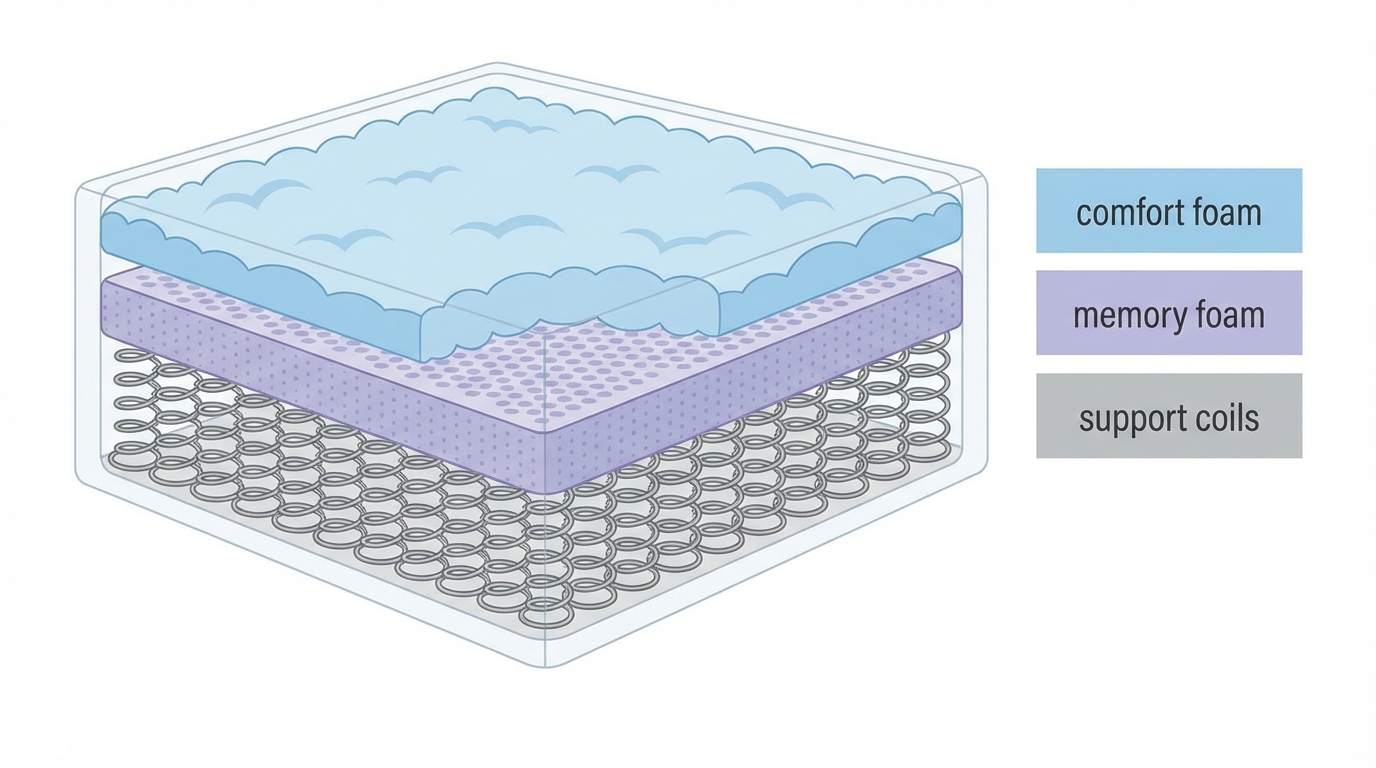
Once you know the size of futon mattress you need, the next big comfort variable is thickness. Many people focus so much on the length and width that they forget depth altogether, then are disappointed when a thin futon bottom out on a metal bar after a few hours of sleep. Thickness, material quality, and how you use the futon all interact to determine how supportive it feels.
Most futon mattresses are somewhere between 3 and 9 inches thick, with some specialty models going to 10 or 12 inches. Thinner futons, around 3 to 5 inches, can work well for occasional sleeping, camping style setups, or tri fold frames where too much bulk makes folding difficult. For nightly sleep, most adults feel far better on an 8 inch or thicker futon. That extra depth gives room for denser support layers and comfort layers that can cradle shoulders and hips without letting the spine bow.
Medical organizations that study sleep often emphasize the importance of pressure relief and alignment. For example, clinical guidance on back pain management from major health systems like the Cleveland Clinic and Mayo Clinic notes that sleep surfaces that are too firm or too thin can aggravate pressure points, while surfaces that are too soft or uneven can let the pelvis sink too deeply. The goal is somewhere in the middle, a balanced surface that supports neutral alignment in your preferred sleep position. Futons are no exception to that basic principle.
When customers at Sleepology are trying to upgrade a futon that feels too hard or too thin but are not ready to replace it completely, we often use a high quality topper as a bridge solution. A dense, pressure relieving topper such as the Tempur Pedic Mattress Topper – Pillow Travel and Guest Bundle can soften up a firm futon for guests or for short term nightly use, especially for side sleepers with sensitive shoulders. This does not fix a sagging or structurally worn out futon, but it can dramatically improve comfort on a mattress that is simply on the firm side.
Futon Frame Types And How They Affect Mattress Sizing
Futon mattresses do not live in a vacuum. The frame beneath them has just as much influence on how they feel and how long they last. Different frame designs also change how you think about size, both in sofa mode and bed mode.
Bi Fold Futon Frames
Bi fold frames are what people often picture when they hear the word "futon." The mattress folds once across its length to turn from a flat bed into a couch. In sofa mode, about half of the mattress is the seat and half is the backrest. Because this design spreads the mattress and the sleeper's weight fairly evenly, it is generally the most forgiving style for thicker or heavier futon mattresses.
With a bi fold frame, mattress size choice is mostly about matching standard lengths and widths and making sure you have enough wall length for the frame and arms. A full futon on a bi fold frame will seat about three average adults. A queen futon will typically seat three to four, depending on arm style. Since the fold runs across the middle of the mattress, you also want to make sure the futon you choose can bend comfortably without creating sharp creases or stress points along the centerline.
Bi folds tend to do best with 6 to 9 inch thick futons that use resilient foam or foam and coil hybrids. They are a good fit for people who want a futon that looks and feels close to a traditional couch most of the time. If you are planning to sit on the futon every day and only occasionally sleep guests, a bi fold frame with a full or queen mattress is often the most practical choice.
Tri Fold And Loveseat Futon Frames
Tri fold frames are a bit more flexible in couch shapes. The mattress folds into three sections, which allows for chaise lounge positions, chair plus ottoman setups, and compact loveseats. In these designs, part of the mattress sits on an ottoman or pulls out from under the main frame in bed mode. That is why tri folds are so popular in tiny rooms, lofts, and bonus rooms, where wall space is at a premium.
The tradeoff is that tri fold frames place more stress on the mattress because they require it to bend sharply in more places. Thinner, more flexible futon mattresses, often in the 4 to 6 inch range, tend to work better in these frames. If you pair a very thick or stiff mattress with a tri fold, it becomes difficult to fold, hard to lock into position, and more prone to premature creasing or lumping.
In terms of sizing, tri fold futons still aim for standard sleeping footprints in bed mode. A twin tri fold will still give you about 38 by 75 inches of sleep area, a full about 54 by 75, and a queen around 60 by 80. However, the wall footprint of the frame in sofa mode is narrower, which is why you might see a deceptively small looking loveseat that turns into a full or queen sized bed when opened. Measuring both the wall width in couch mode and the floor depth required in bed mode will keep you from unpleasant surprises.
Frame Materials And Weight Capacity
While the focus here is on size, it is worth acknowledging that frame materials interact with mattress size and sleeper weight. Wooden frames tend to feel more solid and are often better at supporting larger futon sizes like full and queen. Metal frames are lighter and easier to move, but low cost versions can flex, creak, or bow with heavier mattresses or multiple sleepers. Combination wood and metal designs aim to strike a balance.
Most futon frames list a maximum weight capacity that includes both the mattress and the sleepers. Two adults on a full or queen futon with a heavy mattress can easily reach those limits, so if you plan to sleep two adults regularly on a futon, it is worth choosing a sturdier frame to match the size of the mattress. Just as with standard beds, longevity and comfort come from a partnership between the mattress and the support system underneath it.
Futon vs Traditional Mattress: When To Upgrade
For a lot of households, futons start out as flexible, budget friendly problem solvers. They give you seating and sleeping in one footprint and can be a smart way to make a small space do double duty. Over time, as kids grow, work from home becomes more permanent, or guest visits become more frequent, it is common to wonder when it makes sense to move beyond a futon to a dedicated mattress and base.
If you are waking up sore after nights on the futon, noticing visible dips or lumps, or hearing complaints from guests, size might be part of the problem, but often the bigger issue is overall support. Many futon mattresses simply are not designed to behave like a robust, full time mattress for years on end. Sleep medicine specialists often point out that chronic sleep on unsupportive surfaces can aggravate low back pain, particularly in people who already sit a lot for work or who have underlying spinal conditions.
One path is to treat the futon as an occasional or secondary bed and invest in a high quality primary mattress for the room where people sleep most. A model like the Sealy Posturepedic Elite Medium Mattress – Brenham II Euro Pillow Top can offer zoned support through the center third of the body with cushioning at the surface, a combination that often feels dramatically better than a worn futon. Paired with a sturdy base such as the Sealy Mattress Base Boxspring Foundation | Standard 9 inch height, you get bedroom grade support while keeping the futon for daytime lounging.
If you are not ready to add a separate bed, another approach is to upgrade the futon mattress itself within the same size. Look for futon compatible mattresses that use higher density foams or pocketed coils, and aim for at least 8 inches of depth if the frame will allow it. This gets you closer to the feel of a traditional mattress while preserving the futon footprint. Adding quality bedding from a collection like pillows, sheets, toppers, and protectors can also make a surprising difference in perceived comfort, especially for side sleepers who need more cushion at the shoulders.
Over the past 20 years, I have watched many families keep a futon as part of their home for flexibility while quietly shifting primary sleep to a true mattress. There is no shame in that evolution. In fact, it often reflects a healthy shift in priorities toward long term sleep quality and physical comfort rather than just making do.
Practical Checklist: How To Choose The Right Futon Mattress Size For Your Space

By now you know that futon sizing is more than just twin, full, queen, or king. To pull it all together, it can help to walk through a simple, structured checklist. This is the same mental checklist I use when guiding Sleepology shoppers through a futon decision in person or over the phone.
First, clarify who will sleep on the futon, how often, and for how many nights in a row. Second, measure your frame accurately, paying attention to back width in sofa mode and required depth in bed mode. Third, look at your room layout and identify where doors, closets, windows, and other furniture sit so you can see how the futon will interact with actual pathways and storage. Finally, think about future needs, such as kids aging into the space or an older parent staying more often, and how that might change ideal size or configuration.
To make this easier, here is a concise checklist you can work through:
- Measure frame back width in sofa mode to confirm mattress length (twin, full, queen, or king).
- Measure wall space required in sofa mode, including arms, and ensure there is clearance.
- Measure floor depth required in bed mode with the frame fully opened.
- Decide whether the futon is primarily for sitting, guest sleeping, or nightly sleeping.
- Match futon size to sleepers: twin for one, full for one who sprawls, queen or larger for two.
- Check frame type (bi fold vs tri fold) and choose a mattress thickness the frame can handle.
- Consider overall room flow so the futon does not block doors or force constant furniture shuffling.
As you go through these steps, you may find your initial assumption about size shifts a bit. Many people begin thinking "I need a queen futon" and realize a well made full will fit the room and their guest pattern better. Others start with the smallest size and realize that stretching to a queen will make their own nightly sleep much more comfortable. There is no single right answer, only the size that best fits your specific frame, room, and life.
Conclusion: Turning Futon Confusion Into Clarity
Choosing the right futon mattress size is really about connecting a few simple dots: who will sleep on it, how often it will be used as a bed, what kind of frame you have, and how much space your room honestly gives you. Once you match your real world needs to standard dimensions, the fog tends to lift. A full futon is no longer an abstract measurement, but a concrete 54 by 75 inch sleep surface that either will or will not serve your tall brother in law or your growing teenager.
Getting this right matters because sleep quality does not care whether you call it a futon or a bed. Your body still needs enough room to stretch comfortably, enough support to keep your spine neutral, and enough pressure relief to keep hips and shoulders happy. With a bit of care around size and materials, a futon can absolutely offer that, especially for guest use or as a flexible second bed. When your needs outgrow what a futon can comfortably provide, shifting to a dedicated mattress and base is a sign of taking your sleep health seriously, not a failure of the futon itself.
If you are still unsure between two sizes or configurations, you do not have to figure it out alone. This is where talking through your specific room, frame, and sleepers with an experienced guide can shortcut a lot of trial and error. Whether you stick with a futon, upgrade your mattress, or combine a futon with a primary bed for the best of both worlds, the goal is the same: a home that supports real rest, not restless nights spent wishing you had five more inches of space.
Frequently Asked Questions
What size futon mattress fits a standard futon frame?
Most standard futon frames are designed to fit either a full or a queen size futon mattress. A full futon mattress is typically about 54 inches wide and 75 inches long, while a queen futon mattress is around 60 inches wide and 80 inches long. The easiest way to tell which you have is to measure the inside width of the frame back in sofa mode. If that back width is around 72 to 75 inches, you likely need a full mattress. If it is closer to 77 to 80 inches, you likely need a queen.
Can two adults comfortably sleep on a futon, and what size is best?
Two adults can sleep together on a futon, but comfort depends heavily on both size and mattress quality. A full size futon, at about 54 by 75 inches, can technically fit two adults, but most couples feel cramped, especially if either person is tall or moves a lot at night. A queen futon, around 60 by 80 inches, is usually the better minimum size for couples who share a futon regularly, offering more width and length that more closely matches standard bedroom expectations.
Are futon mattress sizes the same as regular mattress sizes?
In most cases, yes. Futon mattress sizes in the United States usually follow standard mattress dimensions, which means a twin futon is roughly 38 to 39 by 75 inches, a full is about 54 by 75, a queen is 60 by 80, and a king is around 76 by 80. Where they differ is in construction and flexibility, since futon mattresses must bend and fold with the frame, while many traditional innerspring mattresses are designed to stay flat and can be damaged if forced into a futon position.
How thick should a futon mattress be for everyday sleeping?
For occasional guest use, a futon that is 4 to 6 inches thick can be acceptable, especially for lighter sleepers or children. For nightly sleep by adults, most people feel significantly more comfortable on futon mattresses that are at least 8 inches thick, with denser support layers that prevent bottoming out on the frame. Thickness alone is not enough, though. The materials inside must be supportive and resilient, which is why higher density foams and pocketed coils often perform better than thin, all cotton pads for long term use.
Can I use a regular mattress on a futon frame if I match the size?
You can sometimes use a regular mattress on a futon frame in bed mode if the size matches, but folding that frame into a sofa is where problems arise. Many standard innerspring mattresses and some hybrids are not designed to bend as sharply as a futon frame requires, and doing so can damage the support core and cause premature sagging or warranty issues. If you want something that feels closer to a traditional mattress on a futon frame, look for futon compatible mattresses that are specifically engineered to flex, or consider using a regular mattress on a traditional frame or adjustable base instead.
How do I know if my frame is bi fold or tri fold, and does that change what size I need?
A bi fold futon frame folds the mattress once along its length to turn a bed into a couch, so in sofa mode, you will see one long seat and one long back. A tri fold frame folds the mattress into three sections, often with a separate ottoman or pull out segment that supports part of the mattress in bed mode. Both frame types typically use standard mattress sizes in bed mode, such as twin, full, or queen, so size is still about length and width. Where the frame style matters more is in mattress thickness and flexibility, since tri folds tend to work better with thinner, more flexible mattresses than very thick, stiff ones.
What if my futon feels too firm but I am not ready to replace it?
If your futon is the right size for your frame and still in good structural shape but simply feels too firm, adding a quality topper is a practical way to improve comfort without a full replacement. A dense, pressure relieving topper like the Tempur Pedic Mattress Topper – Pillow Travel and Guest Bundle can soften the surface, especially for side sleepers, while the underlying futon provides core support. Pairing this with supportive pillows, such as The BodyPillow by Tempur Pedic, and smooth, breathable sheets can make a noticeable difference in how the futon feels for both guests and everyday use.