

What Mattress Should I Buy? A Clear, Step by Step Guide From a Sleepologist
You are probably reading this after yet another night of tossing around, waking up sore, or wondering why that expensive online mattress still does not feel quite right. Mattress shopping can feel oddly high pressure for something you do lying down. There are too many brands, too many buzzwords, and everyone seems to be yelling that their mattress is the best. If you are stuck on the question “What mattress should I buy?” you are not alone, and you are absolutely not the problem here.
The truth is, there is no single “best” mattress for everyone. There is only the best mattress for your body, your sleep style, and your space. The good news is that once you understand a few fundamentals, the decision stops being overwhelming and starts to feel like a logical, almost mechanical process. I have watched hundreds of shoppers go from anxious and confused to relieved and confident once they see how the pieces fit together.
Mattress choice matters more than most people realize. According to the Sleep Foundation, most adults need 7 to 9 hours of sleep per night, and mattress comfort and support significantly influence how much of that time is truly restorative, not just time lying in the dark. Poor support is strongly linked to back and neck pain, and research published in the Journal of Chiropractic Medicine has found that upgrading to a properly supportive mattress can improve sleep quality and reduce pain complaints. When you sleep badly, everything from your mood to your blood sugar regulation to your immune function takes a hit.
You are in the right place if you want expert guidance without the sales pressure. I will walk you through how to choose a mattress based on your body, your sleep position, and your needs, then translate that into clear recommendations, including some specific Sleepology options when they genuinely fit. By the time you finish reading, you should be able to answer your own question, with confidence: “This is the mattress I should buy, and here is why.”
Step 1: Get Clear On Your Body And Sleep Profile
Before you think about brands or buzzwords, start with you. Mattresses are tools, and tools only make sense in the context of the job they need to do. In this case, the “job” is supporting your spine while relieving pressure on your joints for 7 to 9 hours at a stretch.
Your primary sleep position
Most people have a “home base” position, even if they move during the night. Ask yourself: if you wake up in the middle of the night, how are you usually lying?
Side sleepers put a lot of weight on shoulders and hips. They usually need more cushioning at the surface, with enough underlying support to stop the spine from bending like a banana. Too firm and you get pressure points; too soft and your midsection collapses.
Back sleepers lie in the most neutral position, but that does not mean any mattress works. They need an even, slightly firm surface that supports the natural curve of the lower back without letting the hips sink. This is often the easiest group to fit well, especially with modern hybrids.
Stomach sleepers are the highest risk for back pain. When you sleep face down, gravity wants to pull your hips down, arching your lower back. To counter that, you need a firmer mattress that keeps the pelvis level with the ribcage. Anything too soft here is asking for trouble.
Combination sleepers, who move between positions, need a mattress that is forgiving enough on the shoulder and hip for side sleeping, but responsive and supportive enough for back or stomach. They tend to thrive on slightly firmer, bouncier hybrids that let them move easily.
According to the Cleveland Clinic, spinal alignment is the core of healthy sleep posture, and that alignment looks different in each position. You do not have to memorize anatomy, but you do need to know which “team” you are on so you can pick firmness and construction accordingly.
Your body weight and build
Weight and body shape change how a mattress actually feels. This is a point many online guides gloss over, but in the showroom we see it every day.
If you weigh under about 130 pounds, most mattresses will feel firmer to you than they do to an average sized person, because you are not compressing the comfort layers as deeply. You usually need a slightly softer feel to get enough contouring, especially at the shoulder if you sleep on your side.
If you are in the 130 to 230 pound range, you are in the “design center” for most mattresses. Medium or medium firm feels will generally behave as advertised. You can focus more on position and preferences.
If you are over 230 pounds, you will compress deeper and interact more with the support core. You often need thicker comfort layers paired with stronger, higher density foams or more robust coil systems. Consumer Reports notes that durability testing is especially critical at higher weights, because softer or inexpensive foams can break down faster under greater load.
Weight distribution also matters. Someone with broader shoulders may need more pressure relief there; someone with a heavier midsection needs stronger support through the lumbar and hip region. This is where zoned support mattresses, which firm up through the center third, can make a meaningful difference.
Your main complaints and goals
Now layer in your “why.” What is driving you to shop?
If you wake with back pain, we look closely at spinal alignment and support. A medium firm mattress often performs best for back pain in studies, but that medium firm must be correctly matched to your weight and position, not just the tag on the bed.
If pressure points and numb arms are the problem, we emphasize contouring and surface softness, especially for side sleepers. Memory foam and good pillow tops shine here.
If you sleep hot, then we need breathable materials, coil support cores, and covers that help dissipate heat. Mayo Clinic reminds patients that bedroom temperature and bedding significantly impact the ability to fall and stay asleep, especially for women in midlife and people with metabolic conditions.
Take a moment and jot down: position, weight range, and top two problems. You will use that as your compass through the rest of this guide.
“Mia asked me more about my sleep than my doctor ever has. Once we mapped out that I am a 5 foot 3 side sleeper with hip pain, the ‘mattress jungle’ suddenly narrowed to three real options. We ended up with a Sealy hybrid for under $1,800 and my husband jokes he has a new wife because I am not grumpy every morning anymore.” – Karen D., November
Step 2: Understand The Four Main Mattress Types
There are countless brand names, but under the hood you are really choosing between four core constructions: innerspring, memory foam, latex, and hybrid. Each has strengths and tradeoffs.
Innerspring mattresses: traditional support and bounce
Innerspring mattresses use a core of metal coils with thinner comfort layers on top. Modern models typically use individually wrapped pocketed coils instead of old style linked springs, which improves motion isolation and contouring.
The biggest strength of innersprings is support and breathability. Coils create natural airflow, which helps you sleep cooler. The surface tends to feel buoyant and “on top” rather than hugged. If you like the feel of classic hotel beds and do not care for being cradled deeply, an innerspring or an innerspring hybrid is often a good starting point.
The main downside is limited pressure relief if the comfort layers are minimal or too firm. Pure innersprings without a decent pillow top can feel pokey to side sleepers, especially at the shoulder.
A good example from the Sleepology floor would be a Euro top innerspring like the Sealy Posturepedic Medium Mattress – Medina II Euro Pillow Top. The Euro pillow top adds cushioning for pressure relief while the coil unit underneath keeps the spine supported and the surface responsive.
Memory foam mattresses: deep contouring and pressure relief
Memory foam is beloved for its ability to mold to your body, distributing weight away from pressure points. For side sleepers with sore shoulders or hips, or back sleepers with pronounced curves, this can feel like a revelation. The Sleep Foundation notes that memory foam’s close conforming can reduce tossing and turning by cushioning joints and reducing discomfort.
The strengths are obvious: great pressure relief, strong motion isolation for couples, and a steady, quiet feel. The tradeoffs are just as real. Traditional memory foam tends to sleep warmer, because it hugs the body and can trap heat, and it can sometimes feel slow or “stuck” when you try to move.
If you like a slow melty feel and sleep relatively cool, a foam mattress can work beautifully, especially at lower budgets. If you are a hot sleeper or a restless combination sleeper, you may find you do better with coils in the mix.
Latex mattresses: naturally bouncy and breathable
Latex, especially natural latex derived from rubber tree sap, offers a unique feel. It is pressure relieving like foam, but more buoyant and springy. You get contouring without the “stuck in sand” sensation, and latex naturally resists mold and dust mites.
Latex tends to be cooler than memory foam, though the overall construction still matters. It is also typically more durable. The downside is cost. True latex mattresses are often in the higher price tiers, and the feel is not for everyone. Some people love the lively, almost weightless sensation; others prefer the slower response of memory foam.
If you have chemical sensitivities, run hot, or want a mattress that can realistically last a decade or more with minimal sag, latex or a latex hybrid is worth considering.
Hybrid mattresses: getting the best of both worlds
Hybrids combine a coil support unit with thicker comfort layers of foam or latex on top. In , this is the category where we see the most innovation, because it allows manufacturers to blend support, airflow, and pressure relief.
For many sleepers, a well built hybrid is the most forgiving choice. Coils provide spinal support and cooling, while the upper layers can be tuned softer or firmer depending on your needs. This is also where you find many zoned designs, which firm up under the hips and keep the shoulder region a bit softer.
At Sleepology we use hybrids frequently to solve mixed needs within couples, or to take care of both back pain and pressure points in the same bed. For example, a medium Sealy Posturepedic Plus Medium Mattress – Paterson II Euro Pillow Top gives side and back sleepers that mix of gentle cradle and strong coil support that works for a very wide group of people.
“I thought I wanted all foam because everyone online talked about pressure relief. After Mia had me lie on a hybrid next to the foam, I realized I really like a bit of bounce. The hybrid she recommended feels like a nice hotel bed but my shoulders finally do not go numb.” – Luis M., October
Step 3: Choose The Right Firmness For Your Body

If mattress type is the “what,” firmness is the “how it feels.” This is where many people get tripped up, because one brand’s “medium” feels like another’s “firm.” Independent testing groups like Consumer Reports measure firmness on a 1 to 10 scale to standardize this, with 1 extremely soft and 10 extremely firm.
General firmness guidelines by position and weight
You do not need to chase a perfect number, but you do need to land in the right neighborhood.
For side sleepers under 130 pounds, soft to medium soft (roughly 3 to 5 out of 10) often works best. You want the shoulder and hip to sink enough that the spine lies relatively straight. On an innerspring or hybrid, that often means a generously padded pillow top on a supportive core.
Side sleepers between 130 and 230 pounds typically do best on medium to medium firm (about 5 to 7). The extra weight helps you sink into the comfort layers, so you can get good pressure relief without losing support.
Side sleepers over 230 pounds often need medium firm or even firm (6 to 8), but with thicker comfort layers and robust coils. A soft, thin mattress can compress too far and dump you straight onto the firmer core.
Back sleepers under 130 pounds tend to like medium (about 5 to 6). Too firm and you will feel a gap under your lower back; too soft and your hips will sag down.
Back sleepers between 130 and 230 pounds are often happiest on medium firm (6 to 7). This is the range that research has repeatedly associated with reduced back pain, but the key is that your hips and shoulders sit in line, not that the tag says “orthopedic.”
Back sleepers over 230 pounds generally need firmer, more supportive surfaces in the 7 to 8 range. This is where higher density foams and reinforced coils matter.
Stomach sleepers almost always require firm support. Under 130 pounds you might tolerate a 6 or 7, but above that, you are usually looking for 7 to 9. The more your pelvis can sag, the more your lower back will protest.
Combination sleepers usually do well on medium firm hybrids. The surface should be supportive enough for your back and belly, but with enough give to avoid wrecking your shoulder when you roll to your side.
Why medium firm so often wins for back pain
You will notice “medium firm” comes up a lot. This is not an accident. One often cited study from researchers at the University of Southern Denmark found that medium firm mattresses tended to improve both pain and sleep quality better than very firm beds for people with chronic low back pain. Later work has echoed that middle of the road feel as a safe starting point for many back pain sufferers.
The key nuance is that medium firm is relative to you. A 120 pound side sleeper will likely describe a 6 out of 10 hybrid as “quite firm,” while a 240 pound back sleeper may call it “comfortable and balanced.” When in doubt, pay more attention to what your body tells you during a 10 to 15 minute trial than to the number a brand prints on its tag.
Matching firmness to specific Sleepology options
To make this concrete, here is a quick look at how some Sleepology mattresses map to typical firmness needs:
| Mattress family | Likely firmness feel | Best suited for | Notes |
|---|---|---|---|
| Medina II Euro Pillow Top | True medium | Back sleepers, many side sleepers in the 130–230 lb range | Classic innerspring feel with cushioned top, good “all purpose” choice |
| Paterson II Euro Pillow Top Soft | Medium soft | Lighter side sleepers, pressure sensitive shoulders and hips | Extra plush surface, still with coil support under the pillow top |
| Paterson II Euro Pillow Top Medium | Medium to medium firm | Mixed back and side sleepers, couples with different positions | Balanced feel for shared beds |
| Paterson II Euro Pillow Top Firm | Firm | Stomach sleepers, heavier back sleepers, those who like a flatter feel | Stronger pushback, still some top cushioning |
| Brenham II Hybrid Soft | Medium soft with more hug | Side sleepers who want deeper contouring but still like coils | Hybrid build adds extra pressure relief |
| Dupont II Firm Hybrid | Firm hybrid | Stomach sleepers and heavier folks who also want cooling | Coil core plus firmer foams keep pelvis lifted |
Use this table as a rough translation tool, then always confirm against your body’s reaction.
“I was convinced I needed something labeled ‘extra firm’ because of my chiropractor. Mia explained the research on medium firm for back pain and had me compare a very firm innerspring to a medium firm hybrid. I could feel the difference in how my lower back relaxed. Four weeks on the Paterson medium firm and I have cut my morning stretching time in half.” – Jason P., December
Step 4: Match Mattress Type And Firmness To Your Sleep Style
Now we put the pieces together. You know your position, weight range, and type preferences. Here is how to translate that into real world choices.
Best mattress patterns for side sleepers
Side sleepers are the most demanding when it comes to pressure relief. Your shoulders and hips drive into the mattress; if the surface is too firm or thin, all that force is concentrated into a small area.
If you are a lighter side sleeper, say under 150 pounds, look for softer pillow top innersprings or hybrid designs with thick, plush comfort layers. A model like the Sealy Posturepedic Plus Soft Mattress – Paterson II Euro Pillow Top can work very well here, because the Euro top gives you room to sink in while the underlying coil system keeps your spine from collapsing.
If you are an average weight side sleeper, a medium or medium soft hybrid often hits the sweet spot. The Sealy Posturepedic Elite Soft Mattress – Brenham II Euro Pillow Top couples an indulgent top with a more advanced support system underneath, which can help if you also have intermittent back pain.
Heavier side sleepers usually need more support under that cushioning. A soft feel on top paired with a stronger coil unit, like the Sealy Posturepedic Elite Soft Hybrid Mattress – Brenham II, can give you pressure relief for your shoulder and hip without allowing your midsection to sag.
When you test, pay attention to whether your shoulder feels jammed or gently wrapped, and whether your waist is hanging in space or lightly supported. In a healthy side posture, your nose, sternum, and navel should line up roughly perpendicular to the mattress.
Best mattress patterns for back sleepers
Back sleepers need a fairly even, gently supportive surface that fills in the space under the lumbar spine without over arching it. You can tolerate more firmness than a side sleeper, but too firm can still produce pain.
Light back sleepers often like medium mattress feels with either foam or Euro top cushioning. For them, a true firm can feel like lying on a wood board. A mattress from Sleepology’s Best Mattresses For Back Sleepers collection is a smart place to look, as this curation already leans toward the balanced, supportive feels back sleepers favor.
Average weight back sleepers are classic candidates for medium firm innerspring or hybrid designs. A medium Sealy Posturepedic Elite Medium Mattress – Brenham II Euro Pillow Top offers a bit more refinements in the support core than entry level models, which can translate into better long term spinal support.
Heavier back sleepers need firmer cores and often do best on firm hybrids or firmer Euro top innersprings. Something like the Sealy Posturepedic Pro Firm Hybrid Mattress – Dupont II uses both dense foams and a sturdy coil unit to keep the pelvis from sinking too low.
When you lie on your back to test, slide your hand under your lower back. You should feel contact, but not forceful pressure. If there is a big gap or your hand slides through too easily, the bed may be too firm or not conforming enough. If you feel like your hips are in a hammock, it is too soft or lacks support.
Best mattress patterns for stomach sleepers
Stomach sleeping is tricky because it puts the spine in extension. Almost every stomach sleeper I work with is battling some form of lower back or neck complaint. If you are not in a position to change positions right now, the least you can do is provide as much support as possible.
Regardless of weight, most stomach sleepers are on the firmer side of the scale. Lighter sleepers might land on a medium firm, but anyone over about 150 pounds usually needs firm or extra firm to stop the hips from diving. Consumer Reports specifically warns that soft mattresses can worsen back pain in stomach sleepers, because the spine ends up overly curved.
The Sealy Posturepedic Plus Firm Mattress – Paterson II Euro Pillow Top is a nice compromise for mixed back and stomach sleepers who need firmness but still want a bit of comfort at the surface. For purely stomach sleepers, the Dupont II firm hybrid mentioned above is worth a serious look, because the hybrid design adds temperature control while keeping the surface very stable.
Stomach sleepers also benefit from a thin or no pillow under the head, which reduces neck extension. If changing mattresses alone does not give your back relief, I often talk with clients about transitioning slowly to side or back sleeping over time.
Best mattress patterns for couples and combination sleepers
When two people share a bed, you almost never get identical needs. One may sleep hot; one may be cold. One may be a side sleeper with a sore shoulder; the other a back sleeper with a sensitive lower back.
Hybrids tend to be the best compromise because they blend support and pressure relief and often isolate motion well. If both of you are within a similar weight range, a medium to medium firm hybrid from the back sleeper collection I mentioned earlier is usually a safe starting point.
If one partner is strictly stomach and significantly heavier, while the other is lighter and more pressure sensitive, we sometimes skew a bit firmer on the mattress and then customize the softer partner’s side with an additional topper. It is not perfect, but it is more realistic than trying to find a single mattress that is both ultra plush and very firm.
Motion transfer is another consideration. All foam mattresses tend to be best here, while bouncy innersprings are worst. Many good hybrids now find a middle ground where you can move without waking your partner every time.
Step 5: Consider Temperature, Durability, And Size
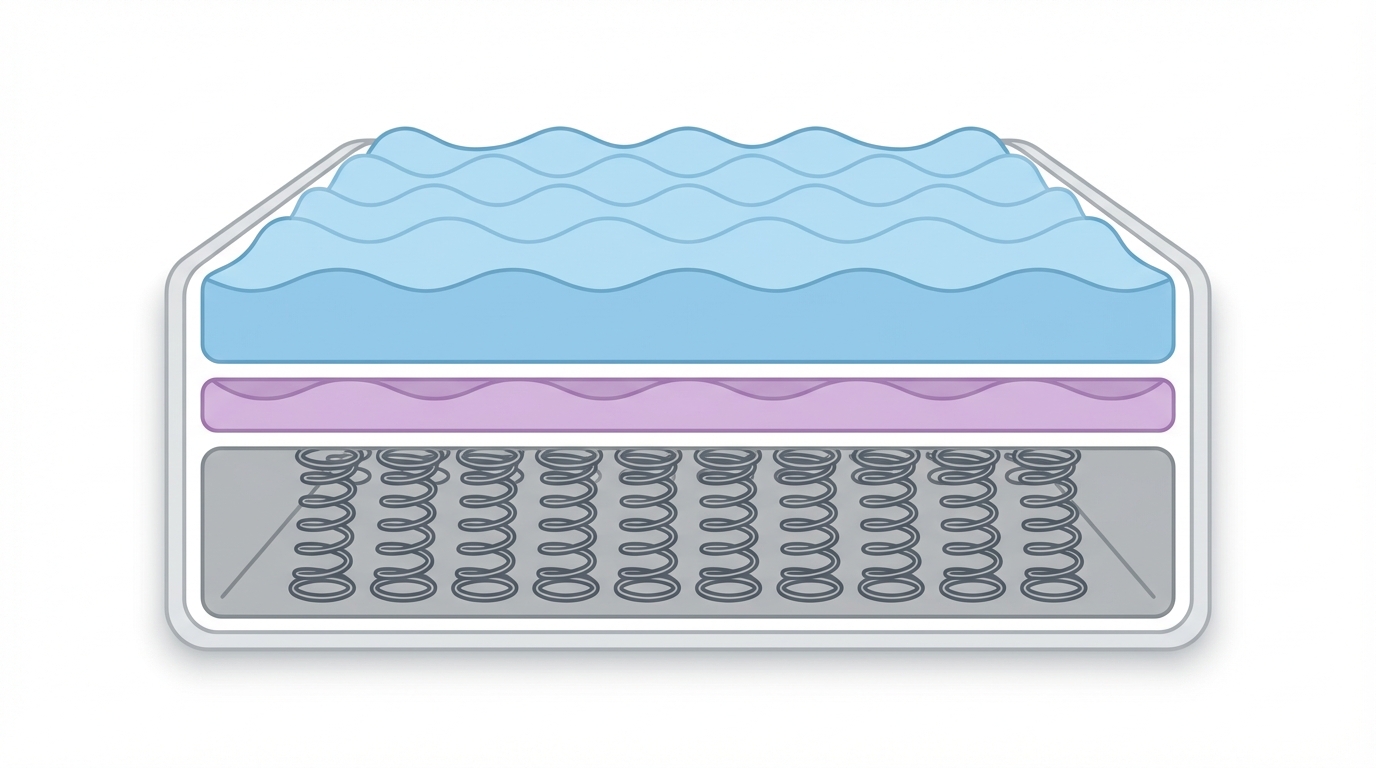
Once you have core support and comfort handled, it is time to look at the “supporting actors” that can make or break real world satisfaction.
Sleeping temperature and cooling features
If you routinely wake sweaty, or you live in a warm climate, mattress temperature becomes central, not optional. The Sleep Foundation highlights that a slightly cool bedroom and breathable sleep surface promote deeper slow wave and REM sleep, while overheating can fragment sleep and reduce restorative time.
Breathability starts with the support core. Coils are naturally cooler than solid foam because they allow air to move through the mattress. Hybrids and innersprings have a leg up here.
Comfort and cover materials then add or subtract heat. Gel infusions, open cell foams, and phase change fabrics can all help some, but marketing sometimes gets ahead of reality. Think of these features as incremental improvements on top of good airflow, not as magic fixes for a non breathable design.
If you know you are a hot sleeper, lean toward coil based or hybrid designs, avoid very thick all foam mattresses unless you have compelling pressure relief needs, and look for breathable covers rather than heavy, heat trapping quilting.
Durability and mattress lifespan
A mattress is not a lifetime purchase, but a good one should give you 7 to 10 years of comfortable use. Durability depends on materials and construction, not just price.
Thicker, higher density foams resist body impressions longer. Quality coils with thicker gauge steel and good edge reinforcement hold up better under daily sitting and sleeping. Latex outlasts most other foams. Cheap, ultra soft foams, by contrast, may feel lovely for a few months and then rapidly sag.
Consumer Reports runs durability tests with heavy rollers to simulate 8 to 10 years of use and has found that some mid priced mattresses performed as well as or better than luxury models. The bottom line is that you do not need to overspend, but you do want to avoid the very cheapest builds if you care about not repeating this process again in three years.
Picking the right size for your room and life
Size is partly about comfort and partly about logistics. A queen is usually sufficient for a single adult or most couples in a standard bedroom. If you and your partner like extra space, have kids or pets in the bed, or simply value sprawling room, a king is worth the extra footprint. Sleepology’s King Sized Mattresses collection is a good way to narrow down options if you know you want the wider format.
Measure your room and consider clearance for walking, dressers, and doors. A king mattress typically needs at least a 12 by 12 foot room to feel proportionate. Also consider any stairs or tight corners in your home for delivery.
If you expect life changes, like a move to a smaller city apartment, or you are furnishing a guest room, it may make sense to choose a more flexible size like a full or queen even if a king sounds luxurious right now.
Step 6: Budget, Value, And Where To Spend Or Save
Mattresses now come in every price bracket imaginable. It is easy to either overspend “just in case” or get lured into something too cheap that will not last.
According to Consumer Reports’ buying guide, many excellent mattresses fall in the roughly 800 to 2,000 dollar range for a queen, and paying more than about 3,000 dollars rarely buys you measurable improvements in support or durability. You are often paying for brand cachet, marketing, or exotic materials that feel nice but do not change sleep outcomes much.
Where it is worth spending:
- Support and durability if you are over 200 pounds or have back pain
- Hybrid or latex constructions if you sleep hot and need cooling
- Reputable brands with good coil systems and edge reinforcement
Where you can reasonably save:
- Ultra thick profiles just for the sake of height
- Trendy foams that claim miracle properties without strong evidence
- Very extended warranties beyond a solid lifetime structural warranty
Also consider the total sleep system. Sometimes a mid range mattress plus a quality pillow and breathable linens from something like the Pillows, Sheets, Toppers, Protectors collection will give you better comfort and temperature control than a high end mattress with worn out, synthetic bedding.
Finally, pay attention to trial periods and return policies. Many mattress makers and retailers offer at least 90 to 120 night trials; some go to a full year. That window matters, because it takes your body several weeks to fully adapt to a new sleep surface.
Step 7: How To Test A Mattress Like A Sleep Pro
Whether you are visiting a Sleepology showroom or trying to interpret online reviews, there is a better way to “kick the tires” than just sitting on the edge and bouncing.
In store testing tips
Wear comfortable clothes similar to what you sleep in. Lying on a mattress in stiff jeans and a belt is not representative.
Lie in your usual sleep position for at least 10 minutes. It feels like a long time in a showroom, but the feedback you get at minute eight is very different from minute one.
As you lie there, run a mental check:
- Is my lower back fully supported, or do I feel a hollow or sway?
- Are my shoulders and hips comfortably cradled, or do I feel a hard spot?
- Do I feel like I am fighting the mattress to get comfortable, or does my body “settle” within a minute or two?
Roll gently to other positions you use and notice how much effort it takes to move. Very slow, sticky memory foam might bother you if you reposition often.
If you sleep with a partner, have them get on the bed with you. Each of you should lie in your usual spots and move around a bit. Do you feel each other’s movements more than you would like?
Take notes on your phone about specific likes and dislikes. If you try several mattresses, they can blur together quickly.
At home trial tips
Give yourself at least 30 nights before making a final judgment, unless the mattress is clearly intolerable. Your muscles and joints adapt to new support, and sometimes mild soreness in the first week is simply adjustment, not a sign the bed is wrong.
Use your usual pillow or, if your pillow is very old, replace it early in the process. A too high or too flat pillow can sabotage even the best mattress, especially for side sleepers.
Keep other variables as stable as possible. If you start a new workout program, change medications, or switch bedroom temperatures at the same time as you change mattresses, it becomes harder to know what is helping or hurting.
Track your sleep quality and pain levels in a simple log or app. Over a month you should see a trend toward falling asleep faster, fewer night time awakenings, and less morning stiffness.
If after 30 to 45 nights you are consistently waking with new or worse pain, or your log shows no improvement in sleep despite a better mattress on paper, that is when I recommend using the return or comfort exchange.
Step 8: Putting It All Together With Real World Examples

To make this as concrete as possible, here are a few common “profiles” and how I would steer each one.
Scenario 1: Side sleeper with shoulder pain, average build
Profile: 42 year old woman, 5 foot 6, 165 pounds, primarily side sleeper, wakes with sore shoulders and occasional hip ache, sleeps a bit warm.
What I look for: Strong pressure relief at the shoulder and hip, medium to medium soft feel, coil support for cooling, not too slow moving on top.
Good fits: A medium soft Euro top hybrid like the Brenham II Euro Pillow Top, or a soft Paterson II Euro Pillow Top if she prefers a slightly more traditional feel. A breathable cotton or Tencel sheet set and a properly sized, medium loft side sleeper pillow from the Sleepology bedding collection will complete the setup.
Scenario 2: Back and stomach combo sleeper with low back pain, heavier build
Profile: 38 year old man, 6 foot 1, 245 pounds, split time between back and stomach, chronic lower back tension, sleeps on the warm side.
What I look for: Firm, very supportive core, enough comfort on top that back sleeping feels sustainable, strong edge support, hybrid or innerspring for temperature.
Good fits: A firm hybrid like the Dupont II, paired with a slightly thinner pillow to reduce neck extension on his stomach. Medium firm is not enough here; we need real pushback under the pelvis. I would steer him toward the Best Mattresses For Stomach Sleepers collection to limit choices to properly supportive designs.
Scenario 3: Couple, one side sleeper with hip pain, one back sleeper, both average weight
Profile: 34 year old woman, side sleeper with hip pain; 36 year old man, back sleeper, no major pain, both around 170 pounds, queen size bed in a modestly sized room.
What I look for: Hybrid with medium to medium firm feel, good motion isolation, strong but not rock hard support, enough surface cushioning to keep her comfortable on her side.
Good fits: A medium Sealy Posturepedic Plus Medium Mattress – Paterson II Euro Pillow Top checks a lot of boxes here. If she still needs a bit more relief on her side, we might add a thin, high quality topper only on her half of the bed rather than compromising the whole mattress firmness.
Conclusion: Your Personal Answer To “What Mattress Should I Buy?”
Choosing a mattress stops being mysterious the moment you flip the question around. Instead of “What is the best mattress out there?” you start asking “What does my body need, and which mattresses are built to deliver that?” Once you know your sleep position, weight range, pain points, and temperature preferences, entire categories of mattresses fall away, and a few strong contenders remain.
You have seen how type, firmness, and support work together, and how credible organizations like the Sleep Foundation, Mayo Clinic, and Consumer Reports all emphasize alignment, pressure relief, temperature, and durability as the true performance measures that matter. You have also seen how real world patterns show up in products: side sleepers gravitating toward plush Euro tops or soft hybrids, back sleepers landing comfortably in the medium to medium firm zone, stomach sleepers requiring firmer, well built cores.
If the idea of translating all of this into a single purchase still feels like a lot, that is understandable. I spend my career doing exactly that translation for people every day, minus the sales pressure and hype. Whether you end up choosing a supportive Paterson II Euro Pillow Top, a pressure relieving Brenham II hybrid, or a different well matched model, the most important thing is that your choice is grounded in your real needs, not just marketing.
The outcome we are aiming for is simple: you lie down at night, your body feels quietly supported, you fall asleep more quickly, you wake less, and your mornings hurt less. When that happens, the mattress question fades into the background of your life, exactly where it belongs. If you would like help turning your sleep profile into two or three specific Sleepology options to test, that is exactly what I am here for.
Frequently Asked Questions
How often should I replace my mattress?
Most quality mattresses last about 7 to 10 years, depending on materials, your body weight, and how well you care for them. Foam mattresses can show softening or impressions earlier, around the six to eight year mark, while latex and well built hybrids often stretch closer to ten. If you notice visible sagging, deep body impressions, or wake with new aches that improve when you sleep elsewhere, those are signs it may be time to replace even if the calendar has not hit ten years yet.
Is a firm mattress always better for back pain?
Not necessarily. The research suggests that a medium firm mattress, correctly matched to your body weight and sleep position, often does better for back pain than an ultra firm bed that does not allow any contour at the hips and shoulders. What matters is that your spine rests in its natural curve, not that the surface feels hard. Many back pain sufferers do best on a supportive hybrid in the 6 to 7 firmness range, rather than a 9 out of 10 board like feel.
What mattress should I buy if I have both back pain and hip pain?
If you have both lower back discomfort and hip pain, support and pressure relief must work together. For many people, that means a medium or medium firm hybrid with a well cushioned top. The coils hold your spine in line, while the comfort layers ease pressure at the hip. A mattress such as a medium Brenham II Euro Pillow Top is the sort of profile that often performs well in this scenario. During testing, make sure your lower back feels supported when you are on your back and your hip does not feel jammed when you roll to your side.
Will a mattress topper fix a bad mattress?
A topper can slightly adjust the feel of a mattress that is too firm at the surface but still structurally sound underneath. It cannot fix a worn out, sagging mattress. Consumer Reports is quite clear that toppers are not a cure for deep indentations or failing support cores. If your mattress is dipping in the middle, you are better off putting upgrade dollars toward a new mattress and using a topper only as a fine tuning tool for comfort.
Are expensive mattresses always worth it?
Price alone is not a reliable indicator of performance. Very cheap mattresses often cut corners on foam density and coil quality, which can impact comfort and durability, but beyond a certain point you are paying more for branding and luxury finishes than for better sleep. Many of the best performing mattresses in independent tests fall in the mid range, not the ultra luxury tier. Focus on build quality, materials, and matching to your body rather than assuming that a higher price tag means a better night’s sleep.
What mattress should I buy if I sleep hot?
If you sleep hot, prioritize mattresses with coil support cores or breathable latex, and avoid very thick, dense all foam designs unless you have exceptional pressure relief needs. Hybrids with gel infused foams and breathable covers often provide a good balance of cooling and comfort. Pair your mattress with lightweight, natural fiber sheets and a breathable protector to maintain airflow. If you are choosing within Sleepology, start by looking at coil based and hybrid models, and mention your temperature concerns so we can steer you toward the cooler constructions.
How important is my pillow compared to my mattress?
Your pillow is more important than many people realize, especially for neck and shoulder comfort. A great mattress with the wrong pillow can still leave you in pain. Side sleepers usually need a higher loft pillow to fill the gap between head and mattress; back sleepers do better with medium loft and stomach sleepers with thin, softer pillows. When I fit someone for a mattress, we nearly always adjust their pillow at the same time, often using options from our pillows and toppers collection so the whole sleep system works together instead of at cross purposes.