

What Kind of Mattress Is Best for Back Pain? A Sleepologist’s Guide To Waking Up Pain Free
If you are reading this because your back hurts every morning, you are far from alone. Back pain is one of the most common reasons adults lose sleep, miss work, and feel older than they are. It can be incredibly discouraging to go to bed hoping for relief, only to wake up feeling tighter, stiffer, and more exhausted than when you lay down. When that keeps happening night after night, it is natural to start wondering whether your mattress is hurting more than it is helping.
What makes this tricky is that the internet is full of confident claims and one size fits all advice. You might have heard that only very firm beds are good for your back, or that memory foam is the cure for everything, or that you should buy whatever your friend bought because it worked for them. At the same time, back pain can have many causes, so you do not want to waste money chasing the wrong solution. The stakes are high. Poor sleep can worsen pain sensitivity, mood, focus, and even your risk of chronic disease, according to organizations like the Sleep Foundation and Mayo Clinic.
You deserve clear, practical guidance that respects both the science and your real life comfort. That means understanding how mattresses interact with your spine, how your body type and sleep position change what you need, and how to separate marketing from features that genuinely matter for back support. You also need to know when the mattress is the main problem and when it is only part of the picture that might also involve pillows, sleep position, or a conversation with a medical professional.
My goal is to walk you through all of that in plain language, using what we know from research combined with twenty years of working with real sleepers at Sleepology. By the end, you will understand what kind of mattress is best for back pain for your body and your habits, which features are worth paying for, and how to choose confidently without feeling rushed or pushed into something that is not right for you.
How Your Mattress Affects Back Pain
When people talk about a mattress for back pain, what we are really talking about is how the mattress supports spinal alignment while also relieving pressure. Your spine is naturally S shaped when viewed from the side. In a healthy sleep posture, that curve is supported, not flattened and not exaggerated. If a mattress is too soft, the heavier parts of your body like hips and torso sink more than your shoulders and legs. That can create a hammock effect where your spine bows out of alignment, which stresses muscles and joints through the night. If a mattress is too firm, it can force your spine into a straighter position than it prefers and overload pressure points at the shoulders and hips.
Medical groups like the Cleveland Clinic and Mayo Clinic consistently emphasize that neutral alignment is the target. They note that good sleep posture allows the back muscles and spinal structures to rest and recover instead of constantly bracing. If you wake up with a stiff, sore, or achy low back that gradually loosens as you move around, that is a classic sign that your mattress or pillows are not supporting that neutral alignment for your body. If your pain is worse at the end of the day than in the morning, on the other hand, your daily posture, work setup, or activities might be the bigger culprit.
Pressure relief is the second half of the equation. The Sleep Foundation points out that when pressure builds at bony areas such as shoulders, hips, or sacrum, you tend to toss and turn to get comfortable. That fragmentation of sleep matters because deep, continuous sleep is when your nervous system and tissues repair themselves. A good mattress for back pain uses surface comfort layers to gently cradle those pressure points, while its deeper support layers keep your spine aligned. When the balance is right, you are not waking up every hour to shift away from discomfort.
The third piece is motion and stability. If your mattress sags, has deep body impressions, or feels wobbly when you change positions, your core muscles end up working harder to stabilize you. Over time that can aggravate low back pain, particularly if you already have disc, facet joint, or muscle issues. Research from Oklahoma State University has shown that simply moving from an older, worn bed to a newer, supportive one can significantly improve sleep and back comfort, regardless of the specific model, because sagging is removed from the equation. That is one reason why age and condition of your mattress matter as much as the label on the tag.
“I truly thought my back pain was just age until Mia pointed out how badly my old mattress was sagging in the middle. We switched to a medium hybrid she suggested, and within about two weeks my morning stiffness dropped from an 8 to a 3. I wish I had made the change two years earlier.” – Carol R., November
Firm, Medium, Or Soft: What Is Best For Back Pain?

One of the most persistent myths in bedding is that if you have back pain you should automatically buy the firmest mattress available. This idea has been repeated for decades, but it is not supported by the better quality research we have now. Several studies, including work published in journals summarized by Harvard Health and the Lancet, have found that medium firm mattresses often produce less low back pain and higher sleep quality than very firm models for most adults.
Here is why that makes sense in practice. A mattress that is too firm for your body type does a good job of preventing sagging, but it can leave gaps under the waist and lower back for back sleepers, or force too much weight onto the hip and shoulder for side sleepers. When that happens, your muscles remain slightly tensed through the night, and joints do not get a chance to truly rest. Over a single night you may not notice much, but across months and years it can translate into chronic discomfort, especially around the lumbar region.
Medium firm, in contrast, usually means that the core of the mattress is supportive enough to keep your body from sinking too deeply, while the comfort layers are thick and responsive enough to contour to your curves. That combination tends to work better across different sleep positions. Reviews from organizations like Consumer Reports consistently echo this. They note that while firmness labels vary between brands, most people with back pain do best in the middle of the spectrum, adjusting slightly softer or firmer based on body weight and position preference.
Individual preference still matters, though. A petite side sleeper with narrow shoulders may need more surface softness to allow the shoulder to sink without twisting the spine. A 240 pound stomach sleeper with a history of disc issues may need to land closer to the firmer end of medium firm to keep the hips from dropping and hyperextending the low back. Two people can lie on the same mattress labeled medium firm and feel it very differently because of their size and how their weight is distributed.
A practical way to think about firmness for back pain is this. If you lie on your back and someone takes a side photo of you at mattress level, your shoulders, mid back, and hips should form a mostly straight line without big dips or peaks. If you lie on your side, your spine from the base of your skull to your tailbone should look straight, not bowed like a banana and not slanting down at the hips. If the mattress is too soft, you will see a U shaped sag. If it is too firm, you may see your waist unsupported, with a small gap and the spine arched toward the ceiling.
Matching Firmness To Body Type And Sleep Position
Body weight and shape influence how a mattress feels more than many people realize. The same model that feels medium firm to a 200 pound adult may feel quite firm to someone who weighs 120 pounds. That is because heavier bodies compress the comfort layers more fully and engage the deeper support layers, while lighter bodies stay more on the surface.
If you are a lighter sleeper, especially under about 140 pounds, and you have back pain, you will usually want a medium or even medium soft feel, particularly if you sleep on your side. The extra cushioning lets your shoulders and hips sink enough to line up the spine without forcing your joints to fight a hard surface. A medium model like the Sealy Posturepedic Pro Medium Mattress – Dupont II Euro Pillow Top can be a good example of this balance, because the Euro top gives gentle pressure relief on a stable core.
Average weight sleepers in the 140 to 220 pound range are usually the target for most mainstream firmness designs. If you fall in this group and deal with low back pain, a true medium firm is often ideal, especially if you split your time between your side and your back. Mattresses like the Sealy Posturepedic Plus Medium Mattress – Paterson II Euro Pillow Top are built to handle this range well, with reinforced center zones to support the lumbar area and enough cushioning to keep hips and shoulders comfortable.
Heavier sleepers, typically over 220 pounds, tend to compress mattresses more quickly and deeply. For back pain, it becomes especially important to choose a model with a robust coil system or high density foams that will not sag prematurely. These sleepers often do best in the medium firm to firm region, but with comfort layers that are thick and responsive enough to still provide pressure relief. A reinforced hybrid like the Sealy Posturepedic Elite Medium Mattress – Brenham II Euro Pillow Top is a good example, because it combines strong support with a cushioned surface that does not pack down as easily.
Position is the second half of this puzzle. Side sleepers usually need more pressure relief at the shoulders and hips, so they tend to lean slightly softer on top, even if the core is firm. Back sleepers need a supportive surface that fills in the curve of the low back, so medium to medium firm with zoned support often works well. Stomach sleepers have the most risk of overextending the lumbar spine, so they typically need the firmest feel among the three positions and should avoid very thick, squishy comfort layers that let the belly and hips sink.
“I am a 6 foot 3 side and back sleeper with chronic disc issues, and I assumed I needed a rock hard bed. Mia walked me through how my hips were actually tilting on my old mattress. We went to a zoned medium model instead, and it was eye opening. I sleep mostly through the night now, and I can actually stand up straight in the morning.” – Justin L., October
Mattress Types For Back Pain: Pros And Cons
In , hybrid mattresses continue to dominate the market for people dealing with back pain, but they are not the only good option. Each mattress category has strengths and weaknesses for spinal support, pressure relief, temperature, and durability. Understanding these tradeoffs helps you pick what kind of mattress is best for back pain for your specific needs, not just what happens to be trending.
Innerspring Mattresses
Traditional innerspring mattresses use steel coils as the main support system, with various layers of foam and fiber above. They are known for a more buoyant, bouncy feel and easier movement, which some people with back pain actually appreciate because it takes less effort to change positions. Better modern innersprings use individually pocketed coils that can contour more closely to your body, instead of old style connected coil units that behave more like a trampoline.
For back pain, a quality innerspring can be a solid choice if it has three key features. First, a strong coil unit with enough gauge and coil count to prevent early sagging. Second, a comfort system that is thick and responsive enough to relieve pressure, not just a thin sheet of basic foam. Third, some type of lumbar reinforcement, such as stronger coils or denser foam in the center third of the mattress where your hips and lower back rest. A model like the Sealy Posturepedic Medium Mattress – Medina II Euro Pillow Top is an example of this style, pairing an innerspring core with a Euro pillow top and targeted support zones.
The potential downside of innersprings for back pain is that cheaper options may use lower quality foams on top that compress into permanent body impressions. Once those impressions form, your spine no longer stays in neutral alignment and your back can start to hurt again. Motion transfer can also be higher than on all foam or some hybrids, which may bother you if you are sensitive to a partner's movements.
Memory Foam Mattresses
Memory foam mattresses are built from layers of viscoelastic foam that respond to heat and pressure, contouring closely around your body. This contouring can provide excellent pressure relief, which is why many people with aching joints, arthritis, or localized low back pain report feeling well cradled on a good memory foam design. The Sleep Foundation notes that memory foam can help distribute weight more evenly, reducing stress on sensitive areas.
For back pain, the benefits of memory foam show up when the underlying support is firm and resilient enough to prevent your pelvis from sinking too deeply. Too often, people equate memory foam with softness, but there are medium firm and even firm memory foam beds that hold alignment very well while still cushioning the curves of your spine. These can be especially helpful for lighter side sleepers with back issues or for couples where one partner needs more pressure relief.
The tradeoffs include heat retention, since some foams sleep warmer, and reduced ease of movement. If you already struggle to turn in bed because of back stiffness, a mattress that "hugs" you too aggressively may make you feel trapped. Long term durability also depends heavily on foam density. Lower density foams may feel good at first but can lose support faster, particularly under heavier bodies, which eventually leads to the same sagging related pain you might have had with your old mattress.
Latex Mattresses
Latex mattresses use foam derived from rubber tree sap or synthetic blends. Natural latex in particular has a very specific feel, often described as buoyant or weightless. It compresses under pressure but pushes back quickly, so you feel supported on top of the bed rather than sunk into it. For back pain, this combination of quick response and strong support can be ideal for people who want pressure relief without the slower "melting" sensation of memory foam.
Latex is also naturally resilient and breathable. Many models last longer than comparable all foam beds without developing deep body impressions, especially if the latex density and thickness are appropriate for the sleeper's weight. For hot sleepers with back pain, that cooling and durability profile can be a meaningful advantage. Some latex designs also use zoning within the foam itself, with softer areas under the shoulders and firmer sections under the hips and lumbar region.
The downside is typically cost. High quality natural latex mattresses are among the most expensive types on the market. They can also feel too bouncy or firm for people who are used to a deep, plush foam hug. For someone with severe pressure sensitivity around the shoulders or hips, a very firm latex model might feel unyielding unless paired with a well designed topper.
Hybrid Mattresses
Hybrid mattresses combine a coil support core with thicker comfort layers of memory foam, latex, or other specialty foams. When thoughtfully designed, hybrids deliver some of the best qualities of innerspring and foam designs at the same time. The coils provide strong underlying support and better edge stability, while the comfort layers offer contouring and pressure relief tailored to different body types. That is why, in 2026, many pain specialists and consumer testers point to medium firm hybrids as a leading choice for chronic low back pain.
For example, a hybrid like the Sealy Posturepedic Elite Soft Hybrid Mattress – Brenham II gives you a sturdy coil system plus a generous foam comfort layer, tuned slightly softer on top for side sleepers who still need their hips kept in check. Hybrids with zoned support or reinforced center thirds are especially useful if your pain is primarily in the lumbar or sacral region, because they resist that gradual bowing that happens in the middle of some all foam beds.
The main consideration with hybrids is matching the thickness and firmness of the comfort layers to your body and position. A very plush hybrid might feel lovely on a showroom floor, but if the top layers are too soft relative to the support core, your spine may still end up misaligned. Conversely, a very firm hybrid with thin comfort layers may feel closer to a traditional firm innerspring. Paying attention to the actual feel instead of the word hybrid on the label will serve you better when you have back pain to manage.
Comparison Table: Mattress Types For Back Pain
To make these tradeoffs simpler, here is a side by side look at how major mattress types generally perform for people with back pain:
| Mattress Type | Typical Pros For Back Pain | Possible Cons For Back Pain | Best Fits |
|---|---|---|---|
| Innerspring | Strong underlying support, easy movement, good airflow | Can lack pressure relief if comfort layers are thin, cheaper models sag faster | Back or stomach sleepers who like bounce and do not need deep contouring |
| Memory Foam | Excellent pressure relief, good motion isolation, can contour well to spinal curves | Heat retention, harder movement, quality varies widely by density | Side or combo sleepers, people with joint pain who like a hugging feel |
| Latex | Buoyant support, cooler sleeping, very durable when quality is high | Higher price, feel can be too bouncy or firm for some | Hot sleepers, those who want support without deep sink, eco focused buyers |
| Hybrid | Balanced support and pressure relief, often zoned for lumbar, good for many body types | Can be pricey, feel varies greatly by brand and design | Most sleepers with back pain, especially couples and mixed position sleepers |
When you look at this table through the lens of back pain, the pattern that emerges is less about a single perfect type and more about matching the right balance of support and comfort to how you sleep. A medium firm hybrid or latex model often gives the broadest back friendly performance, but a thoughtfully built innerspring or memory foam mattress can be just as effective when chosen carefully.
How Your Sleep Position Changes What “Best Mattress” Means
Your primary sleep position is one of the most practical filters you can use when deciding what kind of mattress is best for back pain. Many of the recommendations from spine health organizations like Cleveland Clinic and Mayo Clinic start with posture on the bed, because the way gravity loads your spine is very different when you lie on your back, side, or stomach. Thinking honestly about how you actually fall asleep and wake up will give you better results than choosing a mattress based on what you think you should be doing.
Best Mattress Features For Back Sleepers
When you sleep on your back, your goal is to keep the natural curve of your spine supported from the base of your skull to your tailbone. If the mattress is too soft around the hips, they sink and pull your low back into flexion. If it is too firm with no give under the shoulders and pelvis, your spine can flatten too aggressively and muscles may strain to maintain the S shape.
Most back sleepers with back pain do best on a medium or medium firm mattress with strong lumbar support and gentle contouring at the shoulders and hips. Zoned mattresses, where the center third is slightly firmer, can be particularly helpful. Collections like The Best Mattresses For Back Sleepers are curated with this in mind, focusing on models that hold the pelvis level while still cushioning the upper body so the thoracic spine does not feel jammed.
Adding a small pillow or bolster under your knees, as recommended by Mayo Clinic in their sleep posture guides, can further reduce strain by allowing your pelvis to tilt slightly and your low back to relax into the mattress. This is a case where the right mattress and a simple positional tweak work together to relieve lumbar stress, rather than relying on the bed alone to do all the work.
Best Mattress Features For Side Sleepers
Side sleepers put the most concentrated load on a smaller surface area at the shoulder and hip. If the mattress is too firm on top, those areas take the brunt of the pressure, which can cause numbness, tingling, or joint pain. If the mattress is too soft with no underlying support, the spine can bow downward toward the mattress, especially at the waist, which aggravates mid and low back discomfort.
For side sleepers with back pain, the best mattresses usually combine a supportive core with a somewhat softer, more conforming comfort system. Medium or medium soft models with thick comfort layers that allow the shoulder and hip to sink while keeping the waist supported are often ideal. Hybrids or memory foam designs that specifically mention pressure relief for side sleepers can be a good starting point. A model like the Sealy Posturepedic Plus Soft Mattress – Paterson II Euro Pillow Top is an example where the surface feels plush enough for shoulders, but the underlying structure remains supportive.
Because side sleeping can exaggerate any differences between your left and right side, it is also important to pay attention to pillow height and alignment. A pillow that is too flat or too high will crank your neck out of line, which then affects your upper and mid back as muscles compensate. A body length pillow, like The BodyPillow by Tempur-Pedic, can help keep your upper leg and torso aligned, especially if you tend to twist forward or backward in the night.
Best Mattress Features For Stomach Sleepers
Stomach sleeping is generally the hardest position on the spine, particularly the low back, because it tends to increase the lumbar curve and force the neck into rotation. Many spine specialists recommend transitioning away from full time stomach sleeping if you have chronic back issues. That said, some people have been stomach sleepers for decades and simply cannot rest in other positions. If that is you, it becomes even more critical to choose the right mattress.
Stomach sleepers with back pain almost always need the firmest feel among the three main positions. The mattress must be firm and supportive enough to keep the hips and abdomen from sinking significantly deeper than the chest and legs. A medium firm to firm hybrid or innerspring with a thinner comfort layer can achieve this by distributing your weight more evenly across the torso. You will also want a relatively thin pillow or sometimes no pillow at all under your head to limit neck extension.
If your pain is primarily at the front of the hips or in the low back, and you are a stomach sleeper, it is worth exploring whether you can gradually shift toward a three quarter side position using a supportive body pillow. Many of my clients have found that by hugging a body pillow and tucking it under the top leg, they can mimic the grounded feeling of stomach sleeping while giving their spine a more neutral angle. Combining this strategy with a mattress chosen from The Best Mattresses For Stomach Sleepers can make an especially big difference.
“I was a lifelong stomach sleeper with constant low back pain. Mia explained why that combo was so tough on my spine, and we came up with a plan to transition to more of a side position using a body pillow. Between that and a firmer hybrid she recommended, my chiropractor noticed my alignment improving within a month.” – Dana S., November
Key Mattress Features That Matter Most For Back Pain
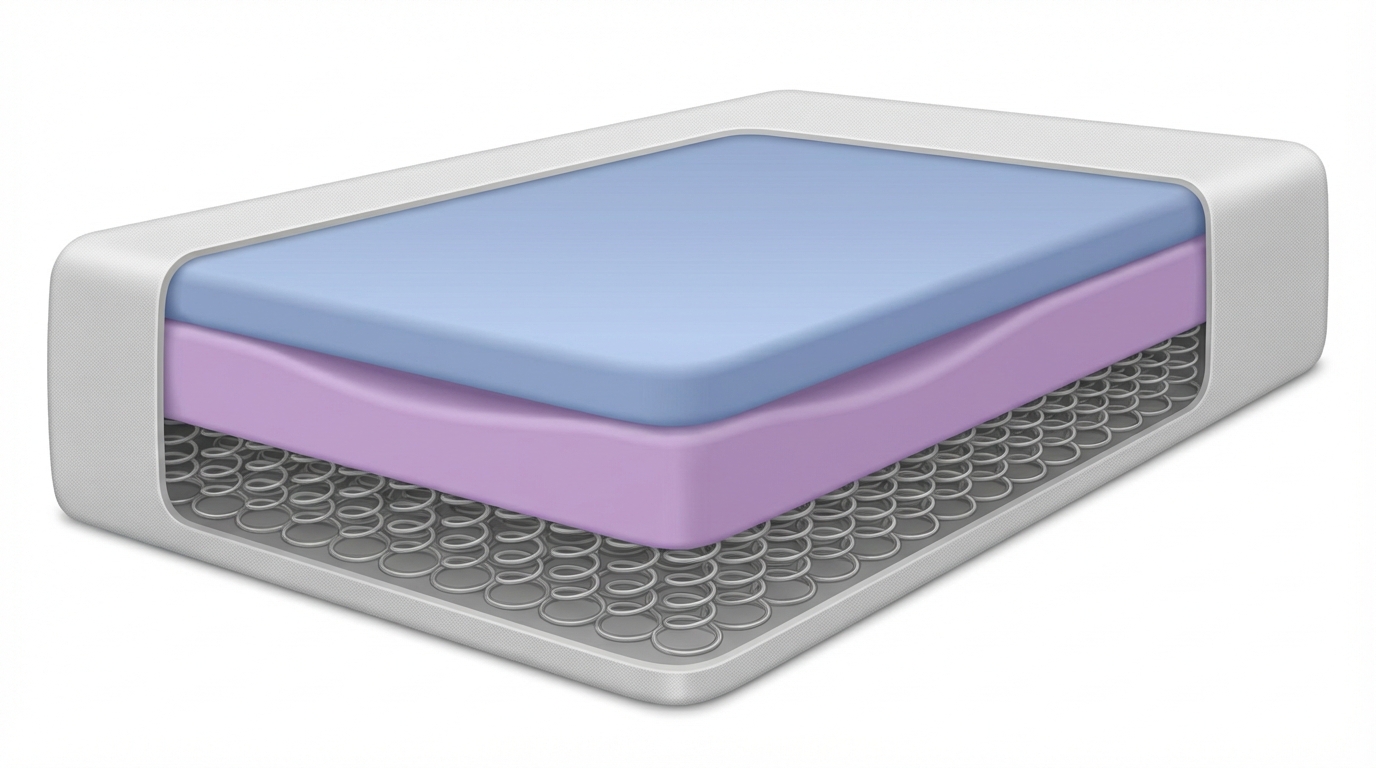
Once you have narrowed down your general type and firmness, there are a few specific design features that make a real difference for back pain, beyond marketing claims. Paying attention to these will help you invest where it truly counts.
Zoning And Lumbar Support
Zoned support means that different parts of the mattress have different firmness or density to match the way your body loads the bed. Most often, this shows up as a firmer center third to better support the hips and lumbar area, with slightly softer zones at the shoulders. Several clinical and ergonomic studies, including research highlighted by WebMD and Harvard Health, suggest that beds maintaining a more neutral spinal curve through zoning can reduce low back discomfort for many sleepers.
For back and side sleepers with lumbar pain, zoning is particularly helpful. It prevents that classic problem where the heaviest part of your body, the pelvis, gradually forms a dip in the mattress, pulling the spine out of alignment. When evaluating zoning, look for more than just buzzwords. Good designs will describe how the coils are firmer in the middle, or how specific foam densities are used under the lumbar region instead of a uniform block.
In practice, zoning feels like a subtle sense that your middle is well held while your shoulders still have some cushioning. You should not feel a hard ridge or distinct change under your back. On a model such as the Brenham and Paterson lines, that zoning is built into the coil system and foam, so you feel continuous support rather than a patchwork of firmness levels.
Pressure Relieving Comfort Layers
Even with perfect spinal alignment, you will not sleep well if your surface comfort is wrong. Pressure points at the shoulders, hips, and sacrum can cause pain that wakes you, especially if you have arthritis, fibromyalgia, or previous injuries. According to the Sleep Foundation, pressure relief is a major factor in overall sleep satisfaction, particularly for side sleepers and those with chronic pain.
High quality comfort layers are made from materials that compress where needed but distribute weight over a larger area. Memory foam, latex, and certain advanced polyfoams can all do this when used in adequate thickness and density. A Euro pillow top, like you see on several Sealy Posturepedic models, adds an integrated cushioning layer that can soften the initial feel without sacrificing the support beneath.
What you want to avoid is extremely thin, low density padding that compresses down to nothing under your heavier regions within months. That is when you start feeling the harder support layers poking through and your body unconsciously works all night to find a non painful position. Investing in better top layers pays off directly in how much you toss and turn, which in turn influences how refreshed your back feels in the morning.
Edge Support And Ease Of Movement
Back pain often makes simple movements like getting in and out of bed or rolling over feel more effortful. A mattress with weak edges can sag when you sit, forcing your core muscles to work harder than necessary. Poor responsiveness can make it feel like you are stuck in a rut, which people struggling with stiffness often find especially frustrating.
Coil based mattresses and many hybrids naturally offer better edge support because of their structural frame. Some all foam designs reinforce the perimeter with slightly firmer foam to mimic that effect, though results vary. For back pain, good edge support means you can sit to put on socks or swing your legs in and out of bed without feeling like you are sliding off. This is particularly valuable if you are older or dealing with mobility limitations.
Ease of movement comes down to the balance between contouring and response. Memory foam that is too slow to rebound can make changing positions feel like swimming in thick mud, while latex and pocketed coils tend to push back more quickly. There is no universal right answer, but if you already find turning over difficult, lean toward a mattress that lets you move without a fight.
When Your Mattress Is Not The Only Problem
It is important to be honest that even the best mattress is not a magic cure for all forms of back pain. Conditions such as herniated discs, spinal stenosis, inflammatory arthritis, or muscle injuries might improve with better sleep surfaces, but they often also need medical evaluation and treatment. Health systems like Mayo Clinic and Cleveland Clinic recommend talking to a healthcare provider if back pain lasts more than a few weeks, is severe, or comes with symptoms like leg weakness, numbness, or changes in bowel or bladder control.
That said, mattress and sleep environment changes are often low risk, high reward steps that work alongside medical care. If your doctor or physical therapist has given you specific posture or alignment advice, bring that guidance into your mattress selection. For example, if they emphasize avoiding excessive spinal flexion, you will want to avoid very soft mattresses that let your hips sink deeply. If you are recovering from a surgery that makes rolling painful, you may want to emphasize ease of movement and edge stability.
Your pillow and bedding also influence how your back feels. A pillow that keeps your neck in neutral alignment reduces strain through the entire spine. Body pillows can help maintain better hip and shoulder alignment, especially for side sleepers. A bundle like the Tempur-Pedic Mattress Topper – Pillow Travel and Guest Bundle can be useful if you need a small upgrade in cushioning or extra neck support while you assess whether you are ready for a complete mattress change.
If you find that your back pain persists despite improving your mattress, adjusting your sleep position, and optimizing pillows, consider your daily habits. Prolonged sitting at a poorly adjusted desk, heavy lifting with poor technique, or a sedentary lifestyle can all sabotage any progress you make at night. A comprehensive approach that blends good sleep ergonomics with daytime posture and movement patterns will serve your spine best over time.
A Simple Checklist Before You Buy A Mattress For Back Pain
Buying a mattress when your back already hurts can feel overwhelming, so it helps to have a structured way to evaluate options. Use this quick checklist to avoid the most common mistakes and stay focused on what actually matters. Consider these questions as you research and test:
- How old is your current mattress, and does it show visible sagging or body impressions in the middle or where you usually sleep?
- What is your primary sleep position, and do you wake up in that same position or in a twisted posture?
- When someone takes a side photo of you lying on a test mattress, is your spine reasonably straight for side sleeping or neutrally curved for back sleeping?
- Does the mattress feel supportive under your hips and lower back, without your pelvis sinking deeper than your chest and knees?
- Are your shoulders and hips comfortably cushioned without sharp pressure points that make you want to roll away?
- Can you change positions and get in and out of bed without feeling stuck or like you are sliding off the edges?
- Is there a meaningful home trial period that lets you test the mattress for several weeks, and a return or exchange policy you understand?
Give yourself permission to walk away from a mattress that feels wrong even if it checks some boxes on paper. Your body is the final authority. It is common to need several nights or even a couple of weeks to adapt to a new feel, but ongoing increased pain, numbness, or insomnia are signs that a specific model is not a good match for you.
Once you narrow down your choice, consider pairing your new mattress with an adjustable bed frame or base if your budget allows. Mild elevation of the head and knees can dramatically reduce strain on some types of back pain, particularly spinal stenosis or disc related discomfort, by slightly flexing the hips and reducing pressure on the lumbar spine.
Conclusion: Building A Back Friendly Sleep Setup You Can Trust
Back pain can make every part of your day feel harder, and struggling through the night on a mattress that works against you only compounds that burden. The encouraging news is that you do not have to guess in the dark or follow outdated advice about sleeping on the firmest surface you can tolerate. When you understand how alignment, pressure relief, and support work together, you can look at mattresses through a much clearer lens and quickly rule out what will not work for your spine.
For most people with back pain, the sweet spot is a medium to medium firm mattress that keeps the spine neutral, offers real pressure relief at the shoulders and hips, and uses high quality materials that will not sag quickly. Hybrids and latex designs often deliver this balance especially well in 2026, although a thoughtfully built innerspring or memory foam model can do the same when matched correctly to your body and sleep position. Features like zoned lumbar support, reinforced edges, and generous home trials are not just nice extras. They are part of ensuring that the mattress will continue to support your back month after month.
As you move forward, listen to both the science and your own body. Use your dominant sleep position, body type, and pain pattern as guides, and do not hesitate to bring your healthcare provider's input into the conversation if you are dealing with a diagnosed spine condition. And remember that your mattress is just one, albeit very important, piece of your back health. Supportive pillows, better daily posture, and appropriate movement all work in tandem with a good bed.
If you want help translating all of this into a specific recommendation, the Sleepology team is here to make that process calmer and clearer. With the right information and a little patience, you can build a sleep setup that lets your back truly rest and gives you a better chance of waking up feeling like yourself again.
Frequently Asked Questions
How do I know if my mattress is actually causing my back pain?
A few clues strongly suggest your mattress is a major factor. If you wake up with significant stiffness or pain that improves within 30 to 60 minutes of moving around, that is often related to overnight posture rather than daytime activity. Visible sagging, deep body impressions, or a noticeable dip where you usually sleep are other red flags. Many experts note that mattresses older than seven to ten years, especially budget models, often lose enough support to aggravate back pain even if they still look acceptable on the surface. If you sleep noticeably better on a hotel bed or a friend’s guest bed, that comparison is also meaningful data that your current mattress is no longer doing its job.
Is a medium firm mattress always best for back pain?
Medium firm is a strong general recommendation because research has repeatedly shown that many people with low back pain report less discomfort and better sleep on medium firm surfaces compared with very firm ones. However, it is not a universal rule. Lighter side sleepers may need something closer to medium to avoid shoulder and hip pain, while heavier stomach sleepers might require a firmer feel to keep their hips from sinking. Think of medium firm as a starting point, then adjust slightly softer or firmer based on your body weight, dominant sleep position, and how your back responds during trial periods.
Are hybrid mattresses really better for back pain than all foam beds?
Hybrids are often a very good fit for back pain because they combine a supportive coil system with contouring comfort layers, but they are not automatically better for everyone. The coil core in a hybrid tends to provide strong, stable support and good edge performance, which helps maintain alignment and makes movement easier. The comfort layers can then be tuned for pressure relief. That balance is why many pain specialists and consumer reviewers speak favorably of hybrids for chronic back pain. That said, a high quality all foam mattress with adequate density and proper firmness can be just as effective, particularly for lighter sleepers or those who prefer a more enveloping feel. The specific design matters more than the label hybrid alone.
How long should I give my body to adjust to a new mattress before deciding if it helps my back?
It is normal to experience a short adjustment period when you switch mattresses, especially if your old bed was very saggy or very firm. Your muscles and joints are getting used to a different alignment. Most people can tell within two to three weeks whether a mattress is overall helping or hurting. Mild soreness that gradually decreases is a good sign that your body is adapting in a positive way. Pain that stays intense or worsens, new numbness or tingling, or frequent night wakings that were not present before are signals that the mattress may not be right for you. This is why generous home trial periods of at least 60 to 90 nights are so valuable when you are shopping specifically to relieve back pain.
Can an adjustable base actually improve back pain, or is it just a luxury feature?
An adjustable base is more than a luxury feature for many people with back pain. Mild elevation of the head and knees can reduce pressure on the low back by opening the hip angle and slightly flexing the spine, which can be particularly helpful for conditions like spinal stenosis or certain disc problems. It also lets you fine tune your position for reading or watching TV without stacking pillows that can distort your posture. While an adjustable base is not mandatory to improve back pain, pairing a supportive mattress with an adjustable bed frame or base can offer additional relief and flexibility that a flat frame cannot match.
Do I need special pillows if I am buying a new mattress for my back pain?
You do not necessarily need specialty pillows, but you do need pillows that match your sleep position and work with your new mattress to maintain alignment. For side sleepers, a pillow tall enough to keep the neck straight, combined with a knee or body pillow to prevent the top leg from twisting, can significantly reduce strain from the neck down through the low back. Back sleepers typically do best with a medium loft pillow under the head and possibly a small pillow under the knees. Stomach sleepers often need a very thin pillow or none under the head to avoid overextending the neck. A well chosen body pillow, like The BodyPillow by Tempur-Pedic, can be an important part of a back friendly setup even if your mattress is already supportive.
Is it worth adding a mattress topper for back pain instead of buying a new mattress?
A topper can be a helpful short term solution if your mattress is relatively new, supportive in its core, and simply feels too firm on the surface. In that case, a high quality topper can add pressure relief without sacrificing underlying support. However, if your current mattress is sagging, has deep body impressions, or is more than eight to ten years old, a topper usually acts like a bandage on a structural problem. It may feel better for a few weeks, but your spine is still likely to sag because the foundation underneath is compromised. Toppers are best viewed as a fine tuning tool, not a way to resurrect a worn out mattress when you are dealing with significant back pain.