

What Kind of Mattress Do I Need? A Sleepologist’s Guide To Getting It Right The First Time
If you are wondering, “What kind of mattress do I need?” there is a good chance you are tired of waking up stiff, sore, or just not rested. Maybe your current bed is sagging in the middle, or you took a chance on a mattress in a box that never really felt quite right. It can feel overwhelming to admit that something you use every single night might be working against your sleep instead of for it. You are not alone in feeling stuck between confusing marketing terms and a huge price range.
Your mattress is one of the biggest levers you have for better sleep, and better sleep touches everything else, from mood to metabolism to back pain. The Sleep Foundation notes that most adults need 7 to 9 hours of sleep per night, and the surface you sleep on plays a major role in sleep quality and how often you wake up during the night. When your mattress does not match your body, sleep position, and temperature needs, your body will keep waking you up to shift and protect your joints. Over time, that can mean more pain, more fatigue, and less patience for everything else you care about.
What you really need is not “the best mattress on the internet,” but the right type of mattress for your body, your sleep style, and your space. That comes down to a handful of clear decisions: your sleep position, your firmness preference, how hot or cool you sleep, your body type, whether you share the bed, and any specific issues like back pain or allergies. Once you understand those, the question “What kind of mattress do I need?” becomes much simpler to answer.
As a sleepologist who has tested and compared hundreds of beds for real people, my goal here is to walk you through those choices step by step. By the end, you will have a short, personalized checklist of what to look for, a clear sense of which mattress type fits you best, and some concrete product examples from Sleepology that show what this looks like in the real world. You deserve a mattress that works as hard as you do, every night, without the guesswork.
Step One: Turn “What Kind Of Mattress Do I Need?” Into A Simple Checklist
Most shoppers start with the wrong question: “What is the best mattress out there?” The better question is “What is the best mattress for my body and my habits?” There is a very big difference. Two people can buy the exact same highly rated mattress, and for one it is life changing, while the other is counting down the days until the return period ends. The difference is almost always sleep position, body type, and how sensitive they are to pressure, motion, and temperature.
Start by noticing how you naturally fall asleep and wake up. Many people say “I sleep in all positions,” but if you pay attention for a few nights, you will find you tend to fall asleep one way and wake up another way most often. That is your dominant sleep position. The Mayo Clinic points out that body alignment during sleep is one of the key factors in waking up without pain, and alignment depends heavily on how your mattress interacts with that dominant position. Your shoulders, hips, and lower back need different things depending on where they bear weight.
Your body type is the second pillar. A 120 pound side sleeper and a 240 pound side sleeper can both be “side sleepers,” but they are not going to experience the same firmness the same way. The lighter sleeper may never sink deeply enough into a firm mattress to get pressure relief, while the heavier sleeper might sink straight through a soft one. Research in applied ergonomics has shown that people with higher body weight often need thicker comfort layers and more resilient support systems to maintain spinal alignment over time, while lighter people are more sensitive to initial firmness and surface feel.
Next, check your symptoms. If you often wake up with numb arms, sore shoulders, or hip pain, your mattress is probably too firm for your sleep position. If your lower back feels locked or you wake up with a “hammock” feeling, you are likely dealing with sagging or a mattress that is too soft for your body weight. Frequent overheating, sweaty sheets, or flipping the covers on and off at night usually point toward foam that traps too much heat or covers that are not breathable enough. All of these clues will guide you toward or away from specific mattress types and materials.
Finally, consider your living reality. Do you share the bed with a partner or pet, or are you solo? Does your room have space for a queen or king, or are you working with a compact primary bedroom or guest room? Couples tend to prioritize motion isolation and edge support, while single sleepers can more freely choose based simply on their own feel preferences. Once you have these basics sketched out in your mind, you are ready to match them to the main mattress types.
Understanding The Main Mattress Types
Before you can confidently answer “What kind of mattress do I need?” it helps to know how the main categories feel and who they suit best. Every individual brand adds its own twist, but at the core, most modern beds fall into four main groups: innerspring, memory foam, latex, and hybrid. Adjustable air and smart beds are a growing niche, but for most shoppers, the first four categories are where the best value and widest selection live.
Innerspring mattresses are what many of us grew up with. They use a network of metal coils as the main support system, topped with layers of foam and sometimes fiber or quilting. Their biggest strengths are bounce, airflow, and edge support, which is why many stomach and combination sleepers like them. According to Consumer Reports’ long running mattress tests, traditional innerspring beds often sleep cooler than solid foam because air moves more freely among the coils, although they can sometimes transfer more motion across the bed if the coils are not individually wrapped.
Memory foam mattresses use dense foams that respond slowly to weight and warmth. When people talk about that “hugged” or “contoured” feeling, they are usually talking about memory foam. This material shines at pressure relief and motion isolation. Sleep researchers often note that reducing pressure points at the shoulders and hips can decrease night time awakenings, which is a major win for side sleepers and people with joint pain. The main tradeoff is that solid memory foam can hold onto heat unless it is engineered with cooling infusions or paired with breathable covers.
Latex mattresses use foam made from rubber tree sap or synthetic blends. Latex has a buoyant, springy feel that is very different from slow sinking memory foam. Where memory foam feels like a gentle mold, latex feels more like you are floating on top while still getting pressure relief. The Cleveland Clinic and other allergy specialists often point out that well encased latex beds tend to be naturally resistant to dust mites and mold, which can be attractive for people with allergies, though true latex allergies must be taken seriously and discussed with a healthcare provider before purchase.
Hybrids combine a coil support core with thicker comfort layers of foam, latex, or both. In , hybrid mattresses continue to dominate the mid and upper price tiers because they can blend the support and airflow of coils with the contouring and motion isolation of foam. When someone tells me “I want support, pressure relief, and cooling,” we are usually talking about a hybrid. The quality of the coils and the type and thickness of the comfort layers make a huge difference in the overall feel, which is where expert guidance and actual testing really matter.
Hybrid, Innerspring, Foam, Or Latex: Which One Fits You?

Once you understand the categories, the next step is mapping them to your needs. Rather than memorizing pros and cons, think about how each category responds when your body lies down. Imagine how deeply you want to sink, how fast the bed should respond when you change positions, and how important a cool surface is for your comfort. From there, each type starts to make intuitive sense.
If you like a responsive, bouncy feel and sleep hot, hybrids and modern innerspring mattresses are usually the front runners. The coil systems give you that subtle lift when you move, which makes it easier to roll over or switch positions without feeling “stuck.” Coils also allow more airflow than solid foam cores, which is helpful if you already run warm or live in a humid climate. Couples who want both bounce and some motion control often gravitate toward hybrids that use individually wrapped coils plus quality foams on top.
If you crave a deep hug and relief on sharp pressure points, memory foam and foam forward hybrids tend to be better matches. Side sleepers with bony shoulders and hips, people recovering from certain injuries, and those with chronic pain often feel more comfortable when the surface can “get out of the way” of those prominent joints. A study on medium firm beds for back pain published in The Lancet highlighted that pressure distributing surfaces, when correctly matched to firmness, can support spinal alignment without creating new pressure points.
Latex is an excellent option if you want pressure relief without the slow sinking feeling. Many people describe it as buoyant or weightless. If you are a combination sleeper who rotates between side, back, and sometimes stomach, latex or a latex hybrid can give you enough responsiveness to move easily while still softening impact under shoulders and hips. Latex also tends to be one of the more durable cushioning materials, so it can be a smart choice for people who want a mattress to hold its feel over many years.
If you are still not sure, that is where trying curated options shines. At Sleepology, for example, our team often points warm side sleepers and couples toward a supportive, cool feeling hybrid like the Sealy Posturepedic Plus Medium Mattress – Paterson II Euro Pillow Top, which blends pocketed coils with targeted support and breathable foams. That same mattress might feel too plush for a heavier stomach sleeper who would be better served by a firmer, less cushioned design. The key is to use type as a starting point, not the finish line.
“I spent three weeks reading reviews and felt more confused every day. When I talked to a Sleepology specialist, she immediately steered me toward a hybrid instead of the all foam bed I was about to buy. I ended up with the Paterson II Euro Pillow Top and my hip pain dropped noticeably within a week. I also saved about $400 compared with the mattress I had in my online cart.” – Carla M., November
Matching Mattress Type To Your Sleep Position
Your dominant sleep position is one of the clearest signals for what kind of mattress you need. This is not about rigid rules but about biomechanics. Your spine is happiest when it follows its natural curves from neck to lower back. If your mattress is too firm or too soft for your position, those curves get exaggerated or flattened and your muscles work all night to compensate. Over time, that shows up as morning pain, tightness, or even headaches.
Side sleepers usually need more pressure relief than other positions. Your shoulders and hips take the brunt of your weight, and if the surface is too firm, those joints are compressed, which can trigger numbness or aching. According to the Sleep Foundation, side sleepers tend to do best on mattresses in the medium soft to medium firm range that allow the shoulders and hips to sink enough to keep the spine level from neck to tailbone. All foam beds, foam forward hybrids, and plush or medium Euro pillow top hybrids can all work well here, as long as they have real support under the soft surface.
Back sleepers need a slightly different balance. Your goal is to keep the natural S curve of the spine supported without letting the hips sink excessively. Many back sleepers do well on medium to medium firm mattresses with enough cushioning to fill the space under the lower back, but with a strong support core so the pelvis does not drop lower than the upper body. Quality innerspring beds with a moderate comfort layer and many hybrids in the medium range are common fits for back sleeping, especially when paired with the right pillow height.
Stomach sleepers usually need the firmest, most supportive surfaces to protect the spine from bowing. When your hips and abdomen sink too much into a soft mattress, your low back is forced into extension, which can compress joints and irritate muscles over time. For this group, firmer hybrid or innerspring mattresses or very supportive all foam models are often the best bet. Stomach sleepers also need to be especially mindful of pillow height, since an overly thick pillow can crank the neck backward and compound the problem.
If you are looking for an easy way to browse by position, Sleepology’s curated collections can be a helpful shortcut. Back sleepers often find what they need in the Best Mattresses For Back Sleepers collection, which focuses on models with balanced support and gentle contouring. Side sleepers can explore the Best Side Sleeper Mattress Collection, where we prioritize pressure relief and shoulder friendly designs. Stomach sleepers who need extra support can head straight to the Best Mattresses For Stomach Sleepers to avoid options that are likely to be too soft.
“I had no idea my sleeping position mattered so much. Mia helped me realize that as a lifelong stomach sleeper on a plush mattress, I was basically fighting my own bed. We switched me into a medium firm hybrid from the stomach sleeper collection, and the difference in my lower back after two months is night and day.” – Jason L., October
How Firm Should Your Mattress Be?
Firmness is one of the most confusing aspects of mattress shopping, partly because “firm” is subjective. What feels firm to a 120 pound person may feel quite soft to someone who weighs 230 pounds. On top of that, brands use their own language like “luxury firm” or “ultra plush,” which are not standardized. Consumer Reports uses a 1 to 10 scale in testing, with 1 being extremely soft and 10 being extremely firm, but in everyday shopping, you are more likely to see terms like soft, medium, and firm.
From a body mechanics standpoint, proper firmness means that your spine is aligned and your pressure points are cushioned. Several studies on back pain and mattress firmness have found that medium firm mattresses, as perceived by sleepers rather than by lab measurements, tend to produce better pain and comfort outcomes than very firm or very soft surfaces. That does not mean everyone needs a “medium firm” label, but rather that most people do best with some combination of support and cushioning instead of going to extremes.
Your body weight, height, and where you carry your weight play a big role in how a mattress feels. Lighter people do not sink as deeply and often experience mattresses as firmer than average. Heavier people compress the comfort layers more and may push into the firmer support core, which can make mattresses feel softer than the label suggests. People with broader shoulders and hips may need more surface softness in those zones even if they prefer a supportive overall feel. That is why zoning and thoughtful layering, which you see in higher quality hybrids and innersprings, can make such a difference.
If you prefer a plush surface but need support, one strategy is to choose a mattress that is structurally medium or medium firm with a cushioned top. For example, the Sealy Posturepedic Pro Soft Mattress – Dupont II Euro Pillow Top gives side sleepers that cozy, pressure relieving surface while relying on a robust coil system underneath to keep hips and spines aligned. On the other hand, if you want a slightly denser, more stable feel that still has some cushioning, a model like the Sealy Posturepedic Pro Medium Mattress – Dupont II Euro Pillow Top can be an excellent middle ground for couples or combination sleepers.
“I always thought I needed the firmest bed to help my back, because that is what my parents used to say. After actually lying on a few options at Sleepology and having Mia check my spine alignment, I realized a medium mattress with a Euro top felt supportive but not harsh. We chose the Medina II Medium, and my husband and I both finally wake up without that ‘board’ feeling.” – Laura S., December
Mattress Types Compared: Support, Pressure Relief, And Cooling
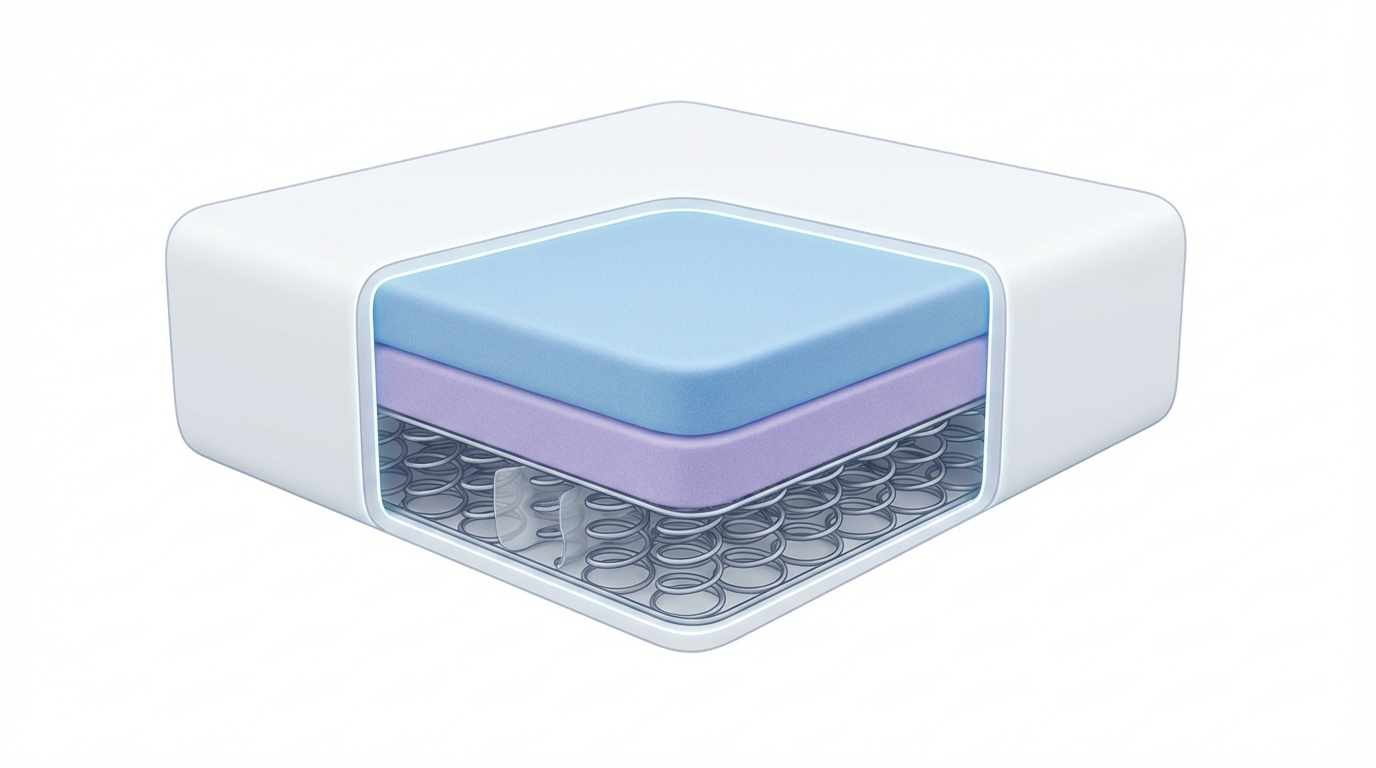
At this point, you probably have a sense of your sleep position and rough firmness preference. To really zero in on the right type, it helps to see how the main categories stack up across a few critical attributes. Below is a high level comparison to give you a clearer picture.
| Mattress Type | Typical Feel | Best For | Watch Outs |
|---|---|---|---|
| Innerspring | Buoyant, responsive, more “on” the bed | Hot sleepers, stomach and back sleepers, people who like bounce | Can transfer more motion if coils are not individually wrapped, comfort layers matter a lot for pressure relief |
| Memory Foam | Contouring, slow response, “in” the bed | Side sleepers, people with joint pain, couples who want motion isolation | Can trap heat without cooling tech, some people dislike the hugged feel |
| Latex | Buoyant yet pressure relieving, quick response | Combination sleepers, eco minded shoppers, people who want durability | Pure latex can be heavier and pricier, must confirm any latex allergies |
| Hybrid | Mixed, depends on foam type and coil design | Most sleepers, couples, people who want both support and pressure relief | Quality varies widely, cheap hybrids may use weak coils or thin foams |
This table is not about declaring a winner. Instead, it helps you line up your priorities against how each type behaves. For example, someone who is very heat sensitive and loves a bit of bounce is probably choosing between innerspring and hybrid. A side sleeper who shares a bed with a partner and has sensitive shoulders is probably choosing between memory foam and a foam forward hybrid. If you are strongly anti sink and love a quick response, latex or a latex hybrid climbs to the top of the list.
Remember that within each category there is a huge spectrum of quality and feel. A high end hybrid with zoned coils and premium foams will not feel or perform like a budget hybrid with minimal padding and low coil counts. This is where working with a retailer who has tested the actual models and can translate marketing language into real feel is invaluable. At Sleepology, our team physically lies on each mattress, measures edge support, and notes how they handle different body types and positions, so we can say, with confidence, “This hybrid runs a bit firmer than the label suggests,” or “This pillow top feels plush, but the coil system underneath is quite robust.”
Special Considerations: Back Pain, Hot Sleepers, And Couples
Certain situations call for more nuanced choices. If you live with back pain, sleep excessively hot, or share a bed with a partner who sleeps very differently from you, those factors should heavily influence what kind of mattress you choose. Ignoring them often leads to “compromise mattresses” that do not make anyone happy.
For back pain, alignment and support are non negotiable. The American Academy of Sleep Medicine notes that people with chronic low back pain often benefit from medium firm mattresses that combine support with pressure relief. The right mattress cannot cure structural spine issues, but it can reduce the nightly aggravation that keeps muscles tense and inflamed. Look for models with a strong support core, either coils or high density foam, paired with enough comfort layers to prevent hard pressure at the shoulders and hips if you are a side or combination sleeper. Zoned support, where the mattress is slightly firmer under the middle third of your body, can be especially helpful.
Hot sleepers need to think about both materials and surface fabrics. Coils allow more air circulation than solid foam cores, and latex tends to sleep more temperature neutral than traditional memory foam. Within memory foam families, formulations that are open celled or infused with gel, graphite, or phase change materials are designed to move heat away from the body, although no mattress can actively cool you the way a fan or AC can. Breathable covers and bedding matter as well, which is where adding the right accessories from a curated collection like Pillows, Sheets, Toppers, Protectors can support your core mattress choice.
Couples bring another layer of complexity. You are now balancing two bodies, two sets of preferences, and often two very different schedules. Motion isolation, edge support, and a broad “comfort window” become key. Foam and foam forward hybrids excel at dampening motion, so partners can get in and out of bed without creating a wave. Individually wrapped coils in hybrids and innersprings can also perform well if the comfort layers are thoughtfully designed. If one partner is much heavier than the other, we look for sturdier coil systems and thicker comfort layers that can handle the difference without creating a trench.
When couples at Sleepology tell me they have very different feel preferences, we often land on a supportive medium hybrid, sometimes with a cushioned Euro top. For example, the Sealy Posturepedic Elite Medium Mattress – Brenham II Euro Pillow Top offers enough structure for a back or stomach sleeper without feeling overly firm to a lighter side sleeper. In cases of extreme disagreement, some couples even use two twin XL mattresses of different firmness levels on a shared king frame to create a split feel that still looks and behaves like one big bed.
Sizing And Room Fit: Making Sure Your Mattress Works In Your Space
Once you know what kind of mattress you need in terms of type and feel, the next practical question is size. The most common sizes in the United States are Twin, Twin XL, Full, Queen, King, and California King. Choosing the right one is not only about budget and body size, but also about how you want your bedroom to function. Sleep is the priority, but being able to move around your room and use it comfortably during the day matters too.
For solo sleepers, a Twin or Twin XL can be perfectly adequate, especially in smaller rooms or multi use spaces like studios. Twin XL is particularly helpful for taller individuals because it adds extra length without increasing width. Full beds offer more width and are often used for solo adults who like a little more sprawl room or for guest rooms that may occasionally host two smaller people. Queen is the workhorse size for couples, providing enough width for most pairs without demanding a very large room.
King and California King sizes give couples maximum elbow room and are particularly appreciated if you share the bed with children or pets. California King is slightly narrower but longer than a standard King, which can be ideal for taller sleepers. Many designers recommend a minimum room size of about 10 by 10 feet for a queen and 12 by 12 feet for a king, which aligns with guidance you will see from major retailers and design associations. The goal is to leave enough space to walk comfortably around the bed and open doors and drawers without obstruction.
It is worth taking a tape measure to your room, along with noting window placements, door swings, and any architectural quirks. Sometimes shifting a bed from one wall to another opens up the possibility of a larger mattress size. Other times, a thoughtfully chosen queen with strong edge support can feel roomier in practice because you can sleep closer to the side without feeling like you might roll off. That is one reason I pay close attention to edge support when evaluating mattresses for small spaces and couples.
When To Replace Your Mattress And Red Flags To Watch For
Even the best mattress does not last forever. Most experts, including organizations like the National Sleep Foundation, suggest that many mattresses will perform well for around 7 to 10 years, depending on materials, usage, and body weight. That is a guideline, not a hard rule. I have seen high quality latex and hybrid beds that still feel good after a decade, and I have seen budget all foam models sag badly within three to five years. Your body’s feedback is just as important as the calendar.
A clear sign that it is time to replace your mattress is visible sagging or body impressions that do not bounce back when you get up. If you feel like you are rolling into a ditch every night or constantly fighting a hump in the middle, the internal support system is likely breaking down. New or worsening morning pain, especially if it improves when you sleep on a different bed, is another major clue. Noise can also be a signal for innerspring beds. Persistent squeaks and creaks from the coil system usually indicate metal fatigue or loose components.
Changes in your life can also outgrow your mattress. Weight gain or loss, pregnancy, injuries, or chronic health conditions can all change how your body interacts with your bed. A mattress that once felt perfect may no longer provide the right combination of support and relief. If your sleep quality has noticeably declined over the last year and you have already looked at stress, caffeine, and screen time, it is worth seriously considering whether your sleeping surface is part of the problem.
Even if your mattress is still technically usable, you might decide to replace it for better materials or healthier construction. While high levels of off gassing volatile organic compounds are most noticeable in the first days of unpacking a new mattress, indoor air quality organizations and groups like the Environmental Protection Agency emphasize that low emission materials contribute to a cleaner bedroom environment over time. If you purchased a very inexpensive mattress during a tight budget period and are now in a position to invest in higher quality foams, fabrics, or certifications, that upgrade can pay off in comfort and peace of mind.
Accessories That Help Your Mattress Perform Its Best

When people ask “What kind of mattress do I need?” they often forget that the mattress is just one part of a larger sleep system. The right foundation, pillows, protectors, and bedding can significantly enhance how your mattress feels and how long it lasts. Think of them as the support cast that lets your mattress shine.
Start with your foundation or base. Most modern mattresses are designed to work well on a platform bed, slatted base with narrow spacing, or adjustable base. Traditional box springs were built for older coil designs and can sometimes void warranties when used under newer foam or hybrid beds. Always check the mattress manufacturer’s recommendations. A sagging or broken base can mimic the feel of a sagging mattress, so if you are upgrading the mattress on a very old frame, it may be worth refreshing the support as well.
Pillows are the next crucial piece. A great mattress cannot compensate for a pillow that places your neck at a harsh angle. Side sleepers usually need thicker, more supportive pillows to fill the space between neck and shoulder, while back and stomach sleepers generally do best with a lower profile. If you struggle to get comfortable even on a well chosen mattress, adjusting pillow height and material can be surprisingly powerful. Sleep clinics frequently emphasize the importance of aligning head and neck with the rest of the spine to reduce tension headaches and neck pain.
Mattress protectors, sheets, and toppers all influence comfort and hygiene. A waterproof, breathable protector shields your investment from sweat, spills, and allergens while preserving the feel of the mattress underneath. High quality sheets that match your temperature preferences can reduce overheated or clammy nights. In some cases, a carefully chosen topper can fine tune the surface feel of a mattress that is close to what you want but not quite there. If you need help assembling that supporting cast, Sleepology’s curated Pillows, Sheets, Toppers, Protectors collection is a straightforward place to start without wading through thousands of random accessories online.
Finally, consider travel and guest setups. If you love the feel of your home mattress and want to replicate some of that comfort on the road or in a guest room, bundles like the Tempur-Pedic® Mattress Topper - Pillow Travel and Guest Bundle can add familiar pressure relief and support to less comfortable beds or sofas. That way, your body does not have to relearn a completely different sleep surface every time you are away from home.
A Simple 7 Point Checklist To Decide What Kind Of Mattress You Need
By now, you have a detailed understanding of mattress types, firmness, positions, and special situations. To bring it all together, here is a concise checklist you can actually use while shopping. Work through each point honestly, and you will end up with a clear personal mattress profile that goes far beyond “soft or firm.”
First, identify your dominant sleep position. Notice how you usually fall asleep and wake up over the course of a week. Second, think about your body type and where you carry your weight. Are you lighter, average, or heavier, and do you have broader shoulders, hips, or both? Third, list any primary issues: back pain, shoulder or hip pain, overheating, or partner disturbance. Fourth, decide whether you prefer a more “in the bed” feel, a more “on the bed” feel, or something in between.
Fifth, map those answers to a mattress type: side sleepers with joint sensitivity may lean toward memory foam or plush hybrids, combination sleepers who want bounce and breathability may favor hybrids or latex, and stomach sleepers often do best on firmer hybrids or innersprings. Sixth, choose your firmness target based on weight and position, remembering that medium to medium firm works well for a wide range of people, with adjustments up or down for lighter or heavier bodies. Seventh, confirm practical details: size, budget range, and whether you need strong edge support or compatibility with an adjustable base.
If it helps, you can jot down your answers like a mini spec sheet to keep you grounded while reading product descriptions. Instead of being pulled in by catchy names, you will be able to ask “Does this mattress actually meet my checklist: hybrid, medium, good for side sleepers, strong cooling, queen size, for two people?” If the answer is no, you move on. If the answer is yes, that mattress makes the short list to test in person or during a home sleep trial.
When clients share their checklists with us at Sleepology, it dramatically speeds up the process of choosing specific models, whether that is a pressure relieving pillow top like the Sealy Posturepedic Elite Soft Mattress – Albany II Euro Pillow Top for serious side sleepers, or a balanced medium hybrid for couples with mixed positions. You do not need to become a mattress expert, but having this level of clarity makes you an informed, confident shopper.
Conclusion: From “What Kind Of Mattress Do I Need?” To “I Love My Bed”
Choosing a mattress should feel like an investment in how you live your days, not just where you spend your nights. When you ask “What kind of mattress do I need?” what you are really asking is “How can I wake up feeling genuinely rested, with less pain and more energy?” The good news is that you do not need to chase the one perfect brand or memorize every foam technology. You simply need to match your body, your sleep position, and your preferences to the right category and construction.
You have learned how innerspring, memory foam, latex, and hybrid mattresses each bring different strengths to the table, and how those strengths line up with side, back, stomach, and combination sleepers. You have seen how firmness really works, why body type matters, and which special factors deserve extra attention if you live with back pain, run hot, or share a bed. You have also picked up a practical checklist you can use with any mattress, whether it appears in a showroom, an online ad, or a well meaning recommendation from a friend.
If you still feel a little unsure, that is completely normal. Touch and feel are hard to capture in words. This is where a conversation with a knowledgeable guide can bridge the gap between theory and comfort. At Sleepology, our team, including myself, uses this same framework when we talk with customers. We ask about your body, your sleep, and your space, then help you narrow down real mattresses that fit, whether that is a supportive hybrid in the Best Mattresses For Back Sleepers collection or a softer, pressure friendly option from the Best Side Sleeper Mattress Collection.
Most importantly, remember that your comfort is not negotiable or “being picky.” Your bed is where you spend about a third of your life. You deserve to know what kind of mattress you need and to sleep on one that truly supports you. With the right information and a bit of guided testing, “I have no idea what mattress to buy” can turn into “I cannot wait to crawl into bed tonight,” and that is a transformation worth making.
Frequently Asked Questions
How do I know if my current mattress is causing my back pain?
The easiest way to test this is to notice patterns. If your back feels worst first thing in the morning, improves as you move around, and flares again after long nights in your own bed, your mattress is a prime suspect. Try sleeping on a different mattress for a few nights, such as a guest bed or even a high quality air mattress, and see if your symptoms change. Visible sagging, a hammock feeling, or a sense that you are fighting to find support are also strong clues. If your pain is severe, persistent, or accompanied by symptoms like numbness or weakness, you should always consult a healthcare professional to rule out underlying medical issues while you also address your mattress.
I am a combination sleeper. Should I choose my mattress for side, back, or stomach sleeping?
Think about the positions you spend the most total time in and which positions cause you the most discomfort on your current bed. Many combination sleepers rotate between side and back, in which case a supportive medium mattress with good pressure relief is often ideal. If you also regularly spend time on your stomach, you may want to favor the slightly firmer end of medium to protect your low back. Hybrids and latex mattresses with responsive surfaces are particularly friendly for combination sleepers because they make it easier to change positions without feeling stuck, while still cushioning your joints when you roll onto your side.
What kind of mattress is best if my partner and I have very different preferences?
Start by identifying where your preferences overlap. Most couples agree that neither wants to roll into a sagging center or be jolted awake every time the other person moves. Foam and foam forward hybrids with individually wrapped coils often strike the best balance for couples because they combine support, motion isolation, and customizable surface feel. If one partner likes very soft and the other likes very firm, consider a supportive medium hybrid and use accessories like individualized toppers on each side to fine tune the feel. In some cases, especially with king beds, using two twin XL mattresses of different firmness levels on a shared frame can give each person their own ideal surface while still feeling like one large bed.
Are expensive mattresses always better?
Price and quality are related, but not in a straight line. Very low prices often signal cut corners in foam density, coil quality, or cover materials, which can lead to premature sagging or poor support. However, there is a point beyond which higher price tags mostly reflect extras like organic textiles, brand premiums, or very thick comfort layers that not everyone needs. Organizations like Consumer Reports frequently find that some mid priced mattresses perform just as well in support and durability as models costing twice as much. The key is to focus on construction details, materials, and how the mattress feels to you, rather than assuming that a higher number on the tag automatically equals better sleep.
How long should I try a new mattress before deciding if it is right?
Your body needs a bit of time to adjust to a new support surface, especially if your old mattress was significantly sagging or unsupportive. Most people should give a new mattress at least 2 to 4 weeks of consistent use before making a final judgment, unless the mattress is obviously wrong from day one in a way that causes severe pain. Many retailers offer sleep trials for this reason. During that period, pay attention to trends rather than single nights. Are your mornings gradually improving or getting worse? Is any initial muscle soreness easing as your body adapts, or is it intensifying? Those patterns are more telling than one unusually good or bad night.
Will a mattress topper fix a mattress that is too old or sagging?
A topper can change the surface feel of a mattress that is too firm or slightly uncomfortable, but it cannot fix a support system that is broken down. If your mattress has deep body impressions or a noticeable sag, adding extra cushioning on top usually just means you sink even further into the soft spot. Toppers work best for dialing in comfort on a mattress that is structurally sound but a bit too firm or flat for your liking. If your bed is old, sagging, or already causing significant pain, it is usually more effective and more cost efficient over time to put topper money toward a new, properly supportive mattress.
What kind of mattress is best for hot sleepers who also need pressure relief?
For hot sleepers who need pressure relief, hybrids that use breathable coil systems with thoughtfully engineered foam or latex comfort layers are often the sweet spot. The coils promote airflow, which helps heat dissipate, while the upper layers cushion joints and relieve pressure. Latex hybrids in particular tend to sleep more temperature neutral and respond quickly, which can feel less swampy than some traditional memory foams. If you prefer the deep contour of memory foam, look for models that incorporate open celled foams, gel or graphite infusions, and breathable covers, and then pair them with cooling bedding and a breathable protector to maximize heat dissipation.