

What Is The Size Of A Twin Mattress? A Practical Guide To Dimensions, Fit, And Real-Life Use
Trying to figure out what size a twin mattress actually is can feel surprisingly confusing. You might see slightly different numbers from different brands, you might be working with a small bedroom or a shared kids' room, and you want to be sure you are not buying something that will feel cramped or awkward in your space. On top of that, you may be juggling questions like whether you should step up to a twin XL, how twin compares to a full, and what size bedding you really need. It is a lot of decisions wrapped into what seems like a simple question.
The size of your mattress has a bigger impact on your sleep than most people realize. If a bed is too short, your feet hang off and your spine alignment suffers. If it is too narrow, you end up pinned against the wall or rolling toward the edge all night. According to the Sleep Foundation, many sleepers underestimate how much space they need, which can lead to more tossing and turning and lower sleep quality over time. When you are buying for a child or teen, the stakes feel even higher because you want something that will fit now and still work as they grow.
Here, you will find clear answers about twin mattress dimensions, how they compare to twin XL, full, and larger sizes, and when a twin is truly the right call. You will also learn how twin size plays out in real bedrooms and real bodies, not just on a sizing chart. We will walk through room planning, height and weight considerations, and how to choose supportive twin options that do not feel like a downgrade from a larger bed.
If you are worried about making an expensive mistake, you are in good company. After twenty years of helping people choose mattresses, I can tell you that getting the dimensions right is one of the simplest ways to avoid buyer's remorse. You are absolutely in the right place to get a straightforward, no-hype explanation and leave feeling confident about your next step, whether that is sticking with a twin or sizing up.
Twin Mattress Dimensions: The Simple, Straight Answer
A standard twin mattress in the United States measures approximately 38 inches wide by 75 inches long. Some manufacturers list twins as 39 inches wide, and you may see a half inch to one inch variation either way. That small difference is considered normal in the industry and usually disappears once the mattress is on a frame with bedding. What matters most is that you treat 38 by 75 as your planning number for room layout, bed frames, and sheets.
Those measurements make a twin the smallest standard mattress size available for everyday adult use. Only crib and toddler mattresses are smaller, and they are sized for very specific safety standards. According to the Sleep Foundation, twin mattresses are typically recommended for children, teens, and adults under about 6 feet tall, especially when space or budget is limited. The shorter 75 inch length is the key constraint for taller sleepers who like to stretch out rather than curl up.
When you think about 38 inches of width in real terms, it helps to imagine it as just over 3 feet wide. Picture yourself lying on a yoga mat with a bit of extra space on each side. For many children and average size adults sleeping alone, that is enough room to move a little, but it does not leave much extra for a second person. This is why sleep experts and groups like the Better Sleep Council generally do not recommend a twin for regular couple use, except in special setups like split king adjustable bases.
Length is the other piece of the puzzle. At 75 inches, a twin works comfortably for sleepers up to about 5 feet 9 inches tall, particularly if they sleep on their side and naturally bend their knees. Taller back or stomach sleepers often feel their feet pressing against the footboard or hanging off the edge, which can subtly throw off spinal alignment over time. The Cleveland Clinic notes that proper spinal alignment during sleep is essential for reducing back and neck pain, so even a small mismatch in length can show up as soreness in the morning.
Mattress thickness is not part of the official size label, but it still matters. Most modern twin mattresses range from about 8 to 14 inches thick, with some specialty models going even higher. A thicker mattress will sit higher off the ground and can feel more substantial, especially for adults using a twin. When pairing a twin mattress with a base, something like a Sealy Mattress Base Boxspring Foundation | Low Profile 5 inch height can help keep the total bed height in a comfortable range for kids or shorter adults.
Twin vs Twin XL: The 5 Inches That Really Matter

Dimensions And Who Each Size Fits
The most common follow up question to "what is the size of a twin mattress" is "how is that different from a twin XL." A twin XL keeps the same width as a standard twin, about 38 inches, but adds length. The typical twin XL measurement is 38 inches wide by 80 inches long. Those extra 5 inches may not sound like much on paper, yet they can dramatically change how the bed feels for anyone close to or over 6 feet tall.
Because of that extra length, twin XLs are the default choice in many college dorms and student housing communities. The Sleep Foundation notes that twin XL mattresses are especially well suited to taller teens and adults who sleep alone but still have to work within tight room dimensions. For a growing teenager who is suddenly all legs, upgrading from twin to twin XL can be the difference between a bed that feels “too small” and one that feels like it fits their new body.
For sleepers under about 5 feet 8 or 5 feet 9, either size can technically work. This is where sleep position, growth expectations, and budget come into play. A shorter child who curls up naturally may be perfectly content on a standard twin for several years. A child already on a tall growth curve, especially if they play sports or stretch out on their back, may be a better long term match for a twin XL. The Mayo Clinic emphasizes that adolescents need consistent, restorative sleep for healthy growth and hormone regulation, and being cramped at night can undermine that.
From a budget perspective, twin XL mattresses usually cost a bit more than twins, and twin XL sheets are slightly more specialized. While twin XL is still easy to find, twin accessories are often more widely available and can be cheaper. If you have to outfit multiple beds, for example in a bunk room or vacation home, that price difference can add up. This is why some families deliberately choose standard twins for younger kids and reserve twin XL for teens, guest rooms, or adults in small apartments.
“We switched my son from a standard twin to a twin XL once he hit 6 feet tall, and the change was immediate. He stopped complaining about his legs hurting and actually started going to bed earlier. The Sleepology team walked me through the measurements so I did not have to guess.” – Karen L., November
When A Twin Is Enough And When XL Is Worth It
Deciding between twin and twin XL comes down to your priorities. If you are working with a very small room and every inch of floor space counts, a standard twin gives you a little more clearance at the foot of the bed. That extra 5 inches of wall space can make a difference when you are fitting in a desk, dresser, or door swing. For kids' rooms where you want more open play area, twin often wins purely on space efficiency.
On the other hand, if you want this bed to "grow with" a child into their teen years, or if the primary sleeper is already tall, the extra length of a twin XL is usually worth the trade off. Many parents tell me they wish they had skipped the twin phase and gone straight to twin XL once they saw how fast their kids grew. A twin XL can sometimes delay or even eliminate the need to upgrade to a full or queen in high school, especially if the sleeper is content with narrow width.
Another factor is how you may repurpose the bed later. Twin XL mattresses pair perfectly to create a split king when two are placed side by side on a king size adjustable base. If you think that down the line you might invest in an adjustable bed frame and base, starting with twin XLs can give you flexible building blocks. Two twin XLs equal the dimensions of a standard king, 76 by 80, allowing each side to move independently.
Of course, budget and bedding availability are real world constraints. If you already own twin sheets, comforters, and waterproof protectors, replacing everything to move to twin XL is an added cost that may not feel necessary right away. In these cases, it can be helpful to time an upgrade around a natural transition, such as moving to a new room, starting middle school or high school, or buying new furniture.
How Twin Compares To Other Mattress Sizes
Twin vs Full: Width, Comfort, And Growing Room
A full mattress, also called a double, typically measures about 54 inches wide by 75 inches long. That means a full is the same length as a twin but about 16 inches wider. For a single sleeper, those extra inches translate to a lot more elbow room. Put another way, a full gives you about 27 inches of personal space if you shared it with someone else, while a twin only offers 38 inches in total.
For children and younger teens, a twin often feels perfectly adequate, especially if they sleep still and prefer a cozy, tucked in sensation. As teens get older, especially those who like to sprawl, a full can feel more like an adult size bed that they can grow into. Consumer Reports has noted that many parents opt for full mattresses for preteens and teens specifically to avoid needing yet another size upgrade later, as long as the bedroom can handle the extra width.
For small adults or college students living in tight quarters, the decision between twin and full usually hinges on two questions. First, how much do you value extra space to roll and move at night. Second, how much of your room are you willing to dedicate to the bed. In a narrow room, the difference between a twin and full can be the difference between fitting a small sofa or not, or between clear walking paths and a space that feels cramped.
From an investment standpoint, full mattresses and bedding cost more than twins, but often less than queens, so they occupy a middle ground in both comfort and price. If you are outfitting a guest room and want a bed that feels more generous to occasional visitors, a full can be a sweet spot. If you are outfitting a bunk bed or narrow loft, a twin may still be the more practical choice.
Twin vs Queen And King: Space, Sharing, And Lifestyle
A queen mattress is generally 60 inches wide by 80 inches long, and a king is about 76 inches wide by 80 inches long. Compared to a twin, a queen offers an additional 22 inches of width and 5 inches of length, and a king offers a dramatic 38 extra inches of width plus the added length. Sleep experts often point out that for two adults sharing a queen bed, each person ends up with slightly less width than a twin, which is why couples who like extra space gravitate toward kings.
When you compare these larger sizes to a twin, it becomes clear why twins are best reserved for single sleepers. Trying to share a twin for more than a night or two usually means someone lands with a hip half off the bed, and motion transfer feels magnified because you are so close together. For guest rooms hosting couples, a queen is often considered the baseline for real comfort, with a king adding extra luxury when the room can accommodate it. If your main concern is couples' comfort, exploring king sized mattresses is usually a better path than doubling up on twins.
There is one special case where twin mattresses show up in adult primary bedrooms. That is when two twins or two twin XLs are used side by side on separate bases to form a split setup. In some older homes, this was done with standard twins and a king bridge. In modern homes, it is more often done with twin XLs on an adjustable frame. This approach allows each partner to choose their own firmness or elevation, and it can be very helpful for couples with different medical needs or sleep positions.
On their own, though, standard twins are best thought of as individual, personal sleep spaces. They shine in kids' rooms, vacation properties where guests sleep solo, daybeds in home offices, and other situations where maximizing usable floor space matters as much as mattress size. If you are constantly hosting couples, or if your child often has a friend sleep over, it may be worth stepping up to a full or queen instead of trying to squeeze two into a twin.
Visualizing The Difference: Twin, Twin XL, Full, And Queen
Sometimes seeing the dimensions side by side can help you make sense of all the numbers. The table below compares four of the most common sizes that people cross shop when they begin with the question "what is the size of a twin mattress."
| Mattress Size | Typical Dimensions (W x L) | Best For | Key Limitation |
|---|---|---|---|
| Twin | 38" x 75" | Children, teens, smaller adults under ~6' in compact rooms | Too narrow and short for couples or tall back sleepers |
| Twin XL | 38" x 80" | Teens, taller solo adults, dorms, split king setups | Same narrow width as twin, can feel tight for restless sleepers |
| Full | 54" x 75" | Solo adults wanting more width, older teens, small guest rooms | Still tight for couples, same length limit as twin |
| Queen | 60" x 80" | Most couples, flexible for guests and solo sleepers | Requires more room width and higher budget |
Using these numbers, you can literally tape out the footprint on your bedroom floor with painter's tape. Stand or lie inside each rectangle and imagine how nightstands, doors, and dressers will fit. This simple exercise often makes the trade offs between twin, twin XL, and full much clearer, and it can prevent the common regret of buying a bed that overwhelms the room.
“Mia had us tape out a twin, full, and queen on our daughter’s floor before deciding. We thought we wanted a full, but once we saw how little space would be left for her desk, we realized a twin made more sense for now. We used the savings to add a nice topper and protector, and the whole setup still cost less than we expected.” – David S., October
Is A Twin Mattress Right For You Or Your Child?
Matching Twin Size To Age, Height, And Body Type
Choosing whether a twin is "big enough" starts with who is actually sleeping on it. For younger children, a twin is usually more than sufficient. Kids under 10 are generally shorter and lighter, and most of them enjoy a snug, cozy sleeping space. A twin gives them plenty of room to grow over several years without dominating a small bedroom. For many families, the first "big kid bed" after a crib is a twin specifically for this reason.
As children move into late childhood and early adolescence, height and body type start to matter more. A shorter, more compact kid can happily stay on a twin into the teen years, especially if they are not restless sleepers. A child who is already tall for their age, broad shouldered, or very active at night may start to feel confined. According to pediatric sleep research summarized by the American Academy of Pediatrics, teens are particularly sensitive to discomfort and environmental disruptions that can fragment sleep, which suggests mattress size deserves more attention in this age group.
For adults, the question becomes a mix of height, weight, and personal preference. Many adults under about 5 feet 7 who live alone are perfectly content on a twin, especially in studio apartments or shared housing where floor space is at a premium. However, heavier or broader adults may notice that a twin feels more like a cot than a bed if the mattress is not well constructed. In these cases, choosing a more robust twin mattress, such as a supportive innerspring or hybrid like the Sealy Posturepedic Elite Medium Mattress – Brenham II Euro Pillow Top in twin size, can make the bed feel substantial instead of skimpy.
Height is your non negotiable. If your height measured in inches is close to or exceeds the mattress length, your feet will either press hard against the end or hang over the edge. This may not bother you if you curl up, but back and stomach sleepers tend to notice it quickly. Many adults over 6 feet tell me that after a week on a standard twin they feel it in their lower back and hamstrings. In those cases, a twin XL, full, or queen is usually the healthier option for long term comfort.
Room Size, Layout, And How You Use The Space
Even if a twin technically fits your body, it also needs to fit your room and your lifestyle. The Sleep Foundation suggests leaving at least 24 to 36 inches of open space on at least two sides of the bed for comfortable movement. In a very small bedroom, a standard twin can be the only size that allows you to meet that guideline and still fit a dresser, closet door, or desk.
Think about how you use the room beyond sleeping. For a child who plays on the floor, practices an instrument, or does homework in their bedroom, extra open space may be more valuable than a wider bed. For an adult using a second bedroom as a guest room and home office, a twin daybed can function as both seating and sleeping space, freeing up room for a larger desk or storage unit. In these cases, the efficiency of a twin is a real advantage.
At the same time, you do not want to go so small that the bed feels out of proportion. In a large guest room, a single twin pushed against the wall can look more like a spare cot than a permanent setup. If you have the square footage and budget, a full or queen often makes more sense there, especially for accommodating different types of guests. Some homeowners address this by using two twins that can be separated or pushed together, although this requires planning with bedding and frames.
It also helps to consider future flexibility. If you expect to move in the next few years, a twin is easier to fit into unknown spaces and can serve as a guest bed, daybed, or kids' bed in a variety of layouts. A queen demands more wall length and clearance around the foot, which may not be available in every home. There is no one right answer, but thinking ahead can keep you from outgrowing your choice too quickly.
“Our second bedroom doubles as my office, so I was nervous about losing workspace. Sleepology helped us choose a good quality twin and a low profile foundation that kept the bed from feeling bulky. Now the room actually feels bigger, and guests still comment on how comfortable it is.” – Jenna R., December
Comfort, Support, And Sleep Quality On A Twin
Why Mattress Quality Matters More Than Size Alone
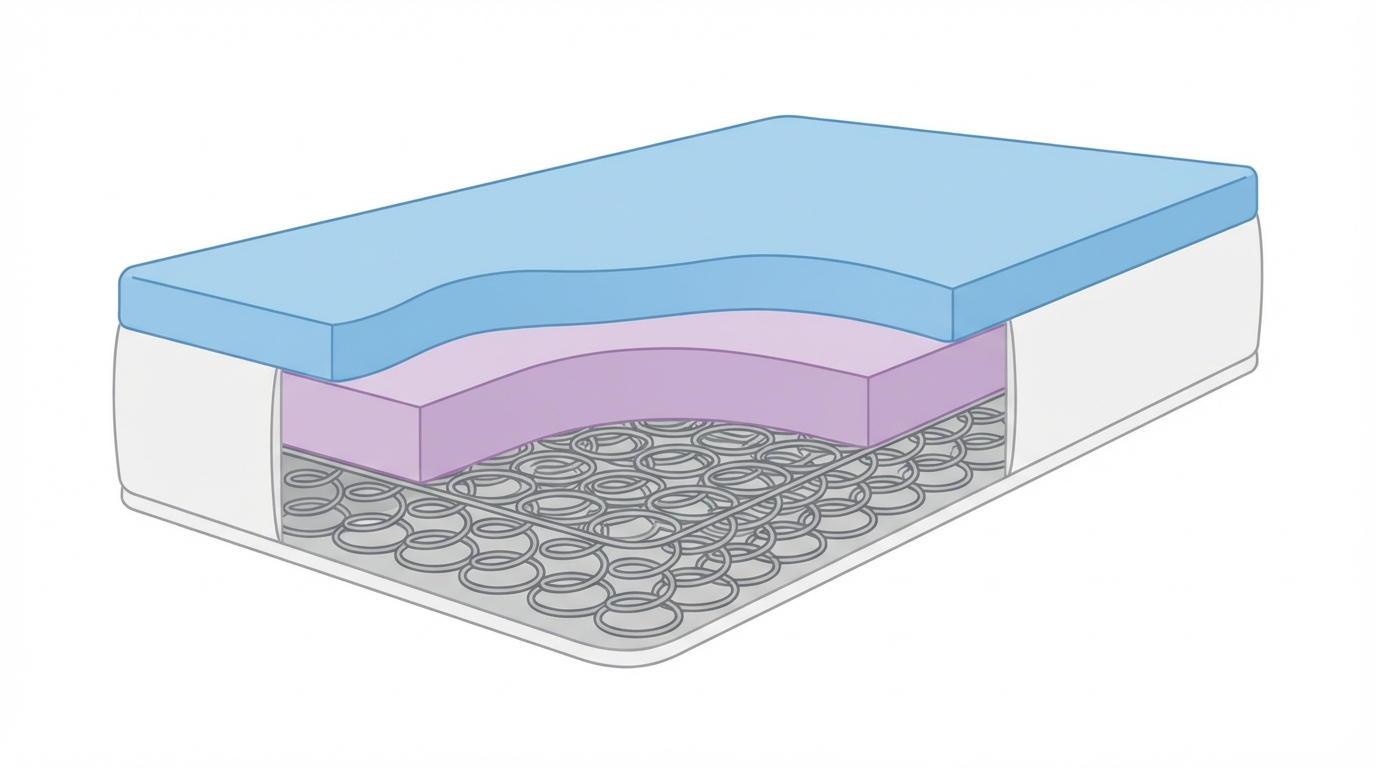
Once you know the size of a twin mattress, the next step is deciding how that twin should feel. A common misconception is that twins are automatically less comfortable or less supportive than larger sizes, as if they are only for kids or temporary setups. In reality, many high quality models in innerspring, foam, and hybrid constructions are available in twin size. The core support and comfort technologies are the same as in queens and kings, just in a smaller footprint.
Sleep research consistently shows that mattress comfort and support influence sleep quality, pain levels, and even mood during the day. The Mayo Clinic notes that a mattress that is too soft or too firm can worsen back pain, while the right level of support helps maintain the natural curve of the spine. This is true regardless of whether the mattress is a twin or a king. What changes is how much room you have to move, not how your body is supported when you lie down.
For children and lighter adults, a twin mattress with a medium or medium firm feel usually strikes a good balance between cushioning and support. You want enough contouring to relieve pressure at the shoulders and hips, but not so much sink that the spine bows. A mattress like the Sealy Posturepedic Pro Medium Mattress – Dupont II Euro Pillow Top gives you that blend of comfort and structure, and it is available in smaller sizes that work beautifully for solo sleepers.
Heavier adults using a twin should pay extra attention to coil count, foam density, and edge support. Because you have less surface area to distribute weight, you tend to use more of the mattress width, including the edges. A hybrid model, such as the Sealy Posturepedic Elite Soft Hybrid Mattress – Brenham II, can be a smart choice, as it combines the durability of coils with the pressure relief of foam. The edge reinforcement on a well built hybrid also makes sitting on the side of a twin bed more comfortable and less "saggy."
Toppers, Protectors, And Pillow Choices For Twin Beds
Accessories play a bigger role on a twin than many people expect, partly because every inch counts. A good quality mattress protector is almost non negotiable, especially for kids. It shields the mattress from spills, accidents, sweat, and allergens, which can significantly extend its lifespan. A waterproof, breathable option like the TEMPUR-Breeze Mattress Protector – Cooling, Waterproof, Breathable Cover adds a layer of hygiene and temperature regulation without changing the feel of the bed.
If you already own a basic twin mattress and want to upgrade comfort without replacing the whole thing, a mattress topper can help. Look for a topper that addresses your specific issue. For example, a memory foam topper can soften a bed that feels too firm, while a latex or high resilience foam topper can add buoyant support. Travel or guest situations are a place where a product like the Tempur-Pedic Mattress Topper – Pillow Travel and Guest Bundle shines, because it lets you add a cushiony layer to a twin guest bed or foldout without committing to a full mattress upgrade.
Pillows matter as much as the mattress for spinal alignment, especially on a narrower bed where your head and shoulders are close to the edge. Choosing the right loft and firmness based on your sleep position can reduce pressure on your neck and shoulders. Side sleepers usually need a thicker, firmer pillow, while back and stomach sleepers often do better with something lower profile. Coordinating pillows, sheets, and protectors from a single collection, such as the Pillows, Sheets, Toppers, Protectors collection at Sleepology, can simplify shopping and ensure everything fits a standard twin or twin XL properly.
A quick note on bedding fit. Because a twin is narrower, oversized comforters and duvets can sometimes look and feel overwhelming, especially in a small room. Choosing bedding designed for twin or twin XL sizes keeps the proportions right and prevents bunching. It also helps the sleeper feel secure but not smothered, which can support better temperature regulation at night according to studies on sleep microclimate in bedding.
Frames, Foundations, And Room Planning For Twin Mattresses
Choosing The Right Base For A Twin
A twin mattress needs proper support from below to perform well over time. Most manufacturers recommend either a slatted platform, a solid foundation, or an adjustable base, depending on the mattress type. Innerspring and many hybrids pair best with a foundation or box spring style base, which keeps the mattress level and helps distribute weight evenly. All foam mattresses usually require a platform or slats with closely spaced gaps to prevent sagging between supports.
The height of the base also changes how the bed functions in your room. A standard 9 inch foundation, like the Sealy Mattress Base Boxspring Foundation | Standard 9 inch height, combined with a 12 inch mattress will create a bed that sits at a comfortable sitting height for most adults. For kids or shorter adults, or for rooms where you want a more minimal look, pairing a twin mattress with a low profile 5 inch foundation can keep the bed lower to the ground and easier to climb into.
If you are considering an adjustable base for a twin, these work beautifully for adults who read in bed, watch TV, or need elevation for medical reasons like acid reflux or circulation. A twin on an adjustable frame can transform a small bedroom into a flexible lounge and sleep space without requiring a larger mattress. Just make sure the twin mattress you choose is compatible with adjustable motion. Many modern foam and hybrid models are, but it never hurts to confirm before purchasing.
Room Layout, Storage, And Multi Use Spaces
A twin mattress opens up creative room layouts that are harder to pull off with larger sizes. Placed lengthwise against a wall with a daybed frame, it can function as both a sofa and a bed in a home office or studio apartment. With built in drawers or storage bins underneath, it can pack clothing, toys, or linens into a footprint that might otherwise be wasted. For families trying to get more out of a small home, these multipurpose uses of a twin can be a game changer.
Bunk beds and loft beds are another area where twin mattresses shine. Two twins stacked or a twin over full configuration can sleep multiple children while preserving precious floor space. In these setups, it is especially important to check mattress thickness requirements for safety rails. Many bunk bed manufacturers specify a maximum mattress height to ensure the guard rails are tall enough to prevent falls. Thinner twin mattresses are often preferred in top bunks for this reason.
Do not forget about circulation paths and doors. A common mistake is measuring wall length but not considering how a door swings open or how a closet door or dresser drawer extends into the room. Before deciding on a twin, twin XL, or larger size, open every door and drawer fully and note where the clearance lines fall. Then, as mentioned earlier, use painter's tape to mark the mattress footprint on the floor. Walk around it, sit on imaginary edges, and make sure the room still functions the way you need it to.
“We live in a small bungalow, and I thought my office slash guest room was too tiny for real furniture. Sleepology helped me pick a twin daybed setup that fits a quality mattress, storage underneath, and still leaves space for my desk. Guests finally have a comfortable place to sleep without me giving up my workspace.” – Melissa P., November
Budget, Longevity, And When To Upgrade From A Twin
Cost Considerations For Twin Mattresses And Accessories
One of the biggest advantages of twin mattresses is cost. Because they use less material, twins typically cost significantly less than full, queen, or king sizes in the same model family. That price difference extends beyond the mattress itself. Sheets, comforters, protectors, and even frames are usually less expensive in twin sizes. For families furnishing multiple kids' rooms at once or outfitting a vacation rental with several beds, this can be a major budget saver.
Industry groups like the Better Sleep Council often note that shoppers are more willing to invest in higher quality materials when buying a smaller size, compared to stretching their budget thin on a larger mattress. This is a smart strategy. If you have a fixed budget, opting for a better built twin with more durable foams and stronger coils may serve you better than a cheaper, larger mattress that feels good only for the first year. Over the typical 7 to 10 year mattress lifespan suggested by organizations such as the Sleep Foundation, that quality difference can really show up.
Do not forget to factor in the cost of accessories. A twin mattress still needs a protector, a set of sheets, a pillow or two, and possibly a frame or foundation. Bundling these items where possible can save money and ensure compatibility. Collections that include coordinated pillows, sheets, toppers, and protectors make it easier to check everything off at once and eliminate surprises like a fitted sheet that does not grip the mattress depth properly.
Signs A Twin Might No Longer Be Enough
Even if a twin was a perfect fit at one time, life changes. Kids grow, bodies change, and how you use your home evolves. There are a few clear signs that it may be time to move on from a twin size, even if the mattress itself is still in decent shape.
If the sleeper’s feet are consistently pressing against the end of the mattress or hanging off the edge, that is a straightforward height mismatch. You might see this in teens who have hit a growth spurt or in adults who started on a twin for financial reasons and have since outgrown it. Chronic morning stiffness, especially in the hips, knees, or lower back, can also be a sign that the bed is too small, even if the mattress feel is technically "comfortable." The Cleveland Clinic points out that poor sleep posture can aggravate joint pain, and cramped sleeping positions on a small mattress can contribute to that.
Relationship changes are another trigger. Someone who was content on a twin while single may find that they now want a larger bed once they are in a partnership or simply having a partner stay over regularly. While two people can squeeze onto a twin in a pinch, it is not a sustainable solution for healthy, restorative sleep. In these cases, thinking about a queen or king sized upgrade is usually wise, especially if you want room for a pet or child to occasionally join you.
Sometimes the decision to upgrade is practical rather than physical. You may move to a home with a larger bedroom, decide to repurpose a twin room into a guest suite, or feel ready for a more "grown up" sleeping environment. If you find yourself frequently apologizing to guests for the size of the bed, or if you look at the twin and feel like it does not match your current stage of life, that is valuable information. There is nothing wrong with rehoming a twin to a child's room or vacation property and choosing something that fits who you are now.
Conclusion: Making A Twin Mattress Work For Your Life
When you began wondering "what is the size of a twin mattress," you were really asking a bigger set of questions about space, comfort, and how you live day to day. The simple dimensions, about 38 inches wide by 75 inches long, are just the starting point. What truly matters is how those numbers interact with your height, sleep style, room layout, and budget. For many children, teens, and solo adults in smaller spaces, a twin is not a compromise. It is an efficient, comfortable solution when chosen thoughtfully.
You have seen how a twin compares to twin XL, full, and queen sizes, and you have learned where a twin excels and where it may fall short. You now know that quality and support matter as much as size, and that smart accessories like protectors, toppers, and the right base can transform a simple twin into a genuinely restful sleep setup. You also have a clearer sense of when it makes sense to stay with a twin and when life changes might point you toward a larger mattress.
If you still have lingering questions about whether a twin or twin XL fits a specific room or sleeper in your home, that is normal. Sizing decisions can feel more permanent than they really are, and it often helps to talk through your unique situation with someone who does this every day. At Sleepology, our goal is to make those conversations calm, clear, and practical, so you can choose with confidence instead of second guessing yourself at 2 a.m. Your best next step is simply to take your measurements, think about how the room is used, and then match the mattress to the life you actually live, not the one on a showroom floor.
Frequently Asked Questions
How big is a twin mattress in feet, and what does that feel like in real life?
In feet, a standard U.S. twin mattress measures roughly 3.2 feet wide by 6.25 feet long. Visualize a rectangle a bit wider than a standard interior door and a little longer than a tall person lying down. For most children and smaller adults, that footprint offers enough room to change positions, sleep on their back or side, and still feel supported. Where it can feel limited is for taller sleepers who stretch out fully or for anyone who is used to more lateral space on a full or queen. Lying on a twin often feels cozy and contained, which some people love and others experience as cramped depending on their body size and sleep habits.
Can two adults sleep on a twin mattress comfortably?
For regular, long term use, two adults will almost never sleep comfortably on a standard twin. With only about 38 inches of width to share, each person would have less personal space than a crib mattress offers a baby. This makes motion transfer, temperature buildup, and edge crowding much more noticeable. Sleep organizations that study healthy sleep for adults generally recommend at least a full size for two, and more often a queen or king, so each person has enough room to move without colliding. A twin is fine for a partner sitting up to read or a child cuddling for a few minutes, but not for nightly shared sleep.
What is the difference between twin and twin XL bedding?
The main difference is length. Twin bedding is designed to fit mattresses around 38 by 75 inches, while twin XL bedding is cut for 38 by 80 inch mattresses. Fitted sheets are the most critical piece, because a standard twin fitted sheet will be too short for a twin XL mattress and will either pop off the corners or strain the elastic. Flat sheets, comforters, and duvets sometimes have a bit more tolerance but can still fall short or look skimpy on a longer mattress. When shopping, always check whether the package specifically says "twin" or "twin XL," especially for fitted sheets and mattress protectors.
What size room do I need for a twin mattress to fit comfortably?
Most rooms that are at least about 7 by 10 feet can accommodate a twin mattress while still leaving reasonable walking space. The twin footprint itself takes up a bit over 3 by 6 feet, so the remaining area is used for circulation, furniture, and doors. Sleep experts often suggest leaving at least 2 to 3 feet of open space on two accessible sides, which allows you to make the bed, get in and out comfortably, and open doors or drawers. In very narrow rooms, placing the twin lengthwise against a wall or in a daybed frame can help preserve floor space while still providing a real bed rather than a sofa.
How long does a twin mattress typically last compared to other sizes?
A twin mattress can last just as long as a larger size, usually around 7 to 10 years, provided it is well made and used within its design limits. In fact, twins used by children may sometimes see less concentrated weight than larger beds used by adults, which can reduce wear in some cases. What often shortens the "practical" lifespan of a twin is not the materials breaking down but the sleeper outgrowing the size physically or wanting more space. If you choose a quality twin mattress, protect it from spills, and rotate it as recommended by the manufacturer, there is no inherent reason a twin should wear out faster than a full or queen.
Does the thickness of a twin mattress matter as much as the length and width?
Thickness matters for comfort, support, and how the bed feels to sit on, but it does not change the fundamental size footprint in the room. A very thin twin mattress, under about 8 inches, may lack the support and pressure relief that older kids and adults need, especially for side sleeping. Thicker mattresses, in the 10 to 14 inch range, tend to feel more substantial and can incorporate more advanced support systems or comfort layers. The main caution is bunk beds and safety rails, where manufacturers often specify a maximum mattress thickness for the top bunk. Always check those guidelines before choosing a tall twin for an upper level.
How do I know if my child is ready to move from a crib or toddler bed to a twin?
Signs that a child is ready for a twin include consistently climbing out of the crib, complaining about feeling cramped, or reaching an age where nighttime potty training and independent bed access are priorities, which the American Academy of Pediatrics often places around 3 to 5 years for many children. If your child can climb in and out of bed safely, follow simple bedtime routines, and expresses interest in a "big kid bed," those are good indicators. At that point, a twin offers more room to grow without overwhelming a small child, especially when paired with rails or a low profile foundation to keep the sleep surface closer to the floor.