

What Is The Size Of A Queen Size Mattress? A Practical Guide To Fit, Comfort, And Real‑Life Use
If you are asking what size a queen mattress is, you are probably in one of two spots. Either you are staring at a tape measure wondering if a queen will fit in your bedroom, or you are tired of feeling cramped on a smaller bed and hoping a queen will finally give you room to breathe. Both situations come with the same worry: you do not want to drag a heavy mattress into your home only to discover it feels wrong for your space or for your body.
Mattress size seems straightforward on paper, yet in real homes it gets complicated. Measurements on spec sheets do not account for base and headboard, walking space, pets, partners, or that bedroom door with the tight corner. On top of that, many people are trying to balance sleep health, budget, and room size all at once. According to the Sleep Foundation, most adults need 7 to 9 hours of sleep, and a comfortable, supportive sleep surface is one of the biggest factors in reaching that goal consistently. When your mattress is too small, those hours are often restless instead of restorative.
This guide is here to take the guesswork out of the conversation. You will learn the exact dimensions of a queen mattress in inches, feet, and centimeters, how it compares to other mattress sizes, how much bedroom space it truly needs, and when a queen is the right call for singles, couples, and families. You will also see real world examples, common mistakes to avoid, and some specific queen mattress options from Sleepology that pair size with the right support and pressure relief.
By the time you finish, you should feel confident not only about what size a queen mattress is, but also whether it is the right size for your current bedroom, your future plans, and your best possible sleep.
The Exact Size Of A Queen Mattress
Understanding queen mattress size starts with the basic measurements, then moving into how those numbers behave in real rooms. Manufacturers in North America follow the same standard dimensions, but the way those dimensions show up in your home can vary slightly from brand to brand.
At its core, a standard queen mattress measures 60 inches wide by 80 inches long. In feet, that is 5 feet wide and 6 feet 8 inches long. In centimeters, you are looking at roughly 152 by 203. Most people find it helpful to imagine a queen mattress as five square feet wide with a bit of extra length beyond a standard twin or full. That extra length matters quite a bit for taller sleepers who feel their feet hanging off shorter 75 inch beds.
There is a bit of nuance here. According to several major mattress brands, including those cited in Consumer Reports testing, manufacturers usually allow a small tolerance, often about plus or minus one inch in width or length. That can come from hand finishing, sewing of the cover, and how the foam or coil unit settles. It is a small difference, yet if you are trying to slide a mattress into a tight bed frame or antique sleigh bed, it is worth knowing. When your frame is very strict on size, you will want to look closely at the actual product specifications instead of assuming every queen is identical.
In practical terms, a queen gives each partner about 30 inches of personal width. For comparison, a full size mattress gives about 27 inches each, and a king gives about 38 inches each. Researchers who look at sleep disturbance often note that more personal space reduces the chance of being woken by a partner's movements during the night, which is one reason queen and king sizes tend to be favored by couples in mattress satisfaction surveys. If you routinely wake up on the edge of the bed or bumping into your partner, that extra width can make a meaningful difference in perceived sleep quality.
From a comfort standpoint, queen length is also important. For adults over about 6 feet 2 inches, the Sleep Foundation and other sleep health organizations often recommend mattresses that are at least 80 inches long to keep ankles from hanging off the edge. The queen and king share this 80 inch length, while a California king is slightly longer at 84 inches. If you are under 6 feet 2 inches, a queen usually gives you comfortable head to toe space without needing to move up to a larger footprint.
“We upgraded from a full to a queen and I did not realize how much 6 extra inches would matter. My husband is 6’1” and for the first time in years his feet are not dangling off the end. It sounds small, but it has made a big difference in how rested he feels.” – Lauren P., November
Queen Mattress Size Compared To Other Standard Sizes
Once you know what a queen mattress measures, the next logical question is how that compares to other options. Size is rarely chosen in a vacuum. You are nearly always comparing it to the twin or full you have now, the king you wish you had, or the California king you have seen on hotel labels.
Queen vs Full: The “Just Enough Room” Upgrade
The step many people consider first is moving from a full to a queen. A full measures about 54 inches wide by 75 inches long. That means a queen gives you 6 inches of extra width and 5 inches of extra length. On paper that may sound modest. In actual sleep, it is the difference between feeling boxed in and having space to turn without colliding with your partner.
For single sleepers, a full can absolutely work, especially in small rooms. However, as adults get taller or start sharing the bed with pets, the extra width and length of a queen become noticeable. For couples, the difference is bigger. Each partner has about 27 inches of space on a full, which is actually less than a crib mattress width. A queen bumps each person up to 30 inches. Sleep researchers who study partner disturbance often frame 30 inches per person as the minimum comfortable width for most adults, which is one reason queen mattresses are the most popular size for couples in North America.
If you currently sleep on a full and find yourself waking up near the edge or feeling like you cannot fully straighten your legs, a queen is usually the most natural next step. A supportive option like the Sealy Posturepedic Pro Soft Mattress – Dupont II Euro Pillow Top in a queen size can give you that extra real estate while also upgrading pressure relief and support at the same time.
Queen vs King: Space Versus Room Size
The jump from queen to king is more dramatic. A standard king measures 76 inches wide by 80 inches long. Compared to a queen, you gain 16 inches of width, while the length is the same. That means each sleeper on a king has about 38 inches of personal space, which is roughly the width of a typical twin mattress. For couples who sleep with kids or larger pets, or who simply prefer not to feel any contact during the night, a king can feel transformative.
The trade off is room size. A king needs a larger bedroom to feel balanced. Many design guidelines and mattress brands suggest a minimum of 12 by 12 feet for a king, while a queen can fit comfortably in rooms as small as 10 by 10 feet, assuming reasonably simple furniture. The Cleveland Clinic has noted that a calm, uncluttered bedroom environment supports better sleep, so it is not just about whether the mattress physically fits. It is about whether the bed dominates the space so much that the room feels cramped and stressful.
Sometimes the best decision is to stay with a queen for the primary bedroom and use the saved space for a comfortable chair, dresser, or even an adjustable base. Other times, if room size allows, upgrading to a king from a queen can be smart, especially for couples who have struggled with sleep disturbance. If you do decide that a king is necessary, you can explore Sleepology's king sized mattresses collection to compare support levels while keeping an eye on dimensions.
Queen vs Twin and Twin XL: Growing Into Adult Sleep
On the smaller side, a standard twin measures about 38 by 75 inches. A twin XL is the same width but 80 inches long. Both are excellent for kids, teens, and compact guest rooms, and research from the American Academy of Pediatrics has shown that younger children benefit more from consistent bedtime routines and firm support than from extra sleeping width. However, as teenagers grow taller or adults move into their first homes, twins begin to feel limiting.
When you move from a twin to a queen, you add 22 inches of width and 5 inches of length compared to a standard twin, or 22 inches of width compared to a twin XL. This is often the point where sleep turns from purely functional into truly restorative. Many adults who upgrade from a twin to a queen notice reduced tossing and turning simply because they can change positions freely without feeling constrained by the edges.
For teens and college students, a twin XL is often a good interim step if room size is tight. For adults setting up a permanent bedroom, a queen is usually a more future proof choice. It accommodates body changes, partners, and lifestyle shifts over the 8 to 10 years that a good mattress typically lasts, a range supported by Mayo Clinic and Consumer Reports guidance on mattress lifespan.
“Our son is 6’3” and insisted he was fine on a twin XL in his old room. We moved him into a queen when he came back from college and he immediately noticed how much easier it was to stretch and actually relax. He says it is the first time his bed has felt like an adult bed.” – Daniel R., October
Room Size: How Much Space Does A Queen Bed Really Need?

Knowing that a queen mattress is 60 by 80 inches is one thing. Visualizing that in your bedroom, along with furniture and walking space, is another. This is often where people feel the most unsure, and understandably so. A bed that technically fits can still feel overwhelming if you cannot move comfortably around it.
Most designers and mattress manufacturers suggest a minimum bedroom size of 10 by 10 feet for a queen. That recommendation is not arbitrary. It is based on leaving at least 24 inches of walking space around the sides and foot of the bed, which several sleep health organizations, including the Sleep Foundation, note contributes to a more peaceful, functional bedroom environment. In practical terms, 24 to 36 inches of clearance on each accessible side gives you room to get in and out of bed and to open drawers without collision.
If your room is slightly smaller, such as 9 by 10 feet, a queen can still work with careful furniture choices. You may need to skip a wide dresser or use wall mounted lighting instead of large nightstands. In tight rooms, low profile or platform bases can help visually lighten the bed and preserve a sense of openness. An adjustable base from Sleepology's Adjustable Bed Frame and Base collection can often do double duty as a space efficient support system, reducing the need for extra chairs or wedges for reading and lounging.
One simple technique that designers use is taping the mattress footprint on the floor. Measure out 60 by 80 inches with painter's tape where you plan to place the bed, then walk around it as if the bed were there. Try opening doors, mimicking drawer pulls, and moving from one side of the room to the other. If you find yourself squeezing or bumping into corners, that is a sign the room may be better served by a full mattress or by rethinking the layout rather than forcing a queen into a space that cannot comfortably hold it.
Remember that the mattress size is not the full story. A headboard, footboard, or thickly padded frame can add several inches to both length and width. When you are choosing a bed frame, check its outer dimensions instead of only looking at the mattress size it is rated for. That level of planning up front can save you a lot of frustration on delivery day.
Queen Mattress Size Variations: Split, Olympic, And Specialty Options
Once someone understands the basic 60 by 80 inch queen size, they often discover that there are variations with similar names. These can be helpful in niche situations, but they can also cause confusion if you are expecting standard queen dimensions.
Split Queen: Same Size, Different Configuration
A split queen is typically the same overall size as a standard queen, but divided into two separate segments. Each side is often around 30 by 80 inches and set side by side on a compatible base. This setup is more common with adjustable foundations, where each partner wants separate head and foot positions while still sharing a single overall bed area.
From a room planning perspective, a split queen occupies nearly the same footprint as a regular queen mattress. The main difference happens under the sheets, where the underlying support can move independently. For couples with different comfort preferences, a split configuration can ease tension around firmness, incline, or even snoring. The American Academy of Sleep Medicine notes that elevating the head can help reduce snoring for some people, so having individualized adjustment can be helpful if one partner benefits from elevation and the other does not.
Olympic Queen: Wider But Not Standard
An Olympic queen is generally 66 inches wide by 80 inches long. That makes it about 6 inches wider than a standard queen while keeping the same length. These are less common and often marketed for RVs or specific bed frames. While the extra width can be appealing for couples who want more space without moving all the way to a king, the trade off is limited availability of mattresses, bases, and bedding in this size.
If you are considering an Olympic queen, it is wise to map out not just the mattress purchase but also sheets, protectors, and potential future replacements. In many cases, it is easier and more cost effective to either stay with a standard queen or commit to a king, where accessories are widely available and pricing is more competitive.
Short Queen And RV Queen
In RVs and some small spaces, you may see a “short queen” that typically measures 60 inches wide by about 74 or 75 inches long. The width matches a standard queen, but the length is closer to a full mattress. These are specifically designed for tight quarters where standard length will not fit. If you are shopping for an RV mattress, double check the length carefully, as standard queen bedding may fit differently, and tall sleepers may feel more constrained.
In a traditional bedroom, a short queen rarely makes sense unless you are working with a very specific built in frame, because it combines the width of a queen with the length limitations of a full. You would usually be better served by a standard queen, full, or even twin XL depending on the room dimensions and user height.
“We almost ordered an Olympic queen for our guest room because the label sounded fancy. Talking it through with the Sleepology team, we realized bedding would be a headache long term. We stuck with a regular queen, and now it is easy to find sheets on sale anywhere.” – Monique S., November
How Queen Size Affects Sleep Quality For Singles And Couples

Size is not just a spatial decision. It is directly tied to how your body moves through the night, how often you wake up, and how restorative your sleep feels. Researchers who study sleep architecture and movement patterns have consistently found that cramped sleep surfaces increase micro awakenings and restless movement, especially for couples.
For Single Sleepers: Space To Move, Not To Waste
For single adults, a queen is often a comfortable middle ground. It gives enough room to change positions, stretch out, and share the bed with a pet, without taking up as much floor space as a king. People who identify as combination sleepers, meaning they shift between side, back, and sometimes stomach positions, often benefit from the extra width of a queen, since they can rotate without worrying about edging off the mattress.
At the same time, bigger is not always better. If you live in a small studio or have a bedroom where a queen would leave only narrow walkways, that cramped environment can work against restful sleep. The Mayo Clinic notes that a calm, clutter free sleep environment supports better quality sleep, which means preserving at least a couple of feet of open space around the bed when possible. For some single sleepers in very small rooms, a full mattress might strike a better overall balance, especially when paired with a high quality support system like the Sealy Posturepedic Medium Mattress – Medina II Euro Pillow Top, which delivers robust back support in any size.
For Couples: Sharing Space Without Sacrificing Rest
For couples, queen size decisions are a bit more complex. A queen provides a sleeping width of 60 inches, which translates to 30 inches per person if you divide it equally. That is generally enough for average sized couples who do not sprawl dramatically or invite kids and pets into the bed on a regular basis. Many couples find that a queen in a right sized room feels cozy and intimate without being cramped.
However, sleep position and body size matter. If one or both partners are larger framed or tend to sleep in “starfish” positions with arms and legs extended, 30 inches per person can begin to feel tight. If you frequently wake up because of your partner's motion, it is not always just the mattress material to blame. It can also be a function of how close you are to each other in a queen. In those cases, moving to a king, or at least choosing a queen with excellent motion isolation, can be important.
This is where higher quality queen mattresses stand out. A well built queen like the Sealy Posturepedic Plus Medium Mattress – Paterson II Euro Pillow Top is designed to limit motion transfer through a combination of zoned coils and pressure relieving foams. That kind of construction reduces the amount your partner's movements travel across the surface, which means the 60 inch width you share feels more stable and less “bouncy” during position changes.
When partners are of very different heights or weights, it is also wise to consider firmness and support, not only size. Heavier individuals usually need stronger lumbar support to prevent sagging, while lighter individuals may prefer a slightly softer surface for pressure relief at the shoulders and hips. A queen mattress that uses zoned support, as many Posturepedic models do, can help bridge those differences by offering firmer support in the middle and more cushioning toward the top and bottom.
Choosing The Right Queen For Your Sleep Style And Support Needs
Once you know a queen is the right physical size, the conversation shifts to comfort and support. Two queen mattresses may share the same dimensions but deliver completely different sleep experiences. Your sleep position, weight distribution, and pain patterns all matter when choosing a specific queen model.
Back Sleepers
Back sleepers tend to do well on medium to medium firm mattresses that keep the spine in a neutral curve. Health organizations like the Cleveland Clinic often recommend a balanced surface for back sleepers to prevent the lower back from sinking too much. In queen sizes, mattresses like the Sealy Posturepedic Elite Medium Mattress – Brenham II Euro Pillow Top can work well. The euro top adds surface comfort, while the underlying support system holds the lumbar region in alignment across the full 60 inch width.
Side Sleepers
Side sleepers usually need more pressure relief at the shoulders and hips. In a queen, that extra width is useful because it gives you space to pull your knees up or extend an arm without getting jammed against the edge. A softer or plush top model in a queen size can cradle those pressure points while still keeping your spine level. It can also be helpful to pair your queen mattress with a supportive pillow that maintains proper neck alignment. A contouring body pillow such as The BodyPillow by Tempur-Pedic can help keep side sleepers' shoulders and hips lined up when they sprawl across their queen.
Stomach And Combination Sleepers
Stomach sleepers need the most careful balancing act, because excess sink under the midsection can overextend the lower back. A queen mattress for stomach sleepers should usually be on the firmer side, with strong central support. Combination sleepers who shift between positions may do best on a responsive medium feel mattress that allows easy movement. The extra width of a queen can help combination sleepers naturally change positions without hitting the border, but only if the surface is not so soft that it traps them.
Across all these categories, the queen size's 80 inch length provides enough room for most adults to maintain straight leg positions when needed. The key is choosing a comfort level and construction that cooperates with your body, not just your bedroom measurements.
Queen, Full, And King Compared: A Quick Visual
When making a size decision, a simple visual comparison can help. Below is a concise table that compares the three most common adult mattress sizes side by side.
| Mattress Size | Dimensions (inches) | Typical Best Use | Recommended Minimum Room Size |
|---|---|---|---|
| Full | 54 x 75 | Single adult or teen, small bedrooms | 9 x 10 feet |
| Queen | 60 x 80 | Most couples, single adults with pets | 10 x 10 feet |
| King | 76 x 80 | Couples wanting maximum space, families sharing with kids or large pets | 12 x 12 feet |
This comparison highlights where a queen fits in the landscape. It is larger and more comfortable for pairs than a full, but more space efficient and often more budget friendly than a king, especially when you factor in bedding and frame costs.
Bedding, Sheets, And Accessories For A Queen Mattress
Once you settle on a queen mattress, you will also need bedding that fits properly. Ill fitting sheets that pop off or a protector that pulls too tight can undermine comfort, even when the mattress size is perfect.
Queen fitted sheets are designed to fit mattresses that are 60 by 80 inches, but depths can vary widely. Some budget mattresses are around 8 to 10 inches thick, while premium pillow top and hybrid models can reach 14 to 16 inches or more. According to Consumer Reports, one of the most common bedding complaints is fitted sheets that do not accommodate mattress height, which is easily prevented by checking both mattress thickness and sheet pocket depth before purchasing.
If your queen mattress is on the taller side or you use a plush mattress topper, look for fitted sheets with deep pockets or labeled for 14 to 18 inch mattresses. High quality sheet sets like the Tempur-Pedic TEMPUR Adapt Luxe Egyptian Cotton Sheet Set or the Tempur-Pedic ProPerformance Sheet Set are designed with stretch and secure elastic to stay in place on a range of queen mattress profiles, which is especially helpful for active sleepers.
A mattress protector sized for a queen is also important. Sleep health resources often emphasize the value of keeping the sleep surface clean, both for allergy control and foam longevity. A protector that fully encases or covers the mattress can guard against spills and sweat without changing the feel too much. If you are choosing a cooling style protector on a queen, it can also help offset body heat that tends to build up more when two people share the surface.
For extra cushioning, a queen size topper can be a good option, especially if you have a newer mattress that is supportive but slightly firmer than you prefer. Travel and guest bundles like the Tempur-Pedic Mattress Topper – Pillow Travel and Guest Bundle can also be used to add a familiar comfort layer when you sleep away from home, which is helpful if you are used to a certain queen feel and want consistency.
If you want to outfit the entire bed at once, Sleepology's Pillows, Sheets, Toppers, Protectors collection groups queen compatible accessories so you can match performance fabrics, cooling features, and support levels to your new mattress rather than shopping piece by piece.
Common Queen Size Mistakes To Avoid
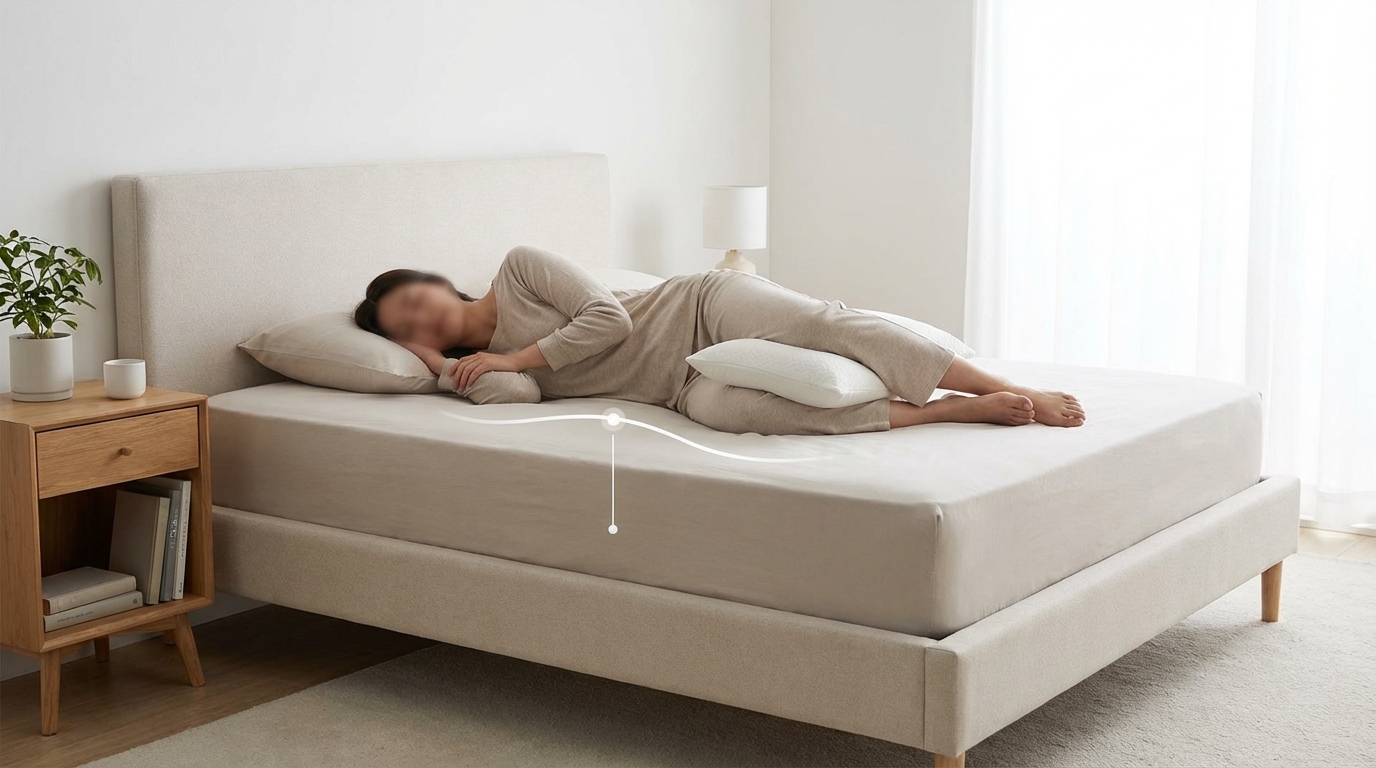
Even once people understand queen mattress dimensions, there are a few predictable mistakes that tend to cause frustration. Being aware of them ahead of time can save you from returns, exchanges, or daily annoyances.
One common issue is forgetting to measure doorways, hallways, and stairwells. A queen mattress is more maneuverable than a king, yet in older homes with tight turns, it can still be a challenge. Measuring the narrowest points along the path from your entrance to the bedroom and comparing that to the shorter side of the mattress (60 inches) can give you reassurance that it will fit. Bed in a box designs make maneuvering easier, since the mattress arrives compressed, but traditional non compressed queens still require clearance.
Another frequent mistake is underestimating how frame and headboard add bulk. People will measure wall to wall and think only in terms of 60 by 80, then purchase a frame with a thick side rail that adds 3 inches on each side. The result is a bedroom that feels tighter than expected. Always check total frame dimensions and account for any additional decorative footboards, storage drawers, or thick upholstery.
A third pitfall is choosing queen size by price alone. Since a queen is often just a modest cost step up from a full and a significant step down from a king, it can be easy to focus on the sticker rather than fit and function. However, health sources like Mayo Clinic emphasize that chronic poor sleep has long term impacts on mood, weight, and cardiovascular health. It is worth aligning size with actual sleep needs rather than defaulting to the cheapest near option.
Finally, some shoppers overlook future plans. A queen can stay with you through many life changes, from single living to couplehood, or from one home to another. But if you know you will be moving into a much larger primary bedroom soon, or you plan to co sleep with young children for years, it may be worth mapping those scenarios into your size choice now. Mattresses are long term purchases. Planning ahead during this decision makes it less likely you will outgrow your queen too quickly.
Here is a brief checklist of things to confirm before buying your queen:
- Measure bedroom length and width, then mark out a 60 x 80 inch footprint on the floor.
- Confirm at least 24 inches of walking space on each accessible side of the bed.
- Measure doorways, hallways, and stairs along the delivery path.
- Check frame and headboard outer dimensions, not just mattress size.
- Consider who will realistically sleep in the bed over the next 8 to 10 years.
- Match sheet pocket depth and protector size to mattress thickness.
Taking a few minutes to run through that list can mean the difference between a queen that simply fits and a queen that feels truly tailored to your life.
“We almost bought a king just because it was on sale, but Mia walked us through our room measurements and how we actually sleep. We landed on a queen with an adjustable base instead and saved around $700, plus the room feels spacious instead of crowded.” – Jenna T., November
Conclusion: Is A Queen Size Mattress Right For You?
A queen size mattress is 60 inches wide by 80 inches long, but those numbers only tell part of the story. In real homes, a queen is the size that most often balances comfort, space, and budget for adults. It gives couples enough room to sleep comfortably, provides singles with space to stretch and share with pets, and fits gracefully into the most common bedroom dimensions without overwhelming the room.
The key is to look at size alongside your sleep habits, body size, and future plans. If you are upgrading from a full, sharing a bed for the first time, or moving into your own place and want a mattress that can follow you through life changes, a queen is usually an excellent starting point. If you regularly host guests, having at least one queen in your home also makes hosting easier, since most adults are comfortable with that size.
If you are still unsure, you do not need to figure it all out alone. At Sleepology, we pair this kind of practical, measurement based guidance with hands on product knowledge. Whether you ultimately choose a softer euro pillow top queen like the Dupont II, a medium support queen like the Medina II or Paterson II, or step up to a king after reviewing your room, the goal is the same: a mattress that fits your body, your space, and your life, so you can finally sleep the way your body has been asking you to.
Frequently Asked Questions
How big is a queen size mattress in inches, feet, and centimeters?
A standard queen mattress measures 60 inches wide by 80 inches long. That translates to 5 feet wide and 6 feet 8 inches long. In metric terms, most manufacturers list a queen around 152 centimeters wide by 203 centimeters long. Those are the dimensions of the mattress itself, not including the frame, headboard, or footboard, which can add several inches to the overall footprint.
Will a queen mattress fit in a 10 by 10 foot bedroom?
Yes, a 10 by 10 foot bedroom is generally considered the minimum ideal size for a queen mattress. That layout allows you to place a 60 by 80 inch mattress and still maintain roughly 24 inches of walkway space on at least two sides. If you add large nightstands, dressers, or a bulky frame, you may need to be more intentional with furniture placement, but for most people a queen is very workable in a 10 by 10 room.
Is a queen mattress big enough for two people?
For most couples, a queen is large enough to sleep comfortably. Each partner gets about 30 inches of personal space, which is typically adequate if you are average sized and do not sleep with large pets or children in the bed. If either of you is broader shouldered, tends to sleep “starfish” style, or you regularly co sleep with kids or big dogs, you may find a king more comfortable, but many couples are perfectly happy on a well chosen queen mattress.
How does a queen compare to a full for a tall sleeper?
For tall sleepers, a queen has two advantages over a full. First, it is 5 inches longer, 80 inches instead of 75, which helps prevent feet hanging off the end for people near or slightly over 6 feet tall. Second, it is 6 inches wider, which may seem small written down but often makes a noticeable difference when stretching or changing positions. If you are tall and currently feel constrained on a full, a queen will almost always feel more relaxing.
Do queen mattresses come in different thicknesses, and does that change the size?
Queen mattresses are all the same length and width by definition, 60 by 80 inches, but thickness can vary widely. Budget models might be 8 to 10 inches tall, while premium pillow top or hybrid queens can be 14 to 16 inches or more. Thickness does not change the floor space the bed occupies, but it does impact how it looks in the room and how your sheets fit. You will want queen fitted sheets with an appropriate pocket depth and a supportive frame that can handle your mattress height without making the bed uncomfortably tall to climb into.
Can I put a queen mattress on a full or king frame?
A queen mattress should not be used on a full or king frame. On a full frame, a queen mattress would hang over the sides and not be properly supported, which can lead to sagging and potential safety issues. On a king frame, a queen mattress would be too small, leaving large gaps and instability. For best performance and warranty coverage, always pair a queen mattress with a queen rated frame or adjustable base designed for 60 by 80 inch mattresses.
Is queen the most popular mattress size?
Among adult mattress buyers in North America, queen is consistently reported as the most popular size in market research, in part because it strikes a practical balance for couples and fits well in common bedroom sizes. Industry reports often show queens making up a significant share of mattress sales globally, with kings and fulls following behind. That popularity also means queen bedding, protectors, and compatible frames are widely available at many price points, which is another reason the size is so versatile.