

What Is The Size Of A King Size Mattress, Really, And Is It Right For You?
If you are tired of bumping elbows with your partner or waking up with a kid’s foot in your ribs, you are not alone. At Sleepology, a lot of people come in asking some version of the same question: “What is the size of a king size mattress, and will it actually give us more room to breathe?” On paper, “king” sounds simple. In reality, there are multiple king options, confusing measurements, and a big impact on your bedroom layout and budget.
Getting this choice right matters more than most people realize. According to the Sleep Foundation, most adults need 7 to 9 hours of sleep per night, and both sleep quality and mood are strongly influenced by comfort and space in bed. If your mattress is too small, you are more likely to wake up through the night, feel sore in the morning, and even argue more with your partner because neither of you is sleeping well. A king size mattress can be a real upgrade, but only if it fits your room, your bodies, and your routines.
You will learn exactly how big a standard king mattress is in inches, feet, and square footage, how it compares to California king and other sizes, and how much space each person actually gets. You will also see how room size, sleep position, partners, kids, and pets should shape your decision. We will walk through real world scenarios, from couples in apartments to tall sleepers in long narrow rooms, so you can see yourself in the examples instead of guessing.
By the end, you will know whether a king is truly the right move for you or whether a queen, California king, or even a split king will quietly serve you better. Most of all, you will feel confident about the size you choose and how it will work with the rest of your bedroom, instead of crossing your fingers and hoping it fits when it shows up at your door.
The Exact Size Of A King Size Mattress
When people ask “What is the size of a king size mattress?” they usually want more than one simple number. They want to know how it will feel as they stretch out, how much room will be left around the bed, and whether it really justifies the upgrade from a queen. So let us start with the hard numbers, then translate them into usable space and everyday experience.
A standard king size mattress in the United States measures 76 inches wide by 80 inches long. That is 6 feet 4 inches wide and 6 feet 8 inches long. If you multiply width by length, you get 6,080 square inches of surface area, which works out to about 42.2 square feet. Compared with a queen, which is 60 by 80 inches, a king is the same length but gives you an extra 16 inches of width to work with, and that is where most of the comfort difference shows up.
When two people share a king, each person effectively has 38 inches of width, which is roughly the same as each person sleeping on their own twin bed. This is one of the reasons couples who switch from a queen to a king often say it feels like they suddenly have their own sleep zone, even though they are still in the same bed. For restless sleepers, that extra buffer can mean fewer disturbances and fewer “accidental elbows” during the night.
It is also important to know that mattress manufacturers and foundations allow a small tolerance in actual size. Most brands include a variation of about half an inch either way, so a real life king might measure closer to 75.5 by 79.5 inches or 76.5 by 80.5 inches. This is normal and still considered standard, and it will not affect how typical king bedding fits. The bigger concern is whether your room can comfortably handle the footprint of a king, which we will get into shortly.
“We thought upgrading from a queen to a king would be ‘nice.’ It turned out to be transformational. My husband tosses and turns and I used to feel every move. With our king, I honestly feel like I have my own bed again, just pushed up against his. We both wake up less and argue less about who is hogging the blanket.” – Rachel P., November
King Vs California King And Other Sizes: How Do They Compare?
Understanding king size dimensions is only half the story. The other half is how they stack up against the sizes you might be considering, especially queen and California king. Many shoppers assume that California king is “bigger than king” in every way, when in reality it trades width for length, which may or may not work for your body and room.
King vs California King: Which Is Actually Bigger?
A standard king mattress is 76 inches wide and 80 inches long. A California king mattress is 72 inches wide and 84 inches long. That means a king gives you 4 extra inches of width, while a California king gives you 4 extra inches of length. If you compare total surface area, the standard king comes in at about 6,080 square inches, and the California king at about 6,048 square inches. So the king is actually slightly larger overall, even though the California king is longer.
In practical terms, the California king tends to work best for people who are tall and often feel their feet hanging off the end of a standard mattress. People over about 6 feet 3 inches usually notice the difference. It can also be a better match for long, narrow rooms where a king would make the space feel too squeezed on the sides. On the other hand, couples who value shoulder room and do not need extra foot length usually feel more comfortable on a standard king, simply because it is wider.
Day to day, accessories might influence your decision as well. Standard king sheets, mattress protectors, bed frames, and even comforters are easier to find and typically a bit more affordable because king is more common. California king bedding is widely available, but there is less selection in certain styles and price points. If you like to change your decor often or shop sales, that extra availability can be a quiet but meaningful advantage for a standard king.
King Vs Queen: Is The Upgrade Worth It?
The jump from queen to king is often the biggest decision point for couples. A queen mattress measures 60 inches wide and 80 inches long, which gives a couple 30 inches of width per person. On a king, you move to 38 inches per person, about 8 extra inches of personal space each. That difference can feel small when you look at the numbers, but it feels huge when you stretch out on the bed.
For couples who sleep close together and rarely have kids or pets joining them, a queen can be perfectly adequate and easier to fit in smaller rooms. However, if one or both of you are broad shouldered, restless, or sleep hot, that additional width on a king can reduce the sense of crowding and the amount of body contact, which often leads to cooler, deeper sleep. The Cleveland Clinic notes that uninterrupted sleep cycles are crucial for cognitive performance and mood, and disrupted sleep from a cramped bed can chip away at that over time.
There is also a psychological benefit to having a little “breathing room” in bed, especially for partners who have different sleep schedules. If one person goes to bed later or wakes earlier, it is easier to roll out of a king without jolting the other person awake. That can preserve both of your sleep and lower resentment around feeling “woken up all the time” by the other person’s habits.
Where Split King Fits Into The Picture
As you research king sizes, you will likely come across the term “split king.” A split king is essentially two twin XL mattresses, each 38 inches wide and 80 inches long, placed side by side to create a combined 76 by 80 inch sleeping surface. The overall size is the same as a standard king, but each partner has their own mattress.
Split kings really shine on adjustable bases, because they allow each sleeper to raise or lower the head and foot of their side without affecting the other. If one of you prefers to sleep slightly elevated for snoring or reflux and the other likes to lie flat, a split king on an adjustable foundation such as the Tempur-Pedic ERGO Adjustable Mattress Base can be an excellent compromise. You still share a bed, but you can customize comfort more precisely.
You will need special split king fitted sheets, but a standard king size flat sheet and comforter will usually work fine over the top. For couples with very different firmness preferences, combining two different twin XL mattresses can also be a smart solution, so each of you gets the support level you need without sacrificing size.
How Much Room Do You Really Need For A King?

Once you know a king mattress is 76 by 80 inches, the next question is whether your bedroom can handle that footprint without feeling cramped. This is where many people overestimate what will work, because they only measure the floor, not how they will live around the bed day in and day out.
A common rule of thumb in the mattress industry is that a king bed works best in a room that is at least 12 by 12 feet. That does not mean you cannot physically fit a king in a smaller room. It means that in a 12 by 12, you are more likely to have comfortable walking paths, space for nightstands, and room for dressers or seating without the room feeling overloaded. In a narrower room, such as 10 by 12 feet, a king can dominate the space and make it harder to open doors or drawers.
Traffic flow matters as much as raw dimensions. You want at least 24 to 30 inches of clearance on the sides and at the foot of the bed so you can walk comfortably, make the bed, and access outlets or windows. The American Academy of Sleep Medicine emphasizes the importance of a calm, uncluttered sleep environment for healthy sleep, and when a bed is crammed wall to wall, the room can start to feel more like a storage unit than a restful space.
Furniture layout also plays a big role. If you already own a substantial dresser, a wide bench, or a desk in your bedroom, upgrading to a king can force you to rethink what stays. Some Sleepology customers decide a king is worth it and move work desks or extra storage out of the bedroom entirely. Others keep a queen to preserve a more open, airy feel. There is no right or wrong answer, only what supports your version of a restful retreat.
“We measured our room on paper and technically a king could fit, but Mia suggested taping out the dimensions on the floor at home. That little exercise saved us a huge headache. Once we saw the tape outline, it was clear we would be shuffling sideways every time we walked around the bed. We ended up choosing a queen and a better mattress instead of a king, and I am so glad we did.” – Daniel S., October
Who Is A King Mattress Best For?
A king size mattress is not automatically “better” than a queen. It is better for certain sleepers, spaces, and lifestyles. Before you default to king simply because it sounds more luxurious, it helps to think through who will actually use the bed and how.
Couples Who Want More Personal Space
For most couples, the main benefit of a king is simple: more individual room to move. Whether you are a sprawler or a compact sleeper, having 38 inches instead of 30 inches per person can make it easier to turn over, bend your knees, or change positions without syncing your every move with your partner. According to laboratory studies cited by the National Institutes of Health, movement by one partner can disturb the other’s sleep even if they do not fully wake up, and over time those micro awakenings can add up to less restorative rest.
A king is especially helpful if one or both of you are larger framed, broad shouldered, or very active sleepers. It can also reduce heat buildup between you if body contact at night tends to make you both sweaty. Pairing the size of a king with a cooling hybrid like the Sealy Posturepedic Elite Soft Hybrid Mattress – Brenham II gives you both space and airflow, which can be a game changer for hot sleepers.
Couples with different bedtime routines often benefit as well. If one person watches TV or reads in bed while the other sleeps, the extra width means you can sit or recline near the edge without jostling the person in the middle. On an adjustable base such as the TEMPUR-ERGO Smart Base Adjustable Mattress Foundation, a king or split king also gives each person more control over position, which can ease snoring and back discomfort without compromising space.
Families Who Co Sleep Or Have Frequent Visitors
If you share your bed with kids, pets, or both, a king often shifts from “nice to have” to “necessary.” A queen can quickly feel crowded with two adults and a dog or a toddler. In contrast, the wider width of a king allows parents to stay mostly on their own halves while kids stretch out in the middle.
Occasional visitors are another factor. If your child has recurring nightmares or your dog tends to stealth curl up at the foot of the bed, that extra 16 inches of width keeps you from feeling like you are one wrong roll away from falling off. It is not a cure for sleep disruptions that come with little visitors, but it can soften the impact.
There is also the reality that life changes. Today your child might crawl in once a week. A year from now, that could be most nights, or you could have added another pet. A king gives you more flexibility to ride those waves without replacing your mattress yet again. If you know your family is still growing, planning a bit of extra width now can be a practical long term choice.
When A King Might Be Too Much
There are times when a king size mattress is simply more than you need. If you sleep alone, are not particularly tall, and do not share the bed with animals or frequent guests, you may get more value out of investing in a premium queen mattress instead of paying for more size. A higher quality mattress in a slightly smaller size can deliver better spinal alignment and pressure relief than a lower tier king.
A king can also be tricky if you move frequently, live in older homes with narrow staircases, or plan to place the bed in a loft or tight corner. Even when rolled or folded, king mattresses and foundations are larger and heavier than queen options. If you are renting or anticipate multiple moves over the next few years, it is worth asking whether the logistics of a king will add stress you do not want.
Standard King Mattress Size Compared To Other Common Sizes
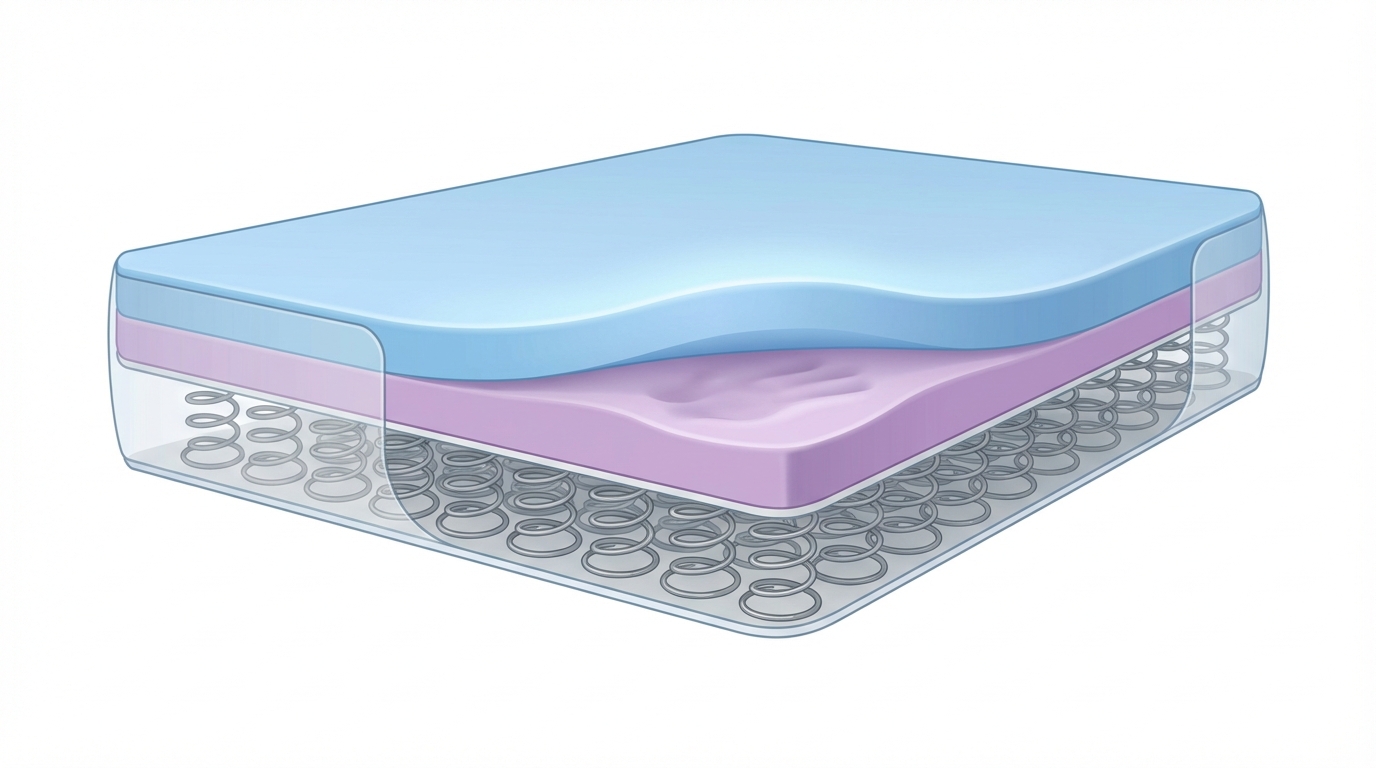
Sometimes it helps to see how a king fits into the whole mattress size family, not just in isolation. Below is a simple comparison of the most common sizes in the United States and how they differ from a king.
| Mattress Size | Dimensions (W x L) | Typical Use Case | Space Per Sleeper (for 2 people) |
|---|---|---|---|
| Full | 53" x 75" | Single adults, tight rooms, guest rooms | About 26.5" each |
| Queen | 60" x 80" | Most couples, primary bedrooms | About 30" each |
| King | 76" x 80" | Couples, families with pets or kids | About 38" each |
| California King | 72" x 84" | Tall couples, long narrow rooms | About 36" each |
You can see that the biggest jump in personal space happens when you move from queen to king. Although a full technically fits two people, each person gets less width than a typical airline seat, which is why most modern couples prefer at least a queen. Historically, full size beds were more common for couples, but expectations for personal comfort and space have changed significantly.
It is also worth noting the change in length. Full size mattresses are five inches shorter than queens and kings, which can be a problem for taller sleepers. If you are above about 6 feet 2 inches, a queen or king will usually feel more comfortable because of the 80 inch length. People closer to 6 feet 5 inches or above often enjoy the extra length of a California king, since its 84 inches minimize the chance of toes hanging over the edge.
Looking at the chart, it becomes clear that “what is the size of a king size mattress” is really a question about balance. You are balancing your room size, your body size, and the number of sleepers today and in the near future. Once you see how each size compares, it usually becomes obvious which one gives you enough room without overpowering your space.
Room Size And Layout: Will A King Actually Work In Your Space?
One of the biggest mistakes people make is falling in love with the idea of a king and then discovering it overwhelms their bedroom. A king can still be the right choice, but you want to make sure it supports, rather than fights, the room you have.
The first step is to measure your room and sketch a simple floor plan. Note the position of doors, closets, windows, and any permanent fixtures like radiators or built in shelving. Then draw a 76 by 80 inch rectangle where you would place the bed and check how much space remains on each side and at the foot. Try to maintain at least 24 inches of clear space for walking. More is better, but less than 24 inches tends to feel like a squeeze.
Do not forget the headboard and bed frame. Some upholstered or sleigh style beds add several inches of length and width beyond the mattress, while minimalist platform frames stay closer to the actual mattress size. If you love a dramatic, padded headboard, factor that into your calculations. It may be worth choosing a slimmer frame style so you can enjoy a king mattress without sacrificing circulation paths in the room.
A simple on floor test can be revealing. Use painter’s tape or cardboard pieces to outline a 76 by 80 inch rectangle where your bed would go. Live with it for a day or two. Walk around it, sit on the “bed,” open doors and drawers, and imagine making the bed in the morning. Many Sleepology customers tell us that this hands on exercise made their decision crystal clear, whether they ended up confirming a king or deciding a queen would feel better.
“We were this close to ordering a California king because my partner is 6’4”. After talking it through with Mia, we taped out both sizes on our bedroom floor. The California king would have blocked one closet door completely. We went with a standard king and a slightly lower profile frame, and it feels spacious without crowding the room.” – Emily R., January
Body Size, Sleep Position, And Movement: Do You Need King Width?
Beyond the room itself, your body and sleep habits should heavily influence whether a king size mattress makes sense. A smaller framed, still sleeper has very different needs from a tall, athletic person who tosses and turns.
Back and side sleepers usually appreciate the extra room of a king more than strict stomach sleepers. Side sleeping requires more width because your knees and elbows often angle outward. If you or your partner is a side sleeper who likes to bend the top leg or hug a pillow, those 8 extra inches per person on a king compared with a queen can prevent the feeling of rolling into each other. The Sleep Foundation notes that side sleeping can reduce snoring and improve breathing for some people, so making this position comfortable is worth prioritizing.
Body weight also plays a role. Broader shoulders and hips naturally take up more horizontal space, and if you are sharing a queen, you may end up closer together than is ideal for spinal alignment and heat management. A king allows each person to maintain their neutral posture without fighting for space. Pairing a king with a supportive mattress like the Sealy Posturepedic Elite Medium Mattress – Brenham II Euro Pillow Top or the Sealy Posturepedic Elite Soft Mattress – Albany II Euro Pillow Top can help keep your spine aligned while you enjoy that added room.
Movement is another key factor. If one or both of you change positions frequently, a king size mattress spreads that motion over a larger area, so each movement has less impact on the other person. Choosing a mattress with good motion isolation can amplify this effect even more. Many hybrid and memory foam models are specifically designed to dampen movement, which can be especially helpful for light sleepers.
If you are unsure how much you actually move at night, consider paying attention for a week or using a simple sleep tracking app or device. You may be surprised by how often you change positions. Combined with the right size bed, that awareness helps you choose a mattress and foundation that supports your natural sleep patterns instead of fighting them.
Budget, Bedding, And Long Term Value Of A King
Once you know a king will fit your room and lifestyle, budget is usually the next big question. There is no getting around the fact that king size mattresses and bedding cost more than their smaller counterparts, but it is helpful to understand where that extra expense comes from and how to make it work for you.
First, the mattress itself. A king uses more raw material than a queen or full, from springs and foam to fabric. As a result, standard retail pricing is typically higher. However, within any given size, material choice has as much impact on cost as size does. Innerspring and basic foam mattresses tend to be the most affordable, while hybrids, advanced foams, and latex models sit at higher price points due to their complexity and durability. That means a well chosen queen in a higher quality build might cost the same as a more basic king.
Bedding is the other ongoing cost. King size sheets, protectors, duvets, and comforters are slightly more expensive, and you have more surface area to cover if you opt for a high quality mattress protector or topper. The good news is that you can approach this strategically. Start with essentials, such as a breathable protector and one or two sets of sheets, and add decorative layers over time. The Pillows, Sheets, Toppers, Protectors collection at Sleepology includes options sized specifically for king mattresses, so you know they will fit properly and protect your investment.
From a long term value perspective, it can be helpful to think in terms of cost per night. If you keep a mattress 8 to 10 years, the difference between a queen and a king spread over thousands of nights is often surprisingly modest, especially if the king genuinely improves your sleep quality. The Mayo Clinic emphasizes that chronic sleep deprivation is linked with higher risks of weight gain, heart disease, and mood disorders. If a king helps you and your partner sleep longer and wake less often, that is a health investment as much as a comfort upgrade.
Finally, consider pairing your king mattress with an adjustable base like the TEMPUR-ERGO EXTEND ProSmart Base Adjustable Mattress Foundation or the Adjustable Bed Frame and Base collection. Elevating the head and feet slightly can ease back tension and improve circulation, which may allow you to get more out of your mattress over its lifespan. Spreading the cost across base and mattress, instead of only chasing the largest mattress size, often yields a better overall sleep system.
A Simple Checklist Before You Commit To A King
By now you have a feel for the size of a king mattress and whether it might suit your life. If you are still on the fence, a quick checklist can bring everything into focus. Once you have read through the considerations below, you will usually know in your gut whether king is the right move.
Before you order a king size mattress, make sure you have:
- Measured your bedroom and confirmed there will be at least 24 to 30 inches of walking space around the sides and foot of the bed
- Considered your existing furniture and whether you are willing to relocate or replace pieces that crowd the space
- Thought about who sleeps in the bed now and who might join you, including kids and pets, over the next several years
- Checked doorways, staircases, elevators, and tight corners to be sure a king mattress and base can physically reach your bedroom
- Compared queen, king, and California king dimensions in relation to your height and preferred sleep positions
- Looked at the cost of mattress plus essential bedding in king size and decided it fits your budget and priorities
- Tested the footprint in your room using painter’s tape or cardboard outlines to see how a king will feel in real space
If you can comfortably check most or all of these boxes, a king is likely to feel like a well considered upgrade rather than an impulse purchase. If you find yourself hesitating on several, it is worth pausing and revisiting whether a queen, California king, or even a split configuration might serve you better.
Taking this extra step can also help you narrow down specific models. For example, if your checklist reveals that you value motion isolation and cooling, a hybrid such as the Sealy Posturepedic Pro Soft Mattress – Dupont II Euro Pillow Top in king size could check both boxes while still fitting comfortably in your room and budget.
Conclusion: Turning King Size Measurements Into Better Sleep
A king size mattress is more than 76 by 80 inches of fabric and foam. It is the space where you start and end every day, share quiet moments with your partner, read bedtime stories, or stretch out with a sleepy dog at your feet. Knowing the exact size of a king and how it compares to queen and California king gives you the tools to match your bed to your life, instead of working around an awkward fit for years.
You have seen that a standard king offers about 38 inches of width per person for couples, essentially giving each of you the sleeping width of a twin bed, and that it works best in rooms around 12 by 12 feet or larger. You have also seen how body size, sleep position, movement, and family routines shape whether that extra width translates into real comfort. And you have had a chance to weigh the financial side, from mattress cost to king size bedding, against the long term value of consistently better sleep.
If you are leaning toward a king, your best next step is to pair these measurements with a mattress that fits how you sleep. Whether you need a plush pillow top like the Sealy Posturepedic Elite Soft Mattress – Albany II Euro Pillow Top or a more balanced feel like the Sealy Posturepedic Soft Mattress – Medina II, the right combination of size and support can finally give you the restful, spacious sleep you have been imagining.
And if you are still unsure, that is where talking to a real human can help. At Sleepology, we spend our days watching how different mattresses, bases, and sizes perform for real bodies in real rooms. Feel free to call 877-631-8383 for personalized guidance. Sometimes a five minute conversation is all it takes to translate “What is the size of a king size mattress?” into “This is the size that will help me sleep my best.”
Frequently Asked Questions
How big is a king size mattress in feet?
A standard king size mattress measures 76 inches wide by 80 inches long, which is approximately 6 feet 4 inches wide by 6 feet 8 inches long. When you translate that into square footage, you get about 42.2 square feet of surface area. For couples, that means each person effectively gets 38 inches of width, similar to having two twin beds pushed together.
Is a king bed much bigger than a queen in real life?
Yes, a king feels noticeably bigger than a queen, especially for couples. While both sizes are 80 inches long, a queen is 60 inches wide and a king is 76 inches wide. That is an extra 16 inches of total width, or about 8 more inches of personal space per person. If you have ever felt cramped on a queen or bumped into your partner when turning over, that added width on a king can be very noticeable in daily use.
Does a king mattress need a 12 x 12 foot bedroom?
A 12 by 12 foot room is often recommended as an ideal minimum for a king bed, but it is not an absolute rule. The key is maintaining comfortable walking space, typically at least 24 to 30 inches around the sides and foot of the bed. In a slightly smaller room, such as 11 by 12 feet, a king can still work if you use a slimmer frame and are selective about other furniture. Taping out the footprint on your floor is the best way to see how it will feel in your specific space.
Should tall people choose a king or a California king?
For tall sleepers, the main constraint is length rather than width. A standard king is 80 inches long, while a California king is 84 inches long. If you are over about 6 feet 3 inches and frequently find your feet hanging off the end of the bed, a California king’s extra 4 inches of length can feel more comfortable. If you are under that height and share the bed with a partner, the wider standard king may be the better choice because it gives both of you more shoulder room.
Can a king mattress be used with an adjustable base?
Yes, many king mattresses are designed to work well on adjustable bases. You can choose a one piece king adjustable base that raises and lowers the entire mattress, or opt for a split king setup that uses two twin XL mattresses on independent bases. Split king adjustable systems, such as those in the Adjustable Bed Frame and Base collection, allow each partner to customize their side’s elevation without affecting the other, which is excellent for snoring, reflux, or different reading habits.
How much more does a king mattress cost than a queen?
Prices vary by brand and materials, but within the same model line, a king typically costs more than a queen because it uses more materials. The exact difference can range from modest to significant depending on whether the mattress is a basic innerspring, a hybrid with specialty foams, or a premium design. It can help to compare the total system cost, including mattress and essential bedding, and then think in terms of cost per night over the typical 8 to 10 year lifespan to see whether the upgrade fits your budget and priorities.
Will my existing queen bedding fit on a new king mattress?
No, queen size bedding will not properly fit a king size mattress. A king is 16 inches wider than a queen, so queen fitted sheets, flat sheets, and comforters will come up short and either pop off the corners or look undersized. When you upgrade to a king, plan to purchase at least one or two sets of king specific sheets and a king size mattress protector, along with appropriately sized pillows and duvet or comforter so the bed performs and looks the way it should.