

What Is The Size Of A Full Mattress? A Complete Guide To “Double” Beds, Room Fit, And Real-Life Comfort
If you are staring at a tape measure and a bedroom layout wondering whether a full mattress will actually work, you are not alone. Many people hear “full” or “double” and assume it is the safe middle ground between cramped and luxurious, then discover later that it feels smaller than they expected. Getting clarity now saves you from years of feeling squished or wasting money on the wrong size.
Choosing the right mattress size is not just about numbers on a spec sheet. It affects how rested you feel, how functional your bedroom is, and even how easy it is to change the sheets at the end of a long day. According to the Sleep Foundation, most adults need 7 to 9 hours of sleep each night, and the comfort of your sleep surface plays a direct role in achieving that. When your mattress is too small, you are more likely to wake from partner movement, hang off the edge, or curl into awkward positions that aggravate pain.
Here you will get a clear, practical answer to the question “What is the size of a full mattress?” and, more importantly, whether it is the right size for you. We will look at exact measurements, how a full compares to twin and queen, who it suits best, and the room sizes that make sense. You will also see real scenarios from sleepers I work with, plus some specific product suggestions if you decide a full is right and want to dial in comfort, support, and cooling.
By the end, you should feel confident reading a size chart, mapping a full mattress into your actual space, and knowing when to stick with full and when to size up. If you would like one-on-one help, you can always call Sleepology and talk through your room and sleep style with a real person, but this guide will give you a strong starting point.
Full Mattress Dimensions: The Simple, Exact Answer
When people ask “What is the size of a full mattress?” they are usually looking for one clear number they can trust. The standard full mattress in the United States measures 54 inches wide by 75 inches long. You will sometimes see 53 inches instead of 54, which has more to do with manufacturing tolerances and rounding, but 54 by 75 is the typical reference.
That measurement means a full mattress is 16 inches wider than a standard twin, yet the same length as a twin. So it gives you noticeably more shoulder and hip room if you are upgrading from a twin, but it does not give extra legroom for tall sleepers. The overall surface area of a full mattress is just over 2,900 square inches, which is enough for one adult to stretch out without feeling like you are constantly at the edge.
In real bedrooms, the “feel” of this size depends a lot on your height and how you sleep. Someone who is 5 foot 4 and sleeps curled on their side will experience a full mattress very differently from someone who is 6 foot 2 and sleeps like a starfish on their back. A taller sleeper may find their feet close to the end of a full, particularly if they like a thick pillow or sleep higher on the bed.
It is also worth mentioning that mattress thickness does not change the size classification. A 10 inch and a 14 inch full mattress are both still full. The thicker design adds depth, which affects sheet fit and how high you sit above the floor, but your usable width and length remain 54 by 75. When you shop, you will want to confirm both the footprint and the profile so your bedding, bed frame, and nightstands work together.
“I kept seeing ‘full’ and ‘double’ and thought they were two different things. Mia explained they are the same size, 54 by 75, and helped me tape it out on the floor. That five minute exercise saved me from buying a queen that would have swallowed my small guest room.” – Lauren P., November
Full vs Double: Are They Actually The Same?
The mattress industry is full of overlapping names, and “full” versus “double” is one of the most confusing. Despite the different wording, they refer to the exact same size mattress. Historically, “double” was used when this was the standard bed size for couples. As queen and king became more popular, the term “full” gradually took over in marketing and store signage.
Today, when you see a double mattress in a product description or a hotel listing, you can assume it is a full, 54 inches wide and 75 inches long. The confusion sometimes causes people to think a double is larger than a full, but there is no difference. That means you can safely compare full and double prices, accessories, and frames as if they are interchangeable.
Understanding this naming overlap is useful if you are replacing an older bed. If your existing metal frame is labeled “double” and you are shopping online for a new mattress labeled “full,” they should still fit. The same goes for fitted sheets and protectors, as long as you double check the depth range to match your mattress thickness.
How A Full Mattress Compares To Other Sizes
Most people do not look at a full mattress in isolation. You are usually deciding between full and one other size, most often twin or queen. Understanding the practical differences helps avoid the common regret of buying too small to save money, or too large and feeling crowded in the room.
Full vs Twin: A Noticeable Upgrade For Solo Sleepers
A standard twin mattress is 38 inches wide and 75 inches long. When you move from a twin to a full, you gain 16 inches of width while the length stays the same. Think of it as adding about eight extra inches on each side of your body if you sleep in the center. For many solo adults, that extra shoulder room is the difference between sleeping like you are in a childhood bed and feeling like you have an adult-sized sleep surface.
This width upgrade is especially helpful if you are a side sleeper or someone who tosses and turns. Side sleeping tends to take up more horizontal space because your knees and arms drift outward, and crowding can lead to pressure build up around shoulders and hips. A well built, pressure relieving mattress like the Sealy Posturepedic Pro Soft Mattress – Dupont II Euro Pillow Top in full size supports those areas while giving you room to move without falling off the edge.
From a budget standpoint, a full mattress also lets you move out of the “kid bed” category without jumping straight to queen level costs for the mattress, frame, and bedding. For college students, young professionals, or studio apartment dwellers, that balance of comfort and cost is a strong reason to choose a full over a twin or twin XL.
Full vs Queen: When Extra Space Really Matters
A queen mattress measures 60 inches wide by 80 inches long. Compared to a full, a queen is 6 inches wider and 5 inches longer. That does not sound like a big jump on paper, but it adds up quickly when you divide the space between two people or consider taller sleepers. According to consumer testing groups like Consumer Reports, queen remains the most popular size for couples because it offers enough room for two average sized adults without requiring a very large bedroom.
On a full mattress, two people each get about 27 inches of personal width, which is less than the width of many office chairs. On a queen, each person gets about 30 inches. Those three inches per person can be the difference between bumping shoulders and feeling like you have a little breathing room. If you sleep with a partner and either of you likes to spread out, a queen usually makes more sense.
The 5 extra inches of length on a queen also matter more for taller folks than most people realize. If you are 6 feet tall or more, your toes may be closer to the edge of a full, especially if you sleep high on the pillow. The extra length of a queen reduces the chance that you are curling up to avoid hanging off the end, which aligns with Mayo Clinic guidance that sleep posture and spinal alignment are key for reducing back and neck pain over time.
Where a full can still win over a queen is room size and layout. In a smaller bedroom, a full mattress often leaves more walking space, room for a dresser, and less visual crowding. If your room is around 10 by 10 feet and you prefer open floor space or need a desk in the same room, a full can be the smarter choice.
“We thought we needed a queen because we are a couple, but Mia had us lie down on a full and pay attention to how much room we actually use. We realized we sleep close together, rarely starfish, and our room is small. The full saved us a few hundred dollars, and our room does not feel cramped anymore.” – Kevin R., October
Is A Full Mattress Big Enough For You?

Knowing the numbers is helpful, but the real question is whether a full mattress will feel big enough in your day to day life. I usually walk shoppers through four main factors: who will sleep on it, sleep positions, body size, and long term plans.
Solo Sleepers: When A Full Is A Sweet Spot
For most solo adults, a full mattress is a very comfortable size as long as you are not particularly tall. You gain room to roll over without falling off, can sleep diagonally if you like, and have space to keep a pillow or two beside you. According to the American Academy of Sleep Medicine, minimizing nighttime awakenings and discomfort is key to maintaining healthy sleep cycles, and having adequate room to move is part of that comfort.
If you are a back or stomach sleeper, you typically take up less width, so a full feels generous. Side sleepers still tend to do well with a full, especially if the mattress has enough contouring to support your shoulders and hips. A model like the Sealy Posturepedic Medium Mattress – Medina II Euro Pillow Top in full size combines that space with targeted support, which is ideal if you sometimes wake up stiff on a thinner or older bed.
Full is also a strong option if you live in a small apartment, frequently move, or use your bedroom for both sleeping and working. The more floor space you keep free, the more flexible and calm the room tends to feel, which research from environmental psychology suggests can lower stress and help you wind down more easily at night.
Couples: Can Two People Really Share A Full?
A full mattress can work for couples, but it is not ideal for everyone. Historically, many couples did sleep on full sized beds, and some still prefer the closeness. If you and your partner naturally cuddle all night, are relatively petite, and neither of you sleeps hot or moves around a lot, you may find a full feels cozy rather than cramped.
However, if any of the following are true, I usually recommend stepping up to a queen or king instead of a full:
You or your partner frequently toss and turn. You are average to large framed adults. You sleep with a pet at the foot or side of the bed. You tend to sleep on your stomach or in a starfish position.
The Cleveland Clinic notes that frequent sleep interruptions, even brief ones, can lead to daytime fatigue and reduced concentration. Sharing a narrower full mattress means you are more likely to feel each other’s movements. Even with good motion isolation, simple physics means less distance between you, so every small adjustment is closer to your body.
If your room physically cannot fit a queen comfortably, then a full can be a reasonable compromise for a couple that likes sleeping close. In that case, prioritize a mattress with strong edge support so you can use the entire width without feeling like you will slide off.
“My husband and I shared a full mattress for years because our rental bedroom was tiny. When we finally bought a house and upgraded, Mia helped us compare full, queen, and king in the showroom. After feeling the difference in shoulder room, we chose a queen and realized just how cramped we had been.” – Dana S., December
Kids, Teens, And Guest Rooms
For kids and many teens, a full mattress is often more than enough space. It offers room to grow, accommodates sleepovers better than a twin, and can carry them from childhood into their early adult years without feeling too small. Parents often appreciate that a full allows them to lie down next to their child when needed without hanging off the edge as they might on a twin.
In guest rooms, a full strikes a balance between welcoming and practical. It lets you host one or two guests comfortably for a few nights while leaving space for a desk or storage. Pairing a quality full mattress with breathable bedding, such as a TEMPUR-Breeze Cooling Sheet Set, creates a hotel like experience without dedicating as much square footage as a queen or king would require.
For teens and taller kids, think ahead about height. If your teenager is already tall or plays sports and will likely grow quickly, consider whether the 75 inch length of a full will still be comfortable in a few years. In some cases, a twin XL or queen makes sense to future proof their sleep space.
Room Size And Layout: Will A Full Mattress Actually Fit?
Even if a full mattress sounds right for your body and sleep style, it still has to cooperate with your room. The usual guideline is that a full mattress fits best in a bedroom that is at least 10 by 10 feet, but layout and furniture make a big difference in how that feels.
In a simple 10 by 10 foot room with one door and one window, placing a full bed against a wall or centered on the main wall typically leaves enough walking space on both sides and at the foot. If you add a dresser, desk, or a second nightstand, the space can start to feel tight. That is where planning helps. I often suggest that shoppers use painter’s tape at home to outline a 54 by 75 inch rectangle on the floor, then add 2 to 3 feet of clearance on three sides where possible. Walk around the tape as if the bed is already there. If you constantly feel squeezed, you may need to adjust furniture rather than the mattress size.
Ceiling height and window placement also shape the experience. Taller headboards on a full bed in a room with low ceilings can visually dominate the space. If your room is small, a lower profile bed frame with a supportive full mattress, such as the Sealy Posturepedic Plus Medium Mattress – Paterson II Euro Pillow Top, often looks and feels better than a bulky bed frame with a larger mattress.
If you are considering an adjustable base, such as those in Sleepology’s adjustable bed frame and base collection, factor in the extra space they can require near the head of the bed when raised. Most adjustable bases are designed to match standard mattress footprints, so a full mattress on a full adjustable base will not change your floor space dramatically, but headboard clearance and cord management are still worth checking.
Full Mattress Size In Real Life: How It Feels For Different Sleep Styles
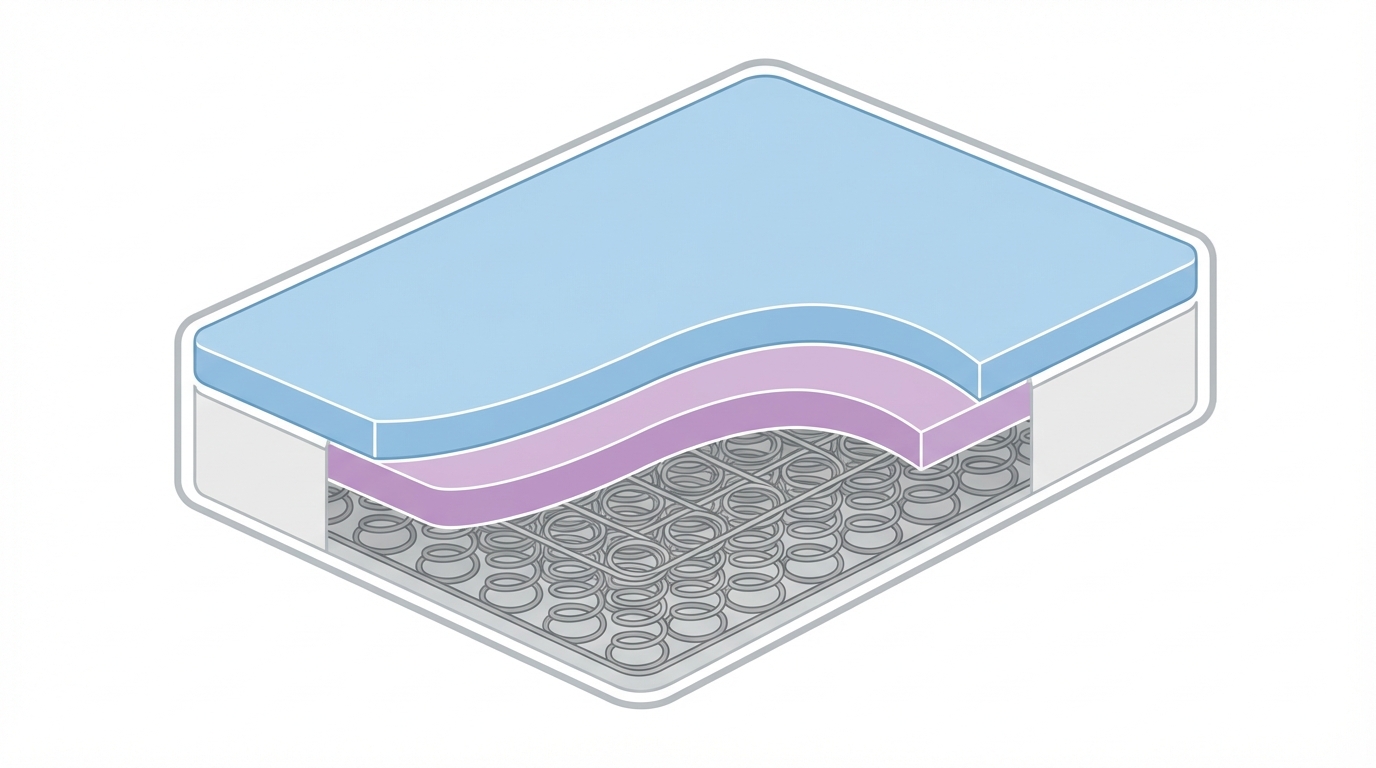
Understanding how a full mattress feels through the lens of sleep position and body type can save you from surprise discomfort later. Below is a comparison of how common mattress sizes stack up for solo sleepers and couples.
| Mattress Size | Width x Length (inches) | Best For | Space Per Person (couple) |
|---|---|---|---|
| Twin | 38 x 75 | Children, small rooms, bunk beds | Not intended for two |
| Full / Double | 54 x 75 | Solo adults, teens, compact guest rooms, some couples who cuddle | About 27 inches each |
| Queen | 60 x 80 | Most couples, taller solo sleepers | About 30 inches each |
| King | 76 x 80 | Couples who want maximum space, families with kids or pets | About 38 inches each |
For back sleepers, a full mattress is usually sufficient, especially if you sleep alone. Your body weight is spread relatively evenly, and you generally do not need as much width as a side sleeper. What matters more is having a mattress that keeps your spine in a neutral position, something many back sleepers find with medium firm options similar to those highlighted by the Sleep Foundation as helpful for back support. Sleepology’s best mattresses for back sleepers curated collection is a useful starting point if this is your primary position.
Side sleepers use more of the mattress width because their arms and legs often extend outward. On a full mattress, a single side sleeper usually has enough width to bend knees and shift positions freely. If you share a full mattress with a partner and you are both side sleepers, space gets tight much more quickly, especially if one or both of you uses multiple pillows.
Stomach sleepers generally benefit from a larger surface area to reduce the tendency to twist a leg or arm off the side of the bed. A solo stomach sleeper can manage on a full, but couples where one person sleeps on their stomach typically feel better on a queen or king to lessen spinal rotation and shoulder strain.
Finally, combination sleepers, who move between positions during the night, tend to be happiest with as much width as their room and budget comfortably allow. If you are a solo combination sleeper, a full is a good baseline. If you are a combination sleeper sharing the bed, it is usually worth sizing up if you can.
Mattress Depth, Bedding, And Accessories For Full Beds
Once you know your full mattress footprint, the next step is thinking through thickness, bedding fit, and comfort accessories. These details often determine how the bed feels daily, not just on paper.
How Thick Should A Full Mattress Be?
Full mattresses typically range from about 8 to 15 inches thick. Thinner designs are common in entry level beds, bunk bed setups, or trundle systems where clearance is limited. Thicker designs are more common in premium hybrid or pillow top models that layer foams and coils for better pressure relief and support.
Depth affects several practical things:
Bed height from the floor, which influences how easy it is to get in and out of bed. Many adults are comfortable with the top of the mattress around knee height. Sheet fit, since deep pocket sheets are often needed for mattresses 13 inches and thicker. Edge support feel, as thicker mattresses often have more robust edge structures.
The Sleep Foundation notes that mattress thickness is less important than build quality, but in practice, most adults find something in the 10 to 14 inch range feels substantial and supportive without being so tall that you feel perched too high above the floor. If you choose a thicker full mattress, pairing it with well fitted sheets like the Tempur-Pedic TEMPUR Adapt Luxe Egyptian Cotton Sheet Set helps prevent annoying corner pop ups at night.
Bedding And Accessory Sizing For Full Mattresses
Most sheet, protector, and comforter sets list “full” clearly on the packaging, often combined as “full/queen.” That dual labeling can be confusing. In general, full/queen flat sheets and comforters are sized to accommodate both, but fitted sheets must match the mattress size exactly. A fitted sheet labeled full is cut to grip a 54 by 75 inch surface, sometimes with enough stretch to work on a slightly wider queen, but the reverse is not always true. A queen fitted sheet will usually be too loose on a full mattress.
If you love layered bedding, accessories from Sleepology’s pillows, sheets, toppers, and protectors collection are available in full compatible sizes and fabrics designed for breathability and support. Adding a high quality pillow, such as The BodyPillow by Tempur-Pedic, can make a full bed feel more luxurious and supportive for side sleepers without needing to go up a mattress size.
For guest beds or temporary setups, a topper bundle like the Tempur-Pedic Mattress Topper – Pillow Travel and Guest Bundle turns a basic full mattress into something far more inviting. A topper does not change the size of the mattress, as organizations like the Sleep Foundation and Amerisleep both emphasize, but it can dramatically improve comfort for visitors.
When A Full Mattress Is The Right Choice And When To Size Up
There is no one “correct” mattress size for everyone. Instead, the goal is to match your current and near future lifestyle to the bed that gives you enough space without sacrificing room flow, budget, or sleep quality.
Situations Where A Full Mattress Shines
A full mattress is usually a great fit when:
You are a solo adult or teen and want more space than a twin without committing to queen costs. Your bedroom is around 10 by 10 feet or smaller, and you value open floor space. You are furnishing a guest room that also serves as an office or hobby room. You and your partner are smaller framed, sleep close together, and have a modest sized bedroom. You are moving frequently, such as during or right after college, and want a bed that is easier to transport.
In these scenarios, a well made full mattress can feel generous and practical. Many shoppers are surprised at how “right sized” a full feels once they lie down on it, especially if they are coming from an older, sagging bed that never truly supported them.
Signs You Should Consider A Queen Or King Instead
On the other hand, you will likely be happier sizing up from a full if:
You wake up with your arms or legs hanging off the side of your current bed. You are over about 6 feet tall and often feel like you have to curl your legs. You sleep with a partner, a child, or a medium to large dog on the bed regularly. You or your partner is a very active sleeper, and you wake each other up. Your bedroom can comfortably accommodate a queen or king frame with at least 2 feet of walking space on each accessible side.
Research from sleep labs consistently shows that fragmented sleep, where you wake up often, lowers overall sleep quality and can contribute to mood changes, difficulty concentrating, and even higher pain sensitivity. If lack of space on the mattress is part of why you wake up, upgrading the size can be as important as upgrading the mattress quality or materials.
For couples who frequently feel cramped on a full, exploring king sized mattresses can be eye opening. The additional personal width compared to both full and queen often translates into fewer nighttime collisions and more independent movement, which can be especially helpful if you keep different sleep schedules.
Simple Checklist: Are You A Good Match For A Full Mattress?

Before you commit, it can help to run through a short checklist. Answering honestly will give you a quick sense of whether a full mattress aligns with your needs right now.
You might be a strong match for a full mattress if:
- You usually sleep alone and plan to keep it that way for the next few years.
- You are under about 6 feet tall and do not feel cramped on a 75 inch long surface.
- Your bedroom is around 10 by 10 feet, and you prefer more open space or need a desk or dresser in the same room.
- You are furnishing a kid’s or teen’s room and want a bed that will grow with them.
- You are setting up a guest room that doubles as an office, and visitors will typically stay a few nights at a time.
- You are working within a specific budget and would rather invest more in mattress quality and bedding than in a larger size.
If you read that list and felt yourself nodding “yes” to most points, a full mattress is very likely a practical, comfortable choice for you. If several of those points do not match your reality, especially around height, partners, or pets, it is worth at least trying a queen or king in the showroom so you can compare how each size feels before deciding.
After you have walked through this checklist, it can also help to get a second opinion from someone who knows the nuances of mattress sizing, material feel, and room layout. A quick conversation with a Sleepology sleepologist can turn any remaining maybes into a confident yes or no.
Conclusion: Turning Mattress Measurements Into Better Sleep
The size of a full mattress is straightforward on paper, 54 inches wide by 75 inches long, but the decision to buy one is more personal. What really matters is how that footprint fits your body, your bedroom, and your lifestyle over the next several years. For solo adults, teens, and many guest rooms, a full mattress offers a comfortable sweet spot, plenty of width compared to a twin, and a more manageable presence in smaller spaces than a queen.
You have seen how a full compares to other sizes, how it performs for different sleep positions, and where it shines or falls short for couples. You have also explored how room dimensions, mattress depth, and accessories all influence the daily experience of sleeping on a full bed. When you pair the right size with the right comfort and support, you are stacking the odds in favor of deeper, higher quality sleep, something organizations like the Sleep Foundation and Mayo Clinic consistently tie to better overall health, mood, and daytime performance.
If you feel a full mattress aligns with your height, sleep style, and room, the next step is to test a few in person if possible. Pay attention to how secure you feel at the edges, whether your shoulders and hips are cushioned yet supported, and whether you can see yourself sleeping in that position all night. If you are still deciding between full and another size, a quick call to Sleepology at 877-631-8383 or a visit to the showroom can give you tailored feedback based on your exact room measurements and needs. You deserve a bed that fits you as well as your favorite pair of jeans, and getting the size right is the first step.
Frequently Asked Questions
How big is a full mattress compared to a queen in real terms?
A full mattress is 54 inches wide by 75 inches long, while a queen is 60 inches wide by 80 inches long. So a queen gives you 6 extra inches of width and 5 extra inches of length. When shared by two people, that is about 3 more inches of personal width for each person and additional legroom, which many couples find noticeably more comfortable. In a smaller bedroom, though, that extra footprint can make the room feel tighter, so it is important to weigh both comfort and layout.
Is a full mattress big enough for two adults to sleep on every night?
It can be, but it depends heavily on your body sizes, sleep positions, and how much you move at night. Two average sized adults sleeping closely, with minimal tossing and turning, can manage well on a full mattress, especially in a smaller room. However, if either of you sprawls out, sleeps hot, or if you share the bed with a pet or child, a queen or king size is usually more practical. Remember that on a full, each partner has about 27 inches of width, which is less than a typical office chair.
What is the minimum room size for a full mattress to feel comfortable?
A common guideline is that a full mattress fits well in a bedroom that is at least 10 by 10 feet, allowing for the bed, a couple of small pieces of furniture, and 2 to 3 feet of walking space on accessible sides. In a slightly smaller room, such as 9 by 10 feet, a full can still work, but you may need to be more intentional about furniture placement. Using painter’s tape to outline the bed on the floor is a simple way to see how it will affect traffic flow before you buy.
I am 6 feet tall. Will a full mattress be long enough for me?
At 6 feet tall, you are right on the edge of what typically feels comfortable on a 75 inch long mattress. You can make it work, especially if you sleep slightly diagonally or do not mind your feet being close to the edge. However, for long term comfort and proper spinal alignment, many people at that height or taller feel better on an 80 inch long mattress, such as a queen, king, or twin XL. If you already wake up with sore knees or lower back, giving yourself more length is a smart move.
Is there a difference between full and double mattress sizes?
No, in the United States, full and double refer to the same mattress size. Both are 54 inches wide by 75 inches long. The term “double” is an older name that reflected the idea of two people sharing the bed, while “full” has become more common in modern retail. When you shop for sheets, frames, or mattresses, you can treat full and double as interchangeable, just double checking the depth or height if that is listed separately.
Do I need deep pocket sheets for a full mattress?
You only need deep pocket sheets if your full mattress is on the thicker side, usually 13 inches or more, or if you use a bulky mattress topper. Standard pocket sheets are designed for mattresses in the 8 to 12 inch range. If your full mattress is taller, deep pocket fitted sheets help prevent corners from slipping off during the night. Always check both the mattress thickness and the fitted sheet’s pocket depth, and consider high quality sets like the Tempur-Pedic ProPerformance Sheet Set if you want moisture wicking performance and a secure fit.
Will a full mattress work on an adjustable bed base?
Yes, as long as the adjustable base is designed for a full size mattress, the footprint is the same, 54 by 75 inches. Many adjustable bases are available in full, queen, and king sizes, and they are built to support the same dimensions as standard bed frames. When pairing a full mattress with an adjustable base, confirm that the mattress is compatible with flexing, which most modern foam, hybrid, and many innerspring designs are. Sleepology’s adjustable bed frame and base collection includes options sized to fit full mattresses smoothly.