

What Is the Best Mattress To Buy? A Sleepologist’s Guide To Getting It Right The First Time
If you are asking yourself “what is the best mattress to buy,” there is a good chance you are tired of waking up sore, scrolling through endless brand names, and wondering who you can actually trust. It can feel like every website claims their mattress is “the best,” while real life looks more like stiff shoulders, a cranky lower back, and another expensive guess. If that is where you are right now, you are absolutely not alone.
Choosing a mattress matters more than most people realize. According to organizations like the Sleep Foundation, consistently good sleep is tied to your mood, immune system, heart health, and even weight regulation. When your mattress is wrong for your body, your sleep becomes lighter and more fragmented, which can aggravate pain conditions and daytime fatigue. A better mattress will not magically fix every health issue, but it can remove a major barrier between you and the kind of restorative sleep your body is begging for.
You are also making a long term, high ticket decision. Most quality mattresses are designed to last around 7 to 10 years, according to testing groups such as Consumer Reports and independent lab reviewers. That means you are not just buying something for next month, you are choosing the surface your body will spend thousands of hours on. Getting this choice right can mean years of better mornings. Getting it wrong can become a daily reminder of a rushed decision.
My goal here is to walk you through how to decide what the best mattress to buy means for you, step by step. You will see how sleep position, body type, pain patterns, and materials all fit together, how to read between the marketing lines, and how to narrow the field to a small set of smart choices. Along the way I will show you where specific Sleepology options make sense, so you can move from overwhelm to a short, realistic shopping list that matches your body and your budget.
There Is No Single “Best Mattress” – Only the Best Mattress For You
You have probably noticed that many big review sites name a single “Best Mattress of ” as if there were one magic bed that suits everyone. The reality is much more personal. In lab tests from organizations like Sleep Foundation and Mattress Nerd, the very same mattress often scores differently for side, back, and stomach sleepers, and for people in different weight ranges. That is not a flaw, it is simply how physics and anatomy work.
When you lie down, your body creates a unique pressure map. Side sleepers load more weight into the shoulders and hips. Back sleepers need steady support through the lumbar curve. Stomach sleepers fight gravity at the pelvis all night. A mattress that lets a 130 pound side sleeper sink enough to relieve shoulder pressure might feel like a hammock under a 230 pound back sleeper. According to research on spinal alignment and pressure distribution published in journals like Sleep Health, this alignment piece is critical for reducing pain and waking comfort.
So instead of asking “what is the best mattress to buy,” a more useful question is, “what is the best mattress for my body, my sleep position, and my priorities.” Once you shift your thinking that way, the whole shopping process becomes less about chasing brand names and more about matching a known profile to the right construction.
As a sleepologist, I start every mattress consultation the same way: I ignore logos and marketing names and focus on three practical pillars. Those are sleep position, body weight and shape, and primary pain or comfort complaints. Once we clarify those three, we can use firmness and material choices as tools to build exactly what your body is asking for, instead of trying to force you into one brand’s idea of “medium.”
“I had spent weeks reading ‘best of’ lists and felt more confused than when I started. Mia walked me through my body type and hip pain and immediately ruled out half the options I had been obsessing over. We ended up with a medium hybrid that cost less than my first choice and feels twice as good.” – Karen L., November
Step 1: Know Your Sleep Profile Before You Shop
Before we even name a mattress type, we need to map out how you actually sleep. This is where you get honest about the positions you truly wake up in, not just the one you prefer when you first lie down.
Sleeping Position and What It Demands From a Mattress
Most people fall into one dominant category: side, back, stomach, or combination. Each has its own “wish list” from a mattress.
Side sleepers tend to need more pressure relief. When you lie on your side, your shoulders and hips are the sharpest contact points. If the mattress is too firm or does not contour enough, those areas take a beating. Over time this can show up as numb arms, sore outer hips, or an achy shoulder that eases a bit once you get moving. Research summarized by the Sleep Foundation notes that softer to medium mattresses often serve side sleepers better because they allow that extra give at the major joints while still keeping the spine level.
Back sleepers need even support more than deep sink. Think of your spine as a gentle S curve from shoulders to hips. A mattress that is too soft under the pelvis lets that S turn into a sag, which can stress the small facet joints and discs in your lower back. On the other hand, a surface that is rock hard can force the lower back into an unnatural flattening. Good back sleeper mattresses typically fall in the medium to medium firm range, with enough cushioning up top to cradle the sacrum and shoulder blades without letting the hips plunge.
Stomach sleepers have the toughest job. Organizations like the Mayo Clinic note that this position is hardest on your spine to begin with, because gravity is constantly pulling your midsection down. If the mattress gives too much under your belly and hips, your lower back ends up bowed for hours. That is why most sleep experts, and my own 20 years of experience, point stomach sleepers toward firmer mattresses that hold the pelvis up, often with only a modest comfort layer on top.
Combination sleepers are the wild cards. You might start on your back, roll to your side, and sometimes wake on your stomach. For these bodies, we look for a balanced feel and good “responsiveness,” which is how quickly the materials adapt when you move. Hybrids with pocketed coils and a medium comfort feel are often ideal here, because they provide enough cushioning when you are on your side with enough support and bounce when you flip to your back.
Body Type, Weight, and How Firmness Really Feels
The second big piece is your body weight and shape. A 120 pound person and a 240 pound person lying on the same mattress are effectively using two different beds. Testing by groups like Sleep Foundation and NapLab shows that heavier sleepers compress foams more deeply and reach the support core more easily, which can make a bed feel softer than labeled. Lighter sleepers may only interact with the top few inches, so they perceive the same mattress as much firmer.
As a simple guideline:
- Under about 130 pounds, most people feel firmer than the label suggests. They often do best with soft to medium mattresses in their sleep position category.
- Between 130 and 230 pounds, the labeled firmness is usually close to reality, so you can follow typical side, back, or stomach sleeper advice more directly.
- Over about 230 pounds, many sleepers will compress softer comfort layers quickly and may feel more supported on medium firm to firm designs, ideally with robust coil systems or denser foams.
Body shape also matters. If you carry more weight in your hips, you will need a mattress that prevents that area from sinking too far relative to your shoulders and thighs. If you have broader shoulders and a leaner waist, you may want more give at the upper body with a bit more support under the lumbar region. This is where zoned support systems and hybrids with targeted coil firmness can really shine.
Taking a few minutes to write down your dominant position, your approximate weight range, and any areas that consistently hurt when you wake up will do more for you than reading ten “top ten” lists. This is the profile we will match to specific mattress types in the next sections.
“I always thought I needed the softest bed because I am a side sleeper, but I am also 6'3" and 245 pounds. Mia explained why I was bottoming out on softer foam. We shifted to a medium hybrid with stronger coils and the difference in my lower back within a week was unreal.” – James P., October
How Mattress Types Compare: Foam, Innerspring, Hybrid, and Latex

Once you know your sleep profile, the question becomes what kind of mattress construction best supports it. Most modern mattresses fall into four broad categories: all foam, innerspring, hybrid, and latex. Each category has strengths and trade offs, and understanding them will help you see why a certain model is being recommended for you.
All Foam Mattresses
All foam designs are built from stacked layers of polyurethane foam, memory foam, or advanced foams with added gels or phase change materials. Their biggest strength is pressure relief and motion isolation. If you press your hand into memory foam and feel that slow, hugging response, you are feeling the kind of contouring that can work very well for side sleepers or people with joint sensitivity.
Sleep Foundation and similar organizations consistently note that all foam models excel at preventing motion transfer. That is important if you share the bed with a restless partner. However, basic memory foams can trap heat, and very soft formulations can make it harder to change positions. Durability can also be more variable in lower density foams, which is why many independent testers and Consumer Reports emphasize checking foam density or choosing from brands with strong track records.
For lighter to average weight side sleepers who want that deep, nestled feel, an all foam mattress can still be a smart “best mattress to buy” choice, especially if it uses cooling features and robust base foams.
Innerspring Mattresses
Traditional innerspring mattresses use a core of steel coils with thinner layers of foam and fiber on top. They are what many of us grew up on and are still preferred by sleepers who like a firmer, more buoyant feel. Innersprings generally sleep cooler than solid foam because air can circulate freely between coils. They also tend to offer stronger edge support, which helps if you sit on the side of the bed often or if you want to use the full width of the mattress.
On the flip side, basic innersprings with thin comfort layers may not provide enough pressure relief for strict side sleepers or those with bony shoulders and hips. However, modern innerspring designs often add a Euro top or pillow top made with better quality foams. A good example in the Sleepology lineup is the Sealy Posturepedic Elite Medium Mattress – Brenham II Euro Pillow Top, which pairs a coil core with a cushioned top to soften contact points for back and side sleepers while keeping the spine well supported.
If you are a back or stomach sleeper, or a combination sleeper who dislikes the “in” the bed feeling, a supportive innerspring or Euro top design often sits near the top of the list.
Hybrid Mattresses
Hybrids aim to offer the best of both worlds, blending a coil support core with thicker comfort layers of memory foam, polyfoam, or latex. Many of the top rated beds in current testing from Sleep Foundation, Mattress Nerd, and NapLab fall into this category, precisely because hybrids can be tuned so effectively to different profiles.
The coils provide structure, airflow, and edge support. The comfort layers handle pressure relief and fine tuned contouring. Together they create a mattress that tends to suit a wide range of positions and body types. This is why, for example, you often see hybrid designs recommended in “best mattress for couples” or “best mattress for combination sleepers” lists.
At Sleepology, several of our most recommended models are hybrids, including the Sealy Posturepedic Plus Soft Hybrid Mattress – Paterson II for side sleepers who want generous cushioning, and the Sealy Posturepedic Elite Soft Hybrid Mattress – Brenham II for sleepers who want that mix of contour and support with a slightly plusher feel. For back sleepers who like more firmness with a cushioned top, the Sealy Posturepedic Plus Medium Mattress – Paterson II Euro Pillow Top is often a strong fit.
Latex and Latex Hybrid Mattresses
Latex is a foam derived from rubber tree sap that behaves differently from memory foam. It has a more buoyant, springy feel with quick responsiveness and great airflow. Latex is also naturally resistant to dust mites and mold, and high quality formulations tend to be quite durable. Studies looking at mattress materials and temperature regulation often note latex surfaces as among the cooler options.
Full latex mattresses or latex hybrids can work very well for people who want pressure relief without feeling stuck, for hot sleepers, and for those who value more natural materials. They do tend to cost more, and the feel is distinctive, so testing this type in person is especially helpful.
The key takeaway is that no single mattress type is universally “best.” The right type is the one whose structural strengths line up with your sleep profile. A petite side sleeper with tender shoulders will often be happiest in a hybrid or plush foam bed that emphasizes pressure relief. A heavier back sleeper with a hot body and low back sensitivity often lands in a firmer innerspring or medium firm hybrid that emphasizes support and cooling.
Matching Firmness to Your Body and Position: The Real “Secret Sauce”
Once you understand the broad types, firmness is the next major lever. Many people have heard terms like “soft,” “medium,” and “firm,” but those can be surprisingly vague between brands. Independent labs often use a 1 to 10 firmness scale, where 1 is ultra plush and 10 is rock hard. Most sleepers end up between 3 and 8 on that scale, but where you should land depends on everything we have already covered.
Typical Firmness Ranges by Position and Weight
Pulling from a mix of lab testing and clinical insights from organizations like the Cleveland Clinic, we can sketch some practical ranges:
- Side sleepers under 130 pounds often do best around 3 to 5 out of 10.
- Side sleepers between 130 and 230 pounds tend to land between 4 and 6.
- Side sleepers over 230 pounds often need 5 to 7 to prevent bottoming out.
- Back sleepers under 130 pounds often like 4 to 6.
- Back sleepers between 130 and 230 pounds often prefer 5 to 7.
- Back sleepers over 230 pounds usually need 6 to 8.
- Stomach sleepers across most weights do best from 6 to 8, sometimes higher for heavier bodies.
Combination sleepers usually thrive in the 5 to 7 zone, chosen based on their dominant position.
You can almost think of firmness as how far you let gravity pull you through the comfort layers before your body meets the real support system of the mattress. Too little give and you get sharp pressure. Too much and your spine sags.
Reading Your Body’s Feedback
The smartest way to refine firmness is to listen to specific morning symptoms.
If you wake with sore shoulders or outer hips that ease as you move around, your surface may be too firm or not contouring enough. If you wake with a stiff, pinched feeling directly in the lower back that improves quickly, you might also be drifting too soft and losing midsection support.
If you feel like you are fighting to roll over, or you constantly claw your way out of dips, you may be sinking too deeply by the end of the night. That is a common sign that you need a bit more firmness or a design with stronger underlying support, especially if you notice body impressions forming in the comfort layers.
At Sleepology, we often use existing beds as a calibration tool. If your current mattress is a very soft pillow top that has developed sagging and you are waking up with worse back pain, your “best mattress to buy” next is almost never another extra soft pillow top. We will usually be moving you up to a more supportive medium or medium firm with better quality comfort foams on top.
“I spent years thinking my mattress had to feel like a marshmallow to be comfortable. With Mia’s help I realized that my morning back and neck pain were actually from my hips sinking too far. We moved to a medium firm Euro top, and I still feel cushioned but my spine feels supported for the first time in a decade.” – Elena V., November
Choosing the Best Mattress for Pain Relief
Pain is one of the most common reasons people come to see me. Back pain, hip pain, shoulder pain, and arthritis all behave a little differently on different types of beds. While a mattress is not a medical treatment, there is good evidence that the right support and pressure relief can reduce mechanical stress and nighttime discomfort.
Lower Back Pain
Lower back pain is often aggravated by poor spinal alignment overnight. If your hips sink too far relative to your shoulders and feet, your lumbar spine is forced into extension for hours. If the mattress is too hard, you may not get enough cushioning for the natural curve, which can also irritate structures in the lower back.
Clinical guidance from groups like the American Academy of Sleep Medicine tends to converge on a medium firm feel for many people with chronic low back pain. One well known randomized trial found that participants with back pain reported better improvements with a medium firm mattress compared to a very firm one.
In practice, that often means a foam or hybrid mattress in the medium firm range, adjusted for weight. A model like the Sealy Posturepedic Elite Extra Firm Mattress – Brenham II can be a match for heavier back and stomach sleepers who need strong pelvic support and dislike too much surface give. For lighter back sleepers with back pain, a medium Euro top like the Brenham II Euro Pillow Top mentioned earlier can provide that sweet spot of support under a more forgiving surface.
Shoulder and Hip Pain
Shoulder and hip pain, especially in side sleepers, typically needs the opposite: more pressure relief at those joints while still holding the spine straight. Research summarized by the Sleep Foundation notes that side sleepers with arthritis or fibromyalgia often benefit from thicker, more conforming comfort layers.
If you are a side sleeper with chronic shoulder or hip symptoms, your best mattress is usually in the soft to medium range with high quality foam or hybrid construction. The comfort layers need enough depth to allow the shoulder and hip to sink in without your whole body slumping. That often points us toward plush hybrids like the Sealy Posturepedic Pro Soft Mattress – Dupont II Euro Pillow Top or a dedicated side sleeper collection such as Sleepology’s Best Side Sleeper Mattress Collection.
Arthritis and Generalized Joint Pain
When multiple joints hurt, small improvements in pressure distribution can add up. All foam and softer hybrids tend to be favored here, provided you are not a strict stomach sleeper. Dense, more elastic foams can “float” you a bit more evenly, so no single point bears the brunt of your body weight.
For arthritic sleepers, I also pay close attention to ease of movement. If a mattress is so soft that it is hard to change positions, that extra effort can aggravate already sensitive joints. In those situations, a responsive hybrid with a generous but not bottomless comfort surface can be a nice compromise.
If you have an inflammatory or autoimmune condition, it is also worth discussing your sleep with your rheumatologist or primary care provider. A mattress is one piece in a larger management plan, not a replacement for medical care.
Cooling, Motion Isolation, and Edge Support: Fine Tuning Comfort
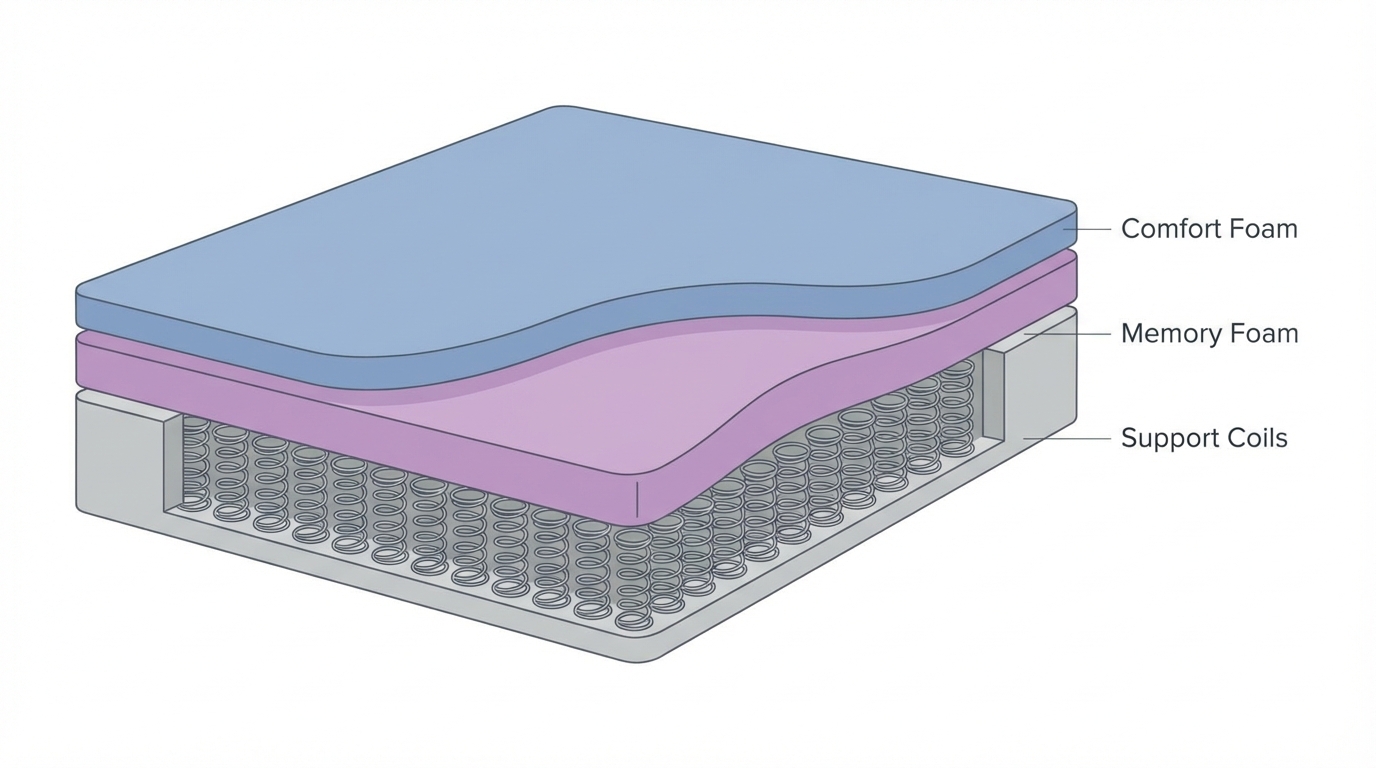
Once you have the right core match for position, weight, and pain, secondary features like cooling, motion isolation, and edge support become your tie breakers. These factors can make or break your long term satisfaction.
Cooling and Temperature Regulation
If you run hot or are in a life stage where hot flashes are common, temperature regulation jumps to the top of the list. Traditional memory foam has a reputation for trapping heat because it is dense and hugs the body closely, reducing airflow. In contrast, coil systems and latex allow more air circulation.
Many modern manufacturers address this by infusing foams with gel or copper, using open cell structures, or adding phase change materials to the cover. Independent tests from groups like Sleep Foundation and NapLab often show hybrid mattresses with coil support cores performing better than solid foam for overall temperature control, especially in medium to firm designs where you do not sink as deeply.
If cooling is a major concern for you, I generally recommend focusing on:
- Hybrid or innerspring cores for baseline airflow.
- Thinner or more responsive comfort layers that do not swallow you.
- Covers described as breathable or cool to the touch, ideally backed by third party testing rather than just marketing.
Motion Isolation for Couples
When you share a bed, motion transfer becomes much more noticeable. All foam mattresses generally shine here. The same hugging effect that contours to your shoulder also dampens your partner’s tossing and turning. Pocketed coil hybrids come next, because each spring is individually wrapped and can move somewhat independently.
Traditional open coil innersprings, where the springs are tied together, tend to be bouncier and more likely to ripple movement across the surface. That can be fine if both partners sleep deeply and enjoy that feel, but for a light sleeper with a restless partner, it can be a problem.
If you often wake when your partner moves, prioritize foam or hybrid models that reviewers consistently praise for motion isolation. Sleepology’s hybrid range, including models like the Paterson II and Brenham II, are engineered with pocketed coil systems specifically to reduce transfer while still preserving support and some bounce.
Edge Support and Ease of Getting Up
Edge support is simply how solid the perimeter of the mattress feels when you sit or lie near the side. If you feel like you are sliding off or if the edge visibly collapses when you sit to put your socks on, that is a sign of weaker edge reinforcement.
Strong edges matter for several reasons. They give you more usable surface area, which can make a queen feel roomier. They also help people with mobility challenges get in and out of bed more safely, because the edge does not suddenly collapse underneath them.
In general, coils do better here than all foam, especially when manufacturers use heavier gauge springs around the border. Among foam beds, high density base foams and specific edge reinforcement designs can help. When we work with older clients or anyone with balance concerns, I often steer them toward collections like Sleepology’s Best Mattresses for Back Sleepers or Best Mattresses for Stomach Sleepers, which tend to feature firmer surfaces and better edge structures that add confidence when standing up.
A Simple Comparison Table: Which Mattress Type Fits Which Need?
To pull together much of what we have covered, here is a quick side by side look at the main mattress types and how they typically perform on key attributes. Remember that specific models can vary, but these are useful starting tendencies.
| Mattress Type | Best For | Watch Outs | Typical Price Range |
|---|---|---|---|
| All Foam | Pressure relief, motion isolation, side sleepers under or around average weight | Heat retention, edge softness, can feel hard to move on if very soft | Low to mid, depending on foam quality |
| Innerspring | Back and stomach sleepers, hot sleepers, people who like a bouncy, traditional feel | Less pressure relief for strict side sleepers unless paired with a good Euro or pillow top | Mid to high, wide range |
| Hybrid (Coil + Foam) | Couples, combination sleepers, many sleepers with back pain, those wanting balance of contour and support | Slightly higher weight, some models can be more expensive | Mid to high |
| Latex / Latex Hybrid | Hot sleepers, eco conscious buyers, combo sleepers who dislike “stuck” feeling | Distinctive feel not loved by everyone, higher upfront cost | Mid to high |
Use this as a quick check against your profile. For example, if you are a hot sleeper with back pain who sleeps with a partner and moves a lot, a hybrid sits squarely in the sweet spot. If you are a single, petite side sleeper with hip pain who loves to feel cradled, a high quality plush foam or plush hybrid is more likely to be your best purchase.
Budget, Value, and When to Spend (or Save)
Mattresses carry a wide range of prices, and it is reasonable to ask how much you really need to spend to get something that is genuinely good for your body. Independent consumer organizations and mattress testing labs regularly find that you do not have to chase the very top of the price spectrum to get an excellent mattress. However, ultra cheap models often cut corners in ways you feel within a year or two.
What Affects Price?
Several factors influence where a mattress falls on the price ladder:
- Material quality and density, especially in foams.
- Coil count and steel gauge in innersprings and hybrids.
- Use of specialty materials like natural latex, organic cotton, or advanced cooling fabrics.
- Country of manufacture and certifications.
Higher density foams and robust coil systems cost more to make, but they also tend to provide better support for longer. That is why many testing organizations, including Consumer Reports, suggest treating very low priced queen mattresses with caution if you plan to sleep on them every night.
On the other hand, there is a point where you are paying more for brand marketing or cosmetic extras than for meaningful structural improvements. As a rule of thumb, many shoppers can find an excellent queen mattress in the mid price range, then choose to step up into higher tiers for specific benefits like natural materials or ultra long warranties.
Spend Where It Matters
I encourage clients to think of value over the entire lifespan, not just the purchase price. If a slightly more expensive mattress gives you significantly better sleep and lasts two or three years longer before sagging, it can easily be the better value. Divide the price by the number of nights you realistically expect to use the bed. Even a 2,000 dollar mattress used for 9 years ends up costing around 60 cents per night.
Where you can often save without sacrifice is in accessories. A massive stack of fancy pillows or an elaborate adjustable base is not necessary for everyone. In many cases, a supportive, well matched mattress plus a couple of thoughtfully chosen pillows from a curated collection like Sleepology’s Pillows, Sheets, Toppers, Protectors will give you everything you need.
If your budget is tight, focus first on getting a mattress with sound core support, even if you choose a simpler fabric or fewer cooling bells and whistles. We can often use a breathable protector and appropriate bedding to fine tune comfort without overspending on the mattress itself.
How to Test a Mattress So You Do Not Regret It Later
Once your options are narrowed, how you test your shortlist matters. Lying on a mattress for thirty seconds in a store or glancing at it in a box on your doorstep is not enough to tell you how your body will feel at 3 a.m. after a long day.
In Store: Replicate Real Sleep
When you visit a store, give yourself permission to really use the bed, not just perch on the edge. Lie down in your usual sleep position for at least 5 to 10 minutes. Pay attention to:
- How your lower back feels as you settle, especially if you are a back or stomach sleeper.
- Whether your shoulders or hips feel compressed or jammed if you are a side sleeper.
- Whether the mattress pushes you to roll off a pressure point or lets you relax into the position.
Notice how easy it is to roll from your back to your side and back again. A bed that feels heavenly when you first lie down but makes you work to move may become frustrating over the course of the night.
If you sleep with a partner, both of you should test the bed together. Have one person roll or get in and out of bed while the other notices how much movement they feel.
At Home: Use the Trial Period Intentionally
Many modern mattresses, including those in the Sleepology range, come with in home trial periods that let you sleep on the bed for several weeks or months with the option to return. This is an incredible opportunity, but only if you treat it as a real test, not a formality.
For at least the first two weeks:
- Sleep on the new mattress every night, unless pain is severe.
- Use the same pillows you plan to keep long term.
- Make notes in the morning about any pain, stiffness, or sleep disturbance.
Most bodies do go through an adjustment period when switching surfaces, especially if you are moving from very sagging or very hard to something more supportive. However, by the end of the first few weeks you should start to see a trend toward better mornings, not worse.
If you are not, that is the time to talk with a sleep expert, not six months in when your trial is over. At Sleepology, for example, we use your feedback to diagnose whether you simply need a different firmness level within the same line or a different type of construction altogether.
Putting It All Together: Your Personal “Best Mattress To Buy” Checklist
By now, you have seen why there is no single best mattress, only a best choice for your body and life. To make this practical, here is the simple decision chain I walk through with clients:
- Clarify your dominant sleep position and honest wake up positions.
- Note your weight range and where you carry most of your weight.
- Identify your main complaints: back pain, hip or shoulder pain, overheating, partner disturbance, difficulty moving, or edge collapse.
- Use that profile to choose a general mattress category:
- Choose a firmness range using the guidelines we discussed.
- Filter your choices within that category by your budget, prioritizing core support and tested performance over flashy marketing.
- Test your top candidates with your body, not just your eyes, and use trial periods with intention.
If you are a side sleeper in the 150 to 180 pound range with hip pain and a partner who moves a lot, your checklist might point you toward a soft hybrid from Sleepology’s Best Side Sleeper Mattress Collection, with strong motion isolation and generous comfort layers. If you are a 210 pound back sleeper who wakes hot and stiff, your best mattress may look more like a medium firm Euro top innerspring such as the Sealy Posturepedic Elite Medium Mattress – Brenham II Euro Pillow Top, which provides firm underlying support with enough cushioning to ease your sacrum and shoulders.
The point is not to memorize product names. It is to recognize your pattern and let that steer you to two or three truly aligned options instead of fifty equally confusing ones.
Conclusion: Your Best Mattress Is the One That Lets Your Body Exhale
Finding the best mattress to buy is not about chasing a brand of the year or copying a reviewer’s personal favorite. It is about understanding what your body is asking for and choosing a design that delivers that support and comfort night after night. When you do that, something subtle but powerful changes in your life. You stop waking up negotiating with your own bed and start using sleep as the recovery tool it is meant to be.
The science backs this up. Trusted sleep organizations remind us that quality, uninterrupted sleep supports everything from immune function and mood to blood pressure and pain thresholds. A well matched mattress is not a luxury in that equation, it is a piece of health equipment that just happens to be soft.
If you are feeling overwhelmed, remember that you do not have to solve this alone. Start with your sleep profile, use the frameworks here to narrow your choices, and then lean on an experienced guide if you want a second set of eyes. At Sleepology, my role is to translate your real world experience into the right product, not to fit you into a prewritten script.
You deserve to lie down at night on a surface that lets your muscles release, your joints decompress, and your nervous system settle. When you stand up in the morning and your first thought is not about your bed, that is when you quietly know you chose the best mattress to buy for you.
Frequently Asked Questions
How do I know if my current mattress is the problem or if it is just my back?
It is a fair concern, especially if you already have a history of back or joint issues. While only a healthcare provider can evaluate underlying conditions, you can look for clear mattress related patterns. If your pain is consistently worse first thing in the morning and improves as you move around, and if you notice more discomfort after nights on your own bed compared to nights on a different bed (for example, at a hotel), your mattress is very likely contributing. Visible sagging, lumps, or a sense that you are rolling toward the center are strong signs that support has broken down. Consumer testing groups often estimate average mattress life around 7 to 10 years, but heavier use or lower quality materials can shorten that. If your mattress is older, shows body impressions over an inch deep, or leaves you feeling less rested than other beds, it is reasonable to focus on replacing it.
Is a firm mattress always best for back pain?
No. This is one of the most common myths I see. Earlier thinking pushed very firm mattresses for back pain, but more recent research has shifted toward medium firm for many people. Studies summarized by organizations like Sleep Foundation suggest that overly hard surfaces can create new pressure points and prevent your spine from resting in its natural curve. The best firmness for back pain depends on your weight, sleep position, and where exactly your pain sits. A lighter person with upper back and neck tension may feel better on a slightly softer mattress that allows the shoulder area to sink and align the cervical spine. A heavier person with lower back pain often needs more firmness under the hips, sometimes with a cushioned top layer. The key is balanced support, not maximum hardness.
Are hybrid mattresses really better than foam or innerspring?
“Better” depends on what you need. Hybrids have become popular because they blend the strengths of foam and coils, often landing in a versatile middle ground. Coil cores add structure, airflow, and edge support. Foam or latex comfort layers improve pressure relief and motion isolation. This combination tends to work well for couples, combination sleepers, and many people with back pain. That said, a thoughtfully built foam mattress can still be the best choice for a petite side sleeper who wants maximal contouring and low motion transfer. A high quality innerspring can be ideal for a hot, heavier back sleeper who craves firmness and bounce. Rather than assuming hybrids are automatically superior, use them as a strong option when your needs call for both contour and support together.
How much should I spend on a good quality mattress?
For most shoppers, a realistic range for a quality queen mattress is the mid price band rather than the very low or very high extremes. Independent reviewers and consumer organizations often find that many excellent mattresses cluster here. If you go far below that range, you are more likely to see thinner comfort layers, lower density foams, or weaker coil systems that break down faster. At the very high end, you may pay more for brand prestige and niche materials than for meaningful improvements in your sleep experience. I suggest deciding what you can comfortably invest over the next 7 to 10 years, then focusing first on construction quality and support for your profile. If questions come up, a Sleepology specialist can help you compare the real differences between options at different price points.
What is the best mattress for a couple with very different sleep preferences?
This is where nuanced design really matters. When two people share a bed and differ in weight, position, or firmness preference, I usually start with a medium feel hybrid that has good motion isolation and strong edge support. Pocketed coils allow localized support, while layered foams can cushion sharper contact points. In some cases, one partner might add a thin topper on their side to customize feel further. If one of you is much lighter and strictly side sleeps, and the other is heavier and sleeps more on the back or stomach, we may adjust toward medium soft for the top but ensure a robust support system underneath. The goal is not to find a mattress that is perfect for only one of you, but one that meets both of you in a comfortable middle.
Do I need a pillow top to be comfortable?
Not necessarily. Pillow tops and Euro tops are one way to add extra cushioning above the support core, and when they use high quality foams they can feel wonderful, especially for side sleepers and those with hip or shoulder sensitivity. However, you can achieve a similar comfort level with a well designed non pillow top mattress that has generous comfort layers built into the body of the bed. Some sleepers, especially those who prefer a more neutral surface that does not feel too pillowy, are happier without an added top. What matters most is the total amount and quality of cushioning relative to your body and sleep position, not the marketing label. In fact, some pillow tops built with low density materials can compress prematurely, so it is always worth looking at construction details, not just the name.
Will a topper fix a bad mattress, or do I really need a new one?
A topper can be a smart, temporary tool if your mattress is still structurally sound but feels slightly too firm or lacks a bit of pressure relief. Adding two or three inches of quality foam or latex on top can soften the feel and extend usability for a while. However, if your mattress has deep sags, broken coils, or very uneven support, a topper will mostly mirror those flaws. It cannot rebuild a failing core. If you are sinking toward the middle regardless of position, or if your back feels worse despite experimenting with toppers and pillows, that is usually your mattress telling you it is time for a full replacement. In that case, it is kinder to your body and more cost effective in the long run to invest in a well matched new bed.