

What Is The Best Mattress For You In ? A Sleepologist’s Guide To Getting This Decision Right
If you are searching for “what is the best mattress,” chances are you are not sleeping the way you want to. Maybe you wake up with a stiff lower back, a sore shoulder, or that dull, foggy feeling that follows a restless night. Perhaps you bought a trendy bed-in-a-box a few years ago and it just is not holding up, or you have had the same mattress for over a decade and you can feel every coil. Wherever you are starting from, it is completely normal to feel overwhelmed. Mattresses are a big purchase, and there is a lot of conflicting advice.
There is also a lot at stake. According to organizations like the Sleep Foundation and the American Academy of Sleep Medicine, most adults need 7 to 9 hours of quality sleep a night, and poor mattress support can increase nighttime awakenings, aggravate back and joint pain, and reduce overall sleep efficiency. When your mattress is wrong for you, you do not just feel it in your body when you first get up. You feel it in your mood, your focus, and your energy for the rest of the day.
After twenty years helping people in mattress showrooms and coaching them through sleep issues, I can tell you that there is no single “best mattress” for everyone. What does exist is a best mattress for your body, your sleep style, and your life right now. That is what really matters. Once you understand a few key principles, you can cut through the marketing noise and quickly spot which beds will actually work for you.
Here, you will learn how to translate your sleep position, body type, and pain patterns into concrete mattress features like firmness, construction, and support. You will see how different mattress types compare in the real world, where you might want to invest a bit more, and where you can save. Along the way, I will point to specific Sleepology mattresses that fit the profiles we talk about, so you can move from theory to real choices without guesswork.
There Is No One “Best Mattress” And Why That Is Good News
When people ask me “what is the best mattress,” they are usually hoping for a single model name so they can be done with the search. Unfortunately, that is also how a lot of big review sites frame their content. The truth is, the “best” mattress for a 120 pound side sleeper with hip pain is very different from the best mattress for a 230 pound stomach sleeper who runs hot. Trying to crown one winner sets shoppers up for disappointment.
The good news is that once you stop chasing a mythical universal best, you can focus on finding your personal best match. Large sleep organizations and consumer testing groups like Sleep Foundation and Consumer Reports consistently find that comfort and satisfaction vary dramatically by sleeper type, even when mattresses score similarly in lab performance. What really predicts whether people love a mattress one year later is how well it matches their sleeping position, body weight, and support needs, not the logo on the label.
Another reason there is no single best mattress is that bodies and lives change. A mattress that worked for you in your twenties may not be ideal if you are working at a desk all day in your forties and managing low back tightness. Pregnancy, weight changes, injuries, and aging joints all shift where you need pressure relief and where you need extra reinforcement. So, the right question is not “what is the best mattress, period,” but “what is the best mattress for my body and my reality right now.”
As you read the rest of this guide, treat general “best of” rankings you see elsewhere as starting points, not final answers. Use them to identify strong, well built mattresses, then apply the fit framework we are about to cover. This is where expertise really pays off. When you can walk into a store like Sleepology knowing “I am a medium firm hybrid person with extra lumbar support,” you will feel much more confident and in control.
“I had read so many ‘best mattress’ lists that I was more confused than when I started. Talking through my sleep style with a Sleepology associate and using Mia’s firmness guidance, I ended up with a medium hybrid that actually fits me. Three months in, my husband and I both sleep better and we spent about $600 less than I was expecting.” – Sarah L., November
Step One: Turn “What Is The Best Mattress” Into “What Do I Need From A Mattress?”
Before you look at brands or price tags, you need clarity on what your body is asking for. Medical groups like Mayo Clinic and Cleveland Clinic regularly emphasize spinal alignment, pressure relief, and temperature control as the main ways a mattress affects sleep. We can turn those concepts into simple questions that guide your choice.
Start with alignment. When you lie down, your spine should rest in as close to a neutral position as possible, similar to how it looks when you stand with good posture. If your hips sink too far, your lower back arches and the muscles spasm to protect the joints. If the mattress is too hard, your spine may stay straight but your shoulders or hips take more impact than they can comfortably handle. Alignment is mostly about firmness and support.
Pressure relief comes next. This is the cushion between your body and the support core. Side sleepers need more pressure relief at the shoulders and hips than back or stomach sleepers, simply because there is more weight concentrated on smaller areas. People with arthritis, fibromyalgia, or old injuries usually need a little more “give” from the mattress so joints can settle without screaming.
Finally, there is temperature and movement. If you are a hot sleeper, all foam beds can sometimes trap heat around the body, although newer foams and hybrid designs have improved this. If you share a bed with a partner who tosses and turns, motion isolation matters so you are not waking up every time they move. Sleep research suggests that micro awakenings from partner movement can significantly reduce deep sleep, even if you do not remember them in the morning.
If you write down your answers to three questions, you already have your personal brief: 1) What position do I sleep in most of the night, 2) Where do I tend to hurt or feel sore, and 3) Do I sleep hot or share my bed. Keep those notes handy as we move into specifics.
How Mattress Types Really Compare

Choosing a mattress type is one of the biggest levers in getting the right feel. Scientific reviews of mattress construction show that different materials distribute pressure and support the spine in distinct ways, even when they have similar firmness labels. Here is how the main types stack up in real life.
All Foam Mattresses
All foam mattresses, usually memory foam or high density polyfoam, are known for that “hugged” feeling. They excel at pressure relief and motion isolation. If you press your hand into memory foam and it slowly fills back in, that is the contouring many side sleepers and people with joint pain find soothing. Sleep Foundation and several clinical studies have found that medium and medium firm foam mattresses can improve sleep comfort and reduce pain for many chronic back pain sufferers compared to very hard, bouncy innerspring surfaces.
The downside is that foam carries heat less efficiently than coils. Many modern foams incorporate gel infusions, open cell designs, or phase change materials to pull heat away, and they can work quite well, but if you are an exceptionally hot sleeper or live in a warm climate, you may still prefer a hybrid or innerspring feel. Foam beds also have a different kind of support curve. They hold you up, but with more sink. Some people love that deep cradled feel, while others feel a bit stuck when changing positions.
If you gravitate toward the idea of a foam feel but want trusted support under your spine, look at well built, durable models with multiple foam layers rather than a single thick slab of soft memory foam. Within the Sleepology lineup, some of our plush Euro top innerspring beds, like the Sealy Posturepedic Elite Soft Mattress – Albany II Euro Pillow Top, give you much of that contouring at the surface but keep you better lifted on a strong coil core.
Innerspring Mattresses
Innerspring mattresses use steel coils as the primary support system, topped by thinner comfort layers of foam or fiber. This is probably the kind of mattress you grew up on. They are naturally breathable, responsive, and easy to move around on. If you like to feel more “on” the bed than “in” it, innersprings often feel familiar and reassuring.
Traditional innersprings used connected coils that transferred motion all across the bed. Modern versions typically use individually wrapped pocketed coils, which help with motion isolation and allow for zoning. Zoning means firmer coils in the center third of the mattress to support your hips and lower back, and softer coils under the shoulders and legs. Studies of spinal alignment on different mattress constructions have found zoned support particularly helpful for maintaining a neutral curve in the lumbar region.
Innersprings can be a beautiful option for back and stomach sleepers, and for heavier individuals who need solid pushback from below. However, if the comfort layers are too thin or too firm, side sleepers can feel like their shoulders are digging into the bed. In that case, look for innersprings with a plusher Euro top or pillow top surface, like the Sealy Posturepedic Elite Medium Mattress – Brenham II Euro Pillow Top, which balances a responsive coil core with a more forgiving upper layer.
Hybrid Mattresses
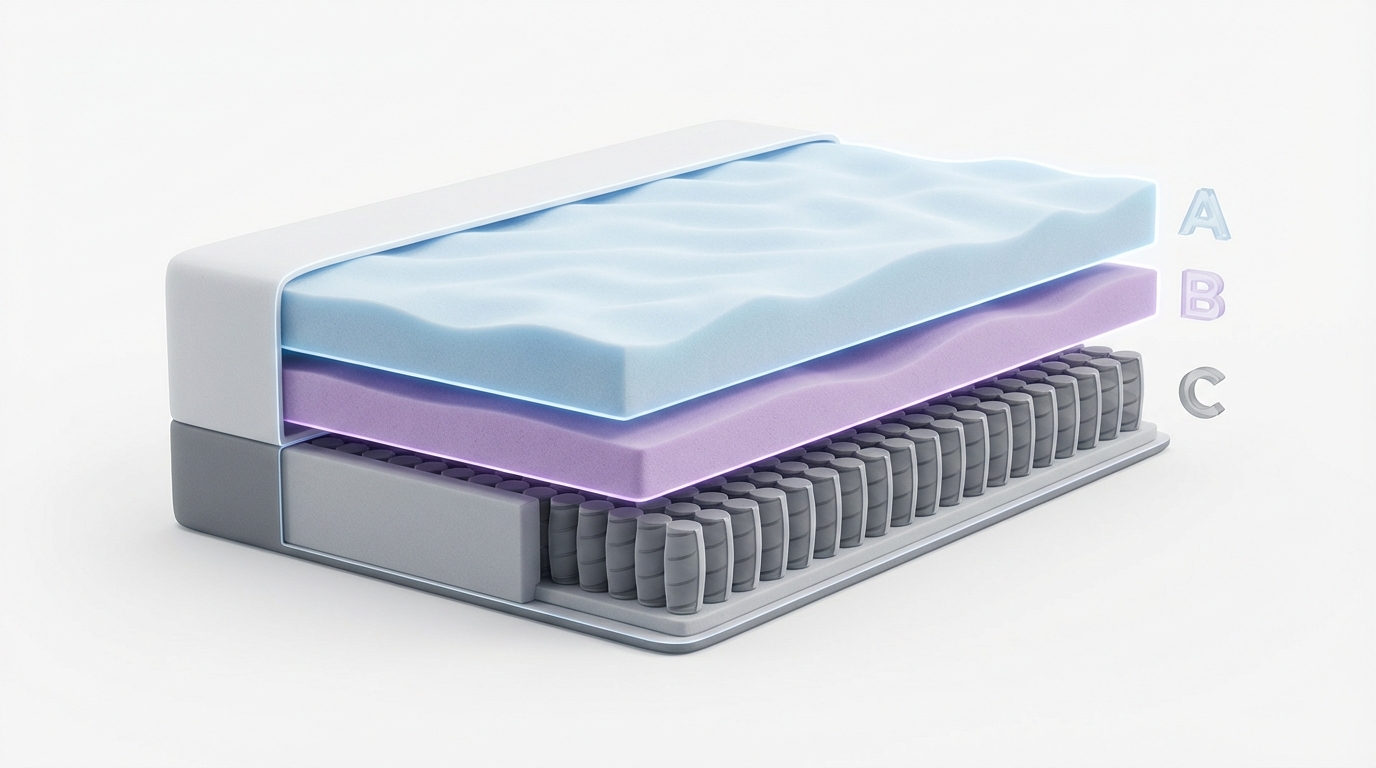
Hybrids combine a coil support core with thicker foam or latex comfort layers on top. In , hybrids continue to be a sweet spot for many sleepers because they blend the pressure relief and motion isolation of foam with the airflow and structure of coils. Think of them as the “both and” category rather than a compromise.
From a testing standpoint, hybrids tend to perform well across diverse sleeper types. Consumer organizations consistently find that medium firm hybrids earn high satisfaction marks from both side and back sleepers in the 130 to 230 pound range. The coils carry your skeletal support, while the comfort layers fine tune how your weight is distributed across the surface. For many of my clients, a good hybrid is the answer when couples have different needs, or when someone wants foam comfort but has struggled with overheating.
Sleepology carries several hybrids that illustrate this range. If you want a softer, enveloping feel with deep pressure relief, especially as a side sleeper, the Sealy Posturepedic Plus Soft Hybrid Mattress – Paterson II delivers generous cushioning without sacrificing core support. If you want that hybrid balance but a truly plush surface, the Sealy Posturepedic Elite Soft Hybrid Mattress – Brenham II leans into contouring comfort while keeping you aligned.
Latex And Other Options
Latex mattresses, whether all latex or latex hybrid, are known for being buoyant, naturally breathable, and durable. They tend to sleep cooler than memory foam and resist deep body impressions. Academic research on mattress durability frequently notes latex as one of the longest lasting comfort materials. If you want gentle contouring but hate the slow sinking of memory foam, latex can feel like a responsive, supportive alternative.
There are also adjustable air beds, which let you fine tune firmness using air chambers, and specialty foams that use proprietary grid or gel structures. These can be helpful for highly specific needs or when partners have very different firmness preferences, but they are not necessary for most shoppers and often come at a significant price premium.
“Mia helped me understand that I loved the idea of memory foam, but my body needed more support. She walked me through hybrids and steered me toward a Sealy Posturepedic model with coils and a plush top instead of an all foam bed. My shoulder pain went away in a week, and I am not fighting the mattress when I roll over anymore.” – James R., October
Matching Firmness To Your Sleeping Position And Body Type
Once you have a feel for type, firmness is the next big piece of the puzzle. Research reviews, including those referenced by the Sleep Foundation, generally point to medium firm mattresses as performing well for a broad range of adults, especially for long term back comfort. But “medium firm” on a chart and what your body feels do not always line up, especially at different weights. Let us break this down in a way you can actually use.
Firmness Basics By Sleep Position
On the common 1 to 10 scale, with 1 being ultra soft and 10 being extra firm, most quality mattresses for adults fall between 3 and 9. These ranges tend to fit positions as follows:
Side sleepers usually do best between about 4 and 6. They need enough cushioning for their shoulders and hips to sink in a bit so the spine stays straight from neck to tailbone. Too firm and you get sharp pressure at the joints. Too soft and the midsection sags, causing a banana shape through the spine.
Back sleepers typically land between 5 and 7. They need a surface that fills in the natural curve of the lower back while keeping the hips from dropping. Both very soft and very hard mattresses can provoke back discomfort here. Clinical trials comparing “very firm” to “medium firm” beds for chronic low back pain tend to show better symptom improvement with medium firm options.
Stomach sleepers usually need the firmest beds, from about 6 to 8 or even 9 for heavier individuals. The key is keeping the pelvis from rolling toward the mattress, which strains the lower back. This is the most mechanically stressful position for the spine, and I often encourage stomach sleepers to gradually train toward side or back if possible, but if this is your reality today, you want a truly supportive surface.
Combination sleepers who change positions during the night benefit from a responsive mattress that does not fight movement, usually in the 5 to 7 range. Hybrids and latex hybrids often shine here because they bounce back quickly when you shift.
Sleepology has curated collections by sleep position to make this easier. For example, if you are primarily a side sleeper, browsing the Best Side Sleeper Mattress Collection lets you focus on beds with that slightly softer, pressure relieving feel you are likely to enjoy. Back sleepers can shortcut to the Best Mattresses For Back Sleepers, and stomach sleepers to the Best Mattresses For Stomach Sleepers.
How Body Weight Changes Firmness Feel
Your body weight changes how far you sink into a mattress. A medium firm bed that feels pleasantly supportive to a 190 pound sleeper may feel quite firm to someone who weighs 120 pounds because they do not compress the comfort layers as much. Conversely, a medium soft mattress that feels plush to a petite person can feel unsupportive and saggy to someone over 230 pounds.
Here is a simple way to recalibrate firmness recommendations based on weight:
- Under about 130 pounds, you can usually shift one step softer than generic advice suggests. So if charts say “medium firm” for back sleepers, you might be happier in a medium.
- Between 130 and 230 pounds, general firmness ranges for your sleep position are a good starting point.
- Over about 230 pounds, you often want to shift one step firmer than the generic recommendation and favor hybrids or innersprings with robust coil systems, since these maintain support better and reduce sagging risk.
Clinical and consumer research supports this nuance. Heavier sleepers in testing labs often report better long term comfort and fewer impressions on mattresses with thicker, firmer support cores and slightly firmer feels, while smaller framed sleepers tend to prefer a bit more contouring from the top layers for the same perceived comfort.
“I always bought soft mattresses because I thought my back liked them, but Mia explained how my 6'2", 250 pound frame was actually bowing through the middle. She put me on a firmer Sealy Posturepedic Elite Extra Firm and for the first time I could feel my whole spine supported from shoulders to hips. It feels firm at first touch but my body is so much happier.” – Andre M., December
A Practical Comparison: Foam, Hybrid, And Innerspring At A Glance
Sometimes it helps to see things side by side. The table below compares three common mattress constructions across a few attributes that matter most for shoppers. Use it as a quick reference as you weigh your options.
| Mattress Type | Best For | Potential Drawbacks | Typical Price Range (Queen, non budget) |
|---|---|---|---|
| All Foam (Memory / Polyfoam) | Couples needing strong motion isolation, lighter to average weight side sleepers, people who like a “hugged” feel | Can sleep warmer than coils if not well designed, some people feel “stuck,” mid to lower durability if low density foams | Mid to mid high, many promotional deals |
| Hybrid (Coils + Foam or Latex) | Most sleeper types, hot sleepers, couples balancing different needs, people wanting both contouring and support | Slightly higher price than basic foam or innerspring, heavier to move | Mid high to high, good value when built well |
| Innerspring (Pocketed Coils + Thinner Comfort Layers) | Back and stomach sleepers, heavier bodies, people who like bounce and breathability | Less pressure relief on shoulders and hips if comfort layers are thin, more motion transfer if coils are not individually wrapped | Wide range from budget to luxury |
Once you know where you sit in that landscape, it becomes much easier to identify which specific models at your budget level deserve a test lie down.
How Pain, Aches, And Medical Conditions Influence “Best Mattress”
If you are dealing with pain, your mattress choice can be a powerful daily lever to reduce strain or, sadly, to aggravate it. To be clear, a mattress is not a medical treatment on its own, and any new or worsening pain should be discussed with a health professional. That said, aligning your mattress with your body can absolutely make daily life easier.
According to the Sleep Foundation and clinical guidelines referenced by hospitals like the Cleveland Clinic, chronic low back pain often improves with medium firm mattresses compared to very firm ones, likely because they better balance spinal alignment and pressure distribution. Too hard, and the lumbar curve is not supported. Too soft, and the spine sags.
Shoulder and hip pain, common in side sleepers and in people with osteoarthritis, usually respond best to mattresses that combine solid support with more generous cushioning at those high pressure points. That often means a medium or medium soft hybrid or foam bed, especially for lighter individuals. When those joints can sink slightly into the mattress, the pressure on the cartilage and bursa decreases, reducing the sharp ache that wakes you when you roll over.
For stomach sleepers with back pain, a firmer surface is still key, because letting the hips sink intensifies lumbar compression. Here, a firm hybrid or firm innerspring with a modest comfort layer is often the most protective configuration.
Some medical conditions, like sleep apnea, reflux, and heart failure, also benefit from sleeping with the head elevated. In those cases, pairing an appropriate mattress with an adjustable base can further improve comfort and health outcomes. Mayo Clinic and other institutions note that elevating the head of the bed can reduce nighttime reflux events and snoring episodes for many people.
Within Sleepology’s mix, I often steer people with significant back sensitivity toward zoned support models. For example, the Sealy Posturepedic Plus Medium Mattress – Paterson II Euro Pillow Top uses targeted reinforcement under the lumbar area while giving more cushion at the shoulders, a pattern that matches what research suggests many backs prefer.
Budget, Value, And When To Spend A Bit More
Once you have clarity on type and firmness, it is time to reconcile that with your budget. Mattress pricing in is highly dynamic, especially online, and list prices are not always what people actually pay. Consumer Reports and other organizations frequently note that quality queen size mattresses that perform well in testing often cluster in the low to mid thousands, but that very decent options exist under that when you catch promotions.
Rather than obsessing over hitting a specific dollar number, I encourage shoppers to think about value. Value is the amount of quality, durability, and fit you get for each dollar you spend. A slightly more expensive mattress that genuinely matches your body, holds up for 8 to 10 years, and helps you avoid daily pain is a better value than a bargain bed you dislike in year two and replace in year five.
There are a few places where spending a bit more often pays off. The first is support core quality. In foam beds, that means higher density foams in the deeper layers, which resist sagging. In hybrids and innersprings, it means thicker gauge coils with good edge reinforcement. The second is zoning or thoughtful layering. Mattresses that use the same very soft foam top to bottom may feel great for a few months but lack the structure to support you long term.
On the other hand, you can often save on fancy cover fabrics, overly thick comfort layers that are more marketing than benefit, and brand names that invest far more in advertising than in materials. Independent testing by groups like Consumer Reports has repeatedly shown that some mid priced models outscore high end competitors on support and durability.
Sleepology works to stock mattresses that sit in a smart value band: not the cheapest on the internet, but high performing, well engineered models at fair prices, often with strong holiday promotions. If you are unsure where to land, a Sleepology specialist can walk you through good, better, and best options within your budget, and help you feel where that extra $200 really shows up in your body.
A Simple Checklist For Testing Mattresses In Person
Even with all the research in the world, your body’s direct feedback is irreplaceable. Health organizations and sleep researchers consistently recommend trying mattresses in person when possible, because comfort is so individual. When you visit a Sleepology showroom or any mattress store, a structured approach will help you get more out of that time.
Spend at least 10 minutes on each serious contender. Start in your usual sleep position, not perched on the edge. Give your muscles a chance to relax. Ask yourself if you feel any immediate pressure points, and if your spine feels naturally aligned or if you feel folded or arched.
Then, roll through your secondary positions. Side, back, and stomach if you tend to rotate. Notice whether the mattress fights your movement or allows you to change positions smoothly. This is especially important if you are a combination sleeper.
If you often wake up hot, pay attention to temperature even in the showroom. You will not get a full sense of overnight heat buildup, but you can often tell if a mattress traps warmth around your shoulders and hips or if it feels more neutral. Hybrids and innersprings with breathable covers tend to feel cooler to the touch in those first few minutes.
Finally, sit and lie near the edge. Strong edge support makes it easier to get into and out of bed, and gives couples more usable surface area. If you feel like you are sliding off when you sit, that mattress may become frustrating at home.
If you prefer to shop from home or want to enhance a good mattress, remember that your sleep surface includes more than just the bed itself. High quality pillows and protectors can make a noticeable difference in support and comfort. Sleepology’s pillows, sheets, toppers, and protectors collection lets you pair your new mattress with the right loft pillow and breathable bedding, so your whole sleep system is working together.
Mattress Policies That Actually Matter
Retail policies are not as exciting as a plush pillow top, but they matter a lot for your overall satisfaction and peace of mind. Major brands in now commonly offer trial periods of 90 to 365 nights, which lines up with research showing that it can take several weeks for your body to fully adapt to a new sleep surface and for you to judge it fairly.
When you evaluate policies, focus on a few concrete elements:
- Sleep trial length and conditions
- Return or exchange fees
- Warranty length and what actually counts as a defect
- Whether delivery and, if needed, removal of your old mattress are included
A generous sleep trial with low friction returns is especially valuable when you are shifting to a significantly different mattress type or firmness. It turns what could feel like a high risk purchase into a structured experiment. If your first choice is not quite right, you can pivot without starting over from scratch financially.
Warranties are often longer than the realistic lifespan of the mattress, so the headline “lifetime” is less important than the details about impression depth coverage and what is considered normal wear. Many warranties, for example, only cover body impressions deeper than 1.5 inches, which is already quite saggy. Reading the fine print or having a Sleepology associate explain it to you can prevent surprises later.
When Is The Best Time To Buy The Best Mattress?
You might be wondering whether you should wait for a specific sale to buy. Consumer organizations that track pricing trends note that big mattress promotions tend to cluster around familiar retail holidays: Presidents Day, Memorial Day, Labor Day, Black Friday, and Cyber Monday. In , those sale periods continue to be smart times to buy, with many brands offering meaningful discounts or added value bundles.
That said, the “right” time is also when your current mattress is harming your sleep. If you are waking with consistent pain, or your bed is clearly sagging, you may be better off taking advantage of whatever current promotion is available rather than enduring months more of poor sleep to save an extra percentage off.
A practical compromise is to start your research now, visit a Sleepology store or talk with a specialist by phone, and narrow your options to one or two good candidates. Then, if a major holiday sale is within a month or so, you can watch pricing on those specific models and pull the trigger when it makes sense. Sleepology associates can often give you a sense of typical promotion patterns for the brands you are considering so you can plan.
Pulling It Together: A Few Real World Scenarios
To make all of this more concrete, let us walk through a few profiles and how I would think about “what is the best mattress” in each case.
Imagine a 135 pound side sleeper who tends to wake with shoulder tightness and gets warm at night. For this person, I would start with a medium soft to medium hybrid with good pressure relief and breathable construction. Something like the Sealy Posturepedic Elite Soft Mattress – Brenham II Euro Pillow Top could work well, because the plush Euro top eases joint pressure while the coil core promotes airflow and keeps the spine supported.
Now consider a 190 pound back sleeper who sometimes rolls to the side, has intermittent low back stiffness, and shares a bed with a partner. Here, I would look at a medium firm hybrid or innerspring with zoned lumbar support, like the Sealy Posturepedic Plus Medium Mattress – Paterson II Euro Pillow Top. It offers that sweet spot of contour plus pushback, with enough structure to keep the couple lifted without feeling rigid.
Finally, picture a 220 pound stomach sleeper with persistent back pain. Although I would also talk with them about gradually training to side sleeping with pillow support, their current body will usually be happiest on a firm, highly supportive surface. The Sealy Posturepedic Elite Extra Firm Mattress – Brenham II is designed for that no nonsense, flat, supportive feel that keeps the pelvis from bowing toward the mattress.
You can probably see yourself in one or more of those sketches. The art is in adjusting the variables, not chasing a single magic model.
Conclusion: Your “Best Mattress” Is The One That Lets You Forget About It
After two decades of watching people try mattresses, the pattern is clear. The best mattress is not the one with the flashiest ad campaign or the longest list of proprietary foams. It is the one that disappears under you at night, so you fall asleep easily, stay asleep, and wake up thinking about your day, not your bed.
When you focus on your body first, then on type and firmness, then on quality and value, “what is the best mattress” stops being an abstract question. It becomes a set of clear criteria that steer you toward a handful of very good options. At that point, your nervous system can relax. You are no longer scrolling endless reviews. You are making a thoughtful, informed choice.
If you would like help translating this guide into one or two specific mattresses to try, the Sleepology team and I are here for that. Whether you prefer to visit a showroom, talk by phone, or explore our curated collections online, you do not have to figure this out alone. Your future self, waking up rested and comfortable, will be very glad you took the time now to find your version of the “best” mattress.
Frequently Asked Questions
How do I know if my current mattress is the main reason I sleep poorly?
Look for a few clear signs. If you wake up with new or worsening back, neck, or shoulder pain that improves as you move around during the day, your mattress may not be supporting you properly. Visible sagging, deep body impressions, or feeling the underlying coils are strong clues as well. Sleep researchers also point out that frequent nighttime awakenings, especially when combined with tossing to find a comfortable spot, often correlate with inadequate pressure relief or support. If your mattress is over 7 to 10 years old, it is reasonable to suspect it as a contributor, even if the wear is not obvious.
Is a firm mattress always better for back pain?
Not necessarily. Older advice often pushed very hard mattresses for back pain, but more recent studies summarized by organizations like the Sleep Foundation suggest that medium firm surfaces often provide better pain relief and function. Ultra firm beds can leave the natural lumbar curve unsupported and create pressure points at the shoulders and hips, especially for side sleepers. What matters most is that the mattress keeps your spine in neutral alignment in your usual sleep position while giving enough cushioning at sensitive areas. Many people with back pain do very well on supportive hybrids or innersprings with a medium or medium firm feel.
What is the best mattress type for hot sleepers?
If you consistently sleep hot, you will usually be happier on a mattress that incorporates coils or highly breathable materials. Hybrids and innersprings allow air to move through the support core, which helps pull heat away from the body. Latex also tends to sleep cooler than traditional memory foam because of its open cell structure and resilience. That said, many newer foam and hybrid designs use cooling gels, phase change fabrics, and ventilated layers to improve temperature regulation. The “best” mattress for a hot sleeper is one that keeps your spine aligned while incorporating at least one of these heat dissipating strategies.
Do I really need to replace my pillows when I buy a new mattress?
You do not have to, but it is often a smart move. Your pillow and mattress work together to align your spine. A new mattress that changes how far your shoulders sink into the bed can make your old pillow suddenly too high or too flat. For example, going from a very firm mattress to a plush Euro top may mean you now need a slightly lower pillow to keep your neck in line. Since poor pillow support is a major contributor to neck pain and headaches, I usually recommend reassessing pillows when you upgrade your mattress. Exploring options in a curated collection like Sleepology’s pillows, sheets, toppers, and protectors can help you dial in your whole sleep system.
How long should a good mattress last?
Lifespan depends on materials, construction quality, body weight, and how well you care for the mattress. In general, well built innerspring and hybrid mattresses can last around 8 to 10 years, while quality foam beds may be comfortable for 7 to 9 years. Latex mattresses can last even longer. Heavier individuals and couples will usually see faster wear than petite solo sleepers because the materials are under more constant load. Rotating your mattress as recommended, using a proper foundation, and protecting it from moisture and stains will all help you reach the upper end of its lifespan.
Is buying a mattress online as safe as buying in a store?
It can be, as long as you choose a reputable retailer with clear, generous trial and return policies. Many major brands and retailers, including Sleepology, back their mattresses with 90 to 365 night home trials, during which you can return or exchange the bed if it does not work for you. This gives you far more time to assess comfort than the few minutes you get in a showroom. Shopping in person, on the other hand, lets you feel different types and firmnesses quickly and get in person guidance. A hybrid approach often works best: get educated and narrow options in store, then either buy there or complete your purchase online when you are ready.
What is the best mattress choice if my partner and I have totally different preferences?
This is a very common situation. When partners differ on firmness, body type, or sleep position, I usually start with medium firm hybrids because they offer the most adjustable “middle ground” feel. The coil core provides enough support for the firmer preference, while the comfort layers can still satisfy the person who wants more cushioning. Good motion isolation also helps so you do not feel each other move as much. If needs are extremely different, some couples choose a king size with two different twin XL mattresses side by side, or a mattress and base combination that allows each side to be customized. A Sleepology specialist can help you explore these setups so both of you wake up happy.