

What Is a Hybrid Mattress? A Sleepologist’s Guide To The “Best of Both Worlds”
If you are waking up sore, overheated, or just tired of guessing at mattress jargon, you are not alone. Hybrid mattresses are everywhere in 2026, often marketed as a magic solution that works for everyone. The problem is that most explanations are either too technical or too salesy, which makes it hard to tell whether a hybrid is truly right for your body and your budget.
The mattress you choose will affect thousands of nights of sleep, your energy during the day, and even how your back and joints feel years from now. According to the Sleep Foundation, most adults need 7 to 9 hours of sleep per night, and mattress comfort and support play a major role in how restorative those hours are. When you are making a decision you will live with for 8 to 10 years, “good marketing” is not enough. You deserve a clear understanding of what you are buying.
You are in the right place. As a Sleepologist at Sleepology, I spend my days helping people compare hybrid mattresses to memory foam and traditional innerspring models in real showrooms with real bodies, real pressure points, and real budgets. Here, you will learn what a hybrid mattress actually is, how it is built, where it shines, where it falls short, and how to decide whether a hybrid belongs in your bedroom or on your “nice idea, not for me” list.
By the end, you will be able to read a mattress spec sheet with confidence, quickly rule out poor fits, and narrow in on specific hybrid designs that match your sleep position, body type, and comfort preferences. I will also point out a few Sleepology mattresses that illustrate these concepts, so you can connect the theory to real products without feeling like you are being pushed toward a one size fits all answer.
What Is A Hybrid Mattress, Really?
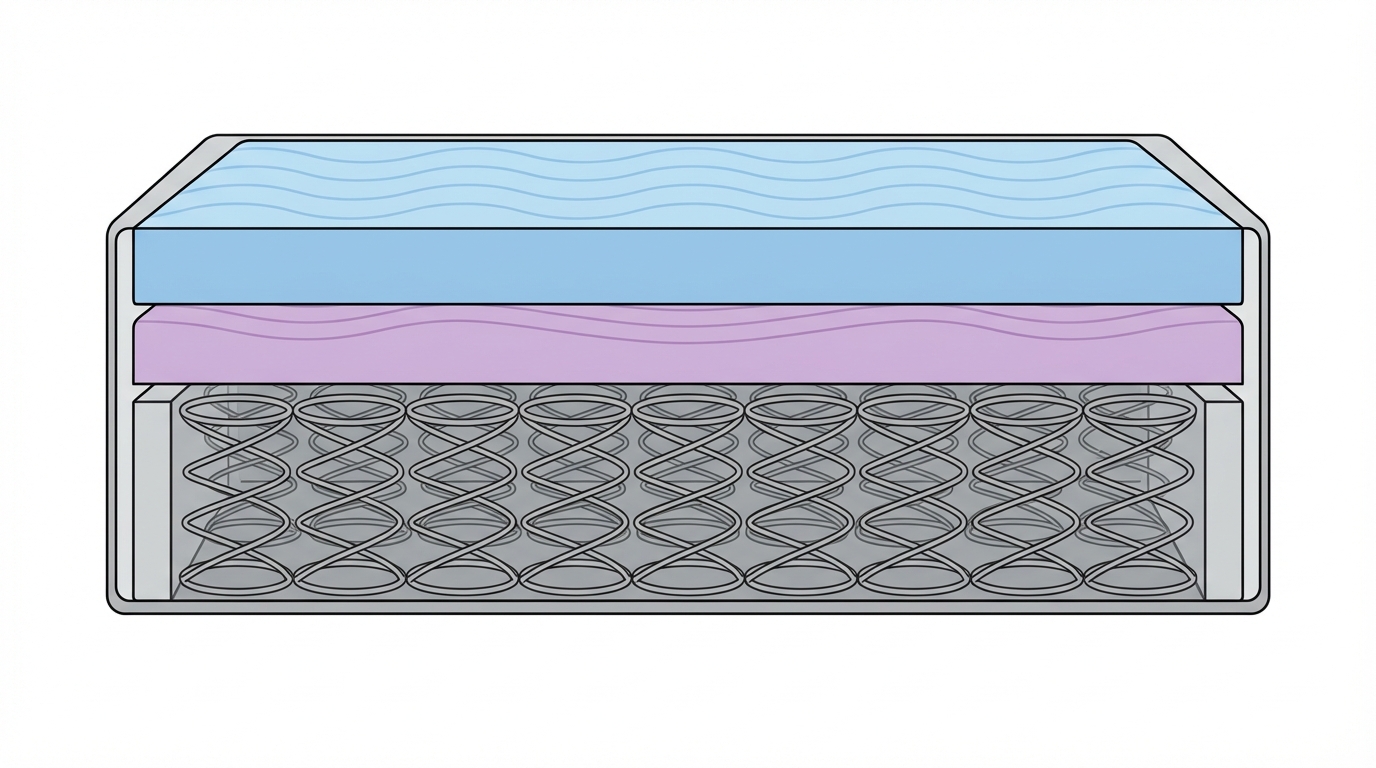
At its core, a hybrid mattress is exactly what it sounds like, a blend of two mattress technologies in a single design. Instead of choosing between the bounce and support of innerspring coils or the contouring comfort of foam, a hybrid uses both. The support core is built from a modern coil system, usually individually wrapped pocketed coils, and the upper portion uses several layers of foams or other comfort materials.
The key is that both parts, the coils and the comfort system, are substantial. According to the Sleep Foundation, true hybrids combine a coil support core with at least a couple of inches of foam or latex on top, rather than a thin quilt over springs. That thicker comfort stack is what separates today’s hybrids from the older “pillow top innerspring” mattresses many of us grew up with. You get the deeper pressure relief of foam paired with the underlying structure of coils.
Most hybrids sold in use one of three main comfort materials. The first is memory foam, which excels at contouring to your body and distributing pressure but can trap some heat if it is not engineered for cooling. The second is polyfoam, which can be tuned softer or firmer and is often used as a transition layer between memory foam and coils. The third is latex, a more buoyant, naturally cooler foam that appeals to sleepers who dislike the “stuck” feeling of traditional memory foam.
If you prefer something that hugs your shoulders and hips but still feels like a mattress you can easily move on, a hybrid can be a smart middle ground. For example, a medium hybrid with zoned coils and a responsive foam Euro top, such as the Sealy Posturepedic Elite Medium Mattress – Brenham II Euro Pillow Top, gives many side and back sleepers that “supportive but not stiff” feel they describe as “just right.”
“I had no idea what a hybrid mattress really was before I came into Sleepology. Mia walked me through the layers and let me try a few hybrids and an all foam bed. The hybrid we chose has coils and a pillow top, and within the first week my morning hip pain dropped by at least 70 percent. I actually understand why it works for me now, which makes me feel a lot better about the money I spent.” – Jenna R., November
How Hybrid Mattresses Are Built (And Why It Matters)
Understanding the anatomy of a hybrid mattress makes it easier to predict how it will feel and how long it will last. If you ever feel overwhelmed by buzzwords like “micro coils” or “zoned support,” this section will help you translate that language into something practical.
The Support Core: Pocketed Coils And Their Job
At the base of a hybrid mattress is a coil unit that carries most of your body weight. In modern hybrids, these are usually pocketed coils, meaning each spring is wrapped in its own fabric sleeve. This design lets each coil compress individually instead of moving as a single grid the way old Bonnell or continuous wire springs did.
Pocketed coils bring a few important benefits. First, they can respond more precisely to your body’s curves, which can help with spinal alignment. Sleep Foundation testing on hybrid models has consistently found that pocketed coil designs perform well for back and stomach sleepers who need firmer support under the torso to keep the spine neutral. Second, pocketed coils are generally quieter than open coils and transfer less motion, an important factor if you share your bed with a restless partner.
Coil count and gauge are often highlighted in marketing, but those numbers are only helpful in context. Higher coil counts can mean more precise contouring, but material quality and design matter just as much. A well built hybrid with 800 to 1,000 pocketed coils in a queen size and a strong foam encasement around the edges can offer excellent support for an average sized adult. Thicker coils around the perimeter, used in many better quality hybrids, help prevent that “rolling off the edge” sensation when you sleep or sit near the side.
Below the coil unit, you will usually find a thin layer of high density base foam. This is not there for comfort; it serves as a stabilizing platform that keeps the coils from digging into the foundation or slats beneath the mattress. It is a small detail, but it plays a big role in long term durability and consistent feel.
Comfort And Transition Layers: Where You Feel The Difference
Above the coils are the layers you actually feel when you lie down. Most hybrids use a stack that looks something like this from bottom to top, transition foam, one or more comfort foams, then a quilted top panel or Euro pillow top. The transition foam acts as a buffer between the coils and your body. It is usually a bit firmer and helps prevent you from sinking too quickly or too deeply into the mattress.
The comfort layers are tuned for pressure relief and feel. Memory foam layers will hug the body and reduce peak pressure on the shoulders and hips, which is helpful for side sleepers or anyone with joint sensitivity. Latex or more responsive polyfoams sit a bit higher under your body, offering more of a “floating on” rather than “hugged by” sensation. Some hybrids combine both, putting a responsive foam on top of a conforming layer so that you get gentle contouring without feeling stuck.
Many hybrid brands also incorporate specialty features in these layers. Gel infused or phase change foams aim to dissipate heat, while copper or graphite infusions are marketed for both cooling and antimicrobial benefits. The Cleveland Clinic notes that a cool sleep environment supports more stable sleep, especially for people who are prone to night sweats or hot flashes, so choosing a hybrid with thoughtful temperature control is more than a comfort preference, it can affect how easy it is to stay asleep.
When you look at specific products, pay attention to the total thickness of these upper layers, not just the names. As a rule of thumb, most adults do best with at least 2 to 3 inches of real cushioning material above the coils, particularly if they sleep on their sides. That is one reason Euro pillow top hybrids such as the Sealy Posturepedic Medium Mattress – Medina II Euro Pillow Top are so popular with combination sleepers; there is enough depth to relieve pressure without sacrificing underlying support.
Hybrid Mattresses vs Innerspring vs Memory Foam

Many shoppers come to Sleepology saying, “I think I want a hybrid,” but when we dig deeper, what they really want is a certain feel, not a particular construction. A quick, honest comparison to innerspring and memory foam mattresses can help clarify whether a hybrid is the right tool for your job.
How Hybrid Feel Compares In Daily Use
Traditional innerspring mattresses rely on a coil core with a thinner comfort layer on top. They feel buoyant, easy to move on, and familiar if you grew up sleeping on a spring mattress. The catch is that if the top padding is too thin or soft, your heavier areas can press into the springs beneath, creating pressure points over time. For many side sleepers, this is exactly why shoulders and hips start to ache a couple of hours into the night.
Memory foam mattresses sit at the other end of the spectrum. With no coils at all, they use multiple layers of foams to both support and contour the body. The contouring can be excellent for pressure relief, and high quality memory foam is superb at dampening motion. However, as the Mayo Clinic points out in guidance on sleep and back pain, a mattress that lets the midsection sink too deeply can increase strain on the spine, especially for stomach sleepers.
Hybrid mattresses live between these extremes. The coil layer takes on the job of keeping your spine in a more neutral position, while the comfort layers are thick enough to cushion bony areas and distribute pressure. For many sleepers, this balance means they get less of the “pressure point burn” sometimes found with thin pillow tops, while avoiding the “stuck in the mud” sensation that can happen with softer all foam designs.
If you have ever wished your innerspring were a little more forgiving at the shoulders or your memory foam bed had just a bit more pushback and bounce, that is often a sign that a hybrid might be a better match. This is especially true for couples with different sleep styles, because hybrids tend to be more adaptable than one note constructions.
A Simple Comparison Table
To make the differences easier to see at a glance, here is a simple comparison across three main mattress types.
| Mattress Type | Core Support System | Typical Feel And Performance | Often Best For |
|---|---|---|---|
| Traditional Innerspring | Steel coils, usually connected or basic pocketed coils | Bouncy, easier to move on, can feel firmer with less pressure relief; can transfer motion more | Back and stomach sleepers who like a firmer, traditional feel |
| Memory Foam | Multiple layers of foam only | Deep contouring, strong motion isolation, slower response, can sleep warmer without cooling tech | Side sleepers and people who love a “hugged” sensation |
| Hybrid | Pocketed coil support core plus thicker foam or latex comfort layers | Balanced contouring and support, moderate bounce, usually cooler than all foam, good for many body types | Combination sleepers, couples, and sleepers with changing needs over time |
This table is not a set of hard rules, but it reflects what I see every week in both published testing, such as Sleep Foundation’s hybrid reviews, and in person fittings at Sleepology. If you already know you love the deep embrace of all foam or the firm, springy feel of a classic innerspring, you can use this as a gut check on whether to explore hybrids or stay with what you know.
“I assumed I needed memory foam because of my shoulder arthritis, but the all foam bed I tried online was too hot and I kept sinking near my partner. Mia showed us a hybrid with a plush Euro top and stronger coils under the center. It still cradles my shoulder, but my husband says his back finally feels supported. We both agreed it feels like a good hotel bed, not like quicksand.” – Mark T., October
Pros Of A Hybrid Mattress
No mattress type is perfect for everyone, but when hybrids are a good fit, they tend to shine in a few specific areas. Understanding these strengths helps you match them to your own priorities instead of buying on hype.
Better Balance Of Comfort And Support
The most meaningful advantage of a hybrid is how well it can balance comfort and support when it is properly matched to the sleeper. Support is about keeping the spine in a neutral position. Comfort is about reducing pressure and allowing your muscles to relax. If you get too much of one without enough of the other, your body will tell you in the morning.
Research on sleep ergonomics has shown that medium firm surfaces often provide the best outcomes for back pain in many adults, particularly when they combine moderate contouring with sufficient stiffness under the lumbar region. A well designed medium hybrid, which typically uses zoned coils and a conforming foam top, is almost built to match that description. It allows your shoulders and hips to settle just enough while still holding your midsection from collapsing inward.
This balanced feel is one reason hybrids are popular with people who cannot cleanly label themselves as side, back, or stomach sleepers. Combination sleepers who rotate through positions at night often find that a hybrid gives them fewer compromises. The surface adapts without feeling completely different in each position.
Cooler Sleep Than Most All Foam Beds
Temperature is another area where hybrids have a natural edge. Because of the open space between coils, air can move more freely through the core of the mattress. When you pair that with breathable covers and modern cooling foams or gels in the comfort layers, you get more efficient heat dissipation than you will usually see in solid foam blocks.
The Sleep Foundation and other testing organizations routinely note that hybrids, particularly those with coil systems and thinner or ventilated foam layers, tend to perform well in temperature regulation tests. For many hot sleepers, that airflow through the coil unit is the difference between waking up repeatedly to kick off covers and actually staying asleep until morning.
If you are especially sensitive to heat, you can stack the deck further in your favor by pairing a hybrid mattress with breathable bedding. At Sleepology, we often steer hot sleepers toward lightweight, moisture wicking sheets and a cool touch protector from our Pillows, Sheets, Toppers, Protectors collection to complement the cooling properties of their hybrid.
Motion Control And Edge Support For Couples
Couples ask about two things over and over, “Will I feel my partner moving?” and “Can we both use the full width of the bed?” Good hybrids can answer yes, and yes, with some caveats.
Pocketed coils already help with motion control by letting each spring compress independently. When you add a few inches of foam above them, that foam acts like a buffer, absorbing much of the movement before it ever reaches your side. While all foam beds still win at pure motion isolation, higher quality hybrids come surprisingly close, especially in the medium and medium soft ranges.
Edge support is where hybrids often pull ahead. Because the coils can be reinforced around the perimeter, hybrids can offer a more solid edge than many foam mattresses, which rely entirely on foam density for structure. This extra stability matters if you sit on the side of the bed to dress, or if one partner tends to migrate toward the edge overnight. It also effectively increases your usable sleep surface, which is especially helpful on full or queen sizes.
Cons Of A Hybrid Mattress (And When Not To Choose One)
To make a confident decision, you also need to be realistic about the potential downsides of hybrids. These are not deal breakers for everyone, but they are important to understand before you swipe your card.
Higher Price And Heavier Weight
Hybrid mattresses are usually more expensive than basic innerspring or entry level foam beds because they contain two full support systems, coils and foams, in one mattress. The added materials, more complex construction, and often higher quality fabrics or cooling technologies contribute to the cost. Industry surveys and retail data show that queen size hybrids commonly land above the bare minimum budget tier, although there is a wide range within the category.
Weight is another consideration. The combination of dense foams and steel coils makes hybrids heavier than many all foam beds. If you live in a walk up apartment or anticipate moving your mattress frequently, you will want to factor that into your decision. The good news is that a heavier mattress that uses quality components will often outlast a much lighter, bargain option by years, which can make the long term cost per night of sleep quite reasonable.
This is also why we talk with customers about sturdy foundations and frames. A well built hybrid, especially in king or larger, should be paired with a support system that can handle the load without sagging. If you are unsure whether your current frame is up to the task, that is a question worth bringing into the showroom.
Not Ideal For Everyone’s Feel Preference
A hybrid is not automatically better than memory foam or innerspring, it is simply different. If you adore the deep, slow sink of a plush memory foam bed, the slightly livelier, “on top” feel of a hybrid may not match that love, even if it is technically a better ergonomic choice. Likewise, if you crave an ultra firm, hotel style innerspring with only a thin comfort layer, many hybrids may feel too cushioned for your taste.
People with very specific medical needs may also do better in a different category. For example, someone with pronounced pressure sensitivity but very low body weight may experience more consistent relief on a carefully chosen high quality foam mattress that allows very deep contouring at low pressure. On the other hand, heavier individuals who need very robust support under the hips and midsection sometimes prefer a firmer coil on coil design or a hybrid that is built toward the firmer end of the spectrum, such as the Sealy Posturepedic Elite Extra Firm Mattress – Brenham II, which behaves much more like a traditional firm mattress.
The important point is that construction type is one factor, but your body and your comfort preferences are just as important. A qualified sleep specialist can help you sort through those layers of decision making so you do not end up with a mattress that looks perfect on paper but never feels right in your bedroom.
“I almost bought a hybrid online because the description sounded perfect, but trying a few at Sleepology made me realize I actually prefer a very firm surface. Mia guided me to an extra firm hybrid that feels more like the solid support I grew up on. It still has a touch of cushioning, but it does not have that ‘sink in’ feeling I was worried about. I am so glad I did not just guess based on reviews.” – Carla M., December
Who A Hybrid Mattress Is Best For
Knowing how hybrids are built and how they compare is helpful, but most people really want to know, “Is this right for someone like me?” Below are the types of sleepers who tend to do particularly well on hybrid mattresses and how we fine tune the choice for them.
Side Sleepers And Pressure Sensitive Sleepers
Side sleepers place more body weight on smaller surface areas, mainly the shoulders and hips. If those areas are not allowed to sink in enough, pressure builds, blood flow is restricted, and you wake up sore or numb. At the same time, the gap between waist and mattress needs enough support so your spine stays fairly level.
Hybrids are often a sweet spot for side sleepers because the foam or latex layers can be tuned soft enough to cradle those prominent points without losing the structural benefit of the coils underneath. The Sleep Foundation routinely highlights hybrids among their top picks for side sleepers for exactly this reason. Look for models labeled as plush or medium in feel, often with Euro pillow tops if you are on the lighter or more sensitive side.
If you mostly sleep on your side, the Best Side Sleeper Mattress Collection at Sleepology is a curated starting point. You will find hybrids with deeper comfort stacks and zoned coil systems that are specifically chosen for how well they support side sleeping posture, rather than just being soft for the sake of softness.
Back And Stomach Sleepers Seeking Support
Back and stomach sleepers tend to have different challenges. Back sleepers need consistent support along the natural curve of the spine, especially under the lumbar region, while stomach sleepers need to prevent the hips and abdomen from sagging, which can strain the lower back. Both groups usually need a firmer feel than side sleepers so the body does not sink too deeply.
Hybrid designs work well here because the coil unit can be reinforced in the center third of the bed where most of your body weight lies. Zoned coils paired with slightly firmer comfort foams create a surface that still has some give at the shoulders but maintains the right amount of pushback under the torso. Mayo Clinic guidance on mattress choice for back pain emphasizes that too soft is just as problematic as too hard, and that a supportive, medium firm surface often hits the right balance for many back sleepers.
If your primary sleep position is on your back, browsing our Best Mattresses For Back Sleepers is a practical way to see specific hybrids and related models that match this profile. Stomach sleepers often benefit from the firmer end of that same spectrum, which is why Sleepology also maintains a Best Mattresses For Stomach Sleepers collection where you will see several supportive hybrids tailored for that more demanding position.
How To Choose The Right Hybrid Mattress Step By Step
There is no single “best hybrid mattress” that works for everyone. Instead, think of hybrids as a category with a wide range of personalities. Here is a clear, stepwise way to narrow down your options so you spend your time and money on the models most likely to work for you.
Step 1: Clarify Your Sleep Profile
Start by being honest about how you actually sleep, not how you wish you slept. Ask yourself three questions. First, what position do you fall asleep in and wake up in most often, side, back, stomach, or some combination? Second, what is your body type, lighter, average, or heavier? Third, where do you currently feel discomfort, shoulders, hips, lower back, neck, or multiple places?
Your answers will shape what you should prioritize in a hybrid. For instance, a lighter side sleeper with sharp shoulder pain needs more pressure relief and a slightly softer comfort system than a heavier back sleeper with lower back pain, who may need more coil reinforcement and a firmer overall feel. These distinctions are exactly what sleep specialists use in clinical research and ergonomic recommendations, and they make just as much sense in a showroom.
If you are not sure how you sleep, a simple exercise is to track your positions for a few nights, mentally or in a quick phone note, and note where you feel stiff in the morning. That pattern will usually become obvious faster than you might expect.
Step 2: Choose A Firmness Range, Not A Single Number
Once you know your sleep profile, choose a firmness range, such as medium to medium firm, instead of chasing one magic number. The common firmness scale from 1 to 10 is useful as a language, but it is not standardized across all brands. A medium firm in one hybrid line may feel slightly softer or firmer than another.
As a practical guideline, many side sleepers do well in the soft to medium range, which we can translate roughly as 4 to 6 out of 10. Back sleepers often like a medium to medium firm range, about 5 to 7 out of 10, while stomach sleepers usually need something from 6 to 8 out of 10 to keep their spine aligned. Within those bands, your body weight will nudge you up or down. Heavier sleepers often need a bit firmer to get the same level of support.
When you visit Sleepology, we typically start you on a neutral medium hybrid and then move slightly softer or firmer as your body responds. The goal is to find the point where your muscles visibly relax without your midsection collapsing into the bed. Models like the Sealy Posturepedic Elite Firm Mattress – Brenham II Euro Pillow Top are useful touchpoints for sleepers who clearly benefit from a firmer hybrid in that 7 out of 10 range.
Step 3: Evaluate Pressure Relief, Not Just “Softness”
Many shoppers confuse softness with pressure relief, but they are not the same. A mattress can feel cushy on first contact yet still create sharp pressure at the shoulders or hips if the comfort layer is too thin or bottoms out over firmer materials. Conversely, a mattress that feels medium firm overall can provide excellent pressure relief if its top layers allow for gradual, even contouring.
When you test a hybrid, lie in your primary sleep position for at least a few minutes and pay attention to three things. First, do your shoulders and hips feel cradled or pushed upward? Second, does your lower back feel supported, or is there a hollow space between you and the mattress? Third, after a few minutes, do you feel any areas where the pressure is building instead of easing?
Academic research using pressure mapping systems finds that mattresses which distribute peak pressure more evenly across the body tend to correlate with reduced next day pain, especially in the shoulders and hips. You do not need a lab to approximate that. Your own body’s feedback, when you give it a few minutes, is a remarkably sensitive sensor.
One Strategic Checklist: Before You Buy A Hybrid

To keep all of this practical, here is a single checklist you can use when you are getting close to a decision. Use it in a showroom or, if you are shopping online, as you compare specifications.
Before you buy any hybrid mattress, confirm that it meets these criteria:
- Coil system uses individually wrapped pocketed coils, ideally with zoning under the midsection and reinforced edges
- At least 2 to 3 inches of genuine comfort materials above the coils, not just a thin quilt
- Firmness range matches your sleep position and body type, for most adults that is somewhere between soft (4) and firm (8) rather than the extremes
- Cooling strategy is credible for your needs, for example breathable cover plus airflow through coils and, if needed, gel or phase change foams
- Edge support feels stable when you sit and lie near the perimeter, without sudden collapse
- Return or comfort exchange policy allows a reasonable adjustment period if the feel is off once you are sleeping on it nightly
If a mattress fails more than one of these checks, move on. There are plenty of hybrid options that will clear this bar, and your sleep is too important to compromise for a flashy name or a limited time promotion.
Once you find a hybrid that meets these criteria and feels genuinely comfortable for at least 10 to 15 minutes in your actual sleep position, you are no longer guessing. You are making a measured decision based on how the mattress is built and how your body responds to it.
Conclusion: Making A Confident Hybrid Mattress Decision
Choosing a mattress is not about memorizing every technical term on a spec sheet. It is about connecting a real person, with a real body and real sleep habits, to a design that supports healthy rest for years. Hybrid mattresses exist because many sleepers wanted something between the extremes of traditional innersprings and all foam beds, a better blend of support, pressure relief, and temperature control.
You have learned that a hybrid mattress combines a pocketed coil support core with a meaningful comfort system of foams or latex, and that this structure allows for a more balanced feel. You have seen how hybrids compare with innerspring and memory foam options, where they excel, and where they may not be the right choice. You now know how to align your sleep position, body type, and pressure points with the right firmness and construction details, rather than shopping by marketing claims alone.
If a hybrid mattress fits your profile, the next step is to feel that difference in person. At Sleepology, we use this same framework every day to match sleepers with hybrids and other designs that genuinely fit their needs, including models such as the Sealy Posturepedic Pro Soft Mattress – Dupont II Euro Pillow Top for those who need extra cushioning and the Sealy Posturepedic Soft Mattress – Medina II Euro Pillow Top for side sleepers seeking a gentler cradle. Whether you connect with us online or in store, you do not have to decode hybrids on your own. With the right guidance and a clear sense of your own sleep story, a hybrid can move from confusing buzzword to the foundation of your best sleep yet.
Frequently Asked Questions
What is the main difference between a hybrid mattress and a regular innerspring?
The main difference lies in the thickness and purpose of the comfort layers above the coils. A regular innerspring usually has a relatively thin layer of padding on top of a coil unit, which can feel bouncy and firm with limited contouring. A hybrid, on the other hand, combines a pocketed coil support core with multiple inches of comfort foams or latex designed to provide real pressure relief. That extra cushioning is what helps hybrids reduce shoulder and hip pressure while still maintaining the familiar pushback of springs underneath.
Are hybrid mattresses good for back pain?
They can be, when matched correctly to the sleeper. Studies summarized by organizations like the Sleep Foundation and clinical experience from groups such as the Mayo Clinic suggest that medium firm surfaces with balanced contouring and support often perform well for many people with back pain. A hybrid that uses zoned coils under the lumbar region and a comfort system that allows moderate contouring can help keep the spine more neutral during sleep. That said, back pain has many causes, and severe or persistent pain should always be discussed with a healthcare professional rather than relying on a mattress alone as treatment.
How long does a hybrid mattress usually last?
A well built hybrid mattress typically lasts about 7 to 10 years, sometimes longer if it uses high quality foams and coils and is paired with a proper foundation. The Sleep Foundation’s testing of hybrid models finds that coils tend to maintain their support characteristics for many years, while comfort layers eventually show wear first. Rotating your mattress as recommended by the manufacturer, using a supportive base, and protecting it from moisture and spills all help extend its usable lifespan. If you begin to notice sagging, loss of support, or new pain that correlates with visible impressions, it may be time to consider a replacement.
Are hybrid mattresses suitable for heavier sleepers?
Yes, hybrids are often an excellent choice for heavier sleepers because the coil core can handle higher loads without compressing as quickly as foam alone. Pocketed coils provide strong support and, when combined with appropriately firm comfort layers, help keep heavier hips and torsos from sinking too deeply. Sleep research frequently notes that people with higher body weights tend to rate hybrids very favorably for support and ease of movement. Heavier sleepers usually do best on medium firm to firm hybrids with robust coils and thicker comfort systems rather than ultra plush designs.
Do hybrid mattresses need a box spring?
Most modern hybrid mattresses do not require a traditional box spring and often perform better on a solid platform, slatted bed frame with closely spaced slats, or an adjustable base that meets the manufacturer’s support guidelines. The critical factor is even, sturdy support that prevents the coil unit from sagging, which can shorten the life of the mattress and change how it feels. If you are considering using an existing box spring, check its condition and the mattress manufacturer’s warranty requirements, because some warranties are voided by using an old or incompatible foundation.
Are hybrid mattresses good for couples with different sleep preferences?
They often are, because hybrids naturally blend cushioning and support in a way that can accommodate multiple body types and positions. The pocketed coils help reduce motion transfer compared to traditional open coil beds, while the comfort layers can be tuned to a medium or medium firm feel that works reasonably well for both side and back or stomach sleepers. For couples who are very far apart in terms of preferences or body types, we sometimes explore firmer hybrids with added toppers on one side, or even dual firmness options. In many cases, though, a thoughtfully chosen hybrid is where two different sleepers find comfortable common ground.
Will a hybrid mattress sleep cooler than memory foam?
In most cases, yes. The coil support core of a hybrid encourages airflow through the mattress, which helps disperse heat. Many hybrids also use breathable covers and cooling foams or gels in the comfort layers to further improve temperature regulation. By contrast, all foam beds, especially those with thick, dense memory foam, tend to retain more heat unless they incorporate significant cooling technologies. If you are a very hot sleeper, prioritizing a hybrid with breathable materials and pairing it with lightweight, moisture wicking bedding gives you a better chance of maintaining a comfortable sleeping temperature throughout the night.