

What Is A Plush Mattress? Your Complete Guide To Soft, Supportive Sleep In
If you are researching mattresses and keep seeing the word “plush,” it can start to feel more confusing than helpful. Maybe you tried a bed in a store that felt wonderfully soft, then woke up elsewhere on a “plush” mattress that felt surprisingly firm. Or you are dealing with hip or shoulder pain and wondering if a softer mattress is the answer, but you are nervous about waking up in a saggy crater. It is very normal to be unsure, especially when every brand seems to use the word a little differently.
Mattress comfort is one of the biggest levers you have for better sleep. The Sleep Foundation notes that comfort and support both play key roles in sleep quality, and that most adults need 7 to 9 hours of consolidated, comfortable sleep to function well. When your mattress feels too firm, your body fights pressure points through the night. When it is too soft, your spine works overtime to stay aligned. Either way, you wake up sore, tired, and frustrated.
Understanding what a plush mattress really is, who it suits, and how to shop for one cuts through that trial and error. You will be able to tell the difference between truly soft, pressure relieving comfort and a bed that only sounds plush in the marketing copy. You will also see how plush compares to medium and firm, how body weight and sleep position change the feel, and which specific Sleepology mattresses are worth trying if you decide plush is right for you.
By the end, you will be able to answer your own question of “what is a plush mattress” in a much more useful way. More importantly, you will know whether a plush feel belongs in your bedroom, or whether a slightly firmer option will actually help you sleep and feel better in the morning.
Plush Mattress Basics: What “Plush” Really Means
When mattress people talk about “plush,” we are really talking about comfort level, which is separate from support. Comfort is what you feel at the surface in the first few inches as you lie down. Support is what the deeper layers do to keep your spine in a healthy neutral curve. A plush mattress is soft at the surface. It lets your shoulders and hips sink in more, and it tends to feel more like a gentle hug than a firm pushback.
Most experts describe mattress firmness on a 1 to 10 scale, where 1 is extremely soft and 10 is very hard. In that framework, plush mattresses usually land around a 3 or 4. Some brands call a 5 “plush” as well, so you will see a bit of fuzziness there. The key experience is this: on a plush mattress you sink in noticeably at your heaviest points while still feeling held up overall. If you feel like you are lying “in” the bed rather than “on” it, you are in plush territory.
It also helps to separate feel from quality. A plush mattress can be very supportive and durable if the support core underneath is strong. The Cleveland Clinic and other spine health resources regularly emphasize that spinal alignment matters more than the simple idea of “soft” or “firm.” A cheap plush mattress that bottoms out under your hips is not doing your back any favors. A high quality plush mattress with a reinforced coil system or dense support foams can cradle you without collapsing.
One more nuance: plush is not a specific material. It is a combination of thickness and softness in the comfort layers. You can have a plush hybrid, a plush memory foam bed, or a plush innerspring with a Euro pillow top. They all feel a bit different, but they share the same basic goal of creating a cozy, pressure relieving surface that is noticeably softer than medium.
“I always thought ‘plush’ meant flimsy until Mia walked me through the layers. We ended up with a plush hybrid instead of the ultra firm mattress I had before, and my hips finally stopped aching by week two.” – Jordan T., January
How A Plush Mattress Is Built
To really understand plush, it helps to look at what is inside the mattress. Almost every modern mattress has two major sections: the comfort system near the top, and the support core underneath. Plush mattresses make strategic changes in the comfort system without sacrificing the integrity of the support core.
In a typical plush design, manufacturers use thicker comfort layers, often 4 inches or more of foams, latex, or fiber quilting. These materials are selected or tuned to compress easily under pressure. Memory foam and softer polyfoams are common because they contour closely and reduce pressure points. Some beds add a Euro top or pillow top, which is a separate, cushy section sewn on top of the main body of the mattress to boost that “cloud” sensation.
Under those softer materials sits the support core. For hybrids and innersprings, this is a coil system that might include zoned coils under the hips and lumbar area. For all foam beds, it is usually a high density polyfoam layer. This is where long term support and durability live. On a well designed plush mattress, that core is every bit as strong as on a firm bed. The difference is how much cushioning you get before your body “reaches” the firmer support underneath.
The result is a specific feel: when you first lie down on a plush mattress, you notice the softness quickly. Over a few seconds your body settles as the comfort layers compress. Then you hit a kind of “soft stop,” where you are no longer sinking but you still feel wrapped. If you sink and then keep sinking, or you feel like you are sliding into a trench, the mattress is either too soft for your body weight or simply not well engineered.
How Plush Differs From Medium And Firm
Softness exists on a spectrum, and the industry loves multiple labels. Terms like “medium plush,” “luxury firm,” “cushion firm,” and “ultra plush” can blur together. Underneath the naming, the main categories still look like soft or plush, medium, and firm. Understanding those differences will make your shopping much less confusing.
Plush is the softest category most mainstream sleepers will encounter, typically at that 3 to 4 out of 10 firmness. Medium sits around 5 to 6, and firm ranges from 7 to 9. A medium mattress will still let you sink in a little, but you feel more even resistance and you do not get as deep of a hug. A firm mattress keeps you more on top of the surface and may feel almost flat under lighter sleepers, with far less give around the shoulders and hips.
From a comfort standpoint, plush is best at relieving pressure around bony areas, especially in side sleeping, and for people under about 130 pounds whose bodies do not compress firmer comfort foams very much. Medium is the most broadly compatible for couples and mixed sleepers because it balances cushioning with resistance. Firm tends to work better for many stomach sleepers and some heavier back sleepers who need extra resistance to prevent their midsection from dropping.
From a support standpoint, none of these is automatically better. The American Academy of Sleep Medicine notes that both overly soft and overly firm surfaces can hurt alignment and increase pain. A plush mattress can be more supportive than a cheap firm mattress if its core is stronger and better zoned. Likewise, a medium or firm mattress is not inherently “good for your back” if it creates pressure points that force you to constantly shift position at night.
Who Is A Plush Mattress Best For?
Choosing a plush mattress is less about trends and more about matching your body, sleep position, and pain history. When you line those up with the right comfort level, you tend to fall asleep faster and stay asleep longer because your body is not fighting the surface. When they do not match, even the fanciest mattress will feel wrong.
According to the Sleep Foundation, the ideal firmness for an individual depends strongly on body weight and preferred sleep position. Lighter sleepers usually need softer beds to get enough contouring. Side sleepers typically benefit from more cushioning at the shoulders and hips. People with chronic shoulder or hip pain often find softer surfaces more comfortable, while those with low back pain sometimes need a slightly firmer feel for stability. All of this points to specific groups who tend to thrive on plush.
Below, we will walk through each major type of sleeper and how plush tends to feel for them. As you read, picture your own body on the mattress. Imagine where your weight settles and where you currently feel pressure or sagging. That mental test on top of the guidance here often gives you a surprisingly clear answer.
“I am a 125 pound side sleeper and I spent years on mattresses that felt like boards to me. After switching to a plush pillow top at Sleepology, my shoulder numbness disappeared in three nights. I wish I had understood the weight and firmness connection earlier.” – Sara L., November
Side Sleepers
Side sleepers are the classic match for plush mattresses. When you lie on your side, your shoulder and hip take most of your weight, and your waist naturally curves inward. On a surface that is too firm, your shoulder and hip cannot sink enough, which forces your spine to bow and can compress nerves around the shoulder joint. Over time, you may wake with tingling hands, sore outer hips, or stiffness between the shoulder blades.
A plush mattress gives those pressure points more room to settle. The comfort layers gently cradle the shoulder and hip, allowing them to sink until your spine is closer to a straight line from neck to tailbone. When this is dialed in correctly, you feel suspended rather than jammed, and you wake up without that familiar ache along one side of your body. For many side sleepers under about 200 pounds, plush or medium plush is the sweet spot.
Body weight still matters though. Petite side sleepers under 130 pounds often need true plush to feel any pressure relief. Medium can simply feel “firm” to a lighter body that does not compress the foams deeply enough. In this case, a plush hybrid like the Sealy Posturepedic Elite Soft Hybrid Mattress – Brenham II can work beautifully, because the combination of soft upper layers and responsive coils lets a smaller frame sink in where needed without sacrificing alignment.
If you are a heavier side sleeper, especially over 230 pounds, plush comfort can still help your shoulders and hips, but you may need to be careful about the depth of that softness. A good strategy is to look for plush hybrids with zoned coils or reinforced centers. These give you a softer feel on top but prevent your midsection from dropping too far, which maintains spinal alignment.
Back Sleepers
Back sleepers have a different set of needs. When you lie flat on your back, your weight is more evenly distributed than in side sleeping, but there is still a natural inward curve at the lower back. If the mattress is too firm, your buttocks and shoulder blades bear more weight, and the small of your back may feel unsupported. If it is too soft, your pelvis can sink more than your upper body, increasing the arch in your low back and stressing the lumbar spine.
Because of that, many back sleepers do well on medium to medium firm mattresses. Plush can still work, particularly for lighter back sleepers or those with prominent shoulder blades or sacrum who feel poked by firmer beds. The key is that a plush mattress for back sleeping must have a very solid support core and ideally some zoning that is firmer under the hips.
For example, a Euro pillow top like the Sealy Posturepedic Elite Medium Mattress – Brenham II Euro Pillow Top sits in that “medium plush” zone. It feels luxuriously cushioned when you first lie down, but the underlying coil system keeps your hips from sagging. This type of construction can be ideal if you like a softer feel but your back complains on very soft mattresses.
Back sleepers with a history of disc issues or significant low back pain should pay special attention here. Mayo Clinic guidance on back pain management consistently suggests neutral spinal alignment and avoiding positions that increase lumbar arch. If you are drawn to plush, it is worth pairing it with a strong core and actually checking your alignment in a mirror or photo when lying on your back. If your lower ribs and hip bones do not appear to dip in opposite directions, you are probably in a safe zone.
Stomach Sleepers
Stomach sleeping is the trickiest match for plush mattresses. When you lie face down, your pelvis naturally wants to sink more deeply than your upper body because it is a heavier region and there is no skeletal structure like the ribcage in front to distribute weight. On a soft mattress, the pelvis often drops several inches, while the upper torso and head remain elevated by pillows. This can crank the low back into an exaggerated arch and strain the neck.
For this reason, both clinical and industry guidance usually steers stomach sleepers toward firmer surfaces. A plush mattress can still work in a few scenarios, such as very petite stomach sleepers under about 110 pounds, or people who only spend a small fraction of the night on their stomach and the rest on their side. Even then, plush should be closer to the “soft side of medium” rather than the very softest options.
If you are a stomach sleeper who craves a softer surface, one compromise is to choose a medium or medium firm mattress designed for stomach support and then add softness closer to the surface with your bedding. For example, you might start with a model curated in Sleepology’s best mattresses for stomach sleepers collection and then pair it with a quilted mattress protector and softer sheets. This way, you get a gentler first contact without sacrificing the firmer support your spine needs.
Another practical strategy is to gradually train yourself toward a hybrid of stomach and side sleeping. A slightly softer mattress can encourage your body to roll off the stomach more often during the night, which tends to be friendlier to your back and neck long term.
Plush Mattresses And Body Weight: Why The Same Bed Feels Different

If you have ever tried the same mattress as a friend and strongly disagreed about whether it felt soft or firm, you have experienced the role of body weight in mattress feel. Mattress comfort is highly subjective, but there are predictable patterns in how different weights interact with plush designs. Understanding this is one of the quickest ways to avoid an expensive mismatch.
From a physics perspective, a mattress is responding to both the force applied and the surface area over which that force is distributed. Heavier sleepers apply more force, and depending on body shape they may concentrate that weight differently at the hips, shoulders, or midsection. Softer foams compress more under greater force, which can feel deeply cradling for some and overly saggy for others.
Sleep researchers who study ergonomics often group sleepers into three bands for firmness recommendations: under 130 pounds, 130 to 230 pounds, and over 230 pounds. While these are not strict rules, they are useful guardrails when you are thinking about plush options. Below we will walk through what plush typically feels like in each range and where to be cautious.
Lightweight Sleepers (Under 130 Pounds)
For lightweight sleepers, plush mattresses often feel like a relief. Because there is less body weight pressing into the surface, medium and firm beds may hardly compress at all under key pressure points. This can leave petite sleepers feeling like they are on top of a hard slab, even when larger sleepers find the same mattress perfectly soft.
A plush mattress with generous comfort layers allows a lighter body to actually engage the contouring features the manufacturer built into the bed. This can be especially important for smaller side sleepers who otherwise experience constant shoulder and hip discomfort. In practice, I often guide people in this group toward true plush or soft, particularly if they have tried “medium” and still feel perched rather than cradled.
At the same time, light back sleepers can also enjoy plush if the support core is strong. Take something like the Sealy Posturepedic Soft Mattress – Medina II Euro Pillow Top. Its Euro pillow top offers a cloudlike feel at the surface, but the underlying support system is designed to prevent that over-sinking sensation. For a 110 pound back sleeper, that often translates to cozy cushioning without loss of alignment.
The main caution for lightweight sleepers is not overdialing softness so much that you feel stuck. Extremely plush foams can create a “quicksand” sensation even for a smaller body. When you test a plush mattress, pay attention to how easy it is to roll from your back to your side. If it feels like crawling uphill, you may want a slightly firmer plush or a hybrid with more bounce.
Average Weight Sleepers (130 To 230 Pounds)
Average weight sleepers live in the most flexible zone. Many people between 130 and 230 pounds can be comfortable across soft, medium, and medium firm, depending on position and preference. Plush is often best suited to strict side sleepers or those with sensitive joints in this band.
On the plus side, plush comfort layers tend to compress more fully under average weight bodies, which activates the full pressure relief potential of the materials. If you have been sleeping on a firm mattress and wake up with sore shoulders or outer hips, a plush upgrade can feel transformative. Studies cited in journals of musculoskeletal pain have found that switching from very firm to more adaptive surfaces can reduce morning pain and improve perceived sleep quality in many people.
On the caution side, the deeper you sink into a plush surface at this weight range, the more important the support core becomes. A medium or medium firm mattress sometimes masks a weaker support system simply because you do not sink deeply enough to expose its limitations. With plush, you are closer to that core. Looking for models with zoned coils, reinforced edges, or higher density support foams helps prevent long term body impressions and alignment issues.
For couples in this band, plush can still be an option, especially if both partners are side sleepers. If one of you spends more time on your stomach or prefers a firmer feel, a medium pillow top such as the Sealy Posturepedic Plus Medium Mattress – Paterson II Euro Pillow Top often becomes a better compromise, offering enough softness for the side sleeper without feeling overly plush to the firmer preference partner.
Heavier Sleepers (Over 230 Pounds)
For heavier sleepers, plush comfort gets more complicated. With more weight pressing into the mattress, softer foams compress deeper and faster. This can create wonderful contouring and pressure relief in the short term, but it can also increase the risk of excessive sagging if the mattress is not specifically designed to support higher weights.
In practice, many sleepers over 230 pounds are more comfortable on medium or medium firm mattresses with robust support systems. However, that does not mean plush is completely off the table. The key is to look for plush hybrids or pillow tops built on a very sturdy coil unit with higher gauge steel and possibly zoning. This way you get a soft, enveloping surface but your hips and midsection are still held in line with your shoulders.
One reason this matters is the relationship between spinal alignment and back pain. Research summarized by organizations like the North American Spine Society highlights that when the lumbar spine remains in a neutral curve at night, people tend to report fewer pain flares and more restorative sleep. On an overly soft bed, heavier sleepers may experience a hammock effect where the midsection drops, stressing the discs and ligaments.
If you are in this group and drawn to plush, consider erring on the “plush side of medium,” and be realistic about maintenance. Rotating the mattress more frequently and using a supportive base can extend the life of a softer bed under higher loads. You may also want to shorten your replacement horizon a bit, planning on 6 to 8 years rather than a full decade, depending on construction quality.
Key Components That Make A Mattress Feel Plush
Not all plush mattresses are created equal. Two beds can both be labeled “soft” and fall in very different places in terms of feel, support, and longevity. The difference usually lies in the details of how the layers are constructed. Once you know what to look for, you can read a specs sheet and have a good sense of how a mattress will behave before you ever lie on it.
There are four main elements that shape plushness: the thickness of the comfort layers, the types of foams or fibers used, the presence and style of pillow or Euro tops, and the design of the support core. These interact with your body weight and sleep position to create your actual experience of the bed.
Understanding these pieces is also empowering when you are comparing models. You might find that you prefer a plush memory foam feel over a plush innerspring, or that you really like the way a Euro top distributes pressure compared to a traditional pillow top. That level of nuance turns “I want something soft” into a clear shopping brief.
Comfort Layers: Thickness And Materials
Comfort layers are the uppermost sections that you make direct contact with through your sheets. Plush mattresses usually have thicker comfort stacks, often at least 3 to 4 inches and sometimes more. Thicker comfort systems let your body sink gradually instead of hitting a firm surface quickly.
Within these layers, common materials include memory foam, polyfoam, latex, and quilted fibers like fiberfill or wool. Memory foam is known for its slow response and close contouring. It excels at pressure relief but can feel a bit enveloping. Softer polyfoams respond more quickly and can feel bouncier. Natural latex has a buoyant, springy quality that can feel soft without the deep “stuck” sensation of some memory foams.
For sleepers seeking a plush feel with good responsiveness, hybrid constructions that pair softer foams with coils are often ideal. A model like the Sealy Posturepedic Elite Soft Mattress – Brenham II Euro Pillow Top uses multiple layers of cushioning materials over a coil unit to create that pillowy feel while still allowing for easy movement across the surface.
When you see a mattress described as plush but with only 1 or 2 inches of soft material, be cautious. That usually indicates a bed that may feel comfortable for a few minutes in a showroom but will bottom out at night, especially for average or heavier sleepers.
Pillow Top, Euro Top, And Quilted Tops
Across plush mattresses, you will often see the words “pillow top” and “Euro top.” These terms refer to how the top cushioning is attached and finished, and they matter for both feel and durability. A traditional pillow top looks like a separate cushion sitting on top of the mattress. There is a visible seam or gap around the edge. This design can feel extremely plush and pillowy, but the gap can sometimes reduce edge support and may compress more over time.
A Euro top, by contrast, is integrated into the mattress body. The extra cushioning layer is sewn flush with the edges, so the side panel looks smooth. This creates a cleaner look and tends to strengthen the perimeter. Many sleepers experience Euro tops as slightly more supportive while still being very comfortable, which is part of why you see them in many higher end plush and medium plush models.
Quilted tops use stitching to bind foam, fiber, and fabric layers together in a single, flatter surface. They can still feel very plush, but the feel is more uniform and less “pillow-like.” This can be a good fit for people who want softness without the distinct loft of a pillow top.
As you compare, notice the language and think about your preferences. If you love that “floating on a cloud” sensation and primarily sleep on your side, a true pillow top like the Sealy Posturepedic Pro Soft Mattress – Dupont II Euro Pillow Top could be a very appealing balance of extra cushioning and Euro style edge reinforcement. If you are more concerned about edge support, leaning toward Euro tops or well quilted designs usually makes sense.
Support Core: Coils Or Foam Underneath The Plush
The support core does not determine whether a mattress is labeled plush, but it does determine whether that plush feel is healthy and long lasting. All foam plush mattresses rely on one or more layers of high density polyfoam underneath the comfort system. Plush hybrids and innersprings use coil units, sometimes in combination with a thin base foam.
For couples, people over 180 pounds, or anyone with back concerns, coil based cores often provide better long term support and resilience. Individually wrapped coils can also improve motion isolation, so a partner’s movement is less disruptive. High quality coils paired with plush tops give you softness where you want it and structure where you need it.
All foam plush mattresses can be very comfortable, especially for lighter side sleepers. However, it is important to check the foam densities in the support layers. Denser foams hold up better over time, resisting deep body impressions that can throw off alignment. Consumer Reports and similar testing organizations consistently find that higher density cores correlate with better longevity.
Plush support does not mean weak support. A well made plush mattress should still hold your spine in a neutral line whether you are on your back or side. If you test a plush mattress and feel your midsection dropping significantly compared to your chest and thighs, that is a sign the support core may not be strong enough for your needs.
Plush Mattress Types Compared
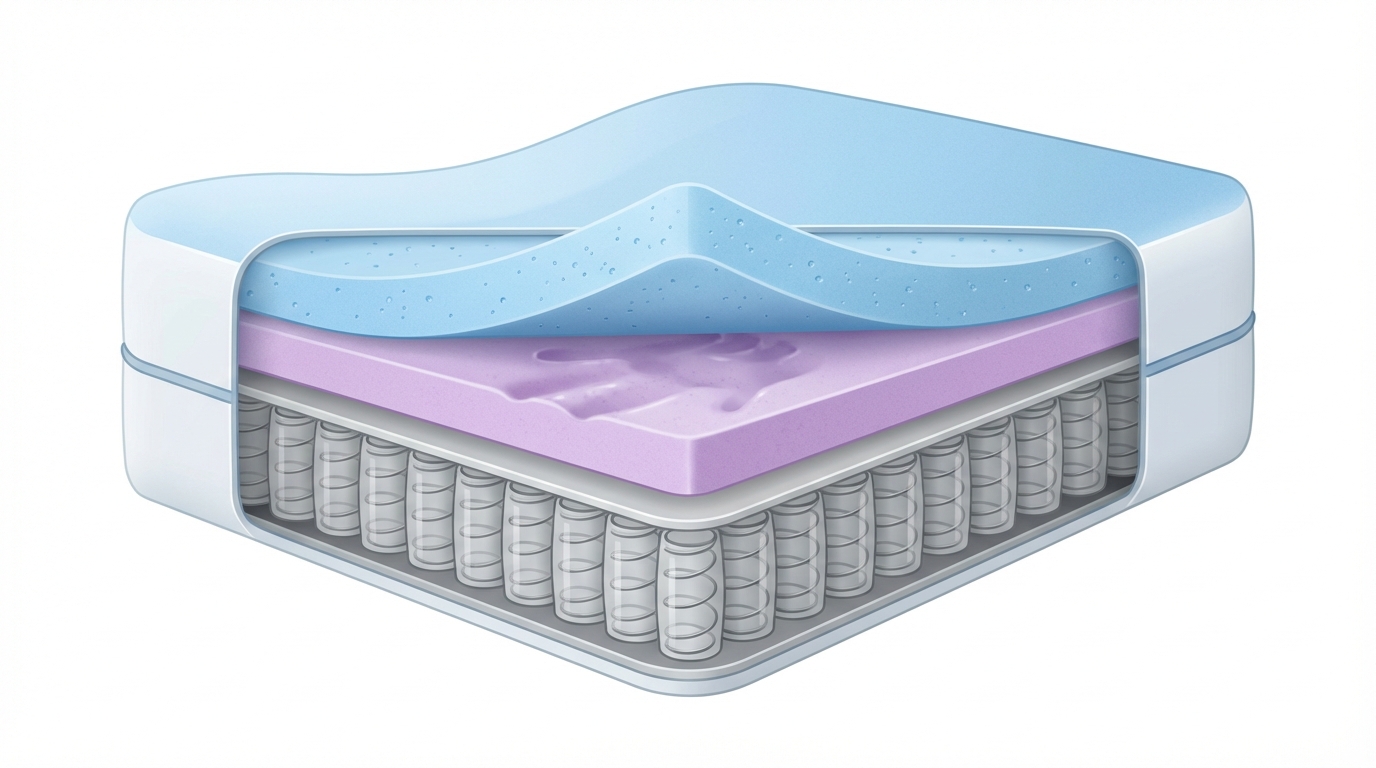
By now you know that plush describes feel, not a single product type. In , almost every major mattress category comes in a plush version. The main families you will see are plush innerspring, plush memory foam, plush hybrid, and plush Euro or pillow top designs. Each has its own personality, advantages, and tradeoffs.
To make this comparison concrete, the table below summarizes how these four common plush mattress types typically differ. Individual models will vary, but this will give you a helpful starting map.
| Plush Mattress Type | Typical Feel And Contour | Best For | Things To Watch Out For |
|---|---|---|---|
| Plush innerspring | Softer surface, bouncier, less deep hug | Back sleepers, combo sleepers who like bounce | Can feel too firm for petite side sleepers |
| Plush memory foam | Deep contour, slow response, strong hug | Side sleepers, joint pain, motion isolation | Heat buildup, “stuck in the mud” feel for some |
| Plush hybrid | Balanced contour and bounce, supportive core | Wide range of sleepers, couples, heavier bodies | Quality of coils matters greatly |
| Plush Euro / pillow top | Extra cushioned surface with airy loft | Side sleepers, luxury feel seekers | Potential for compression if core is weak |
Now let us walk through how each one behaves so you can translate that table into what you actually might want in your bedroom.
Plush Innerspring
Plush innerspring mattresses start with a traditional coil system and add softer, thicker comfort layers on top. Compared to old-school firm innersprings, these feel much more forgiving at the surface. You still get plenty of bounce from the coils underneath, which can make it easier to change positions and get in and out of bed.
Because coils tend to be more breathable than solid foam cores, plush innersprings can sleep a bit cooler. This can matter if you run warm at night or live in a warmer climate. Hot sleepers sometimes prefer this style because they get softness without too much heat trapping.
However, the softness of a plush innerspring is usually more superficial than what you will find in a plush memory foam bed. You might feel soft quilting and a bit of sink, but you reach the coil resistance quickly. For petite side sleepers or those with very sensitive shoulders, this may not be quite enough contouring, which is where hybrids or plusher foams come in.
Plush Memory Foam
Plush memory foam mattresses are what many people picture when they imagine sinking into a soft bed. These use multiple inches of low to medium density memory foam in the comfort layers, over denser foam support. They are known for excellent pressure relief and motion isolation. If you have a partner who tosses and turns, memory foam can dramatically cut down on what you feel.
The softness here is more three dimensional: your body slowly settles into the foam, which conforms closely to your curves. This can be a blessing for side sleepers with joint pain, as there are no obvious hard spots pushing back. Academic reviews of pressure mapping studies often show memory foam surfaces reducing peak pressure on the shoulders and hips compared to firmer spring designs.
The potential downside is that this deep hug can also feel enveloping or even smothering to some. Warm sleepers in particular may find they sleep hotter on plush memory foam because the foam surrounds more of the body and tends to retain heat. Many modern foams add cooling infusions or open cell structures to reduce this, but if you are very heat sensitive, you might lean toward hybrids or innersprings.
Plush Hybrids And Euro / Pillow Tops
Plush hybrids combine the strong support and airflow of coils with the contouring of foams or latex. Many of the most popular “plush” mattresses today are actually hybrids, often dressed in Euro or pillow tops. These take advantage of the best aspects of each material: you get softness and pressure relief from the comfort layers and tops, while the coil core preserves bounce, edge support, and stability.
A good example of this soft plus supportive approach is the Sealy Posturepedic Pro Medium Mattress – Dupont II Euro Pillow Top. It leans medium, but the Euro pillow top adds that plush initial feel so many side and back sleepers love. The zoned coil system underneath helps keep the middle of the body lifted, which is essential for spinal alignment.
If you know you want a plush sensation but are nervous about overheating or sagging, a plush hybrid is often the safest bet. You can fine tune how soft you go by choosing between “soft,” “medium,” or “medium plush” versions in the same model line. Euro tops are a particularly reliable way to add luxurious cushioning without sacrificing the structural integrity of the mattress.
Benefits Of A Plush Mattress When It Is The Right Fit
Used in the right context, a plush mattress can feel life changing. People who have battled with chronic pressure point pain, especially in the shoulders and hips, often experience meaningful relief. Others simply find they fall asleep faster because they are not subconsciously bracing against a hard surface.
From a sleep science point of view, the benefits of a well matched plush mattress usually show up in three areas: improved pressure distribution, better comfort for lighter bodies, and better alignment for certain side sleepers. These in turn can reduce nighttime awakenings, which supports deeper stages of sleep like slow wave and REM.
According to the Sleep Foundation and other sleep health resources, comfort that allows the body to relax is a crucial ingredient in efficient sleep. If your nervous system is constantly annoyed by physical discomfort, it is much harder to spend adequate time in restorative stages. A plush mattress can remove a major source of that irritation for the right sleeper.
“Switching from our old firm bed to a plush Euro top at Sleepology was the first time in years I slept through the night without waking to flip sides every two hours. My Fitbit even started recording more deep sleep minutes weekly.” – Renee M., October
Pressure Relief And Joint Comfort
Pressure relief is where plush mattresses shine. Pressure points occur where a relatively small area of your body is bearing a high share of your weight. In side sleeping, that usually means the shoulder, outer hip, and sometimes the side of the knee. On surfaces that do not give much, these points can experience restricted blood flow and nerve compression, which your brain interprets as discomfort.
Plush comfort layers spread out that pressure. Instead of your shoulder being stopped by a firm surface, the foam or quilting lets it nestle in. The contact area increases, which lowers the pressure at any one point. That is why when you lie on a well matched plush bed, you often feel as if your weight is more evenly distributed instead of concentrated in a couple of sore spots.
For people with arthritis, bursitis, or general joint sensitivity, this can be particularly meaningful. Some small clinical trials have shown that sleeping on pressure redistributing surfaces can reduce pain and improve sleep continuity in musculoskeletal conditions. While these studies are not focused solely on plushness, the principle is the same: when you take pressure off sore joints, sleep tends to improve.
Comfort For Lightweight Sleepers And Adolescents
As discussed earlier, lighter bodies often do not compress firmer mattresses enough to trigger their designed contouring. This leaves many smaller adults and teens perched on top of their beds. A plush mattress compensates by meeting the body where it is. Softer foams begin to contour under less force, so even a 100 pound person can experience that gentle cradle.
This matters not just for comfort, but also for encouraging healthy sleep postures early. If a teenager spends their developmental years sleeping poorly on a surface that feels uncomfortable, they may build a habit of curling into odd positions or stacking pillows to relieve pressure. A plush or medium plush mattress that actually molds to their frame can support more natural alignment and better sleep quality through those high growth years.
Parents sometimes worry that plush equals “too soft” for kids. The reality is that for older children and teens, as long as the underlying support core is solid and the mattress is not collapsing under them, a somewhat softer surface is often more appropriate for their lower body weight than an extra firm one.
When Plush Supports Better Spinal Alignment
It can sound counterintuitive, but sometimes a softer mattress can actually improve spinal alignment compared to a very firm one. This is especially true for side sleepers with more pronounced curves at the hips and shoulders. On a rigid surface, the spine is forced into a sideways bow because the pelvis and shoulder blade cannot drop enough.
A plush mattress lets those heavier points settle until the spine is straighter. Think of it like having a custom shaped surface that fills the gaps and gives in just the right places. When viewed from behind, a side sleeper on the right plush mattress will show a relatively straight line from neck to low back. On a too firm surface, you would see the spine angling up at the shoulders and down at the hips.
This is why some back specialists actually recommend medium soft to medium mattresses for side sleepers with certain pain patterns. The goal is not hardness, but neutral support. As Mayo Clinic notes in their guidance on choosing mattresses for back pain, personal comfort and proper support should both be considered, and often that means avoiding extremes in either direction.
Potential Drawbacks Of Plush Mattresses
While plush mattresses can be wonderful in the right situations, they are not a universal solution. If a plush bed is mismatched with your body type or sleep habits, it can create a different set of issues. Being aware of these potential drawbacks helps you decide with clear eyes instead of simply chasing softness.
The main concerns people run into with plush mattresses are feeling stuck or trapped in the surface, overheating, sagging or body impressions over time, and lack of support for stomach sleepers and some heavier individuals. None of these are inevitable, but they are more common when plush is chosen solely on feel without considering underlying design and personal fit.
If you read reviews of very soft mattresses, you will often see polar opposite reactions. Some sleepers say “best sleep ever, no more pressure points,” and others complain of sore backs and difficulty moving. Both are valid. The difference is usually who is sleeping on the mattress and how the bed was constructed.
Feeling “Stuck” Or Having Trouble Moving
One of the first subjective complaints about plush beds, especially memory foam heavy models, is the sensation of being stuck. When the comfort layers are very soft and slow responding, your body can sink into a personal groove. This feels cozy for some, but others find it hard to roll over or switch positions without consciously pushing against the foam.
This can be especially problematic for combination sleepers who change positions frequently through the night. If every adjustment takes effort, you may actually wake yourself up more often. People with mobility limitations or chronic pain conditions may also find it challenging to climb out of deeper impressions.
If you are worried about this, look for plush hybrids with more responsive foams or latex in the upper layers, or opt for “plush side of medium” rather than the absolute softest models. Testing the surface by rolling from side to side and from back to sitting is wise. You want a plush feel that still lets you move fluidly.
Sagging And Body Impressions
Soft foams always work harder under load than firmer ones, simply because they compress more. Over time, that can increase the chance of permanent body impressions or uneven wear. This is one reason why some people associate plush mattresses with early sagging. The risk is higher with lower density foams, undersized coil systems, or using a mattress beyond its intended weight range.
Industry testing and consumer advocacy sites like Consumer Reports routinely score mattresses not just on comfort but also on resistance to sagging. Higher quality plush models tend to use denser foams and stronger coil units to counteract this. Following manufacturer recommendations about rotating the mattress and using a proper foundation also extends its life.
If you choose plush, plan on being a bit more proactive in maintenance. Rotating the mattress a few times a year, avoiding sitting on the same edge daily, and keeping the mattress on a supportive base are all small habits that can significantly reduce sagging and keep that plush feel more consistent over time.
How To Decide If A Plush Mattress Is Right For You
Deciding on plush is really about pattern recognition. When you connect your current sleep experience, your body’s feedback, and some simple at-home tests, the choice usually gets clearer. Rather than focusing purely on marketing labels, focus on how you feel on your existing mattress and what changes you are hoping for.
Start by noticing your primary sleep position. Do you reliably fall asleep and wake up on your side, back, or stomach, or are you all over the map? Then think about your body weight and shape, particularly whether you carry more weight through the hips and midsection or have more bony prominence at the shoulders and pelvis. Finally, map your pain or discomfort patterns. Where do you feel soreness in the morning, and when during the night are you waking?
These factors together are far more reliable than a quick showroom impression. Remember that when we are awake, our muscles hold more tension, which can make a firm mattress feel deceptively supportive for a few minutes, as many retailers have noted. Your real relationship with a mattress starts once your muscles fully relax during sleep.
Simple Self Assessment For Plush Compatibility
A quick way to gauge your fit for plush is to ask yourself a few targeted questions about your current mattress:
- Do you consistently wake with soreness or numbness in your shoulders or outer hips, especially when you primarily sleep on your side?
- Does your mattress feel “hard” or unyielding unless you use multiple toppers, blankets, or pillows to soften it?
- Are you under about 200 pounds and on a firm or medium firm mattress that still feels like you are lying on a board?
- Do you find yourself waking to turn frequently simply because you cannot get comfortable in one position for long?
- When you lie on a softer bed in a showroom or hotel, do you feel your body exhale and relax more easily?
If you find yourself answering yes to most of these, there is a good chance that moving toward a plush or medium plush mattress will be helpful. If instead your main complaints are feeling stuck, waking with low back pain that feels like over-arching, or noticing your midsection dropping too far, you may actually need something a little firmer or better supported.
A second self test is visual. Have someone take a picture of you from the side while you lie in your most common sleep position on your current mattress. Draw an imaginary line from the back of your head through your shoulders to your hips. If that line is largely straight but you still have pressure pain, plush can help. If that line is clearly bowed or sagging, focus more on support and alignment first, then dial in comfort.
Trying Plush Safely With The Right Policies
Because comfort is so individual, it is reassuring to combine this self assessment with a real-world trial on a mattress that offers a solid in-home test period. Bodies often need a couple of weeks to fully adapt to a new surface. Initial soreness can even occur as your spine shifts away from old patterns. This is why sleep medicine specialists often caution against judging a mattress based on a single night.
When you shop with Sleepology, we encourage customers to give their new plush mattress at least 21 to 30 nights unless there is an obvious issue like severe low back pain. Keep notes on how your body feels as you adjust. Improvements in shoulder and hip comfort paired with stable or improving back comfort are a strong sign you are on the right track.
It can also help to have a backup plan. If you are not entirely sure whether plush or medium will serve you best, opting for a slightly more versatile medium pillow top such as the Sealy Posturepedic Elite Medium Mattress – Brenham II Euro Pillow Top can give you much of the plush experience with a bit more room to adjust with toppers if needed.
Practical Plush Shopping Tips From A Sleepologist
Once you know plush is a good candidate for you, the actual shopping becomes much easier. Instead of wandering through a maze of models and marketing phrases, you can follow a short checklist that keeps your needs front and center. Here are the steps I walk many of my clients through when we are zeroing in on a plush mattress.
First, clarify your non negotiables. Do you need strong edge support because you sit on the edge often or share the bed and need all the usable surface? Are you heat sensitive and therefore better suited to hybrids or breathable covers? Do you need excellent motion isolation because your partner moves a lot? These priorities will narrow the plush field quickly.
Next, match firmness to your specific situation. If you are under 130 pounds and primarily a side sleeper, you can confidently aim for true plush or soft. If you are in the 130 to 200 pound range and strictly side sleeping, plush or medium plush will probably feel best. Combination sleepers or couples may prefer medium pillow tops, which combine plush surface feel with middle of the road support. Stomach sleepers should approach plush carefully, typically staying in the medium range and adding surface softness with bedding rather than going ultra plush.
Then, look at construction details. For hybrids, pay attention to coil count, coil gauge, and zoning features. For foams, look for higher density support cores and cooling features if needed. If you are shopping online and seeing models within Sleepology’s best foam mattresses collection, use those specs and our expert notes to filter for plush options that still score well on support and durability.
Finally, do not neglect your bedding. A quality mattress protector, appropriate pillow, and breathable sheets can all change how plush feels. A properly lofted pillow that keeps your neck in line with your spine is just as important as the mattress underneath. Overly tall or flat pillows can sabotage even the best plush mattress by cranking your head out of alignment.
Conclusion: Turning “Plush” From A Buzzword Into A Confident Choice
Plush mattresses are often described in dreamy language, but for real people with real bodies, they are about something much more concrete: relief from pressure, a sense of being gently held, and the ability to wake up with fewer aches. When you understand that plush refers to the softness of the upper layers, not the quality of the support core, it becomes far easier to evaluate whether a given plush bed is actually right for you.
If you are a lighter or dedicated side sleeper, or you are battling shoulder and hip discomfort on a firmer bed, a thoughtfully engineered plush or medium plush mattress can make sleep feel kinder. If you are a heavier sleeper or primarily on your stomach, plush may still play a role, but usually in the softer side of medium range over a very supportive core, rather than the absolute softest options. In every case, spinal alignment remains the north star, with plushness serving comfort around that.
At Sleepology, our goal is not to push you into a trend, but to match you with a mattress that fits your body and life so well that you stop thinking about it at night. Curated options like the Sealy Posturepedic Soft Mattress – Medina II Euro Pillow Top or the Sealy Posturepedic Elite Soft Hybrid Mattress – Brenham II exist in our lineup for exactly that reason: to give you plush comfort without sacrificing the support your spine deserves.
If you are still not sure where you land on the firmness spectrum, that is completely okay. Use the frameworks here to observe your current sleep, try a few carefully chosen models, and give yourself permission to adjust. With the right guidance and a bit of patience, “what is a plush mattress” stops being a confusing question and becomes a very personal, very practical answer that you feel every morning when you swing your legs out of bed rested and ready.
Frequently Asked Questions
Are plush mattresses bad for your back?
Plush mattresses are not automatically bad for your back. What matters is whether the mattress keeps your spine in a neutral, supported position. A plush mattress with a strong support core can be excellent for side sleepers, especially lighter ones, because it reduces pressure on the shoulders and hips while still supporting the lumbar area. Problems arise when a plush mattress is too soft for your body weight or has a weak core, causing your hips or midsection to sag. If you wake with low back pain that feels like your spine is over arched, that is a sign your current mattress, plush or otherwise, is not supporting you properly.
How long does a plush mattress usually last?
The lifespan of a plush mattress depends more on its construction and materials than on softness alone. As a general guideline, many foam and hybrid mattresses last around 7 to 10 years with proper care, while higher quality latex and well built hybrids can last longer. Softer comfort layers are under more stress because they compress more, so choosing denser foams, strong coils, and following care instructions like rotating the mattress can help your plush bed reach the upper end of its lifespan. If you notice deep body impressions or new aches that were not present before, it may be time to consider replacement.
Is a plush or medium mattress better for side sleepers with hip pain?
For many side sleepers with hip pain, plush or medium plush feels better than firm, because the softer comfort layers let the hip settle without sharp pressure. However, the best choice depends on your weight and specific pain pattern. Petite side sleepers often need true plush to get enough relief, while heavier side sleepers may do better on medium or medium plush with strong support so the pelvis does not sink too far. In some cases, starting with a well supported medium mattress from a line curated for back and side sleepers, such as those in Sleepology’s best mattresses for back sleepers collection, and layering a topper can fine tune comfort around the hip.
Do plush mattresses sleep hotter than firm ones?
Plush mattresses can sleep warmer, but not always. The increased contouring and deeper hug of soft foams mean more of your body is in contact with the mattress, which can reduce airflow around your skin. Memory foam dominant plush beds are most prone to this. Hybrids with breathable covers and cooling technologies often offset the warmth by allowing more air to circulate through the coil core. If you tend to sleep hot but love soft comfort, look for plush hybrids or plush mattresses paired with breathable bedding, and consider adding cooling accessories from collections like Sleepology’s pillows, sheets, toppers, and protectors to help regulate temperature.
Can couples with different firmness preferences share a plush mattress?
Couples with differing preferences can share a plush mattress, but it requires more thoughtful selection. If one partner loves plush and the other prefers something firmer, a good compromise is often a medium or medium plush hybrid with strong support, such as a medium Euro pillow top design. This provides enough surface softness for the plush lover, while the underlying support keeps the overall feel from being too soft for the firmer preference partner. Paying attention to edge support and motion isolation is also important so both partners can use their preferred zones of the bed without disturbing each other.
Should I use a mattress topper instead of buying a plush mattress?
A mattress topper can be a smart way to test whether plush feels right before investing in a new mattress, especially if your current mattress is supportive but a bit too firm. A quality topper adds a few inches of cushioning and can simulate a plush surface. However, toppers cannot fix a mattress that is already sagging or lacks proper support. If your underlying mattress is old, uneven, or causing back pain due to poor alignment, a topper will only be a temporary bandage. In that case, moving to a new mattress designed with the right blend of plush comfort and support is usually the healthier long term choice.
What is the difference between plush, ultra plush, and plush firm?
Plush generally refers to a soft comfort level around 3 to 4 on a 10 point firmness scale. Ultra plush is typically even softer, often reserved for mattresses that allow very deep sink and are only appropriate for specific, usually lighter, sleepers. Plush firm or “cushion firm” usually indicates a mattress that combines a soft or plush surface layer with a firmer support core, landing closer to medium on the firmness scale. If you are shopping and see these labels, think of plush as soft, ultra plush as extra soft, and plush firm as medium with a cushioned top. When in doubt, always pair the label with other information such as firmness ratings and, if possible, your own in person feel.