

What Is A Mattress Actress? And What Does That Have To Do With Your Bed?
If you ended up here after typing “what is a mattress actress” into a search bar, you are not alone. Maybe you saw the phrase in a comment thread, on a meme, or in a show and wondered if it was a job in the mattress industry, or something less family friendly. At the same time, you might actually be in the middle of mattress research, bouncing between tabs and trying to decode a dozen other confusing terms. The overlap can feel a little uncomfortable, especially if you are just trying to figure out which bed will actually help you sleep.
Language around intimacy, bodies, and beds can get loaded very quickly, and “mattress actress” is a good example. It is a slang phrase that lives online, but it also touches on how we talk about sex work, consent, and respect. As a sleep retailer that talks about mattresses all day, we see people stumble into this term and feel unsure what they have clicked on. It matters because you deserve clear, respectful information when you are shopping for something as personal as a bed.
You will walk away with a clear, honest definition of “mattress actress,” an understanding of where the phrase comes from, and why it can be problematic. From there, we will pivot into what actually matters for your real life, which is the mattress you sleep on for thousands of nights. We will use this as a springboard to talk about how media, intimacy, and sleep intersect, and then move into practical guidance on how to choose a mattress that supports both your body and your boundaries.
As a Sleepologist at Sleepology, I will also walk you through specific mattress examples, from plush pillow tops to supportive hybrids, using real products you can actually buy. You will see how to turn a slightly awkward search term into a useful moment of learning about sleep health, relationship comfort, and bedroom setup. Most of all, I want you to feel informed, respected, and a lot more confident about both the words you encounter and the bed you decide to bring home.
What “Mattress Actress” Really Means
When people ask, “what is a mattress actress,” they are usually bumping into a slang term rather than a job in the mattress world. In common online usage, “mattress actress” refers to a woman who performs in explicit adult content, often focusing on scenes in bed. Some sources use it interchangeably with “porn actress,” while others use it as a more specific or sometimes mocking label for sex workers who perform on camera. It is not a formal industry title, and you will not see it on a professional business card.
Like a lot of slang, context matters a lot. In some spaces people use it jokingly, in others it is clearly derogatory, implying that someone is valued only for what they do on a mattress. There are also more neutral or playful explanations that talk about actresses in suggestive roles in mainstream film and television. Regardless of the spin, it is a phrase that mixes entertainment, sex, and beds in a way that blurs lines between performance and real intimacy.
It is worth pausing on the respect piece here. Many adults work in the sex industry by choice, and they are still people who deserve dignity. Labeling anyone primarily by what they do on a mattress can flatten their identity, and it also reinforces the old idea that anything involving a bed is inherently sexual. At Sleepology, we sell mattresses to parents, athletes, older adults with arthritis, college students, and yes, couples who value intimacy, and all of those needs are valid.
If you were worried that a “mattress actress” was something like a professional mattress tester or an official role in the sleep industry, the answer is no. People who test mattresses for a living are usually called product testers, reviewers, or sometimes “sleep testers” in marketing. Sex work, entertainment, and mattress retail are completely different worlds, even if they occasionally share a prop.
“I originally clicked on a ‘mattress actress’ article by accident and ended up going down a mattress research rabbit hole. Finding Sleepology turned that weird search detour into something useful. Mia’s explanations helped me finally understand what I actually needed, not just what was on sale.” – Lauren T., November
How Language Around Beds Shapes How We Feel About Sleep

Why “Mattress Actress” Makes People Uncomfortable
A lot of people feel a flash of embarrassment when they see “mattress actress,” especially if they were not trying to look up anything sexual. That reaction is not silly. Most of us are taught that anything involving beds and intimacy should stay private, which makes accidental exposure to sexual slang feel intrusive. It can also raise questions if you are searching on a shared device and worry about what might show up later.
The term itself blends two emotionally charged themes, sex and sleep. Your mattress is where you rest, heal, grieve, bond, and sometimes have sex. When language leans heavily into the sexual side, it can overshadow the basic health function of sleep. According to organizations like the Sleep Foundation and the Mayo Clinic, consistent, high quality sleep is a cornerstone of cardiovascular health, emotional regulation, and immune function. When beds are framed only as sexual props, it can make people, especially teens and young adults, feel self conscious about simply prioritizing sleep.
There is also a gender component. Slang like “mattress actress” almost always targets women, which feeds into long standing double standards about sexuality and worth. From a psychological standpoint, chronic shame around sex and bodies can spill over into how safe someone feels relaxing in their own bed. I have worked with many customers who already carry anxiety to bed every night, and they do not need another layer of cultural judgment attached to where they sleep.
At the same time, it is possible to acknowledge the term, understand what it means, and then choose not to keep using it. Language evolves. We can describe adult performers as actors, or sex workers, or adult content creators, without turning the mattress into the punchline. For most people reading this, the more relevant question is not “what does a mattress actress do” but “how do I make my mattress support real rest and healthy intimacy in my life.”
The Line Between Performance and Real Life Intimacy
Adult content, whether explicit or suggestive, is performance. Scenes are choreographed for cameras, lighting, and story beats, and they often have little to do with how real couples sleep or connect. This matters because many people, especially younger viewers, end up using what they see on screens as a silent reference for what should be happening in their own bedroom. A term like “mattress actress” can reinforce the illusion that everything on a mattress is supposed to look cinematic.
Real intimacy is messier and often quieter. It includes nights where one partner is sick, a baby is up every three hours, or someone is recovering from surgery. A supportive mattress in those moments is not a stage prop but a health tool. Research from the National Institutes of Health has linked chronic sleep disruption to higher rates of depression, anxiety, and relationship conflict. When both partners are sleep deprived on top of emotional stress, even small misunderstandings can feel huge.
This is where separating performance fantasy from bedroom reality becomes protective. If you treat your mattress as a foundation for health first, and a space for intimacy second, you tend to make better decisions. That might mean prioritizing a model with strong edge support so both partners feel like they have room, or choosing a hybrid that isolates motion so you can move without waking each other. A mattress that respects both of you can actually make your real intimacy more relaxed and connected than any staged scene.
“We used to joke about having a ‘movie style’ bed, but the truth was we were tired and sore all the time. After talking with Mia, we picked a supportive hybrid instead of the squishy bed we thought was sexy. Our sleep improved almost immediately and our relationship felt less tense. Real life intimacy is way better when you are not exhausted.” – David R., October
From “Mattress Actress” To Mattress Expertise: A Health Focused Shift
Why Your Mattress Is A Health Device, Not Just Bedroom Furniture
Once we set the slang aside, we are left with the object at the center of it all, your mattress. Many people treat their bed like a decorative item and then wonder why their back hurts every morning. In reality, your mattress is as much a health device as your running shoes or your office chair. It directly influences spinal alignment, pressure distribution, and the quality of your sleep cycles.
According to the Sleep Foundation, most adults need 7 to 9 hours of sleep per night for optimal functioning, and mattress comfort and support are key factors in reaching that number consistently. Poorly matched mattresses can increase micro awakenings, the tiny arousals from sleep that you may not remember but that fragment your overall rest. Over time, that kind of fragmented sleep has been linked in research from the American Academy of Sleep Medicine to higher risks of metabolic issues and mood disorders.
I often encourage customers to think of a mattress as something like a custom shoe insert. It does not change your feet, but it supports your natural structure and distributes weight more evenly. A side sleeper with sharp shoulders and a softer midsection will need a very different feel than a stomach sleeper with a strong core and mild lower back pain. When you start matching the bed to the body in front of you instead of chasing trends, it stops being about image and starts being about feeling better every day.
This is also where product tiers begin to make sense. For example, a shopper who has struggled with hip and shoulder pressure might fall in love with the plush, cradling surface of the Sealy Posturepedic Pro Soft Mattress – Dupont II Euro Pillow Top. The Euro pillow top gives you cushioning for curves, while the underlying support system keeps your spine from collapsing into a hammock shape. That combination tends to be far more important to sleep quality than whatever you have seen on a screen.
How Sleep, Stress, And Relationship Dynamics Interact
Sleep does not happen in a vacuum. Your emotional state, relationship stress, and physical comfort braid together every night when you lie down. The Cleveland Clinic has highlighted that chronic stress and poor sleep often create a feedback loop, where anxiety makes sleep harder, then sleep loss worsens anxiety. When you add a miserable mattress into that mix, even small nightly annoyances, like feeling your partner roll over, can feel amplified.
I have watched couples stand in the showroom and quietly argue about who “moves too much” or who “always wakes the other up.” Often the real culprit is not either person, but a mattress that has lost its support or never had good motion isolation to begin with. A thoughtful upgrade to a better matched bed can reduce those friction points. Hybrids, for example, pair pocketed coils with comfort foams so movement stays more localized. That means you can get up early without turning your partner’s side into a wave pool.
It is also common for one partner to run hot and the other to get chilled. Temperature regulation is a huge part of sleep continuity. If one person is throwing off the covers and the other is shivering, nobody wins. Some modern mattresses use breathable foams, ventilated coils, and moisture wicking covers to keep the surface more neutral, which supports fewer awakenings and calmer nights. When people stop fighting their mattress, they often discover that they were not really fighting each other.
One of my favorite examples here is the Sealy Posturepedic Elite Soft Hybrid Mattress – Brenham II. It blends responsive coils for support with plush comfort layers that absorb motion, which is a strong fit for couples who need pressure relief without feeling like they are sinking into quicksand. When that kind of bed is paired with breathable bedding like those in Sleepology’s pillows, sheets, toppers, and protectors collection, many couples report fewer nighttime wake ups and a more relaxed tone between them overall.
“We thought we had ‘relationship issues’ at night, but after Mia walked us through mattress options, it turned out we just had a saggy bed. We invested in a hybrid she suggested and added a breathable protector. Best money we spent in . We sleep through each other’s movements now and do not snap at each other at 2 a.m. anymore.” – Priya K., December
How Different Mattress Types Support Real Life, Not Just Fantasy
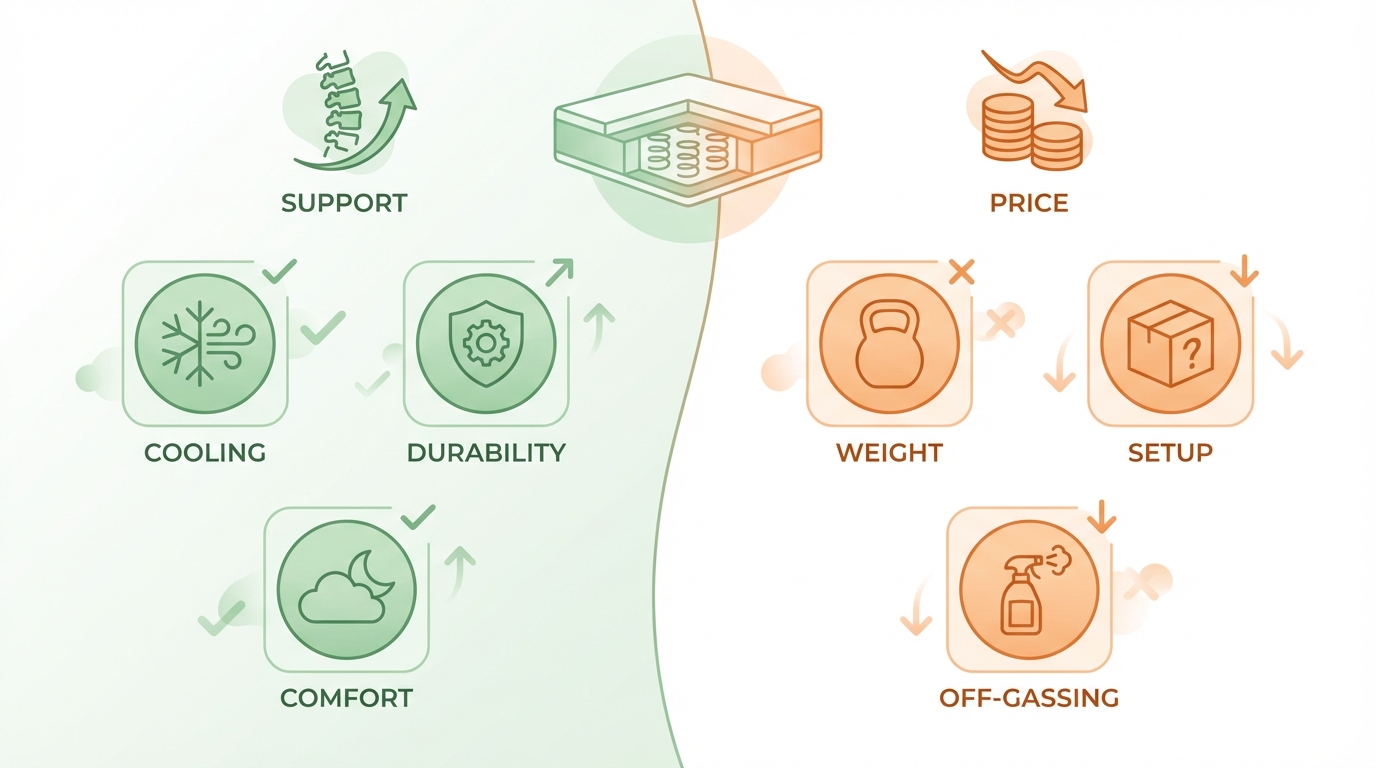
When people have been exposed to stylized bedroom scenes, they often assume any big cushy bed will feel luxurious. In practice, different mattress constructions behave very differently under real bodies. Understanding the main types will help you choose something that supports your spine, your sleep style, and whatever intimacy looks like in your life, without getting hung up on appearances.
Foam, Hybrid, And Traditional Innerspring Compared
Foam mattresses rely primarily on layers of polyurethane foam, memory foam, or other specialty foams to provide both comfort and support. They excel at contouring around your body, which can be a relief if you are a side sleeper with bony shoulders or sensitive hips. They also tend to perform very well for motion isolation, which is why many couples gravitate toward them when one partner is a restless mover. The trade off can be that some all foam designs feel a bit less buoyant, which may matter if you prefer a surface that is easier to move around on.
Hybrid mattresses combine a coil system with foam or latex comfort layers on top. This design aims to offer the best of both worlds, the bounce and airflow of springs plus the pressure relief of foam. For many people in , especially couples, hybrids are a sweet spot. The coils give a more traditional lifted feel that makes changing positions easier, while multi zone support can keep heavier areas like hips from sinking too far. For intimacy, hybrids often feel more responsive without sacrificing too much motion control.
Traditional innerspring mattresses use interconnected coil systems with thinner comfort layers. They are what many of us grew up on, which is why some shoppers describe them as “classic” or “hotel style.” They tend to be bouncier and more breathable but can create more pressure points if the comfort layers are not generous enough. They can work well for back and stomach sleepers who like a firmer, more elevated feel, but side sleepers often do better with either a well cushioned innerspring or a hybrid.
Here is a quick snapshot comparing three common mattress types in ways that actually matter at home.
| Mattress Type | What It Feels Like | Best For | Potential Drawbacks |
|---|---|---|---|
| All Foam | Hugging, contouring, very gentle on joints, minimal bounce | Side sleepers, people with joint pain, partners sensitive to motion | Can sleep warmer, may feel slow or “stuck” for some |
| Hybrid | Balanced, lifted but cushioned, moderate bounce | Most couples, combo sleepers, those wanting support plus pressure relief | Often higher priced, feel varies a lot by model |
| Traditional Innerspring | Bouncy, airy, more surface level support | Back and stomach sleepers who like a firm, responsive feel | More motion transfer, can create pressure points if too firm |
Many of the models we carry at Sleepology fall into the hybrid or enhanced innerspring category, because those designs tend to serve the widest range of bodies. For example, the Sealy Posturepedic Plus Medium Mattress – Paterson II Euro Pillow Top uses individually wrapped coils for targeted support and a plush Euro top for comfort. That kind of construction supports everyday sleep and intimate moments without forcing you to choose between pressure relief and ease of movement.
If you know you love the slow, contouring feel of foam, you can still get that experience while focusing on sleep health. Sleepology’s curated Best Foam Mattresses collection highlights models selected for support, quality foams, and durability, so you get more than just a trendy all foam bed in a box. Starting with a clear understanding of these categories will make everything else you read about mattresses feel less confusing.
Turning A Slang Search Into A Smarter Mattress Search
Step One: Clarify What You Truly Need From A Mattress
If you arrived here on a slang detour, this is a perfect moment to recalibrate. Instead of focusing on what looks appealing in movies or marketing, start by asking what your body and life actually need from a mattress. Pain patterns are one of the best guides. Do you wake with stiff lower back muscles, sore shoulders, numb hands, or a tight neck? Those details tell us whether you likely need more support, more pressure relief, or both.
Your primary sleep position is the second big clue. Side sleepers generally need a bit more softness at the surface so their shoulders and hips can sink in, while back sleepers often do better on a medium or medium firm surface that keeps the lumbar region supported. Stomach sleepers tend to require the firmest feel, because any sagging under the hips can overextend the spine. According to clinical guidance from sources like the Mayo Clinic, spinal alignment during sleep is critical for reducing strain on discs and surrounding muscles.
Next, consider your environment and daily rhythms. Are you in a humid climate where heat buildup is a constant frustration, or do you live in a cooler region and crave a cozier feel? Do you share your bed with a partner, kids, or pets, all of whom impact how much surface area you actually use? Being honest about these realities often changes the size and type of mattress that will serve you best. A queen can work for many couples, but partners who both move a lot might be much happier in a king.
Finally, think about longevity. A high quality mattress should serve you for several years. Cutting corners on support to get a trendy look can cost more in the long run if you replace the bed early because of discomfort. By contrast, choosing something like the Sealy Posturepedic Plus Firm Mattress – Paterson II Euro Pillow Top for a back or stomach sleeper can give you a durable, supportive foundation that protects your spine over time. A clear needs checklist will always beat a vague image borrowed from entertainment.
Step Two: Build A Complete Sleep System
A great mattress can still underperform if the rest of your sleep system is working against it. This is another place where the gap between fantasy and reality shows up. On screen, beds often feature a bare mattress or dramatically rumpled bedding. In real bedrooms, you need a consistent, supportive base, breathable layers, and protection for your investment if you want the mattress to keep doing its job.
The base or foundation is your first building block. Placing a premium mattress on a sagging frame or an old box spring can negate much of the support you just paid for. Matching your new mattress with a compatible, stable base, like the Sealy Mattress Base Boxspring Foundation | Low Profile 5 inch height, ensures the support system inside the mattress can perform properly. For people who need easier entry and exit from bed, pairing a mattress with an adjustable bed frame and base can also help with snoring, reflux, or circulation.
Protecting the mattress surface is the next step. A high quality, waterproof but breathable protector like the TEMPUR Adapt Mattress Protector – Waterproof Mattress Cover, Hypoallergenic guards against sweat, spills, and allergens. Organizations that focus on sleep health frequently remind consumers that dust mites and moisture can accumulate in unprotected mattresses over time, which can worsen allergies and contribute to odors. A protector is a simple way to keep the surface cleaner and more comfortable without changing the feel you chose.
Then you layer on comfort. Pillows, sheets, and optional toppers fine tune your experience. A travel friendly comfort bundle, such as the Tempur Pedic Mattress Topper Pillow Travel and Guest Bundle, can even extend familiar support to guest beds or trips, which keeps your sleep more consistent. Exploring Sleepology’s pillows, sheets, toppers, and protectors collection will give you options to match your new mattress with breathable, supportive accessories.
“We used to think a mattress alone would solve everything. Mia helped us see our whole sleep setup as a system. We upgraded to a supportive base, added a protector, and swapped our flat pillows for better ones. The difference in comfort was night and day, and we ended up spending less overall than we had planned.” – Greg M., January
A Practical Mattress Shopping Checklist To Replace Confusion With Clarity
Once you understand that a “mattress actress” is slang and your real focus should be on sleep health, it helps to have concrete steps to follow. Many shoppers feel overwhelmed by options and marketing language. Having a simple checklist grounds the process in your own needs and takes the mystery out of the showroom or product page.
Start by setting a realistic budget range that feels comfortable for you. Remember that a mattress works for you every single night, so when you divide the cost by years of use, higher quality models often represent strong value. Next, write down your must haves, such as strong edge support, cooling technology, or compatibility with an adjustable base. This keeps you from getting sidetracked by flashy features that do not matter to your body.
Then, identify your deal breakers. Maybe you had a memory foam bed that slept hot, or an old innerspring that squeaked every time you rolled over. Communicate these experiences clearly when you talk with a knowledgeable guide. A good sleep consultant will respect these boundaries and steer you toward designs that address them, not dismiss them. Bringing a list of your usual sleep positions and any diagnosed conditions, such as sleep apnea or arthritis, can make that conversation even more productive.
Because you asked about a phrase connected to performance, it is also worth mentioning that a mattress should feel comfortable in all the ways you plan to use it, including reading, cuddling, and intimacy. That does not mean you need a “movie bed.” It simply means that the balance of cushioning and support should allow you to move without strain and rest without pressure points. Medium and medium firm hybrids often hit that balance well, which is why collections like Sleepology’s Best Hybrid Mattresses are such reliable starting points.
Here is a simple checklist you can use when you are ready to shop, either online or in store.
- Clarify your primary and secondary sleep positions for yourself and any partner
- Note any recurring pain or numbness you wake up with, and where you feel it
- Decide what size mattress your room and lifestyle truly support, not just the one you have now
- Set a realistic budget range, considering value over years of use instead of a single price tag
- Identify your temperature tendencies, whether you usually sleep hot, neutral, or cold
- List past mattress experiences you liked and disliked so your consultant can spot patterns
- Confirm base compatibility, including whether you want or already own an adjustable frame
- Plan to protect your new mattress with a waterproof but breathable protector from day one
Once you have these points gathered, talking with a Sleepologist becomes less about guessing and more about fine tuning. Instead of asking vague questions like “what is the best mattress,” which no expert can answer without context, you will be saying “we are side sleepers, one of us runs hot, and we need strong edge support.” That kind of clarity is how you move from confusion to confidence.
Conclusion: From Awkward Search Term To Better Nights Of Sleep
Stumbling across the phrase “mattress actress” can feel awkward, especially if all you wanted was information on beds. Now you know it is slang with roots in adult entertainment and online culture, not a term anyone uses in professional mattress circles. You also understand why it can be loaded and, at times, demeaning, especially toward women. Just as importantly, you have seen how easy it is for media images of beds to distract from what really matters, your health, comfort, and relationships.
Reframing your mattress as a health tool changes everything. When you start with your body, sleep patterns, and household realities, the right mattress type and support level begin to reveal themselves. Whether that points you toward a plush pillow top like the Sealy Pro Soft Dupont II, a balanced hybrid like the Brenham II, or another option entirely, the focus stays on how you feel when you wake up, not how your bed would look in a movie scene. Backing that choice up with a supportive base, protective layers, and quality pillows turns your bedroom into a true rest space.
If you still feel unsure, remember that you do not have to decode any of this alone. Talking with an experienced guide who lives in this world every day can save you time, money, and sore mornings. At Sleepology, our entire goal is to translate the noise of the mattress market into simple, honest guidance that fits your life. You took a slightly unusual path to get here, but you are exactly where you need to be to make a confident, informed decision and finally get the deep, restorative sleep your body has been asking for.
Frequently Asked Questions
Is a “mattress actress” an actual job in the mattress industry?
No, “mattress actress” is not a job title in the sleep or mattress industry. It is a slang term most commonly used to describe women who perform in explicit adult content, often in scenes involving beds. Professional roles in the mattress world have names like sleep consultant, product tester, or sales associate. If you are researching beds for health or comfort reasons, you can safely set that slang term aside and focus on clear, respectful language.
Does the term “mattress actress” always refer to pornography?
In many contexts, especially on slang sites and social media, it refers directly to pornography or sex work, which is why it can feel jarring to encounter by accident. In some discussions people use it more loosely to describe actresses who frequently appear in suggestive or intimate scenes in mainstream film or television. Regardless of the nuance, it is not a formal or neutral label, and many people consider it objectifying. If you want to talk about performers respectfully, terms like actor, adult performer, or sex worker are more accurate.
How do media portrayals of beds affect real life mattress expectations?
Media often shows mattresses as extremely plush, perfectly styled, and primarily linked to dramatic intimacy, which can create unrealistic expectations. People may think they need the softest, bounciest bed to have a “romantic” bedroom, even if that type of mattress worsens their back pain or sleep quality. In reality, organizations like the Sleep Foundation and medical centers emphasize support, alignment, and sleep continuity as the priorities for health. When you keep those principles in mind, it becomes easier to separate staged fantasy from your real nightly needs.
What kind of mattress is best for both sleep and intimacy for couples?
For many couples, a medium or medium firm hybrid strikes the best balance for both restful sleep and comfortable intimacy. Hybrids provide enough surface cushioning to relieve pressure on hips and shoulders, while the coil system adds responsiveness that makes movement easier. Good motion isolation helps partners avoid waking each other up, and strong edge support gives you more usable surface area. Models like the Sealy Posturepedic Plus and Elite hybrids are designed with these needs in mind, though the ideal choice will still depend on your specific bodies and sleep positions.
How can I tell if my current mattress is hurting my sleep?
Common signs include waking with new or worsening aches, especially in your lower back, shoulders, or hips, feeling more rested after sleeping on a different bed, and noticing visible sagging or body impressions that do not bounce back. Increased tossing and turning or waking frequently without a clear reason can also signal that your mattress is not providing adequate support. If your bed is more than seven to ten years old, many experts suggest evaluating it carefully, because materials naturally degrade over time even if the surface still looks acceptable.
Do I really need a mattress protector if I buy a high quality bed?
Yes, a mattress protector is still a smart idea, even on a premium mattress. Over time, sweat, skin oils, spills, and allergens can penetrate the surface layers and shorten the bed’s effective lifespan or worsen allergies. A waterproof but breathable protector, such as the TEMPUR Adapt model, creates a barrier without dramatically changing the feel you chose. Protectors are relatively inexpensive compared to the cost of a replacement mattress, and many manufacturers require them to keep warranties valid if there are stains.
Can an adjustable base actually improve my sleep, or is it just a luxury feature?
An adjustable base can meaningfully improve sleep for many people, not just as a luxury. Elevating the head can reduce snoring and symptoms of mild positional sleep apnea in some cases, and raising the legs can ease pressure on the lower back and improve circulation. People with acid reflux often find some relief by sleeping with the upper body slightly elevated. While not everyone needs an adjustable base, pairing one with a compatible mattress can be a practical way to address specific comfort and health concerns, especially if you spend time reading or working in bed.