

What Is A Euro Top Mattress? The Plush Hotel Feel, Explained
If you are shopping for a new mattress and keep seeing the phrase “Euro top,” it can feel like you are learning a new language while you are just trying to get a decent night of sleep. Maybe you have pressed down on a mattress in a store and loved the pillowy surface, then worried it might be too soft or wear out too quickly. Or you might already have some aches in your back or shoulders and you are wondering whether a Euro top will actually help or just look fancy on the sales tag. It is a lot to sort through when you are already tired.
This topic matters more than most people realize because that extra few inches of cushioning on top of a mattress can change how your spine lines up, how much pressure you feel through your hips and shoulders, and how long your new bed truly lasts. According to the Sleep Foundation, most adults need 7 to 9 hours of sleep per night, and comfort and support from the mattress are key drivers of whether you actually reach those hours consistently. When the top of your mattress is wrong for your body, you feel it in the form of tossing, waking up to reposition, or stiff, sore mornings.
You are in the right place if you want a clear, non‑salesy explanation of what a Euro top mattress is, how it differs from a standard pillow top, who it works best for, and how to tell if it is worth the extra money. Drawing on two decades of working directly with sleepers, I will walk you through the structure, benefits, drawbacks, and shopping criteria in plain language. Along the way, you will see how Euro tops show up in specific models, including some of the Sealy Posturepedic Euro pillow tops we carry at Sleepology, so you can connect the concept to real options.
By the time you finish reading, you should feel confident describing exactly what a Euro top mattress is, recognizing it in a showroom in a few seconds, and deciding whether it fits your sleep style, body type, and budget. Most importantly, you will be able to tell the difference between a mattress that only feels plush for a month or two and one that keeps your nights comfortable for years.
Euro Top Basics: What It Is And How It Works
When people ask “what is a Euro top mattress,” what they are really asking is what is going on in that top several inches that feels so different. A Euro top is a style of plush comfort layer that is sewn into the top of the mattress so it sits flush with the edges. Instead of looking like a big pillow perched on top, the extra padding is tucked under the main cover, creating a neat, stacked look. The goal is to add a thicker, more luxurious surface without losing underlying support.
Most Euro tops are made with foam or fiber materials. You will commonly see polyfoam, memory foam, latex foam, or high loft fibers like wool or specialized polyester blends. Sleep experts at organizations like Sleep Foundation and Sleepopolis describe Euro tops as slightly denser and more supportive than traditional pillow tops, which often feel very fluffy and loose. That extra density, combined with the way the layer is anchored into the mattress, is a big part of what gives Euro tops better edge support and often better durability than old‑school pillow tops.
It also helps to understand what a Euro top is not. A Euro top does not turn a bad mattress into a good one. It is not a removable topper and it is not a magic fix for a support system that is too soft or too firm underneath. Think of it as a built‑in comfort upgrade laid over a supportive core, usually coils or a hybrid coil and foam system. If the base is wrong for your body, the Euro top alone cannot correct that, although it can fine tune the feel quite a bit.
In everyday use, most people notice two things when they first lie on a Euro top mattress. The first is the gentle, even hug across the shoulders and hips that reduces that “pressure point” feeling. The second is that, unlike some pillow tops, you do not feel like you are falling toward the edge or rolling off when you get near the side. Research from independent reviewers and consumer testing groups such as Consumer Reports often notes that firmer edge reinforcement and slightly denser top layers correlate with longer mattress lifespans, which is one reason Euro tops have become common in mid and high tier innerspring and hybrid beds.
“I always thought those big ‘pillow’ beds in showroom displays would collapse after a year, but Mia walked me through the difference between a pillow top and a Euro top. I ended up with a Sealy Euro pillow top and it still feels supportive a year later, especially around the edges. My shoulders finally stop complaining in the morning.” – Jenna R., October
Euro Top vs Pillow Top vs Tight Top: The Structural Differences
Because so many shoppers are comparing plush options, a big part of understanding what a Euro top mattress is comes down to how it stacks up against pillow tops and traditional tight tops. These three styles might look similar from a distance, but there are meaningful construction differences that affect feel, longevity, and support.
How A Euro Top Is Built Compared To A Pillow Top
Both Euro tops and pillow tops start with the same idea. Manufacturers add an extra comfort layer on top of the main mattress to create a softer, more cushioned surface. Where they diverge is how that layer is attached. In a classic pillow top, the additional padding is sewn directly to the surface of the mattress cover with a noticeable seam just inside the edge. That seam creates a slight gap or “trench” between the pillow layer and the edge of the mattress, which is why pillow tops look like a giant pillow resting on the bed.
In a Euro top, the extra layer is sewn underneath the main cover and brought out flush with the edges of the mattress. There is no trench around the perimeter. The whole surface looks flat and tailored, almost like a stack of uniform layers. According to Sleep Foundation, this design typically uses slightly firmer, denser materials and feels more supportive around the edges while still being cushy in the center. That difference in attachment sounds small, but it changes how the top wears over time because there is less opportunity for the padding to shift or bunch.
From a comfort perspective, pillow tops tend to feel a little more “cloud like” right under the hips and shoulders, especially when they use soft, airy fiberfill. Many people love that at first, but lighter, looser materials usually compress faster. Euro tops, by contrast, often feel like a deeper, more even cradle. You still get pressure relief, but you do not sink unevenly into a puffy layer that flattens under your weight. If you have ever slept on a hotel mattress that felt luxurious yet still nicely supportive, there is a good chance it used a Euro top design.
“I tried a super fluffy pillow top at another store and it felt amazing for five minutes, but my lower back did not feel supported. At Sleepology, Mia put me on a Euro top hybrid and it was the first time I felt both cushioned and stable. That small construction difference made a huge difference for my back pain.” – Marcus L., November
Where Tight Tops Fit In
The third style you will see is a tight top. This is the classic, no extra pillow layer construction. The comfort materials are stacked directly under a taut cover, which is pulled tight across the surface. Tight tops can range from plush to extra firm depending on how much padding is underneath, but they will always feel a bit closer to the support core than a pillow or Euro top. Sleep specialists at Sleepopolis often recommend tight tops when people want a firmer, more responsive feel, especially for heavier sleepers and dedicated stomach sleepers.
Comparing these three styles is easier if you picture a spectrum. On one end, tight tops prioritize firmness, responsiveness, and a thinner comfort stack. In the middle, Euro tops blend cushioning with more controlled support and a clean, flush look. On the softer, loftier end, pillow tops maximize initial plushness and that “sink in” feeling, with a little more visual puff and usually a bit less edge support.
At A Glance: Euro Top vs Pillow Top vs Tight Top
To pull together the key differences, here is a quick visual comparison. This is the one table for this guide, so you can refer back to it while you read the rest.
| Feature | Euro Top | Pillow Top | Tight Top |
|---|---|---|---|
| How top is attached | Extra layer sewn under cover, flush with edge | Extra layer sewn on top, visible “pillow” edge | No additional top layer |
| Typical feel | Plush, even cushioning with solid support | Very soft, pillowy, deep initial sink | Closer to coils, can be firm or medium |
| Edge support | Usually stronger, more stable perimeter | Often weaker, can feel like rolling off | Depends on build, usually moderate to strong |
| Durability of top layer | Better, padding less likely to shift | Top can flatten or bunch over time | No separate top, depends on core and foams |
| Best for | Side and back sleepers wanting plush support | Side sleepers or light to average weight users | Back and stomach sleepers, heavier bodies |
If you struggle with hip or shoulder pressure but still want a mattress that feels composed and supportive, Euro tops often hit that middle ground very well. If you strongly prefer a firmer surface or you like to feel more “on” the bed rather than “in” it, you may be happier with a quality tight top instead.
How A Euro Top Mattress Feels In Real Life

Understanding structure is helpful, but your body experiences mattresses in very practical ways. When someone in the showroom asks “what is a Euro top mattress,” what they really want to know is how it will feel tonight, next year, and each time their sleep position changes in the middle of the night.
The first thing most people notice when they lie on a Euro top is the gradual transition from surface softness to underlying support. Press your hand into the mattress and the top layers yield a bit under your palm, then firm up as you go deeper. On your back, that usually translates into your hips settling just enough to flatten your spine, while your shoulders and upper back feel lightly cradled instead of pinned. This combination is a big reason the Cleveland Clinic and other medical centers point out that medium to medium firm surfaces often give the best blend of support and pressure relief for back and side sleepers who struggle with pain.
For side sleepers, the Euro top’s job is to let the shoulders and hips come down without allowing the midsection to sag. If you have ever felt a sharp spot at your shoulder on a firm tight top, or a hammock like curve on an overly soft foam mattress, you already know what happens when that balance is off. On a well built Euro top hybrid, the plush top distributes pressure over a wider area while the coil or foam core keeps your spine closer to neutral.
“I am a lifelong side sleeper and honestly assumed discomfort was just part of the deal. After Mia steered me toward a Euro top hybrid, I woke up the first week thinking my shoulder fell asleep because I was not in pain for the first time in years. It sounds dramatic, but that layered plushness really did change my nights.” – Sara P., September
Motion is another piece of how a Euro top feels. The extra cushioning usually absorbs more of the small movements that happen when you or your partner shift. The Mayo Clinic notes that disturbed sleep from a partner’s movements can reduce time in deeper sleep stages, even if you do not fully wake up. Coils in the support core still matter for motion transfer, but the Euro top often acts as a buffer that softens abrupt movements and makes the bed feel more tranquil.
Finally, there is the edge experience. Sit on the side of a Euro top mattress and you will typically feel more “held up” compared with a lofty pillow top. The flush design and denser foams support your weight when you put on socks, slide out of bed, or sleep near the edge, which is especially important for couples sharing a smaller size like a queen. Heavier sleepers, older adults, and anyone with knee or hip issues often appreciate this, because a collapsing edge makes getting up feel like climbing out of a pit.
Who A Euro Top Mattress Is Best For
Not every plush mattress is right for every body. A Euro top can be wonderful in the right scenario and frustrating in the wrong one. Here is how it tends to match up with real world sleepers.
Side Sleepers And Combination Sleepers
Side sleepers are the group most likely to benefit from the extra comfort layer on a Euro top. When you lie on your side, your shoulders and hips take a disproportionate share of your body weight. If the surface is too firm, you feel sharp pressure and your body often compensates by twisting or curling, which can irritate your lower back and neck. Sleep research consistently shows that pressure relief at the shoulder and hip is crucial for comfortable side sleeping.
A good Euro top offers that relief without letting you sink so deeply that your spine curves sideways. For side sleepers who also roll onto their back occasionally, or for combination sleepers who shift among several positions, this ability to adapt is very helpful. Many medium or medium firm Euro top hybrids fall into the “sweet spot” firmness range that Sleep Foundation and similar organizations often recommend for side and back sleepers, which makes them versatile for couples with different habits.
That is why something like the Sealy Posturepedic Plus Medium Mattress – Paterson II Euro Pillow Top tends to work so well for a lot of side and combo sleepers. The Euro top cushions the critical joints, while the zoned coil support underneath helps keep your lumbar area properly aligned.
Back Sleepers Wanting More Cushion
Back sleepers usually do best when their mattress keeps the natural curve of the spine intact without pressing too hard into the shoulders or tailbone. If the bed is very firm, you can feel that hard spot right between the shoulder blades or at the top of the glutes. If it is very soft, your hips can sink and flatten the natural curve, which can irritate the lower back. A Euro top with a supportive coil or high density foam base can offer a surprisingly good middle path for many back sleepers.
By adding a bit of surface plushness over a medium or firm core, a Euro top lets the muscles in the back relax while the spine stays broadly aligned. For back sleepers who never thought they would like a “pillow top,” this construction can be a revelation because it does not feel mushy. Models like the Sealy Posturepedic Pro Medium Mattress – Dupont II Euro Pillow Top combine that gentler surface with reinforced zones under the heavier parts of the body, which is exactly what most back sleepers need.
Sleepers With Joint Or Shoulder Pain
If you deal with arthritis, bursitis, or general joint sensitivity, hard pressure points are often what wake you up. A Euro top that uses quality foam or fiber layers can spread your weight over a larger area, which reduces peak pressure on those sore spots. Clinical sleep programs often point out that comfort layers that relieve pressure without losing support can improve sleep continuity, which means fewer micro awakenings that you may not remember but that still leave you tired.
That does not mean everyone with pain should automatically choose the thickest, plushest top available. For example, if you have a history of lower back pain and you sleep on your stomach, overdoing the softness can actually worsen your symptoms. But if your main complaints are sharp pressure in the shoulders, hips, or knees, and you primarily sleep on your side or back, a well tuned Euro top is worth strong consideration.
Who Should Be Cautious With Euro Tops
Every design has tradeoffs. While Euro tops solve specific comfort problems well, there are situations where you might be happier with a different construction.
Heavier Sleepers Who Prefer Extra Firm Support
If you are significantly above average weight, particularly over about 250 pounds, you exert more force on a mattress surface. That does not mean you cannot enjoy a Euro top, but it does mean you need to be more selective. Softer Euro tops paired with softer cores can let heavier bodies sink more deeply than ideal, which can stress the lower back and cause you to feel stuck in the mattress.
In those cases, a firmer tight top or a Euro top built on a very robust, firmer coil system is usually a better choice. Sometimes we pair heavier sleepers with firm hybrids from our curated collection of the best mattresses for back sleepers, which often include options that favor stronger underlying support with more subtle surface cushioning. The key is making sure the comfort layers do not overpower the support system.
Strict Stomach Sleepers
Stomach sleeping places the most load through the hips and midsection. If the surface allows those areas to sink too far, your spine bows downward, which can lead to strain in the lower back and neck. This is why many medical and sleep organizations, including the Mayo Clinic, often caution stomach sleepers to look for firmer mattresses that keep the hips lifted in line with the rest of the body.
Some Euro tops are firm enough to work for stomach sleepers, especially those built on a very supportive core with only a moderate top thickness. However, very plush Euro tops are usually a poor fit for people who sleep on their stomach all night. In that scenario, a firmer tight top or a mattress purpose built for this position, such as those in the best mattresses for stomach sleepers collection, often provides better alignment and long term comfort.
Inside The Euro Top: Materials And What They Mean For You
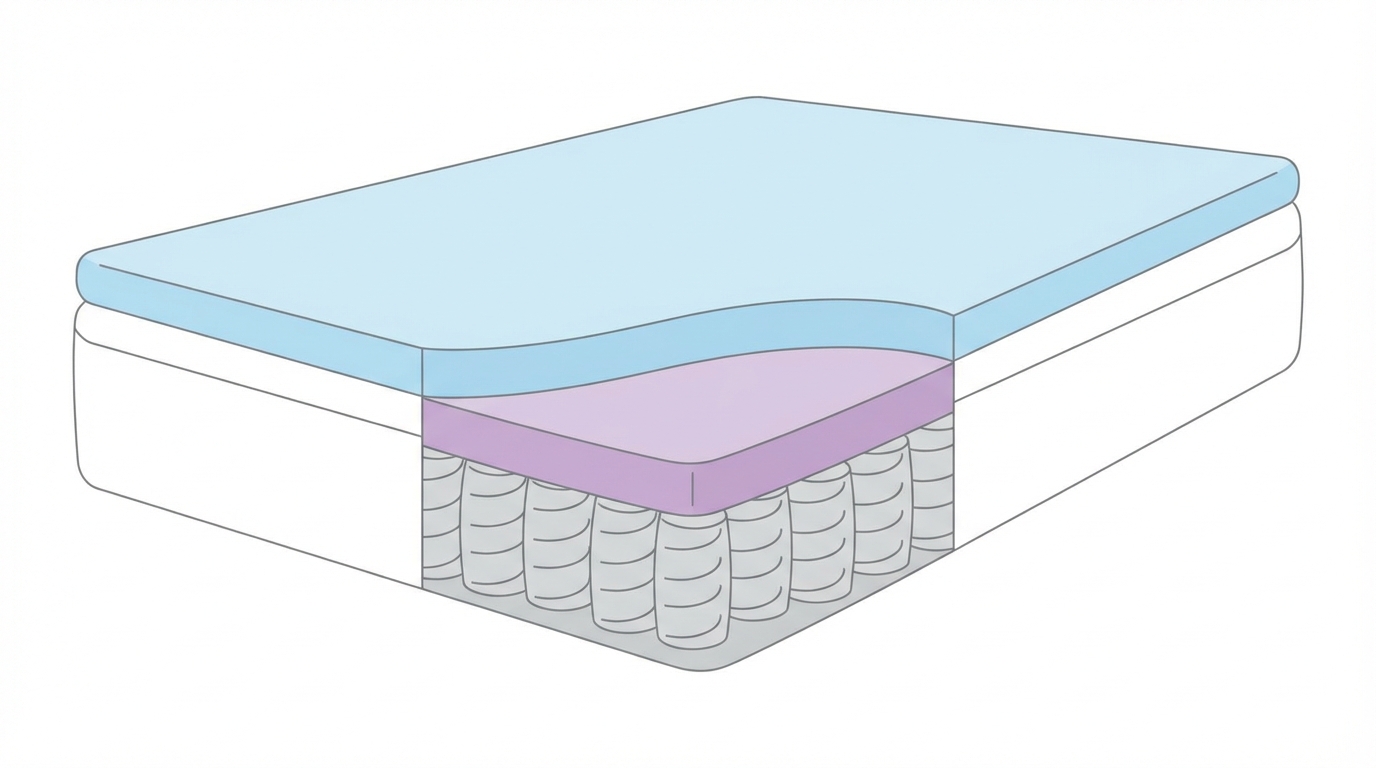
The phrase “Euro top” describes how the layer is attached, not what it is made of. To really understand what a Euro top mattress is, you need to look under the cover a bit and see which materials are doing the work. Different comfort materials change how the mattress feels, how it breathes, and how long it stays comfortable.
Foam Based Euro Tops
Many Euro tops use foam as the primary comfort material. This may be traditional polyfoam, memory foam, or latex foam. Each has a distinct personality. Polyfoam can range from soft to quite firm and is often used in multiple layers to control the feel. Memory foam responds more slowly and contours closely around the body, which is excellent for pressure relief but can trap more heat if the formulation is old or very dense. Latex foam, often made from natural rubber sap, is buoyant, a bit springy, and tends to sleep cooler than dense memory foam.
Foam based Euro tops tend to give the most pronounced “hug.” When paired with individually wrapped coils in the support core, the result is a hybrid that conforms closely but is still easier to move around on than a full foam mattress. However, the durability of these layers varies widely. Higher density foams generally keep their feel longer, while cheaper, low density foams are more prone to early body impressions.
Fiber And Mixed Material Euro Tops
Some Euro tops use high loft fiberfill, wool, or blends of foam and fiber. Wool is naturally temperature regulating and can keep you warm in winter and comfortably dry in summer. Fiberfill, often made from polyester or other synthetics, can create a lofty, pillowy surface that feels like sleeping on a thick quilted comforter. These materials are often layered over firmer foam to combine surface plushness with more resilient support underneath.
Mixed material Euro tops are common in mattresses that aim for a traditional hotel bed feel. They are very comfortable initially and can be a great option if you dislike the slow sink of some memory foams. The tradeoff is that fibrous materials can compress a bit faster over time. Better brands manage this with careful quilting and by combining fibers with denser foams in strategic zones to slow down flattening.
Because construction details matter so much, we tend to highlight specific models in store rather than just talking about material names. For example, the Sealy Posturepedic Pro Soft Mattress – Dupont II Euro Pillow Top uses targeted foams in the Euro top to create a very plush feel for lighter side sleepers, while firmer Euro top models like the Sealy Posturepedic Plus Firm Mattress – Paterson II Euro Pillow Top tune those same concepts for people who need more structure.
Benefits Of A Euro Top Mattress
Now that you know how Euro tops are built and who they tend to work for, it is worth spelling out the core advantages. These are the reasons so many of the better innerspring and hybrid mattresses you see in stores use Euro tops more often than classic pillow tops today.
One major benefit is balanced pressure relief. Because Euro tops use a thicker, integrated comfort package, they can relieve pressure at the joints without letting you drop straight into the support core. For side and back sleepers, this often means fewer hot spots and less tossing from shoulder or hip discomfort. Given that frequent awakenings fragment sleep and cut into time spent in restorative deep and REM stages, as outlined in basic sleep science research, that alone can improve how rested you feel.
Another advantage is edge stability. Where classic pillow tops often slump or compress around the perimeter, the flush construction of a Euro top tends to support you more evenly across the entire surface. This gives couples more breathable room to spread out, and it makes sitting or sleeping near the edge more comfortable. It is also a sign that the padding layers are anchored in place, which usually bodes well for durability.
Euro tops also give mattresses a more refined look and a predictable feel. Rather than a billowy pillow shape that eventually shifts, you get a surface that looks and behaves like a single, thick comfort layer. This makes it easier to predict how the mattress will feel over time, especially when you look at the density and type of foams or fibers involved.
Potential Drawbacks And How To Avoid Them
As helpful as Euro tops can be, there are a few downsides to be aware of so you can shop with eyes open. None of these are deal breakers on their own, but they are important to factor into your decision.
One concern is that some Euro tops are simply too soft for certain sleepers. If you are a strict stomach sleeper or you carry more weight through the midsection, a plush Euro top on a medium core can let your hips sink too far. Over months and years, that kind of poor alignment can contribute to lower back strain. The way around this is to choose firmer Euro top options or skip the extra top layer altogether in favor of a supportive tight top, particularly if you fall into these higher risk categories.
Another potential issue is heat retention. While Euro tops themselves do not automatically sleep hot, thick foam based comfort stacks can trap more warmth than thinner, more breathable designs. If you are a hot sleeper, it is smart to look for Euro tops that use breathable components like open cell foams, gel infusions, or natural fibers like cotton and wool. Pairing your mattress with breathable bedding, such as the options in our pillows, sheets, toppers, and protectors collection, can also help your sleep surface stay cooler and drier.
Some people also worry, understandably, about sagging. Pillow tops have earned a reputation in the past for flattening out long before the support core wears out. Euro tops are generally better in this regard because the padding is less free to shift. Still, cheaper versions that rely on low density materials can develop body impressions. The solution is to pay attention to material quality and warranty terms. Brands that back their Euro tops with sag coverage and use higher density foams or quality fibers are far less likely to leave you with a lumpy surface in a couple of years.
How Long Does A Euro Top Mattress Last?
Durability is one of the most common follow up questions once someone understands what a Euro top mattress is. Most people know they will spend years with their decision and they do not want a mattress that feels great for the first twelve months and then slowly deflates. The good news is that Euro tops, when built well, tend to outlast traditional pillow tops.
Independent testing and expert opinions, including explanations from Sleep Foundation and Sleepopolis, generally estimate that a well constructed Euro top hybrid can last in the neighborhood of eight to ten years with normal use. That is similar to, or in some cases slightly better than, the expected lifespan of a standard innerspring or hybrid mattress. The main variable is the quality of the comfort materials. High density foams and resilient fibers compress more slowly and rebound better night after night.
Your own habits also play a role. Regularly rotating the mattress head to foot a few times a year helps distribute wear more evenly across the surface, which reduces the chance of deep body impressions in one specific area. Using a supportive foundation or base, keeping the mattress dry and protected, and avoiding sitting on the same small edge spot for hours a day will all help your Euro top age more gracefully. If you do run into premature sagging, a strong warranty that includes measurable impression coverage can give you recourse.
The key takeaway is that a Euro top is not inherently fragile. In many designs it is actually part of what makes the mattress feel good for longer, as long as the manufacturer does not cut corners on the materials inside that extra layer.
How Euro Top Mattresses Compare To All Foam And Hybrid Options
Another angle people ask about is how Euro tops stack up against other common constructions like all foam mattresses or non Euro top hybrids. Since so many mattresses today come labeled “hybrid,” it can be confusing to place Euro tops within that bigger landscape.
European style tops usually sit on innerspring or hybrid cores. That means that underneath the plush upper section, you will typically find a tall layer of steel coils, often individually wrapped. Compared to all foam mattresses, this coil support tends to feel more buoyant and responsive, with better airflow through the interior of the bed. People who dislike the stuck in the mud feeling of some memory foam beds often prefer this kind of support.
All foam mattresses, especially the ones you see in curated collections like the best foam mattresses, can still work beautifully for many sleepers, particularly lighter individuals or those who love close conforming and superior motion isolation. They just achieve their goal without coils, and they rely entirely on varying densities of foam for both comfort and support.
Non Euro top hybrids either use a tight top or a classic pillow top. A tight top hybrid still gives you that responsive coil support, but with a thinner, more streamlined comfort system. This generally feels firmer and more direct. A pillow top hybrid pushes further toward plushness with that extra quilted topper on top. Euro top hybrids sit in between, offering more substantial, integrated cushioning than a tight top and a more stable, tailored feel than a pillow top.
Knowing where Euro tops fit relative to these styles can help you decide whether what you need is really extra surface plushness or a different kind of support system altogether.
Practical Shopping Advice: Choosing The Right Euro Top For You

Once you understand what a Euro top mattress is and who it tends to suit, the next question is how to pick the right one from a wall of options. This is where a few grounded criteria keep you from getting swayed by marketing language alone.
Start with your primary sleep position and body type. If you are a side sleeper in the light to average weight range, a medium or soft Euro top on a solid coil or hybrid base often works very well. Something like the Sealy Posturepedic Pro Soft Mattress – Dupont II Euro Pillow Top could be a match because it pairs a very pressure relieving top with dependable support underneath. If you are closer to the middle of the firmness spectrum in your preferences, or you flip between back and side, a medium Euro top such as the Sealy Posturepedic Elite Medium Mattress – Brenham II Euro Pillow Top typically offers a nice blend of comfort and stability.
Check the thickness and materials of the Euro top. A modestly thick, denser Euro top often ages more gracefully than a ultra thick, super soft one packed with low density foams. If you run warm at night, see whether the top uses cooling foams, breathable fibers, or natural textiles like cotton and wool. High quality quilting and zoning that places slightly firmer foams under the lumbar area are signs that a lot of thought went into the design.
Pay attention to edge support and motion control in the showroom if you can. Sit on the side and feel how much you sink. Lie near the edge and see if it feels secure. If you share the bed, have your partner roll or sit next to you while you lie still, so you can gauge how much movement you feel through the Euro top. These simple tests tell you as much about real world performance as spec sheets do.
Finally, remember that your comfort does not stop at the mattress. The wrong pillow or heavy, non breathable bedding can sabotage the advantages of a great Euro top. Once you choose your mattress, pairing it with an appropriate pillow and breathable sheets from a curated collection, and considering a supportive travel or guest option like the Tempur‑Pedic Mattress Topper – Pillow Travel and Guest Bundle, rounds out your comfort system.
Quick Euro Top Mattress Buying Checklist
To keep all of this straight while you are shopping, it helps to have a short mental checklist. This is one of the rare cases where a bullet list is genuinely useful, especially if you like to check things off as you go.
Before you choose a Euro top mattress, make sure you have considered:
- Your primary sleep position and whether you wake with pressure in your shoulders, hips, or lower back
- Your body weight and whether you tend to sink deeply into softer mattresses
- The thickness of the Euro top and the quality of the foams or fibers inside it
- How supportive and responsive the underlying core feels when you sit and lie on different parts of the bed
- Edge support, especially if you share the bed or sit on the side frequently
- Temperature preferences, including whether you sleep hot and what cooling features the mattress and your bedding offer
- Warranty coverage on sagging and body impressions, and whether the brand has a track record of standing behind its beds
Once you have worked through that list, you will usually find that one or two models feel clearly better aligned with your body and your priorities than the others. That clarity is exactly what turns a confusing showroom visit into a confident, informed decision.
Conclusion: Is A Euro Top Mattress Right For You?
Understanding what a Euro top mattress is comes down to a simple idea. It is a mattress with a built in, plush comfort layer that is sewn under the cover so it sits flush with the edges, creating even, tailored cushioning over a supportive core. That design exists to give you deeper pressure relief and a more luxurious surface without losing the structure your spine needs.
For many side sleepers, back sleepers, and combination sleepers, especially those who wake up with sore shoulders or hips on firmer beds, a quality Euro top can feel like a welcome upgrade. It offers a way to relieve pressure and soften the surface while maintaining stable support and stronger edges than a classic pillow top. For heavier bodies, strict stomach sleepers, or people who simply prefer a very firm feel, a well chosen tight top or a firmer Euro top built on a robust core may be a better match.
If you are still unsure, you do not have to figure this out alone. At Sleepology we spend a lot of time listening to your sleep history, your pain points, your preferences, and even your partner’s habits before pairing you with specific beds, whether that is one of our Sealy Posturepedic Euro pillow tops or a different style altogether. With a little guidance and a clearer understanding of how Euro tops work, you can move from “all mattresses feel the same” to “this is the one that actually feels like it was made for my body.”
The goal is simple. You deserve a bed that quietly does its job every night, so you can focus on living your days, not thinking about your mattress. If a Euro top turns out to be that missing piece, it is worth choosing one built to support you well into the future.
Frequently Asked Questions
Are Euro top mattresses good for back pain?
Euro top mattresses can be an excellent option for certain types of back pain because they marry cushioning with real underlying support. The plush top takes pressure off the shoulders and hips, which can help your muscles relax, while the coil or foam core underneath keeps your spine broadly aligned. Many pain clinics and organizations such as the Cleveland Clinic point out that medium to medium firm mattresses often provide the best balance for back pain, and a well designed Euro top often lands right in that range. That said, if your back pain is severe, ongoing, or related to a diagnosed condition, it is important to talk with your healthcare provider about which firmness and support level they recommend for you personally.
How is a Euro top different from a memory foam mattress?
A Euro top is a way of building the upper comfort layers of a mattress, while “memory foam mattress” usually refers to a bed made entirely or primarily from memory foam. Many Euro tops actually contain memory foam, but they sit on a coil or hybrid core rather than a thick block of foam. This tends to make Euro top hybrids feel more buoyant and responsive with better airflow than some all foam beds. Memory foam mattresses, especially denser ones, often excel at motion isolation and close contouring, which can be ideal for some sleepers but too enveloping for others. The right choice depends on whether you prefer a floating on top feel or a deeply hugged, slow responding surface.
Do Euro top mattresses sleep hot?
Euro tops do not automatically sleep hot, but thick layers of traditional foam can hold onto more heat if the mattress is not designed with temperature control in mind. Many modern Euro top mattresses address this with open cell foams, gel infusions, breathable covers, or natural fibers such as cotton and wool, which help move heat and moisture away from your body. External choices also matter. Lightweight, breathable sheets and pillows that do not trap heat, such as those in our pillows, sheets, toppers, protectors collection, can make a noticeable difference. If you are a hot sleeper, ask specifically how each Euro top model handles temperature and test it in similar bedding to what you use at home when possible.
Can I flip a Euro top mattress to extend its life?
In almost all modern designs, you should not flip a Euro top mattress. The Euro top is only on one side, which means flipping the bed would put you directly on the firmer support core. This usually feels very uncomfortable and is not how the mattress was engineered to be used. What you can and should do is rotate the mattress head to foot a few times a year. Rotating helps distribute wear more evenly, so you are not creating deep impressions in just one section of the Euro top. Always check the care instructions from the manufacturer, but rotation, a good foundation, and a protective cover together go a long way toward preserving the feel of your mattress.
How thick should a Euro top be?
Most Euro tops are between about 2 and 4 inches thick in terms of the extra comfort package added above the main support system. Anything much thinner starts to feel like a simple quilted cover rather than a distinct top, while extremely thick tops can sometimes introduce too much sink for certain sleepers. Sleep Foundation notes that additional padding layers in Euro or pillow tops generally fall in this 1 to 4 inch range, with Euro tops tending toward the denser end of the spectrum. In practice, the right thickness for you depends on your weight, sleep position, and how plush you want the surface to feel. A lighter side sleeper might love a thicker, softer Euro top, while a heavier back sleeper might do better with a slightly thinner, firmer one.
Are Euro top mattresses worth the extra cost?
Whether a Euro top is “worth it” depends on what problem you are trying to solve. If you already sleep comfortably with no pressure points on a quality tight top mattress, you may not need the extra plushness. But if you wake with sore shoulders or hips on firmer beds, or you have tried basic innerspring mattresses and found them too flat and unforgiving, the added comfort and refined feel a Euro top offers can be a very good value over the eight to ten years you will likely own the bed. For many people, the improved pressure relief, better edge support, and more luxurious surface easily justify a modest price difference, especially when the mattress is built from durable materials and backed with a solid warranty.
Will a Euro top make my bed feel too tall?
Euro top mattresses do tend to be a bit thicker than comparable tight top models, because you are adding several inches of comfort material on top of the core. Most modern mattresses, Euro top or not, fall somewhere between about 10 and 15 inches in overall height. If you are shorter, have mobility challenges, or already have a tall bed frame, it is worth measuring your current sleep surface height and comparing it to the Euro top models you are considering. You can always adjust your frame or foundation choice to keep the total bed height manageable. The goal is to have a bed that is easy to sit down on and stand up from without feeling like you are climbing up or dropping down.