

What Goes Under a Mattress? The Complete Guide To Bases, Frames, And Real Support
If you have ever stood in your bedroom staring at a mattress on the floor, or wondered whether that old box spring you inherited is actually helping or hurting your back, you are not alone. I talk to people every week who have invested in a great mattress, only to discover that what goes under it is quietly undoing their good intentions. The result is familiar: sagging spots, new aches in the morning, and a bed that feels tired long before its time.
What lives under your mattress does a lot of invisible work. It carries your weight night after night, it shapes how firm or soft the mattress feels, and it can make the difference between a setup that lasts 10 years and one that needs replacing in 3. According to organizations like the Sleep Foundation, support and alignment are core pillars of healthy sleep, and your base plays as big a role in that as the mattress itself. When the base is wrong, your spine pays for it.
Here, I will walk you through exactly what should go under a mattress, how to match the right base to your mattress type, and how to avoid the most common (and expensive) mistakes people make. You will learn how different bases change the feel of your bed, what to do if you love the height of a box spring but own a hybrid mattress, and how to choose a setup that truly supports your body, your budget, and your space. By the end, you should feel confident looking at your current bed and knowing whether the foundation is helping you sleep well or quietly working against you.
Most importantly, I want you to feel reassured that this is fixable. Whether you are outfitting a new bedroom, upgrading from the floor, or trying to squeeze a few more comfortable years out of a mattress you already like, the right base and frame can be a powerful upgrade. You do not need to guess. You just need a clear, honest guide to what goes under a mattress and why it matters so much.
Why What Goes Under Your Mattress Matters So Much
Before we get into box springs, platforms, and adjustable bases, it helps to understand what a base is actually supposed to do. A good base distributes weight evenly across the entire surface of your mattress, so no single area is overloaded. When that load is uneven, you see dips where you sleep, a bowing middle, and edges that feel like they are giving up. When load is even, your mattress materials can do what they were designed to do: contour, support, and bounce back.
There is also the question of airflow. Many people do not realize that a mattress on a solid, non ventilated surface or directly on the floor can trap moisture. That moisture can come from your body or from humidity in the room. Without airflow underneath, the mattress can become a breeding ground for mold and dust mites over time, especially in humid climates. The Cleveland Clinic and similar health organizations regularly highlight how indoor allergens and mold can aggravate asthma, allergies, and nighttime congestion. Your base is part of your home’s air quality story, not just your comfort story.
The base also tells your mattress how firm to feel. Put the same mattress on a rigid platform and it will feel firmer than it does on a slightly flexing foundation. This is one reason two people can buy the same model and report completely different experiences. When I help someone choose a back friendly model, I always ask what it is sitting on. Sometimes, the fastest route to better comfort is not replacing the mattress, but putting the right foundation underneath it.
Finally, there is the money question. A quality mattress is a real investment, and manufacturers know that the base can make or break longevity. That is why many major brands specify in their warranties that the mattress must be used on an appropriate, supportive base with slats no more than a certain distance apart, often around 3 inches. If you skip the right foundation, you may accidentally void your warranty or shorten your mattress lifespan by several years. Choosing wisely is not just about comfort tonight. It is quiet insurance for the next decade.
“We almost replaced our mattress because of a sag in the middle. Mia looked at photos and immediately pointed out that our slats were too far apart. We switched to a proper foundation and the difference was night and day. Saved us at least $1,000.” – Lauren P., November
The Core Layers: Base, Frame, And Floor
When people ask what goes under a mattress, they are usually picturing that box shaped thing under the mattress and sometimes forgetting about the actual frame. It helps to think of your sleep setup as a stack of three potential layers, each with a job to do. Not every bed uses all three, but when they work together, the result is stable, supportive, and quiet.
Closest to the floor is the frame. This is the structure with legs that carries everything above it. Frames can be metal or wood, basic or decorative, but their primary role is to provide a stable footprint, keep the bed off the floor, and resist movement. On top of that, you may have a base, which is what directly supports the mattress. A base might be a box spring, a solid or slatted foundation, a platform deck, or an adjustable chassis. In some designs, the frame and base are integrated as one piece, such as a platform bed.
The mattress sits on that base, and above that you might add a topper or protector. Many shoppers confuse a mattress base with a bed frame and use the terms interchangeably, which makes it easy to buy the wrong component. For example, a simple metal frame without a box spring or foundation is not enough support for most modern mattresses. You will feel every bar underneath, and the risk of sagging is very high.
It is also worth noting that the floor itself is technically a base. Placing a mattress directly on a clean hardwood or laminate floor can feel surprisingly stable and firm. However, it introduces new problems with moisture, dust, and lack of airflow. The Sleep Foundation notes that direct floor placement can increase mold and allergen risk, especially for sleepers with respiratory issues, and it often voids warranties. So while the floor might work as a short term solution, it is not a long term strategy I recommend.
Over years in this industry, I have found that once people understand which layer is doing what, their decisions get much easier. Instead of guessing, they can say, “I already have a solid wooden frame I like, so I need a good foundation on top of that.” Or, “I want to simplify and switch to a platform base that replaces both the foundation and frame.” That clarity is the first step toward a bed that truly supports you.
Box Springs: When They Work And When They Do Not
Box springs are often the first thing that comes to mind when someone pictures what goes under a mattress. For decades, especially in the era when almost every bed was an innerspring, they were the default. If you grew up with a bouncy bed you could jump on, you have probably spent time on a box spring.
A traditional box spring is a wooden or metal rectangle with metal coils inside, all wrapped in fabric. Those coils are designed to flex. When you lie down or move, the springs absorb some of that energy, acting as a shock absorber for the mattress above. This makes older style innerspring mattresses feel more buoyant and can help thin mattresses feel a little plusher and higher.
Today, though, mattress technology has changed. Foams, hybrids, and stacked comfort layers behave very differently than a simple coil unit. Most modern foam and hybrid mattresses are engineered to perform best on firm, non flexing bases. If you put a heavy, layered hybrid on a box spring, the springs below can bow or give too much, which allows the mattress to sag faster. Many manufacturers explicitly advise against pairing their foam or hybrid beds with box springs, and some will decline warranty coverage if you do it.
On the other hand, there are still situations where a box spring makes sense. If you have a traditional innerspring mattress that was designed to be used with a box spring, that pairing can give you the familiar bounce and responsiveness you enjoy. It also adds height, which can be helpful if you like to sit on the bed easily or have a lower frame. In some cases, you might also use a thin bunkie board on top of a box spring to create a more even surface without losing height.
When I talk with Sleepology customers who are buying new innerspring options like the Sealy Posturepedic Pro Soft Mattress – Dupont II Euro Pillow Top, we look at both the mattress specs and the base. If someone loves that traditional, slightly buoyant feel and has a compatible mattress, pairing it with a properly sized box style foundation such as the Sealy Mattress Base Boxspring Foundation | Low Profile 5 inch height can be a smart match.
The bottom line with box springs is simple. They belong with traditional coil mattresses that were built for them. They are usually not appropriate for all foam or modern hybrids, and using them as a universal base is one of the fastest ways to shorten the life of a new mattress. If you are not sure which you have, checking the mattress label or asking a Sleepology specialist for a quick compatibility check is well worth the time.
“I had my old box spring under our new hybrid and thought the mattress was the problem. Mia explained that the springy base was letting the center sag. We switched to a solid foundation and the back pain I was blaming on the mattress eased up within a week.” – David R., October
Foundations: The Modern Workhorse Under Most Mattresses

If box springs were the hero of the coil mattress era, slatted foundations are the star of the foam and hybrid age. When you hear terms like “mattress foundation” or see a base that looks like a fabric wrapped rectangle with wooden slats inside, you are usually looking at a foundation rather than a true spring unit.
A foundation is typically built with a sturdy wooden frame and a span of evenly spaced slats across its width. Instead of flexing like a spring, those slats are designed to be firm and supportive. The result is a flat, stable surface that keeps the mattress level and well supported from edge to edge. There may still be a fabric cover, so visually it can resemble a box spring, but the feel is very different. When you press on a good foundation, it should feel solid, not bouncy.
Those slats do two crucial jobs. First, they limit sagging by distributing weight across many support points instead of a few bars or rails. In most cases, slats should be no more than about 3 inches apart for foam and hybrid mattresses. Second, the gaps between slats allow air to flow underneath the mattress. Sleep researchers often emphasize how temperature and humidity can affect sleep quality, and ventilated bases can help a mattress stay cooler and drier. Mayo Clinic guidance on insomnia, for example, notes that a comfortable sleep environment includes appropriate temperature and bedding that does not trap heat excessively.
Another advantage of foundations is versatility. While box springs are really best with old style innersprings, a quality foundation will support all foam, latex, hybrid, and even many newer innerspring designs. That makes them a safe, future friendly choice if you expect to change mattresses in the coming years. At Sleepology, when a customer purchases a hybrid like the Sealy Posturepedic Elite Soft Hybrid Mattress – Brenham II, I almost always recommend pairing it with a solid, slatted foundation or a compatible platform base, not a box spring.
It is also worth paying attention to foundation height. Standard height foundations typically add about 9 inches, while low profile versions like the 5 inch Sealy Mattress Base Boxspring Foundation | Low Profile 5 inch height are helpful if you have a thick mattress and do not want your bed too tall. Bed height is not just about looks. For many people, a comfortable height is one where you can sit on the edge with your feet flat on the floor and your knees bent at roughly a right angle. That is usually around 25 inches from floor to top of mattress for an average height adult.
For most modern mattresses, if someone asks me what should go under it and they do not already own a compatible platform or adjustable base, my default answer is “a quality slatted foundation.” It is the simplest, most universally safe way to give your mattress the support, ventilation, and stability it needs to perform the way it was designed.
Platform Beds: Base And Frame In One Clean Package
Platform beds have become very popular in recent years, and for good reason. Instead of buying a frame and a separate base, a platform combines those pieces into one. You place the mattress directly on top, and the platform’s slats or solid deck do the work of a foundation.
A typical platform bed is a frame with legs plus a series of wooden or metal slats that run across the width. Some designs use a solid panel with ventilation holes instead of slats, but the idea is the same. The structure underneath should be firm, with minimal flex. The legs lift the whole platform off the floor, creating storage space below and allowing air to circulate around the mattress.
One of the biggest advantages of a platform is simplicity. If you value a clean, modern look, a platform bed keeps the visual profile low and streamlined. You do not have to coordinate the look of a foundation with a frame, and you do not pay for two separate components. Many people also appreciate that platform beds are relatively easy to move and assemble, which can be a big plus for renters or anyone who expects to relocate in the next few years.
From a support perspective, platforms can be excellent for foam and hybrid mattresses if they are properly designed. The same rules about slat spacing apply. To support something like the Sealy Posturepedic Elite Medium Hybrid Mattress – Albany II, you want slats that are close together, usually 3 inches or less, with a center rail or leg support on queen and king sizes to prevent bowing. When those boxes are checked, a platform can provide the kind of firm, continuous support these mattresses need.
One potential trade off is height. Many platform designs sit lower to the ground than a traditional frame plus foundation setup. Some people love the grounded, contemporary feel of a low profile bed, while others, especially those with mobility limitations or knee pain, prefer a taller bed that is easier to stand up from. When we work with back and stomach sleepers choosing from collections like The Best Mattresses For Back Sleepers or The Best Mattresses For Stomach Sleepers, we always factor in how high the finished bed will sit and whether that fits the sleeper’s body and needs.
If you are considering a platform and already own a mattress, take a moment to measure your current bed height and ask yourself how it feels getting in and out. If you love your current height, look for a platform that keeps you in a similar range. If you constantly feel like you are climbing into bed or dropping down far to sit, this is a great opportunity to choose a platform height that works better for you.
Adjustable Bases: What Goes Under A Mattress When You Want Custom Positions
Adjustable bases are essentially powered platforms that can raise and lower the head and sometimes the foot of the bed. When you press a button on the remote, small motors inside the base move the different sections, allowing you to sit up, elevate your legs, or find a “zero gravity” position where your knees and chest are gently lifted.
From a health perspective, adjustable bases can be much more than a luxury. Research summarized by organizations like the American Academy of Sleep Medicine and the Sleep Foundation suggests that elevating the head of the bed can help reduce snoring, relieve some symptoms of mild sleep apnea, and ease nighttime acid reflux for many people. Elevating the legs can also help reduce pressure in the lower back and improve comfort for those with certain circulation issues or swelling.
Not every mattress works on an adjustable base, though. The best candidates are all foam, latex, and many hybrids that are flexible enough to bend without damaging their internal structure. Very rigid mattresses, some very thick models, or ones with border wire around the edges are often poor matches. When in doubt, check the mattress manufacturer’s guidance or talk to a Sleepology advisor before pairing a mattress with an adjustable base.
From a “what goes under a mattress” viewpoint, the adjustable base is both base and frame. You do not need a box spring or separate foundation. The adjustable chassis sits on legs and directly supports the mattress. If you love reading or watching TV in bed, or you wake with shoulder, hip, or back pain that seems to ease when you adjust your position, looking at an Adjustable Bed Frame and Base is often a smart move.
One thing I always encourage people to consider is how an adjustable base changes their daily routine. If you use your bed as a lounge spot in the evenings, being able to support your back and neck without stacking pillows can be a game changer. And for couples, many adjustable setups allow each person to control their own side independently, which is especially valuable when one person needs more elevation while the other prefers lying flat.
“My husband has reflux and I snore. We were propping ourselves up on a mountain of pillows and still waking uncomfortable. The adjustable base Mia recommended lets us raise the head just enough. We both sleep flatter on the mattress with way less tossing and shifting.” – Jennifer L., December
Other Under Mattress Helpers: Bunkie Boards, Floor Setups, And Tatami Style Solutions
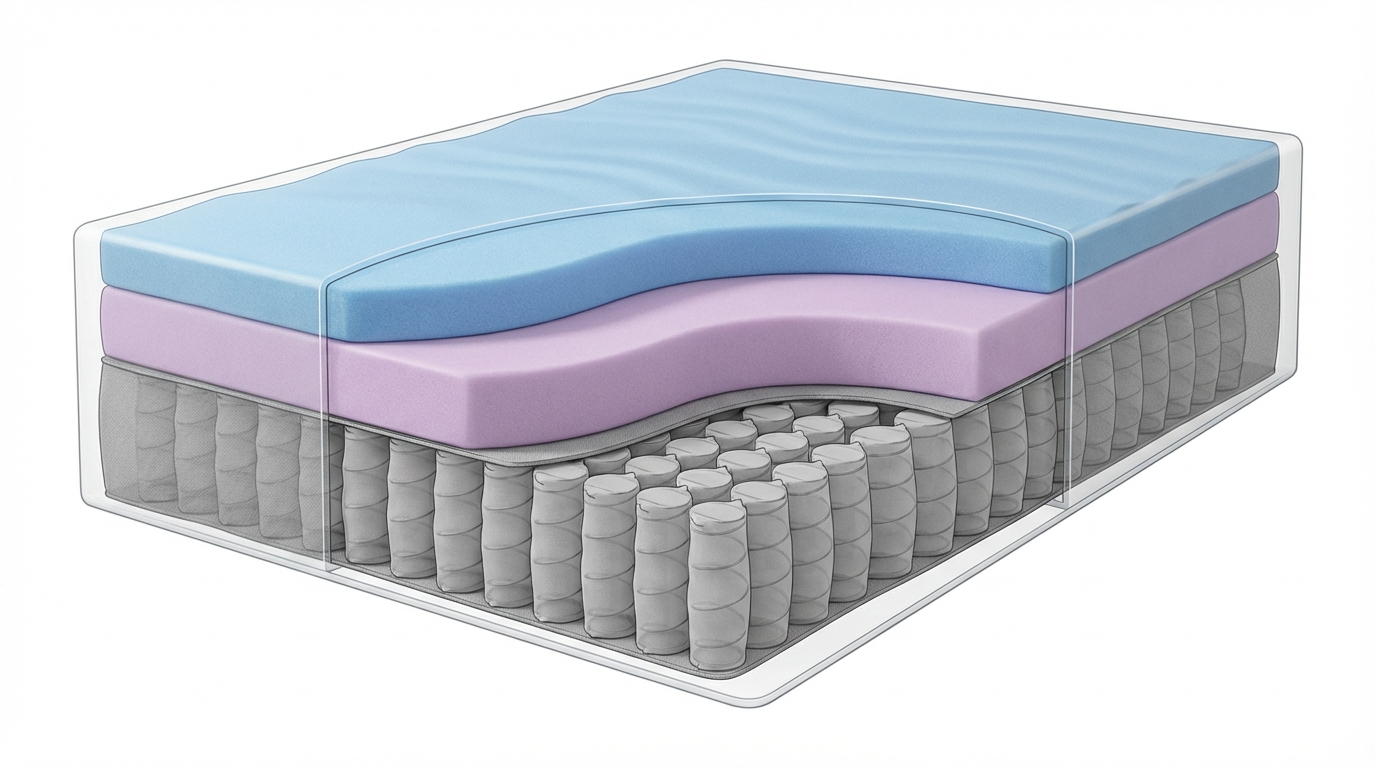
Beyond the main categories of box springs, foundations, platforms, and adjustable bases, there are a few supporting players that can make or break your setup. These are not always stand alone bases, but they can be very helpful in specific scenarios.
A bunkie board is a thin, usually 1 to 3 inch thick, rigid panel that sits directly under the mattress. It can be made of solid wood, plywood, or a metal grid, sometimes covered in fabric. Bunkie boards were originally developed for bunk beds, where guardrails limit how tall the mattress and base can be, but the idea has spread. Today, people use bunkie boards to add support without adding height, or to turn an old slatted frame with widely spaced slats into a more suitable surface for foam or hybrid mattresses.
If you have a frame you love aesthetically but the slat spacing is too wide to safely support your mattress, a bunkie board can be a cost effective fix. It creates a more uniform, supportive surface while allowing you to keep the look of your current bed. It can also be useful on top of a box spring if you are transitioning to a foam mattress and want to temporarily improve support while you plan a longer term base upgrade.
Tatami mats and similar floor padding solutions are more niche but worth mentioning. In some cultures, sleeping close to the floor on a firm mat is traditional, and a woven tatami mat provides structure and airflow under a futon style mattress. If you are experimenting with a floor setup for a season, using a breathable layer like this is much healthier than putting a mattress directly on carpet or bare concrete. However, for typical modern thicker mattresses, I still encourage people to move toward a true base as soon as possible for both hygiene and longevity.
As for simply using the floor under your mattress long term, the concerns go beyond comfort. Studies on indoor air and allergy triggers from groups like the American Lung Association point out that dust, pet dander, and other irritants are most concentrated near the floor. When your nose is inches from that zone, night after night, you are more likely to experience congestion and irritation. Combined with the moisture and mold concerns I mentioned earlier, this is why I consider the floor a short term workaround, not a healthy permanent base.
Metal And Wooden Bed Frames: The Structure Under The Base
While the base is what directly supports the mattress, the frame underneath that base is equally important. If the frame is weak, wobbly, or lacking a center support bar on larger sizes, even the best foundation can only do so much. Think of the frame as the bones of the bed. It keeps the whole system square, level, and quiet.
Metal bed frames are popular because they are strong for their weight, relatively affordable, and easy to move. A simple metal frame might just be a rectangle with legs and a center rail, designed to hold a box spring or foundation. More decorative metal beds might add headboards, footboards, and side rails, but underneath they still rely on sturdy steel to carry the load. When shopping for a metal frame, I look for features like multiple legs on queens and kings, a true center support bar, and solid hardware connections at the corners to reduce squeaks over time.
Wooden frames bring a different set of strengths. They often offer a warmer, more traditional or rustic look, with substantial headboards and side rails. A high quality hardwood frame can be extremely durable and stable. Some wooden frames include their own slats, effectively acting as both frame and base, but many are designed to be paired with a separate foundation or box spring. The key is to check whether the mattress will be resting on slats, on a platform deck, or on a foundation that sits inside the frame.
If you already have a frame and are wondering what should go under your mattress inside it, start by looking at the framing surface. Do you see slats that are closely spaced and sturdy? That might act as a platform base on its own. Do you see just a few wooden or metal rails? In that case, you will almost certainly need to place a foundation or box spring on top of those rails before adding the mattress. Without that extra layer, the mattress will sag between the rails in short order.
One more thing to remember is that frames affect usable space. A frame with side rails that sit taller than the base can limit which foundations will fit inside. If you plan to use storage under the bed, a frame with tall legs can be more practical. Part of my job at Sleepology is looking at a customer’s whole bedroom context. If a parent is trying to maximize space in a smaller kids’ room, for example, I might steer them toward a platform frame that creates clean, open storage space beneath, while still providing correct support for a mattress like the Sealy Posturepedic Soft Mattress – Medina II.
Quick Comparison: Common Mattress Bases At A Glance
Sometimes it helps to see the big picture side by side. Here is a simple comparison of four of the most common base types you might consider putting under your mattress.
| Base Type | Best With | Key Benefits | Main Watchouts |
|---|---|---|---|
| Box Spring | Traditional innerspring mattresses | Adds bounce and height, absorbs impact | Usually not suitable for foam or many hybrids |
| Slatted Foundation | Foam, hybrid, latex, newer innerspring | Firm, even support with airflow, versatile | Slats must be close enough to prevent sagging |
| Platform Bed | Foam, hybrid, latex, some innerspring | Base and frame in one, clean look, often storage | Lower height may be hard for some sleepers |
| Adjustable Base | Foam, latex, many hybrids | Custom positions, can ease snoring and reflux | Higher cost, not all mattresses are compatible |
This is a starting point, not a rulebook, but it captures the patterns I see working with real sleepers daily. Your specific mattress model and your body’s needs should always guide the final choice.
Matching Your Mattress Type To The Right Base
The most important question I ask people who want to know what goes under a mattress is: what kind of mattress do you have? Not all materials behave the same way under load, and your base needs to respect that. Matching base to mattress type is one of the simplest ways to improve both comfort and durability.
Innerspring mattresses, especially traditional ones with a coil unit and modest foam on top, are the most forgiving. They were historically designed to sit on box springs, which add some give and height. Today, many innerspring mattresses also work beautifully on slatted foundations or platforms, which can feel a bit firmer and often provide better long term support. If you like a very bouncy, classic feel, pairing a model like the Sealy Posturepedic Elite Medium Mattress – Brenham II Euro Pillow Top with a box style base can make sense, provided the manufacturer recommends that combination.
Memory foam and other all foam mattresses are pickier. Foam needs a firm, even, non flexing surface to perform its pressure relieving magic. If the base sags, the foam will follow, and you end up lying in a dip rather than in a neutral, aligned position. Foundations and properly designed platforms are typically the best match here. Sleep research from universities and clinical sleep labs often highlights how neutral spinal alignment is associated with fewer pain complaints in the morning, and the base is a big part of keeping that alignment stable night after night.
Hybrid mattresses combine a core of coils with comfort layers of foam or latex. They bring the best of both worlds, but they also concentrate a lot of weight in one structure. A flimsy base can struggle under that weight. Once again, a solid foundation or well built platform is usually best. For example, pairing the Sealy Posturepedic Elite Medium Hybrid Mattress – Albany II with a correctly slatted foundation or adjustable base supports both the coil unit and the foam, helping the mattress stay consistent across its surface.
If you are not sure which category your mattress falls into, you can usually find out by checking the law tag, the original product listing, or by contacting the retailer. At Sleepology, we maintain detailed product knowledge for every mattress we carry, so when someone calls in asking whether their new hybrid can go on an adjustable or needs a foundation, we can give a precise answer rather than a guess. A quick compatibility check now can prevent years of slow, frustrating sag later.
Practical Checklist: What To Look For Under Your Mattress
Once you understand the types and how they match with mattresses, it is helpful to have a simple sanity check you can apply at home. Before you invest in a new base, or before you put a brand new mattress on top of something you already own, walk through this quick checklist in your bedroom.
First, check stability. Put your hands on the frame or base and rock it side to side. It should feel solid, with very little wobble. Sit on the edge of the bed and notice if the mattress shifts noticeably relative to the base. Excess movement often means loose hardware, a missing center leg, or a structurally weak frame that needs attention.
Next, inspect the support surface. If you have a slatted foundation or platform, measure the distance between slats. For foam and hybrid mattresses, aim for around 3 inches or less. Wider gaps can let the mattress bow between slats, which over time can lead to body impressions and uneven wear. If you see very large gaps, you may need either a new base or a bunkie board to shore things up.
Then, consider height and access. Stand by the bed and sit down as if you were going to sleep. Are your feet flat on the floor? Do your knees sit above or below your hips? If you feel like you have to jump down from the bed, it may be too tall. If you feel like you are squatting to sit, it may be too low. For older adults or people with joint pain, getting this right can reduce the risk of strains and falls.
Finally, think about your sleep environment. Is your mattress on the floor in a damp basement? Is the base blocking all airflow underneath? If you live in a humid area or have a history of allergies or asthma, I encourage erring on the side of more ventilation and less contact with the floor. Health organizations often remind patients that sleeping surfaces can harbor dust mites and mold if air cannot circulate, and the base is a big part of that equation.
A few minutes spent answering these questions can often reveal whether what is under your mattress is serving you well or quietly working against your comfort and health.
What Actually Happens If You Choose The Wrong Base?
People sometimes think of the base as an afterthought, so it can be helpful to spell out what really happens when you put a mattress on the wrong support. It is not just an abstract “bad idea.” There are concrete, predictable consequences that I see all the time.
One of the first signs is uneven body impressions. All mattresses develop some natural contouring where you sleep, but on the wrong base, those impressions deepen and spread much more quickly. You might notice a hammock like sag in the middle of the bed or a soft crater on your side while the rest of the mattress feels fine. This is especially common when foam or hybrid mattresses are placed on old box springs.
Another issue is new or worsening pain. When your base allows sagging, your spine is no longer supported in a neutral line. Your shoulders may sink too far, your mid back may be pulled out of alignment, or your lower back may lack the upward support it needs. Studies published in journals of musculoskeletal health often link poor sleep surface support to increased reports of back and joint pain. In practice, that might show up as stiffness when you wake, a sense that your bed is “fighting you,” or pain that improves on trips where you sleep on a different, better supported mattress.
Noise is a third sign. Creaks, squeaks, and pops when you roll over often come from the base or frame, not the mattress. Loose slats, worn out springs in an old box spring, or metal frames without tight hardware can all contribute. While noise is not a health hazard, it absolutely affects sleep quality, especially if one partner is restless.
Finally, there is the financial impact. A mattress that could have served you well for 8 to 10 years might feel worn out in 3 or 4 if the base underneath is not up to the task. Replacing a mattress years early is far more expensive than choosing an appropriate base once. When patients in clinical settings report chronic sleep disruption, physicians sometimes encourage them to evaluate their sleep environment, including the bed. Getting the unseen parts of your setup right is part of that broader sleep hygiene picture.
The good news is that all of these issues are fixable. In many cases, simply moving a mattress from an unsuitable base to a supportive one improves comfort dramatically. At Sleepology, I have seen people go from “this mattress is a mistake” to “this is exactly what I hoped for” in a single day, just by changing what lives under the bed.
How Your Base Interacts With Pillows, Toppers, And Bedding
One piece that often gets overlooked is how your base choice affects the rest of your sleep system. The base is not isolated. It interacts with your mattress, your pillow, and any topper or protector you use. Thinking holistically about the whole stack can help you create a bed that truly supports your body from head to toe.
For example, if you move from a flexing box spring to a firm foundation, your mattress will likely feel a bit firmer. That might mean your existing pillow is now too high or too low relative to the way your shoulders sink. A medium height pillow that worked well when your mattress flexed more might feel too thick when the surface is firmer. This is one reason why, when people upgrade to a more supportive base and mattress, they often benefit from revisiting their pillow choice as well, sometimes exploring options from collections like Pillows, Sheets, Toppers, Protectors to fine tune head and neck alignment.
Toppers can also change how you experience the base. Adding a high quality topper, such as a cooling foam or a responsive material like those used in the Tempur Pedic Mattress Topper Pillow Travel and Guest Bundle, can soften the feel of an otherwise firm mattress while the foundation beneath continues to provide structural support. The key is to think of the base as responsible for alignment and stability, while the topper and comfort layers handle pressure relief and plushness.
Bedding and protectors matter too. A waterproof protector that still breathes well helps keep sweat, spills, and dust out of the mattress, which preserves the materials and supports hygiene. Combined with a base that allows airflow underneath, this can reduce the risk of musty odors and hidden moisture buildup. Sleep medicine specialists often remind patients that clean, breathable surfaces reduce nighttime discomfort and itch, which can otherwise fragment sleep.
When you step back and think of your bed as a system, it becomes clear that what goes under the mattress is one essential piece, but not the only one. Supporting your spine with a solid base, aligning your neck with the right pillow, and managing pressure and temperature with the correct topper and sheets all work together. The reward is not just a bed that looks nice, but one that helps your body do the deep repair work that healthy sleep allows.
Conclusion: Building A Bed That Truly Supports You
When people ask what goes under a mattress, they are really asking a deeper question: what will support my sleep, my comfort, and my investment over time. The answer is not a single product but a thoughtful match between your mattress type, your body’s needs, and the right kind of base and frame underneath. Box springs still have a place under traditional innersprings, foundations and platforms are the go to choice for modern foam and hybrid beds, and adjustable bases offer life changing flexibility for many sleepers.
If you remember nothing else, remember this: your mattress cannot do its job if what sits under it is working against it. A good base should be stable, well matched to the mattress, allow reasonable airflow, and create a bed height that feels natural for your body. When those pieces line up, your mattress can deliver the contouring, support, and pressure relief it was designed to provide, night after night.
From my perspective as a sleepologist, the most satisfying part of this work is watching someone move from frustration and guesswork to clarity and relief. You do not need to be an engineer or a sleep scientist to choose the right base. You just need honest guidance, a clear understanding of how the pieces fit together, and the willingness to ask a few simple questions about your current setup. If you are still unsure what should go under your mattress, you are always welcome to reach out. The Sleepology team is here to help you turn a bed that is “okay” into a sleep system that really supports your life.
Frequently Asked Questions
Do I really need something under my mattress, or is the floor okay long term?
While you can put a mattress on the floor temporarily, it is not a good long term solution. The floor traps moisture against the underside of the mattress, which can encourage mold and mildew, especially in humid climates. It also exposes you to more dust, pet dander, and cold drafts right at breathing level. Over time, this can affect both your health and the materials inside the mattress. Most manufacturers also require an appropriate base in order to honor the warranty, so a proper foundation, platform, or adjustable base is strongly recommended.
Can I use my old box spring with a new memory foam or hybrid mattress?
In most cases, you should not put a modern memory foam or hybrid mattress on an old style box spring. Box springs are designed to flex, and that flex can cause heavier foam and hybrid mattresses to sag or develop deep body impressions prematurely. Many foam and hybrid manufacturers explicitly warn against pairing their products with box springs and may decline warranty coverage if you do. A slatted foundation, platform, or adjustable base that provides firm, even support is almost always a better choice for these mattress types.
How can I tell if the slats on my platform or foundation are close enough?
A simple way to check is to measure the gap between slats with a ruler or measuring tape. For most foam and hybrid mattresses, gaps of around 3 inches or less are recommended to prevent the mattress from bowing between slats. If you measure 4 inches or more, that is a sign your base may not be providing adequate support. In that case, you can either add a bunkie board to create a more continuous surface or consider upgrading to a base with tighter slat spacing.
What is the ideal height for a bed once the base and mattress are stacked?
There is no single perfect height for everyone, but a common guideline is that when you sit on the edge of the bed, your feet should rest flat on the floor and your knees should be close to a right angle. For many adults, that translates to a total bed height of around 25 inches from floor to the top of the mattress. Taller people may feel more comfortable with a slightly higher bed, while shorter individuals or those with mobility concerns may prefer something a bit lower. The base you choose, whether it is a low profile foundation or a taller platform, plays a big role in getting this right.
Will an adjustable base work with any mattress I already own?
Adjustable bases work best with flexible mattresses like all foam, latex, and many hybrids that are designed to bend without damage. Very rigid models, mattresses with border wire, or some older innersprings may not be compatible. If you are not sure, check the mattress manufacturer’s guidance or talk to a Sleepology specialist. When choosing a new mattress, you can also select models that are explicitly rated as adjustable base friendly so you know they will perform well on a powered frame.
Is it worth upgrading my base if my mattress is still in good shape?
Often, yes. If your mattress is relatively young but you are noticing new sagging, increased aches, or movement when you change positions, the base may be at fault. Upgrading from an unsupportive or mismatched base to a proper foundation, platform, or adjustable frame can restore the way your mattress was meant to feel and extend its usable life. Compared to replacing the entire mattress, this can be a very cost effective way to improve comfort and support.