

What Are The Measurements Of A Full Size Mattress? A Complete, Real‑World Guide
You would think a simple question like “what are the measurements of a full size mattress” would have a simple answer. Then you start Googling, see slightly different dimensions from different brands, and realize your room layout, bed frame, and even who is sleeping on the bed all matter. If you are feeling a little nervous about ordering the wrong size or buying sheets that do not fit, you are not alone. I talk to people every week who are surprised by how much small measurement details can change day to day comfort.
Mattress size is not just a technical spec, it affects how rested you feel, how easy it is to move around your bedroom, and whether you wake up on the edge of the bed or with enough room to stretch. According to the Sleep Foundation, most adults need 7 to 9 hours of sleep per night, and comfort and space are key drivers of how restorative that sleep feels. When you get the sizing wrong, you feel it every single night.
Here, we will get very clear about full size measurements, how they compare with other mattress sizes, how much room they actually give you per person, and how to know if a full is truly right for your body, your bedroom, and your budget. You will also find practical layout tips, real space planning guidelines, and a few product suggestions if you decide a full is the right next step. By the end, you should feel confident enough to grab a tape measure and know exactly what will work in your space.
Finally, I will walk through common “gotchas” I see in the store all the time, like buying a full for two adults and regretting it, or discovering that your beautiful new mattress does not quite match your existing frame. Think of this as a friendly, expert walkthrough so you can make one decision now that you will be happy with for years.
The Short Answer: Exact Measurements Of A Full Size Mattress
When people ask me about full size measurements, they are usually looking for a quick, precise number they can trust. In the United States, the standard full size mattress measures 54 inches wide by 75 inches long. You may also see full mattresses referred to as “double” mattresses in some product descriptions. Full and double are the same thing in modern U.S. sizing.
Manufacturers use 54 by 75 inches as the nominal size, but there is an accepted manufacturing tolerance. Many brands, especially those that use thicker foam and quilting, mention that actual measurements can vary about plus or minus 1 inch in each direction. Organizations like Consumer Reports and major mattress brands commonly note this small variance, so if you measure your new full at 53 by 74 inches or 55 by 76 inches, it is still considered a standard full. This is normal and accounted for in most bed frames and full size sheet sets.
Another point that often gets overlooked is thickness. Full mattresses come in a wide range of heights, roughly 8 to 16 inches, depending on whether you are buying a basic foam bed or a plush euro pillow top hybrid. The “54 by 75” number only covers width and length, not how tall the mattress will sit on your frame. Height matters for mobility, aesthetics, and finding deep pocket sheets that actually stay on.
If you are comparing brands, focus first on width and length to make sure the mattress fits your frame and room, then look carefully at the listed height. A contouring model like the Sealy Posturepedic Pro Soft Mattress – Dupont II Euro Pillow Top will typically sit taller than a simpler profile, which may be exactly what you want for that hotel bed feeling, as long as you plan for the extra height in your bedding and frame choice.
For quick room planning, a helpful mental shortcut is to convert 54 inches to 4.5 feet and 75 inches to 6.25 feet. That makes it easier to visualize how a full will sit relative to your walls, door swings, and other furniture when you are sketching or taping out the footprint on your floor.
Full vs Other Mattress Sizes: How A Full Really Compares
Many shoppers are torn between full and queen, or full and twin, especially for guest rooms or first “grown up” beds. The measurements are only part of the story. What you really need to understand is how each size feels in real life for one or two people.
Sleeping space per person is where reality sets in. When two adults share a full, each person gets only 27 inches of width. By comparison, a queen gives each person 30 inches and a king gives each person 38 inches. Casper and other major brands illustrate this same math in their size guides, and you feel the difference each night, especially if either of you moves a lot or sleeps on your side. For many couples, a full is fine for occasional cuddling or short stays, but tight for nightly, long term comfort.
Length is another key consideration. Both twin and full mattresses share the same 75 inch length. Most sleep health organizations suggest that your mattress should be at least 4 to 6 inches longer than your height to keep your feet from hanging off the edge. For anyone taller than about 5 feet 10 inches, 75 inches can start to feel short. If you or your partner is over 6 feet 2 inches, research from the Sleep Foundation and others generally points you toward 80 inch long sizes like twin XL, queen, or king for better comfort.
Where full really shines is for solo sleepers who want more elbow room than a twin without committing to queen or king pricing and space. You gain an extra 15 to 16 inches of width over a twin, which is a big quality of life upgrade if you like to sprawl, sleep with a pet, or simply not feel “tucked in” all night. For teens, college grads, and many single adults in smaller apartments, that extra width often feels like a major step up.
Comparison Table: Full, Twin XL, Queen, And King At A Glance
Here is a simple side by side look at the most commonly compared sizes. This can be helpful when you are weighing a full against nearby options.
| Mattress Size | Standard Dimensions (W x L) | Typical Best Use | Space Per Person (for 2 adults) |
|---|---|---|---|
| Twin XL | 38" x 80" | Single taller sleeper, dorms | N/A, not ideal for 2 |
| Full (Double) | 54" x 75" | Single adult or teen, tight rooms | 27" each |
| Queen | 60" x 80" | Most couples, primary bedrooms | 30" each |
| King | 76" x 80" | Couples who want max space, families | 38" each |
You can see how full functions as the “in between” size: more generous than twin XL in width, but noticeably more compact than a queen. If you are a solo sleeper choosing between a full and a queen, the question is usually whether you want that additional 6 inches of width and 5 inches of length enough to justify the extra cost and floor space.
“Mia helped us realize that squeezing a queen into our small guest room would make the space feel cramped. We switched to a full, centered it, and suddenly there was room for a nightstand and a small chair. Guests still tell us the bed feels roomy and comfortable.” – Karen D., November
Is A Full Size Mattress Right For You?

Knowing the measurements is one thing. Deciding if those measurements make sense for your life is another. I always encourage people to start with who is sleeping in the bed now and who might be sleeping in it over the next 7 to 10 years, which is the average lifespan of a quality mattress according to organizations like the Cleveland Clinic.
If the primary sleeper is a single adult or teen who is not exceptionally tall, a full is often a sweet spot. It gives enough width to roll, curl, and change positions without bumping straight into the edge, yet it still leaves breathing room in modest bedrooms. Full is also a strong option for older kids transitioning out of twin beds, especially if they like to read, play games, or hang out on the bed during the day.
For couples, I am more cautious about recommending full as the main, long term bed. As noted earlier, you are each limited to roughly the width of a crib mattress. If you both sleep on your backs, rarely toss and turn, and prefer to be close, a full can work in the short term, and it can be a smart compromise in very small rooms. Over time, though, many couples find they sleep more deeply with the extra breathing room of a queen or king, a point echoed by several consumer surveys and sleep health experts.
Body size and sleep position also play a role. Side sleepers tend to use more lateral space because their arms and upper leg drift outward. If you are a broader shouldered person or a combination sleeper who goes from side to back to stomach, you will use more width across the night. In that case, a full may feel confining compared with a queen. If you are more petite and primarily sleep on your back or stomach, a full may feel pleasantly snug rather than cramped.
Pets are the final wild card. A full can absolutely work for one person plus a cat or smaller dog. The moment you add a long, 70 pound dog that likes to sleep sideways at your feet, you have effectively shortened and narrowed your usable sleeping area. Think through your real nightly routine, not the idealized one, before you decide.
“We originally tried to make a full size work for both of us and our two dogs. After a few months of waking up sore and squished, we upgraded to a queen at Sleepology and the difference was instant. Same room, same layout, but those extra few inches were life changing.” – Alex R., October
Full Size Mattress And Room Size: Will It Actually Fit?
One of the biggest mistakes I see is choosing a mattress size without really mapping it into the room. Professionals in interior design and ergonomics typically suggest leaving at least 24 to 36 inches of clear walking space around the sides and foot of the bed. That gives you enough room to move comfortably, open drawers, and avoid banging your shins on corners when you are half asleep.
For a full mattress that is 54 inches wide, a simple planning rule is: mattress width plus at least 48 to 60 inches for walking and furniture. In a 10 by 10 foot room, a full gives you noticeably more usable floor space than a queen, and much more than a king. That extra room can be the difference between fitting a dresser and desk comfortably, or having the bed dominate the entire space.
Door swings and windows are also important. Measure from the door jamb to the adjacent wall and from windows to corners so you know where the bed can sit without blocking access or light. According to basic home layout principles referenced by groups like the National Sleep Foundation, having a bit of visual breathing room around your bed supports a calmer, more restful environment.
An easy, low cost way to check your layout is to grab painter’s tape and block out a 54 by 75 inch rectangle on your floor. Walk around that outline, open the door, imagine where you would put a nightstand, and see whether there is still enough room to move naturally. If the taped full size leaves you with nice paths and logical furniture placement, it is likely a good fit. If even the full feels tight, you may be better off with a twin XL and a more flexible storage plan.
If you like your bed higher for aesthetics or ease of getting in and out, remember to factor in frame and mattress heights together. A taller style like the Sealy Posturepedic Plus Medium Mattress – Paterson II Euro Pillow Top paired with a standard height frame will sit much higher than a slim mattress on a low platform. Aim for the top of the mattress to land roughly around knee height for most adults, which many ergonomics experts consider a comfortable range for sitting and standing.
Measuring A Full Mattress, Frame, And Bedding The Right Way
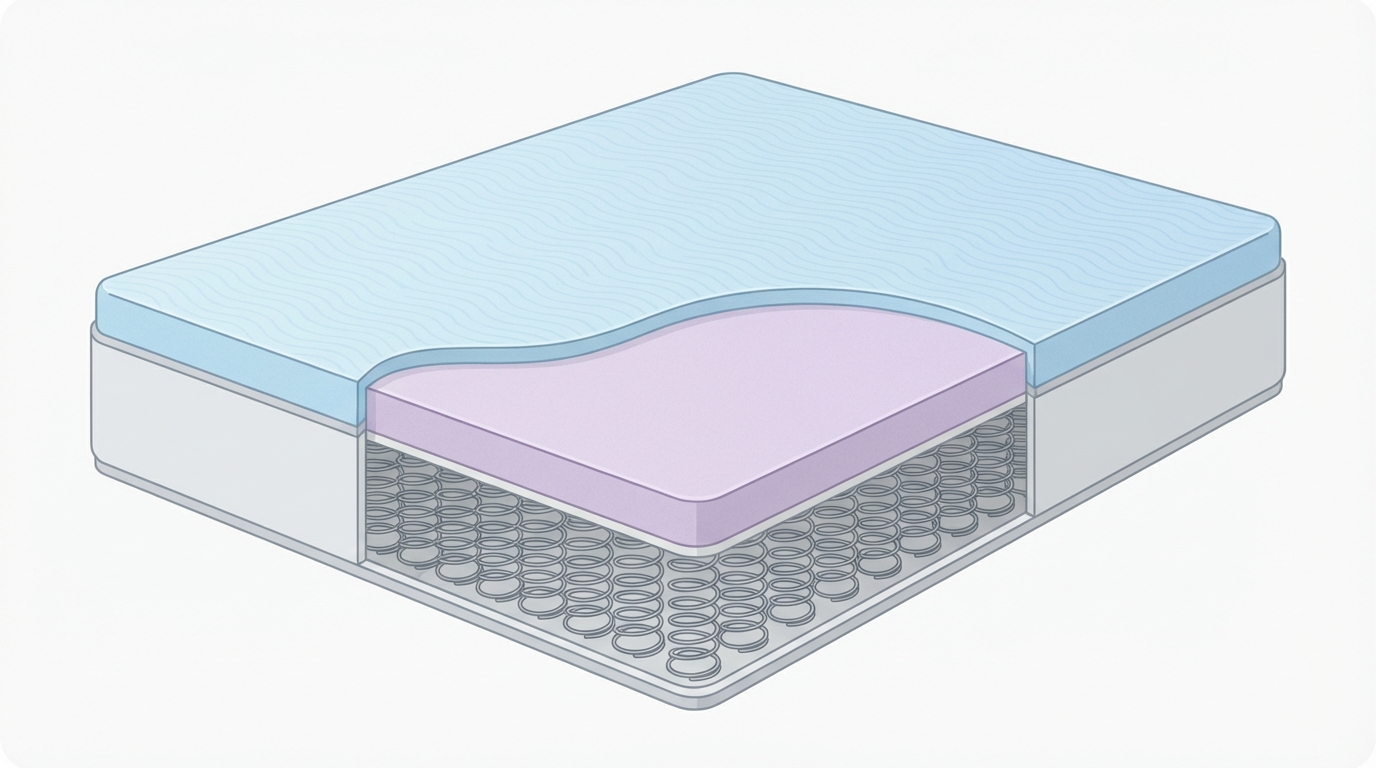
Once you have decided on size, accurate measuring is your best friend. Misjudging even by a couple of inches can mean a headboard that covers an outlet, a frame that overlaps a vent, or sheets that constantly pop off.
Start with the mattress footprint. Using a standard tape measure, measure from one side seam straight across to the other for width, and from the head edge straight to the foot for length. If you already own a mattress you are replacing, keep in mind that some older fulls measure 53 inches wide instead of 54. Most full sheets will forgive that difference, but some tight bunk or antique frames may not. When in doubt, go by the frame’s internal measurements and choose a mattress that fits within them.
Next, measure your bed frame or base. You want the inside dimensions if it has side rails, or the usable platform surface if it is a platform or adjustable base. The internal width should be slightly larger than 54 inches and the internal length slightly larger than 75 inches. Adjustable bases, like many of the options in Sleepology’s adjustable bed frame and base collection, are built to standard sizing, but it still pays to confirm, especially if you are pairing an older headboard and footboard with a new full base.
Do not forget thickness. To measure mattress height, go from the bottom surface that rests on the base up to the very top of the quilted surface. If you are using a box spring or foundation, measure that too, then add the numbers together. Sleep medicine specialists sometimes remind patients that getting in and out of bed safely, particularly for older adults or people with back or joint issues, is easier when the bed height works with your body, not against it.
Finally, match your sheets and protectors to both dimensions and thickness. Standard full sheets are cut to accommodate a 54 by 75 mattress, but where people run into trouble is pocket depth. If your mattress is 14 to 16 inches tall, look for “deep pocket” or “extra deep pocket” full sheets so you are not fighting corners every laundry day. Premium sets like the Tempur-Pedic TEMPUR Adapt Luxe Egyptian Cotton Sheet Set or breathable options like the TEMPUR-Breeze Cooling Sheet Set are designed to stay put on modern, taller mattresses.
“We made the classic mistake of buying sheets marked ‘full’ without checking pocket depth. They kept slipping off our pillow top. Mia pointed us to deeper full sets and walked us through measuring our mattress height. No more midnight sheet battles.” – Jamie P., November
When A Full Size Mattress Is The Perfect Choice
Despite all the talk about queen and king, full size mattresses still have a very important place in modern homes. There are plenty of situations where full is not a compromise, it is exactly the right tool for the job.
Guest rooms are one of the most common. If your guest bedroom is on the smaller side, a full allows you to offer a comfortable bed without overwhelming the room. Your guests can still move around, set down a suitcase, and use a nightstand. Sleep medicine resources often point out that sleeping in an unfamiliar space is already a bit disruptive, so preserving a calm, uncluttered environment helps guests fall and stay asleep even on the first night.
Children’s and teen bedrooms are another smart use. As kids grow, they tend to spend more waking time on their beds reading, using devices, or hanging out with friends. A full gives enough surface area for that daytime lounging, plus room for a parent to sit next to them at bedtime, without turning the whole room into a bed. It is also a good long term plan for a child who will eventually grow into a tall teen or young adult.
Small primary bedrooms in apartments and older homes can be good candidates for a full as well. If you have your heart set on a larger nightstand for storage, or you need room for a small desk, choosing a full over a queen can buy back several inches of space on each side. That can make the difference between a bedroom that feels usable and one that feels like a storage unit with a bed in it.
There are also lifestyle situations where full just makes sense. If you live in a city with narrow stairwells or older buildings, bringing a full mattress in and out can be physically easier than maneuvering a queen or king, even in a bed in a box format. If you move frequently for school, work, or military assignments, a full strikes a practical balance between comfort and portability.
When You Might Want To Skip The Full And Size Up
As much as I appreciate the full size, there are plenty of times where I gently steer people away from it. Sizing up now can save you money, hassle, and sore shoulders later.
The biggest red flag is two adults who already know they like space. If either or both of you have ever complained about feeling crowded on a current mattress, or if you wake up on the very edge, a full is almost guaranteed to feel tight. Several national sleep surveys have linked personal space in bed to higher reported sleep satisfaction, and that extra comfort broadens the margin for those nights when one of you is restless or sick.
Height is another strong signal. If one or both partners are over about 6 feet tall, the 75 inch length of a full will likely feel short. As mentioned earlier, experts usually recommend all 80 inch long sizes for people taller than 6 feet 2 inches. A queen or king full length mattress also tends to support better spinal alignment for tall sleepers compared with curling to fit a shorter size, which can aggravate back or hip issues over time.
You might also want to skip a full if you regularly co sleep with kids or pets. While the occasional cuddle with a toddler or small dog might be fine on a full, nightly co sleeping with multiple bodies in the bed eats up space astonishingly fast. If you picture your realistic night, not your ideal night, and see three or more beings on the mattress most evenings, looking at queen or king options, like those in Sleepology’s king sized mattresses collection, will give everyone more room to breathe.
Finally, consider your long term plans. A mattress is not a short term purchase. If you expect to stay in your home or apartment for several years, or you are investing in a higher end model like the Sealy Posturepedic Medium Mattress – Medina II Euro Pillow Top, it can be wise to choose the size that will serve you best for the majority of that time. Couples in particular rarely regret having more space. They are much more likely to come back a few years later and say “we should have gone bigger.”
Comfort, Support, And Sleep Quality On A Full Size Mattress
One important truth that often gets lost in the size conversation is that measurements alone do not determine comfort. You can absolutely sleep beautifully on a full if the mattress construction matches your body and sleep style. Research summarized by the Mayo Clinic and other health organizations consistently shows that spinal alignment and pressure relief are central to waking up without pain, regardless of size.
For back sleepers on a full size bed, a medium to medium firm surface that keeps your lumbar region supported and your shoulders cushioned tends to work well. A design with a reinforced core and targeted comfort layers, like many models in Sleepology’s best mattresses for back sleepers collection, helps distribute your weight evenly across that 54 inch width so you are not sagging toward the center.
Side sleepers on a full need enough width to keep their knees and arms from feeling cramped, plus enough contouring at the shoulders and hips to prevent pressure points. A euro pillow top construction, such as the Sealy Posturepedic Pro Soft Mattress – Dupont II Euro Pillow Top, can be a good match, as it combines plush cushioning on top with stable support underneath.
Stomach and combination sleepers use more of the bed front to back and side to side, so motion isolation and edge support become more relevant on a full. You want a mattress that lets you shift positions without feeling like you are rolling off the side. High quality hybrids and advanced foam designs tend to do this well. According to testing from outlets like Consumer Reports, models that score high for edge support and motion isolation often deliver more effective usable surface, especially on smaller sizes like full.
Pillows, toppers, and bedding also finish the comfort picture. A well fitted full mattress protector and sheets from a quality line like the Tempur-Pedic ProPerformance Sheet Set can help regulate temperature and keep your sleep surface comfortably dry, which indirectly improves how that 54 by 75 space feels across the night.
Practical Checklist: Are You Really Ready For A Full?

Before you click “add to cart,” it can help to run through a quick, practical checklist. These are the questions I often walk through with shoppers in person, because they prevent the most common regrets.
Ask yourself:
- Who will be sleeping on this mattress most nights, and how many bodies are likely to end up in the bed regularly, including pets
- How tall is the primary sleeper, and will 75 inches of length give them at least 4 to 6 inches of clearance beyond their height
- What is the exact size of the bedroom, and how much clear walking space will remain with a 54 by 75 inch footprint centered or placed where you prefer
- Do you already own a frame, base, or headboard, and have you measured its internal dimensions to confirm it is compatible with a modern full
- What is your total budget, including the mattress, any needed frame or adjustable base, and full size bedding like sheets, protectors, and pillows
- Are you planning to move within the life of the mattress, and if so, will a full still be the right size for your likely future bedroom
Working through these questions in an honest, concrete way is one of the simplest ways to feel confident in your decision. You can even jot down the answers on your phone and reference them while you shop online or in store.
Once you are comfortable that full is the correct match, you can narrow your search to materials, firmness, and specific models that fit your sleep style, instead of continually debating size. That is when choosing between a medium euro top, a firmer hybrid, or adding a cooling sheet set from Sleepology’s pillows, sheets, toppers, and protectors collection becomes a fun part of customizing your sleep, not a source of stress.
Conclusion: Turning Measurements Into Better Sleep
Understanding that a full size mattress measures 54 by 75 inches is the starting point, not the finish line. What really matters is how those numbers translate into comfort for your body, flow in your bedroom, and flexibility for the coming years. When you look at who is sleeping on the bed, how tall they are, how they like to sleep, and how the mattress will sit in the room, the right choice usually becomes much clearer.
If you are a single sleeper in a smaller space, a full can be a smart, comfortable, and budget friendly solution. If you are part of a couple, especially with pets or kids who love to join you, stepping up to a queen or king often yields deeper rest and fewer middle of the night elbow encounters. Research from trusted organizations like the Sleep Foundation and Mayo Clinic reminds us that high quality, pain free sleep is foundational for mood, focus, and long term health, so giving yourself enough space and proper support is not a luxury, it is a form of self care.
If you would like help translating all of this into a specific mattress choice, you are welcome to call or visit Sleepology. My role, and our team’s role, is to take the stress and guesswork out of these decisions. Bring your room measurements, your questions, and your real life sleep challenges, and we will walk through the options together until you feel completely confident in the size and style you choose.
Frequently Asked Questions
What are the exact measurements of a full size mattress in inches and feet?
A standard full size mattress in the United States is 54 inches wide by 75 inches long. In feet, that is 4.5 feet wide by 6.25 feet long. Manufacturers often note a small tolerance of about plus or minus 1 inch in each direction, so a full may measure slightly under or over these numbers once it is unboxed and fully expanded. This variation is normal and compatible with standard full size frames and bedding.
Is a full size mattress big enough for two adults every night?
It can be, but it is tight for many couples. On a full, two adults each get about 27 inches of personal width, which is less than each person gets on a queen or king. If you both sleep fairly still, do not mind being close, and do not co sleep with kids or large pets, a full can work. If either of you tends to toss, turn, or likes more personal space, most sleep experts and long time couples find that a queen or king offers more comfortable room for nightly, long term use.
What is the difference between a full and a queen in actual space?
A queen measures 60 by 80 inches, compared with a full at 54 by 75 inches. That means a queen is 6 inches wider and 5 inches longer. For two adults, that translates into 3 extra inches of width per person and more leg room. While 6 inches may not sound like much on paper, it often feels quite significant in practice, especially for side sleepers or taller people. Many shoppers who upgrade from full to queen notice that they bump into each other less and sleep more soundly.
Will a full size mattress fit comfortably in a 10 by 10 bedroom?
In most cases, yes. A full footprint of 54 by 75 inches works well in a 10 by 10 foot room as long as you plan your layout thoughtfully. With a full, you typically have enough remaining space for at least one nightstand and a dresser, while still preserving around 24 inches or more of walking space on the key sides of the bed. Using painter’s tape to outline 54 by 75 inches on your floor is a simple way to confirm the fit before you buy.
Can I put a full size mattress on a queen frame?
Not properly. A queen frame is designed for a 60 by 80 inch mattress, so a full mattress will be 6 inches too narrow and 5 inches too short. That mismatch can cause the mattress to slide around, reduce edge support, and void warranties in some cases. For safety, support, and comfort, it is best to pair a full mattress with a true full size frame or adjustable base that matches its 54 by 75 inch footprint.
How do I choose bedding that will fit my full size mattress correctly?
Look specifically for bedding labeled “full” or “full/double,” and then check the pocket depth of the fitted sheet against your mattress height. Measure your full mattress from bottom to top, and if it is taller than about 12 inches, seek out deep pocket full sheets so they can wrap securely under the corners. Many modern sheet sets, including options like the Tempur-Pedic ProPerformance Sheet Set, are designed with deeper pockets to accommodate today’s thicker mattresses.
Is a full size mattress the same as a double bed?
Yes, in modern U.S. mattress sizing, “full” and “double” refer to the same size, 54 inches wide by 75 inches long. The term “double” is more traditional and is still used by some manufacturers and retailers, but if you see either full or double in a size chart today, you can assume it matches the standard 54 by 75 inch measurements unless the brand clearly lists different dimensions.