

What Are The Dimensions Of A Twin Mattress? A Complete, Real‑World Sizing Guide
If you are trying to figure out what size bed will actually fit in your space, the simple question, “What are the dimensions of a twin mattress?” can turn into a whole rabbit hole. You will see twin, twin XL, single, dorm size, kids twin, and sometimes the numbers look slightly different from site to site. It is no wonder many people end up guessing and hoping the mattress fits when it shows up at the door.
The truth is, those few inches on a mattress can make or break a small bedroom layout, a bunk bed build, or a dorm room setup. Get it right, and the room feels open, balanced, and easy to move around in. Get it wrong, and you are fighting tight walkways, sheets that do not fit, or a mattress that is just a bit too short for the person sleeping on it. When you are shopping for kids, teens, or a guest room, you also want to be sure today’s choice still works three or five years from now.
You are in the right place if you want a clear answer, not just a chart of numbers. You will learn the exact dimensions of a twin mattress, how it compares to twin XL and other sizes, how much room you need around it, and how to choose the best twin setup for the person using it. We will also walk through real scenarios, like outfitting a bunk bed, planning a dorm room, or choosing between twin and full for a growing teen.
As a Sleepologist at Sleepology, I have spent two decades measuring frames, troubleshooting tight spaces, and helping families avoid return headaches. You will get the same practical, no‑pressure guidance I give in the showroom, with mattress recommendations only where they truly make sense, so you can feel confident instead of overwhelmed.
Twin Mattress Dimensions: The Clear, No‑Guessing Answer
The standard twin mattress in the United States measures 38 inches wide by 75 inches long. You may occasionally see it listed as 39 by 75, but 38 by 75 inches is the commonly accepted standard used by major brands and accessory manufacturers. In metric terms, that is about 96.5 centimeters wide by 190.5 centimeters long. This is the smallest standard mattress size made for older kids, teens, and adults.
In practical, real‑world terms, a twin gives one sleeper just over 3 feet of width and a little more than 6 feet of length. For most kids and many adults under about 6 feet tall, that is enough length to stretch out without feeling cramped. Where people tend to notice limitations is width. According to the Sleep Foundation, most adults sleep more comfortably when they have enough space to move and change positions freely, and 38 inches is the minimum to make that work for a full‑grown body.
One confusing point is the word “single.” In the US, a single mattress and a twin mattress are the same thing. The term “twin” originally described two matching single beds in the same room. Today, retailers and manufacturers use “twin” far more often, but older furniture or articles might still say “single.” If you see “standard single,” assume 38 by 75 inches unless clearly stated otherwise.
It is also worth remembering that twin dimensions describe the sleeping surface, not the full footprint of your bed once you add a frame or headboard. Platform beds with thick side rails, sleigh beds, and storage bases often add 2 to 6 inches to both the width and length. Before you finalize a purchase, measure not just the mattress, but the total space the full bed setup will occupy so you do not end up squeezing around the foot of the bed.
“We were trying to cram two beds into a small guest room and kept hitting a wall, literally. Mia helped us understand the true footprint of a twin setup and we switched to one twin with a trundle instead. Saved us from an expensive mistake and the room finally feels usable.” – Daniel P., December
Twin vs Twin XL vs Other Sizes: How The Dimensions Really Compare
Once you know a twin is 38 by 75 inches, the next question is almost always, “What about twin XL?” or “Is a twin big enough for my teenager?” That is where comparison really matters. Those extra few inches on a twin XL, full, or queen translate into more personal space, longer use, and often a very different feel in the room.
How Twin Compares To Twin XL
A twin XL mattress measures 38 inches wide by 80 inches long. That means it is the same width as a twin, but 5 inches longer. This extra length is specifically designed for taller teens and adults who are too long for a standard twin but do not have space for a wider mattress. Twin XL is the typical size used in college dorm rooms for exactly this reason.
From a comfort standpoint, that extra 5 inches of length makes a real difference for anyone above about 6 feet tall. The Mayo Clinic notes that adequate room to stretch out helps your body maintain neutral posture and reduces joint strain at night. If a sleeper’s feet are hanging close to the edge of the bed, they are more likely to curl up or sleep in awkward positions to stay on the mattress. That can show up as morning aches over time.
Functionally, two twin XL mattresses side by side are the same size as a standard king. This is why many adjustable bases are sold as split king setups that use two twin XL mattresses. If you are planning ahead for the future and like the idea of an adjustable base, choosing twin XL for a teen or guest room may give you more flexibility when you later upgrade to a king with an adjustable bed frame and base.
Twin Compared To Full, Queen, And King
A full mattress measures 53 inches wide by 75 inches long, so compared to a twin, it is 15 inches wider but the same length. That extra width is significant for a single adult or a teen who tends to spread out. Each inch counts, especially for side sleepers who naturally draw their knees up or change positions often. According to Cleveland Clinic, side sleeping is one of the healthiest positions for your spine and airways, but it does require enough horizontal room so you are not hugging the edge.
A queen mattress is 60 by 80 inches, and a king is 76 by 80 inches. These sizes are more typical for couples and primary bedrooms, but they are also important to understand when you are planning furniture that may move between rooms in the future. For instance, if you are furnishing a small guest room now with a twin but know you will eventually want it as a home office with a sleeper or a full, making sure your layout can someday accommodate at least 53 inches of width is smart.
One thing to keep in mind is that narrower sizes, like twin, are more sensitive to motion and edge use. There is simply less surface area to absorb movement. That is why construction quality matters, even in a “small” bed. A well built twin, such as a Sealy Posturepedic Medium Mattress – Medina II, can give a child or single adult the same targeted support and edge stability as a queen in the same model, just in a more compact footprint.
Who Is A Twin Mattress Best For?

Twin mattresses are extremely versatile, but they are not ideal for every situation. The key to feeling confident about choosing a twin is matching the size to the sleeper, their habits, and the room they are in. When those three variables line up, a twin can feel surprisingly generous, even in a small space.
Kids, Tweens, And Many Teens
For most children transitioning out of a crib or toddler bed, a twin mattress is the natural next step. It gives plenty of growing room without overwhelming a smaller bedroom. The American Academy of Pediatrics notes that once kids move out of cribs, they need a safe, supportive sleep surface that lets them change positions easily. A twin meets that need while leaving space in the room for toys, a desk, or floor play.
Tweens and early teens also do well on twin beds if they are not especially tall and do not mind cozier sleep space. In many families, a twin is the “starter” adult bed that can later shift into a guest room or sibling’s room once the original sleeper outgrows it. When you choose a higher quality mattress from the start, such as a Sealy Posturepedic Firm Mattress – Medina II for a back or stomach sleeping teen, that twin can easily provide 8 to 10 years of solid use.
Single Adults In Small Spaces
For adults living in studio apartments, micro units, or shared housing, a twin can be a very practical choice. The narrower footprint opens up much more floor area for a work desk, dresser, or small seating area. If you are under about 6 feet tall and tend to sleep relatively still, you may find a twin perfectly adequate for nightly use, especially if it is paired with a supportive mattress and a frame with a strong center support.
However, if you love to sprawl, share the bed with a pet, or have any musculoskeletal issues that make repositioning important, a full or queen is usually a better long term solution. Chronic pain groups and sleep researchers both point out that more surface area can reduce pressure buildup for side sleepers and those with arthritis, because you are not forced into one narrow strip of the bed throughout the night.
“I thought a twin would only work for kids, but Mia helped me pick a higher end twin hybrid for my tiny studio. We measured everything, and the bed now fits perfectly along one wall with room for a small sofa. I sleep better and did not have to move to a bigger place.” – Jordan L., October
Guest Rooms, Vacation Homes, And Flex Spaces
Twin mattresses shine in guest rooms and multipurpose spaces. Two twin beds can host adults, kids, or grandparents without taking over the room. A single twin with a trundle underneath can convert a home office into a weekend guest room. For vacation homes, twins are a smart way to build in flexibility without committing every room to a massive bed.
In these situations, comfort still matters. Guests may be older, may have back issues, or may be staying for more than a night or two. Choosing a supportive, medium feel mattress, like the Sealy Posturepedic Pro Medium Mattress – Dupont II Euro Pillow Top, can help a twin feel welcoming rather than “basic,” especially when paired with quality pillows and breathable sheets from our pillows, sheets, toppers, and protectors collection.
Room Size And Layout: How Much Space Do You Really Need Around A Twin?
Knowing the mattress dimensions is one thing. Seeing how that mattress lives in your room is another. A twin is friendly to small spaces, but it still needs breathing room so the space feels calm and functional, not like a narrow hallway with a bed in it.
Minimum Recommended Room Dimensions For A Twin
As a rule of thumb, a twin mattress works best in rooms that are at least 7 by 10 feet. That gives you space for the bed, a small nightstand, and enough walkway to move around without bumping into corners. Many college dorms and small secondary bedrooms fall right around this size. According to several design guides and mattress industry resources, aiming for 24 to 36 inches of clearance on at least one long side and at the foot of the bed keeps the room from feeling cramped.
If the room is narrower, for example 7 by 9 feet, it is still possible to make a twin work if you push it against one wall and choose a compact nightstand or wall mounted shelf. In very small rooms, a daybed frame can help the bed read more like a sofa during the day, which can be nice for teens or multipurpose guest rooms.
Accounting For Bed Frames, Storage, And Doors
Remember that frames add to the footprint. A simple metal frame with a box spring, such as the Sealy Mattress Base Boxspring Foundation | Standard 9 inch height, might only add a half inch of width and length. A platform bed with built in drawers, on the other hand, might add several inches on each side. Always check the bed frame dimensions, not just the mattress dimensions, when you are working in a tight room.
You also need to think about swing clearance for doors and drawers. If the bedroom door opens inward toward the bed, make sure there is enough space for it to open fully without hitting the corner of the mattress or frame. The same goes for closet doors and any under bed storage. This is one reason twins work so well in narrower rooms: they leave more open floor for doors to function as intended.
“Our daughter’s room is tiny, and we almost ordered a full because we thought it would last longer. Mia walked us through measurements and even had us tape off footprints on the floor. Once we saw it, we knew a full would dominate the room. The twin leaves room for her desk and bookshelves, and she loves it.” – Hannah S., November
Twin Mattress Depth: Why Height Matters As Much As Length And Width
When people ask about twin dimensions, they usually focus on width and length, but mattress depth is just as important. Depth affects how easy it is to get in and out of bed, how your sheets fit, and how much under bed storage you can use. Unlike length and width, which are standardized, depth varies widely by model and construction.
Typical Thickness Range For Twin Mattresses
Most modern adult mattresses, including twin size, fall somewhere between 8 and 14 inches thick, with many premium hybrids reaching 15 or 16 inches. Children’s or budget mattresses may be thinner, in the 6 to 8 inch range. There is no single “correct” thickness, but the combination of mattress plus foundation or platform height should place the top of the bed roughly at your knee or slightly below, which Cleveland Clinic and other ergonomic sources point out is ideal for getting up without straining your back or hips.
For kids, a slightly lower total bed height is usually safer, especially on bunk beds or daybeds with guardrails. Many bunk bed manufacturers recommend total mattress thickness of 8 inches or less on the top bunk so railings can still do their job properly. If you are pairing a twin with a boxspring or foundation, that is an important safety consideration.
Sheet Fit And Accessories
Mattress height also determines what sheets you need. Fitted sheets come with different pocket depths, and trying to stretch a shallow pocket sheet over a very thick twin mattress will lead to corners popping off throughout the night. When you measure your mattress depth, include any topper you plan to use. If you later decide to add a cooling or comfort layer, such as the Tempur‑Pedic Mattress Topper – Pillow Travel and Guest Bundle for occasional guests, you may need to bump up to deep pocket sheets so everything stays secure.
From a comfort perspective, thicker does not automatically mean better. What matters is the quality and density of the materials, how they are layered, and whether the overall feel matches your sleep position and weight. An 11 or 12 inch well constructed mattress, such as the Sealy Posturepedic Elite Soft Hybrid Mattress – Brenham II, can provide excellent pressure relief and support for many sleepers without reaching extreme heights.
How Twin Mattresses Compare To Other Sizes: A Quick Visual Guide
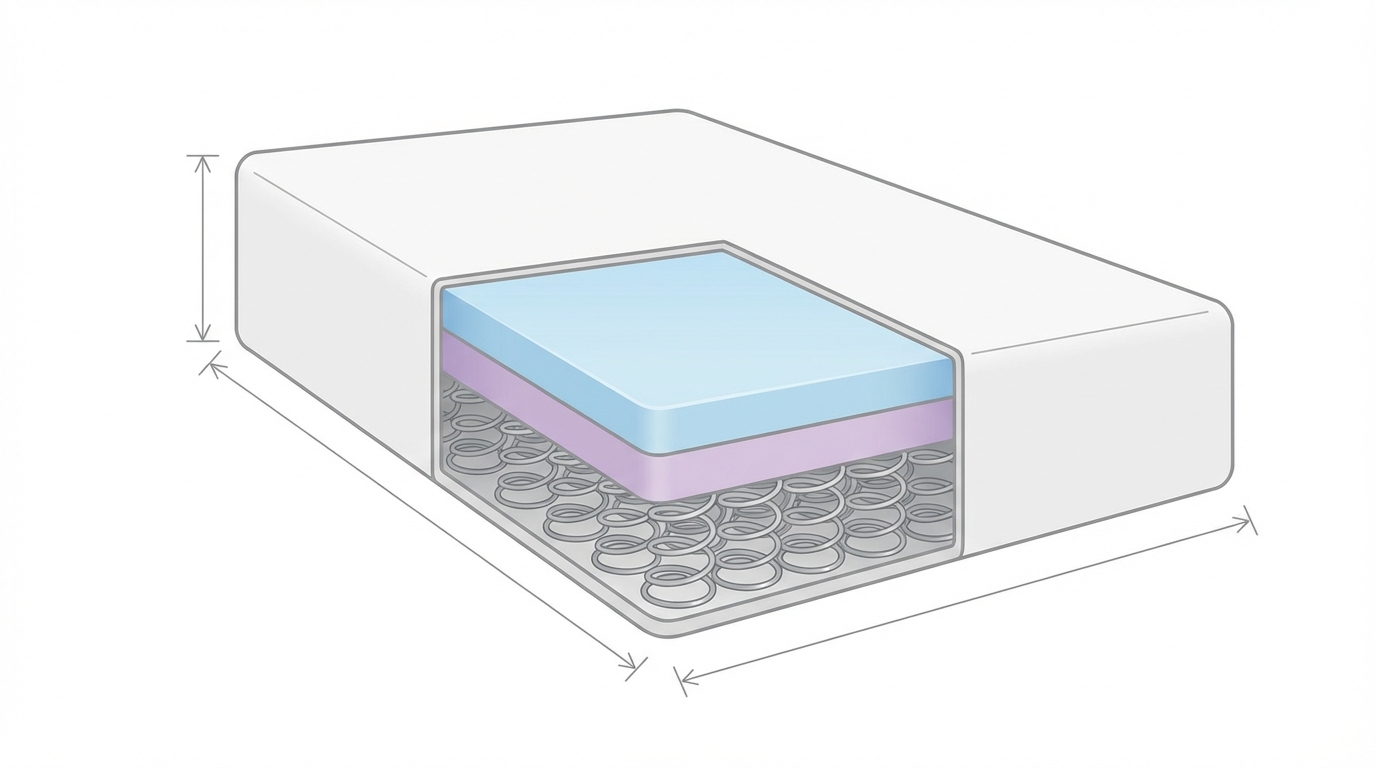
When you are trying to picture how big a twin really is, it can help to see it in context with other standard sizes. Below is a simple comparison of the most common mattress sizes and how much sleeping surface they provide.
| Mattress Size | Dimensions (W x L) | Surface Area (square inches) | Typical Use Case |
|---|---|---|---|
| Twin | 38" x 75" | 2,850 | Kids, single sleepers, bunk beds, small guest rooms |
| Twin XL | 38" x 80" | 3,040 | Taller teens and adults, dorms, split king setups |
| Full | 53" x 75" | 3,975 | Single adults wanting more width, tighter guest rooms |
| Queen | 60" x 80" | 4,800 | Most couples, primary beds in average sized rooms |
| King | 76" x 80" | 6,080 | Couples who want maximum width, families co sleeping with kids or pets |
You can see that jumping from twin to twin XL adds a bit more than 6 percent more surface area, almost entirely in length. Moving from twin to full increases the area by about 40 percent, almost all in width, which is why it feels dramatically more spacious if you like to spread out. According to Consumer Reports, most buyers who upgrade from twin to full or queen report higher satisfaction with personal space and less disturbance from their own movement at night.
Use this table as a starting point, but always bring it back to your actual room measurements and who will be sleeping in the bed. A giant mattress that overwhelms the room rarely feels relaxing, even if it looks luxurious in a catalog.
Sleep Position, Body Type, And Whether A Twin Will Feel Comfortable
Size is not just about square inches. It is about how your body uses that space. A twin that feels perfectly fine to a small back sleeper might feel tight to a tall side sleeper, even though the dimensions have not changed. Thinking about sleep position and body type helps you decide whether a twin is a temporary solution or a long term fit.
Back And Stomach Sleepers On A Twin
Back and stomach sleepers usually take up less horizontal space because their limbs stay closer to the body. For these sleepers, a twin can be quite comfortable if the mattress provides enough support to keep the spine in a neutral line. The Sleep Foundation notes that back sleepers tend to do well on medium firm surfaces that support the natural curve of the spine, while stomach sleepers often benefit from slightly firmer support to prevent the midsection from dipping.
In a twin, this means prioritizing a mattress with strong core support and reliable edge stability, so you can use the full width of the bed without feeling like you are sliding off. Collections like The Best Mattresses For Back Sleepers and The Best Mattresses For Stomach Sleepers at Sleepology are curated with these needs in mind and are available in twin sizes, so you do not have to sacrifice support just because the mattress is narrower.
Side Sleepers And Combination Sleepers On A Twin
Side sleepers generally span more horizontal space because the knees often bend forward and arms may reach out. For that reason, many adult side sleepers feel cramped on a twin, especially broader shouldered individuals. The same is true if you are a combination sleeper who flips between positions through the night. Research from various sleep labs suggests that frequent position changes can help relieve pressure points, but only if your mattress gives you room to move freely without hugging the edge.
If you or the person using the bed is a committed side sleeper, think about whether the twin is a short term solution, such as a few years for a younger teen, or a bed you hope to keep in use for a decade. For the latter, moving up to a full can be more satisfying and cost effective in the long run, since it reduces the likelihood of needing to upgrade again just for width.
Bunk Beds, Trundles, And Daybeds: Special Considerations For Twin Dimensions
Many of the most common furniture setups for kids and guest rooms are built around twin mattresses. Bunk beds, trundle beds, and daybeds all assume a standard twin footprint, but each style adds extra considerations that matter for safety, comfort, and room flow.
Twin Mattresses In Bunk Beds
Standard bunk beds in the US almost always use twin mattresses on both the top and bottom bunks. The critical dimension here is not just width and length but thickness. Most bunk bed safety guidelines recommend an upper bunk mattress no thicker than 8 inches so that the guardrails remain high enough to prevent falls. The Consumer Product Safety Commission emphasizes guardrail height as one of the most important safety features on bunk beds, especially for children.
That means if you are shopping for a twin mattress specifically for the top bunk, you will want to check both the maximum thickness the manufacturer allows and the depth of the guardrail. A supportive, lower profile mattress can still be perfectly comfortable for a child or smaller teen if it uses good quality foams and a solid support core. For the bottom bunk, you typically have a bit more flexibility on height, as long as there is still enough clearance to sit up comfortably without hitting the upper bunk.
Twin Mattresses In Trundle And Daybed Frames
Trundle beds use a roll out lower bed that slides under a main bed when not in use. The lower trundle almost always requires a standard twin in both width and length but often limits thickness to around 8 inches or less so it can slide underneath without scraping. If you plan to host adults on a trundle, this is a good reason to choose the most supportive, higher quality twin you can within that height limit.
Daybeds are usually built to fit a twin mattress and are a great option for flex spaces and home offices. Because most of the long side is framed as a backrest, you will want to be sure the 75 inch length works for your tallest regular user. If you expect to host taller guests often, consider a twin XL daybed or plan ahead for a queen sized sleeper sofa in another room.
Bedding, Pillows, And Protectors: Getting The Twin Setup Right
Once you have the mattress dimensions nailed down, the next step is making sure everything you put on the bed actually fits. Correct sizing for sheets, pillows, and protectors is not just a detail. It directly affects comfort, cleanliness, and how well your investment holds up over time.
Fitted Sheets, Flat Sheets, And Protectors
Twin mattresses use twin size sheets and protectors, but pocket depth matters. To find the right fitted sheet, measure your mattress from the base where it rests on the foundation to the very top, including any topper. Add one to two inches for ease. If your twin is 12 inches thick, for example, you will want fitted sheets with at least a 13 to 14 inch pocket. This gives enough fabric to wrap under the corners securely.
Mattress protectors are essential for kids beds and guest rooms where spills, accidents, or late night snacks are more likely. A well fitting protector extends the life of the mattress and keeps allergens out of the foam. When you browse our pillows, sheets, toppers, and protectors collection, you will see twin sized options with clearly noted depth ranges, so you can match them to the twin you choose.
Pillow Selection For A Twin Bed
The mattress may be twin sized, but pillows do not have to be small. Standard pillows (about 20 by 26 inches) work well on a twin, and you can easily fit one or two across the width. For teens or adults who like to hug or straddle a pillow, a longer support option like The BodyPillow by Tempur‑Pedic can provide full body alignment without taking up the entire mattress.
According to Mayo Clinic, proper neck and head support from your pillow can ease strain on your cervical spine and reduce morning stiffness. That means it is worth choosing a good pillow even for a “simple” twin bed. The goal is to build a complete sleep system that works together, not just plop a mattress in the room and call it a day.
When A Twin Is Not Enough: Signs You Should Consider Sizing Up

Even with perfect dimensions and a smart layout, there are times when a twin is simply not the right long term choice. Paying attention to the way you or your child actually sleeps will tell you a lot about whether it is time to consider a larger size.
You might outgrow a twin if the sleeper’s feet are consistently near the edge or hanging off, if they frequently wake feeling cramped or pinned against the rail or wall, or if they share the bed with a pet that takes up more space than expected. Tossing and turning that sends arms or legs over the side of the bed is another common sign. Over time, these issues can reduce sleep quality. Researchers routinely find that restricted space and frequent awakenings are linked to poorer sleep efficiency and more daytime fatigue.
On the other hand, if the twin leaves room to stretch out, the sleeper stays fully on the mattress, and there is still comfortable room to move around the bedroom itself, there is no rule that says you must upgrade. A well chosen twin can absolutely serve as a primary bed for kids, many teens, and plenty of single adults, especially in urban apartments and smaller homes.
Conclusion: Turning Twin Dimensions Into A Confident Decision
Now you know that a standard twin mattress measures 38 by 75 inches, that twin XL adds crucial length without extra width, and that thickness can matter just as much as those top down measurements. You have seen how a twin behaves in different room sizes, how it interacts with frames like bunks and trundles, and how height, sleep position, and real movement at night affect whether it feels roomy or restrictive.
The most important takeaway is that numbers are only the starting point. The right twin setup is the one that fits a real person and a real room. That might mean pairing a supportive Sealy Posturepedic twin with a low profile box spring to keep a top bunk safe, or choosing a medium comfort hybrid twin with breathable bedding for a studio apartment where every inch counts. It might mean staying with a twin for a younger teen now, but planning ahead for a full or queen once they gain a few more inches of height.
If you are still on the fence, that is completely normal. Mattress sizing decisions can feel bigger than the number on the tape measure, because they affect how your whole space functions. You are welcome to bring your room dimensions, photos, and concerns to Sleepology, in store or over the phone, and a Sleepologist can help you fine tune the details so your next twin, or whatever size you choose, feels like it was made for you.
Frequently Asked Questions
How wide and long is a standard twin mattress in inches and centimeters?
A standard twin mattress in the United States measures 38 inches wide by 75 inches long. Converted to metric, that is approximately 96.5 centimeters wide by 190.5 centimeters long. Some retailers round the width to 39 inches, but accessories like sheets and protectors are designed to fit this same core size range, so you can safely shop for twin bedding with those dimensions in mind.
Is a twin mattress big enough for a teenager?
A twin can be big enough for many teenagers, especially if they are under about 6 feet tall and do not mind a cozier width. However, if your teen is already tall, plays sports that build broader shoulders, or tends to sprawl when they sleep, a twin XL or a full will usually feel better over the long term. Think about how long you want the next mattress to last. If you are planning for 7 to 10 years of use, it often makes sense to choose the size they are likely to need two or three years from now, not just what works this school year.
What is the difference between a twin and a twin XL mattress?
Both twin and twin XL mattresses are 38 inches wide, but the twin XL is 80 inches long instead of 75. That extra 5 inches of length is designed for taller teens and adults and makes a real difference for anyone approaching or above 6 feet 2 inches. Two twin XL mattresses placed side by side equal the size of a standard king, which is why many split king adjustable bases are built around twin XL sizing rather than regular twin.
What size room do I need for a twin bed to feel comfortable?
Most people are happy with a twin bed in a room that is at least 7 by 10 feet, which allows space for the mattress, a nightstand, and a walkway. If the room is slightly smaller, you can still make a twin work by placing it against a wall or choosing a minimal frame, but you will want to make sure doors can still open fully and there is enough clearance to move around at night without bumping into corners. As a general guideline, aim for at least 24 inches of open space along the main getting in and out side of the bed.
Are twin and single mattresses the same size?
In modern US mattress sizing, twin and single refer to the same dimensions: 38 inches wide by 75 inches long. The term “single” is older and less commonly used in current retail, but you may still see it in vintage furniture descriptions or older home listings. Unless a listing specifically calls out different measurements, you can assume a “single” bed frame is designed to fit a standard twin mattress.
How thick should a twin mattress be for a bunk bed?
For most bunk beds, especially the top bunk, a twin mattress should be no more than about 8 inches thick, and in some cases the manufacturer may recommend even less. This is to ensure that the top of the mattress stays below the height of the guardrails, which is crucial for safety. Always check the bunk bed’s documentation for maximum mattress thickness. On the bottom bunk, you may have more flexibility, but you still want enough headroom for sitting up comfortably and good airflow between the mattresses.
Do twin mattresses need a box spring or special foundation?
Whether a twin needs a box spring or special foundation depends on the frame you are using. Many platform beds and bunk beds have slats or solid bases designed to support a mattress without a separate box spring. Traditional bed frames generally require a foundation to provide even support and raise the mattress to a comfortable height. If you prefer a more classic setup, a supportive option like the Sealy Mattress Base Boxspring Foundation | Standard 9 inch height can pair nicely with most twin mattresses and help maintain their performance over time.