

What Are The Dimensions Of A King Size Mattress? A Clear, No‑Stress Guide
If you are thinking about a king size mattress, there is a good chance your current bed feels cramped. Maybe a child or a dog keeps squeezing into the middle, or you and your partner are waking up on the edge of the mattress. You might be trying to figure out whether a king will actually fit in your bedroom, or whether you need a standard king or a California king. On top of that, every website seems to throw different measurements and acronyms at you, which can make a simple decision feel strangely complicated.
Mattress size is not just a technical detail. The dimensions of your bed affect how easily you fall asleep, how often you wake during the night, and how your body feels in the morning. According to the Sleep Foundation, most adults need 7 to 9 hours of sleep for good health, and comfort and space are core parts of reaching that goal. When you do not have enough room to move naturally, your body works harder all night, which can aggravate back pain, shoulder pressure, and even snoring.
Here you will get a clear, practical explanation of king size mattress dimensions, how they compare to other sizes, and how to choose the version that actually fits your room, your body, and your life. You will also see how a king interacts with things like bed frames, bedding, and sleep position, plus some expert tips I use with clients in the Sleepology showroom. By the time you reach the end, you should feel confident not only about the numbers, but about whether a king is the right move for you.
As a sleepologist who has watched hundreds of people upgrade from smaller beds to kings, I can tell you that getting the size right is one of the biggest quality of life upgrades you can make. The goal here is simple. Help you decide whether a king is the right size, avoid the common sizing mistakes that lead to buyer’s remorse, and point you toward specific Sleepology options that match how you actually sleep.
King Size Mattress Dimensions: The Exact Numbers You Need
When people ask, “What are the dimensions of a king size mattress?” they are usually looking for a quick, precise answer they can use with a tape measure in hand. In the United States, a standard king mattress is 76 inches wide and 80 inches long. That measurement is from edge to edge, not counting extra bulk from rounded corners or quilting that can make the mattress look slightly larger to the eye.
Those numbers are considered industry standard, although many manufacturers allow for a small tolerance of around half an inch to an inch in either direction. This means one king may measure 76.5 inches wide and another may be closer to 75.5 inches, and both are still classified as king. According to Consumer Reports, these small variations are normal and are rarely noticeable once the mattress is on a frame with bedding. The key for shoppers is to work with the standard 76 by 80 inch guideline when planning room layout and furniture.
Compared to a queen, which measures 60 by 80 inches, a king gives you 16 extra inches of width while keeping the same length. That extra width is what allows couples to spread out without feeling like they are fighting for the center of the bed. If you divide it in half, each partner on a king gets roughly 38 inches of personal space, which is slightly more than a twin. On a queen, each partner’s side is closer to 30 inches. For many couples, those extra 8 inches per person are the difference between bumping shoulders all night and sleeping without constant micro adjustments.
From a practical standpoint, a king tends to work best in bedrooms that are at least 12 feet by 12 feet, especially if you plan to include nightstands and a dresser. This recommendation aligns with many interior design guidelines as well as room size suggestions you will see from mattress brands. You can squeeze a king into a smaller room, but you will usually sacrifice walking space and storage, which can make the room feel more cramped than relaxing.
Lastly, keep in mind that when people talk about “king size” in casual conversation, they may mix up standard kings and California kings without realizing it. The standard king is the wider of the two and is the most common in the United States. It is also the size you will see most often when you browse king sized mattresses at Sleepology, whether you are looking for innerspring, hybrid, or all foam designs.
How King Size Dimensions Feel In Real Life
Numbers are useful, but they only tell part of the story. In the showroom, I often ask couples to lie down on a queen first, then move to a king. The physical difference in shoulder and elbow space is obvious even when both people stay in a neutral back sleeping position. Once they shift to side or stomach, the king starts to feel less like a luxury upgrade and more like a necessity, especially if one person is a restless mover.
For example, imagine two adults both around average build, about 5 foot 7 and 5 foot 10. On a queen, each has a sliver of extra room beyond shoulder width. Any starfish or side‑lying sprawl quickly bumps the other person. On a king, those same sleepers can change positions throughout the night without automatically disturbing each other. This reduced disturbance is important for light sleepers, since sleep research shows that fragmented sleep can matter as much as total hours when it comes to how you feel in the morning.
I also hear from parents who move to a king because a child or pet has unofficially joined the household sleep routine. A standard king allows two adults plus a small child or medium dog to share space without one adult spending the night perched on the outer edge. It is not a long term sleep plan for everyone, and from a pediatric standpoint regular co‑sleeping has its own safety considerations, but in real life many families go through phases where this happens.
Another underrated benefit of king dimensions is edge comfort. Many modern mattresses, especially hybrids, are engineered with stronger edge support. On a king, that stable perimeter combined with wider width makes it feel less like you are going to roll off when you sit down to tie your shoes or when you sleep close to the edge. The Cleveland Clinic notes that older adults and those with balance concerns benefit from stable bed edges because it makes getting in and out of bed safer and more controlled.
“Mia walked us through the difference between queen and king with a tape measure and had us lie on both. We realized we each had less space than on a twin when we shared a queen. Upgrading to a king in November completely changed how we sleep. No more elbow battles at 2 a.m.” – Jen R., November
If you are unsure whether those 16 extra inches are worth it, try laying down painter’s tape on your bedroom floor to outline a king and then a queen. Stand in the room, walk around the outline, and imagine nightstands in place. It is a simple exercise, but it gives you a clearer feel for the footprint before you start shopping specific models.
King vs California King: Same Length Or Extra Legroom?

Once shoppers learn that a standard king is 76 by 80 inches, the very next question is almost always about California kings. The terms can be confusing because both are considered “king” sizes, and many people assume the California king is simply a larger version in every direction. In reality, these two sizes trade width and length in opposite directions, so one is not simply “bigger” than the other.
A California king mattress typically measures 72 inches wide and 84 inches long. This means it is 4 inches narrower than a standard king but 4 inches longer. The overall surface area is similar, but the shape is different. That shape matters most if you or your partner is taller than about 6 foot 2, or if your bedroom is long and narrow rather than square. Tall sleepers often appreciate the extra legroom because it lets them stretch out without their feet brushing against the footboard or hanging over the edge.
From a couple’s standpoint, a California king gives each partner 36 inches of personal width, which is still more than a twin width, but slightly less than the 38 inches each person gets on a standard king. For most average height couples who sleep in a variety of positions, the extra width of a standard king is usually more valuable than the extra length of a California king. That is why standard kings tend to be more popular and easier to find in a wide range of styles.
Room shape plays a quiet but important role here. In long, narrow primary bedrooms, a California king can leave more comfortable walking space along the sides. In more square rooms, a standard king generally looks and feels more proportional. Many interior designers recommend mapping both footprints with tape on the floor if your room is a bit tricky, especially if you also need space for a bench at the foot of the bed or a dresser on the opposite wall.
One other practical detail is bedding and accessories. In many regions of the United States, you will find standard king sheets, protectors, and comforters in just about every store. California king bedding exists, but the selection can be smaller, and some specialty pieces may cost slightly more. For shoppers who want a one stop experience, collections like Sleepology’s pillows, sheets, toppers, and protectors make it easier to build a matching setup once you choose your mattress size.
“We were sure we needed a California king because my husband is 6’5. Mia had him try both lengths in the showroom and showed us how the extra 4 inches actually felt. In our shorter, wider room a standard king fit better and still gave him enough toe room. We saved a few hundred dollars on bedding too.” – Laura M., October
King vs California King vs Queen: A Quick Comparison
To make the differences easier to visualize, it helps to see all three popular large sizes side by side. Below is a simple comparison table with dimensions and typical use cases.
| Mattress Size | Dimensions (W x L) | Personal Space for Each Partner | Best For |
|---|---|---|---|
| Queen | 60" x 80" | 30" each (for two sleepers) | Couples in smaller rooms, solo sprawlers |
| King | 76" x 80" | 38" each | Couples who want maximum width, families |
| California King | 72" x 84" | 36" each | Tall couples, long narrow bedrooms |
This table reflects typical United States dimensions that you will see across most major mattress brands. It makes it easier to spot that a queen and king share the same length, so the only change there is width. With California king, the length extends but width steps down slightly compared to a standard king.
If you are choosing between these and your primary concern is shoulder or elbow contact with a partner, standard king is usually the winner. If your top concern is legroom for someone over 6 foot 4 and your room layout allows it, California king can be worth the extra search for accessories. If budget and room size are both tight but you still want room for two, queen remains the most space efficient choice.
Whatever size you choose, it is important to pair it with a supportive foundation. Options like the Sealy Mattress Base Boxspring Foundation in a king size provide stable, center supported platforms that prevent sagging and help your mattress maintain its shape over time, especially with the larger surface area of a king or California king.
How King Size Dimensions Compare To Other Mattress Sizes
Understanding a king in isolation is helpful, but sizing decisions often come down to whether you should stay where you are or size up. That is why it can be useful to see how a king compares to other common mattress sizes you may have owned in the past. The American Academy of Sleep Medicine notes that comfort is a major factor in sleep quality, and physical space is a key part of that comfort, especially for couples and restless sleepers.
If you currently sleep on a full, you are on a mattress that measures about 54 inches wide and 75 inches long. A full is a compact size, great for solo sleepers in small rooms, but it becomes very tight with two adults. Each partner effectively has about 27 inches of width, which is less than the width of a crib mattress. Moving from a full to a king gives you 22 additional inches of width and 5 additional inches of length, which is an enormous jump in usable space.
Many couples start on a queen, so that is often the baseline when thinking about an upgrade. As we covered earlier, a queen measures 60 by 80 inches. The length is already enough for most adults up to around 6 foot 2, but the width can feel cramped if both partners spread out. Shifting from queen to king adds 16 inches of width while keeping the length the same. For most couples, that change alone solves the problem of constantly bumping into each other or running out of edge space.
Then there is twin XL, which is common in college dorms and guest spaces. A twin XL is 38 inches wide and 80 inches long. Two twin XL mattresses placed side by side equal the length and nearly the same width as a standard king, which is why split king configurations use two twin XL mattresses. This approach can be helpful for couples who want independent firmness or motion control, although it introduces a seam in the middle that you will want to manage with a fitted king sheet or a bridge.
It is also worth mentioning that mattress height varies widely regardless of size. You will see kings as thin as 8 inches and as tall as 16 or more, especially in pillow top models. A mattress like the Sealy Posturepedic Pro Soft Dupont II Euro Pillow Top in a king size combines generous cushioning with a taller profile, which many people find visually appealing in a primary bedroom. When planning total bed height, remember to add the foundation and frame height to the mattress height so that the finished bed is a comfortable level for sitting and standing.
Room Size And Layout: Will A King Actually Fit?
One of the most common regrets I hear is from people who bought the largest mattress possible without considering how it would affect their everyday use of the room. A king that dominates a space can make a bedroom feel more like a storage unit than a retreat, even if the mattress itself sleeps beautifully. The Sleep Foundation suggests leaving at least 24 inches of walking space around the bed for comfortable movement. That guideline translates differently depending on your room’s shape.
In a 10 by 10 foot bedroom, a queen typically leaves better walking and furniture space than a king. A king can physically fit, but you might have only a narrow path at the sides and foot of the bed. In a 12 by 12 foot bedroom, a king usually fits more gracefully, leaving enough room for nightstands and possibly a dresser or chest. If your room is longer in one direction, you can sometimes get creative by placing the bed on the longer wall and using low profile furniture to maintain sightlines.
Doorways, hallways, and stairwells also matter more with a king. A king size mattress does not bend as easily as a smaller mattress, so tight corners can turn delivery into a puzzle. Many modern king mattresses come compressed in a box, which makes them easier to maneuver into the room. If you are ordering a mattress that comes fully expanded, it is wise to measure the narrowest points along the delivery path and compare them with the mattress width, keeping in mind the diagonal angle movers will likely use.
Another overlooked element is existing furniture you are not willing to give up. If you love your large dresser and want a reading chair in the corner, you may decide that a queen makes more sense in your current home, even if a king theoretically fits. Or, you might pair a king with low profile nightstands and a slimmer dresser to keep the room balanced. Thinking through these details before you buy can prevent the uncomfortable surprise of realizing something important has to go.
A simple exercise is to measure your bedroom floor and mark out the king footprint with painter’s tape, including space for nightstands if you plan to use them. Walk around for a few days and notice how it feels. If you are constantly sidestepping or brushing against the tape, that room may be happier with a queen. If it feels open enough, a king can be a good match.
Who Is A King Size Mattress Best For?
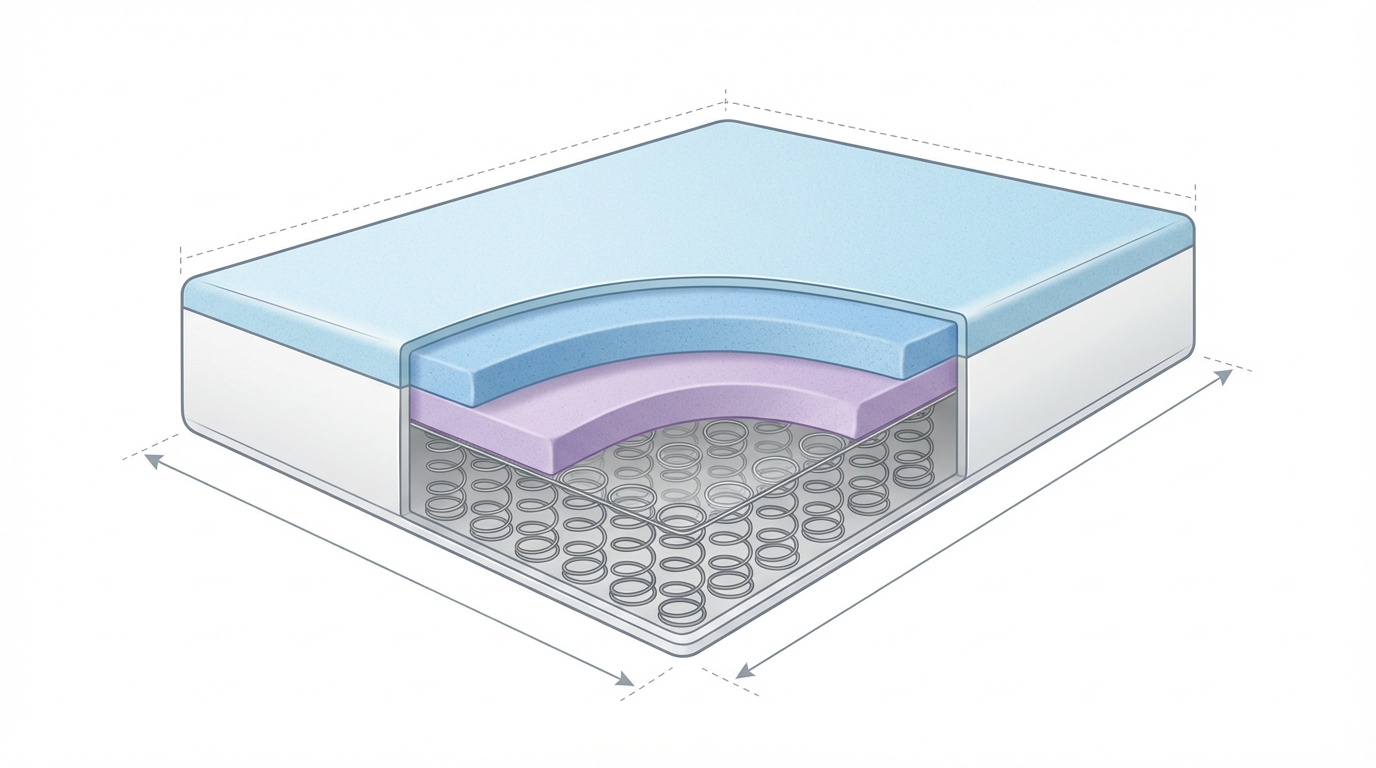
The raw dimensions of 76 by 80 inches are only part of the decision. The more important question is who can truly benefit from that extra space, and who might be equally comfortable on a smaller size. After 20 years in this industry, I have seen clear patterns in who loves their king purchase and who could have saved money by staying with a queen.
Couples are the most obvious match for a king, especially if both people value personal space or have different sleep positions. If one partner sleeps on their back and the other is a side sleeper who likes to curl up and uncurl during the night, the extra width prevents those shifts from constantly nudging the other person. Research on sleep and relationships, including studies highlighted by the National Sleep Foundation, shows that sharing a bed can be positive for emotional connection, but only when both people still feel physically comfortable.
Families who occasionally or regularly co sleep with a child or share the bed with one or two pets also tend to feel immediate relief with a king. A small child may not take up much width curled in a ball, but over the course of a night their rolling and stretching occupies more space than many adults expect. A medium or large dog, especially one that prefers the foot of the bed, can also crowd a queen more than you might think.
Individuals with larger body frames or those who simply love to sprawl also do well with a king. Many solo sleepers who choose king sizes do so because they like to sleep diagonally or change positions freely without worrying about the edge. For people with chronic pain, particularly in the hips and shoulders, the ability to adjust and reposition without thinking about space can be particularly valuable.
A king can also be a smart choice if you are planning for the future. Mattresses usually last 7 to 10 years, depending on materials and care. If you are a solo sleeper now but expect to have a long term partner during that lifespan, sizing up now may save you from another new mattress purchase a few years down the line. It is one of the reasons many shoppers in their late twenties and early thirties consider making the jump when they move into a more permanent home.
At the same time, a king is not automatically the right choice for everyone. If your bedroom is small, you live in a space with very tight staircases, or your budget is tight, a queen may be a more practical choice. The key is to find the size that gives you adequate personal space without overwhelming your living situation or stretching you financially.
Matching King Size To Sleep Position And Body Type
How you sleep also plays a subtle but important role in whether a king will feel like a true upgrade. Side sleepers usually spread out the most, with knees and elbows often extending away from the center of the body. If one or both partners is a dedicated side sleeper, a king often feels more natural because there is extra shoulder room. Back sleepers can sometimes share a queen comfortably if they remain relatively still, but restless back sleepers still appreciate the extra margin a king gives.
Stomach sleepers typically need both space and supportive surface firmness to avoid over arching the lower back. If you or your partner spends a lot of time on your stomach, look for a king mattress designed specifically for that position, such as options in Sleepology’s collection of best mattresses for stomach sleepers. These usually combine a supportive core with enough surface cushioning to reduce pressure without letting the hips sink too deeply.
Body type is another factor. Taller sleepers, especially those over 6 foot 2, usually benefit from at least 80 inches of length, which means twin XL, queen, king, or California king. If height is combined with broader shoulders or a larger frame, a king’s width becomes even more important. Heavier sleepers may also prefer a king because the larger surface area spreads weight more evenly, which can improve pressure distribution and reduce the risk of deep body impressions when paired with a quality support system.
People with chronic pain or mobility concerns often find that a king gives them the space needed to use supportive pillows and bolsters without feeling crowded. For example, a full body pillow like The BodyPillow by Tempur‑Pedic can be an excellent tool for side sleepers with hip or shoulder pain, but it occupies a fair amount of room. On a king, there is usually enough space for both the pillow and a partner while still keeping everyone supported.
If you are unsure how your sleep style translates into space needs, pay attention for a week to where you wake up relative to the center of your current bed. If you or your partner regularly wake very close to the edge, or you feel like you are constrained from lying in your natural position because of space, those are strong signals that a king could improve your sleep comfort.
“I did not think mattress size mattered much, but Mia pointed out that as a side sleeper with a shoulder injury, I was crunching myself on a queen without realizing it. We paired a king with a supportive hybrid from the back sleeper collection and a body pillow. It has been the first time in years I can stretch out without pain waking me.” – Marcus L., September
Choosing The Right King Mattress For Your Sleep Style
Once you know a king size mattress will fit your room and lifestyle, the next step is choosing the right type and feel within that size. A 76 by 80 inch mattress can feel entirely different depending on the materials inside. This is where many people feel overwhelmed because there are so many combinations of foam, coils, latex, and cooling technologies. The good news is that your body and sleep position can quickly narrow the field.
Hybrid mattresses, which combine innerspring support with foam or latex comfort layers, are very popular in king sizes. They offer the sturdy, lifted feel that many back and stomach sleepers like, along with contouring for pressure relief. A model like the Sealy Posturepedic Plus Medium Paterson II Euro Pillow Top in a king size meets a wide range of couples in the middle. It provides enough cushioning for side sleepers’ shoulders while keeping the midsection supported for back and stomach sleepers.
All foam kings, including memory foam, are prized for motion isolation, which can be especially helpful if you or your partner is a restless sleeper or has a different schedule. When one person moves or gets out of bed, the movement tends to stay localized rather than rippling across the surface. According to the Mayo Clinic, minimizing nighttime awakenings helps protect sleep architecture, which is the natural cycle through light, deep, and REM sleep stages.
Innerspring kings, which use coil systems with thinner comfort layers on top, tend to offer a more traditional, buoyant feel. They can work very well for sleepers who want firmer support and more airflow, particularly when paired with a breathable sheet set like the Tempur‑Pedic ProPerformance Sheet Set that helps regulate temperature and moisture across a wider sleeping surface.
Regardless of construction, firmness is a crucial piece of the puzzle. In general, side sleepers do best with medium to medium soft feels that allow shoulders and hips to sink slightly, while back and stomach sleepers need medium to medium firm support to maintain neutral alignment. If you and your partner have very different firmness preferences, you might explore split king setups with two twin XL mattresses, or look for king mattresses that offer zoning or a balanced “universal” feel.
Finally, think about temperature. A larger mattress holds more material, which can retain more body heat if the construction is not well ventilated. If you tend to sleep warm, pairing your king with breathable bedding, such as the TEMPUR‑Breeze Cooling Sheet Set, and considering cooling materials or airflow channels in the mattress itself can help keep your sleep environment comfortable year round.
Foundations, Frames, And Total Bed Height For A King
The base you place your king mattress on is just as important as the mattress itself. Larger surfaces need robust support to prevent sagging and to keep the warranty intact. Many king mattresses require a frame with a center support bar and at least one or two legs touching the floor in the middle. This prevents the mattress from bowing over time, especially in the area where most of the weight rests.
You can use a traditional boxspring or foundation under a king, provided it is designed for that size and includes center support. Low profile foundations, such as the 5 inch Sealy Mattress Base Boxspring Foundation, are helpful if you have a tall mattress and want to keep the total bed height more accessible. Platform beds with slats are another option, as long as the slats are close enough together to meet the mattress manufacturer’s requirements, generally no more than 3 inches apart.
Total bed height is not just about aesthetics, it affects how easy it is to get in and out of bed. Most people find a height in the range of 24 to 26 inches from the floor to the top of the mattress comfortable. If you are much taller or shorter, or if you have joint issues, you may prefer slightly different heights. When you stack a tall king mattress on a high foundation and a tall frame, the combined height can become awkward, especially for children or older adults.
One other thing to check is how your frame accommodates the exact 76 by 80 inch footprint. Some frames are built slightly wider or longer to allow for bedding and decorative elements, while others fit more snugly. If you are reusing an existing frame from a queen or upgrading to an adjustable base, make sure the specifications explicitly match a king. Adjustable bases for kings can come in one piece or two pieces that work together, which can be important if you have narrow hallways or stairs.
Taking a few minutes to plan this part of your purchase prevents the frustrating experience of bringing home a mattress that does not sit quite right on your frame, or discovering sagging a year later because the foundation was not up to the job. At Sleepology, we often pair king mattresses with compatible foundations during the selection process so you can see and feel the final bed height right away.
How King Size Dimensions Affect Bedding, Toppers, And Accessories
Once you choose a king size mattress, it has a ripple effect on every other element of your bed setup. Sheets, protectors, mattress toppers, and comforters all need to match those 76 by 80 inch dimensions to fit correctly. While this sounds obvious, many people are surprised by how much existing queen bedding no longer works and how much more fabric is involved in covering a king.
Fitted sheets for a king are designed not only around the 76 by 80 inch footprint, but also around a range of mattress heights. If you have a taller pillow top king, you will want deep pocket sheets to prevent corner popping. High quality sheet sets like the Tempur‑Pedic TEMPUR Adapt Luxe Egyptian Cotton Sheet Set are cut generously to accommodate both standard and taller profiles, which is especially useful if you decide to add a topper later.
Mattress protectors are non negotiable on a king, partly because you are protecting a larger investment and partly because accidents and spills become more likely with multiple sleepers and pets. A protector that is specifically sized for a king will wrap the mattress securely without bunching, which improves comfort and helps maintain breathability. Many protectors are designed to allow airflow while blocking liquids, which is important for temperature control.
If you use a mattress topper to fine tune firmness or add pressure relief, you will also need a king size topper that matches your mattress edges. Toppers that are too small can slide or leave unprotected zones at the sides, while toppers that hang over the edge can bunch or compress unevenly. For guests and travel, bundles like the Tempur‑Pedic Mattress Topper, Pillow Travel and Guest Bundle are practical solutions, but for nightly sleep you want toppers that exactly match your mattress size.
Comforters and duvets are where you have a bit more flexibility. Some couples prefer an oversized comforter that drapes more generously over the sides of a king, especially if one partner tends to pull covers away during the night. In colder climates, a slightly larger duvet can help prevent drafts. Just remember that larger comforters are heavier to wash and handle, so consider your laundry setup.
Budget wise, bedding for a king generally costs more than for a queen because of the extra material. Planning for this from the beginning can help you avoid sticker shock. Many Sleepology customers choose to invest in one or two high quality sheet sets and a durable protector that will last through the life of the mattress, rather than buying multiple inexpensive sets that wear out quickly.
Practical Measuring Tips Before You Commit To A King
Before you finalize a king purchase, it is worth doing a quick measuring session with a tape measure and notepad. This small step can save you from several big headaches. Start with the bedroom itself. Measure the length and width of the room in feet and inches, and note any architectural quirks, such as bump out walls, radiators, or angled ceilings that might affect where the bed can sit.
Next, outline the 76 by 80 inch king footprint with painter’s tape, leaving at least 24 inches of space on each accessible side and 36 inches at the foot if possible. If that much space is not realistic, see where you can compromise without making the room feel cramped. Do not forget to factor in nightstands if you use them, as they often add a combined 40 to 60 inches of width at the head of the bed.
Then, measure the path from your home’s entrance to the bedroom. Note the width of doorways, the width of stairwells at their narrowest points, and any sharp turns or low ceilings. While many modern king mattresses come compressed in boxes that are much smaller than the expanded bed, some traditional innerspring models do not. If delivery access looks tight, you may want to prioritize a bed in a box style or a split king configuration with two twin XLs.
Finally, consider window placement and how natural light hits the room. A king headboard placed under a window can be beautiful in some spaces but awkward in others, especially if the window height is low. Thinking through these details before buying keeps the focus on how wonderful your new sleep space will feel, instead of on logistical challenges.
If you feel unsure at any point, this is where working with a sleep specialist can make a real difference. At Sleepology we often review room photos and measurements with customers and help them visualize the finished setup, including mattress height, bedding, and traffic flow around the bed.
Conclusion: Turning King Size Dimensions Into Better Sleep

A king size mattress is more than a big rectangle. It is a 76 by 80 inch space where you spend roughly a third of your life, and the way that space fits your body, your partner, and your room has a direct impact on your sleep quality. Understanding the exact dimensions helps you avoid guesswork and lets you plan with confidence, whether you are upgrading from a queen, debating between king and California king, or setting up a primary bedroom in a new home.
The key decisions revolve around three questions. Will a king physically fit your room and lifestyle without making the space feel cramped. Do you, your partner, and your sleep style genuinely need or benefit from the additional width a king provides. And are you prepared to match that mattress with the right foundation, bedding, and accessories so the whole system works as one. When the answer to those questions is yes, a king often becomes one of those “why did we wait so long” purchases.
From here, a helpful next step is to combine your room measurements with your sleep style. If you are a back sleeper who loves a slightly firmer, supportive feel, exploring options in Sleepology’s best mattresses for back sleepers category in a king size can narrow the field quickly. If you are a side sleeper with sensitive shoulders, pairing a king with a pressure relieving model and supportive pillows can give you the comfort and space you have been missing.
If you would like tailored advice, you can always reach out to a Sleepology specialist, share your room dimensions and current sleep issues, and get a short list of king options that truly fit your situation. The goal is not to push the biggest size possible, but to make sure that the size you choose gives you the restful, restorative nights that good sleep science and real world experience both support.
Frequently Asked Questions
How much bigger is a king mattress than a queen in terms of space?
A king mattress is 76 inches wide and 80 inches long, while a queen is 60 inches wide and 80 inches long. This means a king gives you 16 additional inches of width and the same length. For couples, that translates into roughly 8 extra inches of personal space for each partner, moving from about 30 inches each on a queen to 38 inches each on a king. In practical terms, that often means fewer bumped elbows and less crowding at the edges during the night.
Will a king size mattress fit in a 10 by 10 foot bedroom?
A king can technically fit in a 10 by 10 foot bedroom, but it will usually make the room feel tight, especially once you add nightstands and a dresser. You may end up with only about a foot of walking space on each side, which makes moving around and making the bed more difficult. Many sleep and interior design experts recommend a queen for rooms that size, saving a king for spaces closer to 12 by 12 feet or larger where walking and storage space remain comfortable.
Is a king mattress worth the extra cost over a queen?
Whether a king is worth the extra cost comes down to how much you value additional sleeping space and how often crowding is affecting your rest. If you and your partner frequently wake each other during the night, share your bed with children or pets, or feel constrained on a queen, the improved sleep quality and comfort from a king can easily justify the higher price over years of use. If you sleep alone, move very little, and have a smaller bedroom, you may be just as happy and more budget friendly with a queen.
What is the difference between a king and a split king mattress?
A standard king is a single 76 by 80 inch mattress. A split king uses two twin XL mattresses, each about 38 by 80 inches, placed side by side on a king size frame or adjustable base. The combined size matches a standard king footprint, but each side can have different firmness or even move independently on some bases. This setup is helpful for couples with very different comfort needs or medical requirements, but it introduces a seam in the middle that you will usually cover with a fitted king sheet and sometimes a mattress bridge.
Do I need special sheets or bedding for a king size mattress?
You will need sheets, protectors, and comforters specifically labeled for king size to fit a 76 by 80 inch mattress correctly. Queen size bedding will be too small and will not stay in place. Within king bedding, consider the depth of your mattress so you can choose fitted sheets with pockets deep enough to accommodate the height, especially if you plan to use a mattress topper. Investing in one or two high quality king sheet sets and a durable protector is usually more comfortable and cost effective over time than cycling through multiple lower quality sets.
How do king mattress dimensions affect people with back or joint pain?
For people with back or joint pain, king size dimensions can help by allowing more natural movement and positioning without concern about falling off the edge. The extra width gives side sleepers with shoulder or hip issues room to use supportive pillows and adjust positions through the night, which can reduce pressure and stiffness. At the same time, the mattress itself still needs to provide proper alignment. Many back and joint pain sufferers do best with medium to medium firm kings designed for support, such as the hybrids and supportive models in Sleepology’s back sleeper mattress collection.
How close to the wall can I place a king size bed?
To keep your bedroom functional and comfortable, it is best to leave at least 24 inches of space on each accessible side of a king, and about 36 inches at the foot if you walk past the bed frequently. You can place the head of the bed directly against the wall or slightly away from it if you are using a headboard. Reducing side clearance much below 24 inches can make the room feel cramped and make tasks like changing sheets or getting in and out of bed inconvenient, especially for two people.