

What Are The Dimensions Of A Full Mattress? A Practical Size Guide From A Sleepologist
If you are trying to figure out whether a full mattress will actually fit your room, your body, and maybe your budget, you are not alone. A lot of people hear “full” and assume it must be the perfect middle ground, then get surprised when it feels smaller than they expected for two people or awkward in a narrow space. Getting the size wrong does not just mean a tight squeeze, it can affect your comfort, your sleep quality, and how functional your bedroom feels every single day.
Mattress dimensions can also be confusing because different retailers use terms like “full,” “double,” or “youth” interchangeably. On top of that, mattress thickness has grown over the years, so even if you know the width and length, you may still wonder if your current sheets or bed frame will work. When you are trying to shop online, measure an existing frame, or plan a small bedroom layout, you deserve clear, straightforward numbers and guidance that make sense.
You will learn the exact dimensions of a full mattress, how it compares to twin and queen sizes, and what kind of room and sleeper it really suits best. I will walk you through how to measure your space, decide whether a full is practical for one or two sleepers, and avoid the most common sizing mistakes I see in the showroom. You will also see how a full size plays with real-world things like pillows, toppers, and adjustable bases, so you can picture a complete setup, not just a rectangle on paper.
If mattress shopping has felt overwhelming, my goal is to slow it down, translate the jargon, and help you decide with confidence. By the time you finish reading, you should know whether a full mattress is the right size for you and what your best alternatives are if it is not.
The Exact Dimensions Of A Full Mattress
A standard full mattress in the United States measures 54 inches wide by 75 inches long. Many brands and retailers, including Sleepology, round this to 53 inches in descriptions, but the practical target is 54 by 75. You may also see a full mattress called a “double,” especially in older furniture catalogs or in hotel descriptions. Despite the name, this size was designed during a time when people tended to be smaller and bedrooms were more compact, which is one reason it can feel tight for modern couples.
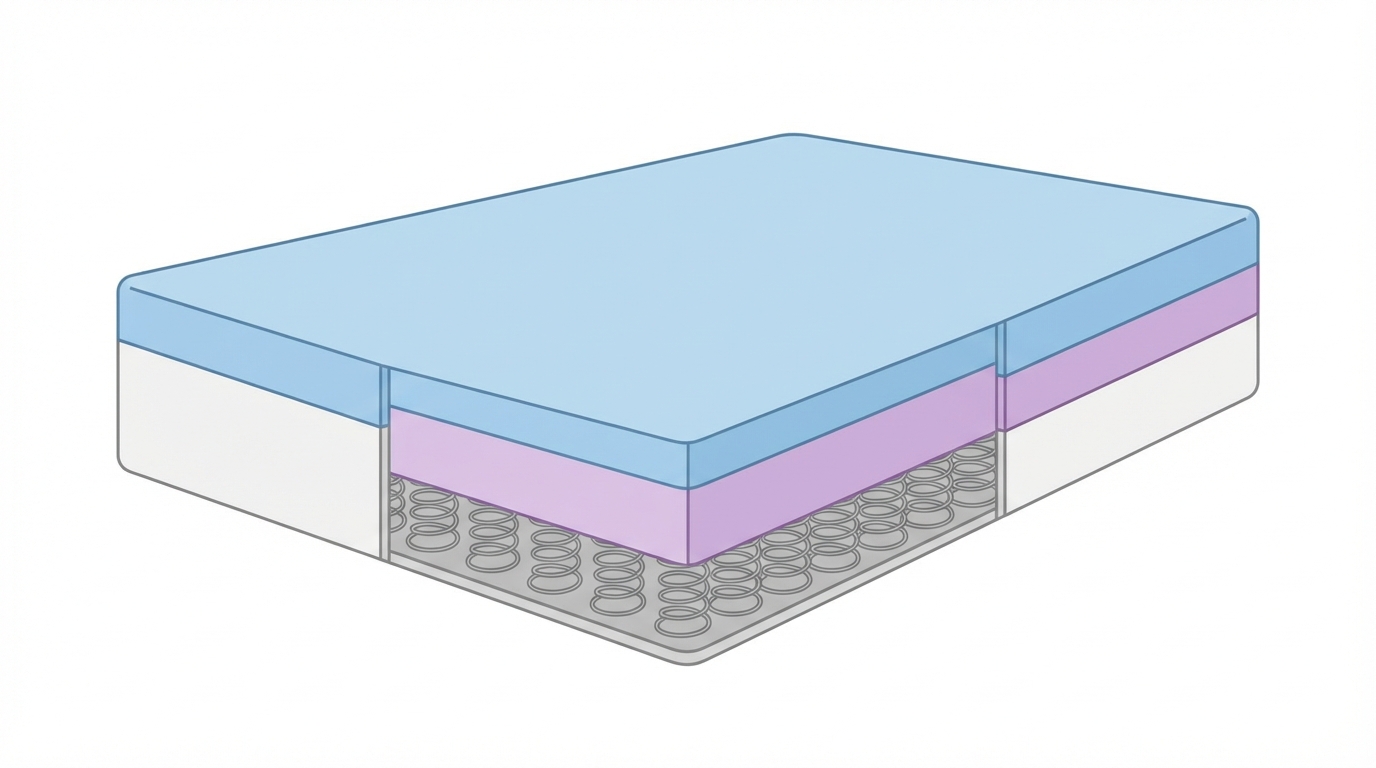
Those two numbers, width and length, tell only part of the story. Modern full mattresses vary widely in thickness, from around 8 inches on the low end to 15 inches or more for plush pillow tops and hybrids. According to the Sleep Foundation, many contemporary mattresses fall between 10 and 14 inches thick, and that extra height changes how your bed sits relative to your nightstands and how easy it is to get in and out of bed. Thicker mattresses also need deeper pocket sheets, which matters if you are trying to reuse existing bedding.
It can help to visualize how much space a full mattress actually gives you. At 54 inches wide, a solo sleeper gets a nice spread compared with a twin. If two adults share a full, each person has about 27 inches of personal width, which is actually less space per person than a child gets in a standard twin. For context, Consumer Reports has pointed out that a queen offers 30 inches per person and a king approximately 38 inches per person, which is why full beds can feel cuddly but cramped for many couples.
Length is just as important. Seventy five inches translates to 6 feet 3 inches from head to toe. Most people do not sleep fully flush with the headboard, so if you are taller than 5 feet 10 inches or so, your feet may be flirting with the end of a full mattress, especially if you like to sleep stretched out. Taller sleepers generally do better on the 80 inch length that you get with queen, king, and twin XL models.
Finally, remember that mattress dimensions refer to the mattress itself, not the total footprint of the bed. Add 1 to 3 inches of extra width and length for the frame, and more if you choose a platform or statement bed with a substantial headboard and footboard. If you are working with a tight room, that difference matters.
“Mia took the time to walk me through how a full would actually feel for me and my husband. Once she showed me the inch-per-person breakdown, I realized we needed more space. We ended up with a queen and avoided an expensive mismatch. I’m so glad we measured before buying.” – Rachel P., November
Full Mattress Size Compared To Other Common Sizes
Understanding full mattress dimensions is easier when you compare them directly to the sizes people most often consider alongside it. Full, twin, and queen are the three that cause the most confusion in real homes. On paper the differences are only a few inches. In real life those inches determine whether you bump elbows at night or have enough room at the foot of the bed to open a dresser drawer.
Full vs Twin and Twin XL
A standard twin mattress measures 38 inches wide by 75 inches long. Compared with a twin, a full mattress adds 16 inches of width while keeping the same length. That extra width is why young adults, recent grads, or single sleepers upgrading from a childhood twin often feel such a noticeable improvement when they move to a full. It gives more room to bend knees, change positions, or share the bed occasionally with a pet.
The twin XL mattress, commonly used in college dorms, is 38 inches wide by 80 inches long. It keeps the narrow width of a twin but adds 5 inches of length. If you are taller than average and sleeping alone, a twin XL can be more comfortable than a full because your feet are less likely to hang off, even though you lose some side to side room. The American Academy of Sleep Medicine notes that comfortable sleeping posture requires your body to be fully supported, and that includes having enough length that your ankles are not pressed against a rigid footboard.
So how do you choose between full and twin sizes when you have limited space or a tight budget? If you are under about 5 feet 10 inches, move around a lot at night, and sleep alone, a full usually strikes a nice balance between floor space and sleeping space. If you are tall but can live with less width, a twin XL may make more sense, especially in narrow rooms where every inch of width counts.
From a practical standpoint, bedding costs and availability are also part of the equation. Full and queen sheets are very common in most stores. Twin XL sheets are widely available thanks to dorm demand, but you will find fewer style options. If you are planning a long term setup with nicer linens, a full or queen might be more flexible over the years.
Full vs Queen
A queen mattress measures 60 inches wide by 80 inches long. That means a queen is 6 inches wider and 5 inches longer than a full. Those small sounding increases change how the bed feels, particularly for couples. On a queen, each person gets about 30 inches of personal width compared to 27 on a full. That difference can be the line between feeling like you are always right on top of each other and feeling like you can cuddle when you want but spread out the rest of the night.
The extra 5 inches of length is equally important. Taller adults and anyone who sleeps with a pet at the foot of the bed often find that a full simply runs out of room. The Cleveland Clinic has highlighted that sleep disruptions from a bed partner or pet can chip away at deep sleep over time, and mattress size is a big factor in how often you get jostled. A queen gives a bit more breathing room so everyone can find a comfortable spot.
Of course, there is a trade off. A queen takes up more floor space, and the cost of the mattress and bedding is usually higher. In my experience, if your bedroom is at least 10 by 10 feet and you are trying to accommodate two adults, a queen size is usually the more future proof choice. It gives you more flexibility if your needs change, you add a child or pet, or one of you starts needing more space to manage back or hip issues.
This is where a quality mattress really pays off. For example, couples who want the feel of a supportive, cushioned queen often gravitate toward models like the Sealy Posturepedic Plus Medium Mattress – Paterson II Euro Pillow Top. In a queen size, that kind of design provides zoned support through the middle of the body while keeping enough surface area that you are not fighting for space.
“We almost ordered a full bed online to save money. After talking with Sleepology, we measured our 11 by 12 room and realized a queen would still leave good walking space. We chose a queen hybrid and I am so glad we did, because the extra 5 inches of length really matters for my 6'2" husband.” – Kevin J., October
Room Size And Layout: Will A Full Mattress Actually Fit?

Even when the width and length seem clear, the real test is how a full mattress plays with your bedroom. The goal is not just to make it fit on paper but to make the room feel comfortable, safe to move around, and functional for daily life. According to common interior design guidelines, it is ideal to maintain at least 24 to 36 inches of walking space on each accessible side of the bed. That buffer helps prevent stubbed toes, awkward sidestepping, and the feeling that the bed is swallowing the room.
For a full mattress at 54 by 75 inches, a good minimum room size is about 9 by 10 feet if you plan to place one side of the bed against a wall. If you want access on both sides, aiming for around 10 by 10 feet or larger gives you more breathing room. You also need to account for other furniture like dressers, desks, or a reading chair. I often suggest sketching a simple floor plan or using painter’s tape on the floor to outline the mattress footprint along with 24 inch walkways so you can literally stand inside the layout.
Ceiling height and window placement can influence your decision too. In a smaller room with low windows, a full mattress on a low profile platform base can look balanced and still give enough visual breathing space. In a room with tall ceilings and big windows, you might feel more comfortable with the slightly larger presence of a queen bed. The American Institute of Architects has noted that perceived spaciousness is not just about square footage, it is also about scale and proportion, and your mattress size is part of that.
Keep in mind that adding an adjustable base changes the picture slightly. Adjustable bases often increase the overall height of the sleep surface and can extend slightly beyond the mattress dimensions. If you are interested in features like elevation for snoring, reflux, or back comfort, it is worth checking your measurements against an adjustable bed frame and base ahead of time. For many people, a full mattress on an adjustable base in a compact room is a very livable setup, especially for solo sleepers who want therapeutic positioning without dedicating queen level floor space.
If you are furnishing a guest room, you can be a bit more flexible. Guests are usually willing to navigate a slightly tighter space in exchange for a real bed instead of a sofa pullout. In that case, a full mattress can deliver a genuine bedroom experience in a room that might otherwise only accommodate a daybed. The key is to make sure doors still open fully and that there is a clear path to the bathroom without sharp corners intruding into the walkway.
How Full Mattress Dimensions Affect Real Sleep Comfort
Knowing the measurements is one thing. Understanding how those numbers play out in your body and your nightly routine is just as important. Sleep comfort is not only about your mattress feel, it is also about whether you can move naturally, change positions, and share the bed without waking up several times per night.
Full Mattress Space For Solo Sleepers
For a single adult, a full mattress can feel like a sweet spot. It offers significantly more width than a twin or twin XL, so you can sprawl a bit, bend your knees comfortably, and toss and turn without always brushing the edge. If your sleep style is more compact, such as a back sleeper who tends to stay centered, a full can feel almost luxurious compared with a narrow twin.
From a health perspective, adequate space helps your muscles truly relax. The Mayo Clinic highlights that quality sleep is supported by a stable, comfortable position that does not strain joints or restrict movement. When you have enough width to gently adjust your shoulders, hips, and knees throughout the night, your body can find those micro positions that protect your spine and reduce waking with stiffness.
A full size also makes sense for teens and young adults who are transitioning out of childhood furniture. It allows for growth spurts, more independence, and a realistic setting for studying or lounging. Paired with a supportive mattress like the Sealy Posturepedic Elite Firm Mattress – Medina II, many students find that a full bed supports both their posture and their budget. It can easily carry them from late high school through their first apartment.
At the same time, some solo sleepers benefit from stepping up to a queen, especially if they are tall or if their sleep changes due to back pain, pregnancy, or medical conditions. The extra 5 inches of length and 6 inches of width give more flexibility for pillows between the knees, body pillows, or occasional visits from a child or pet. This is where it helps to be honest about how you actually sleep rather than how you think you should sleep.
Full Mattress Space For Couples
When it comes to couples, the full mattress becomes more nuanced. Technically, it can accommodate two adults. Historically, many couples slept on full beds, and some still do because they prefer closeness or have no alternative due to room size. In practice, however, each person only gets 27 inches of personal width, which is less than a twin and can become challenging if either of you is a restless sleeper.
Sleep researchers at organizations like the Sleep Foundation have discussed how bed sharing can affect sleep stages. When you are constantly bumping into each other due to limited space, you may experience more awakenings and less deep sleep, which can show up as daytime fatigue, irritability, or slower recovery after exercise. A full may still work if you both tend to sleep fairly still, are smaller framed, and like to snuggle most of the night. If you value personal space, a queen is usually a better long term choice.
It also helps to think ahead. If you might welcome a baby or adopt a large dog in the next few years, moving to a queen now is often more cost effective and less disruptive than trying to upgrade again later. A quality full mattress is an investment, so you want to be sure it will still match your lifestyle 5 to 7 years from now.
That said, there are situations where a full mattress for two is genuinely practical. For example, a full-sized Sealy Posturepedic Elite Soft Hybrid Mattress – Brenham II can work well for a couple in a studio apartment when the room simply cannot handle a queen. The responsive coils and pressure relieving comfort layers help reduce motion transfer, so even if space is tight, you are not feeling every small shift as dramatically.
“Our first place together was a tiny downtown studio, and we were convinced we needed a full size bed. Mia walked us through the pros and cons for couples, and we decided to keep the full for that space but choose a higher quality hybrid. It honestly slept better than the older queen at my parents’ house because the support and motion isolation were so much better.” – Jenna L., December
Full Mattress vs Queen vs King: A Quick Size Comparison
When shoppers are uncertain about a full mattress, they usually want to see all the options at a glance. The table below compares the three most common sizes adults consider for a primary bedroom: full, queen, and king. This can help you visualize how much additional room each upgrade buys you and who each size tends to serve best.
| Mattress Size | Dimensions (W x L, inches) | Approximate Area (sq ft) | Best For |
|---|---|---|---|
| Full | 54 x 75 | 28.1 | Solo adults, teens, small guest rooms, studios where floor space is tight |
| Queen | 60 x 80 | 33.3 | Most couples, solo sleepers who like extra space, primary bedrooms in average sized homes |
| King | 76 x 80 | 42.2 | Couples who want maximum space, families with kids or pets in bed, larger primary suites |
Looking at area makes the size jumps clearer. Moving from a full to a queen adds about 5 square feet of sleeping surface. Going from queen to king adds nearly 9 square feet more. If you are the kind of person who spreads out with pillows, or if you like your child to fall asleep between you during bedtime stories, that extra surface makes a noticeable difference.
If your room can accommodate it, a king mattress can be a game changer for couples who are struggling with disrupted sleep. Many find that moving to a king in a design like the King sized mattresses collection dramatically reduces middle of the night wakeups due to a partner moving. You are essentially giving each person the equivalent width of their own twin bed, just combined in one frame.
On the other hand, if you or your partner feel overwhelmed by large furniture or simply prefer a cozier bedroom, a full or queen might blend better with your style and still deliver excellent sleep when you choose the right comfort and support.
Measuring Your Space And Existing Furniture For A Full Mattress
One of the biggest mistakes I see is people ordering a mattress based on the advertised dimensions without actually measuring their home. Hallways, stairwells, doorframes, and existing furniture can all throw a wrench into what looks like a perfect plan on paper. Taking ten minutes with a tape measure is a simple way to prevent delivery day headaches and returns.
Start by measuring the room itself. Note the length and width of the floor space, then mark where doors swing open and where closets are located. Next, map out where you would ideally place the full mattress. Remember to include at least 24 inches of clearance on at least one long side and at the foot if possible. If you want bedside tables on both sides, plan for their width as well. Laying painter’s tape in a 54 by 75 inch rectangle can give you an immediate, visual sense of how the bed will live in the room.
Then, consider vertical space. Measure from the floor to the window sills and to any low wall features like radiators or baseboard heaters. If you choose a thicker full mattress or a tall foundation, you want to be sure it will not partially block a window or make the room feel visually crowded. This is particularly important if you are pairing your mattress with a substantial headboard or footboard.
Finally, think through the path to the room. Measure the width of your main entrance door, interior doors, tight hallway corners, and staircases. While most full mattresses are flexible enough to bend around a curve, having a sense of your narrowest point is wise. If your home has very tight access, consider a mattress style that is shipped compressed and rolled, so it is easier to maneuver through small spaces.
If you plan to upgrade more than just the mattress, it is helpful to think holistically about your sleep setup. For example, if you are adding new pillows or a mattress topper for comfort, browsing options such as the Pillows, Sheets, Toppers, Protectors collection while you measure can help you picture the whole ensemble and make sure your choices align with your room constraints as well as your comfort needs.
Common Full Mattress Sizing Mistakes To Avoid
Even with the best intentions, there are some patterns that come up again and again when people choose a full mattress. Avoiding these pitfalls can save you money, frustration, and sleepless nights. Below are some of the most common mistakes I see as a sleepologist, along with why they matter.
One frequent misstep is assuming that “full” is automatically ideal for two adults simply because of the name. As we have already covered, a full mattress technically accommodates two, but it offers less personal width than a twin. If either of you has shoulder or hip issues, snores, or moves around a lot, that limited width can aggravate discomfort and lead to more sleep disruptions. It is important to separate the idea of “can we fit?” from “will we both sleep well over time?”
Another issue is underestimating length for taller sleepers. People around 6 feet tall may try to make a full work by curling up slightly or sleeping diagonally, but over time those compensations can strain knees, hips, or the lower back. The American Academy of Orthopaedic Surgeons has emphasized that prolonged awkward postures during sleep can contribute to musculoskeletal pain. If you are approaching 6 feet or more, the extra 5 inches of length in a queen or twin XL is more than a luxury, it is a form of long term body care.
Many shoppers also forget to factor in mattress thickness. They measure the floor footprint carefully but never check how tall the mattress will be once it is on a foundation or adjustable base. If the top of the mattress ends up much higher than your knee level, getting in and out of bed can feel clumsy, especially for shorter individuals or anyone with mobility challenges. Conversely, a very low bed may require more effort to stand up from a seated position.
Finally, some people cling to an existing bed frame or headboard that technically fits a full mattress but is not structurally compatible or supportive. A frame that does not provide enough central support can cause the mattress to sag prematurely, and inadequate support is a known factor in back discomfort for many sleepers. If you are investing in a quality full mattress, matching it with an appropriate frame or base is essential for both comfort and longevity.
When A Full Mattress Is The Best Choice
Despite the potential pitfalls, full mattresses absolutely have a place where they shine. For the right sleeper and the right room, they offer an appealing blend of comfort, space savings, and value. The key is to be honest about who will sleep on the mattress, how often, and for how many years you expect to use it.
A full mattress is often ideal for solo adults or teens in medium sized rooms. It gives them a sense of a “grown up” bed with enough room to stretch without consuming the entire floor. This is particularly true in apartments or older homes where bedrooms are closer to 9 by 10 feet than 12 by 14. In these spaces, a queen can visually and physically dominate, while a full leaves enough breathing room for a desk, dresser, or reading corner.
Full mattresses also work beautifully in guest rooms that serve multiple purposes. If you use the room as a home office most of the time and only host guests occasionally, a full strikes a nice balance between being hospitable and keeping the everyday workspace manageable. Most guests, even couples, are very comfortable on a full for a few nights, especially if you choose a supportive model such as the Sealy Posturepedic Elite Medium Mattress – Brenham II Euro Pillow Top, which combines pressure relief with strong edge support.
Another scenario where a full mattress shines is in small primary bedrooms where a queen would squeeze out essential circulation space. If you have a 10 by 10 room and want nightstands on both sides plus a dresser, a full can make the layout more functional. The result is a room that still feels like a true primary bedroom instead of a cramped furniture puzzle.
Price is another advantage. All else equal, full mattresses and bedding are generally less expensive than queen or king equivalents. According to market research in the mattress industry, stepping down one size can often save a meaningful amount of money without sacrificing quality, as long as the size still suits your body and lifestyle. For some shoppers, that savings can make it possible to invest in higher quality materials or additional accessories, such as a breathable mattress protector or a better pillow, which can have an outsized impact on nightly comfort.
When You Should Consider Upsizing From A Full
There are also clear situations where moving up from a full to a queen or king is the more realistic long term choice. The goal is not to talk anyone into a larger mattress they do not need, but to help you recognize signs that a full may be limiting, either now or in the near future.
If you and your partner regularly wake each other up with movements, or if you already feel like you are clinging to the edge of your current bed, a full is unlikely to solve that. In those cases, the extra width of a queen or king provides more room for each person’s natural motion. The Sleep Foundation notes that motion isolation and adequate surface area are key to uninterrupted sleep for couples, and both are easier to achieve when you have more square footage to work with.
Body size and shape also matter. If one or both sleepers are broader in the shoulders or hips, or if you use multiple pillows for support due to back, hip, or shoulder issues, a full may feel crowded. Upgrading to a queen allows for better spinal alignment and more creative positioning with pillows. Some sleepers benefit greatly from a body length pillow such as The BodyPillow by Tempur-Pedic, which is much easier to use effectively on a queen or king surface.
You should also think about life transitions. Planning to start a family, adopt a dog, or invite an aging parent to stay more often can all change how many bodies end up in your bed. If your finances and room size allow, it is often smarter to choose the size that will still work well in three to five years instead of buying a full now and feeling forced to upgrade again later.
Lastly, if you experience chronic pain, snoring, or reflux, pairing a larger mattress with an adjustable base can offer more therapeutic options. Having extra surface area allows you to elevate your head or knees without sliding into your partner’s space. Many people find that a queen or king on an adjustable bed frame and base makes it easier to find a position that reduces symptoms while still feeling connected to their partner.
Bedding, Toppers, And Pillows For A Full Mattress

Once you have confirmed that a full mattress is the right size, the next step is thinking about everything that goes on top of it. The wrong accessories can undermine a great mattress, while the right combination can help a good mattress feel outstanding. Mattress height, sheet depth, and pillow choices all interact with the dimensions and feel of a full size bed.
Full mattresses vary in thickness, so you will want to check the exact profile of the model you choose. Standard fitted sheets are usually designed for mattresses around 10 to 12 inches thick. If your full mattress is 13 inches or more, or if you plan to add a plush topper, look for deep pocket sheets that specify the maximum depth they can accommodate. This prevents the frustrating scenario where sheets pop off the corners at 3 a.m.
Mattress toppers can be a smart way to fine tune comfort on a full mattress, especially if you are sharing the bed occasionally with a guest or partner who prefers a slightly different feel. A well designed topper can add pressure relief for shoulders and hips without changing the underlying support system. Travel friendly options, such as the Tempur-Pedic Mattress Topper – Pillow Travel and Guest Bundle, are particularly helpful if you sometimes host guests on your full bed and want to give them a little extra plushness without permanently changing your day to day setup.
Pillows also need to match both your body and your mattress width. On a full bed, two standard pillows fit comfortably side by side, while two king sized pillows can feel crowded and may hang over the edges. For side sleepers or pregnant sleepers who like to hug something and support knees or belly, a long pillow such as The BodyPillow by Tempur-Pedic can be excellent as long as you have enough length and width to position it diagonally or along one side without pushing yourself to the very edge.
Protecting your full mattress is the final layer. A waterproof or water resistant protector helps defend against spills, sweat, and allergens, extending the lifespan of the mattress and keeping warranties valid. When you shop the Pillows, Sheets, Toppers, Protectors collection, look for protectors specifically labeled for full size and pay attention to their depth compatibility so they fully hug the corners of your mattress.
A Simple Checklist Before You Commit To A Full Mattress
If you like having a quick snapshot to confirm your decision, it can help to pause and run through a short checklist. The idea is not to overcomplicate things, but to make sure you have covered the essentials before you place an order or swipe your card. After helping thousands of sleepers choose mattresses, these are the questions I find most valuable.
Ask yourself:
- Who will sleep on this mattress most nights, and for how many years do I expect to use it?
- What are the exact dimensions of my room, including door swings and major furniture, and have I marked out a 54 by 75 inch footprint with at least one 24 inch walkway?
- How tall are the primary sleepers, and do they have any current or anticipated issues with back pain, joint pain, snoring, or reflux that might benefit from more space or an adjustable base?
- How much personal space do I or we tend to need to feel comfortable at night, and do we currently feel cramped in our existing bed?
- What is my total budget, including mattress, base or frame, and necessary accessories like sheets, pillows, and a protector?
- Do I already own any furniture or bedding that I absolutely want to keep using, and is it truly compatible with a full mattress, not just “close enough” in size?
- If my life changes in the next three to five years, will this size still serve me, or will I likely wish I had gone larger?
If you can answer these questions clearly and a full still makes sense, that is a very strong sign you are on the right track. If you hesitate or realize that you are making compromises in multiple areas, it may be worth revisiting queen or king options or speaking directly with a sleep specialist to explore your choices.
Conclusion: Choosing The Right Mattress Size With Confidence
Choosing the dimensions of your mattress is one of the most important decisions you will make for your sleep and for the feel of your bedroom. A full mattress, at roughly 54 by 75 inches, offers generous space for a solo sleeper, a smart solution for many guest rooms, and a realistic choice for smaller primary bedrooms where floor space is limited. It can be an excellent blend of comfort, practicality, and value when it matches your body, your room, and your lifestyle.
At the same time, it is important to be candid about its limits. For many couples, and for taller sleepers, moving up to a queen or king provides more room to move naturally, share the bed with pets or children, and protect long term comfort. There is no universally “best” size, only the size that best fits your specific needs now and in the years ahead.
If you are still on the fence, you do not have to figure it out alone. At Sleepology, we combine detailed measurements, real world experience, and the latest insights from sleep health organizations to help you choose wisely. Whether you ultimately land on a full, queen, or king, the goal is the same: a bed that supports deep, restorative sleep and a bedroom that feels like a calm, functional sanctuary.
Frequently Asked Questions
Is a full mattress big enough for two adults every night?
A full mattress can physically fit two adults, but it often feels tight for nightly use. Each person gets about 27 inches of personal space, which is less than on a twin. If you both sleep relatively still and enjoy closeness, it might work, especially in a smaller room. However, most couples sleep more comfortably on a queen, which offers 30 inches per person and more length, or a king if space and budget allow.
What are the exact dimensions of a full mattress in feet and inches?
A standard full mattress measures approximately 54 inches wide by 75 inches long. In feet, that is 4 feet 6 inches wide by 6 feet 3 inches long. Remember that bed frames and headboards usually add at least an inch or two on each side, so the total footprint of your bed will be slightly larger than the mattress dimensions alone.
How tall should my room ceilings be for a full mattress and taller bed frame?
There is no strict minimum ceiling height for a full mattress, but you do want to maintain comfortable proportions. In average rooms with 8 foot ceilings, a full mattress on a standard foundation or platform frame usually looks balanced. If you choose a very tall mattress and a high profile foundation, it may feel more natural in a room with 9 foot ceilings or higher so the bed does not visually dominate the space.
Will my existing double bed frame work with a new full mattress?
In most cases, a frame labeled for a “double” bed is designed to fit a modern full mattress, since the terms are used interchangeably. That said, you should still measure the inner width and length of the frame and compare it to the mattress specifications. You also want to verify that the frame provides adequate center support for the new mattress, especially if you are upgrading to a heavier hybrid or pillow top model.
How much bigger is a queen mattress than a full?
A queen mattress is 6 inches wider and 5 inches longer than a full. In numbers, a full is 54 by 75 inches, while a queen is 60 by 80 inches. That difference adds about 5 square feet of sleeping surface, which gives more space per person and more room at the head or foot of the bed for pillows and pets. If you are unsure between the two, and your room can handle either, most adults find the extra space of a queen worth the modest increase in cost and footprint.
Are full size mattresses suitable for teenagers?
Yes, full size mattresses are often a great choice for teenagers. They provide more width than a twin, which feels more comfortable as teens grow and spend more time relaxing, studying, or using devices in bed. For very tall teens, a twin XL or queen may be better for long term comfort, but for average height teens and young adults, a full can comfortably carry them into their first apartment or post college years.
Do full mattresses work with adjustable bases?
Many adjustable bases are available in full size, and a full mattress can work very well on an adjustable platform for a solo sleeper. Adjustable bases are particularly helpful for easing back discomfort, snoring, or acid reflux by allowing gentle head and foot elevation. If you are considering this setup, double check the combined footprint of the base and mattress to be sure it fits your room and that any footboards or surrounding furniture leave enough clearance as the bed moves.