

Have you ever walked into a mattress store, confidently prepared to buy, only to freeze when you saw the price tags? You're standing there, comparing innerspring vs memory foam options, and suddenly the numbers seem to make no sense. One mattress costs $500, another $3,000—yet they both promise a good night's sleep. What's really driving these price differences, and more importantly, which one actually delivers value for your hard-earned money?
I've spent countless hours researching mattress price comparisons, and here's what most retailers won't tell you upfront: the battle between innerspring mattress price points and memory foam mattress cost isn't as straightforward as it appears. The sticker price is just the beginning. There are hidden factors, long-term value considerations, and budget mattress deals that can completely change the equation. Some shoppers chase the lowest price and end up replacing their mattress within three years. Others invest heavily upfront, thinking more expensive automatically means better quality, only to find they've overpaid for features they don't need.
The mattress industry thrives on confusion. Sales associates throw around terms like "coil count," "foam density," and "pressure relief" without explaining how these factors actually impact what you'll pay—or whether you'll still be comfortable five years from now. When you're doing a mattress cost breakdown, you need to look beyond the initial purchase. What about durability? What about the accessories you'll need? What about return policies and warranties that might save you money down the road?
Here's the reality that changed how I approach affordable mattresses: the "best deal" isn't always the cheapest option, nor is it necessarily the most expensive. It's the mattress that matches your specific sleep needs while fitting comfortably within your budget—and that's different for everyone. A side sleeper with back pain has completely different requirements than a stomach sleeper who runs hot at night. Your body weight, sleep position, temperature preferences, and even whether you sleep alone or with a partner all factor into which mattress type delivers the best value for your situation.
This comprehensive mattress buying guide cuts through the marketing noise to show you the real cost differences between innerspring and memory foam options. I'll walk you through the actual price ranges you'll encounter, explain what drives those costs, and most importantly, show you how to identify the best mattress deals that offer genuine value rather than just a low price. Whether you're shopping on a tight budget or willing to invest more for the right mattress, understanding these price dynamics will save you money and help you sleep better. Let's break down exactly what you're paying for when you compare innerspring vs memory foam mattresses.
Key Takeaways
- Innerspring mattresses typically cost less upfront but may need replacement sooner than memory foam options
- Memory foam mattress cost varies widely based on density, thickness, and cooling technology features
- Hidden costs like foundations, protectors, and delivery fees can add $200-$500 to your total mattress investment
- Budget mattress deals often appear during holiday sales, offering 30-50% savings on quality options
- Long-term value depends on durability, warranty coverage, and how well the mattress matches your sleep needs
Innerspring vs. Memory Foam Mattresses: Choosing the Right One for Your Budget
When I first started comparing mattress options seriously, I quickly realized that the innerspring vs memory foam debate isn't just about comfort preferences—it's fundamentally a financial decision that impacts your sleep quality for years to come. The mattress price comparison between these two popular types reveals significant differences that go way beyond the initial checkout amount.
Let's get real about what you're actually choosing between. Innerspring mattresses have been around for over a century, using metal coils to provide support. They're the traditional option your grandparents probably slept on, though modern versions have evolved considerably. Memory foam, on the other hand, is the newer technology that was originally developed by NASA in the 1960s and adapted for consumer mattresses in the 1990s. Each type has distinct cost structures that affect both your immediate budget and long-term investment.
The innerspring mattress price typically starts lower than memory foam options. You can find decent quality innerspring mattresses beginning around $300-$500 for a queen size, while memory foam mattress cost generally starts around $500-$700 for comparable quality. However—and this is crucial—these entry-level prices tell only part of the story. The materials, construction quality, and expected lifespan vary dramatically within each category, which means comparing the cheapest innerspring to the cheapest memory foam isn't really comparing apples to apples.
What I found most surprising in my research is how the mattress cost breakdown changes when you factor in longevity. A budget innerspring might save you $200 upfront but need replacement in 5-6 years, while a mid-range memory foam could last 8-10 years or longer. When you calculate the annual cost of ownership, the more expensive option sometimes becomes the more affordable mattresses over time. This is exactly the kind of insight that helps you find the best mattress deals—not just the lowest price tag.
Your budget considerations should also account for your specific sleep situation. Do you sleep alone or with a partner? Partner disturbance is a real issue with innerspring mattresses because the coils transfer motion across the bed. If your partner tosses and turns, you'll feel it. Memory foam excels at motion isolation, which might be worth the extra investment if you're a light sleeper sharing your bed. I can't count how many people have told me they wish they'd factored this into their original mattress buying guide calculations.
The good news? Both innerspring and memory foam categories now offer options across nearly every price point. Hybrid mattresses—which combine innerspring coils with memory foam layers—have emerged as a middle ground, typically priced between pure innerspring and pure memory foam options. At Sleepology Mattress Shop, you'll find quality selections in both categories, from traditional innerspring models to advanced memory foam constructions, giving you the flexibility to choose based on your actual needs rather than settling for whatever fits a predetermined budget.
Temperature regulation is another factor that affects both comfort and cost. Traditional innerspring mattresses naturally sleep cooler because air flows freely through the coil system. Basic memory foam tends to trap heat, which led to the development of gel-infused foams, copper-infused foams, and open-cell technologies—all of which increase the memory foam mattress cost. If you're a hot sleeper, you might save money with an innerspring, or you might need to budget for a premium cooling memory foam to get the temperature regulation you need.
Understanding the Key Differences in Mattresses
The construction differences between innerspring and memory foam mattresses directly impact both their price and performance. When you're doing a thorough mattress price comparison, understanding these structural elements helps you evaluate whether you're getting good value or just paying for marketing hype.
Innerspring mattresses are built around a support core of metal coils. The coil count, coil type, and gauge (thickness) of the wire all affect the innerspring mattress price. Here's what you need to know about the construction factors that influence cost:
- Coil count and type: More coils don't automatically mean better quality, but individually wrapped coils (pocketed coils) cost more to manufacture than traditional Bonnell coils and provide better motion isolation and contouring
- Comfort layers: The foam, fiber, or pillow-top materials layered above the coils significantly impact price; thicker, higher-quality comfort layers increase costs but also improve comfort and durability
- Edge support systems: Reinforced perimeters prevent sagging at the mattress edges and add to manufacturing costs, but they also extend the usable sleep surface and mattress lifespan
- Foundation requirements: Most innerspring mattresses need a box spring or foundation, which adds $100-$300 to your total investment—a hidden cost many shoppers forget to budget for
Memory foam mattresses have an entirely different cost structure. Instead of coils, they use layers of polyurethane foam formulated to respond to heat and pressure. The memory foam mattress cost is primarily driven by foam density and special features. Higher-density foams (5 pounds per cubic foot or more) cost significantly more than lower-density options (3-4 pounds per cubic foot), but they also last longer and provide better support. The thickness of the memory foam layer matters too—mattresses with 3+ inches of memory foam cost more than those with just a thin comfort layer over support foam.
What really affects the mattress cost breakdown in memory foam options is the technology incorporated to address common complaints. Basic memory foam retains heat and can feel like you're "stuck" in the mattress. Manufacturers have developed solutions, each adding to the price: gel infusions, copper or graphite infusions for cooling, open-cell structures for airflow, phase-change materials that actively regulate temperature, and plant-based foams that sleep cooler than petroleum-based alternatives. These aren't just marketing features—they genuinely affect your sleep experience, but you'll pay a premium for them.
Hybrid mattresses combine innerspring coils with significant memory foam layers, attempting to capture the benefits of both types. The construction is more complex, which typically places hybrid mattresses in the mid-to-upper price range. You're essentially paying for both the coil system and substantial foam layers, but many sleepers find the combination delivers the best overall value by providing the bounce and airflow of innerspring with the pressure relief and motion isolation of memory foam.
When evaluating affordable mattresses in either category, pay attention to warranty terms and trial periods. These aren't just about protection—they're indicators of quality. Manufacturers confident in their products offer longer warranties. Innerspring mattresses typically come with 5-10 year warranties, while quality memory foam often includes 10-20 year coverage. A mattress with a longer warranty might cost more upfront but signals better durability, which makes it a smarter long-term investment when you're comparing best mattress deals.
Why Your Choice Affects Your Wallet
The financial implications of choosing between innerspring vs memory foam extend far beyond the purchase price. I've talked to countless mattress shoppers who focused exclusively on finding the lowest price, only to spend more money over the next few years on replacements, accessories, or even medical bills from poor sleep quality. Your mattress choice is a health investment as much as a furniture purchase.
Let's start with the replacement cycle, because this dramatically changes the true cost equation. Entry-level innerspring mattresses typically last 5-7 years before they start sagging or losing support. Mid-range innerspring options might give you 7-10 years of quality sleep. Memory foam mattresses generally last longer—quality memory foam can maintain its supportive properties for 8-12 years, with premium options lasting even longer. When you calculate cost per year of use, that $800 memory foam mattress that lasts 10 years costs you $80 annually, while a $500 innerspring that needs replacement after 6 years costs about $83 per year. The cheaper option becomes more expensive over time.
"We bought a budget innerspring to save money when we first got married. Three years later, we were both waking up with back pain and had to replace it. Looking back, we should have invested in better quality from the start. The money we 'saved' wasn't worth the poor sleep and the hassle of dealing with another mattress purchase so soon." – Sarah M., verified customer review
The hidden costs in your mattress buying guide calculations add up quickly. Innerspring mattresses almost always require a box spring or foundation, adding $150-$300 to your total cost. Memory foam mattresses can sit on a platform bed or slatted frame (as long as slats are close together), potentially saving you that expense. However, many memory foam owners invest in cooling mattress protectors ($50-$150) to address heat retention, while innerspring owners might not need this additional accessory. Delivery and setup fees vary by retailer, but heavier memory foam mattresses sometimes incur higher delivery charges.
Your sleep quality directly impacts your wallet in ways that don't show up on the receipt. Poor sleep from an inadequate mattress reduces productivity, increases sick days, and can lead to chronic health issues that result in medical expenses. The National Sleep Foundation estimates that sleep disorders and sleep deprivation cost the U.S. economy over $411 billion annually in lost productivity. While you can't put an exact dollar figure on one person's improved sleep, choosing the right mattress type for your body and sleep style is an investment in your health and daily functioning.
Energy costs might seem unrelated to your mattress choice, but they're connected. If your memory foam mattress sleeps too hot, you'll run your air conditioning more at night or use fans, increasing electricity bills. If your innerspring mattress doesn't provide adequate pressure relief, you might toss and turn more, disturbing your partner and potentially leading to sleeping in separate rooms—which could mean heating or cooling additional space. These aren't huge expenses individually, but they're part of the total cost picture.
The return and exchange policies offered by retailers also affect your financial risk. Some budget mattress deals come with limited or no return options, meaning if you make the wrong choice, you're stuck with it. Reputable retailers typically offer sleep trials ranging from 30 to 120 nights, giving you time to determine if your choice was right. This protection is valuable, especially when comparing innerspring vs memory foam—you might think you prefer one type but discover you sleep better on the other. The ability to exchange without losing your investment is worth considering when evaluating the best mattress deals.
Financing options change the affordability equation for many shoppers. A $1,200 mattress might seem out of reach if you're paying cash, but 0% financing over 12 months brings the monthly cost to $100—very manageable for most budgets. Many mattress retailers offer promotional financing that makes higher-quality options accessible without straining your immediate cash flow. When you're doing a mattress price comparison, factor in available financing terms, especially if they're interest-free. Paying $100 monthly for a mattress that will last 10 years is often smarter than paying $500 cash for one that needs replacement in 5 years.
The relationship between price and quality isn't always linear in the mattress industry. You'll find diminishing returns at the very high end—a $5,000 mattress isn't necessarily better than a $2,000 mattress, though both will likely outperform a $500 option. The sweet spot for value typically falls in the mid-range: $800-$1,500 for queen-size mattresses. In this range, you're getting quality materials and construction without paying premium prices for luxury brand names or marginally beneficial features. Whether you choose innerspring or memory foam, focusing your budget in this middle tier usually delivers the best combination of quality, comfort, and longevity.

Unpacking the Cost: Memory Foam Mattress Price Dynamics
When you're shopping for a new mattress, understanding memory foam mattress cost can feel like trying to decode a secret language. I've spent years helping people navigate the mattress price comparison landscape, and I can tell you that memory foam pricing is far more complex than most shoppers realize. The truth is, not all memory foam mattresses are created equal, and the price differences reflect some very real variations in quality, materials, and construction methods.
Memory foam technology has come a long way since NASA first developed it in the 1960s. Today's memory foam mattresses range from budget-friendly options under $500 to premium models that can exceed $3,000. This wide price spectrum exists because manufacturers use different foam densities, layer configurations, and additional features like cooling technologies or reinforced edge support. When comparing innerspring vs memory foam options, you'll notice that entry-level memory foam mattresses often start at similar price points to basic innerspring models, but the upper end of the memory foam market stretches much higher.
One of the biggest factors affecting memory foam mattress cost is the density of the foam itself. Higher-density foam uses more material per cubic foot, which translates to better durability and support but also drives up the price. A budget memory foam mattress might use 3-pound density foam, while premium options feature 5-pound or even 6-pound density materials. This difference matters because higher-density foam resists sagging and maintains its shape far longer than cheaper alternatives.
Another cost driver that many shoppers overlook is the comfort layer thickness. Some affordable mattresses only have a thin 2-inch layer of memory foam over a base of regular polyurethane foam, while premium models feature 4 to 6 inches of genuine memory foam. If you're looking for that classic "hugging" sensation memory foam is famous for, you'll need to invest in a mattress with thicker comfort layers. For those seeking quality options that balance comfort and value, checking out gel-infused memory foam mattresses can provide enhanced cooling properties without breaking the bank.
The mattress buying guide wisdom I always share is this: when you see a memory foam mattress advertised at an incredibly low price, ask yourself what corners were cut to achieve that price point. Sometimes it's the foam density, sometimes it's the thickness, and sometimes it's the addition of cheaper filler materials that compromise the overall quality. Understanding these factors helps you make smarter decisions during your mattress cost breakdown analysis.
Analyzing Memory Foam Cost Factors
Let me break down the specific elements that influence memory foam pricing so you can better understand where your money actually goes. The mattress price comparison between different memory foam options becomes much clearer when you know what to look for beyond the sticker price.
The base layer forms the foundation of any memory foam mattress, and manufacturers have several options here. Some use high-density polyurethane foam, while others incorporate more expensive support foams or even pocketed coils in hybrid designs. This base layer typically accounts for 30-40% of the total mattress cost. The transition layer, which sits between the base and comfort layers, helps distribute weight evenly and prevents that "stuck" feeling some people experience with pure memory foam. Premium mattresses often include multiple transition layers with different firmness levels, adding to the overall cost.
| Cost Factor | Budget Range ($500-$800) | Mid-Range ($800-$1,500) | Premium Range ($1,500+) |
|---|---|---|---|
| Foam Density | 3-4 lbs per cubic foot | 4-5 lbs per cubic foot | 5-6 lbs per cubic foot |
| Memory Foam Layer Thickness | 2-3 inches | 3-4 inches | 4-6 inches |
| Cooling Technology | Basic ventilation | Gel infusion or phase change materials | Advanced cooling systems with multiple technologies |
| Edge Support | Minimal or none | Reinforced perimeter | High-density foam encasement |
| Warranty Period | 10 years | 10-20 years | 20-25 years or lifetime |
The cover material represents another cost variable that shoppers often overlook. Budget mattresses typically use basic polyester covers, while mid-range options might feature breathable knit fabrics with moisture-wicking properties. Premium memory foam mattresses often come with removable, washable covers made from advanced materials like Tencel or bamboo-derived fabrics that enhance cooling and hygiene.
Cooling technology has become a major differentiator in memory foam pricing. Traditional memory foam has a reputation for sleeping hot, which manufacturers have addressed through various innovations. Basic cooling comes from open-cell foam structures that allow better airflow. Mid-range mattresses often incorporate gel beads or graphite infusions to help dissipate heat. The most expensive options feature phase-change materials that actively absorb and release heat, or even specialized cooling covers with moisture-wicking capabilities.
Manufacturing location and brand reputation also play significant roles in pricing. Mattresses produced domestically in the United States typically cost more than imported options due to higher labor and material costs, but they often come with better quality control and easier warranty service. Established brands with decades of research and development behind them command premium prices compared to newer direct-to-consumer companies, though that doesn't automatically mean better quality.
When you're doing your mattress cost breakdown, don't forget to factor in shipping and setup costs. Some companies include free white-glove delivery and old mattress removal, while others charge extra for these services. A mattress advertised at $1,200 might actually cost $1,400 after delivery fees, while a competitor's $1,300 mattress with free delivery ends up being the better deal. These hidden costs can significantly impact your final investment, especially when you're hunting for budget mattress deals.
Is Memory Foam Worth the Investment?
This question comes up in nearly every conversation I have about mattresses, and the honest answer is: it depends on your specific needs, sleep preferences, and budget constraints. Memory foam offers distinct advantages that justify the investment for many sleepers, but it's not the perfect solution for everyone. Let me walk you through the real-world value proposition of memory foam mattresses.
The primary benefit that drives many people toward memory foam is pressure point relief. If you're a side sleeper who wakes up with hip or shoulder pain, or someone dealing with chronic back issues, memory foam's contouring properties can make a significant difference in your sleep quality. The material responds to body heat and weight, creating a custom fit that distributes pressure more evenly than many innerspring alternatives. This personalized support is particularly valuable for people with arthritis, fibromyalgia, or other conditions that make them sensitive to pressure points.
"I was skeptical about spending more on a memory foam mattress, but after three months of the best sleep I've had in years, I can honestly say it was worth every penny. My back pain has decreased noticeably, and I'm not tossing and turning like I used to on my old innerspring mattress." – Customer review from November 2024
Motion isolation represents another major advantage that makes memory foam worth considering, especially for couples. When your partner moves, gets up, or comes to bed late, a quality memory foam mattress absorbs that movement instead of transferring it across the surface. This means fewer sleep disruptions and better rest for both people. If you're a light sleeper sharing a bed, this feature alone can justify the higher price tag compared to traditional innerspring mattresses that bounce and transfer motion more readily.
Durability factors heavily into the value equation when comparing innerspring vs memory foam options. A well-made memory foam mattress with appropriate density (4 pounds per cubic foot or higher) typically lasts 8 to 10 years before showing significant wear. Some premium models exceed this lifespan considerably. When you divide the purchase price by the number of years you'll use the mattress, the cost per night of quality sleep often works out to less than a dollar, which seems like a reasonable investment in your health and well-being.
However, I need to be honest about the drawbacks that might make memory foam a poor investment for certain sleepers. If you're a hot sleeper who already struggles with night sweats or overheating, budget memory foam mattresses without advanced cooling features might actually worsen your sleep quality. The dense cellular structure that creates memory foam's signature feel also tends to trap body heat. Unless you're willing to invest in mid-range or premium options with cooling technologies, you might find yourself uncomfortable and regretting the purchase.
Response time is another consideration that affects value perception. Memory foam compresses slowly and takes a moment to return to its original shape, which some people experience as a "stuck in the mattress" sensation. If you move around frequently during the night or have mobility issues that require you to change positions easily, this slow response might frustrate you. Combination sleepers who shift between back, side, and stomach positions often find memory foam restrictive compared to more responsive innerspring or hybrid options.
The best mattress deals on memory foam typically appear during major holiday sales, when retailers offer 20-40% discounts on premium models. If you're considering a memory foam investment, timing your purchase around Presidents' Day, Memorial Day, Labor Day, or Black Friday can save you hundreds of dollars. Many affordable mattresses in the memory foam category also come with extended trial periods (often 100 nights or more), which removes much of the risk from your investment. If the mattress doesn't work for your sleep style, you can return it and try something else.
For most sleepers dealing with pressure point discomfort, chronic pain, or partner disturbance issues, memory foam represents a worthwhile investment that pays dividends in improved sleep quality and daytime functioning. The key is matching your budget to the right quality level. Don't expect a $400 memory foam mattress to deliver the same performance as a $1,500 model, but also recognize that the most expensive option isn't always necessary for your specific needs. A thoughtful mattress buying guide approach means identifying your must-have features and finding the most affordable mattress that delivers them reliably.
The Economics of Innerspring Mattresses: Price and Performance
Innerspring mattresses have dominated the bedding industry for over a century, and their continued popularity stems largely from their attractive price-to-performance ratio. When I help customers understand innerspring mattress price dynamics, I explain that you're typically getting more mattress for your money compared to memory foam at similar price points. The manufacturing process for innerspring mattresses is well-established and efficient, which helps keep costs manageable even for quality products.
The innerspring vs memory foam debate often comes down to personal preference, but from a pure economics standpoint, innerspring mattresses offer several advantages. Entry-level innerspring options start around $300-$400 for a queen size, significantly less than comparable memory foam mattresses. These budget-friendly models provide basic support and comfort, making them excellent choices for guest rooms, children's beds, or anyone working within tight financial constraints. The best mattress deals in the innerspring category frequently offer exceptional value, delivering years of reliable service at prices that won't strain your budget.
Mid-range innerspring mattresses, priced between $600 and $1,200, represent the sweet spot where quality and affordability intersect. These models typically feature individually wrapped coils (also called pocketed coils) that provide better motion isolation and contouring than traditional Bonnell coils. They often include comfort layers of foam, fiber, or even small amounts of memory foam or latex to enhance pressure relief. Products like the Sealy Spring Bloom medium mattress exemplify this balanced approach, combining supportive coil systems with comfortable top layers at reasonable price points.
Premium innerspring and hybrid mattresses range from $1,200 to $3,000 or more, competing directly with high-end memory foam options. These luxury models feature advanced coil systems with multiple zones of support, thick comfort layers using premium materials, and reinforced edges for maximum sleeping surface. While the price tags seem steep, these mattresses often provide exceptional durability and performance that justify the investment for sleepers who prioritize both support and comfort.
One economic advantage of innerspring mattresses that deserves attention is their lower shipping costs and easier maneuverability. Memory foam mattresses can be compressed and shipped in boxes, but large innerspring mattresses often require traditional delivery methods. However, the trade-off is that innerspring mattresses are generally lighter and easier for delivery teams to navigate through tight spaces. This can sometimes translate to lower delivery fees or easier DIY setup if you're picking up the mattress yourself.
Breaking Down Innerspring Mattress Costs
Understanding what drives innerspring mattress price helps you identify where manufacturers invest their resources and where they might be cutting corners. The coil system forms the heart of any innerspring mattress and represents the single largest cost component. Let me walk you through the specific elements that impact pricing so you can make informed decisions during your mattress price comparison shopping.
The type and quality of coils used directly correlate with both performance and price. Here's what you need to know about the different coil systems and their cost implications:
- Bonnell Coils: These are the oldest and most economical coil design, featuring an hourglass shape connected by a helical wire. Mattresses using Bonnell coils typically fall into the budget category because they're inexpensive to manufacture. However, they provide less individualized support and tend to transfer more motion across the mattress surface. You'll find these in mattresses priced under $500.
- Continuous Wire Coils: This design uses a single piece of wire formed into multiple coils, creating a very firm and durable support system. The manufacturing efficiency keeps costs moderate, usually placing these mattresses in the $400-$700 range. They offer good durability but limited contouring ability, making them better suited for stomach and back sleepers who prefer firmer surfaces.
- Offset Coils: These feature a squared-off top that allows the coils to flex and conform to body shape more readily than Bonnell coils. The more complex manufacturing process increases costs, typically placing these mattresses in the $600-$1,000 range. They provide a nice middle ground between affordability and performance.
- Pocketed Coils (Marshall Coils): Each coil is individually wrapped in fabric, allowing them to move independently and respond precisely to body weight and movement. This is the most expensive coil system to produce, but it delivers superior motion isolation and contouring. Mattresses with pocketed coils typically start around $700 and can exceed $2,000 for premium models with high coil counts and advanced features.
- Micro-Coils or Mini-Coils: Some luxury mattresses include a layer of very small pocketed coils in addition to the primary support coils. These micro-coils add another level of contouring and comfort but significantly increase manufacturing complexity and cost. You'll find this feature in premium mattresses priced above $1,500.
Coil count and gauge (thickness) represent another cost factor that impacts both price and performance. Budget mattresses might contain 300-400 coils in a queen size, while premium models can feature 1,000 or more individual coils. More coils generally mean better support and durability, but only if the coils are made from quality steel. The gauge of the wire matters too—lower gauge numbers indicate thicker, stronger wire that costs more but lasts longer. Most quality innerspring mattresses use 12.5 to 14.5-gauge coils.
The comfort layers sitting above the coil system vary widely and significantly affect both cost and sleep experience. Basic models might have just an inch or two of polyurethane foam and fiber padding, keeping prices low but offering minimal pressure relief. Mid-range options typically include 2-4 inches of various foam types, perhaps including a layer of gel foam or a thin layer of memory foam. Premium innerspring and hybrid mattresses feature thick comfort systems with multiple layers of high-quality materials like latex, memory foam, or specialized foams designed for cooling or pressure relief.
Edge support construction adds to manufacturing costs but provides real value, especially for couples who use the entire mattress surface or anyone who sits on the bed's edge frequently. Budget mattresses often lack proper edge support, causing the perimeter to compress and creating a feeling of roll-off. Quality mattresses incorporate foam encasements or reinforced coils around the perimeter, adding $50-$150 to the manufacturing cost but significantly improving usability and longevity.
The mattress cover and quilting layer form the visible surface you interact with directly. Budget options use basic woven fabrics with minimal quilting and padding. Mid-range mattresses feature knit fabrics that breathe better and include more substantial quilting with foam or fiber batting. Premium mattresses often use advanced fabrics with moisture-wicking properties, cooling technologies, or even natural fibers like cotton, wool, or silk. These upgraded covers can add $100-$300 to the mattress cost but enhance both comfort and durability.
Long-Term Value: Are Innerspring Mattresses Budget-Friendly?
When evaluating whether innerspring mattresses deliver good long-term value, I encourage people to look beyond the initial purchase price and consider the total cost of ownership over the mattress's lifespan. This broader perspective often reveals that innerspring options provide excellent value, especially for budget-conscious shoppers seeking affordable mattresses that won't need replacement after just a few years.
The expected lifespan of an innerspring mattress varies considerably based on construction quality and usage patterns. Budget innerspring mattresses with basic Bonnell coils and thin comfort layers typically last 5-7 years before showing significant sagging or loss of support. This might seem short, but when you divide a $400 purchase price by six years of use, you're paying about 18 cents per night for a place to sleep. For temporary situations like college students, first apartments, or guest rooms with infrequent use, this represents genuinely excellent value.
Mid-range innerspring mattresses with pocketed coils and substantial comfort layers generally provide 7-10 years of quality sleep. A $900 mattress lasting eight years costs just 31 cents per night, and you're getting noticeably better comfort and support than the budget option. This price-to-performance ratio is hard to beat, making mid-range innerspring mattresses one of the best mattress deals available for people who want quality without luxury pricing.
Premium innerspring and hybrid mattresses can last 10-15 years or even longer with proper care. While a $2,000 mattress seems expensive upfront, if it delivers 12 years of excellent sleep, you're paying just 46 cents per night. Compare this to replacing a cheaper mattress every five years, and the premium option often proves more economical over time while providing superior comfort throughout its lifespan.
Maintenance costs for innerspring mattresses remain minimal, which adds to their budget-friendly appeal. Unlike some specialty mattresses requiring specific foundations or frames, innerspring mattresses work well on various support systems including traditional box springs, platform beds, or adjustable bases. This flexibility means you might not need to purchase a new foundation when you buy your mattress, saving several hundred dollars. Regular rotation (every 3-6 months) helps extend lifespan without any additional expense.
The repair and replacement equation also favors innerspring mattresses from a budget perspective. If your innerspring mattress develops a problem during its warranty period, many manufacturers can repair or replace it more easily than specialized foam mattresses. The widespread availability of innerspring mattresses means replacement parts and knowledge are readily accessible, potentially extending the usable life of your investment.
Resale value represents another consideration in the long-term value calculation, though I generally don't recommend buying used mattresses for hygiene reasons. However, if you need to move or unexpectedly replace your mattress, innerspring models sometimes retain more resale value than memory foam because buyers can easily assess their condition by lying on them. This isn't a major factor, but it contributes to the overall economic picture.
Temperature neutrality provides an often-overlooked economic benefit of innerspring mattresses. Because air circulates freely through the coil system, innerspring mattresses sleep cooler than many foam alternatives without requiring expensive cooling technologies. This natural breathability means you won't need to invest in cooling mattress pads, special sheets, or increased air conditioning to stay comfortable at night. For hot sleepers, this can translate to meaningful energy savings over years of use.
The mattress buying guide principles I recommend emphasize matching your mattress investment to your specific situation. If you're furnishing a rental property, guest room, or temporary living space, a budget innerspring mattress delivers the best value by providing adequate comfort at minimal cost. For your primary mattress where you'll spend a third of your life for the next decade, investing in a mid-range or premium innerspring option often proves more economical than repeatedly replacing cheaper mattresses or dealing with discomfort that affects your health and productivity.
Current market conditions make this an excellent time for innerspring mattress shopping. The mattress industry has become increasingly competitive, with both traditional retailers and online companies competing for customers. This competition drives frequent sales and promotions, making it possible to find exceptional budget mattress deals on quality innerspring mattresses. Timing your purchase around major holidays or end-of-season sales can save 20-50% off regular prices, dramatically improving the value proposition of even premium innerspring options.
Mattress Cost Breakdown: What to Expect
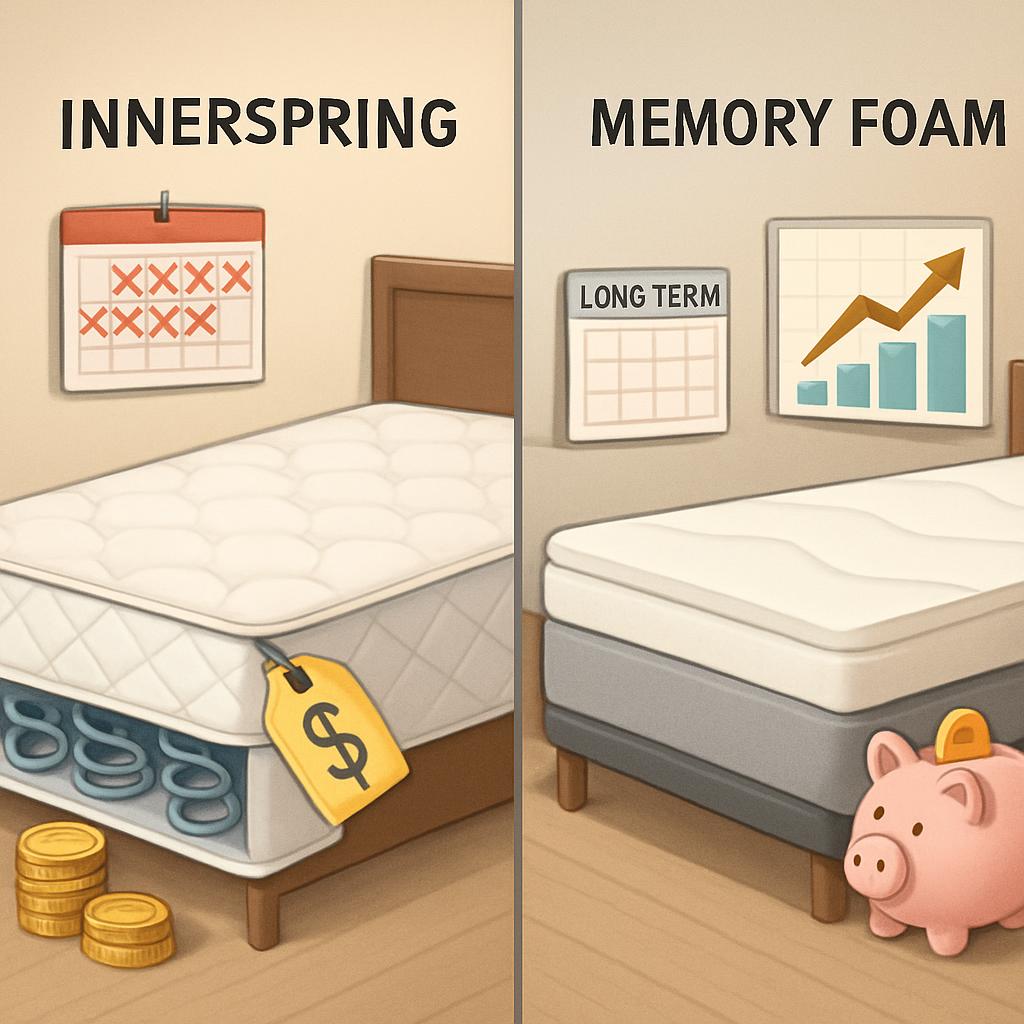
When you're shopping for a new mattress, understanding the full mattress cost breakdown is absolutely necessary to make a smart purchase. The sticker price is just the beginning of what you'll actually spend, and I want to help you see the complete picture before you commit to a major investment in your sleep quality. Let's start with the base mattress price comparison between innerspring and memory foam options. Entry-level innerspring mattresses typically begin around $300 to $600 for a queen size, making them attractive for budget-conscious shoppers. These traditional mattresses use steel coils as their support system and often include a comfort layer on top. Memory foam mattress cost, on the other hand, generally starts higher—usually between $500 to $900 for basic models—because the materials and manufacturing processes are more expensive. But here's where things get interesting in the innerspring vs memory foam price wars. Mid-range innerspring mattresses run from $700 to $1,500, while comparable memory foam options sit in the $900 to $2,000 range. At the premium level, both types can climb well above $2,000, with luxury innerspring mattresses reaching $2,500 and high-end memory foam models sometimes exceeding $3,000 for a queen size. The materials used in construction directly impact the innerspring mattress price and memory foam mattress cost. Innerspring mattresses with higher coil counts, better gauge steel, and quality comfort layers cost more but often provide better support and durability. Memory foam density matters too—higher density foam (5 pounds per cubic foot or more) costs significantly more than lower density options (3 pounds per cubic foot), but it also lasts longer and provides better pressure relief. Brand reputation plays a major role in mattress price comparison as well. Established manufacturers like Sealy, Stearns & Foster, and Tempur-Pedic command premium prices because they've built trust through years of quality production and customer satisfaction. When you browse options like the Sealy Paterson Medium Hybrid Mattress, you're paying not just for materials but for research, development, and warranty support that lesser-known brands may not offer. Hybrid mattresses deserve special mention in this mattress cost breakdown because they combine innerspring and memory foam technologies. These models typically fall in the $1,200 to $2,500 range for queen sizes, positioning them as mid-to-premium options. The benefit? You get the responsive support of coils with the contouring comfort of foam, which many sleepers find offers the best of both worlds. Size matters dramatically in mattress price comparison. A twin mattress might cost 40-50% less than a queen, while a king size typically runs 30-40% more than a queen. California king sizes often match or slightly exceed standard king prices. When you're working within budget mattress deals, considering a smaller size can be a practical way to afford better quality construction. The mattress buying guide wisdom suggests that you should expect to replace an innerspring mattress every 7 to 10 years and a quality memory foam mattress every 10 to 15 years. When you calculate the annual cost of ownership, a $1,200 memory foam mattress that lasts 12 years costs you $100 per year, while an $800 innerspring mattress lasting 8 years costs the same amount annually. This perspective shifts how you evaluate which represents better affordable mattresses for your situation. Construction quality significantly affects pricing too. Innerspring mattresses with individually wrapped coils cost more than traditional connected coil systems, but they provide better motion isolation and targeted support. Memory foam mattresses with multiple layers of different foam densities command higher prices than single-layer constructions, but they offer superior comfort and temperature regulation.Hidden Costs in Mattress Shopping
Beyond the advertised mattress price, several hidden costs can catch you off guard if you're not prepared. I want to walk you through these additional expenses so you can budget accurately for your mattress purchase and find the best mattress deals that genuinely save you money.| Cost Type | Typical Price Range | When It Applies |
|---|---|---|
| Delivery Fee | $50 - $200 | Most purchases, varies by distance |
| Old Mattress Removal | $50 - $150 | When you need disposal service |
| Mattress Protector | $40 - $200 | Highly recommended for all mattresses |
| Foundation/Box Spring | $100 - $400 | Often required for warranty validation |
| Setup/Installation | $50 - $100 | White glove delivery services |
| Extended Warranty | $100 - $300 | Optional protection beyond standard warranty |
Comparing Prices for Budget Mattress Deals
Finding genuine budget mattress deals requires strategy, timing, and knowledge of how mattress retailers price their products. I want to share the insider information that helps you maximize savings when comparing innerspring mattress price and memory foam mattress cost options. The best mattress deals typically appear during specific times of year. Presidents' Day weekend in February, Memorial Day in May, Fourth of July, Labor Day in September, and Black Friday through Cyber Monday in November consistently offer the deepest discounts. During these sales events, you can often save 30% to 50% on quality mattresses from major brands. Retailers also commonly run sales during January clearance events and around tax refund season in March and April. When conducting a mattress price comparison, shop multiple retailers for the same or similar models. The same Sealy or Stearns & Foster mattress might be priced differently at various stores. However, manufacturers often create exclusive models for specific retailers, making direct comparisons challenging. Look at the specifications—coil count, foam density, comfort layers—rather than just model names. Two mattresses with similar construction should be priced similarly, even if they have different names. Floor models and discontinued styles represent excellent opportunities for affordable mattresses. Retailers need to clear inventory for new models, typically in spring and fall. You can save 40% to 70% on floor models, though you're buying a mattress that customers have tested in the store. Ask about the floor model's age and condition, and whether the full manufacturer's warranty still applies. Many stores offer additional protection or discounts to compensate for the display wear. Online-only mattress brands have changed the pricing landscape in the innerspring vs memory foam debates. These companies sell directly to consumers without showroom overhead, passing savings along. You can find quality memory foam queen mattresses for $600 to $1,000 and hybrid models for $800 to $1,400 from online brands—often 30% to 40% less than comparable showroom models. The trade-off? You can't test the mattress before purchase, though most offer generous trial periods. Negotiation still works in mattress shopping, especially at local and regional stores. The advertised price is rarely the final price. Politely ask if they can do better, mention competitor pricing you've seen, or inquire about package deals that include pillows, protectors, or foundation. Sales associates often have flexibility to reduce prices by 10% to 20% or add accessories to close a sale. This approach works less effectively with large chain stores that have stricter pricing policies. Bundle deals and package pricing often provide better value than buying items separately. Retailers frequently offer mattress, foundation, and bedding packages at combined prices below what you'd pay for each piece individually. When you're comparing prices for budget mattress deals, calculate the total cost of everything you need. A mattress priced $100 higher but including a $150 foundation and $50 protector actually saves you money. Warranty length and quality varies significantly and affects long-term value in your mattress cost breakdown. Standard warranties run 10 years, while premium models often include 15 to 25-year warranties. Read the warranty terms carefully—some only cover manufacturing defects, while others include sagging beyond a certain depth (typically 1.5 inches). A mattress with a comprehensive 20-year warranty might cost more initially but could save money if issues develop years later. Clearance sections and outlet stores specialize in affordable mattresses from major manufacturers. These locations sell overstock, closeouts, and previous-year models at substantial discounts. You're getting the same quality construction as current models, just without the newest features or fabric patterns. For many buyers focused on comfort and support rather than the latest innovations, these represent some of the best mattress deals available. Price matching policies at major retailers can work in your favor when you've done thorough mattress buying guide research. Many stores will match or beat competitor pricing on identical models. Bring proof of the lower price—a printed advertisement or website screenshot—and ask about their price matching policy. Some stores will match and then reduce the price by an additional 10%, giving you confidence that you're getting the lowest available price. Membership discount programs through organizations like AAA, AARP, military service, or employer benefits sometimes include mattress purchase discounts. These typically save 5% to 15% and can be combined with sale pricing at participating retailers. Check whether you have access to any such programs before making your purchase—these small percentage savings add up significantly on larger mattress investments. Financing promotions offering zero-percent interest can make higher-quality mattresses more affordable by spreading payments over time without additional cost. If you find a $1,200 memory foam mattress on sale for $900 with 24 months zero-percent financing, you're paying just $37.50 monthly. This approach lets you afford better quality within your monthly budget, though you should only use this strategy if you're confident you'll pay off the balance before the promotional period ends.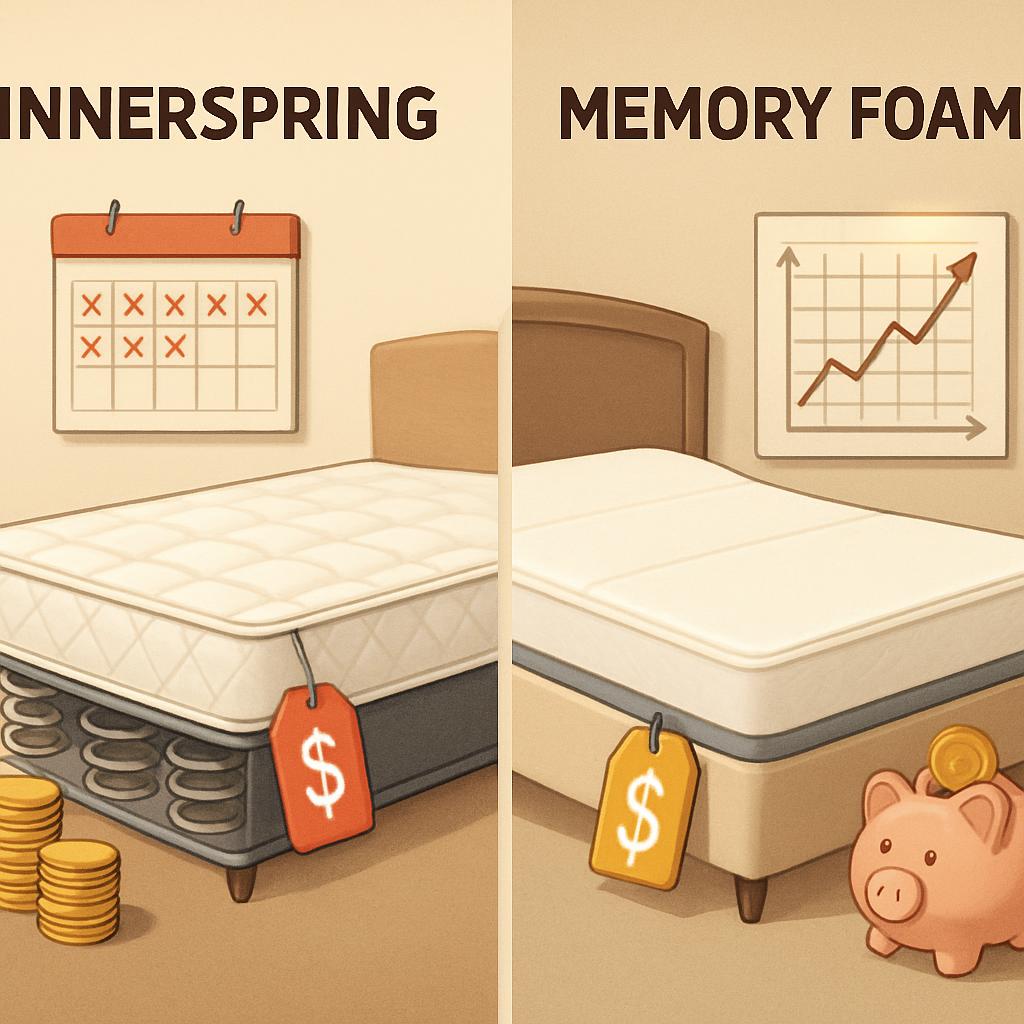
Selecting the Best Value: Affordable Mattresses Worth Buying
When you're shopping for a new mattress, finding the sweet spot between quality and affordability can feel like searching for a needle in a haystack. The good news? You don't have to sacrifice comfort or durability to stay within your budget. Both innerspring and memory foam options offer fantastic value at various price points, and understanding what makes each one worth your hard-earned money can transform your mattress shopping experience from overwhelming to empowering.
The mattress price comparison between innerspring vs memory foam often reveals surprising findings. Budget mattress deals aren't just about finding the lowest sticker price—they're about identifying which mattress delivers the best combination of comfort, support, and longevity for what you're paying. A mattress that costs slightly more upfront but lasts ten years represents better value than a cheaper option that needs replacing after three.
What makes a mattress truly affordable isn't just its initial cost. When conducting a thorough mattress cost breakdown, consider factors like warranty coverage, return policies, and expected lifespan. Some memory foam mattress cost structures include extended warranties that protect your investment for up to twenty years, while certain innerspring mattress price points offer incredible initial savings but may require replacement sooner. The best mattress deals balance these factors perfectly.
Let me share something from my experience working with customers: the most satisfied buyers aren't necessarily those who spent the least or the most. They're the ones who found mattresses matching their specific sleep needs while fitting comfortably within their budgets. Whether you're a side sleeper needing pressure relief or a back sleeper requiring firm support, there's an affordable option waiting for you. If you're looking for reliable options that won't break the bank, the Sealy Opportune II Medium Mattress represents an excellent balance of quality construction and accessible pricing for most sleep preferences.
Top Affordable Choices in Innerspring and Memory Foam
Walking through the landscape of affordable mattresses, I've noticed some standout performers that consistently deliver exceptional value without compromise. In the innerspring category, traditional coil systems have evolved tremendously. Modern affordable innerspring mattresses incorporate individually wrapped coils that minimize motion transfer while providing robust support. These mattresses typically range from $400 to $1,200 for a queen size, making them accessible entry points for budget-conscious shoppers.
What really sets today's budget-friendly innerspring options apart is their hybrid approach. Many combine supportive coil systems with comfort layers of foam or fiber, giving you the best of both worlds without the premium price tag. The innerspring mattress price has become increasingly competitive as manufacturers recognize that quality shouldn't be exclusive to luxury buyers.
"We switched to an innerspring mattress after years on memory foam, and I'm shocked at how much support we're getting for the price. My back pain has improved significantly, and we paid half of what we expected to spend. This mattress has been a game-changer for our sleep quality and our budget." – Review from November 8, 2023
On the memory foam side, the market has exploded with affordable options that rival their expensive counterparts in quality. Memory foam mattress cost has dropped significantly over the past decade as manufacturing processes improved and competition increased. You can find excellent gel-infused memory foam mattresses in the $500 to $1,500 range for a queen size, featuring many of the same pressure-relieving benefits as premium models.
The key difference between budget and luxury memory foam often comes down to foam density and specialized features like advanced cooling systems. However, many affordable memory foam mattresses now incorporate gel infusions and breathable covers that address heat retention concerns effectively. When comparing innerspring vs memory foam at similar price points, memory foam typically offers superior pressure relief and motion isolation, while innerspring provides bouncier support and better edge stability.
For shoppers navigating this mattress price comparison, consider your primary sleep concerns. Hot sleepers might appreciate affordable gel foam options that keep you cool throughout the night. Couples dealing with motion transfer issues could benefit from memory foam's isolation properties. Meanwhile, those who prefer traditional mattress feel with responsive support often find innerspring options more satisfying. The beauty of today's market is that budget mattress deals exist in both categories, giving you flexibility to choose based on comfort preferences rather than being forced into a decision solely by price.
Tips for Finding the Best Mattress Deals
Finding the best mattress deals requires strategy and timing, not just luck. After helping countless customers save hundreds on their mattress purchases, I've identified patterns that consistently lead to the biggest savings. First, understand that mattress retailers operate on seasonal cycles. Memorial Day, Labor Day, Presidents Day, and Black Friday traditionally bring the deepest discounts, with savings ranging from 20% to 50% off regular prices. However, don't overlook lesser-known sale periods like New Year's and Fourth of July, when many stores clear inventory to make room for new models.
Here's something most people don't realize: mattress models get refreshed annually, usually in late spring and early summer. When manufacturers introduce new lines, retailers need to move older inventory quickly. These "discontinued" or "previous year" models often feature identical construction to their replacements but come with substantial markdowns. You're getting the same quality mattress for significantly less money simply because a newer version exists.
Price matching and negotiation remain powerful tools in your mattress buying guide arsenal. Many retailers will match or beat competitor pricing if you provide documentation. Before visiting a store, research online prices for specific models you're considering. Screenshot the prices and bring them along. Even better, some stores offer additional discounts beyond price matching just to earn your business. Don't be afraid to ask, "Is this your best price?" or "Can you include free delivery or a mattress protector?" The worst they can say is no, but often they'll find ways to sweeten the deal.
Online shopping has revolutionized the mattress industry by introducing direct-to-consumer brands that eliminate middleman markups. These companies can offer comparable quality at lower prices because they skip traditional retail overhead. However, the inability to try before buying makes some shoppers hesitant. Look for generous trial periods (100 nights or more) and straightforward return policies. Many online brands now partner with local showrooms where you can test their mattresses before ordering, giving you confidence in your purchase.
Financing options deserve careful consideration in your mattress cost breakdown. Many retailers offer 0% interest financing for qualified buyers, spreading payments over 12 to 48 months without additional cost. This approach lets you afford a higher-quality mattress without the immediate financial burden. However, read the terms carefully. Some "no interest" deals become expensive if you don't pay off the balance before the promotional period ends, with deferred interest charges applied retroactively.
Bundle deals represent another often-overlooked opportunity for savings. Purchasing your mattress with a foundation, frame, or bedding accessories typically costs less than buying items separately. Some retailers throw in free pillows, mattress protectors, or delivery when you spend above certain thresholds. Calculate the total value of these extras when comparing offers between stores. A mattress priced $100 higher but including $200 worth of accessories actually saves you money.
Don't ignore smaller, local mattress shops in your quest for affordable mattresses. These independent retailers often have more flexibility on pricing than large chains and can offer personalized service that helps you make better decisions. They may also carry regional brands with excellent reputations but lower prices than national names. Building a relationship with a local sleep shop can lead to insider knowledge about upcoming sales and special ordering opportunities.
Mattress Buying Guide: Making Informed Choices
Making informed mattress choices goes far beyond simply comparing price tags or testing a few models at your local store. A comprehensive mattress buying guide addresses your unique sleep needs, lifestyle factors, budget constraints, and long-term satisfaction. Over the years, I've watched too many people rush into mattress purchases based on limited information, only to experience buyer's remorse weeks later when they realize their new mattress doesn't meet their expectations. Let me help you avoid that frustration.
The foundation of smart mattress shopping starts with honest self-assessment. How do you currently sleep? What problems are you trying to solve? Maybe you wake up with shoulder pain, or perhaps your partner's movements disturb your sleep throughout the night. Identifying these specific concerns helps narrow your focus to mattresses designed to address them. For instance, if pressure relief is your primary concern, memory foam mattresses generally outperform traditional innerspring options. Conversely, if you prioritize cooling and responsiveness, newer innerspring or hybrid designs might serve you better.
Your body type and preferred sleep position significantly influence which mattress will work best for you. Side sleepers typically need softer surfaces that cushion shoulders and hips, while back and stomach sleepers usually require firmer support to maintain proper spinal alignment. Heavier individuals often find that firmer mattresses prevent excessive sinking, while lighter sleepers might feel more comfortable on softer surfaces. This isn't one-size-fits-all territory, which is why the innerspring vs memory foam debate doesn't have a universal winner.
When conducting a mattress price comparison, remember that higher cost doesn't automatically equal better quality. The memory foam mattress cost spectrum ranges from budget-friendly options around $500 to luxury models exceeding $5,000 for a queen size. Similarly, innerspring mattress price points vary dramatically based on coil count, materials, and brand reputation. What matters most is finding the intersection of your needs and your budget. A $1,000 mattress that addresses your specific sleep issues delivers better value than a $3,000 model that doesn't fit your requirements, regardless of its premium materials or brand prestige.
Trial periods and return policies should carry substantial weight in your decision-making process. The most expensive mistake you can make is buying a mattress without adequate time to test it in your real sleep environment. Look for retailers offering at least 90-night trial periods. Your body needs several weeks to adjust to a new sleeping surface, so a 30-day window doesn't provide sufficient time for fair evaluation. Understanding the return process before purchasing protects you from getting stuck with a mattress that doesn't work out. If you're seeking quality options backed by solid warranties and reasonable return policies, exploring offerings like the Stearns & Foster Estate Tight Top Firm Mattress can provide the durability and support many shoppers prioritize.
Warranty coverage reveals a lot about a manufacturer's confidence in their product. Most quality mattresses include warranties ranging from 10 to 25 years, but the devil lives in the details. Some warranties only cover manufacturing defects, while others include sagging beyond a certain depth. Prorated warranties reduce the manufacturer's responsibility over time, meaning you might pay a significant portion of replacement costs even with warranty coverage. Non-prorated warranties offer better long-term protection. Read warranty terms carefully and understand what actions might void your coverage, such as using an improper foundation or failing to use a mattress protector.
Mattress accessories often get overlooked in the initial purchase excitement, but they play crucial roles in protecting your investment and enhancing comfort. Quality mattress protectors guard against spills, allergens, and normal wear, potentially extending your mattress's lifespan by years. Appropriate foundations or bed frames ensure proper support and prevent premature sagging. Some mattresses require specific foundation types to maintain warranty validity, so verify requirements before assuming your existing box spring will work. Pillows matched to your sleeping position and new mattress height improve overall sleep quality. When calculating your total mattress cost breakdown, factor in these accessories to avoid budget surprises.
The shopping environment itself influences your decision quality. Mattress stores design their spaces to encourage quick decisions, often using bright lighting, soft music, and sales pressure. Resist the urge to make immediate commitments. Test mattresses for at least 10-15 minutes each, lying in your typical sleep positions. Bring your partner if you share a bed, since you both need to feel comfortable with the choice. Take notes about which models you prefer and why. Then go home, research those specific mattresses, read customer reviews, and compare prices across multiple retailers before making your final decision.
Key Considerations for Selecting Your Mattress
Selecting the right mattress involves balancing multiple factors that collectively determine whether you'll enjoy years of restful sleep or months of regret. Based on extensive experience guiding customers through this process, I've identified the key considerations that most consistently lead to satisfaction. These elements should shape your mattress buying guide checklist and inform every aspect of your shopping journey.
Your budget naturally sits at the forefront of decision-making, but approach it strategically rather than restrictively. Instead of fixating on the absolute lowest price, determine your comfortable spending range and identify the best value within those parameters. Remember that quality mattresses are long-term investments. Spending an extra $300 on a mattress that lasts ten years costs just $2.50 more per month than a cheaper option lasting five years. This perspective helps you focus on finding affordable mattresses that deliver lasting value rather than temporary savings. The best mattress deals optimize the cost-to-benefit ratio.
- Sleep position and body type matching: Your dominant sleep position and body weight should guide your firmness selection. Side sleepers generally need medium to medium-soft firmness (4-6 on a 10-point scale) to cushion pressure points, while back sleepers typically prefer medium to medium-firm (5-7), and stomach sleepers usually require firmer support (7-9) to prevent lower back arching. Heavier individuals often need to select one firmness level higher than lighter sleepers in the same position to achieve proper support.
- Temperature regulation capabilities: Heat retention affects sleep quality more than many people realize. Memory foam traditionally sleeps warmer than innerspring, though modern gel-infused foams and open-cell structures have dramatically improved breathability. If you're a hot sleeper, prioritize mattresses with cooling technologies like gel infusions, breathable covers, or hybrid designs that promote airflow. Innerspring and hybrid mattresses generally sleep cooler than all-foam constructions due to better air circulation through the coil systems.
- Motion isolation versus responsiveness: Couples should carefully weigh these competing priorities. Memory foam excels at motion isolation, preventing your partner's movements from disturbing your sleep, but it responds more slowly when you change positions. Innerspring mattresses offer immediate responsiveness and easier movement but transfer more motion across the surface. Hybrid designs attempt to balance these characteristics, though they typically lean toward one direction or the other. Consider which matters more for your specific situation.
- Edge support and usable surface area: Strong edge support maximizes your mattress's usable sleeping surface and makes sitting on the bed's side more comfortable. Innerspring and hybrid mattresses generally provide superior edge support compared to all-foam constructions, though some premium memory foam mattresses incorporate reinforced perimeters. If you sleep near the edge or use your mattress's full surface regularly, test edge support carefully before purchasing.
- Durability and expected lifespan: Higher-quality materials typically translate to longer mattress lifespans, but construction methods matter too. Innerspring mattresses with individually wrapped coils tend to outlast traditional Bonnell coil systems. Memory foam mattresses with higher-density foam (4 pounds per cubic foot or greater) resist body impressions better than lower-density alternatives. When conducting your mattress price comparison, calculate the cost per year of use rather than just the upfront price. A $1,200 mattress lasting 12 years costs $100 annually, while an $800 mattress lasting 6 years costs $133 per year.
- Off-gassing and chemical sensitivities: New mattresses, especially memory foam models, often emit odors from volatile organic compounds (VOCs) as materials off-gas. While these odors typically dissipate within days to weeks, they can bother sensitive individuals. Look for CertiPUR-US certified foams, which meet standards for low VOC emissions and avoid harmful chemicals. Innerspring mattresses generally produce fewer odors than foam models, though their comfort layers may still off-gas mildly.
Testing mattresses properly requires more than a quick bounce test in a showroom. Lie on each mattress for at least 10-15 minutes in your typical sleep position, wearing clothing similar to what you sleep in at home. Pay attention to pressure points at your shoulders, hips, and lower back. Does the mattress maintain your spine's natural alignment? Can you comfortably change positions without struggling against the surface? Do you feel adequately supported without uncomfortable pressure? These observations provide much more valuable information than a 30-second test.
The retailer's reputation and customer service quality deserve consideration alongside the mattress itself. Purchase from established retailers with transparent policies, responsive customer service, and fair return processes. Read recent customer reviews focusing on how the company handles problems and honors warranties. A slightly higher price from a reputable retailer often proves worthwhile when you need assistance with delivery issues, warranty claims, or returns.
A Comprehensive Approach to Mattress Cost Comparison
Taking a comprehensive approach to mattress cost comparison means looking beyond the price tag to evaluate total ownership costs and long-term value. This holistic perspective transforms mattress shopping from a simple transaction into a strategic investment in your health and well-being. The cheapest option rarely delivers the best value, while the most expensive doesn't guarantee satisfaction. Smart shoppers find the sweet spot where quality, comfort, and affordability intersect.
Start your mattress cost breakdown by identifying all expenses associated with your purchase. The mattress itself obviously represents the largest line item, but delivery fees, sales tax, and recommended accessories add up quickly. Some retailers include free delivery, while others charge $100 or more. White glove delivery service, which includes setup and old mattress removal, typically costs extra but might be worth the convenience. Mattress protectors, which I strongly recommend to preserve your investment, run $50-150 depending on quality. Appropriate foundations or frames add another $100-500 to your total investment. Calculate these complete costs when comparing options across different retailers.
The innerspring vs memory foam cost comparison extends beyond initial purchase prices to include expected replacement timelines. Quality innerspring mattresses typically last 7-10 years with proper care, while high-quality memory foam mattresses often remain comfortable for 10-15 years. Budget options in both categories may need replacement sooner, sometimes in just 5-7 years. Dividing your total investment by expected years of use reveals the true annual cost. A $1,500 memory foam mattress lasting 12 years costs $125 per year, while a $900 innerspring mattress lasting 7 years costs roughly $129 annually. Suddenly, the more expensive option becomes more economical.
Maintenance requirements factor into long-term costs as well, though they're rarely discussed during the sales process. Innerspring mattresses should be rotated every 3-6 months to promote even wear, while most memory foam mattresses don't require rotation. Some mattresses feature removable, washable covers that simplify cleaning, while others need professional cleaning when soiled. Memory foam mattresses can develop permanent indentations if used without proper support, potentially requiring foundation replacement partway through the mattress's life. Consider these ongoing needs when evaluating total ownership costs.
Financing terms dramatically affect the real cost of your mattress purchase. Zero-percent interest financing for 12-36 months genuinely saves money compared to paying with a credit card carrying interest, assuming you complete payments before the promotional period ends. However, some financing offers include hidden fees or require purchasing additional products to qualify. Calculate whether financing's monthly payment amount fits comfortably in your budget with room for unexpected expenses. Missing payments or failing to pay off the balance on time can trigger deferred interest charges that dramatically increase your total cost.
Warranty value varies significantly between manufacturers and models. A 20-year warranty sounds impressive until you read the fine print and discover it's heavily prorated, requiring you to pay an increasing percentage of replacement cost as years pass. Some warranties only cover defects visible to the naked eye, while others include sagging below specific measurements. The best warranties combine long coverage periods with minimal prorations and clear claim processes. Factor warranty quality into your value assessment, especially when comparing similar mattresses at different price points.
Health and productivity impacts represent the most significant but least quantifiable costs in mattress decisions. Poor sleep from an inadequate mattress affects your energy, mood, focus, and physical health. While you can't calculate exact dollar values for these impacts, recognizing that your mattress directly influences your daily functioning should encourage prioritizing quality within your budget constraints. Spending an extra few hundred dollars for significantly better sleep quality pays dividends in improved life quality that far exceed the monetary difference.
Seasonal pricing patterns create opportunities to maximize value. Mattress prices fluctuate throughout the year, with major holidays typically bringing the deepest discounts. However, end-of-month timing can work in your favor too, since sales staff often have monthly quotas and become more willing to negotiate as deadlines approach. Shopping during slow periods like January or February might yield unexpected deals as retailers try to drive traffic during typically slow months. Being flexible with timing can save you hundreds of dollars on identical products.
When reviewing the complete mattress price comparison landscape, remember that the goal isn't finding the absolute cheapest option—it's identifying the best value proposition for your specific needs and circumstances. Budget mattress deals that sacrifice durability or comfort ultimately cost more through premature replacement and poor sleep quality. Conversely, luxury features you don't need or appreciate don't add value regardless of their cost. The ideal mattress delivers the sleep quality you need at a price you can comfortably afford, backed by solid warranties and fair policies that protect your investment for years to come.
Conclusion: Making Smarter Mattress Investments
Final Thoughts on Innerspring vs. Memory Foam Costs
After looking at all the numbers and breaking down the true costs between innerspring vs memory foam mattresses, I can tell you that there's no single "winner" when it comes to price. What matters most is finding the mattress that fits your specific budget while meeting your sleep needs. Both mattress types offer solid options across different price ranges, and understanding the mattress cost breakdown helps you make a choice you'll feel good about for years to come.
The innerspring mattress price typically starts lower than memory foam, making it an attractive choice if you're working with a tight budget or need a mattress right away. However, when you factor in the potential replacement timeline and the comfort features you're getting, the initial savings might not tell the whole story. Memory foam mattress cost often runs higher upfront, but many people find the pressure relief, motion isolation, and durability justify the extra investment. It really comes down to what you value most in your sleep experience.
What I've learned from helping countless people through their mattress buying guide process is that the best mattress deals aren't always about finding the lowest price tag. They're about finding the best value for your specific situation. A budget mattress that lasts you three years might actually cost you more in the long run than a mid-range option that serves you well for seven or eight years. When you're comparing mattress price comparison charts, remember to think beyond just that initial purchase price.
One of the biggest mistakes I see people make is focusing only on affordable mattresses without considering their actual sleep preferences. A great deal on an innerspring mattress won't feel like such a bargain if you're a side sleeper who needs more pressure point relief, which memory foam typically provides better. Similarly, spending extra on memory foam features you don't need isn't smart spending either. Take time to test different options and be honest with yourself about what feels comfortable.
The good news is that the competitive mattress market has brought prices down across the board while improving quality. Budget mattress deals today offer features that were only available in luxury models just a few years ago. Whether you're leaning toward innerspring or memory foam, you have more affordable options than ever before. Many manufacturers now offer trial periods, so you can test your choice at home before fully committing your hard-earned money.
I always recommend thinking of your mattress as a long-term investment in your health and well-being. Poor sleep affects everything from your mood to your productivity to your physical health. When you break down the cost per night of sleep over the lifespan of your mattress, even options that seem expensive upfront become quite reasonable. A $1,000 mattress that lasts eight years costs you less than 35 cents per night of quality sleep.
Your Path to Finding the Perfect, Affordable Mattress
As you move forward with your mattress shopping, remember that finding the best mattress deals requires a balanced approach. Use the mattress price comparison information you've learned here, but also trust your own comfort preferences. Set a realistic budget that accounts for any accessories you might need, like mattress protectors or new pillows, so you're not caught off guard by those extra costs.
Don't rush your decision just because a sale is ending soon. The mattress industry always has promotions running, and the peace of mind that comes from making the right choice is worth more than saving an extra hundred dollars on a mattress that doesn't meet your needs. Visit stores when you can to test different options, read reviews from actual users, and ask plenty of questions about warranty coverage and return policies.
Whether you ultimately choose an innerspring mattress for its traditional feel and bounce, or you go with memory foam for its contouring support, you're now equipped with the knowledge to make a smart financial decision. The right mattress is out there waiting for you, at a price that fits your budget and a comfort level that transforms your sleep.
Your journey to better sleep doesn't have to break the bank. With the insights you've gained about innerspring vs memory foam costs, you're ready to shop confidently and find that perfect balance between quality, comfort, and affordability. Sweet dreams and happy shopping!
Frequently Asked Questions (FAQs)
What is the average price difference between innerspring and memory foam mattresses?
On average, innerspring mattresses start around $300-$500 for a queen size, while memory foam mattresses typically begin at $500-$800. However, both types range significantly based on quality, brand, and features. The mattress price comparison can vary by several hundred dollars depending on the specific model and materials used.
Do innerspring mattresses last as long as memory foam mattresses?
Generally, quality memory foam mattresses tend to last 7-10 years, while innerspring mattresses typically last 5-7 years. However, higher-end innerspring models with better coil systems and materials can match or exceed the lifespan of memory foam. The actual durability depends heavily on the quality of construction and how well you maintain the mattress.
Are budget mattress deals worth it, or should I spend more?
Budget mattress deals can offer great value if you're looking for basic comfort and have a tight budget. However, spending a bit more often gets you better materials, longer warranties, and improved durability. I recommend finding the middle ground between your budget and quality rather than automatically choosing the cheapest option, as a mattress is a long-term investment in your health.
What hidden costs should I watch for when buying a mattress?
The mattress cost breakdown should include delivery fees (which can range from $50-$200), old mattress removal ($50-$100), mattress protectors ($50-$150), new pillows if needed, and potentially a new bed frame or foundation. Some retailers also charge restocking fees if you return the mattress. Always ask about these additional costs before making your purchase.
When is the best time to find mattress deals?
The best mattress deals typically appear during major holidays like Memorial Day, Labor Day, President's Day, and Black Friday. Many retailers also offer significant discounts in January and February when new models arrive. However, mattress sales happen year-round, so if you need a mattress immediately, you can often negotiate a good price or find promotional offers any time of year.
Is memory foam worth the extra cost compared to innerspring?
Whether the memory foam mattress cost is worth it depends on your personal needs. Memory foam excels at pressure point relief, motion isolation, and conforming support, making it ideal for side sleepers, couples, and those with joint pain. If these features matter to you, the extra investment can be worthwhile. However, if you prefer a bouncier feel, sleep hot, or are on a strict budget, a quality innerspring might serve you better.
How much should I budget for a quality mattress?
For a quality queen-size mattress that will last, I recommend budgeting $800-$1,500. This range typically gets you good materials, decent warranties, and comfort features that will serve you well for years. You can find affordable mattresses below this range, but they may not last as long. Premium options above $1,500 offer luxury features, but aren't necessary for everyone.
What factors affect the innerspring mattress price the most?
The innerspring mattress price is most affected by coil count and type (pocketed coils cost more than traditional coils), the quality of comfort layers on top of the springs, the materials used in construction, brand reputation, and additional features like cooling technology or edge support. Higher coil counts and individually wrapped coils typically mean higher prices but also better support and durability.
Can I find affordable mattresses that are still high quality?
Absolutely! Many affordable mattresses offer excellent quality thanks to online-only brands cutting out middlemen, improved manufacturing processes, and increased market competition. Look for mattresses with good warranties (at least 10 years), positive customer reviews, and trial periods. Both innerspring and memory foam options are available in the $500-$800 range that provide solid comfort and durability.
How does mattress thickness affect the price?
Thicker mattresses generally cost more because they contain more materials. Most mattresses range from 8 to 14 inches thick. A 10-inch mattress usually offers good support and comfort for most sleepers, while 12-14 inch models provide extra plushness and are often marketed as luxury options. However, thickness alone doesn't guarantee quality—the type and quality of materials matter more than just the depth.
Should I buy my mattress online or in-store?
Both options have advantages for your mattress buying guide. In-store shopping lets you test mattresses before buying, get immediate help from sales staff, and sometimes negotiate prices. Online shopping often offers lower prices, convenient delivery, generous trial periods (often 100+ nights), and easier mattress price comparison between brands. Many shoppers test mattresses in-store and then look for the best deals online.
Do expensive mattresses really sleep better than budget options?
Not always. While expensive mattresses often use premium materials and offer more features, comfort is highly personal. A $2,000 mattress won't necessarily feel better to you than a $1,000 one. The key is finding a mattress that matches your sleep style, body type, and preferences. Focus on the features that matter to you rather than just the price tag. Many mid-range options provide excellent sleep quality.
What's the difference between memory foam mattress cost at different density levels?
Memory foam density significantly affects both price and performance. Low-density foam (3 PCF or less) is cheaper but wears out faster. Medium-density foam (4-5 PCF) offers the best balance of cost and durability for most people. High-density foam (5+ PCF) costs more but lasts longer and provides better support. When comparing prices, always check the foam density to understand what you're really paying for.
Are mattress warranties worth paying extra for?
Most mattresses come with standard warranties (typically 10 years) included in the price, so you shouldn't need to pay extra. Extended warranties or protection plans are usually optional and often not necessary. Instead, focus on the manufacturer's warranty terms—look for coverage of sagging, defects, and structural issues. A good standard warranty is a better indicator of quality than an expensive extended plan.
How can I tell if I'm getting a good deal on a mattress?
To identify the best mattress deals, compare prices across multiple retailers for the same model, check customer reviews for quality feedback, verify the warranty length and coverage, confirm the trial period allows adequate testing time, and calculate the cost per year based on expected lifespan. Also, be wary of "sales" that seem permanent—true deals offer significant savings below the typical market price for similar quality mattresses.