

Have you ever wondered why two mattresses that look almost identical in the store can have such wildly different price tags? When you're standing in a showroom or scrolling through mattress options online, the numbers can seem confusing—even overwhelming. One innerspring mattress might cost $400 while another rings up at $2,000, and memory foam options can vary just as dramatically. The mattress price wars between innerspring vs memory foam cost structures have created a landscape where shoppers often feel lost, unsure whether they're getting a genuine bargain or paying for features they don't actually need.
I've spent years helping people understand what they're really paying for when it comes to mattress shopping, and I can tell you that the innerspring mattress cost versus memory foam mattress price debate isn't as straightforward as most people think. The truth is, both types of mattresses span a huge price range, and understanding why requires looking beyond the basic construction. When we talk about mattress price comparison, we're not just comparing apples to oranges—we're comparing different varieties of apples and oranges, each with their own growing conditions, harvesting methods, and shelf life expectations.
What makes this conversation even more important right now is that the mattress industry has changed dramatically over the past decade. Online retailers have disrupted traditional pricing models, creating pressure on established brands to offer more competitive pricing. At the same time, manufacturing innovations have made certain features more affordable while driving up the cost of premium options. This has led to legitimate mattress price wars where companies compete aggressively for your business. But here's the catch: a cheap innerspring mattress isn't always the budget-friendly option it appears to be if it needs replacing in three years, and affordable memory foam isn't necessarily a compromise on quality.
The challenge most shoppers face is figuring out which budget mattresses actually deliver on their promises and which ones cut corners that matter. When you're trying to determine the best value mattress for your situation, you need to look beyond the initial price tag and consider factors like durability, comfort over time, and how well the mattress will support your specific sleep needs. The right choice depends on your body type, sleeping position, whether you sleep hot or cold, and yes, your budget—but not just your budget today. We need to think about the long-term investment you're making in your sleep quality and overall health.
Throughout this guide, I'm going to walk you through the real cost differences between innerspring and memory foam mattresses, breaking down exactly what drives those price points. We'll look at what you can expect from various price ranges, how to spot genuinely good deals versus marketing hype, and most importantly, how to determine which type of mattress gives you the best value for your hard-earned money. Whether you're working with a tight budget or willing to invest more upfront for better quality and longevity, understanding the innerspring vs memory foam cost comparison will help you make a decision you'll be happy with for years to come.
Key Takeaways
- Innerspring mattresses typically start at lower price points but vary widely based on coil count and quality
- Memory foam mattress prices reflect density, cooling technology, and proprietary materials
- Budget-friendly options exist in both categories without necessarily sacrificing quality
- Long-term value includes durability and warranty coverage, not just initial cost
- Strategic timing and knowing where to shop can save hundreds on either mattress type
Innerspring vs Memory Foam: Key Cost Differences Uncovered
When we start comparing the innerspring vs memory foam cost structures, the first thing to understand is that both categories cover an enormous price spectrum. I've seen quality innerspring mattresses priced anywhere from $300 for a basic model to well over $3,000 for premium options with advanced features. Memory foam mattress price points follow a similar range, though the entry-level options typically start slightly higher, usually around $400 to $500, while luxury memory foam models can exceed $4,000. This overlap in pricing means you can't simply say one type is cheaper than the other—the real question is what you're getting for your money at each price point.
The fundamental difference in how these mattresses are constructed drives much of the cost variation. Innerspring mattresses rely on metal coil systems, which have been refined over more than a century of mattress manufacturing. The innerspring mattress cost is heavily influenced by the number of coils, the type of coil system (Bonnell, offset, continuous wire, or pocketed coils), the gauge of the steel wire used, and the quality of comfort layers placed on top of those coils. Meanwhile, memory foam mattresses use polyurethane foam that's been treated with chemicals to increase its density and viscosity. The memory foam mattress price reflects the foam density (measured in pounds per cubic foot), the thickness of various foam layers, and any special treatments like cooling gel infusions or open-cell technology.
What surprises most shoppers in this mattress price comparison is that manufacturing costs don't always align with retail prices. Innerspring mattresses, particularly those with traditional Bonnell coils, are relatively inexpensive to produce at scale. However, premium innerspring models with individually wrapped pocketed coils and luxury comfort layers can actually cost more to manufacture than mid-range memory foam options. On the flip side, basic memory foam is fairly affordable to produce, but high-density foams and proprietary formulations with advanced cooling technologies require more expensive materials and manufacturing processes. This is why you'll find both cheap innerspring mattress options and premium innerspring models that rival the cost of luxury memory foam beds.
Another key factor in the mattress price wars is brand positioning and marketing costs. Established brands like Stearns & Foster and Sealy have built reputations over decades, and part of what you're paying for is that brand equity, extensive warranties, and reliable customer service. However, newer direct-to-consumer brands have disrupted the market by cutting out middlemen and offering affordable memory foam and budget mattresses with fewer overhead costs. This has created genuine competition that benefits consumers, but it also means you need to do your homework to understand what level of quality and support you're actually getting at different price points.
The best value mattress for you ultimately depends on matching your specific needs with the right construction type and quality level. For example, if you're a heavier sleeper who needs robust support, investing in a higher-quality innerspring with a substantial coil count might provide better long-term value than a cheaper memory foam that will compress quickly. Conversely, if you struggle with pressure points or partner disturbance, spending more on quality memory foam with good motion isolation might be worth every penny compared to a budget innerspring that transfers movement. When we look at true mattress price comparison, we have to factor in not just the sticker price but how well each option will serve your particular sleep needs over its expected lifespan.
Understanding the Price Landscape of Innerspring Mattresses
The innerspring mattress cost spectrum is broader than most people realize, and understanding what drives those price differences will help you spot genuine value versus inflated pricing. At the most basic level, innerspring mattresses start around $250-$400 for a queen size, but these entry-level options typically feature lower coil counts (around 300-400 coils in a queen), thinner comfort layers, and less durable materials. These cheap innerspring mattress options might work fine for a guest room or temporary sleeping situation, but they usually don't provide the support or durability needed for nightly use over several years.
As you move up the price ladder, several factors contribute to higher innerspring mattress costs. The construction quality and materials used make a significant difference in both comfort and longevity. Here's what typically changes as prices increase:
- Coil count and type: Mid-range innerspring mattresses (around $600-$1,200) usually feature 600-1,000 individually wrapped pocketed coils in a queen size, which provide better motion isolation and contouring than traditional Bonnell coils.
- Comfort layer quality: Budget mattresses might have just 1-2 inches of foam or fiber padding on top of the coils, while premium options include multiple layers of high-density foams, latex, pillow tops, or euro tops that can add 3-6 inches of cushioning.
- Edge support systems: Higher-quality innerspring mattresses incorporate reinforced perimeter coils or foam encasement to prevent sagging edges and maximize the usable sleep surface.
- Materials and durability: Premium innerspring models use thicker gauge steel, higher-quality foams that resist breakdown, natural materials like cotton and wool, and better-quality ticking fabrics.
When you're evaluating innerspring vs memory foam cost at various price points, it's helpful to know that the sweet spot for quality innerspring mattresses typically falls in the $800-$1,500 range for a queen size. This price bracket usually gets you a well-constructed mattress with adequate coil count, decent comfort layers, and reasonable durability expectations. Options like the Sealy Osage Firm Mattress or the Sealy Spruce Cushion Firm Mattress represent this middle-ground category where you're getting solid construction without paying for luxury branding or excessive marketing.
Premium innerspring mattresses priced above $1,500 often incorporate hybrid designs that blend innerspring support with memory foam or latex comfort layers, essentially trying to give you the best of both worlds. These higher-end models, such as those from the Stearns & Foster line, feature hand-tufted covers, natural materials, and extra-thick comfort layers. While these luxury options certainly provide exceptional comfort and durability, the question becomes whether the incremental comfort improvement justifies the significantly higher cost compared to mid-range options. For some sleepers with specific needs or preferences, the answer is absolutely yes, but many people find that well-chosen mid-range innerspring mattresses deliver excellent value without the premium price tag.
The Financial Breakdown of Memory Foam Mattresses
The memory foam mattress price structure follows a somewhat different pattern than innerspring options, with costs primarily driven by foam density, layer configuration, and special features like cooling technology. Entry-level memory foam mattresses typically start around $400-$600 for a queen size, which is slightly higher than basic innerspring models but still firmly in the budget mattresses category. These affordable memory foam options usually feature lower-density foam (around 3-4 pounds per cubic foot) and simpler layer construction, often with just a support foam base and a memory foam comfort layer.
What makes memory foam mattress price comparisons tricky is that the density and quality of foam matters tremendously for both comfort and longevity. Lower-density memory foam tends to compress and lose its supportive properties more quickly, potentially leaving you with a sagging mattress within 3-5 years. Mid-range memory foam mattresses, priced between $700-$1,500 for a queen, typically use higher-density foams (4-5 pounds per cubic foot) that provide better support and durability. These mattresses often incorporate multiple foam layers with different firmness levels to create a more supportive and comfortable sleeping surface.
The memory foam mattress price also reflects specialized features that address common complaints about traditional memory foam, particularly heat retention. Higher-end memory foam models incorporate cooling technologies like gel infusions, open-cell foam structures, phase-change materials, or copper infusions designed to help regulate temperature. These innovations add to manufacturing costs but can make a significant difference in sleep quality for hot sleepers. When you're looking at affordable memory foam options, it's worth considering whether you tend to sleep hot—if you do, investing in better cooling features might prevent you from hating your mattress after a few uncomfortable nights.
"I was skeptical about memory foam because I'd heard it sleeps hot, but my medium gel foam mattress stays surprisingly cool all night. The pressure relief on my hips and shoulders has been worth every penny." – Verified customer review from November 2023
One of the interesting aspects of the mattress price wars is how direct-to-consumer memory foam brands have made this technology more accessible. Companies selling exclusively online have reduced costs by eliminating showrooms and sales commissions, passing those savings to customers. This has created a situation where you can find quality affordable memory foam mattresses for significantly less than you'd pay for comparable products through traditional retail channels. However, the trade-off is that you're usually buying without testing the mattress first, which is why generous trial periods and return policies become critically important factors in your purchasing decision.
When comparing memory foam mattress price points to innerspring options, it's important to consider the total ownership experience. Memory foam mattresses generally require less maintenance than innerspring models—there's no need to flip them, though rotation is still recommended. They also tend to be quieter since there are no metal components that can squeak over time. Products like the Sealy Medina Firm Gel Foam Mattress or the Sealy Paterson Medium Gel Foam Mattress represent solid mid-range options that balance quality construction with reasonable pricing.
The best value mattress in the memory foam category typically falls in that $800-$1,400 range for a queen size, where you're getting higher-density foams, multiple support layers, and at least some cooling technology. This price point usually provides good durability (7-10 years of comfortable use) without paying a premium for luxury branding or marginal improvements in materials. However, if you have specific needs—like chronic pain that responds well to memory foam's pressure relief, or you're a very hot sleeper who needs advanced cooling—spending more on a premium model might actually represent better value by improving your sleep quality significantly.

Mattress Price Comparison: Finding the Best Value
When you're standing in a mattress store or scrolling through options online, the price tags can feel overwhelming. The mattress price comparison between innerspring and memory foam options isn't always straightforward, and that's exactly what makes finding the best value mattress so tricky. I've seen customers walk in confident about their budget, only to leave confused about why one mattress costs $500 while another rings up at $3,000.
Here's what most people don't realize: the innerspring vs memory foam cost debate isn't just about the sticker price. It's about understanding what you're actually paying for and whether those features matter to your sleep quality. A cheap innerspring mattress might look tempting at $400, but if you're replacing it in three years, you're not really saving money. On the flip side, an affordable memory foam option at $800 could last you a decade with proper care.
The mattress price wars have actually worked in your favor as a consumer. Competition between manufacturers has driven innovation while keeping costs reasonable. Traditional innerspring mattress cost structures have evolved significantly, especially with hybrid models that combine coils with foam layers. These hybrids, like the Sealy Medina Firm Hybrid Mattress, bridge the gap between classic spring support and modern comfort technology.
Memory foam mattress price points have also become more accessible. What used to be a luxury purchase available only at premium prices now comes in various tiers. You can find quality memory foam options starting around $600, though premium versions with advanced cooling technology and specialized support zones can climb past $2,500. The key is matching your budget with your actual needs, not just going for the cheapest or most expensive option.
One aspect of the mattress price comparison that surprises many shoppers is how much prices can vary even within the same category. Budget mattresses aren't all created equal. A $500 innerspring from a reputable manufacturer like Sealy will typically outperform a $500 memory foam from an unknown brand. Brand reputation, warranty coverage, and manufacturing quality all factor into real value.
I always tell customers to think about their mattress purchase in terms of cost per night of sleep. If you spend $1,200 on a mattress that lasts ten years, that's about 33 cents per night. Suddenly, that higher upfront cost doesn't seem so steep when you consider you'll spend roughly a third of your life on this surface. The best value mattress isn't always the one with the lowest price tag—it's the one that delivers quality sleep for the longest period within your budget.
The reality of mattress price wars means timing your purchase strategically can save you hundreds of dollars. Holiday weekends, end-of-season sales, and new model releases often trigger significant discounts. However, don't let a sale pressure you into buying a mattress that doesn't fit your comfort needs. A 40% discount on the wrong mattress is still money wasted.
Budget Mattresses: Affordable Options to Consider
Let's talk about what "budget" really means in the mattress world. When I mention budget mattresses, I'm typically referring to options under $1,000 for a queen size. This price range has expanded dramatically in recent years, offering far better quality than what was available even five years ago. The affordable memory foam and cheap innerspring mattress categories now include surprisingly solid options that won't leave you with buyer's remorse.
| Mattress Type | Average Price Range (Queen) | Expected Lifespan | Best For |
|---|---|---|---|
| Basic Innerspring | $300 - $600 | 5-7 years | Guest rooms, temporary needs |
| Quality Innerspring | $600 - $900 | 7-10 years | Primary bedroom, back sleepers |
| Entry-Level Memory Foam | $400 - $700 | 6-8 years | Side sleepers, pressure relief |
| Mid-Tier Memory Foam | $700 - $1,000 | 8-10 years | All sleep positions, motion isolation |
| Hybrid (Coil + Foam) | $800 - $1,200 | 8-12 years | Combination sleepers, edge support |
The innerspring mattress cost at the budget level typically starts around $300 for a basic model. These entry-level options work fine for guest rooms or kids' beds that will need sizing up in a few years anyway. However, for your primary sleeping surface, I recommend looking at the $600-$900 range where construction quality takes a noticeable jump. At this price point, you're getting better coil systems, more durable comfort layers, and warranties that actually mean something.
Affordable memory foam options have become incredibly competitive. The memory foam mattress price for a decent queen-size bed now hovers between $600 and $900 for reputable brands. These aren't the cheap, off-gassing nightmares that gave memory foam a bad reputation years ago. Modern budget memory foam uses better foams, includes cooling features, and offers proper support layers that maintain their shape over time.
What separates a smart budget purchase from a regrettable one? First, look at foam density in memory foam options—anything under 3 pounds per cubic foot in the comfort layer won't last. For innerspring mattresses, coil count matters less than coil quality and gauge. A mattress with 600 high-quality coils will outperform one with 1,000 cheap coils every time.
Another consideration in the mattress price comparison is what comes with your purchase. Some budget mattresses include free delivery and setup, while others charge $100-$200 extra for these services. Factor in whether you need a new foundation or bed frame, as these costs can add another $150-$400 to your total investment. A slightly more expensive mattress that includes delivery might actually cost less overall than a cheaper option with added fees.
When shopping for budget mattresses, pay attention to trial periods and return policies. Many affordable options now offer 90-120 night sleep trials, which gives you real-world testing time. A generous trial period often indicates a manufacturer's confidence in their product. Be wary of budget options that don't allow returns or charge hefty restocking fees—that's usually a red flag about quality.
Premium Features vs. Cheap Innerspring Mattresses
The gap between a cheap innerspring mattress and a premium model is wider than just the price tag suggests. I've had customers test both ends of the spectrum back-to-back, and the difference becomes obvious within minutes. But here's the important question: do you actually need those premium features, or are you paying for marketing hype?
A cheap innerspring mattress—let's say under $500—typically uses a basic Bonnell coil system. These are the oldest, simplest coil design, shaped like hourglasses and connected with spiral wires. They work, but they also transfer motion across the entire mattress and tend to develop squeaks and sags faster than higher-quality systems. The comfort layers on budget innerspring models are usually thin polyfoam or low-density memory foam that compresses within a couple years.
Premium innerspring and hybrid mattresses, on the other hand, incorporate advanced coil systems like pocketed coils that move independently. This technology dramatically reduces motion transfer—when your partner gets up at 2 AM, you won't feel it. Premium models also layer in higher-quality foams, latex, or specialized materials like gel-infused memory foam for temperature regulation. The difference in durability is substantial: a quality innerspring mattress can easily last 10-12 years with proper care.
"After years of buying cheap mattresses that sagged within two years, I invested in a quality Sealy hybrid. Five years later, it still feels as supportive as day one. The higher upfront cost was absolutely worth not having to shop for a new mattress every other year." – Customer review from November 2023
Edge support represents another major difference in the innerspring vs memory foam cost analysis. Cheap innerspring mattresses often lack reinforced perimeters, meaning the edges compress when you sit on them and you lose usable sleeping surface. Premium models include foam encasement or extra coil reinforcement around the perimeter, giving you a stable edge and maximizing the mattress surface area. This might not sound important until you're actually sleeping on a mattress where you can't get near the edge without rolling off.
Temperature regulation is where premium features really shine. Basic innerspring mattresses do allow airflow through the coil layer, which helps with cooling. However, premium models take this further with moisture-wicking covers, ventilated foam layers, and strategic air channels. If you're a hot sleeper, these features justify the higher price because poor sleep quality from overheating affects everything from your mood to your health.
The comfort layer thickness and quality varies dramatically between price points. A cheap innerspring mattress might have a 1-inch polyfoam comfort layer, while premium options include 3-4 inches of high-quality foams in multiple densities, designed to work together for both pressure relief and support. This layering approach in premium mattresses provides better spinal alignment and reduces pressure points that lead to tossing and turning.
One aspect that doesn't always correlate with price is firmness accuracy. I've seen expensive mattresses labeled "medium" that feel firm, and budget options that feel softer than advertised. This inconsistency makes it critical to test mattresses in person when possible or buy from retailers with solid return policies. The best value mattress is one that matches your body type and sleep position, regardless of price tier.
What Drives the Cost of an Innerspring Mattress?
Understanding what actually drives innerspring mattress cost helps you make smarter purchasing decisions and spot when you're paying for genuine quality versus just a brand name. The price differences between a $400 and a $2,000 innerspring mattress aren't arbitrary—they reflect real differences in materials, construction methods, and durability.
The coil system represents the foundation of any innerspring mattress cost structure. Basic Bonnell coils are the cheapest to manufacture, which is why they appear in budget models. Continuous coils offer a step up in support and durability, using a single wire configured into multiple coils. Pocketed coils—where each spring is individually wrapped in fabric—cost significantly more to produce but provide superior motion isolation and contouring. The Sealy High Point Firm Hybrid Mattress uses this pocketed coil technology, which explains part of its price positioning.
Coil count and gauge (thickness) affect manufacturing costs and final pricing. More coils generally mean better support and weight distribution, but only if those coils are quality construction. A mattress with 800 pocketed coils will typically cost more than one with 600 Bonnell coils, even though the Bonnell version has fewer springs. The gauge matters too—lower gauge numbers indicate thicker, more durable wire that costs more but lasts longer.
The comfort layers stacked above the coils represent another major cost factor. Cheap innerspring mattresses use thin layers of low-density polyfoam that cost pennies per pound. Mid-range options incorporate memory foam, latex, or gel-infused foams that cost several dollars per pound. Premium models like those from Stearns & Foster include multiple comfort layer types in specific densities, creating a sleep system rather than just cushioning on top of springs.
Manufacturing location and labor costs significantly impact pricing. Mattresses made domestically in the United States typically cost more due to higher labor and regulatory costs, but they often feature better quality control and materials sourcing. Imported mattresses can offer lower prices, though quality varies widely depending on the manufacturer's standards. Established brands like Sealy and Stearns & Foster maintain strict quality requirements regardless of manufacturing location, which is reflected in their pricing consistency.
The cover fabric might seem like a small detail, but it affects both cost and sleep experience. Budget mattresses use basic polyester blends that can trap heat and pill over time. Mid-range options incorporate moisture-wicking fabrics and quilted designs that add comfort. Premium covers feature advanced textiles with cooling properties, antimicrobial treatments, and durable stitching that maintains appearance and function for years. These specialized fabrics cost significantly more than basic covers.
Research and development investments from major manufacturers factor into mattress price comparison as well. Companies like Sealy and Stearns & Foster spend millions developing new technologies, testing materials, and refining designs. These costs get distributed across their product lines, meaning you're partially paying for innovation even on their more affordable models. However, this also means you benefit from years of sleep science research rather than buying from a startup with unproven designs.
Analyzing Innerspring Construction & Material Quality
The construction quality of an innerspring mattress determines whether you're looking at a 5-year investment or a 12-year one. I always encourage customers to ask specific questions about construction because this is where the rubber meets the road—or rather, where the coils meet the foam. Understanding these details helps you spot the difference between a genuinely good deal and a mattress that will disappoint.
Let me break down the key construction elements that separate quality innerspring mattresses from inferior ones:
- Coil System Design: The type of coil system forms the mattress foundation. Pocketed coils individually wrapped in fabric provide the best motion isolation and contouring. Continuous coil systems offer good support at a lower price point. Bonnell coils work for basic support but offer minimal motion isolation. The coil system alone can account for a $300-$500 price difference between models.
- Wire Gauge and Tensile Strength: Lower gauge numbers mean thicker, stronger wire. A 12.5-gauge coil will outlast a 15-gauge coil significantly. The tensile strength of the steel also matters—higher tensile strength means the coils resist deformation better over time. Quality manufacturers specify both gauge and tensile strength, while budget brands often omit these details.
- Comfort Layer Composition: The foam layers above the coils should include multiple densities working together. A quality construction uses firmer foam as a transition layer between coils and softer comfort foam, preventing the "hammock effect" where you sink too far. Memory foam density should be at least 3 pounds per cubic foot in the comfort layer, and 1.8 pounds or higher in base layers.
- Edge Support Construction: Premium innerspring mattresses include foam encasement around the perimeter or extra rows of reinforced coils along the edges. This prevents edge collapse and extends the usable sleeping surface. Budget mattresses often skip this feature entirely, resulting in a marshmallow-soft edge that compresses when you sit on it.
- Foundation and Base Layer: The bottom layer of foam that sits directly on the coils should be high-density and at least 1 inch thick. This layer protects the comfort layers from the coils and prevents premature breakdown. Cheap mattresses use thin, low-density base foam that fails quickly, causing the comfort layers to settle into the coil spaces.
- Cover Construction and Materials: A quality cover uses tight stitching, reinforced seams, and durable fabrics. Look for covers with handles for rotating (a sign the manufacturer expects the mattress to last long enough to need rotating). Quilted patterns should be consistent without loose threads or uneven stitching. The cover should feel substantial, not thin and flimsy.
- Adhesives and Assembly Methods: Quality manufacturers use low-VOC adhesives and proper curing times before packaging. This reduces off-gassing and ensures layers bond correctly. Budget manufacturers sometimes rush production, leading to layers that separate or odors that persist for weeks. While you can't inspect this before purchase, brand reputation and certifications like CertiPUR-US indicate proper materials and processes.
- Ventilation Design: Better innerspring mattresses incorporate ventilation holes or channels in the foam layers to promote airflow. This prevents heat and moisture buildup that degrades foam over time. The natural airflow through the coil system helps, but proper foam ventilation extends mattress life significantly.
When evaluating innerspring mattress cost against construction quality, I recommend asking to see a cutaway model or detailed construction diagram. Reputable manufacturers proudly display their construction methods because they know it justifies their pricing. If a retailer can't or won't explain what's inside the mattress beyond "coils and foam," that's a warning sign.
Material certifications provide another quality indicator. CertiPUR-US certification means foams meet standards for emissions, content, and durability. OEKO-TEX certification indicates textiles are free from harmful substances. These certifications cost manufacturers money to obtain and maintain, so their presence typically correlates with higher quality standards overall. Budget mattresses rarely carry multiple certifications because the testing and compliance requirements add to production costs.
The weight of a mattress can serve as a rough quality indicator. A queen-size innerspring mattress should weigh between 60-100 pounds for budget models and 100-150 pounds for premium options. Lightweight mattresses under 60 pounds likely use thin foam layers and minimal materials. However, don't use weight as your only guide—some manufacturers add weight with low-quality materials.
Additional Costs: Delivery, Setup, and Warranty
The sticker price on a mattress rarely tells the complete financial story. Hidden and additional costs can add hundreds of dollars to your final bill, which is why a thorough mattress price comparison needs to account for more than just the base price. I've seen customers get surprised at checkout by fees they didn't anticipate, turning what seemed like a great deal into an average one.
Delivery charges vary wildly depending on the retailer and your location. Some online mattress companies offer free shipping but only to your doorstep—you're responsible for getting a 100-pound mattress up three flights of stairs. White glove delivery service, where professionals bring the mattress inside and set it up in your bedroom, typically costs $100-$200 extra. This service usually includes removal of your old mattress, which otherwise might cost you $50-$100 to dispose of properly at a waste facility.
Setup and installation fees sometimes appear as separate line items. If you're purchasing an adjustable base along with your mattress, installation can run another $100-$150 to ensure everything connects properly and functions safely. Bed frame assembly, if you're buying a new frame, might add $75-$125 to your bill. Some retailers bundle these services into package deals, while others charge separately for each component.
Old mattress removal deserves special attention in your budget planning. Many delivery services offer this for $50-$100, which is often cheaper and more convenient than renting a truck and hauling it yourself. However, some municipalities offer free bulk item pickup on specific days, potentially saving you this cost entirely. Check your local waste management schedule before paying for removal services.
Mattress protectors represent a smart additional investment that ranges from $50-$150 depending on quality and features. A good protector prevents spills, dust mites, and allergens from reaching your mattress, which can significantly extend its life. More importantly, most warranties require proof that you protected your mattress from stains—an unprotected mattress with staining might void your warranty entirely. When you're spending $1,000-$2,000 on a mattress, a $100 protector is cheap insurance.
Warranty coverage varies significantly between price points and manufacturers, affecting long-term value in ways that aren't immediately obvious. Budget mattresses often carry 5-10 year warranties with numerous exclusions and prorated coverage that leaves you paying most of the replacement cost after a few years. Premium brands like Stearns & Foster offer 10-year non-prorated warranties with better coverage terms. Read the warranty fine print carefully—some warranties cover only manufacturing defects, while others include sagging beyond a certain depth.
Financing costs can add substantially to your total mattress investment if you're not paying cash upfront. Many retailers offer 0% financing for 12-36 months, which costs you nothing extra if you pay within the promotional period. However, deferred interest financing charges you retroactive interest on the full purchase price if you don't pay off the balance before the promotion ends. These interest charges can add 20-30% to your final cost. Always calculate whether you can realistically pay off the balance within the promotional period before choosing financing.
Foundation or box spring requirements affect your total investment, especially if your new mattress needs a different support system than your old one. Innerspring mattresses typically work with traditional box springs, but many modern mattresses require solid platform bases or specific foundation types. A new foundation runs $150-$400 depending on size and quality. Some mattress warranties become void if you use an improper foundation, making this a necessary rather than optional expense in some cases.
Return and exchange fees vary by retailer but can impact your effective cost. Some stores charge 10-20% restocking fees if you return a mattress within the trial period, while others offer truly free returns. Transportation fees for returns might add another $100-$200. When comparing the innerspring vs memory foam cost between retailers, factor in their return policies—a slightly higher price from a retailer with hassle-free returns might offer better value than a lower price with expensive return terms.
Unpacking the Memory Foam Mattress Price Tag
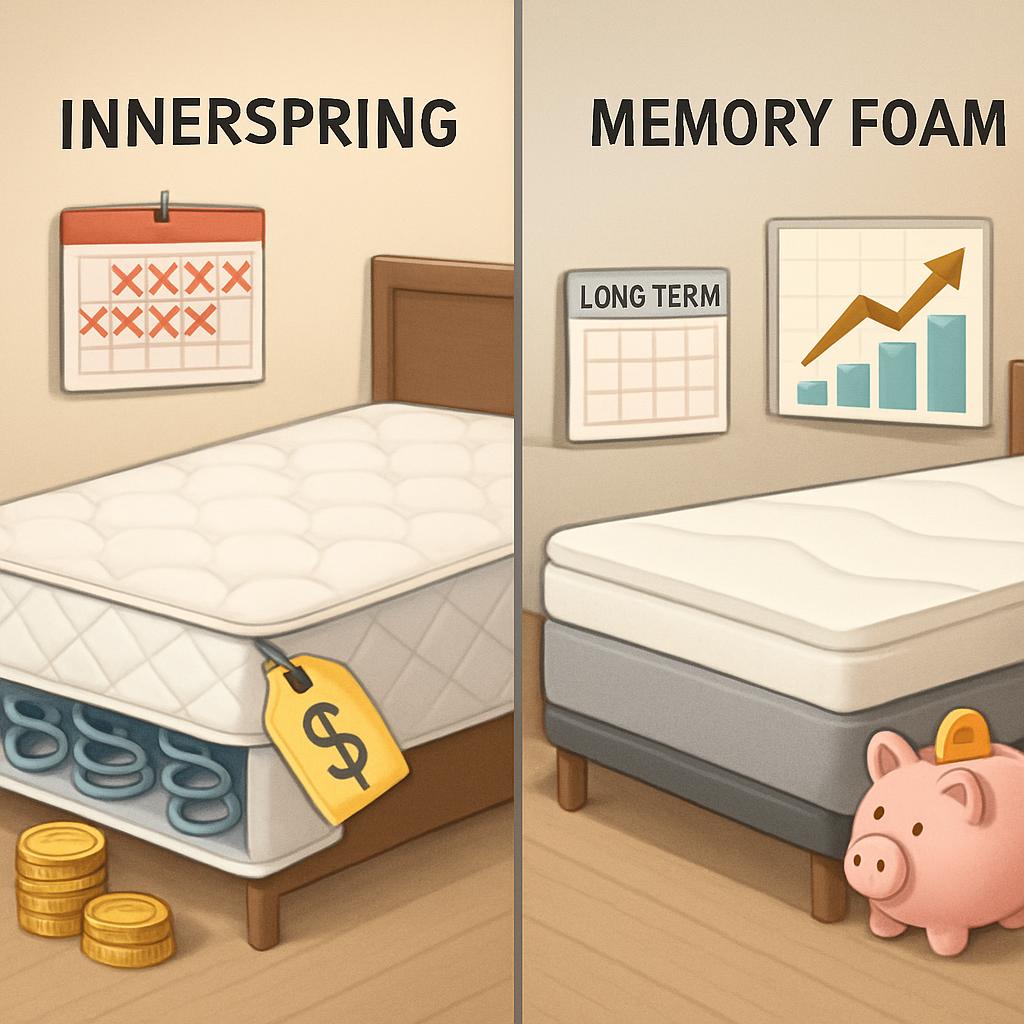
When you're shopping for a new bed and comparing innerspring vs memory foam cost, you'll quickly notice that memory foam mattress price points can vary dramatically. I've seen memory foam options range from a few hundred dollars for basic models to several thousand for premium versions. Understanding what drives these price differences is important for making a smart mattress purchase that fits your budget and sleep needs. The memory foam mattress price typically reflects the quality and density of the foam layers used in construction. Lower-priced memory foam beds often use less dense foam that may not provide the same level of support or longevity as higher-density options. When you're conducting a mattress price comparison, pay attention to foam density measurements, which are usually expressed in pounds per cubic foot (PCF). Budget mattresses might use 3 PCF foam, while premium models can feature 5 PCF or higher. This density directly affects how well the mattress conforms to your body and how long it maintains its shape. Another factor that impacts the memory foam mattress price is the number of foam layers and the presence of advanced technologies. Basic affordable memory foam beds might have just two layers—a comfort layer and a support base. More expensive options often include multiple specialized layers, such as gel-infused memory foam for cooling, transition layers for better support, and high-density base foam for durability. These additional layers contribute to both the cost and the overall sleep experience. The thickness of the mattress also plays a role in pricing. I've found that memory foam beds typically range from 8 inches to 14 inches thick. Thinner mattresses generally cost less but may not provide adequate support for heavier individuals or those who prefer a more cushioned feel. If you're looking at gel foam mattresses, you'll notice that these models often command higher prices due to the cooling technology integrated into the foam layers. Brand reputation and manufacturing quality also influence what you'll pay. Established brands with proven track records of quality and customer satisfaction typically charge more than newer or lesser-known companies. However, this doesn't mean you can't find affordable memory foam that delivers excellent value. Many reputable manufacturers offer budget-friendly lines that maintain quality standards while keeping costs down. The mattress price wars between retailers have actually created some great opportunities for consumers. Online mattress companies have disrupted traditional pricing models by selling directly to customers, cutting out middleman costs. This has made memory foam more accessible than ever before. During my time helping customers find the right bed, I've seen how competition has driven prices down while quality has remained high or even improved. Certifications and safety standards can add to the memory foam mattress price but provide peace of mind. Look for CertiPUR-US certification, which guarantees that the foam is made without harmful chemicals like formaldehyde, heavy metals, and certain flame retardants. While beds with these certifications might cost slightly more, they're worth considering for your health and safety. Trial periods and warranties are often factored into the price as well. Many memory foam manufacturers now offer extended trial periods—sometimes 100 nights or more—allowing you to test the mattress at home. They also provide warranties ranging from 10 to 25 years. These customer-friendly policies do add to the overall cost but provide valuable protection for your investment. When comparing innerspring mattress cost to memory foam options, remember that the initial purchase price is just one part of the equation. Memory foam beds often require less maintenance and can last longer than cheap innerspring mattress options, potentially offering better value over time. The best value mattress isn't always the cheapest one upfront—it's the one that delivers quality sleep for years to come while fitting within your budget.
Features That Justify Higher Memory Foam Prices
Not all memory foam is created equal, and understanding which features justify a higher price point can help you make an informed decision during your mattress price comparison. I've worked with hundreds of customers who initially balked at premium memory foam mattress price tags, only to realize that certain features make the investment worthwhile for their specific sleep needs. Advanced cooling technology stands at the top of features that increase costs but deliver real benefits. Traditional memory foam has a reputation for sleeping hot, which can be uncomfortable for many people. Premium memory foam beds address this issue with innovative solutions like gel infusions, open-cell foam structures, copper or graphite additives, and phase-change materials. These cooling technologies help regulate temperature throughout the night, making the higher price tag worthwhile if you tend to sleep warm. Here's a breakdown of key features and their typical impact on memory foam mattress price:
| Feature | Budget Option | Premium Option | Sleep Benefit |
|---|---|---|---|
| Foam Density | 3-4 PCF | 5+ PCF | Better support and longer lifespan |
| Cooling Technology | Basic or none | Gel, graphite, or phase-change materials | Temperature regulation throughout the night |
| Number of Layers | 2-3 layers | 4-6+ layers | Enhanced comfort and targeted support |
| Edge Support | Minimal | Reinforced foam or coil perimeter | More usable sleep surface and easier entry/exit |
| Certifications | None or basic | CertiPUR-US, OEKO-TEX, Greenguard Gold | Peace of mind about chemical safety |
Motion isolation is another premium feature that justifies higher costs for couples. Quality memory foam excels at absorbing movement, which means you won't feel your partner tossing and turning throughout the night. While even affordable memory foam provides some motion isolation, premium versions with higher-density foam and specialized comfort layers perform significantly better. If you share your bed with a restless sleeper, this feature alone can make the price difference worthwhile. Pressure relief capabilities improve dramatically as you move up in quality and price. Premium memory foam beds use multiple layers with varying firmness levels to cradle your body while maintaining proper spinal alignment. This is particularly important if you suffer from joint pain, back issues, or pressure point sensitivity. The best value mattress for someone with chronic pain might be a more expensive option that provides therapeutic benefits. Edge support represents another area where you get what you pay for. Cheap innerspring mattress options often have better edge support than budget memory foam because the coils provide structural integrity right to the border. However, premium memory foam beds now incorporate reinforced edges using high-density foam or even coil perimeters, giving you a larger usable sleep surface and making it easier to get in and out of bed. Responsiveness and adaptability have improved in higher-end memory foam mattresses. Older or cheaper memory foam can feel like it's swallowing you, making it difficult to move or change positions. Premium options use advanced foam formulations that respond more quickly to movement while still providing that signature contouring effect. This balance between support and mobility is something you'll feel immediately when testing different price points. The cover materials used on premium memory foam beds often include moisture-wicking fabrics, antimicrobial treatments, and removable designs for easy cleaning. While these might seem like minor details, they contribute to overall sleep hygiene and comfort. Budget mattresses typically use basic polyester covers that don't offer these benefits. Customization options become available at higher price points too. Some premium manufacturers offer split firmness for couples with different preferences, or the ability to adjust firmness levels by swapping out layers. This flexibility ensures the mattress meets your specific needs rather than forcing you to compromise.
Finding Affordable Memory Foam Options Without Sacrificing Quality
The good news for budget-conscious shoppers is that the mattress price wars have made it possible to find affordable memory foam that doesn't force you to sacrifice quality or comfort. I've helped countless customers identify budget mattresses that provide excellent sleep without breaking the bank. The key is knowing what to look for and what corners can be cut without compromising your sleep quality. First, focus on the essentials rather than getting caught up in every premium feature. While advanced cooling technology and six-layer construction sound impressive, a well-designed three-layer memory foam mattress with good density foam can provide excellent support and comfort at a much lower memory foam mattress price. Determine which features matter most for your sleep style and prioritize those when comparing options. Consider medium-thickness options in the 10 to 12-inch range. These mattresses typically cost less than thicker models but still provide adequate support for most sleepers. Unless you're particularly heavy or prefer a very plush feel, these affordable memory foam beds can meet your needs perfectly. The money you save on unnecessary thickness can be put toward better foam quality or density. Shopping during sales events is one of the smartest ways to get better quality at budget prices. The mattress industry runs major promotions around holidays like Presidents' Day, Memorial Day, Labor Day, and Black Friday. During these mattress price wars, you can often find mid-range or even premium memory foam beds at prices comparable to budget options during regular periods. I always advise customers to plan their purchase around these sales cycles if their current bed can last a few more months. Look for brands that sell directly to consumers online. These companies have lower overhead costs because they don't maintain expensive showrooms or pay commissions to salespeople. They pass these savings along to customers, making it possible to get higher-quality affordable memory foam for less. Many of these brands also offer generous trial periods and warranties, so you're not sacrificing customer protection when you choose a budget-friendly option. Gel foam technology has become more affordable in recent years. What was once only available in premium mattresses can now be found in mid-range and even some budget options. If you sleep hot but can't afford top-tier cooling technology, look for basic gel-infused memory foam, which provides better temperature regulation than traditional foam without a huge price increase. Don't overlook established brands' budget lines. Companies like Sealy offer memory foam options at various price points, including affordable models that benefit from the company's manufacturing expertise and quality standards. These budget-friendly versions might not have all the bells and whistles of their premium cousins, but they're built with the same attention to construction quality and durability. Consider refurbished or floor model mattresses if you're shopping at a physical store. These gently used options can offer significant savings, sometimes 30-50% off retail prices. Just make sure the mattress comes with a reasonable warranty and hasn't been used extensively. This strategy works particularly well for higher-end memory foam beds that would otherwise be out of your budget. Pay attention to the return policy and trial period when choosing affordable memory foam. A longer trial period gives you time to determine if the mattress truly meets your needs. Some budget-friendly brands offer shorter trials, which could be problematic if the bed doesn't work out. A 90 to 100-night trial provides adequate time to adjust and make an informed decision about keeping the mattress. Read customer reviews carefully when considering budget mattresses. Look for patterns in the feedback rather than focusing on individual complaints. If multiple reviewers mention that a cheap memory foam option maintains its support over time or doesn't develop body impressions, that's a good indicator of quality construction despite the lower price point. Finally, remember that the best value mattress is one that helps you sleep well within your budget. A moderately priced memory foam bed that you can afford comfortably and that meets your basic sleep needs is a better choice than stretching your finances for premium features you might not even notice. Quality sleep shouldn't require going into debt, and with smart shopping, it doesn't have to.
Mattress Price Wars: Who Offers the Best Deals?
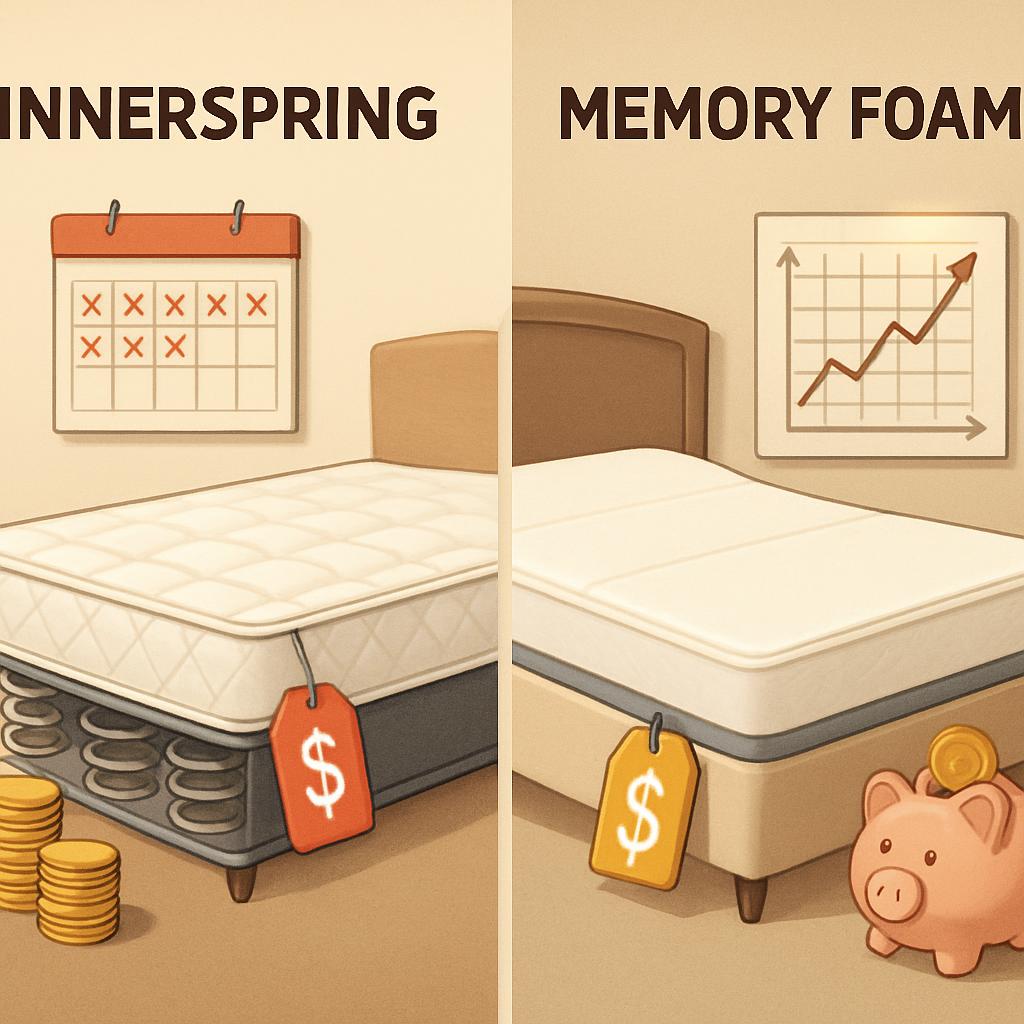
The mattress industry has become a battleground where brands compete fiercely for your business. Understanding the mattress price wars can help you score significant savings on both innerspring mattress cost and memory foam mattress price options. Major retailers, online-only brands, and specialty stores like Sleepology Mattress Shop all use different pricing strategies to attract customers looking for the best value mattress.
When I started researching the mattress price comparison landscape, I noticed that timing and location dramatically affect what you'll pay. Traditional innerspring mattresses often hit their lowest prices during holiday sales events, while memory foam options see competitive pricing year-round thanks to online retailers entering the market. The competition between brick-and-mortar stores and digital sellers has created an environment where savvy shoppers can find exceptional deals if they know when and where to look.
One of the biggest advantages of shopping at a specialized mattress retailer is the ability to combine quality with competitive pricing. For instance, when you browse options like the Sealy Opportune II Medium Mattress, you're getting access to trusted brand names at prices that often rival or beat big-box stores. These specialized shops understand the mattress price wars and position themselves to offer budget mattresses without compromising on quality or customer service.
The innerspring vs memory foam cost debate becomes less about which type is cheaper overall and more about which retailers offer the best deals on the specific mattress you want. Some stores mark up their cheap innerspring mattress options less because they make profit on accessories, while others focus on competitive pricing for affordable memory foam to build customer loyalty. This means identical mattresses can have vastly different price tags depending on where you shop, making it worth your time to compare options across multiple sellers before making your final decision.
Sales Cycles and Timing Your Purchase for Savings
If you want to win the mattress price wars, timing is everything. The mattress industry follows predictable sales cycles that can save you hundreds or even thousands of dollars on both innerspring mattress cost and memory foam mattress price tags. I've found that understanding these patterns transforms mattress shopping from an overwhelming experience into a strategic opportunity to get the best value mattress for your budget.
The biggest sales events happen around major holidays. Presidents' Day in February, Memorial Day in May, Independence Day in July, Labor Day in September, and Black Friday through Cyber Monday in November consistently offer the deepest discounts. During these periods, you'll find budget mattresses at their absolute lowest prices, with retailers slashing 30% to 60% off regular pricing. If your current mattress can wait a few months, holding out for one of these major sales events is often worth the patience.
"I saved over $400 by waiting for Memorial Day to buy my new Sealy mattress. The same model I had been eyeing for weeks suddenly dropped in price, and they threw in free delivery too. Best decision I made was not rushing into the purchase."
Beyond the major holidays, mattress retailers also clear inventory at specific times of year. January and February see sales as stores make room for new models arriving in spring. September and October bring another wave of discounts as manufacturers introduce updated lines for the following year. These "model year clearance" events can offer incredible deals on last year's models that are virtually identical to the newer versions but come with a much more attractive price tag.
Another timing strategy involves shopping at the end of the month or quarter. Sales teams working on commission often have quotas to meet, making them more willing to negotiate on price or throw in extras like mattress protectors, pillows, or upgraded delivery services. This applies to both cheap innerspring mattress options and affordable memory foam selections. I've personally seen friends negotiate better deals simply because they shopped on the last Saturday of the month rather than the first.
Don't forget about the less obvious sale periods either. Tax refund season from late January through April sees many retailers offering special promotions to capture customers who suddenly have extra cash available. Similarly, back-to-school season in August often brings mattress sales targeted at parents furnishing dorm rooms, but the deals apply to all sizes and types. By planning your purchase around these sales cycles, you can make the innerspring vs memory foam cost debate much more affordable regardless of which type you prefer.
Comparing Online and In-Store Pricing Strategies
The way online retailers and physical stores price their mattresses differs dramatically, and understanding these strategies helps you navigate the mattress price comparison process more effectively. Online-only brands disrupted the traditional mattress industry by cutting out middlemen and showroom overhead costs, which allowed them to offer lower base prices on both innerspring and memory foam options. However, physical stores have adapted their pricing strategies, and the gap has narrowed considerably in recent years.
Online retailers typically advertise lower sticker prices because their business model reduces operational costs. Without expensive showroom leases, large sales staffs, and multiple warehouse locations, they can pass savings directly to customers seeking budget mattresses. Many online brands also use a direct-to-consumer model where they manufacture or source mattresses themselves, eliminating distributor markups. This makes finding an affordable memory foam mattress online particularly attractive, as these models compress easily for shipping in a box directly to your door.
Physical mattress stores, however, offer advantages that can offset their sometimes higher initial prices. When you visit a showroom, you can test mattresses before buying, which significantly reduces the risk of choosing the wrong firmness level or mattress type. Many local stores also price-match online competitors, effectively neutralizing the online pricing advantage while giving you the benefit of trying before you buy. Additionally, physical stores often bundle services like old mattress removal, white-glove delivery, and setup that online retailers charge extra for or don't offer at all.
The mattress price wars have pushed both online and in-store retailers to adopt similar promotional tactics. Flash sales, exclusive online discounts, and members-only pricing have become standard across both channels. Physical stores now use online platforms to extend their reach and offer competitive pricing, while online retailers have started opening showrooms in major cities. This convergence means the best strategy involves checking both online prices and visiting local stores to compare the total cost, including delivery, setup, and any additional services you might need.
One pricing strategy that physical stores use effectively is financing options. While the innerspring mattress cost or memory foam mattress price might seem high upfront, many stores offer zero-percent financing that makes premium mattresses accessible without waiting to save the full amount. Online retailers have started offering similar financing, but the application process and terms often favor physical stores with established banking relationships. If you need to spread payments over time, comparing the financing options between online and in-store purchases becomes just as important as comparing the sticker prices themselves.
Another consideration involves return policies and trial periods. Online mattress companies typically offer 100-night or longer trial periods because they can't let you test the mattress before purchase. Physical stores may offer shorter return windows, but they also let you spend time on multiple mattresses before deciding. The value of these different approaches depends on your shopping style and confidence level. Some people prefer the extended home trial that online retailers provide, while others feel more secure making decisions in a showroom with expert guidance, even if it means a slightly higher price or shorter return window.
Making an Informed Decision: Which Mattress Offers Better Overall Value?
Determining which mattress type offers better overall value requires looking beyond the initial price tag. The innerspring vs memory foam cost comparison becomes more complex when you factor in durability, comfort over time, and how well each mattress type meets your specific sleep needs. I've learned that the cheapest option at purchase isn't always the best value mattress when you calculate cost per year of quality sleep.
Innerspring mattresses traditionally cost less upfront, making them attractive budget mattresses for shoppers focused on immediate affordability. A quality cheap innerspring mattress from a reputable brand can provide excellent support and comfort, especially if you prefer a bouncier, more responsive sleep surface. These mattresses work particularly well for people who sleep hot, change positions frequently during the night, or prefer sleeping on their stomach. The mattress price comparison often shows innerspring options at lower entry-level prices, but the range extends quite high for premium models with advanced coil systems and luxury comfort layers.
Memory foam mattresses typically start at higher price points, but the memory foam mattress price reflects advanced materials and manufacturing processes. These mattresses excel at pressure relief and motion isolation, making them ideal for couples or anyone dealing with joint pain. The affordable memory foam options available today offer much better value than similar models did just a few years ago, as manufacturing improvements have reduced production costs while maintaining quality. When you find the right memory foam mattress, the investment often pays off through better sleep quality and reduced pressure point discomfort.
The mattress price wars have created opportunities in both categories that weren't available before. Hybrid mattresses that combine innerspring support systems with memory foam comfort layers now bridge the gap between these two types, offering benefits of both at competitive prices. For example, exploring options like the Sealy Medina Firm Hybrid Mattress shows how manufacturers have responded to consumer demand for the best of both worlds at reasonable prices.
Your personal sleep preferences, body type, and any specific health concerns should weigh heavily in your value assessment. A mattress that costs twice as much but lasts twice as long while providing significantly better sleep quality delivers better value than a cheap option that needs replacement in three years and leaves you tired every morning. Think about your typical sleep position, whether you sleep alone or with a partner, your temperature preferences during sleep, and any chronic pain issues when evaluating which mattress type offers the best value for your specific situation.
The support system you need also affects value. Side sleepers often benefit more from the contouring properties of memory foam, which cushions shoulders and hips while maintaining spinal alignment. Back and stomach sleepers frequently prefer the firmer, more responsive support that quality innerspring or hybrid mattresses provide. If you're unsure about your needs, consider that spending more initially on a mattress that properly supports your sleep position delivers better long-term value than repeatedly replacing cheaper mattresses that don't meet your needs.
Long-Term Investment: Durability vs. Initial Cost
When evaluating the true cost of a mattress, durability plays a massive role in determining overall value. A budget mattress that costs $400 but only lasts three years actually costs more per year than a $1,200 mattress that remains comfortable and supportive for ten years. The innerspring mattress cost and memory foam mattress price should always be considered alongside expected lifespan to calculate the real investment you're making in your sleep quality.
Quality innerspring mattresses typically last between seven to ten years with proper care, though this varies significantly based on coil gauge, coil count, and the quality of comfort layers above the springs. Cheaper innerspring models with lower coil counts and thinner comfort layers often develop body impressions and lose support within three to five years. When comparing options in the mattress price wars, pay attention to these construction details rather than focusing solely on finding the absolute cheapest innerspring mattress available.
Memory foam mattresses made with high-density foam can last ten years or more, making them excellent long-term investments despite higher initial prices. Lower-density memory foam, often found in the most affordable memory foam options, tends to break down faster, developing permanent body impressions and losing its supportive properties within five to seven years. The memory foam mattress price often reflects foam density and quality, so the most affordable options may not offer the best value when you consider replacement costs.
Several factors influence mattress durability regardless of type:
- Weight capacity and usage patterns. Heavier individuals or couples place more stress on mattress materials, potentially reducing lifespan. A mattress rated for your combined weight will last longer than one at the edge of its capacity.
- Foundation quality. Even the best mattress won't last if placed on an inadequate foundation. Proper support from a matching box spring, platform bed, or adjustable base prevents premature sagging and maintains manufacturer warranties.
- Rotation and maintenance. Regular mattress rotation (every three to six months) helps distribute wear evenly, extending the usable life of both innerspring and memory foam models.
- Protection from moisture and debris. Using a quality mattress protector shields against spills, sweat, and dust mites that can break down materials over time, adding years to your mattress's functional lifespan.
- Warranty coverage. Better-quality mattresses typically include longer, more comprehensive warranties that cover defects and premature sagging, providing added value and peace of mind with your investment.
The best value mattress balances upfront cost with expected durability. I recommend calculating the annual cost by dividing the purchase price by the expected years of use. A $600 innerspring mattress lasting six years costs $100 per year, while a $1,000 memory foam mattress lasting ten years costs the same $100 annually but potentially offers superior comfort throughout its lifespan. This annual cost perspective helps put the mattress price comparison in proper context.
Don't forget to factor in warranty terms when assessing long-term value. A ten-year warranty that covers sagging deeper than 1.5 inches offers better protection than a twenty-year warranty with a 2-inch sagging threshold. Read the fine print on what's covered, what voids the warranty, and whether the coverage is prorated or non-prorated. Non-prorated warranties that fully cover defects for a specified period provide better value than those requiring you to pay increasing percentages as the mattress ages.
Comfort and Sleep Quality: How Each Type Impacts Your Sleep Experience
The ultimate measure of mattress value comes down to how well you sleep on it night after night. Both innerspring and memory foam mattresses can provide excellent sleep quality, but they achieve comfort through different mechanisms that appeal to different sleepers. Understanding how each type affects your actual sleep experience helps you move beyond simple price comparisons to find the option that delivers the best value for your personal needs.
Innerspring mattresses provide a more traditional sleep feel with responsive support that pushes back against your body. This bounce makes changing positions easier and creates a "sleeping on top" sensation rather than a "sleeping in" feel. Many people appreciate this responsiveness, especially combination sleepers who shift between positions throughout the night. The coil system allows air to flow freely through the mattress, helping regulate temperature for people who tend to sleep hot. If you prioritize breathability, easy movement, and a firmer support feel, the innerspring mattress cost often represents excellent value for the comfort level provided.
Memory foam mattresses deliver comfort through contouring and pressure relief. The foam responds to body heat and weight, conforming closely to your body's curves and distributing weight evenly across the sleep surface. This characteristic makes memory foam excellent for pressure point relief, particularly benefiting side sleepers whose shoulders and hips need extra cushioning. The close conforming also provides superior motion isolation, meaning you won't feel your partner's movements during the night. For couples or anyone with joint pain, the memory foam mattress price often justifies itself through significantly improved sleep quality and reduced pain upon waking.
Temperature regulation represents a significant comfort factor where these mattress types differ considerably. Traditional memory foam retains body heat, which some sleepers find uncomfortable during warmer months. However, modern affordable memory foam options increasingly include cooling technologies like gel infusions, open-cell structures, and breathable covers that address this issue. Innerspring mattresses naturally sleep cooler due to airflow through the coil system, making them particularly appealing for hot sleepers who don't want to invest in premium cooling features found in higher-end memory foam models.
Edge support affects sleep quality more than many people realize, especially if you sleep near the mattress edge or sit on the side when getting in and out of bed. Innerspring mattresses, particularly those with reinforced perimeter coils, typically offer superior edge support compared to memory foam. This firmer edge makes the entire sleep surface more usable and prevents that rolling-off feeling when you move toward the side. Memory foam mattresses often have softer edges that compress more under weight, effectively reducing the usable sleep surface. If you're a larger person, share a smaller bed, or frequently sit on the mattress edge, this difference significantly impacts comfort and overall value.
Noise levels also influence sleep quality, particularly for light sleepers. Memory foam mattresses remain completely silent during movement, never squeaking or creaking regardless of how much you shift positions. Innerspring mattresses can develop squeaks over time as coils and comfort layers settle, though quality models with pocketed coils and durable construction materials minimize this issue. If you or your partner wakes easily to sound, the silent nature of memory foam adds value beyond what the mattress price comparison might suggest.
The adjustment period differs between these mattress types and affects initial comfort levels. Memory foam typically requires a longer break-in period, sometimes several weeks, as the materials soften and conform to your body. Some people also notice an initial chemical smell from new memory foam that dissipates within a few days but can be off-putting at first. Innerspring mattresses generally feel consistent from night one, requiring little to no adjustment period. If you need immediate comfort without a break-in phase, this characteristic of innerspring mattresses adds practical value to your purchase.
The best value mattress ultimately depends on which comfort characteristics matter most to your sleep quality. A cheap innerspring mattress might offer poor value if you're a side sleeper who wakes with hip pain every morning, while an affordable memory foam option could prove invaluable by eliminating that discomfort. Consider testing mattresses in person when possible, paying attention to how your body feels in your typical sleep position, whether you notice your partner's movements, and how easy it is to change positions. These real-world comfort factors determine whether your mattress purchase delivers good value regardless of where it falls in the mattress price wars.
Final Thoughts on Your Mattress Investment: Choose Wisely for Sleep Wellness
When it comes down to making your final decision between an innerspring mattress and memory foam, understanding the innerspring vs memory foam cost is just one piece of the puzzle. Throughout this mattress price comparison, I've walked you through the various factors that influence pricing, from construction materials to delivery costs, and from sales cycles to long-term value considerations. Now it's time to put all these pieces together and think about what makes the most sense for your unique situation.
Remember, the cheapest option isn't always the best value mattress for your needs. A cheap innerspring mattress might save you money upfront, but if it wears out in three years and leaves you with back pain, was it really a good deal? On the flip side, the most expensive memory foam mattress price doesn't automatically guarantee better sleep if it doesn't match your sleeping style and preferences. The mattress price wars between retailers have created some fantastic opportunities for savvy shoppers, but only if you know what you're looking for and can separate genuine quality from marketing hype.
One of the most important takeaways from comparing innerspring mattress cost against memory foam mattress price is that both categories offer options across nearly every price range. Whether you're shopping for budget mattresses under $500 or willing to invest in a premium sleep surface, you'll find choices in both innerspring and memory foam categories. The key is matching the features and benefits of each type to your specific needs, sleep position, body type, and comfort preferences.
I encourage you to think beyond just the sticker price. Consider the total cost of ownership over the mattress's expected lifespan. Factor in things like whether you'll need to buy a new foundation, whether the warranty actually covers realistic wear scenarios, and how the mattress's materials will hold up over time. An affordable memory foam option that lasts ten years and supports your body well is a far better investment than a cheap innerspring mattress that needs replacing after four years.
Don't rush your decision. Take advantage of trial periods whenever possible, and if you're shopping in person at Sleepology Mattress Shop, spend real time testing mattresses in your typical sleeping positions. Read reviews from people with similar needs to yours, and ask questions about everything from return policies to delivery options. The more informed you are, the better equipped you'll be to spot true value in the midst of the mattress price wars.
Your sleep quality affects every aspect of your life—your mood, your productivity, your health, and your relationships. Investing in the right mattress is one of the most impactful decisions you can make for your overall wellness. Whether you ultimately choose an innerspring or memory foam mattress, make sure it's a choice based on informed comparison rather than just price alone. Your body will thank you every morning when you wake up feeling refreshed and ready to take on the day. Sweet dreams start with smart shopping, and now you have all the information you need to make the best choice for your sleep and your budget.
Frequently Asked Questions (FAQs)
What is the average cost difference between innerspring and memory foam mattresses?
The innerspring vs memory foam cost comparison shows that budget mattresses in both categories can start around $300-$500 for a queen size. However, quality innerspring mattresses typically range from $600-$1,500, while comparable memory foam options often run $700-$2,000. The memory foam mattress price tends to be slightly higher due to the manufacturing process and materials used, but both types offer options at nearly every price point.
Are cheap innerspring mattresses worth buying?
A cheap innerspring mattress can be a good short-term solution or work well for guest rooms, but it's important to manage expectations. Mattresses under $400 typically use lower coil counts and thinner comfort layers, which means they may not provide adequate support or last as long as mid-range options. If budget is your primary concern, look for sales on better-quality models rather than settling for the absolute cheapest option.
How can I find affordable memory foam without sacrificing quality?
Finding affordable memory foam starts with shopping during major sales events like Presidents' Day, Memorial Day, and Black Friday. Look for mattresses with at least 3 inches of memory foam and a density of 3-5 pounds per cubic foot. Many online brands offer quality memory foam options in the $600-$900 range that compete well with pricier retail models. Always check for trial periods and warranties to ensure you're getting good value.
Which mattress type offers the best value for the money?
The best value mattress depends on your individual needs. Innerspring mattresses often provide better value for people who sleep hot, prefer a bouncier feel, or are on a tight budget. Memory foam typically offers better value for those seeking pressure relief, motion isolation, or who have chronic pain issues. Consider the total cost over the mattress's lifespan rather than just the initial innerspring mattress cost or memory foam mattress price.
When is the best time to buy a mattress to get the lowest price?
The mattress price wars heat up during major holidays, with the best deals typically appearing during Presidents' Day (February), Memorial Day (May), Labor Day (September), and Black Friday (November). Many retailers also offer significant discounts when new models arrive, usually in May and September. Shopping during these times can save you 20-50% on both innerspring and memory foam options.
Do I need to buy a new foundation with my mattress?
Not always, but it depends on your current foundation and the mattress type. Most innerspring mattresses work well on existing box springs if they're in good condition and less than 10 years old. Memory foam mattresses typically require a solid, flat surface or a foundation with slats no more than 3 inches apart. Factor these additional costs into your mattress price comparison to get an accurate total investment.
How long should an innerspring mattress last compared to memory foam?
Quality innerspring mattresses typically last 7-10 years with proper care, while memory foam mattresses often last 10-15 years. However, the actual lifespan depends heavily on the quality of materials, your body weight, and how well you maintain the mattress. When comparing innerspring mattress cost to memory foam mattress price, consider that the longer-lasting option may provide better value even with a higher upfront cost.
What hidden costs should I watch out for when buying a mattress?
Beyond the sticker price, watch for delivery and setup fees (typically $50-$150), old mattress removal charges ($50-$100), mattress protectors ($50-$150), new foundations or frames if needed ($100-$500), and potential return shipping fees if you're not satisfied. Some retailers include these services free during sales events, which can significantly impact your total investment in the mattress price wars.
Is it better to buy a mattress online or in-store for the best price?
Online retailers often offer lower prices on budget mattresses due to reduced overhead costs, and many provide generous trial periods. However, in-store shopping at places like Sleepology Mattress Shop lets you test mattresses before buying and often includes free delivery and setup. The best approach is to research online prices, then visit a local store to test mattresses and ask about price matching or exclusive in-store promotions.
What's the minimum I should spend on a quality mattress?
For a queen-size mattress that provides adequate support and durability, plan to spend at least $600-$800. While you can find cheaper options, mattresses below this price point often use lower-quality materials that break down quickly. Remember that you spend about a third of your life in bed, so viewing your mattress as a health investment rather than just a purchase helps put the innerspring vs memory foam cost into perspective.
Do more expensive mattresses actually sleep better?
Not necessarily. While higher-priced mattresses often use better materials and construction, the most expensive option isn't always the best for everyone. A $3,000 memory foam mattress won't help if you prefer a firmer, more responsive feel. Focus on finding the best value mattress that matches your sleep preferences, body type, and comfort needs rather than assuming price alone determines quality.
Can I negotiate mattress prices at retail stores?
Yes, mattress prices are often negotiable at brick-and-mortar stores. Sales associates usually have some flexibility, especially during slower sales periods. Bring competitor prices for the same or similar models, be polite but firm, and ask about package deals that include delivery, old mattress removal, or mattress protectors. The mattress price wars between retailers work in your favor when you're willing to have a conversation about pricing.
Are financing options for mattresses a good idea?
Financing can be helpful if you need a quality mattress but can't pay the full amount upfront, especially if you find 0% interest promotional periods. However, read the terms carefully—deferred interest can be costly if you don't pay off the balance in time. If possible, save up and pay cash to avoid interest charges. When doing a mattress price comparison, factor in any interest costs to understand the true total price.
What warranty coverage should I expect at different price points?
Budget mattresses under $500 typically offer 5-10 year warranties with limited coverage. Mid-range mattresses ($800-$1,500) usually include 10-15 year warranties with better coverage terms. Premium mattresses often come with 20-25 year or even lifetime warranties. However, warranty length matters less than what's actually covered. Always read the fine print about sagging depth requirements and prorated coverage that may leave you paying for repairs.
Should I buy a floor model mattress to save money?
Floor models can offer significant savings (30-50% off), but there are trade-offs. These mattresses have been tested by numerous customers and may show some wear. Check for stains, odors, or damage, and confirm that the full manufacturer's warranty still applies. Floor models of innerspring mattresses may have more wear than memory foam since the coils can be affected by repeated compression. If the discount is substantial and the mattress is in good condition, it can be a smart way to afford a higher-quality mattress.