

Have you ever wondered why two mattresses that look completely different can carry the same price tag at your local mattress store? Or why that memory foam mattress you've been eyeing online seems too affordable to be true? The innerspring vs memory foam debate isn't just about comfort preferences anymore—it's become a full-blown price war that's reshaping how we shop for sleep. When I first started researching mattresses for my own bedroom makeover, I expected clear-cut pricing differences between innerspring and memory foam options. What I found instead was a confusing landscape where cheap memory foam mattresses sometimes cost more than premium innerspring models, and affordable innerspring mattresses could match the quality of their pricier foam counterparts. The traditional rules of mattress pricing have been thrown out the window, leaving shoppers scratching their heads at checkout.
The mattress price comparison game has changed dramatically over the past few years. Online retailers have disrupted the traditional mattress market, creating competitive pressure that's driven prices down across the board. Meanwhile, advances in manufacturing have made quality memory foam more accessible, while innovative innerspring designs have breathed new life into this classic mattress type. This means that understanding the real cost differences between innerspring mattress cost and memory foam mattress cost requires looking beyond the sticker price. You need to consider lifespan, warranty coverage, comfort adjustments, and even seasonal pricing fluctuations that can swing hundreds of dollars in either direction.
What makes this budget mattress comparison even trickier is that both innerspring and memory foam categories now span an incredibly wide price range. You can find entry-level options starting around $200 and luxury models pushing past $3,000—in both categories. The mattress price wars have created opportunities for smart shoppers, but they've also made it harder to know whether you're getting genuine value or just clever marketing. Throughout this mattress pricing guide, I'll break down the real costs associated with each mattress type, reveal the hidden factors that drive prices up or down, and help you figure out which option delivers the best bang for your buck based on your specific sleep needs and budget constraints. Let's cut through the marketing noise and get to the truth about what you're actually paying for when you choose between these two popular mattress types.
Key Takeaways
- Innerspring and memory foam mattresses now overlap significantly in price, making direct comparison essential
- Online retailers and seasonal sales can reduce mattress costs by 30-50% compared to traditional retail pricing
- Long-term value depends on durability and warranty coverage, not just initial purchase price
- Budget-friendly options exist in both categories without sacrificing quality sleep support
- Understanding what drives costs helps identify genuine deals versus inflated pricing
Unraveling the Battle: Innerspring vs Memory Foam Mattresses
The mattress industry has witnessed a fascinating transformation over the past decade, with innerspring vs memory foam becoming one of the most debated topics among sleep enthusiasts and casual shoppers alike. When I walk customers through Sleepology Mattress Shop, the first question they usually ask isn't about comfort or support—it's about price. This makes sense because understanding the fundamental differences between these two mattress types is the foundation for making a smart budget mattress comparison. The truth is, both innerspring and memory foam mattresses have evolved far beyond their original designs, creating a complex marketplace where quality and affordability intersect in unexpected ways.
Traditional innerspring mattresses have been around for over a century, using a system of metal coils to provide support and bounce. These mattresses dominated the sleep market for generations because they were relatively inexpensive to manufacture and offered a familiar sleep experience that most people grew up with. However, modern innerspring designs have become increasingly sophisticated, incorporating features like individually wrapped coils, foam comfort layers, and advanced edge support systems. This evolution means that today's innerspring mattress basics look quite different from the simple spring beds your grandparents slept on.
Memory foam mattresses, on the other hand, are relative newcomers to the consumer market, having been developed by NASA in the 1960s but not widely available for home use until the 1990s. These mattresses use viscoelastic polyurethane foam that responds to body heat and pressure, contouring to your body shape and providing targeted support. The initial memory foam mattress cost was prohibitively expensive for most consumers, positioning these beds as luxury items. But as manufacturing processes improved and competition increased, prices have dropped significantly, making memory foam accessible to budget-conscious shoppers. Today's foam mattress options range from affordable entry-level models to premium designs with advanced cooling technology and multiple foam layers.
The mattress price wars have intensified as both innerspring and memory foam manufacturers compete for market share. Major brands like Sealy, Stearns & Foster, and Tempur-Pedic have expanded their product lines to include both mattress types at various price points, recognizing that consumers want options that fit their budgets without sacrificing quality. This competition has been great news for shoppers, creating opportunities to find affordable innerspring mattresses and cheap memory foam mattresses that still deliver excellent sleep quality. The key is understanding what you're actually getting at each price level and recognizing which features genuinely improve your sleep versus those that simply increase the price tag. Whether you're considering a quality innerspring option or a comfortable memory foam bed, the goal is finding the right balance between cost, comfort, and longevity for your personal sleep needs.
Essential Features of Innerspring Mattresses
When you're shopping for an innerspring mattress, understanding the core features that affect both comfort and innerspring mattress cost is critical for making an informed decision. Not all innerspring mattresses are created equal, and the differences in construction can significantly impact both the initial purchase price and the long-term value you receive. I've seen countless customers surprised to find that two innerspring mattresses with similar appearances can have vastly different price tags—and those differences usually come down to these essential features that determine quality, durability, and sleep performance.
The coil system forms the foundation of any innerspring mattress, and it's where you'll find the most variation in quality and cost. Different coil types serve different purposes and come with different price points:
- Bonnell coils: The most basic and affordable coil system, using hourglass-shaped springs connected together. These are common in budget-friendly models but offer less individualized support and more motion transfer between sleeping partners.
- Offset coils: A mid-range option that provides better contouring than Bonnell coils while maintaining good durability. These coils have hinged connections that allow them to move more independently.
- Continuous wire coils: Made from a single piece of wire shaped into multiple coils, this system offers good durability at a reasonable price point but limited motion isolation.
- Pocketed or individually wrapped coils: The premium option where each coil is encased in fabric and works independently, providing superior motion isolation and targeted support. Models like the Sealy High Point Firm Hybrid use this advanced coil technology for enhanced comfort.
Beyond the coil system, the comfort layers on top of the springs play a huge role in how the mattress feels and how much it costs. These layers can include various types of foam, fiber padding, or even gel-infused materials. Budget innerspring mattresses might have just a thin layer of polyester fiber, while higher-end models feature multiple inches of memory foam, latex, or specialized cooling materials. The Stearns & Foster Lux Estate collection showcases how premium comfort layers can elevate an innerspring mattress into the luxury category. When comparing affordable innerspring mattresses, pay close attention to the thickness and quality of these comfort layers, as they directly impact how the mattress feels during those first few years of ownership.
Edge support is another feature that separates cheap innerspring options from quality models. Reinforced edges prevent the mattress from sagging when you sit on the side or sleep near the perimeter, effectively expanding your usable sleep surface. This feature becomes increasingly important for couples who need every inch of sleeping space. Additionally, the quality of the foundation or box spring you pair with your innerspring mattress affects both performance and longevity. Some modern innerspring mattresses work well on platform beds or adjustable bases, while others require traditional box springs for optimal support and warranty coverage. These considerations all factor into the true innerspring mattress cost when you account for the total sleep system rather than just the mattress itself.
Key Characteristics of Memory Foam Mattresses
Memory foam mattresses have carved out a significant share of the mattress market by offering a distinctly different sleep experience than traditional innerspring models. The defining characteristic of memory foam is its ability to contour precisely to your body shape, distributing weight evenly across the sleep surface and reducing pressure points that can cause discomfort during the night. This pressure-relieving quality makes memory foam particularly appealing to people who suffer from joint pain, back problems, or conditions that make them sensitive to pressure. When I help customers explore memory foam options, they're often amazed at how the material responds to their body, creating a custom fit that changes as they shift positions throughout the night.
The memory foam mattress cost varies widely based on several key factors that determine quality and performance. Foam density is one of the most important specifications to consider—it's measured in pounds per cubic foot and typically ranges from 3 to 7 pounds. Higher-density foams cost more to produce but offer better durability, support, and pressure relief. A cheap memory foam mattress might use 3-pound density foam that will break down quickly, while premium models feature 5-pound or higher density foam that maintains its supportive properties for many years. The Sealy Paterson Medium Gel Foam Mattress demonstrates how quality foam density can be incorporated into mid-range pricing, offering excellent value without the premium price tag.
Temperature regulation has historically been a concern with memory foam mattresses, as traditional foam tends to trap body heat, leading to an uncomfortably warm sleep experience. This issue has driven significant innovation in the memory foam category, with manufacturers developing cooling technologies to address the heat retention problem. Modern memory foam mattresses often incorporate gel infusions, open-cell foam structures, phase-change materials, or copper or graphite additives designed to pull heat away from your body. These cooling features do increase the memory foam mattress cost, but they can make the difference between a mattress you love and one you can't wait to replace. For hot sleepers, investing in these cooling technologies is worth the extra expense.
"After switching to a gel-infused memory foam mattress, I finally stopped waking up sweating in the middle of the night. The price difference was minimal, but the comfort improvement was huge!" – Customer review from March 2024
Another characteristic that distinguishes memory foam mattresses is their construction in layers, each serving a specific purpose. A typical memory foam mattress includes a base layer of high-density support foam, a transition layer that bridges the support and comfort sections, and a top comfort layer that provides the contouring feel memory foam is known for. Some models add additional specialty layers for cooling, enhanced support, or targeted pressure relief in specific zones. The Sealy Medina Firm Gel Foam showcases how layered foam construction can create a balanced feel that appeals to different sleep preferences. When evaluating budget mattress comparison options, understanding this layered construction helps you assess whether a cheap memory foam mattress uses quality materials throughout or cuts corners in the less visible support layers where you won't immediately notice the difference but will certainly feel it over time.
Motion isolation is perhaps memory foam's most celebrated feature, making these mattresses ideal for couples where one partner tosses and turns or gets up during the night. The foam absorbs movement rather than transferring it across the mattress surface, so you're less likely to disturb your sleeping partner. This characteristic alone justifies the memory foam mattress cost for many couples who've struggled with sleep disruption on innerspring beds. However, this same quality means memory foam mattresses have less bounce and responsiveness than innerspring models, which some people find makes it harder to move around or change positions. There's also typically less edge support in all-foam mattresses compared to innerspring models with reinforced perimeters, though hybrid mattresses that combine foam comfort layers with supportive coil systems offer a middle ground that addresses both concerns.

Mattress Price Comparison: Understanding Your Options
When you're shopping for a new mattress, the price tags can feel overwhelming. The mattress price comparison between innerspring vs memory foam options reveals more complexity than most buyers expect. I've spent years helping customers understand these differences, and I can tell you that knowing what drives costs makes all the difference in finding the right bed for your budget.
The mattress pricing guide landscape has changed dramatically over the past decade. What used to be a straightforward choice between a few options has turned into a maze of materials, technologies, and price points. Memory foam mattress cost and innerspring mattress cost can vary wildly—from a few hundred dollars to several thousand—even within the same mattress type. This range isn't random. It reflects real differences in construction, materials, durability, and comfort features that directly impact your sleep quality.
Here's what makes this comparison tricky: you can't simply say that one type costs more than the other. I've seen budget mattress comparison scenarios where affordable memory foam mattresses undercut traditional innerspring models by hundreds of dollars. On the flip end, luxury innerspring designs with advanced coil systems can rival or exceed the cost of premium memory foam beds. The key is understanding what you're actually paying for in each category.
The innerspring vs memory foam debate isn't just about price—it's about value. An innerspring mattress might have a lower upfront cost, but if it wears out faster or doesn't provide the support you need, you'll end up spending more in the long run. Similarly, that cheap memory foam mattress might seem like a steal until you realize it sleeps hot and loses its shape within a year. Smart shoppers look beyond the initial price tag and consider the total cost of ownership, including how long the mattress will last and how well it meets their specific sleep needs.
Brand reputation also plays a significant role in mattress pricing. Established manufacturers like Sealy, Tempur-Pedic, and Stearns & Foster command premium prices because they've built trust through consistent quality and reliable warranties. These brands invest heavily in research, testing, and quality control—costs that get passed along to consumers but often result in better sleep experiences and longer-lasting products. When you're comparing prices, remember that you're not just buying foam or springs; you're investing in engineering, materials science, and customer support that can make or break your satisfaction with the purchase.
The mattress price wars between online retailers and traditional stores have created opportunities for savvy shoppers. Online brands cut overhead costs and pass savings to customers, while brick-and-mortar stores offer hands-on testing and personalized service. Understanding these market dynamics helps you spot genuine deals versus marketing hype. Whether you're hunting for an affordable innerspring mattress or a cheap memory foam mattress, knowing what drives pricing in each category empowers you to make informed decisions that balance quality, comfort, and budget constraints.
What Drives Innerspring Mattress Costs?
The innerspring mattress cost spectrum ranges from basic budget models starting around $300 to luxury options exceeding $3,000. What accounts for this massive price difference? It all comes down to the engineering and materials that go into these traditional beds. Understanding these cost drivers helps you identify which features matter most for your sleep needs and which ones you can skip to save money.
Coil count and coil type represent the foundation of innerspring mattress pricing. Entry-level innerspring mattresses typically use bonnell coils—the oldest and simplest coil design. These interconnected coils are inexpensive to manufacture but provide limited motion isolation and targeted support. As you move up in price, you'll find pocket coils (also called Marshall coils) where each spring is individually wrapped in fabric. This construction costs more to produce but delivers superior comfort and reduces motion transfer between sleep partners. The number of coils matters too—a mattress with 600 coils costs less than one with 1,000+ coils, though more isn't always better if the quality is poor.
| Price Factor | Budget Range ($300-$700) | Mid-Range ($700-$1,500) | Premium ($1,500+) |
|---|---|---|---|
| Coil Type | Bonnell or continuous wire | Pocket coils | Advanced pocket coils with zoned support |
| Coil Count (Queen) | 300-600 coils | 600-1,000 coils | 1,000+ coils |
| Comfort Layers | Thin foam or fiber padding | Gel foam or latex layers | Multiple layers of premium foam, latex, or wool |
| Edge Support | Basic or none | Reinforced foam rails | Heavy-duty foam encasement |
| Warranty | 5-10 years | 10-15 years | 15-25 years |
The comfort layers on top of the coils dramatically affect innerspring mattress pricing. Budget models might have just an inch or two of basic polyurethane foam or fiber batting. Mid-range options incorporate gel-infused foam, memory foam, or natural latex in the comfort layers—materials that cost significantly more but provide better pressure relief and temperature regulation. Premium innerspring mattresses from brands like Stearns & Foster feature multiple layers of high-density foam, natural materials like silk and cashmere, and hand-tufting that adds both comfort and durability while driving up costs.
Edge support is an often-overlooked cost factor in innerspring mattresses. Cheaper models save money by using the same coils around the perimeter as in the center, which means the edges compress and sag quickly. Quality innerspring beds incorporate reinforced edge support systems—typically high-density foam rails or extra-firm perimeter coils—that prevent roll-off and extend the usable sleep surface. This construction adds to manufacturing costs but significantly improves the mattress's longevity and usable area, making it a worthwhile investment for most sleepers.
Materials quality and sourcing also impact the affordable innerspring mattress price point. Domestic manufacturing with locally sourced materials costs more than overseas production using imported components. However, U.S.-made innerspring mattresses often feature better quality control, more stringent safety standards, and lower environmental impact. Brands like Sealy and Stearns & Foster maintain manufacturing facilities in the United States, which contributes to their higher price points but also to their reputation for consistency and quality.
The Cost Breakdown of Memory Foam Mattresses
Memory foam mattress cost varies even more dramatically than innerspring pricing, with options ranging from $200 for basic models to over $4,000 for advanced designs. The price differences reflect substantial variations in foam quality, density, and specialized features that directly impact how well you sleep. I've found that many shoppers focus too much on finding a cheap memory foam mattress without understanding that foam quality makes all the difference between a great investment and an expensive mistake.
Foam density is the single most important factor driving memory foam mattress pricing. Density refers to how much the foam weighs per cubic foot, and it's measured in pounds. Low-density foam (3 pounds per cubic foot or less) costs less to produce but breaks down quickly, losing support and developing body impressions within a year or two. Mid-density foam (4-5 pounds per cubic foot) offers better durability and support at moderate prices. High-density foam (5+ pounds per cubic foot) costs significantly more but can last 10+ years while maintaining its supportive properties. When you see a suspiciously cheap memory foam mattress, it's almost always using low-density foam that won't stand the test of time.
"I learned the hard way that cheap memory foam isn't worth the savings. My first mattress developed permanent body impressions after just 18 months. When I upgraded to a quality Sealy gel foam mattress, the difference was night and day—three years later and it still feels like new." – Customer review from verified purchase
The type of memory foam technology used in construction significantly impacts pricing in the mattress price wars. Traditional memory foam uses basic viscoelastic polyurethane, which is the least expensive option. Gel-infused memory foam incorporates cooling gel beads or gel layers that help regulate temperature—addressing one of memory foam's biggest complaints—but adds $200-$500 to the price. Open-cell memory foam features a modified structure that allows better airflow, improving breathability while increasing manufacturing costs. Plant-based memory foam replaces some petroleum-based materials with natural oils, creating a more eco-friendly product that typically costs 20-30% more than traditional foam.
Layer construction and mattress thickness drive up memory foam mattress costs in ways that aren't always obvious. A budget mattress comparison shows that cheaper memory foam beds often use just one or two layers—typically a thin comfort layer over a base support foam. Quality memory foam mattresses incorporate multiple layers with different densities and firmness levels, each serving a specific purpose. You might have a soft, contouring top layer for pressure relief, a transitional layer for balanced support, and a high-density base layer for durability. This multi-layer approach costs more to manufacture but delivers superior comfort and longer lifespan. Thickness matters too—a 10-inch mattress uses less material than a 14-inch model, which explains part of the price difference.
Specialty features and certifications add to memory foam pricing but often provide real value. CertiPUR-US certification guarantees the foam is made without harmful chemicals like formaldehyde, heavy metals, and certain flame retardants—testing and certification that manufacturers pay for but gives you peace of mind. Advanced cooling technologies like phase-change materials or copper infusions cost more but can be worth it if you sleep hot. Hypoallergenic treatments, antimicrobial protection, and motion isolation enhancements all increase production costs but address specific sleep concerns that matter to many buyers.
Brand reputation and warranty coverage play major roles in memory foam mattress cost structures. Established brands like Tempur-Pedic and Sealy command premium prices because they've invested decades in research, development, and quality control. These companies offer comprehensive warranties (often 10-25 years) and customer service that budget brands can't match. When you buy a quality gel foam mattress from Sealy, you're paying not just for the foam but for the assurance that the company will stand behind their product if anything goes wrong. This peace of mind costs extra upfront but can save you money and frustration down the road.
Affordable Choices: Budget-Friendly Innerspring and Memory Foam Options
Finding a budget mattress comparison that actually helps you save money without sacrificing sleep quality feels like searching for a needle in a haystack. The good news? Both affordable innerspring mattress and cheap memory foam mattress options exist that deliver genuine comfort and durability—you just need to know where to look and what compromises make sense for your situation. I've helped hundreds of budget-conscious shoppers find beds that punch above their price point, and the secret lies in understanding which features matter most and which ones you can live without.
The mattress price wars have created a unique opportunity for smart shoppers. Competition between online retailers and traditional stores has forced prices down while quality has generally improved. You can now find innerspring vs memory foam options in the $400-$800 range that would have cost $1,500+ just five years ago. The key is separating genuine value from false economy—buying the cheapest option often means replacing it sooner, which costs more in the long run. Instead, focus on finding the least expensive mattress that meets your minimum requirements for comfort, support, and durability.
Budget-friendly doesn't mean settling for poor sleep. Whether you're shopping for an affordable innerspring mattress or hunting for cheap memory foam mattress deals, you can find options that provide proper spinal alignment, pressure relief, and reasonable longevity. The difference between budget and premium mattresses often comes down to luxury features like advanced cooling systems, organic materials, or extra-plush comfort layers—not the fundamental ability to support your body during sleep. Many sleepers do just fine without these bells and whistles, especially if you use quality mattress protectors and rotate your bed regularly to extend its life.
Understanding your personal sleep needs helps you make smarter budget choices in the mattress pricing guide landscape. A 150-pound side sleeper has different requirements than a 250-pound back sleeper. If you're a hot sleeper, investing a bit more in cooling features might be worth cutting corners elsewhere. If you have chronic back pain, spending extra on better support could save you money on medical bills. The best budget mattress for you isn't necessarily the cheapest option—it's the one that addresses your specific needs at the lowest possible price. Take time to identify your must-have features versus nice-to-have luxuries, then shop accordingly.
Timing your purchase strategically can save hundreds of dollars on both innerspring and memory foam mattresses. Major holidays like Memorial Day, Labor Day, and President's Day bring massive sales where you can find premium brands at budget prices. End-of-model-year clearances happen when manufacturers introduce new lines, offering deep discounts on last year's versions that are often virtually identical to the new ones. Black Friday and Cyber Monday deliver genuine deals, though you need to research prices beforehand to spot real savings versus inflated "discounts." Floor models and slightly imperfect mattresses (minor cosmetic flaws that don't affect function) can offer substantial savings if you're not too picky about appearance.
Finding Cheap Memory Foam Mattresses That Meet Your Needs
The memory foam mattress cost spectrum includes genuinely good cheap memory foam mattress options if you know what to look for. Not all budget memory foam beds are created equal—some cut costs through inferior materials that fail quickly, while others achieve affordability through smart manufacturing and direct-to-consumer sales models. I've tested dozens of budget memory foam mattresses, and I can tell you that the sweet spot for value usually falls in the $500-$900 range for a quality queen-size bed that will last 5-7 years with proper care.
When shopping for affordable memory foam, foam density should be your first checkpoint. Avoid anything under 3.5 pounds per cubic foot density in the comfort layers—these ultra-cheap foams compress permanently within months, leaving you with an unsupportive, uncomfortable mess. Look for mattresses with at least 4-pound density foam in the top layers and 1.8-2.0 pound density in the base support layer. These specifications won't appear in big letters on the product page, so you'll need to check the detailed specifications or contact customer service. If a company won't disclose their foam density, that's a red flag that they're using low-quality materials.
Here are the essential features to prioritize when hunting for a budget-friendly memory foam mattress:
- Medium-firm feel (6-7 on the firmness scale). This versatile firmness level accommodates most sleep positions and body types, giving you the best chance of satisfaction without the luxury of testing multiple options. Too-soft budget foam loses support quickly; too-firm creates pressure points that defeat the purpose of memory foam.
- Minimum 10-inch thickness. Thinner memory foam mattresses (8 inches or less) typically lack adequate support layers, causing you to "bottom out" and feel the foundation through the foam. A 10-12 inch profile provides enough material for both comfort and support without jumping to premium pricing.
- At least 3 layers in the construction. Quality budget memory foam uses a layered approach: a soft comfort layer (1-2 inches), a transitional support layer (2-3 inches), and a dense base layer (5-7 inches). Single-layer foam mattresses lack the nuanced support your body needs for healthy sleep.
- CertiPUR-US certification for safety. This certification costs manufacturers money to obtain, but it ensures your mattress doesn't contain harmful chemicals like mercury, lead, formaldehyde, or certain flame retardants. Budget shopping shouldn't mean compromising your health—look for this certification even on cheap memory foam mattress options.
- At least a 10-year warranty with reasonable terms. The warranty length indicates the manufacturer's confidence in their product. Read the fine print—some warranties require you to have a specific foundation, use a protector, or meet other conditions. Body impressions under 1.5 inches are typically considered normal wear, not defects.
- Some form of cooling technology or open-cell foam. Traditional memory foam traps heat, making sleep uncomfortable for many people. Even budget memory foam should incorporate basic cooling features—gel infusions, open-cell structure, or breathable covers. Skip advanced cooling systems to save money, but don't skip cooling entirely unless you sleep cold.
The mattress price wars have made gel-infused memory foam accessible at budget prices. Options like the Sealy Medina Firm Gel Foam or Sealy Lacey Firm Gel Foam deliver name-brand quality with cooling gel technology at prices that compete with generic online brands. These mattresses incorporate lessons learned from decades of mattress manufacturing, offering better edge support and durability than many bed-in-a-box competitors at similar price points.
Direct-to-consumer memory foam brands have revolutionized the budget mattress comparison landscape by cutting out middlemen and retail markups. These companies sell exclusively online, compress mattresses into boxes for cheap shipping, and pass the savings to customers. However, buying sight-unseen requires careful research—read reviews on multiple platforms, check the return policy thoroughly, and understand who pays return shipping if the mattress doesn't work out. Some online sellers charge restocking fees or require you to pay for return shipping on a 100-pound box, which can negate your savings if you're not happy with the purchase.
How to Score Affordable Innerspring Mattresses Without Compromising Quality
Finding an affordable innerspring mattress that doesn't sacrifice quality requires a different approach than shopping for memory foam. Innerspring construction involves more components—coils, padding layers, edge support, quilting—which means more opportunities for manufacturers to cut costs in ways that impact durability and comfort. The good news is that innerspring technology is mature and well-understood, so you're less likely to encounter experimental designs that fail unexpectedly. Focus your budget mattress comparison on proven construction methods that deliver reliable performance.
Pocket coil systems represent the best value in the affordable innerspring mattress category. While bonnell coils are cheaper, the improved motion isolation and conforming support of pocket coils justify the modest price increase for most sleepers. You can find quality pocket coil mattresses starting around $600 for a queen size—not rock-bottom cheap, but reasonable given that you'll likely get 7-10 years of use from a well-maintained mattress. Look for models with at least 600-800 pocket coils in a queen size; higher counts are better, but there's a point of diminishing returns where you're paying for marketing rather than meaningful improvements.
The comfort layer materials in budget innerspring mattresses make a huge difference in value. Basic polyurethane foam is the most affordable option, but quality varies wildly—some poly foam stays supportive for years while cheap versions compress into lumpy messes within months. A thin layer of gel foam or memory foam over the coils costs a bit more but provides better pressure relief and extends the mattress's comfortable lifespan. Natural latex is wonderful but rare in budget innerspring beds due to cost. If you find an affordable innerspring with latex, grab it—latex resists compression better than any synthetic foam and typically outlasts the coils themselves.
Euro-top and pillow-top innerspring mattresses offer luxury feel at mid-range prices, making them excellent values in the mattress price wars. These designs feature an extra padding layer sewn into the cover, creating a plush sleep surface without the premium price of ultra-thick mattresses. The Sealy Wintergreen Soft Euro Pillowtop and similar models deliver that "sleeping on a cloud" feel that many people associate with expensive hotel beds, but at prices that don't require a second mortgage. Just be aware that pillow-tops can wear faster than flat tops because the extra padding compresses over time—plan on 6-8 years instead of 10 from these models.
Firm innerspring mattresses typically cost less than plush models because they use less padding material, making them smart choices for budget shoppers who prefer or need firmer support. Models like the Sealy Osage Firm provide excellent support for back and stomach sleepers at prices well below their plush counterparts. If you're a side sleeper who needs more cushioning, you can add an affordable mattress topper for pressure relief while still coming in under the cost of a plush innerspring mattress.
Hybrid mattresses blur the line between innerspring and memory foam, often offering the best of both worlds at competitive prices. These mattresses combine pocket coils for support and bounce with foam layers for pressure relief and motion isolation. Budget hybrids typically feature 2-3 inches of foam over pocket coils, which provides enough conforming comfort for most sleepers without the cost of thick foam layers. Options like the Sealy Paterson Medium Hybrid or Sealy Albany Medium Hybrid demonstrate how affordable innerspring options can incorporate modern materials without premium pricing.
Don't overlook edge support when comparing affordable innerspring mattresses—it's one area where budget models often cut corners. Weak edges mean less usable sleep surface and faster deterioration around the perimeter. Test the edge by sitting on the side of the mattress (if shopping in-store) or read reviews specifically mentioning edge support (if shopping online). Reinforced foam rails or extra-firm perimeter coils add minimal cost but substantially improve the mattress's functional lifespan. Some affordable innerspring mattresses skimp here to hit lower price points, but you'll regret the savings when you're rolling toward the center or struggling to sit comfortably on the edge.
Consider refurbished or floor model innerspring mattresses from reputable retailers for maximum savings. Floor models that customers have tested in-store (while wearing clothes) sell at 30-50% discounts and often come with full manufacturer warranties. Verify the warranty transfers to you and inspect the mattress carefully for any damage beyond minor cosmetic issues. If you're buying for a guest room or less-frequently-used bed, this approach can save hundreds of dollars on quality innerspring mattresses that have years of life left in them.
The Price Wars: Analyzing Mattress Pricing Trends
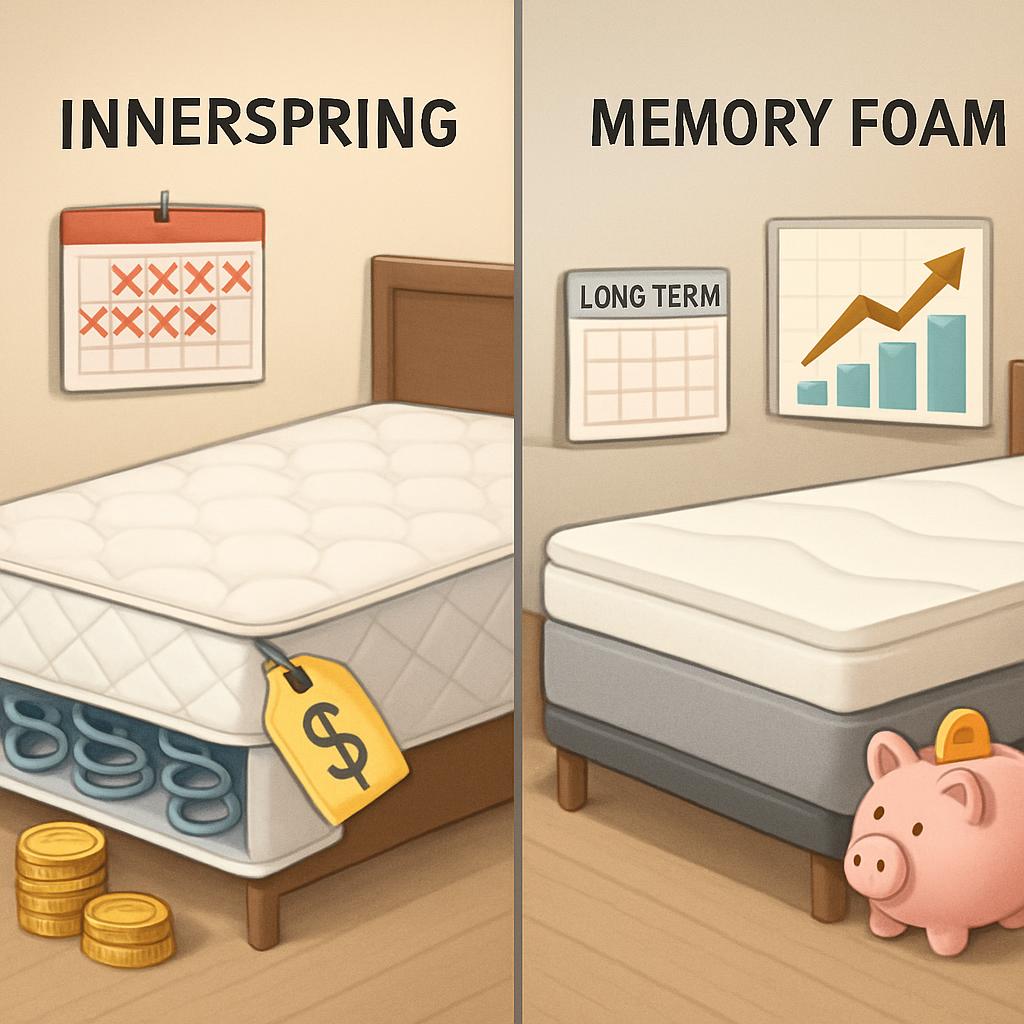
When you're standing in a mattress showroom or scrolling through pages of online options, the sheer range of prices can feel overwhelming. The mattress price wars have created a competitive landscape where understanding pricing trends can save you hundreds—even thousands—of dollars. The battle between innerspring vs memory foam mattresses has intensified over the years, with manufacturers and retailers constantly adjusting their strategies to win your business.
What many shoppers don't realize is that mattress pricing isn't just about the type of mattress you choose. Market forces, manufacturing innovations, and retail strategies all play significant roles in determining what you'll pay. Memory foam mattress cost has dropped dramatically since these beds first entered the market decades ago. What once was considered a luxury item with price tags reaching $3,000 or more for a queen size has become accessible to budget-conscious shoppers, with quality options now available for under $1,000.
Similarly, innerspring mattress cost has evolved. Traditional innerspring beds have long been the affordable option, but the introduction of hybrid designs and advanced coil systems has created a wider price spectrum. You can find basic innerspring models starting around $300, while premium hybrid innerspring mattresses like the Sealy High Point Soft Hybrid Mattress combine traditional coil support with modern comfort layers, offering exceptional value at mid-range prices.
The mattress price comparison landscape has shifted dramatically with the rise of bed-in-a-box brands and direct-to-consumer sales models. These companies bypassed traditional retail markups, forcing established manufacturers to reconsider their pricing structures. This competition has been great news for consumers, but it's also made shopping more complex. How do you know if you're getting a genuine deal or just clever marketing?
Understanding mattress pricing trends requires looking at several factors. Manufacturing costs have decreased thanks to automation and improved supply chains, allowing companies to offer better products at lower prices. At the same time, the demand for specialty features—like cooling gel infusions, organic materials, or advanced pressure relief—has created premium tiers within both memory foam and innerspring categories.
The budget mattress comparison market has exploded in recent years. Where shoppers once had to choose between cheap memory foam mattress options that might not last more than a few years or investing in expensive premium models, today's middle ground offers impressive quality. Affordable innerspring mattress choices have improved significantly too, with better coil systems and more durable comfort layers than budget options from a decade ago.
Current mattress pricing guide data shows that the sweet spot for quality has moved. You don't need to spend $2,000 to get a mattress that will serve you well for 7-10 years. Many excellent options exist in the $800-$1,500 range for a queen size, whether you're looking at memory foam or innerspring designs. This price range typically offers good materials, solid construction, and enough comfort features to meet most sleepers' needs without breaking the bank.
What's driving these mattress price wars isn't just competition between brands—it's also competition between mattress types. Memory foam manufacturers work hard to prove their products offer better value despite sometimes higher upfront costs, pointing to longevity and reduced motion transfer. Innerspring makers counter by highlighting breathability, bounce, and edge support, often at lower price points. This ongoing debate has pushed both industries to innovate and offer more for less.
Seasonal Sales and Discounts in the Mattress Market
If you've ever shopped for a mattress, you've probably noticed that it seems like there's always a sale happening somewhere. The truth is, the mattress industry operates on a promotional cycle that savvy shoppers can use to their advantage. Knowing when to buy can make the difference between paying full price and scoring a deal that saves you 30% to 50% or more.
The mattress market follows predictable seasonal patterns. Major holidays bring the biggest discounts, with President's Day, Memorial Day, Independence Day, and Labor Day historically offering the deepest price cuts. These aren't arbitrary sale dates—they align with times when people are most likely to be thinking about home improvements and have time off to shop. Black Friday and Cyber Monday have become massive mattress shopping events too, with many retailers offering their best prices of the year.
| Shopping Period | Typical Discount Range | Best For |
|---|---|---|
| President's Day (February) | 25% - 40% | Memory foam mattresses, new model releases |
| Memorial Day (May) | 30% - 50% | All mattress types, clearing inventory for summer |
| Independence Day (July) | 20% - 40% | Mid-year clearance, hybrid models |
| Labor Day (September) | 30% - 50% | Innerspring mattresses, floor models |
| Black Friday/Cyber Monday | 35% - 60% | Online exclusives, bed-in-a-box brands |
| New Year Sales (January) | 25% - 45% | Previous year models, budget options |
Beyond the major holidays, timing your purchase around new product releases can lead to significant savings. Mattress manufacturers typically introduce new models in late spring and early summer. When these new versions arrive, retailers need to clear out the previous year's inventory. This creates opportunities to buy last year's model—often nearly identical to the new version—at substantially reduced prices. The mattress itself hasn't changed, but the price certainly has.
Understanding the difference between genuine sales and inflated "discount" pricing is important for making smart decisions in these mattress price wars. Some retailers maintain artificially high "regular" prices year-round, then offer constant "50% off" promotions that bring the price to what it should be anyway. I recommend researching the actual street price of a mattress you're interested in before getting excited about a sale.
Store anniversary sales and going-out-of-business sales can offer real value, but approach them carefully. Anniversary sales are often legitimate opportunities to save, especially at local retailers looking to build customer relationships. Going-out-of-business sales require more caution—make sure you understand the warranty situation and return policy before committing to a purchase from a store that might not be around to honor those promises.
The cheap memory foam mattress and affordable innerspring mattress markets see particularly aggressive promotional pricing. Budget-focused brands often run flash sales that last only 24-48 hours, offering additional discounts on already competitive prices. Signing up for email lists from your favorite retailers can alert you to these limited-time opportunities, though be prepared for frequent promotional emails.
Here's something most people don't consider: the end of the month can be a strategic time to shop at brick-and-mortar stores. Sales staff often work on commission and have monthly quotas to meet. Shopping during the last few days of the month might give you additional negotiating power, as salespeople may be more willing to offer extra discounts or throw in free delivery and setup to close the deal and meet their targets.
How Online Retailers Influence Pricing
The rise of online mattress shopping has completely transformed the pricing landscape. When companies like Casper and Purple first appeared with their bed-in-a-box models and direct-to-consumer approach, they disrupted an industry that had operated largely the same way for decades. This shift has been one of the biggest drivers in the current mattress price wars, forcing traditional retailers and manufacturers to adapt or risk becoming obsolete.
Online retailers have several inherent advantages that allow them to offer competitive pricing. Without the overhead costs of maintaining physical showrooms, paying retail staff, and managing large inventories in multiple locations, these companies can pass savings directly to customers. This structural advantage means that memory foam mattress cost and innerspring mattress cost are often significantly lower when purchasing online compared to buying the same or similar product in a traditional store.
The direct-to-consumer model has also changed how mattresses are marketed and priced. Online brands typically offer fewer models with simpler pricing structures—often just a handful of options rather than the dozens you might find in a traditional showroom. This streamlined approach reduces decision fatigue and makes mattress price comparison much more straightforward. You're not trying to differentiate between fifteen similar models with confusing names and marginal differences.
Free shipping and extended trial periods have become standard expectations thanks to online retailers. When you can order a mattress, try it for 100 nights, and return it for free if it doesn't work out, the risk of buying sight-unseen drops dramatically. This customer-friendly approach forced brick-and-mortar stores to offer similar guarantees, which has improved the shopping experience across the board. The competition for your business benefits you whether you ultimately buy online or in a physical store.
Price transparency is another way online retailers have influenced the market. When you can compare dozens of options in minutes, seeing exact prices without negotiating or dealing with sales pressure, it creates accountability. Retailers can't hide behind vague pricing or high-pressure tactics when customers can pull out their phones and check competitor prices instantly. This transparency has helped compress profit margins and reduce the extreme markups that once characterized the mattress industry.
Online customer reviews have become incredibly influential in mattress pricing guide decisions. Real feedback from thousands of customers provides insights that were previously unavailable. If a cheap memory foam mattress consistently receives complaints about durability after six months, potential buyers will know before purchasing. Conversely, if an affordable innerspring mattress punches above its weight class in quality, word spreads quickly. This crowd-sourced quality assessment helps ensure that pricing aligns more closely with actual value.
The online retail model has also introduced innovative pricing strategies like dynamic pricing and personalized discounts. Some companies adjust prices based on demand, your browsing history, or even your location. While this can feel a bit invasive, it also means there are more opportunities to find deals if you're patient and strategic. Clearing your browser cookies, using incognito mode, or checking prices from different devices might reveal different offers.
Traditional mattress retailers have responded to online competition by developing their own e-commerce platforms and hybrid shopping experiences. Many now offer the ability to research and compare online, then visit a showroom to test mattresses before making a final decision. Some provide online-exclusive models or pricing to compete directly with bed-in-a-box brands. This blending of online and offline retail has created more options and generally better prices for consumers navigating the budget mattress comparison process.
What I find most interesting about how online retailers influence pricing is the ripple effect throughout the entire industry. Even if you never buy a mattress online, you benefit from the competition they've created. Traditional retailers have improved their customer service, reduced prices, extended trial periods, and become more transparent—all in response to the pressure from online competitors. The mattress price wars sparked by e-commerce have genuinely made shopping for a bed better for everyone.
Key Differences in Comfort and Longevity
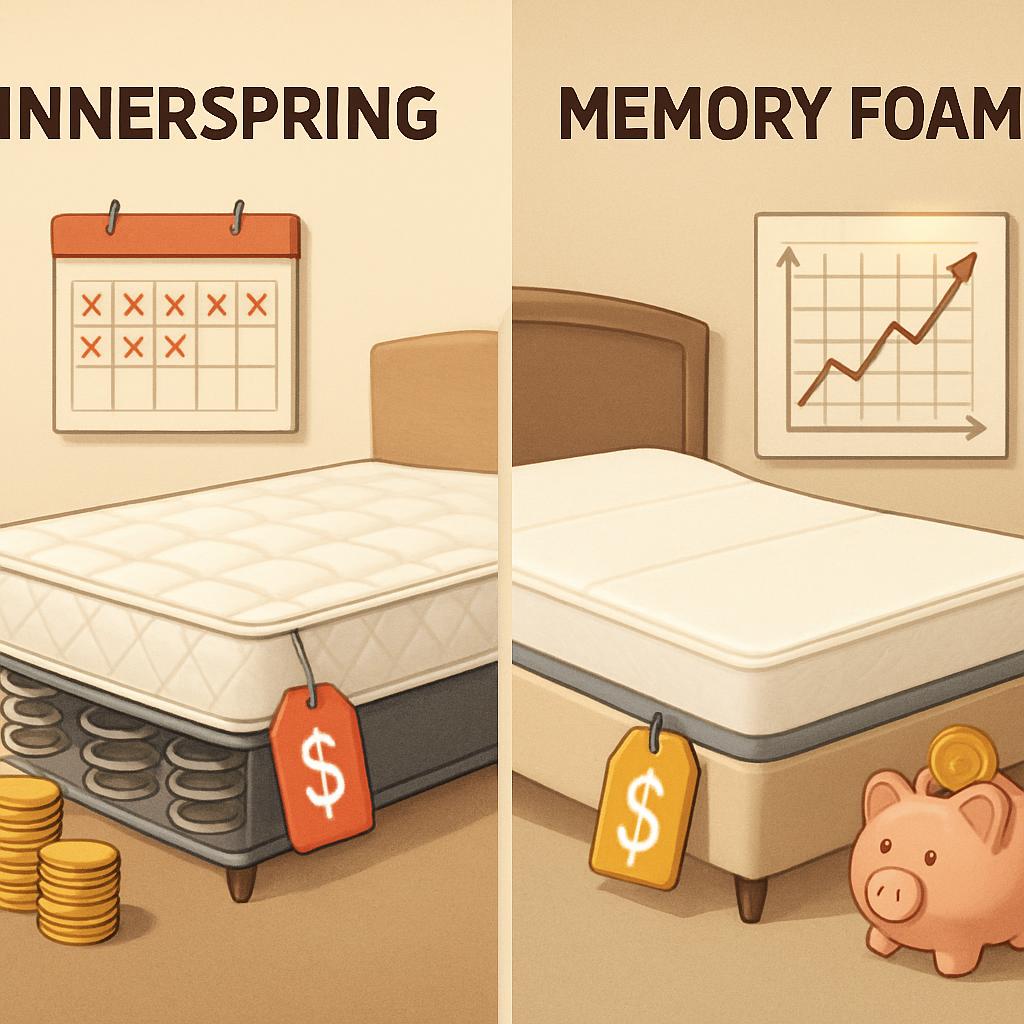
When you're stuck in the middle of the innerspring vs memory foam debate, understanding how these mattresses differ in comfort and how long they'll actually last can make or break your buying decision. Both mattress types have their loyal fans, but the reality is that each offers distinctly different sleeping experiences and lifespans that directly impact your long-term investment.
The comfort and longevity equation isn't just about which mattress feels better on day one—it's about which one will continue to deliver quality sleep five, seven, or even ten years down the road. This matters especially when you're doing a mattress price comparison, because the cheapest option upfront might end up costing you more if you're replacing it sooner than expected.
Innerspring mattresses and memory foam mattresses age differently, support your body in unique ways, and respond to wear and tear through completely different mechanisms. Your sleep position, body weight, room temperature, and even how often you rotate your mattress all play into how these two types perform over time. If you're someone who sleeps hot, the Sealy Lacey Soft Hybrid Mattress combines the benefits of both technologies, offering a middle ground that addresses temperature regulation while providing long-lasting support.
Before you commit to either side of this mattress pricing guide battle, you need to understand what you're really paying for beyond just the initial sticker price. The true cost includes how many quality nights of sleep you'll get and whether you'll be shopping for a replacement mattress sooner than you'd like.
Longevity of Innerspring Mattresses Compared to Memory Foam
Let's talk about durability, because this is where the innerspring mattress cost versus memory foam mattress cost calculation gets really interesting. Traditional innerspring mattresses typically last between 5 to 8 years before they start showing significant signs of wear. You'll notice sagging in the areas where you sleep most often, the coils may start making noise, and that supportive bounce you loved on day one begins to feel more like a trampoline that's seen better days.
Memory foam mattresses, on the other hand, generally offer a longer lifespan of 7 to 10 years, and sometimes even longer if you're dealing with high-density foam. The catch? Not all memory foam is created equal. A cheap memory foam mattress using lower-density foam (under 3 pounds per cubic foot) might start developing body impressions within just a couple of years. Higher-quality memory foam with densities of 4 to 5 pounds per cubic foot can maintain its shape and support for much longer.
"I bought my innerspring mattress thinking it would last forever because it felt so sturdy in the store. Three years later, I could feel every single coil, and the edges were completely shot. When I switched to a quality memory foam mattress, I was shocked at how it kept its shape even after five years of daily use. The upfront memory foam mattress cost seemed higher, but I'm definitely getting more life out of it." – Sarah M., verified customer review from November 2023
The science behind these different lifespans comes down to how each mattress type handles pressure and weight distribution. Innerspring mattresses rely on metal coils that, over time, lose their tension and ability to spring back. This is especially true in the center of the mattress where most of your body weight concentrates. The padding and comfort layers on top of those coils can also compress and shift, creating uncomfortable lumps and valleys.
Memory foam responds to pressure differently. Instead of mechanical springs, you're dealing with viscoelastic material that conforms to your body shape. While this foam can soften over time, high-quality memory foam is designed to recover its original shape once pressure is removed. The breakdown in memory foam typically happens more gradually and evenly across the entire surface, rather than in specific weak spots like you see with innerspring coils.
Temperature and humidity also affect longevity differently between these two types. Innerspring mattresses allow more airflow, which can help prevent moisture buildup that leads to mold and material breakdown. Memory foam mattresses, especially older models, can trap heat and moisture, potentially shortening their lifespan if they're not properly ventilated. Modern memory foam mattresses have largely solved this issue with gel infusions and open-cell technology, but it's still something to consider in your budget mattress comparison.
Another factor that impacts longevity is the foundation you're using. Innerspring mattresses need a solid, supportive base—whether that's a box spring or a platform bed. Without proper support, those coils will fail faster. Memory foam mattresses are more forgiving and can work well on various foundation types, though they still need adequate support to prevent sagging around the edges.
Comfort Levels: What You Should Know Before Buying
Comfort is subjective, but there are objective differences in how innerspring and memory foam mattresses feel that can help you predict whether you'll love or hate your choice. This is where the innerspring vs memory foam debate gets personal, because your body type, sleeping position, and personal preferences all come into play.
Innerspring mattresses offer what sleep experts call "responsive support." When you move, the mattress responds immediately. You get that classic mattress feel with bounce and firmness that many people grew up with. If you're a combination sleeper who changes positions throughout the night, this responsiveness can be a huge advantage. You won't feel stuck in one position like you might with memory foam. The downside? That same bounce can transfer motion across the bed, so if your partner is a restless sleeper, you might feel every move they make.
The comfort of an innerspring mattress largely depends on the coil system and the layers of padding on top. Pocket coil systems, where each coil is individually wrapped, provide better motion isolation than traditional Bonnell coils. The more coils per square inch, generally the better the support and comfort. When you're looking at affordable innerspring mattresses, pay attention to the coil count and type—it makes a significant difference in how the mattress will feel.
Memory foam mattresses deliver what's called "conforming support." The foam softens in response to your body heat and weight, creating a custom fit around your body's curves. This can be incredibly comfortable, especially if you're a side sleeper who needs pressure relief for your shoulders and hips, or if you have chronic pain conditions. The way memory foam cradles your body can help maintain proper spinal alignment, which is why many people with back pain swear by it.
But here's what they don't always tell you in the showroom: memory foam has a learning curve. That "hugged" feeling some people love can feel like being trapped to others. If you're used to sleeping on an innerspring mattress, switching to memory foam can feel strange for the first few weeks. Your body needs time to adjust to the different support system. Some people adapt quickly and wonder why they didn't switch sooner. Others never fully adjust and end up preferring the traditional feel of innerspring.
Temperature regulation is a major comfort consideration that often gets overlooked in the mattress price wars. Traditional memory foam sleeps hot—there's no getting around it. The dense foam that creates that conforming feel also traps body heat. If you're someone who naturally sleeps warm or you live in a hot climate, this can be a deal-breaker. Many manufacturers have addressed this with gel-infused foams, plant-based foams, and open-cell structures that allow better airflow. When you're comparing memory foam mattress costs, factor in whether the foam has cooling technology built in.
Innerspring mattresses naturally sleep cooler because air can flow through the coil system. This built-in ventilation helps dissipate heat throughout the night. If temperature control is your top priority and you're working with a tight budget, an affordable innerspring mattress might give you better temperature regulation than a cheap memory foam mattress in the same price range.
Edge support is another comfort factor that often gets discovered too late. Innerspring mattresses typically offer better edge support, meaning you can sit on the side of the bed or sleep near the edge without feeling like you're going to roll off. Memory foam mattresses, especially budget models, often have weaker edges that compress significantly when you sit or lie near them. This effectively reduces your usable sleeping surface.
Your Ultimate Mattress Pricing Guide
Understanding mattress pricing feels like trying to decode a secret language, especially when you're comparing innerspring mattress costs to memory foam mattress costs. The price tags you see in stores or online don't tell the whole story, and manufacturers know that most shoppers don't understand what they're actually paying for. That's exactly why this mattress pricing guide exists—to pull back the curtain on what drives these prices and help you figure out which features are worth your money.
The mattress industry has become increasingly complex, with prices ranging from a few hundred dollars for a basic model to several thousand for luxury options. But here's what makes this tricky: a higher price doesn't automatically mean better quality or comfort for you specifically. I've seen budget mattresses that outperform expensive ones for certain sleepers, and premium mattresses that aren't worth the investment for others.
When you're doing a budget mattress comparison between innerspring and memory foam options, you need to look beyond the base price. Factor in how long the mattress will last, whether it comes with a trial period, what the warranty actually covers, and if there are any hidden costs like delivery fees or old mattress removal charges. Some retailers offer white-glove delivery where they set up your new mattress and haul away your old one, while others just drop a box at your door.
The mattress price wars have intensified with the rise of online retailers, which is actually good news for consumers. Traditional brick-and-mortar stores typically mark up mattresses by 50% or more, while online retailers can offer similar quality at lower prices because they cut out the middleman. However, buying online means you can't test the mattress before committing, which is why a good trial period becomes non-negotiable.
If you're ready to explore specific options that balance quality with value, the Understanding Foam Mattresses guide breaks down what to look for when shopping for memory foam, while helping you avoid common pitfalls that lead to buyer's remorse.
Factors That Affect Mattress Pricing Beyond Type
The type of mattress—innerspring versus memory foam—is just the starting point for pricing. Once manufacturers establish that foundation, a whole range of other factors come into play that can push prices up or down significantly. Understanding these factors helps you identify which features matter for your needs and which ones are just marketing fluff designed to justify a higher price tag.
Mattress size is the most obvious factor. A twin mattress will always cost less than a king, with prices typically increasing by $100-$300 for each size jump. But the price increase isn't always proportional to the amount of extra material—sometimes you're paying more because larger sizes are positioned as premium products.
Here are the key factors that affect mattress pricing regardless of whether you're looking at innerspring or memory foam options:
- Material quality and density: Higher-density foams cost more to produce but last longer and provide better support. In innerspring mattresses, the gauge of the steel wire, the number of coils, and the type of coil system (pocket coils versus Bonnell coils) dramatically affect the price. You can find cheap memory foam mattresses using 2.5-pound density foam, while premium models use 5-pound density foam that costs manufacturers significantly more.
- Comfort layers and materials: What sits on top of the base support system—whether that's coils or foam—makes a huge difference in price. Natural latex, gel-infused memory foam, wool, cashmere, and cooling fabrics all cost more than standard polyester or basic foam. A mattress with multiple comfort layers using premium materials can easily cost twice as much as one with a single comfort layer.
- Manufacturing location and labor costs: Mattresses made in the United States typically cost more than those manufactured overseas, but they often come with better quality control and more transparent sourcing. Some brands proudly advertise their American-made status and charge a premium for it, while others quietly manufacture abroad to keep costs down.
- Brand reputation and marketing costs: Big-name brands spend millions on advertising, sponsorships, and retail partnerships. Those costs get passed on to you. A lesser-known brand might offer similar quality at a lower price simply because they're not paying for Super Bowl commercials or celebrity endorsements.
- Certifications and testing: Mattresses certified by CertiPUR-US (for foam), OEKO-TEX (for textiles), or GREENGUARD Gold (for low emissions) cost more because manufacturers pay for testing and certification. These certifications matter if you're concerned about chemicals, off-gassing, or environmental impact, but they do add to the price.
- Warranty length and terms: A comprehensive 20-year warranty costs the manufacturer more than a basic 10-year warranty because they're accepting more risk. Read the fine print though—some warranties are prorated, meaning you'll pay a percentage of the replacement cost, while others offer full replacement. The warranty terms directly correlate with price.
- Trial period and return policies: Companies that offer 100-night or even 365-night trial periods build the cost of returns into their pricing. They know a certain percentage of customers will return the mattress, and they have to account for that loss. This is why you might see two similar mattresses with different trial periods priced differently.
- Retail markup versus direct-to-consumer pricing: Traditional retailers typically mark up mattresses by 50-100% or more. When you're shopping in a furniture store or department store, you're paying for the showroom, the sales staff, and the retailer's profit margin. Direct-to-consumer brands that sell online cut out these middlemen and can offer lower prices for comparable quality.
Understanding these factors helps you see through marketing language and focus on what actually matters for your sleep quality and budget. When a mattress is advertised as "luxury" or "premium," ask yourself what specifically makes it luxurious. Is it genuinely better materials and construction, or is it just clever positioning?
How to Evaluate the Best Mattress for Your Budget
Finding the best mattress for your budget requires a strategic approach that goes beyond just looking at price tags and reading marketing claims. You need a framework for evaluation that considers both your immediate financial constraints and the long-term value you'll get from your investment.
Start by determining your actual budget, not just what you wish you could spend. Be realistic about what you can afford without straining your finances. Once you have that number, I recommend allocating it this way: if possible, plan to spend 70% on the mattress itself and reserve 30% for essential accessories like a mattress protector, pillows, or a new foundation if needed. A good mattress protector can extend your mattress life by years, making it a worthwhile investment that protects your primary investment.
Next, identify your must-have features versus nice-to-have features. Must-haves are non-negotiable aspects that directly affect your sleep quality—things like proper support for your sleeping position, adequate firmness for your body weight, and cooling features if you sleep hot. Nice-to-have features might include organic materials, adjustable firmness, or a particularly stylish cover. If budget is tight, you might have to compromise on the nice-to-haves to ensure you get the must-haves.
When evaluating innerspring vs memory foam options within your budget range, compare apples to apples. A $500 innerspring mattress isn't directly comparable to a $500 memory foam mattress because they offer different benefits and lifespans. Instead, look at what each type offers at your price point and consider which features align better with your sleep needs. An affordable innerspring mattress in your budget might have more coils and better edge support, while a cheap memory foam mattress at the same price might offer superior pressure relief but compromise on cooling or durability.
Pay close attention to trial periods and return policies. A generous trial period (at least 90-100 nights) essentially removes much of the risk from your purchase. If you can try the mattress at home for three months and return it if it's not working out, you can afford to take a chance on a less expensive option that might surprise you. Without a good trial period, you need to be more conservative and possibly invest more upfront in a brand with a proven track record.
Read reviews strategically. Don't just look at the star rating—read what people actually say, especially in the critical reviews. Look for patterns. If multiple reviewers mention the same issue (like a mattress sleeping too hot or developing sagging within a year), take that seriously regardless of the overall rating. Pay special attention to reviews from people who share your body type, sleeping position, and concerns.
Consider the total cost of ownership over the expected lifespan of the mattress. A $600 innerspring mattress that lasts 6 years costs you $100 per year. A $900 memory foam mattress that lasts 10 years costs you $90 per year. The memory foam option actually delivers better value despite the higher upfront cost. This kind of calculation helps you see beyond the sticker shock and make a more informed decision about what's truly affordable.
Don't be afraid to negotiate, especially with traditional retailers. Mattress prices are often highly negotiable, and sales staff usually have the authority to offer discounts, throw in free delivery, or waive other fees. The worst they can say is no. Online retailers rarely negotiate on price, but they often run promotions or offer discount codes that can bring down the cost significantly.
Time your purchase strategically if you can. Major holidays—Memorial Day, Independence Day, Labor Day, and Presidents Day—typically feature the deepest discounts on mattresses, often 20-50% off. Black Friday and end-of-year sales can also offer significant savings. If your current mattress is uncomfortable but not unbearable, waiting for one of these sales events can stretch your budget considerably further.
Finally, trust your instincts while staying within your financial boundaries. If a deal seems too good to be true, it probably is. Ultra-cheap mattresses from unknown brands might save you money upfront but could cost you more in the long run through poor sleep quality, health issues from inadequate support, or the need to replace it sooner than expected. Finding that sweet spot between affordability and quality takes some research, but it's absolutely worth the effort for something you'll use every single night for years to come.
Conclusion: Navigating Your Mattress Investment with Confidence
When it comes down to it, the innerspring vs memory foam debate isn't really about which mattress type "wins" – it's about finding what works best for your unique sleep needs and budget. Throughout this mattress price comparison, I've shown you that both options offer compelling advantages at different price points, and understanding these differences helps you make a smart investment in your sleep health.
The memory foam mattress cost has dropped significantly over the past decade, making quality sleep accessible to more people than ever before. At the same time, innerspring mattress cost remains competitive, especially when you factor in the durability and breathability these traditional mattresses provide. Whether you're hunting for a cheap memory foam mattress that doesn't sacrifice comfort or searching for an affordable innerspring mattress with excellent support, today's market offers more choices than previous generations could have imagined.
What I've learned from analyzing these mattress price wars is that smart shopping matters more than simply picking the lowest price tag. The budget mattress comparison I've outlined shows that a slightly higher upfront investment often translates to better sleep quality and longer mattress life – which means better value over time. Consider how seasonal sales, online retailer competition, and direct-to-consumer brands have reshaped the landscape, giving you more negotiating power and better deals throughout the year.
This mattress pricing guide should help you approach your purchase with confidence. Remember that the "best" mattress isn't always the most expensive one or the cheapest one – it's the one that matches your sleep style, body type, and budget constraints. Innerspring mattresses continue to excel for those who sleep hot, prefer a bouncier feel, or need strong edge support. Memory foam mattresses remain the top choice for pressure point relief, motion isolation, and contouring comfort.
As you move forward with your mattress shopping, keep in mind that investing in quality sleep is investing in your overall health and daily productivity. Poor sleep affects everything from your mood to your immune system, so choosing the right mattress matters more than many people realize. Whether you ultimately decide on innerspring or memory foam, make sure to test the mattress when possible, read verified customer reviews, and understand the warranty and return policies before making your final decision.
The mattress industry will continue to innovate and compete for your business, which means prices will keep shifting and new options will emerge. But armed with the knowledge from this budget mattress comparison, you're now prepared to spot genuine value versus marketing hype. You understand what drives pricing, what features matter most, and how to evaluate your options critically. Sweet dreams start with smart decisions, and you're now ready to make the choice that will support your best sleep for years to come.
Frequently Asked Questions (FAQs)
What is the average price difference between innerspring and memory foam mattresses?
The memory foam mattress cost typically ranges from $300 to $2,000, while innerspring mattress cost usually falls between $250 and $1,500. However, budget-friendly options exist in both categories, and premium versions of either type can exceed these ranges. The mattress price comparison really depends on the specific brand, materials, and features you're considering.
Can I find a quality cheap memory foam mattress under $500?
Yes, you absolutely can find a cheap memory foam mattress that offers good quality under $500, especially from online retailers and during sales events. Many direct-to-consumer brands offer excellent value in this price range. Just make sure to check the foam density, warranty coverage, and customer reviews to ensure you're getting a mattress that will last.
Are affordable innerspring mattresses as durable as expensive ones?
Not always. While you can find an affordable innerspring mattress that performs well initially, more expensive models typically use higher coil counts, better gauge steel, and superior comfort layers that extend the mattress's lifespan. That said, a mid-range innerspring often provides excellent durability for most sleepers when properly maintained.
Which type of mattress offers better value for the money?
The best value depends on your personal needs. For this budget mattress comparison, memory foam often provides better pressure relief and motion isolation, while innerspring mattresses typically offer better temperature regulation and edge support. Consider which features matter most for your sleep style when evaluating value.
How do mattress price wars benefit consumers?
Mattress price wars have driven down costs significantly, giving consumers access to better quality mattresses at lower prices. Competition among brands, especially with online retailers entering the market, has forced traditional retailers to offer better deals, more transparent pricing, and improved customer service policies like free shipping and extended trial periods.
What's the best time of year to buy a mattress for the lowest price?
Based on my mattress pricing guide research, the best times to find deals are during Memorial Day, Labor Day, Black Friday, and President's Day sales. Many retailers also offer significant discounts in January and February when they're clearing out old inventory. Online retailers often have flash sales throughout the year, so it pays to watch for promotions.
Do memory foam mattresses always cost more than innerspring mattresses?
No, this is a common misconception. While premium memory foam can be expensive, you can find a cheap memory foam mattress for less than many mid-range innerspring options. The innerspring vs memory foam price comparison really depends on the specific models you're comparing, as both types span a wide range of price points.
How long should a budget mattress last?
A quality budget mattress should last between 5-7 years with proper care, regardless of whether it's innerspring or memory foam. More expensive mattresses often last 8-10 years or longer. When doing your mattress price comparison, factor in the expected lifespan to calculate the true cost per year of ownership.
What hidden costs should I watch for when buying a mattress?
Beyond the sticker price, watch for delivery fees, old mattress removal charges, and the potential need for a new foundation or bed frame. Some retailers include these services free, while others charge extra. Also consider whether you'll need a mattress protector, which typically costs $50-150 but protects your investment.
Are online mattress prices better than in-store prices?
Generally, yes. Online retailers often offer lower prices because they have lower overhead costs. However, physical stores like Sleepology sometimes match online prices and offer the advantage of testing mattresses in person. The mattress price wars have pushed both online and brick-and-mortar stores to stay competitive.
How much should I expect to spend on a good quality mattress?
For a good quality mattress that will serve you well, plan to spend between $500-1,200 for a queen size. This range typically gets you decent materials, reasonable durability, and adequate comfort in either innerspring or memory foam. Your mattress pricing guide should factor in that spending a bit more often means better sleep quality and longer mattress life.
Does a higher price always mean better quality in mattresses?
Not necessarily. While price often correlates with quality, some brands charge premium prices for marketing and brand name rather than superior materials. That's why this budget mattress comparison focuses on features, materials, and actual performance rather than just price tags. Always read reviews and compare specifications.
Can I negotiate mattress prices at retail stores?
Yes, many brick-and-mortar mattress stores expect some negotiation. Sales associates often have flexibility to offer discounts, throw in free pillows or mattress protectors, or waive delivery fees. Mention competitor prices or online deals to strengthen your negotiating position during the mattress price wars.
What warranty should I expect with an affordable mattress?
Most affordable innerspring mattresses and memory foam options come with warranties ranging from 10-20 years. However, read the fine print carefully – many warranties are prorated and only cover specific defects like sagging beyond a certain depth. A solid warranty is an important factor in your overall mattress price comparison.
Should I wait for a sale or buy a mattress when I need it?
If your current mattress is seriously affecting your sleep quality, don't wait – poor sleep impacts your health too much. However, if you can wait a few weeks or months, timing your purchase around major sales events can save you 20-50% on the same mattress. Given how competitive the mattress price wars have become, you're rarely more than a month or two away from a significant sale.