

Have you ever wondered whether the extra width of a king bed frame is worth sacrificing precious floor space in your bedroom? You're not alone in this dilemma. The choice between a queen vs king bed frame represents one of the most significant decisions you'll make for your sleep sanctuary, and it goes far beyond simple measurements. This decision affects everything from how well you sleep each night to how easily you can move around your room in the morning.
When you walk into a furniture store or browse online for a new bed frame, the size options can feel overwhelming. The queen bed frame dimensions and king bed frame dimensions might seem like just numbers on paper, but they translate into real-world impacts on your daily comfort, your relationship with your sleeping partner, and even your home's resale value. Many people rush into this decision based solely on what fits through their bedroom door, only to regret their choice months later when they're struggling with cramped sleeping quarters or a bedroom that feels more like a furniture showroom than a relaxing retreat.
The truth is, selecting between these two popular bed frame sizes requires careful consideration of multiple factors. Your bedroom's square footage plays a major role, but so do your sleeping habits, whether you share your bed with a partner or pets, and how you use your bedroom beyond just sleeping. A sturdy bed frame in the wrong size can make even the most luxurious mattress feel uncomfortable, while the right size paired with a heavy-duty bed frame creates a foundation for years of restful nights.
Room size certainly matters, but it's not the only consideration in this queen vs king bed frame debate. Think about your lifestyle needs, too. Do you frequently have children or pets joining you in bed? Do you and your partner have different sleep schedules? Are you someone who tosses and turns throughout the night? These real-life scenarios should influence your decision just as much as your bedroom's dimensions. The bed frame size guide you choose today will impact your sleep quality for the next decade or more.
What makes this decision even more complex is that bedroom layout ideas need to account for more than just the bed itself. You'll need space for nightstands, dressers, and enough clearance to walk comfortably around the room. A bed frame for small rooms requires strategic planning to maintain functionality without creating a claustrophobic atmosphere. Meanwhile, those with larger bedrooms face the opposite challenge: choosing a bed frame that fills the space appropriately without looking lost in the room.
Throughout this comprehensive guide, I'll walk you through everything you need to know about queen and king bed frames. We'll examine the specific dimensions of each option, explore how they impact your sleep experience, and provide practical advice for planning your bedroom layout. Whether you're furnishing your first apartment or upgrading your master bedroom, understanding the nuances of bed frame sizes will help you make a confident decision that supports better sleep and a more comfortable living space for years to come.
Key Takeaways
- Queen beds measure 60" x 80" while king beds offer 76" x 80" of sleeping space
- Room size requirements differ significantly between queen and king bed frames
- Heavy-duty bed frames provide essential support regardless of which size you choose
- Your sleeping habits and partner needs should guide your bed frame decision
- Proper bedroom layout planning ensures comfortable movement around your chosen bed size
Unpacking the Queen vs King Bed Frame: Dimensions That Matter
Understanding the precise measurements of queen bed frame dimensions and king bed frame dimensions is the foundation of making an informed choice for your bedroom. These aren't just abstract numbers—they represent the actual space you'll occupy every single night and the footprint your bed will claim in your room. When comparing a queen vs king bed frame, the dimensional differences might seem modest at first glance, but they create substantially different sleeping and spatial experiences.
A queen bed frame accommodates a mattress that measures 60 inches in width and 80 inches in length. This translates to 5 feet across and nearly 7 feet long, providing 33.3 square feet of sleeping surface. For context, each person sleeping on a queen bed has approximately 30 inches of personal width—slightly less than a twin bed, which offers 38 inches. King bed frame dimensions, by comparison, support a mattress measuring 76 inches wide by 80 inches long. That's 6 feet 4 inches across and the same 80-inch length, creating 42.2 square feet of sleep space. Each sleeper on a king bed enjoys 38 inches of width, matching the full width of a twin bed.
The 16-inch width difference between these bed frame sizes might not sound dramatic, but it makes a world of difference in real-world sleeping scenarios. That extra width on a king frame means you can comfortably accommodate children who wander in during the night, pets who claim their spot on the bed, or simply enjoy more personal space when sleeping with a partner. This becomes especially important if either sleeper tends to move around during the night or if you have significantly different bedtimes that require one person to settle in without disturbing the other.
When measuring your space for either bed frame size, remember that the frame itself adds to these dimensions. A sturdy bed frame typically adds 2-4 inches to both the width and length of the mattress dimensions, depending on the style and construction. Heavy-duty bed frames with substantial rails or decorative headboards and footboards can add even more. This means your actual floor space requirement extends beyond the mattress measurements, and you'll need to account for this when planning your bedroom layout ideas.
Beyond the frame itself, sleep experts recommend leaving at least 24-30 inches of clearance on each side of the bed and at the foot for comfortable movement around your room. This walking space ensures you won't feel cramped and allows for easy bed-making and room cleaning. When you factor in these clearances alongside the bed frame dimensions, a queen bed requires a room that's at least 10 feet by 10 feet, while a king bed performs best in spaces measuring at least 12 feet by 12 feet or larger. These are minimum recommendations—more spacious rooms will feel more comfortable and functional.
The bed frame for small rooms challenge becomes apparent when you start adding other essential furniture pieces to your mental floor plan. Nightstands typically measure 20-24 inches wide, and dressers can range from 30-60 inches across. If your bedroom includes a closet with doors that swing inward, you'll need clearance for those as well. A queen bed frame often fits better in rooms where you still want substantial storage furniture without creating an obstacle course from your bed to your bathroom or bedroom door.
One consideration that many shoppers overlook is ceiling height and its relationship to bed frame dimensions. While this doesn't affect the floor space requirements, rooms with lower ceilings (under 8 feet) can feel more cramped with a king-sized bed simply because the larger furniture piece creates different visual proportions. Conversely, rooms with high ceilings might make a queen bed look undersized, even if the floor space is appropriate. Pairing your bed frame with the right mattress is equally important—whether you prefer the comfort of a Sealy High Point Soft Hybrid Mattress or the luxury of options from our king sized mattresses collection, the right combination of frame and mattress creates your ideal sleep environment.
The structural requirements for these bed frames also differ in ways that affect both cost and durability. King bed frames need more robust construction to support the additional width without sagging or squeaking. This often means more support slats, thicker side rails, and reinforced joints. When shopping for either size, look for sturdy bed frames with center support beams—these are especially critical for king sizes to prevent the mattress from sagging in the middle over time. Quality construction in a heavy-duty bed frame will serve you well regardless of which size you choose, but it's particularly important for the larger king frame that bears more weight across a greater span.
Understanding Queen Bed Frame Dimensions
The queen bed frame stands as the most popular bed size in America, and for good reason. Its dimensions strike a practical balance between sleeping comfort and spatial efficiency that works beautifully for many living situations. When you're evaluating queen bed frame dimensions for your home, you're looking at a sleeping surface that offers genuine comfort for couples while remaining manageable in moderately sized bedrooms.
At 60 inches wide and 80 inches long, the queen bed frame creates a footprint that respects your floor space while not shortchanging your comfort. This size works particularly well in master bedrooms ranging from 10x10 feet to 12x14 feet, which encompasses the size of many bedrooms in apartments, condos, and suburban homes built in the last few decades. The queen frame allows you to incorporate other bedroom furniture without the room feeling cramped or difficult to move through.
Here's what makes queen bed frame dimensions work so well for different living situations:
- Apartment and condo living: Queen frames fit comfortably in most standard bedrooms without overwhelming the space, leaving room for essential furniture like nightstands and a dresser while maintaining walkways that don't feel tight.
- Guest bedrooms: A queen bed in a guest room signals that you've made space for visitors without dedicating your entire spare room to sleeping accommodations, allowing the room to serve multiple purposes when not occupied by guests.
- First-time bed upgraders: Moving from a full-size to a queen represents a significant comfort increase—you gain an extra 6 inches in width—without requiring a complete bedroom furniture overhaul or necessitating a move to a larger space.
- Budget-conscious shoppers: Queen-sized bedding, mattresses, and frames typically cost less than king-sized options, and you'll find a wider variety of styles and price points available in queen sizes across most furniture retailers.
- Couples with similar sleeping schedules: If you and your partner typically go to bed and wake up at the same time, the queen provides adequate space without one person's movements excessively disturbing the other throughout the night.
The bed frame size guide for queens extends beyond just the sleeping surface itself. When you're measuring your room, add at least 6-8 inches to both the width and length to account for the frame's structure. So instead of planning for exactly 60x80 inches, think about needing approximately 66x88 inches of floor space just for the bed itself. This becomes especially important if you're considering a platform bed with built-in storage drawers or a frame with particularly substantial headboard posts.
One of the advantages of queen bed frame dimensions is their versatility in positioning within your bedroom. You can typically place a queen bed against any wall in a standard rectangular bedroom and still have functional space around it. Try positioning it centered on the longest wall for a traditional look, or place it in a corner to maximize floor space in smaller rooms. The queen's moderate size gives you flexibility that larger beds simply don't offer.
For couples, the reality of sharing a queen bed means each person has about 30 inches of personal width—adequate for most adults, though individuals who are taller or broader may find this limiting. If you or your partner tends to sleep sprawled out, or if either of you is a restless sleeper who moves frequently during the night, you might find the queen dimensions a bit restrictive over time. This is where testing different bed sizes becomes valuable before making your final decision.
The height of your bed frame also factors into how the queen dimensions work in your space. A low-profile platform frame will make your ceiling feel higher and your room more spacious, while a traditional frame with a box spring sits higher off the ground and can make the bed feel more substantial. Consider pairing your queen frame with quality mattresses like those from our Sealy Hybrid Foam Mattress collection or Sealy Spring Mattress collection to create the perfect sleep system for your needs.
Exploring King Bed Frame Dimensions
King bed frame dimensions represent the pinnacle of sleeping space for most households, offering a luxurious expanse that transforms your nightly rest into a genuinely spacious experience. When you measure out 76 inches of width and 80 inches of length, you're looking at a bed that provides each sleeper with 38 inches of personal space—the equivalent of having your own twin bed while still sharing with your partner. This dimensional generosity makes the king bed frame the go-to choice for couples who value personal space during sleep or who want room for children and pets to join them comfortably.
The practical implications of king bed frame dimensions extend far beyond the measurements themselves. That extra 16 inches of width compared to a queen translates to significantly reduced sleep disturbances when your partner moves during the night. If you've ever been jolted awake by your spouse rolling over on a smaller bed, you'll appreciate how motion isolation improves dramatically with the added space a king provides. This becomes even more valuable if you and your partner have different work schedules requiring different bedtimes or wake-up times.
When planning for king bed frame dimensions in your space, the room size requirements shift considerably from what a queen needs. While a queen can work in a 10x10 bedroom, a king really needs at least 12x12 feet to avoid feeling cramped, and 13x13 or larger is ideal. This extra space requirement isn't just about the bed itself—it's about maintaining those crucial 24-30 inches of clearance on all sides that allow you to walk around comfortably, make the bed without gymnastics, and access your nightstands without squeezing through tight spaces.
"After upgrading to a king bed frame, my partner and I both sleep so much better. We're not competing for space anymore, and I don't wake up every time he shifts positions. It's made a real difference in how rested we both feel in the morning. The extra width was absolutely worth rearranging our bedroom furniture to make it fit." – Review from a satisfied Sleepology customer, November 2024
The structural considerations for king bed frame dimensions demand attention to quality construction. A heavy-duty bed frame becomes essential at this size because you're supporting more weight across a greater span. Look for frames with center support legs or a robust center beam, as these prevent the troublesome sagging that can occur when a king-size mattress lacks adequate support in the middle. The frame's slat system should be reinforced, ideally with slats no more than 3 inches apart to properly support modern memory foam and hybrid mattresses.
King bed frames come in slightly different variations worth noting. The standard king, also called Eastern king, provides those 76x80-inch dimensions I've been discussing. There's also the California king, which measures 72x84 inches—narrower but longer, designed specifically for taller individuals. When most people discuss king bed frame dimensions, they're referring to the standard king, which remains the more popular choice because it provides better width for couples rather than prioritizing length.
One challenge with king bed frame dimensions is maneuvering the frame and mattress through doorways, up stairs, and around corners during delivery and setup. Standard doorways measure 32-36 inches wide, which means you'll often need to angle the frame and mattress carefully, and in some cases, the mattress may need to arrive in two pieces (split king) to navigate tight spaces. This logistical consideration isn't a deal-breaker, but it's worth thinking about if you live in an older home with narrow hallways or a walk-up apartment.
The cost implications of king bed frame dimensions extend beyond the initial frame purchase. You'll pay more for king-sized sheets, comforters, and mattress protectors compared to queen sizes. If you're someone who likes to have multiple sheet sets and seasonal bedding options, this ongoing expense adds up over the years. Additionally, king mattresses typically cost 20-30% more than queen mattresses of the same quality level, and you'll need to factor that into your overall budget.
For bedroom layout ideas with a king bed, placement becomes more strategic. You'll almost certainly want to center the bed on your longest wall, and you may need to sacrifice other furniture pieces to maintain comfortable flow around the room. Some people find that switching to wall-mounted nightstands or narrow side tables helps preserve floor space. Consider the scale of your other furniture, too—a massive king bed paired with oversized dressers can make even a good-sized master bedroom feel crowded.
Despite these considerations, the sleep quality benefits of king bed frame dimensions often outweigh the challenges. Couples report higher satisfaction rates with king beds, particularly when both partners are average to tall in height or prefer not to sleep close together throughout the night. The extra space also accommodates those Sunday mornings when you want to spread out with coffee and the newspaper, or when your kids pile in for weekend snuggles. If your room can comfortably accommodate the dimensions and your budget allows for the investment, a king bed frame paired with a premium mattress like the Stearns & Foster Estate Ultra Firm Tight Top Mattress creates a truly luxurious sleep retreat that will serve you well for many years.

The Sleep Experience: Choosing Between a Queen and King Bed
When you're standing in a mattress showroom trying to decide between a queen vs king bed frame, the choice can feel overwhelming. Both sizes have their strengths, and the right pick really depends on how you sleep, who you're sleeping with, and what your bedroom can handle. Let me walk you through what makes each bed frame size special and help you figure out which one matches your lifestyle.
The queen bed frame has been America's favorite for years, and there's a good reason why. At 60 inches wide by 80 inches long, it offers enough room for most couples to sleep comfortably without taking over the entire bedroom. If you're working with a smaller space, a queen bed frame is often the sweet spot between comfort and practicality. You'll still have room to walk around your bed, fit a dresser or two, and maybe even squeeze in a reading chair.
On the flip side, king bed frame dimensions give you a full 76 inches of width—that's an extra 16 inches compared to a queen. For couples who need their personal space at night, or anyone who shares their bed with kids or pets, those extra inches make a real difference. I've talked to countless customers who upgraded from a queen to a king and said they wished they'd done it sooner. The extra room means less bumping into your partner when you roll over, and if one person is a restless sleeper, the other won't feel every movement.
Your mattress choice matters just as much as your bed frame size. Whether you go with a queen or king, you'll want a sturdy bed frame that can support quality mattresses like those in our king-sized mattresses collection. These heavy-duty bed frame options work beautifully with everything from Sealy to Stearns & Foster to Tempur-Pedic mattresses, giving you the solid foundation you need for years of great sleep.
Think about your sleeping habits for a moment. Do you spread out like a starfish, or do you curl up in a ball? Do you share your bed, or is it all yours? A solo sleeper who likes to stretch out might be perfectly happy with a queen, while couples often find that the king bed frame dimensions give them the breathing room they need. And if you're someone who works from bed, reads for hours, or likes breakfast in bed on weekends, that extra space in a king frame can feel like a real luxury.
The bed frame size guide isn't just about measurements on paper. It's about how you'll actually use the space. A queen bed frame works great in guest rooms, apartments, or any bedroom that's around 10 by 10 feet or bigger. But if your master bedroom is spacious—say, 12 by 12 feet or larger—a king bed frame can really shine without making the room feel cramped.
One thing people often forget is that your bed frame choice affects more than just your sleep. It shapes how your whole bedroom functions. With a queen, you'll have more floor space for nightstands, lamps, and other furniture. With a king, your bed becomes the centerpiece, and you'll need to plan your bedroom layout ideas around that larger footprint. Both approaches can look great—it just depends on what matters most to you.
The Benefits of Sleeping in a Queen vs King Bed
Let's break down the real-world benefits of each bed frame size so you can see how they stack up against each other. When customers ask me about the queen vs king bed frame debate, I always start with this comparison because it makes the differences crystal clear.
| Feature | Queen Bed Frame | King Bed Frame |
|---|---|---|
| Width | 60 inches | 76 inches |
| Best For | Couples in smaller rooms, single sleepers who want space | Couples who want maximum space, families with kids or pets |
| Room Size Needed | 10' x 10' minimum | 12' x 12' minimum |
| Floor Space Left | More room for furniture | Bed takes center stage |
| Cost | Lower initial investment | Higher price for frame and bedding |
| Moving & Setup | Easier to move, fits through most doorways | Requires more effort, may need split box spring |
Queen bed frames shine when you need a bed frame for small rooms. They give you plenty of sleeping space without eating up your entire floor plan. You'll spend less on sheets, comforters, and bed frames themselves, which is a nice bonus if you're watching your budget. Plus, if you move frequently or live in an apartment with narrow hallways, getting a queen bed frame up the stairs is way less stressful than wrestling with a king.
The comfort level on a queen works well for most couples, especially if you're average-sized adults who don't mind being a bit cozy. Each person gets about 30 inches of personal space, which is the same width as a twin bed. That might sound tight, but for couples who like sleeping close together, it's perfect. And if you're a single sleeper who just wants room to spread out, a queen feels downright roomy.
King bed frames bring a different set of benefits to the table. That 76-inch width gives each person 38 inches of space—more room than you'd get on a twin XL. If you or your partner tosses and turns at night, that extra space means better sleep for both of you. There's less motion transfer, so when one person gets up in the middle of the night, the other can keep sleeping peacefully.
Families often prefer king bed frame dimensions because there's room for everyone during those weekend morning snuggles or when a child has a bad dream and needs comfort. Pet owners also appreciate the extra space—your dog or cat can claim their spot without pushing you to the edge of the mattress. And if you're someone who likes to pile up pillows for reading or watching TV in bed, a king gives you the space to do that without feeling cramped.
The heavy-duty bed frame construction you need for a king mattress also means you're getting a seriously sturdy bed frame that can handle the weight and daily use for many years. When you pair a quality king frame with a premium mattress, you're making an investment in better sleep that pays off every single night.
Evaluating Sleeping Space Needs
Figuring out your actual sleeping space needs takes some honest reflection about your habits and preferences. I've found that people often underestimate how much room they really want until they try out different bed sizes in person. That's why I always recommend testing before buying, but let me give you some guidelines to help you think through what works for your situation.
"We upgraded from a queen to a king last year, and it completely changed our sleep quality. My husband is a big guy who moves around a lot at night, and I'm a light sleeper. Now we both get the space we need without disturbing each other. Best bedroom decision we ever made!" – Sarah M., verified customer review from November 2023
Start by thinking about your body size and how you naturally sleep. Taller folks—anyone over 6 feet—will appreciate that both queen and king bed frame dimensions offer 80 inches of length, which is plenty for most people. But width is where things get personal. If you're broader-shouldered or you like to sleep with your arms stretched out, those extra inches in a king bed frame make a noticeable difference in comfort.
Your sleep position matters too. Side sleepers often need more width because their shoulders and hips take up more horizontal space than back or stomach sleepers. If you switch positions frequently throughout the night, you'll want enough room to move freely without feeling restricted by the bed's edges or bumping into your partner.
Consider who else is in the bed with you. Are you sleeping solo, or do you share with a partner? Does your partner have different sleep patterns than you—like going to bed earlier or getting up for work before dawn? A king bed frame can save relationships by giving couples the independence they need while still sleeping together. If kids or pets regularly join you, factor them into your space calculations too.
Temperature regulation is another factor people don't always think about. Some people sleep hot and prefer having space to spread out and cool off. Others sleep cold and like cuddling close for warmth. A queen bed frame naturally brings you and your partner closer together, which can be either cozy or uncomfortable depending on your temperature preferences. King bed frame dimensions give you options—you can snuggle when you want to or spread out when you need to cool down.
Think about what else you do in bed besides sleep. Do you work on your laptop, eat meals, or spend time reading? Do you like having space to lay out your phone, a book, a glass of water, and maybe some snacks? These activities need real estate, and a king bed gives you room to do everything comfortably without feeling like you're playing Tetris with your stuff.
Your budget plays a role in evaluating your needs too. Remember that choosing a larger bed frame size means ongoing costs beyond just the initial frame purchase. King-sized sheets, comforters, and mattress protectors cost more than queen-sized bedding. If you're trying to balance comfort with practical spending, a queen might give you the best value while still meeting your space needs.
Here's something else to consider: how often do you have guests or use your bedroom as a multi-purpose space? A queen bed frame leaves more floor space for a sitting area, exercise equipment, or a home office setup. If your bedroom needs to serve multiple functions, that extra floor space might be worth more to you than extra bed space.
Room Planning: How Size Impacts Your Bedroom Layout
Once you've narrowed down your preference between a queen vs king bed frame, it's time to get practical about room planning. Your bedroom layout ideas need to account for more than just the bed itself. You need walking space, furniture placement, and a setup that feels comfortable rather than cramped. Let me share some real-world guidance on making your bedroom work beautifully with whichever bed frame size you choose.
The biggest mistake I see people make is measuring their room, seeing that a king bed will technically fit, and then ordering one without thinking about everything else. Sure, the bed might fit against the wall, but can you open your closet doors? Can you walk around both sides of the bed? Do you have room for nightstands, a dresser, or that chair in the corner where you pile your clothes? These questions matter just as much as the bed frame dimensions themselves.
A good rule of thumb is to leave at least 24 to 30 inches of walking space on each side of your bed and at the foot. This gives you enough room to move comfortably, make the bed without gymnastics, and not feel like you're squeezing through tight spaces every time you get dressed. For a queen bed frame, that means your room should ideally be at least 10 feet by 10 feet. For a king bed frame, you're looking at a minimum of 12 feet by 12 feet to feel spacious.
Think about how you enter your bedroom too. Does the door swing in or out? Where are your windows? Natural light and traffic flow affect where you can position your bed. Most people put their bed against the wall opposite the door or centered on a feature wall, but your room's unique layout might call for something different. When you're working with quality mattresses like our Sealy hybrid foam collection, you want to showcase them in a way that makes your whole room look and feel its best.
Your existing furniture needs to fit into the plan. Take measurements of your dresser, nightstands, and any other pieces you're keeping. Sketch out your room on paper or use one of those free online room planner tools to see how everything fits together. You might find that a queen bed frame lets you keep all your favorite furniture, while a king would mean sacrificing a piece or two. That's not necessarily a bad thing—sometimes less furniture makes a room feel bigger and more open.
Bedroom layout ideas should also consider your daily routine. Do you get ready for work while your partner is still sleeping? You'll want clear access to your closet and dresser without walking around the bed. Do you watch TV from bed? Make sure your sightlines work from wherever you place your bed. Small details like having easy access to electrical outlets for phone chargers and lamps can make your room so much more functional.
Ceiling height and room proportions matter too. A king bed can look amazing in a spacious master bedroom with high ceilings, making the room feel grand and luxurious. But in a room with low ceilings or odd dimensions, that same king might make the space feel bottom-heavy or unbalanced. A queen bed frame often works better in rooms with unique shapes or architectural features because it's easier to position and leaves more visual breathing room.
Ideal Room Size for Each Bed Frame
Let me break down the specific room dimensions you need to make each bed frame size work well. These are based on years of helping customers figure out what will actually fit comfortably in their bedrooms, not just what's technically possible to squeeze in.
For a queen bed frame that measures 60 inches wide by 80 inches long, here's what you need:
- Minimum room size: 10 feet by 10 feet. This gives you the bed plus about 2 feet of clearance on the sides and foot of the bed. You can make it work, but it'll feel tight.
- Comfortable room size: 10 feet by 12 feet. Now you've got space to breathe, fit nightstands on both sides, and move around without feeling cramped.
- Ideal room size: 11 feet by 13 feet or larger. At this size, you can add a dresser, a chair, maybe a small desk, and still have a bedroom that feels spacious and well-planned.
- Walking clearance needed: 24 to 30 inches on all sides. This is the bare minimum for comfortable movement and access to drawers and doors.
For a king bed frame measuring 76 inches wide by 80 inches long, the space requirements jump up:
- Minimum room size: 12 feet by 12 feet. This is as small as you want to go with a king. You'll have the bed and basic walking space, but not much else.
- Comfortable room size: 13 feet by 13 feet. Much better. You can fit nightstands, have clear pathways, and the room doesn't feel dominated by the bed.
- Ideal room size: 14 feet by 16 feet or larger. Now we're talking luxury. You have room for all your furniture, maybe a sitting area, and the bedroom feels like a true retreat.
- Walking clearance needed: 30 to 36 inches on all sides. Since the bed is wider, you need a bit more space around it to keep things proportional and comfortable.
Keep in mind that these measurements assume you want to place furniture on both sides of the bed. If your room has windows, built-in closets, or other features that limit where you can put things, you might need to adjust. Some people put their bed against a wall to save space, which can work great for a queen in a smaller room, but feels awkward with a king.
Room shape matters as much as size. A square room often works better for a king bed frame because you can center the bed and have balanced space around it. A long, narrow room might be better suited to a queen bed frame positioned to leave usable floor space at one end. Think about your room's proportions and how you want to move through the space.
Tips for Optimizing Room Layout with Your Bed Choice
Now that you know what size room you need, let me share some practical tips for making your bedroom layout work beautifully with your chosen bed frame. These strategies will help you create a space that's not just functional, but actually enjoyable to spend time in.
Start with your bed placement. Most designers recommend positioning your bed so it's the first thing you see when you enter the room—this makes it the focal point and creates a welcoming feeling. If you can center your bed on a wall, great. If not, off-center can work too, especially if you're balancing it with other furniture or architectural features. Just avoid putting your bed directly in line with the door, which can feel uncomfortable from both a design and feng shui perspective.
Use your nightstands strategically. They don't have to match or even be the same size on both sides. A smaller nightstand on one side can give you more walking room, while a larger one on the other side can provide extra storage. For a king bed frame, you might even use small dressers as nightstands to add storage without cluttering your floor space. The key is making sure you have a surface for essentials like a lamp, phone, and water glass within arm's reach of the bed.
Think vertically when you're short on floor space. Wall-mounted shelves, floating nightstands, and tall dressers take up less room than spreading furniture across the floor. This works especially well with a queen bed frame in a smaller room where every square foot counts. You can create storage and display space without making the room feel crowded.
Consider your lighting carefully. A central overhead light is fine, but you'll want bedside lamps for reading and creating ambiance. If you're tight on nightstand space, wall-mounted reading lights or pendant lights hung from the ceiling save valuable surface area. Good lighting makes any bedroom feel bigger and more inviting, regardless of whether you choose a queen or king bed frame.
Leave your largest wall for the bed. This usually means the wall opposite the door or the longest wall in the room. Putting your bed on the biggest wall gives you more options for furniture placement elsewhere and keeps the room from feeling cramped. With a heavy-duty bed frame supporting your mattress, you want that impressive foundation to be properly showcased.
Create zones in your bedroom when possible. If you have the space, separate your sleeping area from your dressing area or reading nook. This can be as simple as positioning a chair and small table in a corner away from the bed, or using a room divider to create distinct spaces. These zones make your bedroom feel more like a suite and less like just a place to sleep.
Don't forget about your closet and dresser access. You need clear paths to these areas, especially in the morning when you're getting ready. If your bed placement blocks easy access to your closet, you'll get frustrated every single day. Map out your morning routine and make sure your bedroom layout supports it.
Use area rugs to define your bed area and add warmth underfoot. A rug that extends at least 18 to 24 inches beyond the sides and foot of your bed frames the sleeping space and makes the room feel more pulled together. With a queen bed frame, you can often use a standard 8 by 10 foot rug. For a king bed frame, you'll want at least a 9 by 12 foot rug to keep things proportional.
Finally, remember that your bedroom should reflect your personal style while being practical for daily life. Whether you choose a queen vs king bed frame, the goal is creating a space where you sleep well, feel relaxed, and want to spend time. The right sturdy bed frame is the foundation of that space—literally and figuratively—so take your time making this decision and think through how it'll impact your whole room.
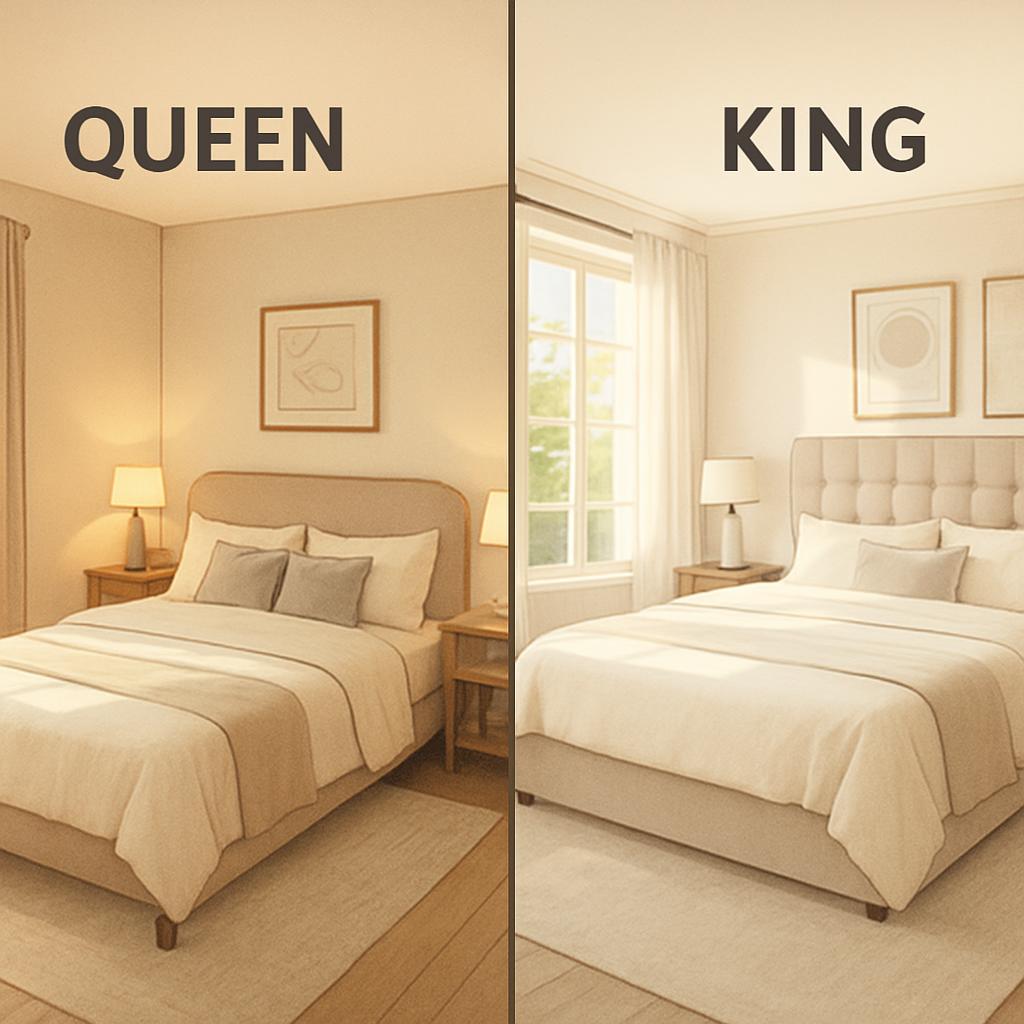
Prioritizing Lifestyle Needs for Your Bed Frame Choice
When you're standing in a showroom or scrolling through options online, the queen vs king bed frame decision can feel overwhelming. But here's the thing—this choice isn't just about measurements and mattress sizes. It's deeply personal and should reflect how you actually live your life. I've seen countless customers walk into our store thinking they know exactly what they want, only to realize their lifestyle needs point them in a completely different direction once we start talking through the details.
Your bed frame choice touches nearly every aspect of your daily routine. Think about it: how you wake up, how you wind down at night, whether you share your space with a partner, pets, or kids who love to pile in for weekend morning cartoons. Maybe you're someone who works from home and occasionally needs to spread out papers or a laptop across the bed. Or perhaps you're a restless sleeper who needs that extra width a king bed frame dimensions can provide to avoid disturbing your partner throughout the night. These real-life scenarios matter far more than any generic size chart.
The queen bed frame dimensions of 60 inches wide by 80 inches long work beautifully for many living situations. If you're a single sleeper who occasionally has a guest stay over, or a couple who doesn't mind sleeping close together, a queen offers that sweet spot between space and practicality. I remember helping a young couple last month who were furnishing their first apartment together. They initially insisted on a king, but when we measured their bedroom and factored in their need for a dresser and workspace, the queen bed frame made so much more sense. They left happy, knowing they wouldn't be climbing over the bed just to reach their closet every morning.
On the flip side, king bed frame dimensions at 76 inches wide by 80 inches long provide substantial sleeping real estate. This extra 16 inches of width can be transformative for couples who value personal space during sleep, people who share their bed with children or pets, or anyone who simply likes to spread out. One of my customers, a tall gentleman who works construction, chose a king-sized mattress because he needed room to stretch his 6'4" frame without feeling cramped. His partner, a light sleeper, appreciated that the extra width meant she barely noticed when he shifted positions at night.
Your sleeping arrangements play a huge role in determining which sturdy bed frame will serve you best. Solo sleepers have the luxury of choosing based purely on personal preference and room size. If you love having space to roll around or frequently work on projects in bed, a king might feel like a private oasis even if you're the only one using it. But if you're working with a bed frame for small rooms, a queen provides plenty of comfort without dominating every square foot of your space.
For couples, the conversation gets more nuanced. How much contact do you prefer while sleeping? Some couples love the closeness a queen bed frame naturally encourages, while others need that buffer zone a king provides. Do either of you wake up frequently during the night? Are your sleep schedules different? A heavy-duty bed frame in king size can minimize motion transfer, which becomes increasingly important when you're dealing with different bedtimes or one partner who tosses and turns. These aren't trivial concerns—they directly impact your sleep quality and, by extension, your relationship quality.
Lifestyle factors extend beyond just sleeping, too. If you're someone who loves breakfast in bed, reading late into the night, or watching movies propped up against a mountain of pillows, you'll want to consider how much functional space you need. Parents know this struggle well: when you have young children, your bed often becomes command central for bedtime stories, morning snuggles, and sick-day care. That king bed frame suddenly becomes less about luxury and more about practical family space.
Your current life stage and future plans should factor into this decision as well. Are you planning to start a family soon? Moving to a bigger home in a few years? Or maybe you're downsizing after the kids have moved out? A sturdy bed frame is an investment that should last you a decade or more, so thinking ahead makes financial sense. That said, don't sacrifice your comfort today for a hypothetical tomorrow. If a queen bed frame suits your needs now and you can upgrade later if circumstances change, that's perfectly fine.
Physical considerations matter tremendously, too. Anyone dealing with mobility issues, recovering from surgery, or managing chronic pain conditions needs to think carefully about bed height, ease of entry and exit, and overall accessibility. A heavy-duty bed frame in the right size, paired with a quality mattress, can make a significant difference in your daily comfort level. The extra width of a king might make getting in and out of bed easier if you're dealing with movement restrictions, since you have more space to maneuver.
Considering Your Sleeping Habits and Needs
Let's get practical about how your actual sleeping habits should guide your queen vs king bed frame decision. I always tell customers that the best bed frame is the one that disappears from your awareness—meaning it supports you so well that you never think about it. To figure out which size accomplishes that goal, you need to honestly assess how you sleep and what disrupts your rest.
Start by thinking about your sleeping position preferences. Back sleepers typically need less horizontal space than side sleepers or stomach sleepers who might sprawl out with limbs extended. If you're a side sleeper who curls up in a relatively compact position, queen bed frame dimensions might provide all the room you need. But if you're someone who sleeps like a starfish with arms and legs stretched wide, those extra inches in a king bed frame dimensions setup will prevent you from feeling cramped or waking up with limbs hanging off the edge.
Temperature regulation during sleep is another factor that doesn't get enough attention in the bed frame size guide conversation. If you're a hot sleeper, having more space between you and your partner can improve airflow and reduce the swampy, overheated feeling that disrupts sleep. King bed frames allow for that crucial separation, and when paired with breathable bedding materials, they can significantly improve sleep comfort for people who run warm at night.
| Sleep Consideration | Queen Bed Frame | King Bed Frame |
|---|---|---|
| Solo Sleepers | Plenty of space for one person with room to move | Luxurious space, ideal for those who spread out or share with pets |
| Couples (Close Sleepers) | Cozy space that encourages closeness without feeling cramped | Space for closeness plus option to spread out when desired |
| Couples (Space Needers) | Can feel tight for couples who need personal space | Individual sleeping zones reduce disturbances and improve rest |
| Hot Sleepers | Less airflow between sleepers, may retain more heat | Better air circulation and separation for temperature control |
| Restless Sleepers | Movement more likely to disturb partners | Reduced motion transfer keeps partners sleeping peacefully |
| Co-Sleeping with Children/Pets | Tight fit with multiple bed occupants | Comfortable space for family members or pets to join |
The quality of your sleep matters more than the quantity of space you have to sleep in, but the two are often connected. If you're consistently waking up tired, experiencing neck or back pain, or finding yourself irritable during the day, your bed situation might be part of the problem. Before assuming you need a new mattress, consider whether your bed frame size is forcing you into uncomfortable sleeping positions or causing you to fight for space throughout the night.
For couples with different sleep schedules, king bed frame dimensions can be a relationship saver. When one person comes to bed hours after the other, the extra space means less disruption. The person already asleep won't feel the mattress shift as dramatically when their partner climbs in. Similarly, the early riser can slip out of bed without waking their partner. These small considerations add up over time, affecting both sleep quality and relationship harmony.
Pet owners face unique sleeping challenges that often tip the scales toward a king bed frame. If you have a large dog who's claimed a permanent spot at the foot of your bed, or multiple cats who arrange themselves strategically across every available surface, you'll appreciate the extra real estate. Even small pets can be surprisingly space-consuming when they position themselves right between two human sleepers. A sturdy bed frame in king size accommodates everyone comfortably without anyone getting pushed to the edge.
Pregnancy and postpartum periods bring specific sleeping needs that many people don't anticipate when choosing a bed frame. Pregnant individuals often need extra pillows for support and more room to maneuver as their body changes. After baby arrives, many parents bring infants into bed for nighttime feeding or comfort. King bed frame dimensions provide the space needed for these temporary but important phases without anyone feeling crowded or unsafe.
Think about your recovery time after a bad night's sleep, too. If one poor night leaves you dragging for days, investing in a heavy-duty bed frame that supports better sleep quality becomes even more critical. Some people bounce back quickly from occasional sleep disruptions, while others are sensitive to even minor sleep disturbances. If you fall into that latter category, choosing a bed frame size that minimizes potential disruptions is worth prioritizing, even if it means adjusting other aspects of your bedroom layout ideas.
Your sleeping habits might also include what you do before falling asleep and after waking up. Do you need space to practice meditation or gentle stretching in bed? Do you journal or read for extended periods before turning off the light? These pre-sleep rituals are important for sleep hygiene, and having adequate space to engage in them comfortably can improve your overall sleep experience. A queen provides enough room for these activities, but a king offers even more flexibility.
Importance of Style and Aesthetics
Here's something I've learned after years of helping people choose bed frames: you're going to look at this piece of furniture every single day. It will be the focal point of your bedroom, the first thing you see when you wake up and the last thing you see before turning off the lights. That means the style and aesthetic appeal of your bed frame choice matters just as much as its practical function. A sturdy bed frame that perfectly fits your space but clashes with your design vision will never feel quite right.
The queen vs king bed frame decision significantly impacts your bedroom's visual balance and overall design flow. A king bed frame inherently makes a bold statement. It commands attention and announces itself as the room's centerpiece. This works beautifully in spacious master bedrooms with high ceilings and generous square footage. The substantial presence of a king bed can actually make a large room feel more proportionate and grounded rather than empty or cavernous. If you're working with bedroom layout ideas for a bigger space, a king bed frame helps anchor the design.
Conversely, a queen bed frame offers versatility in styling that works across various room sizes and design approaches. Its more modest footprint allows for balanced furniture arrangements without overwhelming the space. You can flank a queen with matching nightstands, add a bench at the foot, include a reading chair in the corner, or create a small workspace—all without the room feeling cluttered. This flexibility makes queen bed frame dimensions particularly appealing for people who value having multiple functional zones within their bedroom.
The style of the bed frame itself—whether it's a minimalist platform, a traditional frame with headboard and footboard, an upholstered design, or a rustic wooden frame—will dramatically affect your room's atmosphere. Heavy-duty bed frame options come in all these styles, so you don't have to sacrifice aesthetics for stability. The material choices—metal, wood, upholstered fabric—each bring different visual weights and textures to your space. A dark wood king bed frame creates a dramatically different mood than a light upholstered queen, even in the same room.
Color coordination matters more than people sometimes realize when choosing between bed frame sizes. A king bed requires more bedding, which means more surface area of color and pattern. If you love bold, vibrant bedding designs, a king bed lets you make a serious style statement. But if you prefer your bedding to blend quietly into a neutral palette, the larger expanse of a king bed might feel like too much visual real estate to keep subdued. Queen bed frames offer a happy medium where you can experiment with bolder bedding choices without overwhelming the space.
Headboard options also factor into the aesthetic equation differently depending on bed frame size. A dramatic upholstered headboard or an ornate carved wooden headboard will have a bigger visual impact on a king bed than a queen. If you're someone who loves statement headboards, a king bed frame gives you the canvas to really showcase that design element. On the flip hand, if you prefer a low-profile or no-headboard look, a queen bed frame dimensions setup maintains cleaner lines and a more streamlined appearance.
The height of your bed frame affects not just aesthetics but also the feeling of your space. Platform-style sturdy bed frames sit lower to the ground, creating a modern, minimalist vibe and making ceilings appear higher. Traditional bed frames with box springs sit taller, offering a more classic look and easier accessibility for some people. When you're choosing between queen and king, consider how the height of your preferred frame style will interact with the width. A low, wide king platform bed creates a completely different visual effect than a tall king bed with a traditional frame.
Proportion is everything in interior design, and your bed frame choice establishes the proportional relationships for everything else in the room. If you go with a king bed frame in a moderately sized room, you might need to scale down other furniture pieces to maintain visual harmony. Smaller nightstands, a lower dresser, or forgoing a large armoire might be necessary. With a queen bed frame, you have more freedom to include larger accent furniture without the room feeling overcrowded. These trade-offs are worth considering if you have furniture pieces you absolutely want to keep in the room.
Lighting design interacts with your bed frame choice in ways that aren't immediately obvious. A king bed frame positioned against a wall leaves less room for flanking table lamps or wall sconces unless you have significant wall length to work with. The bed's size might necessitate overhead lighting or creative solutions like swing-arm wall lamps. Queen bed frame dimensions typically allow for more flexibility in lighting placement, letting you create the layered lighting design that makes bedrooms feel cozy and well-appointed.
Window placement and natural light flow should influence your aesthetic decisions around bed frame size, too. A king bed frame positioned under or near a window can block significant natural light and create challenges with window treatments. Queen beds offer more placement flexibility, allowing you to position the bed to maximize natural light while still maintaining good bedroom layout ideas. Natural light affects how colors appear throughout the day, which means your bed frame's finish and your bedding choices will look different depending on light exposure.
Personal style evolution is another consideration that doesn't get discussed enough. Your aesthetic preferences will likely shift over time, and a heavy-duty bed frame should adapt to those changes. Both queen and king bed frames can work with evolving styles if you choose a relatively timeless design. But a king bed's larger presence means style changes require more investment in new bedding, more wall space to redecorate around it, and potentially more substantial furniture replacements to maintain proportion. Queens offer slightly more flexibility to pivot your style without complete bedroom overhauls.
Texture and layering opportunities differ between bed sizes in ways that matter to design enthusiasts. A king bed provides more space to play with decorative pillows, throws, and layered bedding arrangements. If you love the hotel-bed look with multiple pillow arrangements and carefully draped throws, a king gives you room to execute that vision. Queen beds can certainly be styled beautifully, but you'll work with a more edited, streamlined approach to avoid overwhelming the bed with too many accessories.
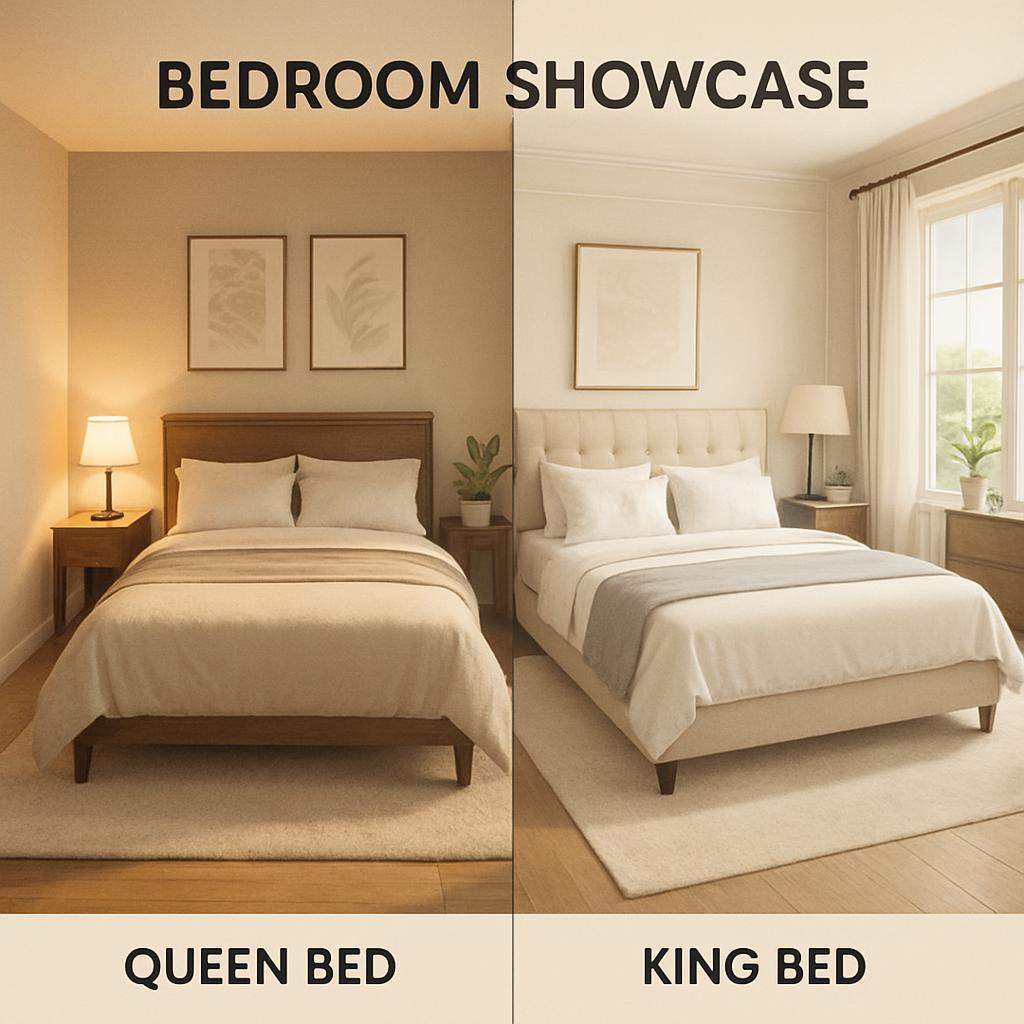
Bed Frames and Support: What to Look For
When you're deciding between a queen vs king bed frame, the foundation and support system matters just as much as the mattress you place on top. A sturdy bed frame is the backbone of your sleep setup, and choosing the right one can make the difference between years of restful sleep and a squeaky, sagging mess that leaves you tossing and turning.
The first thing I always tell people to consider is weight capacity. Both queen and king bed frame dimensions need adequate support, but king beds naturally require heavier-duty construction due to their larger size. A quality heavy-duty bed frame should support at least 500 to 800 pounds when you factor in the mattress weight, two sleepers, and any movement during the night. If you're looking at king sized mattresses, you'll want to ensure your frame has center support beams or legs to prevent sagging in the middle over time.
Material matters tremendously when you're shopping for sturdy bed frames. Metal frames with thick steel construction offer excellent durability and can handle heavier mattresses without bending or warping. Wood frames, particularly solid hardwood options, provide a classic look and impressive strength, though they typically cost more upfront. Platform bed frames with slat systems are another popular choice, offering built-in support that eliminates the need for a box spring, which can save you money and space in smaller bedrooms.
Another key consideration is the number of support legs and cross beams. For queen bed frame dimensions, look for at least one center support leg, but ideally two or three for maximum stability. King bed frame dimensions require even more support—I recommend at least two center support legs, plus reinforced side rails. Without proper support in the center, even the best mattress will start to sink and wear unevenly, which can drastically shorten its lifespan.
Don't forget about the height and clearance of your bed frame. If you need under-bed storage in a smaller room, look for frames that sit at least 12 to 14 inches off the ground. This gives you valuable space for bins, seasonal clothing, or extra bedding without making your bed feel too high. On the other hand, if you prefer a low-profile modern look, platform frames that sit closer to the ground can create a sleek aesthetic that works well in contemporary bedroom layout ideas.
One often-overlooked detail is how the bed frame connects and secures. Quality sturdy bed frames use metal brackets and bolts rather than just screws or plastic connectors. These heavy-duty connections stay tight over time and won't loosen with normal use, which means less squeaking and shifting. Some modern frames even offer tool-free assembly with locking mechanisms, making setup easier while maintaining structural integrity.
Exploring Heavy-Duty Bed Frame Options
Heavy-duty bed frames are built to last, and they're worth every penny when you consider how much time you spend in bed. These frames go beyond basic support to offer reinforced construction that can handle significant weight and years of daily use without showing signs of wear. Whether you're choosing between a queen vs king bed frame, investing in heavy-duty construction protects both your mattress investment and your quality of sleep.
The most reliable heavy-duty bed frames use commercial-grade steel with a powder-coated finish to prevent rust and corrosion. These frames typically feature thicker gauge metal—usually 14-gauge or lower—which provides substantially more strength than the thinner materials used in budget frames. The difference becomes especially noticeable over time, as cheaper frames tend to develop squeaks, wobbles, or even collapse under stress, while heavy-duty options remain rock-solid year after year.
For king bed frame dimensions specifically, I always recommend looking for frames with at least three cross-support bars running from head to foot. These bars prevent the middle of the mattress from sagging and distribute weight evenly across the entire surface. Many heavy-duty frames also include additional support legs that fold down in the center, creating multiple points of contact with the floor that eliminate any bounce or movement when you get in and out of bed.
"We upgraded to a heavy-duty king frame last year, and the difference is night and day. No more squeaking when my husband gets up early for work, and our mattress feels like it's being properly supported for the first time. I wish we'd made this investment sooner!" – Customer review from verified purchase
Platform-style heavy-duty bed frames have become increasingly popular for good reason. These frames incorporate a solid surface or closely-spaced slat system that provides comprehensive support without requiring a box spring. This design not only saves money but also creates a firmer, more responsive sleep surface that many people prefer. The slats in quality platform frames are typically made from solid wood or reinforced engineered wood, spaced no more than three inches apart to properly support memory foam and hybrid mattresses.
Another feature to look for in heavy-duty options is adjustable width capabilities. Some frames can accommodate both queen and king bed frame dimensions with simple adjustments, which offers flexibility if you move or upgrade your mattress size in the future. These versatile frames typically use a rail system that extends or contracts while maintaining the same level of sturdy support across different sizes.
The bed frame size guide for heavy-duty options also needs to account for assembly and disassembly. The best frames balance durability with practical portability, using bolt-together construction that's secure enough for daily use but can be taken apart if you need to move. Look for frames with clearly labeled parts and included tools—quality manufacturers understand that even the sturdiest frame needs to be user-friendly.
Weight distribution technology has advanced significantly in recent years. Modern heavy-duty bed frames often incorporate engineered designs that channel weight to the strongest points of the frame, reducing stress on joints and connections. This smart engineering means the frame can support more weight with less material, creating a lighter overall frame that's easier to move and assemble without sacrificing strength or stability.
Compatibility with Bedding and Accessories
Once you've selected your sturdy bed frame, making sure it works seamlessly with your mattress, bedding, and bedroom accessories becomes the next priority. The relationship between your frame and these other elements affects everything from comfort to aesthetics, so compatibility should never be an afterthought when comparing queen vs king bed frame options.
Different mattress types have different support requirements, and your bed frame needs to accommodate these needs. Memory foam mattresses, like those from Tempur-Pedic, work best with solid platform bases or frames with slats spaced no more than three inches apart. The closer slat spacing prevents the foam from bulging between gaps, which can create uncomfortable pressure points and void warranties. Innerspring and hybrid mattresses from Sealy and Stearns & Foster offer more flexibility—these can work well with traditional box springs on frames or platform designs with wider slat spacing.
Mattress height is another compatibility factor that gets overlooked. When you add your frame height to your mattress thickness, you need to end up with a bed that's comfortable to get in and out of. Most people find that a total height of 24 to 26 inches from floor to mattress top feels just right. If you choose a low-profile frame for a bed frame for small rooms, you might want a thicker mattress to compensate. Conversely, if you select a frame with significant under-bed storage clearance, a lower-profile mattress keeps the overall height reasonable.
Headboards and footboards add style and function to your bedroom, but they need to match your frame specifications. Many heavy-duty bed frames include built-in mounting brackets for headboards, which makes installation straightforward. However, you'll want to verify that the bracket height and spacing match your chosen headboard before purchasing. Some frames use standard bed bolt spacing, while others require specific attachments, so checking these measurements saves frustration during assembly.
Bedding dimensions are naturally linked to your frame choice, but it's worth noting that king bed frame dimensions require substantially more bedding than queen sizes. King-sized sheets, comforters, and duvet covers cost more and take up more storage space when not in use. If you're working within bedroom layout ideas for a smaller space, the extra bulk of king bedding might tip the scales toward choosing a queen frame instead, especially if storage is already tight.
Adjustable bases have become increasingly popular, offering customizable positioning for reading, watching TV, or relieving pressure points while you sleep. If you're considering an adjustable base now or in the future, make sure your bed frame can accommodate one. Some sturdy bed frames are specifically designed to hold adjustable bases, with the right interior dimensions and support structure. Others work with standalone adjustable frames that don't require a traditional bed frame at all, sitting directly on the floor or on low-profile feet.
Mattress protectors and toppers are must-have accessories that extend the life of your mattress and improve comfort. These additions can add an inch or two to your mattress height, which might affect how your fitted sheets fit or how easy it is to climb into bed. When following a bed frame size guide, factor in any toppers or protectors you plan to use so your final setup feels balanced and proportioned correctly for your bedroom.
Under-bed storage solutions need to be compatible with your frame height and design. If you've chosen a platform frame with built-in drawers, you're all set. But if you're using a simple metal or wood frame, you'll need to measure the clearance carefully before buying storage bins or rolling organizers. The space between the floor and the bottom of your frame determines what storage options will fit, and queen vs king bed frame choices affect the available floor space under the bed as well.
Testing Out Your Choice: Experience Before You Buy
There's no substitute for experiencing a bed frame in person before making your final decision. While online shopping offers convenience and often better prices, taking the time to test out different options in a showroom can save you from costly mistakes and buyer's remorse. When you're choosing between queen vs king bed frame options, hands-on evaluation reveals details that photos and specifications simply can't capture.
Walking into a mattress showroom and actually lying down on beds with different frames gives you an immediate sense of stability and comfort. You can feel whether the frame flexes or stays rigid when you shift positions, hear whether it squeaks or stays silent, and get a real-world perspective on the height and scale of each option. This tactile experience is especially valuable when evaluating sturdy bed frames, since durability and build quality become obvious when you can touch and test the construction.
Visiting Sleepology Mattress Shop lets you see how different bed frames pair with various mattress types from our top brands. You can try a Sealy hybrid foam mattress on both queen and king frames to compare how each size feels in terms of space and support. Our sleep experts can show you the difference between standard frames and heavy-duty bed frame options, explaining how construction details affect long-term performance and helping you understand what features matter most for your specific needs.
Another advantage of in-store shopping is getting accurate measurements and spatial awareness. Showroom displays give you a realistic sense of how much floor space each bed frame size guide measurement actually translates to in a furnished room. You can visualize how a king frame might overwhelm a smaller bedroom or how a queen frame might leave welcome space for nightstands and movement. Many stores have room vignettes set up that demonstrate bedroom layout ideas, helping you picture how different frame sizes would work in your home.
Testing also extends to practical considerations like assembly and adjustability. In a showroom, you can examine connection points, ask questions about setup difficulty, and see how frames come apart if you need to move them. Sales associates can demonstrate features like adjustable width settings or integrated storage, and you can assess whether these functions work smoothly or feel flimsy and complicated.
The mattress and frame combination matters more than most people realize. A frame that works perfectly with one mattress type might not be ideal for another, and testing different pairings in person reveals these compatibility issues. You might discover that you prefer the feel of a firm mattress on a platform frame versus a box spring, or that a hybrid mattress feels more supportive on a frame with closely-spaced slats. These preferences are highly individual, and there's no way to know yours without trying multiple combinations.
Importance of Trying Before Buying
Making a significant investment in bedroom furniture without first-hand experience is risky, especially when you consider how personal sleep preferences can be. What works beautifully for one person might feel completely wrong for another, and the only way to know where you fall on that spectrum is to physically interact with your options before committing. The importance of trying before buying becomes crystal clear when you consider these key factors:
- Physical compatibility with your body and sleeping style. Your height, weight, and preferred sleep positions all affect how a bed frame and mattress combination feels. Taller individuals might find standard queen bed frame dimensions feel cramped, while petite sleepers might feel lost in king bed frame dimensions. Testing different sizes helps you identify what truly feels comfortable rather than what sounds good on paper.
- Noise and movement detection that only emerges during use. A bed frame might look solid in photos, but only by getting on and off the frame, shifting positions, and applying realistic pressure can you determine whether it squeaks, creaks, or transmits motion. This is especially important if you share your bed with a partner or pet, since you need a frame that stays quiet when anyone moves.
- Height and accessibility considerations for your daily routine. The right bed height makes getting in and out of bed effortless, while the wrong height can strain your knees, back, or hips over time. Sitting on the edge of different frames in a showroom lets you assess whether you can comfortably place your feet flat on the floor, which is the ideal standard for most people.
- Visual scale and proportion in relation to room size. Photos can be deceiving when it comes to how furniture fits in a space. Seeing a queen vs king bed frame in a showroom setting that approximates your bedroom dimensions gives you confidence that your choice will look proportional rather than overwhelming or underwhelming once it's in your home.
- Build quality and material assessment through touch and inspection. Running your hands along frame rails, examining weld points on metal frames, or checking the finish quality on wood frames reveals craftsmanship details that determine longevity. You can spot cheap materials, rough edges, or questionable construction techniques that might not be visible in product listings.
The trying-before-buying process also gives you a chance to ask detailed questions about warranties, return policies, and service after the sale. When you're working with knowledgeable staff at a local retailer, you can get honest feedback about which frames have proven most reliable over time and which ones tend to generate complaints or returns. This insider perspective is invaluable and simply isn't available when you're shopping online alone.
Testing frames with actual mattresses from brands like Sealy, Stearns & Foster, and Tempur-Pedic ensures you're evaluating realistic combinations rather than making assumptions about compatibility. The sales team can show you which heavy-duty bed frame options work best with different mattress constructions, explain why certain pairings enhance comfort or support, and help you avoid mismatched combinations that could compromise your sleep quality or void warranty coverage.
In-person shopping also helps you understand the full ecosystem of accessories and additions you might need. When you see and touch mattress protectors, toppers, or specialty bedding in the store, you gain practical knowledge about how these items affect the overall sleep experience. Staff can demonstrate proper fitting, explain care requirements, and recommend products that complement your frame and mattress choice rather than detract from it.
Budget Considerations for Your Bed Frame
Setting a realistic budget for your bed frame purchase requires balancing upfront costs against long-term value, and understanding that the cheapest option usually costs more in the long run. When comparing queen vs king bed frame prices, you'll notice that king frames typically cost 20 to 40 percent more than queen frames due to additional materials and more robust construction requirements. This price difference is just the starting point for your budget planning.
Quality sturdy bed frames represent an investment in years of reliable sleep support. While you can find basic metal frames for under $100, these budget options rarely last more than a couple of years before developing problems like squeaking, warping, or broken welds. A mid-range bed frame in the $300 to $600 range typically offers substantially better construction with features like reinforced joints, quality materials, and thoughtful design details that prevent common failure points.
Heavy-duty bed frame options command premium prices, usually starting around $400 for queen sizes and $500 or more for king sizes. However, these frames often come with lifetime warranties or extended guarantees that protect your investment. When you calculate the cost per year of ownership, a durable frame that lasts 15 or 20 years costs far less annually than replacing cheap frames every few years. The math consistently favors investing more upfront for quality that endures.
Your frame budget should also account for delivery and assembly costs if you're not comfortable setting up the frame yourself. Some retailers include free delivery and setup with bed frame purchases, while others charge fees that can add $100 to $200 to your total cost. If you're buying online, factor in potential return shipping charges if the frame doesn't meet your expectations, since returning large furniture items can be expensive or even impossible with some sellers.
Don't forget to budget for complementary items that maximize your bed frame investment. A quality mattress protector costs $50 to $150 depending on size and features, but protects your mattress from spills, stains, and wear that could void warranties. Under-bed storage solutions, headboards, or bed skirts add to the overall cost but enhance functionality and appearance. Planning for these accessories from the start helps you avoid budget surprises and creates a complete bedroom setup rather than a piecemeal approach.
The bed frame size guide you follow should include consideration of bedroom proportions and whether you'll need additional furniture adjustments. Upgrading from a queen to king bed frame dimensions might mean your existing nightstands look too small or your room layout needs reconfiguration. If you need to buy new nightstands, lamps, or other bedroom furniture to maintain visual balance, include these costs in your overall budget to avoid financial strain.
Seasonal sales and promotional periods offer opportunities to maximize your budget. Many mattress retailers, including Sleepology Mattress Shop, run sales around major holidays where you can save 20 to 40 percent on bed frames and mattresses. If your current setup is still functional and you're not in urgent need of replacement, timing your purchase to coincide with these sales events can significantly extend your budget's buying power.
Financing options make higher-quality sturdy bed frames more accessible by spreading costs over several months or years. Many retailers offer zero-percent or low-interest financing for qualified buyers, which lets you invest in the heavy-duty bed frame you really want rather than settling for a cheaper option that won't serve you as well. Just be sure to understand the terms completely and have a plan to pay off the balance within any promotional period to avoid interest charges.
Consider the hidden costs of poor-quality frames that aren't immediately obvious. A frame that sags or allows your mattress to shift out of place can reduce your mattress's lifespan by years, forcing you to replace it prematurely. Squeaky, unstable frames disturb your sleep and potentially your partner's sleep, leading to fatigue, reduced productivity, and even health issues over time. When you view your bed frame as a fundamental component of your sleep health rather than just furniture, the value of investing in quality becomes undeniable.
Conclusion: Making the Best Choice for Restful Sleep
Deciding between a queen vs king bed frame is one of those choices that truly impacts your daily life. After all, we spend about a third of our lives sleeping, so getting this decision right matters more than you might think. Throughout this guide, I've walked you through the essential considerations—from queen bed frame dimensions and king bed frame dimensions to bedroom layout ideas that help you visualize how each size will work in your space.
The choice ultimately comes down to three main factors: your room size, your sleeping habits, and what you value most in your sleep environment. If you're working with a smaller bedroom, a queen bed frame offers that sweet spot between comfort and practicality. You'll still have enough sleeping space for one or two people without overwhelming your room. Plus, you'll have more flexibility for other furniture pieces like nightstands, dressers, or even a cozy reading chair. Queen beds work beautifully in apartments, guest rooms, or any space where you want to maintain an open, breathable feel.
On the other hand, if you've got the square footage and you prioritize maximum sleeping space, a king bed frame transforms your bedroom into a true sanctuary. There's something luxurious about stretching out without bumping into your partner or feeling cramped. King bed frame dimensions provide that extra width that makes all the difference, especially if you share your bed with a partner, pets, or kids who occasionally climb in for weekend morning snuggles. When you're planning your bedroom layout for a king bed, just remember to account for at least two to three feet of walking space on each side—your future self will thank you when you're not stubbing your toes in the dark.
No matter which size you choose, investing in sturdy bed frames is non-negotiable. A heavy-duty bed frame provides the foundation your mattress needs to perform at its best, whether you're sleeping on a Tempur-Pedic, Sealy, or Stearns & Foster mattress. Quality construction means less squeaking, better mattress support, and a bed that will last you for many years to come. When you're shopping for bed frames for small rooms or larger spaces, look for solid materials, reliable center support, and a warranty that backs up the manufacturer's confidence in their product.
I always recommend using our bed frame size guide as a starting point, but then taking the time to measure your actual bedroom. Sketch out your bedroom layout ideas on paper or use one of the many free room planning apps available. Visualizing how your new bed will fit alongside your existing furniture helps prevent buyer's remorse and ensures you'll love your choice for years to come.
Remember, there's no universally "right" answer to the queen vs king bed frame debate—only what's right for you. Maybe you're a solo sleeper who loves having extra room to spread out, making a king the perfect choice despite living alone. Or perhaps you're a couple who sleeps close together and values having more floor space for yoga or morning stretches, making a queen the ideal fit. Your lifestyle, your preferences, and your space should guide this decision.
The good news is that whether you choose queen bed frame dimensions or king bed frame dimensions, you're investing in better sleep. And better sleep means better mornings, more energy throughout your day, and an overall improvement in your quality of life. Take your time with this decision, measure twice, and choose the sturdy bed frame that will support not just your mattress, but your well-being for years to come. Your perfect night's sleep is waiting.
Frequently Asked Questions (FAQs)
What are the exact queen bed frame dimensions?
A standard queen bed frame measures 60 inches wide by 80 inches long. When shopping for a queen bed frame, you'll want to ensure your bedroom can accommodate not just the bed itself, but also space to walk around it comfortably. I recommend having at least 24 inches of clearance on the sides and foot of the bed for easy movement and a balanced room layout.
What are the standard king bed frame dimensions?
King bed frame dimensions are 76 inches wide by 80 inches long, giving you an extra 16 inches of width compared to a queen. This additional space makes a significant difference for couples or anyone who enjoys having plenty of room to move during sleep. Keep in mind that you'll need a bedroom that's at least 12 feet by 12 feet to comfortably fit a king bed frame while maintaining good traffic flow.
How do I know if my room is big enough for a king bed frame?
To determine if your room can accommodate a king bed frame, measure your bedroom and subtract the king bed frame dimensions (76 inches by 80 inches) from your total space. You should have at least 30 inches of walking space on each side and at the foot of the bed. A room smaller than 12 feet by 12 feet might feel cramped with a king bed, making a queen a better choice for maintaining comfortable bedroom layout ideas.
What makes a bed frame heavy-duty or sturdy?
Sturdy bed frames are built with quality materials like solid wood, reinforced metal, or thick steel construction. A heavy-duty bed frame typically features center support legs or bars, especially important for queen and king sizes. Look for frames with a weight capacity of at least 500 pounds for a queen and 600-800 pounds for a king. These sturdy bed frames prevent sagging and ensure your mattress maintains its shape and support over time.
Which bed frame size is better for couples?
The queen vs king bed frame debate for couples depends on your sleeping styles and bedroom size. A queen bed frame provides each person with 30 inches of personal space, which works well for couples who sleep close together or have smaller bedrooms. A king bed frame gives each person 38 inches, ideal if one partner is a restless sleeper or you both enjoy having extra room. Consider testing both sizes in-store before making your final decision.
Are there bed frames specifically designed for small rooms?
Yes, bed frames for small rooms often feature space-saving designs like platform beds with built-in storage drawers or frames with a lower profile. Queen bed frame dimensions work better in compact spaces compared to king sizes. Look for frames without bulky footboards or headboards, and consider wall-mounted options that create the illusion of more floor space while still providing the sturdy support your mattress needs.
How much space should I leave around my bed frame?
When planning your bedroom layout ideas, leave at least 24-30 inches of space on each side of your bed frame for comfortable movement. At the foot of the bed, maintain 36-48 inches if possible, especially if you have a dresser or TV stand facing the bed. These clearances ensure you can make your bed easily, access nightstands, and move around the room without feeling cramped, whether you choose queen bed frame dimensions or king bed frame dimensions.
Will a king bed frame work with my Tempur-Pedic mattress?
Absolutely! A heavy-duty bed frame with proper center support works beautifully with Tempur-Pedic, Sealy, and Stearns & Foster mattresses. Make sure your chosen frame provides adequate support for the weight of memory foam or hybrid mattresses, which tend to be heavier than traditional innerspring options. Look for sturdy bed frames with closely spaced slats (no more than 3 inches apart) or a solid platform to maintain your mattress warranty and optimal performance.
Can I use a bed frame size guide to help me decide?
A bed frame size guide is a helpful starting point when comparing queen vs king bed frame options. These guides typically show the exact measurements, recommended room sizes, and how many sleepers each size accommodates comfortably. However, I always suggest combining a bed frame size guide with your own room measurements and personal sleep preferences. What works on paper might feel different in your actual space, so visualize or sketch out the layout before purchasing.
What's the difference in price between queen and king bed frames?
King bed frames typically cost 20-40% more than queen frames due to the additional materials required for the larger size. However, this price difference extends beyond just the frame—you'll also pay more for king-size mattresses, sheets, comforters, and other bedding. When budgeting for your purchase, factor in these ongoing costs. That said, if you have the space and budget, the extra comfort of a king bed frame often justifies the additional investment.
Do I need a box spring with my queen or king bed frame?
Whether you need a box spring depends on your bed frame style and mattress type. Modern platform bed frames with slats don't require a box spring, making them a popular choice for both queen and king sizes. However, traditional bed frames with just a perimeter rail do need a box spring or foundation. If you're using a Sealy Posturepedic, Tempur-Pedic, or Stearns & Foster mattress, check the manufacturer's recommendations to maintain your warranty while ensuring you have the proper support.
How do bedroom layout ideas change between queen and king beds?
Bedroom layout ideas shift significantly based on bed size. With queen bed frame dimensions, you'll have more flexibility for additional furniture like reading chairs, larger dressers, or a vanity. King bed frame dimensions command more attention and work best as the focal point with minimal additional furniture. For king beds, consider floating the bed away from the wall or centering it between windows. Queen beds offer more options for corner placement or angled positioning in larger rooms.
What weight capacity should I look for in sturdy bed frames?
Sturdy bed frames should support at least 500 pounds for a queen and 600-800 pounds for a king to accommodate the combined weight of the mattress, sleepers, and any additional pressure from sitting or movement. Heavy-duty bed frames often exceed these minimums, with some supporting over 1,000 pounds. This extra capacity means your frame will last longer without developing squeaks or structural issues, protecting your investment in quality mattresses from brands like Sealy, Tempur-Pedic, and Stearns & Foster.
Should I buy a queen or king bed frame if I sleep alone?
Solo sleepers can enjoy either size, depending on personal preferences and room dimensions. A queen bed frame offers plenty of space to stretch out while leaving room for other bedroom furniture. However, if you're a restless sleeper, enjoy having pets on the bed, or simply love the feeling of spaciousness, king bed frame dimensions might be worth the extra cost and space. Consider your sleep habits, room size, and whether you might share the bed with a future partner when making this decision.
How do I move a king bed frame into my room?
Moving a king bed frame requires some planning due to its size. Most king frames come in pieces that you assemble in the bedroom, making them easier to transport than you might think. Measure your doorways, hallways, and stairways beforehand to ensure the frame components will fit through. Many sturdy bed frames and heavy-duty bed frame options are designed for easy assembly with basic tools. If you're concerned about setup, many retailers offer delivery and assembly services that take the stress out of the process.