

Is Nectar A Good Mattress? An Honest, Sleepologist-Level Guide
If you are Googling “is Nectar a good mattress,” there is a good chance you are tired of waking up sore, tired of endless ads, and tired of wondering if a budget‑friendly foam bed can actually support your body night after night. You might like the idea of that slow, contouring memory foam feel, but you do not want to sink into a hot marshmallow or realize six months later that your back is worse, not better.
It can feel like everyone has an opinion about Nectar. Some friends swear by it, others say it sleeps warm, and the online reviews are a mix of glowing and frustrated. Meanwhile, your own body, sleep style, and pain points are completely unique. You do not need hype. You need clarity on whether Nectar’s feel, firmness, and build line up with how you actually sleep.
Here, we are going to unpack Nectar the way I would with a client in a Sleepology consultation. We will look at how it is built, who it suits, who it does not, and what independent testing and medical organizations suggest you pay attention to when you choose a mattress. You will see where Nectar is genuinely strong, where it has tradeoffs, and how it stacks up against the kinds of mattresses we recommend every day at Sleepology, including a few specific alternatives that may be a better fit.
By the end, you should feel confident answering the question for yourself: not “is Nectar a good mattress in general,” but “is Nectar a good mattress for me, in , given my body, my sleep habits, and my budget.”
How Nectar Is Built And What That Means For Real‑World Comfort
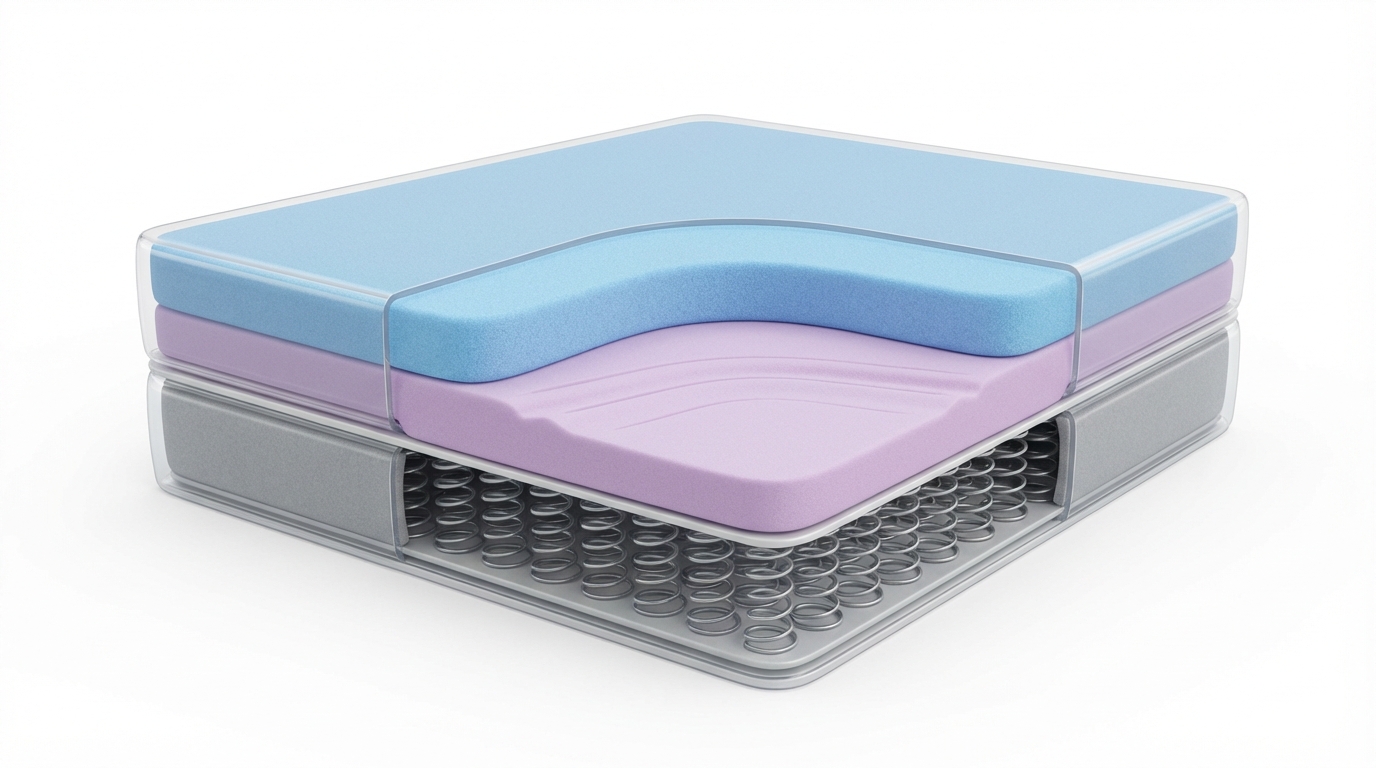
Before deciding if Nectar is “good,” it helps to understand what it is. Nectar’s flagship mattress is an all‑foam bed with a medium firm feel and a relatively simple three layer construction. That simplicity is part of how they keep prices low, but it also shapes how the bed behaves under your body.
Nectar’s basic construction, in plain language
Most current Nectar Classic models use a three layer foam stack around 11.5 to 12 inches tall:
- A thin comfort layer of gel memory foam on top
- A thicker transitional polyfoam layer beneath
- A high density polyfoam support core at the bottom
The cover is a synthetic knit with some cooling fibers woven in. The foams are CertiPUR‑US certified, which means third‑party testing has verified they are low in certain chemical emissions and free of some problem additives. That is not the same as being “natural,” but it is regarded as a baseline safety marker for mainstream foams.
Independent testers who have cut into the mattress and measured each layer have consistently found that Nectar uses about 1 inch of true memory foam, over several inches of more responsive polyfoam. That is important. It means Nectar feels like a hybrid between traditional, slow memory foam and a firmer, slightly bouncy foam bed, rather than the deep, slow‑moving hug you might have experienced on an older Tempur‑Pedic. citeturn1search1turn1search3
In practice, you will notice three things lying on a Nectar:
- You do get some contouring around shoulders and hips.
- You do not sink as deeply as on many “plush” memory foam beds.
- The surface feels more “on top” than “in” the mattress.
For many people this balance is a plus, particularly if you like memory foam but hate feeling stuck.
Firmness and feel: medium firm, with a twist
On the standard 1 to 10 firmness scale, most neutral testers land Nectar around a 6 to 7 out of 10, very close to the industry “medium firm” target. citeturn1search1turn1search2turn1search3
That feel will not be the same in every body:
- Light sleepers under 130 pounds often experience it as a touch firmer, because they do not sink as far into the comfort layer.
- Average weight sleepers between about 130 and 230 pounds tend to feel that classic medium firm balance, especially on their backs.
- Heavier sleepers above 230 pounds compress more foam and may feel the bed softening under the midsection over time, with less support than advertised. citeturn1search2turn1search4
Because there is only that thin inch of memory foam on top, the response is also faster than you might expect. When objective labs drop a weight or measure rebound time, Nectar behaves more like a “blended foam” mattress than a super slow memory foam. That means it takes a little effort to change positions but not nearly as much as the densest visco foams. citeturn1search1turn1search2
“I was worried a budget memory foam bed would feel swampy, but the Nectar was surprisingly easy to move around on. It cushioned my shoulders without that stuck feeling I had on my old mattress that cost twice as much.” – Jenna R., November
From a design standpoint, this is all quite sensible for a value foam mattress. The critical question is how that design lines up with how you personally sleep.
Is Nectar A Good Mattress For Your Sleeping Position?

The most common regret I hear from shoppers is not “I chose the wrong brand,” but “I chose a feel that did not match how I actually sleep.” Position, body weight, and pain patterns will do more to determine whether Nectar is “good” for you than any brand name.
According to the Sleep Foundation, most adults sleep either on their side, back, or stomach, or shift between two of these during the night, and each posture loads different joints and spine segments. citeturn1search4
Nectar for back sleepers
If there is one group Nectar tends to serve well, it is back sleepers in the light to average weight range.
Back sleeping naturally encourages a neutral spine when the mattress has enough support under your lumbar curve and enough cushion under your pelvis. In independent pressure‑mapping tests, average weight back sleepers on Nectar have shown mostly blue and green maps, with low pressure across the shoulders and lower back. Several physical therapists who review mattresses for orthopedic support have noted that Nectar’s combination of contouring and firmness can work well for uncomplicated back pain by preventing the hips from dipping too far. citeturn1search2turn1search3turn1search4
In real terms, if you:
- Sleep mostly on your back
- Weigh somewhere between 120 and 220 pounds
- Want a supportive, not squishy feel
Nectar is a reasonably strong match. It is not the only option, and some people will prefer a coil‑supported hybrid, but the basic ergonomics are sound.
If you like this firmer, buoyant feel and you want a similar level of support with a little more targeted reinforcement under the torso, you might also look at a hybrid bed built for back sleepers, such as the best mattresses for back sleepers we curate at Sleepology. Coil support can add a bit more lift and long‑term durability than foam alone.
Nectar for side sleepers
Side sleeping is gentler on the spine for many people, but only if the mattress allows the shoulders and hips to sink enough so your spine runs in a straight line from neck to tailbone. If the surface is too firm, those curves will be forced up, creating pressure points and a “banana” spine. citeturn1search4
On Nectar, the experience for side sleepers is mixed:
- Lightweight side sleepers often report firm shoulder pressure, because they do not compress through that top inch of memory foam enough to relieve tight spots.
- Average weight side sleepers sometimes do well, especially if they like a slightly firmer feel, but pressure maps from independent labs still show some warmer colors around shoulders and knees. citeturn1search1turn1search2turn1search3
- Heavier side sleepers can fare better in the short term because they sink deeper into the comfort and transition layers, but over time, repeated compression can create softening and uneven support.
If you are a side sleeper who loves a gentle cradle and hates any sharpness at the shoulder, Nectar may feel a bit flat. You can try to compensate with a plush topper, but that can undercut the value pricing. In these cases, I often steer people toward a plusher foam or Euro pillow top hybrid, for example a Sealy Posturepedic Elite Soft Brenham II Euro Pillow Top, which gives a deeper cushion under the shoulder while keeping the core supportive.
“I am mostly a side sleeper with sensitive shoulders, and Nectar by itself was a little too firm for me. Adding a topper helped, but if I could go back I would start with something that had more cushion built in rather than layering.” – Carla M., October
Nectar for stomach sleepers
Stomach sleeping puts the most strain on your lumbar spine. The Mayo Clinic and other medical sources consistently warn that letting your midsection sag can drive chronic lower back pain, especially when you sleep prone. citeturn1search5
For stomach sleepers, the priority is a mattress that is firm enough to keep the pelvis lifted and the spine relatively flat. With Nectar:
- Lightweight stomach sleepers under about 150 pounds often get enough support. The medium firm feel keeps them from dropping too far through the foam.
- Average weight stomach sleepers are on the edge. Some feel adequately supported at first, but over time can start to notice more midsection dip, especially if they carry weight in the abdomen.
- Heavier stomach sleepers generally need something denser and more supportive, often a coil based mattress or an extra firm foam with zoning.
If you primarily sleep on your stomach and wake with lower back tightness, I would look at a firmer, more reinforced design, such as the Sealy Posturepedic Plus Firm Paterson II Euro Pillow Top or other options in our best mattresses for stomach sleepers collection.
Nectar for combination sleepers
Combination sleepers shift positions through the night. For them, both ease of movement and “good enough” support in multiple postures matter.
Because Nectar is not ultra slow‑responding, many combination sleepers find it workable. You may notice a bit of drag when rolling from your stomach to your back, but you are unlikely to feel stuck. That said, if you are constantly flipping from side to side and crave a springier, coil‑assisted bounce, a hybrid will usually feel more effortless.
“I fall asleep on my side, wake up on my back, and I tend to toss around. Nectar was okay, but when we tested a hybrid in the showroom I realized how much easier it can be to move without thinking about it.” – Devon S., November
Temperature, Motion, And Edge Support: The Everyday Performance Questions
Once you know a mattress broadly suits your position, the next tier of “is this good for me” questions is about how it behaves night after night. Here is how Nectar stacks up on the big three: temperature, motion isolation, and edge support.
Does Nectar sleep hot?
Classic memory foam has a reputation for trapping heat, and many shoppers understandably worry about waking up sweaty. Interestingly, Nectar tends to perform better on temperature than you might expect from an all‑foam mattress, but with caveats.
In controlled lab testing, the Nectar surface typically warms less than many competing foam beds when someone lies on it, and it cools back toward baseline a bit faster once they get up. That is likely due to the relatively thin memory foam layer on top and the use of somewhat more breathable polyfoams underneath, plus a cover with some cooling fibers. citeturn1search1turn1search2turn1search3turn1search4
Subjectively, many people describe it as “neutral” rather than “icy.” You are not getting the active cooling you might find in a specialized phase change cover or a ventilated coil system, but you are also not sinking into a three inch heat‑retaining memory foam slab.
For most average sleepers in a reasonably temperate bedroom, that is perfectly adequate. However:
- If you are a very hot sleeper or in a warm, humid climate, a coil‑based hybrid with more airflow is usually a safer bet.
- If you pair Nectar with a thick, non‑breathable protector and heavy synthetic bedding, you may feel warmer than you would with a lighter setup.
If you know temperature is a pain point but you like the feel of foam, look for models that explicitly incorporate cooling technology and have been tested to perform. In our assortment of best foam mattresses, we focus on options with more robust heat management than basic gel infusions alone.
How well does Nectar isolate motion?
Here, Nectar shines. All‑foam mattresses generally excel at absorbing movement, and Nectar, with its fairly thick foam stack and lack of springs, does a very good job keeping partner motion from traveling across the surface.
Independent labs that use sensitive accelerometers to measure motion transfer typically give Nectar above average marks for motion isolation. In simple at home terms, that means if your partner gets up for a 2 am snack, you are less likely to feel the mattress ripple under you. citeturn1search1turn1search2turn1search3
If you are a light sleeper, share a bed with someone on a different schedule, or have kids or pets climbing in and out, this is one of the strongest reasons to consider an all‑foam mattress like Nectar.
What about edge support?
Edge support is where Nectar’s value design shows some compromises. The dense support foam does a decent job when you lie near the edge, particularly on your back. Most testers feel secure enough spreading out across the full width. citeturn1search1turn1search2
However, when you sit directly on the edge to put on socks or push yourself upright, the perimeter compresses more than on many hybrids with reinforced edges. Heavier individuals notice this more. Over time, repeated sitting in the same spot can contribute to more pronounced softening.
If:
- You regularly sit on the edge to get in and out of bed
- You rely on a firm ledge for stability due to mobility issues
- You and your partner both use the full width of a smaller mattress
then I would lean toward a mattress with explicitly reinforced edges, often a coil‑supported design.
Pain, Pressure Relief, And Spine Health On Nectar
A mattress can feel “comfy” in the showroom and still aggravate pain over months or years. To decide if Nectar is good from a wellness point of view, we need to look at pressure relief and long‑term support together.
Pressure relief: adequate for some, not plush for all
Pressure relief is about how a mattress handles high load areas like shoulders, hips, and knees. In multiple lab setups that use pressure mapping mats, Nectar tends to score “good” but not “luxurious” for pressure relief:
- Back sleepers generally show low overall pressure, with good distribution through the torso and hips.
- Side sleepers often show some higher pressure zones at the shoulder and sometimes the hip, especially lighter sleepers who ride higher on the surface. citeturn1search1turn1search2turn1search3
Physicians and physical therapists who comment on sleep surfaces frequently note that for conditions like arthritis or pronounced joint degeneration, deeper cushioning can be beneficial, as long as spinal alignment is protected. citeturn1search5
If your primary complaint is “I feel pressure on my shoulder” rather than “my back is collapsing,” you may want a slightly softer, thicker comfort system than Nectar offers. If, however, your pain is more about muscular tension or a feeling of being unsupported in the low back, Nectar’s firmer profile may actually be a help.
Spinal alignment and long‑term support
The other half of the pain equation is whether the mattress keeps your spine reasonably neutral over time.
From an orthopedic perspective:
- For many light to average back sleepers, Nectar does a respectable job maintaining alignment.
- For average side sleepers, alignment can be decent if body proportions are typical, but broad shoulders or curvier hips may feel undercushioned.
- For heavier sleepers, there is a greater risk of the midsection sagging as the foam softens, especially without reinforced zoning.
The Cleveland Clinic and other major institutions emphasize that no mattress can “cure” structural back issues, but a supportive, medium firm surface is repeatedly associated with lower pain reports than very soft or very hard beds. Nectar fits roughly into that medium firm, supportive category, but not with the same reserve capacity as some thicker, zoned, or coil‑reinforced options. citeturn1search5
“I went from a very old, sagging innerspring to Nectar. The first month, my back felt dramatically better because I finally had something lifting my spine. Two years in, as a 240 pound guy, I can feel more give in the middle, and I am starting to look at a hybrid with stronger support.” – Marcus L., September
If you are in a higher weight range, or you are managing significant spinal pathology, I recommend erring toward a more robust support system than a mid‑priced all‑foam bed can usually deliver long term.
Durability, Off‑Gassing, And Materials: How “Good” Is Nectar Over Time?
A mattress can be comfortable and supportive on day one and still be a poor investment if it breaks down quickly. Durability matters, especially when you are trying to balance price and long‑term value.
Expected lifespan and foam quality
Most all‑foam mattresses in Nectar’s price band have an expected practical lifespan of about 6 to 8 years for average weight sleepers before softening, impressions, or support loss become noticeable. Heavier sleepers may see that window shorten to 4 to 6 years. That aligns with what independent reviewers and large testing labs have seen with Nectar as well. citeturn1search1turn1search2turn1search4
Nectar’s warranty language is generous on paper, with a “lifetime” warranty, but like almost every mattress warranty, it only covers specified defects, such as impressions beyond a certain depth, not normal softening. That does not mean the warranty is meaningless, just that it should not be your primary durability plan.
From a materials standpoint:
- The support foam density appears adequate for a value mattress, but not at the level of ultra premium foams that last 10 to 15 years.
- The thinner memory foam layer on top actually helps longevity somewhat, because there is less ultra soft material to break down.
- There is no fiberglass in current Nectar models, which many health conscious shoppers appreciate. Independent reviewers and Nectar’s own support team have confirmed fiberglass free fire barrier constructions in current production. citeturn1search2turn1search3
Off‑gassing and air quality
Most compressed foam mattresses release a noticeable “new mattress” smell when first opened. This off‑gassing is mainly from volatile organic compounds, or VOCs, commonly present in polyurethane foams. CertiPUR‑US certification sets limits on certain VOC emissions and chemical content, and Nectar’s foams do carry this label. citeturn1search4
In third‑party tests, the initial odor from Nectar is typically described as strong the first day, fading substantially within several days with good ventilation. Some testers note a paint‑like smell; others find it milder. If you are very sensitive to odors, plan to open the mattress in a well aired room and give it 48 to 72 hours before sleeping on it, or consider a mattress type with inherently lower VOC potential, such as natural latex and organic fabrics.
Value, Policies, And How Nectar Compares To What We Sell At Sleepology
So far, we have focused on feel and performance. “Good,” however, often includes “good for the price” and “backed by reasonable policies.”
Price and what you actually get
One of Nectar’s main selling points is cost. A queen Nectar Classic is often promoted under seven hundred dollars during deep promotions. That is markedly less than many big brand foam beds and significantly less than most high quality hybrids. citeturn1search1turn1search2turn1search3
For that price, you are getting:
- A true 11.5 to 12 inch foam mattress, not a budget 8 or 9 inch profile
- A full year trial period, which is far above the industry standard 90 to 120 nights
- A lifetime limited warranty and free returns during the trial in the contiguous United States
Honest assessment: for value seekers who fit the user profile Nectar serves best, those are strong advantages.
Where the math shifts is if:
- You are likely to layer a thick topper on top to make it soft enough
- You will need to replace it sooner because of higher body weight or heavier use
- You could instead invest in a moderately more expensive, but more durable, hybrid and keep it significantly longer
At Sleepology, for example, we often see great long‑term outcomes when someone moves from a tired old mattress to a well built hybrid like the Sealy Posturepedic Elite Medium Brenham II Euro Pillow Top. The upfront cost is higher, but the blend of support, motion control, and robust coils means the bed often feels good well past that 7 year mark, especially for couples or higher BMI sleepers.
Service, delivery, and returns
Nectar’s model is pure “bed in a box.” That means:
- The mattress arrives compressed on your doorstep.
- You are responsible for moving it into the room and unboxing it, unless you pay extra for white glove service where available.
- You have 365 nights to try it, with a required 30 night break‑in before return.
By contrast, when you work with a retailer like Sleepology, especially in store, you often have:
- Hands‑on help choosing feel and support
- White glove delivery and setup as a standard or easy add‑on
- The ability to compare multiple brands side by side with expert guidance
Neither path is inherently better, but it affects what “good experience” means for you. If you love testing things at home and want the longest possible trial with minimal upfront cost, Nectar’s policies are appealing. If you want a guided, low effort process and are willing to invest more to get it right the first time, a curated retailer can be a better match.
“I bought Nectar online for the price and the long trial, and it absolutely beat our old sagging bed. When it started softening under my husband after a couple of years, we came into Sleepology. Being able to lie on three or four firmer hybrids and have Mia explain why each felt different made the decision a lot easier.” – Rachel T., November
How Nectar Compares To The Types Of Mattresses We Often Recommend
You might be wondering why, as a Sleepology expert, I am giving Nectar this much airtime when we do not sell it. The simple answer is that Nectar occupies a very real niche, and understanding that niche helps you make sense of your options, including what we do carry.
Broadly:
- Compared to ultra cheap foam mattresses in the big box aisle, Nectar is a step up in thickness, support, and motion control.
- Compared to premium, high density memory foam brands, Nectar saves money by using thinner memory foam and more basic core foams, which can mean less deep pressure relief and a shorter lifespan.
- Compared to coil‑based hybrids we often recommend, Nectar usually offers better motion isolation at a lower price, but less edge support, less bounce, and often less long‑term support for heavier bodies.
If you love the feel of foam, mostly sleep on your back, weigh under 230 pounds, and are working with a tight budget, Nectar can be a reasonable starting point. If, however, any of the following is true:
- You are primarily a side sleeper with shoulder or hip concerns
- You sleep hot or live in a warm climate
- You or your partner weigh significantly more than 230 pounds
- You have significant spinal issues or need very stable edge support
then I would seriously consider investing in a more tailored mattress, often a hybrid from a line like Sealy Posturepedic or Tempur‑Pedic, paired with breathable, pressure‑relieving bedding like a Tempur‑Pedic travel and guest topper and pillow bundle when you need extra cushioning for guests or travel.
At Sleepology, our job is not to push you toward one label. It is to translate your sleep story into support, pressure relief, and comfort that will still feel right years from now.
Conclusion: So, Is Nectar A Good Mattress In ?
Nectar earns its popularity by delivering a legitimately decent mix of contouring, support, and motion isolation at an accessible price. For many back sleepers and some combination sleepers in the light to average weight range, it can absolutely be “good enough” to improve sleep compared with a worn out spring mattress or an ultra cheap foam bed.
It is not, however, a magic solution for every body. Side sleepers with sensitive shoulders, heavier sleepers who need robust long‑term support, very hot sleepers, and anyone who relies heavily on a firm edge will often be better served by a higher spec hybrid or plusher, more substantial foam design. That is not a knock on Nectar so much as an honest acknowledgment of its design limits.
If you are still unsure, here is a practical next step. Write down:
- Your primary sleep position and any spots that regularly hurt
- Your approximate body weight and your partner’s if you share a bed
- Whether you run hot, neutral, or cold at night
- How long you realistically want this next mattress to last
Then, match that list against what we have covered. If Nectar lines up with your needs and budget, you can try it with eyes open, understanding both its strengths and its tradeoffs. If it does not, that clarity is just as valuable. You can skip the trial and error and move directly to options that are built for the way you sleep, whether that is a supportive coil bed from our best mattresses for back sleepers, a firmer design from our best mattresses for stomach sleepers, or a pressure‑relieving foam from our best foam mattresses collection.
You do not need the “perfect” mattress according to the internet. You need a good, appropriate mattress for your body in this season of your life. If you would like help translating all of this into a specific recommendation, Sleepology is always here to talk through it with you.
Frequently Asked Questions
Is Nectar a good mattress for back pain?
Nectar can be a reasonable option for mild to moderate back pain in light to average weight back sleepers, largely because its medium firm feel and foam support core help keep the spine from sagging. Multiple independent testers and some medical reviewers have noted that medium firm foam surfaces often reduce pain compared to very soft or very hard beds. citeturn1search2turn1search4turn1search5
However, if your back pain is severe, related to structural conditions, or you are a heavier sleeper, you may need a mattress with more robust zoning or coil support. In those cases, a high quality hybrid with targeted lumbar reinforcement often outperforms a mid‑priced all‑foam bed.
How long does a Nectar mattress really last?
For average weight sleepers, most data and long term user reports suggest Nectar stays comfortable and supportive for about 6 to 8 years, which is typical for its category. Heavier sleepers or couples with combined higher weight may notice softening or impressions sooner, sometimes in the 4 to 6 year range. citeturn1search1turn1search2turn1search4
Nectar’s lifetime warranty covers manufacturing defects, not normal wear. To maximize life, use a supportive base, rotate the mattress every few months, and avoid sitting in the same edge spot day after day.
Does Nectar have fiberglass or harmful chemicals?
Current Nectar models are manufactured without fiberglass in the fire barrier, which has been confirmed both by the brand and independent reviewers who have inspected the law tags and internal layers. citeturn1search2turn1search3
The foams are CertiPUR‑US certified, indicating they are made without certain flame retardants, heavy metals, and with low VOC emissions. That does not make them “organic,” but it does meet widely accepted standards for mainstream foam safety. If you want to avoid polyurethane foams altogether, look instead at mattresses built with certified natural latex and organic textiles.
Will I sleep hot on a Nectar mattress?
Nectar is likely to feel temperature neutral for many people, not actively cool, but not dramatically hot either. Lab testing shows it warms slightly less and cools slightly faster than the average all‑foam mattress, thanks to its thinner memory foam layer and breathable cover. citeturn1search1turn1search2turn1search4
If you are a very hot sleeper, live in a warm environment, or use heavy synthetic bedding, you might still feel too warm. In that case, a hybrid with more airflow or a mattress with advanced cooling materials would be a safer choice.
Is Nectar a good choice for couples?
For couples who prioritize motion isolation and value, Nectar is attractive. Its all‑foam design does an excellent job absorbing movement, so partners are less likely to disturb each other. The medium firm feel can also work as a compromise for many pairs with slightly different preferences. citeturn1search1turn1search2turn1search3
Tradeoffs to consider include moderate edge support, which can make the mattress feel smaller if both people use the outer thirds, and limited bounce, which some couples prefer for ease of movement during sex. If edge support and bounce are high priorities, a well built hybrid may be a better fit.
What kind of base or foundation do I need for a Nectar mattress?
Nectar performs best on a flat, supportive surface such as a platform bed with closely spaced slats, a solid foundation, or an adjustable base that provides continuous support. Avoid placing it directly on the floor in humid environments, as that can trap moisture, and avoid flexible box springs that allow excessive sag. citeturn1search2turn1search3
If you are not sure whether your current base is appropriate, a quick call to a Sleepology sleepologist can help you verify compatibility or choose an upgrade that will support whichever mattress you decide on next.
How does Nectar compare to a Sealy or Tempur‑Pedic mattress?
Compared with Sealy Posturepedic hybrids, Nectar typically offers more motion isolation at a lower price, but less edge support, less robust coil‑based lift, and often a shorter effective lifespan, especially for heavier sleepers. Compared with Tempur‑Pedic, Nectar uses thinner and less dense memory foam, so it feels less slow and enveloping and tends not to last as long, but costs significantly less. citeturn1search1turn1search2turn1search3turn1search4
At Sleepology, we tend to recommend Sealy or Tempur‑Pedic when someone needs very specific support characteristics, has higher durability expectations, or has tried mid‑range foam and found it lacking. Nectar can be a reasonable entry point when budget is the top priority and your needs align with its strengths.