

Is It Illegal To Sell A Used Mattress? A Practical Legal And Health Guide For Real People
If you are staring at an old mattress and wondering whether you can sell it without getting into trouble, you are not alone. Many people feel uneasy, not just about the cleanliness question, but about whether listing a used mattress on Facebook Marketplace could somehow violate the law. You might also be on the other side of the equation, tempted by a bargain, but unsure if buying a used mattress is actually safe for your health and your sleep. It is a surprisingly emotional decision, because your bed is where you rest, heal, and spend about a third of your life.
This topic matters more than most people realize. Selling a used mattress touches on state regulations, federal safety rules, and some real health concerns like bed bugs, allergens, and long term spinal support. According to the Sleep Foundation, poor mattress quality can reduce sleep efficiency and increase nighttime awakenings, which over time is linked to higher risks of chronic conditions such as high blood pressure and mood disorders. When you stack that against the possibility of buying or selling a used bed of unknown history, it makes sense to slow down and learn what is truly at stake.
The good news is that you can navigate this decision calmly once you understand the legal basics, the health risks, and your practical alternatives. You will learn how federal rules interact with state laws, what it usually takes to sell a used mattress legally, when it is better to recycle or donate instead, and how to spot a used mattress that is misrepresented as new. You will also see where a new, budget friendly mattress or a supportive topper might be a safer investment than taking a chance on a pre owned bed.
As a sleep specialist who has seen thousands of mattresses from the inside out, I will walk you through how I would advise a family member: clear, honest, and focused on protecting both your wallet and your sleep health. By the time you finish reading, you should feel confident about whether to sell, donate, recycle, or replace your mattress, and you will have practical next steps wherever you land.
Is It Illegal To Sell A Used Mattress?
The short answer is that in most of the United States, it is not flat out illegal to sell a used mattress, but the details depend heavily on where you live and whether you are a retailer or a private individual. Federal law focuses mainly on safety and labeling, while states layer their own sanitation and disclosure rules on top. This patchwork is what makes people nervous, especially if they have seen those intimidating mattress tags that warn, "Do not remove under penalty of law."
At the federal level, there is no blanket ban on used mattresses. The key federal requirements relate to honest labeling, truth in advertising, and fire safety. Sellers cannot claim that a used mattress is new, and any mattress, new or used, is supposed to meet strict flammability standards designed to slow the spread of fire and reduce the risk of serious burns or death. The Consumer Product Safety Commission introduced the current open flame standard in 2026, and it remains a core requirement for any mattress sold in the United States.
Where things get complicated is at the state level. Many states allow retailers to sell used or refurbished mattresses as long as the bedding is sanitized and clearly labeled as used. Some states require special tags that indicate whether the mattress has recycled components or has been disinfected. Other states restrict retailers but still allow private person to person sales, and a few take a far stricter stance for businesses that try to resell used beds. Because state rules change, the safest legal move is to double check with your local or state health department before planning a large scale resale operation.
For private individuals who just want to sell one mattress to another person, most states are more lenient, but that does not mean there are no expectations. You are still responsible for telling the truth about the condition of the bed, and you can still run into trouble if someone can prove you knowingly misrepresented the mattress or sold something that was clearly unsafe. It is wise to think of selling a used mattress as a transaction where transparency, cleanliness, and documentation protect both sides.
“I was nervous about selling our guest room mattress online because I had heard horror stories about ‘illegal’ sales. Mia talked me through what my state actually requires and helped me decide it was smarter to donate and invest in a new Sealy Posturepedic Medium Medina II Euro Pillow Top. I slept better the first night on the new bed and did not have to worry about breaking any rules.” – Lauren K., November
Understanding Federal Rules: What Applies Everywhere
Federal rules are the foundation that every state builds on, so it helps to understand what is consistent nationwide before you worry about local details. These rules are meant to protect consumers from unsafe products and deceptive sales practices, whether the mattress is brand new or contains used materials. They do not outlaw used bedding, but they do set some non negotiable lines that honest sellers need to respect.
Flammability Standards And Why They Matter
The first major federal requirement is the open flame flammability standard, often referred to by its regulation number. This rule requires that mattresses sold in the United States limit the spread and intensity of a fire for a set period of time. The Consumer Product Safety Commission explains that this reduced fire growth window gives sleepers more time to wake up and escape, and it significantly lowers the risk of fatal mattress related fires. Every legal mattress, whether new or reconditioned, is supposed to meet these criteria.
From a practical standpoint, if you are trying to sell a mattress that predates modern standards, you may not be able to prove compliance. That is one reason many experts suggest that mattresses older than seven to ten years are better candidates for recycling rather than resale. If you no longer have proof of purchase, manufacturer tags, or documentation, you cannot realistically guarantee that the bed meets current flammability expectations. In that scenario, you avoid legal grey zones by choosing donation or responsible disposal instead of selling.
For buyers, this rule is an important safety net. If someone offers you a used mattress and you see tags that look torn off or so worn you cannot read them, that is a signal to be cautious. While sellers sometimes think of tags as annoying, they exist to protect you. They often include information about materials, manufacturer, and sometimes the date of production, all of which help you decide whether the mattress is safe and worth your money.
Labeling, Truth In Advertising, And Federal Oversight
The second major federal requirement concerns honesty about what is inside a mattress. Federal regulations require that any mattress containing used or recycled stuffing be labeled as such so consumers are not misled into believing they are buying all new materials. Agencies like the Federal Trade Commission can pursue action if a seller misrepresents the condition or composition of bedding, especially if there is a pattern of deceptive behavior.
This is where the famous "do not remove" law labels come in. Those tags are required on new mattresses to declare what materials are inside and whether they are new or used. Contrary to the jokes, the warning is meant for manufacturers and retailers, not for the end consumer who buys the mattress. The idea is that tags should stay attached until the buyer can see exactly what they are getting. If a retailer removes tags to hide the use of recycled filling, that clearly conflicts with federal and many state rules.
As a private seller, you are almost never expected to create official looking law labels yourself. However, you are expected to be clear in your description. If the mattress has been heavily used, previously infested, or rebuilt with replacement foams or coils, you should not describe it as lightly used or like new. Some state attorney general offices note that misrepresenting used bedding as new can violate general fair business practices acts. That is true even when you are one person listing a bed online rather than a large company.
How State Laws Handle Used Mattress Sales

Once you understand the federal baseline, state rules are the next layer. This is where the answer to "is it illegal to sell a used mattress" becomes very specific to your location and your role as either a retailer or private seller. States regulate used mattress sales mainly to reduce health risks, control infestations, and uphold basic consumer rights.
Common State Requirements For Retailers
Many states have detailed rules for businesses that collect, refurbish, or resell used mattresses. These often include mandatory sanitation, specific disinfection methods, and required tags or color coded labels that signal whether the mattress is made with used parts or has been rebuilt. Some states require that the word "used," "rebuilt," or "secondhand" appear prominently on the product and sometimes even on sales receipts.
For example, some states require retailers to sanitize used mattresses in a licensed facility and then add a yellow tag indicating that the mattress has been cleaned. A red tag might signal that the mattress contains previously used or recycled materials. In states that use this color system, a white tag is generally reserved for products that are entirely new. These labeling systems are designed to give shoppers a quick visual way to understand what they are buying and how it was treated before resale.
A few states further tighten the rules by prohibiting retailers from selling used mattresses at all, or by requiring a special license to handle secondhand bedding. In those locations, a business that ignores the rule can face fines, confiscation of inventory, or other enforcement actions. This is another reason professional mattress resellers need to work closely with their state health departments, because the rules can be more involved than they first appear.
Rules For Person To Person Used Mattress Sales
When one individual sells a used mattress directly to another person, the legal expectations are usually more relaxed, but not non existent. Most states prioritize regulation of commercial secondhand bedding operations, not the occasional online marketplace listing. That said, some states still consider it illegal for anyone to claim that a used mattress is new, and basic consumer protection principles apply to individual sellers too.
A good rule of thumb is that if your state requires retailers to sanitize used mattresses before resale, it is wise to follow similar hygiene standards even in a person to person sale, both for ethical reasons and to avoid potential disputes later. If there is a local requirement to disclose used filling or specific materials, make sure your listing includes that information in plain language. If your state provides public information from the attorney general or consumer protection division about mattress purchases, reading that guidance is a smart starting point.
In practice, many disputes arise not because a sale was technically illegal, but because buyers feel misled after they discover stains, odors, or structural issues. Photographing your mattress honestly in good lighting, describing any visible wear, and stating the approximate age helps prevent misunderstandings. If someone is uncomfortable with the idea of a pre owned bed, clear communication upfront will keep both of you from wasting time.
“I almost bought a ‘like new’ mattress from a local seller, but after reading about how often used beds are resold without disclosure, I backed out. I ended up going to Sleepology and got a sale price on a Sealy Posturepedic Pro Medium Dupont II Euro Pillow Top. I paid more than the Facebook listing, but I know exactly what is in my bed and sleep so much better.” – Daniel S., October
Health And Hygiene Risks Of Used Mattresses
Legal questions are only half of the story. Even if it is legal to sell or buy a used mattress in your state, the health and hygiene considerations may still push you toward recycling or buying new instead. Mattresses are unique compared to most secondhand items because they are in direct contact with your body for long stretches of time every night.
What Lives Inside An Old Mattress
Over the years, a mattress collects more than just memories. Research on household bedding consistently finds that used mattresses can accumulate dust mites, pet dander, pollen, mold spores, and residue from sweat and other bodily fluids. The Cleveland Clinic notes that dust mites and their droppings are a significant trigger for allergies and asthma, and mattresses provide an ideal environment for them because they combine warmth, humidity, and a steady source of human skin cells.
In more severe cases, used mattresses can harbor bed bugs, which are notoriously difficult and expensive to eliminate once they spread through a home. Even a few surviving bed bugs or eggs in seams or tufts can lead to a full blown infestation. The cost of professional bed bug treatment can quickly outweigh any savings from buying a cheap used mattress, and the emotional toll of dealing with bites and disrupted sleep is not trivial.
Mold and mildew are another concern, especially if a mattress has been stored in a damp basement, garage, or storage unit before resale. People with allergies, asthma, or compromised immune systems are particularly sensitive to mold spores. The Mayo Clinic points out that chronic exposure to indoor mold can worsen respiratory symptoms and contribute to recurrent sinus infections, which is not what anyone wants from their sleep surface.
Support, Spinal Alignment, And Long Term Comfort
Beyond hygiene, there is the question of structural support. Mattresses slowly lose firmness and resilience as foams break down and coils fatigue. The Sleep Foundation notes that most mattresses perform well for about seven to ten years, depending on their materials and build quality, after which sagging and indentations become more common. When you buy used, you are essentially starting with a product that has already spent a chunk of its lifespan.
A mattress that looks decent on the outside can still have internal sagging that throws your spine out of neutral alignment. This is especially problematic for people with back or hip pain. While you might tolerate a slightly worn mattress for short stays in a guest room, relying on an older, used bed for nightly sleep can gradually contribute to discomfort, morning stiffness, and even more pain. For many shoppers, especially those with existing joint or back issues, a new or high quality hybrid mattress is worth the investment for predictable support.
This is where something like a well built hybrid, such as the Sealy Posturepedic Plus Medium Paterson II Euro Pillow Top, can be a smart alternative to rolling the dice on a used bed. You get consistent coil support and pressure relieving foams that you can actually test and warranty, instead of guessing how much life is left in someone else’s mattress.
When It Makes Sense To Sell A Used Mattress
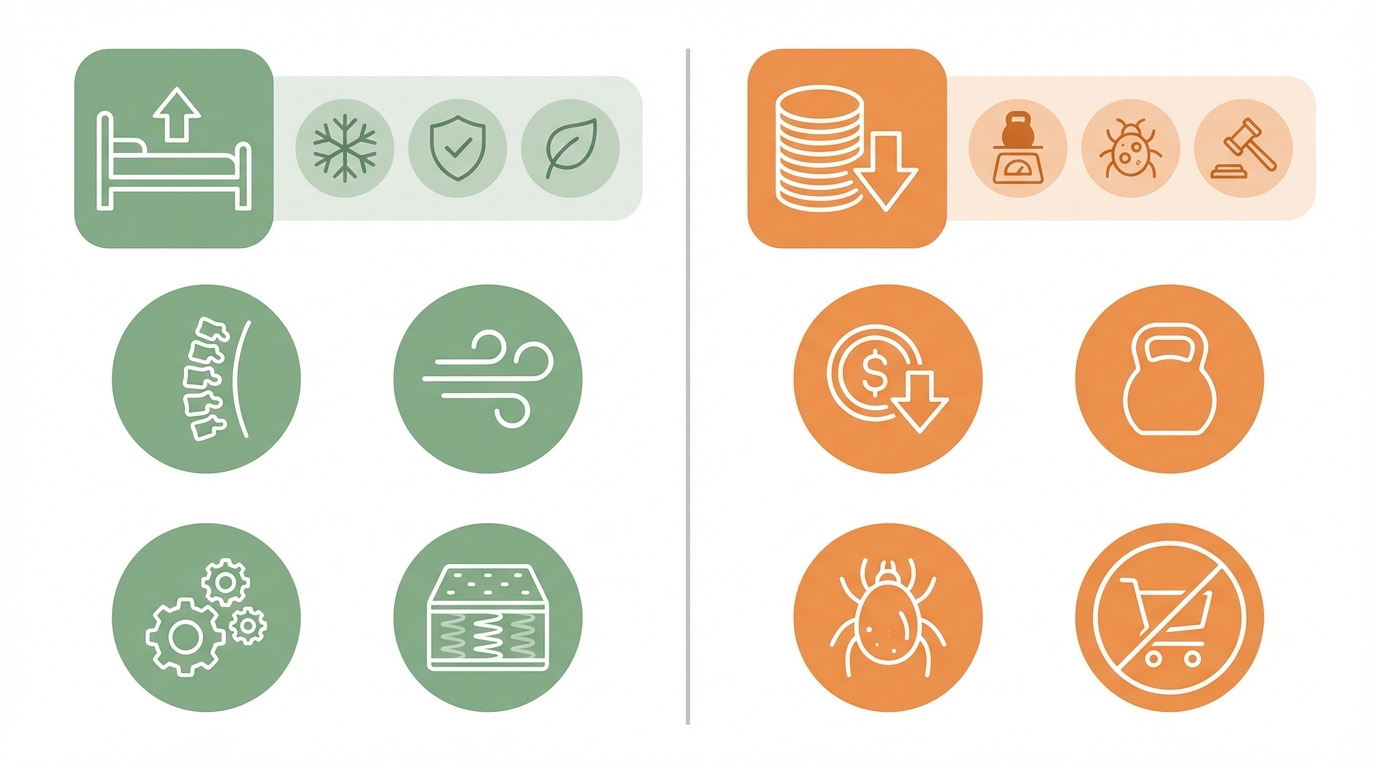
There are scenarios where selling a used mattress can be reasonable and responsible, as long as you comply with local laws and approach the process with transparency. The key is to be honest about the bed’s condition, respect the buyer’s health and safety, and evaluate whether the effort is really worthwhile.
Condition, Age, And Fair Value
A used mattress is a better resale candidate when it is relatively young, lightly used, and stored in a controlled, clean environment. Guest room mattresses that were only slept on a few nights a year are often in much better shape than a main bed that has seen nightly use for eight years. As a rough guideline, many consumer advocates suggest skipping resale attempts on beds more than seven years old and focusing instead on recycling or donation options that accept them.
From a value standpoint, even a well cared for used mattress usually sells for a fraction of its original price. Practical guides and consumer publications often suggest pricing between 20 and 30 percent of the original retail cost if the mattress is in very good condition with no stains or structural issues. Once there are visible marks, sagging, or broken components, the fair price drops sharply, and the time required to clean and market the bed can easily exceed the money gained.
If you are selling, it is helpful to gather your original receipt, any warranty paperwork, and close up photos that accurately show the surface and edges. Being upfront about the mattress age, whether it has always been used with a protector, and whether there are pets or smoke in the home helps potential buyers feel informed. In many states, that type of transparency is not just kind, it aligns with the spirit of consumer protection guidelines.
Legal And Practical Checklist Before You Sell
Before you move forward with selling a used mattress, it can help to run through a quick checklist. These points are not a substitute for local legal advice, but they are a practical framework to decide whether resale is appropriate:
- Confirm that your state allows person to person sales of used mattresses or does not prohibit them.
- Check whether any state or local rules require professional sanitation or specific labels for used bedding.
- Evaluate the mattress age and condition, including checking for sagging, stains, odors, or signs of pests.
- Clean the mattress thoroughly and consider professional sanitation if your state expects it for resale.
- Document the condition with clear photos and include honest details in your listing or conversation.
- Decide whether the likely sale price justifies the time and effort compared with donation or recycling.
Once you walk through these steps, some people realize that selling is more trouble than it is worth. In that case, donating to a charity that accepts mattresses in good condition or using a mattress recycling service can be a simpler path. Others find that a nearly new guest bed with minimal wear has enough value to justify a careful, legal resale.
“We were going to sell our old king mattress to offset the cost of a new hybrid, but after reading Mia’s guidance, we realized it was past its prime and not worth even the small asking price. We recycled it and bought a Sealy Posturepedic Pro Firm Hybrid Dupont II instead. My husband’s back pain eased within a week, and we felt better knowing we did the responsible thing with the old bed.” – Carmen R., January
Safest Alternatives To Selling Or Buying Used
Even when selling used mattresses is legal, it may not always be the smartest move for your sleep health, or the most efficient way to manage your budget. Thankfully, there are solid alternatives that let you refresh your sleep space without legal uncertainty or hygiene worries.
Donating Or Recycling A Used Mattress
If your mattress is still in decent condition, some charities, shelters, or furniture banks may accept it, especially if it is free of stains, rips, and odors. Policies vary widely, and many organizations have tightened their rules because of bed bug concerns, so call ahead before loading your mattress into a truck. Local waste management or city websites sometimes maintain lists of donation centers and recycling programs that handle bulky items like bedding.
Mattress recycling can be surprisingly efficient. Industry groups note that a large percentage of the materials inside a mattress, including steel coils, certain foams, and fibers, can be separated and reused. Choosing recycling over curbside disposal reduces landfill waste and aligns with a more sustainable approach to upgrading your sleep setup. Some municipalities even host special collection days for mattresses and box springs.
For mattresses that are clearly no longer suitable for sleeping due to age, sagging, or contamination, direct disposal through your city’s bulk pickup service may be the only responsible option. In those cases, cutting the mattress apart to prevent scavenging is often recommended, because you do not want someone else hauling away a bed that is clearly unsafe just because it is free.
Buying New On A Budget And Using Toppers Wisely
If you are tempted to buy used mainly to save money, it is worth stepping back and looking at the range of modern budget friendly mattresses. Many reputable brands now offer supportive foam and hybrid mattresses at lower price points than traditional big box options, especially when you factor in regular promotions. A well priced new mattress with a warranty and clear safety certifications is almost always a better value than a used mattress of uncertain history.
For example, if you prefer an all foam feel and want a clean, pressure relieving surface without spending thousands, it can be more reassuring to shop among the best foam mattresses that are new, certified, and backed by clear trial and return policies. If you like the buoyant feel and airflow of coils combined with comfort foams, exploring the best hybrid mattresses can provide great support and longevity without the unknowns that come with secondhand bedding.
Another option, especially if your existing mattress is structurally sound but a bit too firm, is to add a high quality mattress topper instead of replacing the whole bed with a used one. A plush topper from the Sleepology selection of pillows, sheets, toppers, and protectors can soften pressure points at a much lower cost than a full mattress, and you keep control over hygiene because you are the one unboxing it first. Paired with a washable mattress protector, this approach can extend the usable comfort life of a still supportive mattress.
Comparing Your Options: Used Sale, Donation, Recycling, Or New Purchase
At this point, many people know what their gut is telling them, but it can help to see the main options side by side. Below is a simple comparison to clarify the tradeoffs. This is not legal advice, but a practical framework drawn from typical state rules and sleep health considerations.
| Option | Legal / Regulatory Risk | Health / Hygiene Risk | Typical Financial Outcome |
|---|---|---|---|
| Sell used mattress privately | Low to moderate, varies by state and honesty of disclosure | Moderate, depends on cleanliness and age | Recover 10 to 30 percent of original price if condition is good |
| Sell used mattress as a retailer | Moderate to high, requires strict compliance with state sanitation and labeling rules | Managed with professional sanitation, still some public hesitation | Potential business revenue, but higher compliance costs and liability |
| Donate mattress | Low, as long as charity standards are met and bed is in acceptable condition | Moderate, organization usually screens for obvious issues | No money back, but possible tax deduction and environmental benefit |
| Recycle or dispose responsibly | Very low, typically follows municipal rules for bulky items | None to you, protects others from unsafe reuse | No direct financial return, but avoids disputes and fines |
| Buy a new affordable mattress | Very low, if purchased from reputable retailer that meets federal and state standards | Low, especially with certified materials and protectors | Higher upfront cost, but better sleep, warranties, and predictable lifespan |
Seeing the options laid out can make your next step clearer. If your used mattress is genuinely clean, relatively new, and your state allows private sales, selling might make sense. If it is older or the condition is marginal, donation or recycling is usually the safer and more ethical choice. And if you are thinking of buying, rather than selling, used, the health and comfort risks often tip the scales toward a fresh, well built mattress instead.
How To Protect Yourself When Buying A Mattress That Might Be Used
Sometimes you are not looking to sell a used mattress at all. Instead, you are standing in a store or browsing online, wondering if what is being called new is actually secondhand or rebuilt. This concern is very real. Some consumer protection offices, like the Georgia Attorney General’s Consumer Protection Division, warn that a portion of mattresses sold may contain used or renovated components that appear pristine on the surface. Their guidance emphasizes how important it is to read tags and understand what you are purchasing.
Red Flags In Retail Settings
When you shop in person, start by looking for the law tag typically sewn into the side or end of the mattress. A new mattress should state that it contains "all new materials" and list the types of filling inside. If you see wording that mentions "used materials," "reconditioned," or "renovated," you are dealing with at least some secondhand content. That can be acceptable if it is clearly disclosed and priced appropriately, but it should never be passed off as entirely new.
Be cautious if you notice that tags appear cut, partially removed, or covered by other labels. While consumers are allowed to remove tags after purchase, retailers generally are not supposed to remove or alter them in ways that hide the true composition of the mattress. If a salesperson becomes vague or defensive when you ask about whether a bed includes used materials, that is another sign you might want to shop elsewhere. There are plenty of retailers who are transparent and willing to walk you through what is inside each model.
Online, this kind of deception usually shows up as unusually low prices for "new" mattresses of a brand that otherwise sells at much higher price points, especially when the seller is not an authorized retailer. Before purchasing, look for clear descriptions that mention new materials, safety certifications, and manufacturer warranties. Reputable retailers, including Sleepology, are happy to explain why a particular Sealy Posturepedic Elite Medium Brenham II Euro Pillow Top costs what it does, and what goes into the construction and testing.
Health And Comfort Questions To Ask
Whether you are evaluating a bed that might contain some used components or considering a clearly labeled secondhand mattress, it helps to ask the same basic questions. How old are the materials? Has the mattress been professionally sanitized, and can the seller describe or document that process? Does the mattress come with any sort of warranty, even a limited one, that would protect you if major support issues show up quickly?
Given how strongly sleep health influences overall well being, it is worth taking this evaluation seriously. The Sleep Foundation and other sleep health organizations consistently highlight that supportive, comfortable mattresses can reduce pain, improve sleep continuity, and enhance daytime functioning. Saving a bit of money on a questionable mattress may not feel like a win if you end up tossing and turning or waking up sore.
Whenever you feel rushed, pressured, or uncertain about a mattress’s history, that is your cue to pause. You are allowed to take the time you need, sleep on the decision, and come back when you feel confident. There is no shortage of safe, new mattresses available, and you do not need to gamble on something that does not feel right.
Conclusion: Choosing The Safest, Smartest Path For Your Mattress
Is it illegal to sell a used mattress? In most places, no, but the reality is more nuanced than a simple yes or no. Federal law focuses on safety and honest labeling, while state rules decide how used mattresses must be sanitized, tagged, or disclosed, particularly for retailers. For private sellers, most states are less strict, but honesty and basic hygiene remain essential, and claiming that something used is new can still run afoul of consumer protection principles.
From a health and comfort standpoint, used mattresses carry real risks. They can harbor allergens, bed bugs, and mold, and they almost always offer less predictable support than a new, well built bed. That does not mean there is never a scenario where resale makes sense, but it does mean you should weigh any savings carefully against the impact on your sleep quality and peace of mind. Often, donation, recycling, or responsibly disposing of an older mattress and investing in a new, supportive option is the more sustainable choice for your body and your home.
If you are feeling stuck about what to do with your current mattress or how to replace it without overspending, you do not have to figure it out alone. A Sleepology specialist can help you decide whether a topper, an updated hybrid like the Sealy Posturepedic Plus Firm Paterson II Euro Pillow Top, or a different model altogether will fit your sleep style and budget. With the right information and a bit of guidance, you can make a choice that protects your health, respects the law, and helps you wake up genuinely rested.
Frequently Asked Questions
Is it ever completely illegal to sell a used mattress?
There are states where selling used mattresses is significantly restricted, especially for retailers, and in at least one state, both individuals and businesses are barred from selling used mattresses altogether. Even in states without an outright ban, there can be strict rules for sanitation, labeling, and handling. Because regulations change, the safest approach is to check with your state or local health department before planning a sale, especially if you want to resell multiple mattresses or operate as a business.
Can I sell my used mattress if it has stains but has been cleaned?
Visible stains can be a red flag for both health reasons and legal reasons, depending on your state. Some states specifically prohibit retailers from selling mattresses with obvious stains, and even in private sales, stains can scare off buyers or lead to disputes. If the stains are small, old, and clearly explained, a private buyer might still be interested at a very low price, but you should photograph and describe them honestly. If stains are extensive or suggest bodily fluids or water damage, it is usually more responsible to recycle or dispose of the mattress rather than sell it.
Do I need to have a used mattress professionally sanitized before selling it?
Requirements vary from state to state. Many laws focus on retailers and refurbishers, requiring them to use approved sanitation methods and facilities before reselling used bedding. For private person to person sales, professional sanitation is often not legally mandated, but it is still a best practice, especially if your state expects any used mattress to be properly cleaned prior to resale. Even when it is not required, professional sanitation can make your listing more appealing and protect the buyer’s health, but you will need to weigh the cost against what you can realistically sell the mattress for.
Is buying a used mattress ever a good idea for my primary bed?
For most people, a used mattress is not the best choice for a primary, every night sleep surface. The combination of unknown hygiene, hidden structural wear, and lack of warranty coverage makes it a risky investment. If you must consider used for budget reasons, aim for a relatively new mattress with clear history from someone you trust, and inspect it thoroughly for signs of pests, odors, and sagging. Even then, you may find that a lower cost new mattress, especially from a reputable selection of foam or hybrid models, offers better support, safety, and long term value.
What is the safest way to get rid of a used mattress if I decide not to sell it?
The safest approach is to use a combination of donation, recycling, and municipal disposal options. If your mattress is clean, structurally sound, and relatively young, you can contact local charities or shelters to see if they accept mattresses that meet their standards. If it is older or has more wear, mattress recycling programs can break it down into components that get reused instead of going to a landfill. When neither option is available, arrange for bulk pickup with your waste management service and follow any guidelines they provide, such as wrapping or cutting the mattress to prevent scavenging.
How can I upgrade comfort on an older mattress without buying used or replacing it immediately?
If your current mattress is still supportive but feels too firm or a bit uneven on the surface, a high quality mattress topper can provide a meaningful upgrade while you plan for a full replacement. Look for toppers that add pressure relief and contouring without swallowing you, and pair them with a waterproof, washable protector to keep everything clean. Sleepology’s collection of pillows, sheets, toppers, and protectors is curated to help you fine tune comfort across your whole sleep system while you take the time you need to choose your next mattress.