

Have you ever wondered why you wake up feeling refreshed some mornings and achy on others—even though you're sleeping the same number of hours? The answer might be hiding right beneath your sheets. When it comes to the hybrid vs memory foam debate, choosing the right mattress type can be the difference between waking up energized or sluggish. I've spent years helping people find their perfect sleep solution, and I can tell you that understanding the memory foam vs hybrid comparison isn't just about picking a mattress—it's about investing in your overall health and daily performance. Each type offers distinct hybrid mattress benefits and memory foam benefits that cater to different sleep styles, body types, and personal preferences. While some sleepers swear by the body-hugging comfort of the best memory foam mattresses, others can't imagine sleeping without the bouncy support of the best hybrid mattresses. The truth is, there's no one-size-fits-all answer when it comes to mattress selection. Your ideal choice depends on factors like your preferred sleeping position, whether you sleep hot or cold, if you share your bed with a partner, and even your budget. Memory foam cooling technology has come a long way in recent years, addressing one of the traditional complaints about these mattresses, while hybrid mattress cooling features continue to set the standard for temperature regulation. Similarly, memory foam support has evolved to provide better spinal alignment, though hybrid mattress support still tends to win out for those who need extra reinforcement. In this guide, I'll walk you through everything you need to know about both mattress types, helping you make an informed decision that will transform your sleep quality. Whether you're dealing with chronic pain, restless nights, or simply want to upgrade your sleep experience, understanding the core differences between these two popular mattress styles is your first step toward better rest.
Key Takeaways
- Memory foam excels at pressure relief and motion isolation, while hybrid mattresses offer better support and cooling
- Hybrid mattresses combine innerspring coils with foam layers for a balanced sleep experience
- Memory foam may retain more heat, though modern cooling technologies have improved this significantly
- Hybrid mattresses typically cost more but provide longer-lasting support and durability
- Your sleeping position, body type, and temperature preferences should guide your decision
Unpacking the Ideal Mattress: Hybrid vs Memory Foam
When you're standing in a mattress store or browsing online, the hybrid vs memory foam decision can feel overwhelming. I get it—both options have their loyal fans, and both claim to offer the best sleep of your life. But here's what really matters: understanding what makes each type unique so you can choose based on your actual needs, not just marketing hype. Let me break down what you're really getting with each option.
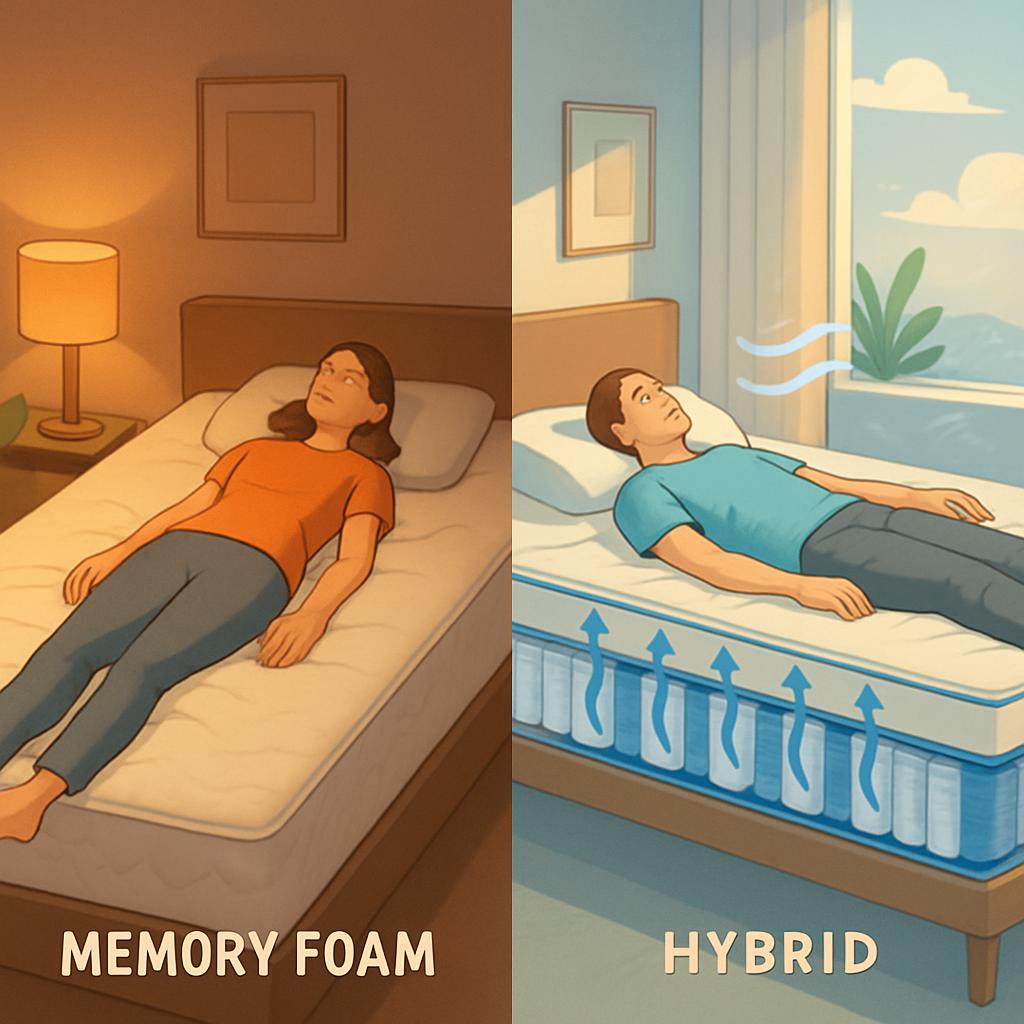
Memory foam mattresses are made entirely of foam layers, typically featuring a dense support base topped with softer comfort layers. The material was originally developed by NASA in the 1960s and has since become one of the most popular mattress materials on the market. These mattresses are known for their signature "sink-in" feeling—when you lie down, the foam contours closely to your body shape, creating a cradling sensation. This close conforming is one of the key memory foam benefits, as it distributes your weight evenly across the surface and reduces pressure on your joints. If you're considering this option, you can explore options like the Sealy Lacey Soft Gel Foam Mattress, which incorporates gel technology for enhanced comfort.
Hybrid mattresses, on the other hand, combine the best of two worlds: they feature a supportive innerspring coil system as the base, topped with multiple layers of foam (which can include memory foam, latex, or other specialty foams). Think of them as the evolution of traditional innerspring mattresses, upgraded with modern comfort materials. The coil system provides a responsive, bouncy feel that makes it easier to move around and change positions during the night. This construction delivers significant hybrid mattress benefits, including better edge support, improved airflow, and a more "on top of the bed" feeling rather than "in the bed" sensation. Popular options like the Sealy Paterson Medium Hybrid Mattress showcase how modern hybrids balance comfort and support.
The memory foam vs hybrid comparison really comes down to construction philosophy. Memory foam mattresses rely entirely on different densities and types of foam to provide both support and comfort. They absorb motion and create that distinctive hugging feeling. Hybrid mattresses use the coil system for foundational support and responsiveness, while the foam layers on top provide pressure relief and contouring. This makes hybrids feel more similar to traditional mattresses that many people grew up with, just significantly more comfortable. For those who want maximum support with comfort layers, options like the Stearns & Foster Lux Estate Firm Euro Top Mattress demonstrate the premium end of hybrid construction.
One of the most significant differences between these mattress types is how they handle temperature regulation. Hybrid mattress cooling tends to be superior because the coil system creates natural channels for airflow throughout the mattress core. Air can circulate freely between and around the coils, carrying heat away from your body. Memory foam cooling, historically a weak point, has improved dramatically with the introduction of gel infusions, open-cell foam technology, and breathable cover materials. Modern memory foam mattresses like the Sealy Paterson Medium Gel Foam Mattress incorporate cooling gel to address heat retention concerns.
Price is another consideration in the hybrid vs memory foam debate. Generally speaking, memory foam mattresses tend to be more budget-friendly, especially at the entry and mid-range levels. The materials and manufacturing processes are less complex and costly. Hybrid mattresses, with their more intricate construction combining coils and multiple foam layers, typically command higher prices. However, many sleepers find that the additional cost is worth it for the enhanced support and cooling properties. When you're comparing the best hybrid mattresses to the best memory foam mattresses, you'll notice that premium versions of both can reach similar price points, but hybrids generally start at a higher baseline.
Understanding Your Sleep Needs
Before you can make an informed choice between hybrid and memory foam, you need to understand your own sleep patterns and preferences. I always tell my customers that the "best" mattress isn't the one with the most features or the highest price tag—it's the one that addresses your specific needs. Let me help you identify what those needs might be.
Your sleeping position is probably the most important factor to consider. Side sleepers typically need more pressure relief around their shoulders and hips, which is where memory foam benefits really shine. The material's ability to contour closely to your body helps keep your spine aligned while cushioning those pressure points. Back sleepers often benefit from either type, but may prefer the more supportive feel of a hybrid, which prevents excessive sinking in the lower back area. Stomach sleepers usually need firmer support to keep their hips from sagging, making hybrid mattress support particularly beneficial for maintaining proper spinal alignment. If you change positions throughout the night, a hybrid's responsiveness might make it easier to move around comfortably.
Your body type and weight also play a significant role in determining which mattress type will work best for you. Here are some general guidelines to consider:
- Lightweight sleepers (under 130 pounds): Often find that memory foam provides adequate support while offering excellent pressure relief. The softer feel of memory foam won't seem too firm for lighter individuals.
- Average weight sleepers (130-230 pounds): Can typically enjoy either option, making personal preference the deciding factor. Both memory foam support and hybrid mattress support work well for this weight range.
- Heavier sleepers (over 230 pounds): Usually benefit more from hybrid mattresses, as the coil system provides more robust support and prevents excessive sinking. The best hybrid mattresses for heavier individuals feature reinforced coil systems and denser comfort layers.
- Couples with different body types: May find that a hybrid offers a better compromise, providing enough support for the heavier partner while still offering comfort for the lighter one.
Temperature regulation during sleep is another critical need to assess. If you're someone who wakes up sweating or constantly throws off the covers, hybrid mattress cooling features will likely serve you better. The natural airflow through the coil system helps dissipate heat more effectively than foam alone. However, if you tend to sleep cold or live in a cooler climate, modern memory foam with cooling technology might be perfectly adequate, and the heat retention that some people complain about could actually feel cozy to you. Consider pairing your mattress with temperature-regulating accessories like the Tempur-Pedic Breeze Cooling Mattress Protector to enhance your comfort.
Pain issues should also inform your decision. Those dealing with chronic back pain often find that hybrid mattress support provides the reinforcement they need, especially if their pain is related to insufficient support. However, if your pain is more related to pressure points—like shoulder or hip discomfort—memory foam benefits might offer better relief through its conforming properties. People with joint pain, arthritis, or fibromyalgia frequently report that memory foam's pressure-relieving qualities help reduce their discomfort. It's worth noting that many of the best hybrid mattresses now include substantial comfort layers of memory foam, offering a middle ground that addresses both support and pressure relief needs.
Finally, consider your partner's sleep habits if you share your bed. Motion transfer is where memory foam truly excels—if your partner tosses and turns or gets up frequently during the night, a memory foam mattress will absorb that movement so it doesn't disturb you. This is one of the standout memory foam benefits for couples. However, if you and your partner have very different firmness preferences or you need more edge support for sitting on the side of the bed, a hybrid might be the better compromise. Some couples even opt for a hybrid mattress with significant memory foam comfort layers to get the best of both worlds.
Key Differences in Composition and Feel
Now that we've covered the basics, let me get into the specific compositional differences that create such distinct sleeping experiences. Understanding these differences will help you anticipate how each mattress type will actually feel when you lie down on it night after night.
The core construction of memory foam mattresses typically consists of three to five layers of different foam densities. At the bottom, you'll find a high-density support foam that forms the foundation—this layer is firm and prevents the mattress from sagging over time. Above that, you'll usually find transition layers that gradually become softer as you move toward the top. The topmost comfort layer is where you experience that signature memory foam feel. This layer is made of viscoelastic foam, which responds to both heat and pressure from your body. As you lie down, your body heat softens the foam, allowing it to contour precisely to your shape. This creates exceptional pressure point relief, one of the most valued memory foam benefits. When you get up, the foam slowly returns to its original shape—hence the "memory" in memory foam.
Hybrid mattresses have a more complex construction that marries old and new technology. The foundation is an innerspring coil system, but not the noisy, uncomfortable coils you might remember from older mattresses. Modern hybrids typically use individually wrapped coils (also called pocketed coils) that move independently of each other. This means when pressure is applied to one area of the mattress, only the coils in that specific area compress, providing targeted support. Above the coil system, you'll find a comfort system that can include memory foam, latex, polyfoam, or a combination of these materials. This layered approach is what gives hybrids their balanced feel—the coils provide responsive support and bounce, while the comfort layers offer pressure relief and contouring. The result is a mattress that feels more supportive and responsive than pure memory foam while still providing cushioning comfort.
The feel difference between these two types is substantial and immediately noticeable. Memory foam creates a "hugging" sensation—when you lie down, you feel cradled as the material conforms closely to your body contours. There's minimal bounce or responsiveness; instead, you experience a slow, gradual compression. Some people love this cocooning feeling and find it deeply comforting, while others feel "stuck" or restricted in their movement. The lack of bounce can make it more challenging to change sleeping positions or get out of bed. Memory foam support is achieved through uniform weight distribution rather than pushback force, which works well for many sleepers but not everyone.
Hybrid mattresses, in contrast, offer what I call a "floating on top" sensation. You do sink into the comfort layers somewhat, but the coil system provides a noticeable pushback that keeps you more on top of the mattress surface rather than enveloped by it. This creates better ease of movement—you can shift positions, get in and out of bed, and even engage in other bedroom activities more easily. The hybrid mattress support comes from the active resistance of the coils, which adapt to your body's movements throughout the night. Many people find this more responsive feel more natural and similar to what they're used to from traditional mattresses.
"After switching from my old memory foam to a hybrid mattress, I noticed I wasn't waking up as hot anymore. The breathability is definitely better, and I love that I can still change positions easily without feeling stuck. The support is exactly what my back needed!"
Edge support is another key difference in the hybrid vs memory foam comparison. Memory foam mattresses typically have weaker edge support because the foam compresses significantly when you sit or lie near the edge. You might feel like you're rolling off or that the mattress is collapsing at the perimeter. This can be frustrating if you like to sit on the edge of your bed to put on shoes or if you sleep near the edge and want to use the full surface area. Hybrid mattresses excel in this area—the coil system extends all the way to the edges, providing firm, stable support around the entire perimeter. This makes the usable sleeping surface larger and makes it easier to sit on the edge without feeling like you might slide off.
Durability and lifespan also differ between these mattress types. The best memory foam mattresses typically last between seven to ten years before they begin to develop body impressions or lose their supportive properties. The foam gradually becomes less resilient over time, especially in areas where you sleep most frequently. The best hybrid mattresses, with their durable coil systems, often last slightly longer—typically eight to twelve years. The coils are less prone to permanent deformation than foam, though the comfort layers on top will still compress over time. However, hybrid mattresses are also heavier and more complex, which can make them harder to move or rotate if needed. When considering longevity, pairing either mattress type with a quality foundation like the Sealy Ease Power Base can help extend its lifespan.
The maintenance requirements for these mattresses differ as well. Memory foam mattresses are typically lighter (though still quite heavy) and can sometimes be rotated to promote even wear, though many modern designs are intended to be used in one orientation only. They should never be flipped because the support layers are specifically designed to be on the bottom. Hybrid mattresses are considerably heavier due to the coil system, making them more challenging to move or rotate. Some hybrids can be flipped if they have comfort layers on both sides, but most modern designs are one-sided. Both types benefit from using a mattress protector—options like the Tempur-Pedic Adapt Soft Mattress Protector can help keep your investment clean and extend its usable life.

The Case for Memory Foam Mattresses: Benefits You Should Know
When you're comparing memory foam vs hybrid mattresses, it's important to understand what makes memory foam such a popular choice for millions of sleepers. Memory foam mattresses have earned their reputation through decades of proven performance and continuous improvements in technology. These mattresses are made from viscoelastic polyurethane foam that responds to your body heat and weight, creating a customized sleep surface that adapts to your unique shape and sleeping position.
The memory foam benefits extend far beyond just feeling comfortable. These mattresses work by distributing your body weight evenly across the surface, which reduces pressure on specific areas like your shoulders, hips, and lower back. This even distribution helps maintain proper spinal alignment throughout the night, which is critical for waking up without aches and pains. If you've ever gotten out of bed feeling stiff or sore, a memory foam mattress might be the solution you've been looking for.
One of the most appealing aspects of memory foam is how it contours to your body without creating that "stuck" feeling that older memory foam models were known for. Modern memory foam technology has come a long way, offering better responsiveness while still providing that signature hugging sensation. For those interested in exploring memory foam options, the Sealy Paterson Medium Gel Foam Mattress offers an excellent balance of comfort and support with advanced gel-infused technology.
Memory foam mattresses also excel at absorbing movement, making them an ideal choice if you share your bed with a partner or pet. The foam's dense structure prevents motion from traveling across the mattress surface, so you won't feel every toss and turn from the other side of the bed. This feature alone has saved countless relationships and improved sleep quality for couples everywhere.
Another significant advantage is that memory foam mattresses are naturally resistant to dust mites and allergens. The dense foam structure doesn't provide the same hospitable environment for these microscopic pests that traditional innerspring mattresses do. For people with allergies or asthma, this can make a real difference in sleep quality and overall health.
Superior Comfort and Pressure Relief
When discussing memory foam benefits, the conversation always comes back to pressure relief. This is where memory foam truly shines and sets itself apart from other mattress types. The way memory foam responds to your body creates a sleep surface that reduces pressure points by up to 50% compared to traditional spring mattresses. This isn't just marketing hype – it's based on real pressure mapping studies that show how weight distribution changes across different mattress types.
The science behind memory foam's pressure-relieving properties is actually quite straightforward. When you lie down, your body doesn't create an even distribution of weight. Your heavier parts – typically your shoulders, hips, and sometimes your heels – bear more weight and create pressure points. On a traditional mattress, these areas push back with equal force, which can restrict blood flow and cause discomfort. Memory foam, however, compresses under pressure and molds around these areas, distributing the weight more evenly across a larger surface area.
| Body Area | Traditional Spring Mattress Pressure | Memory Foam Mattress Pressure |
|---|---|---|
| Shoulders | High concentration | Evenly distributed |
| Hips | High concentration | Evenly distributed |
| Lower Back | Often unsupported | Properly supported |
| Overall Comfort | Moderate | High |
This pressure-relieving quality makes memory foam especially beneficial for side sleepers, who typically experience more pressure on their shoulders and hips. But back sleepers and stomach sleepers can also benefit from the way memory foam supports the natural curves of the spine. The key is finding the right firmness level for your preferred sleeping position and body type.
People who suffer from chronic pain conditions like fibromyalgia, arthritis, or old injuries often report significant improvements in their pain levels after switching to a memory foam mattress. The reduced pressure on joints and better spinal alignment can help minimize pain flare-ups during the night and reduce morning stiffness. While a mattress alone can't cure these conditions, it can certainly make managing them easier and improve your quality of life.
The comfort factor of memory foam also extends to how it adapts to temperature changes. Modern memory foam formulations include gel infusions and open-cell structures that help regulate temperature better than older versions. This means you get that comfortable, conforming feel without overheating – a concern that used to be a major drawback of memory foam mattresses but has been largely addressed in recent years.
Excellent Motion Isolation for Couples
If you've ever been woken up by your partner getting out of bed, rolling over, or even just adjusting their position during the night, you understand how important motion isolation is for quality sleep. This is one area where memory foam absolutely dominates in the memory foam vs hybrid debate. The way memory foam absorbs and isolates movement is almost like magic, and it's one of the top reasons couples choose memory foam over other mattress types.
The motion isolation properties of memory foam come from its dense, viscoelastic structure. When pressure is applied to one area of the mattress, the foam compresses locally without transferring that energy across the surface. Think of it like dropping a pebble in thick mud versus dropping it in water – the mud absorbs the impact right where it hits, while water creates ripples that spread outward. Memory foam behaves like the mud, containing movement right where it happens.
"My husband used to wake me up every single time he got up for work in the morning. Since we switched to our memory foam mattress six months ago, I sleep right through his alarm and morning routine. It's been a total game changer for my sleep quality, and I actually feel rested when I wake up now."
This motion isolation benefit becomes even more important if you and your partner have different sleep schedules. Maybe one of you is an early riser while the other likes to sleep in on weekends. Or perhaps one of you works night shifts and comes to bed hours after the other is already asleep. With a memory foam mattress, these schedule differences don't have to disrupt anyone's sleep. You can get in and out of bed without worrying about disturbing your partner.
The motion isolation qualities of memory foam also matter if you share your bed with restless sleepers. Some people naturally move around more during the night as they cycle through different sleep stages. Others might experience periodic leg movements or shift positions frequently due to discomfort or sleep disorders. When both partners are on a memory foam mattress, these movements stay isolated to one side of the bed, allowing the other person to sleep undisturbed.
Parents who occasionally have young children climb into bed with them also appreciate this feature. Kids tend to move around quite a bit during sleep, and memory foam helps minimize the disruption these movements cause. The same goes for pet owners who let their furry friends sleep on the bed – the motion isolation keeps everyone sleeping more soundly despite the extra occupants.
For couples where one partner is significantly heavier than the other, memory foam prevents the "rolling together" effect that can happen on spring mattresses. The foam responds independently to each person's weight and shape, creating two distinct sleep surfaces on one mattress. This means both partners can find their ideal comfort level without compromise, and neither person feels like they're constantly rolling toward the middle of the bed.
The Advantages of Hybrid Mattresses: A Balanced Approach
While memory foam has its devoted fans, hybrid mattresses have been gaining serious traction in the sleep industry, and for good reason. When looking at hybrid vs memory foam options, many people find that hybrid mattresses offer the best of both worlds. These innovative mattresses combine the contouring comfort of foam layers with the supportive foundation of innerspring coils, creating a sleep experience that addresses many of the concerns people have with all-foam or all-spring mattresses.
The hybrid mattress benefits start with their construction. A typical hybrid mattress features a base layer of individually wrapped coils (also called pocketed coils) topped with multiple layers of foam, which might include memory foam, latex, or specialized comfort foams. This design allows the mattress to provide the pressure relief and body contouring that foam is known for, while the coil system delivers responsive support and improved airflow. It's this combination that makes hybrids so versatile and appealing to a wide range of sleepers.
One of the biggest advantages of hybrid mattresses is their ability to satisfy people who find pure memory foam either too soft or too warm. The coil support system in a hybrid creates a more responsive feel – you sink into the comfort layers but don't get that "stuck in the mattress" sensation some people experience with all-foam beds. When you move or change positions, the springs respond quickly, making it easier to adjust during the night. If you're considering a quality hybrid option, the Sealy Albany Medium Hybrid Mattress provides excellent balanced support with advanced comfort layers.
Hybrid mattresses also tend to be more durable than all-foam mattresses in the long run. The coil support system maintains its structure over time better than foam, which can develop body impressions after years of use. This means your hybrid mattress is more likely to maintain its original comfort and support levels for longer, making it a smart investment for your sleep health. Most quality hybrid mattresses come with warranties of 10 years or more, reflecting the manufacturers' confidence in their longevity.
Exceptional Support and Responsiveness
When comparing hybrid mattress support to other mattress types, the difference becomes immediately apparent the moment you lie down. The coil system in a hybrid mattress provides a level of support that's hard to match with foam alone, especially for heavier individuals or those who need extra spinal support. The springs push back against your body weight, creating a supportive foundation that keeps your spine aligned while the comfort layers above provide cushioning and pressure relief.
The individually wrapped coils in modern hybrid mattresses are a far cry from the old-fashioned box springs your grandparents might have slept on. Each coil is encased in its own fabric pocket and moves independently of its neighbors. This means the mattress can contour to your body shape while still providing targeted support where you need it most. Heavier parts of your body, like your hips and shoulders, get more support from the compressed coils in those areas, while lighter areas like your waist receive appropriate support from coils that don't compress as much.
The hybrid mattress support system offers several distinct advantages that make these mattresses stand out:
- Better edge support for sitting and sleeping near the mattress perimeter. The coil system extends all the way to the edges, creating a stable border that doesn't collapse when you sit on the side of the bed or sleep near the edge. This effectively increases the usable sleep surface of your mattress.
- Enhanced spinal alignment across all sleeping positions. Whether you sleep on your back, side, or stomach, the combination of responsive coils and conforming foam layers works together to maintain the natural curve of your spine throughout the night.
- Superior weight distribution for heavier sleepers. The coil system in hybrid mattresses provides robust support for people over 200 pounds, preventing excessive sinking that can occur with all-foam mattresses and ensuring proper support throughout the night.
- Increased responsiveness for combination sleepers. If you change positions frequently during the night, the springy nature of hybrid mattresses makes it easier to move around without feeling trapped or having to struggle against the mattress.
- Reduced motion transfer while maintaining bounce. The individually wrapped coils isolate movement between sleep partners while still providing that responsive feel that many people prefer over the slow-responding nature of memory foam.
This responsiveness is particularly important for people who feel claustrophobic or restricted on memory foam mattresses. The hybrid design allows you to move freely and change positions without that slow sinking sensation. When you roll over or get up during the night, the mattress responds immediately to your movement rather than slowly releasing you from its contour. This can be especially helpful for people with mobility issues or those who need to get in and out of bed frequently during the night.
The support system in hybrid mattresses also helps prevent the common problem of sagging in the middle of the bed. With all-foam mattresses, the area where you sleep most often can develop a permanent impression over time. The resilient coil system in hybrids helps the mattress bounce back to its original shape, maintaining an even sleep surface for years. This consistent support is important not just for comfort but also for maintaining proper spinal alignment night after night.
Enhanced Cooling Features for a Comfortable Night's Sleep
One of the most significant hybrid mattress cooling advantages over traditional memory foam is the improved airflow created by the coil support system. Heat retention has historically been one of the biggest complaints about memory foam mattresses, and while modern memory foam technology has made great strides in addressing this issue, hybrid mattresses naturally sleep cooler due to their design. The open space between the coils allows air to circulate freely through the mattress, carrying heat away from your body and preventing that trapped, overheated feeling.
The hybrid mattress cooling properties work through multiple mechanisms. The coil system creates air channels throughout the lower portion of the mattress, functioning almost like a built-in ventilation system. As you move during the night, this movement pumps air through these channels, creating a continuous cooling effect. The top comfort layers, which often include gel-infused foams or breathable materials, work in conjunction with this airflow to regulate temperature at the sleep surface.
For hot sleepers – people who naturally run warm or experience night sweats – this cooling advantage can make the difference between restless, uncomfortable nights and truly restful sleep. When your body temperature rises during sleep, it can trigger micro-awakenings that disrupt your sleep cycles, even if you don't fully wake up. By maintaining a cooler sleep surface, hybrid mattresses help you stay in deeper, more restorative sleep stages for longer periods throughout the night.
Many hybrid mattresses also incorporate additional cooling technologies in their comfort layers. These might include phase-change materials that actively absorb and dissipate heat, copper or graphite infusions that conduct heat away from your body, or specialized fabric covers designed to feel cool to the touch and wick away moisture. When combined with the natural airflow of the coil system, these technologies create a sleep environment that stays comfortable throughout the night, regardless of the season or room temperature.
The cooling benefits of hybrid mattresses extend beyond just temperature regulation. Better airflow also helps reduce moisture buildup in the mattress, which can be a concern in humid climates or for people who perspire during sleep. This improved ventilation helps keep the mattress fresher and can reduce the growth of mold, mildew, and dust mites that thrive in warm, moist environments. For allergy sufferers, this can translate to better breathing and fewer nighttime allergy symptoms.
The best hybrid mattresses balance cooling with comfort, ensuring that you don't have to sacrifice the contouring and pressure relief of foam layers just to sleep cool. Modern hybrid designs carefully select and engineer their comfort layers to work with the coil system, creating a mattress that addresses both temperature regulation and comfort. This makes hybrids particularly appealing to people who want the pressure relief benefits of memory foam but have been hesitant to try it due to concerns about sleeping hot.

Disadvantages of Memory Foam Mattresses: What to Consider
While memory foam mattresses offer incredible comfort and pressure relief, they're not perfect for everyone. Before you commit to a memory foam mattress, it's important to understand some of the common challenges that come with this popular sleep surface. Many people absolutely love their memory foam mattresses, but others find that certain drawbacks make them reconsider their choice.
When comparing memory foam vs hybrid mattresses, understanding the potential disadvantages of memory foam can help you make a more informed decision. The two main concerns that sleepers often report with memory foam are heat retention issues and a chemical smell during the first few days of use. These issues don't affect everyone the same way, but they're worth considering as you weigh your options.
It's also worth noting that not all memory foam mattresses are created equal. Higher-quality options like the Sealy Medina Firm Gel Foam Mattress incorporate advanced gel foam technology designed to address some of these common concerns. However, even with improvements in foam technology, some inherent characteristics of memory foam might not suit every sleeper's preferences or needs.
Another thing to keep in mind is that your personal sleep habits, body temperature regulation, and sensitivity to smells can all play a role in how much these disadvantages affect you. Some people barely notice any issues, while others find them significant enough to switch to a different mattress type. Let's take a closer look at each of these potential drawbacks so you can decide whether memory foam benefits outweigh the disadvantages for your specific situation.
Heat Retention and Sleeping Hot
One of the most common complaints about memory foam mattresses is that they tend to trap heat, which can make you feel uncomfortably warm during the night. This happens because of the way memory foam is designed to work. The foam responds to your body heat and weight by softening and contouring around you, which creates that signature "hugging" sensation. Unfortunately, this same characteristic also means the foam tends to absorb and hold onto your body heat rather than allowing it to dissipate.
Traditional memory foam has a dense structure with limited airflow, which contributes significantly to the heat retention problem. When you lie on the mattress, your body heat gets trapped in the foam layers beneath you, and there's nowhere for that heat to escape. For people who naturally sleep hot, live in warm climates, or go through hormonal changes that affect body temperature, this can be a real deal-breaker.
The good news is that mattress manufacturers have recognized this issue and developed several solutions to improve memory foam cooling. Modern memory foam mattresses often include features like gel infusions, open-cell foam technology, and breathable cover materials designed to help regulate temperature. Some brands also incorporate phase-change materials that actively work to keep your sleep surface at a more comfortable temperature throughout the night.
| Cooling Feature | How It Works | Effectiveness |
|---|---|---|
| Gel-Infused Foam | Gel beads or swirls mixed into the foam help conduct heat away from your body | Moderate - Helps but doesn't completely eliminate heat retention |
| Open-Cell Structure | Foam with larger pores allows for better airflow through the material | Good - Significantly improves breathability compared to traditional foam |
| Phase-Change Materials | Special materials that absorb and release heat to maintain consistent temperature | Very Good - Actively regulates temperature throughout the night |
| Breathable Covers | Moisture-wicking fabrics and ventilated designs promote air circulation | Moderate - Helps with surface cooling but limited impact on deeper foam layers |
Despite these improvements in memory foam cooling technology, hybrid mattresses still tend to sleep cooler overall. The coil systems in hybrid mattresses naturally allow for much better air circulation throughout the entire mattress, which helps regulate temperature more effectively. When considering hybrid vs memory foam options, temperature regulation is one area where hybrids typically have a clear advantage.
If you're set on getting a memory foam mattress but are concerned about sleeping hot, look for models that specifically advertise cooling features. You can also pair your mattress with cooling accessories like breathable sheets, a cooling mattress protector, or even a fan to help manage temperature. Some people find that adjusting their bedroom temperature or using moisture-wicking sleepwear makes a big difference in their comfort level on memory foam.
Potential for Odors During Initial Use
When you first unbox a new memory foam mattress, you'll likely notice a distinct chemical smell. This phenomenon is commonly known as "off-gassing," and it's a normal part of the memory foam manufacturing process. The smell comes from volatile organic compounds (VOCs) that are released as the compressed foam expands and adjusts to room temperature after being packaged and shipped.
The odor is often described as smelling like chemicals, plastics, or paint, and for some people, it can be quite strong and unpleasant. While off-gassing itself isn't typically harmful according to most safety standards, the smell can be bothersome, especially for people who are sensitive to odors or have respiratory conditions. Some individuals report experiencing headaches, nausea, or eye irritation when first exposed to the smell, though these symptoms usually subside as the odor dissipates.
The intensity and duration of off-gassing can vary significantly depending on several factors. Lower-quality memory foam mattresses tend to have stronger odors that last longer, sometimes several weeks or even months. Higher-quality mattresses with better manufacturing processes and materials typically have milder odors that fade within a few days. The type of foam, the chemicals used in production, and how the mattress was packaged and stored all play a role in how much it will smell when you first open it.
Most manufacturers recommend allowing your new memory foam mattress to air out in a well-ventilated room for at least 24 to 48 hours before sleeping on it. During this time, you should remove all plastic packaging and, if possible, open windows or use fans to increase air circulation around the mattress. Some people prefer to let their mattress air out in a garage or spare room to avoid having the smell permeate their bedroom.
If you're particularly sensitive to smells or want to minimize off-gassing, look for memory foam mattresses with CertiPUR-US certification. This certification indicates that the foam has been tested and meets specific standards for content, emissions, and durability, which typically means lower levels of VOCs and less noticeable odors. You might also consider gel foam options, which often have reduced off-gassing compared to traditional memory foam.
It's important to note that while the smell can be unpleasant, it does eventually go away completely for virtually all memory foam mattresses. The off-gassing process is temporary, and once the odor has dissipated, it shouldn't return. However, if you need to use your mattress immediately or simply can't tolerate any chemical smells during the break-in period, this is another area where hybrid mattresses might be a better choice, as they typically have much less noticeable off-gassing due to their coil-based construction and reduced foam content.
When weighing the memory foam benefits against these disadvantages, consider your personal tolerance for temporary inconveniences versus long-term comfort. The off-gassing issue is short-lived, but if you have severe chemical sensitivities or need your mattress to be ready for immediate use, you'll want to factor this into your decision when comparing hybrid vs memory foam options.
Drawbacks of Hybrid Mattresses: When They Might Not Be Ideal
While hybrid mattresses offer numerous benefits that make them a popular choice for many sleepers, they're not perfect for everyone. Understanding the potential downsides of hybrid mattresses is just as important as knowing their advantages when you're making this significant investment in your sleep quality. The hybrid vs memory foam debate often comes down to these practical considerations that can affect both your daily comfort and your wallet.
Before committing to a hybrid mattress, it's worth taking an honest look at your specific situation, including your budget, physical capabilities, and living arrangements. What works beautifully for one person might create unexpected challenges for another. I've found that being aware of these potential drawbacks upfront helps shoppers make more informed decisions and avoid buyer's remorse down the road. Some people discover that despite the impressive hybrid mattress benefits they've read about, certain practical factors make memory foam a better fit for their unique circumstances.
The reality is that hybrid mattresses, with their complex construction combining memory foam layers and innerspring coils, come with some trade-offs that you should consider carefully. These aren't necessarily deal-breakers for everyone, but they can significantly impact your satisfaction with your purchase depending on your priorities and situation. Let's explore these considerations in detail so you can determine whether a hybrid mattress like the Sealy Paterson Medium is truly the right choice for you, or whether memory foam might better suit your needs.
Higher Price Point Compared to Memory Foam
One of the most significant drawbacks when comparing memory foam vs hybrid mattresses is the noticeable price difference. Hybrid mattresses typically cost considerably more than their all-foam counterparts, sometimes ranging from several hundred to over a thousand dollars more for comparable quality levels. This price gap exists because hybrid mattresses are more expensive to manufacture—they require both high-quality foam layers and a sophisticated coil support system, plus the engineering expertise to combine these materials effectively.
The construction of hybrid mattresses involves multiple premium components working together. You're paying for individually wrapped coils, multiple foam comfort layers, edge support systems, and often advanced cooling technologies. Each of these elements adds to the manufacturing cost, which gets passed along to you as the consumer. Meanwhile, memory foam mattresses have a simpler construction that's less costly to produce, allowing manufacturers to offer lower prices even for high-quality options.
For budget-conscious shoppers, this price difference can be a significant hurdle. If you're already stretching your budget to afford a new mattress, the extra cost of a hybrid might mean compromising on size or quality, or delaying your purchase altogether. The memory foam vs hybrid decision often comes down to whether the additional hybrid mattress benefits justify the higher investment for your particular situation and financial comfort level.
"I really wanted a hybrid mattress after trying one at a friend's house, but when I compared prices, I realized I could get a premium memory foam mattress for the same cost as a mid-range hybrid. Since I was on a tight budget, I went with memory foam and I'm actually really happy with my decision." – Sarah M., verified customer review from November 2024
It's also worth considering the long-term value proposition. While hybrid mattresses cost more upfront, they often provide excellent durability and longevity that can make them worthwhile investments over time. However, if you're someone who likes to replace your mattress every few years or you're furnishing a guest room that won't see daily use, paying premium prices for hybrid mattress support and features you might not fully utilize doesn't make financial sense.
The best hybrid mattresses available today do offer exceptional quality, but that quality comes at a premium. You need to honestly assess whether your budget can comfortably accommodate this higher price point without causing financial stress. Sometimes the best choice isn't the "best" mattress on paper, but rather the one that meets your needs while fitting responsibly within your budget. There's absolutely nothing wrong with choosing a high-quality memory foam mattress if that's what your financial situation calls for—you can still get excellent sleep without breaking the bank.
Weight and Movement Considerations
Another practical drawback of hybrid mattresses that often catches buyers by surprise is their substantial weight. Because of their coil systems and multiple material layers, hybrid mattresses are significantly heavier than memory foam mattresses—sometimes weighing 50 to 100 pounds more depending on the size. A queen-size hybrid can easily weigh between 100 to 150 pounds, while king sizes can exceed 180 pounds. This considerable weight creates several practical challenges that you should think through before making your purchase.
Moving a hybrid mattress is genuinely difficult, often requiring two or more people to handle safely. If you're someone who moves frequently—whether you're a renter, military member, or just enjoy changing your living situation—you'll need to factor in the logistics and potential costs of moving this heavy mattress each time. Even rotating your mattress for even wear, which manufacturers recommend doing every few months, becomes a two-person job rather than something you can quickly handle on your own.
Setting up a hybrid mattress initially can also be more challenging than memory foam alternatives. When your mattress arrives, getting it upstairs, maneuvering it around corners and through doorways, and positioning it on your bed frame requires significant physical effort. I've heard from customers who had to hire help just to get their new hybrid mattress into their bedroom, adding unexpected costs to their purchase. If you live alone or have physical limitations that make heavy lifting difficult, this weight factor becomes even more important to consider.
The weight also affects compatibility with certain bed frames and foundations. Not all bed frames are designed to support the substantial weight of hybrid mattresses, particularly adjustable bases or platform beds with slats. You might discover that you need to purchase additional support or even a completely new bed frame to properly accommodate your hybrid mattress, adding yet another expense to your budget. Memory foam mattresses, being lighter, work with a wider variety of bed frames without these concerns.
There's also the practical consideration of changing your sheets and mattress protector. The weight of a hybrid mattress makes it harder to lift the corners to tuck in fitted sheets properly. This might seem like a minor inconvenience, but if you're someone who likes to change sheets frequently or you have difficulty with repetitive physical tasks, these small challenges add up over time and can become genuinely frustrating.
Transportation is another factor if you ever need to take your mattress somewhere—perhaps when moving to a temporary location or if you need to have it inspected or exchanged. Hybrid mattresses don't fit easily into most vehicles without professional moving equipment. Memory foam mattresses, especially those that come compressed in boxes, offer much more flexibility for transportation. This difference in portability might not seem important when you're shopping, but it can become significant later when circumstances change.
Who Should Choose a Memory Foam Mattress?
After exploring the characteristics of both mattress types, you might be wondering whether memory foam is the right choice for you. Memory foam mattresses offer distinct advantages that make them ideal for specific types of sleepers, and understanding whether you fall into these categories can help simplify your decision in the hybrid vs memory foam debate. I've found that certain sleep preferences, physical needs, and lifestyle factors clearly point toward memory foam as the superior option for many people.
Memory foam mattresses shine brightest for sleepers who prioritize deep contouring, pressure relief, and motion isolation above all else. If you've ever woken up with aching hips, sore shoulders, or a stiff lower back, memory foam's ability to cradle your body and distribute your weight evenly might be exactly what you need. The material responds to your body heat and weight, creating a custom sleep surface that adapts specifically to your unique shape and sleeping position throughout the night.
The memory foam benefits extend beyond just comfort—these mattresses genuinely excel at addressing specific sleep challenges that many people face. If you're a light sleeper who wakes easily when your partner moves, memory foam's superior motion isolation can transform your sleep quality. The material absorbs movement rather than transferring it across the bed surface, meaning you're far less likely to be disturbed by your partner's nighttime movements, trips to the bathroom, or different sleep schedule.
Budget considerations also make memory foam an attractive option for many shoppers. When comparing memory foam vs hybrid mattresses at similar price points, you'll typically find that memory foam offers more premium features and higher-quality materials for your money. This makes memory foam an excellent choice if you're working within a specific budget but still want a high-quality mattress that will provide comfortable, supportive sleep for years to come. Options like the Sealy Lacey Soft Gel Foam Mattress demonstrate how memory foam technology has advanced to address previous concerns about heat retention while maintaining affordability.
People who live in apartments or move frequently often find memory foam mattresses more practical than hybrid alternatives. The lighter weight makes them easier to move, and many memory foam mattresses come compressed in boxes that fit through narrow doorways and stairways that would be impossible to manage with a bulky hybrid. This convenience factor, combined with the lower price point, makes memory foam particularly appealing for renters, college students, or anyone who anticipates relocating in the near future.
Ideal for Individuals Who Prefer Softness
If you're someone who loves sinking into your mattress and feeling enveloped by soft, cushioning comfort, memory foam is likely your perfect match. The defining characteristic of memory foam is its ability to provide that distinctive "hug" sensation that many sleepers crave. Unlike the firmer, more responsive feel of hybrid mattress support, memory foam offers a plush sleep surface that gently cradles your entire body, creating a cozy, nest-like sleeping environment that many people find incredibly comforting and relaxing.
This preference for softness isn't just about comfort—it's often connected to your sleeping position and body type. Side sleepers, in particular, tend to thrive on softer memory foam mattresses because the material allows their shoulders and hips to sink in appropriately, maintaining proper spinal alignment without creating uncomfortable pressure points. When you sleep on your side, your body has pronounced curves that need accommodation, and memory foam's conforming nature provides exactly that kind of adaptive support.
The softness of memory foam also appeals to people with certain body types and weights. Lighter-weight individuals often find that memory foam provides the right amount of cushioning without feeling too firm or resistant. Here's what makes memory foam particularly suitable for those who prefer softness:
- Immediate pressure relief upon contact: Memory foam begins conforming to your body the moment you lie down, providing instant softness without requiring a "break-in" period like some mattresses need.
- Gradual, gentle sink that feels secure: Rather than dropping suddenly into the mattress, you experience a controlled, comforting sink that makes you feel held and supported rather than swallowed up.
- Consistent softness across the entire sleep surface: Unlike hybrid mattresses where you might feel individual coils or firmer support zones, memory foam provides uniform softness from edge to edge.
- Temperature-responsive softness: Memory foam becomes slightly softer as it warms from your body heat, creating an increasingly comfortable sleep environment throughout the night.
- Variety of softness levels available: Memory foam mattresses come in multiple firmness options, so even within the "soft" category, you can find exactly the degree of plushness that feels right to you.
People who prefer sleeping "in" their mattress rather than "on top of" it consistently report higher satisfaction with memory foam. This sleeping style preference is deeply personal—some people feel most relaxed and secure when they're nestled into their mattress, while others prefer to feel more supported on the surface. If you've always gravitated toward soft mattresses, plush pillows, and cozy bedding, memory foam's soft, conforming nature will likely feel like a natural fit for your sleep preferences.
It's worth noting that "soft" doesn't mean "unsupportive" when it comes to quality memory foam mattresses. Modern memory foam technology provides both the plush comfort that soft-mattress lovers crave and the underlying support necessary for healthy spinal alignment. You get the best of both worlds—the luxurious softness you prefer with the structural support your body needs for restorative sleep.
Best for Those with Specific Pressure Point Concerns
If you regularly wake up with pain in your hips, shoulders, lower back, or other specific areas of your body, memory foam mattresses deserve serious consideration. These mattresses were actually developed by NASA to cushion astronauts during liftoff, and that pressure-relieving technology translates beautifully to addressing the pain points many people experience during sleep. The memory foam benefits related to pressure relief are so significant that many healthcare providers specifically recommend this mattress type for patients dealing with chronic pain conditions.
Memory foam excels at pressure point relief because of how it responds to your body weight. Rather than pushing back uniformly like traditional mattresses, memory foam compresses precisely where pressure is applied, allowing heavier body parts to sink in while still supporting lighter areas. This targeted response means your shoulders and hips—the areas where side sleepers typically experience the most pressure—can nestle into the mattress while your waist receives appropriate support, maintaining natural spinal alignment without creating uncomfortable pressure.
People with arthritis, fibromyalgia, or other conditions that cause joint sensitivity often report dramatic improvements in sleep quality and pain levels after switching to memory foam. The material's ability to eliminate pressure points means less tossing and turning throughout the night as your body searches for comfortable positions. Instead of waking multiple times to adjust your position because of developing discomfort, you're more likely to maintain restful sleep positions for longer periods, leading to deeper, more restorative rest.
The pressure-relieving properties of memory foam also benefit people recovering from injuries or surgeries. When your body is healing, pressure on affected areas can cause pain that disrupts sleep and potentially slows recovery. Memory foam's gentle cushioning reduces this pressure, allowing you to rest more comfortably during critical recovery periods. Many physical therapists and orthopedic specialists recommend memory foam specifically for patients in rehabilitation because of these therapeutic benefits.
Pregnant women frequently discover that memory foam provides much-needed relief from the pressure point issues that develop as their bodies change. The additional weight and shifted center of gravity during pregnancy create new pressure points, particularly in the hips and lower back. Memory foam adapts to these changing body contours, providing consistent support and comfort throughout pregnancy. The material's conforming nature also makes it easier to find comfortable sleeping positions with the help of body pillows and pregnancy pillows.
Athletes and active individuals who push their bodies during workouts also benefit from memory foam's pressure relief. After intense training or competition, your muscles and joints need proper rest to recover and rebuild. Sleeping on a surface that eliminates pressure points allows better blood circulation throughout the night, which facilitates the delivery of oxygen and nutrients to recovering tissues. Many professional athletes choose memory foam specifically because it supports their body's recovery process while they sleep.
For elderly sleepers or anyone with reduced mobility, memory foam's pressure-relieving properties become even more critical. As we age, our bodies become more sensitive to pressure, and we may spend longer periods in similar positions due to decreased nighttime movement. Memory foam helps prevent the development of painful pressure sores and reduces the discomfort that can occur from maintaining positions for extended periods. The material essentially provides continuous, gentle support that adapts as you shift throughout the night, reducing strain on sensitive joints and pressure-prone areas.
Conclusion: Finding the Perfect Sleep Solution for You
Choosing between a hybrid mattress and memory foam comes down to understanding what your body needs for a great night's rest. Both options bring unique benefits to the table, and there's no single right answer that works for everyone. The decision really depends on your personal sleep preferences, budget, and any specific concerns you might have about comfort or support.
When I think about the hybrid vs memory foam debate, I always come back to this simple truth: the best mattress is the one that helps you wake up feeling refreshed and ready to take on your day. If you're someone who sleeps hot or needs extra support for your back, the hybrid mattress cooling features and responsive feel might be exactly what you're looking for. The combination of coils and foam layers in the best hybrid mattresses creates a sleeping surface that keeps air flowing while still offering the pressure relief your body craves.
On the other hand, if you're dealing with pressure points, share your bed with a restless partner, or simply love that cradling sensation when you lie down, memory foam could be your perfect match. The memory foam benefits are hard to beat when it comes to contouring to your body and absorbing movement throughout the night. While older models had issues with heat retention, many of the best memory foam mattresses now include cooling technologies that address those concerns.
I've learned that memory foam support and hybrid mattress support each excel in different ways. Memory foam wraps around your body, distributing weight evenly and reducing pressure on your hips and shoulders. Hybrid mattresses provide a more traditional feel with added bounce, making it easier to move around and get in and out of bed. Both approaches can help reduce aches and pains, but they do it through different mechanisms.
The hybrid mattress benefits really shine when you need versatility. These mattresses work well for combination sleepers who change positions throughout the night, and they tend to stay cooler thanks to their coil systems. Meanwhile, the memory foam benefits are perfect for side sleepers and anyone who wants that deep, contouring support that feels like the mattress was made just for them.
When you're comparing memory foam vs hybrid options, remember that both types have come a long way in recent years. Modern materials and construction methods have addressed many of the drawbacks that used to exist. Memory foam cooling technologies have improved dramatically, and hybrid mattress cooling systems continue to get better at temperature regulation.
At Sleepology Mattress Shop, I believe that investing in quality sleep is one of the best decisions you can make for your health and happiness. Whether you choose a hybrid or memory foam mattress, you're taking an important step toward better rest. Take your time, consider your needs, and don't be afraid to test out different options. Your perfect mattress is out there waiting for you, and when you find it, you'll wonder how you ever slept on anything else. Sweet dreams are just a decision away, and I'm confident you'll find the right fit for your sleep style.
Frequently Asked Questions (FAQs)
What's the main difference between hybrid and memory foam mattresses?
The main difference is in the construction. Memory foam mattresses are made entirely of foam layers, while hybrid mattresses combine foam comfort layers with an innerspring coil support system. This gives hybrids more bounce and airflow, while memory foam offers deeper contouring and pressure relief.
Do hybrid mattresses sleep cooler than memory foam?
Yes, hybrid mattresses generally sleep cooler because the coil system allows for better airflow throughout the mattress. However, many modern memory foam mattresses now include cooling gel, copper, or graphite infusions that help with temperature regulation, so the gap has narrowed considerably.
Which mattress type is better for back pain?
Both can be great for back pain, but it depends on your preferences. Hybrid mattresses offer more support and responsiveness, which some back pain sufferers prefer. Memory foam provides excellent pressure relief and spinal alignment by contouring to your body's curves. The best choice depends on whether you need more support or pressure relief.
Are hybrid mattresses more expensive than memory foam?
Generally, yes. Hybrid mattresses tend to cost more because they use both coil systems and foam layers, which makes them more complex and expensive to manufacture. However, prices vary widely based on brand, materials, and quality, so you can find options at different price points for both types.
How long do hybrid mattresses last compared to memory foam?
Hybrid mattresses typically last 7-10 years, while quality memory foam mattresses last about 8-10 years. The coils in hybrids can wear out faster than foam, but high-quality hybrids with durable coils and good materials can last just as long as memory foam options.
Which type of mattress is better for couples?
Memory foam is usually better for motion isolation, meaning you won't feel your partner moving around at night. However, hybrid mattresses can be a good compromise if one person needs better support or prefers a more responsive feel, and many modern hybrids still offer decent motion isolation.
Do memory foam mattresses have that chemical smell?
Some memory foam mattresses do have an initial odor called off-gassing when first unpacked. This smell typically fades within a few days to a week. Many quality brands now use low-VOC foams that have minimal odor. Airing out your mattress in a well-ventilated room helps speed up this process.
Can I use my existing box spring with a hybrid or memory foam mattress?
It depends on the condition of your box spring. Hybrid mattresses usually work fine with traditional box springs, but memory foam mattresses often need a solid, flat surface like a platform bed or foundation to prevent sagging. Check with the manufacturer's recommendations for your specific mattress.
Which mattress type is heavier and harder to move?
Hybrid mattresses are generally heavier because of the coil system. A queen-size hybrid can weigh between 80-150 pounds, while memory foam mattresses typically weigh 60-100 pounds. This extra weight makes hybrids more challenging to move or rotate, which is something to consider if you move frequently.
Is it easier to get in and out of a hybrid mattress?
Yes, the responsive coil system in hybrid mattresses makes them easier to move around on and get in and out of bed. Memory foam's deep contouring can make you feel like you're sinking in, which some people find harder to move on, especially if you have mobility concerns.
Do hybrid mattresses make noise like traditional spring mattresses?
Quality hybrid mattresses are designed to be quiet. They use individually wrapped coils (also called pocketed coils) that move independently and don't create the squeaking sounds associated with older innerspring mattresses. Memory foam mattresses are completely silent since they have no moving parts.
Which mattress type is better for stomach sleepers?
Stomach sleepers often prefer hybrid mattresses because they provide better support and prevent the hips from sinking too deeply, which can cause lower back pain. A firmer memory foam mattress can also work, but hybrids typically offer the right balance of support and comfort for stomach sleeping positions.
Can I flip a hybrid or memory foam mattress?
Most modern hybrid and memory foam mattresses are designed with specific comfort and support layers and should not be flipped. However, you should rotate them 180 degrees every 3-6 months to help with even wear. Always check your mattress manufacturer's guidelines for specific care instructions.
What firmness level should I choose for a hybrid or memory foam mattress?
Firmness depends on your weight, sleep position, and personal preference. Side sleepers usually prefer medium to medium-soft (4-6 out of 10), back sleepers often like medium to medium-firm (5-7 out of 10), and stomach sleepers typically need medium-firm to firm (6-8 out of 10). Your body weight also affects how firm a mattress feels to you.
Do I need a special mattress protector for hybrid or memory foam mattresses?
While you don't necessarily need a special protector, choosing a breathable, waterproof mattress protector is smart for both types. For memory foam, make sure the protector doesn't trap heat. For hybrids, look for something that won't interfere with the airflow benefits of the coil system. Both benefit from protection against spills and stains.