

How Wide Is a Queen Mattress, Really? A Practical Guide To Fit, Comfort, And Room Layout
If you are staring at a tape measure and a bedroom that feels a little too cozy, you are not alone. One of the most common questions we hear at Sleepology is a simple one that sits under a much bigger decision: how wide is a queen mattress, and will it actually work in my space and life. You might be upsizing from a full, sharing with a partner for the first time, or just tired of sleeping like a pretzel to make room for pets and pillows. The size choice can feel surprisingly high stakes, because it affects your comfort every night and how the rest of your bedroom functions.
Mattress size is one of the quiet foundations of good sleep. The Sleep Foundation notes that most adults need 7 to 9 hours of sleep per night, and research consistently shows that sleep quality drops when you are cramped, bumped, or clinging to the edge. A queen mattress can be a sweet spot between space and practicality, but only if it genuinely fits your body, your room, and your budget. Picking the wrong size can leave you with a beautiful mattress that is awkward to move around, hard to dress with bedding, or simply too tight for the way you and your partner actually sleep.
Here, you will get clear, concrete answers to how wide a queen mattress is, what that width means in real life, and how it compares with full, king, and non standard queen sizes. You will also see how to match your mattress width to your room dimensions, sleep style, and future plans so you feel confident, not rushed or upsold. Where it makes sense, I will point to specific Sleepology products that tend to work especially well in queen size, based on what I see customers loving over many years.
If you are feeling a little overwhelmed by numbers, measurements, and competing advice from different brands, take a breath. You are in the right place. My goal is to help you walk away with a simple mental checklist and the reassurance that you can choose the size that supports your sleep, your space, and your budget for years to come.
Queen Mattress Width 101: The Exact Numbers And What They Mean
At its most basic, a standard queen mattress in the United States measures 60 inches wide and 80 inches long. Think of that as 5 feet across and 6 feet 8 inches from head to toe. Those dimensions are consistent across the major manufacturers, although small variations of about an inch can happen because of fabric, quilting, and manufacturing tolerance. For most shoppers, 60 by 80 is the working number you should use for planning.
From a width standpoint, that 60 inches is what gives a queen its reputation as the most popular mattress size for adults. According to many industry surveys and retailers, queen is the top selling size for couples in average sized primary bedrooms because it offers more shoulder and hip room than a full without demanding as much floor space as a king. When you divide the width by two, each partner gets about 30 inches of personal space, which is a noticeable upgrade from the 27 inches or so you get on a full mattress shared by two adults.
Where this really matters is in how you actually sleep at night. If you are a still, curled up sleeper, 30 inches per person can feel perfectly comfortable. If you or your partner are starfish sleepers, combination sleepers, or you share with a large pet, that same width can start to feel tight. The American Academy of Sleep Medicine emphasizes that undisturbed, comfortable sleep helps with everything from mood to blood pressure, so it is worth being honest about how much space you really use, not just how much you think you should take up.
It is also important to separate mattress width from bed frame width. A queen mattress might be exactly 60 inches wide, but a platform bed with a thick upholstered frame, integrated side tables, or wide wood rails can easily add several inches on each side. When you are mapping out your room, always measure for the footprint of the whole bed, not just the mattress. That is one reason customers love simpler frames or adjustable bases around queen mattresses, because they keep the overall width closer to that true 60 inch mark.
“We upgraded from a full to a queen and I was shocked how much 6 extra inches of width changed our sleep. Mia helped us measure everything so the bed and nightstands would actually fit. We ended up with a queen instead of a king and used the savings on nicer sheets. Best call we made.” – Lauren H., November
How Queen Width Compares To Other Mattress Sizes
Choosing a queen is easier when you see it in context. Width is usually the main difference people feel night after night, while length mainly matters for taller sleepers. So let us focus first on the crosswise space.
A full mattress is typically 54 inches wide and 75 inches long. That makes it 6 inches narrower and 5 inches shorter than a queen. For a solo adult, that extra 6 inches you gain by moving to a queen can feel like bumping from economy seating into comfort class. For two adults, the difference is more dramatic, moving you from less than 27 inches each to 30 inches each. The Sleep Foundation often notes that couples sharing a full tend to feel crowded unless they both sleep very still, and that most couples sleep more comfortably on a queen or larger.
When you step up from a queen to a king, you keep the same length of 80 inches, but the width jumps from 60 to 76 inches. That adds eight inches per person for couples, since each partner now gets about 38 inches of space. If your bedroom can handle it, that wider surface can be a game changer for couples with different sleep schedules, restless sleepers, or families that allow kids or pets into bed. The Cleveland Clinic has highlighted that minimizing sleep disturbances, such as being jostled by a partner, plays a big role in restorative deep sleep and REM sleep.
There are also non standard queen variants that change the proportions. An Olympic queen is typically 66 by 80 inches. This gives you an extra 6 inches of width without changing the length, which can feel like a nice middle ground in rooms where a full king would overwhelm the space. A California queen, which is less common, keeps the 60 inch width but lengthens the bed to around 84 inches, which helps taller sleepers but does not change the width question.
As you compare these sizes, it helps to picture simple everyday items. A queen is about the width of three standard 20 inch wide pillows lined up across. A king is close to four pillows across. If your current full feels weighted down with pillows and a partner, knowing that a queen adds the width of one more standard pillow gives a clear sense of what you are gaining.
Beyond The Tape Measure: How Queen Width Feels In Real Bedrooms

Knowing that a queen is 60 inches wide is useful, but what matters most is how that number interacts with your real life. The same mattress can feel spacious in one bedroom and cramped in another, depending on room dimensions, furniture layout, and how you move around your space.
Most sleep and interior design experts recommend leaving at least 24 inches of open floor space on each long side of the bed for comfortable movement and 30 to 36 inches at the foot if possible. That lets you get in and out of bed easily, open drawers, and change sheets without bumping into everything. If you start with a 10 by 10 foot room, a queen mattress, which is 5 feet wide, leaves about 5 feet of total clearance to split between both sides. Once you account for a frame or headboard, you realistically end up with around 2 to 2.5 feet on each side.
For many people, that is a comfortable trade off, especially in a primary bedroom where a queen will be the main focal point. However, if your room is closer to 9 by 9 or 9 by 10 and you have large dressers or a storage ottoman, a queen can start to compete with traffic flow. Mayo Clinic reminds patients creating a sleep friendly environment that clutter and difficulty moving around a bedroom can subtly increase stress and make unwinding harder. The goal is a mattress that feels generous to sleep on but not overwhelming to live around.
There is also the vertical dimension to consider. A taller, more plush queen mattress with a thick pillow top will sit higher in the room and can make a smaller space feel crowded more quickly than a slimmer profile mattress. That is one reason some of our customers opt for a medium profile queen mattress, like the Sealy Posturepedic Medium Mattress – Medina II Euro Pillow Top, which balances comfort layers with a manageable overall height. In a modest size bedroom, small differences in frame style and mattress thickness can make a queen feel either airy or heavy.
Finally, think about how you actually use your bedroom. If you do yoga on the floor, have kids playing on rugs, or work from a desk in the same room, preserving open floor space may matter more to you than squeezing in the widest bed the room can technically handle. In those situations, some people decide a queen is absolutely worth it and then choose slimmer nightstands or under bed storage. Others step down to a full or up to a queen only if they adjust some furniture. The “right” answer is personal, but being realistic about how you live in the space will keep you from regretting the decision later.
“We almost ordered a king because we thought bigger meant better. Mia helped us tape out a queen and a king on our floor. Once we saw how tight the king made everything, we went queen. Two years later, we still love how roomy the bed feels without losing space for our little reading chair.” – Jared S., October
Queen Size For Different Sleepers: Singles, Couples, Tall Sleepers, And Pet Parents
A queen is often described as the “one size fits most” option for adults, but that does not mean it is right for everyone. The same 60 inch width can be perfect for one household and frustrating for another. Breaking it down by who will actually be in the bed helps clarify things.
For single adults, a queen can feel wonderfully luxurious. You get the full 60 inches to yourself, which is about the same width each person gets on a king shared by two. If you are coming from a twin or full, you are likely to notice fewer edge collisions, more room to change positions, and more flexibility in where you place pillows or a body pillow. For example, someone who sleeps on their side with a full body pillow, such as The BodyPillow by Tempur-Pedic, can spread out more comfortably on a queen without crowding the edge.
For couples, the queen’s 60 inch width can work beautifully if both partners are average size, sleep relatively close together, and do not share the bed with children or large pets. Many couples find that they naturally gravitate toward the center of the bed overnight, leaving comfortable clearance on both sides. However, if one partner is a very active sleeper or prefers a starfish position, the person next to them may feel crowded. The Sleep Foundation highlights that bed partners with mismatched movement during sleep have higher rates of nighttime awakenings, which can affect daytime alertness and mood.
Tall sleepers should pay more attention to length than width. A standard queen is 80 inches long. Most experts suggest that your mattress should be at least 6 inches longer than your height so your feet do not hang off when you sleep stretched out. That means a queen is generally suitable for people up to about 6 feet 2 inches tall. Above that, length can become an issue, although some tall sleepers never fully stretch out and feel fine on a queen. If you or your partner are closer to 6 feet 4 or above, you might consider a longer option such as a king or California king even if the queen’s width seems adequate.
Pet parents and families with young kids have another variable. A golden retriever or two small children climbing into bed early in the morning can quickly eat up the width that felt perfectly fine for two adults on their own. If co sleeping with pets or kids is part of your reality, be honest with yourself about where they actually sleep. Curled at your feet is more of a length issue. Snuggled between you is very much about width. In my experience with customers, couples who regularly share with a large pet or a child are happier long term when they size up to a king if the room allows.
Standard Queen, Olympic Queen, And California Queen: Do You Need A Non Standard Width?
When people ask how wide a queen mattress is, sometimes what they really mean is, what are all the queen like choices I should know about. While the standard 60 by 80 queen dominates the market, there are a few non standard variants that change either the width, the length, or how the width is divided.
An Olympic queen is generally 66 inches wide and 80 inches long. It adds 6 inches of width to the standard queen, bringing each partner’s space from 30 to 33 inches while keeping the same room length requirements. For couples who constantly feel that a regular queen is just a bit too tight but cannot accommodate a full king, the Olympic queen can feel like a useful compromise. However, it comes with trade offs. Mattress and bedding options are more limited, and you may need to hunt for specific sheet sizes and duvet covers rather than grabbing any queen set off the shelf.
A California queen, often around 60 by 84 inches, stretches the length to accommodate taller sleepers while leaving the width at the standard 60 inches. This can be appealing if you or your partner are over 6 feet 2 and prefer to sleep fully stretched out, but your room layout will not happily accept a king or California king. As with Olympic queens, accessory availability can be more challenging. Fitted sheets and mattress protectors must match that 84 inch length to work properly.
There is also the split queen configuration, which keeps the overall 60 by 80 footprint but divides it into two mattresses, often two 30 by 80 units, placed side by side on an adjustable base. This does not change how wide the bed is in your room, but it transforms how that width functions. Each partner can control their side’s elevation independently, which is particularly helpful if one person likes to sleep slightly elevated for snoring or reflux. For many couples using an adjustable base from a collection like the Adjustable Bed Frame and Base, split configurations are a way to make a queen’s width more personalized and functional.
When deciding whether to stick with a standard queen or explore these non standard options, consider how important easy bedding shopping is to you and how long you plan to keep the mattress. The more specialized the size, the more you are committing to specialty accessories over the life of the bed. For most people, the standard queen offers the best combination of width, availability, and value. Non standard queens are great for very specific needs, but they do not fundamentally change the basic room planning considerations.
Matching Queen Width To Your Bedroom Size And Layout
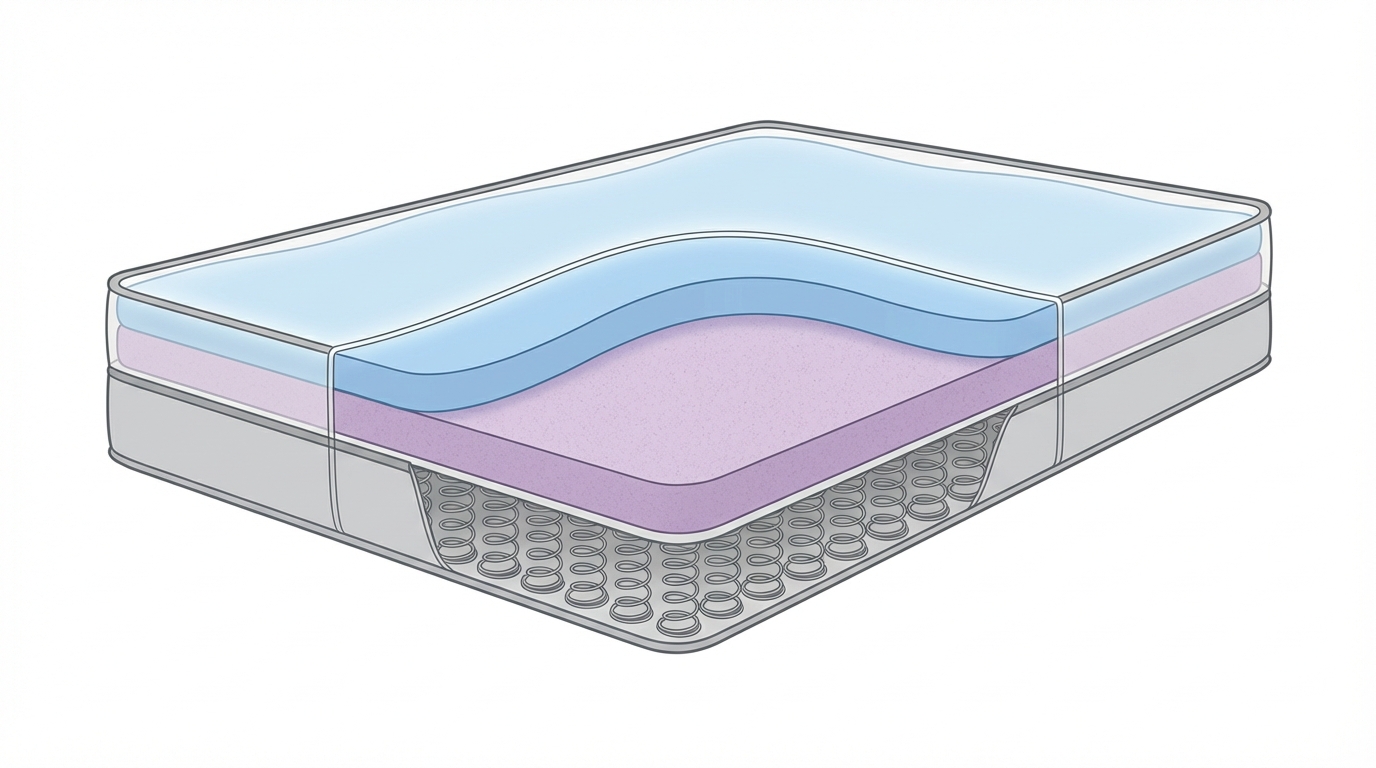
Once you are comfortable with the numbers, the next step is looking at your bedroom and seeing how a queen would realistically fit. This is where many shoppers quietly second guess themselves, because a dimension on paper can feel very different once furniture, doors, and windows enter the conversation.
Start with the interior length and width of your bedroom, measured wall to wall. For example, let us say your room is 10 by 12 feet. If you plan to place the head of the bed on the 10 foot wall, your queen, which is 5 feet wide, will leave about 5 feet of total clearance. After accounting for a frame that adds an inch or two per side, you may have just under 2.5 feet on each side. If you like wider nightstands, or you want a small chair by the window, you will want to see those objects on your floor plan to make sure door swings and drawers will still open cleanly.
A practical trick I often recommend, which is also echoed by many furniture retailers, is to mark the mattress footprint on your floor. Use painter’s tape to outline a 60 by 80 inch rectangle where you think the bed will go. Then bring in your actual nightstands, consider dresser depth, and walk around the room. Do you have to turn sideways to get to the closet. Do you bump into the “bed” when opening a door. This little rehearsal often reveals more than any numbers can, and it helps you feel the difference between a full, queen, and king in your exact space.
Ceiling height and window placement also matter more than people expect. A queen bed placed under a large window can anchor a room nicely, but if the headboard is tall and the ceiling slopes, the space might feel visually crowded even though the floor measurements technically work. Similarly, if your room has only one clear wall, you may be constrained in where the bed can go, which will influence how a queen’s width interacts with other furniture. The goal is to prioritize a comfortable walking path and access to outlets for lamps and chargers without making the room feel like a maze.
If you are planning to add storage furniture at the foot of the bed, like a storage bench or trunk, remember that your 80 inch long mattress plus any frame overhang plus a 16 to 20 inch deep bench can quickly eat into walking space between the bed and a dresser. In those scenarios, some shoppers step down to a queen from a king specifically to preserve foot of bed clearance. Others skip the bench and choose a queen frame with built in storage instead. Thinking through all these interactions ahead of time turns a simple width question into a very practical plan for a calm, functional bedroom.
“Our room is only 10 by 11 and we were nervous a queen would turn it into a tunnel. Mia had us tape out the size and even account for the headboard. We realized that as long as we chose slimmer nightstands, the queen fit beautifully. It saved us from buying a full and regretting it a year later.” – Denise P., December
How Queen Width Affects Comfort, Support, And Sleep Quality
It is easy to think of width as purely a space issue, but it has real consequences for how your body feels during and after sleep. Medical and sleep organizations, including the Sleep Foundation and Mayo Clinic, often stress three pillars of healthy sleep: adequate duration, minimal interruptions, and comfortable body support. Mattress width touches all three.
When you have enough horizontal space, your body can naturally shift between positions without waking up fully. Side sleepers can draw one knee up without bumping a partner. Back sleepers can let arms rest more widely without hanging over the edge. If the mattress is too narrow, you subconsciously limit movement, which can increase pressure buildup at hips and shoulders, especially on firmer surfaces. Research published in journals like Sleep Medicine Reviews has linked pressure points and discomfort with more frequent micro awakenings, which you may not remember but which fragment your sleep architecture.
For couples, width interacts with motion transfer. Even on a mattress with good motion isolation, like many hybrids and memory foam models, a narrow surface means movements travel a shorter distance before reaching the other person. A queen can still feel very stable, especially in higher quality constructions, but if one partner is a light sleeper or moves frequently for pain relief, moving to a wider size like a king can reduce how often those movements lead to awakenings. If your heart is set on queen width, choosing a mattress designed for strong motion isolation becomes even more important.
Support is another dimension. Your spine alignment depends more on mattress construction, firmness, and zoning than width. However, width can affect how consistently that support is delivered. For example, if a couple is forced to sleep very close to the edge on a smaller mattress, they will spend more time on the perimeter, where some lower quality mattresses have weaker edge support. Over time, this can contribute to a feeling of roll off or uneven support. A queen gives couples more leeway to stay fully on the supportive core of the mattress while still spreading out.
This is where pairing the right queen size mattress with your needs makes a big difference. A model like the Sealy Posturepedic Plus Medium Mattress – Paterson II Euro Pillow Top is often an excellent queen choice for couples, because its reinforced center third and edge support system help maintain consistent support across the full width. If you know you will use every inch of that 60 inch span, investing in strong edge and center support is one of the best ways to protect both comfort and mattress longevity.
Queen Width And Mattress Type: Innerspring, Memory Foam, Hybrid, And More
The 60 inch width of a queen mattress stays the same regardless of what is inside it, but the way that width feels can change depending on mattress type. Body impression, edge firmness, and motion transfer all interact with the available width in slightly different ways, so it can be helpful to think of width and type together rather than as separate decisions.
Traditional innerspring mattresses often have stronger edge support because of their coil perimeter designs, which can make a queen feel a touch more spacious. You are more comfortable sleeping closer to the edge if the border feels solid beneath you. However, older style innersprings with thinner comfort layers may not absorb motion as well, so in a queen size, you might feel more go and stop if your partner tosses and turns. Higher quality modern innersprings with pocketed coils tend to handle this better.
Memory foam mattresses, by design, excel at motion isolation. In a queen width, that means partners often report fewer disturbances from each other’s movements, even if one person is a restless combination sleeper. However, some all foam mattresses have softer edges that compress more when you sit or sleep very close to the side. On a queen, where every inch counts for couples, that can make the bed feel effectively narrower, because you do not feel as secure using the outermost few inches.
Hybrid mattresses aim to balance both, with coil support cores and substantial foam or latex comfort layers. In queen size, a well built hybrid can offer robust edge support plus excellent motion isolation, which maximizes how usable your 60 inches really are. A model such as the Sealy Posturepedic Elite Medium Hybrid Mattress – Albany II is a good example of this category. It combines coils for support with plush yet stable comfort foams, which helps couples get the most from the queen width while keeping movements fairly contained.
No matter which type you choose, pay attention to how the sides feel when you test the mattress. Sit down as if you were getting in and out of bed. Lie near the edge and roll slightly toward it. On a queen, you want to feel secure using that space, not as if you might roll off. That comfort with the edge effectively stretches your usable width, especially if you share the bed.
When Queen Width Is “Enough” And When To Consider A King
At some point, every shopper wrestling with the queen width question wonders whether they should simply go up to a king. There is no single right answer, but there are clear signs that queen width is likely to be enough and equally clear signs that a wider mattress might better support long term comfort.
Queen width is usually enough if you are a solo adult, a couple of average build who sleep relatively close together, or a couple who do not regularly share the bed with children or large pets. It also tends to be the sweet spot if your bedroom is around 10 by 10 or 10 by 11 feet and you want nightstands on both sides of the bed. In those scenarios, a queen gives you a comfortable sleep surface without forcing you to sacrifice basic room function, and you can allocate more budget toward a higher quality mattress or better bedding.
On the other hand, there are a few patterns that make me lean strongly toward suggesting a king for customers if their room can possibly accommodate it. If either partner frequently wakes up feeling pinned or sore from staying in one position all night, more width can ease that problem simply by giving each person room to move. If you know you will be co sleeping with a large dog or allowing a child into your bed several nights a week, a king’s extra 16 inches of width can keep that habit from gradually wearing down your sleep quality.
Budget plays a role too, but perhaps not in the way you might think. Yes, a king mattress and its bedding will typically cost more than a queen. However, if you buy a queen and spend several years frustrated by lack of space, you may end up replacing it earlier than you would a correctly sized mattress. When you amortize the difference over 8 to 10 years of nightly use, the extra cost of a king often becomes modest compared to the value of better rest. The key is balancing that reality with the very real constraints of your room’s dimensions.
One way to think about it is to ask yourself future focused questions. Do you expect your household to change in the next decade with kids or pets. Will you likely stay in a home with similar bedroom sizes, or might you move to a place with more space. If you are right on the fence between queen and king, and the room can gracefully fit either, those future considerations often tip the scale. Couples rarely regret having too much space, but they often tell me they wish they had gone bigger when they had the chance.
Queen Mattress Width And Bedding: Sheets, Comforters, And Protectors
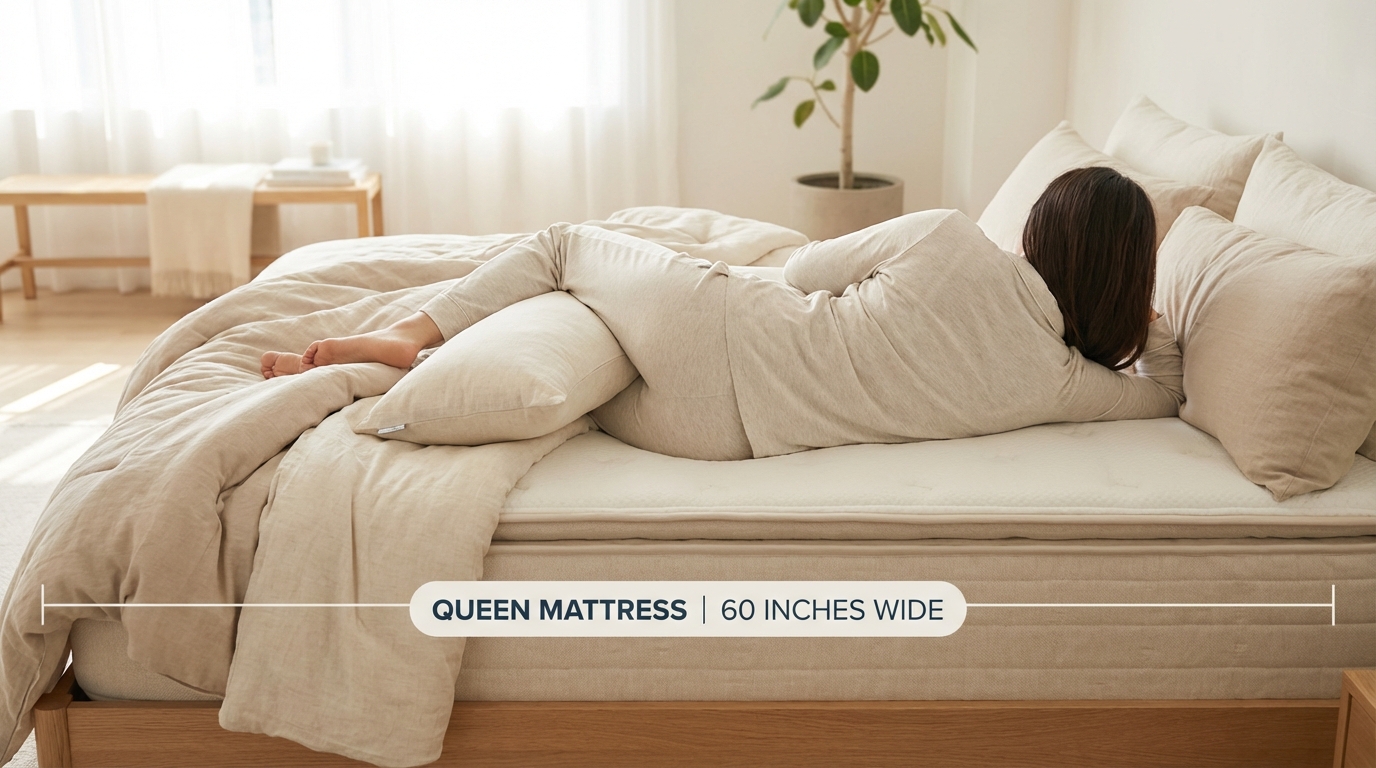
Once you commit to a queen’s 60 inch width, bedding becomes the next practical layer of the puzzle. While sheets and comforters are labeled “queen” and sized to accommodate that standard width, the specific depth and drape you prefer can change how tidy and comfortable your bed feels.
Queen fitted sheets are typically cut to match the 60 by 80 inch mattress surface, plus pockets to wrap around the mattress sides. Where people run into trouble is forgetting to account for mattress thickness and any toppers. A queen mattress that is 14 or 15 inches thick, especially with a plush pillow top, may need deep pocket sheets to avoid corners popping off. That is true whether you choose all cotton or performance fabrics. Many customers who invest in higher profile queen mattresses pair them with quality sheet sets like the Tempur-Pedic TEMPUR Adapt Luxe Egyptian Cotton Sheet Set or the Tempur-Pedic ProPerformance Sheet Set, both of which are engineered to hug the mattress securely.
Flat sheets and comforters for queen beds usually extend beyond the mattress width to allow for adequate overhang. You might see queen comforters listed in the 86 to 90 inch width range and 90 to 100 inch length range. If your mattress is on the thicker side, or if you prefer the hotel style look where the comforter nearly brushes the floor, you may choose a slightly larger size or even a king comforter on a queen bed. Just be mindful that too much excess fabric can feel bulky or trap extra heat for sleepers who run warm.
Mattress protectors and toppers are another consideration. A queen size mattress protector should match the 60 by 80 dimensions closely so it does not bunch or slide. If you add a topper for extra pressure relief, remember that while it will not change the mattress width, it will increase thickness. That extra depth might require deeper pocket sheets, particularly on tightly upholstered pillow top designs. The National Sleep Foundation notes that regularly using a mattress protector can extend the life of your mattress by guarding against sweat, spills, and allergens, so it is worth taking a moment to ensure a proper fit on your chosen queen.
Good bedding is not just about aesthetics. The right sheets and protectors can improve temperature regulation, ease of movement, and hygiene. When your sheets stay in place and your comforter drapes evenly, it makes climbing into bed feel more inviting and less like a battle with shifting fabric. Over the life of your queen mattress, those little daily comforts add up.
Comparison Snapshot: Queen Width Versus Full, King, And Non Standard Queens
To pull all of this together, here is a simple comparison table that highlights how a queen’s 60 inch width stacks up against a full, a standard king, and an Olympic queen. This can be helpful when you are looking at your room sketch and debating which footprint makes the most sense.
| Mattress Size | Width x Length (inches) | Approx. Width Per Person (couple) | Best For |
|---|---|---|---|
| Full | 54 x 75 | 27 inches | Solo adults, tight rooms, occasional couples |
| Queen | 60 x 80 | 30 inches | Most couples, solo sleepers wanting more space |
| Olympic Queen | 66 x 80 | 33 inches | Couples who want more room but cannot fit a king |
| King | 76 x 80 | 38 inches | Couples with kids or pets, larger bedrooms |
Seeing the numbers side by side underscores why queen is such a popular middle ground. It clearly improves on the full for shared sleep while not demanding the same room width that a king requires. The Olympic queen nudges width upward again for those in between situations, and the king represents the maximum shoulder room for most standard US bedrooms.
When you translate this to your own needs, remember that these are starting points, not rigid rules. A petite couple who sleeps curled up may be perfectly content on a queen even in a modest room. A larger couple who both sleep with arms outstretched may feel the king’s extra width is worth rearranging other furniture for. Your comfort is the ultimate measure of whether the queen’s 60 inch width is “right.”
Conclusion: Is A Queen’s Width Right For You?
By now you know that a queen mattress is 60 inches wide and 80 inches long, but more importantly, you have a clearer sense of what that width feels like in the real world. You have seen how much personal space each sleeper actually gets, how a queen compares with full, king, and non standard options, and how everything from bedroom dimensions to pets can tip the balance. You have also learned why mattress type, edge support, and bedding all influence how usable those 60 inches truly are night after night.
If you are leaning toward a queen, you are in very good company. For many singles and couples, it is the size that offers enough breathing room to move comfortably, enough length to fit most adult heights, and a footprint that works in an average sized bedroom without sacrificing furniture or walking space. When paired with a supportive design, whether a plush pillow top like the Sealy Posturepedic Pro Soft Mattress – Dupont II Euro Pillow Top or a responsive hybrid from our curated collections, a queen can easily serve as a sleep friendly home base for the next decade.
If you are still unsure, that is completely normal. Have a look at your room measurements, tape out a few sizes, and think honestly about how you and anyone else using the bed actually sleep. If you find yourself cringing at the idea of reducing your walking space to a narrow channel, a queen may be your best ally. If you realize you routinely wake up pinned between a partner and a dog, it might be time to explore a larger option like the choices in our King Sized Mattresses collection instead.
Whatever you choose, remember that width is not about impressing anyone. It is about creating enough room for your body and your life to coexist peacefully in the same four walls. If you want help translating all these measurements into a specific product short list, the team at Sleepology, and I personally, are always happy to walk through it with you.
Frequently Asked Questions
How wide is a queen mattress compared to a full?
A standard queen mattress is 60 inches wide, while a full mattress is 54 inches wide. That 6 inch difference gives each person an extra 3 inches of shoulder room when two adults share the bed, increasing personal space from about 27 inches each on a full to 30 inches each on a queen. For solo sleepers, a queen feels more spacious, especially if you like to sleep diagonally or use multiple pillows.
Is a queen wide enough for two adults and a dog?
It depends on the size of the adults, the dog, and where everyone tends to sleep. For many couples with a small or medium sized dog that curls up at the foot or along one side, a queen’s 60 inch width is workable, especially on a mattress with good edge support. If you share with a large breed dog that likes to spread out between you, or if both partners are broad shouldered, a king often feels less cramped over time. If you are on the fence, consider whether you wake up feeling pinned or sore from staying in one position; if so, more width may help.
Will a queen size bed fit in a 10 by 10 bedroom?
In most cases, yes, a queen will fit comfortably in a 10 by 10 foot bedroom, especially if you choose modestly sized nightstands and avoid very bulky furniture. The 60 inch wide mattress will leave around 5 feet of total clearance to divide between both sides. Once you factor in a frame that might add an inch or two on each side, you can typically maintain about 2 to 2.5 feet of walking space on each long side, which is considered a comfortable minimum for movement.
How much wider is a king than a queen, and is it worth it?
A standard king is 76 inches wide, which makes it 16 inches wider than a queen’s 60 inches. For couples, that increases personal space from 30 to about 38 inches per person. It can be worth it if you or your partner are restless sleepers, prefer to sleep far apart, or regularly share the bed with pets or children. If your bedroom comfortably accommodates the larger footprint and your budget allows for slightly higher mattress and bedding costs, many couples feel the extra width significantly improves their sleep.
Do I need special sheets for a queen mattress with a thick pillow top?
You do not need special “queen plus” sheets, but you may need deep pocket queen sheets if your mattress is particularly thick, especially if you use a topper. The mattress width remains 60 inches, but added thickness can cause standard depth fitted sheets to pop off the corners. Look for queen sheet sets with pocket depths that match or slightly exceed your mattress height, often in the 14 to 18 inch range, like those in high quality lines such as the Tempur-Pedic ProPerformance Sheet Set.
Is a queen mattress a good choice for a guest room?
For most homes, yes, a queen is an excellent choice for a guest room because it can comfortably host both solo guests and couples. The 60 inch width offers enough space for two adults to sleep without feeling cramped, and the 80 inch length suits most heights. It also tends to fit more easily into multipurpose rooms than a king. If the guest room is very small or doubles as a home office, you may decide on a full to preserve more floor space, but when possible, guests usually appreciate the extra comfort of a queen.
Does mattress type change the ideal width I should choose?
Mattress type does not change the physical width, but it does change how that width feels. Memory foam and high quality hybrid mattresses often excel at motion isolation, which can make a queen more comfortable for couples sensitive to movement. Innerspring and hybrid models with reinforced edges can make the full 60 inch span more usable by keeping the perimeter supportive. If you are staying with queen width, prioritize a mattress that balances strong edge support with low motion transfer so you get the most functional space from side to side.