

How Wide Is A King Mattress? A Real-World Guide To Space, Comfort, And Fit
If you are staring at your bedroom and a tape measure right now, wondering whether a king mattress will actually fit, you are not alone. Many shoppers know king means big, but they are less sure about what that looks like in real, usable inches and in a real room with nightstands, doors, and maybe a dog bed in the corner. Getting that wrong can mean a crowded space, an awkward delivery, or a bed that never quite feels right.
Mattress size is not just a technical detail. It affects how well you and your partner sleep, whether you wake up feeling rested or irritated, and how comfortable your bedroom feels as a whole. When you move from a queen to a king, you are making a decision about personal space, relationship comfort, and long term value. According to the Sleep Foundation, most adults sleep better when they have enough room to change positions freely, and mattress width is a huge part of that equation.
Here you will find clear answers to the deceptively simple question, how wide is a king mattress, along with the equally important follow up questions most people do not think to ask right away. You will see how a standard king compares to a California king in everyday terms, how much space each person actually gets, what kind of room sizes work best, and where a split king or adjustable base might make sense. You will also see how a king size affects bedding, budget, and long term comfort so you can feel confident instead of guessing.
By the end, you should feel like you have walked through this decision with a knowledgeable friend who has seen hundreds of bedrooms, listened to thousands of sleepers, and knows exactly where people regret, I should have gone bigger or I really should have measured first. That is the kind of practical, no pressure guidance we aim for at Sleepology.
The Short Answer: How Wide Is A King Mattress, Really?
The standard king mattress in the United States is 76 inches wide and 80 inches long. When people ask how wide is a king mattress, they are usually trying to picture how that compares to a queen or to two separate beds. The easiest way to visualize it is this: a king is essentially the width of two twin mattresses placed side by side, with just a little bit more shared width than a queen provides.
A queen mattress is 60 inches wide, so when you upgrade to a king you are gaining 16 extra inches of width across the bed. That works out to 8 more inches of personal space per person if you are a couple. For context, Consumer Reports has noted that couples often sleep more comfortably when each person has at least as much space as a twin bed, and a king mattress is the first standard size that truly delivers that level of width for two adults.
When only one person uses a king, it can feel delightfully oversized, which can be helpful if you share space with a large dog, a child who sometimes climbs in, or simply love to spread out. According to clinical sleep specialists at Mayo Clinic, people who toss and turn or change positions frequently often benefit from more space, because they are less likely to wake fully when their body moves or when a partner shifts. That extra width can translate into better sleep continuity and less perceived disturbance.
It is worth pausing to think about real numbers per sleeper. On a queen, two adults each get about 30 inches of width. On a king, each person has 38 inches, which is nearly the full width of a classic twin. If you have ever slept alone on a twin and thought, this is just enough but not generous, a king essentially gives both partners that minimum comfortable width at the same time. For many couples, that difference is what makes a king feel like a genuine upgrade rather than a small change.
“We moved from a queen to a king after Mia helped us measure everything properly. The first night my husband said, I can finally turn without elbowing you. It sounds small, but it has made our sleep and our mornings so much better.” – Rachel P., November
King Vs California King: Width, Length, And Which Feels Bigger
A lot of shoppers assume a California king is bigger than a standard king in every way, because the name sounds more luxurious. In reality, the California king is longer but not wider. A California king mattress measures 72 inches wide and 84 inches long. So you trade 4 inches of width for 4 extra inches of length. Overall surface area is almost the same, but the shape and feel in the room are different.
From a width perspective, that 4 inch difference matters if shoulder room and side to side space are your priority. On a standard king, each person has roughly 38 inches of width. On a California king, that shrinks to about 36 inches per person. Two inches does not sound like much on paper, yet for broader shouldered sleepers or couples who prefer not to bump into each other when changing positions, those inches can be noticeably helpful.
Length is where the California king quietly shines. At 84 inches long, it comfortably fits people who are 6 foot 5 and taller, which can be important from a spinal alignment standpoint. The Sleep Foundation notes that your mattress should be at least several inches longer than your height to reduce the tendency to curl up or compress yourself against the headboard to avoid hanging heels. If you or your partner are notably tall, that extra length can reduce knee and hip flexion, which can matter for back and joint comfort.
Room shape should guide you as well. In a more square bedroom, a standard king often feels visually balanced and leaves more useable walking space along the sides. In a narrower, more rectangular room, a California king can be easier to fit because it eats slightly less width and extends lengthwise toward a wall. Thinking of the mattress as a rectangle inside a rectangle is a simple way to see whether width or length is the real constraint in your space.
When clients ask me, as a Sleepology sleepologist, which is bigger or better, I translate it to a simple rule. If you care more about shoulder room and each partner having that twin like width, lean toward a standard king. If you are tall enough that your toes hang off a queen, or your bedroom is long and relatively narrow, a California king can be the smarter and more comfortable fit.
How King Size Mattresses Compare To Other Sizes

Sometimes the numbers for a king mattress only make sense when you see how they stack up against other common sizes. The jump from full to queen feels noticeable, and the jump from queen to king often feels like a more luxurious leap. The key is to match what you think you need with your actual sleep habits and room layout.
A full mattress is typically 53 inches wide and 75 inches long, which works for a single adult or a very cozy couple, especially in a smaller room. A queen at 60 inches by 80 inches gives a solo sleeper generous space or a couple a workable middle ground of personal space and room size. When you step into a king at 76 inches by 80 inches, the footprint shifts from compact efficiency to primary bedroom scale. It fits best where the room can give it breathing room.
What surprises many couples is how little space they actually have on a full or queen when you divide the width by two. On a full, partners each get roughly 26.5 inches. On a queen, that increases to 30 inches. On a king, the jump to 38 inches is significant, and that difference often shows up as fewer accidental nudges, less fighting over the center of the bed, and more comfortable side sleeping. Studies from sleep labs, including research referenced by Cleveland Clinic, highlight how motion transfer and crowding can disrupt deep sleep stages, especially in lighter sleepers.
Here is a simple comparison table to show how the main adult sizes stack up:
| Mattress Size | Width (inches) | Length (inches) | Approx. Width Per Person (for two adults) |
|---|---|---|---|
| Full | 53 | 75 | 26.5 inches |
| Queen | 60 | 80 | 30 inches |
| King | 76 | 80 | 38 inches |
| California King | 72 | 84 | 36 inches |
If you are currently on a full and feel like you are sleeping on top of each other, moving all the way up to a king can feel like a transformation. If you are on a queen and merely feel a bit crowded during hot nights or when your child or dog squeezes in, a king might be more of a refinement than a rescue. That distinction can help you decide whether the added cost and space are worthwhile in your specific situation.
Many shoppers find that pairing a generous king size with strong support and pressure relief is the real secret to comfort. For example, a plush yet supportive hybrid like the Sealy Posturepedic Elite Medium Mattress – Brenham II Euro Pillow Top in king can give couples a combination of motion control, spinal alignment, and spaciousness that feels noticeably better than a smaller, older bed.
“We almost settled on a queen to save a little money, but the side by side comparison made it obvious we would still be bumping into each other. Going with the king version of the Sealy Posturepedic that Mia suggested felt like moving from a couch to an actual bed for two adults.” – Mark D., October
Room Size: Will A King Mattress Actually Fit Comfortably?
Knowing that a king mattress is 76 inches wide is only half the puzzle. The other half is how that width behaves in a real bedroom with doors, closets, and furniture. A common guideline from designers and home ergonomics experts is to leave at least 24 to 30 inches of walking space around the sides and foot of the bed, so you can move comfortably, open drawers, and make the bed without squeezing.
For a king mattress, a practical minimum room size is around 12 by 12 feet. This allows the bed to sit either centered on a wall with nightstands on each side or slightly offset if you have windows or doors to work around. If you place a king into a room closer to 10 by 10 feet, it may technically fit, but you will likely end up with narrow walkways and less flexible furniture placement. That is where a queen sometimes makes more visual and functional sense.
The shape of your room is just as important as the square footage. In a narrow rectangular bedroom, you may find that a wide king bed feels tight, especially if one side of the bed is close to a wall or radiator. In those cases, some clients choose a California king because it reduces the side to side footprint and stretches lengthwise, or they reconfigure the furniture so the bed uses the longest wall and circulation moves around the foot.
Ceiling height and window placement also affect how a king feels. In a small room with low ceilings and a tall headboard, a king mattress can dominate the space and make it feel visually heavy. In contrast, in a room with higher ceilings or large windows, a king often looks balanced and proportionate. When I help Sleepology clients plan, I often suggest using painter’s tape to outline the exact 76 by 80 inch footprint on the floor to see how it interacts with doors, closets, and existing furniture.
One detail many people forget is doorways, hallways, and stairwells on the way in. While a king mattress is flexible enough to bend somewhat, tight turns or low ceilings can make delivery difficult. When in doubt, a split king, which uses two narrower mattresses on a shared base, can be easier to maneuver through older homes or tight staircases while still giving you the width of a king once it is set up.
Couples, Kids, And Pets: Is A King Wide Enough For Your Household?
When couples consider a king mattress, they often picture two adults and forget that they also share the bed with a snoring bulldog or a preschooler who appears at 3 a.m. Asking whether a king is wide enough is really asking whether 76 inches can comfortably accommodate your real life, not your idealized version. That is where thinking in terms of people zones can be helpful.
For two adults, a standard king usually provides plenty of width for independent sleeping, even if one partner is a restless sleeper. Each adult has roughly the width of a twin, which tends to feel generous compared to a queen. If you add a medium or large dog, they often nestle at the foot or between you, and a king can typically handle that if both partners are comfortable with slightly reduced space. When multiple young children frequently end up in bed, however, even a king can start to feel crowded.
Body size and sleep style matter too. Two tall, broad shouldered adults who are both side sleepers may feel more grateful for the extra inches than two petite back sleepers who rarely move. Side sleepers need more horizontal space for their arms and shoulders to angle comfortably. If either of you deals with back or joint issues, having the freedom to adjust positions without waking your partner can be a real quality of life improvement, especially over years of nightly use.
It is important to be honest about how often extra sleepers join you. If a child or pet is rarely in the bed, a standard king is often more than enough. If co sleeping is a nightly reality, you may want to pair a king with an adjustable base that allows you to raise the head slightly for reading or for a partner with snoring or reflux, which can make shared sleep more peaceful for everyone. A smart adjustable platform like the TEMPUR-ERGO EXTEND ProSmart Base Adjustable Mattress Foundation can give each sleeper independent control of their side while keeping the shared width of a king.
Finally, consider how often you and your partner are awake in bed together. If you spend a lot of time reading, watching shows, or working from bed, you may appreciate the extra width for laptops, pillows, and various comfort accessories. If you mostly use the bed only for sleep, the value of that additional 16 inches over a queen may be more about personal space than lifestyle, though many couples still find the upgrade worthwhile.
Standard King Vs Split King: Same Width, Different Benefits
When people hear split king, they sometimes assume it is a different size entirely. In reality, a split king is the same total width and length as a standard king mattress, 76 inches wide and 80 inches long, but it is made up of two separate mattresses, usually two twin XLs. Those sit side by side on a shared or split base. So from a how wide is a king mattress perspective, nothing changes. What changes is how that width behaves for you and your partner.
The biggest advantage of a split king is customization. Each side can be a different firmness, material type, or even brand in some setups, which is helpful if one partner prefers a softer feel and the other needs more support. For example, one partner might choose a cushioned model like the Sealy Posturepedic Pro Soft Mattress – Dupont II Euro Pillow Top, while the other chooses a slightly firmer variant, and both pieces are ordered in twin XL to form a split king.
Split kings really shine when paired with adjustable bases. Each mattress can move independently, so one partner can raise their head for snoring or reflux while the other stays flat. According to sleep medicine specialists, elevating the upper body can reduce symptoms of positional sleep apnea and nighttime heartburn in some people, and having separate adjustability makes it easier for couples to use those features without compromise.
There are a few tradeoffs. You will need split king fitted sheets or two separate twin XL fitted sheets, which can be a small added complexity when shopping for bedding. There is also a small gap between the mattresses, though many couples barely notice it once a mattress protector and top sheet are on. If you like to sleep exactly in the center, you may prefer a solid king. If you typically stay on your own side, the benefits usually outweigh that minor drawback.
For couples who want the width of a king but have different sleep needs, I often recommend exploring a split king combined with a responsive foundation like the TEMPUR-ERGO Smart Base Adjustable Mattress Foundation. It gives you the same footprint in your room while adding flexibility you simply cannot get from a single, unified mattress.
“My husband needs his head elevated for reflux, and I sleep best completely flat. The split king with an adjustable base that Mia walked us through has been a game changer. We still feel like we are sharing one big bed, but neither of us has to compromise on position.” – Andrea L., December
How Mattress Type And Construction Affect Perceived Width
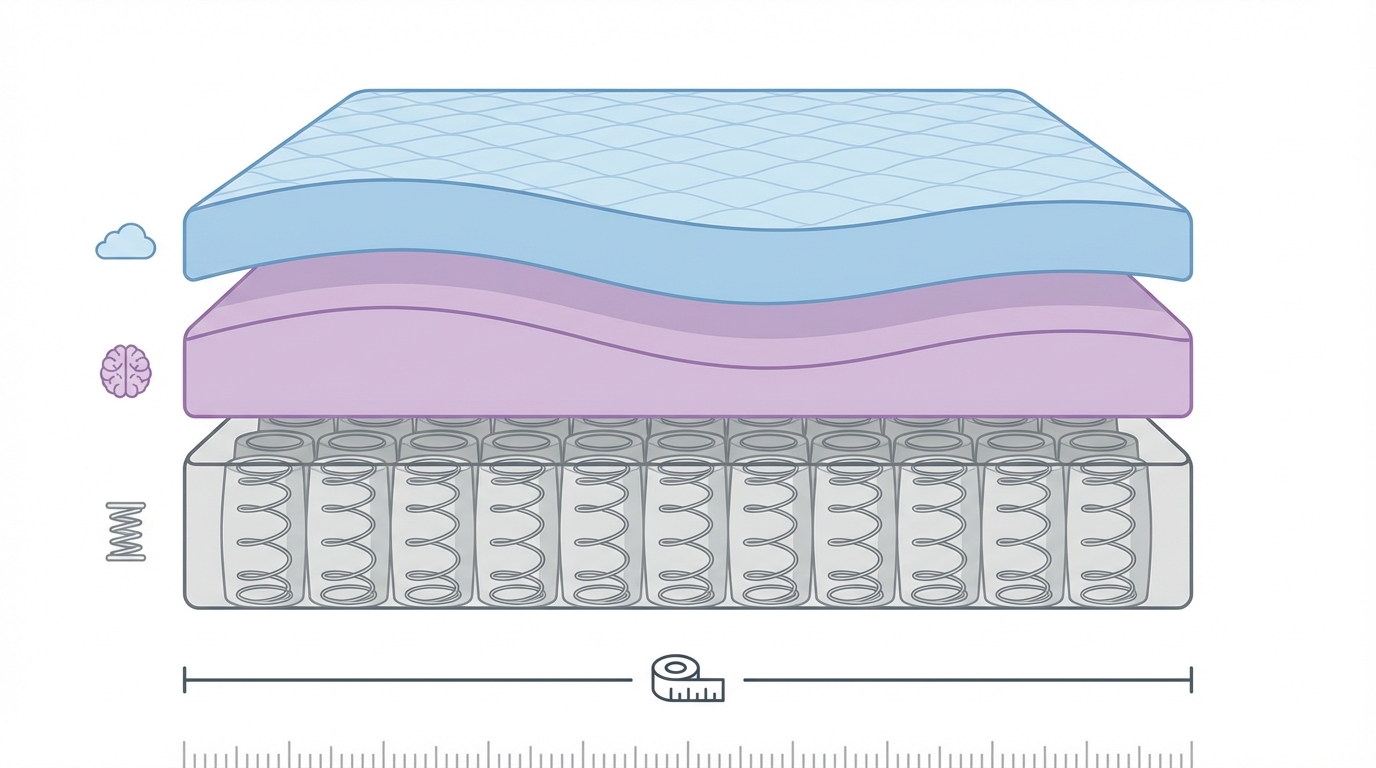
Even though every standard king is 76 inches wide, they do not all feel equally spacious. The type of mattress you choose and how it is built can change how useable that width feels. Firmer, more supportive edges, for instance, let you sleep closer to the side without feeling like you might slide off. Softer edges can make the bed feel a little narrower than the tape measure suggests.
Hybrid mattresses, which combine coils with foams or gels, often have reinforced edge support around the perimeter. That allows you to sit at the edge while getting dressed and to lie close to the edge at night without excessive compression. All foam beds sometimes have softer edges unless they are specifically engineered otherwise. If you tend to roll close to the side or if you share the bed with others, paying attention to edge support can help the full 76 inches work for you.
The comfort layers also matter. A very plush pillow top can feel luxurious, especially for side sleepers, but it may slightly reduce the sense of structured space if you sink far into it. A medium feel that blends cushioning with underlying support often gives couples the best balance of pressure relief and stability. In my experience at Sleepology, many back and combination sleepers love the way a mattress like the Sealy Posturepedic Soft Mattress – Medina II in king size supports the lumbar area while still feeling welcoming around the shoulders and hips.
There is also the question of motion transfer. Foam based and hybrid mattresses with motion isolating designs allow each person to use the full width without feeling every small movement. According to research cited by the American Academy of Sleep Medicine, micro awakenings from partner movement can reduce overall sleep quality. So when you combine the extra width of a king with motion isolation, you get both better space and fewer disturbances.
Think of the mattress width as the foundation and the construction as the finishing. The right combination will make every inch of that 76 inch span feel safe, stable, and sleepable, rather than giving you a big but only half useful surface. When you are investing in a king, that detail is worth your attention.
Bedding, Accessories, And Practical Details For King Width
Once you understand how wide a king mattress is, the next layer of reality is what that means for your bedding and accessories. King mattresses require king sized sheets and comforters, which are designed to cover the 76 by 80 inch surface with enough drape on each side. If you move up from a queen, you will likely need to refresh at least some of your linens so they properly cover the new width.
Good fit matters because loose or undersized sheets can bunch, which disrupts comfort and can subtly shorten your usable width. The Sleep Foundation recommends choosing breathable, well fitted bedding to help regulate temperature and maintain sleep efficiency. When your sheets and protectors are suited to your mattress dimensions, you are less likely to wake from tangles or tight corners. This is particularly true on split kings, where you will need twin XL fitted sheets for each side.
Pillows are another element to consider, especially if you are pairing your king mattress with an adjustable base. Larger beds often invite people to use more pillows for reading, side support, or leg elevation. Ergonomic options such as The BodyPillow by Tempur-Pedic can be especially helpful for side sleepers on a king, giving them a long, supportive hug while still leaving plenty of width for a partner.
Mattress protectors and toppers should match your mattress size directly. For instance, if you want to soften a firmer king or create a more guest ready feel, choosing products sized for king, such as those within Sleepology’s pillows, sheets, toppers, and protectors collection, ensures edge to edge coverage. That means you get consistent feel as you move around the bed, not a softer middle and firmer edges where the topper ends.
Finally, think about how the increased width will interact with bedside furniture. Wider mattresses often look best with appropriately sized nightstands that are not dwarfed by the bed. Make sure you still have room for lamps, books, or a glass of water without feeling crowded. A well balanced setup will make your king feel like an intentional choice rather than an oversized object squeezed into the room.
How To Decide If A King Is The Right Width For You
Now that you know the numbers and practical details, the remaining question is whether a king mattress is the right width for your specific life. Rather than thinking about size in the abstract, it helps to walk through a short mental assessment that captures your body, your room, your relationships, and your budget. This is similar to what we do with clients in person at Sleepology.
Start with your sleep comfort today. Do you regularly wake because you or your partner encroach on each other’s space, or because your dog plops down right where your legs want to go. If spatial conflicts are a nightly theme, that is a strong clue that you would benefit from more width. If your main issues are support or pressure points rather than space, you may be able to stay at your current size and focus more on construction than dimensions.
Next, consider your future. If you anticipate children joining the family or an older pet who already sleeps with you, planning ahead with a king can avoid another upgrade in a few years. Long term durability studies show that higher quality mattresses can last 8 to 10 years when well cared for. It can be more cost effective to choose the right size now instead of replacing a queen sooner because your family outgrew it.
Then, look honestly at your room and your budget. Measure your walls, doorways, and existing furniture. If a king will fit but make the room feel cramped, you might be happier with a queen and investing the savings in a better quality mattress or an adjustable base like the Tempur-Pedic ERGO Adjustable Mattress Base. According to both sleep physicians and physical therapists, position and support can be as important as raw mattress width for relieving pain and improving sleep.
To pull everything together, here is a quick checklist of questions to ask yourself as you decide between a queen and a king:
- Do you or your partner often feel crowded on your current bed?
- Do your kids or pets regularly share the bed, even for part of the night?
- Can your bedroom comfortably accommodate a 76 inch wide mattress with adequate walking space?
- Are you or your partner above average in height or shoulder width?
- Would having independent adjustable positions or firmness levels through a split king be valuable?
- Are you willing to invest in new king sized bedding to support the larger mattress?
- Are you planning to stay in your current home or bedroom layout long enough to enjoy the upgrade?
If you answer yes to several of these questions, a king is very likely the right direction. If you are split between yes and no, it can be helpful to talk things through with a sleep consultant who can factor in specific products, room photos, and your health history. That conversation can reveal whether your money is better spent on more width, more support, or more adjustability.
Matching King Width To Your Sleep Position And Body Needs

Even with the right dimensions and room, your experience on a king mattress will depend a lot on how you sleep and what your body needs. Different sleep positions create different pressure points, and the way you use the width of the bed can change with each posture. Understanding this can help you choose not only the size but also the right king mattress type for your comfort.
Back sleepers typically use width more evenly, staying closer to the center of their side of the bed. For them, the value of a king often shows up in reduced disturbance when a partner turns, rather than in feeling like they need more personal width. Back sleepers usually benefit from a medium to medium firm feel that supports the natural curve of the spine. Options curated in Sleepology’s best mattresses for back sleepers collection can pair beautifully with king width to create a stable, spacious sleeping platform.
Side sleepers often spread out more horizontally, especially if they curl slightly or hug a pillow. They tend to appreciate the extra inches of shoulder room a king provides. At the same time, they need cushioning at the shoulders and hips to prevent numbness and pressure buildup. A plush yet supportive king mattress, potentially paired with a body pillow or a specialty pillow bundle such as the Tempur-Pedic Mattress Topper, Pillow Travel and Guest Bundle, can help them use the full width without waking from discomfort.
Stomach sleepers are a special case. They often lie diagonally or near the edge of the bed, which can make a king feel especially roomy. However, stomach sleeping can be challenging on the neck and lower back if the mattress is too soft. Collections like Sleepology’s best mattresses for stomach sleepers are designed to keep the midsection from sinking too far while still providing enough surface comfort, and pairing that support with king width can give stomach sleepers both space and alignment.
If you alternate positions at night, which research from various sleep labs suggests most people do, you may find that a king solves two problems at once. It gives you enough space to change positions freely without whacking your partner, and it lets you distribute your weight across different regions of the mattress over time, which can be helpful for durability and comfort. When choosing your king, focus on a balanced feel that works for all your typical positions rather than optimizing for just one.
Conclusion: Turning Measurements Into Better Sleep
A king mattress is 76 inches wide and 80 inches long, but those numbers only come alive when you connect them to how you live, sleep, and move. That extra 16 inches of width over a queen can mean fewer midnight collisions, more room for a pet, and a greater sense of personal space that quietly improves your sleep quality over years. Whether you choose a standard king, a California king for extra length, or a split king for adjustability, the real goal is a bed that fits both your body and your bedroom.
You have seen how room size, household members, mattress construction, and bedding all interact with the simple question of how wide a king mattress is. You have also seen that sometimes the best investment is not only in width, but in pairing that width with strong support, motion isolation, and maybe an adjustable base so each sleeper can fine tune their comfort. That is where working with knowledgeable guidance can help avoid expensive guesswork.
If you are still unsure, do not feel pressured to decide instantly. Take measurements, think through your nightly reality with kids or pets, and consider which features matter most for your health and comfort. When you are ready, the Sleepology team is here to help you match those answers with specific king size options that make sense for your space, your body, and your budget, so your next mattress feels less like a gamble and more like a well planned upgrade to your nights.
Frequently Asked Questions
How wide is a standard king mattress compared to a queen?
A standard king mattress is 76 inches wide and 80 inches long, while a queen is 60 inches wide and 80 inches long. That means the king is 16 inches wider, giving each person about 8 extra inches of personal space if two adults share the bed. In practical terms, the king feels noticeably more generous side to side, especially for couples who sleep on their sides or move around a lot at night. The length is the same, so the main change you will feel is the expanded width.
Is a California king wider than a standard king?
No, a California king is not wider than a standard king. A California king is 72 inches wide and 84 inches long, which means it is 4 inches narrower but 4 inches longer than a standard king. People sometimes assume California king means bigger in every direction, but it is really just a different shape that favors length over width. If you are tall and need extra legroom, a California king can be a good fit, while couples who want the most shoulder room usually prefer a standard king.
What is the minimum room size for a king mattress?
A commonly recommended minimum room size for a king mattress is around 12 by 12 feet, which leaves room for walking paths, nightstands, and other furniture. You can physically fit a king into a room that is closer to 10 by 10 feet, but you may find the space feels cramped and circulation is tight. It is helpful to use painter’s tape to outline the 76 by 80 inch footprint on your floor and check that you still have at least 24 to 30 inches of walking space around the sides and foot of the bed.
How much space does each person get on a king mattress?
On a standard king mattress that is 76 inches wide, two adults each get about 38 inches of width. That is close to the width of a traditional twin bed per person, which is why many couples experience a king as significantly more spacious than a queen. For comparison, partners on a queen each have about 30 inches of width, and on a full they have about 26.5 inches. The jump from 30 to 38 inches per person is what often reduces the feeling of crowding or bumping into each other at night.
Is a split king the same width as a regular king?
Yes, a split king is the same total width and length as a regular king, 76 inches by 80 inches. The difference is that a split king uses two separate mattresses, usually twin XL size, placed side by side on a shared base. This allows each side to have a different firmness or to move independently on an adjustable base, while still filling the same footprint in your room as a single king mattress.
Will a king mattress be too big if I sleep alone?
A king mattress can feel very spacious for a solo sleeper, but whether it is too big depends on your room and your preferences. If you have a large bedroom and enjoy spreading out, working, or watching shows from bed, a king can feel like a comfortable personal retreat. If your room is smaller or you prefer a cozier, more proportional look, a queen may be a better fit, and you can invest the savings in higher quality materials or an adjustable base for better long term comfort.
Do I need new bedding if I upgrade from a queen to a king?
Yes, you will need new bedding if you move from a queen to a king mattress. King mattresses require king sized fitted sheets, flat sheets, and comforters or duvets to properly cover the 76 inch width and 80 inch length. Queen size linens will not fit correctly and may pop off the corners or leave exposed areas. When upgrading, it is a good opportunity to choose breathable, well fitting bedding, such as options from Sleepology’s pillows, sheets, toppers, and protectors collection, to complement your new mattress.