

How To Shop For A Mattress: A Complete, No Stress Guide From A Sleepologist
If thinking about mattress shopping makes your shoulders tense up, you are not alone. Between pushy sales tactics, confusing jargon like "zoned coils" and "cooling gel," and a huge range of prices, it can feel like a test you never studied for. On top of that, you are making a decision that will quietly affect your comfort, pain levels, and energy every single day for years. It is completely reasonable to want to get this right and equally reasonable to feel unsure about where to start.
Sleep researchers consistently find that sleep quality is tightly linked to mattress quality. Organizations like the Sleep Foundation and Mayo Clinic emphasize that a mattress that supports neutral spinal alignment, limits pressure points, and stays at a comfortable temperature helps you fall asleep faster, wake less often, and reduce aches in the morning. When you put that together with the fact that you will likely spend 7 to 9 hours per night on this surface, your mattress becomes more like a piece of health equipment than just another piece of furniture.
You are here because you are trying to figure out how to shop for a mattress in a smart, confident way, not just grab whatever is on sale and hope for the best. You might be dealing with back pain, waking up sweaty, sharing a bed with a restless partner, or simply realizing your current mattress has seen better days. What you need is a clear roadmap that translates all the technical terms into real world comfort, connects your body and sleep patterns to specific mattress features, and helps you avoid common, expensive mistakes.
That is exactly what you will find here. You will learn how to know when it is truly time to replace your mattress, how different mattress types actually feel, how to match firmness to your body and sleep position, and how to compare warranties and trial periods without getting lost in the fine print. You will also see concrete product examples from Sleepology so you can connect the principles to real mattresses that solve real problems. By the end, you will know how to shop for a mattress step by step, and you will feel ready to walk into a store or browse online with real confidence instead of guesswork.
Step One: Know When It Is Time To Replace Your Mattress
Before you even start comparing brands, it helps to be sure that a new mattress is what you actually need. Many people wait far too long, either because they get used to mediocre sleep or because they are hoping a quick fix like a cheap topper will rescue a worn out bed. According to organizations like the Cleveland Clinic, most mattresses last around 7 to 10 years, depending on the materials, your body weight, and how well it has been cared for. That range is a guideline, not an expiration date, so you want to pay attention to how your body feels more than the calendar.
One of the clearest signs you need a new mattress is morning pain that improves once you are up and moving. If you wake with a stiff lower back, sore hips, or aching shoulders that slowly loosen during your day, your mattress probably is not supporting you properly at night. Sagging, visible body impressions deeper than about an inch, or a lumpy feel under the surface are also strong signals that the internal support system is breaking down. Once support fails, no amount of rotating, flipping, or fluffing really solves it.
Changes in your body can be another big reason to start mattress shopping, even if your bed is not extremely old. Weight changes, pregnancy, injury, surgery, or a new diagnosis like arthritis or sleep apnea can make a once comfortable mattress feel completely wrong. The National Sleep Foundation notes that physical changes often call for different pressure relief and support profiles, which is why a mattress that felt perfect five years ago might now be keeping you up at night. Listening to those signals instead of fighting through them is one of the most important parts of knowing how to shop for a mattress that fits who you are today.
Finally, do not overlook more subtle signs like sleeping hotter than you used to, waking easily when your partner moves, or noticing your allergies are worse in bed than in the rest of the house. Old or low quality mattresses can trap more heat and accumulate dust mites and allergens. Upgrading to a modern design with better airflow and updated materials can quietly solve issues you may have assumed were just "how you sleep."
“I kept waking up with a stiff back and blamed turning 50. Mia helped me realize my 12 year old mattress was the real culprit. We replaced it with a mid range hybrid and I literally felt the difference the first week. I wish I had not waited so long or wasted money on two toppers that never really helped.” – Karen J., November
Step Two: Get Clear On Your Sleep Profile
Knowing how to shop for a mattress starts with understanding your own sleep, not the latest trend. A lot of confusion comes from trying to chase what is "best" in general instead of what is best for your specific body, sleep position, and preferences. This is where you turn vague complaints like "I just do not sleep great" into clear requirements the right mattress can actually solve.
The first piece of your sleep profile is your primary sleep position. While most of us move around at night, you probably spend most of your time on your side, back, or stomach. Each position places pressure on different areas of your body. For example, side sleeping concentrates weight on your shoulders and hips, so you need more pressure relief in those zones. Back sleeping spreads weight more evenly but needs consistent support along the natural curve of your spine. Stomach sleeping, which many doctors and the Mayo Clinic warn can strain the neck and back, demands a firmer surface so your hips do not sink too far.
The second piece is your body type, which includes both your weight and proportions. A person who is 5'2" with a lighter frame needs very different foam densities and coil support than someone who is 6'3" with broad shoulders. Heavier bodies compress materials more, so they often need denser foams and more robust coil systems to prevent early sagging. Lighter bodies may never sink deeply enough into a very firm mattress to get proper pressure relief, even if that mattress is well made.
The third piece involves your comfort and temperature preferences. Do you love that "hugged by the bed" feel or do you prefer sleeping more "on" the mattress with easier movement? Do you often wake up sweaty or do you tend to run cool? Memory foam can be wonderfully pressure relieving but can feel warmer for some sleepers. Innersprings and many hybrids allow more airflow and tend to sleep cooler. Paying attention to your current temperature comfort and how often you toss and turn gives valuable clues.
It also helps to factor in your sleep partner if you share a bed. Differences in body size, preferred firmness, and temperature needs can complicate the decision, but they can also point you toward the most flexible mattress types. Couples often do better on high quality hybrid or foam mattresses that isolate motion well, and sometimes a medium feel becomes a good compromise. When one person is a strict stomach sleeper and the other is a sensitive side sleeper, getting the right support and comfort balance is especially important.
“My husband is 6'5" and sleeps hot, and I am a side sleeper who loves a softer feel. I honestly thought we would never agree. Our Sleepology specialist helped us list our non negotiables before we even tried anything. That made checking out mattresses so much easier because we knew what to pay attention to instead of just guessing.” – Alicia R., October
Step Three: Understand Mattress Types And How They Feel
Once you know your sleep profile, the next step in learning how to shop for a mattress is understanding what the main mattress types actually feel like in real life. Labels like "hybrid" or "memory foam" do not tell the whole story, but they do give you a strong starting point. Instead of thinking in terms of good or bad, think about how each type tends to behave under different bodies and sleep positions.
Innerspring Mattresses
Traditional innerspring mattresses have a core built from metal coils, topped with layers of cushioning materials. If you grew up flipping a mattress with a bouncy feel, it was probably an innerspring. Modern versions use better coil designs and more refined comfort layers, but the underlying feel is still responsive and often cooler than thick, all foam beds. The space between coils allows air to move more freely, which is especially helpful for warm sleepers or for people living in humid climates.
Innersprings generally feel more "on top" than "in" the mattress. This can be a relief for people who dislike the deep contour of some foams or who move a lot in their sleep. On the other hand, lower quality innersprings with thin or inexpensive comfort layers can develop pressure points in the shoulders and hips, particularly for side sleepers. Over time, cheaper coil units can sag more noticeably in the middle or under heavier areas like the hips.
For many back and stomach sleepers, a well built innerspring with a supportive coil system and a modest comfort layer can work beautifully. If you prefer a classic, buoyant feel and you tend to sleep warm, an innerspring can be a smart starting point. At Sleepology, customers who want that traditional support with a touch of cushioning often do well with firm pillow top models like the Sealy Posturepedic Plus Firm Mattress – Paterson II Euro Pillow Top, which combines sturdy coils with a slightly plusher surface for comfort.
Memory Foam Mattresses
Memory foam mattresses are known for their deep contouring, "melt into the bed" sensation. These mattresses use high density foams that respond to heat and pressure, allowing your body to slowly settle into a supportive cradle. According to sleep research summarized by the Sleep Foundation, this contouring can reduce pressure on joints and improve spinal alignment for many side and back sleepers, especially those with arthritis or chronic pain.
The tradeoff is that traditional memory foam can retain more heat. While modern formulations often incorporate open cell designs or gel infusions to improve temperature regulation, the basic physics still apply. The closer a material hugs your body, the less air can circulate around your skin. If you tend to run warm, you will want to pay close attention to how a specific memory foam mattress handles airflow and whether its cover and comfort layers are designed to manage heat.
Memory foam also has a more "absorbing" feel. This makes it excellent for motion isolation, which is why couples often love it, but some people dislike how it resists quick position changes or feels less bouncy. If you have mobility challenges or simply like to roll around freely, you may prefer a firmer foam feel or a hybrid instead of very soft, slow responding memory foam.
Hybrid Mattresses
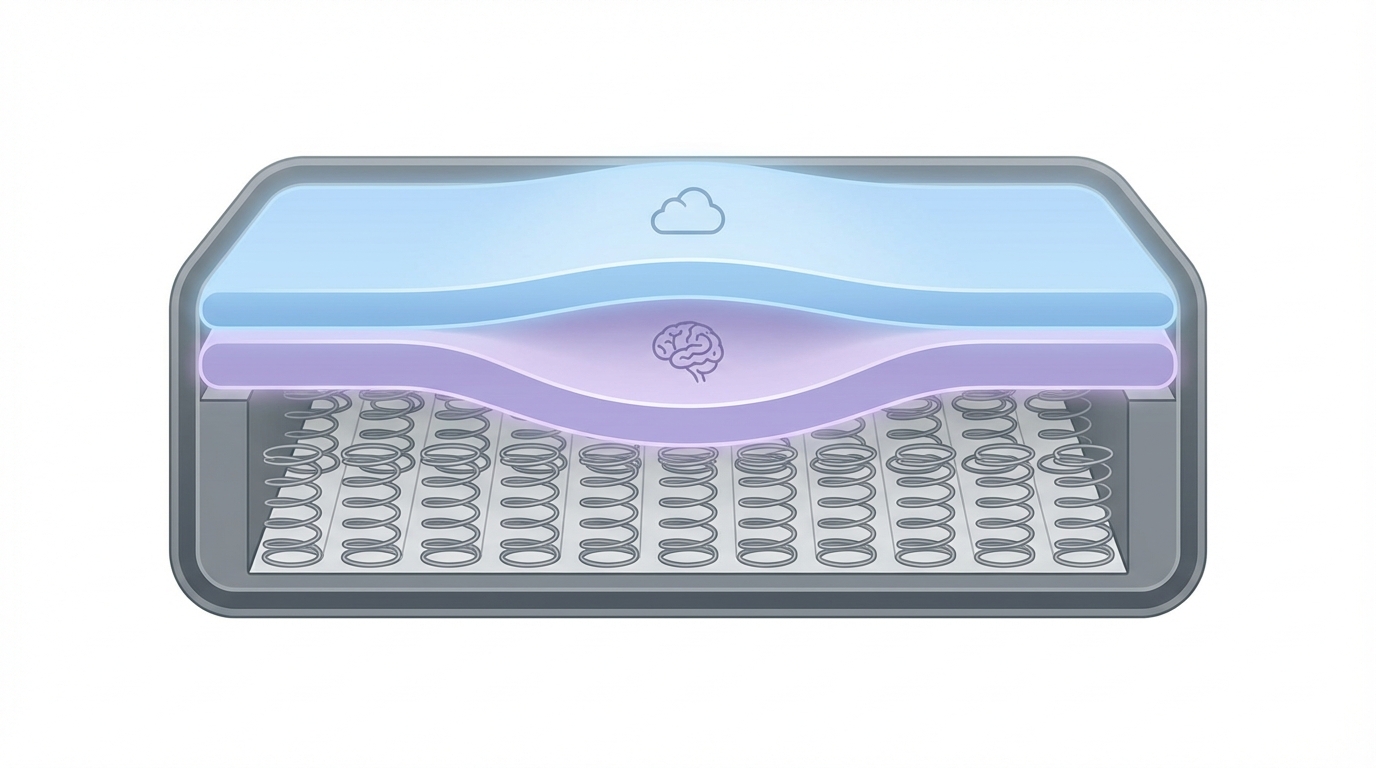
Hybrid mattresses blend the coil support of an innerspring with foam comfort layers, often memory foam, latex, or specialty polyfoams. In practice, this means you get the bounce and airflow of coils combined with the cushioning and contouring of foam. In , hybrid mattresses continue to dominate many "best mattress" lists because they strike a balance that works for a wide range of sleepers and body types.
Hybrids can be tuned in many ways. A model with thicker, softer foams above the coils will feel more like a foam bed with extra support underneath. A model with thinner, firmer comfort layers will feel closer to a traditional innerspring with a smoother top. This flexibility is why hybrids are a strong choice if you and your partner have different needs or if you are unsure whether you want a very "hugging" feel.
At Sleepology, we use hybrids often when shoppers need firmer support but do not want a board like surface. The Sealy Posturepedic Pro Firm Hybrid Mattress – Dupont II is a good example. The coil system keeps the spine aligned for back and stomach sleepers, while the foam layers add just enough comfort at the surface. For those who prefer more cushion without losing support, a medium hybrid like the Sealy Posturepedic Pro Medium Mattress – Dupont II Euro Pillow Top gives pressure relief that many side sleepers appreciate.
Quick Comparison: Innerspring vs Hybrid vs Memory Foam

Choosing between the main mattress types becomes easier when you compare them side by side on the attributes that matter most to comfort and longevity. The table below summarizes the feel and best fit of three core types so you can quickly narrow your options.
| Mattress Type | Typical Feel And Performance | Often Best For | Potential Tradeoffs |
|---|---|---|---|
| Innerspring | Bouncy, responsive, good airflow, more "on top" of the bed | Stomach and back sleepers, hot sleepers, traditional feel lovers | Can create pressure points if comfort layers are thin, more motion transfer on lower end models |
| Hybrid | Balanced contouring and bounce, good support, better airflow than all foam | Couples, mixed position sleepers, people wanting support plus cushion | Heavier and often pricier, feel varies widely by construction |
| Memory Foam | Deep contouring, strong pressure relief, excellent motion isolation | Side sleepers, people with joint pain, light sleepers sharing a bed | Can sleep warmer for some, less bounce, slower response to movement |
Understanding these patterns makes the rest of your shopping process easier. Instead of starting from a blank slate, you can walk into a Sleepology showroom or browse online already knowing, for example, that as a hot, combo sleeper with a partner, a hybrid or supportive innerspring is likely a better match than a thick, all foam bed.
Step Four: Dial In Firmness, Support, And Pressure Relief
After mattress type, firmness is the next big decision. Unfortunately, firmness labels can be confusing. One brand's "medium" can feel like another brand's "firm," and personal perception matters a lot. Consumer testing groups like Consumer Reports have noted that objective tests using a 1 to 10 scale help, but at the end of the day, your body has the final say. Still, understanding the relationship between firmness, support, and pressure relief makes trialing mattresses much more productive.
Support is about whether your spine stays in a healthy, neutral position all night. Your head, shoulders, spine, and hips should form a fairly straight line when you lie on your side, and your natural lumbar curve should be gently supported when you lie on your back. A mattress can feel plush on the surface yet still be very supportive if its underlying core is robust. Conversely, a very firm but low quality mattress may allow your heavier areas to sag over time, reducing support even if it feels hard at first.
Pressure relief is about how the mattress distributes your body weight so that no single area takes too much load. Side sleepers notice this most in the shoulders and hips, where sharper angles meet the mattress. Back sleepers feel it around the shoulder blades and sacrum. Good pressure relief reduces numbness, tingling, and those subtle aches that cause you to toss and turn. Memory foam and well designed pillow tops tend to excel here, especially when paired with properly zoned coils.
Firmness is your overall sensation of how hard or soft the mattress feels. A common rule of thumb, supported by a number of sleep studies, is that many back pain sufferers do best on a medium to medium firm mattress, not an ultra firm one. If you are a side sleeper under about 200 pounds, you will often be more comfortable on a medium or medium soft feel. Stomach sleepers and heavier bodies often need a firmer feel to keep their hips from dipping too far. These are starting points, not laws, but they are very helpful when you are first narrowing down options.
At Sleepology, we often guide shoppers through "firmness stacking," where you lie on a sequence of similar mattresses from firmer to softer, paying careful attention to how your hips and shoulders sink, how easy it is to roll over, and whether your lower back feels supported. A firm option like the Sealy Posturepedic Elite Extra Firm Mattress – Brenham II may feel great for a stomach sleeper who wants a very stable surface, while the Sealy Posturepedic Elite Soft Mattress – Albany II Euro Pillow Top might be just right for a lighter side sleeper needing extra cushioning.
“I thought I needed the firmest mattress I could find for my lower back pain because that is what I always heard. Mia had me test a few different firmness levels and explained what to look for in my hip and shoulder alignment. I ended up with a medium mattress instead and my back has been noticeably better. It saved me from buying a bed that would have been too hard.” – Daniel P., December
Step Five: Match Your Mattress To Your Sleep Position
Understanding your primary sleep position is one thing, but translating that into actual mattress choices is the next step. This is where general advice gets personalized. While there is no single "best" mattress for each position, there are clear patterns that can simplify your search when you are figuring out how to shop for a mattress that fits your body.
Best Mattresses For Back Sleepers
Back sleepers need a mattress that follows the natural S curve of the spine. The shoulders and hips should sink just enough so that the lower back is gently supported, not arched away from the mattress or allowed to collapse. Too soft, and your midsection can sag, straining your lower back. Too firm, and your shoulders and hips may not sink at all, leaving you feeling like you are lying on a board.
Medium and medium firm mattresses are very common winners here, especially in the hybrid and innerspring categories. The Sleep Foundation notes that back sleepers often do best on surfaces that combine moderate contouring with sturdy support, which is exactly what many of our curated back sleeper models are designed to offer. If you primarily sleep on your back, exploring a range like our best mattresses for back sleepers collection is a practical shortcut to options that are already pre screened for this position.
Best Mattresses For Side Sleepers
Side sleepers need more pressure relief at the shoulders and hips than other sleepers. When you are on your side, the mattress has to accept those curves while still supporting your waist so your spine stays aligned. A mattress that is too firm can lead to sore shoulders, numb arms, and hip pain. A mattress that is too soft can allow your midsection to dip too deeply, bending your spine sideways.
Many side sleepers do well on medium or medium soft hybrids with thoughtfully designed comfort layers. These combine enough give to cushion your pressure points with enough pushback to keep everything aligned. Models like the Sealy Posturepedic Medium Mattress – Medina II Euro Pillow Top provide that balance for many side sleepers, especially those who like a gently plush surface without feeling buried.
Best Mattresses For Stomach Sleepers
Stomach sleeping is tough on the spine, which is why many health organizations encourage shifting to side or back if possible. If you are a committed stomach sleeper, choosing the right mattress becomes even more important. You need a firmer surface that prevents your hips and pelvis from sinking more than your shoulders. When the hips drop, the lower back arches down excessively, which can lead to chronic pain.
For that reason, stomach sleepers are generally better served by firmer innersprings or hybrids with strong coil support and thinner comfort layers. If you sleep mostly on your stomach or split time between stomach and back, browsing our best mattresses for stomach sleepers collection can point you toward designs that prioritize stable support. A firm or extra firm surface is usually more helpful than a soft one, even if it takes some getting used to at first.
Step Six: Choose The Right Mattress Size For Your Space And Lifestyle
Mattress size is more than a width and length measurement. It shapes how freely you can move, how much personal space each partner has, and how well the bed fits your bedroom as a whole. Many shoppers focus only on what fits in the room without thinking about how they actually sleep at night and how their needs might change in the coming years.
If you sleep alone and move minimally, a full or queen size can feel spacious and practical. However, if you have a partner, kids who climb into bed, or pets that share your space, things get tight quickly. A queen offers 60 inches of width, which sounds like plenty until you divide it between two adults and a dog. A king provides 76 inches of width, which effectively gives each partner the space of a twin bed. That extra room can noticeably reduce disturbances from a partner who tosses and turns.
Room size matters, but so does furniture placement and how you use the space. A general guideline is to aim for at least two feet of walking space on each side of the bed in a primary bedroom. Taller sleepers might also consider a California king option for extra legroom, especially if they often find their feet hanging off shorter mattresses. For many couples who want more breathing space without sacrificing maneuverability, exploring king sized mattresses is a worthwhile step.
You also want to think about your long term plans. Are you expecting to share your bed with a partner in the next few years? Do you have growing kids who will move from a twin to a larger size? Planning ahead can help you avoid buying a size that will feel cramped or outdated sooner than you would like. A thoughtfully chosen mattress size can make your bedroom feel like a true retreat instead of a compromise.
Step Seven: Compare Key Features That Actually Matter
Mattress shopping can quickly turn into a buzzword blur. Cooling covers, gel infusions, zoned coils, edge support, organic fabrics, and more can all sound compelling, but not every feature is meaningful for every sleeper. To shop effectively, focus on a handful of design details that have the biggest impact on comfort, durability, and day to day usability.
Edge support is one of those details that people often do not notice until they are home. Strong edge support makes it easier to sit on the side of the bed, keeps you feeling secure if you sleep close to the edge, and effectively widens the usable surface. Innersprings and hybrids often use reinforced coils around the perimeter, while all foam beds may rely on denser foam rails. If you often sit on the bed to get dressed or share a smaller size with a partner, good edge support is worth prioritizing.
Breathability and temperature regulation are another big category, especially if you identify as a hot sleeper. Open coil systems naturally allow more airflow. Hybrids can stay cooler if they do not use overly thick comfort foams, and all foam mattresses can be improved with breathable covers and carefully engineered foams. Independent testing groups and clinical sources emphasize that a slightly cooler sleep environment generally supports better sleep quality, so if you are often throwing off the covers, consider designs with more airflow rather than just relying on "cooling" buzzwords.
Motion isolation and noise matter a lot for couples and light sleepers. Memory foam tends to excel here because it absorbs movement instead of transferring it across the surface. Many modern hybrid and pocketed coil designs also perform very well, as each coil moves more independently. If you are easily disturbed by a partner's movements or a pet hopping onto the bed, testing for motion transfer in a showroom or reading detailed reviews can pay dividends.
Comfort materials and construction quality play a major role in how long your mattress will truly feel good. Higher density foams, stronger coil gauges, and reputable brand engineering typically last longer and resist sagging. While you do not need to memorize every spec sheet, you should feel comfortable asking a Sleepology specialist to explain the construction of any mattress you are considering. A well built, mid priced mattress often outperforms a cheaper bed that looks similar on paper but uses lower grade materials.
Step Eight: Use Policies, Trials, And Warranties To Your Advantage
The technical side of how to shop for a mattress is only half the story. The other half is understanding the practical safety net around your purchase. Trial periods, return policies, and warranties can vary widely between retailers and brands, and they directly affect how much risk you are taking on. According to multiple consumer surveys, shoppers who understand these policies upfront report higher satisfaction with their final choice.
A sleep trial is your opportunity to test the mattress at home over a meaningful period of time. Many reputable retailers offer anywhere from 60 to 120 nights, sometimes more. This matters because your body needs several weeks to fully adjust to a new sleeping surface, and you may notice subtler issues only after that initial period. When you shop with a store that respects that adjustment period, you can relax into the process instead of feeling pressure to decide after one or two nights.
Return and exchange policies are closely related but not identical. Some retailers allow an easy switch to a different firmness or model within the trial window, while others charge restocking or pickup fees. Department stores may have stricter policies than specialty mattress retailers. It is worth asking specific questions about timelines, fees, and whether you receive a full refund or store credit. A transparent, fair policy is a sign that the retailer stands behind the products it sells.
Warranties, on the other hand, do not cover comfort preferences, but they do protect against manufacturing defects and premature sagging beyond a certain depth. Longer is not always better if the fine print makes it nearly impossible to qualify, so look at what the warranty actually covers, how deep an impression qualifies as a defect, and whether coverage is prorated over time. A solid warranty, combined with quality construction, lets you know that the mattress is designed with a realistic lifespan in mind.
Shopping with a trusted sleep specialist can help you interpret these details without feeling like you need a law degree. At Sleepology, our team walks shoppers through each brand's policies clearly, so you know exactly what to expect. That support can make a big difference in how relaxed and confident you feel during and after your purchase.
Step Nine: Plan Your Budget, But Focus On Value, Not Hype
Budget is often the most stressful part of mattress shopping, especially when you see prices ranging from a few hundred dollars to several thousand. It may help to reframe the decision in terms of cost per night over the realistic lifespan of the mattress. A well chosen mattress in the mid range price category can offer excellent performance for many years, often delivering better long term value than a bargain bed that needs replacing quickly or an ultra premium option that includes features you do not actually need.
Sleep and consumer health organizations frequently point out that you do not have to buy the most expensive mattress to get good support and comfort. What you are really paying for are materials, engineering, and quality control. Denser foams, stronger coils, and thoughtful design simply cost more to produce, but they also resist sagging and breakdown better. On the other hand, some high ticket mattresses are expensive mainly because of branding or cosmetic upgrades, not because they will support your body significantly better.
When planning your budget, consider your current sleep issues and how much impact resolving them would have on your daily life. If better back support would reduce pain enough that you are more active and productive, that is worth investing in. If you live in a hot climate and cooling performance is a big concern, allocating more toward a mattress that truly manages heat can save you from layering on expensive toppers later. Sometimes, a targeted upgrade, like adding a high quality travel and guest bundle such as the Tempur Pedic Mattress Topper – Pillow Travel and Guest Bundle, can also stretch your budget by improving the feel of a newer, but slightly too firm mattress in a guest room or temporary setup.
Beware of extremes. Extremely cheap mattresses often cut corners on critical components and are more prone to sagging within a few years, especially under heavier bodies. Extremely expensive ones may overemphasize luxury finishes at the expense of practical value. Working with a Sleepology expert, you can usually find a sweet spot where your budget aligns with a mattress that is appropriate for your sleep profile, built to last, and protected by reasonable policies.
Step Ten: Test Mattresses Like A Pro

Whether you are visiting a Sleepology showroom or testing a mattress at home during a trial period, how you test matters. A quick sit or 30 seconds of lying down is not enough data for a decision that affects your sleep for years. Borrowing a structured approach from clinical posture assessments and consumer testing can turn your mattress trial from a guess into a real evaluation.
Start by wearing comfortable clothing and bringing your usual pillow if you are shopping in store. Lie on the mattress in your typical sleep position for at least 10 minutes. Pay attention to your initial impressions, but also notice how your body feels after a few minutes of settling in. Ask yourself whether any area feels jammed, overly compressed, or oddly suspended. Check in with your lower back if you are on your back or stomach, and with your waist if you are on your side.
Next, gently roll into your secondary positions. If you are a combo sleeper, this is especially important. Do you feel like you are fighting the mattress to move, or does it respond in a way that feels natural? On your side, see if a friend or sales specialist can take a quick photo from behind so you can check whether your spine looks relatively straight from neck to tailbone. On your back, slide your hand under your lower back. You should feel some contact without a large gap or intense pressure.
In a showroom, it also helps to "pressure test" the edges by sitting where you normally would and lying right near the side to see if you feel stable. During an at home trial, pay attention to sleep quality over several weeks, not just comfort during the first few nights. It is normal for your body to need a short adjustment period, especially if you are coming from a very worn out or completely different type of mattress. However, persistent pain, numbness, or a sense that your body is fighting the bed rather than relaxing into it are signs you may need a different firmness or design.
Throughout this testing process, do not be shy about asking questions. A knowledgeable Sleepology specialist can help interpret what you are feeling and suggest adjustments or alternative models. The goal is not to rush you into a choice but to help you listen to your body and translate that into the right mattress.
Pulling It All Together: Your Personal Mattress Shopping Checklist
At this point, you may be wondering how to keep everything straight when you actually go shopping. The goal is not to memorize every detail but to have a clear, simple way to organize your thoughts. A short checklist can keep you focused on what matters most for your sleep instead of being overwhelmed by marketing claims.
Before you step into a store or click "add to cart," take a few minutes to note your primary sleep position, secondary position, any pain points, temperature preferences, and who shares your bed. Decide whether you lean toward innerspring, hybrid, or memory foam based on the patterns you have learned. Set a realistic budget range and identify your "must have" features, like strong edge support if you often sit on the bed, or excellent motion isolation if you are a very light sleeper sharing with a partner.
As you compare mattresses, concentrate on a few big questions. Does this mattress keep my spine aligned in my main sleep position? Do my pressure points feel cushioned or jammed? Do I feel comfortably cool and supported after lying for 10 minutes, not just when I first lie down? Are the trial period, return policy, and warranty clear and fair? How does this particular model fit my budget compared to others with similar construction and support?
Using a simple, consistent framework to evaluate options turns the vague goal of "find a good mattress" into a series of clear decisions. Combining that with access to curated collections like our pillows, sheets, toppers, and protectors can also help you refine your sleep system beyond the mattress itself. Sometimes, pairing the right pillow and breathable protector with your new bed makes the difference between good sleep and great sleep.
Conclusion: You Can Shop For A Mattress With Confidence
Learning how to shop for a mattress can feel intimidating at first, but when you break it down, it is really a series of understandable steps. You start by noticing how well your current mattress is serving you, then clarify your sleep profile, understand the major mattress types, and match firmness and support to your body and position. From there, you consider size, key performance features, and the practical protections of trials, returns, and warranties. By the time you are actually lying on a mattress or reading a product page, you are not guessing anymore, you are checking specific needs against specific designs.
It is worth remembering that no mattress is perfect in the abstract; it is perfect only if it helps you wake up rested, relatively pain free, and ready to move through your day. External experts from sleep medicine to consumer testing agree that the "best" mattress is ultimately the one that fits your body, preferences, and health, not the one with the catchiest name or highest price. That is why having a trusted guide and a clear framework matters more than chasing every new trend.
At Sleepology, our goal is to pair this kind of evidence based guidance with real listening. Every body, every couple, every home is a little different, and your mattress choice should reflect that. Whether you end up loving a firm hybrid like the Sealy Posturepedic Elite Medium Mattress – Brenham II Euro Pillow Top or a medium pillow top that cradles you more deeply, what matters is that you understand why it works for you and that you feel supported long after delivery.
If you are ready to take the next step, you can bring this guide into a Sleepology store, call to talk through options, or browse our curated collections online. You do not have to figure it all out alone or hope you picked the right mattress from a screen. With the right information and a caring expert on your side, mattress shopping can shift from stressful to surprisingly satisfying.
Frequently Asked Questions
How often should I replace my mattress if I am not in pain yet?
Most mattresses perform well for about 7 to 10 years, but that range depends on your body weight, mattress quality, and how you use it. Even if you are not waking in obvious pain, subtle changes like more tossing and turning, feeling less rested, or noticing dips and lumps in the surface can signal that the support system is wearing down. If your mattress is past the seven year mark and you are seeing those signs, it is sensible to start evaluating replacements before you reach the point of clear discomfort.
Is a firm mattress always better for back pain?
A very firm mattress is not automatically better for back pain. In fact, several clinical studies have found that many people with chronic low back pain do best on medium or medium firm surfaces that balance support with some give. If a mattress is too hard, it can force your spine out of alignment and increase pressure on the shoulders and hips. When you are shopping, focus on whether your spine feels neutral and whether your back feels supported and relaxed, not just on firmness labels.
What is the difference between a cheap foam mattress and a higher quality hybrid?
Cheaper foam mattresses typically use lower density foams that feel comfortable at first but can break down more quickly, leading to sagging and loss of support. They may also trap more heat and offer weaker edge support. Higher quality hybrids pair more robust coil systems with denser, better engineered foams, which tend to hold their shape and performance longer. The result is usually better spinal alignment, improved airflow, and a wider range of firmness and feel options to match specific sleep profiles.
How can I tell if a mattress will be cool enough for me?
The best indicators of temperature performance are the materials and overall design, not just whether the marketing mentions "cooling." Mattresses with coil systems generally allow more airflow than very thick, all foam designs. Covers made from breathable, moisture wicking fabrics and comfort layers that are not excessively dense can also help. If you are a particularly hot sleeper, it is smart to lean toward hybrids or well ventilated innersprings and to pair your mattress with breathable sheets and a protector that does not trap heat.
Do I really need a mattress protector on a new mattress?
A high quality mattress protector is one of the simplest ways to extend the life of a new mattress and protect your warranty. Most warranties exclude damage from spills, stains, or significant soiling, and even small accidents can void coverage. A breathable, waterproof protector shields the mattress from moisture, sweat, and dust mites while still allowing airflow. Combined with appropriate pillows and linens, it helps you maintain a clean, healthy sleep surface without compromising comfort.
Is it better to buy a mattress online or in store?
Both options can work well if you pay attention to trial periods, return policies, and the quality of support you receive. Shopping in store lets you feel different types and firmness levels directly, which can be invaluable if you are unsure what you like. Online shopping can offer convenience and access to more reviews and information. Many Sleepology customers combine both approaches by testing categories and feels in store, then finalizing their decision with the help of a specialist, whether in person or over the phone.
What should I do if my partner and I like different firmness levels?
Differences in firmness preference are very common among couples. Sometimes a medium hybrid can satisfy both partners by providing enough support for the firmer preference and enough cushioning for the softer preference. In other cases, using a slightly different topper on one side or choosing a mattress with good motion isolation and a balanced feel can help. Discussing your priorities together and working with a Sleepology specialist can lead to creative solutions that respect both of your bodies and sleep styles.