


How To Remove Stains From A Mattress Without Ruining It
You notice it when you go to change the sheets. A yellow ring near the middle. A faint shadow where a nosebleed happened. Or the obvious one, the night a pet or a kid got sick and everything felt urgent and overwhelming. That first moment is usually a mix of “I’ll deal with it later” and “please let this not be permanent.” If you are staring at an old stain that has been there a while, there is probably a dose of guilt in the mix too.
Mattress stains feel stressful because they hit where you are supposed to rest. According to the Sleep Foundation, most adults need 7 to 9 hours of sleep per night, and mattress comfort and cleanliness both affect how restorative those hours feel. A stained, lingering-odor mattress can quietly work against your sleep quality, your allergies, and even your mood when you walk into the bedroom. At the same time, mattresses are expensive, and no one wants to ruin a good one with the wrong cleaning method.
You are in the right place. As a sleepologist who has spent 20 years around mattresses, I can tell you that most stains look worse than they are, and with the right approach, you can usually improve them dramatically or remove them completely. You will learn how to handle fresh stains, how to tackle old set ones, what to do differently for blood, urine, sweat, and vomit, and how to protect your mattress so you are not going through this again next month.
Most importantly, you will get a clear, calm plan. No harsh chemicals you do not need, no internet myths that actually damage foam, and no unrealistic promises. Just practical, step by step guidance you can follow even if you are tired, overwhelmed, or dealing with a midnight disaster.
Before You Start: Mattress-Safe Cleaning Basics
Before we get into specific stain types, it is worth slowing down for a moment. A mattress is not a t-shirt. You cannot just soak it in hot water and hope for the best. Different materials, like memory foam and hybrid coils, react very differently to moisture, heat, and chemicals. The goal is always to lift the stain and neutralize odors while keeping the interior dry and structurally sound.
The general rule is to think “surface treatment, minimal moisture.” You are working from the top down, pulling out what you can, not driving liquids deeper into the layers. The Cleveland Clinic points out that excess moisture in bedding can encourage mold and dust mites, which are both common allergy and asthma triggers. That is why the way you apply your cleaner and how well you dry your mattress matters as much as what you use.
There are also safety and warranty considerations. Many modern mattresses have non removable covers, and unzipping or removing them can void manufacturer warranties. On foam mattresses, especially, cutting or stretching the fabric can expose fragile foam to damage. If you are not sure whether your mattress cover is removable or washable, assume it is not, and check your product tag or brand website when you have a moment.
Finally, give yourself permission to aim for “much better,” not always “perfect.” Some very old stains on older mattresses will fade but not disappear fully. When that happens, the real win is that the area is sanitized, deodorized, and protected going forward. In those cases, upgrading things like your sheets, protector, or even the mattress itself can be the final piece of reclaiming a fresh sleep space.
“I followed Mia’s blot, treat, and dry method on an old sweat stain that had been bugging me for years. It did not vanish like a commercial, but the smell is gone and the yellow ring is barely noticeable. That alone saved me from replacing a mattress that still has plenty of life in it.” – Jenna P., November
Your At Home Mattress Stain Removal Kit
Most mattress stains can be handled with simple household ingredients. You do not need a cabinet full of harsh chemicals, and in many cases, those harsh chemicals are exactly what you should avoid on foam and fabrics that touch your skin nightly. The key is combining the right agent with the right technique for the type of stain you are facing.
The staples I recommend are clear liquid dish soap, baking soda, distilled white vinegar, 3 percent hydrogen peroxide, cool water, clean white cloths, and a hand vacuum if you have one. Clear dish soap helps break down oils and grime without adding new dyes to the fabric. Baking soda absorbs moisture, loosens gunk, and neutralizes odors, which is why you will see it show up for multiple stain types. Vinegar helps with deodorizing and cutting through certain organic residues. Hydrogen peroxide has mild bleaching, antibacterial and antiviral properties, which can be powerful when used carefully on the right kind of stain.
Each of these ingredients comes with simple precautions. Always test in an inconspicuous area first, especially on colored covers. Avoid using hydrogen peroxide on dark or patterned fabrics because it can lighten them. Never mix peroxide with vinegar in the same container because they can form peracetic acid, which is irritating. And whatever you use, focus on blotting and light spraying instead of pouring. You want your mattress slightly damp on the surface, not soaked through.
To make cleaning days easier, keep a small “bedside rescue kit” in a closet or under the bed. That might include a spray bottle, a box of baking soda, a small bottle of vinegar, a few white cotton cloths, and disposable gloves. When something happens at 2 a.m., having everything within reach is half the battle. Quick action is one of the biggest differences between a stain that fades easily and one that lingers for years.
General Rules For Any Mattress Stain
No matter what kind of mess you are facing, a few core rules will help you avoid turning a small problem into a bigger one. Think of this as your mental checklist before you touch anything on the bed.
First, deal with solids and excess liquid as soon as you can. For vomit, food, or muddy paw prints, gently scoop or scrape solids off with a dustpan, paper plate, or flexible spatula. For liquids, lay an absorbent towel or cloth on top and press firmly to pull moisture out. The American Academy of Dermatology notes that many biological stains, including blood, bond to fabrics more strongly as they dry with heat, so catching them early helps a lot.
Second, always blot, never scrub. Scrubbing pushes stains sideways and deeper into fibers, which can turn a coin sized spot into a large blurry patch. Instead, press straight down, lift, and move to a clean area of the cloth. Work from the outside of the stain toward the center to keep it from spreading. It feels slower, but you are actually saving time and frustration.
Third, avoid heat. Hot water, hair dryers on high, steam cleaners, and direct sun baking can all set protein based stains like blood, sweat, and some food spills. Heat can also damage memory foam and accelerate wear in glued layers. Stick with cool or room temperature water, and if you use a fan or hair dryer to help something dry, use a low, cool setting a few feet away.
Finally, give your mattress enough time to fully dry before you remake the bed. That usually means several hours, sometimes overnight, depending on the size of the stain and the amount of cleaner you used. A small fan aimed across the surface (not directly at one spot) helps speed up evaporation. This patience step is non negotiable if you want to avoid hidden dampness, odors, or mildew.
How To Remove Fresh Urine Stains From A Mattress

Fresh urine stains are among the most stressful, especially if you are dealing with a child, a sick family member, or a pet accident in the middle of the night. The good news is that fresh urine is much easier to deal with than dried urine. If you get to it quickly, you can often remove the stain and smell almost completely with pantry ingredients.
Start by stripping all bedding and tossing it into the washing machine. Do not let wet sheets sit in a hamper, because urine can set in there too. On the bare mattress, place a thick layer of clean, dry towels or paper towels over the wet area and press down firmly, changing to fresh absorbent layers until little or no moisture transfers. This step keeps the urine from seeping deeper into the foam or quilting.
Once you have removed as much liquid as possible, mix a solution of equal parts distilled white vinegar and cool water in a spray bottle. Lightly mist the stained area until it is damp, not soaked, making sure to cover just beyond the visible stain edge. Vinegar helps neutralize odor causing compounds and works as a mild disinfectant. Let this sit for about 10 to 15 minutes, then blot again with clean cloths to remove excess moisture.
After blotting, generously sprinkle baking soda over the treated area. Do not be shy here, a thick layer works best. Baking soda will absorb remaining moisture and help pull out residual odor. Leave it on for at least 8 hours, ideally longer, and avoid lying on the mattress during this time. Once the baking soda is completely dry, vacuum it up and inspect. If you still notice a faint smell, you can repeat the process once more.
“Our toddler’s nighttime accident had me convinced we were buying a new mattress. I followed the vinegar and baking soda routine Mia outlines, left it to dry all day with a fan, and by evening I honestly could not smell anything. It saved us several hundred dollars right before the holidays.” – Carlos R., December
How To Clean Set In Urine Stains And Odors
Old urine stains are trickier. By the time you notice them, the liquid has usually seeped deeper into the mattress layers, and the yellowish color and lingering scent can feel permanent. It is still worth treating them, especially if you or someone in your home has allergies or is sensitive to smells while trying to sleep.
For set in human urine, a hydrogen peroxide based solution often works well on white or very light mattresses. Combine about 8 ounces of 3 percent hydrogen peroxide, 3 tablespoons of baking soda, and a few drops of clear dish soap in a small bowl or cup. Stir gently until the baking soda dissolves. Because this solution loses effectiveness over time, make only what you will use immediately and discard leftovers.
Using a clean white cloth or soft sponge, dab the solution onto the stained area. You want the fabric to be damp, not dripping, so wring out excess liquid before you touch the mattress. Gently press the solution into the stained zones, again working from the outside in. You may see some light foaming as the peroxide works on the organic compounds in the stain. Allow the area to air dry fully. As it dries, the stain will usually lighten noticeably.
If you are dealing with repeated pet accidents, consider using a dedicated enzymatic cleaner instead of or in addition to these household options. The Sleep Foundation notes that enzyme cleaners are especially useful on pet urine because they break down the specific proteins and uric acid crystals that can keep odors locked in. Always check the label to make sure the product is safe for mattresses and follow with a long drying period and good ventilation.
If, after all that, the stain is significantly lighter but still visible, and you can no longer detect odor, you may have done enough for the health of the mattress even if the fabric is not perfectly pristine. In cases of chronic bedwetting, pairing a treated, thoroughly dry mattress with a waterproof protector like the TEMPUR-Breeze Mattress Protector – Cooling, Waterproof, Breathable Cover can give you a truly fresh surface and make the next cleanup much simpler.
How To Remove Blood Stains From A Mattress
Blood stains feel intimidating, partly because they look dramatic and partly because most of us have heard some version of “blood is impossible to get out.” In reality, fresh blood is very manageable if you avoid one big mistake: hot water. Hot water causes the proteins in blood to coagulate and bond more tightly to fabric, which is why almost every medical textile guide recommends cold water for blood.
For a fresh blood stain, start by blotting with a clean, cold damp cloth. Use only cold water at this stage. Press, lift, and rotate to a clean area of the cloth as the blood transfers, and keep doing this until there is no more transfer. This alone can reduce the stain dramatically. Do not rub, and do not use warm or hot water.
If a stain remains, you can move to a mild cleaning solution. One option is to mix a few drops of clear dish soap in a cup of cold water. Dip a cloth in this solution, wring it out, and continue blotting the stained area. This helps break up the remaining blood. Another approach, especially for pale mattresses, is a peroxide based paste: mix 2 ounces of hydrogen peroxide with about a tablespoon each of salt and clear dish soap. Spread a thin layer over the stain, let it sit 10 to 20 minutes, then gently scrape up the residue with a spoon and blot with a little more cold water.
For older, darker blood stains, you may need to repeat treatment more than once, and the peroxide paste is usually more effective than soap alone. Be cautious if your mattress cover is dark or patterned, since hydrogen peroxide can lighten fabric. Always test on a hidden area first. According to Mayo Clinic guidance on blood borne pathogens, you should wear disposable gloves when cleaning any blood and wash your hands thoroughly afterwards.
Once you are satisfied you have removed as much as you reasonably can, allow the mattress to dry completely before putting on fresh bedding. If the area is small, pointing a fan toward it and leaving it for several hours usually does the trick. For people prone to nosebleeds or heavy menstrual leaks, layering a breathable waterproof protector under your sheets and choosing absorbent, high quality cotton like the Tempur-Pedic TEMPUR Adapt Luxe Egyptian Cotton Sheet Set can make future cleanup as simple as washing linens.
How To Remove Yellow Sweat Stains And Body Oil Discoloration
Those large, cloudy yellow stains that gradually appear over time are usually not from one dramatic event. They come from a slow build up of sweat, body oils, and sometimes skincare or hair products that transfer to the mattress night after night. Over time, they oxidize and show up as uneven yellowing, especially where your torso and hips rest.
From a health standpoint, these stains matter less than things like urine or vomit, but they can contribute to odors and dust mite activity. Dermatology research has shown that humans lose around a pint of water through sweat and breathing during a typical night, especially in warmer rooms. Without a good mattress protector, a lot of that moisture makes its way into the upper layers of the mattress. That is another reason people with allergies or asthma tend to feel better on well protected bedding.
To tackle mild to moderate yellow stains, start by vacuuming the mattress surface with an upholstery attachment to remove dust and debris. Then lightly mist the stained areas with a solution of equal parts water and distilled white vinegar or a peroxide based cleaner if your cover is white. Do not over saturate. Let it sit for about 10 minutes, then blot with a clean cloth. Sprinkle baking soda over the damp zone and let it stand for several hours before vacuuming. This combination often brightens the fabric and neutralizes odor.
For more stubborn yellowing on a light colored mattress, a light allover refresh can help. Think of it like spot cleaning a sofa rather than scrubbing. You can lightly spray a diluted peroxide solution over a broader area, keeping it very minimal, and then let it dry in a well ventilated room. If you do this, be cautious with any printed labels or colored piping, and always err on the side of less liquid.
Long term, the best “treatment” for sweat staining is prevention. A breathable protector like the TEMPUR-Breeze Mattress Protector – Cooling, Waterproof, Breathable Cover creates a barrier between your body and the mattress without trapping heat. Combining that with moisture wicking sheets such as the Tempur-Pedic ProPerformance Sheet Set or the TEMPUR-Breeze Cooling Sheet Set can dramatically reduce sweat transfer and help hot sleepers stay more comfortable through the night.
How To Clean Vomit From A Mattress Safely
Vomit is the stain most people dread, and understandably so. There is the visual part, the smell, and the knowledge that you are dealing with something potentially full of bacteria and viruses. According to infection control guidelines, vomit should always be treated as a biohazard, which means you want gloves, good ventilation, and as little direct contact as possible.
Start by removing any solids with a dustpan, spatula, or thick paper plate, transferring them directly into a trash bag. Avoid pressing down at this stage, since pressing forces liquids deeper into the mattress. Once you have removed what you can, use paper towels or an old cloth you do not mind discarding to gently blot up as much liquid as possible. Work quickly but carefully, and dispose of used materials in a tied bag.
Next, mix a solution of one part distilled white vinegar to two parts cool water in a spray bottle. Lightly spray the affected area until it is evenly damp. Vinegar helps neutralize both odor and many organic residues. Let it sit for about 10 to 15 minutes, then blot again with clean cloths to remove as much of the solution as you can. At this point, sprinkle a generous layer of baking soda over the entire area. The baking soda will fizz slightly where it meets residual vinegar, which helps lift particles from the fabric.
Leave the baking soda on for several hours, ideally overnight with a fan running and a window cracked if possible. The longer it sits, the more odor and moisture it can absorb. When it is fully dry, vacuum thoroughly. If any odor remains, you can repeat the treatment once. Persistent smell often means there is still moisture trapped, so prioritize extra drying time and airflow between treatments.
For anyone dealing with frequent illness, reflux, or chemotherapy side effects in bed, it may be worth designating a specific protector as your “sick day” cover. A high quality waterproof protector over the mattress and an extra layer, such as a washable cotton pad, over the fitted sheet can localize the mess to items you can clean in a washing machine. Paired with a comfortable, pressure relieving mattress like a medium plush hybrid from our best hybrid mattresses collection, you can support comfort and easy cleanup even during tough seasons.
“We went through a rough month where my partner was sick and the bed took the brunt of it. I used the vinegar and baking soda method every time, plus a waterproof protector Mia suggested, and our mattress survived without that lingering ‘hospital’ smell. Honestly, I was shocked at how well it worked.” – Dana L., October
How Different Mattress Types Respond To Stain Removal
Not all mattresses react the same way to moisture and cleaning agents. What works beautifully on a traditional innerspring might be risky on high density memory foam. Understanding your mattress type helps you choose the safest version of the methods described above and avoid long term damage or voided warranties.
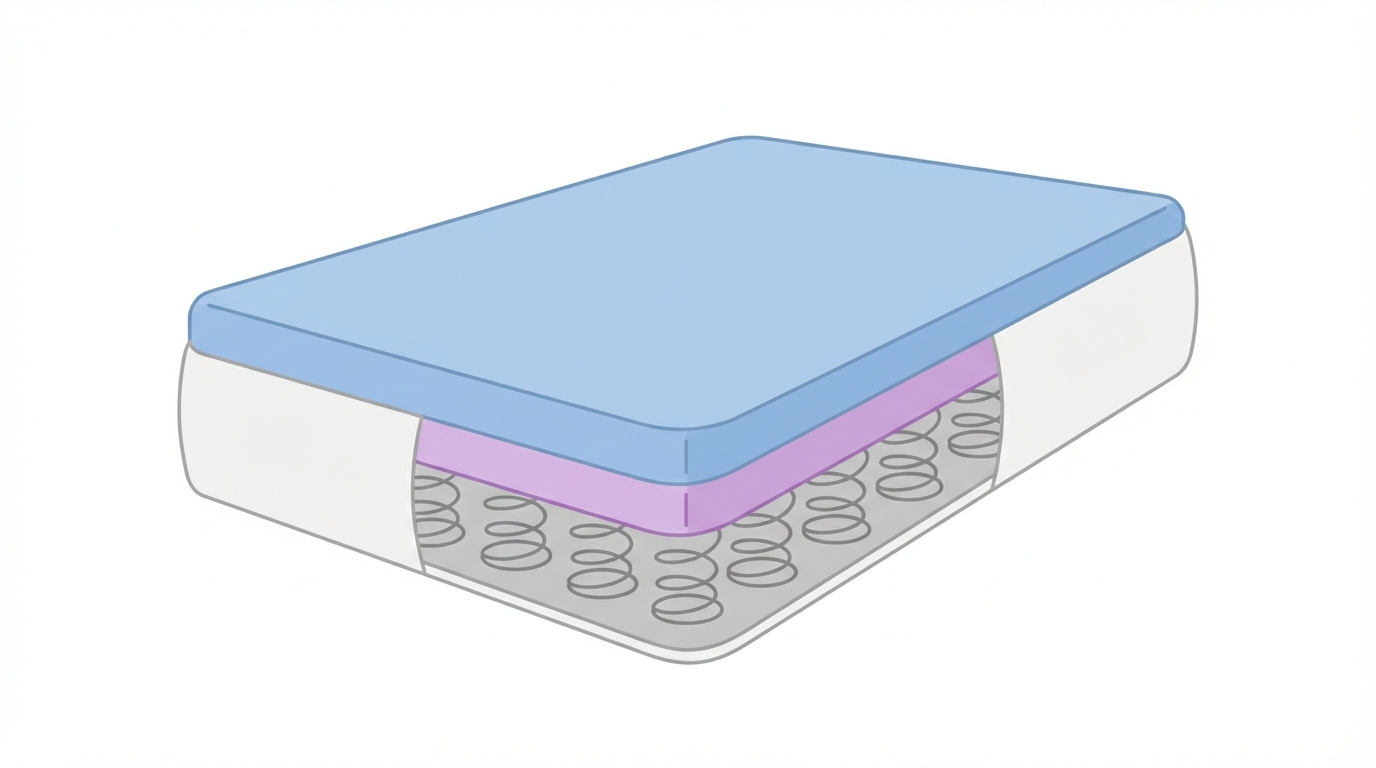
Traditional innerspring mattresses have coil systems with padding on top. They generally tolerate slightly more moisture during cleaning, especially if the stain is caught early and dried thoroughly afterward. You still do not want to soak them, but a bit more liquid on the surface fabric usually evaporates without getting trapped in the core. Conventional spring beds also tend to be less sensitive to mild oxidizing agents like hydrogen peroxide.
All foam mattresses, including memory foam and latex, are much more absorbent. Liquid can travel sideways and downward into the foam layers, where it takes longer to dry and can create real odor and mold problems. Manufacturers commonly advise against steam cleaning or heavy soaking. Light misting, careful blotting, and long drying times are especially critical here.
Hybrid mattresses, which combine coils and foam, are somewhere in the middle. Their coil systems can help with airflow and drying, but the top comfort layers are still foam based and need gentle treatment. For many of the premium hybrids we carry, like the Sealy Posturepedic Elite Soft Hybrid Mattress – Brenham II or the Sealy Posturepedic Plus Soft Hybrid Mattress – Paterson II, using a protector from day one is the simplest way to protect both your investment and the manufacturer warranty.
Below is a quick reference to help you tailor your cleaning approach to your mattress type.
| Mattress type | Moisture tolerance (relative) | Cleaning cautions | Protection priority level |
|---|---|---|---|
| Traditional innerspring | Moderate | Avoid soaking seams and pillow top quilting | Medium |
| All foam / memory foam | Low | No steam, no heavy saturation, gentle blotting | Very high |
| Hybrid | Low to moderate | Treat foam comfort layers gently, dry fully | Very high |
| Latex | Low to moderate | Avoid harsh chemicals, use mild solutions | High |
When in doubt, start with the least aggressive method: cold water blotting, mild soap, and baking soda. If your mattress tag includes cleaning codes (such as “spot clean only”), follow those guidelines. For older mattresses already sagging or lacking support, stain removal can also be a moment to assess whether replacement would genuinely improve your sleep comfort, not just the appearance of the bed. If you suspect your mattress is part of your sleep problem, exploring curated options in the best foam mattresses or the best hybrid mattresses can be a smart next step.
One Time Deep Clean: A Mattress Freshen Up Routine
Sometimes your mattress does not have one dramatic stain, it just feels tired. Maybe there are faint rings here and there, a general musty smell, or you simply cannot remember the last time you did more than change the sheets. A once or twice a year “deep refresh” can extend the life of your mattress and help your room smell cleaner.
Begin by stripping all bedding and washing it in hot water if the care labels allow. Then thoroughly vacuum the mattress surface using an upholstery attachment, paying attention to seams and tufted areas where skin cells and dust can collect. The American Lung Association notes that dust mites thrive in bedding and soft surfaces, so removing this layer reduces allergen load.
After vacuuming, lightly spot treat any visible stains using the relevant methods from earlier sections. Try to group your treatments so you are not over saturating the mattress in several different areas at once. Once you have addressed targeted spots, you can sprinkle a light, even layer of baking soda across the entire mattress surface. If you like, you can add a few drops of an essential oil like lavender or eucalyptus to the baking soda before sprinkling, but avoid strong oils if anyone in your home has sensitivities.
Let the baking soda sit for several hours, ideally with a window open or fan running, then vacuum it up thoroughly. This helps absorb ambient odors and freshens the surface fabric. When you are done, flip and rotate the mattress if the manufacturer permits it. Many modern mattresses are one sided and should not be flipped, but rotating 180 degrees is usually safe and helps even out body impressions.
Finally, encase your refreshed mattress in a quality protector and remake the bed with clean sheets. If you want to upgrade the entire feel at once, adding a comfortable topper and good pillows, such as the Tempur-Pedic Mattress Topper – Pillow Travel and Guest Bundle, can make the whole sleep surface feel more supportive and inviting at a fraction of the cost of a new mattress.
The One Checklist To Remember During Any Mattress Cleanup
When you are tired, stressed, or dealing with a messy situation, it helps to have a simple checklist instead of trying to remember every nuance. While the specifics change a bit for urine, blood, sweat, and vomit, the overall order of operations stays mostly the same.
Here is a practical sequence you can mentally run through whenever something lands on your mattress:
- Remove bedding and isolate the mess so it does not spread.
- Gently scoop or scrape any solids into a trash bag.
- Blot, do not scrub, to pull out as much liquid as possible.
- Mix and test your cleaning solution on an inconspicuous area.
- Apply cleaner lightly, working from the outside of the stain inward.
- Blot again to remove excess cleaner and residual moisture.
- Sprinkle baking soda on damp or smelly areas and let it sit.
- Vacuum thoroughly once everything is fully dry.
- Allow several additional hours of air drying before remaking the bed.
Most mattress emergencies feel less overwhelming when you realize there is a sequence to follow rather than dozens of separate “tricks.” Keep in mind that you do not need to rush through the last few steps. It is better to sleep on a sofa or guest bed for one night and let your mattress truly dry than to rush back onto a damp surface and trap moisture inside.
When A Stain Signals It Might Be Time For A New Mattress
Even the best stain removal routine cannot fix a mattress that has simply reached the end of its useful life. If you are cleaning the same types of bodily fluid stains repeatedly or noticing a musty smell that returns even after treatment, it may be a sign that moisture has penetrated deeper than you can safely reach with home methods.
Sleep medicine specialists often recommend evaluating your mattress around the 7 to 10 year mark, sometimes earlier for softer foams or very heavy use. According to consumer testing organizations, loss of support, sagging, and waking with pain can be stronger reasons to replace a mattress than cosmetic staining. Persistent stains and odors can be one more indicator that your sleep surface is no longer as healthy or hygienic as it should be.
Ask yourself a few questions. Do you wake up with new or worse back or shoulder pain than when you went to bed? Can you feel dips or “valleys” in the mattress where you sleep? Have you been stacking toppers or extra blankets just to feel comfortable? If yes, stain cleanup might provide temporary relief, but your overall sleep quality may still suffer night after night.
If replacement feels realistic, you do not have to navigate the options alone. Exploring curated collections like the best foam mattresses or the best hybrid mattresses can narrow the field to models with strong support, good motion control, and reliable durability. Pairing a new mattress with breathable, protective bedding from our pillows, sheets, toppers, and protectors collection helps make sure you are not back to scrubbing stains any time soon.
“We were trying so hard to rescue a 12 year old mattress with endless cleaning. After talking with Sleepology, we realized the sagging and morning pain mattered more than the stains. Upgrading to a hybrid plus a protector gave us cleaner sleep and my husband’s back pain honestly improved within a couple of weeks.” – Melissa K., September
Conclusion: A Cleaner Mattress And Calmer Mind
Stains happen even to the most careful sleepers. Kids have accidents, pets misjudge their jumps, noses bleed, stomach bugs hit at 3 a.m., and all of us sweat and shed skin cells over time. None of those things mean you have “ruined” your mattress or that you are doing something wrong. They simply mean your bed is being lived in, which is exactly what it is there for.
What matters is how you respond. By blotting instead of scrubbing, avoiding heat, using simple ingredients like vinegar, baking soda, and mild soap, and giving your mattress time to dry, you can handle almost every common stain with calm confidence. Research from groups like the Sleep Foundation and major medical centers consistently highlights that clean, comfortable bedding contributes to better sleep hygiene, and better sleep hygiene supports everything from immune health to mood and focus the next day.
If your mattress is basically sound, the techniques you have learned here can add years of comfortable life to it. If your mattress is at the end of its road, this same knowledge will help you care for your next one from day one with protectors, breathable sheets, and the right support system so stains are rare, minor, and easy to fix. Either way, you deserve a bed that feels like a place of rest, not a source of stress.
If you are unsure whether your current mattress is worth saving or you want personalized guidance on protectors and bedding that match your sleep habits, you can always reach out. A quick conversation with a Sleepology Sleepologist can help you decide whether to keep cleaning, upgrade, or do a little of both. You are not alone in figuring it out, and with a few straightforward steps, a fresher, more comfortable bed is completely within reach.
Frequently Asked Questions
How fast do I need to act when a stain happens on my mattress?
The sooner you act, the better, especially with urine, blood, and vomit. In the first few minutes, you can usually remove a lot of the liquid before it penetrates deeply, which makes everything that follows easier. That said, if you discover a stain later, it is still worth treating. You may not erase it completely, but you can usually lighten it, remove odor, and sanitize the area so it is healthier to sleep on.
Is it safe to use a steam cleaner on my mattress to remove stains?
Most mattress manufacturers discourage using steam cleaners, especially on foam and hybrid mattresses. Steam drives very hot moisture deep into the layers where it is hard to dry completely, and the heat can weaken adhesives and alter the feel of foam. Instead, focus on spot treating the surface with cool water based cleaners and letting the mattress dry thoroughly with good airflow. If you are tempted by steam, check your mattress warranty first, because steam cleaning may void coverage.
How do I get urine smell out of a mattress if I can still smell it after cleaning?
Lingering urine smell usually means some residue remains in the fabric or foam. An extra round of treatment with a vinegar and water solution followed by a generous baking soda layer often helps. For pet urine or very stubborn odors, an enzyme based cleaner formulated for fabrics can be more effective because it breaks down uric acid crystals rather than just masking the smell. Whatever method you use, allow extended drying time, several hours or even a full day, before remaking the bed.
Can hydrogen peroxide permanently damage my mattress fabric?
Hydrogen peroxide at 3 percent strength is relatively gentle, but it can lighten or bleach colored or patterned fabrics. That is why you should always test it on a hidden area first and use it primarily on white or very light covers. Avoid pouring it directly on the mattress; instead, apply with a cloth, or use it in a controlled mixture such as a paste with baking soda and dish soap. If you see fabric lightening in your test area, switch to milder options like dish soap and cold water or diluted vinegar.
How often should I deep clean my mattress if I use a protector?
If you are using a waterproof, breathable protector consistently and washing your sheets weekly, a light deep clean once or twice a year is usually enough. That might include vacuuming, a baking soda refresh, and treating any small visible spots. If you have allergies, sleep hot, or share the bed with pets or kids, a quarterly refresh can feel better. Regularly washing your protector and sheets will do most of the heavy lifting day to day.
When is it better to replace my mattress instead of trying to remove stains?
If your mattress is significantly sagging, older than about 7 to 10 years, or causing you new aches and pains, those are strong signs that replacement would do more for your sleep than more cleaning sessions. Stains that come back with odors, even after proper drying and treatment, can also signal that moisture has penetrated deeply into layers you cannot safely reach. In those cases, putting your cleaning energy toward protecting a new, supportive mattress can be a better investment in your comfort and health.
Will a mattress protector really prevent stains from reaching the mattress?
A good waterproof protector acts as a barrier between spills and the mattress surface, so most liquids never reach the fabric or foam underneath. It also catches a lot of sweat and body oils that would otherwise gradually discolor the mattress. Look for protectors that are both waterproof and breathable, like the TEMPUR-Breeze Mattress Protector – Cooling, Waterproof, Breathable Cover, so you do not feel hot or trapped in plastic. With a quality protector, many “stains” become simple laundry issues you can handle in your washing machine.