

How To Remove Blood Stains From A Mattress Without Ruining It
Waking up to a blood stain on your mattress can feel stressful and a little embarrassing, whether it is from a period leak, a surprise nosebleed, or a scraped knee that reopened overnight. You may worry that the stain is permanent, that the mattress is ruined, or that guests will notice it the next time they stay over. On top of that, most mattresses are a major investment, so the thought of replacing one because of a stain is understandably frustrating. You are not alone in this, and the good news is that most blood stains, even older ones, can be dramatically lightened or fully removed with the right steps.
Blood is trickier than coffee or juice because it contains proteins that bind to fabrics as they dry. If you use the wrong technique, especially hot water or harsh chemicals, you can actually set the stain more deeply into the mattress. That is why getting clear, step by step guidance matters so much. When you understand how blood behaves and how different cleaning ingredients work, you can clean more confidently and avoid doing accidental damage.
You are about to learn practical methods that work on both fresh and dried stains, what to do for different mattress materials, and how to know when it is time to stop scrubbing and protect what you have. You will also see how to prevent stains in the future with the right protectors and bedding choices, so one bad night does not shorten your mattress lifespan. My goal is to make this feel manageable, even if you are staring at a stain that looks impossible right now.
I have spent 20 years working with mattresses in real homes, not just in test labs, so what you will read here comes from real experience with hundreds of products and plenty of real life spills and accidents. By the end, you will know exactly how to remove blood stains from a mattress as safely and effectively as possible, and how to protect your investment so you can go back to focusing on comfortable, healthy sleep instead of stubborn stains.
Understanding Blood Stains On A Mattress
Before you grab the nearest cleaner, it helps to understand why blood behaves the way it does on mattress fabrics. Blood contains proteins and iron that react to temperature and time. When blood is exposed to heat, those proteins coagulate and bind tightly to fibers. This is why hot water is such a problem for stain removal and why experts at organizations like the American Cleaning Institute consistently recommend cold water for protein stains such as blood and sweat. Once that binding happens, the stain may never fully lift, even with strong chemicals.
Another factor is absorbency. A mattress is thick, layered, and often quilted, which means liquid can wick down past the top fabric into foams or batting. That is part of what makes mattresses comfortable, but it also means stains can go deeper than what your eye sees on the surface. If you aggressively scrub or pour cleaner onto the bed, you may push the blood further into the core rather than drawing it out. This is why blotting, dabbing, and using small amounts of moisture are so important.
Time also changes the chemistry of a blood stain. Fresh blood is still wet, dark red, and easier to dilute with cold water. Dried blood oxidizes and often appears brownish or rust colored. Research on protein stains shows that as they dry, they form stronger bonds with fabrics, which is why older stains typically need more targeted treatments such as hydrogen peroxide, enzymatic cleaners, or baking soda pastes. According to cleaning guidance echoed by the Sleep Foundation and major stain removal brands, early action can dramatically improve your odds of a nearly invisible result.
Your mattress type can influence how careful you need to be. A basic innerspring mattress with a thinner comfort layer may tolerate a bit more moisture, while all foam and hybrid mattresses with memory foam or latex are more sensitive. Excess water can break down foams over time or lead to trapped moisture and odor. Understanding this will help you choose a method that lifts the stain while keeping your mattress comfortable and structurally sound for years to come.
“I thought I would have to toss our guest mattress after a bad nosebleed left a big stain down the side. Mia’s advice about using cold water, blotting, and a gentle cleaner saved it. The stain is barely visible now, and I feel like we avoided a $1,000 replacement.” – Karen S., November
Safety First: Health, Hygiene, And When To Call A Professional
Any time you are dealing with blood, even your own, it is worth thinking about basic hygiene and safety. Blood is a bodily fluid, and health organizations such as the Centers for Disease Control and Prevention advise taking universal precautions around bodily fluids because they may carry pathogens. That does not mean you need to panic, especially if the stain is from a routine situation like a period, but it does mean it is smart to protect yourself and clean in a way that is sanitary for everyone who will be sleeping on the bed.
Start by putting on disposable gloves if you have them, or at least wash your hands thoroughly before and after handling stained bedding. Avoid using your bare hands to press into very fresh stains. If the blood is not yours, or if there is any possibility of a blood borne infection, gloves are especially important. If the stain is extensive and you are caring for someone with a known infectious disease, contacting a professional cleaning service that follows biohazard protocols is often the safest path.
Ventilation matters too. Some of the products people reach for, such as ammonia or strong enzyme cleaners, can irritate skin, eyes, and lungs. The Mayo Clinic and similar medical organizations remind people to use household chemicals in well ventilated spaces and to avoid combining chemicals like ammonia and bleach, which can create dangerous fumes. Open a window, turn on a fan, and never mix cleaners unless a product label specifically instructs you to.
Finally, be honest about scale. A few small spots are very manageable at home. A larger area, or a stain that penetrated deeply because someone was lying in bed for a long time during bleeding, can be more complex. If the mattress feels heavily saturated or smells strongly of blood even after cleaning, that can be a sign that the fluid reached deeper layers. In medically complicated situations, it can be worth asking the person’s care team or a professional cleaning service for guidance, rather than trying to sanitize something that might never feel quite clean again.
Immediate Steps For Fresh Blood Stains
Fresh blood stains are the easiest to tackle if you act quickly and avoid a few common mistakes. The first thing to do is remove everything from the bed, including sheets, mattress protector, and any blankets or toppers. Place them in a laundry basket or sink, but resist the urge to throw them straight into a hot washing machine cycle. As cleaning guides from the Sleep Foundation and larger stain removal brands explain, hot water can set a fresh blood stain into fabric by cooking the proteins into the fibers. Start with cold water only.
With the mattress exposed, gently blot the stained area with a clean, light colored cloth or paper towel. You are trying to lift excess blood from the surface, not push it deeper in. Press the cloth down lightly and lift straight up, changing to a clean section of the cloth as it absorbs blood. Avoid harsh rubbing, which can spread the stain outward and damage delicate knit or woven mattress fabrics. This slow, patient blotting may feel tedious, but it is one of the most important steps for reducing how visible the stain will be later.
Once you have blotted as much as possible, reach for plain cold water. Dampen a clean cloth with cold water and continue to dab the stain from the outside edges inward. Think of it as coaxing the blood out rather than scrubbing it out. You want the cloth to be wet but not dripping, because saturating the mattress can create new problems such as lingering moisture, odors, or even mold inside the mattress core. If you see the stain lightening noticeably during this step, you may be able to avoid stronger treatments entirely.
After several rounds of cold water blotting, pause and let the surface air dry a bit so you can see what you are working with. Use a fan or open window to encourage faster drying, since a wet mattress can affect sleep comfort later that day. Once things are partially dry, evaluate the remaining stain. If you still see a noticeable discoloration, you can move on to one of the targeted cleaning methods in the next sections. Because you took the time to treat the stain while it was fresh, those methods have a much better chance of lifting it fully.
“I spilled a bit of blood on our new Sealy mattress while changing a bandage and panicked. The store recommended I call Sleepology for advice. Following Mia’s ‘blot, cold water, then gentle cleaner’ steps, I got it out without any damage to the fabric, and it still feels brand new.” – Devin R., October
Treating Dried Or Set Blood Stains

Sometimes you do not discover a blood stain until hours or even days later. Maybe it soaked through sheets during the night, or the mattress cover hid the spot along the side or foot of the bed. Dried stains are more stubborn, but not necessarily hopeless. The key is to soften and break down the dried proteins so they release from the fabric. That usually means combining patience with the right cleaning ingredients rather than attacking the stain aggressively.
Begin by loosening any dried residue on the surface. With gloved hands, you can gently scrape the area with the edge of a spoon or a blunt knife, taking care not to snag the fabric. This removes crusted material that might otherwise act like a shield. Then, lightly mist or dab the stain with cold water. The goal is to rehydrate it just enough to make it more responsive to cleaning solutions. Let that sit for 5 to 10 minutes, then blot away any excess moisture.
For many dried stains, a targeted cleaner such as a hydrogen peroxide solution, baking soda paste, or an enzymatic cleaner will be more effective than plain water alone. Before applying anything, spot test in an inconspicuous corner of the mattress fabric, since some covers are more delicate than others. Apply a tiny amount, wait a few minutes, then check for discoloration or damage. Only move on to the main stain if the fabric looks unchanged and intact after the test.
Because dried stains are often deeper and more set, allowing dwell time is critical. A common mistake is applying a cleaner, giving it a quick scrub, and wiping it off immediately. Many stain removal experts note that cleaners need time to penetrate and break down dried proteins at a molecular level. Plan on at least 15 to 30 minutes of contact time for safe household solutions, and always follow the instructions on any commercial product. Several cycles of apply, wait, then blot are more effective and gentler on your mattress than one aggressive scrubbing session.
Common Household Methods: What Works And When
Household ingredients can be surprisingly effective for removing blood stains if you use them correctly and pair the method with the age and severity of the stain. Cold water and blotting are always your starting point, but then you can add in baking soda, white vinegar, hydrogen peroxide, or a gentle enzyme based cleaner. The Sleep Foundation and other trusted organizations frequently mention these options as appropriate first line tools for stain removal when used with care.
Baking soda works well on both fresh and lightly dried stains because it draws out moisture and can help lift pigments from fabric. Making a simple paste with baking soda and cold water gives you a mild but effective cleaner. White vinegar, while acidic, can help break down some components of the stain and neutralize odors. Many people have both in their pantry already, which makes this combination appealing for quick action, especially on smaller spots.
Hydrogen peroxide, commonly sold in 3 percent solutions for first aid, is a stronger option that acts as a mild bleaching agent and oxidizer. On light colored mattress fabrics, it can be very effective on older or darker stains, especially when combined with baking soda. However, because it has bleaching power, it must be spot tested carefully and used sparingly. It is particularly important to avoid soaking foam layers with hydrogen peroxide, since trapping moisture in foam can lead to premature breakdown and lingering smells.
Enzyme based cleaners, often sold as pet stain or protein stain removers, are designed to break down proteins in things like blood, urine, and sweat. Academic research on laundry detergents has shown that protease enzymes can significantly improve removal of blood stains at moderate temperatures, which is why many detergents now include them. For a mattress, it is safer to apply enzyme cleaners with a cloth in small amounts rather than spraying heavily, and you should choose formulas labeled safe for upholstery or fabric, not just hard surfaces.
Step By Step: Using Baking Soda And Cold Water
Baking soda is a gentle, low risk way to tackle fresh or lightly set blood stains, especially if you want to avoid harsher chemicals. Start with the stain that has been blotted and lightly rinsed with cold water as described earlier. Once you have removed as much excess blood as possible, you can mix a simple paste. Combine about one part cold water with two parts baking soda in a small bowl, adjusting until you have a thick, spreadable consistency similar to toothpaste.
Using a clean spoon or spatula, apply the paste directly to the stained area, covering it fully but not piling it too thick. Work from the outside edges inward to avoid spreading the stain. You can gently press the paste into the fabric with the back of the spoon to encourage contact, but avoid grinding it in. Then, leave the paste alone for at least 30 minutes. During this time, the baking soda will slowly draw moisture and pigments up and out of the fibers.
After the dwell time, use a dry cloth or paper towel to gently lift away as much of the dried paste as you can. You may notice that some of the paste has changed color, which is a good sign that it has absorbed some of the stain. Once most of the residue is removed, dampen a fresh cloth with cold water and dab the area to remove remaining baking soda, again avoiding oversaturating the mattress. Blot with a dry cloth afterward to soak up extra moisture.
Allow the mattress surface to air dry completely before judging the final result. If the stain is still noticeable but lighter, you can repeat this method once or twice more. Baking soda is quite gentle, so multiple cycles are usually safe for most mattress fabrics, as long as you avoid soaking the interior layers. Many people find that this approach is enough for small period stains or a few drops from a cut, especially if treated within several hours.
Step By Step: Hydrogen Peroxide For Tougher Stains
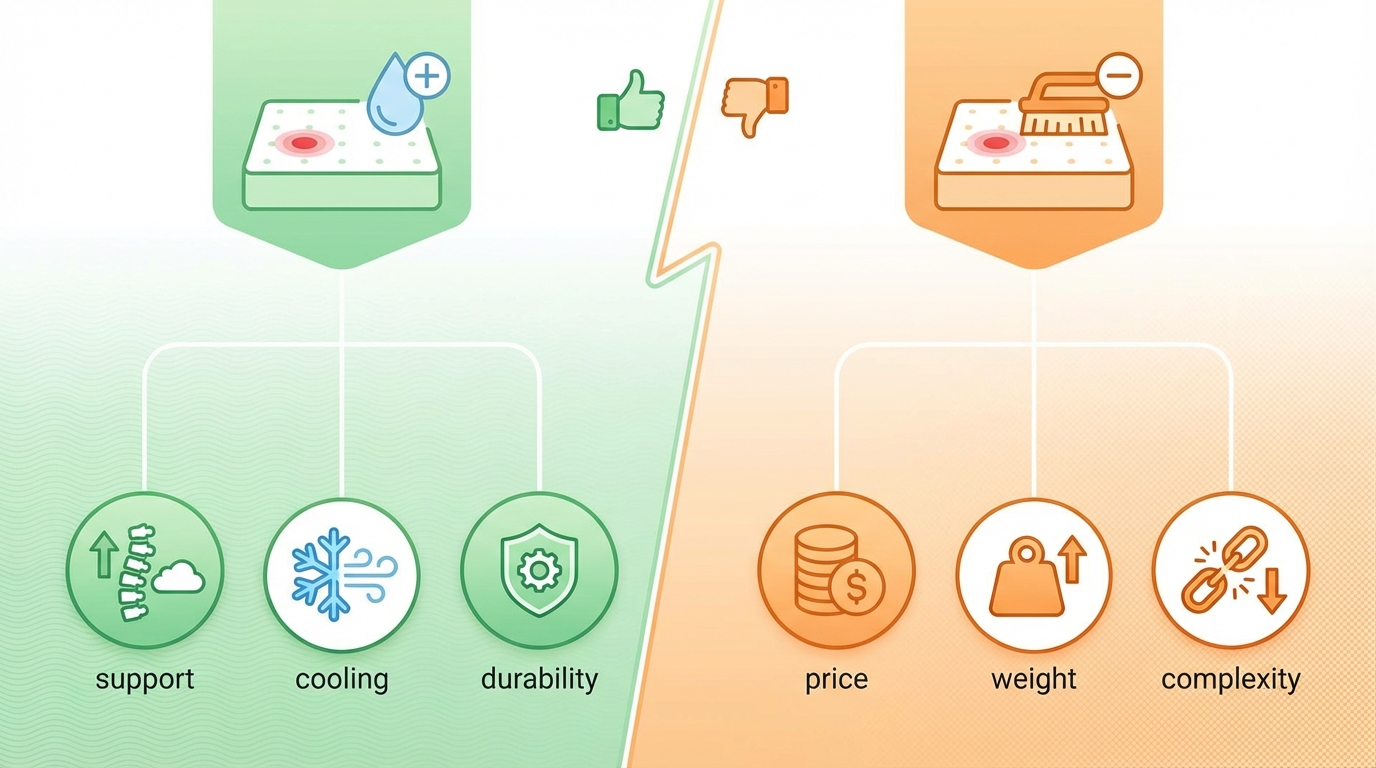
When baking soda and cold water are not enough, hydrogen peroxide can provide extra lifting power for more stubborn stains. Because it can lighten fabrics, it is best reserved for light colored mattress tops or stains that have already resisted gentler methods. Begin with a spot test on a hidden area under the mattress or along the side where sheets normally cover it. Dab a small amount of 3 percent hydrogen peroxide on the test area, let it sit for 10 minutes, then blot and observe for any color change once dry.
If the fabric passes the spot test, blot the blood stain one more time with cold water to remove any loose residue and then gently pat the area dry. Pour a small amount of hydrogen peroxide into a clean bowl rather than directly onto the mattress. Dip a cotton ball or clean white cloth into the solution and dab it onto the stained area. You may notice gentle bubbling, which is the peroxide reacting with the proteins in the blood. This foaming action helps lift the stain toward the surface.
Let the hydrogen peroxide sit on the stain for about 5 to 10 minutes. You do not need to scrub during this time. After the dwell period, use a clean, dry cloth to blot up the peroxide and loosened blood. If the stain is still visible, you can repeat this process a second time. For deeper stains, some people create a paste using hydrogen peroxide, a small amount of mild dish soap, and baking soda, then apply and blot after a similar dwell period. This combination adds degreasing and absorbing abilities to the oxidizing action of peroxide.
Once you are done with peroxide treatments, it is important to remove residue. Dampen a cloth with cold water and dab the area lightly to rinse, then follow with a dry cloth to soak up moisture. Allow the mattress to dry completely, ideally with a fan or good airflow. Keep in mind that even when the stain is not fully erased, peroxide can significantly reduce its visibility, especially on light colored quilted covers. Use it with care on foam heavy mattresses, limiting how much liquid is applied at one time.
Using Enzyme Cleaners Safely On A Mattress
Enzyme cleaners are especially effective on protein based stains, and blood falls squarely into that category. These cleaners use enzymes such as protease to break down the proteins into smaller, water soluble pieces that are easier to remove. Many pet stain removers include similar enzymes, which is why they work well on urine and vomit. When you choose an enzyme cleaner for your mattress, look for labels that mention blood, protein stains, or upholstery safe formulas, and follow the manufacturer’s instructions closely.
To start, blot the stain with cold water as usual, then let the surface dry until it is just slightly damp. Shake the enzyme cleaner if the label instructs, then apply a small amount to a clean, light colored cloth. Rather than spraying directly on the mattress, which can lead to oversaturation, dab the cloth onto the stained area in a gentle pressing motion. This gives you more control and reduces the risk of soaking inner layers of foam or batting.
Allow the cleaner to sit on the stain for the time recommended on the bottle, typically between 10 and 30 minutes. This dwell time is critical, since enzymes need time to interact with the proteins. Some products suggest covering the area with a clean, damp cloth to keep it from drying out too quickly, which can help the enzymes stay active. Avoid adding heat, as high temperatures can sometimes denature the enzymes and reduce their effectiveness.
After the dwell period, blot the area with a clean, dry cloth to remove as much cleaner as possible. If the stain has lightened significantly but is not fully gone, you can repeat the process once or twice. Once you are satisfied with the result, lightly dab with a cloth dampened with cold water to rinse away residue, then blot dry. Allow the mattress to aire out and dry thoroughly. Many people appreciate enzyme cleaners because they combine effective stain removal with odor control, which is helpful for mattresses that see regular sweat or allergy related nosebleeds.
When To Avoid Harsh Chemicals Like Bleach Or Ammonia
When you are frustrated with a stubborn blood stain, it can be tempting to reach for the strongest chemical under the sink. Bleach, ammonia, and other harsh cleaners may seem like a quick solution, but they often cause more harm than good on mattresses. Chlorine bleach, for example, can severely weaken fibers, discolor fabrics, and leave behind a strong chemical smell that is unpleasant to sleep on. It can also irritate skin and airways, particularly for people with asthma or sensitive skin, as noted by medical organizations such as the Cleveland Clinic.
Ammonia is also problematic. While it can sometimes break down older stains, its fumes are intense and can be dangerous in poorly ventilated spaces. Ammonia can permanently damage delicate fabrics and is absolutely unsafe to combine with bleach, since that mixture creates toxic chloramine gas. Given that your mattress is a surface you breathe near for hours every night, using these types of chemicals is rarely worth the risk, especially when safer, more targeted options exist.
Solvents like nail polish remover or products containing acetone should also be avoided. They can degrade foam, dissolve adhesives used in mattress construction, and leave behind residues that are hard to fully remove. Over time, this could change how your mattress feels and performs. Manufacturer care tags on mattresses usually recommend mild detergents and warn against harsh solvents for exactly these reasons.
If you are dealing with an extremely old and dark blood stain that has already survived multiple cleaning attempts, it is often more realistic to reduce expectations instead of escalating to dangerous chemicals. Lightening the stain, sanitizing the area as well as possible, and then covering it with a high quality mattress protector is usually the safest compromise. If that does not feel acceptable, it may be time to consider whether the mattress is at the end of its practical life and to look at replacement options that better fit your needs.
Drying Your Mattress Correctly After Cleaning
However you treat a blood stain, proper drying can make the difference between a clean, comfortable bed and one that feels damp, musty, or even moldy. A mattress is thicker and less breathable than a sheet or pillowcase, so moisture tends to linger in the inner layers. After you finish blotting away cleaners and rinsing with cold water, continue pressing dry, absorbent towels into the cleaned area for several minutes. Replace the towel as it becomes damp so you are always lifting moisture away from the mattress.
Airflow is your best ally. Position a fan so it blows across the cleaned area, not directly into it. Cross ventilation from an open window and a ceiling fan can also speed up drying. Try to keep the room at a moderate temperature, since cool, stagnant air will slow down evaporation. If your mattress is not too heavy and the stain is near the side, you can gently tilt or stand the mattress on its side temporarily so air circulates around both surfaces, but do this only if you can do it safely.
Avoid using direct heat, such as a hair dryer on a hot setting or a space heater pointed at the stain. High heat can damage foam, shrink fabrics, or cause remaining trace proteins in the blood to set further into the fibers. It can also create a dry exterior while the interior remains damp, which is a recipe for trapped moisture. The goal is thorough, consistent drying rather than rapid surface drying.
Before you remake the bed, check the cleaned area with your hand. It should feel completely dry, not cool or clammy. If possible, give the mattress a few extra hours before putting sheets back on, so any hidden moisture can escape. This is especially important for memory foam and hybrid mattresses, where dense foam layers hold on to moisture longer. Good drying habits not only help with stain removal but also protect your mattress from odors and microorganisms that thrive in damp environments.
Mattress Materials: How Your Cleaning Approach Should Change
Not all mattresses respond to cleaning in the same way. Understanding your mattress construction will help you choose the safest and most effective stain removal methods. Traditional innerspring mattresses have a coil core with thinner layers of foam and fiber on top. They usually have more airflow and are somewhat forgiving of small amounts of water during cleaning, though you still want to avoid heavy saturation. Simple baking soda or hydrogen peroxide methods tend to work well on these as long as you are conservative with moisture.
All foam mattresses, such as memory foam or polyurethane foam designs, demand more caution. Foam acts like a sponge, so liquids travel downward easily and can be hard to fully dry. Excess water and aggressive chemicals can break down foam cells, which can shorten mattress life or change how it feels. For these mattresses, lean toward drier methods like baking soda pastes and carefully dabbed enzyme cleaners, and invest extra time in thorough drying afterward. When you are shopping for a replacement, browsing options like the best foam mattresses at Sleepology can also give you a sense of which modern foams are more breathable and easier to keep fresh.
Hybrid mattresses combine coils with thicker foam comfort layers. Many modern hybrids have quilted tops and multiple layers of specialty foams, which deliver great pressure relief but can be more vulnerable to over saturation during cleaning. Treat hybrids similarly to all foam beds, using as little liquid as possible and focusing on blotting rather than scrubbing. Because hybrids tend to be heavier, flipping them for drying is not always practical, so fans and good room ventilation become especially important.
If your mattress has a removable zip cover, check the care instructions before unzipping it. Some brands design covers to be machine washable, while others warn that removing the cover can expose internal fire barrier layers that must remain intact. When in doubt, follow the manufacturer’s instructions on the label. If a washable cover takes the brunt of a stain, you can sometimes get an almost like new result from the mattress surface by fully removing and laundering the cover while only gently spot treating any deeper marks.
Comparing Mattress Protectors And Toppers For Stain Prevention
Once you have gone through the effort of cleaning a blood stain, it is natural to start thinking about prevention. Mattress protectors and toppers both play a role, but they are not the same thing. A mattress protector is a thin, often waterproof or water resistant layer that surrounds the mattress, acting as a barrier against liquids, sweat, and allergens. A topper is a thicker comfort layer that sits on top of the mattress to change the feel, but it is usually not designed to stop moisture from reaching the mattress itself.
The most effective way to protect against blood and other bodily fluids is a fully waterproof protector that encases the top and sides of the mattress. Many of these use a breathable, waterproof membrane that blocks liquids while allowing air and some vapor to pass through. This means you get spill and stain protection without trapping heat as much as older vinyl style protectors. At Sleepology, for example, customers who are prone to period leaks or caring for kids often appreciate a cooler option like the TEMPUR-Breeze Mattress Protector, which combines waterproof protection with temperature balancing materials.
For people with allergies or sensitive skin, a hypoallergenic protector that is also waterproof can add another layer of comfort and safety. Something like the TEMPUR-Adapt Mattress Protector helps block dust mites and common bedroom allergens while also defending against nighttime leaks or nosebleeds. Being able to remove and machine wash a protector regularly keeps your sleep surface much fresher and reduces the need to deep clean the mattress itself.
Toppers, on the other hand, are more about feel. They can make a mattress softer, firmer, or more contouring, and they sometimes absorb minor spills, but they are rarely waterproof. In fact, if a topper absorbs blood, you may end up needing to clean both the topper and the mattress underneath. For that reason, the best long term setup for stain prevention is a quality waterproof protector directly on the mattress, with any topper and sheet set layered above it. That way, leaks that pass through sheets or a topper still meet a reliable barrier before they can reach your mattress.
Quick Comparison: Protectors And Toppers For Stain Defense
| Product Type | Primary Purpose | Stain Protection Level | Best For |
|---|---|---|---|
| Waterproof Mattress Protector | Barrier against liquids and allergens | High | Period leaks, kids, nosebleeds, guest beds |
| Non‑waterproof Mattress Pad | Light cushioning, minor absorbency | Low to moderate | Slight comfort boost, limited spill defense |
| Mattress Topper | Change in comfort feel | Low | Softening or firming without true protection |
With the right barrier in place, your next unexpected stain is much more likely to end up on a removable, washable layer rather than deep in your mattress. That means less stress, less scrubbing, and a longer useful life for the mattress you already have.
“I used to fight with stains every few months between my heavy periods and my son’s nosebleeds. Once we added a cooling waterproof protector from Sleepology on every bed, cleanup became as simple as stripping the bed and tossing the protector in the wash. We have not had a single stain reach the mattress since.” – Melissa J., September
Blood On Sheets And Bedding: Handling The Whole Sleep Surface
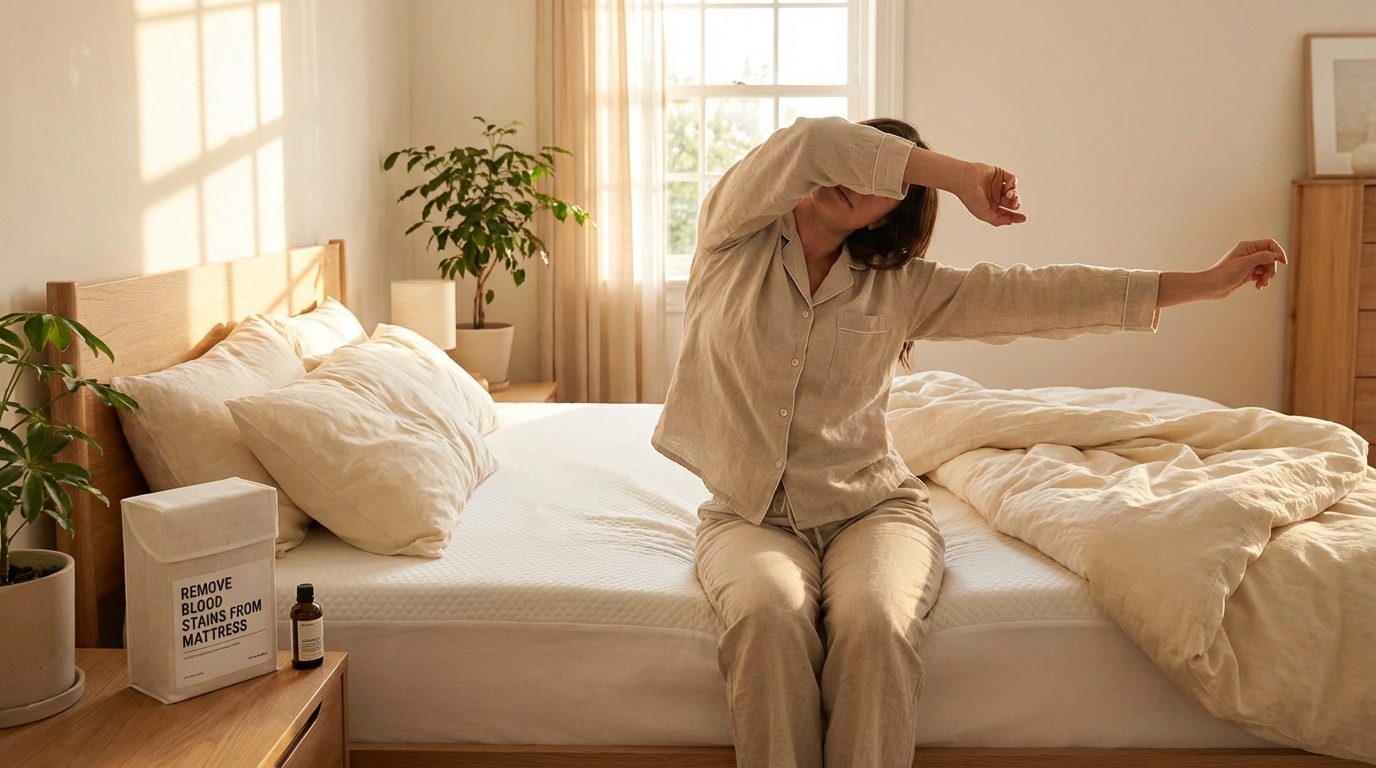
When blood reaches your mattress, it almost always passes through sheets, pillowcases, or even a topper first. Taking care of these layers properly will give your entire bed a fresher, more hygienic reset. The good news is that most bedding items are far easier to treat than a mattress because they can be soaked and machine washed. Many of the same principles apply, but you get to use water more freely.
Begin by rinsing stained sheets or pillowcases under cold running water as soon as you can. Hold the fabric so the water runs through the stain from the back side to help push the blood out of the fibers rather than deeper in. According to consumer cleaning guidelines from trusted sources like Consumer Reports, this simple step often removes a large portion of fresh stains before any cleaners are added. Avoid hot water at this stage for the same protein setting reasons discussed earlier.
Next, pre treat the stain with a gentle liquid laundry detergent, an enzyme based stain remover, or a paste of baking soda and water. Gently work the cleaner into the stained area with your fingers or a soft cloth, then let it sit for 15 to 30 minutes. For white or colorfast fabrics, some people also use oxygen based stain removers that are safe for colors. Always check the care label and avoid chlorine bleach on delicate fibers, which can weaken them over time even if it lifts the stain.
After pre treatment, launder the bedding on a cold or cool cycle with a quality detergent. If your detergent contains enzymes, this can further help with stain removal. Check the stain area before putting the items in the dryer. If any discoloration remains, repeat the pre treatment and washing cycle, because heat from a dryer can permanently set what is left. When the stain is fully gone or nearly invisible, dry the items as directed on the care label.
Remember to wash mattress protectors, not just sheets, after any significant leak. Many high quality protectors are machine washable, but they may have specific instructions about water temperature and dryer settings to preserve their waterproof membrane. Clean sheets, pillowcases, and protectors not only feel better but also support better sleep hygiene, which experts like the Sleep Foundation and various sleep medicine centers connect to higher quality, more restorative rest.
When It Might Be Time To Replace Your Mattress
Even with the best cleaning methods, there are times when a mattress is simply at the end of its useful life. Blood stains themselves are often more of a cosmetic problem than a structural one, but if you are repeatedly dealing with leaks, or if the stain has penetrated deeply enough to change the way the mattress smells or feels, it can be a sign that replacement is worth considering. The National Sleep Foundation and other sleep health organizations generally suggest evaluating a mattress for replacement around the 7 to 10 year mark, depending on quality and use frequency.
Pay attention to how you feel when you wake up. If you are cleaning a stain on a mattress that already has sagging, lumps, or pressure points that leave you sore, it may not be worth the effort to preserve it at all costs. In that case, your cleaning work can buy you a little time while you shop, but the ultimate solution that improves both hygiene and comfort is a new mattress that better supports your body. For many sleepers, a modern hybrid such as a Sealy Posturepedic Plus Firm Mattress – Paterson II Euro Pillow Top or a Sealy Posturepedic Pro Soft Mattress – Dupont II Euro Pillow Top can deliver better alignment while also pairing beautifully with a waterproof protector for easier maintenance.
Household health situations matter here too. If a mattress has been heavily soiled with blood across a large area, especially in the context of a serious illness or extended bed rest, you may reasonably feel that no amount of spot cleaning will make it feel truly fresh and safe again. In those cases, remember that your peace of mind has value. Replacing the mattress and immediately encasing the new one in a quality protector can reduce stress and improve the overall environment for both the sleeper and caregivers.
Sleep quality is deeply tied to health, mood, and daily performance. Sleep medicine programs at major clinics consistently highlight the role of a supportive, clean sleep surface in achieving restorative sleep. If you find yourself dreading going to bed because of lingering stains or smells, that is a strong signal to step back and consider the bigger picture. Sometimes a strategic investment, especially when paired with good protection going forward, saves time, cleaning products, and frustration over the long run.
Protecting Your Investment Going Forward
Once your current stain has been handled as well as possible, the next step is to build a simple routine that prevents future problems and protects the money you have invested in your mattress. Start with layered protection. At minimum, pair your mattress with a waterproof or highly water resistant protector and then add comfortable sheets and, if desired, a topper above that. If you are shopping for a new mattress at the same time, exploring options like the best hybrid mattresses at Sleepology allows you to choose a model that balances comfort and easy care from the start.
Establish a quick response plan for future accidents. Keep a small “stain kit” in a bathroom or laundry room nearby that includes clean white cloths, baking soda, a gentle enzyme cleaner, and disposable gloves. Knowing exactly where these items are means you can act quickly when you notice blood on sheets or a mattress, which is crucial since organizations like the Sleep Foundation note that speed is one of the biggest predictors of successful blood stain removal. Even teaching kids and teens a few of these basics can help them feel less embarrassed about leaks.
Regular maintenance helps too. Wash sheets and protectors weekly or biweekly, depending on your needs. This not only feels better but also keeps sweat salts and skin oils from slowly degrading the mattress surface. If you use additional comfort accessories such as a Tempur-Pedic Mattress Topper and pillow bundle for guests or travel, wash their covers and allow them to dry completely after any spills. Clean, dry layers work together to keep your core mattress in good condition for years.
If you find yourself repeatedly battling stains from the same source, such as heavy menstrual cycles or frequent nosebleeds, consider small lifestyle or sleep environment tweaks. For menstruation, doubling up with both a mattress protector and a darker colored towel under your sheet on heavier nights can buy you extra peace of mind. For nosebleeds, some ear nose and throat specialists recommend simple measures like using a humidifier to reduce dryness and saline sprays before bed to lower the risk of nighttime bleeding. While these are medical topics best confirmed with your healthcare provider, they can make your bedroom a lower risk zone for repeat accidents.
Conclusion: You Can Save Your Mattress And Sleep Easier
Discovering blood on a mattress is never pleasant, but it does not have to mean the end of your sleep surface. By acting quickly, using cold water, and choosing gentle yet effective cleaning agents, you can remove or significantly lighten most stains without damaging the mattress underneath. Understanding how blood responds to time, temperature, and different cleaners gives you a clear framework, whether you are dealing with a fresh leak from last night or an older, dried mark you just noticed.
Equally important is what you do after the stain is under control. Allowing the mattress to dry fully, choosing protection that fits your lifestyle, and keeping a simple stain response kit close at hand all support a calmer, more confident approach to future accidents. When combined with regular sheet and protector washing and thoughtful mattress selection, these habits help you maintain a clean, supportive sleep environment that truly supports your health.
If, as you go through this process, you realize your mattress is also sagging, uncomfortable, or simply old, that stain might be the nudge you need to consider an upgrade. The team at Sleepology is always ready to help you choose a mattress and protection setup that fits your body, budget, and real life, so you can spend less time worrying about stains and more time enjoying consistently better sleep.
Frequently Asked Questions
How do I remove fresh blood from a mattress fast without spreading it?
Start by stripping the bed and blotting the stain gently with a clean, light colored cloth or paper towel. Work from the outer edges of the stain inward so you are not pushing blood outward into clean fabric. Then, use a cloth dampened with cold water to dab the area, again focusing on blotting rather than scrubbing. Repeat until the stain lightens, then allow the spot to air dry with good airflow. Acting within the first hour or two and avoiding hot water are the two most important factors for a good result.
What is the best way to get dried blood out of a mattress?
Dried blood usually needs more than water alone. Start by gently scraping any crusted residue with the edge of a spoon, then lightly dampen the area with cold water. From there, you can apply a baking soda and water paste, a carefully spot tested hydrogen peroxide treatment, or an enzyme based cleaner designed for protein stains. Allow the cleaner to sit for 15 to 30 minutes before blotting, and repeat if needed. It often takes multiple gentle cycles of apply, wait, blot, and dry to lift an older stain effectively.
Is it safe to use hydrogen peroxide on every mattress?
Hydrogen peroxide is not universally safe for every mattress, which is why a spot test in an inconspicuous area is essential. On many light colored woven or knit covers, a 3 percent solution works well after testing, but on darker fabrics it may cause lightening or uneven spots. With memory foam and hybrid mattresses, you should be particularly careful to avoid soaking the foam layers, since trapped moisture can cause deterioration or odors over time. If your spot test shows any discoloration, stick to baking soda, mild detergent, or enzyme cleaners instead.
Can I use bleach or ammonia to remove blood stains from a mattress?
Bleach and ammonia are not good choices for mattress stain removal. They can damage fibers, discolor fabrics, and leave behind strong fumes that are unpleasant and potentially unhealthy to breathe while you sleep. Mixing bleach with ammonia is especially dangerous, since it creates toxic gases. Because your mattress is something you lie on for hours each night, it is smarter to use milder options like baking soda, hydrogen peroxide used carefully, or enzyme cleaners that are labeled safe for fabrics. These alternatives are strong enough for stains without the same level of risk.
How long does it take for a mattress to dry after cleaning a blood stain?
Drying time depends on how much moisture was used, the type of mattress, and your room conditions, but you should plan on several hours at minimum. After cleaning, press dry towels into the area repeatedly, then set up a fan to blow across the spot and open windows if weather allows. Foam and hybrid mattresses can take longer to dry than traditional innerspring models because denser foams hold on to moisture. To be safe, wait until the area feels completely dry to the touch and another hour or two has passed before putting sheets back on and sleeping on it.
How do I prevent future blood stains on my mattress?
The most effective prevention step is to use a waterproof or water resistant mattress protector that fully covers the top and sides of your mattress. This creates a barrier so leaks and spills hit a removable, washable layer instead of the mattress itself. Washing the protector and sheets regularly keeps everything fresh, and keeping a simple stain kit with baking soda, clean cloths, and a gentle enzyme cleaner nearby means you can respond quickly if an accident happens. For people who frequently deal with menstrual leaks or nosebleeds, doubling up with a protector plus an extra towel under the sheet on high risk nights can offer even more peace of mind.
When should I stop trying to clean and consider replacing my mattress?
If a mattress has deep, extensive staining, especially across a large area, or if it has started to smell even after thorough cleaning and drying, replacement may be worth considering. This is particularly true if the mattress is already old, sagging, or leaving you sore in the morning, since blood stains are often just another sign that the bed has reached the end of its useful life. When health concerns or serious illnesses are involved, many people feel more comfortable starting fresh with a new, well protected mattress, rather than sleeping long term on one that has been heavily soiled and spot cleaned multiple times.