

How To Pick A Mattress: A Sleepologist’s Step By Step Guide To Getting It Right The First Time
You are not the only one who feels overwhelmed the moment you start mattress shopping. Within ten minutes you are staring at words like hybrid, zoned coils, cooling gel, medium firm, and suddenly a decision that affects you every night for the next decade feels impossible. When you add in back pain, a partner who sleeps differently than you, or a budget you really need to stick to, it is understandable if you have put off buying a new mattress far longer than you probably should.
What is at stake is more than just comfort. According to the Sleep Foundation, most adults need 7 to 9 hours of sleep a night, and mattress quality has a measurable impact on sleep efficiency and how often you wake up. Chronic poor sleep is linked with higher risks of weight gain, mood disorders, and chronic pain, and in my experience many people do not realize how much of that traces back to an unsupportive or worn out mattress. A good mattress will not fix every health problem, but it often removes a major barrier between you and truly restorative rest.
You are here because you want a clear, confident way to decide what works for your body, your sleeping position, and your budget, without wading through jargon or sales pressure. That is exactly where a structured, evidence informed approach helps. When you understand how to match your body type, sleep position, and pain points to specific features, the choice becomes much simpler and you can narrow dozens of beds down to two or three that are genuinely good fits.
As a sleepologist who has worked with hundreds of people and just as many mattresses over 20 years, my job is to translate the science and the product details into plain language and practical steps. You are going to learn how to recognize when it is time for a new mattress, how to cut through marketing language, how to balance comfort with spinal support, and how to compare the main mattress types in a simple framework. Along the way I will point you toward specific Sleepology models that illustrate these principles, so you can move from research to a confident short list.
Step 1: Know When You Actually Need A New Mattress
Before you figure out how to pick a mattress, it helps to make sure you really do need one. Many people tolerate a bad bed for years because it feels easier than starting the shopping process, which is exactly how neck, shoulder, or low back aches turn into more serious issues over time.
Clinics like Mayo Clinic and Cleveland Clinic note that a mattress that no longer supports neutral spinal alignment can contribute to or worsen back pain, especially if you also spend long hours sitting at a desk. When you lie down, your ears, shoulders, and hips should line up relatively straight. If you roll onto your usual sleeping side and immediately feel your hips sink or your waist hanging in the air, your mattress is not supporting that alignment well anymore.
Age is one factor, but it is not the only one. The typical lifespan of a mattress is often quoted at 7 to 10 years, yet I have seen budget mattresses break down in 3, and high quality models still going strong at 12 for lighter sleepers. What matters more is how it feels now, not what the calendar says. If you are waking up more tired than when you went to bed, if you prefer sleeping on the sofa, or if you travel and suddenly sleep much better on a hotel bed, those are important clues the mattress at home is not serving you.
There are also visual and tactile signs that are hard to ignore. Deep body impressions that do not bounce back, areas that feel lumpy or uneven under your hand, or coils you can feel near the surface are all signs the internal structure has broken down. Noise is another one. If you hear creaks or squeaks when you roll over, it is either the foundation, the frame, or the mattress, and all three affect your experience.
“I kept telling myself my ten year old mattress was fine, even though my lower back hurt every morning. Mia helped me realize the sag I could feel under my hips was the problem. I switched to a hybrid she recommended and within two weeks my back pain went from a 7 to a 2. I honestly wish I had done it three years earlier.” – Karen L., November
Step 2: Clarify Your Sleep Profile Before You Look At Any Tags
You will make a much better choice if you define your needs before you walk into a store or scroll through a product page. Think of this as filling out a simple sleep profile that becomes the lens for every decision that follows.
Start with your primary sleeping position. Most of us move around at night, but you can usually identify where you spend the largest portion of the night. Recall how you typically wake up. If you are mostly on your side, you need more pressure relief across shoulders and hips. If you usually end up on your back, consistent surface support and gentle contouring under the lumbar curve become more important. Stomach sleepers need firmer, more stabilizing support to avoid overarching the lower back.
Next, consider body type and weight distribution. A petite side sleeper and a broad shouldered side sleeper both lie on their sides, but they compress the mattress very differently. Heavier bodies tend to sink farther into foam layers, which means you often need thicker comfort layers combined with stronger support cores to avoid bottoming out. Lighter bodies often do better with slightly softer surfaces, because they do not sink deeply enough into very firm foams to activate their pressure relief.
Finally, list your biggest sleep disruptors. Do you run hot at night and push covers off? Do you share a bed with a partner who tosses and turns? Are allergies or asthma part of your story? The Sleep Foundation points out that breathable materials, low VOC foams, and motion isolating constructions make a tangible difference for hot sleepers, sensitive individuals, and couples. Being honest about what bothers you at 2 a.m. is just as important as comfort in those first five minutes of lying down.
Once you have your sleep profile written down, it is much easier to filter options. For example, a side sleeper with shoulder pain and a partner, who also gets very warm at night, will probably want a medium to medium soft hybrid with zoned coils for support, pressure relieving foams at the surface, and good airflow. That is a very different target than a solo stomach sleeper with back pain, who often does better on a firmer, more stabilizing surface, such as a supportive hybrid or well built innerspring.
“Mia had me write down my ‘sleep problems’ before we tried anything. I thought I just needed a softer bed, but turns out my issue was overheating and my husband waking me up when he rolled over. We ended up with a medium hybrid that felt surprisingly supportive and my sleep tracker shows I am waking up far less now.” – Joel P., October
Step 3: Understand Firmness And Support (They Are Not The Same Thing)

One of the biggest sources of confusion in mattress shopping is the difference between how a bed feels and how well it supports you. Many people are told they need a firm mattress for support, especially if they have back pain, but the research and clinical experience tell a more nuanced story.
Support, in mattress terms, is how well the bed keeps your spine in neutral alignment. That means your natural curves are respected, but not exaggerated. For a back sleeper, the lumbar area should be gently held, not left hanging or driven flat. For a side sleeper, your shoulders and hips need to be allowed to sink just enough that your spine looks straight from the back. According to orthopedic and spine specialists, including guidance from organizations like the Cleveland Clinic, a medium firm feel often provides the best balance of comfort and alignment for many people with chronic low back pain, rather than extremes on either end.
Firmness is your subjective sense of how hard or soft a mattress feels when you first lie down. It is influenced by the top layers of foam or fiber, your body weight, and where you carry that weight. A petite person may describe the same mattress as firm that a heavier person calls medium. This is why firmness labels like “plush” or “firm” can vary between brands and even between models within the same brand.
When you are evaluating options, separate the questions in your mind. First, ask: “Does my spine feel neutral on this bed, in my natural sleep position?” Then ask: “Do I feel comfortable and relaxed on the surface, without pressure building up?” A mattress like the Sealy Posturepedic Pro Firm Hybrid Mattress – Dupont II is a good example of strong support with a firmer feel, ideal for many back and stomach sleepers who want a stable surface. By contrast, a model like the Sealy Posturepedic Elite Soft Mattress – Albany II Euro Pillow Top offers pressure relieving plushness on top of a supportive core for side sleepers who need more cushioning.
Give your body at least 5 to 10 minutes in your primary position when you are testing a mattress. Quick “sit and bounce” tests tell you almost nothing about spinal alignment. Pay attention to whether you are unconsciously tensing muscles in your back or shoulders. If you feel like you want to roll off or change positions immediately, that comfort layer is probably not right for you, even if the support underneath is strong.
Step 4: Match Your Sleeping Position With The Right Feel
Once you understand firmness and support as separate ideas, you can start matching your sleep position to a likely comfort range. These are not rigid rules, but they are reliable starting points that I have seen hold up for many people in real life.
Side sleepers: Prioritize pressure relief with stable support underneath
Side sleepers need the most cushioning because a lot of body weight rests on relatively small surface areas, especially the shoulders and hips. If the surface is too firm, you may feel “hot spots” or numbness in those areas and wake up needing to roll. Studies that look at pressure mapping consistently show that softer comfort layers can reduce peak pressure for side sleepers, as long as the core is supportive enough to keep the spine aligned.
For most average weight side sleepers, a medium or medium soft mattress works best. Look for thicker comfort layers made of memory foam or high quality polyfoam, often in the range of two to four inches combined. Latex comfort layers can also work well if you prefer a more buoyant, responsive feel instead of a deep hug. Underneath, a coil or high density foam core should be firm enough that your hips do not sink dramatically lower than your shoulders.
A model like the Sealy Posturepedic Elite Medium Mattress – Brenham II Euro Pillow Top is a good illustration of this balance. The Euro pillow top adds a plush, pressure relieving surface that many side sleepers love, while the Posturepedic support system underneath keeps your spine from bowing. If you are a lighter side sleeper, the Sealy Posturepedic Medium Mattress – Medina II Euro Pillow Top offers a slightly softer cradle that can be easier for smaller bodies to sink into.
Back sleepers: Aim for balanced, medium to medium firm support
Back sleepers have a bit more flexibility, but there is one non negotiable: your lower back should not feel like it is floating in space. If you slide a hand between your back and the mattress and feel a big gap, or if your hips sink so far that your tailbone feels tucked, the alignment is off. According to several sleep and spine health resources, including orthopedic guidance referenced by the Sleep Foundation, medium firm beds tend to provide the best blend of comfort and alignment for many back sleepers.
In practice, that often means a fairly supportive core, either foam or coils, with a comfort system that fills in the small of the back without letting the pelvis drop. Some back sleepers enjoy a slightly plusher top, such as a Euro pillow top, while others prefer a more flat, even surface. The right call comes down to how sensitive your shoulders and hips are, and whether you move between back and side.
Back sleepers often do well with hybrids because the coil system can be zoned to give a little extra push back under the lumbar area. The Sealy Posturepedic Plus Firm Mattress – Paterson II Euro Pillow Top is a strong example. It offers a firmer overall feel and reinforced support zones, but the Euro top prevents it from feeling board hard, which can be uncomfortable for many backs. If you want more options collected in one place, exploring a curated group like our best mattresses for back sleepers can help you stay within that sweet spot.
Stomach and combination sleepers: Keep your hips lifted and movement easy
Stomach sleeping is toughest on the spine because gravity tends to pull your midsection down while your neck is rotated to the side. Health organizations often suggest transitioning away from full time stomach sleeping if you can, but many people find it hard to change, which makes the right mattress even more important. You will usually be most comfortable on a firm or medium firm mattress that keeps your hips level rather than sagging.
Look for strong support through the middle third of the mattress and avoid extremely plush pillow tops that let you sink deeply at the pelvis. A model like the Sealy Posturepedic Elite Extra Firm Mattress – Brenham II or a firm hybrid from our best mattresses for stomach sleepers collection will generally feel much better to your spine than a soft foam bed designed for side sleepers.
Combination sleepers, who rotate between positions, need a balance. You want enough cushioning to be comfortable on your side, enough support to stay aligned on your back or stomach, and a surface that does not make you feel stuck when you roll over. Medium and medium firm hybrids are often ideal here because the coils make changing positions easy, while the foam layers on top reduce pressure points. Prioritize motion freedom and responsiveness along with basic support and comfort when you are testing beds as a combination sleeper.
“I thought a super soft mattress would help my hip pain, but Mia pointed out that as a stomach and side sleeper, my hips were actually dropping too far. We moved to a medium firm hybrid, and the first thing I noticed was how much easier it was to roll over. My chiropractor was thrilled with the change too.” – Daniel R., December
Step 5: Compare The Main Mattress Types With A Simple Framework
By now you have a clearer picture of your sleep profile and ideal firmness range. The next big decision is type: innerspring, memory foam, hybrid, or latex and other specialty options. Instead of memorizing every construction detail, it helps to think in terms of feel, support, motion transfer, and temperature.
According to independent testing organizations such as Consumer Reports and summaries by the Sleep Foundation, each major mattress category tends to have predictable strengths and tradeoffs. Here is a simple comparison table to orient you:
| Mattress Type | Typical Feel And Support | Motion Isolation | Temperature And Breathability |
|---|---|---|---|
| Innerspring | Bouncy, more on top of the bed, support from steel coils with thin to moderate comfort layers | Fair to good, can transmit more movement unless coils are individually wrapped | Often cooler thanks to airflow around coils, good for hot sleepers |
| Memory Foam | Deep contouring, slow response, strong pressure relief, support from dense foam cores | Excellent, absorbs movement very well, ideal for couples sensitive to motion | Can sleep warmer unless designed with cooling features or breathable covers |
| Hybrid | Blend of coil support and foam or latex comfort, medium contouring with some bounce | Good to excellent depending on foam type and coil design | Usually better airflow than all foam, many models add cooling foams or covers |
| Latex | Buoyant, responsive, contouring without deep sink, supportive and resilient | Good, though slightly more bounce than memory foam | Naturally more breathable than dense foams, often cooler and good for those who sleep hot |
This table is a starting point, not a rulebook. There are innersprings with thick, plush tops that feel more like hybrids, hybrids that lean very foam heavy, and memory foam beds with advanced cooling designs. Still, knowing the basic personality of each type helps you narrow your search quickly.
If you like a traditional, bouncy feel and tend to sleep hot, a well built innerspring or hybrid with a coil core is worth a close look. If your top priority is pressure relief and motion isolation, for example if you have arthritis or share a bed with a restless partner, memory foam or foam forward hybrids often shine. Latex is a great choice if you want something durable, a bit more eco conscious, and cooler than most dense foams, with a very responsive feel that makes it easy to change positions.
The good news is that many modern mattresses blend the best of multiple types. A hybrid like the Sealy Posturepedic Pro Medium Mattress – Dupont II Euro Pillow Top pairs individually wrapped coils for targeted support and airflow with foam comfort layers that cushion pressure points. This kind of construction works particularly well for couples with mixed sleep styles, because it offers both support and comfort across a wide range of positions.
Step 6: Choose The Right Size For Your Room, Body, And Lifestyle
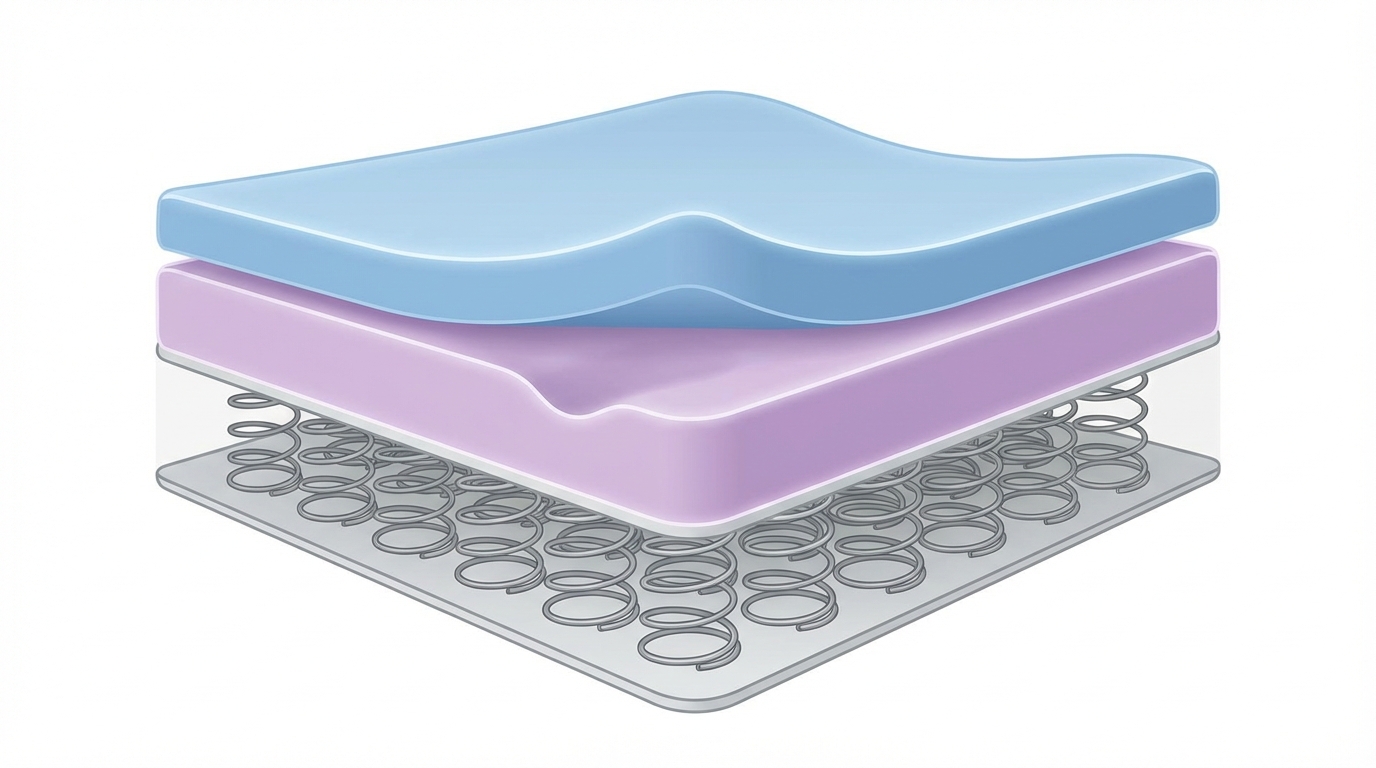
Mattress size might sound like the simplest choice, but it has more impact on your comfort than you might think. The goal is to balance bedroom space, who is sleeping on the bed, and how much personal room you each need to sleep without disturbing one another.
A twin or twin XL usually makes sense for children, teens, or solo adults in very small rooms. A full can work well for a single adult who likes extra width, but it can feel tight for couples, especially if either of you are tall or broad shouldered. Most couples are happiest with at least a queen, which gives both partners enough room to change positions freely without excessive bumping. King and California king sizes offer luxury level space and are particularly useful for families who co sleep with young children or share the bed with multiple pets.
Research cited by Good Housekeeping and similar home resources notes that bed size can directly affect sleep quality for couples because of how often we change positions at night. When you compress two adults into a narrow width, every turn or stretch is more likely to wake the other person. If you have the room and the budget, it often makes sense to choose the largest size that fits comfortably in your bedroom while still allowing room to walk and open drawers.
Think about your lifestyle as well. If you are likely to move frequently or navigate narrow staircases, a lighter queen might be more practical than a heavy king. Split king setups on adjustable bases are another smart option when partners have very different needs; they allow each person to choose a feel and position that suits them while still sharing a bed frame. Whatever size you choose, be sure to factor in the cost of new sheets, protectors, and other bedding if you are sizing up.
Step 7: Do Not Forget Temperature, Motion, And Allergies
Once you have nailed down feel, type, and size, you are very close, but a few comfort and health factors can still make or break your experience. I see these overlooked all the time until they become nightly frustrations.
Temperature is the big one. Many people naturally run warm at night, and we now know that a slight drop in core body temperature helps signal your brain to fall asleep. If your mattress traps heat around your body, you end up tossing off the covers, flipping the pillow, or waking up sweaty. In general, coil based mattresses breathe better than solid foam, and open cell foams, wool, cotton, and specialized cooling covers can help. Memory foam can work for hot sleepers when paired with breathable covers, phase change materials, or gel infusions, but you still need to pay attention to how “hugging” the surface feels.
Motion isolation is crucial for couples. If your partner’s every turn wakes you, both of your sleep suffers. All foam mattresses typically offer the best motion control, with hybrids close behind, especially those with individually wrapped coils. If you or your partner are especially sensitive, try lying on one side while the other person changes positions on the other and notice what you feel.
Allergies and sensitivities are another area where materials matter. The Sleep Foundation and allergy organizations often suggest that people with asthma or chemical sensitivities look for low VOC certifications and removable, washable covers. Latex can be a good choice for some because it is naturally resistant to dust mites and mold, though a true latex allergy must be taken seriously and guided by a medical professional. Mattress protectors are also an important tool to keep dust, skin cells, and spills out of the core of your bed.
A breathable, well protected mattress will perform better if you pair it with the right accessories. Cooling mattress pads, quality sheets, and properly supportive pillows all play a role. If you find a mattress you love but still tend to travel or host guests, something like the Tempur-Pedic® Mattress Topper - Pillow Travel and Guest Bundle can bring familiar comfort with you and smooth out less comfortable sleeping surfaces on the road.
Step 8: Consider Adjustable Bases And Overall Sleep Ergonomics
Mattress choice is one piece of your sleep setup. The base under your mattress and the alignment of your head, neck, and legs can enhance or undercut even the best mattress. More people in are discovering that adjustable bases are not just for hospitals or older adults, but useful tools for anyone dealing with snoring, reflux, swelling, or chronic pain.
Adjustable bases allow you to raise the head of the bed, the foot, or both, which can reduce pressure on the lower back, take weight off the shoulders, and alleviate some airway issues that contribute to snoring. Some studies on sleep ergonomics suggest that a slight elevation of the upper body can help with mild reflux and can make breathing easier for some individuals with certain medical conditions. Always check with your healthcare provider for personalized advice, but from a pure comfort standpoint, many people find zero gravity or gently elevated positions deeply relaxing.
Not every mattress pairs well with an adjustable base, so it is worth confirming compatibility. Most foam and many hybrids flex well, while some older style innersprings are not designed to bend repeatedly. Exploring options within our adjustable bed frame and base collection is a smart way to ensure you are choosing products designed to work together.
Think about your bedroom ergonomics holistically. Your pillow height should match your sleep position, your mattress should support your curves, and your base should allow a stable platform. Organizations like the Mayo Clinic emphasize that neck and back pain at night often comes from a combination of factors, not one single culprit. When all of these pieces work together, you are much more likely to fall asleep quickly and stay asleep through the night.
Step 9: Use A Simple Checklist In The Store Or At Home
You now have a lot of information, and it can help to boil it down into a quick checklist you can mentally run through whenever you are evaluating a specific mattress. This is where a short, focused list really shines, both in a showroom and during an at home trial.
Before using the checklist, give yourself a few minutes simply lying still on the bed in your usual position. Let your muscles relax. Notice your breathing. Then, work through these key questions:
- Does my spine feel neutral in my primary sleeping position, with no obvious sagging or arching in my lower back or neck
- Are my pressure points, such as shoulders and hips, comfortably cushioned without going numb or burning
- Can I roll from my back to my side and to my stomach without feeling stuck or fighting the mattress
- Am I noticing any immediate hotspots of warmth, especially under my back or hips
- When my partner moves, how much of that movement do I actually feel on my side of the bed
- Does the edge of the mattress feel stable when I sit or lie near it, or do I feel like I might slide off
- Are any smells present from new materials mild and fading, or do they feel strong and irritating after a few minutes
If a mattress passes most of these questions and aligns with your sleep profile, type preference, and budget, it is a strong candidate. If it fails on one or two critical points, especially spinal alignment or pressure relief, listen to your body. It is very tempting to talk yourself into a mattress that is on sale or looks luxurious, but small discomforts you notice in ten minutes often become nightly frustrations once you live with the bed.
Spending this focused time with each mattress will also make your conversations with a Sleepology specialist more productive. You can say things like “this one supported my back but felt too hard on my shoulders” or “that one was comfortable, but I felt my partner moving more than I expected,” which helps us refine recommendations to models that target those gaps.
Step 10: Balance Budget, Quality, And Long Term Value

Mattress pricing can feel all over the place. There are budget beds that look enticing, ultra luxury offerings with premium materials, and a lot in the middle. It is helpful to think in terms of value over years of use instead of focusing only on sticker price. With an average replacement span of around 8 to 10 years for a good quality mattress, even a somewhat higher initial investment often works out to a reasonable cost per night of use.
Consumer advocacy groups and testing organizations frequently point out that you do not need to spend the very top of the market to get a comfortable, durable mattress. Many strong performers live in the mid range, where construction quality, coil counts, and foam densities reach a point that truly supports long term use. Very inexpensive mattresses often save costs through lower density foams or thinner coils, which can feel good for a year or two but break down quickly, especially for heavier sleepers.
Set a realistic budget based on how long you expect to keep the mattress, your body type, and your specific needs. If you have significant back issues, a history of poor sleep, or a partner with very different preferences, investing a bit more in a model that meets both of your needs is usually worthwhile. If your mattress is for a guest room or a child who will likely change sizes and preferences in a few years, something more modest can make sense.
Also factor in the return policy, trial period, and warranty when you think about value. A generous at home trial reduces your risk because you can truly sleep on the mattress in your own environment and return it if it is not right, within the allowed window. A solid warranty that covers significant sagging or defects indicates the manufacturer expects the bed to hold up. These policies have real monetary value, even though they do not show up in the list price.
Step 11: Take Advantage Of Expert Guidance And Curated Collections
Even with a strong framework, mattress shopping can still feel like a lot to manage alone. This is where working with knowledgeable guides who are not tied to a single manufacturer can genuinely save you time, money, and frustration. At Sleepology, our team spends every day working with real people and real sleep challenges, which builds a kind of pattern recognition that is hard to get from reviews alone.
Curated collections are one way we simplify things. For instance, if you already know you are a back sleeper with occasional low back pain, starting with the best mattresses for back sleepers narrows the field to models that already match your core needs. If you wake up with neck stiffness, pairing your mattress choice with options from our pillows, sheets, toppers, and protectors collection allows you to build a complete sleep system that supports alignment from head to toe.
When you talk with an expert, be as honest and specific as possible. Share details about your health, your partner’s needs, your budget, and mattress experiences you have liked or disliked. This allows a specialist to map your story to specific constructions and models, instead of guessing. Remember that our goal is not to push you to the most expensive mattress, but to the right one for your body and situation.
Experienced guidance is also valuable when you are making tradeoffs. For example, you might love the hugging feel of memory foam but feel too hot on certain models. There may be a hybrid that offers similar contouring with better airflow. Or you may want a super soft feel but need more support for your back, in which case a slightly firmer mattress combined with a thoughtful topper can be a smarter, more durable solution.
Conclusion: Turning Mattress Confusion Into Confident, Restful Sleep
By now you have walked through every major decision point involved in how to pick a mattress, from recognizing when your old one is holding you back, to understanding your sleep profile, to comparing types and firmness levels with a clear, practical lens. The goal is not for you to remember every term or specification, but to feel empowered to say, “I know what my body needs, and I can tell when a mattress meets those needs.”
Remember that the right mattress for you is the one that supports neutral alignment in your natural sleep positions, cushions your pressure points, stays reasonably cool, and fits your room and lifestyle. It does not have to be the firmest model in the store, the softest cloud you have ever felt, or the most expensive option on the page. It simply has to be well matched to your body, your habits, and your budget.
If you are feeling ready to move from research to action, consider this your invitation to try a focused, informed approach. Use the checklist, think in terms of how you sleep instead of what a label says, and give each candidate bed enough time for your body to speak up. If you would like a partner in that process, the team at Sleepology, including myself, is always here to listen, ask smart questions, and guide you to a shortlist that truly fits.
Better sleep is not a luxury. It is a foundation for the way you feel, move, work, and connect with people you care about every day. Choosing the right mattress is one of the most concrete, high impact steps you can take toward that goal, and you now have the framework to do it with clarity and confidence.
Frequently Asked Questions
How do I know if a mattress is supportive enough for my back?
A supportive mattress keeps your spine in a neutral position, where your natural curves are present but not exaggerated. When you lie in your usual sleep position, your hips should not sag deeply, and you should not feel a gap under your lower back or a sense that your neck is bent at a sharp angle. If you wake with consistent back or neck pain that eases as you move around, or if you sleep better on a different mattress when traveling, those are signs your current mattress may not be supportive enough. During testing, spend several minutes lying still and notice whether your muscles feel relaxed or subtly braced.
What is the best mattress firmness for back pain?
There is no single firmness that works for everyone, but research from spine health organizations often finds that medium firm mattresses provide better back pain relief for many people than very firm or very soft surfaces. Medium firm typically means the mattress feels comfortably supportive without being rock hard, allowing your shoulders and hips a bit of give while still holding your spine in line. That said, your body weight, sleep position, and personal comfort preferences matter. For example, a lighter side sleeper with back pain may prefer a slightly softer feel than a heavier stomach sleeper with similar issues.
Should I choose a hybrid or memory foam mattress if I share a bed with a restless partner?
If motion transfer is your main concern, both all foam and many hybrids can work well. Memory foam beds tend to be the champions of motion isolation, absorbing movement so one person’s tossing does not travel to the other side. Hybrids that use individually wrapped coils combined with quality foam layers also do a good job, and often feel more responsive and easier to move on than deep memory foam. If you or your partner often feel hot at night, a hybrid may be a stronger choice because the coil core allows more airflow while still controlling motion.
How long should a good quality mattress last?
A good quality mattress typically lasts around 7 to 10 years, sometimes longer, depending on your body weight, how you care for it, and how it is constructed. Higher density foams and stronger coils tend to hold up better under regular use, while very soft, low density materials can develop impressions sooner. Rotating your mattress as recommended, using a supportive foundation, and adding a protector to guard against moisture can all extend its life. Rather than relying only on age, pay attention to how you feel; if you see sagging, feel lumps, or wake up sore, it may be time to replace it even if it is technically “within” that lifespan range.
Do I really need an adjustable base, or is a regular foundation enough?
A regular, sturdy foundation is enough for many people, especially if you generally sleep flat and do not struggle with snoring, reflux, or circulation issues. An adjustable base can be worth the investment if you often like to read or work in bed, if you feel more comfortable with your knees slightly elevated, or if your healthcare provider has suggested elevating your upper body for certain conditions. People with chronic back pain sometimes find relief in a zero gravity position that slightly bends the knees and elevates the legs, which an adjustable base can provide. The key is to make sure your chosen mattress is compatible with an adjustable base before you buy.
What accessories actually make a difference once I have the right mattress?
Once you have a good mattress, a few accessories can significantly fine tune your comfort. A quality pillow that matches your sleep position supports your neck and can reduce tension headaches and shoulder pain. A breathable protector safeguards your mattress from spills and allergens without changing the feel. Sheets made from natural, breathable fibers such as cotton or Tencel can help regulate temperature, especially if you sleep hot. A thoughtfully chosen topper can slightly adjust the firmness feel of a supportive mattress, but it will not fix deep sagging or structural problems in an old bed.