

How To Move A Mattress By Yourself: A Safe, Step‑By‑Step Guide From A Sleep Expert
You are not the first person to look at a big, floppy mattress and think, “How on earth am I supposed to move this on my own?” Mattresses are awkward, heavy, and surprisingly stubborn when you try to turn a corner or get them down a hallway. If you are moving homes, rearranging bedrooms, or bringing a new bed into a tight space, it is completely normal to feel a bit overwhelmed.
At the same time, your mattress is one of the most important pieces of furniture you own. According to the Sleep Foundation, most adults spend about a third of their lives in bed, and mattress comfort and support have a direct impact on sleep quality and next day alertness. That means how you move and protect your mattress matters for both your wallet and your health, because damage during a move can shorten its lifespan or change the way it feels.
The good news is that with the right preparation, tools, and game plan, you can absolutely learn how to move a mattress by yourself without wrecking your back, your walls, or the mattress you depend on every night. It is less about brute strength and more about using simple equipment, smart body mechanics, and a realistic understanding of what your mattress can and cannot handle.
In this guide, you will learn a complete solo-friendly process, from deciding whether your mattress is even worth moving, to wrapping and lifting it properly, to loading it into a vehicle and setting it up again. You will also see where a few well chosen accessories from Sleepology can make the move cleaner, safer, and a lot less stressful. Think of this as walking through the move alongside a knowledgeable friend who has seen hundreds of beds come and go.
Before You Move: Is This Mattress Worth Saving?
Before you start hunting for ratchet straps or recruiting a dolly, pause and ask the most important question: should this mattress even make the move with you? As a general rule, many sleep organizations, including the Sleep Foundation and Mayo Clinic, suggest that most mattresses perform best for around 7 to 10 years, depending on materials and how they are cared for. If you are on the far end of that range, it is worth a closer inspection.
Start by checking how the mattress feels when you lie on it for at least 10 to 15 minutes. If you notice deep body impressions that do not spring back, a sagging middle that pulls your spine out of alignment, or pressure points in your hips and shoulders that were not there a few years ago, those are strong signs the internal support has broken down. No amount of careful moving will bring that support back, so you may be better off recycling the mattress and putting your energy toward a replacement.
Next, inspect the surface closely in good light. Look for frayed seams, fabric tears, exposed coils, or any sign of moisture stains or mildew. The Centers for Disease Control and Prevention and other health authorities consistently warn that mold and dust mite buildup can aggravate allergies and asthma, especially in sensitive sleepers. If you see or smell anything musty that has penetrated beyond the very top layer, that mattress has become a less healthy sleep environment, and moving it might carry those issues with you.
There is also the honesty test. Ask yourself whether this mattress actually supports how you sleep now, not just when you first bought it. If you have shifted toward back sleeping and wake stiff, upgrading to a more supportive design from a curated collection like the best mattresses for back sleepers may give you far more value than paying movers or wrestling an old mattress solo. Moves are a natural reset moment, and sometimes the best way to move a mattress by yourself is to decide you will not move it at all.
If your inspection leaves you confident that the mattress is reasonably clean, supportive, and within its expected lifespan, then it is absolutely worth protecting and moving carefully. From there, it is about gathering the right tools and setting up your space so the actual move feels like following a recipe instead of improvising with a 100 pound rectangle.
“Mia helped me realize my 11 year old queen was actually hurting my back. Instead of paying to move it again, I upgraded to a Sealy from Sleepology and had them deliver it to the new place. I saved on mover fees and my back pain improved within a couple of weeks.” ‑ Jordan K., November
The Essentials: Tools And Supplies That Make Solo Mattress Moving Possible
Trying to move a mattress with nothing but your hands and optimism is the fastest way to end up with a scuffed bed, dented walls, and a sore back. Professional movers rely on simple mechanical advantages for a reason. With a few key tools, one person can maneuver even a queen or king much more safely.
The first item to secure is proper mattress protection. A heavy duty plastic mattress bag that fits your mattress size keeps dust, street grime, and moisture off the fabric during the move. If you do not have access to a dedicated bag, you can improvise with thick plastic sheeting taped securely, but it is crucial that seams are sealed so dirt and rain cannot sneak in. A good protector used nightly, such as a TEMPUR‑Adapt waterproof mattress protector, can also double as a barrier against spills and sweat in daily life, but you will still want an outer bag or plastic layer for a move.
Next, you will need a way to roll, slide, or carry the weight rather than hugging the entire load yourself. A flat furniture dolly for moving on level floors, or a hand truck with straps for tilting and rolling, can transform an awkward lift into a manageable push. Furniture blankets or old quilts help cushion both the mattress and any walls or banisters you might bump into. Sturdy work gloves protect your hands and give you a better grip, especially on slick plastic.
Finally, think about how you will secure the mattress once it reaches your vehicle. Ratchet straps or high quality rope are essential to keep a mattress from shifting in a truck bed or cargo van. If you drive a smaller SUV or car and are considering rooftop transport, having multiple straps and an extra blanket between roof and mattress can help, though many safety experts recommend using an enclosed vehicle whenever possible to avoid wind damage and road hazards.
Taking 20 or 30 minutes to assemble these pieces before you start is not overkill. It is the difference between a move that feels like a smooth, planned project and one that turns into a series of panicked problem solving moments with a 150 pound foam sandwich trying to escape your grasp.
Plan First, Lift Later: Mapping A Safe Route
Once your supplies are ready, the next step is mental rather than physical. The biggest mistakes I see with DIY moves happen when someone decides to “just get it out of the room” without really thinking through the route. Mattresses are long, wide, and not very cooperative in tight spaces, so a few minutes of planning can prevent you from getting stuck midway through a stairwell with nowhere to go.
Start inside the bedroom where the mattress lives now. Stand at the foot of the bed and imagine the path from the frame to the doorway. Will you need to tilt the mattress upright to fit through? Is there a ceiling fan that might hit the mattress if you lift it too high? Removing small obstacles now, like side tables, floor lamps, or rolling chairs, will keep your path smooth when you are holding a bulky load.
From there, walk the entire route the mattress will travel, all the way to your vehicle or storage location. Pay special attention to sharp corners, low ceilings at the bottom of stairs, or narrow turns at the top landing. In some homes, the safest path is not the one you usually walk. For example, you might find that going through a back door or a sliding patio door gives you more room than the front hall. If you have to go down exterior stairs or across gravel, note where the ground is uneven so you can slow down and stabilize.
Measuring is not overthinking. If the distance between a hallway wall and banister looks questionable, grab a tape measure and compare that number to the shorter side of your mattress. Most queens are about 60 inches by 80 inches, while kings are around 76 by 80, and California kings are 72 by 84. If your hallway pinch point is significantly narrower than those dimensions, you will know ahead of time that you must tilt or pivot the mattress diagonally rather than trying to push it straight through.
Finally, consider your own body in the plan. Where will you take breaks if you need to? Is there a landing or an open area where you can rest the mattress upright against a wall to regrip and catch your breath? The American Academy of Orthopaedic Surgeons stresses that frequent short breaks, combined with proper lifting mechanics, reduce the risk of back strain when moving heavy objects. Building resting points into your route acknowledges that you are human, and that is a smart part of any solo move.
“Mapping the route before I lifted a thing was the game changer. Mia had me measure my narrow stair landing against my king, and we realized it would never make the turn safely. I ended up ordering a split king from Sleepology, and their delivery team handled everything.” ‑ Renee L., October
How To Prepare Your Mattress For Moving

Strip, Clean, And Inspect
Preparation begins right on the bed. Strip off all bedding, including sheets, blankets, comforters, and any topper or pad you may be using. Washable pieces can go straight into laundry bags or boxes. If you use a mattress protector, remove it gently and set it aside for washing too. This is also a perfect moment to ask whether your current protector still does its job, or whether a fresh one, such as the cooling TEMPUR‑Breeze mattress protector, might be a smart upgrade for your new setup.
Once the surface is bare, quickly vacuum the top and sides of the mattress with an upholstery attachment. The Cleveland Clinic notes that reducing dust and allergen exposure in the bedroom can improve symptoms for people with asthma and allergies, and a thorough vacuum before moving helps you start fresh on the other end. Check for any signs of bed bugs or insect activity along seams. If you see suspicious dark spots, shell casings, or movement, pause the move and consult a pest control professional before transporting the mattress to another location.
After vacuuming, allow the mattress to air out for 30 minutes if time and weather allow. This brief rest can help dissipate any lingering odors and ensure surface moisture is fully dry before you wrap it in plastic. Trapping moisture inside a mattress bag is one of the fastest ways to encourage mildew, especially if the mattress is going into storage or a non climate controlled truck.
Bag Or Wrap The Mattress
Once the mattress is clean and dry, slide it into your mattress bag or wrap it in heavy plastic sheeting. If you are using a bag, stand the mattress on its side against the bed frame or a wall, then work the bag over one end, gradually pulling it down while guiding the corners. Take your time and avoid yanking at one corner, which can tear the bag or strain the mattress fabric itself.
If your bag has a zipper, close it fully and reinforce the area around the zipper with a strip of packing tape. If you are using plastic sheeting, pull it tight around the mattress and secure the loose edges with multiple bands of tape, focusing especially on corners and the center of each side. The goal is a snug, wrinkle free cover that will not slide off or catch on doorjambs as you move.
Remember that this outer layer is sacrificial. It may pick up scrapes, dust, or marks while protecting the mattress inside. That is exactly what you want. After the move, you can simply cut away the bag or plastic and discard it, revealing a clean mattress ready for new bedding in your new space.
Stabilize Flexible Mattresses
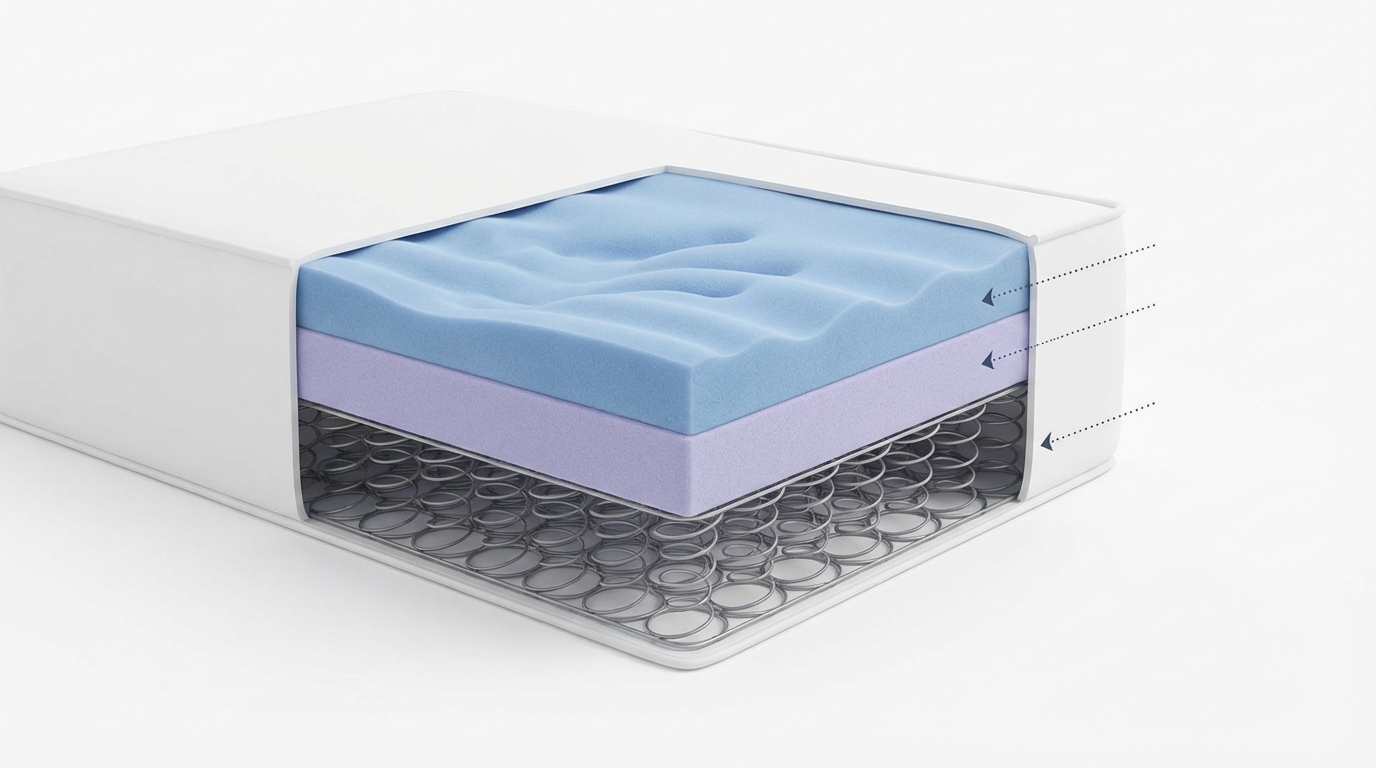
Memory foam and hybrid mattresses can bend more easily than traditional innerspring designs, which can be both a blessing and a risk. According to many manufacturers, including those evaluated by Consumer Reports, extended or sharp folding can permanently damage foam layers or coil systems. If you have a foam heavy mattress that feels floppy when you tip it up, consider adding a piece of flat cardboard or a lightweight panel on one side before bagging. This extra stiffness will make it easier to slide and less likely to crease.
Never fold a mattress in half across its width like a taco unless your manufacturer specifically states that short term folding is safe. When in doubt, keep the mattress as flat and gently curved as possible. If you suspect your mattress will be difficult to manage because of its weight or flexibility, that is another subtle nudge to consider whether a new model, such as a supportive Sealy Posturepedic Pro medium mattress, might be worth the investment instead of risking structural damage.
Safe Lifting: Protecting Your Back While You Protect Your Mattress
Learn And Use Proper Lifting Mechanics
The most important part of learning how to move a mattress by yourself is protecting your body. The spine is not designed to twist and bend under heavy loads, and yet that is exactly what many people do when they grab a mattress corner and yank. The American Physical Therapy Association and occupational safety guidelines all emphasize a few core principles that apply directly here.
Approach the mattress so the heaviest portion is as close to your center of gravity as possible. Stand with your feet shoulder width apart, bend your knees, and keep your back as straight as you comfortably can. When you go to lift, tighten your core muscles slightly and use your leg strength to power the movement, rather than curling your spine. Avoid twisting while you are holding the mattress; instead, take small steps to turn your whole body in the new direction.
If the mattress is too heavy for you to lift off the ground on your own, use leverage instead of force. Tilt it up onto its side, then use a small push with your legs or hips to slide it onto the waiting dolly or hand truck. Once the weight is supported by wheels, your job shifts from lifting to guiding, which is much safer for most people’s backs and shoulders.
Know Your Limits
There is a difference between reasonable effort and risky overexertion. Mattress weights vary widely. Some simple innerspring queens may weigh 60 pounds, while dense hybrid or foam kings can come in closer to 150 or even 180 pounds. If you have a history of back problems, recent surgery, pregnancy, or any condition that affects balance or strength, err on the side of caution.
If the mattress feels unmanageable even with a dolly, this is not a personal failure. It is a sign that you should bring in help, whether that is a friend for an hour or a local moving service for a single heavy item. Many readers are surprised at how affordable a simple, one item move can be compared to the cost of a back injury or a damaged, non returnable mattress.
“I am petite and was nervous about moving my full size mattress alone. Following Mia’s step by step advice, I used a hand truck and took breaks on the landing. It took longer than I expected, but I woke up the next day with zero back pain and the mattress was spotless.” ‑ Sam P., December
Short Distance Moves: Room‑To‑Room Or Within The Same Home
Not every mattress move involves a truck or a new address. Sometimes you just need to get a bed down the hall into a guest room or up from the first floor to a loft. Even for these “simple” moves, treating the process with respect will protect both you and the mattress.
Start by fully bagging or wrapping the mattress, even if you are only moving it a few rooms away. Hallways and stairwells tend to harbor scuffed baseboards, cobwebs, and dusty corners. A cover keeps those from transferring to your sleep surface. With the mattress bagged, tilt it upright on its side and slide one edge onto your dolly or carefully balance it upright on the dolly platform.
For flat, level surfaces, you can stand behind the mattress and push the dolly steadily, keeping both hands on the edges for balance. Move slowly over thresholds or transitions between flooring types so the wheels do not catch. If you hit a tight turn, pause and pivot the mattress slowly, making sure it does not scrape ceilings or light fixtures. Gentle contact with a wall is fine as long as the bag is intact and you are not driving a corner into drywall.
Staircases require more patience. If you are going up or down a short flight and the mattress is not too heavy, you may choose to slide it carefully on its side, step by step, keeping your knees bent and shoulders aligned with your hips. Another option is to remove the mattress from the dolly at the top or bottom, lift one end, and rest the opposite end on one stair at a time, essentially “walking” the mattress up or down. Whichever method you choose, keep your movements slow and controlled, and never rush to beat fatigue. If you feel your grip weakening, stop and rest the mattress against the wall.
Once you arrive in the new room, position the mattress close to its new frame or base before you remove the bag. Do a quick visual check of the plastic for tears or holes. If you see any, wipe the exposed area of the mattress with a lightly damp cloth and allow it to dry before you dress the bed. This is also a good moment to consider whether an adjustable base, like an adjustable bed frame and base, could add comfort and flexibility in your new layout, especially if you plan to use the room as a multi purpose space.
Long Distance Moves: Trucks, Vans, And Rooftop Transport
Choosing The Right Vehicle And Position
If you are transporting your mattress across town or to a new city, the vehicle you choose and how you position the mattress inside it become critical. Whenever possible, use an enclosed vehicle like a moving truck, box van, or large cargo van. This protects the mattress from wind, rain, road debris, and sudden weather changes that can occur during long drives.
Inside a truck or van, lay the mattress flat if there is enough space, especially for foam and hybrid models that can bend under their own weight when stored upright for long periods. If flat is not possible, stand the mattress on its side and brace it between stable, flat surfaces so it does not bow. Avoid leaning a mattress at a steep angle for hours, as gravity can gradually distort the internal structure.
Only consider rooftop transport on a car or SUV as a last resort and only for short distances at moderate speeds. Strong headwinds can catch a mattress like a sail, creating a hazard for you and other drivers. If you must go this route, keep the mattress flat, centered on the roof, with a blanket or pad underneath to prevent abrasion. Run multiple straps over and through the open windows, securing the mattress at the front, back, and middle. Double check that doors can close safely and that straps do not obstruct your vision or ability to steer.
Securing The Mattress For The Drive
Whether your mattress is in a truck bed, van, or on a roof rack, it should not be free to slide or tip. Use ratchet straps whenever possible, as they maintain tension better than simple rope. In a truck, attach straps to the built in tie down points and run them across the width of the mattress in at least two places. Tighten until the mattress cannot move more than an inch when you push against it.
Avoid stacking heavy boxes or furniture on top of your mattress, even if it seems like an efficient use of space. Prolonged weight on a single area can create new indentations or compress support layers unevenly. If you need to store lighter items on top temporarily, use only very light, evenly distributed pieces and limit the time they remain there.
On the road, adopt a gentle driving style. Accelerate gradually, take wider turns, and avoid sudden stops that shift weight dramatically. If you are driving more than an hour or two, build in short stops where you can visually inspect the mattress and straps. Re tighten anything that has loosened and check for any signs of the bag tearing or fabric exposure.
When you arrive, reverse the process carefully, treating the unloading as seriously as the loading. A common mistake is to let fatigue lead to rushed handling at the destination, which is when many mattresses get torn on truck edges or dragged on dirty parking lots. Take a breath, remind yourself you are almost done, and keep your same slow, controlled pace.
Mattress Size And Type: How Your Strategy Should Change
Not all mattresses behave the same when you try to move them. Size, thickness, and internal construction all influence how heavy, rigid, or floppy they feel. Adjusting your strategy to what you actually own is a quiet way to show respect for both your mattress and your body.
Twin and full size mattresses are often manageable for many adults with a solid dolly and careful lifting. They are shorter and narrower, which means easier navigation through doorways and less surface area to catch the wind. However, some all foam designs in these sizes can still be surprisingly heavy if they use dense specialty foams, so do not assume “small” automatically means “light.”
Queen and king size mattresses require more planning. A traditional queen innerspring might be a two person job for many people, while a high end king hybrid may be well beyond safe solo lifting. If you are set on moving a king by yourself, consider whether your long term plan could include switching to a pair of mattresses from a curated king sized mattresses collection, where split king options allow easier transport and more customized comfort.
Mattress type also matters. Innerspring mattresses are usually more rigid, which can make them easier to stand upright and slide, but harder to squeeze through ultra narrow spaces. Memory foam and latex are more flexible, which may help in tight corners, but they demand more care to avoid creasing or overstretching the materials. Hybrids fall in between, with coil support and foam comfort layers that both need thoughtful handling.
If you are uncertain about your mattress type or how it should be moved, check the original manufacturer’s care guidelines if you still have them, or call a knowledgeable retailer like Sleepology for advice. We work with a wide range of brands, from plush pillow tops like the Sealy Posturepedic Pro soft Dupont II Euro pillow top to medium feels like the Sealy Posturepedic Elite medium Brenham II Euro pillow top, and can help you interpret what your specific mattress needs to stay intact during a move.
Quick Comparison: Moving Different Mattress Types
When you are planning a solo move, it can be helpful to compare common mattress types side by side. This table gives a high level view of how each type typically behaves during a move.
| Mattress Type | Typical Weight & Flexibility | Moving Considerations | Best Position In Vehicle |
|---|---|---|---|
| Traditional Innerspring | Often lighter to medium weight, more rigid | Easier to stand upright, harder to bend for tight spaces | Upright or flat, well strapped |
| Memory Foam | Medium to heavy, very flexible | Can sag or fold unintentionally, avoid sharp creases | Flat whenever possible |
| Latex | Heavy and somewhat flexible but very dense | Weight can be challenging solo, needs strong support | Flat on a solid surface |
| Hybrid (foam + coils) | Medium to heavy, moderate flexibility | Protect both foam and coils, avoid bending sharply | Flat or gently inclined, well braced |
This comparison is general, so always prioritize specific manufacturer guidance and your own physical capabilities when making your moving plan.
Protecting Your Mattress During And After The Move
Keep It Clean, Dry, And Supported
Mattresses are far more vulnerable to moisture and impact than most people realize. Even a short exposure to rain can introduce enough water into the quilting to encourage mold growth if the mattress does not dry thoroughly. Whenever there is any risk of wet weather during a move, double layer your protection by using a mattress bag plus an outer moving blanket or tarp over the areas most likely to be exposed.
Support is just as important. Avoid leaving a mattress partly draped over the edge of a truck bed or hanging off a dolly for long periods, as this can stress the internal structure. If you must pause mid move, rest the mattress fully on its side against a wall, with its full height supported and no strong bend near the middle.
After the move, resist the temptation to drop the mattress directly onto a bare floor for more than a day or two. Sleeping long term on a mattress without a supportive base can lead to sagging or uneven wear, particularly with heavy foam and hybrid models. A sturdy platform, traditional box spring, or adjustable base will help maintain proper support over the years, which in turn sustains healthy spinal alignment and sleep quality.
Consider Storage Best Practices
If your move involves storing the mattress for weeks or months, careful handling becomes even more important. Sleep health experts often caution that poorly stored mattresses can collect dust, pests, and odors that are difficult to fully remove. Choose a clean, dry, climate controlled storage space whenever possible. Basements and garages that are prone to dampness or temperature extremes are less ideal.
Store the mattress flat on a raised surface if you can, such as pallets or boards, rather than directly on the concrete floor. This allows air to circulate underneath and reduces the risk of moisture wicking into the fabric. Do not stack heavy boxes or furniture on top of the mattress, even in storage, because long term compression in one area can permanently alter the feel.
If you need to keep the mattress upright for space reasons, rotate its position every few weeks so gravity does not pull the materials in one direction continuously. When you are ready to use the mattress again, remove all plastic wrapping, inspect for any signs of moisture or pests, and allow it to air out for several hours before making the bed.
“We had to store our mattress for three months between homes. Mia walked me through using pallets and keeping it flat, and it came out of storage feeling exactly the same. I was nervous about mold, but it stayed dry and fresh.” ‑ Elena D., January
When Moving Is The Nudge To Upgrade Your Sleep

A surprising number of people only deeply inspect their mattress when they are forced to move it. That peek under the sheets and honest look at sagging or staining often reveals that comfort has been slowly declining for a while. Major health organizations like the National Institutes of Health and sleep researchers frequently point out that chronic pain, tossing and turning, and morning stiffness are closely tied to poor mattress support.
If your move has you questioning your mattress, take that as an opportunity rather than a problem. Upgrading to a supportive, well matched design can transform not just your sleep, but your overall energy, mood, and productivity. For example, if you have noticed that your lower back sinks in on your existing bed when you sleep on your back, a more targeted support system like the Sealy Posturepedic Elite soft Albany II Euro pillow top or the Sealy Posturepedic medium Medina II Euro pillow top might give you the cushioning you enjoy with a stronger core underneath.
Quality bedding and accessories can also extend the life of a new mattress so you are not repeating the same move and replacement cycle too soon. Investing in breathable, washable layers from a curated range like pillows, sheets, toppers, and protectors adds comfort and creates a barrier between your body and the mattress itself. That means less sweat and skin oil reaching the foams and fibers, which helps them maintain their feel longer.
The key is to match the mattress and accessories to your body, sleep position, and preferences, rather than grabbing whatever happens to be on sale during a move. Working with a specialist who understands both the science and the day to day realities of sleep can save you from costly trial and error. At Sleepology, that is exactly the bridge we try to build, connecting real world experience with evidence based guidance so your next move leads to truly better rest.
A Simple Solo Mattress Moving Checklist
Even with a detailed guide, it can be helpful to have a quick, high level checklist to review on moving day. Use this as a final pass to make sure you have covered the essentials before you lift.
- Confirm the mattress is worth moving and not due for replacement
- Gather supplies: mattress bag or plastic, tape, blankets, gloves, dolly or hand truck, straps or rope
- Clear and measure your route, removing obstacles and planning rest points
- Strip, vacuum, and inspect the mattress for damage or pests
- Bag or wrap the mattress securely, adding cardboard support if needed
- Use proper lifting mechanics, sliding onto a dolly instead of carrying whenever possible
- Load the mattress flat or gently upright and secure with multiple straps
- Drive cautiously and recheck straps on longer trips
- Unload slowly, keeping the protective cover on until the mattress is inside and near its new base
Running through this list should take only a few minutes but can prevent the most common problems that lead to damaged mattresses or injuries.
After working through these steps, most people find that moving a mattress by themselves feels much more manageable. It may still be a workout, but it becomes a thoughtful process instead of a chaotic struggle.
Conclusion: You Can Move Your Mattress Solo, And You Can Use This Moment To Improve Your Sleep
Moving a mattress by yourself is one of those projects that looks simple from a distance and becomes complicated when you are holding the weight. When you break it down into clear steps, respect the limits of your body, and use the right tools, it stops being a wrestling match and starts feeling like a series of calm, deliberate actions.
The most important decisions actually happen before you ever lift, as you decide whether your current mattress still deserves a place in your new space and how you will protect it along the way. From there, careful packing, solid lifting mechanics, and smart choices about vehicles and positioning work together to safeguard both the mattress and your back. Your reward is arriving in a new room, cutting away the plastic, and lying down on a familiar sleep surface that feels just as good as it did before the move.
If this process has highlighted that your mattress is past its prime or never really worked for you, that realization is valuable. You now have the chance to upgrade your nightly environment with support that better matches your body and sleep style, so every night after the move helps you recover and thrive. Whether you choose to move your existing mattress or start fresh with help from the Sleepology team, you are not alone in the process. There are practical, evidence based paths to better sleep, and you have already taken a thoughtful step by learning how to handle one of the biggest pieces in your bedroom with care.
Frequently Asked Questions
Can I safely move a king size mattress by myself?
Moving a king size mattress alone is possible for some people, but it is at the upper limit of what many bodies can handle safely. Kings are not only heavy, they are also wide and difficult to turn in tight spaces. If you are determined to move one solo, you will need a strong, stable dolly, high quality straps, and a very clear route, ideally with minimal stairs. For many sleepers, it is wiser to enlist another person or switch to a split king setup, which breaks the surface into two more manageable mattresses that are easier to move and sometimes more flexible for couples.
Is it ever okay to fold a mattress in half to move it?
In general, folding a mattress sharply in half is not recommended unless the manufacturer explicitly says short term folding is safe for that specific model. Foam layers can crack or form permanent creases, and coils can bend out of alignment, both of which change the way the mattress supports your body. Light bending or curving around a gentle arc is usually fine for a short time, especially with all foam designs, but if you are unsure, it is better to keep the mattress as flat and evenly supported as possible during a move.
How do I move a mattress without getting it dirty?
The key to keeping a mattress clean during a move is using barriers. A fitted mattress protector that you use year round catches everyday spills and sweat, but it is not enough for outdoor or truck transport. For moving, you should slide the mattress into a properly sized mattress bag or wrap it in thick plastic sheeting, sealing all open edges with packing tape. Adding moving blankets over the plastic protects against scuffs from walls and truck floors. Keep the protective layers on until the mattress is inside your new space and positioned near its base, then remove and discard them.
Can I strap my mattress to the roof of my car?
Strapping a mattress to the roof of a car or SUV can work for very short, low speed trips, but it carries more risk than using an enclosed vehicle. Wind can catch the mattress and loosen straps, potentially creating a hazard for you and other drivers. If rooftop transport is your only option, use multiple strong straps, center the mattress on the roof, protect both the roof and mattress with a blanket, and drive slowly on back roads while stopping frequently to check tension. Even then, if you can borrow or rent a small van or truck instead, that is usually the safer choice.
How long can I store a mattress without damaging it?
You can safely store a mattress for several months, and sometimes up to a year or more, as long as you control moisture, support, and weight. Store it flat on a raised surface in a clean, dry, climate controlled unit, not directly on a damp floor or in a space with large temperature swings. Avoid stacking heavy items on top and keep the mattress in a breathable cover rather than airtight plastic for very long storage, to prevent trapped humidity. When you remove it from storage, inspect it carefully and give it several hours to air out before sleeping on it again.
Is my old mattress really bad for my health, or just less comfortable?
An aging mattress is often both less comfortable and less supportive, and those two qualities can influence your health more than people expect. Research summarized by the Sleep Foundation and other sleep health organizations has linked poor sleep quality to increased pain sensitivity, reduced immune function, and mood disturbances. If your mattress sags, leaves you stiff or sore, or contributes to chronic tossing and turning, it is not just an inconvenience. It is a nightly stressor on your body. While moving it carefully can prevent extra damage, replacing a truly worn mattress is one of the simplest ways to improve your sleep environment.
Should I replace my mattress during a move or wait until after?
If you already know your current mattress is near the end of its useful life, replacing it during a move can actually simplify logistics. Instead of paying to move a heavy, aging mattress, you can arrange for your new mattress to be delivered directly to your new address, often with setup included. That saves effort and allows you to design your new bedroom around a fresh, supportive sleep foundation from day one. If you are unsure about your mattress, you can move it first, then use the new environment to honestly assess how you feel after a few weeks of sleeping there before deciding.