

How To Move A Mattress: A Safe, Step‑By‑Step Guide From A Sleep Expert
You are probably reading this with a mental picture of your mattress wedged in a stairwell or flopping halfway out of a hatchback. Moving a mattress looks simple until you are standing there holding 100 pounds of awkward, bendy fabric that absolutely refuses to cooperate. Whether you are changing apartments, swapping rooms, or picking up a new bed from a friend, it is completely normal to feel a little overwhelmed.
What is at stake is more than getting the mattress from point A to point B. A poorly planned move can ruin an otherwise good mattress with bent coils, torn fabric, or moisture damage, and it can also leave you with a sore back or worse. As the Sleep Foundation and other health organizations point out, chronic back pain and poor sleep often go hand in hand, and your mattress plays a central role in both comfort and spinal alignment. Protecting your body and your bed during a move is part of protecting your long term sleep health.
The good news is that with a clear plan, a few inexpensive tools, and realistic expectations about what you can safely lift, moving a mattress does not have to be a nightmare. You can absolutely do this on your own or with a friend, and you can do it in a way that keeps your mattress clean, structurally sound, and ready to deliver the same level of support in your new space.
You are in the right place if you want more than a quick checklist. This guide walks through how to move a mattress safely step by step, how to adapt the plan to your mattress type, size, and vehicle, when to say no to folding, and how to decide whether it is smarter to replace an older mattress instead of dragging it across town. Along the way, I will flag common mistakes I see as a sleepologist and suggest specific Sleepology products that make both moving and sleeping easier.
Why Moving A Mattress Is Harder Than It Looks
Even if you are strong and reasonably fit, mattresses are uniquely awkward. Most modern queen and king mattresses weigh far more than people expect, especially premium hybrid and foam models. Many queen mattresses land between 90 and 120 pounds, and king mattresses can easily exceed that. The Cleveland Clinic often reminds patients that lifting heavy, unbalanced loads with poor mechanics is one of the fastest ways to irritate the lower back, so this is not the time to muscle through without a plan.
Size and flexibility create another layer of challenge. Innerspring mattresses are relatively rigid and easier to slide or lean, but they can catch corners and scrape walls. Foam and hybrid mattresses bend more, which helps them around tight turns but also makes them feel floppy and hard to control. When you combine that flexibility with stairs or narrow hallways, the mattress can feel like it has a mind of its own.
There is also the issue of protection. According to the Sleep Foundation, a clean, supportive, undamaged mattress is one of the foundations of healthy sleep in adults. Dirt, moisture, and small tears might not look serious on moving day, but they can shorten the lifespan of the mattress, invite allergens, and even lead to mold if the foam gets damp. That is why professional movers wrap mattresses and secure them carefully instead of simply tossing them in a truck.
Finally, you are often moving a mattress while juggling a dozen other tasks, from packing dishes to signing lease paperwork. In that kind of chaos, it is easy to take shortcuts like folding a mattress that should not be folded or strapping it loosely to a car roof. Those shortcuts can cost you a mattress, a repair bill, or a preventable injury.
When You Should Consider Replacing The Mattress Instead
Before you lift anything, it is worth asking a blunt question: is this mattress worth moving. Most sleep experts, including organizations like Mayo Clinic, suggest replacing a mattress every 7 to 10 years, sooner if you notice sagging, lumps, or new aches on waking. If your mattress is already near the end of that range, moving it could be an opportunity to start fresh rather than pay in time, effort, and possible damage for one more year of use.
Pay attention to what your body has been telling you. If you regularly wake up with shoulder or hip pressure, or you sleep better in hotels or on a guest bed, your current mattress may be part of the problem. In that case, putting time and energy into protecting it during a move makes less sense than investing that energy into choosing a better fit. A move is one of the few times in life when replacing a large piece of furniture is almost easier than hauling it.
If you decide a replacement is the smarter move, you can have a new mattress shipped directly to your new address and skip the hassle entirely. For example, many side and back sleepers who are upgrading during a move appreciate how a pillow top hybrid like the Sealy Posturepedic Pro Soft Mattress – Dupont II Euro Pillow Top combines deep pressure relief with strong coil support, which helps prevent the sagging that often shows up around year eight on older beds.
“We were getting ready to drag our 9 year old queen up three flights of stairs when Mia gently asked a few questions about our back pain. We ended up recycling the old one and ordering a new hybrid from Sleepology delivered straight to the new place. It cost less than hiring movers and my husband’s morning stiffness is gone.” – Karen L., November
If, after that honest check‑in, your mattress is still relatively new, supportive, and comfortable, then it is absolutely worth the effort to move it correctly. The rest of this guide is for you.
Step One: Know Your Mattress And Your Limits
Before you gather gear or clear a path, you need to understand what you are moving and what your body can realistically handle. That context shapes every decision from whether you can move it alone to how you load it in a vehicle.
Understand Your Mattress Type And Weight
Different mattress constructions behave very differently when moved. That is why manufacturers are quite specific in their care instructions, and ignoring those instructions can void a warranty. Sleep specialists and consumer testing organizations like Consumer Reports consistently emphasize that improper handling, especially folding and prolonged bending, is a common cause of early mattress failure.
Broadly, you are likely dealing with one of three categories.
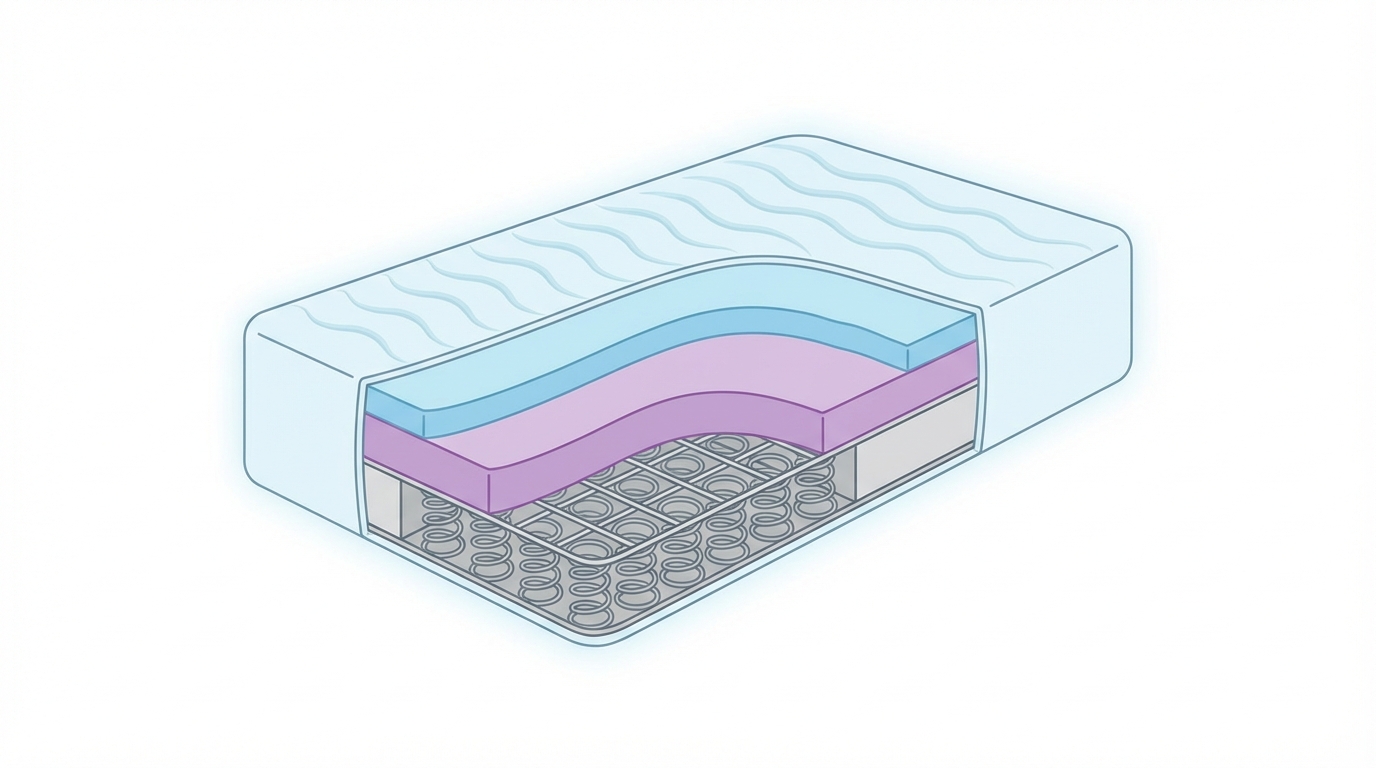
Innerspring mattresses have a coil system with relatively thin comfort layers on top. They are more rigid, which makes them easier to stand on edge and slide, and they tolerate brief time on their side without much risk. On the flip side, the edges and stitching are more vulnerable to tearing if the mattress is dragged over rough surfaces or sharp corners.
All foam mattresses are built primarily from memory foam, polyfoam, latex, or a combination of foams. They are usually more flexible and may arrive compressed in a box when new. Once fully expanded, the foam should not be tightly folded again unless the manufacturer explicitly says it is safe. Prolonged bending can cause permanent creases, cracks, or separation between layers.
Hybrid mattresses combine coil support cores with thicker foam comfort systems. They are often the heaviest group, especially in queen and king sizes, and they share the vulnerabilities of both springs and foam. You can stand many hybrids on their side for short periods, but sharp bends and tight folds are usually off limits.
To plan realistically, look up your mattress model online or in the original paperwork to confirm approximate weight and handling guidance. If you are considering a new mattress for your destination instead, collections like The Best Hybrid Mattresses at Sleepology clearly label weight, construction, and ideal sleepers, which makes planning ahead much easier.
Be Honest About What You Can Safely Lift
Once you know what the mattress itself can tolerate, take stock of your own body. If you have a history of back, knee, or shoulder injuries, this is an area where caution is wise. Health organizations like Mayo Clinic regularly remind patients that once you have had one significant back strain, your risk of another increases, especially with heavy, awkward lifting.
A simple rule of thumb is that if you cannot easily lift one end of the mattress a foot off the floor and hold it for 10 to 15 seconds, you should not plan to move the entire mattress alone. You may still be able to contribute to a two person lift or use a dolly to minimize strain, but that quick test is a good reality check.
Think through the path as well. Carrying a mattress across a flat room is very different from negotiating two turns in a narrow staircase or stepping over clutter in a garage. If you know you tend to rush when you are tired or stressed, factor that in. It is better to plan for more breaks and more tools than to improvise in the moment with a 100 pound foam block in your arms.
Step Two: Gather The Right Mattress Moving Tools
Once you understand the scope of the task, it is time to gather tools. This is the step that most people either skip or rush, and it is the reason many DIY mattress moves end with scuffed walls, torn fabric, or sore backs. A few small items you can pick up at a hardware store or borrow from a friend make all the difference.
Core Protection And Handling Gear
Start by thinking about protection. According to the Sleep Foundation, allergens like dust mites, dander, and mold thrive in mattresses that are exposed to moisture and dirt, particularly along the sides and seams. A proper cover during your move keeps your sleeping surface cleaner and extends its life.
A dedicated mattress bag sized for your bed is ideal. These are heavy plastic sleeves that slide over the mattress and seal at one end, keeping dust, moisture, and grime away from the fabric. If a proper bag is not available, thick plastic sheeting and strong packing tape can work, but you will want to be extra careful about sharp edges that could puncture the plastic.
Next, focus on how you will actually move the protected mattress from room to vehicle. A basic four wheel dolly is one of the most underrated tools for this job, especially on flat hallways and elevators. For single flights of stairs, a two wheel hand truck rated for the weight of your mattress can help you leverage the weight rather than carrying it fully.
If you are purchasing new protective pieces anyway, this is a good time to upgrade your long term setup, not just your moving day plan. For example, once your mattress reaches its new home, pairing it with a high quality waterproof cover like the TEMPUR‑Adapt Mattress Protector – Waterproof Mattress Cover, Hypoallergenic helps guard against spills and allergens long after the move is over.
Vehicle And Securing Equipment
In addition to direct handling tools, you will need a way to keep your mattress from sliding or blowing around while you drive. That is where straps and rope come in. Ratchet straps are ideal because they can be tightened more precisely and hold tension better than basic rope, but strong, low stretch rope tied correctly can work in a pinch.
You will also need to match your plan to the vehicle you actually have access to. A rental moving van or box truck is the safest choice for almost any mattress, because you can lay the bed flat or stand it sideways inside an enclosed space. Pickup trucks and SUVs can also work if the mattress is well secured and either flat in the bed or at a stable angle against the side, but they require more attention to weather and wind.
Strapping a mattress to the roof of a car is technically possible for short distances at low speeds, but it carries the highest risk of the mattress shifting, catching wind, or coming loose. As a result, many safety experts strongly discourage long distance or highway travel with a mattress on a car roof. If that is your only option, you will need more straps, more anchor points, and a slower, more cautious route.
“We made such a mess of moving our last mattress on our own that we were determined to do better this time. Following Mia’s suggestion to grab a mattress bag and a couple of ratchet straps cost us under 40 dollars and saved our walls, our mattress, and probably our marriage.” – Dylan P., October
Step Three: Prepare The Mattress Itself

Once your tools are ready, your mattress needs a bit of prep before it can travel. Think of this as a quick spa day for your bed before you ask it to survive hallways, stairwells, and parking lots.
Strip, Clean, And Inspect
Start by removing every layer on top of the mattress. That includes the fitted sheet, flat sheet, mattress protector, mattress pad, and any toppers. Washing and packing these separately keeps everything cleaner and dramatically reduces the weight and bulk of what you have to move. It also gives you a chance to inspect the mattress surface for stains, sagging, or any damage that you may not notice when the bed is fully made.
If it has been a while since you cleaned your mattress, this is a good opportunity to do some basic maintenance. Vacuum the surface and sides with an upholstery attachment, paying attention to seams and tufts where dust and skin cells tend to accumulate. The Sleep Foundation notes that regular mattress cleaning can help reduce allergen load, which is particularly important for people with asthma or seasonal allergies.
As you clean, pay attention to any visible body impressions or soft spots. If you notice deep sagging in your primary sleep zone, that may be a sign that the mattress is nearing the end of its useful life. You might still decide to move it, but you can file that information away as you plan for future replacement.
Bag And Seal The Mattress
Once the mattress is stripped and clean, slide it into your mattress bag or wrap it carefully in plastic sheeting. It usually works best to stand the mattress on its side, then pull the bag up and over from the top, adjusting as you go. Avoid dragging the bare mattress across the floor or twisting it aggressively, especially if it is foam or hybrid.
After the bag is in place, seal the open end securely with packing tape. Press the plastic flat before taping so there are no large gaps or air channels for dust and moisture to enter. If you know it will be raining when you move, pay extra attention to this seal, and consider a second layer of plastic on the more exposed sides.
At this point, your mattress should feel a bit like a large, protected envelope. The fabric itself is shielded, and you can now focus on moving that envelope safely through your home and into a vehicle.
Step Four: Plan And Clear Your Route
Before you lift anything, walk the full path your mattress needs to take. This is no different from how professional movers operate, and it is one of the best ways to prevent scrapes and sudden surprises.
Measure Doorways, Hallways, And Stairwells
Mattresses have standard sizes, but homes and apartment buildings do not always share those standards. A queen mattress is typically around 60 by 80 inches, and a king is usually about 76 by 80. Compare those measurements to your doorways and hallways, especially any tight turns.
Use a tape measure to confirm door widths and ceiling heights at landings on stairways. If you find a pinch point, visualize how the mattress will need to rotate to make that turn and whether standing it on edge will help. Sometimes simply taking the door off its hinges for an hour gives you the extra inch or two you need.
In small apartments, windows or balcony doors can occasionally serve as alternate routes if traditional hallways are impossibly tight, but these moves are more complex and usually call for professional help. If you find yourself considering ropes and windows, it is a good sign to pause and reassess.
Remove Obstacles And Protect Surfaces
Once you are confident in the basic route, clear any obstacles that might catch the mattress cover or your feet. That includes small tables, floor lamps, shoes, and even area rugs that could slide. You want an unobstructed corridor wide enough for the mattress and at least one person beside it when possible.
If you are concerned about scraping paint on tight corners or stairwells, you can temporarily tape moving blankets or cardboard to vulnerable spots. This protects both your walls and the mattress bag. It is a small step that often saves you from patching and touch up painting later.
Finally, plan your resting points. Identify safe places where you can lean the mattress against a wall without it sliding, such as on each landing of a stairwell. Knowing those spots ahead of time gives you permission to take breaks instead of pushing through fatigue.
Step Five: Lift And Carry Safely
Now that you have prepared the mattress and its path, it is time to get it moving. This is where your lifting technique matters as much as your strength. Organizations like the American Academy of Orthopaedic Surgeons often stress that repetitive bending and twisting with load is the key recipe for back injury, and mattresses practically invite that combination if you are not careful.
Fundamentals Of Safe Mattress Lifting
Treat your body like the valuable equipment it is. Wear closed toe shoes with good grip and consider light work gloves to improve your hold on the mattress bag. Before you lift, take a minute to gently stretch your hamstrings, hips, and lower back. You are not warming up for a marathon, but you are asking your muscles to handle an awkward load, and warm tissue is more forgiving than cold.
When you first raise the mattress from the bed frame or floor, stand close to the edge so the weight stays near your center of gravity. Bend at your hips and knees, not your waist, and engage your core as you lift. Use your legs to do the heavy work, keeping the mattress as vertical as is comfortable to make it easier to navigate tight spaces.
If you are lifting with a partner, communicate clearly about when you will start, stop, and set the mattress down. Count down from three rather than springing into motion. Try to keep the mattress centered between you so that neither person is forced into an extended reach or twist.
Using Dollies, Carts, And Straps
On flat surfaces, lean into tools as much as possible. A four wheel dolly lets you lay or lean the mattress on its side and simply push it instead of carrying the full weight. This can be especially helpful for heavier hybrids or king sizes, where the main challenge is not just weight but bulk.
Furniture straps, sometimes called lifting straps, can help two people share the load more evenly by transferring some of the weight to your shoulders and upper body rather than relying solely on grip strength. If you are moving a large mattress across a room or down a long hallway, these can reduce forearm fatigue and make the move feel more controlled.
Avoid dragging the mattress directly on the floor whenever possible, even with a protective bag. Dragging can create friction hot spots that tear the bag or abrade the mattress fabric underneath, and it increases the chance that you catch an edge on a nail, threshold, or rough patch.
“The first time we moved our king, we shredded the bottom fabric and had to tape it together. Following Mia’s advice to use a dolly and actually lift with our legs instead of yanking it around meant the second move was totally uneventful. The mattress still looks brand new.” – Joel S., December
Step Six: Loading Your Mattress Into Different Vehicles
With the mattress successfully guided to your parking area, the next step is to load and secure it correctly in your chosen vehicle. How you do this depends heavily on whether you have an enclosed truck, a pickup, an SUV, or only a car.
Moving A Mattress In A Moving Truck Or Van
If you have access to a moving truck or box van, you are in the best position. Ideally, lay the mattress flat on the floor of the truck, on top of a clean moving blanket. This orientation supports the mattress evenly and minimizes internal stress on coils and foam. If the space is tight, you can also stand the mattress on its side against a wall, as long as it is fully supported and not bowing.
Use ratchet straps or strong rope to secure the mattress to the truck’s tie down rails. Run straps across the mattress in at least two places and cinch them tight enough that the mattress will not sway when you push it. Avoid stacking heavy boxes or furniture on top of the mattress, even if it seems like wasted space. Long term compression under weight can damage springs and foam.
If you are transporting more than one mattress, separate them with blankets to prevent the plastic bags from sliding against each other and tearing. It may feel like overkill, but a small rip on the highway can collect dirt and grit quickly.
Moving A Mattress In A Pickup Truck, SUV, Or Car
In a pickup truck, start by laying the mattress flat in the bed if possible. If the tailgate needs to remain open because the mattress is longer than the bed, that is acceptable as long as the center of gravity is still inside the bed and the back end is securely strapped. Run straps from the built in tie down points over the mattress and tighten them until there is minimal movement.
If flat is not an option, stand the mattress on its side against one wall of the truck bed and secure it at three points along its length. Check from inside the cab and from behind the truck to be sure nothing obstructs your view or hangs out in a way that could catch on other vehicles.
SUVs and larger crossovers sometimes allow you to fold down all rear seats and slide a full or queen mattress in flat. Measure carefully before you commit to this approach. If it fits, it is one of the most protective ways to move a mattress without a full truck. If it does not fit, resist the temptation to force or fold a mattress that is not designed to bend. It is better to find another vehicle or pay for delivery than to compromise the support system permanently.
Strapping a mattress to the roof of a car or SUV is truly a last resort. If you have no other choice and only for short distances at low speeds, place the mattress flat on the roof, centered, and run straps or rope through all available door openings, not the windows. Avoid highway speeds, strong crosswinds, and busy roads, and stop frequently to recheck tension. A loose mattress on a roof is both a danger to you and everyone around you.
Special Considerations For Different Mattress Types
Not every mattress should be handled the same way. Some can tolerate brief bending, while others are surprisingly fragile when flexed. Understanding these nuances keeps you from accidentally shortening the life of a good mattress.
Innerspring And Traditional Coil Mattresses
Traditional innerspring mattresses are relatively forgiving during short term moves. They are designed around a steel coil core that offers structure even when the mattress is on its side. For that reason, most innersprings can be stood up, slid along walls, and transported on their side or flat without issue, as long as you avoid sharp folds.
The main vulnerabilities of innerspring mattresses during moves are the edges and surface fabric. Catching a corner on a stair rail or dragging the bottom edge across rough concrete can tear the side panel or even expose coils. Using a sturdy mattress bag minimizes this risk, and lifting instead of dragging when you meet resistance prevents that sudden ripping sound no one wants to hear.
Foam And Hybrid Mattresses
Foam and hybrid mattresses demand more respect. Although many of them arrived at your home compressed and rolled, that initial compression is done by machines that apply even pressure along the entire surface and package the rolled mattress securely. Once the foam has expanded and settled, manually compressing and refolding it is not the same process.
Memory foam and latex in particular can develop cracks or permanent creases if folded tightly and left bent for long periods. The internal layers can also shear relative to each other, which means that when you later lie down, certain regions may feel softer or firmer than before. Hybrid mattresses add steel coils to that equation, which can be bent out of alignment if you fold the mattress at a hinge point.
As a rule, do not fold a foam or hybrid mattress in half unless the manufacturer clearly states that it is safe, and even then, keep any bending as gentle and brief as possible. Short term, gentle flexing to fit a mattress around a tight stair turn is usually acceptable, but treat it like bending a thick board: as smooth and gradual as you can manage.
If you are specifically shopping for a mattress that is easier to maneuver in small spaces, a slightly lighter foam model from a curated collection like The Best Foam Mattresses can be a smart choice, especially in apartments with narrow staircases.
How To Move A Mattress By Yourself
Ideally, you have at least one helper, but life does not always line up that neatly. If schedules, budgets, or emergencies mean you need to move a mattress solo, you will lean even harder on good tools and good planning.
Choosing The Right Size And Gear For Solo Moves
First, be realistic about size. Many people can safely move a twin or full mattress alone, especially over short distances, and a determined person with a dolly can manage a queen. Solo moving a king or California king, however, is inherently risky, particularly if stairs are involved. In those cases, hiring help, even for an hour, is often the most cost effective choice compared to medical bills or a destroyed mattress.
For solo moves, a quality dolly or hand truck is essential. Position the mattress on its side, secure it to the dolly with straps or rope, and let the wheels do as much of the work as possible. Cardboard slipped between the mattress and dolly can help stiffen flexible foam models so they do not sag awkwardly while you tilt and roll them.
Measure your mattress and your vehicle ahead of time so you are not surprised at the curb. If you discover that your queen will not fit in your SUV after you have already wrestled it down a flight of stairs, you have created a far more stressful scenario than necessary.
Managing Stairs And Tight Spaces Alone
Stairs are the hardest part of any solo mattress move. Take them one step at a time. With the mattress on its side and the dolly beneath it, position yourself behind the load when going up stairs so you are pushing rather than pulling. When going down, stay above the load whenever possible so that you control the descent instead of being dragged.
Pause at each landing to rest and adjust your grip. If the staircase turns sharply, you may need to temporarily pivot the mattress off the dolly, stand it on a step, and ease it around the corner in small increments. Remember that your safety is more important than speed, and there is no shame in halting mid move if the load feels unstable.
Once you reach the vehicle, slow down. The last stage of a move is when people tend to rush because the finish line is in sight. Resist that urge and use the same deliberate technique you started with when you lift the mattress into the truck or SUV and secure it for transport.
Short Distance Moves Versus Long Distance Moves
Not every mattress move involves highways and multiple hours of driving. Sometimes you are simply reshuffling furniture within the same home or moving to a unit across the courtyard. The distance matters because it changes how you weigh convenience against long term protection.
Moving A Mattress Within The Same Home
If you are just relocating a mattress to another room, you can often simplify. You may not need a mattress bag if the mattress is not leaving the building and the floors are clean, though it is still wise to avoid dragging and to protect sharp corners. Removing all bedding and toppers remains important because it reduces weight and gives you a better grip on the mattress itself.
In these short distance scenarios, sliders under the mattress edge can help you pivot and rotate the bed more easily when rearranging a bedroom. Just remember that even across a room, poor lifting mechanics can cause injury, so keep your spine neutral and bend from the hips and knees when you have to lift.
Moving A Mattress Across Town Or Further
For moves that involve streets, parking lots, and especially highways, protection and secure strapping are non negotiable. You may be dealing with wind, sudden stops, or detours, and your mattress needs to be packed as if it were a piece of fragile equipment.
Weather is a bigger factor on longer drives. Moisture that seeps into seams or stitching during a rainy move can lead to mildew or mold growth if the mattress is then sealed in plastic and stored in a humid environment. If rain is in the forecast, double layer your mattress bag on the sides that are most exposed and do everything you can to minimize the time the mattress spends in the open.
If you will not be setting the mattress up right away on arrival, think ahead about storage conditions. Cool, dry, climate controlled storage is best. Avoid leaning the mattress against damp concrete walls or leaving it in a poorly ventilated basement for long periods.
Storing A Mattress After You Move
Sometimes your new home is not ready for the mattress, or you are staging a home and need to store a bed temporarily. Storing a mattress improperly can undo all the care you put into moving it.
Best Practices For Short And Long Term Storage
For short term storage of a few days to a couple of weeks, you can often leave the mattress in its heavy protective bag as long as the environment is dry and temperate. Make sure the surface it rests on is flat and that you are not stacking heavy boxes or furniture on top of it. Especially with foam and hybrid models, prolonged compression with weight can cause permanent body impressions.
For longer term storage, remove or loosen fully sealed plastic after the mattress has been safely transported to avoid trapping moisture. The Sleep Foundation and other sleep health organizations note that high humidity is a major driver of mold, and sealed plastic can create a mini greenhouse if any moisture made its way inside during the move. A breathable mattress cover is a better choice for long term storage.
Whenever possible, store the mattress flat on a platform rather than on its side. While standing a mattress on its side briefly is fine, some all foam models can gradually slump or curve over months, which may change how they feel when you sleep on them again.
When To Add Extra Protection
If your storage space is at risk of pests or dust, consider placing the mattress on a raised platform and covering it loosely with a breathable sheet in addition to a protector. After storage, a fresh protector like the TEMPUR‑Breeze Mattress Protector – Cooling, Waterproof, Breathable Cover helps create a clean barrier between the mattress and your bedding, which is especially useful if someone in your home has allergies.
Using A Move To Upgrade Your Sleep Setup
Since you are already thinking about your mattress, this is a natural moment to consider your entire sleep environment. As a sleepologist, I often see moves become turning points where people finally give themselves permission to build the bedroom they actually need, not just the one they happen to have.
If your current mattress is on the firmer side and you tend to wake with pressure points, adding a high quality topper at your new place can dramatically change your comfort without replacing the entire bed. Travel and guest spaces also benefit from supportive pillows, especially if you frequently host family. A bundle like the Tempur‑Pedic Mattress Topper – Pillow Travel and Guest Bundle is a smart way to make a new space feel welcoming while still being practical to move and store.
When moves involve upgrading from a queen to a king, or when couples with different body types and sleep preferences move in together, a fresh mattress is often the most harmonious choice. Collections like King Sized Mattresses at Sleepology showcase options that manage motion transfer well, which makes sleep more peaceful when two people share a bed.
Finally, do not overlook linens and basics once you arrive. Sheets that actually fit your new mattress depth and a properly sized protector are small details that affect how secure and quiet your bed feels. A set like the Tempur‑Pedic ProPerformance Sheet Set is designed to stay in place on thicker modern mattresses, which saves you from wrestling with corners in the middle of the night.
Quick Mattress Moving Checklist
After all of that detail, it can be helpful to see the essentials in one place. Once you understand the reasoning behind each step, you can use a condensed checklist on moving day to stay organized.
Before using this list, make sure you have read the full explanations above so that each item makes sense in context.
- Confirm mattress type, approximate weight, and any manufacturer moving guidelines
- Decide whether the mattress is worth moving or should be replaced
- Gather supplies: mattress bag or heavy plastic, tape, dolly or hand truck, straps or rope, gloves
- Strip, clean, and inspect the mattress, then bag and seal it
- Measure doorways, hallways, and stairs along the planned route
- Clear obstacles and identify resting points along the way
- Use safe lifting technique and tools to move the mattress to the vehicle
- Load the mattress flat or on its side as appropriate and secure it tightly
- Protect against weather and avoid stacking heavy items on top
- On arrival, store the mattress flat in a dry, cool space and remove tight plastic for long term storage
Once your move is complete, remember that your mattress and bedding still benefit from ongoing care. A quick vacuum every few months and a quality protector from the Pillows, Sheets, Toppers, Protectors collection help your mattress last longer and support healthier sleep.
Conclusion: Move Smarter, Sleep Better
Moving a mattress is one of those tasks that most people underestimate. It blends heavy lifting, awkward angles, and real risk to both your body and your bed. By slowing down at the outset to understand your mattress type, your vehicle options, and your own physical limits, you give yourself a far better chance of arriving at your new place with a mattress that still feels like home.
You now have a clear framework: decide whether the mattress should make the trip at all, gather tools that protect both you and the bed, prepare and bag the mattress properly, plan and clear your route, lift with intention, and secure everything for transport. Those steps are grounded in the same principles that health and sleep organizations emphasize: protect your spine, protect your sleep surface, and avoid unnecessary stress and strain.
If at any point the process feels too big or your mattress reveals that it is already past its prime, that is your cue to step back and reconsider. Sometimes the smartest move is letting an older bed go and selecting a new mattress that actually supports the way you sleep today. Whether you keep your current mattress or take this opportunity to upgrade, you do not have to figure it out alone. The Sleepology team is always available to talk through your specific situation and help you land on a plan that honors both your budget and your body.
Frequently Asked Questions
Can I fold my mattress to make it fit in my car?
In most cases, no, you should not fold a mattress in half to make it fit, especially if it is a hybrid, latex, or memory foam model. Folding can overstress coils and foam layers, leading to cracks, broken springs, and permanent indentations. While some thin all foam mattresses can tolerate a gentle bend for a short time, manufacturers usually spell this out clearly if it is permitted. If your mattress does not comfortably fit in the available vehicle without tight folding, it is safer to borrow or rent a larger vehicle or arrange delivery.
How can I tell if my mattress is too old to bother moving?
Age is a useful starting point, but how the mattress feels now matters more. If your mattress is over seven to ten years old and you wake with stiffness or pain that eases once you are up and moving, or if you sleep noticeably better on other beds, it may be nearing the end of its life. Visible sagging, lumps, or exposed coils are also clear signs. In those cases, the time, effort, and potential damage involved in moving it may not be worth it, and upgrading at your new home could be a wiser investment.
What is the safest way to move a king size mattress?
King size mattresses are heavy and unwieldy, so the safest approach is usually a two person move with a dolly or hand truck and a vehicle that allows the mattress to lie flat or stand on its side inside an enclosed space. Strip and bag the mattress, clear a wide path, and coordinate lifting so both people move together. Avoid attempting to carry a king up or down narrow stairs without help or tools. If you cannot arrange a second set of hands, it is often more practical and safer to hire professional movers for this one item.
Is it okay to move a mattress on top of my car for a short distance?
For very short, low speed trips on local roads, it is technically possible, but it comes with significant risks and should be a last resort. The mattress must be centered flat on the roof, with multiple straps or ropes running through the door frames, not the open windows, and secured tightly at the front, middle, and rear. Even then, crosswinds or sudden stops can shift the load. For anything longer than a few miles or requiring highway speeds, an enclosed vehicle or truck is strongly recommended.
How do I keep my mattress from getting moldy after a rainy day move?
If your mattress is exposed to rain during a move, prioritize drying it as soon as possible. Once you arrive, remove any tight plastic once the mattress is in a dry, climate controlled space so moisture is not trapped inside. Allow the mattress to air out for several hours or longer, ideally with good airflow in the room. Avoid placing bedding on it until you are confident it is fully dry. For long term protection, using a breathable waterproof protector helps shield against future spills and humidity without sealing in moisture.
Can I store my mattress standing on its side for a few months?
Short term storage on its side is usually fine for innerspring mattresses and many hybrids, but it is less ideal for all foam models over longer periods. Foam can gradually slump under its own weight when stood upright for months, which may change how it feels when you lie down again. If you know your mattress will be in storage for more than a few weeks, storing it flat on a platform or pallet is safer, and keeping it in a cool, dry, well ventilated space reduces the chance of moisture problems.
Do I really need a mattress bag, or can I just use blankets?
Blankets offer some protection against scuffs and minor bumps, but they are not moisture or dust barriers. A proper mattress bag or heavy plastic wrap shields the mattress from dirt, rain, and road debris, which is especially important when moving through hallways, elevators, or open parking lots. Blankets are still useful as padding around the mattress in a vehicle, but using them alone leaves your sleeping surface more vulnerable than most people realize. If you own a mattress you like and plan to keep for years, a bag is a small investment in protecting that value.