

How To Make A Mattress Firmer: Practical Fixes That Actually Work
You bought what you hoped would be a comfortable mattress, but now every night feels a little too sinky, a little too saggy, and your back is not happy about it. Maybe you wake up feeling like you have to climb out of a ditch in the middle of the bed, or you notice your hips dipping lower than your shoulders. It is frustrating, especially if the mattress is still fairly new or replacing it is not in the budget right now. If you are wondering how to make a mattress firmer without wasting money on gimmicks, you are in the right place.
Mattress firmness is not just about personal preference, it has a direct impact on spinal alignment, pressure points, and how rested you feel in the morning. According to the Sleep Foundation, a mattress that is too soft can contribute to poor posture in sleep, which often shows up as morning stiffness and pain. When the surface is firmer and more supportive, your spine has a better chance of staying in a neutral position so muscles can relax instead of working all night to hold you together. That is why dialing in firmness, even by a small margin, can make a big difference in how you feel during the day.
You might be searching for a temporary fix to get a few more years out of a mattress you mostly like, or you may be using these tweaks as a bridge solution until you invest in a new bed. Either way, it helps to understand which methods actually change firmness, which ones only change surface feel, and when you are better off putting your money toward a replacement. We will walk through low cost changes you can try today, midrange upgrades that add support, and long term strategies to choose a mattress that will stay firm for years.
By the end, you will know how to troubleshoot the specific problem with your mattress, which firmness fixes make sense for your body type and sleep position, and how to decide whether to improve what you have or move on to something new. Most importantly, you will feel more confident that you are not just layering “band aids” on a bed that is already past its prime, but making smart, informed choices for your sleep and your budget.
First, Diagnose Why Your Mattress Feels Too Soft
Before trying to firm up your mattress, it helps to figure out what is actually causing the soft or saggy feeling. A brand new plush mattress that never felt right is a different situation from a seven year old bed with body impressions. In my twenty years helping people with sleep setups, I have found that a few key questions narrow down the real problem quickly. Once you know what you are dealing with, you can match it with the right solution instead of wasting time on tricks that will not last.
Start by looking at the age of your mattress and how it has been used. Most quality mattresses last around seven to ten years, according to the Cleveland Clinic, but heavier bodies, kids jumping on the bed, or a weak support system can shorten that timeline. If you can see deep valleys, feel springs through the surface, or notice that the edges collapse when you sit, those are signs that the internal structure, not just the surface comfort layers, is breaking down. In those cases, temporary firmness fixes may help for a few months, but they will not restore the original support.
Next, think about how your mattress felt in the first three months and how it feels now. Some materials, like memory foam, soften over time with heat and use. Others, such as lower density foams, can lose resilience surprisingly quickly. If your mattress felt perfectly firm at first but slowly became too soft, you may still have decent support underneath but need to adjust the comfort layers or the base it rests on. If it never felt firm enough, and you are still inside the trial window, your best move might be an exchange.
Also pay attention to where you feel the softness. Do you sink mostly under your hips and lower back, or does the whole bed feel squishy from edge to edge? Localized sagging, especially in the center, can point to issues with the frame or slats. An older box spring that has lost its strength, or slats that bow or are spaced too far apart, can make even a well built mattress feel softer than it should. A firmer, more supportive base often gives you a noticeable improvement without touching the mattress itself.
Finally, consider your own body and sleep style. A mattress that feels comfortably medium to a 120 pound side sleeper may feel overly soft to a 220 pound back sleeper because weight and position change how deeply you sink. Heavier sleepers often compress comfort foams more, which makes the bed feel softer. Stomach and back sleepers generally need more firmness to keep the spine aligned, while side sleepers need a balance of support and pressure relief. Understanding that interplay helps you choose the right firmness adjustments for your specific needs rather than following one size fits all advice.
“Mia helped me realize the problem wasn’t just my mattress, it was the flimsy frame underneath it. Once I swapped to a solid foundation and added a firmer topper, my ‘too soft’ bed felt like a new mattress. I saved at least $800 compared to the replacement I thought I needed.” – Jordan R., November
Quick, Low Cost Ways To Make A Mattress Feel Firmer
Sometimes you just need your bed to feel better tonight. Maybe guests are arriving, your back has started complaining, or the mattress in a rental or college apartment is softer than you expected. There are several simple, low cost steps that can noticeably firm up the feel, at least in the short term. These do not fix underlying structural problems, but they are often worth trying before you invest in new components.
Start with the easiest step, clearing and tightening everything on top of the mattress. Deep, thick mattress pads, lofty toppers, or very fluffy comforters can make the surface feel softer than it really is. Try removing extra layers and using a smooth, thin protector instead. When you make the bed, pull fitted sheets and mattress protectors snugly across the corners so there is no slack to bunch up. This creates a more taut surface that can feel slightly firmer, especially under lighter sleepers.
Next, look underneath the mattress at whatever it is resting on. If you see wide slat gaps, bowed slats, a hammock like older box spring, or a frame that flexes when you press on it, your support system may be exaggerating the soft feel. As a quick experiment, you can place the mattress temporarily on the floor, which provides a firm, even surface, and see whether it feels noticeably firmer. The Sleep Foundation notes that the floor can be a useful way to test whether a firmer base will help, as long as you are mindful of moisture and airflow if you do it long term.
Room temperature also plays a quiet but important role, especially in all foam and memory foam beds. Warmer rooms and heavier bedding can make foam more pliable, which means you sink in further and perceive the mattress as softer. Cooler air helps foam stay slightly firmer. According to Mayo Clinic, a bedroom temperature around 65 degrees Fahrenheit supports healthy sleep for most adults, and with memory foam, you may also notice a modest increase in firmness at that range compared to a warm, stuffy room.
You can also air out your mattress, which is helpful if humidity has softened the foams. Strip the bed, open windows if the weather is dry, and let the mattress breathe for several hours. Moisture buildup from sweat, spilled liquids, or a humid environment can accelerate softening and sagging. Giving the mattress a chance to dry out reduces that effect and may bring back a bit of its original firmness. This is especially important if your bed sits directly on a non ventilated surface.
These quick fixes are not magic, but they can give you some immediate relief, especially if your mattress is still relatively young. If you get a noticeable improvement from putting the mattress on a firmer surface or cooling the room, that is a strong clue about which longer term solutions will work best for your situation.
Using Mattress Toppers And Accessories To Add Firmness

When people think about mattress toppers, they often picture plush add ons that make a hard bed feel softer. Used strategically, though, the right topper can actually make a mattress feel firmer and more supportive, particularly if you choose materials and densities designed for that purpose. The key is to remember that a topper changes the comfort layer you interact with, not the core support structure, so you want a topper that resists deep compression rather than one that hugs your body too closely.
A firmer, denser foam or latex topper creates a more supportive surface layer that keeps you from sinking as far into softer materials underneath. Latex toppers are an excellent option when you want to add buoyant support without losing responsiveness. Natural latex, especially in a firmer density, tends to hold its shape over time and keeps you more on top of the mattress rather than in it. Memory foam and high density polyfoam toppers can also work well if you choose firmer options rather than plush. According to testing from organizations like Consumer Reports, denser foams generally maintain support better under heavier loads.
If you are looking for a travel or guest solution, or need a smaller upgrade that moves with you, a quality topper bundle can be a smart approach. For example, a compact option like the Tempur-Pedic® Mattress Topper - Pillow Travel and Guest Bundle can add a more supportive foam layer to overly soft guest mattresses or temporary setups. While this specific bundle is designed for portability and comfort, the same principle applies at home when you use a firmer foam layer to moderate an overly plush surface.
When shopping for a topper to make a mattress firmer, pay close attention to thickness and density. Thin toppers under two inches may not offer enough structure to noticeably change firmness, while very thick toppers can sometimes create a new soft layer that you sink into. A dense, two to three inch topper is often the sweet spot for adding firmness without making the bed feel like a hard board. Look for explicit mentions of “firm” or “extra firm” in the product description, and if you sleep hot, consider latex or ventilated foams that encourage airflow.
You can also use other accessories strategically. A smooth, lightly padded mattress protector can help create a slightly firmer hand feel, especially if it is designed to be taut and has minimal loft. If your current protector is quilted or plush, swapping to a thinner, more structured option from a curated collection such as pillows, sheets, toppers, and protectors can subtly firm up the surface. These are not dramatic changes, but if your mattress is only a bit too soft, small tweaks can add up to a more balanced overall feel.
“We weren’t ready to replace our mattress, but my husband needed more support for his lower back. Mia recommended a firmer latex style topper and a lower loft pillow. The combo made our bed feel one level firmer without turning it into a rock, and it cost less than 20 percent of a new mattress.” – Denise K., October
Firming Your Mattress By Improving The Base Or Foundation
One of the most overlooked causes of a “too soft” mattress is a weak or incompatible foundation. Even the best mattress cannot perform well if the surface underneath it sags, flexes, or allows the support system to bow between slats. In many consultations, I discover that the mattress is not the real villain, it is the tired box spring or bargain frame underneath. Correcting the base often restores the feel the manufacturer intended.
Traditional box springs, especially older ones with metal coils, are designed to work with innerspring mattresses that need some flex. If you put a modern hybrid or foam mattress on a very bouncy box spring, you might feel like you are sleeping in a hammock. Many manufacturers now recommend solid platform bases, closely spaced slats, or rigid foundations to provide even support. The Sleep Foundation notes that a firm, consistent base can reduce sagging and help a mattress feel naturally firmer, especially around the center where two sleepers share space.
If your inspection shows weak slats or a collapsing box spring, upgrading to a more supportive foundation is often a smart midrange investment. A product like the Sealy Mattress Base Boxspring Foundation | Low Profile 5-inch height is built to provide that stable, evenly supportive platform that modern mattresses need. A rigid base like this prevents your mattress from bowing between supports, which helps maintain its designed firmness and can make an overly soft feel noticeably more supportive.
Adjustable bases can also influence perceived firmness, though in a different way. While they do not make the mattress materials firmer, the ability to slightly elevate the head or feet can reduce pressure on your lower back and hips, which often feels like an increase in support. For some back sleepers, raising the legs a few inches takes strain off the lumbar area so the mattress does not need to be as firm to feel comfortable. If you are curious about this route, exploring an adjustable bed frame and base that is compatible with your mattress can give you more flexibility to fine tune comfort without changing the bed itself.
In situations where you cannot immediately replace the frame or foundation, a temporary option is to add a bunkie board or sheet of appropriate material between the mattress and base. This creates a flatter, more rigid surface. However, I recommend caution with DIY plywood setups because solid, non ventilated surfaces can trap moisture and void warranties if they are not used correctly. Always check your mattress care guide first, and if you want a long term solution, a purpose built foundation is safer for both your mattress and your health.
When you correct the base, you are protecting your investment as well as improving firmness. A supportive foundation helps prevent premature wear, keeps coils and foams working as designed, and may extend the comfortable life of your mattress by several years. That often makes it one of the most cost effective ways to improve firmness and overall sleep quality.
Rotate, Flip, And Care For Your Mattress To Preserve Firmness
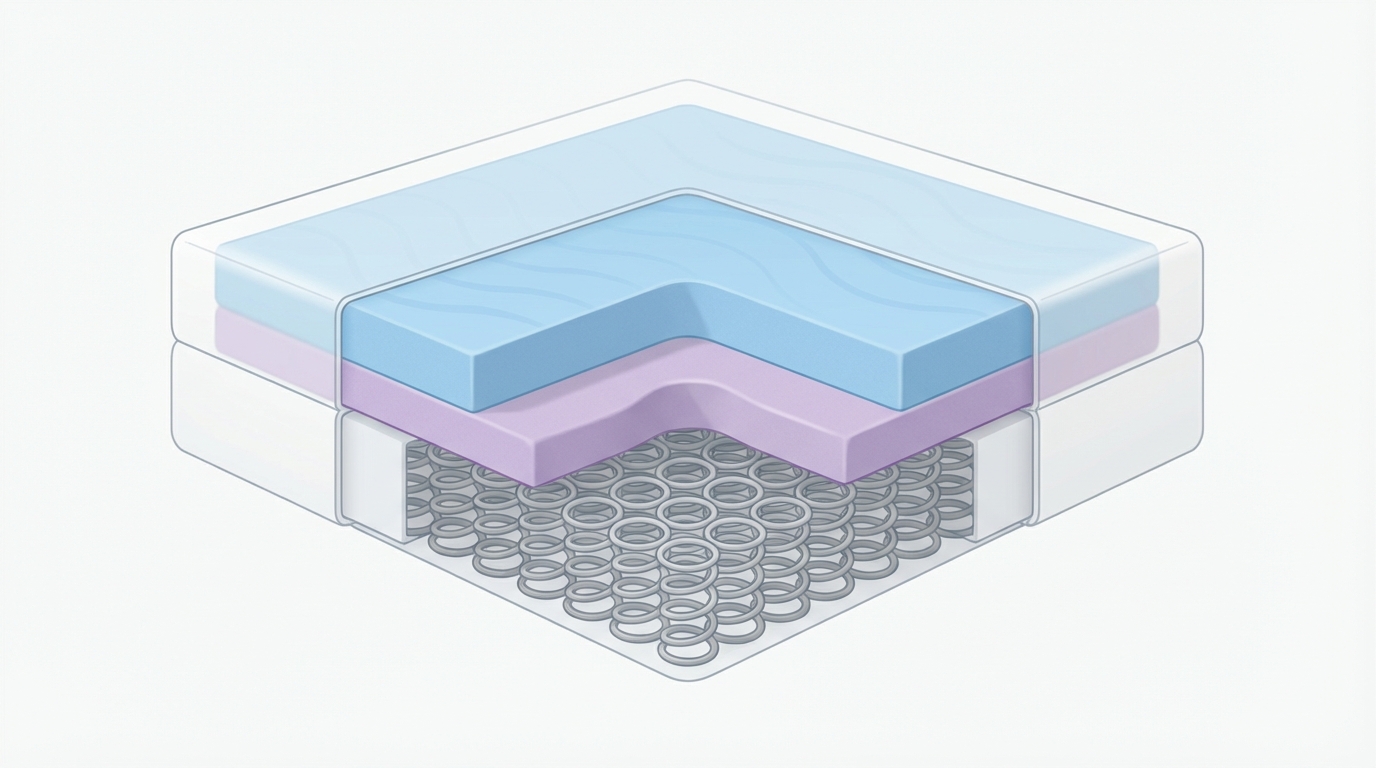
Even the best mattress materials compress over time, especially in the spots you sleep on most. Without regular care, that compression can turn a medium or firm mattress into one that feels too soft long before its time. Simple maintenance habits like rotating, occasionally flipping (if your mattress is designed for it), and managing moisture levels can slow that process and keep your bed feeling balanced.
Rotation spreads wear more evenly across the surface so one area does not bear the entire load, night after night. Most manufacturers recommend rotating the mattress 180 degrees every three to six months, though you should always confirm with your specific brand. This is particularly useful if there is a significant weight difference between partners. By switching the head and foot, the heavier sleeper’s weight gradually affects different sections, which helps maintain firmer support under the main sleep zones.
Flipping is more nuanced, because most modern mattresses are built as one sided designs with comfort layers only on the top. If your mattress is labeled “no flip,” turning it upside down can actually make it feel uncomfortably hard or even damage internal components. However, some double sided innerspring or foam mattresses are meant to be flipped, and alternating sides can help both surfaces age more slowly. If you are not sure, check the law tag or care instructions on the mattress, or contact the retailer to confirm the intended use.
Moisture management is another piece people often overlook. Humidity, sweat, and accidental spills can gradually soften foams and invite mold and mildew, which break down materials. According to Mayo Clinic, maintaining a bedroom relative humidity between about 30 and 50 percent is ideal for respiratory health, and that range is also friendlier to mattress materials. Using a breathable protector, airing out the mattress a few times a year, and running a dehumidifier in very damp climates all help preserve firmness by keeping the internal structure drier and more stable.
Cleaning the mattress and keeping dust, skin cells, and other debris from building up around stitching and foam seams can also help the surface age more gracefully. Gentle vacuuming and spot cleaning reduce allergens and keep comfort layers from matting down prematurely. It is not as dramatic a change as a topper or new base, but over several years, this kind of basic care often means the difference between a mattress that stays supportively firm and one that feels tired and soft before its warranty is up.
These care routines are not one time fixes, they are long term habits that protect whatever firmness level you work so hard to achieve. Once you get your mattress feeling more supportive with toppers, a better foundation, or other tweaks, maintaining rotation and moisture control helps you hold onto that improvement as long as possible.
When A Softer Mattress Is A Symptom, Not The Root Problem
It is natural to blame the mattress when you wake up with aches and pains, but sometimes the surface firmness is only part of the story. Pillows, sleep posture, body weight changes, and even chronic pain conditions can all influence how firm or soft a mattress feels to you. If you find yourself chasing firmness adjustments endlessly without real relief, it may be time to step back and look at the whole sleep system and your body’s needs.
Pillows are a prime example. If your pillow is too high or too low for your sleep position, your neck and shoulders end up misaligned, and you may interpret that discomfort as the mattress being too soft. For back and stomach sleepers especially, a thinner, more supportive pillow can reduce the need for an extra firm mattress because the head and neck stay aligned with the spine. Side sleepers often need a medium to high loft pillow with good support under the neck to complement a medium firm mattress, not necessarily a very hard bed.
Changes in body weight, fitness level, or pain conditions can also shift what feels “right.” A mattress that felt perfectly firm two years ago may feel too soft after a significant weight gain because you compress the comfort layers more deeply. Joint or back issues can make you more sensitive to sagging or uneven support. The American Academy of Sleep Medicine notes that sleepers with chronic pain often benefit from a balanced surface that combines support with pressure relief, rather than extreme firmness. In those cases, targeting posture, pillows, and sleep hygiene alongside mattress adjustments tends to give the best outcome.
Your primary sleep position makes a big difference too. Back sleepers usually do well with medium firm to firm beds that keep the lumbar area gently supported. Stomach sleepers often need the firmest feel to prevent the midsection from bowing downward, which strains the lower back. Side sleepers, on the other hand, often need more pressure relief at the shoulders and hips, so “making the mattress firmer” across the board can backfire if it leads to numbness or discomfort in those areas. Sometimes the answer is not an overall firmer mattress, but a more supportive model designed for your position, such as options curated in a collection of the best mattresses for back sleepers.
Pain that does not respond to sleep surface changes, or that worsens despite adjustments, is a signal worth taking seriously. If you notice new or escalating back, hip, or shoulder pain, especially accompanied by numbness, weakness, or radiating discomfort, it is important to talk with a healthcare provider. As Mayo Clinic and other medical organizations emphasize, mattresses and sleep accessories can support good spinal health, but they are not substitutes for professional evaluation when something in your body is not working as it should.
Once you address position, pillow, and health factors, you may find that the amount of extra firmness you need from your mattress is smaller than you thought. That is often good news, because small adjustments are easier and more cost effective to implement and maintain.
“I was convinced my soft foam mattress was the problem, but after talking through my sleep habits with Mia, I realized my stomach sleeping and flat pillow were making everything worse. Switching to side sleeping and a more supportive pillow changed how the same mattress felt. We eventually upgraded to a medium firm hybrid, but I went into that purchase understanding what my body actually needed.” – Carla M., September
Comparing Mattress Types If You Decide To Go Firmer
At some point, especially if your mattress is older or has deep body impressions, the most honest and cost effective answer is that you need a new bed. Temporary firming tricks can only do so much once the internal support system is exhausted. When you reach that stage, understanding how different mattress types behave over time helps you choose a naturally firmer, more durable option rather than repeating the same problem with a new model.
According to sleep research and large scale testing from groups like Sleep Foundation and Consumer Reports, mattress materials and construction influence both initial firmness and how long that firmness lasts. Innerspring and hybrid designs tend to offer more inherent support and a firmer feel, especially for back and stomach sleepers, while all foam beds can range widely from plush to firm depending on densities and layering. Latex and high density foams generally resist sagging better than lower density foams.
Here is a simple comparison of common mattress types and how they relate to firmness and longevity:
| Mattress Type | Typical Firmness Range | Best For | Notes On Firmness Over Time |
|---|---|---|---|
| Innerspring | Medium to firm | Back and stomach sleepers | Coils keep support, comfort foams may soften sooner |
| Hybrid | Medium soft to firm | Most sleepers, couples | Good balance of support and comfort, often stable firmness |
| All Foam | Soft to firm | Side sleepers, motion sensitive | Can be very soft or firm, lower density foams soften faster |
| Latex (foam or hybrid) | Medium to firm | Hot sleepers, those wanting resilience | Tends to maintain firmness well, more buoyant feel |
Within each category, specific models can be tuned to be firmer or softer. For example, in the hybrid segment, a mattress like the Sealy Posturepedic Elite Firm Hybrid Mattress – Brenham II combines a coil support core with firm comfort layers that are engineered for durable support. That kind of design is a good match if you are transitioning from a mattress that felt too soft or saggy and you want a clearly firmer, more “on top of the bed” feel.
If you share a bed and one of you prefers significantly more firmness, a medium firm hybrid with zoned support can be a smart compromise. Models like the Sealy Posturepedic Elite Medium Mattress – Brenham II Euro Pillow Top soften the surface slightly for pressure relief while keeping the underlying support robust. Many sleepers who think they want an extra firm mattress actually feel best on a well designed medium firm hybrid that does not sag in the middle.
All foam options can work for firmness as well, especially if you focus on higher density support cores and firmer comfort layers. If you appreciate the hugging feel of foam but want to avoid the “stuck in the mud” sensation, browsing a curated lineup such as the best foam mattresses helps you narrow in on firmer, more supportive foam designs. Look for clear firmness descriptions, support zones, and good edge stability if you sit or sleep near the sides.
The take home message is that you have more control than you might think. By choosing a mattress type and firmness level aligned with your body type, sleep style, and support needs, you can start from a better place. Combined with good foundation support and basic care, that reduces how often you need to ask how to make your mattress firmer in the first place.
Balancing Firmness With Comfort For Different Sleepers

While the focus here is on making a mattress firmer, it is important not to swing the pendulum too far. A bed that is extremely firm may feel supportive at first, but if it does not allow your shoulders, hips, and other heavier areas to sink in at all, you can develop new pain points. The goal is not maximum hardness, but the right blend of stability and gentle contouring for your body.
Back sleepers typically do well with medium firm to firm mattresses that support the natural curve of the spine. A mattress that is too soft lets the hips drop, which increases strain on the lower back. Too firm, and you may feel your tailbone or shoulder blades pressing uncomfortably. For back sleepers trying to firm up a bed, I often suggest starting with a supportive base, then adding a medium firm topper if needed, rather than jumping straight to the hardest option available.
Stomach sleepers, on the other hand, truly benefit from a firmer surface. This position already puts stress on the lower back and neck, so preventing the midsection from sagging is crucial. A firmer hybrid or innerspring mattress, possibly with a thin, dense topper for more uniform support, is often the best choice. Even then, medical groups like the American Academy of Sleep Medicine often encourage stomach sleepers to gradually transition toward side or back sleeping for long term spinal health, because even a very firm mattress cannot completely undo the posture issues of this position.
Side sleepers usually need more nuance. They often come in asking for a firmer bed because they are sinking too far on a very soft mattress, but if you over correct, pressure at the shoulders and hips becomes a new problem. For many side sleepers, a supportive medium or medium firm mattress with some cushioning in the top layer is ideal. If your current mattress is generally comfortable on your shoulders but feels too soft under your midsection, a zoned support model or carefully chosen topper can add firmness where you need it most without sacrificing pressure relief elsewhere.
Couples introduce another layer of complexity because each partner may prefer a different feel. In those situations, I often recommend starting with a supportive, slightly firmer mattress as a shared base, then customizing each side with different toppers or pillows. One partner might use a more substantial, contouring pillow and a slightly softer topper, while the other uses a flatter pillow and a firmer topper. This layered approach gives you room to negotiate firmness without forcing one person to compromise their spinal alignment.
When in doubt, listen to your body over marketing labels. If you wake up with fewer aches, move easily in bed, and feel supported rather than stuck, your firmness level is probably close to right. If you are waking up sore in the same spots day after day, or you dread getting into bed because it feels like quicksand or a board, that is your cue to adjust.
Conclusion: Choosing The Smartest Path To A Firmer, More Supportive Bed
Figuring out how to make a mattress firmer can feel confusing, especially with so much conflicting advice on the internet. Once you break it down, though, there are really three main levers you can pull: surface feel, underlying support, and overall mattress construction. By understanding where your current setup is falling short, you can focus on the changes that will give you the biggest impact for your effort and budget.
For many people, simple steps like tightening bedding, cooling the room, airing out the mattress, and upgrading the foundation make a surprisingly big difference. Adding a well chosen, firm topper or switching to a more supportive base can often buy you a few extra years of comfortable sleep from a mattress that is still structurally sound. When the support core is worn out or the mattress is well past its lifespan, investing in a firmer hybrid or supportive foam design helps you start fresh from a stronger foundation.
You do not have to figure all of this out alone. At Sleepology, we look at your entire sleep picture: your body type, sleep position, aches and pains, room environment, and budget. That is how we match you with solutions that actually fit your life, whether that means fine tuning the bed you have or guiding you toward a new mattress that will stay comfortably firm for years.
If you are still unsure whether your mattress can be saved or needs to be replaced, or you want help choosing between a firmer topper and a new foundation, you can always reach out for personalized guidance. A short conversation often saves people from costly trial and error and gets them sleeping better faster. You deserve a bed that supports you properly, and with the right steps, that goal is absolutely within reach.
Frequently Asked Questions
How can I tell if my mattress is too soft or if I just need a better pillow?
A mattress that is truly too soft usually lets your hips or midsection sink noticeably lower than your shoulders when you lie on your back or side, and you often wake up with lower back or hip pain. If the discomfort is mostly in your neck, upper back, or shoulders, and your body feels reasonably supported otherwise, a pillow that is the wrong height or firmness is a more likely culprit. Try lying on your bed without a pillow for a few minutes and notice how your spine feels. If your back and hips feel reasonably aligned and comfortable without the pillow, upgrading to a better matched pillow may fix more than you expect. If you feel your hips dropping, your back arching, or your midsection sagging, then firming the mattress should be your focus.
Is putting plywood under my mattress a safe way to make it firmer?
Using plywood under a mattress is a common DIY suggestion, but it comes with trade offs. A solid sheet can create a firmer, more even surface in the short term, especially if your existing slats or box spring are sagging. However, it also blocks airflow, which can trap moisture and heat and may void your mattress warranty if the manufacturer requires a specific type of support. Over time, that trapped moisture can break down foams and encourage mold growth. If you want the benefit of a firmer base without those risks, a purpose built rigid foundation or closely spaced slat system is a safer and more durable choice.
Will a mattress topper really make my soft mattress firm enough, or is that just a temporary fix?
A high quality, dense, firm topper can significantly change how your mattress feels, especially if the underlying support core is still in good shape. Many people get several years of improved comfort from a topper when the problem is primarily that the surface layers are too plush. However, if your mattress is sagging deeply, has broken coils, or is already seven to ten years old, a topper will only mask the problem temporarily. You may notice some improvement, but the underlying collapse will continue, and the topper can even start to conform to those dips. In that case, your money is usually better spent on a new mattress with the right firmness built in.
Does putting my mattress on the floor make it firmer and is it okay to do that long term?
Placing your mattress directly on the floor almost always makes it feel firmer because the floor is a solid, unyielding surface that removes any flex from a box spring or frame. It can be a useful test to see whether a firmer base will help you, or a short term solution if your frame breaks unexpectedly. For long term use, though, there are concerns. Limited airflow under the mattress can lead to moisture buildup, and it is also easier for dust, allergens, and pests to reach your sleep surface. You will need to lift and air the mattress regularly and keep the floor very clean. For most people, a breathable, supportive foundation is a healthier and more practical long term option.
How firm should my mattress be if I have lower back pain?
There is no single perfect firmness for every person with back pain, but research suggests that a medium firm mattress often provides better pain relief than very soft or very hard options. The idea is to support the natural curve of the spine without forcing it perfectly flat or allowing it to sag. Back and stomach sleepers with lower back pain generally do best on the firmer end of medium firm, while side sleepers may need a slightly softer surface on top of good support to avoid shoulder and hip pain. If you have persistent or severe back pain, it is important to talk with a healthcare provider, then use their guidance to choose a mattress that supports whatever posture they recommend.
How do I choose a new mattress that will stay firm instead of getting soft again in a couple of years?
To choose a mattress that will hold its firmness, focus on build quality and support materials rather than marketing labels alone. Look for a strong coil or support core, preferably with thicker gauge coils in innerspring or hybrid models, or high density support foam in all foam designs. Firmer comfort layers made from latex or dense foams tend to maintain their feel longer than very soft, low density foams. Pay attention to edge support and overall weight capacity, which often reflect sturdier construction. It is also wise to pair your new mattress with a solid, compatible foundation such as a supportive platform or a rigid base like the Sealy low profile foundation, and to follow care instructions for rotation and moisture control. Those factors together are what keep a firm mattress feeling firm over the long term.