

How To Keep Your Mattress From Sliding: Practical Fixes That Actually Last
If you are tired of waking up with your pillow halfway down the bed and your mattress nudged several inches off the frame, you are not alone. A sliding mattress is one of those small annoyances that adds up, especially when it interrupts your sleep or leaves you re-making the bed every morning. It can be embarrassing when guests stay over and you are quietly shoving the mattress back into place before they see the gap at the headboard. More importantly, it can be a sign that something in your sleep setup is not supporting you as well as it should.
Sleep quality matters. The Sleep Foundation notes that most adults need 7 to 9 hours of consolidated sleep per night, and that both mattress support and stability influence how often you wake up and how refreshed you feel. When your mattress shifts, you feel less secure, you wake up more to readjust, and subtle aches can creep in because your body is constantly chasing a stable position. What looks like a simple sliding issue is sometimes a clue that the frame, foundation, or even the mattress itself is not the right fit.
You are in the right place if you want both quick fixes and long term solutions. We will look at why mattresses slide in the first place, how to stop it on different kinds of bed frames, what to do when toppers and box springs are the culprits, and how to know when it is finally time to upgrade rather than keep fighting your setup. Along the way, you will see realistic options at different price points, including simple hardware, non slip accessories, and when a new foundation or mattress makes the most sense.
Most of all, the goal is to give you a calm, reliable sleep surface again, not a moving target. By the end, you should know exactly which changes will make the biggest difference for your specific bed, and how to turn a frustrating sliding mattress into a stable, supportive foundation for better rest in .
Why Your Mattress Keeps Sliding Around
Before you can fix a sliding mattress in a way that sticks, it helps to understand the real cause. Many people jump straight to velcro or tape, only to find the mattress creeping again a few weeks later. In my experience working with shoppers for two decades, the most effective solutions always start with correctly diagnosing the problem: size mismatch, lack of friction, weak support, or a mattress that has simply aged out of its best years.
Size mismatch between the mattress and the frame or foundation is one of the most common causes. If the mattress is even an inch smaller than the inner dimensions of the frame, every time you sit on the edge or turn over, it has room to scoot. On the other side, if the mattress is slightly wider than the frame, it can ride above the rails instead of sitting in them, which lets it twist and shift. This is especially noticeable with king size beds, where small measurement differences become big gaps.
Friction is the next key piece. Modern mattress covers are often smooth and stretchy, which feels nice but does not always grip wood slats, metal rails, or a slick box spring fabric. Memory foam and latex mattresses in particular can behave like a bar of soap on a glossy surface. When both the foundation and the mattress cover are smooth, there is very little to hold things in place. Add motion from a restless sleeper or a child who loves to jump on the bed, and sliding becomes almost inevitable.
Support issues in the frame or foundation can also encourage sliding. If slats are too far apart, if a center beam is sagging, or if a low quality box spring is flexing every time you sit, your sleep surface is constantly moving underneath you. The Cleveland Clinic notes that sagging or unstable foundations can lead to more tossing and turning, which then creates even more side to side force on the mattress. That cycle can leave you with both a sliding mattress and restless sleep that feels harder to fix.
Finally, age plays a role. As a mattress wears, its edges soften, the cover can stretch, and body oils and dust build up on the bottom surface. That combination can make the mattress slightly smaller and slicker than when you bought it, so it no longer fits the frame as securely. The Sleep Foundation and many manufacturers typically recommend replacing a mattress around every 7 to 10 years, depending on type and usage, because support and hygiene both decline over time. Sliding is sometimes one of the first signs that your mattress is past its prime.
“We fought with our old queen mattress for months. It would slide a solid 3 or 4 inches by morning. Mia helped us realize the frame was a half inch wider than standard and the mattress was also over eight years old. Once we replaced it with a properly sized Sealy from Sleepology, the sliding stopped completely and my lower back pain eased within a week.” – Carla J., November
Step One: Check Sizing, Frame, and Foundation
Confirm Your Mattress and Frame Actually Match
The simplest and most overlooked step is measuring. Many people assume that a queen is a queen and a king is a king, yet real world furniture can be off by enough to matter. Over the years at Sleepology, I have seen plenty of frames that were designed for extra bedding or imported designs that do not quite match North American mattress standards.
Take a tape measure and write down the exact length and width of your mattress, measuring from seam to seam. Then measure the inside width and length of your bed frame or platform, from rail to rail, where the mattress actually sits. If your mattress is more than about half an inch narrower than the inner frame measurement, that space gives it room to shift. If the mattress is wider than the frame, check whether the edges are riding on top of the rails rather than sitting between them.
If you find a big mismatch, that is your explanation for the sliding. In those cases, adding grippy pads can help in the short term, but the long term fix is to pair a correctly sized mattress with a compatible base. For example, if your older mattress is a bit undersized and you are ready for an upgrade, moving into a standard king with a snug frame and a supportive base is often the cleanest solution. Many customers who switch into a properly fitted option from our king sized mattresses are surprised by how much calmer and more stable their bed suddenly feels.
Evaluate the Support Under Your Mattress
Once you know the size pairing is right, look closely at the support system under the mattress. For slatted frames, check how far apart the slats are and whether any are bowed or loose. Most foam and hybrid mattress makers recommend slats no more than 3 inches apart so that the mattress has an even, stable surface. Wider gaps can let the mattress bow between slats, which creates movement and accelerates wear. You should also inspect the center support beam on larger frames to be sure it is not bending or loosening.
If you use a box spring, look for signs of sagging, broken wood, or crushed areas on the top surface. When a box spring is too flexible, every movement you make on the mattress is amplified. That side to side motion can gradually walk the mattress toward the headboard or footboard. A sturdy, well constructed foundation provides a flat, unmoving base. A good example is the Sealy Mattress Base Boxspring Foundation | Standard 9 inch height, which offers reinforced, even support designed to partner with modern mattresses and help them stay put.
If you prefer a lower profile look or want to reduce the height of your sleep surface, a low profile base can provide the same stability in a shorter package. A piece such as the Sealy Mattress Base Boxspring Foundation | Low Profile 5 inch height is helpful when you want both secure, non flexing support and a bed that is easier to get in and out of. Choosing the right foundation is not just about height, it is about creating a firm, non shifting platform so the mattress has no reason to wander.
“We assumed our mattress was the problem, but Mia pointed out that our bargain box spring had collapsed in the middle. We swapped it for a solid Sealy base from Sleepology and kept our existing mattress. The sliding stopped overnight and we saved about $900 compared to replacing everything.” – Brian L., October
How To Keep Your Mattress From Sliding On Different Bed Types

Once you have confirmed that the size and support are sound, the next step is matching the fix to your specific bed style. Metal frames, box springs, and platform beds behave differently, both in how they allow movement and in what solves it. One of the reasons many online tips fail is that they offer a one size fits all trick like carpet tape, when the real answer should be tailored to how your bed is built.
Metal Frames And Simple Rails
Metal bed frames are practical and durable, but they often have the slickest contact surfaces. If your mattress is sitting directly on painted steel rails or very narrow slats, there is very little friction. The result is that every time you sit on the edge, the mattress can skate slightly along the metal. Over weeks and months, that becomes the daily gap you keep shoving back into place.
Start by seeing whether your metal frame is designed to work with a box spring or foundation underneath the mattress. Many steel rail frames are not meant to hold a mattress alone; they rely on a rigid foundation to spread weight and add friction. If your frame has just a perimeter and a central bar, and your mattress is sitting directly on the bars, you will almost always fight sliding. In that case, adding a proper foundation between the frame and mattress is the cleanest solution and will help the mattress perform closer to what the manufacturer intended.
If your metal frame has slats and the structure is otherwise solid, you can increase friction between the mattress and the frame with non slip materials. Thin, rubberized pads or rug gripper style sheets placed between the mattress and the frame often give enough bite without changing the feel of the bed. For heavier king mattresses, I usually suggest placing several strips along the head, middle, and foot areas rather than a single large sheet, which makes rotating the mattress easier later.
Traditional Box Spring Setups
When you use a traditional box spring under a mattress, you are dealing with two potential sliding zones. The mattress can slide on the box spring, and the box spring can slide on the frame. Many older box springs are upholstered in smooth fabric, which can be surprisingly slippery against metal rails and against the bottom of a mattress cover.
To stabilize the connection between box spring and frame, check that the frame has rails that rise slightly above the top of the metal. Low channels or small tabs at the corners make a big difference in keeping a box spring centered. If your frame is very minimal and flat, non slip pads under the box spring at each corner can help it lock in place. It is important to keep these pads thin so you do not create a wobbly feel or raise the bed excessively.
Between the mattress and box spring, you can use a non slip mattress pad or gripper designed for this purpose. Look for options that are breathable, so you do not trap moisture between layers. Placing a grippy layer here is particularly useful if your mattress has a smooth knit cover that likes to migrate. Pairing that with a well built foundation, such as the Sealy box spring foundations mentioned earlier, gives you the double benefit of stability and consistent support. That combination reduces motion transfer and sliding so you are less likely to wake when your partner moves, a benefit that Mayo Clinic notes is important for maintaining deeper stages of sleep.
Platform Beds And Slatted Bases
Platform beds and slatted bases are popular because they are sleek and often do not require a box spring. However, they can be as prone to sliding as metal frames if their design is very minimal. If the mattress simply rests on flat wooden slats with no raised edge around it, there is nothing to keep it from drifting over time except friction.
Begin by checking if your platform has a shallow lip or rail that the mattress should sit inside. If it does, make sure the mattress is actually dropping down into that recess rather than sitting on top of decorative edges. If the mattress is too thick or too wide, it can ride higher than intended, which removes the benefit of the rails. In that scenario, changing to a mattress whose dimensions are better matched to the frame can bring the bed back to its original design and greatly reduce sliding.
If your platform bed has no lip at all, friction is your friend. A breathable non slip pad between the mattress and slats is usually enough to quiet daily shifts. With foam and hybrid mattresses, you should also confirm that the slats are close enough together to support the bed properly. Many high quality models, such as the Sealy Posturepedic Pro Medium Mattress – Dupont II Euro Pillow Top, are engineered for use on solid or closely slatted surfaces. When they are placed on widely spaced slats, they not only slide more but may also sag prematurely between gaps.
“Our upholstered platform bed looked gorgeous but our memory foam mattress behaved like it was on ice. We added a non slip pad and still had minor shifting. Mia suggested rotating the mattress and checking the slat spacing. Once we tightened a few loose slats and upgraded to a Posturepedic Pro from Sleepology that was designed for platform use, the sliding and sagging both disappeared.” – Denise R., January
Quick Fixes To Increase Friction Without Damaging Your Mattress
Once the size and support are dialed in, increasing friction is the next practical step. The challenge is to choose materials that are thin, breathable, and safe for your mattress fabric. You want to avoid anything that traps moisture, leaves adhesive on the cover, or voids your warranty.
Non Slip Pads, Rug Grippers, And Rubberized Mesh
One of the most reliable approaches uses non slip materials that were originally developed for area rugs or shelf liners. These are thin meshes coated with a rubbery compound that grips on both sides. When placed between a mattress and its base, they can dramatically reduce sliding without adding noticeable height or stiffness.
Look for pads that are designed to be used under rugs on hard floors, since those are specifically made to sit between two relatively smooth surfaces. Cut the pad slightly smaller than the mattress footprint so it does not stick out at the edges. For very heavy or large mattresses, you can use several pieces spaced evenly rather than one continuous sheet. This approach makes it easier to rotate or lift the mattress later for cleaning.
Because breathability matters, especially under foam mattresses, choose open mesh styles instead of solid rubber mats. Continuous rubber sheets can trap heat and moisture, which the Sleep Foundation and other organizations warn can contribute to mold in extreme cases. Open mesh allows air to circulate and does not typically affect the temperature or feel of your bed.
When Velcro And Tape Make Sense, And When To Skip Them
You will often see advice to use velcro strips or double sided carpet tape to literally stick the mattress down. These methods can work in some cases, especially as a temporary solution, but they have tradeoffs. Adhesives can leave residue on frames and mattress covers, and aggressive tapes can pull fibers when removed. For many foam mattresses, manufacturers advise against using strong adhesives on the fabric for exactly these reasons.
If you do want to try velcro, look for wide, industrial strength strips and place them strategically rather than covering the whole frame. Attach the soft loop side to the mattress and the hook side to the frame or slats, since the hook side tends to be scratchier and more likely to snag bedding if exposed. Keep in mind that if you rotate or flip your mattress, you may need to move the strips.
Carpet tape can be effective between a box spring and metal rails, where you are less concerned about fabric damage, but use it sparingly and be prepared that you may need to clean any residue when you change your setup. In my professional view, non adhesive friction methods are a better first choice for most people, reserving adhesives for situations where nothing else is practical.
When The Mattress Itself Is The Problem
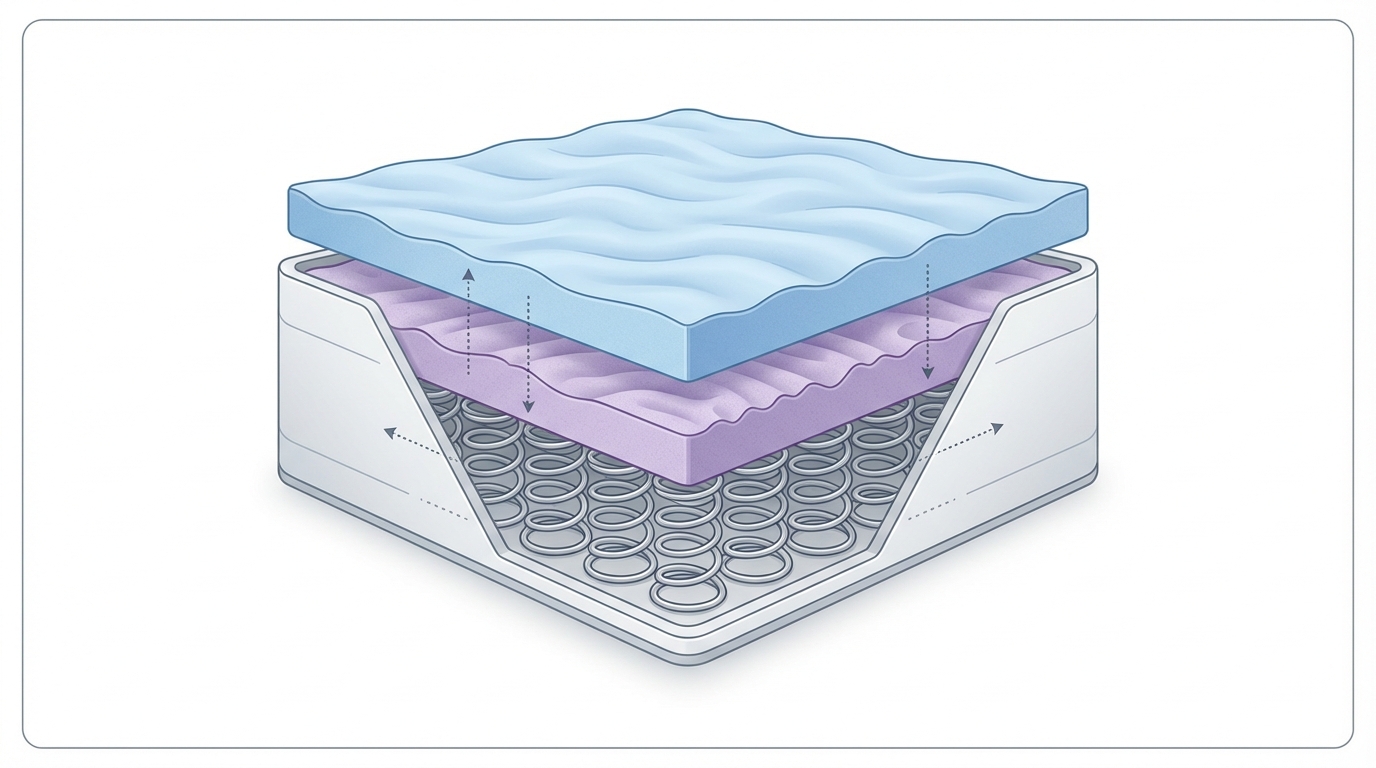
Sometimes, you can chase sliding issues for months and still feel like the bed is unsettled. That is often a sign that the mattress itself is too worn or not well matched to your base. Instead of endlessly layering fixes, it can be more cost effective and better for your sleep to reassess whether your mattress is still doing its job.
Signs Your Mattress Is Too Old Or Worn To Stay Put
Age does not just show up as sagging. As mattresses get older, especially innerspring and hybrid models, the perimeter edge support can soften and compress. That makes the mattress feel rounded at the corners rather than crisp and boxy, which means it no longer fits snugly within the frame. When the edge loses structure, it becomes easier for the mattress to bulge over rails or slide past small barriers.
The cover can also stretch over time, especially if you regularly sit on the same edge or if the mattress has been moved often. A stretched cover combined with internal compression can effectively shrink the usable footprint of the mattress. If you notice visible dips where you sleep, rounded corners, and sliding that has gotten worse in the last year or two, these are strong hints that age is a major factor.
Health organizations like Mayo Clinic emphasize that a supportive, stable mattress and foundation are key to maintaining spinal alignment during sleep. When the mattress no longer supports you evenly, your body compensates with more frequent position changes, which in turn adds more movement and sliding. In other words, the instability you feel in your bed is both a symptom and a cause of deeper comfort issues.
Choosing A Stable Replacement That Works With Your Base
If you decide it is time for a new mattress, you can use this as an opportunity to choose something that is less prone to sliding from the start. Look for models with well defined edge support, covers that offer a bit of texture, and compatibility with your preferred base. Hybrids with reinforced edge coils and substantial side rails typically sit securely in frames and on foundations.
For instance, a mattress like the Sealy Posturepedic Pro Soft Mattress – Dupont II Euro Pillow Top offers both plush pressure relief and strong edge support, which helps it stay aligned in a properly sized frame. If you prefer a slightly firmer, more balanced feel, a model such as the Sealy Posturepedic Medium Mattress – Medina II Euro Pillow Top can provide a stable sleeping surface for couples who move differently during the night.
For heavier sleepers or those who want a very robust perimeter, you might look at a more premium option like the Sealy Posturepedic Elite Medium Mattress – Brenham II Euro Pillow Top. These designs are built with durability and stability in mind, so they pair well with high quality bases and are less likely to misbehave on the frame.
Comparing Common Solutions To Keep A Mattress From Sliding
Sometimes it helps to see solutions side by side, especially when you are deciding between quick fixes and more structural changes. Below is a comparison of four common approaches people use, and how they stack up in typical home situations.
| Solution Type | Best For | Key Pros | Key Cons |
|---|---|---|---|
| Non slip pads or rug grippers | Most mattresses on platform beds or box springs | Inexpensive, easy to install, non permanent | Can shift over time, may need occasional reset |
| Upgrading foundation or box spring | Older or unstable bases, metal frames with flex | Long term stability, improves overall support | Higher cost, requires moving mattress and frame |
| Velcro strips or carpet tape | Temporary fixes on metal frames or under box springs | Strong hold, targeted application | Adhesive residue, may damage fabric or finish |
| Replacing the mattress | Worn or undersized mattresses causing chronic sliding | Solves support, comfort, and size issues together | Largest investment, requires careful selection |
This table is not about steering you to the most expensive option. In many bedrooms, a simple non slip pad and some slat adjustments solve the problem completely. In others, what looks like a sliding issue is really a foundation or aging mattress issue that is worth addressing more thoroughly. Matching the solution to the root cause is how you avoid wasting money on products you do not need.
Special Cases: Memory Foam, Latex, And Mattress Toppers
Some materials are simply more prone to sliding, especially when combined with certain frames or accessories. Knowing how to handle memory foam, latex, and toppers can save you a lot of frustration.
Memory Foam And Latex On Smooth Surfaces
Memory foam and latex mattresses tend to have smooth knit covers and flexible cores. That combination allows the mattress to contour beautifully to your body, but it also means that if the bottom cover is slick and the frame surface is smooth, friction is low. This is why foam mattresses sometimes slide more on metal or lacquered wood than traditional quilted innerspring beds.
The first rule with foam and latex is to treat them gently. Avoid strong adhesives, narrow straps that dig in, or anything that could compress the foam at pressure points. Non slip pads are typically the safest way to increase friction without harming the material. Make sure any pad you use is rated for use under foam or latex and is free of chemicals that might react with the mattress fabric.
It is also important to pay attention to temperature. Foam can become slightly more flexible in warm rooms, which may increase sliding if the base is not secure. Maintaining a comfortable bedroom temperature, using breathable bedding, and ensuring good airflow under the mattress all help preserve the mattress structure and reduce unnecessary motion.
Keeping Mattress Toppers From Wandering
Mattress toppers can slide independently of the mattress, which means you might have two layers moving at night instead of one. The result is bunching, wrinkling, and that sinking feeling when the topper edges creep toward the center. The American Academy of Sleep Medicine points out that consistent support is key for spinal alignment, so a wrinkled or folded topper can undermine the relief it was meant to provide.
The cleanest solution is to choose toppers that include anchor features like corner straps or fitted skirt style sides. A well designed topper such as the Tempur Pedic Mattress Topper - Pillow Travel and Guest Bundle is built to stay in place, which matters if you use it regularly for guests or as a travel friendly layer.
If your existing topper has no anchors, a tight, deep pocket fitted sheet that wraps over both the topper and mattress can do a surprisingly good job of holding everything together. This works best when the sheet is the correct size and has strong elastic. You can also add a thin non slip pad between the mattress and topper, but be sure it does not affect the feel too much. Just as with mattresses, avoid adhesives that could tear foam or leave residue on fabrics.
Adjustable Bases, Motion, And Mattress Sliding
Adjustable bases add another layer of complexity because they move. When you raise the head or foot, gravity is now working at an angle, pulling the mattress toward the foot of the bed. Quality adjustable bases include retainer bars or grips to counter this, but if your base or mattress is not designed for each other, sliding can still occur.
How Adjustable Bases Are Supposed To Hold Mattresses
Most modern adjustable bases rely on a combination of retainer bars at the foot of the bed and textured surfaces on the deck where the mattress rests. The retainer bar is usually a U shaped metal piece that curves over the bottom edge of the mattress to stop it from sliding when the head is elevated. Some bases also have side rails or additional corner retainers for heavier mattresses.
If your adjustable base does not have a retainer bar, or if it is bent or too low for your current mattress thickness, you will likely see the mattress inching down over time. Some people remove the retainer bar for aesthetic reasons, not realizing how important it is for functionality. If you have an adjustable base and a mattress that frequently slides when you raise the head, the first step is to ensure your retainer bar is installed correctly and high enough to catch the mattress edge.
The mattress itself should also be compatible with adjustable use. Flexible foam or hybrid designs that can bend easily tend to stay in contact with the base, which reduces the force pushing them downward. In contrast, very rigid mattresses or those with tall, stiff borders can resist bending, which increases the leverage they have against the retainer bar.
Choosing The Right Mattress For An Adjustable Base
If you are shopping for a mattress to pair with an adjustable base, stability and flexibility go hand in hand. Foam and hybrid mattresses that explicitly state adjustable base compatibility are engineered to move with the platform instead of fighting it. They usually have reinforced edges that flex without kinking and covers that work well on textured adjustable decks.
Sleepology carries several collections designed with adjustability in mind. When customers add an adjustable bed frame and base to their setup, we focus on pairing them with mattresses that flex smoothly while still providing the right support. This kind of pairing greatly reduces sliding, creaking, and the sense that the mattress is trying to “walk” off the base when it moves.
From a sleep health perspective, adjustable bases can be particularly helpful for people with snoring, reflux, or certain types of back pain. The Mayo Clinic notes that elevating the head of the bed can reduce snoring and improve breathing in some individuals. However, those benefits are only fully realized when the mattress stays securely in position, which is why choosing components that are designed to work together is so important.
A Simple Maintenance Routine To Prevent Future Sliding
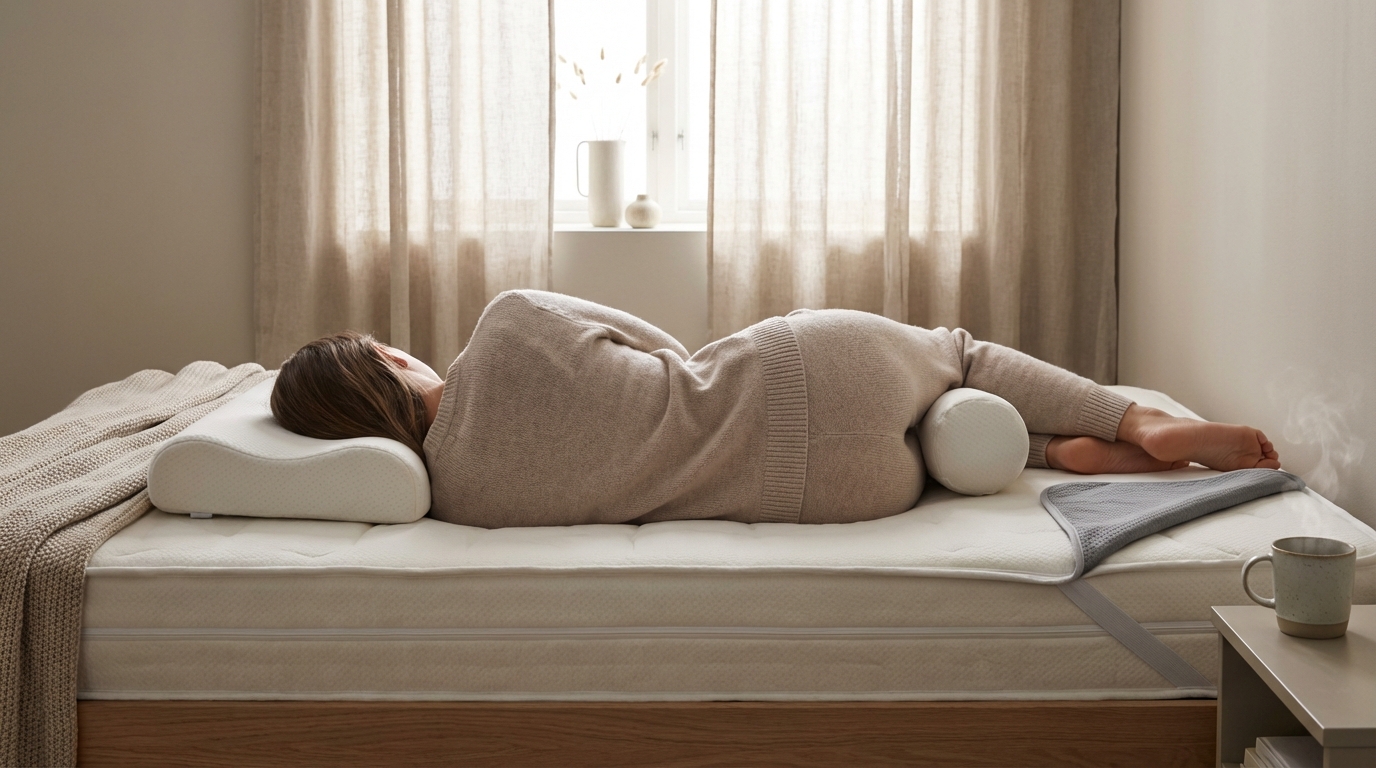
Once you have your mattress stable again, a small amount of ongoing care can keep things that way. You do not need a complicated checklist, but a few habits can prevent minor shifts from becoming major nuisances over time.
Every few months, gently lift one corner of the mattress and peek underneath. Make sure any non slip pads are still flat and centered, that slats or rails have not worked loose, and that dust is not forming a slick layer between surfaces. Vacuuming the top and sides of your mattress and the surface of your foundation periodically also helps remove fine particles and body oils that can reduce friction. The Sleep Foundation recommends regular cleaning for both mattresses and foundations to support hygiene and performance, and it is just as relevant when you are guarding against sliding.
Rotating your mattress 180 degrees two or three times a year helps distribute wear more evenly, particularly for couples with a significant weight difference. That more balanced wear prevents one side from compressing faster than the other, keeping the mattress edges more uniform and snug in the frame. Whenever you rotate the mattress, it is a good time to re check that everything underneath is lined up and secure.
Finally, pay attention to changes in how your bed behaves. If you notice the mattress creeping more than it used to, new noises when you sit down, or a corner that suddenly feels less supported, those can be early signs that a screw has come loose, a slat has cracked, or a foundation is beginning to fail. Addressing those issues early is often easier and less expensive than waiting until they cause visible damage or repeated sleep disruptions.
Conclusion: A Stable Mattress, A Calmer Night
A sliding mattress is annoying, but it is also fixable. Once you understand whether the primary issue is size mismatch, lack of friction, weak support, or mattress age, the path forward gets clearer. Quick, low cost solutions like non slip pads and small frame adjustments often go a long way when the underlying components are solid and properly matched. When they are not, investing in a quality foundation or a new, well fitted mattress can turn a nightly frustration into a bed you barely have to think about.
Your sleep environment should feel dependable. You should be able to roll, sit on the edge, or adjust your position without wondering where the mattress will be in the morning. By taking a thoughtful, step by step approach to diagnosing and fixing sliding, you are not just straightening your bed, you are protecting your comfort, spinal alignment, and long term sleep quality. Trusted resources like the Sleep Foundation and Mayo Clinic consistently remind us that consistent, restorative sleep is foundational to physical and mental health, and having a stable mattress is one small but important piece of that puzzle.
If you would like help deciding whether a new base, an adjustable frame, or a completely new mattress would give you the best return on effort and budget, the Sleepology team is always happy to walk through your specific setup. Whether that means pairing a sturdy Sealy foundation with your existing bed or exploring a supportive hybrid from our best foam mattresses collection, the goal is the same: a bed that stays where it belongs so you can rest more easily in .
Frequently Asked Questions
How can I tell if my sliding mattress problem is the frame or the mattress?
The easiest test is to isolate each piece. First, check the dimensions of the mattress and the inside of the frame; if there is more than about half an inch of gap, the frame is likely contributing. Then, remove the mattress and press on the slats or box spring to see if they flex or creak more than expected. If the foundation feels unstable, or if slats are widely spaced or sagging, that is a strong sign the frame or base needs attention. If the support system is solid and the mattress shows visible sagging, softened edges, or a stretched cover, the mattress is usually the bigger culprit.
Will using a non slip pad under my mattress void its warranty?
Most of the time, thin, breathable non slip pads that do not use adhesives or fasteners are considered safe and do not affect warranties. Warranties are more often voided by improper foundations, such as slats that are too far apart, or misuse like bending a mattress not designed for an adjustable base. To be sure, it is a good idea to read the warranty card that came with your mattress or check the manufacturer’s website. When in doubt, choose open mesh pads specifically marketed for use under mattresses rather than improvised materials that might trap moisture or contain harsh chemicals.
How do I keep a memory foam mattress from sliding without damaging the foam?
With memory foam, prioritize gentle friction over force. Avoid narrow straps that can dig into the foam or strong adhesives that could tear the fabric. Instead, use a breathable non slip mesh pad between the mattress and the base, ensure your slats or platform are smooth and evenly spaced, and confirm that the mattress is the correct size for the frame. Rotating the mattress a few times a year also helps keep wear more uniform, which reduces uneven compression that can lead to slipping.
What can I do if my mattress topper keeps creeping to one side?
Start by checking that your fitted sheet is deep enough to wrap around both the topper and the mattress together. A snug, high quality fitted sheet is often the simplest solution. If the topper is particularly slippery, you can add a thin non slip pad between the topper and mattress, making sure it does not change the comfort too much. Whenever possible, choose toppers with corner straps or skirted sides, like many higher end designs, which are built to stay in place. If a topper still refuses to behave, it may be too light, too small, or not well matched to your mattress surface.
Is a sliding mattress ever a safety concern, or just an annoyance?
For most adults, sliding is mainly an annoyance and a sleep quality issue. However, in some situations it can become a safety concern. Older adults, people with mobility challenges, or children may have trouble getting in and out of a bed that shifts under them, increasing the risk of falls. Mattresses that slide significantly on adjustable bases can also pose a risk if they slip off the edge when the head or foot is elevated. If anyone in your household has balance or mobility issues, it is especially important to address sliding promptly and to consider sturdy frames and foundations that keep everything securely in place.
When should I stop trying quick fixes and just replace the mattress?
If you have tried non slip pads, verified that your foundation is sound, and still find the mattress sliding regularly, it is worth asking how old the mattress is and how it feels overall. If it is more than 7 to 10 years old, shows visible sagging or lumps, and you wake up with new aches or stiffness, those are strong indicators it is time for a replacement. At that point, you are not just fixing a sliding issue, you are investing in better support and comfort. Many Sleepology customers find that once they move to a well fitted, supportive model paired with a quality base, both the sliding and their morning discomfort improve at the same time.
Can a king size mattress slide more than a queen?
Yes, king size mattresses often slide more noticeably than queens because of their wider surface and weight. The extra width means more leverage when someone sits on the edge or a partner rolls over, especially if the frame rails are low or the slats are widely spaced. For kings, it is particularly important to ensure the frame includes a strong center support, that the slats are no more than 3 inches apart, and that the mattress fits snugly within the rails. Non slip pads placed in multiple zones under a king, rather than just at the corners, usually provide better stability.