


How To Get Urine Out Of A Mattress: Expert Guide For Fresh, Dried, Kid, And Pet Accidents
You walk into the bedroom, pull back the covers, and your heart sinks. The sheet is damp, the smell hits you, and your mind jumps straight to the worst case: is my mattress ruined? Whether it is a child who did not wake up in time, an older parent you are caring for, or a very guilty looking dog, urine in a mattress can feel stressful, embarrassing, and expensive all at once. You are not alone, and your mattress is probably much more salvageable than it looks in that first moment of panic.
What is really at stake here is not just getting rid of a stain. Mattresses are porous, and urine carries salts, urea, and organic compounds that can soak deep into foam and fibers. Left alone, that moisture can encourage bacteria and even mold growth, trigger allergies, and create a lingering odor that makes your bedroom feel less like a restful retreat and more like something you want to avoid. According to the Sleep Foundation, both mattress cleanliness and bedroom air quality can significantly influence how easily you fall asleep and how rested you feel in the morning, so dealing with accidents properly matters for your health, not just for appearances.
The good news is that you do not need harsh chemicals, professional equipment, or a brand new mattress for most accidents. With the right steps, timing, and cleaning solutions, you can lift fresh urine, tackle dried stains that are weeks old, and neutralize stubborn odors from both kids and pets. You will also learn how to protect your bed going forward so the next accident is a 5 minute laundry problem instead of an all day mattress rescue.
As a Sleepologist who has spent 20 years around real people, real mattresses, and real life messes, I can tell you this is solvable. By the time you finish reading, you will know exactly what to do in the next five minutes, what to try if you are dealing with a long standing stain, when to call it quits and replace a mattress, and how to choose protectors and mattresses that are more forgiving of life’s inevitable spills.
First Things First: What Urine Does To A Mattress
When urine hits a mattress, what you see on the surface is only part of the story. Mattresses are made from layers of foam, fibers, and sometimes coils that happily absorb liquid. That is lovely for contouring to your body, but not so lovely when that liquid comes from a potty accident. As urine soaks in, the water portion begins to evaporate, but the solids and organic compounds are left behind. Those compounds are what cause discoloration, odors, and, over time, a breakdown in foam structure.
Fresh urine is much easier to manage because the salts and uric acid have not yet crystallized deep inside the material. Once urine dries, those crystals lodge in the foam or quilting fibers. A study of urine chemistry in porous materials, often cited in cleaning industry training, explains that these crystals are why smells can linger for months if not treated correctly. Simply spraying the surface or masking the smell with fragrance does very little unless you actually dissolve or break down those crystals.
From a health perspective, the Mayo Clinic notes that damp environments can promote allergens, bacteria, and mold, all of which can aggravate asthma, allergies, and respiratory issues. When a mattress is repeatedly exposed to moisture, whether from urine, sweat, or spills, it becomes a much friendlier home for dust mites and microbial growth. That is one reason why pediatricians and sleep specialists emphasize good mattress hygiene for kids who struggle with bedwetting and for adults with incontinence.
Urine also interacts with different mattress materials in specific ways. All foam mattresses tend to absorb and hold liquid more than hybrid or innerspring models, simply because there is more porous material for the liquid to soak into. Memory foam in particular is slow to dry if it becomes saturated. Hybrid mattresses, like many modern Sealy designs, usually have more breathability and airflow, which can help them dry faster if you act quickly and do not drench the interior layers while cleaning. Understanding your mattress type will help you adjust your cleaning strategy to be effective without causing damage.
Finally, repeated urine exposure can affect how a mattress feels and performs. Foam that has been soaked several times and never allowed to dry fully can lose resilience, feel uneven, or develop soft, sagging areas. That is part of why prevention and proper drying are as important as stain removal. It is not just about looks, it is about preserving the support and comfort you paid for in the first place.
“I was convinced our hybrid mattress was done for after our 4 year old had two accidents in one week. Following Mia’s blot first, then enzyme and baking soda method not only saved the bed, it actually smells fresher than before. We avoided a $1,500 replacement and my son is sleeping better too.” – Jordan K., November
Immediate Response: What To Do In The First 10 Minutes
The first few minutes after you discover a fresh accident are the most important. According to the Sleep Foundation, stains and odors get significantly harder to remove as they sit and dry, because they penetrate deeper into the mattress layers. Quick action can be the difference between a minor cleanup and a persistent smell you keep noticing every time you change the sheets.
Your first job is to stop the spread of moisture. Strip the bedding, including any mattress protector, and get everything into the laundry so it does not continue wicking urine back and forth with the mattress surface. Avoid tossing damp bedding on the floor, since that can transfer the smell and bacteria to carpet or other soft surfaces. If you have another clean fitted sheet on hand, you can make the bed up later, but give yourself permission to leave the mattress exposed while you address the problem.
Next, focus on blotting rather than scrubbing. Rubbing pushes liquid deeper and wider. Blotting is all about absorbing as much as possible before it has a chance to soak in. Use clean, dry towels or thick paper towels and press firmly into the stain, moving to a fresh part of the towel as it becomes damp. Work from the outer edge of the wet area toward the center to keep it from spreading. Keep blotting until the towels are no longer picking up moisture easily. It can feel tedious, but every minute you spend here pays off later in easier odor removal.
While you might be tempted to grab the strongest cleaner under your sink, this is one time where less is more. Many commercial cleaners contain bleach, ammonia, or solvents that can discolor mattress fabrics, break down foam, or create fumes you do not want to breathe all night. The Cleveland Clinic notes that frequent exposure to strong chemical cleaners in the bedroom can irritate lungs and eyes, especially in children and people with asthma. Gentle, well chosen solutions like distilled white vinegar, a mild hydrogen peroxide mix, or an enzyme cleaner are safer and usually more effective on organic stains.
Once you have blotted up as much as possible and gathered your supplies, you can move on to targeted cleaning. The key is to lightly saturate the stained area just enough to dissolve the urine, not to soak the entire mattress. Think “thoroughly damp” rather than “squishy.” Patience, airflow, and a bit of chemistry will do the heavy lifting from there.
How To Get Fresh Urine Out Of A Mattress Step By Step

Fresh urine is the easiest scenario to fix, even if it looks dramatic when you first uncover it. The goal is to remove the liquid, neutralize the odor, and discourage bacteria growth without over wetting the mattress. According to guidance from several hospital housekeeping protocols, this combination of blotting, mild acids, and thorough drying is a gold standard for handling organic stains on porous surfaces.
After you have stripped the bed and blotted up as much moisture as possible, choose your cleaning solution. For human urine, a simple mix of distilled white vinegar and water works well. A common ratio is 1 part vinegar to 2 parts water. Vinegar is mildly acidic and helps break down the alkaline compounds in urine, making them easier to remove and less likely to leave an odor. If the smell of vinegar bothers you, you can reduce the concentration a bit or plan a second deodorizing step with baking soda later.
Pour your solution into a clean spray bottle and lightly mist the stained area. You want the fabric and uppermost foam to be well dampened, but not dripping or puddling. If you do not have a spray bottle, you can gently drizzle the solution over the stain and then use a cloth to spread it evenly. Let the solution sit for 10 to 15 minutes so it can work on the urine compounds. Then, blot again with fresh towels, removing as much liquid as possible. You should see some of the discoloration lifting onto the towel as you work.
Once you have blotted, sprinkle a generous layer of plain baking soda over the area. Baking soda is excellent at absorbing both moisture and odors, which is why it is widely recommended by groups like the American Cleaning Institute for dealing with household smells. Make sure the layer is thick enough that you cannot easily see the fabric beneath. Let the baking soda sit for at least 8 hours, or overnight if you can. During this time, keep pets and kids off the bed and open windows or run a fan if possible to increase airflow.
After the baking soda has had time to work and feels completely dry to the touch, vacuum it up using the upholstery attachment on your vacuum. Go slowly and make several passes over the area to ensure you are lifting the fine powder from the fabric and surface foam. At this point, the smell should be significantly reduced or gone, and the stain should be much lighter or no longer visible. Only remake the bed once the mattress feels fully dry. If there is any lingering dampness, give it more time to air out, or use a fan on a low setting to speed the process. This approach works well on most foam and hybrid mattresses when accidents are caught promptly.
How To Get Dried Urine Out Of A Mattress
Dried urine is more stubborn because the water has evaporated, leaving behind those uric acid crystals bonded to the mattress fibers. You may not notice an active wet spot, but there will often be a yellowish stain and a persistent odor that intensifies in warm or humid weather. According to cleaning experts who train hospitality staff, dried urine usually requires a slightly more aggressive approach and sometimes more than one round of treatment.
The first step with a dried stain is to gently vacuum the area. This might sound counterintuitive, but removing surface dust and debris helps your cleaning solution penetrate more effectively. Use a soft brush or upholstery attachment and be careful not to grind dirt deeper into the fabric. This also gives you a chance to map out the true size of the affected area, which is often larger than the visible stain.
Next, you will need a solution that can both rehydrate and chemically break down the urine residue. Many people find a dilute hydrogen peroxide mixture works well here, but it should be used with caution. A common DIY mix is 1 cup of 3 percent hydrogen peroxide, 1 tablespoon of mild dish soap, and 2 to 3 tablespoons of baking soda, stirred gently and used immediately. Hydrogen peroxide acts as a mild bleaching and oxidizing agent, which helps lift stains, but it can discolor some fabrics and is not ideal for all latex or memory foam mattresses. Always test it on a hidden area first and check the mattress warranty guidelines.
If you prefer to avoid peroxide, a stronger vinegar solution, such as equal parts vinegar and water, can also be effective when paired with an enzyme cleaner afterward. According to the Sleep Foundation and several veterinary cleaning resources, bio enzyme cleaners are particularly good at tackling old urine because they contain enzymes that actually digest the organic compounds causing odor, rather than just masking them. These cleaners are widely used in pet care environments for exactly this reason.
Whichever solution you choose, lightly saturate the stained area, making sure it is thoroughly damp but not dripping. Let it sit for 15 to 30 minutes so it can reach into the dried crystals. Then blot thoroughly with clean towels to remove the loosened residue. Follow with a generous layer of baking soda and allow it to sit for several hours or overnight. After vacuuming, evaluate both the stain and the smell. Old or severe stains can require two or three cycles of this process to fully resolve, especially in thick all foam mattresses.
“We moved into a rental where the guest room mattress had a strong pee smell that got worse every humid day. I followed Sleepology’s recommendation to combine an enzyme cleaner with baking soda and patience. It took two rounds and a full weekend with windows open, but the odor is completely gone and we did not have to replace the mattress.” – Denise L., October
Special Cases: Pet Urine, Kids, And Incontinence
Not all urine is created equal. Pet urine, especially from cats and unneutered male dogs, tends to be more concentrated and pungent than human urine. It can also contain additional marking scents that encourage repeat accidents if they are not fully removed. According to several veterinary hospitals and animal behavior researchers, enzyme based cleaners are the most effective approach for pet urine specifically because they break down the proteins and uric acid in a way standard household solutions often cannot.
When you are cleaning pet urine, especially from cats, skip the vinegar solution as your primary cleaner and start with a pet specific enzyme product designed for carpets and upholstery. Apply it as directed, usually saturating the area a bit more than you would with human urine so it can reach into the deeper layers where the scent molecules linger. Let it sit for the full recommended dwell time, often 10 to 30 minutes, and then blot thoroughly. Follow with baking soda if needed for additional odor control, and always allow the mattress to dry fully before inviting your pet back on the bed. If any scent remains, pets may return to the same spot.
With kids, particularly those who are toilet training or managing occasional bedwetting, the main differences are frequency and emotional resilience. You might be cleaning the same mattress over and over while also trying not to make your child feel ashamed. The American Academy of Pediatrics emphasizes that bedwetting is very common in younger children and is often a normal developmental phase. Using waterproof mattress protectors and washable pads, and keeping your cleaning supplies on hand, turns accidents into a quick routine rather than a big drama, which can help kids feel less anxious at bedtime.
For adults dealing with incontinence or medical issues, you may be juggling nighttime accidents, skin sensitivity, and infection risk. In those cases, it can be wise to use hospital style waterproof mattress covers and breathable protectors in layers, combined with quick change pads on top of the fitted sheet. Gentle, fragrance free cleaners are usually best, since perfumed products can irritate sensitive skin. If there is a strong, persistent urine odor despite good hygiene and cleaning, it is important to discuss this with a healthcare provider, as certain medical conditions and medications can change urine odor and composition.
In all of these special cases, prevention and emotional comfort are just as important as technique. Accidents can carry shame for kids, adults, and caregivers alike. Having a clear, calm plan and the right tools makes it easier to handle the mess quickly, reassure the person involved, and get everyone back to sleep with minimal disruption.
How Mattress Type Affects Cleaning And Odor
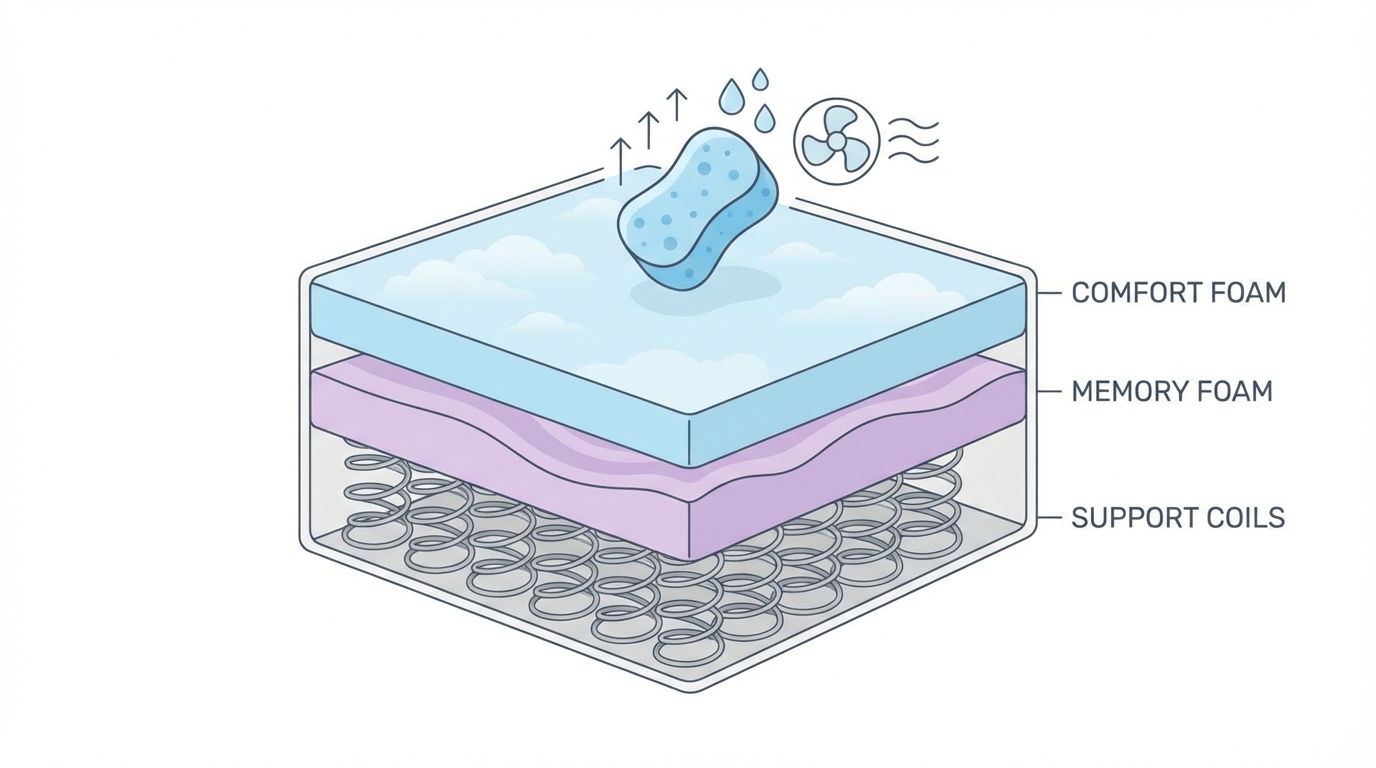
Not every mattress responds the same way to cleaning. The materials inside affect how quickly liquid soaks in, how easily it evaporates, and how careful you need to be with certain cleaners. Knowing what you are working with helps you avoid damage and choose the right rescue strategy.
Traditional innerspring mattresses with quilted tops usually have a layer of fiber or foam quilting above the coils. Urine tends to saturate that top comfort layer but does not always reach the coil system unless the accident is large or left untreated. These mattresses often dry faster than all foam models because there is more air space inside. However, if the quilting fibers hold odor, you may notice a smell even once everything feels dry.
All foam mattresses, including many popular memory foam and polyfoam beds, are more absorbent because foam is essentially a network of tiny open cells. Liquid wicks along that structure and can spread farther than the visible stain suggests. These mattresses require extra care not to over saturate them when cleaning, since trapped moisture can lead to long drying times and possible mold growth. The National Sleep Foundation has noted that memory foam is particularly sensitive to harsh chemicals and high heat, so avoid steam cleaners, bleach, and very hot water.
Hybrid mattresses combine foam comfort layers with a coil support core. Many modern hybrids, such as the Sealy Posturepedic Elite Soft Hybrid Mattress – Brenham II, use breathable foams and open coil systems that allow for better airflow and faster drying. This can be an advantage if you live in a humid climate or have kids or pets in the bed regularly. With hybrids, you still want to avoid soaking the mattress, but they tend to be a bit more forgiving because air can circulate through the coil unit.
To help you compare how different mattress types handle urine accidents and cleaning, here is a quick overview.
| Mattress Type | How It Handles Moisture | Cleaning Cautions | Odor Risk Over Time |
|---|---|---|---|
| Traditional innerspring (quilted top) | Moisture soaks into top quilting, coils stay mostly dry | Avoid bleach that can weaken fabric, do not over soak quilting | Moderate, mainly in quilting fibers |
| All foam / memory foam | Highly absorbent, liquid can spread deep and wide | No harsh chemicals or steam, minimal liquid, long drying time needed | Higher, especially with repeated accidents |
| Hybrid (foam + coils) | Comfort layers absorb moisture, coils aid airflow and drying | Avoid saturation, follow manufacturer care, gentle cleaners | Lower to moderate, depending on protection and care |
If you are already considering a replacement, this can be an opportunity to choose a mattress that fits your household reality. Families with young kids or big dogs often do well with breathable hybrids like the Sealy Posturepedic Plus Medium Hybrid Mattress – Paterson II, which pair supportive coils with foams that are resilient and easier to dry. For people who prefer the pressure relief of foam but are worried about spills, combining a high quality foam mattress with a truly waterproof protector is essential.
“We upgraded to a Sealy hybrid from Sleepology after our old foam mattress started to smell musty from years of kid and pet accidents. The difference in how quickly it dries after a spill is huge, and with the protector Mia recommended we have not had a single odor issue in six months.” – Caleb R., December
Safe Cleaning Solutions: What Works And What To Avoid
A quick search for mattress cleaning tips online turns up everything from vinegar to vodka to hair spray. Some of those suggestions are harmless, some are unnecessary, and a few can cause real damage. It helps to understand what each common cleaner actually does so you can choose wisely and stay within what mattress manufacturers and health experts consider safe.
Distilled white vinegar is one of the most widely recommended household cleaners for organic stains. It is acidic, which helps neutralize the alkaline components of urine and can reduce odor. The Sleep Foundation notes that vinegar also has mild disinfectant properties, although it is not a hospital grade sanitizer. For urine on mattresses, a diluted vinegar solution is usually safe on most fabrics and foams, as long as you do not flood the mattress and you allow sufficient drying time.
Baking soda is a staple for deodorizing because it absorbs odors and moisture without leaving residue. Consumer Reports has repeatedly recommended baking soda for freshening mattresses and soft furnishings between deeper cleanings. It is safe for virtually all mattress types, as long as you vacuum it thoroughly afterward so the powder does not accumulate in fabric seams or tufting.
Hydrogen peroxide, in the 3 percent concentration sold at most pharmacies, can be very effective at lifting tough, dried stains. It works by oxidizing organic material, essentially breaking it apart so it can be removed. However, peroxide can also lighten or discolor some fabrics and is not ideal for certain latex or gel infused foams. If you use it, always test an inconspicuous area and avoid repeated applications in the same spot on colored fabrics.
Enzyme cleaners, sometimes labeled as bio enzymatic or specifically as pet stain removers, are designed to break down proteins and uric acid compounds at a molecular level. Veterinary clinics and animal shelters rely on these products because they go deeper than ordinary detergents when it comes to urine. For mattresses, enzyme cleaners are especially useful for pet accidents or strong, lingering odors. Always check that the product is safe for use on upholstery and follow the instructions carefully.
On the “avoid” list, ammonia based cleaners are near the top. Not only can they be harsh on fabrics and your lungs, but their odor is similar to urine, which can actually attract pets back to the same spot. Bleach is also risky on mattresses, as it can weaken fibers, discolor fabrics, and create irritating fumes in a sleeping environment. Heavy fragrances may mask smells temporarily but do not solve the underlying problem and can aggravate allergies.
If you are ever unsure about a particular chemical, check your mattress warranty and care instructions. Many manufacturers explicitly prohibit solvent based cleaners, steam cleaning, and machine washing of the mattress cover, especially for models with specialized cooling or pressure relief materials.
A Simple Checklist: How To Get Urine Out Of A Mattress Without Making It Worse
Sometimes it helps to have a straightforward checklist so you are not trying to remember complicated instructions in the middle of the night. After at least a couple of explanatory sections, this is where a concise list is genuinely useful for both humans and search engines. Here is a practical, do no harm sequence you can follow for most situations.
Before the checklist, remember that these steps assume your mattress is a standard foam, hybrid, or innerspring model and not a specialty waterbed or airbed. If you have a very unique design, a quick look at the manufacturer’s cleaning guidelines is wise.
- Remove all bedding and start the laundry so moisture and odor do not linger in your sheets.
- Blot, do not rub, the wet area using clean towels until you are no longer lifting much moisture.
- Lightly apply a gentle cleaner (vinegar solution for human urine, enzyme cleaner for pet urine), letting it sit 10 to 20 minutes.
- Blot again to remove loosened urine and excess cleaner without soaking the mattress interior.
- Sprinkle a thick layer of baking soda over the area and leave it for at least 8 hours, preferably overnight.
- Vacuum the dry baking soda with an upholstery attachment, making several slow passes.
- Allow the mattress to air dry completely with good ventilation before remaking the bed, and repeat the process for stubborn dried stains if needed.
Working through this sequence calmly and methodically will get you most of the way there in the majority of urine related mishaps. If at any point you feel the mattress is getting too wet, pause, focus on blotting and airflow, and give it more time to dry before adding more liquid. A little patience here often prevents problems like mildew or lingering dampness.
Once you are confident the mattress is clean and dry, this is a perfect moment to think about prevention. You have done the hard work of rescue; now you can give yourself an easier path for the next time life happens.
Long Term Odor Control And When To Replace A Mattress
Even after you have cleaned a stain thoroughly, you might find that a faint odor returns during hot weather or on very humid days. That does not always mean you did something wrong. Warm, damp air can re activate trace amounts of urine crystals if they are still present deep inside the foam. According to cleaning science resources used in the hospitality industry, this is relatively common with older or repeatedly soiled mattresses.
If you are noticing occasional mild odor only when the room is closed up or the weather is sticky, you might be able to manage it without a full replacement. Occasional refresh treatments with baking soda, good bedroom ventilation, and a truly waterproof protector can go a long way. Placing the mattress in indirect sunlight for a few hours, if you can safely move it near a bright window, can also help. Sunlight, especially UV, has a mild natural sanitizing effect, which is why many cultures traditionally air bedding outdoors.
However, there are times when cleaning is no longer enough. If you see dark or grayish patches that look like mold rather than simple yellow staining, notice a musty smell that does not respond to cleaning, or feel dampness inside the mattress layers long after an accident, the safest choice is usually replacement. Mold and bacteria inside a mattress are difficult to fully eradicate and can pose health risks, particularly for children, older adults, and anyone with respiratory conditions.
Age also matters. Most quality mattresses have a useful lifespan of around 7 to 10 years, depending on use and construction. If your mattress is already approaching that age, and you are battling frequent accidents, sagging, or ongoing odor issues, putting your energy and budget into a new bed often makes more sense than continuing to fight with an old one. A new, supportive mattress paired with a top tier protector is usually a better long term investment in your sleep health.
When you do decide it is time to replace, consider choosing a mattress that will stay comfortable and supportive even with real life wear. Hybrids like the Sealy Posturepedic Elite Medium Mattress – Brenham II Euro Pillow Top balance pressure relief and support, and when combined with a waterproof cover, they hold up very well to the occasional spill or accident. If you love the feel of foam, exploring options from Sleepology’s curated best foam mattresses collection can help you find a model that fits your body and your household realities.
Mattress Protectors, Toppers, And Accessories That Actually Help
If you only take one preventive step after dealing with a urine accident, let it be investing in a high quality, breathable waterproof mattress protector. According to many sleep health organizations, including the Sleep Foundation, protectors do far more than simply keep out spills. They can also reduce dust mites, allergens, and general wear, effectively extending the life of your mattress.
Not all protectors are created equal. Very inexpensive versions are often made from stiff plastic that traps heat and makes crinkling noises every time you move. That can disrupt sleep and tempt people to stop using them. Higher quality protectors combine a soft, stretchy knit surface with a thin, waterproof backing layer. This design allows the mattress to contour properly while still blocking liquids. For hot sleepers, something like the TEMPUR-Breeze Mattress Protector – Cooling, Waterproof, Breathable Cover can add both protection and a cooler sleep surface.
People who struggle with allergies or asthma may prefer a hypoallergenic option like the TEMPUR-Adapt Mattress Protector – Waterproof Mattress Cover, Hypoallergenic. These protectors are designed to guard against dust mites and pet dander as well as liquid, which aligns with recommendations from organizations like the American Academy of Allergy, Asthma & Immunology to encase mattresses when managing environmental triggers.
In addition to a full encasement or fitted protector, many families find it helpful to use washable absorbent pads on top of the fitted sheet, especially for kids in active potty training or adults with nighttime incontinence. These pads can be quickly swapped out and laundered in the middle of the night, leaving the main protector and mattress untouched. A comfortable mattress topper can also add a layer of sacrificial comfort if you are worried about wear. For guest spaces, a versatile piece like the Tempur-Pedic Mattress Topper – Pillow Travel and Guest Bundle lets you improve comfort and add an easily removable layer that can be protected or cleaned more easily than a full mattress.
Finally, do not forget your sheets, pillows, and other bedding. Sleepology’s curated selection of pillows, sheets, toppers, and protectors makes it easy to choose breathable, washable pieces that support good hygiene. The easier it is to strip, wash, and re make the bed after an accident, the less stressful these moments feel.
Creating A Bedwetting Plan That Protects Sleep For The Whole Family
Urine in the mattress is rarely just about cleaning. For many families, it intersects with worry about a child’s development, concern about an aging parent, or embarrassment about medical issues. According to the American Academy of Pediatrics, nighttime bedwetting is common and often persists in perfectly healthy children through elementary school years. Adults can experience incontinence related to medications, hormonal changes, or pelvic floor issues. None of this reflects a moral failing or laziness.
From a practical standpoint, having a clear plan can ease anxiety for everyone. For kids, that plan might include layering a waterproof protector, fitted sheet, washable pad, and another fitted sheet, so you can strip the top layer in the middle of the night and get them back to sleep without a full bedding overhaul. For adults, it might mean keeping spare bedding and absorbent undergarments within easy reach, and using discreet, breathable mattress protection that does not feel clinical.
Emotionally, it helps to normalize accidents. Keeping your tone calm and matter of fact, especially with kids, can make a big difference. Instead of focusing on the mess, emphasize the solution and the temporary nature of the problem. If you notice anxiety or shame building around bedtime, or if accidents are frequent and accompanied by other symptoms, it is wise to bring this up with a pediatrician or primary care provider. Medical professionals can rule out underlying issues and suggest appropriate supports.
On the sleep quality side, remember that disrupted nights affect everyone. The Sleep Foundation points out that fragmented sleep, even if you still reach a total of 7 to 9 hours, can reduce cognitive performance, mood, and immune function. Anything you can do to make middle of the night cleanups faster and less disruptive will protect your daytime functioning. That includes having a small “clean up kit” ready with towels, enzyme cleaner, spare pajamas, and maybe a dimmable bedside light so you are not blasting your brain awake.
As a Sleepologist, I often tell families that their goal is not a perfect accident free record. The goal is an environment and routine that is forgiving when accidents happen, easy to reset, and supportive of everyone getting back to sleep as quickly as possible. Your mattress, protector, and cleaning plan are all tools to help you get there.
Conclusion: Your Mattress Probably Is Not Ruined, And You Have Options
Finding urine on your mattress can feel overwhelming, but it does not have to mean the end of the bed you invested in. Once you understand what urine does inside a mattress, the difference between fresh and dried stains, and how materials respond to moisture, the path forward becomes much clearer. Gentle cleaners, thorough blotting, smart use of baking soda, and lots of airflow can completely rescue many mattresses that look hopeless at first glance.
You also have control over what happens next. By choosing the right protector, using washable layers, and being realistic about your household needs, you can transform future accidents into quick, low stress cleanups. And if your current mattress is older, badly stained, or no longer supportive, this might be the moment to upgrade to a more breathable hybrid or high quality foam bed, paired with a protector that keeps your new investment safe from day one.
Most importantly, remember that accidents are part of real life, not a failure on your part. With a little knowledge and the right tools, you can protect both your sleep and your mattress. If you are unsure whether your mattress is worth saving, or you want personalized guidance on choosing a new bed or protector that fits your family, the team at Sleepology is always happy to help you sort through the options and create a setup that lets you sleep with confidence again.
Frequently Asked Questions
How do I get urine smell out of a mattress once the stain is gone?
Sometimes the visible stain disappears before the smell does, especially with dried or repeated accidents. In that case, you can focus on odor neutralization. Repeat a baking soda treatment by sprinkling a thick layer over the previously affected area, letting it sit for at least 8 to 12 hours, and then vacuuming thoroughly. If the accident was from a pet or had been there for quite a while, follow the baking soda step with a high quality enzyme cleaner, since these are designed to break down the odor causing compounds at a molecular level. Good room ventilation and, if possible, a few hours of indirect sunlight can also help dissipate stubborn smells.
Is it safe to use a steam cleaner on a urine stained mattress?
In most cases, steam cleaning a mattress is not recommended, especially for memory foam or latex. Steam injects very hot moisture deep into the mattress, which can be difficult to remove completely. That lingering dampness can create an ideal environment for mold and mildew, potentially making the problem worse rather than better. Many mattress manufacturers also warn that steam cleaning can damage foams or void warranties. It is generally safer to use small amounts of liquid with blotting and air drying rather than saturating the mattress with steam.
How can I tell if a urine stained mattress needs to be replaced instead of cleaned?
A mattress probably needs replacing rather than cleaning when you see signs of mold, experience a persistent musty smell that does not respond to thorough cleaning and airing, or notice that the internal structure feels damaged or uneven. If the mattress remains damp deep inside despite your best drying efforts, or if you can see black, greenish, or fuzzy patches rather than simple yellowish staining, those are red flags. You should also consider age and comfort. If your mattress is already older than 7 to 10 years or causing aches and poor sleep, it may make more sense to invest in a new, supportive mattress and protect it from accidents going forward.
What is the best way to protect a mattress from future pee accidents?
The most effective protection is a good waterproof mattress protector that fully covers the sleep surface and fits snugly around the mattress. Look for protectors that are breathable, quiet, and easy to machine wash so you will actually enjoy sleeping on them. For hot sleepers, a cooling option like the TEMPUR-Breeze Mattress Protector – Cooling, Waterproof, Breathable Cover combines protection with temperature regulation. Layering a washable absorbent pad on top of the fitted sheet can also make middle of the night changes much faster, since you can strip just the pad and leave the rest of the bedding intact.
Do different cleaning methods apply to memory foam versus hybrid mattresses?
The core principles are similar, but memory foam requires more caution with moisture and chemicals. With memory foam, use as little liquid as necessary, avoid harsh cleaners like bleach or strong solvents, and give the mattress ample time to dry with plenty of airflow. With hybrid mattresses, you still want to avoid over soaking, but the coil support core usually allows for better ventilation and slightly faster drying. In both cases, gentle cleaners like diluted vinegar for human urine and enzyme solutions for pet accidents, followed by baking soda and thorough vacuuming, are generally safe and effective when used sparingly.
Can frequent urine accidents permanently damage a mattress even if I clean them?
Frequent accidents can shorten a mattress’s lifespan, especially if the mattress is not well protected or allowed to dry completely between incidents. Repeated exposure to moisture can break down foam cells, lead to clumping or matting in fiber layers, and encourage microbial growth. That said, using a high quality waterproof protector, cleaning promptly, and ensuring complete drying after each accident dramatically reduces the risk of permanent damage. If you are dealing with ongoing bedwetting or incontinence, combining mattress protection with washable pads and a realistic replacement schedule will help keep your sleep surface healthy.
Are home remedies like vinegar and baking soda really effective, or should I always hire a professional cleaner?
For the vast majority of urine accidents, home methods using vinegar, enzyme cleaners, baking soda, and careful blotting are enough to clean and deodorize a mattress effectively. These ingredients are widely recommended by reputable organizations, including the Sleep Foundation and various health focused cleaning guides, when used correctly. Professional cleaners can be helpful in extreme cases, such as severe, long standing contamination, multiple layers of stains, or when a mattress is extremely valuable and you want expert care. However, for most households, following the step by step methods outlined here will save you money and produce excellent results without needing specialized equipment.