


How To Get Stains Out Of A Mattress Without Ruining It
Waking up to a stain on your mattress can feel like a small disaster. Maybe a child crawled into bed after a nightmare and had an accident, a pet got sick in the night, or a late night cup of tea went sideways. Whatever happened, you pull back the sheets, see that mark on the mattress, and your heart sinks. You are not alone, and you do not have to live with a stained, smelly bed or rush into buying a new one before you are ready.
Mattress stains are more than just cosmetic. Moisture, sweat, urine, and spills can slowly break down foams and fibers, attract allergens, and leave lingering odors that make your bedroom feel less like a sanctuary and more like a reminder of a mess you would rather forget. According to organizations like the Sleep Foundation, consistent sleep quality is closely tied to a clean, comfortable sleep environment, and your mattress is the foundation of that environment. When your bed looks and smells fresh, it is much easier for your brain to relax and let you drift off.
The good news is that most stains can be handled at home with supplies you already have in your kitchen or bathroom, if you work methodically and understand what you are cleaning. There are different strategies for fresh versus set in stains, and for specific culprits like urine, blood, sweat, and vomit. There is also a right way and a wrong way to use common cleaners like hydrogen peroxide or vinegar on foam, latex, and hybrid mattresses. Used correctly, they can help. Used incorrectly, they can discolor fabric or damage the materials that help your mattress support you.
You are here because you care about your sleep and you would like clear, trustworthy guidance, not tricks or shortcuts that might backfire. As a Sleepologist who has seen hundreds of mattresses up close, I will walk you through how to get stains out of a mattress step by step, how to avoid making things worse, and when it is actually time to stop cleaning and start thinking about a replacement. Along the way I will share some simple upgrades, like the right mattress protector or topper, that can save you money and stress in the long run.
First Things First: What Kind Of Stain Are You Dealing With?
Before you grab the first cleaner from under the sink, it helps to pause and identify what you are dealing with. Different stains respond to different ingredients, and the wrong approach can set a stain instead of lifting it. Most mattress stains fall into a few predictable buckets: bodily fluids like urine, blood, sweat, and vomit, plus food and drink spills, and slow discoloration from age and dust.
Fresh stains are almost always easier to treat than old ones. When liquid first hits the surface, it has not yet fully soaked into deeper foam layers or bonded with fibers in the ticking fabric. That is why sleep experts, including those at the Cleveland Clinic, consistently emphasize acting quickly on spills on textiles and bedding. If you can get to a stain within minutes or at least within the same day, you usually need milder solutions and fewer rounds of cleaning to restore the mattress.
Older, set in stains tell a different story. You may see a faint yellow ring from sweat, darker patches from previous accidents, or areas that feel slightly stiff to the touch. These indicate that the staining substance has had time to oxidize or bond with the fabric. You can still often improve how these look and smell, but you will need to be more patient and realistic. A ten year old sweat shadow may never look brand new, yet you can substantially reduce odor and make the mattress hygienic.
It also helps to consider what type of mattress you have. Traditional innerspring mattresses with quilted tops can tolerate a bit more moisture on the surface, as long as you avoid soaking down to the coils. All foam and many hybrid mattresses, like the Sealy Posturepedic Elite Soft Hybrid Brenham II, are more absorbent, which means you need to be conservative with liquids and favor blotting and powders that draw moisture out rather than pushing it deeper in.
“Our dog had a nighttime accident on our hybrid mattress and I was sure we had ruined it. Mia’s guidance on using as little moisture as possible and working slowly with baking soda and enzyme cleaner saved the bed we had just spent over $2,000 on.” – Laura P., November
Cleaning Principles That Protect Your Mattress
Before we get into recipes and step by step directions, it is worth grounding in a few non negotiable rules that protect the structure of your mattress. These principles are the difference between a safe, deep clean and a warranty voiding experiment that leaves your bed lumpy or discolored.
The first rule is to blot, not scrub. When you scrub a stain, you grind it deeper into the fabric and push it down into the comfort layers underneath. Blotting with a clean, absorbent cloth pulls moisture and residue upward instead of downward. Start from the outside of the stain and work inward so you are not accidentally spreading it across a larger area. This aligns with general fabric care guidance from organizations like Consumer Reports, which repeatedly highlight blotting as key for stain removal on upholstered surfaces.
Second, you want to limit how wet the mattress ever gets. Mattresses are thick, and they are not designed to dry quickly in the middle. Excess moisture that sinks deep can foster mold, mildew, and odor that no surface cleaner can reach. This is one reason the Mayo Clinic and other health organizations pay attention to moisture and indoor air quality when they talk about allergy friendly bedrooms. Use spray bottles, lightly damp cloths, and powders like baking soda, rather than pouring liquid directly onto the mattress.
Third, test any cleaner on a small inconspicuous area before going all in, especially if you have a colored or patterned mattress cover. Hydrogen peroxide, for example, is very effective on protein based stains like blood and urine, but it also has a mild bleaching effect. On a bright white surface that is often acceptable. On a gray or decorated cover, it can leave permanent light spots. Always check the mattress tag as well. Some manufacturers advise against certain cleaners on memory foam or latex, and it is wise to honor that guidance.
Finally, give yourself enough time. Proper mattress stain removal is not a 15 minute job. Most methods require generous dwell time for solutions to break down stains and for powders like baking soda to dry completely before vacuuming. Rushing to re make the bed or sleep on a still damp area can undo your progress. When I work with clients, I often recommend starting stain removal first thing in the morning so the mattress has all day to dry and air out.
How To Get Fresh Urine Stains Out Of A Mattress
Fresh urine stains are stressful because of both appearance and smell, but they respond very well to quick, deliberate action. If you have just discovered a warm or recently made spot, you have the best chance of removing it almost completely with basic household supplies.
Start by stripping all bedding and tossing it into the wash on a cool or warm cycle. Avoid hot water for urine initially, since high heat can set protein stains in fabrics. While the sheets are washing, gently press clean, dry towels or paper towels into the wet area of the mattress. Rotate to dry sections of the towel frequently so you are always absorbing, not re depositing liquid. Do not press so hard that you push urine further into deeper layers. Your goal is to get the surface from soaked to merely damp.
Once you have blotted up as much liquid as possible, mix a solution of equal parts distilled white vinegar and cool water in a spray bottle. Vinegar helps break down urine salts and neutralize odors. According to the Sleep Foundation, mild household solutions like diluted vinegar and baking soda are appropriate for occasional mattress cleaning when used sparingly and thoroughly dried afterward. Lightly mist the stained area with your vinegar solution until it is damp but not dripping, then let it sit for 10 to 15 minutes so it can begin to work on the residue.
After the dwell time, blot again with a fresh dry cloth to remove excess moisture. Then generously sprinkle baking soda over the entire area, extending a couple of inches beyond the visible stain. Baking soda will absorb remaining moisture and help pull odor molecules out of the fabric. Let the baking soda sit for at least 8 hours, or preferably overnight, with good airflow in the room. When it is completely dry, vacuum it up using the upholstery attachment. At this point, most fresh urine stains will be greatly diminished or gone.
If the accident came from a pet and you are worried about repeat marking, consider following up with an enzyme based cleaner specifically designed for pet urine once the mattress is dry. These cleaners contain biological agents that digest the odor causing components of urine so your pet is less likely to be attracted back to the same spot. Always follow the bottle instructions carefully and test in a hidden area first.
“Our toddler had three nighttime accidents in one week. We used Mia’s method with vinegar, baking soda, and patience, and you truly cannot see or smell anything now. We invested in a waterproof protector right after and I wish we had done it years earlier.” – James R., October
How To Remove Set In Urine Stains And Odor

Set in urine stains are more stubborn because the liquids have dried and left behind concentrated salts and pigments in the mattress fabric. These often show up as yellowish or brownish rings with a lingering smell, especially noticeable when a room gets humid. While you may not get a ten year old stain to look brand new, you can usually make a dramatic difference with the right approach.
The first step is still to dry brush or lightly vacuum the area to remove surface dust. Then, instead of jumping straight to strong chemicals, I often recommend trying a gentler vinegar and baking soda round as described for fresh stains. Sometimes re dampening the area allows old residues to soften and lift. Lightly spray a 50/50 vinegar water mix, blot, apply baking soda, and let it sit for several hours. If the stain significantly lightens, you can repeat the process one more time before escalating.
If the mark is still pronounced or the odor remains, a hydrogen peroxide based solution can help. In a small bowl, mix about 8 ounces of 3 percent hydrogen peroxide with 3 tablespoons of baking soda and a few drops of clear, dye free dish soap. Stir gently to dissolve the baking soda, and use the mixture immediately. Using a white cloth or sponge, dab the solution onto the stained area. You should see some foaming as the peroxide reacts with the stain, which is normal. Avoid pouring, and never oversaturate the mattress.
Let the treated area air dry completely. As it dries, the stain often fades significantly. If any powdery residue remains on the surface once it is fully dry, vacuum it away. If necessary, you can repeat this one more time, but keep in mind that hydrogen peroxide is mildly bleaching. On white covers this typically is not noticeable, yet on colored fabrics you should proceed very cautiously and stop if you see any obvious lightening in your test patch.
For recurring odor, particularly from pet accidents, combining topical cleaning with an enzyme cleaner is often the winning formula. Enzyme cleaners break down uric acid crystals that regular household products sometimes leave behind. This approach aligns with pet cleaning guidance from veterinary sources and many home hygiene experts, who emphasize combining mechanical cleaning with enzyme digestion for best long term odor control. Again, make sure your mattress has plenty of time to dry in between treatments to avoid trapped moisture.
Tackling Blood Stains On A Mattress
Blood stains can look alarming, but they are very treatable if you pay attention to one key rule. Always use cold or cool water, never hot. Hot water cooks the proteins in blood, which makes them bind more tightly to fabric. This is why everything from hospital laundry protocols to home stain removal guides emphasize cold water for blood.
If the blood stain is fresh, begin by blotting gently with a cloth dampened with cold water. You may see some of the stain lift immediately. Avoid rubbing, which spreads the stain and drives it deeper. Once you have blotted away as much as possible, you can create a simple paste with a bit of salt and cold water, or with baking soda and cold water, and apply it to the area. Let it sit for 30 minutes, then wipe away with a clean, damp cloth and blot dry.
For more stubborn or dried blood stains, a hydrogen peroxide based solution can be very effective. Mix about 2 ounces of 3 percent hydrogen peroxide with a teaspoon of clear dish soap and a tablespoon of salt. The salt adds a mild abrasive quality, and the dish soap helps lift oils. Spread this paste gently over the stain and let it sit for 10 to 20 minutes. You may see bubbling as the peroxide breaks down the blood. Scrape off the dried paste with a spoon or dull edge, then blot the area with a cloth lightly dampened in plain cold water to remove any residue.
As with urine, you must test hydrogen peroxide in a discreet spot first, especially on darker fabrics. If you are working on a memory foam or latex mattress, avoid flooding the area. These foams can be sensitive to strong oxidizers, and you want to keep the treatment at the fabric level as much as possible. If you are not sure how your specific mattress materials will react, you can reach out to Sleepology or your mattress brand for guidance before using peroxide.
When clients struggle with recurring menstrual stains or nosebleeds, I also look at their protection strategy. A high quality, breathable waterproof protector like the TEMPUR Breeze Cooling Mattress Protector can catch fluids before they ever reach the mattress, and it removes easily for machine washing. This does more for long term mattress hygiene than any magic cleaning hack could.
How To Deal With Sweat Stains And General Yellowing
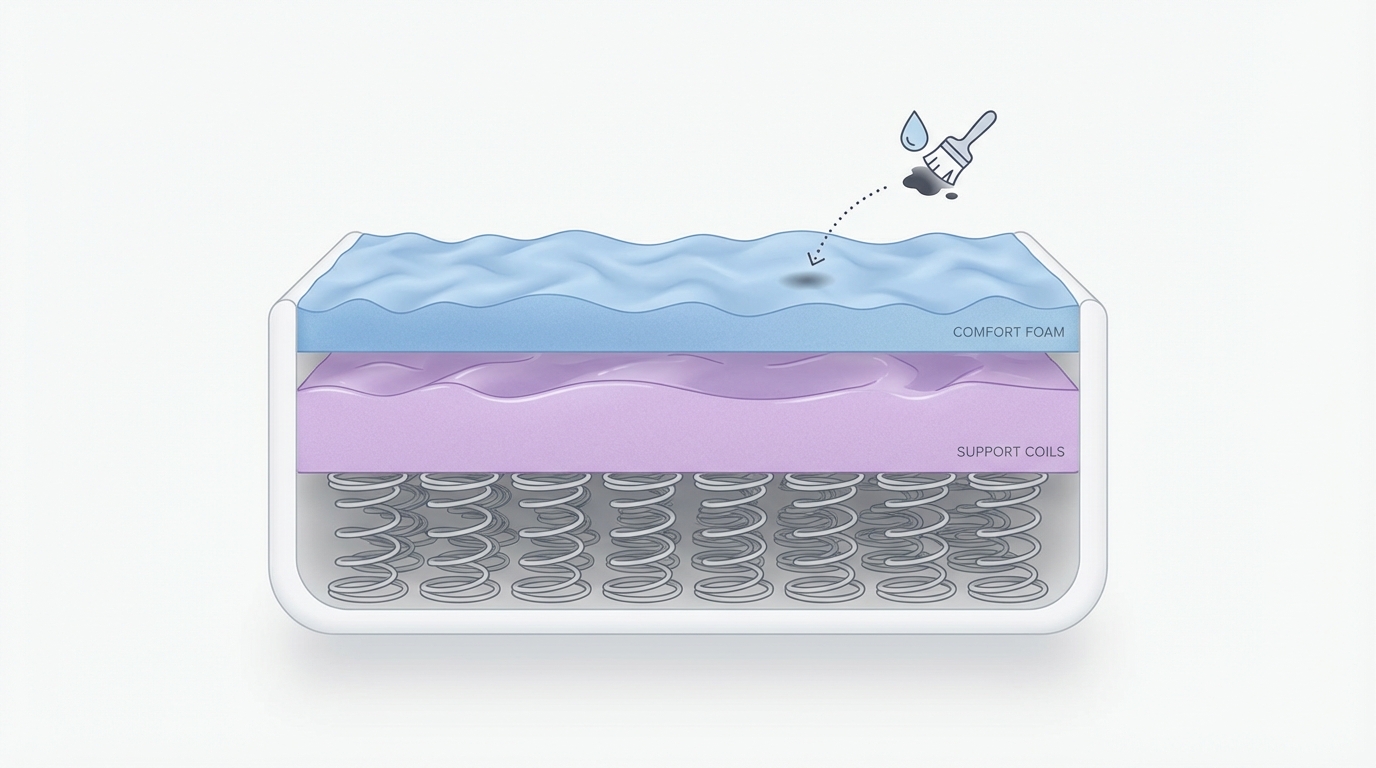
Not all mattress stains are dramatic. Often, people notice a gradual yellowing or shadowy patches across the surface of the bed. Most of this comes from a combination of sweat, body oils, environmental humidity, and age. Over time, even perfectly healthy sleepers release enough moisture each night to leave a mark, especially if the mattress is not protected.
According to the Sleep Foundation, sweat and temperature play a bigger role in sleep quality than many people realize, and excess heat can both disturb sleep and increase perspiration. That extra moisture is what seeps into your mattress night after night. If you live in a humid climate or sleep hot, you may see discoloration sooner.
To freshen an evenly yellowed or sweat stained mattress, start by vacuuming the surface with the upholstery attachment to remove dust and debris. Then, lightly mist the stained areas with a solution of hydrogen peroxide and water, or use straight 3 percent hydrogen peroxide in an opaque spray bottle if your mattress fabric is white and your spot test shows no issues. Spray just enough to dampen the surface and allow the solution to sit as it dries. You will often see sweat rings fade gradually as the peroxide works. Do not soak the mattress, and avoid repeated treatments in the same spot to protect the fabric.
If you prefer a very gentle approach, you can skip peroxide and use a mix of mild detergent and water. Add a teaspoon of liquid laundry detergent to a quart of cool water, stir to dissolve, and dip a clean cloth in the mixture. Wring it out thoroughly so the cloth is just damp, and then blot the stained areas. Follow immediately with a second cloth dipped in plain water to rinse, again well wrung out, and blot dry with a towel. Finish with a layer of dry baking soda sprinkled over the treated areas to absorb residual moisture and odor, then vacuum it up once dry.
If sweat staining is ongoing, I like to pair cleaning with a breathable sleep system that helps regulate temperature. A hybrid mattress that uses coils for airflow under a plush surface, like the Sealy Posturepedic Plus Soft Hybrid Paterson II, combined with moisture wicking sheets such as the TEMPUR Breeze Cooling Sheet Set, can reduce how much sweat ever reaches your mattress core.
“I used to wake up to new yellow patches every few months and felt embarrassed changing my sheets around guests. After switching to cooling sheets and a better hybrid mattress that did not trap heat, plus a protector, my mattress has stayed clean for over a year.” – Denise K., December
Cleaning Vomit And Food Spills From A Mattress
Vomit and food spills feel like worst case scenarios because they combine stain potential with strong odors and, in the case of vomit, hygiene concerns. The key is to move methodically so you do not grind solid material into the fabric, and to protect yourself as you clean. In fact, guidance from public health organizations often recommends gloves and sometimes masks when dealing with bodily fluids on soft surfaces.
Start by putting on disposable gloves if you have them, especially for vomit cleanup. Use a dustpan, cardboard, or stiff piece of plastic to gently lift away any solid material from the mattress surface. Try not to smear or press down. Deposit solids into a trash bag and seal it. Next, use paper towels or a cloth to blot remaining liquid, again working with a light touch and swapping to clean sections frequently.
Once the bulk of the mess is gone, generously sprinkle baking soda over the entire affected area. Baking soda helps absorb moisture and starts neutralizing odors. Leave it on for 15 to 30 minutes while you mix a cleaning solution. For most food and vomit stains, a simple combination of distilled white vinegar and water in a 1 to 1 ratio works well. Transfer the solution to a spray bottle and lightly mist the baking soda covered area. You will see fizzing, which helps lift particles out of the fabric.
Allow the fizzing to subside, then gently blot the area with a clean cloth. You can repeat this spray and blot sequence one more time if needed, but avoid soaking the mattress. Afterward, apply a fresh layer of dry baking soda, and let the mattress air dry for several hours or overnight with a fan or open window to encourage airflow. Once completely dry, vacuum up all of the powder thoroughly.
If some odor lingers, particularly sour or acidic smells, you can repeat the baking soda phase, or, for very severe cases, consider a specialized upholstery or enzyme cleaner formulated for vomit. Always read labels closely and test on an inconspicuous area first. If a household member is immunocompromised or if you have any concerns about sanitation, consulting a professional cleaning service that handles mattresses may be the safest choice.
Comparison: Best Cleaning Approaches For Common Mattress Stains
When you are tired and staring at a mess, it can help to have a simple snapshot of which method to use for which stain. Here is a quick reference comparing common stains and typical at home strategies.
| Stain Type | Best First Line Method | When To Use Peroxide Or Enzymes | Notes And Cautions |
|---|---|---|---|
| Fresh urine | Blot, 1:1 vinegar and water spray, baking soda, long dry time | Peroxide for lingering discoloration, enzyme cleaner for pet accidents | Avoid hot water, do not oversaturate foam or hybrid mattresses |
| Set in urine | Repeat vinegar and baking soda, then peroxide solution if needed | Enzyme cleaner helpful for persistent odor, especially from pets | Test peroxide on colored fabrics to avoid bleaching |
| Blood | Cold water blotting, salt or baking soda paste | Peroxide based paste for older or stubborn spots | Never use hot water, always start gently |
| Sweat / yellowing | Vacuum, light peroxide mist for white covers, or mild detergent solution | Not usually needed unless there are defined spots | Focus on prevention with protectors and breathable bedding |
| Vomit / food | Remove solids, baking soda, then vinegar and water mist, then more baking soda | Enzyme or upholstery cleaner only if odor remains after thorough drying | Wear gloves, ensure full dry time to prevent mildew |
Use this as a guide, not a rigid rule. When in doubt, favor milder solutions, plenty of blotting, and generous drying time.
How Your Mattress Type Affects Safe Cleaning
Not all mattresses respond the same way to moisture and cleaners. Understanding what is inside your bed helps you choose cleaning methods that remove stains without weakening the materials that support your body every night. Most mattresses fall into three broad categories: traditional innerspring, all foam, and hybrids that combine coils and foam.
Innerspring mattresses usually have a coil system surrounded by padding and topped with a quilted cover. These can be a bit more forgiving of light surface moisture because the coil interior allows more airflow. That said, you still want to avoid pouring liquid directly onto the surface. Focus on surface blotting and controlled sprays, and give the mattress extra drying time before covering it again. If you use a box spring foundation, pairing it with a supportive base like the Sealy Low Profile Boxspring Foundation helps maintain even support as your mattress ages.
All foam mattresses, including memory foam and polyfoam models, are much more absorbent. They can soak up liquids like a sponge and hold them deep in the core, which is why manufacturers and health organizations caution against excessive moisture on foam. With these mattresses, always err on the side of less liquid. Use very lightly damp cloths, gentle spot treatments, and plenty of baking soda to pull moisture outward. Avoid steam cleaners or carpet shampooers, which can force water into the foam and cause long term damage.
Hybrid mattresses combine a support coil system with layers of foam or latex above. Their cleaning needs land between innerspring and all foam. You get some extra airflow from the coils, especially in high quality hybrids like the Sealy Posturepedic Pro Soft Dupont II Euro Pillow Top, but you still have comfort foams near the surface that can absorb colored liquids. Treat these much like all foam mattresses when dealing with stains. Be especially careful with hydrogen peroxide on any mattress that uses natural latex, as oxidizers can degrade latex over time.
One category you should always treat gently is specialty foam like TEMPUR material. These premium foams are designed to be pressure responsive, not water resistant. If you have a Tempur Pedic style mattress, rely on the brand care instructions, which usually emphasize surface spot cleaning and strict avoidance of full saturation. This is also where a removable sleep layer or topper, like a Tempur Pedic travel and guest topper bundle, can be helpful for protecting your primary bed in guest or child sleepover scenarios.
The Role Of Mattress Protectors, Toppers, And Bedding In Prevention
The most powerful stain removal strategy is preventing liquids from reaching your mattress in the first place. Once you have rescued a mattress from one or two stressful messes, it often becomes clear that a protector or topper would have paid for itself several times over. Prevention is also better for your sleep health. According to the Mayo Clinic, reducing dust mites, moisture, and allergens in bedding can significantly alleviate nighttime symptoms for people with allergies or asthma, and a protected mattress is easier to keep clean and dry.
A waterproof mattress protector acts like a removable, washable shield between you and the mattress. Look for protectors that are breathable, with a quiet waterproof membrane that does not crinkle or trap heat. The TEMPUR Breeze Cooling Waterproof Mattress Protector is an example of this kind of protection, combining moisture blocking with cooling features to help hot sleepers stay comfortable. When an accident happens, you strip the protector, wash it, and your mattress underneath stays pristine.
Toppers add an extra comfort layer on top of the mattress that can also absorb minor spills or sweat, especially if they have a removable cover. For kids rooms or guest spaces, using a durable topper on top of a well protected mattress gives you two layers of defense, and sometimes you only need to clean or replace the topper instead of the whole mattress setup. Sleepology offers a range of pillows, sheets, toppers, and protectors so you can build a sleep surface that fits your comfort preferences and your household realities.
Your sheets and pillowcases matter too. Moisture wicking, breathable fabrics such as cotton, bamboo blends, or performance textiles like the Tempur ProPerformance Sheet Set help keep sweat from pooling against your skin and seeping directly into the mattress. Frequent sheet changes are a form of regular maintenance that break the cycle of buildup. Many sleep research groups note that people sleep more soundly and report higher satisfaction when they climb into a bed that feels and smells freshly laundered.
By layering your defense system, you change the story from emergency stain rescue to simple routine care. Protectors catch major spills, toppers and breathable sheets manage daily moisture, and your underlying mattress can focus on doing what it does best, which is supporting your body for 7 to 9 hours a night.
When Cleaning Is Not Enough: Knowing If It Is Time To Replace
Sometimes, despite your best efforts, a mattress reaches the point where cleaning buys you only a little comfort but does not solve the real problem. This might be because stains are deeply embedded, odors always come back after a few humid days, or the mattress itself is sagging or lumpy. At that point, it helps to step back and consider the bigger picture of your sleep health and your investment.
Most adults keep a mattress for around 7 to 10 years, though high quality mattresses that are rotated regularly and well protected can last longer. Industry groups and sleep organizations generally recommend assessing your mattress around the 7 year mark. Ask yourself whether you wake up with new aches, whether there are visible impressions that do not bounce back, and whether stains or smells have become impossible to fully remove. If the answer is yes, deep cleaning may not be the most cost effective use of your time and energy.
Persistent odor is a particular red flag. If you have cleaned correctly, allowed ample drying time, and used both general cleaning solutions and, when appropriate, enzyme cleaners, yet certain smells return once the room is closed up for a few hours, it can indicate that liquids penetrated deeper layers long ago. Those inner layers are very hard to sanitize at home. In households where someone has allergies, asthma, or a compromised immune system, sleeping on a mattress with trapped moisture and organic matter is not ideal.
There is also the emotional side. For some people, certain types of stains are tied to stressful memories, and no amount of cleaning makes the mattress feel like a peaceful place again. In my practice, I have seen people sleep far better on a new, clean mattress that gives them a fresh start. That is a valid reason to consider replacing, especially if the mattress is already at or near the end of its expected lifespan.
If you reach that point, you do not have to navigate the next step alone. A curated lineup of options, such as the best foam mattresses and the best hybrid mattresses at Sleepology, allows you to choose your next bed with confidence. When you pair a new mattress with solid protection and a cleaning plan from day one, you dramatically cut the odds of facing the same stain problems down the road.
Simple Mattress Care Habits That Keep Stains Away Longer
Once your current stain crisis is under control, it is worth setting up some low effort routines that keep your mattress clean and healthy with far less drama. None of these need to be complicated. The goal is to create habits you actually stick with so that stains are rare, small, and easy to handle.
One of the simplest is a regular vacuuming schedule. Every time you wash your sheets, or at least once a month, take an extra few minutes to vacuum the exposed mattress surface before putting clean bedding back on. Use the upholstery tool and light pressure to remove dust, skin cells, and crumbs that otherwise attract dust mites and can contribute to discoloration over time. This matches guidance from allergy specialists who often recommend vacuuming upholstered surfaces in bedrooms as part of an allergen reduction plan.
Rotating your mattress, if the design allows it, also helps. Many modern mattresses are one sided, which means you cannot flip them, but you can rotate them head to toe. Doing this every 3 to 6 months distributes wear more evenly and can reduce deep body impressions where sweat and oils collect in the same spot night after night. Check your mattress care tag or ask a Sleepology expert if you are not sure whether your mattress is flippable or only rotatable.
Keep an eye out for small spills or spots and address them quickly. It is far easier to treat a grape juice droplet or a tiny bit of blood from a paper cut right away with cool water blotting than to discover a large, brown stain a month later. I often suggest that families with kids or pets keep a small “mattress first aid kit” in the bedroom closet. You can include baking soda, a spray bottle labeled for a vinegar and water mix, clear dish soap, and a couple of white microfiber cloths, so you do not have to hunt around when something happens.
Finally, remember that your mattress is part of a larger sleep system. Managing bedroom humidity with a dehumidifier if you live in a very humid climate, choosing breathable bedding, and keeping pets off the bed if they are prone to accidents all help maintain a cleaner mattress. Sleep research routinely finds that people fall asleep faster and wake less often when their bedroom environment feels clean, dry, and comfortable, so this is not just about appearance. It is about how you feel each night and each morning.
Conclusion: A Clean Mattress Is Closer Than You Think
Staring at a mattress stain can make you feel like you have already lost the battle, but in reality, most stains are surprisingly manageable once you understand what they are and how your particular mattress responds to moisture and cleaners. Whether you are dealing with fresh urine, old sweat shadows, blood, or an unexpected food or vomit spill, there is usually a clear, step by step path that can get you back to a mattress that looks and smells much better.
The core principles are simple. Blot, do not scrub. Use the gentlest effective method for your stain. Respect your mattress materials by limiting moisture and testing cleaners. Give every treatment enough time to work, and allow generous drying before you cover the bed again. Layer on prevention with a breathable waterproof protector, good sheets, and small but consistent care habits, and you will find that emergencies become rare and far less intense.
If you do find that your mattress is past the point where cleaning brings back comfort, it may be a sign that your body and sleep quality are ready for an upgrade. When that time comes, Sleepology’s curated selection and expert guidance mean you can choose your next mattress with more confidence and less guesswork, and start fresh with the right protection in place from day one. You deserve a bed that feels safe, clean, and supportive, and with a little knowledge and the right tools, that is entirely within reach.
Frequently Asked Questions
How do I get a stain out of a mattress without baking soda on hand?
If you do not have baking soda, you can still make progress by focusing on blotting and mild liquid solutions. For most fresh stains, start by absorbing as much liquid as possible with clean, dry towels, then use a spray of cool water with a small amount of clear dish soap, blotting repeatedly and following with a damp cloth in plain water to rinse. You will miss out on the odor absorbing and moisture drawing benefits of baking soda, so you should give the mattress extra time to air dry with good ventilation, and consider picking up baking soda for any follow up treatment if an odor remains.
Can I use a steam cleaner or carpet cleaner on my mattress stains?
It is tempting to reach for a steam cleaner, but in most cases, it is not a good idea for mattresses, especially all foam or hybrid models. Steam and carpet cleaners force hot water and cleaning solution deep into the mattress, where it can be very difficult to dry completely, increasing the risk of mold, mildew, and lingering odors. The high heat can also damage or weaken memory foam and latex. Instead, stick to surface treatments that use minimal moisture, along with powders like baking soda that draw liquids outward, and always follow your mattress manufacturer’s care recommendations.
What is the safest way to get stains out of a memory foam mattress?
Memory foam is more delicate and absorbent than many people realize, so the safest approach is always gentle and minimal. Start with vacuuming to remove debris, then treat only the stained area using lightly dampened cloths rather than soaking. Mild detergent in cool water works well for many stains, while diluted vinegar can help with odors. Blot, do not rub, and use baking soda to help dry and deodorize afterward. Avoid strong chemicals that your warranty warns against, and be very cautious with hydrogen peroxide, especially on colored covers, testing any solution on a hidden area first.
How long does it really take a mattress to dry after cleaning a stain?
Drying time depends on how much moisture you used, the materials in your mattress, and your room conditions, but you should plan on several hours at minimum. For light spot cleaning with well wrung cloths and a baking soda layer, many mattresses feel dry to the touch within 4 to 8 hours in a well ventilated room. If you used more liquid than ideal, or if your bedroom is cool or humid, it may take a full day. To be safe, do not put on tightly fitted sheets or sleep directly on a recently cleaned area until it feels completely dry, and use fans or open windows to speed the process.
What should I do if a stain keeps coming back after cleaning?
If a stain or odor keeps reappearing, it usually means some of the original material remains deeper in the mattress. You can try one more careful round with an appropriate cleaner, such as a hydrogen peroxide solution for old protein based stains or an enzyme cleaner for urine, making sure to avoid oversaturation and allowing complete drying each time. If the problem persists despite thorough, patient attempts, it may indicate that the stain penetrated beyond what home cleaning can reach, and at that point it is worth reassessing the age and condition of your mattress and considering replacement for both comfort and hygiene.
Will using hydrogen peroxide void my mattress warranty?
Hydrogen peroxide is not automatically disallowed, but many mattress warranties and care guides caution against unapproved cleaning chemicals, especially on memory foam and latex. Before using peroxide, check your mattress tag and the manufacturer’s care instructions online. If guidance is unclear, you can reach out to the retailer or brand and ask specifically about spot treating stains with diluted 3 percent hydrogen peroxide on the cover fabric. When you do use it, keep the solution at the surface, use it sparingly, and always perform a test in an inconspicuous area to reduce the risk of visible bleaching or material damage.