


How To Get Pee Stains Out of a Mattress Without Ruining It
Waking up to discover a pee stain on your mattress can feel defeating. Maybe your toddler had an accident during potty training, your dog snuck onto the bed, or an aging parent did not make it to the bathroom in time. On top of the mess, there is the sinking worry that your mattress is permanently stained or will always smell a little off. If you are already tired, stressed, or caregiving, this can be the last thing you feel equipped to handle.
The good news is that a urine accident almost never means a mattress is ruined. With the right approach, most people can completely remove both the stain and the smell using supplies they already have at home. According to the Sleep Foundation, urine stains get harder to remove the longer they sit, but they are usually manageable if you act methodically and avoid common cleaning mistakes that push the liquid deeper into the bed instead of pulling it out. That is where having a clear, step by step plan becomes your secret weapon for saving your mattress and your sleep.
This guide walks you through how to get pee stains out of a mattress whether the spot is fresh, partially dried, or has been there long enough to develop a stubborn odor. You will learn which methods work best for kids versus pets, when a gentle vinegar solution is enough, and when an enzyme cleaner earns its place under the sink. You will also see how to protect your mattress going forward, what type of mattress handles accidents best, and at what point it might make sense to replace an older bed instead of fighting an uphill cleaning battle.
Most importantly, you will come away knowing that you are not alone in dealing with this and that it is absolutely possible to restore a clean, healthy sleep surface. With two decades of hands on mattress experience, I have helped thousands of families navigate this exact situation. You are in the right place, and your mattress has a very good chance of being just fine.
Understanding Why Urine Is So Tough On Mattresses
Before you grab the baking soda, it helps to understand why urine behaves differently on a mattress than on clothing or a washable pillow. Urine is mostly water, but it also contains salts, urea, and organic compounds that can discolor fabrics and create persistent odors as they break down over time. On a mattress, where air circulation is limited and you cannot simply toss it into the washing machine, those compounds can linger in the deeper layers if they are not handled correctly upfront.
Mattress materials also play a big role in how a pee accident behaves. Traditional innerspring mattresses with thin comfort layers may not absorb as deeply as thick memory foam or high density polyfoam designs. Foam is porous and acts like a sponge, which is great for pressure relief but not so great when a toddler accident happens at 2 a.m. The Sleep Foundation notes that all foam mattresses tend to hold onto moisture and smells longer than more breathable constructions, which means cleaning technique and thorough drying matter even more.
Time is another huge factor in how difficult a urine stain will be to remove. Fresh urine is easier to blot and neutralize, while dried stains may oxidize and bond with fibers in the mattress ticking and comfort layers. That is why you often see a yellowish ring days later, even if the bed feels dry. Those older stains can be lifted, but they usually require a more patient approach, and sometimes more than one cleaning cycle, to fully break down the discoloration and smell.
There is also a health and comfort piece to consider. While a single accident that is cleaned well is unlikely to cause problems, repeated exposure to moisture can encourage mold or mildew in some environments, especially if the mattress sits on a non ventilated surface or in a humid room. Organizations like the Mayo Clinic point out that mold spores and dust mites can aggravate allergies and asthma, which is exactly what you do not want in a sleep space. Cleaning properly and protecting your mattress going forward is as much about long term sleep health as it is about appearance.
Finally, mindset matters. Many people panic and reach for harsh chemicals or steam cleaners, thinking stronger is safer. In reality, bleach and high heat can damage foams, discolor fabrics, weaken adhesives, and void warranties without doing much more for the stain. A calm, methodical, science backed approach will give you better results and a longer lasting mattress.
Immediate Response: What To Do The Moment You Notice A Pee Stain
When you first discover a urine accident, what you do in the next ten minutes can make a huge difference in how easy it is to clean. The goal in this early phase is not to fully remove the stain but to control the damage and stop the urine from penetrating deeper into the mattress. Think of it as first aid for your bed.
Begin by stripping all bedding, including sheets, blankets, and any removable mattress protector or pad. Get these items into the wash promptly using the warmest water temperature recommended on the care labels. For sheets and covers with noticeable odor or discoloration, pretreating with an enzyme based laundry spray can help break down organic residues before the main wash cycle. This is especially useful for recurring bedwetting or pet accidents where proteins and bacteria are more concentrated.
With the surface exposed, your next priority is to blot, not scrub. Use clean, absorbent towels or paper towels to gently press into the wet area, working from the outer edges of the stain toward the center. This motion pulls liquid up and prevents it from spreading outward. Scrubbing, on the other hand, tends to push the urine deeper into the comfort layers and can rough up the fabric, making it harder to remove discoloration later. Sleep specialists and cleaning experts consistently emphasize blotting as the safest and most effective first step for any mattress fluid accident.
If the stain is still actively wet and you have access to a wet dry vacuum that is safe for fabric, you can use it on the lowest setting to help pull moisture out from deeper layers. Just be careful not to drag the nozzle across the fabric in a way that spreads the liquid. Short, controlled passes over the affected area are best. Even without special equipment, steady blotting for several minutes will noticeably reduce the amount of liquid in the mattress.
Once you have removed as much surface moisture as possible, allow the area to rest for a few minutes while you gather your cleaning solution supplies. Keeping the room well ventilated and, if possible, pointing a fan toward the mattress will begin the drying process and help control odor while you prepare the next steps.
Step By Step: How To Get Fresh Pee Stains Out Of A Mattress
Fresh stains are your best case scenario, because you can interrupt the process before urine fully sets in. A simple vinegar solution or enzyme cleaner plus baking soda is usually all you need.
The Gentle Vinegar Method For Fresh Stains
White distilled vinegar is a workhorse in mattress cleaning for a reason. It is mildly acidic, which helps neutralize the alkaline salts in urine and reduce odor, and it has some gentle disinfecting properties according to sources such as the Cleveland Clinic. Used correctly, it can lift stains without damaging most mattress fabrics or foams, although it is always wise to spot test a hidden area first.
To use vinegar safely on a mattress, dilute it rather than applying it straight. A common ratio is one part white vinegar to two parts cool water in a clean spray bottle. Add a drop or two of mild dish soap if you like, but avoid heavy fragrances or colored soaps that could leave residues. Lightly mist the stained area until it is damp but not saturated. The goal is to reach the depth of the urine, not soak clean layers that were not affected.
Allow the solution to sit for about 10 to 15 minutes so it has time to interact with the urine components. Then return with clean towels and repeat the blotting process, again working from the edges inward. You should see some of the yellow tint transferring onto the cloth. If the stain still looks obvious, a second round of light spraying and blotting is usually safe, especially on non foam mattresses.
After you are satisfied that you have removed as much as you can with the vinegar solution, you can move on to deodorizing and moisture absorption with baking soda. At this point the mattress should feel only slightly damp to the touch, not soggy.
“Our toddler had a huge accident in the middle of the night and I was sure our new mattress was toast. Mia walked me through the vinegar and baking soda method, and by the next afternoon, the stain and smell were completely gone. It honestly saved us from rushing into a $1,500 replacement.” – Lauren P., November
When And How To Use Enzyme Cleaners For Fresh Stains
Enzyme cleaners are especially helpful when you are dealing with pet urine or repeated human accidents. These products contain enzymes that break down the proteins and organic compounds that produce strong, lingering odors, which is why veterinarians and pet trainers often recommend them for areas where pets have marked. The Sleep Foundation notes that enzyme cleaners can be more effective than homemade solutions for deeply embedded smells, particularly on foam mattresses.
Look for an enzyme cleaner labeled as safe for upholstery or mattresses, and always read both the product instructions and your mattress warranty guidelines. Some brands recommend diluting the product or limiting contact time on foam. As with vinegar, spot test a small, inconspicuous area first to check for discoloration or texture changes.
To treat a fresh urine stain with an enzyme cleaner, start by blotting up as much moisture as possible, then apply the product as directed. That usually means lightly spraying or dabbing it on and letting it sit for 10 to 20 minutes. Resist the urge to oversaturate, especially on memory foam, because too much liquid can become trapped in the interior and slow drying dramatically. After the dwell time, blot up excess solution and allow the mattress to dry with the help of a fan.
One advantage of enzyme cleaners is that they continue working as the mattress dries, so you may notice the urine odor diminishing over several hours. If there is still a hint of smell the next day, a second application is usually more effective than switching to harsh chemicals, which can mask odors without truly removing them.
How To Get Dried Or Old Pee Stains Out Of A Mattress

Dried urine stains feel more daunting, but they are not a lost cause. You are simply dealing with urine that has already bonded to fibers and potentially oxidized, which takes a bit more patience to undo. A combination of vinegar or mild hydrogen peroxide, plus baking soda, is usually the most effective approach.
The first step, even for dry stains, is to very lightly rehydrate the area so your cleaning solution can penetrate. Do not pour water directly onto the mattress. Instead, use a spray bottle filled with plain cool water to mist the stain until it feels slightly damp. This helps loosen the dried salts and discoloration and allows the vinegar or peroxide to interact more evenly with the affected material.
For many mattresses, a stronger vinegar solution works well on old stains. You can mix equal parts white vinegar and water, spray generously onto the stain, and let it sit for 15 to 30 minutes. Then blot thoroughly. You may need several rounds to see significant lightening. Just be sure to let the mattress dry completely between sessions if you notice it is staying very damp underneath.
Some people use a diluted hydrogen peroxide solution for stubborn yellowing, especially on white ticking. Hydrogen peroxide acts as a mild bleaching agent, which is why it shows up in some mattress stain guides from sources like Sleep Foundation. However, it must be used cautiously. Peroxide can degrade memory foam and latex and can discolor colored fabrics. If your mattress is topped with foam or has a dark or patterned cover, skip this method or test very carefully. If you do proceed, keep the solution weak, such as one part 3 percent hydrogen peroxide to three parts water, and apply sparingly.
Regardless of which solution you choose, remember that older stains almost always require multiple sessions. Between applications, allowing the mattress to rest in a well ventilated room or near a sunny window can help both with drying and with natural odor reduction. The ultraviolet component of sunlight has mild antimicrobial effects, which is one reason many cultures traditionally aired bedding outdoors.
Deodorizing: How To Get Pee Smell Out Of A Mattress
Even after a stain looks like it has faded, you may still notice a faint, sour smell, especially when the room is warm or humid. That odor is a sign that small amounts of urine residue are still present. Fully removing the smell comes down to neutralizing those remaining compounds and giving the mattress enough time and airflow to dry.
Baking soda is one of the most reliable tools for this stage. It is a gentle alkaline powder that helps absorb moisture and neutralize acids and odors. To use it effectively, make sure the mattress is only damp, not wet, from your earlier cleaning. Then sprinkle a thick, even layer of baking soda over the entire affected area, extending a few inches beyond the original stain to catch any spread you cannot see. Work the powder in very lightly with your fingers so it contacts the fabric but do not rub hard.
For light odors, leaving baking soda in place for at least eight hours works well. For more stubborn pet or older stains, overnight or up to a full day is better. During this time, keep the room ventilated and use a fan to increase air movement. Once the baking soda has had time to do its job, vacuum it up slowly using an upholstery attachment. Go over the area several times from different directions to pull out powder that has settled into the weave.
If you are dealing with recurrent pet accidents, you may need to combine baking soda with an enzyme cleaner. In that case, treat the area with the enzyme product first, allow it to dry completely, and only then apply baking soda for a final deodorizing pass. Some people try masking odors with heavy fragrance sprays, but those tend to mix with the underlying smell instead of truly removing it. For anyone with allergies or asthma, strong perfumes in the sleep environment can be irritating, so sticking to baking soda and proper ventilation is usually healthier.
According to organizations focused on indoor air quality, such as the Environmental Protection Agency, keeping relative humidity in the bedroom between about 30 and 50 percent helps discourage mold growth and musty odors. If you live in a very humid climate and are repeatedly dealing with mattress moisture from accidents or sweat, a small dehumidifier can be a smart investment alongside regular cleaning.
“We used to notice a faint pee smell on warm days even after cleaning our son’s mattress. After trying Mia’s baking soda overnight method twice and airing the bed on a slatted base, the smell finally disappeared. We also added a waterproof protector she recommended and have not had lingering odors since.” – David R., October
Safe Cleaning Ingredients And What To Avoid
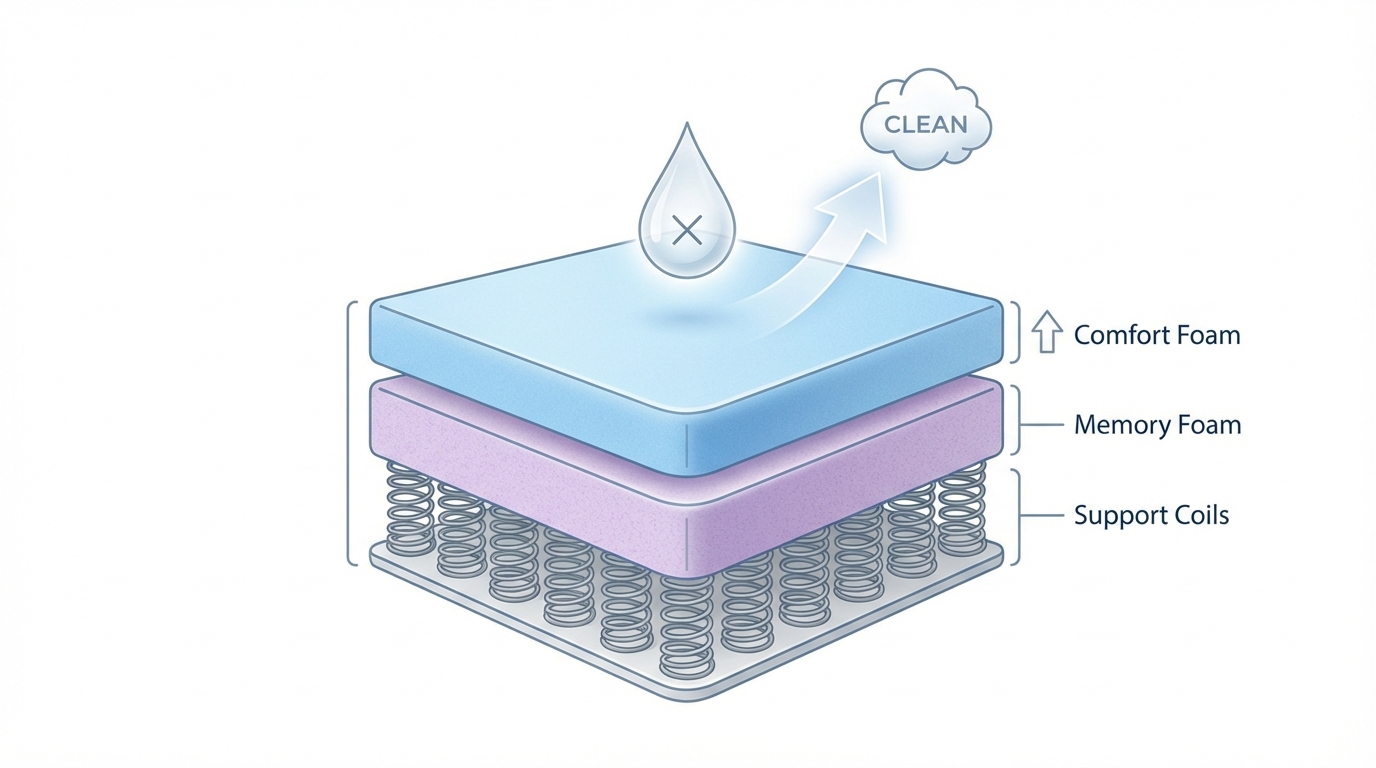
When you are juggling stain removal, odor control, and concern about harming an expensive mattress, it can be hard to know which cleaning products are truly safe. The goal is to strike a balance between effectiveness against urine and respect for the materials and adhesives that hold your mattress together.
Generally, gentle, water based solutions are best. Diluted white vinegar, a small amount of mild, dye free dish soap, baking soda, and enzyme based cleaners labeled safe for upholstery tend to be compatible with most modern mattresses. Consumer focused organizations, including Consumer Reports, often highlight these basic ingredients as first line options because they are unlikely to cause chemical burns, strong off gassing, or permanent discoloration when used correctly.
On the other side of the spectrum, there are products you should almost always avoid on a mattress. Chlorine bleach and other strong oxidizing agents can weaken fibers, remove color in uneven patches, and react with urine residues to produce harsh odors. Ammonia based cleaners are a double concern: not only can they be irritating to breathe, but their smell is similar to urine and can actually encourage some pets to remark the same spot, which defeats the purpose of careful cleaning.
High heat and moisture from steam cleaners are another risk, especially for memory foam or hybrid mattresses. While steam can sanitize hard surfaces effectively, on a thick mattress it can drive moisture deep into layers that are slow to dry. Trapped moisture is exactly the environment dust mites and mold prefer, and once that process starts inside a mattress, it is very difficult to reverse. The Sleep Foundation and other sleep health organizations consistently caution against using steamers on foam based beds for this reason.
It is also wise to pay attention to your mattress warranty and care tag. Many manufacturers specify that certain cleaning methods, such as removing non removable covers or saturating foam, can void coverage. When in doubt, you can reach out to the brand or, if you bought through Sleepology, contact our team directly. With hundreds of models tested and sold over the years, we can usually tell you within a few minutes which methods are safest for your exact mattress construction.
Special Considerations By Mattress Type
Not all mattresses respond to cleaning the same way. Knowing what is inside your bed helps you tailor your approach and avoid accidental damage while still getting pee stains out effectively.
Memory Foam Mattresses
Memory foam holds onto liquids more readily than many other materials. The open cell structure that allows the foam to contour so precisely to your body also gives moisture places to hide. That means two things for cleaning: you must be conservative with liquid, and you must prioritize drying.
On a memory foam mattress, skip large amounts of hydrogen peroxide altogether, because it can break down the foam polymers over time, leading to crumbling and loss of support. Instead, rely on a well diluted vinegar solution or a foam safe enzyme cleaner. Apply it in light layers, blot thoroughly between applications, and use a fan to help evaporate residual moisture. If the mattress has a removable, washable cover listed as safe for machine washing, you can launder that separately according to its care tag, which gives you a fresh outer layer while you carefully spot treat the core.
If your current bed has seen many accidents and the foam has begun to sag or smell musty even after cleaning, it may be reaching the end of its healthy lifespan. In , many shoppers who prefer a cushioned feel are upgrading to newer designs in the best foam mattress collection that pair pressure relief with more breathable structures and, importantly, are easier to protect with modern waterproof covers.
Hybrid And Innerspring Mattresses
Hybrid mattresses combine foam comfort layers with coil support cores, while traditional innerspring designs use thinner fibers above a more open coil system. The coil structure allows better airflow compared to solid foam, which can help accidents dry more quickly as long as you do not oversaturate the top layers.
For these mattresses, both vinegar and enzyme solutions tend to work well, and there is a little more forgiveness in terms of how much liquid you can safely apply. Still, you want to keep the bulk of the moisture in the upper comfort zone rather than saturating deep into the coil area. After cleaning and baking soda treatment, a hybrid or innerspring mattress often benefits from a few hours of standing on its side in a well ventilated room, which lets gravity and airflow work together to finish drying.
If you are considering replacing a mattress that has gone through many accidents, a modern hybrid such as the Sealy Posturepedic Plus Soft Hybrid Mattress – Paterson II can offer excellent comfort while being easier to keep fresh with a high quality protector. The combination of responsive coils and targeted foams also helps many people sleep cooler, which reduces sweat related moisture as well.
Comparison: Cleaning Challenges By Mattress Type
To help you visualize how different mattress types handle urine accidents, here is a quick side by side comparison.
| Mattress Type | How It Handles Moisture | Cleaning Difficulty For Pee Stains | Key Precautions |
|---|---|---|---|
| All Foam | Absorbs and holds liquid in pores | Higher | Use minimal liquid, avoid peroxide |
| Hybrid (Foam + Coils) | Moderately absorbent, good airflow | Moderate | Do not oversaturate top foam layers |
| Traditional Innerspring | Less absorbent, strong airflow | Lower to moderate | Watch for rust risk on older coils |
| Pillow Top | Thicker upper padding can trap liquid | Higher, especially deep stains | Extra blotting and drying needed |
Understanding where your mattress sits on this spectrum helps you calibrate your expectations. A thick pillow top, for example, may take longer to fully deodorize than a simpler innerspring, simply because there is more absorbent material for the urine to interact with.
Protecting Your Mattress After You Have Cleaned The Stain
Once you have invested the time and energy to get pee stains out of your mattress, protecting that work becomes the next priority. Prevention will always win over repeated cleanup, both for your peace of mind and for the long term health of your bed.
A waterproof, breathable mattress protector is the single most effective layer of defense. Unlike older plastic covers that crinkled and trapped heat, many modern protectors use thin, flexible membranes that block liquids while still allowing air to circulate. This combination keeps accidents on the surface, where they are easy to wipe away or remove with the protector, rather than letting them soak into foam or fibers. Sleep health organizations frequently note that a protector does double duty by also shielding against sweat, skin oils, and dust mites.
When choosing a protector, look for one that is specifically described as waterproof, not just water resistant, and confirm that it fully encases the sleeping surface rather than only covering part of the bed. If you tend to sleep warm or live in a hot climate, cooling focused options are worth the investment. For instance, the TEMPUR-Breeze Mattress Protector offers a waterproof barrier combined with a cool to the touch fabric, which helps keep both your sleep surface and your mattress core drier and more comfortable.
If allergies are a concern, a hypoallergenic protector such as the TEMPUR-Adapt Mattress Protector can add another layer of benefit. By blocking common irritants like dust mite debris and pet dander while also sealing out fluids, it helps create a cleaner microclimate around your bed. That can translate into fewer nighttime sniffles and a lower chance that future accidents will penetrate deep enough to become chronic odor sources.
“We bought a waterproof protector from Sleepology after cleaning up what felt like the tenth accident in a year. Two months later, our dog had a midnight mishap and all we had to do was strip the protector and throw it in the wash. The mattress underneath was completely dry. That one accessory has probably added years to the life of our bed.” – Shelby T., December
Kid Accidents Vs Pet Accidents: Practical Differences
Although the core cleaning principles are similar, human and pet urine are not identical, and that can affect both odor and how aggressive you need to be with treatment. Understanding these differences helps you choose the right method and set realistic expectations.
Children’s urine is often more diluted, especially if they are well hydrated and not on any medications that concentrate or darken the urine. This typically makes kid related stains a bit easier to address, particularly if you catch them quickly. For most children’s accidents, a vinegar solution, thorough blotting, and a generous baking soda application are enough to resolve both the stain and the smell. For families in active potty training seasons, keeping a stack of clean protectors and fitted sheets ready for quick swaps can turn a disruptive night into a minor, manageable routine.
Pet urine, especially from cats, is more concentrated and contains additional compounds like uric acid and certain sulfur containing substances that create a sharp, persistent odor. Veterinarians and pet behavior specialists often point out that cats, in particular, will remark areas where they can still detect their original scent. That means removing not just the surface smell but the deeper chemical traces is essential to preventing repeat accidents in the same spot.
For pet related stains, enzyme cleaners are often more effective than vinegar alone. These products are designed to break down uric acid crystals and other odor causing molecules so they can be wiped or rinsed away. Be sure to choose a formula specific to your pet type, as cat and dog urine can require slightly different enzyme blends. Once you have cleaned the mattress and allowed it to dry fully, adding a fresh, washable pet bed on top of the protector can give your animal a cozy designated spot that is easier to clean than the entire mattress.
When Cleaning Is Not Enough: Signs It May Be Time To Replace Your Mattress

Most of the time, a single or even several urine accidents do not mean you need a new mattress. However, there are situations where, even with careful cleaning, the bed no longer provides a healthy, comfortable sleep surface. Recognizing those signs can help you make a clear, confident decision rather than endlessly fighting a losing battle with stains and smells.
One red flag is a persistent odor that returns quickly after cleaning and airing, especially if it is accompanied by a musty or earthy undertone. That can indicate moisture has been trapped deep inside the mattress long enough for mold or mildew to begin developing. Because you cannot easily access or fully dry the interior, and because mold spores can aggravate respiratory conditions, it is generally safer to replace the mattress in that situation rather than continue sleeping on it.
Another key sign is structural deterioration. If your mattress is already sagging, forming deep body impressions, or causing you to wake up stiff and sore, a major stain can become the tipping point. According to many sleep health experts, most mattresses provide optimal support for around seven to ten years, depending on quality and use. If you are at or beyond this window and fighting recurring pee issues, putting resources toward a new, more supportive bed is often a better investment than repeated deep cleaning services.
When you do decide it is time for a replacement, think of your cleaning experience as a guide for what you want next. If you discovered you prefer the bounce and airflow of coils but love pressure relief, a hybrid mattress such as the Sealy Posturepedic Elite Soft Hybrid Mattress – Brenham II can strike that balance while being easier to protect from future accidents. If you enjoy a plush, pressure relieving surface but want improved durability and support, something like the Sealy Posturepedic Elite Medium Mattress – Brenham II Euro Pillow Top might be a better fit.
As you shop, keep a waterproof, breathable protector and, if needed, washable toppers and pillows in your plan. An accessory bundle, such as the Tempur-Pedic Mattress Topper and Pillow Travel and Guest Bundle, can add comfort while giving you extra, easily washable layers between sleepers and the core mattress.
Simple Ongoing Habits To Keep Your Mattress Fresh
Once the immediate crisis is handled and your mattress is clean again, a few small habits can dramatically reduce the odds that you will end up dealing with deep stains in the future. These practices support both cleanliness and sleep quality.
Airflow is your ally. Make a habit of pulling back the comforter for 20 to 30 minutes each morning to allow residual moisture from sweat and breathing to dissipate. A protector helps, but it still benefits from ventilation. If your mattress is on a solid platform or the floor, consider upgrading to a slatted base from a quality adjustable bed frame and base collection. Adjustable and slatted foundations promote air circulation under the bed, which helps moisture evaporate more quickly and discourages mold.
Regular light vacuuming is another underused tool. Using an upholstery attachment on a low suction setting, gently vacuum the mattress surface and sides every few months, or more often in high dust or pet households. This helps remove skin flakes and allergens that can combine with moisture to create off odors over time. Some sleep health organizations suggest pairing vacuuming with occasional spot checks for any developing stains or damp areas so you can address minor issues before they become major cleaning projects.
If you have children who are still potty training, or older family members with incontinence, building a layered bedding system can make nighttime accidents far easier to handle. That might look like a waterproof protector, topped with a fitted sheet, then a thin, washable pad under a second fitted sheet. When an accident happens, you can strip the top two layers quickly and still have a clean, dry surface ready underneath, which everyone appreciates at 3 a.m.
Finally, be mindful of liquids in bed. Spilled drinks are not as chemically complex as urine, but they can still stain and feed bacteria or mold if not cleaned promptly. Keeping water in closed, spill resistant bottles and saving colorful or sugary drinks for other rooms can quietly reduce your overall stain risk.
Conclusion: Your Mattress Is Probably Saveable
Discovering a pee stain on your mattress never feels good, but it also does not have to spell the end for your bed. Once you understand how urine interacts with different mattress materials and why time and technique matter so much, the process becomes manageable. Blotting rather than scrubbing, using safe, gentle cleaning agents like diluted vinegar or enzyme cleaners, and finishing with thorough deodorizing and drying are the core pillars of effective stain removal.
Just as important is what you do next. Protectors, better airflow, and simple weekly habits can dramatically reduce the frequency and severity of future accidents. And if you ultimately decide your mattress has reached the end of its useful life, you will go into that decision with clarity, not panic, and can choose a new bed that suits your comfort, lifestyle, and care preferences. Many sleepers in are gravitating toward well protected foam and hybrid options, paired with thoughtfully chosen bedding from collections such as pillows, sheets, toppers, and protectors, to make both sleep and cleanup easier.
If you are feeling overwhelmed, remember that you do not have to navigate this alone. With two decades of experience, I have seen almost every mattress mishap you can imagine, and there is nearly always a practical path forward. With a bit of patience and the right tools, you can restore a clean, comfortable, and healthy sleep surface and get back to nights that are about rest, not worry.
Frequently Asked Questions
How fast do I need to act to keep a pee stain from setting in?
The sooner you address a urine accident, the better your chances of preventing a permanent stain or lingering odor. Ideally, you would start blotting within minutes of discovering the wet spot, because urine begins soaking deeper into the mattress and oxidizing as it dries. That said, if you do not notice the accident until morning, it is still worth following the full cleaning process. Research summarized by organizations such as the Sleep Foundation highlights that while stains worsen with time, even dried urine can often be significantly lightened and deodorized with patient, repeated treatment.
Can I use hydrogen peroxide on every mattress to get pee stains out?
Hydrogen peroxide can help lift stubborn yellow stains on some fabrics, but it is not universally safe for all mattresses. It acts like a mild bleach and can discolor colored covers or break down delicate foams, especially memory foam and latex. If you want to try peroxide, read your mattress care tag first and test a very diluted solution on a hidden area. If there is any change in color or texture, skip peroxide and stick to vinegar and enzyme cleaners instead. When in doubt, or if your mattress is under warranty, it is best to avoid peroxide altogether and consult a sleep specialist or retailer support team.
How do I know if the pee smell is really gone or just covered up?
A truly clean mattress will not release a urine odor even when the room is warm or when you first lie down and compress the surface. If the smell seems to fade for a day but returns in waves, particularly in humid conditions, it usually means residue remains deeper in the materials. Neutralizing agents like vinegar, baking soda, and enzyme cleaners work by breaking down odor causing compounds, not just masking them, so using these in combination and giving the mattress a full day or two of ventilation is important. Avoid relying on heavy fragrances, which can create a perfumed layer on top of an unaddressed odor and may irritate sensitive airways.
Is it safe for my child to keep sleeping on a mattress that was peed on?
If you clean the mattress thoroughly, allow it to dry completely, and there is no remaining odor or visible stain, it is generally safe for a child to continue using that bed. Health organizations such as the Mayo Clinic are more concerned about chronic moisture, mold, and strong chemical cleaners than a single well treated accident. The key is ensuring the interior is dry before remaking the bed, which may mean giving the mattress a full day near a fan or an open window. For peace of mind, adding a waterproof protector going forward helps keep future accidents at the surface where they are easier to wash away.
What should I do if my mattress still smells after two or three cleanings?
Persistent odor after multiple careful cleaning attempts suggests that urine has penetrated deeply into the mattress, or that there may be additional moisture issues like early mildew. At this point, combining an enzyme cleaner with extended baking soda treatment and excellent ventilation is worth one more try. If the smell remains clearly noticeable, especially if it has a musty undertone, continuing to sleep on the mattress may not be ideal. In that case, it is sensible to evaluate the age and condition of your bed and consider replacing it with a new, well protected mattress that better supports both your comfort and sleep health.
Can a mattress protector really prevent pee stains, or will they just leak through?
A quality waterproof protector that fully covers the sleeping surface is very effective at preventing urine from reaching the mattress. Unlike basic pads that are only water resistant, protectors with a true waterproof membrane are designed to block liquids entirely while still allowing airflow. When fitted correctly and laundered according to instructions, they will catch accidents so you are washing the protector, not the mattress itself. If you have experienced leaks in the past, it may be because the product was not fully waterproof, was worn out, or did not fully cover the area where the accident occurred.
When is it more cost effective to replace the mattress instead of deep cleaning it?
If your mattress is already nearing the end of its typical 7 to 10 year lifespan, has significant sagging or discomfort, and has now developed major urine staining or persistent odors, replacement often makes more sense than repeated professional cleanings. The combined cost of cleaning services, ongoing odor control products, and the sleep quality you lose on an unsupportive bed can quickly exceed the value of a fresh start. On the other hand, a newer mattress with isolated staining is usually worth the effort to save, especially if you add a waterproof protector to greatly reduce future risk.